Hook.f. & Thomson

Description
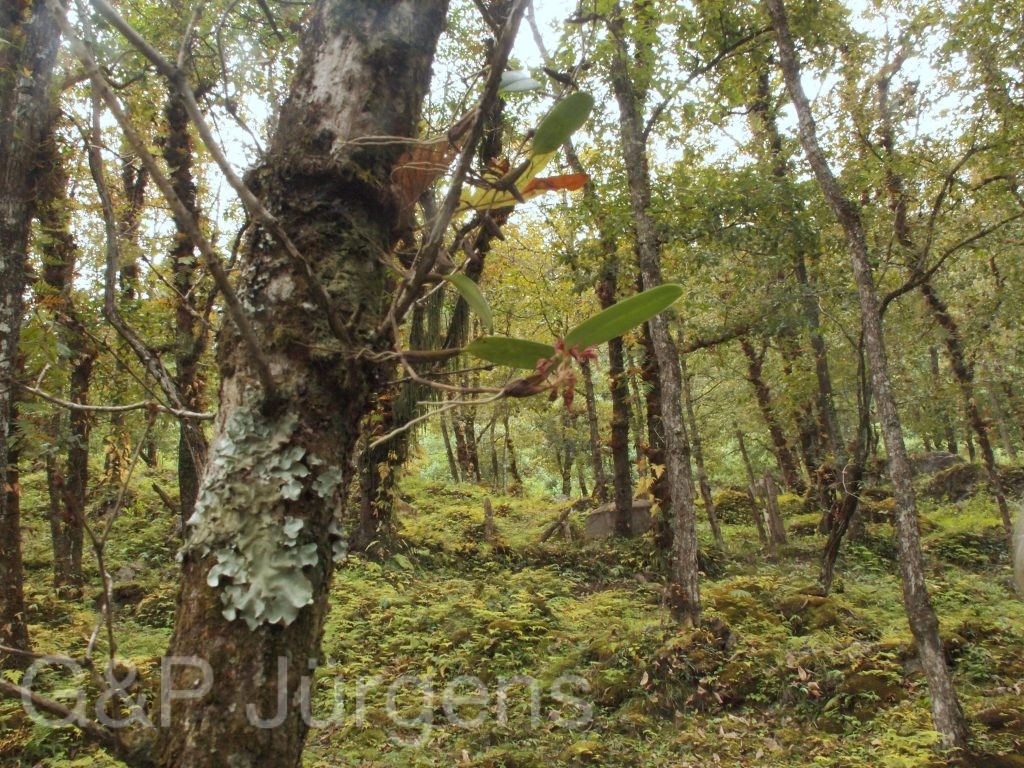
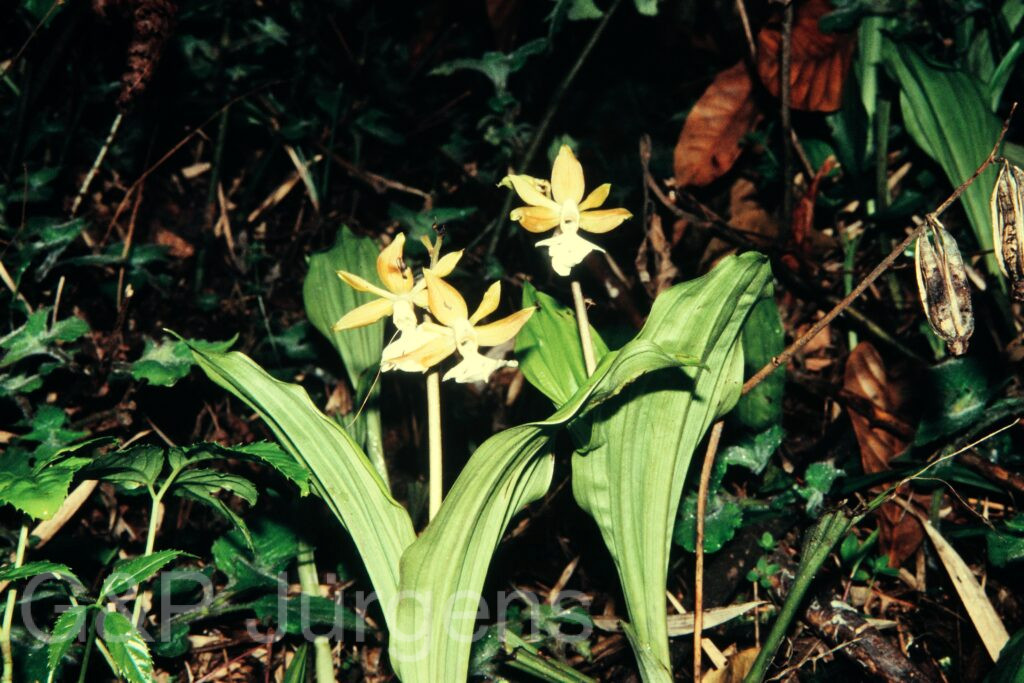
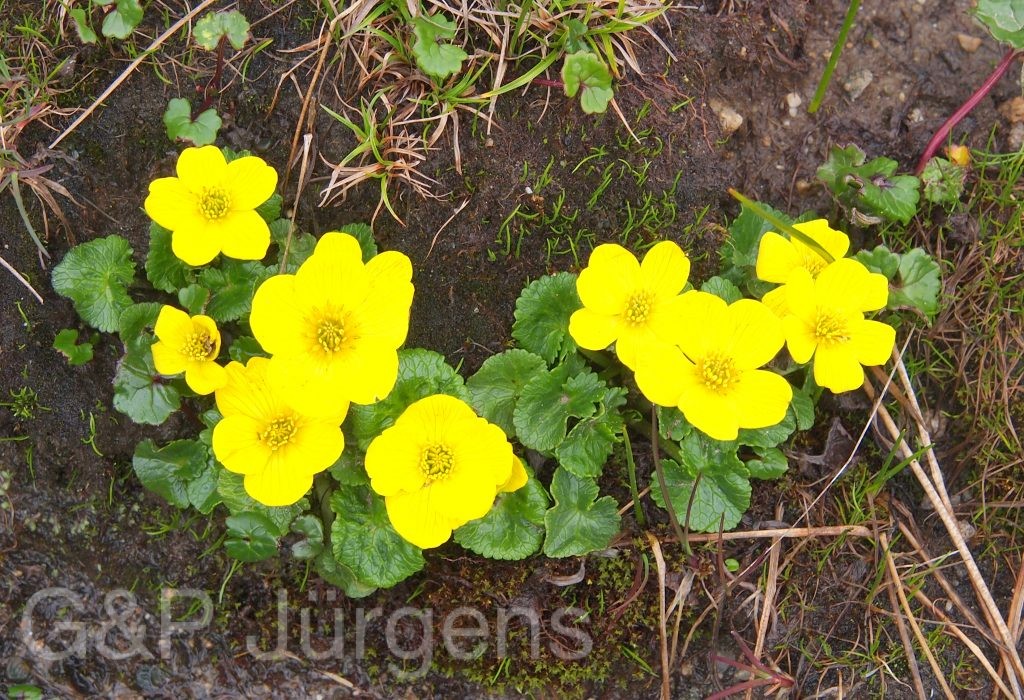
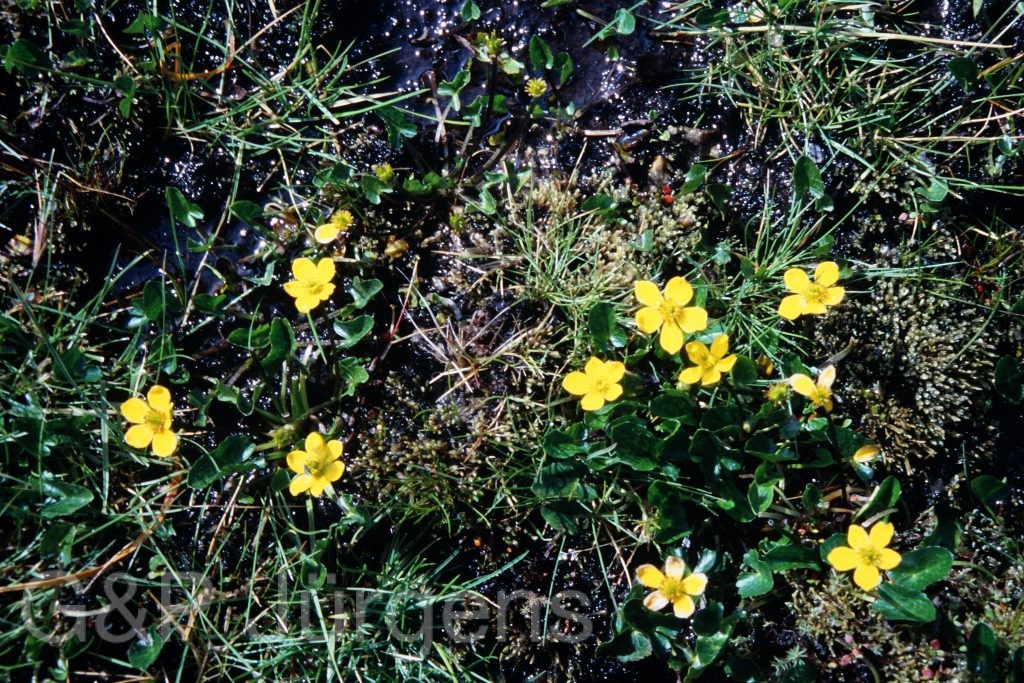
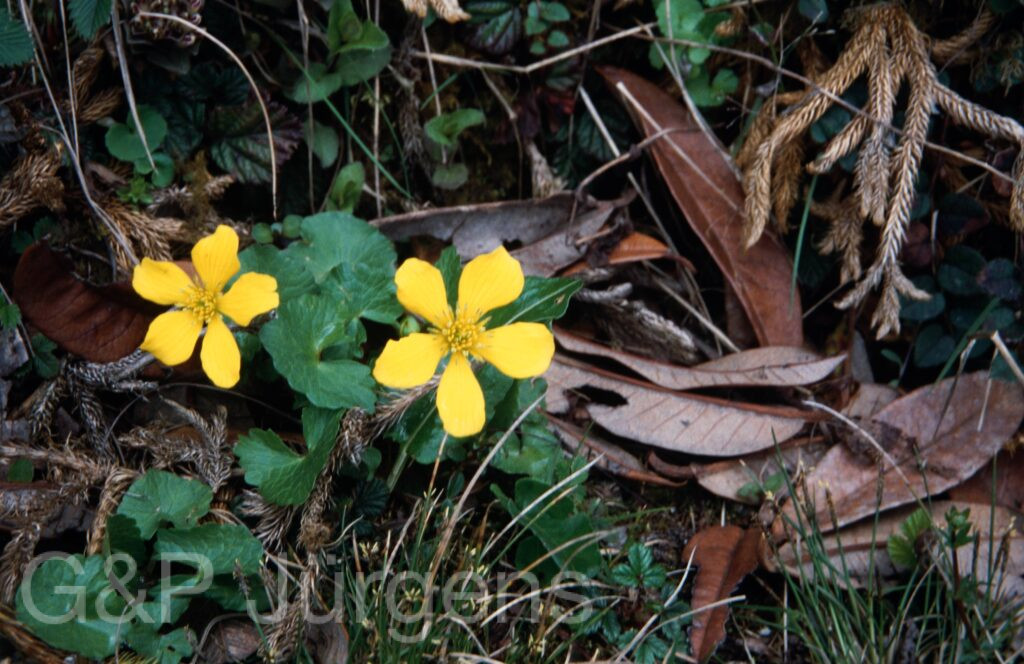
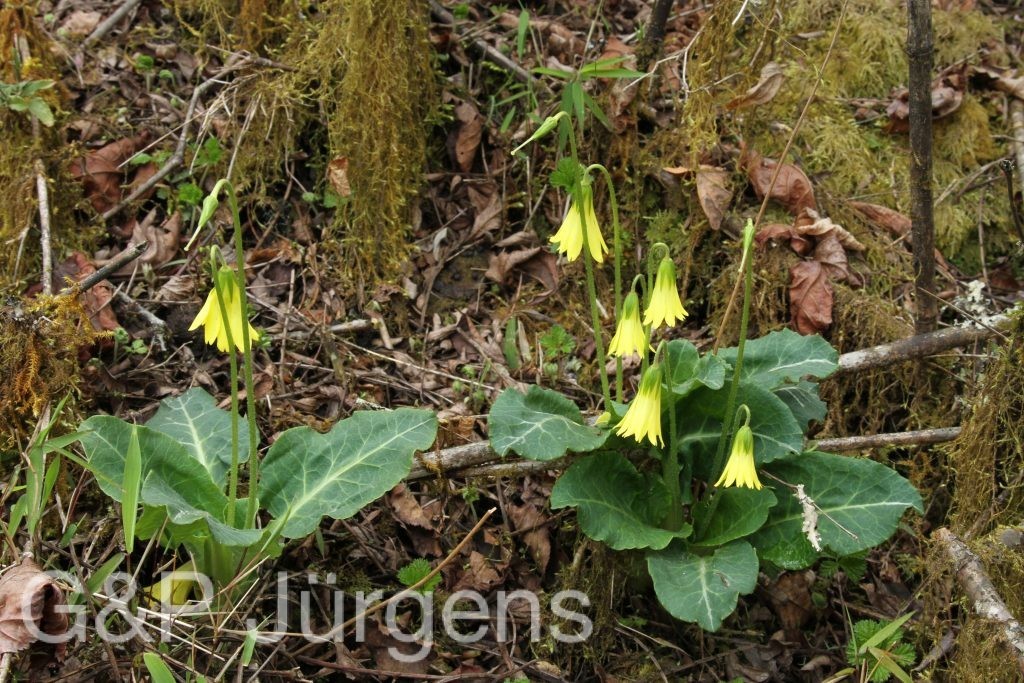
Bryocarpum himalaicum is the sole species of its genus, a primuloid herb endemic to the eastern Himalaya and recorded from Bhutan, India (Sikkim), Nepal and southern China; GBIF documents around 86 occurrences across this narrow range. It grows in moss-rich, humus-laden ground in cool, shaded forest, among rhododendron and bamboo thickets and on damp, mossy banks in the upper temperate and subalpine zones, typically between about 2700 and 3700 m. The illustrated plant from Phobjika in central Bhutan at 2800 m, flowering in May, is characteristic of these humid, sheltered montane habitats.
It is a small, delicate perennial herb arising from a slender rhizome, forming a rosette of long-petioled, ovate to cordate, crenate leaves with a soft texture. The flowers are solitary and nodding on slender scapes, the corolla being narrowly tubular to bell-shaped and clear yellow, with a slender tube expanding into five spreading lobes, evoking a miniature pendent primrose. A distinctive feature giving the genus its name is the elongate, beaked, septicidal capsule that buries or lowers itself among the moss as it matures before releasing the seeds.
Bryocarpum is a monotypic genus traditionally allied to Primula and the cyclamenoid primulas within Primulaceae, distinguished by its solitary yellow flowers and peculiar elongate fruiting capsule. Its restricted high-Himalayan range and dependence on undisturbed mossy forest floor make it a botanically significant relict of conservation interest, vulnerable to habitat disturbance and changing montane moisture regimes.
Author: Hook.f. & Thomson · Sources: POWO (Kew), GBIF, Flora of Bhutan, Flora of China, Primula (J. Richards monograph)