Tag:

Sikkim

Flowers of Sikkim — 350 species from the Sikkim Himalaya in northeast India, a compact yet botanically extraordinary region that climbs from subtropical valleys to the alpine zone beneath Kangchenjunga. Sikkim is a classic centre of Himalayan plant diversity, celebrated for its rhododendrons, primulas, orchids and gentians. Each entry provides a botanical description, distribution, habitat and flowering season with the original field photograph.

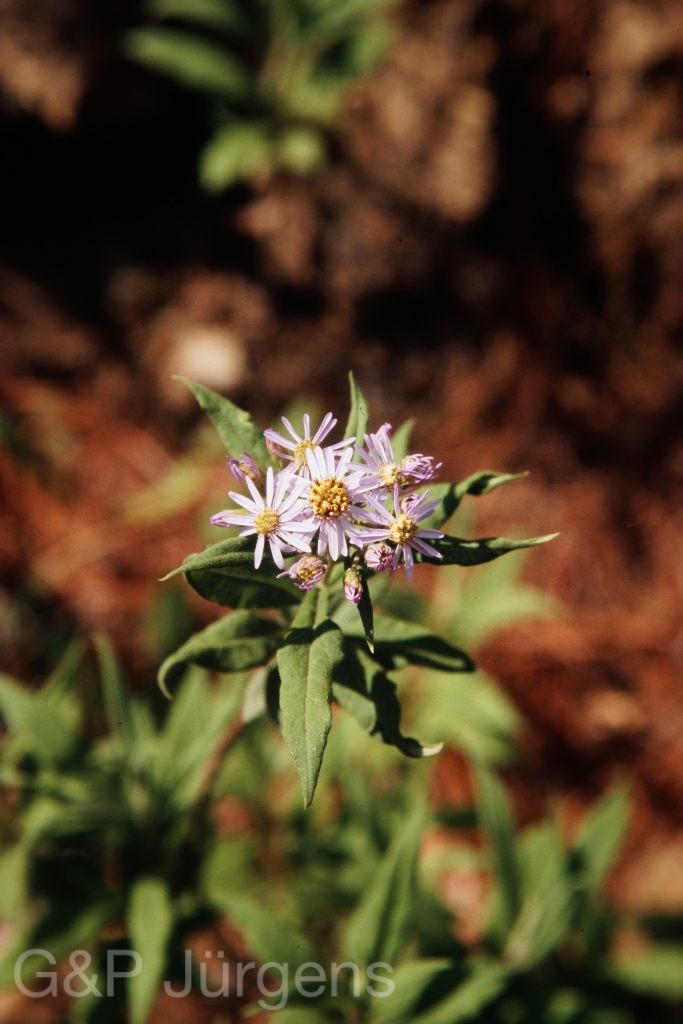
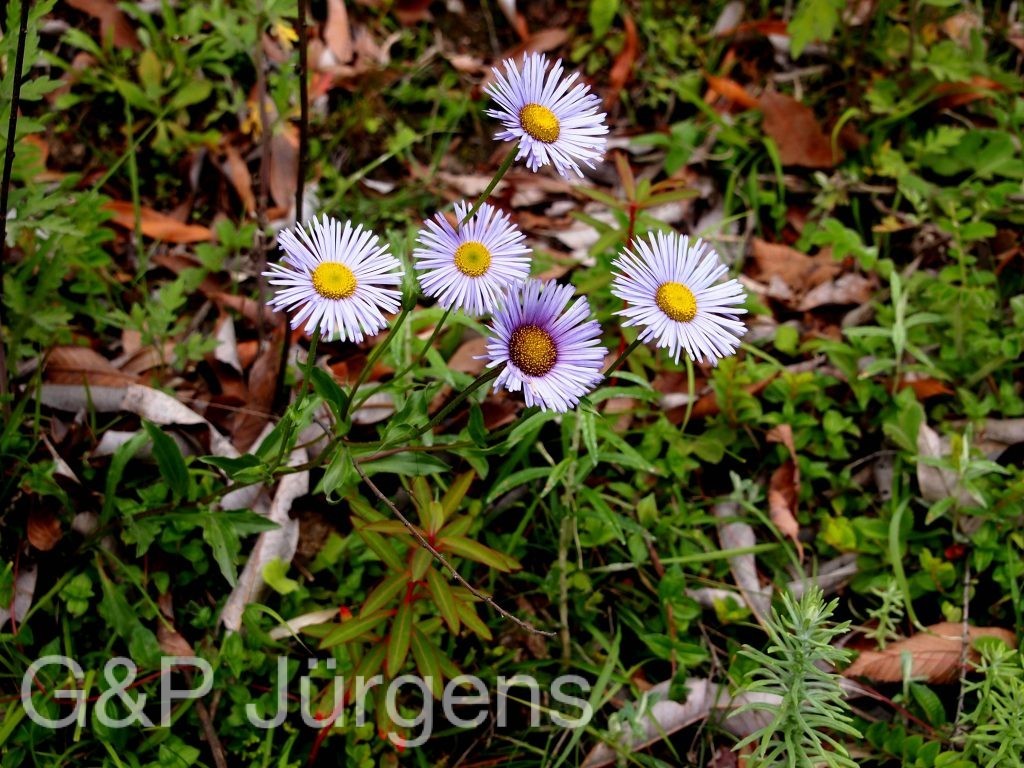
Aster nakaoi

by GP Jürgens

Kitam.

Bh2008 555 P839
Bhutan Paro 3300m, May

Description

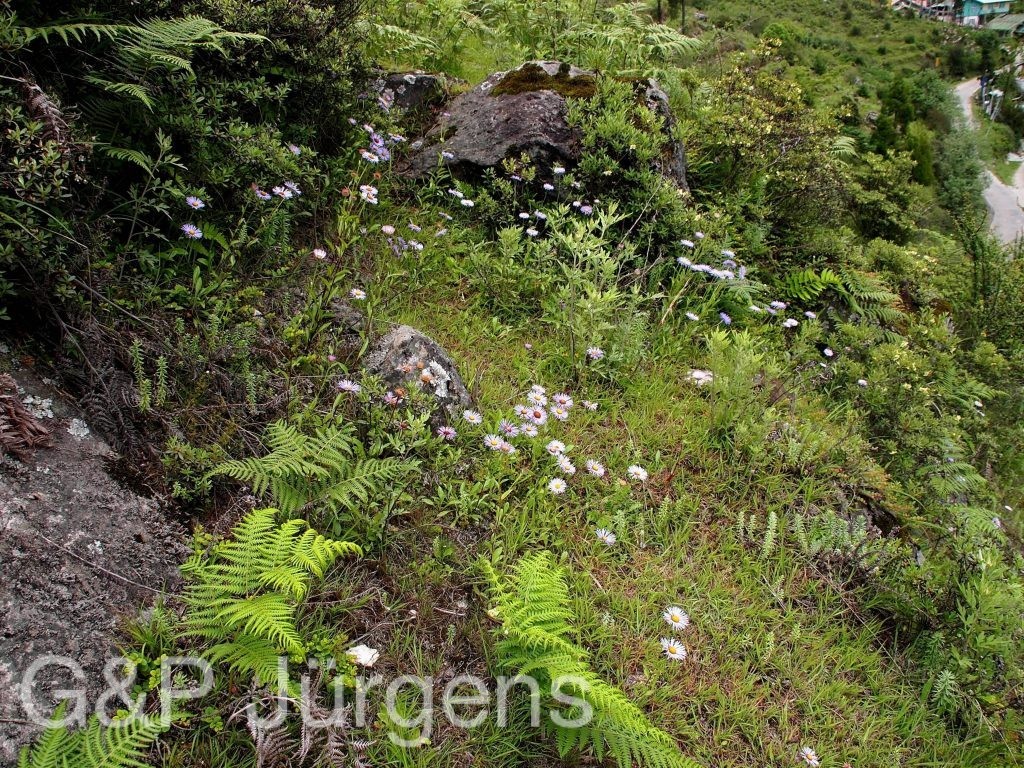
Aster nakaoi is a high-montane perennial of the Eastern Himalaya, presently documented chiefly from Bhutan and adjacent Sikkim and southern Tibet, where it occupies the upper temperate to subalpine belt. The species is poorly represented in aggregated occurrence databases, reflecting its restricted range and infrequent collection rather than true rarity. It favours open grassy slopes, the margins of Rhododendron and Abies forest, rocky banks and the verges of alpine meadows, typically between about 3000 and 4000 m. The plant illustrated here was photographed near Paro in western Bhutan at roughly 3300 m in May, when the earliest flowering heads appear among emerging summer herbage.

The plant forms low tufts arising from a short, somewhat woody rhizome bearing fibrous roots. Stems are erect to ascending, simple or sparingly branched above and often shortly pubescent. Basal and lower cauline leaves are spathulate to oblanceolate, narrowed to a winged petiole, with entire or obscurely toothed margins; the upper leaves are sessile, smaller and progressively reduced. The capitula are solitary or few, radiate, with a hemispherical involucre of imbricate, herbaceous phyllaries in several rows. Ray florets are female, ligulate and lilac to bluish-violet, surrounding numerous yellow tubular disc florets. The achenes are compressed and pubescent, crowned by a pappus of barbellate bristles facilitating wind dispersal.

A member of the large and taxonomically intricate genus Aster, the species commemorates the Japanese botanist who collected extensively in the Himalaya, and it belongs to the assemblage of small Sino-Himalayan asters whose circumscription remains under revision following molecular reappraisal of the tribe Astereae. Its narrow known distribution along the Bhutan–Sikkim axis makes it of biogeographic interest as a regional endemic, and its conservation status is best regarded as data-deficient pending further field survey across the Eastern Himalayan high country.

Author: Kitam. · Sources: POWO (Kew), GBIF, Flora of Bhutan, Flora of China, Grierson & Long Asteraceae account, Monograph of Himalayan Aster
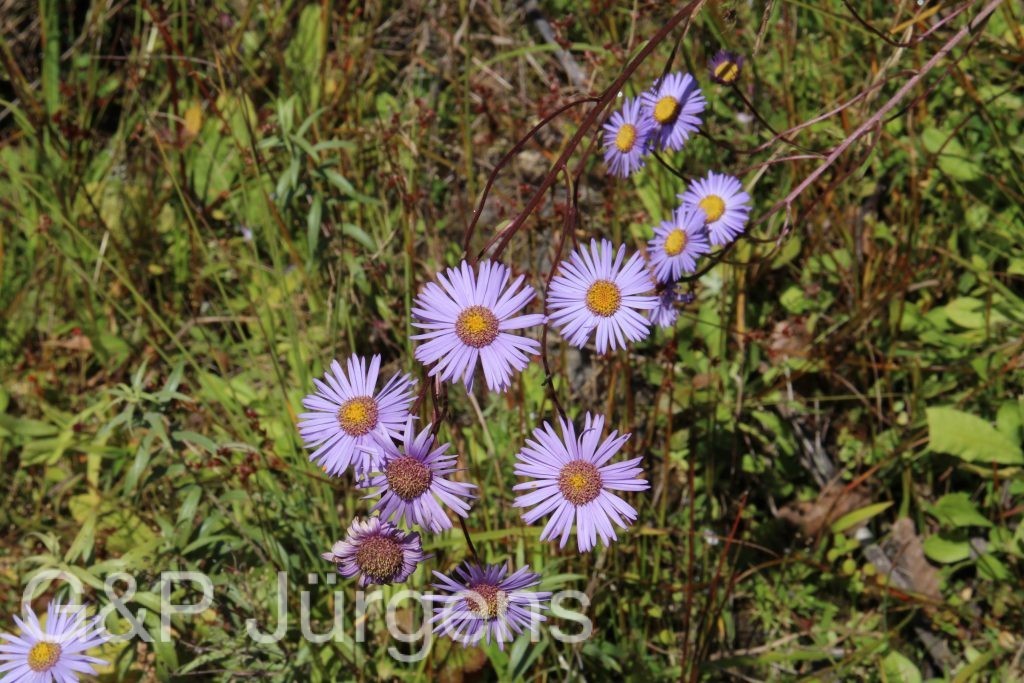
C.B.Clarke

Bhutan2015 326
Bhutan Trongsa 2200m, October
Sikkim2011 182
Sikkim Lachung 2600m, June
Sikkim2011 188
Sikkim Lachung 2600m, June
Bh09 311 G477
Bhutan Yetong-La, 2900m June

Description

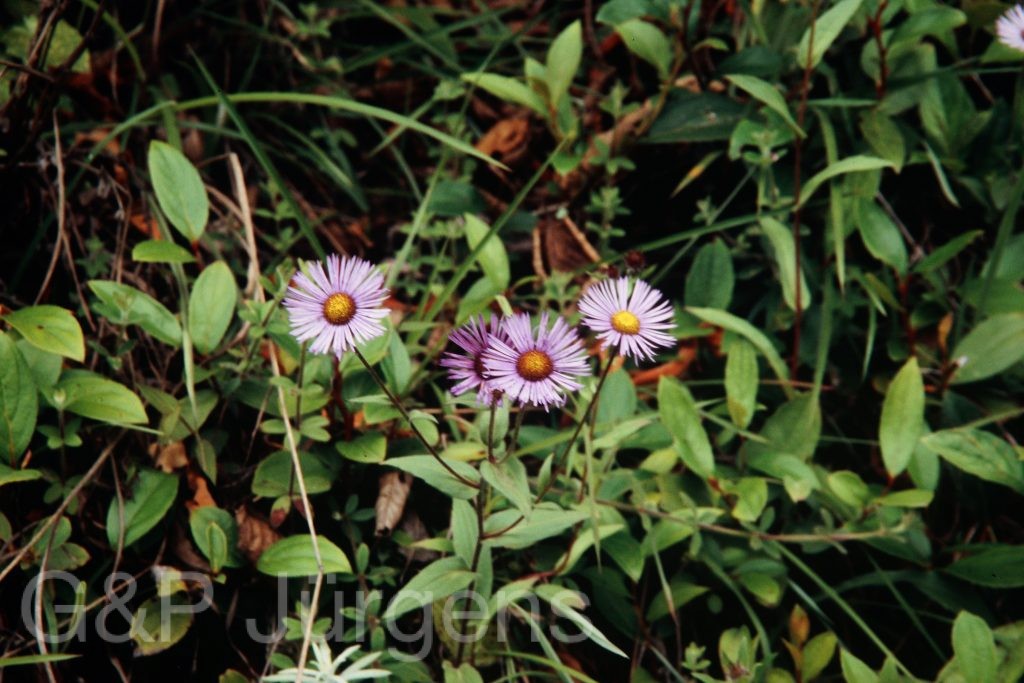
Aster tricephalus is a Himalayan species ranging through India, Nepal, Pakistan, China and Bhutan, GBIF recording some 87 occurrences along the temperate Himalayan chain. It grows on open grassy and shrubby slopes, in forest clearings, along banks and in subalpine meadows where it benefits from full sun and moist, well-drained soils. The cited gatherings span its altitudinal range: Trongsa in central Bhutan at 2200 m in October, Lachung in Sikkim at 2600 m in June, and the Yetong-La at 2900 m in June. This spread of localities, flowering from early summer through to autumn, reflects its presence across the temperate to lower subalpine belt of the Eastern Himalaya.

It is a perennial herb arising from a short rhizome, with erect, leafy, often pubescent stems. The leaves are alternate, the lower ones oblanceolate and narrowed to the base, the upper smaller, sessile and somewhat clasping, with entire or slightly toothed margins and scabrid or hairy surfaces. The capitula are radiate and few, sometimes clustered into a small terminal group as the epithet suggests; the involucre is campanulate with imbricate, herbaceous phyllaries in several rows. The ray florets are female and ligulate, mauve to purplish-blue, surrounding numerous yellow tubular disc florets. The cypselae are flattened and hairy, bearing a pappus of fine barbellate bristles.

Aster in the strict modern sense (tribe Astereae) is centred on Eurasia, and many Himalayan species formerly placed here have been variously reassigned among segregate genera, so the generic placement of montane taxa such as A. tricephalus remains under continuing taxonomic scrutiny. Attributed to C. B. Clarke, it is treated as an accepted species. Its violet-rayed heads attract a range of bees, hoverflies and butterflies. As a widespread plant of open montane habitats it is not regarded as threatened.

Author: C.B.Clarke · Sources: POWO (Kew), GBIF, Flora of Bhutan, Flora of China, Annotated Checklist of the Flowering Plants of Nepal, Grierson's revision of Himalayan Aster (Astereae)
Hook.f. & Thomson

Sikkim2004 342 G603
India West-Bengal, Utaray 2100m April
Sikkim2004 116 P199
Sikkim West-Bengal, Yoksam, 1950m April

Description

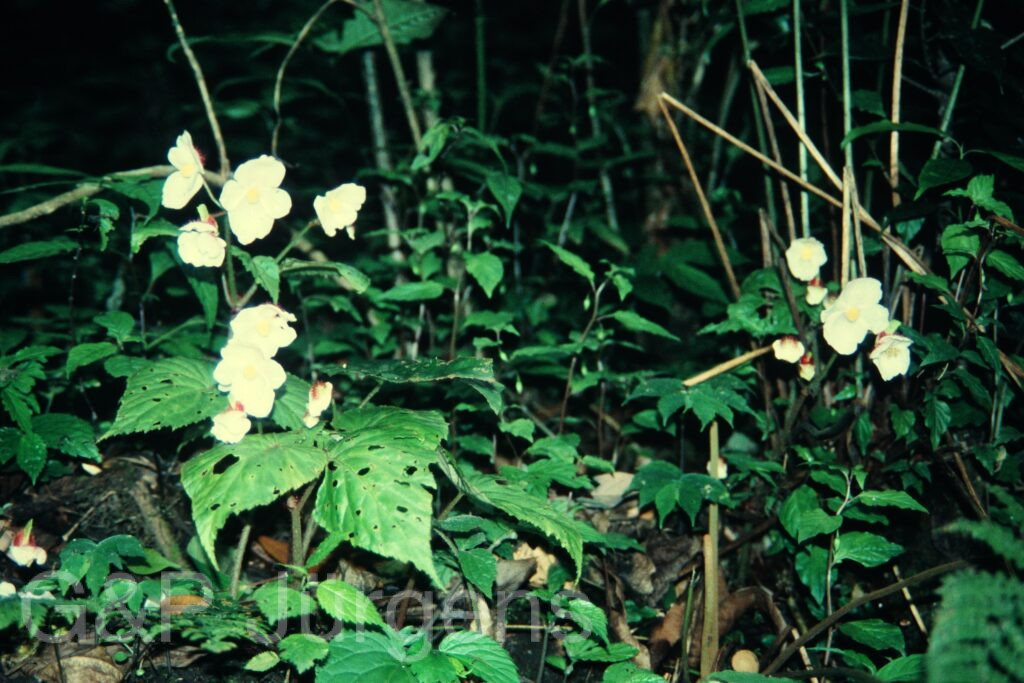
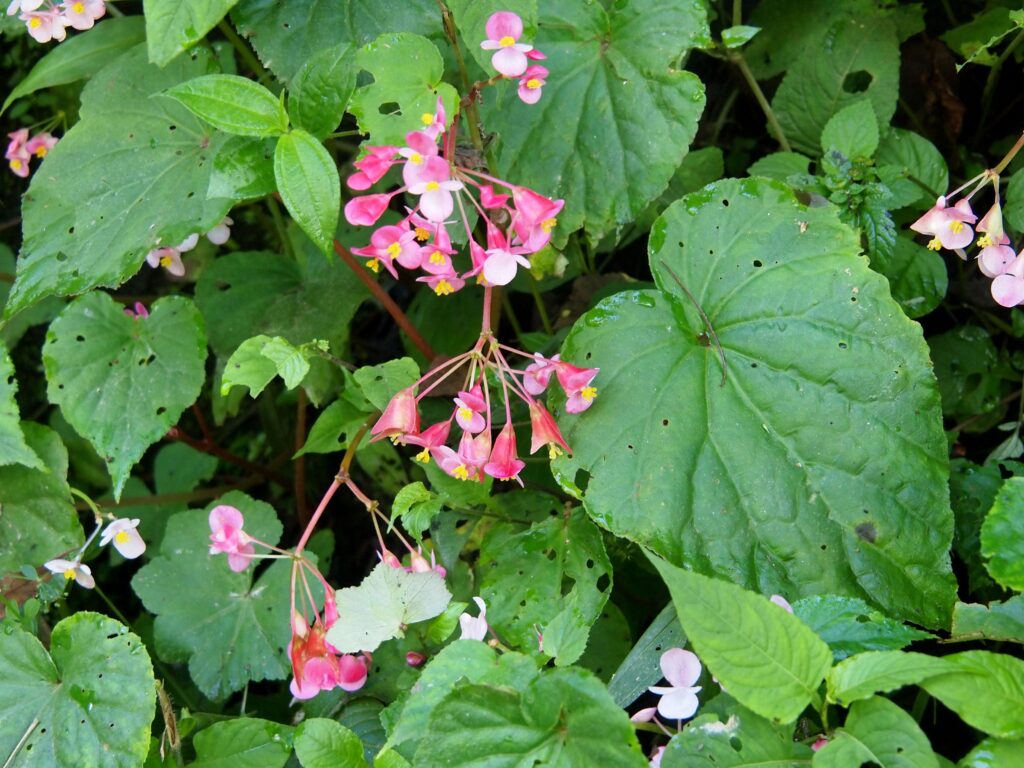
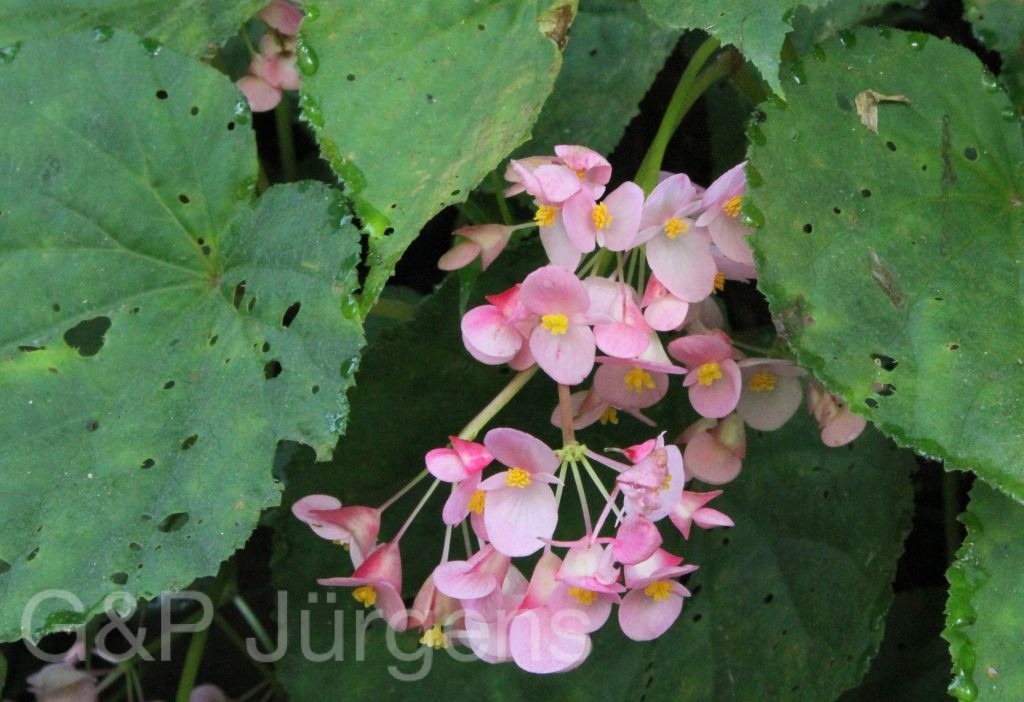
Begonia cathcartii is a perennial herb of the moist eastern Himalaya and neighbouring montane Southeast Asia, recorded from northern India (Sikkim, Darjeeling), Nepal, Bhutan, Myanmar, Thailand and Peninsular Malaysia; GBIF documents about 138 occurrences. It is a plant of shaded, humid broadleaved forest, growing on damp banks, mossy boulders and stream sides where humidity remains high, chiefly between about 1500 and 2700 m. The photographed material came from the Darjeeling hills at Utaray near 2100 m and from Yoksam in Sikkim at about 1950 m, both in April, matching the cool, dripping understorey it favours during the pre-monsoon flush.

The plant is a fleshy, somewhat succulent herb with an erect or ascending, sparingly branched stem arising from a rhizomatous or tuberous base. As in the genus the leaves are alternate, markedly asymmetric (oblique) at the base, broadly ovate, acuminate, with a toothed and often shallowly lobed margin and conspicuous stipules. The flowers are monoecious and borne in axillary cymes, white to pale pink; the staminate flowers bear several stamens while the pistillate flowers sit above a winged inferior ovary. The fruit is a three-winged capsule, with one wing usually larger, releasing very numerous minute seeds.

Begonia (Begoniaceae) is one of the largest angiosperm genera, and B. cathcartii belongs to its rich Sino-Himalayan rhizomatous assemblage, named for J. F. Cathcart. Its monoecious flowers, unequal capsule wings and asymmetric leaves are characteristic of the family. Dependent on humid forest microhabitats, it is locally frequent and not formally assessed as threatened, but sensitive to forest clearance and desiccation.

Author: Hook.f. & Thomson · Sources: POWO (Kew), GBIF, Flora of China Vol. 13, Flora of Bhutan Vol. 2, Flora of Nepal, Flora of Pakistan, Hooker Begonias of the Himalaya in Flora of British India

A.DC.

Bhutan2012 480 ergebnis
Bhutan, Wangdi 1800m, September
Bhutan2012 481
Bhutan, Wangdi 1800m, September

Description

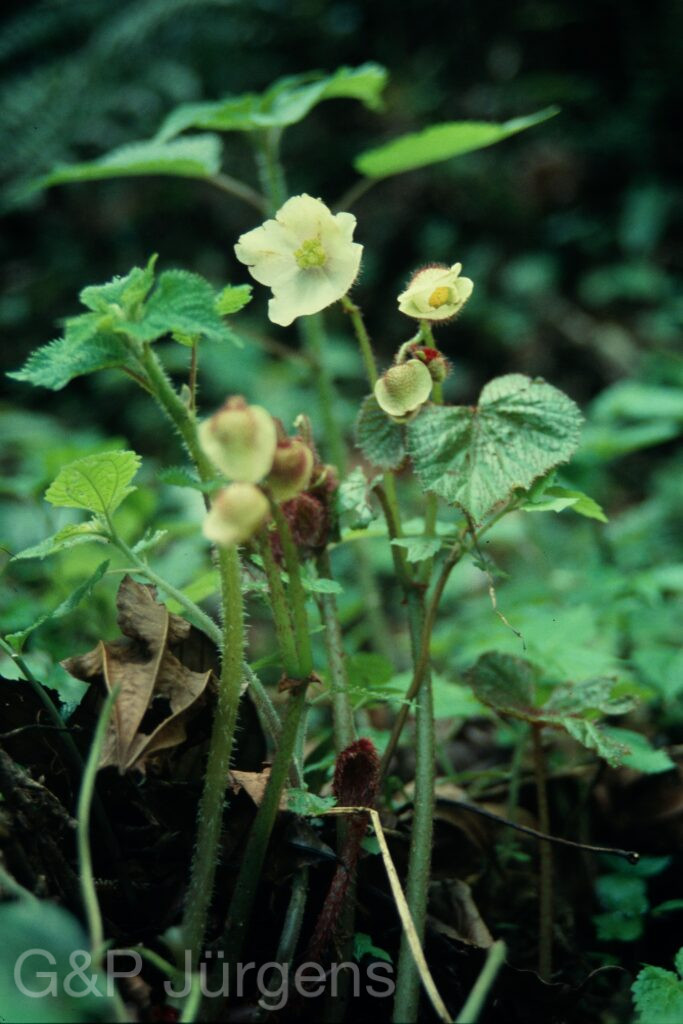
Begonia megaptera is a tuberous begonia native to the eastern Himalaya and adjacent regions, recorded from Nepal, northeast India (Sikkim, Darjeeling, Meghalaya), Bhutan, and Myanmar, with occasional records from Sri Lanka. It inhabits moist, shaded environments including rock crevices, mossy banks, stream margins, and damp earth walls in warm broadleaved and subtropical forests at elevations of 900–2,500 m. The species has been documented near Wangdi in Bhutan at 1,800 m, where it flowers during the monsoon and post-monsoon period in September.
The plant is a perennial herb arising from a globose tuber, with erect or ascending, succulent, sparsely branched stems 20–50 cm tall, tinged red and bearing scattered hairs. Leaves are alternate, broadly ovate to suborbicular, distinctly asymmetric, 8–20 cm long and nearly as wide, with a cordate base, irregularly serrate to dentate margins, and palmately veined undersurface often flushed reddish-purple. Stipules are large, ovate, and persistent. The inflorescence is a dichasial cyme bearing both male and female flowers; male flowers have two large, broadly ovate, white to pale pink tepals and numerous yellow stamens, while female flowers have five unequal tepals and a prominently three-winged inferior ovary — the epithet "megaptera" (large-winged) refers to the conspicuously enlarged wing on the fruit. The capsule is pendulous, with one wing much larger than the other two, up to 3 cm broad.
Begonia megaptera belongs to Begonia section Platycentrum and is distinguished by its notably large, unequal capsule wings and broad, nearly orbicular leaves. With only 63 occurrence records in GBIF, it remains a rather uncommon species. Begonia is one of the largest angiosperm genera, with over 2,000 species, and the eastern Himalayan region represents a secondary centre of diversity. B. megaptera contributes to the rich lithophytic and epipetric flora characteristic of humid gorge habitats in the region.

Author: A.DC. · Sources: POWO (Kew), GBIF, Flora of Bhutan Vol. 2, Doorenbos et al.: The Sections of Begonia (1998), Hughes et al.: Asian Begonia (2015)

(Haw.) Sternb.

Sikkim2011 28
Sikkim Lachen 2800m, June
Nepal 97 303 G604
Nepal Honggaon 2360m May
Nepal 2001 463 ergebnis ergebnis
Nepal (Gorkha) Gunda 1700m, May

Description

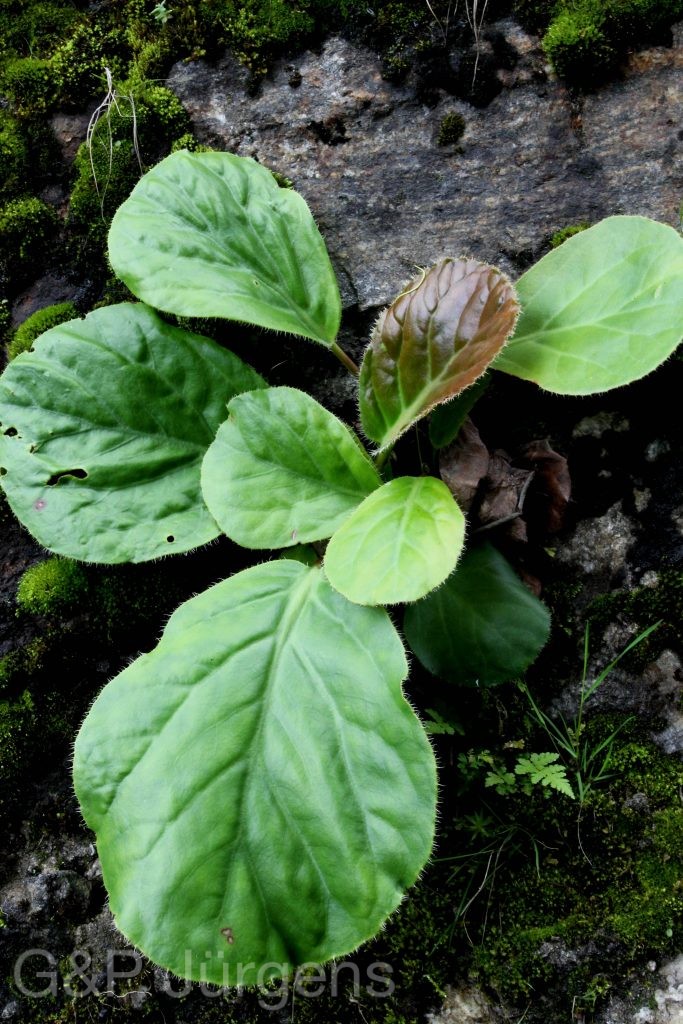
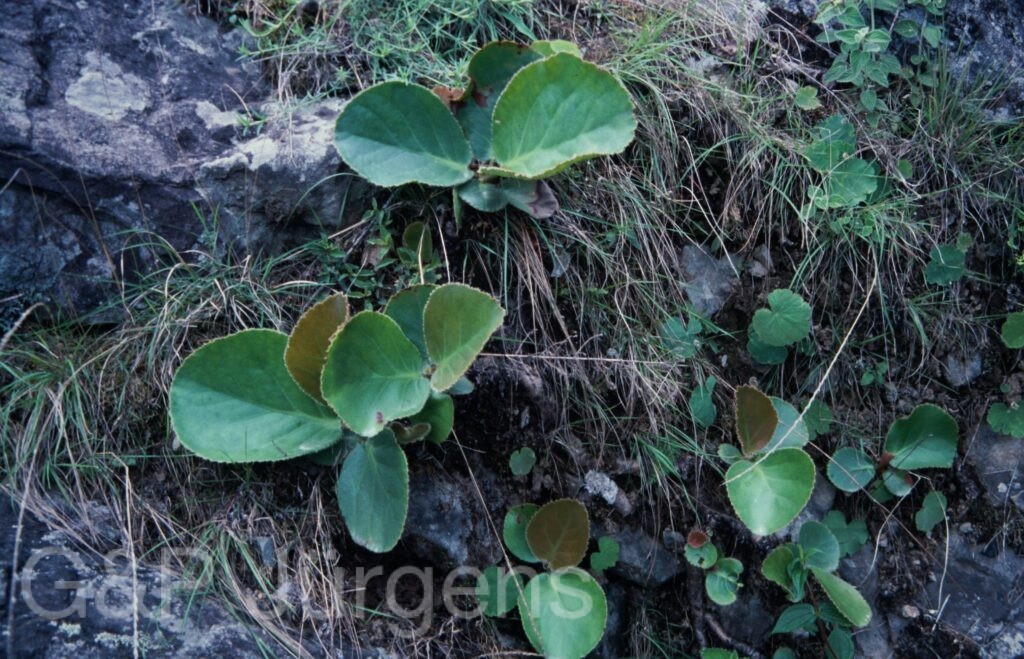
Bergenia ciliata (Haw.) Sternb. is a robust rosette-forming perennial widely distributed through the Himalaya from Pakistan and Afghanistan eastward across India, Nepal, Sikkim and Bhutan into south-west China. It is a characteristic plant of shaded, moist rock crevices, cliff ledges, stream banks and boulder-strewn slopes in the temperate forest belt, generally between about 1500 and 3000 m. The photographed gatherings span this range, from Gunda in the Gorkha region of Nepal at 1700 m and Honggaon at 2360 m up to Lachen in northern Sikkim at 2800 m, flowering in May and June. It favours cool, humid, semi-shaded microsites with seepage and good drainage, often forming extensive colonies on damp rock.

The plant arises from a stout, fleshy, creeping rhizome bearing the persistent remains of old leaf bases. The leaves are large, obovate to broadly elliptic, rounded and shortly toothed at the margin, and notably ciliate-hairy on both surfaces and margin (the basis of the epithet ciliata), distinguishing it from the glabrous-leaved B. purpurascens. The leafless scape carries a branched cymose panicle of showy flowers; the five petals are white to pale pink, broadly obovate, set off by a reddish calyx and conspicuous stamens, opening often before the new foliage is fully expanded. The fruit is a two-lobed capsule containing numerous small seeds.

Within Saxifragaceae the genus Bergenia is a small Asian group, and B. ciliata is one of its most widespread members, intergrading with relatives where ranges overlap. The thick rhizome ("pashanbhed") is important in Ayurvedic and folk medicine, valued for treating urinary calculi, which has led to heavy wild harvesting. Though not globally threatened, localised over-collection and habitat disturbance make sustainable management of this medicinally prized saxifrage a conservation concern.

Author: (Haw.) Sternb. · Sources: POWO (Kew), GBIF, Flora of China, Annotated Checklist of the Flowering Plants of Nepal, Flora of Bhutan, A Monograph of the Genus Bergenia (Yeo)

(Hook.f. & Thomson) Engl.

Sikkim2011 288
Sikkim Yumthang 3600m, June
BhutanPG2011 606 scaled
Bhutan Ludlow-Sherriff-Trail Warrtlang-La, 4500m June
Sikkim 2006 394 ergebnis
India West-Bengal, Kishong 3700m, May

Description

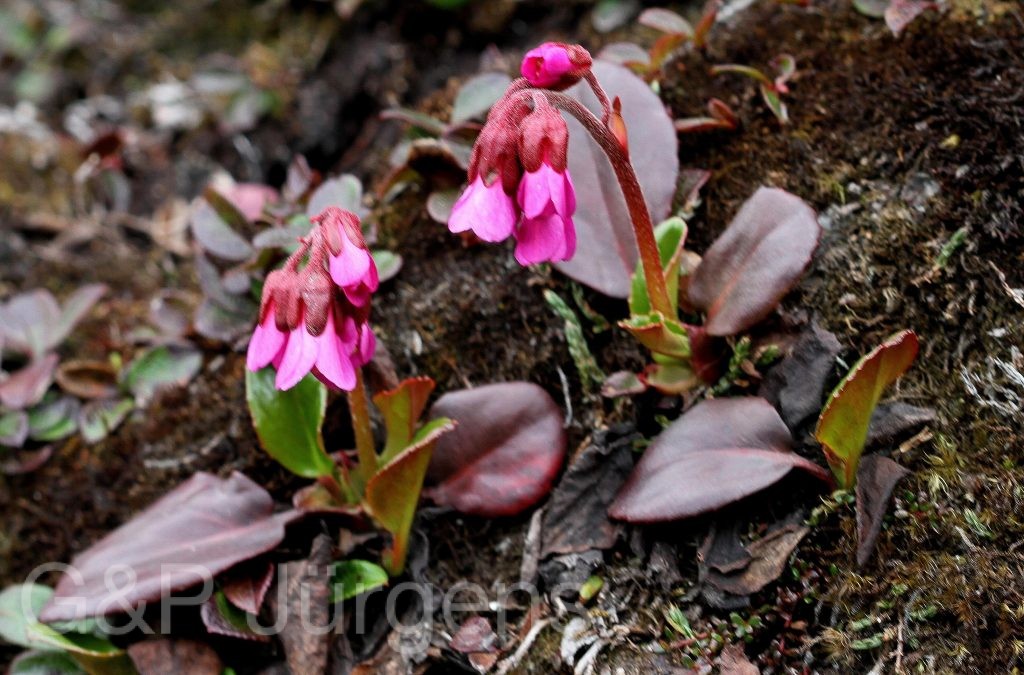
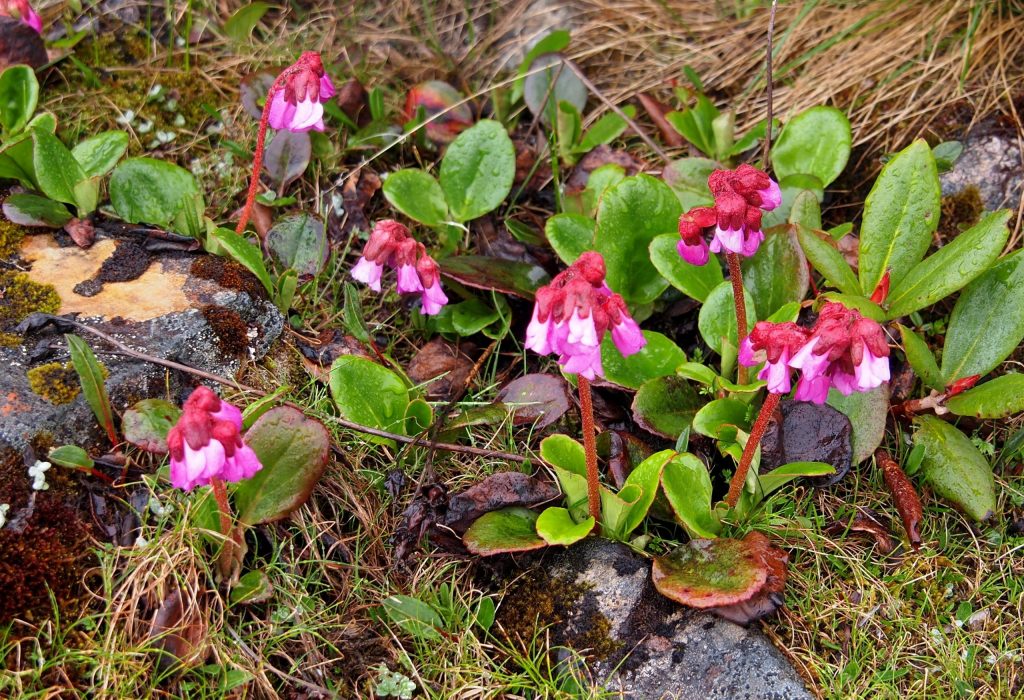
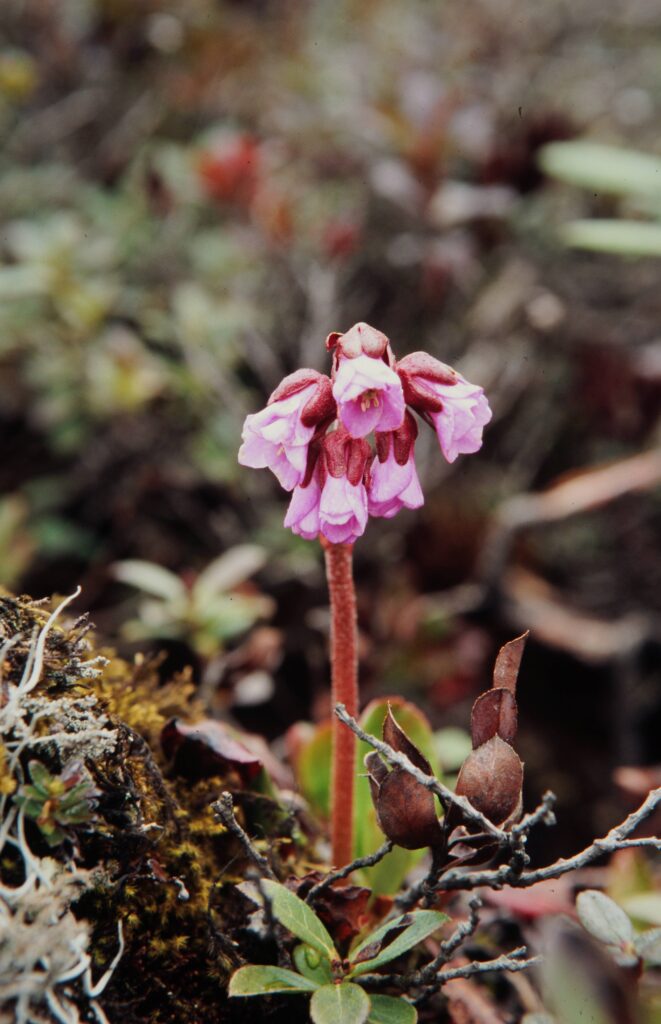
Bergenia purpurascens is a robust perennial of the high Himalaya and adjacent mountains, native to China, Nepal, India, Bhutan and Myanmar, and represented in cultivation across Europe and North America, where naturalised or garden-derived records inflate its GBIF tally to nearly a thousand occurrences. In the wild it is a plant of the alpine and upper subalpine belt, growing on rocky slopes, cliff ledges, moist meadows and the margins of rhododendron scrub. Field records illustrate this altitudinal range well: Sikkim at Yumthang around 3600 m in June, the Ludlow-Sherriff-Trail near Warrtlang-La in Bhutan at some 4500 m in June, and Kishong in West Bengal at about 3700 m in May.

The plant arises from a stout, woody, creeping rhizome bearing a basal rosette of large, leathery, obovate to elliptic leaves; these are glabrous, with entire to obscurely toothed margins and prominent reticulate venation, frequently flushing deep red or purple in autumn and cold exposure. The flowering scape is erect, reddish and glandular, terminating in a dense, nodding cyme. The flowers are showy, with five purple-red to magenta petals, a campanulate calyx of fleshy, often purplish sepals, ten stamens, and a bicarpellate ovary. The fruit is a capsule splitting to release numerous small seeds.

Described by Engler on the basis of Hooker and Thomson's material, B. purpurascens is the principal high-elevation representative of the genus in the eastern Himalaya. Its rhizomes are used in local traditional medicine, and the species is a parent of numerous ornamental Bergenia hybrids. It remains common within its broad range and is not considered threatened.

Author: (Hook.f. & Thomson) Engl. · Sources: POWO (Kew), GBIF, Flora of China, Flora of Bhutan, Pan's monograph of Bergenia

(Hook. f.) Grierson

BhutanPG2011 500
Bhutan Ludlow-Sherriff-Trail Mangde-Chu, 3950m July

Description

Bistorta griffithii (Hook. f.) Grierson is an alpine perennial herb of the eastern Himalaya, ranging through Bhutan, Sikkim and northern India into south-western China (Xizang, Yunnan) and northern Myanmar; the GBIF record of around 176 occurrences also includes herbarium-based citations from the United Kingdom and the United States. It is a plant of high alpine meadows, damp turf, rocky slopes and the upper margins of Rhododendron scrub, favouring cool, moisture-retentive soils kept wet by snowmelt and monsoon mist. The illustrated material was gathered along the Ludlow-Sherriff Trail at Mangde-Chu in central Bhutan at 3950 m in July, typical of the short midsummer flowering window in the upper alpine zone where this species reaches its display.

The plant arises from a short, thick, somewhat woody and contorted rhizome, producing erect, simple, unbranched stems. Basal leaves are long-petiolate with ovate to lanceolate or oblong blades, the margins entire and the lower surface often paler or thinly hairy; cauline leaves are few, smaller and shortly petiolate to sessile, subtended by membranous, tubular ochreae characteristic of the family. The inflorescence is a solitary, dense, terminal cylindrical to oblong spike of small flowers; perianth segments are five, white to pale pink, with eight stamens and a trifid style. As in many bistorts the lower flowers may be replaced by reddish bulbils. The fruit is a small, trigonous, dark brown shining achene enclosed by the persistent perianth.

Formerly placed in the broadly circumscribed genus Polygonum, this species is now treated in Bistorta on the basis of its perennial habit, unbranched flowering stems and dense terminal spikes. It is closely allied to other Himalayan bistorts such as B. macrophylla and B. vivipara, from which it is distinguished by leaf shape and inflorescence characters. Ecologically it contributes to the herbaceous turf grazed by livestock and wild ungulates, and the production of bulbils provides an effective means of vegetative propagation in the short, harsh alpine growing season. It has not been formally assessed for conservation but appears locally frequent within suitable habitat.

Author: (Hook. f.) Grierson · Sources: POWO (Kew), GBIF, Flora of Bhutan, Flora of China, Polygonaceae monograph (Hong & Steward)

Greene

Sikkim2003 117 G157
Sikkim below Dzongri 4100m 08.2003
Sikkim2003 208 P291
Sikkim below Dzongri 4100m 08.2003
Sikkim2003 118 G158
Sikkim below Dzongri 4100m 08.2003

Description

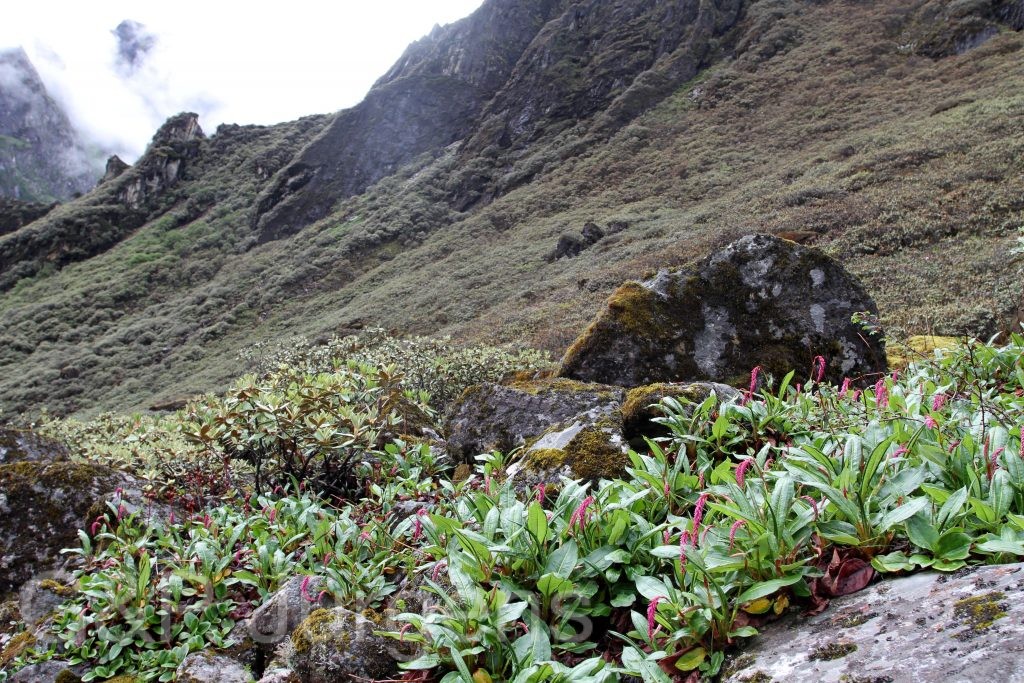
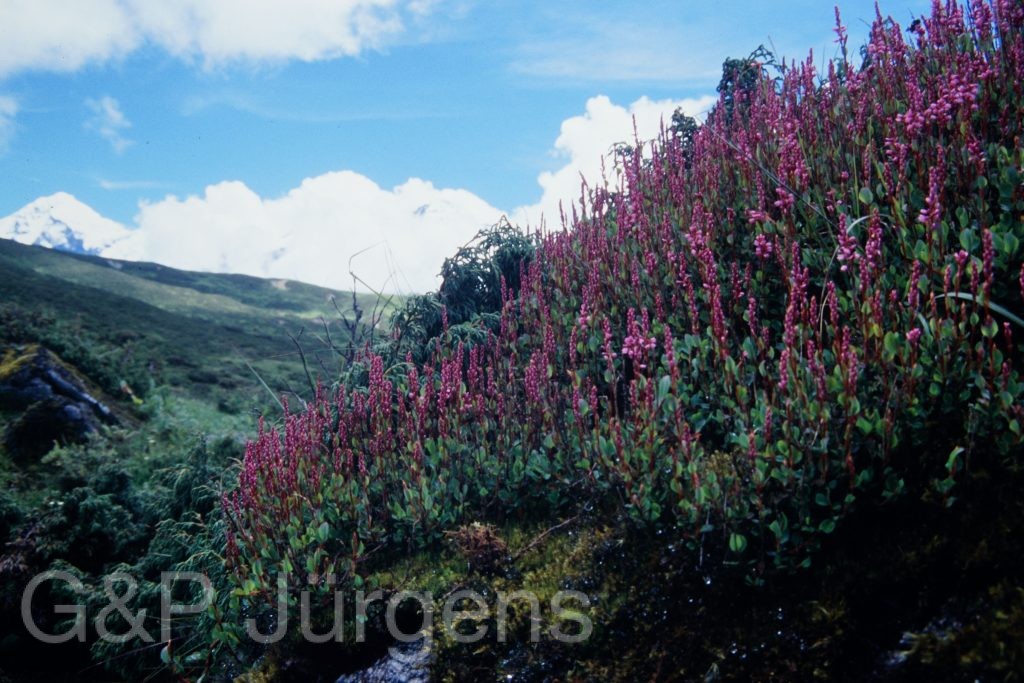
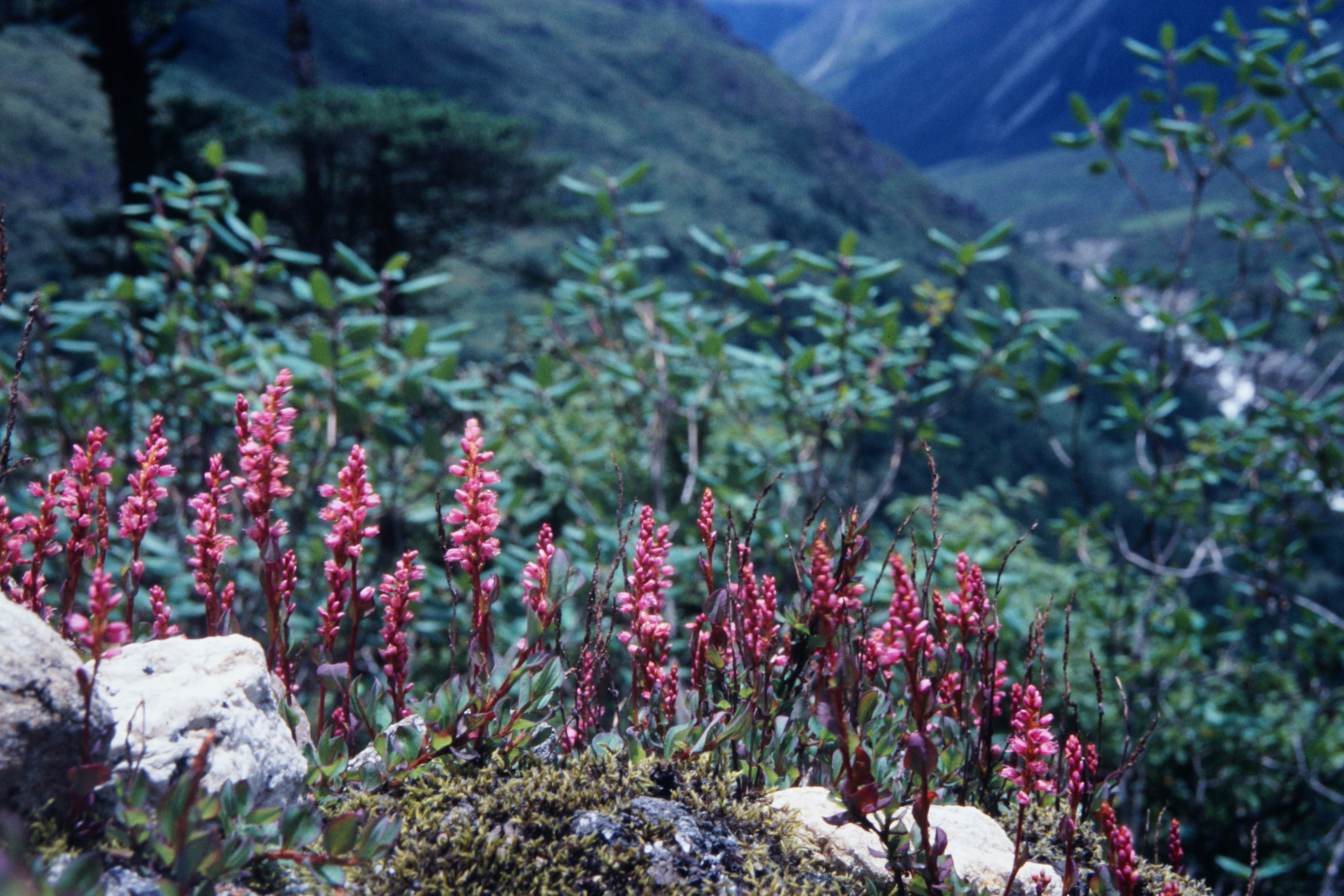
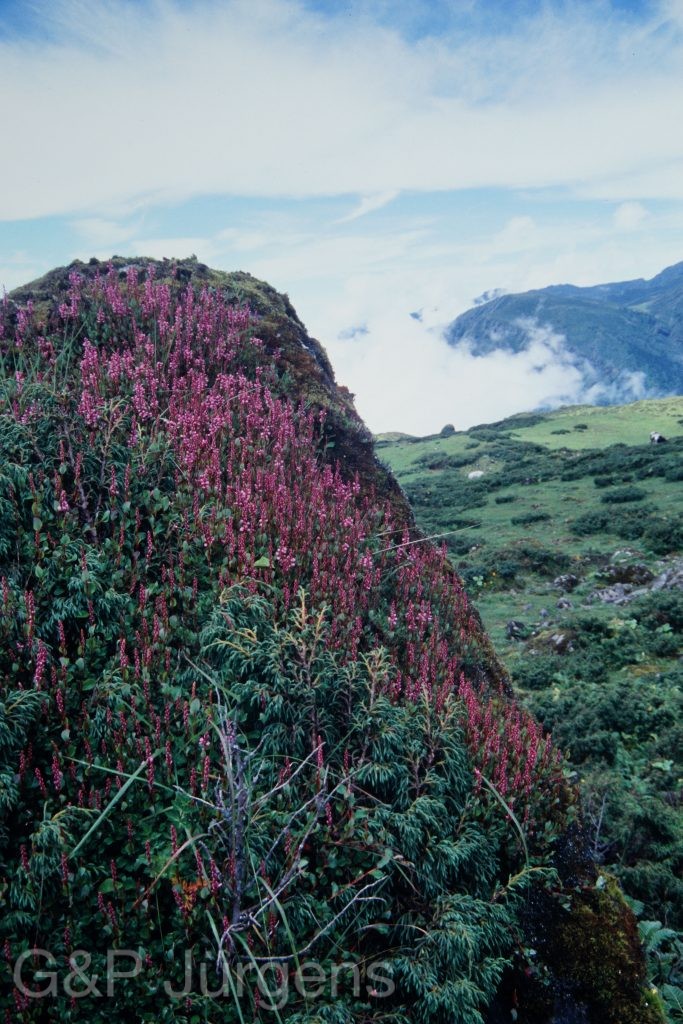
Bistorta vacciniifolia is a Sino-Himalayan alpine perennial distributed along the high mountain arc from Pakistan and northern India through Nepal, Sikkim and Bhutan into south-western China. The 525 GBIF records concentrate in this native range, with scattered occurrences in the Netherlands, Great Britain, New Zealand, Belgium, Norway and the United States representing rock-garden cultivation. It grows on open alpine slopes, rocky banks, moraines and the margins of dwarf-shrub heath, typically between about 3000 and 4500 m. The plant photographed below Dzongri in Sikkim at 4100 m in August captures it in flower during the late-monsoon alpine season on such stony, well-drained ground.

It is a low, mat- or cushion-forming herb arising from a stout, woody, often branched rhizome. The numerous slender, ascending stems bear small, leathery, ovate to elliptic leaves resembling those of Vaccinium, glabrous and shining above, paler beneath, with revolute margins, and sheathing membranous ochreae at the nodes. The inflorescence is a short, dense, terminal spike of bright rose-pink to deep red flowers, each with a five-lobed perianth, eight stamens and exserted styles. The fruit is a small, trigonous, dark brown nut enclosed by the persistent perianth.

Formerly placed in a broadly circumscribed Polygonum and still encountered under Persicaria, the species is now treated within Bistorta, the bistort knotweeds. Its cushion habit, woody rhizome and leathery evergreen leaves are adaptations to wind-exposed, frost-prone alpine ridges. Widespread and locally common across its range, it is of no conservation concern, though it remains an attractive component of high Himalayan moraine and heath communities.

Author: Greene · Sources: POWO (Kew), GBIF, Flora of Bhutan, Flora of China, Annotated Checklist of the Flowering Plants of Nepal

D.Don

Sikkim 2006 258 ergebnis
India West-Bengal, Lingza 1300m, May

Description

Boehmeria ternifolia is a shrubby member of the nettle family ranging through the eastern Himalaya and adjacent regions, recorded from Nepal, India and Bhutan, with GBIF documenting nearly two hundred occurrences across these countries; scattered records from France and the United States represent herbarium and cultivated holdings rather than wild populations. It is a plant of warm-temperate to subtropical broadleaved forest, favouring shaded ravines, streamsides, moist forest margins and roadside banks, typically between roughly 1000 and 2200 m. The specimen illustrated from Lingza in the Darjeeling district of West Bengal at about 1300 m, in May, is representative of these humid mid-elevation forests of the Sikkim-Darjeeling Himalaya, where high rainfall and deep shade favour the soft-leaved, non-stinging habit of the genus.

The plant is an erect shrub or subshrub with woody lower stems and herbaceous, often four-angled younger branches that lack stinging hairs. The leaves are characteristically arranged in whorls of three (occasionally opposite), the basis of the epithet ternifolia; they are ovate to lanceolate, with a long-acuminate apex, serrate margins and a three-veined base, the lamina thin and somewhat rough above. Stipules are present and soon falling. The minute unisexual flowers are borne in slender, interrupted axillary spikes or glomerules, the staminate flowers with a four-lobed perianth and four stamens, the pistillate flowers tubular and enclosing a single ovary with a filiform stigma. The fruit is a small achene tightly invested by the persistent perianth.

Boehmeria is a pantropical and warm-temperate genus best known for ramie (B. nivea), an important bast-fibre crop, and several Himalayan species likewise yield serviceable cordage fibres from their stems. The whorled, ternate leaf arrangement of B. ternifolia is a useful diagnostic character separating it from the many opposite-leaved congeners of the region. As a common, ecologically tolerant forest-edge shrub with a wide elevational and geographic span, it is of no conservation concern, and its abundance along disturbed margins suggests considerable resilience to moderate human impact within the eastern Himalayan forest belt.

Author: D.Don · Sources: POWO (Kew), GBIF, Flora of China Vol. 5, Flora of Bhutan Vol. 1 Part 2, Flora of Nepal, A Revision of Boehmeria (Urticaceae) (W.T. Wang and C.J. Chen)

Seem.

Sikkim 2006 309 ergebnis
India West-Bengal, Chaana 1750m, May
Sikkim 2006 455 ergebnis
Sikkim Ringi-Chu 2300m, May

Description

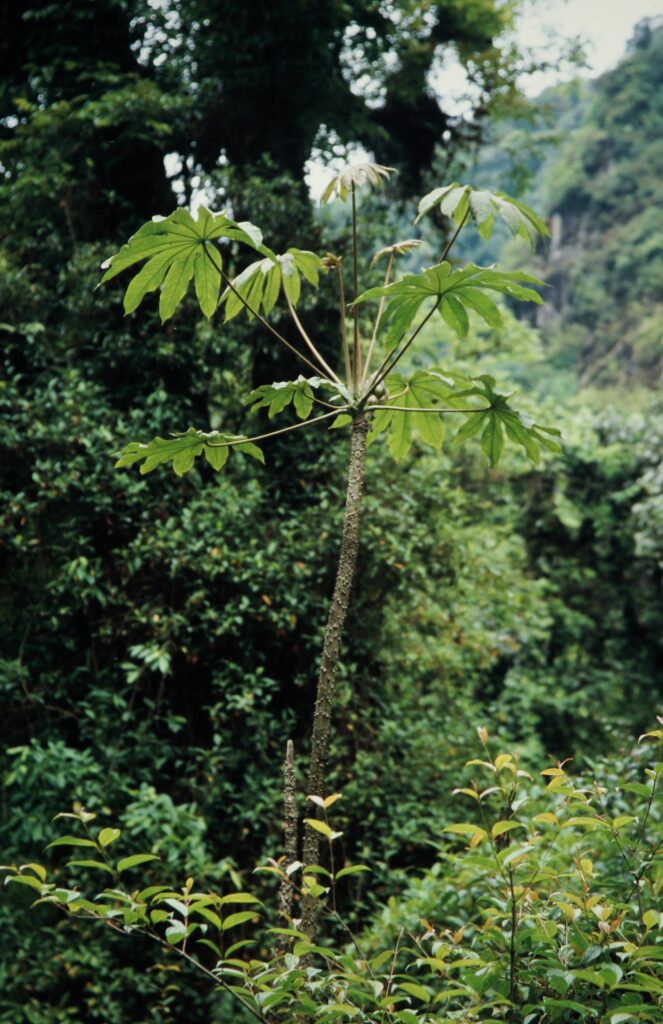
Brassaiopsis hispida Seem. is a prickly shrub or small tree of the ginseng family ranging through the eastern Himalaya and the Sino-Himalayan region. GBIF records document it in India, Nepal, Bhutan, China and Myanmar, reflecting a distribution centred on the moist eastern Himalayan foothills and adjacent uplands. It occupies humid broad-leaved evergreen and semi-evergreen forest, forest margins and ravines, typically between roughly 1,200 and 2,500 m. The collections illustrated from Chaana in West Bengal at 1,750 m and from the Ringi-Chu in Sikkim at 2,300 m, both flowering in May, are representative of its damp montane forest habitat.

The plant is an armed shrub to small tree, the stems and petioles bearing scattered prickles and a hispid indumentum. The large, long-petiolate leaves are palmately lobed or compound, with the lobes or leaflets coarsely serrate and abruptly acuminate, the surfaces rough-hairy. The inflorescence is a terminal panicle of umbels bearing small, greenish to yellowish, functionally polygamous flowers with five petals and a five-merous ovary. The fruit is a small subglobose drupe with the persistent styles at the apex.

Brassaiopsis is a Palaeotropical Asian genus closely allied to Trevesia and Aralia, distinguished by its prickly habit and lobed leaves. B. hispida is one of several morphologically variable Himalayan species, and the genus has attracted phytochemical interest for its triterpenoid saponins. Though locally common in suitable forest, it is sensitive to habitat clearance in the lower hills.

Author: Seem. · Sources: POWO (Kew), GBIF, Flora of China Vol. 13, Flora of Bhutan Vol. 2, Lowry & Frodin: Studies in Asian Araliaceae