Tag:

Spring

Wall. ex Lindl.

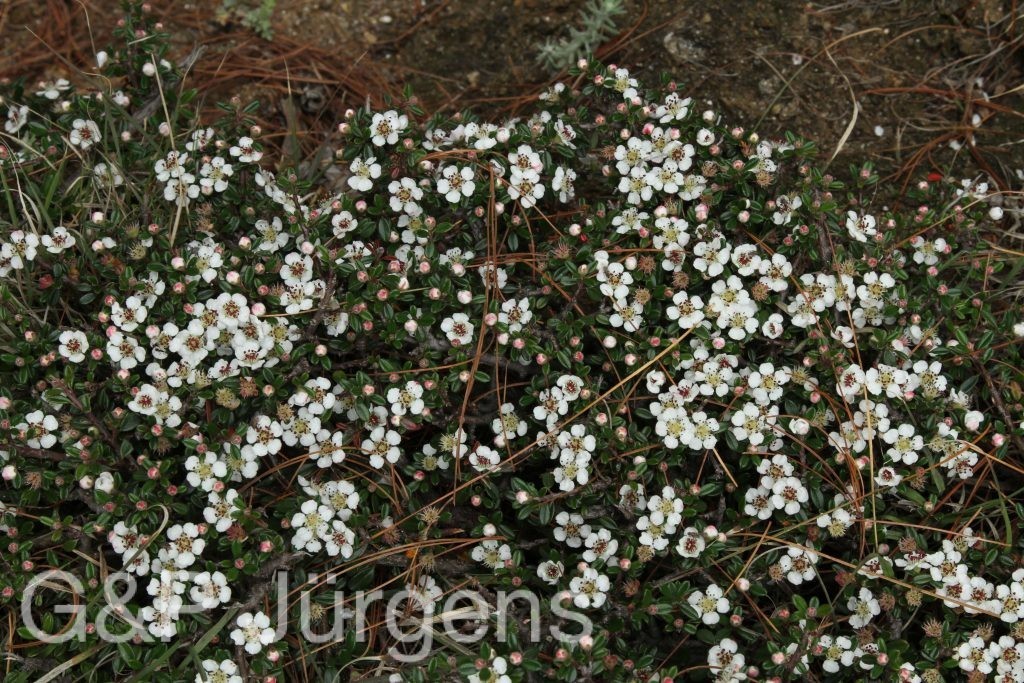
Bhutan2012 894
Bhutan Tumching-La 3850m, October
Bhutan2014 410
Bhutan Yatong-La 2900m, May
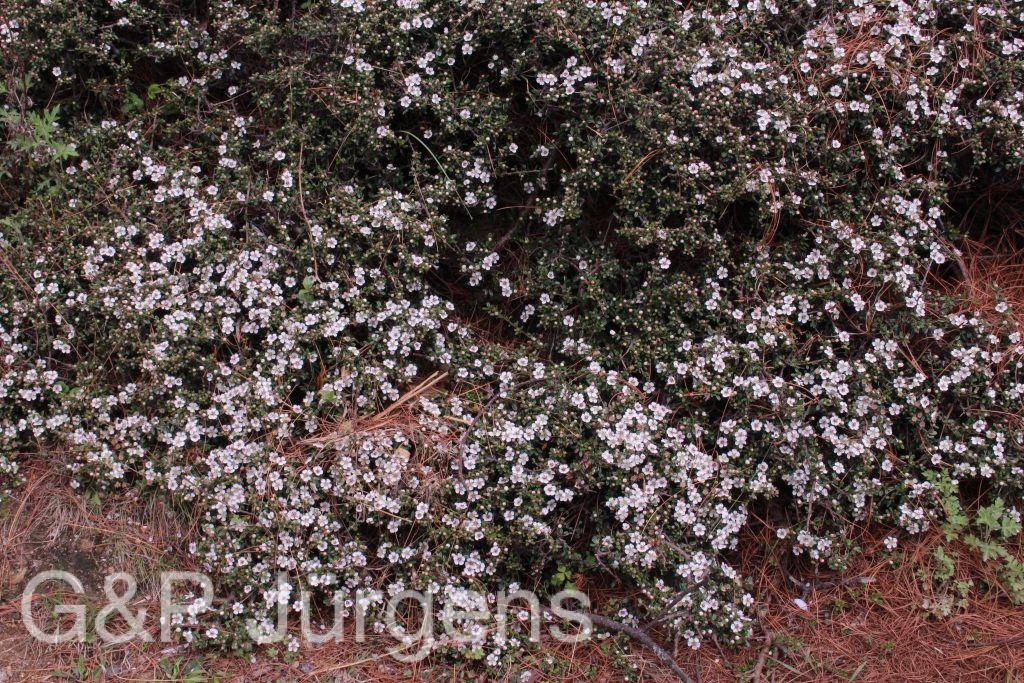
Bhutan2014 409
Bhutan Yatong-La 2900m, May

Description

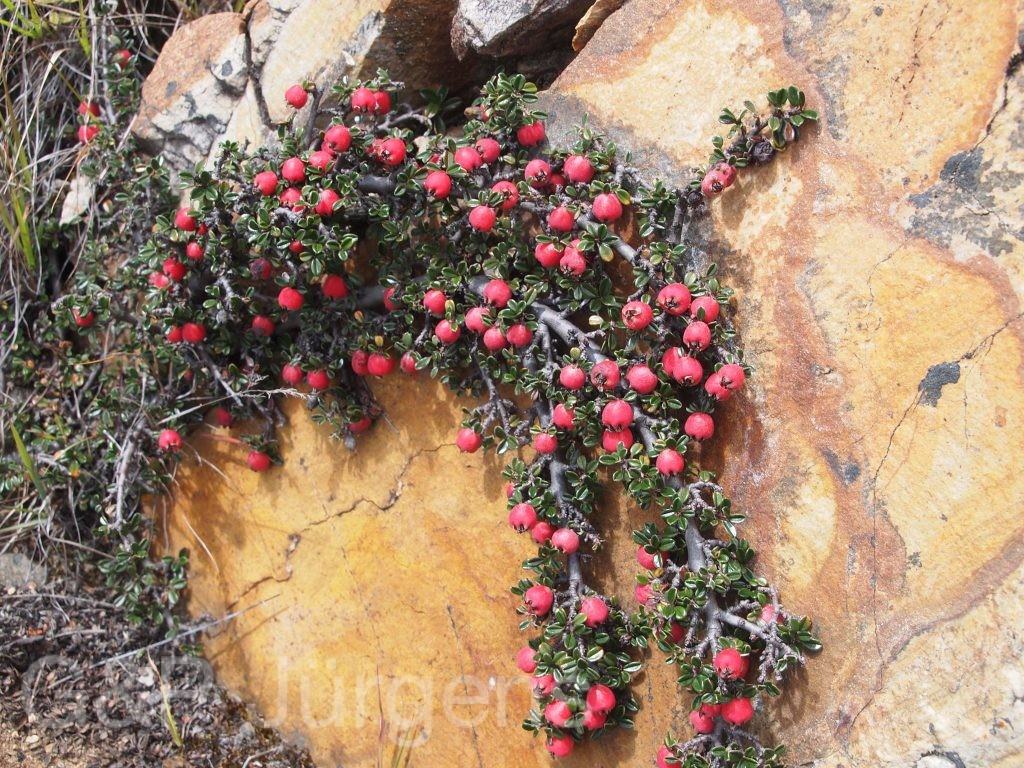
Cotoneaster microphyllus is a small-leaved, prostrate to spreading shrub native to the Himalaya and western China, recorded from Pakistan, Nepal, India, Bhutan and China; extensively grown as a groundcover and rock-garden plant, it has naturalised widely, giving GBIF records from Great Britain, Ireland, France, Germany, the United States, Australia and New Zealand among some 2800 occurrences. In its native range it grows on rocky slopes, cliff ledges, open hillsides and amid alpine scrub from the temperate to subalpine zone. The images document it in Bhutan at Tumching-La near 3850 m in October, when the fruit is ripe, and at Yatong-La around 2900 m in May at flowering.

It is an evergreen, much-branched shrub with rigid, spreading to procumbent branches, the young shoots strigose. The leaves are small, 4-10 mm, obovate to elliptic, dark glossy green and glabrescent above, grey-tomentose beneath, with revolute margins. The flowers are solitary or in pairs, with white, spreading petals, numerous stamens with reddish anthers, and two carpels. The fruit is a globose pome 5-8 mm in diameter, bright crimson to scarlet, crowned by the persistent calyx, conspicuous against the dark foliage and persisting into winter.

Cotoneaster microphyllus belongs to a taxonomically intricate, largely apomictic complex within the genus, in which many microspecies have been segregated and circumscriptions remain contentious; much horticultural material formerly under this name belongs to related taxa. Apomixis fixes minor variants as discrete lineages. The bird-dispersed fruit accounts for its frequent escape and naturalisation, and in some regions it is regarded as a minor invasive. The wild species is common and of least conservation concern.

Author: Wall. ex Lindl. · Sources: POWO (Kew), GBIF, Flora of China, Flora of Bhutan, Flora of British India, Fryer & Hylmö Cotoneasters: A Comprehensive Guide
B.Heyne ex Roth

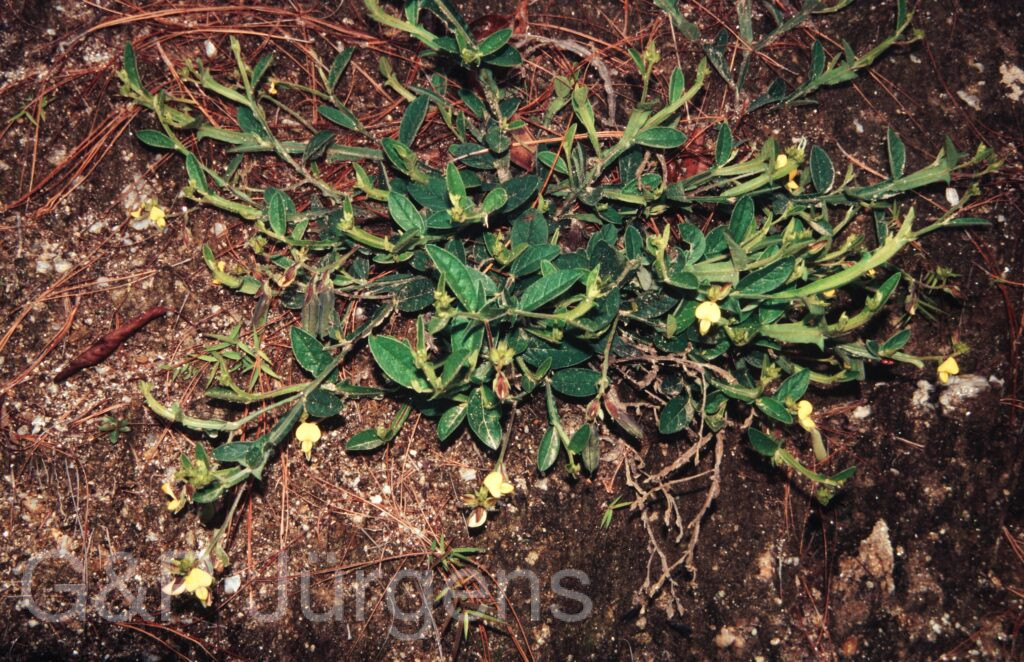
Nepal 2009 120 ergebnis
Nepal Helambu Melanehe Pul 1080, May

Description

Crotalaria albida is one of the most widespread Asian rattlepods, ranging from Pakistan, India, Nepal, Bhutan and Bangladesh eastward through China, Taiwan, Hong Kong, Myanmar, Thailand, Laos, Vietnam and Malesia to the Philippines, Indonesia, New Guinea and Australia, with naturalised records in Sri Lanka and the United States; over 2100 GBIF occurrences attest to this amplitude. In the Himalaya it favours open grassy hillsides, dry banks, pine-forest margins and disturbed roadsides on well-drained, often acidic soils. The plant photographed near Melamchi Pul in the Helambu region of central Nepal, at about 1080 m in May, typifies its preference for warm, low to mid-montane slopes between roughly 300 and 2300 m.

It is a slender, erect to ascending perennial herb or subshrub 30-90 cm tall, the wiry stems clothed in appressed silvery hairs. The leaves are simple, unifoliolate, oblong to oblanceolate and shortly petiolate, paler and pubescent beneath. The inflorescence is a slender terminal raceme of small papilionaceous flowers; the standard is pale yellow, often veined reddish-brown, and the keel is incurved and beaked. The calyx is bilabiate and hairy. As in the genus, the fruit is a short, inflated, glabrescent legume in which the loosened seeds rattle when dry.

The epithet albida alludes to the whitish, silky indumentum. Crotalaria is a large pantropical genus, and many species, including this one, contain pyrrolizidine alkaloids that render them toxic to livestock, though the plant is used locally in folk medicine. Its nitrogen-fixing root nodules enrich degraded slopes, and the species behaves as a pioneer colonist of disturbed ground, accounting for its extensive distribution and naturalisation.

Author: B.Heyne ex Roth · Sources: POWO (Kew), GBIF, Flora of China, Flora of Nepal, Flora of British India, Le Roux monograph of Crotalaria

Kurz

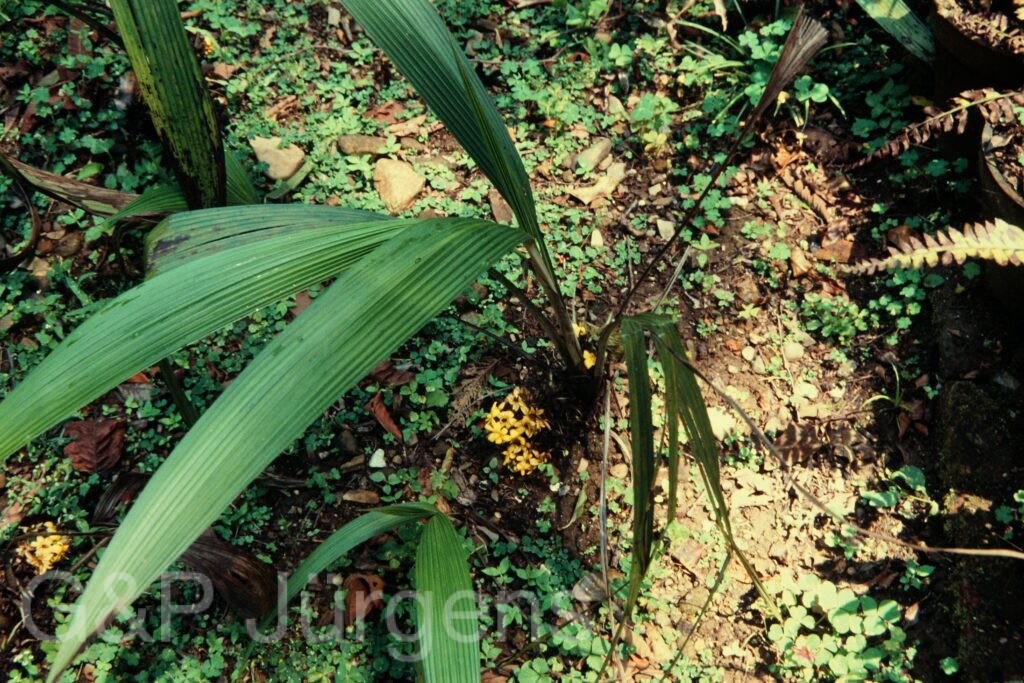
Nepal 97 612 P1183
Nepal Godavari 1400m, May
Nepal 97 613 P1184
Nepal Godavari 1400m, May

Description

Curculigo gracilis Kurz (accepted by some authorities as Molineria gracilis, under which name the species page is filed) is a small rhizomatous herb of the Hypoxidaceae distributed through the eastern Himalaya and into Southeast Asia. GBIF records, numbering 70 occurrences, span China, Thailand, India, Nepal, Bhutan, Cambodia and Vietnam. The species grows in the shaded, humid understorey of subtropical and lower montane broadleaved forests, on moist, humus-rich banks and slopes, generally between roughly 700 and 1,800 m. The illustrated plant from Godavari near Kathmandu in Nepal at 1,400 m, in May, is typical of this damp mid-hill forest habitat.

The plant arises from a short, tuberous, vertical rhizome and produces a small tuft of basal leaves. The leaves are linear-lanceolate to narrowly elliptic, plicate (longitudinally pleated) and conspicuously veined, tapering to a slender petiole-like base and often thinly hairy. The flowers are borne on short, often subterranean to ground-level scapes hidden among the leaf bases; each flower is small, bright yellow, with six spreading tepals, and the ovary is inferior and frequently prolonged into a slender beak, a diagnostic feature of the genus. The fruit is a small, fleshy, indehiscent berry-like capsule containing black, often beaked seeds.

The generic limits of Curculigo and the segregate Molineria have long been disputed, and this species is treated under both names depending on the classification followed; the disposition adopted here follows the source page in recognising Molineria gracilis as the accepted combination. As a forest-floor geophyte of humid Asian woodlands, it is of no particular conservation concern across its range, but it contributes to the diversity of the shaded understorey and is part of a genus of modest economic and ethnobotanical interest in tropical Asia.

Author: Kurz · Sources: POWO (Kew), GBIF, Flora of China Vol. 24, Flora of Bhutan Vol. 3, Flora of Nepal, Geerinck: Hypoxidaceae studies

Salisb.

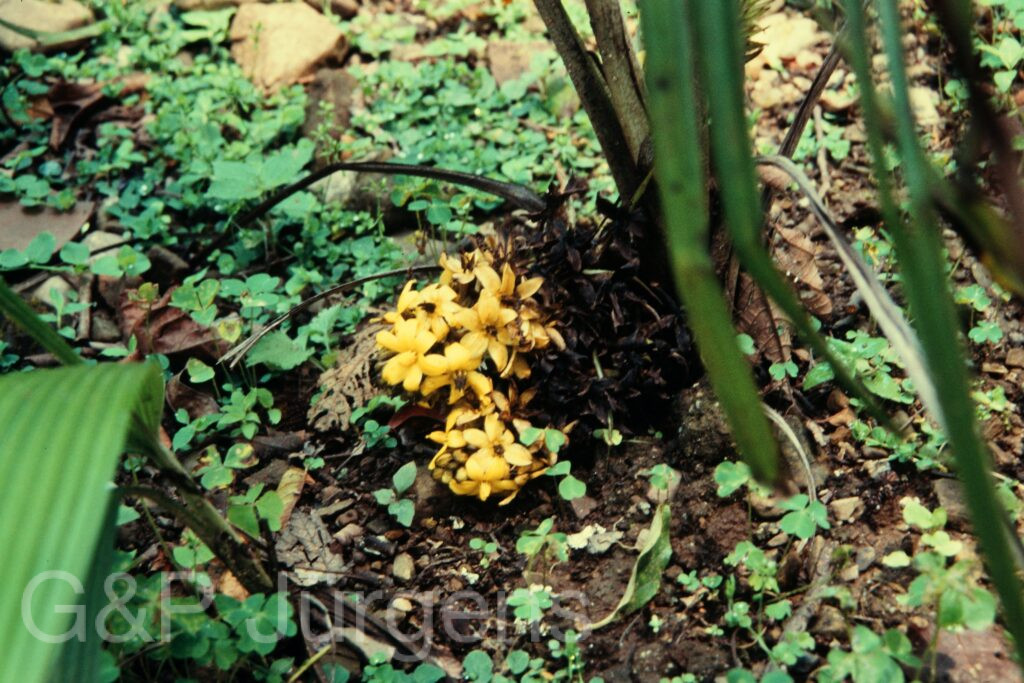
Bhutan2014 285
Bhutan Trithangebe near a farmhouse 800m, May
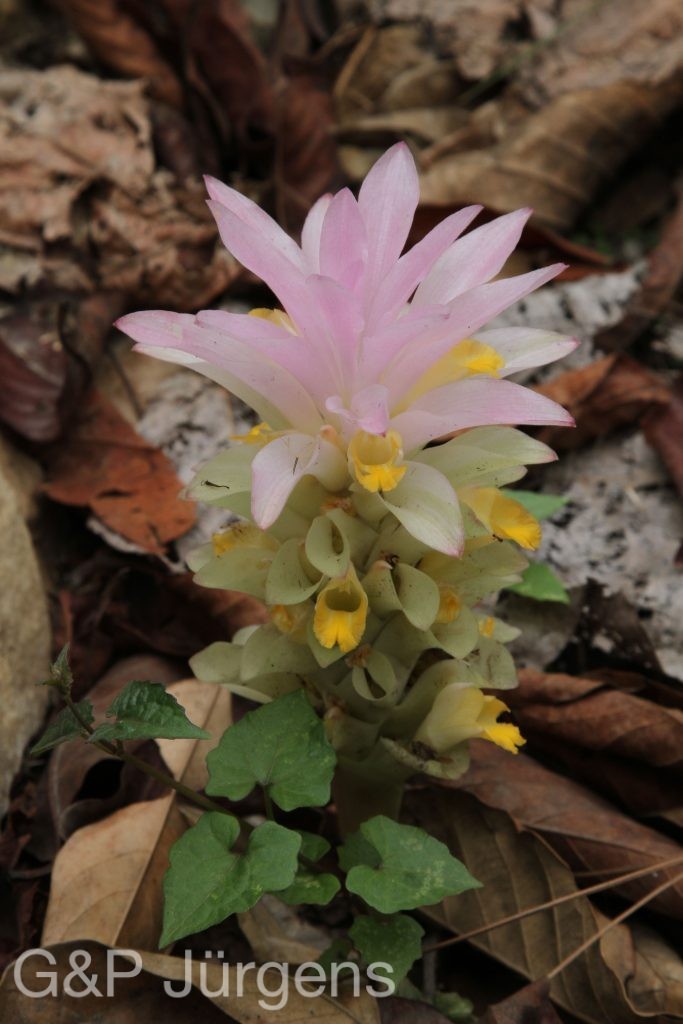
Nepal1992 189 P276 ergebnis
Nepal Banyang 2100m March 
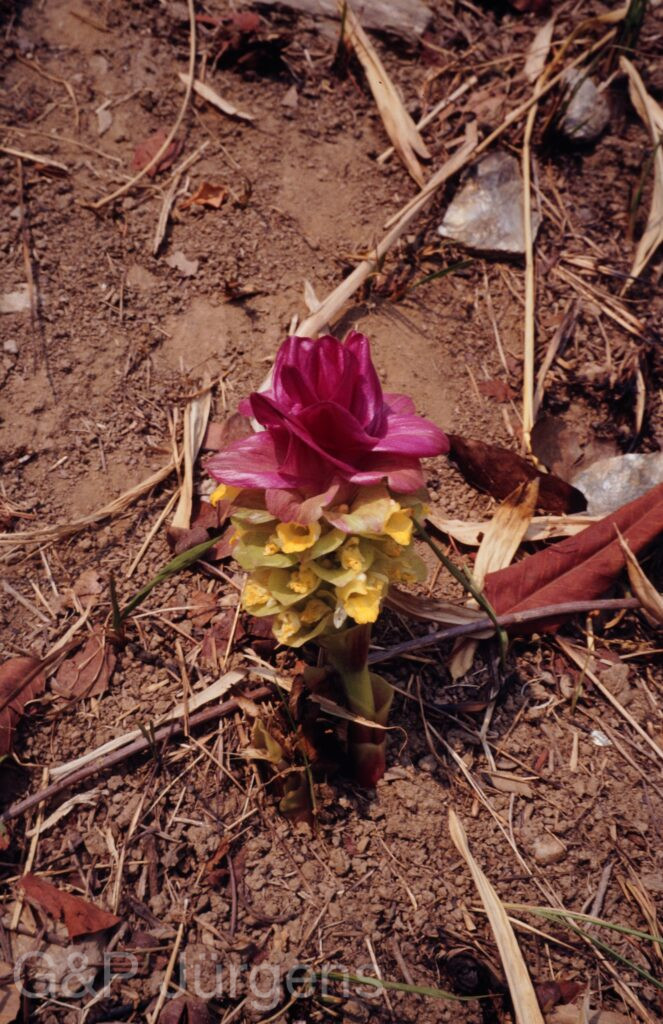
Nepal1992 190 P277 ergebnis
Nepal Banyang 2100m March 
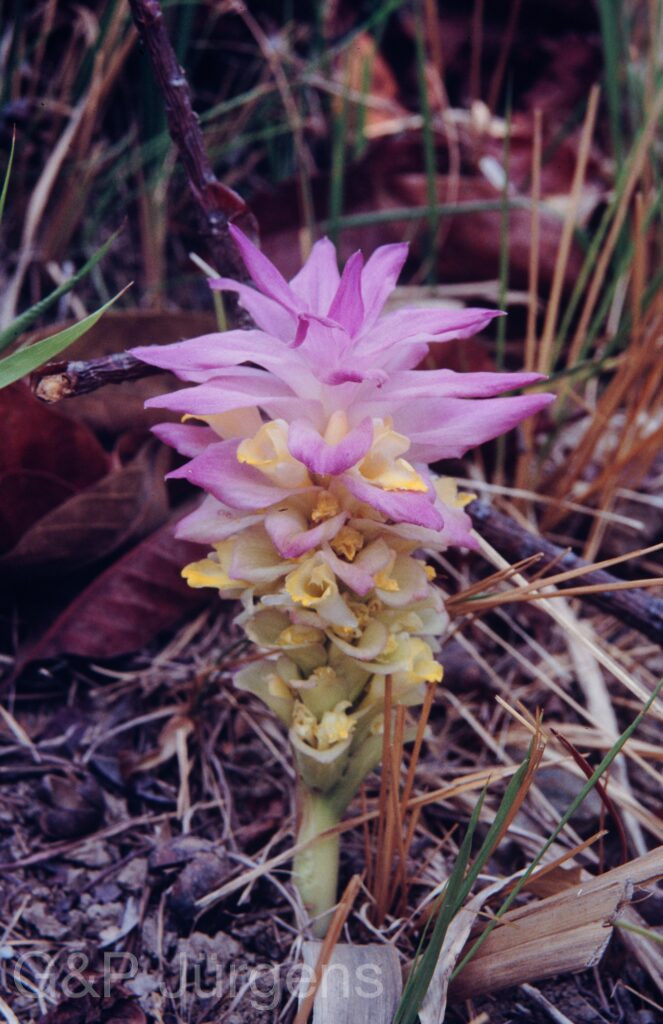
Nepal 2001 30 ergebnis ergebnis
East-Nepal Korong 1150m, April

Description

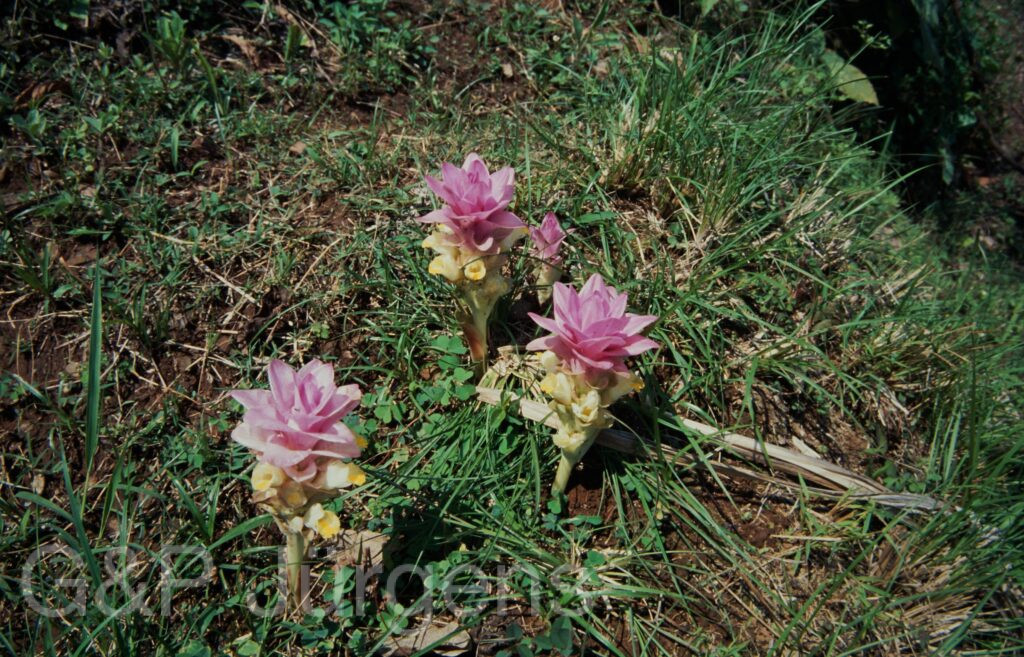
Curcuma aromatica, wild or yellow zedoary, is a South and Southeast Asian rhizomatous herb with a broad distribution documented by 490 GBIF occurrences across China (CN), India (IN), Hong Kong (HK), Bhutan (BT), Sri Lanka (LK), Myanmar (MM), Thailand (TH), Nepal (NP), Vietnam (VN), Bangladesh (BD), Laos (LA), Pakistan (PK), Indonesia (ID), Korea (KR), Malaysia (MY) and Taiwan (TW), with cultivated records in Japan (JP), Colombia (CO) and Britain (GB). It grows in moist deciduous and semi-evergreen forest, scrub and forest margins, often near habitation as a semi-cultivated medicinal plant. The illustrated collections span Bhutan at Trithangebe near a farmhouse at 800 m in May and the Nepalese sites of Banyang at 2100 m in March and Korong in East-Nepal at 1150 m in April.

It is a stout perennial arising from a fleshy, aromatic, internally orange-yellow rhizome bearing sessile and stalked tubers. The pseudostem supports large oblong to oblong-lanceolate leaves, pubescent beneath. The inflorescence appears before or with the leaves as a lateral spike, its lower fertile bracts green and the upper sterile coma bracts tinged pink to rose; the flowers are pale yellow with a tubular calyx, a hooded dorsal corolla lobe and a deflexed, emarginate yellow labellum. Fruit is a capsule, though spread is mainly clonal.

Widely employed in traditional medicine and as a cosmetic and culinary turmeric substitute, C. aromatica is rich in aromatic essential oils and curcuminoids. It is frequently confused with C. zedoaria, from which it differs in floral and rhizome characters. The family is cited verbatim as Zingiberacaea (Zingiberaceae).

Author: Salisb. · Sources: POWO (Kew), GBIF, Flora of China, Flora of Bhutan, Flora of British India, Revision of the genus Curcuma (Skornickova et al.)

(L.) Sw.

Nepal 97 589 P1136
Nepal Sabha-Khola 560m May
Nepal 97 590 P1138
Nepal Sabha-Khola 560m May

Description

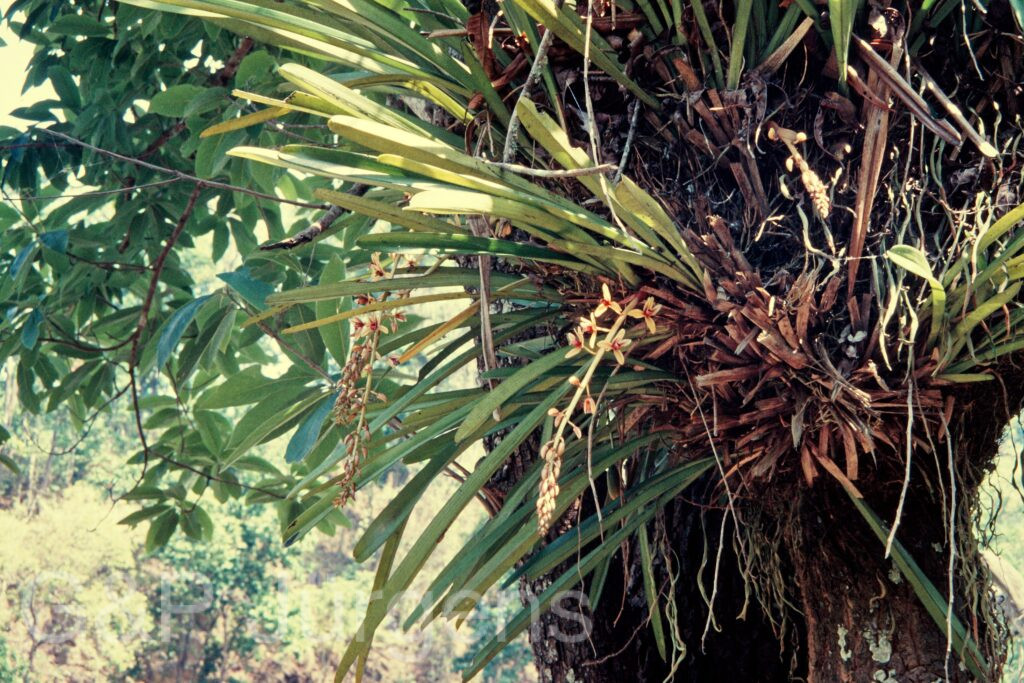
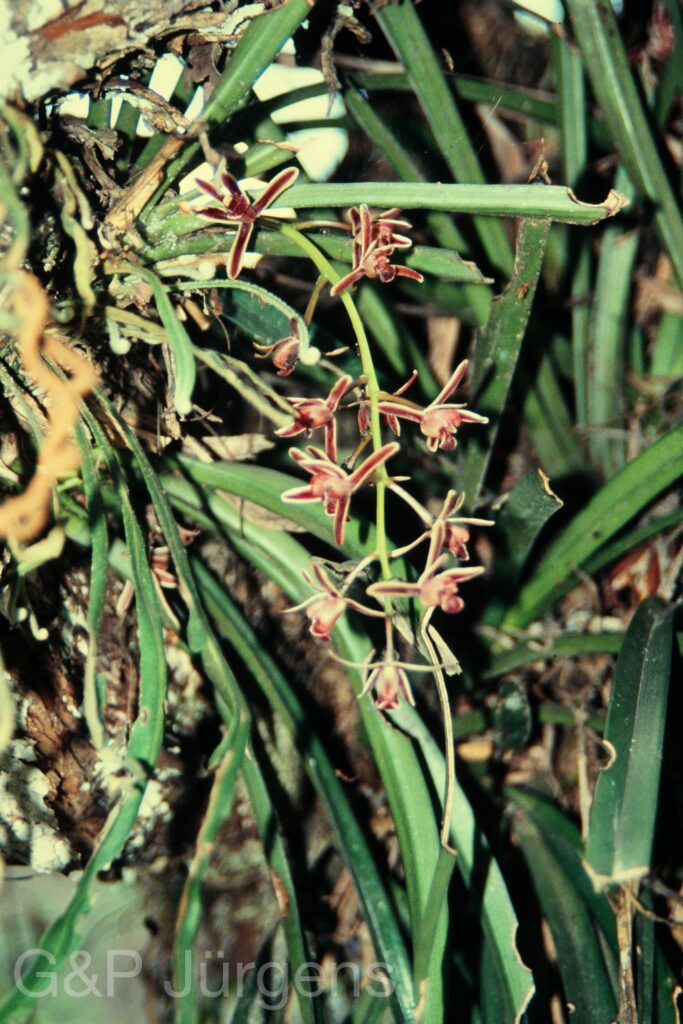
Cymbidium aloifolium is a widespread tropical Asian orchid recorded by GBIF (638 occurrences) from India, China, Vietnam, Thailand, Nepal, Sri Lanka, Indonesia, Bangladesh, the Philippines, Myanmar and Bhutan, alongside cultivated records farther afield. It is a robust epiphyte, and occasional lithophyte, of warm, seasonally dry lowland and submontane forest, growing on tree trunks and large branches and on rocky outcrops, generally below about 1000 m. The plant photographed in the Sabha Khola of Nepal at only 560 m in May represents its characteristic low-elevation, pre-monsoon flowering, the lowest-altitude species treated in this group.

The species forms dense clumps of ovoid pseudobulbs largely concealed by leaf bases. The leaves are several, distichous, thick and rigidly coriaceous, linear-ligulate and unequally bilobed at the apex, recalling those of an Aloe and giving the species its epithet. The inflorescence is a long, pendulous raceme bearing numerous closely set flowers. The sepals and petals are similar, oblong, pale yellow to cream and marked with a broad central reddish-brown to maroon stripe; the three-lobed labellum echoes this colouring, with erect lateral lobes and a recurved mid-lobe, and bears two longitudinal keels on the disc. The stout column carries waxy pollinia, and the fruit is an ellipsoid capsule.

Cymbidium aloifolium belongs to the section of pendulous-racemed, drought-tolerant epiphytic species adapted to monsoonal climates, in which the rigid leaves and water-storing pseudobulbs buffer the long dry season. The flowers are bee-pollinated, and the species is much collected for horticulture and traditional medicine. Although still locally common, like all Cymbidium it is listed on CITES Appendix II to regulate international trade in wild plants.

Author: (L.) Sw. · Sources: POWO (Kew), GBIF, Flora of China, Flora of Bhutan, Flora of Nepal, The Genus Cymbidium (Du Puy & Cribb)

Wall.

Nepal 97 58 G90
Nepal Mewa-Khola 1160m April
Nepal 97 59 G93
Nepal Mewa-Khola 1160m April

Description

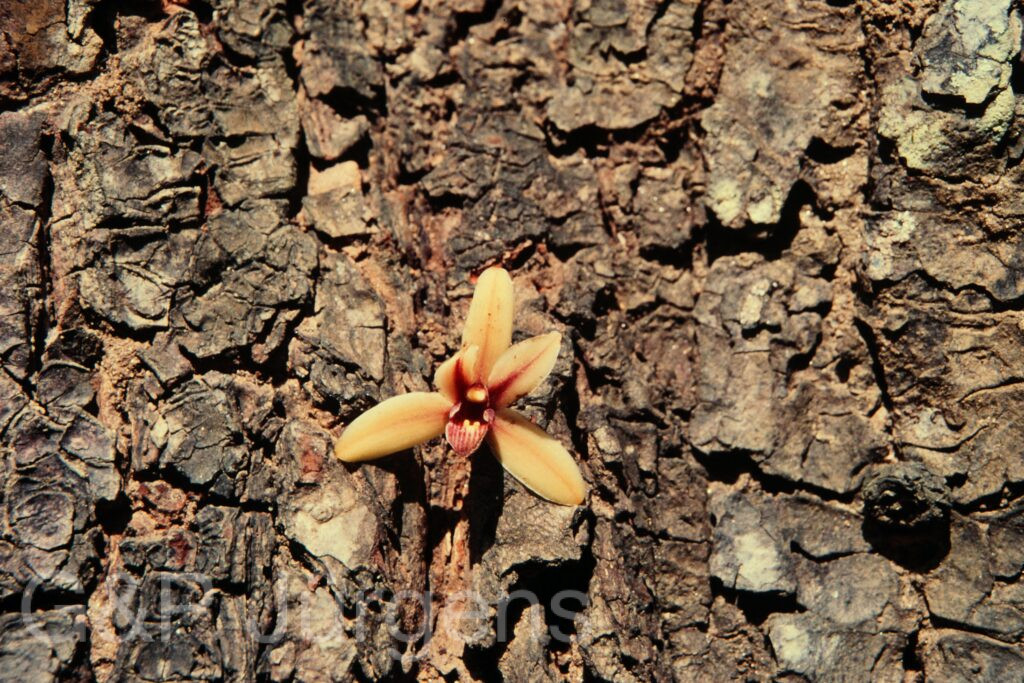
Cymbidium crassifolium Wall. is an epiphytic to lithophytic orchid of the warm subtropical Himalaya and adjacent Southeast Asia, recorded from Nepal, Bhutan, north-east India, Myanmar, Thailand and southern China. It grows in broad-leaved evergreen and semi-deciduous forest at low to moderate elevations, frequently perched on mossy tree trunks, on shaded rock faces or on steep humus-covered banks in humid ravines. The photographed population from the Mewa-Khola valley of eastern Nepal at 1160 m, flowering in April, typifies its preference for lower hill forests near the warm-temperate transition, where it relies on free drainage, dappled light and a seasonal alternation of monsoon rains and a drier cool season.

The plant forms clustered, ovoid to spindle-shaped pseudobulbs partly enclosed by leaf bases, bearing several thick, leathery, linear-ligulate leaves (the epithet crassifolium referring to their fleshy texture). The inflorescence is an arching to pendent lateral raceme carrying numerous fragrant, relatively small flowers. Sepals and petals are narrow and spreading, yellowish to dull olive or brownish-green, often veined with maroon; the trilobed labellum is whitish marked with red-purple spotting and bears longitudinal keels on the disc. The fused column and stalked pollinia are typical of the genus, pollination being followed by an erect, ellipsoid dehiscent capsule.

The name has frequently been confused with the closely allied Cymbidium mannii, with which it shares the pendent, multiflowered habit. POWO accepts C. crassifolium as a distinct species within section Cymbidium. As a member of a genus heavily collected for the ornamental trade, wild populations are subject to over-collection and habitat loss; like all Orchidaceae it is listed under CITES, underscoring the need for in-situ protection of its subtropical forest habitat.

Author: Wall. · Sources: POWO (Kew), GBIF, Flora of China, The Genus Cymbidium (Du Puy & Cribb), Orchids of Nepal, CITES Orchid Checklist

Rchb.f.

Nepal1992 60 P85 ergebnis
Nepal Milka Danda 2700m March 
Nepal1992 157 P230 ergebnis
Nepal Milka Danda 2700m March 

Description

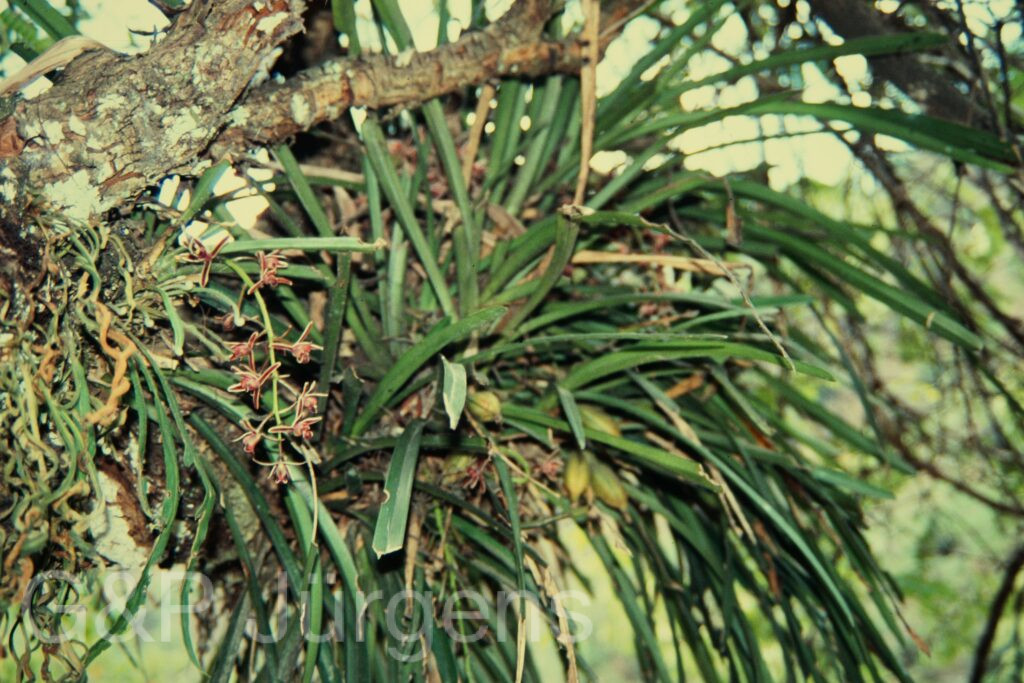
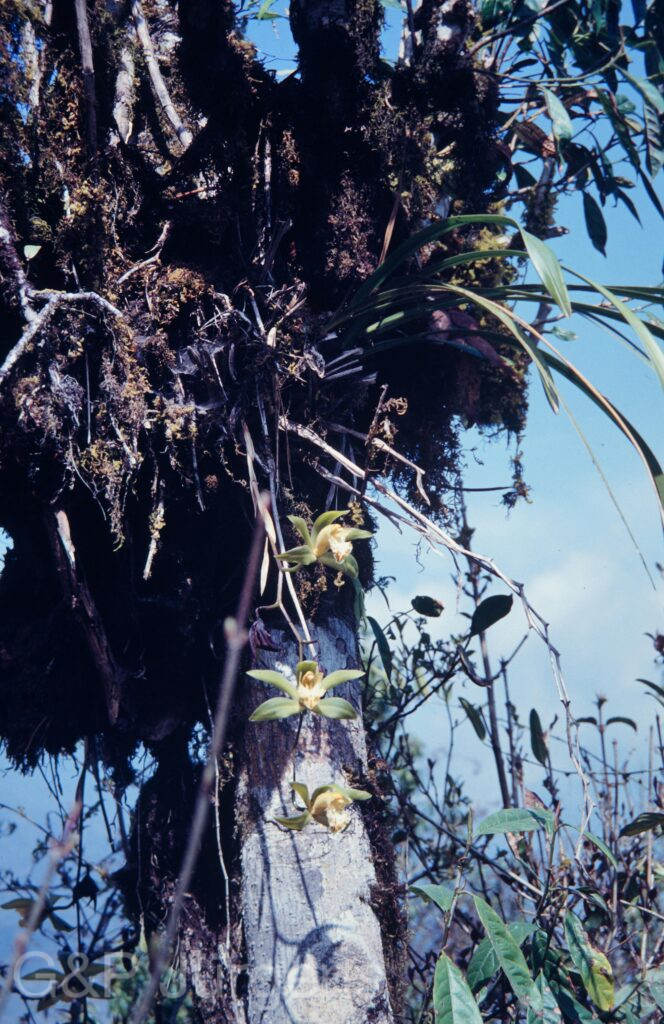
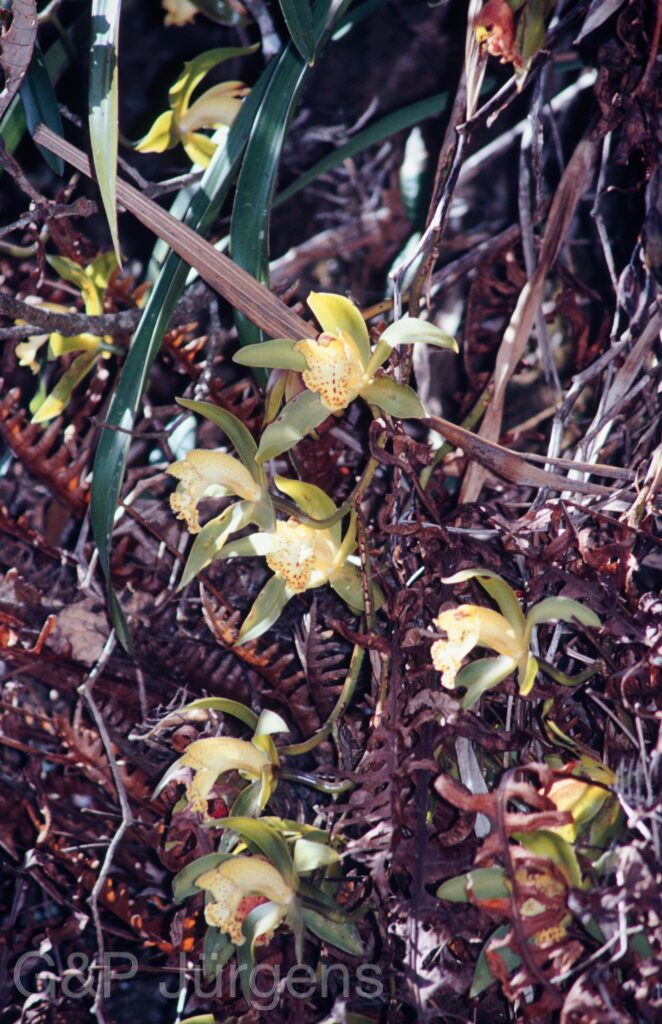
Cymbidium hookerianum is a large-flowered orchid of the Himalaya and southwestern China, distributed through China, India, Bhutan, Nepal, Myanmar and Thailand, with around 185 GBIF records. It is chiefly an epiphyte, also growing on mossy rocks, in cool, humid temperate broadleaved and evergreen forest, typically between about 1500 and 2800 m. The gathering from Milka Danda in Nepal at 2700 m in March documents its early-spring flowering, when this mid-montane cloud-forest belt provides the moist, shaded, well-ventilated conditions the species requires.

It is a robust sympodial epiphyte forming clusters of stout, ovoid pseudobulbs partly sheathed by the bases of the long, arching, linear-lanceolate leaves. The inflorescence is a long arching to pendent raceme bearing several large, fragrant flowers. The sepals and petals are broad and spreading, apple-green to yellow-green, while the trilobed labellum is whitish to cream, spotted and blotched with crimson or maroon, with raised keels along its disc; the column is winged in typical Cymbidium fashion. The fruit is an ellipsoid capsule releasing innumerable dust-like seeds.

Cymbidium is a genus of tribe Cymbidieae long prized in horticulture, and C. hookerianum (commemorating J. D. Hooker) is an important parent in modern hybrids. Its showy, scented flowers are pollinated by bees, while the minute seeds depend on mycorrhizal fungi for germination. Wild populations are vulnerable to over-collection for the ornamental trade and to forest loss, and Cymbidium species are listed on CITES Appendix II, regulating their international commerce.

Author: Rchb.f. · Sources: POWO (Kew), GBIF, Flora of China, Flora of Bhutan, The Genus Cymbidium (Du Puy & Cribb)

(Lindl.) D.K.Liu & Ming H.Li

Bhutan2014 39
Bhutan Trashigang 1100m, May
Bhutan2014 40
Bhutan Trashigang 1100m, May

Description

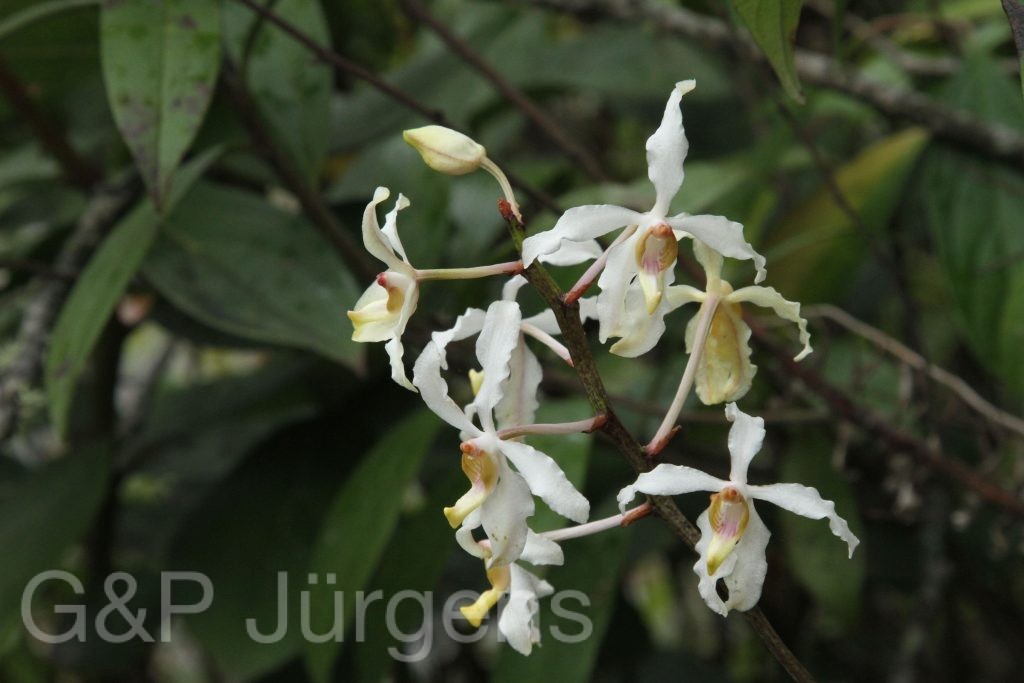
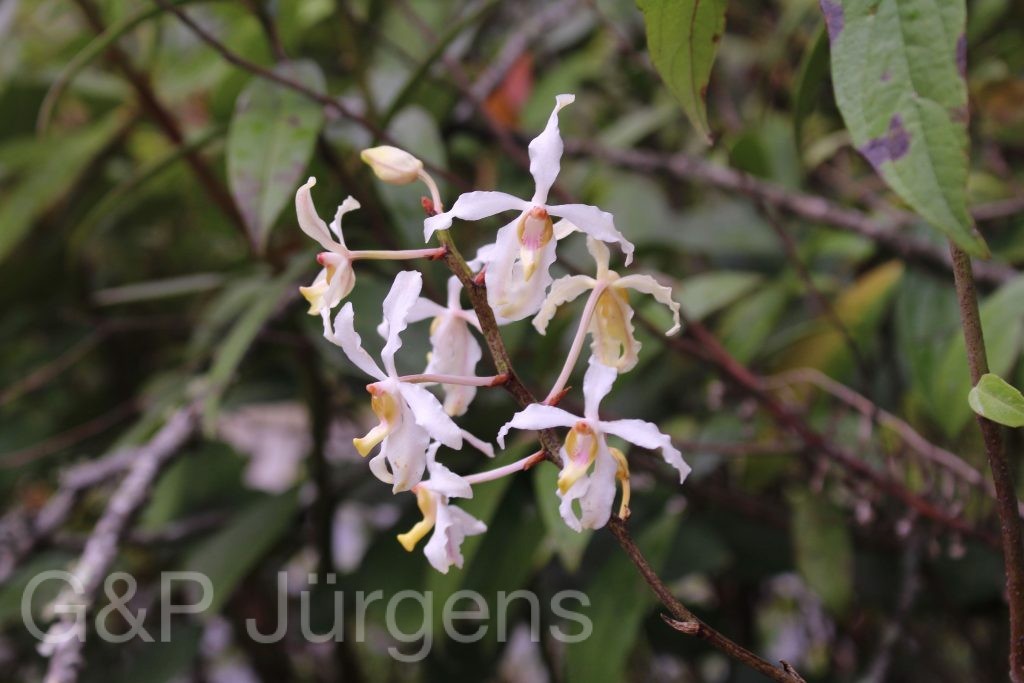
Cymbilabia undulata (formerly placed in Vandopsis) is an epiphytic orchid of the eastern Himalaya and adjacent areas, recorded from Nepal, north-east India, Bhutan, Myanmar and south-west China across some 129 georeferenced occurrences. It grows as an epiphyte on the trunks and larger limbs of trees in warm, humid subtropical to lower montane forest, favouring bright, well-drained positions. The Bhutan collection at Trashigang at about 1100 m reflects its preference for the warm subtropical belt, typically between roughly 700 and 1600 m, where seasonal monsoon rainfall and high humidity prevail.

It is a robust monopodial epiphyte with a stout, leafy stem and thick, fleshy roots. The leaves are distichous, ligulate to strap-shaped, coriaceous and unequally bilobed at the apex. The inflorescence is an axillary, branching raceme or panicle bearing numerous fleshy, long-lived flowers; these are yellowish marked with reddish-brown blotches, with spreading, undulate-margined sepals and petals. The lip is small, fleshy, three-lobed and saccate at the base, a diagnostic feature, and the column is short and stout bearing a waxy pollinarium.

The transfer from Vandopsis to Cymbilabia reflects molecular reassessment of the Aeridinae (subtribe of Vandeae), in which generic limits have been substantially revised. As with many Vandoid orchids, the showy resupinate flowers are adapted to insect pollination, and the dust-like seeds are wind-dispersed. Although fairly widespread, populations are vulnerable to habitat loss and orchid collecting; like all orchids the species is listed on CITES Appendix II, regulating international trade.

Author: (Lindl.) D.K.Liu & Ming H.Li · Sources: POWO (Kew), GBIF, Flora of Bhutan, Flora of China, The Orchids of Bhutan (Pearce & Cribb), Genera Orchidacearum (Pridgeon et al.)

Hook.f. & Thomson

Sikkim 2006 306 ergebnis
Sikkim Ringi-Chu Tolung Gompa 2410m, May
Sikkim 2006 477 ergebnis
Sikkim Ringi-Chu Tolung Gompa 2410m, May
Sikkim 2006 475 ergebnis
Sikkim Ringi-Chu Tolung Gompa 2410m, May

Description

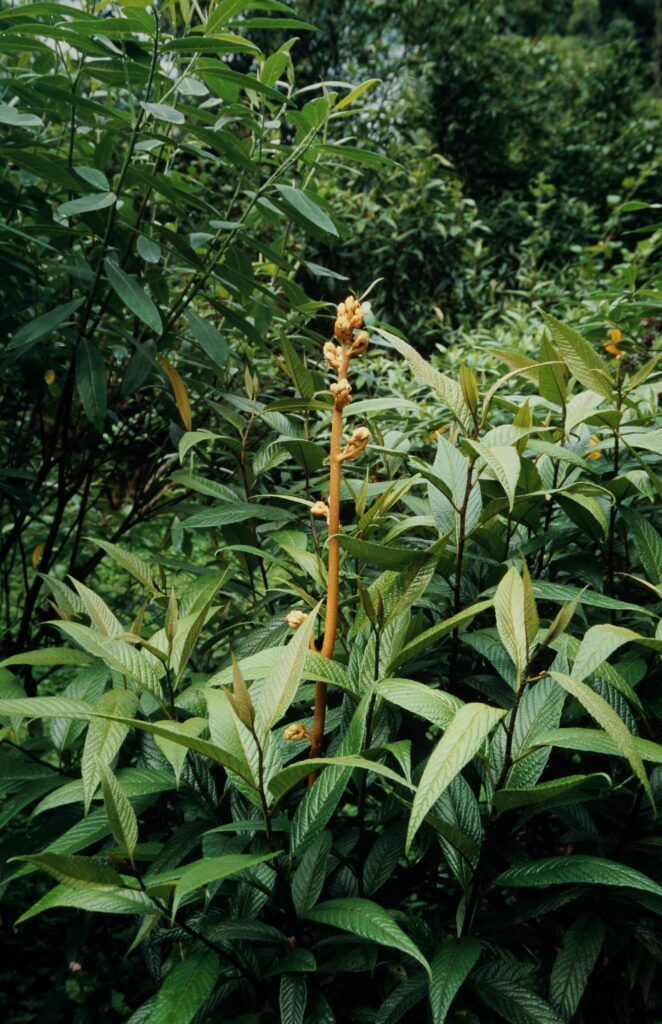
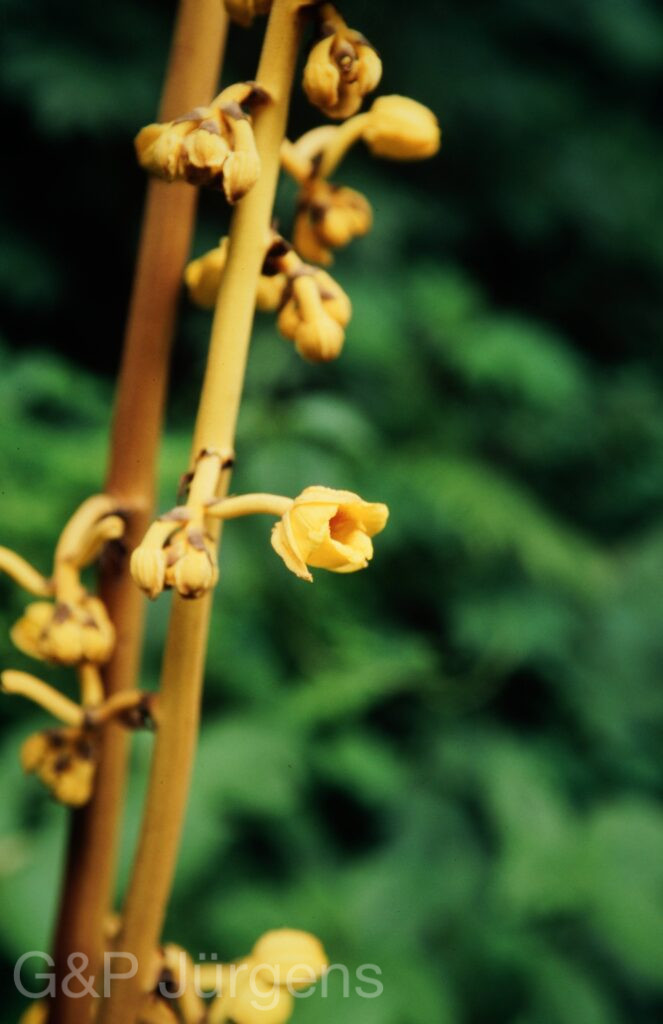
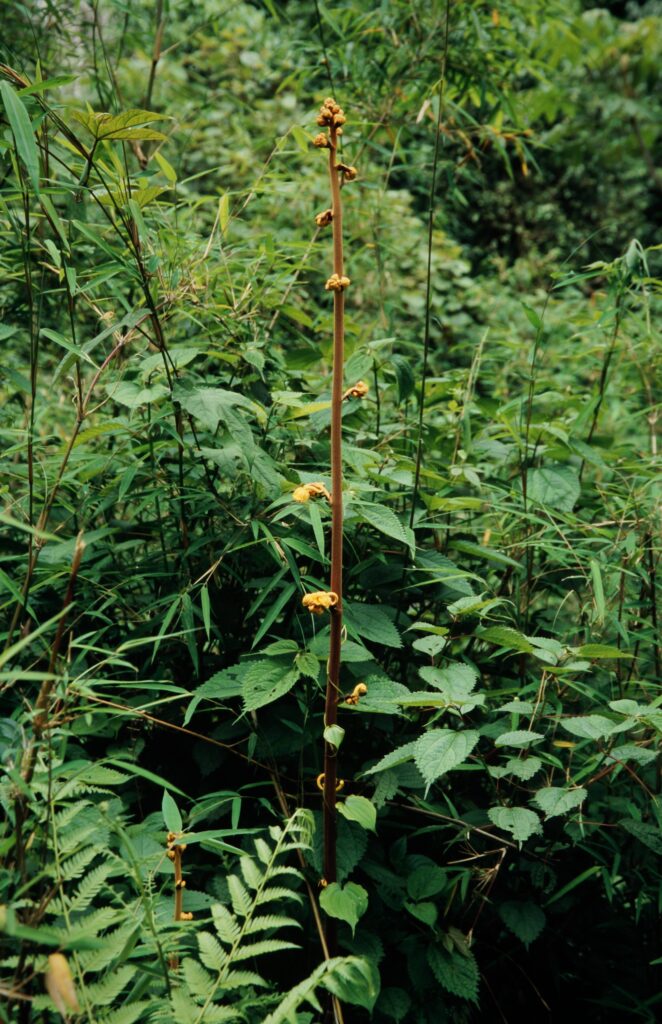
Cyrtosia lindleyana Hook.f. & Thomson is a leafless, mycoheterotrophic orchid of the tribe Vanilleae, distributed across the eastern Himalaya and into mainland and insular Southeast Asia. Its range, documented through some 400 georeferenced records, spans Nepal, northeast India, Bhutan, southern China, Taiwan, Myanmar, Vietnam and Indonesia. The species favours the deep humus and leaf litter of shaded, humid broad-leaved and mixed forests, where it depends on a mycorrhizal fungal partner for its entire nutrition. It typically occurs at montane elevations between roughly 1,500 and 2,800 m, consistent with the photographed population at Ringi-Chu near Tolung Gompa in Sikkim, recorded at 2,410 m in May.

Lacking chlorophyll, the plant emerges only to flower and fruit, arising from a stout, fleshy, coralloid rhizome that ramifies through the substrate. The erect, brownish to ochre, scale-clad inflorescence bears a loose raceme or panicle of comparatively large flowers. These are fleshy and yellowish, often suffused with brown or russet tones, with spreading sepals and petals and a concave, somewhat saccate lip bearing internal ridges. The fruit is distinctive among orchids: a large, fleshy, berry-like, indehiscent capsule, red at maturity, containing hard-coated seeds rather than the typical dust-fine orchid seed.

The genus Cyrtosia, together with allied Galeola, exemplifies the repeated evolution of full mycoheterotrophy within Vanilleae and is of considerable interest for studies of orchid–fungus associations. Because the plants are inconspicuous and only briefly visible, the species is easily overlooked and under-recorded. As an obligate forest-floor mycoheterotroph it is highly sensitive to logging and disturbance of soil mycota, and like all orchids is afforded protection under CITES Appendix II.

Author: Hook.f. & Thomson · Sources: POWO (Kew), GBIF, Flora of China Vol. 25, Flora of Bhutan Vol. 3, Pearce & Cribb: The Orchids of Bhutan (2002)

(W.W.Sm. & Cave) B.L.Burtt

Nepal 97 130 P229
Nepal Mewa-Khola 2600m April
Nepal1992 238 W349 ergebnis
Nepal Kyapra 2800m March 
Nepal1992 108 W148 ergebnis
Nepal Kyapra 2800m March 

Description

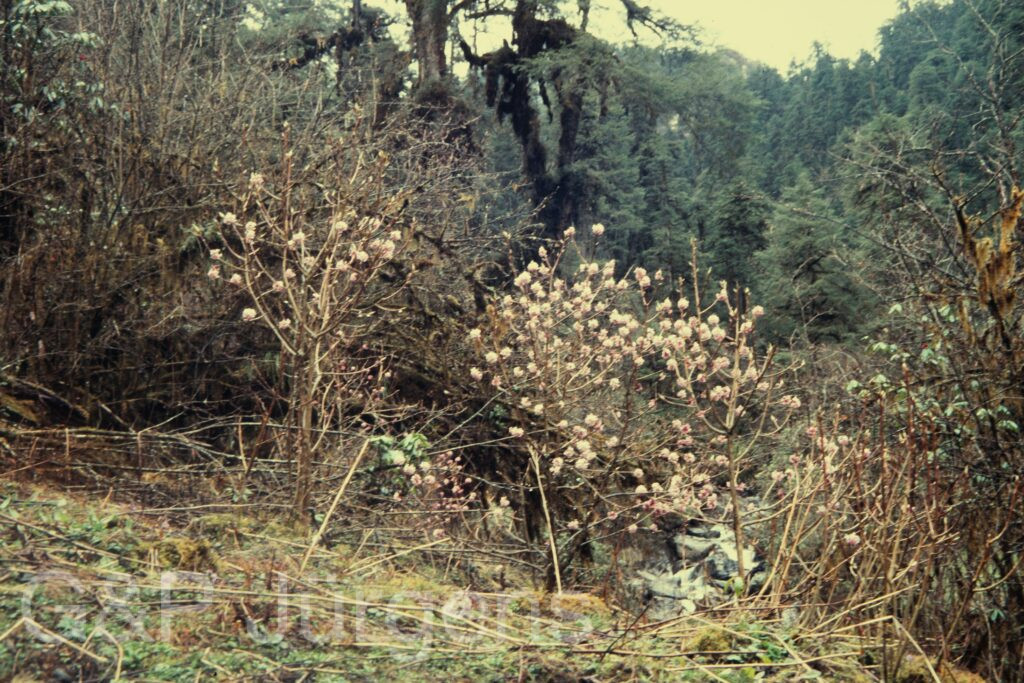
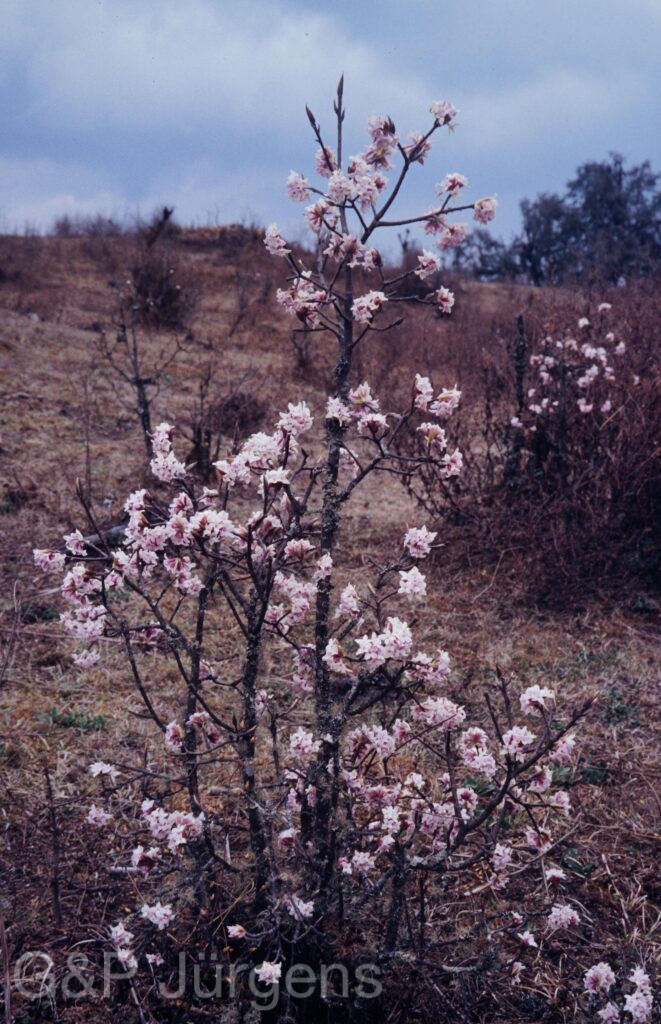
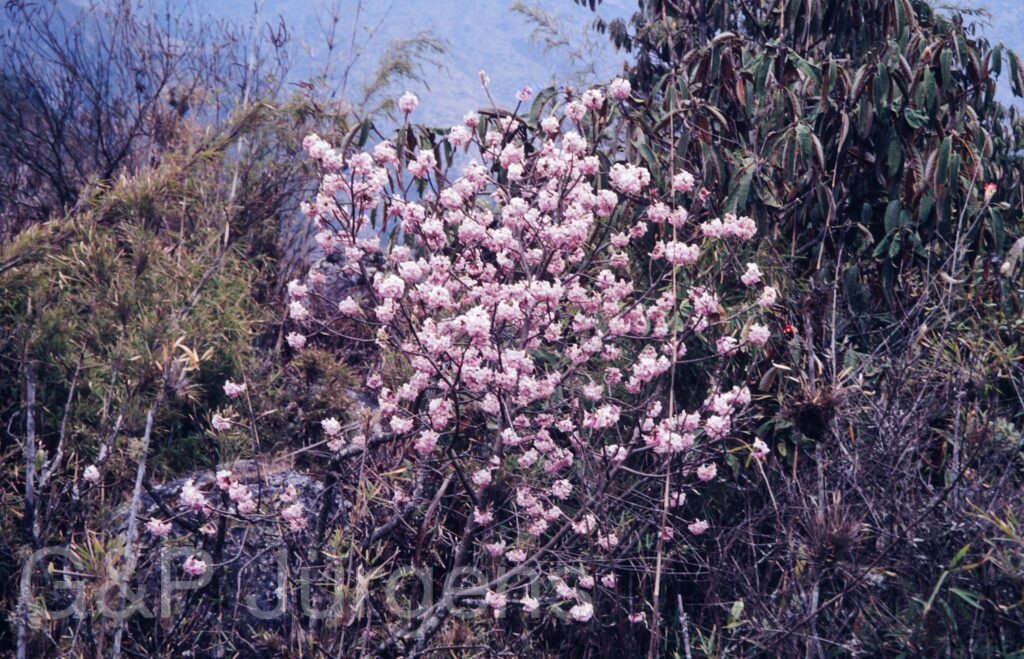
Daphne bholua var. glacialis is a Himalayan variant of the paper daphne, distributed across the China-Nepal-India sector of the range, with about 79 GBIF occurrences. It grows in cool temperate forest and forest-edge scrub, in clearings, on shrubby slopes and along ridges, on moist but well-drained humus-rich soils, frequently with rhododendron, oak and conifers. The collections illustrated from the Mewa Khola at 2600 m in April and from Kyapra at 2800 m in March, both in eastern Nepal, are characteristic of its range of roughly 2400-3500 m, where it flowers in late winter and early spring; the epithet glacialis alludes to this hardy, high-cold habitat where the smaller-leaved form prevails.

This variety is a much-branched erect shrub typically 1-2.5 m tall, with tough, fibrous, pliant bark. The leaves are alternate, leathery, elliptic to oblanceolate, entire and glossy above, clustered toward the branch tips and more readily deciduous than in the typical variety. The fragrant flowers are borne in dense terminal and subterminal clusters; lacking petals, the showy perianth consists of a slender hypanthial tube expanding into four spreading lobes that are pinkish-purple outside and paler within, intensely scented. Eight stamens are inserted in two whorls within the tube, and the superior ovary ripens into a small ovoid drupe that turns black.

The taxon is treated by POWO as variety glacialis of Daphne bholua, distinguished from the typical form chiefly by its more deciduous, smaller leaves and tolerance of higher, colder sites. Like other Himalayan daphnes its bark yields strong fibre used in handmade lokta paper, and the whole plant contains acrid, irritant compounds. It is prized in horticulture for its winter fragrance; wild populations can be affected by bark harvesting and habitat clearance.

Author: (W.W.Sm. & Cave) B.L.Burtt · Sources: POWO (Kew), GBIF, Flora of China, Flora of Nepal, Halda The Genus Daphne, Brickell & Mathew Daphne monograph