Tag:

Spring

Hook.f.

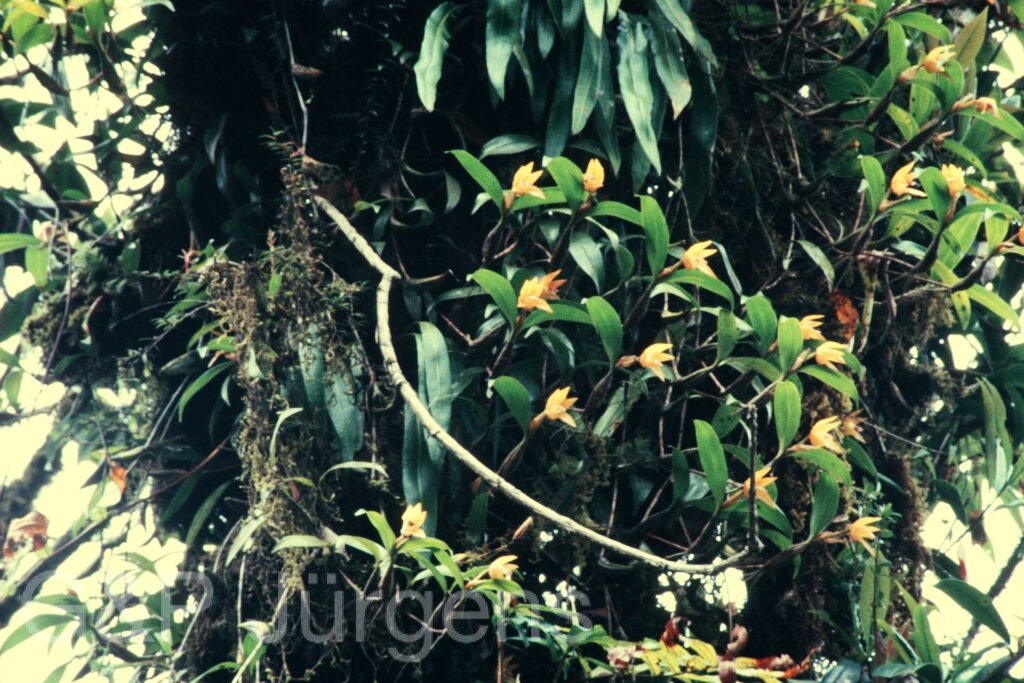
Nepal 97 424 P815
Nepal Tashigaon 3100m May

Description

Dendrobium rotundatum Hook.f. is an epiphytic orchid of the eastern Himalaya and adjacent ranges, distributed through Nepal, northern India, Bhutan and into south-western China and Myanmar, with a GBIF record of about 122 occurrences (including a cultivated citation from Belgium) that reflects its relatively narrow distribution and inconspicuous habit. It grows perched on the trunks and branches of trees in cool, humid temperate broadleaf and mixed forest, where mossy bark and high atmospheric moisture sustain its epiphytic roots. The illustrated plant was recorded at Tashigaon in eastern Nepal at 3100 m in May, an elevation at the cool, montane end of the genus's range and a season corresponding to flowering as spring conditions return to the forest.

It is a small epiphyte with slender, often pendent to ascending stems (pseudobulbs) that are somewhat swollen and jointed, bearing distichous, thin-textured, oblong to lanceolate leaves along their length, these often deciduous in the dormant season. The flowers are produced from the nodes, solitary or few together, and are relatively small; the sepals and petals are subequal, with the lateral sepals united at the base to the column foot to form a short, rounded mentum or chin, an attribute echoed in the epithet rotundatum. The labellum is entire to obscurely three-lobed, the disc often bearing low ridges or a callus, and the column is short and footed in the typical Dendrobium pattern. The fruit is a ribbed, dehiscent capsule releasing dust-like seeds.

Dendrobium, with its centre of diversity in tropical and subtropical Asia, is one of the largest orchid genera, and the cool-growing, small-flowered Himalayan species such as D. rotundatum represent its montane, temperate fringe. As an epiphyte it depends on intact, humid old-growth forest and on mycorrhizal fungi for seed germination, making it sensitive to logging and habitat degradation. Like most orchids it is listed under CITES Appendix II to regulate international trade, and although not separately assessed as threatened, its restricted range and habitat specificity warrant ongoing monitoring of wild populations.

Author: Hook.f. · Sources: POWO (Kew), GBIF, Flora of China, Orchids of Nepal (Raskoti), The Genus Dendrobium (Wood)
Wall. ex Lindl.

Description

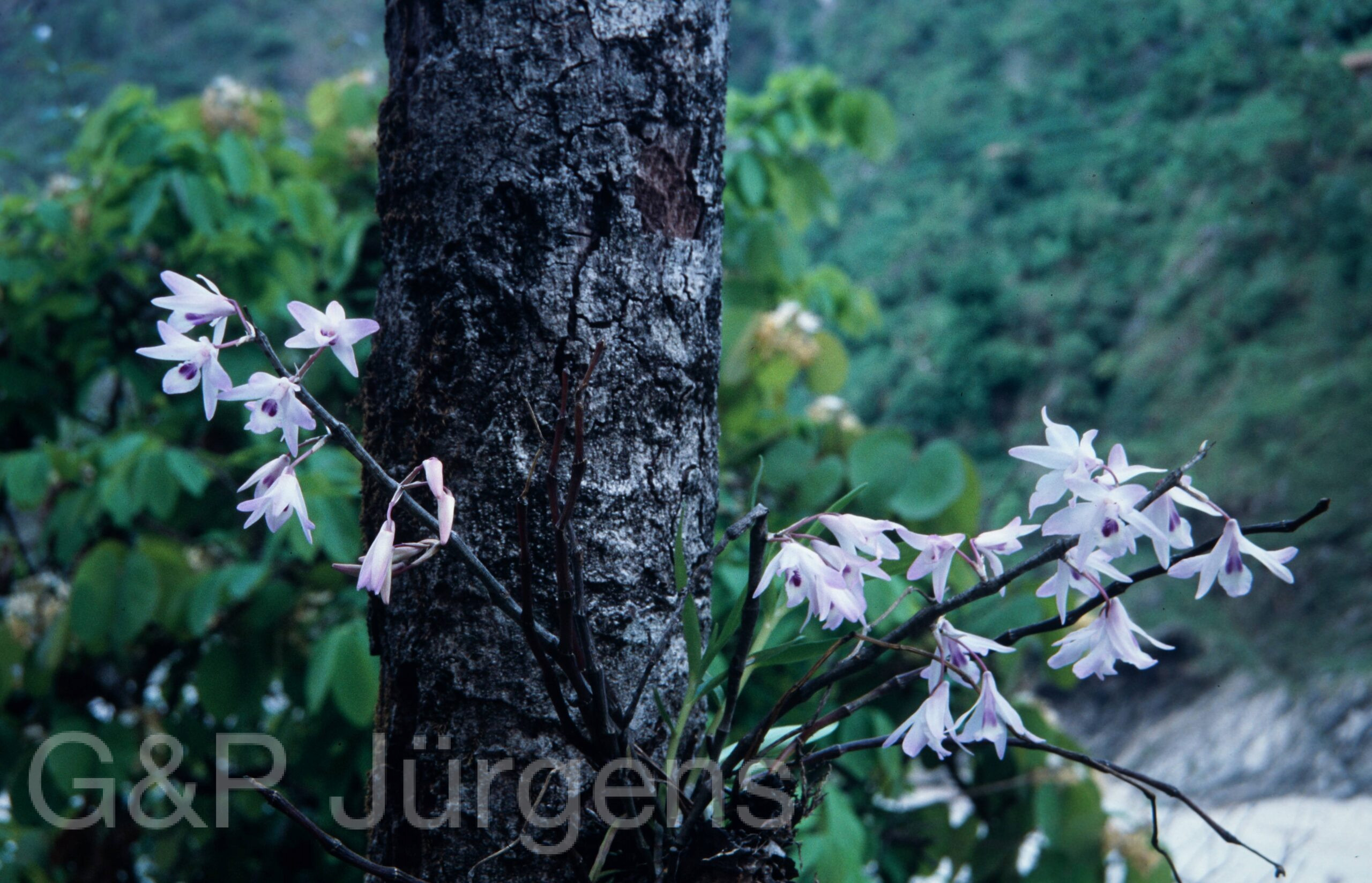
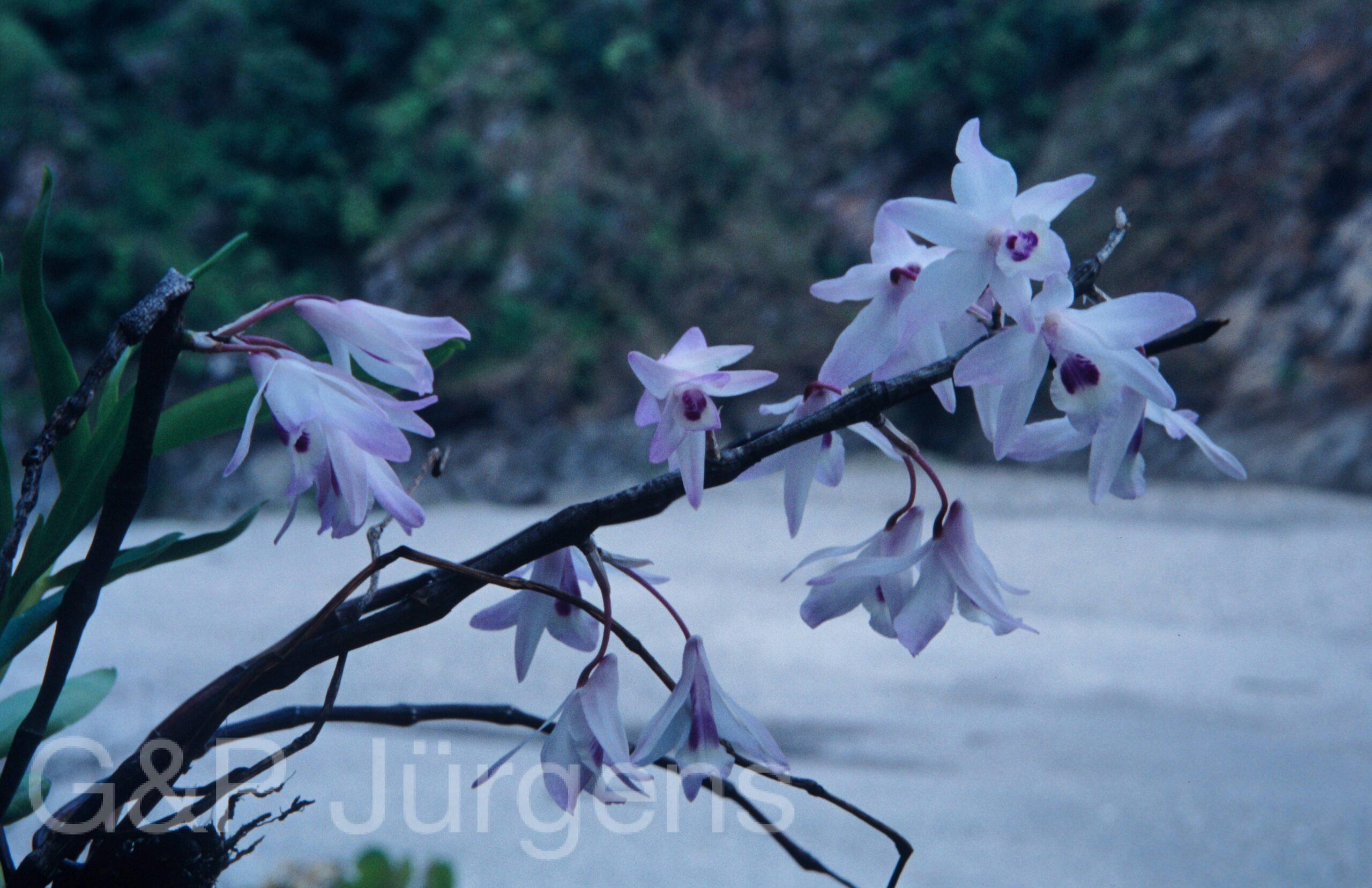
Dendrobium transparens is an epiphytic orchid distributed across the eastern and central Himalaya and into the Indo-Burmese region, recorded from India, Nepal, Bhutan, China, Myanmar and Thailand, with introduced or cultivated occurrences in western Europe. The species favours warm-temperate to subtropical broad-leaved forest, growing on tree trunks and mossy branches between roughly 800 and 1800 m. The photographed plant from Gorkha at Labubhesi, central Nepal, around 1200 m and flowering in May, is typical of its preferred mid-elevation, humid forested ravines where seasonal monsoon moisture and bright filtered light coincide.

The plant forms slender, pendent or sub-erect, cane-like stems that are somewhat flattened and longitudinally grooved, sheathed by membranous leaf-bases. The leaves are distichous, narrowly lanceolate, thin-textured and deciduous, leaving the leafless canes to bear flowers. Inflorescences are short, lateral, two- to three-flowered fascicles from the nodes of older stems. The flowers are translucent white to pale rose, the sepals and petals delicate and spreading; the labellum is broadly obovate to sub-orbicular, often marked with two deep magenta to purple blotches at the throat, and the short mentum gives the bloom its semi-pendent posture.

The specific epithet transparens alludes to the thin, almost translucent perianth segments. Within Dendrobium it belongs among the deciduous-leaved, soft-caned sections allied to D. nobile, a complex of considerable horticultural interest. As with most Himalayan epiphytic orchids, it is dependent on intact forest cover and mycorrhizal associations, and is vulnerable to habitat clearance and collection pressure, though it remains locally frequent across its broad range.

Author: Wall. ex Lindl. · Sources: POWO (Kew), GBIF, Flora of China Vol. 25, Flora of Bhutan Vol. 3, Flora of Nepal, The Genus Dendrobium (Wood)
R.Br. ex Wall.

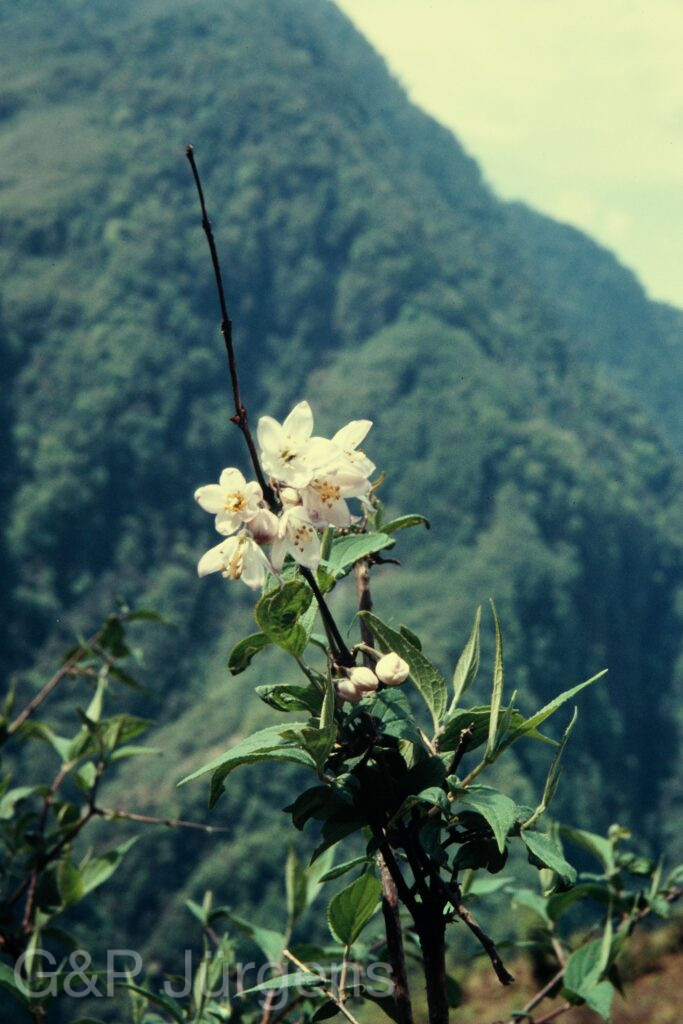
Nepal 97 304 P605
Nepal Honggaon 2360m, May

Description

Deutzia staminea is a deciduous shrub distributed across the western and central Himalayas, from Pakistan through northern India and Nepal to Bhutan, with populations extending into southwest China and northern Myanmar. GBIF records approximately 390 occurrences, with the majority from India and Nepal. The species occupies dry to mesic slopes, open forests, scrublands, and rocky hillsides at elevations of 1,500–3,200 m. At Honggaon in central Nepal at 2,360 m, it inhabits open Pinus–Quercus forests and rocky banks, where it flowers prolifically in May during the pre-monsoon season.
Deutzia staminea is a deciduous shrub reaching 1.5–4 m in height, with greyish-brown bark that exfoliates in thin flakes on older stems. Leaves are opposite, ovate to lanceolate, 3–8 cm long, with serrate margins and a rough texture from stellate trichomes on both surfaces. The inflorescence is a terminal corymb or panicle of 5–20 flowers. Flowers are pentamerous, 12–18 mm in diameter, with white petals that are oblong-elliptic and spreading. The stamens, 10 in number, are distinctive: the filaments are broadly winged and toothed at the apex, exceeding the petals — a character reflected in the specific epithet 'staminea.' The fruit is a hemispheric capsule, 4–6 mm across, dehiscing by 3–4 valves and releasing numerous small seeds.
Deutzia staminea is the most widespread Himalayan representative of the genus and is distinguished from the closely related D. compacta by its prominently toothed stamen filaments and generally laxer inflorescences. The species serves as an important early-season nectar resource for pollinators in mid-elevation Himalayan landscapes, where relatively few shrubs are in flower during the pre-monsoon period. It is occasionally cultivated in European gardens and has been in cultivation since its introduction by Wallich in the early nineteenth century.

Author: R.Br. ex Wall. · Sources: POWO (Kew), GBIF, Flora of China Vol. 8, Flora of Pakistan Vol. 192, Polunin & Stainton: Flowers of the Himalaya (1984)

(Hook.f. & Thomson) W.T.Wang & P.K.Hsiao

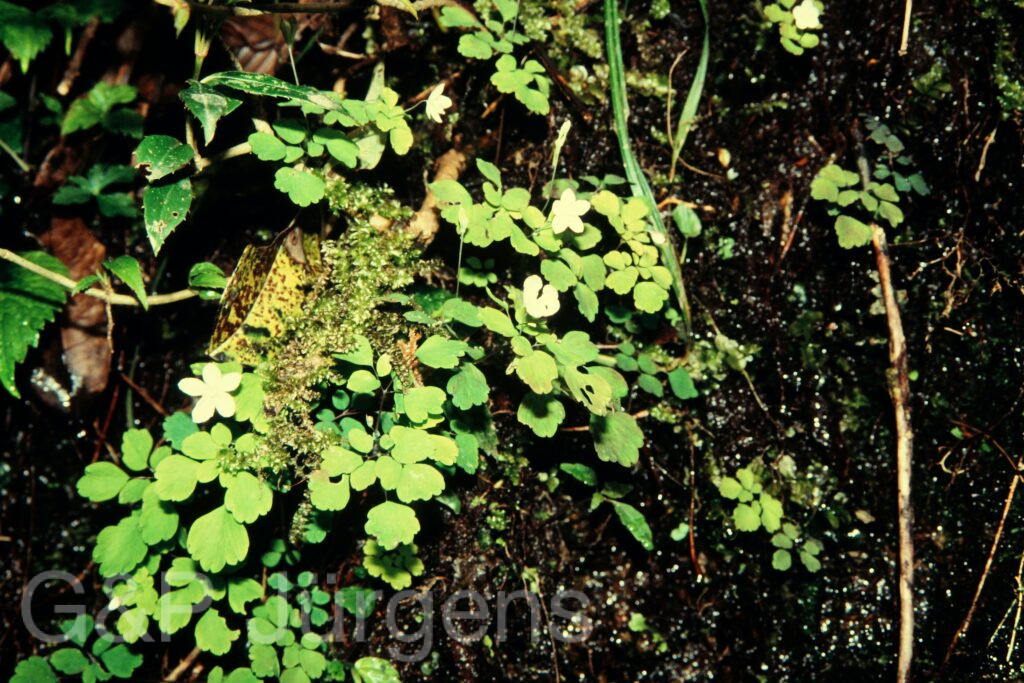
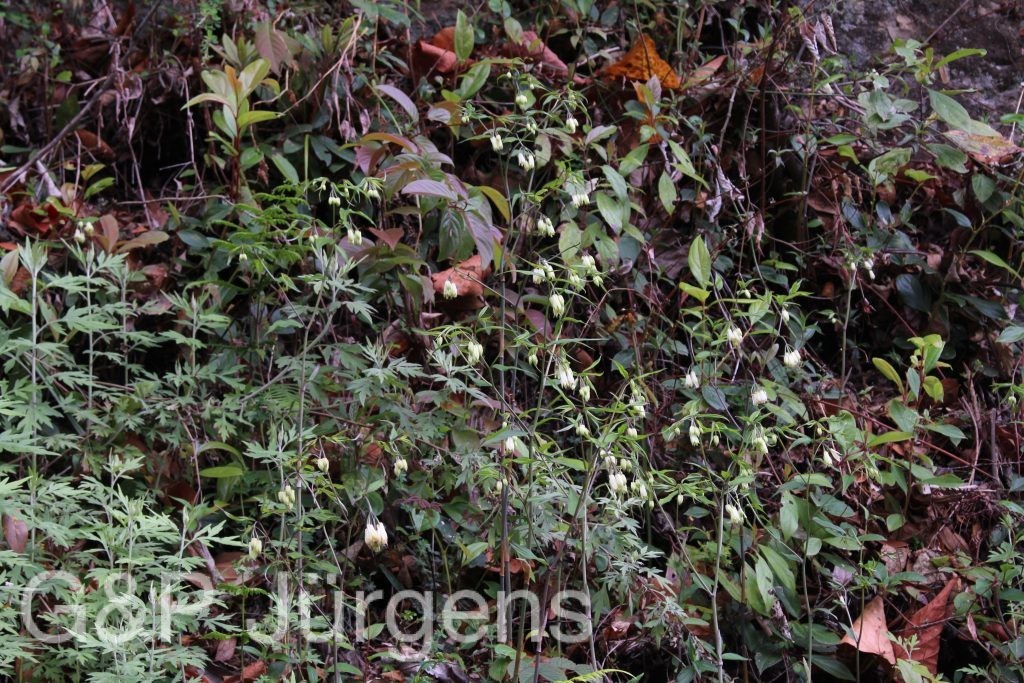
Nepal 97 310 G614
Nepal Honggaon 2300m May
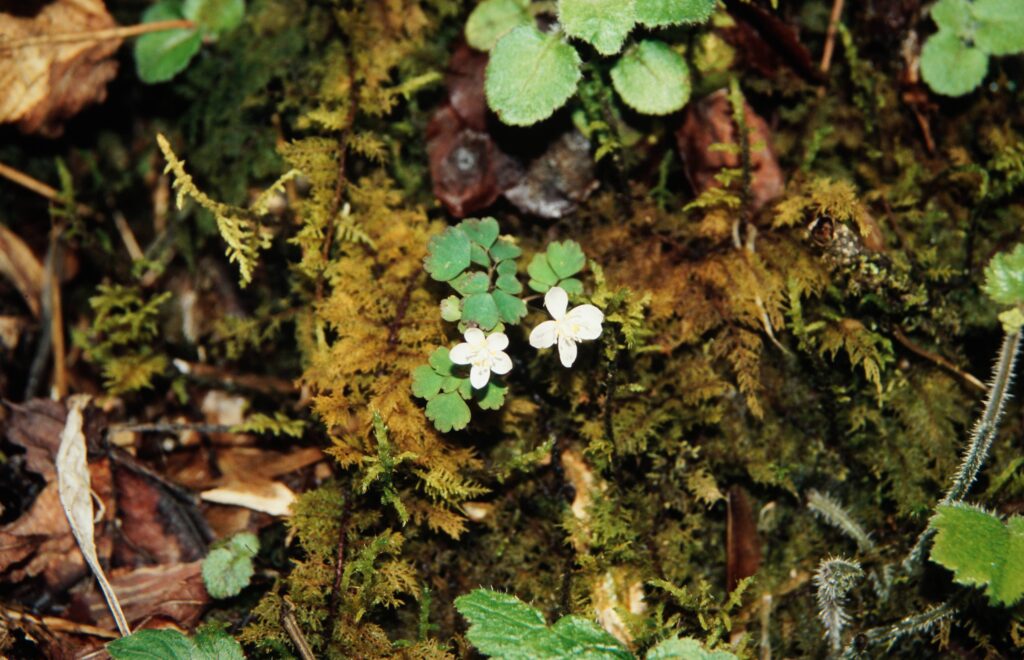
Sikkim 2006 33 2 ergebnis
India West-Bengal Tonglu 3200m, May

Description

Dichocarpum adiantifolium is a slender woodland buttercup relative of the Sino-Himalayan region, distributed through Taiwan, China, India, Nepal, Bhutan and Myanmar, with the comparatively rich total of about 286 GBIF records. It grows in cool, shaded, humus-rich situations: moist temperate forest floors, mossy rocks, ravine banks and streamsides, generally between about 2000 and 3500 m. The collections illustrated, from Honggaon in Nepal at around 2300 m and Tonglu in West Bengal at about 3200 m, both in May, represent its typical spring-flowering forest habitat.

It is a delicate, glabrous perennial herb arising from a short rhizome. The leaves are mostly basal, long-petiolate and compound, divided into numerous small, thin, fan-shaped to obovate leaflets that recall the fronds of a maidenhair fern (Adiantum), hence the epithet. Slender scapes bear loose, few-flowered cymes of small flowers, each with five white, petaloid sepals and small tubular or two-lipped nectary petals, numerous stamens and usually two carpels. The diagnostic fruit is a pair of divergent, flattened follicles spreading widely at maturity, a feature reflected in the generic name (from the Greek for divided fruit).

Dichocarpum is a small east Asian and Himalayan genus segregated from Isopyrum and allied to Thalictrum and Aquilegia within the Ranunculaceae; D. adiantifolium was originally described under Isopyrum and later transferred by Wang and Hsiao. The paired spreading follicles and ferny foliage make it readily recognisable. It is a fairly widespread forest-understorey species and is not regarded as threatened, though as a shade-demanding mesophyte it depends on intact, humid temperate forest and would be sensitive to logging and forest fragmentation.

Author: (Hook.f. & Thomson) W.T.Wang & P.K.Hsiao · Sources: POWO (Kew), GBIF, Flora of China, Flora of Bhutan, Annotated Checklist of the Flowering Plants of Nepal, Wang & Hsiao Revision of the Genus Dichocarpum

Wall.

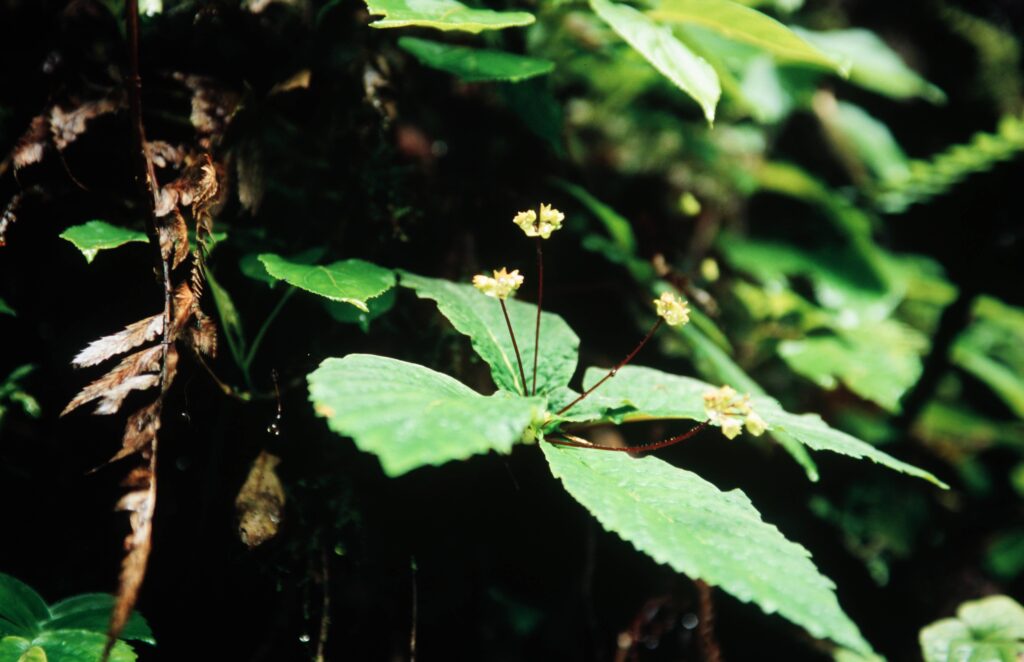
Sikkim 2006 449 ergebnis
India West-Bengal, Tolung 2450m, May

Description

Didymocarpus oblongus is a relatively uncommon gesneriad endemic to the eastern Himalaya, recorded from Nepal, northeast India (Sikkim, Darjeeling, Assam), Bhutan, and adjacent parts of southern China (Xizang, Yunnan). It inhabits shaded, damp rock faces, mossy cliff ledges, and steep earth banks in montane broadleaved and mixed forests, typically at elevations between 1,800 and 3,000 m. The species has been documented from the Tolung area of West Bengal at approximately 2,450 m, where it grows in the moist understorey of temperate forests during the spring season.
The plant is a perennial herb with a short, erect stem 5–15 cm tall, arising from a fleshy rootstock. Leaves are arranged in an opposite, often crowded rosette-like cluster near the stem apex; they are oblanceolate to oblong, 5–15 cm long and 2–5 cm wide, with a crenate to serrate margin, the upper surface dark green and sparsely pilose, the lower surface paler and more densely pubescent. The inflorescence is a lax cyme of 2–6 flowers borne on a slender peduncle 5–10 cm long. The calyx is tubular, five-lobed. The corolla is tubular-funnelform, 2–3 cm long, typically pale purple to lavender with darker markings in the throat. Stamens are two, with the filaments inserted at mid-tube; the anthers are coherent face to face. The fruit is a slender, elongate capsule 2–4 cm long, dehiscing loculicidally.
Didymocarpus is a genus of approximately 100 species centred in mainland Asia, with the Himalayan region representing a significant centre of diversity. D. oblongus is distinguished from allied species by its oblong leaf shape, relatively long peduncles, and high-elevation habitat preference. With only 88 occurrence records in GBIF and a restricted distribution along the eastern Himalayan arc, the species warrants conservation attention, particularly as its cliff-face and forest-understorey habitats are sensitive to deforestation and landslide disturbance.

Author: Wall. · Sources: POWO (Kew), GBIF, Flora of Bhutan Vol. 2, Flora of China Vol. 18, Möller & Clark: Gesneriaceae classification (2013)

D.Don

Nepal 2009 101 ergebnis
Nepal Helambu Samathang 2410, May

Description

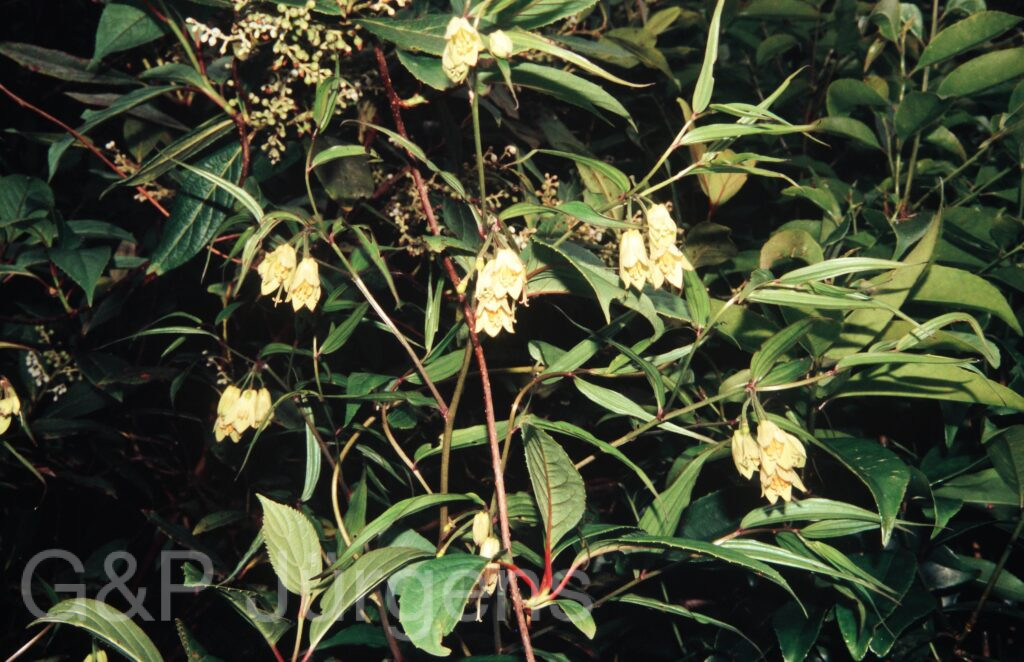
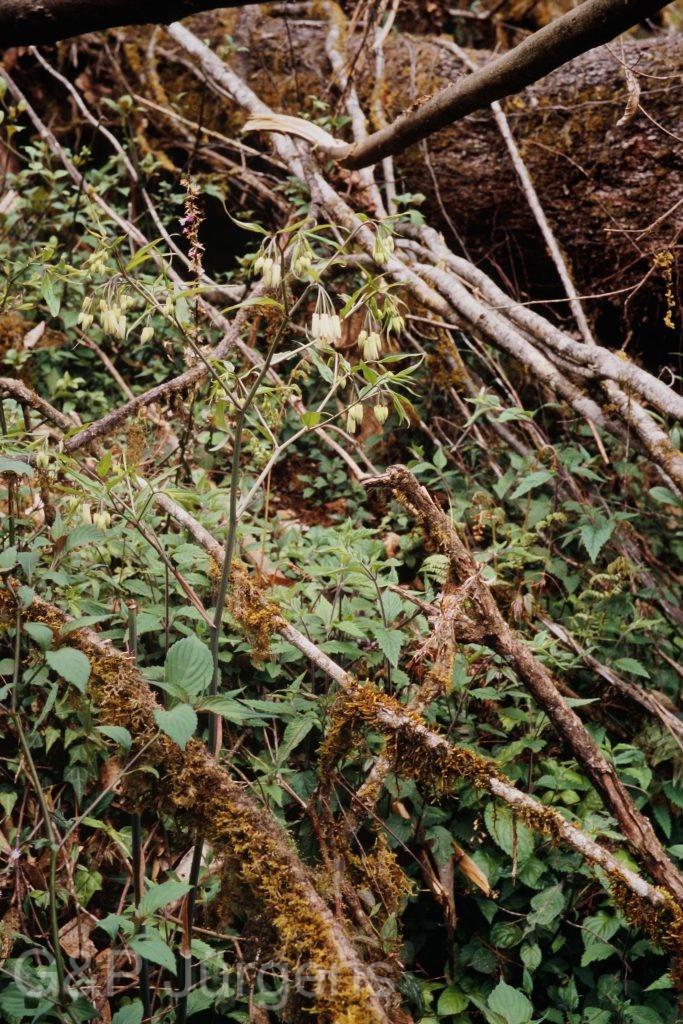
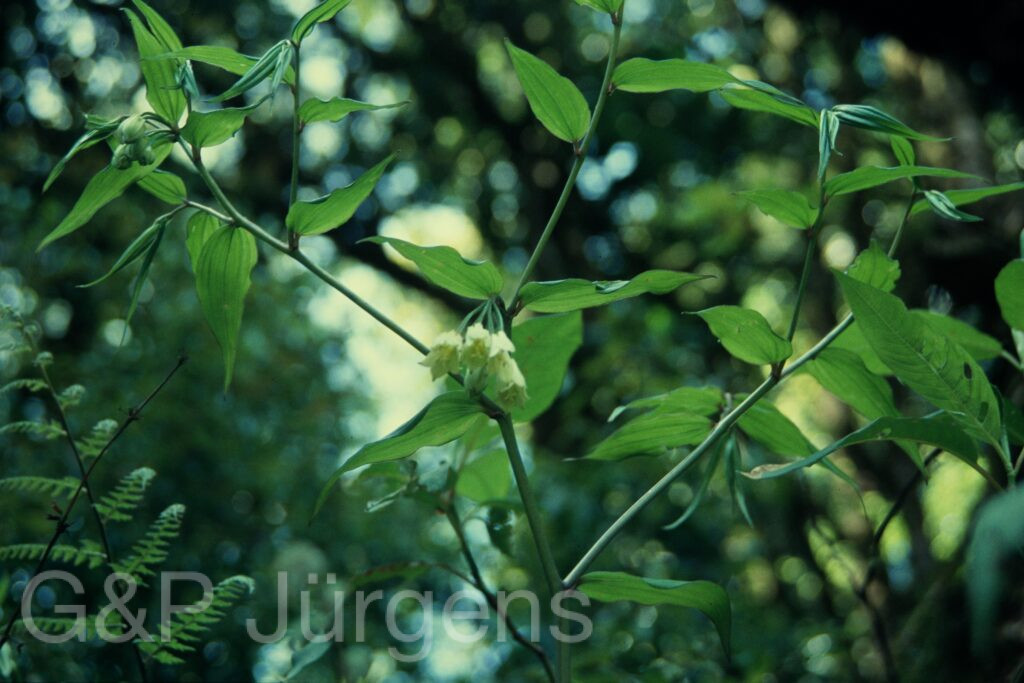
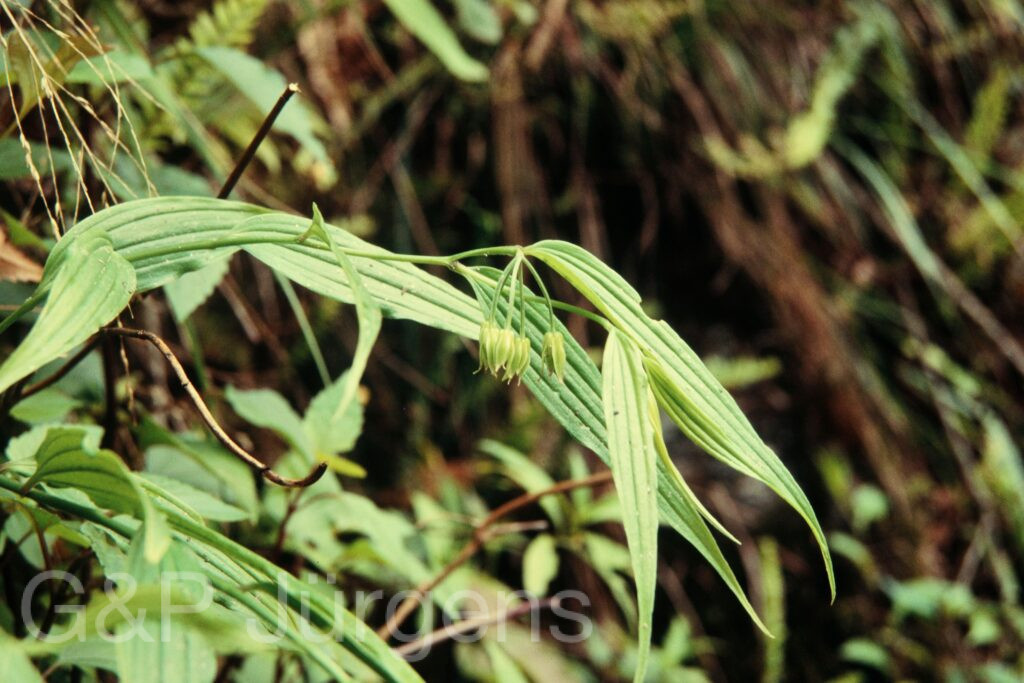
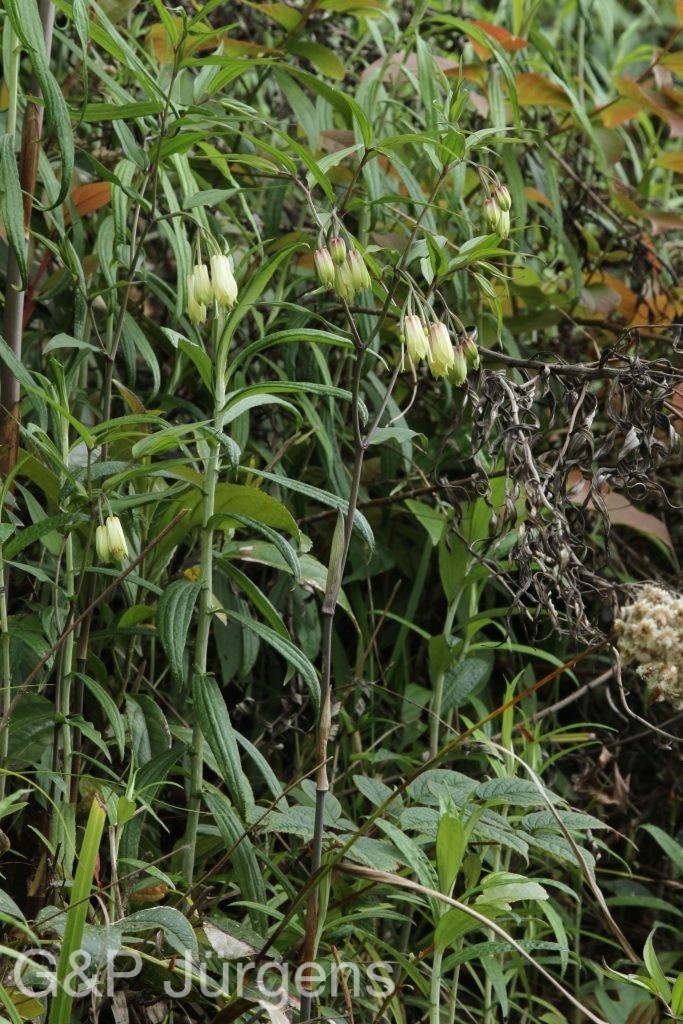
Disporum calcaratum is a rhizomatous woodland herb widespread from the Himalaya through southern China to mainland and insular Southeast Asia, with GBIF occurrences in China, Thailand, Myanmar, India, Nepal, Vietnam, Indonesia, Malaysia, Bhutan and Laos. It grows in the shaded understorey of moist broad-leaved and mixed forest, on humus-rich slopes and along stream banks, generally between 1,500 and 2,800 m. The photographed plant was recorded at Samathang in the Helambu region of Nepal at about 2,410 m in May, flowering during the moist pre-monsoon period typical of its mid-montane habitat.

The plant arises from a short, creeping rhizome and produces erect, branching stems bearing alternate, ovate to ovate-lanceolate leaves with prominent arcuate venation, rounded to cordate bases and acuminate tips. The flowers hang in terminal and axillary umbellate clusters; the six tepals are narrow, recurved and purple to violet, each outer tepal extended at the base into a short, conspicuous saccate spur that gives the species its epithet. There are six stamens with the typical Disporum arrangement, and a superior, three-locular ovary. The fruit is a globose, dark blue to black berry containing several seeds, dispersed by birds.

Disporum is now placed in the Colchicaceae rather than the older Liliaceae, and D. calcaratum is readily recognised among Asian congeners by its spurred, purple, pendent flowers. The species is widespread and ecologically a minor but characteristic element of the montane forest floor, important in shaded herb-layer communities. It is common across its broad range and is not regarded as threatened, though it depends on the persistence of intact, humid forest understorey.

Author: D.Don · Sources: POWO (Kew), GBIF, Flora of China Vol. 24 (Colchicaceae), Grierson & Long: Flora of Bhutan Vol. 3, Hara et al.: An Enumeration of the Flowering Plants of Nepal

(Lour.) Merr.

Bh2008 447 G698
Bhutan Samtengang 2040m, May
Sikkim2004 113 P194
India West-Bengal, Utaray 2100m April
Nepal 97 373 P733
Nepal Arun-Valley 1750m, May

Description

Disporum cantoniense (Lour.) Merr. is a rhizomatous perennial herb of the Colchicaceae with a wide distribution across the Himalaya, mainland and insular Southeast Asia and East Asia. GBIF (nearly 4,000 occurrences) documents it from China, India, Nepal, Bhutan, Thailand, Taiwan, Japan, Vietnam, Myanmar, Malaysia, Indonesia and Sri Lanka, where it grows in shaded broad-leaved and mixed forest, on forest margins, shaded banks and among scrub. It occupies a broad montane belt; the records from Samtengang in Bhutan (2,040 m), Utaray in West Bengal (2,100 m) and the Arun Valley in Nepal (1,750 m), flowering in April–May, illustrate its spring anthesis in mid-elevation Himalayan forest understorey.

The plant arises from a short, knotty rhizome bearing fleshy roots and produces erect, branched aerial stems up to a metre or more tall. The leaves are alternate, ovate-lanceolate to lanceolate, with conspicuous arcuate-parallel venation and somewhat clasping or shortly petiolate bases. The flowers hang in terminal, drooping few-flowered umbel-like clusters at the branch tips; each is narrowly campanulate with six free, spreading to recurved tepals, white, greenish or tinged purple, the tepals saccate or shortly spurred at the base. There are six stamens and a superior ovary; the fruit is a globose, dark blue-black to purplish berry containing few seeds.

Disporum, long placed in Liliaceae and later Convallariaceae, is now firmly assigned to the Colchicaceae on molecular and morphological grounds, distinct from the New World Prosartes. D. cantoniense is a polymorphic, widespread species with several recognised varieties, and the variation in flower colour and stature has generated considerable taxonomic literature. Ecologically it is a characteristic shade-tolerant geophyte of Asian temperate and subtropical forests, with berries dispersed by birds.

Author: (Lour.) Merr. · Sources: POWO (Kew), Flora of China Vol. 24, Flora of Bhutan Vol. 3, GBIF, Conran & Tamura: Colchicaceae in The Families and Genera of Vascular Plants

H.Hara

Bhutan2014 212
Bhutan Trashyangtse 2100m, May
Bhutan2014 215
Bhutan Trashyangtse 2100m, May

Description

Disporum leucanthum is a woodland perennial of the eastern Himalaya and adjacent regions, recorded from China, India, Bhutan, Myanmar and Nepal, with only some 35 occurrences in GBIF, reflecting both a relatively restricted range and limited collecting. It is a plant of shaded, moist broad-leaved and mixed forest, forest understorey and shaded streamsides, typically in the warm to cool temperate belt. The individual photographed at Trashyangtse in eastern Bhutan at 2100 m in May, flowering in spring under forest cover, is characteristic of its preference for humid, sheltered montane woodland where deep humus and dappled shade prevail.

The species is an erect, sparingly branched perennial herb arising from a short, creeping rhizome with fibrous roots. The slender stems bear alternate, ovate to ovate-lanceolate leaves that are conspicuously parallel-veined, entire and shortly petiolate to subsessile, with a rounded to subcordate base and acuminate apex. The flowers are pendent and borne singly or in small clusters at the branch tips; they are narrowly campanulate to tubular, with six free, white tepals (as the epithet indicates) that are sometimes greenish-tinged, each tepal spurred or saccate at the base. There are six stamens, and the superior ovary develops into a small, fleshy, globose to ovoid berry that ripens dark, containing several seeds.

Disporum is an East Asian genus now placed in the family Colchicaceae following molecular reappraisal, having formerly been treated within Liliaceae or Convallariaceae; the North American fairy-bells once included here are now separated as Prosartes. D. leucanthum belongs to the Sino-Himalayan assemblage of the genus, distinguished among its relatives by floral and tepal characters. The berries are bird-dispersed. Owing to its comparatively narrow distribution and the small number of documented records its populations warrant monitoring, though it is not formally assessed as threatened.

Author: H.Hara · Sources: POWO (Kew), GBIF, Flora of China Vol. 24, Flora of Bhutan Vol. 3, Flora of Nepal, A Revision of the Genus Disporum (Colchicaceae)

Hook.f. & Thomson

Sikkim2004 139 P241
Sikkim/India Singalila 3800m April

Description

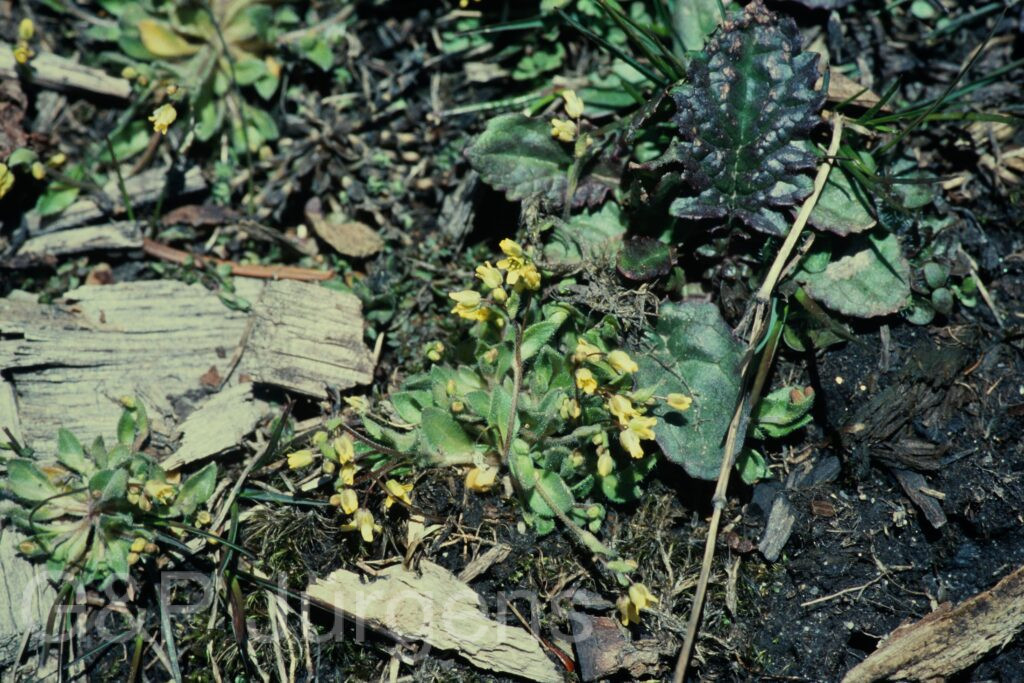
Draba tibetica is a cushion- to mat-forming alpine crucifer with a wide distribution across the Himalaya, Tibetan Plateau and the mountains of Central Asia. GBIF records around 173 occurrences spanning India, Pakistan, Tajikistan, Uzbekistan, China, Afghanistan, Kazakhstan, Kyrgyzstan and Nepal. It colonises stony alpine turf, rock ledges, fellfield and the gravelly margins of seasonal snowmelt, generally between 3500 and 5000 m. The illustrated population was found along the Singalila ridge of Sikkim, India, at 3800 m in April, flowering early as the higher slopes begin to thaw on well-drained, base-rich substrates.

The plant develops a woody, much-branched caudex bearing dense rosettes of small, oblanceolate to spathulate leaves clothed in stellate and simple hairs that give a greyish indumentum. Erect, leafless or few-leaved scapes rise above the foliage carrying short racemes of small flowers. The four petals are yellow, fading paler with age, exceeding the hairy sepals; the six tetradynamous stamens surround a superior ovary. The fruit is a flattened, ovate to elliptic silicula, glabrous or sparsely pubescent, held on ascending pedicels and splitting to release numerous minute seeds in two rows.

Draba (Brassicaceae) is a large, taxonomically intricate genus centred on arctic and alpine habitats, and D. tibetica belongs to the yellow-flowered Himalayan-Tibetan assemblage where cushion habit and indumentum vary clinally, complicating delimitation. GBIF treats the name as accepted. As a hardy pioneer of unstable high-altitude ground it is locally common and faces no recognised conservation concern across its extensive range.

Author: Hook.f. & Thomson · Sources: POWO (Kew), GBIF, Flora of China, Flora of Pakistan, Al-Shehbaz revisions of Draba (Brassicaceae)

(Roxb. ex DC.) Walp.

Nepal 97 52 P78
Nepal Mewa-Khola 1150m April
Nepal 97 53 P79
Nepal Mewa-Khola 1150m April
Nepal1992 77 P110 ergebnis
Nepal Sokathum1460m March 

Description

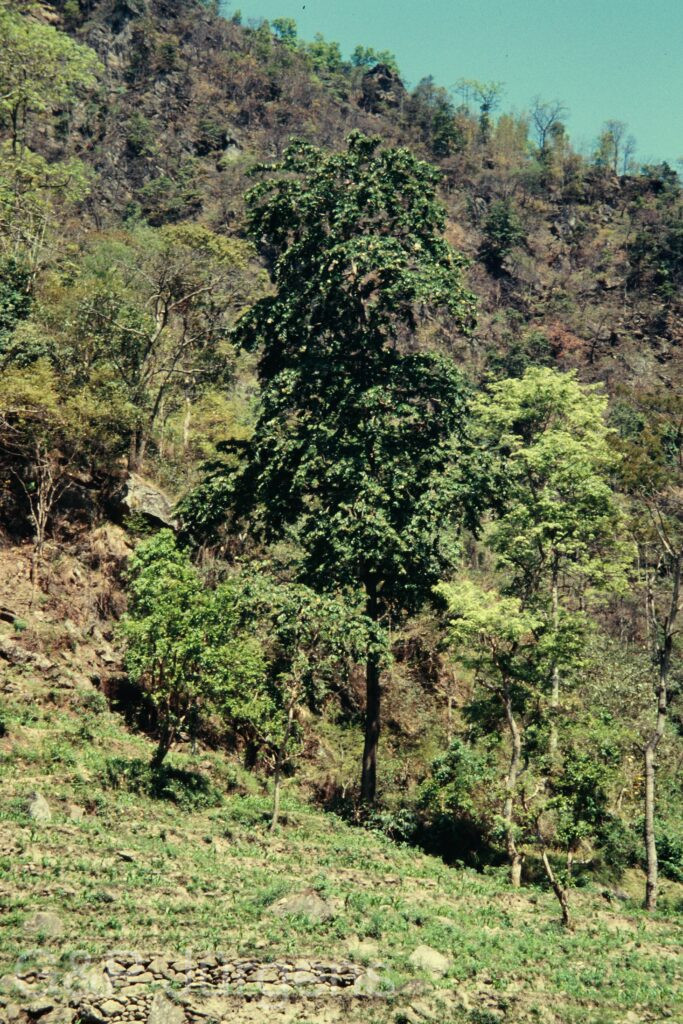
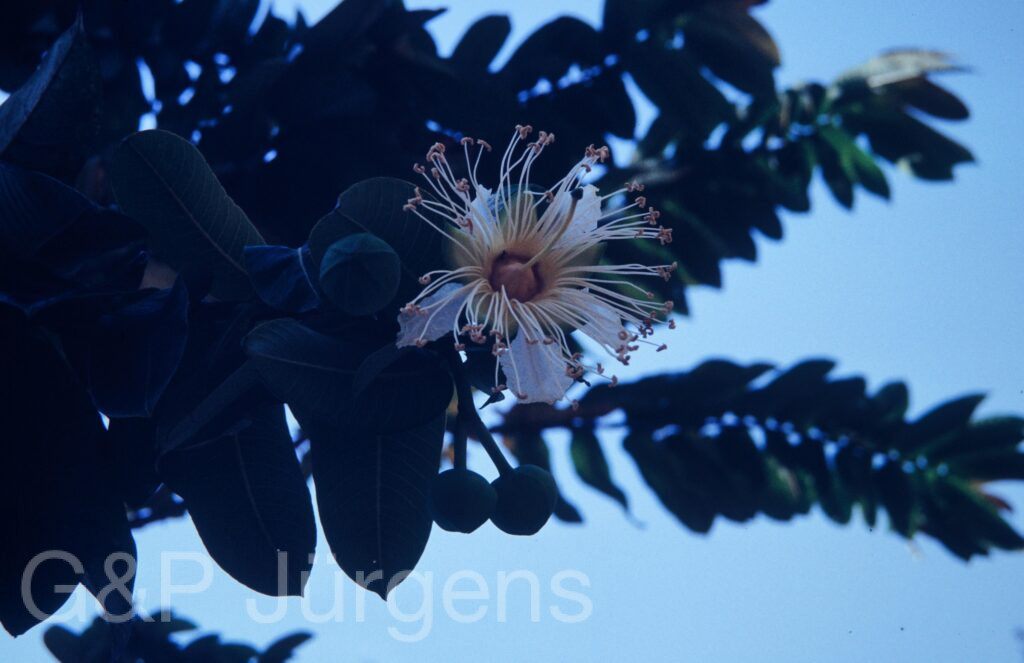
Duabanga grandiflora (Roxb. ex DC.) Walp. is a large, fast-growing evergreen tree of the Lythraceae distributed through the Indo-Himalayan and Southeast Asian tropics, native from India, Nepal, Bhutan and Bangladesh through Myanmar, Thailand, Laos, Vietnam, Malaysia and Indonesia into SW China, with around 712 georeferenced records and scattered introductions elsewhere. It is a characteristic tree of moist tropical and subtropical forest, particularly along rivers, in ravines and on alluvial flats, often a pioneer of streamside and secondary forest in regions of high rainfall. The photographed trees from Mewa-Khola at about 1,150 m in April and Sokathum at about 1,460 m in March in eastern Nepal lie at the upper, lower-montane end of its altitudinal range, which extends down into the lowland tropics.

It is a tall tree with a spreading crown and conspicuously horizontal, drooping branches. The leaves are opposite, large, oblong to oblong-lanceolate, leathery, with an obtuse to cordate base and entire margins, glabrous and prominently pinnately veined. The large, showy flowers are borne in few-flowered terminal cymes; each has a thick campanulate calyx of (four to) six fleshy lobes, white obovate petals, and very numerous stamens. The superior to half-inferior ovary develops into a hard, leathery, many-celled capsule that splits by valves to release abundant small seeds.

Duabanga is a small Indo-Malesian genus formerly segregated in its own family Duabangaceae but now placed within an enlarged Lythraceae. The night-opening flowers with their massed stamens are bat- and moth-pollinated, and the light, soft wood is locally used for boxes, matchwood and plywood. Widespread and often common as a riparian pioneer, the species is not considered threatened.

Author: (Roxb. ex DC.) Walp. · Sources: POWO (Kew), Flora of China Vol. 13, Flora of Bhutan Vol. 2, GBIF, Graham et al.: Phylogeny of Lythraceae (2005)