
H.Hara
Description
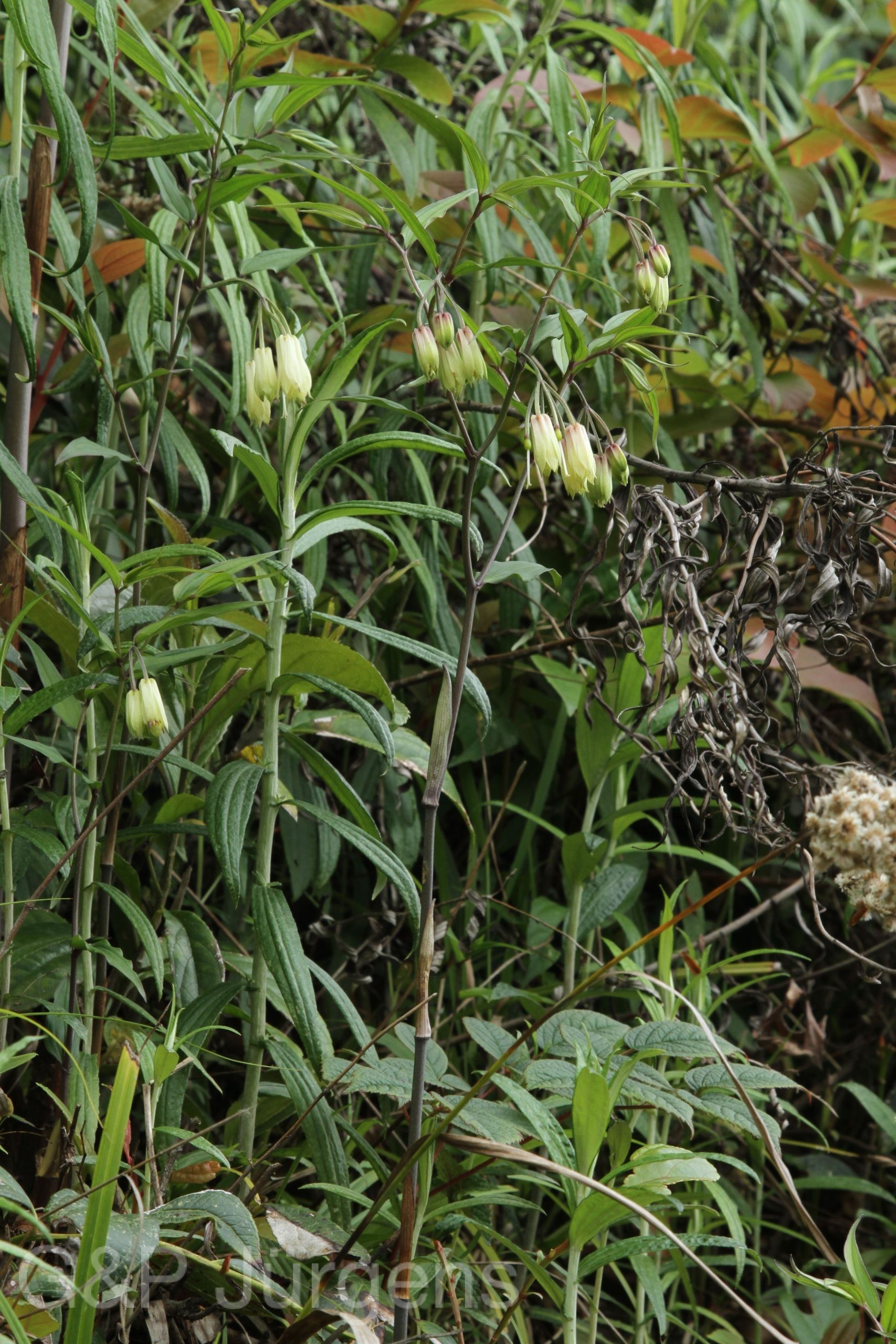
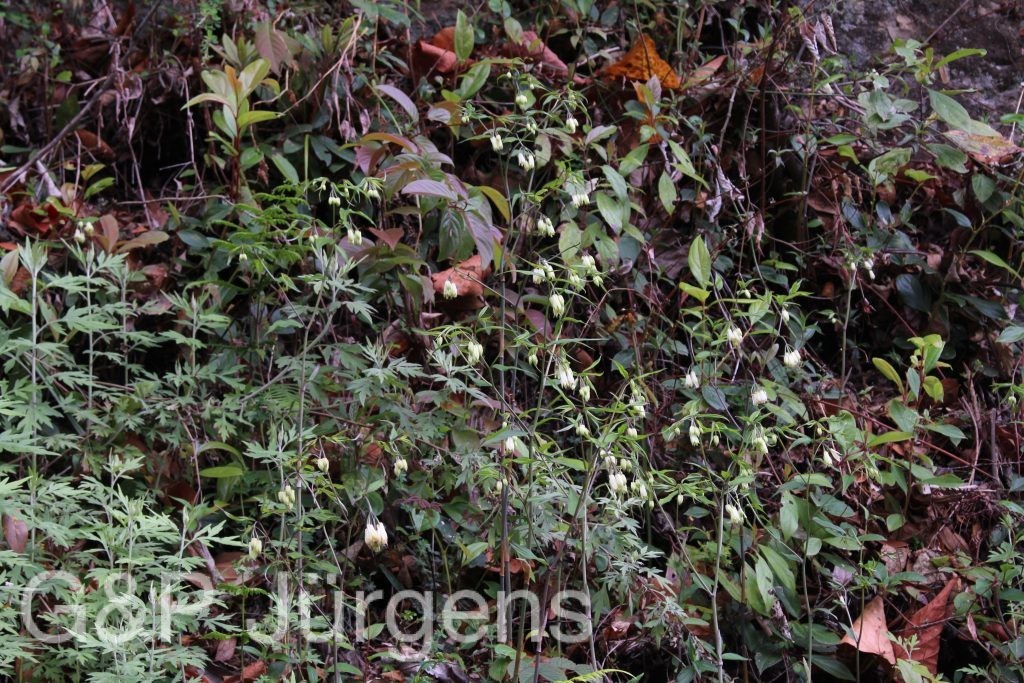
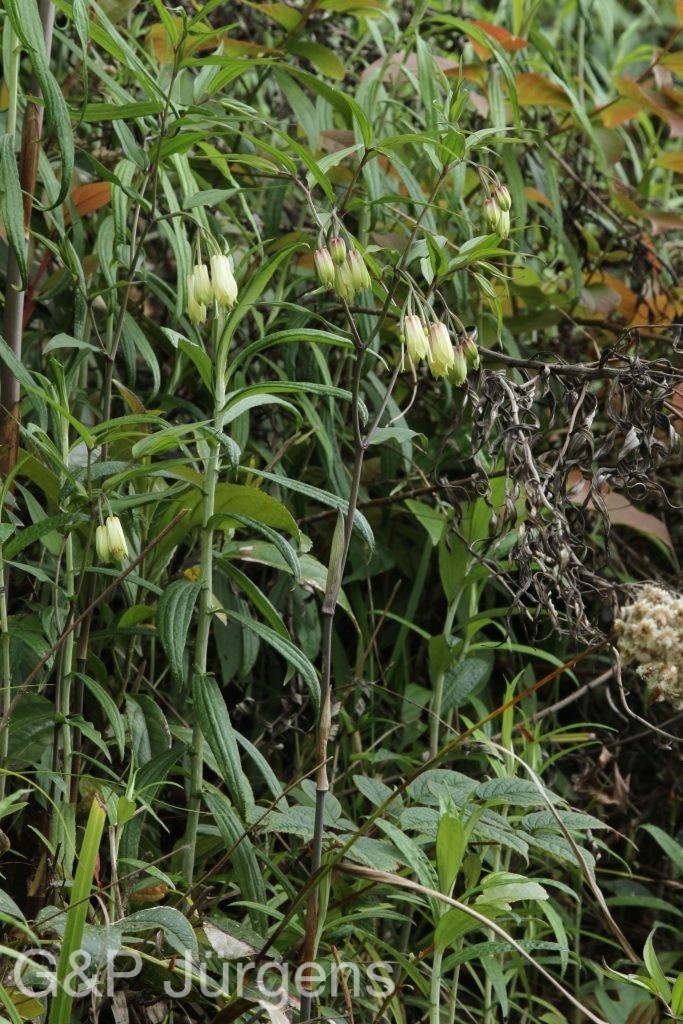
Disporum leucanthum is a woodland perennial of the eastern Himalaya and adjacent regions, recorded from China, India, Bhutan, Myanmar and Nepal, with only some 35 occurrences in GBIF, reflecting both a relatively restricted range and limited collecting. It is a plant of shaded, moist broad-leaved and mixed forest, forest understorey and shaded streamsides, typically in the warm to cool temperate belt. The individual photographed at Trashyangtse in eastern Bhutan at 2100 m in May, flowering in spring under forest cover, is characteristic of its preference for humid, sheltered montane woodland where deep humus and dappled shade prevail.
The species is an erect, sparingly branched perennial herb arising from a short, creeping rhizome with fibrous roots. The slender stems bear alternate, ovate to ovate-lanceolate leaves that are conspicuously parallel-veined, entire and shortly petiolate to subsessile, with a rounded to subcordate base and acuminate apex. The flowers are pendent and borne singly or in small clusters at the branch tips; they are narrowly campanulate to tubular, with six free, white tepals (as the epithet indicates) that are sometimes greenish-tinged, each tepal spurred or saccate at the base. There are six stamens, and the superior ovary develops into a small, fleshy, globose to ovoid berry that ripens dark, containing several seeds.
Disporum is an East Asian genus now placed in the family Colchicaceae following molecular reappraisal, having formerly been treated within Liliaceae or Convallariaceae; the North American fairy-bells once included here are now separated as Prosartes. D. leucanthum belongs to the Sino-Himalayan assemblage of the genus, distinguished among its relatives by floral and tepal characters. The berries are bird-dispersed. Owing to its comparatively narrow distribution and the small number of documented records its populations warrant monitoring, though it is not formally assessed as threatened.
Author: H.Hara · Sources: POWO (Kew), GBIF, Flora of China Vol. 24, Flora of Bhutan Vol. 3, Flora of Nepal, A Revision of the Genus Disporum (Colchicaceae)