
Hook.f.
Description
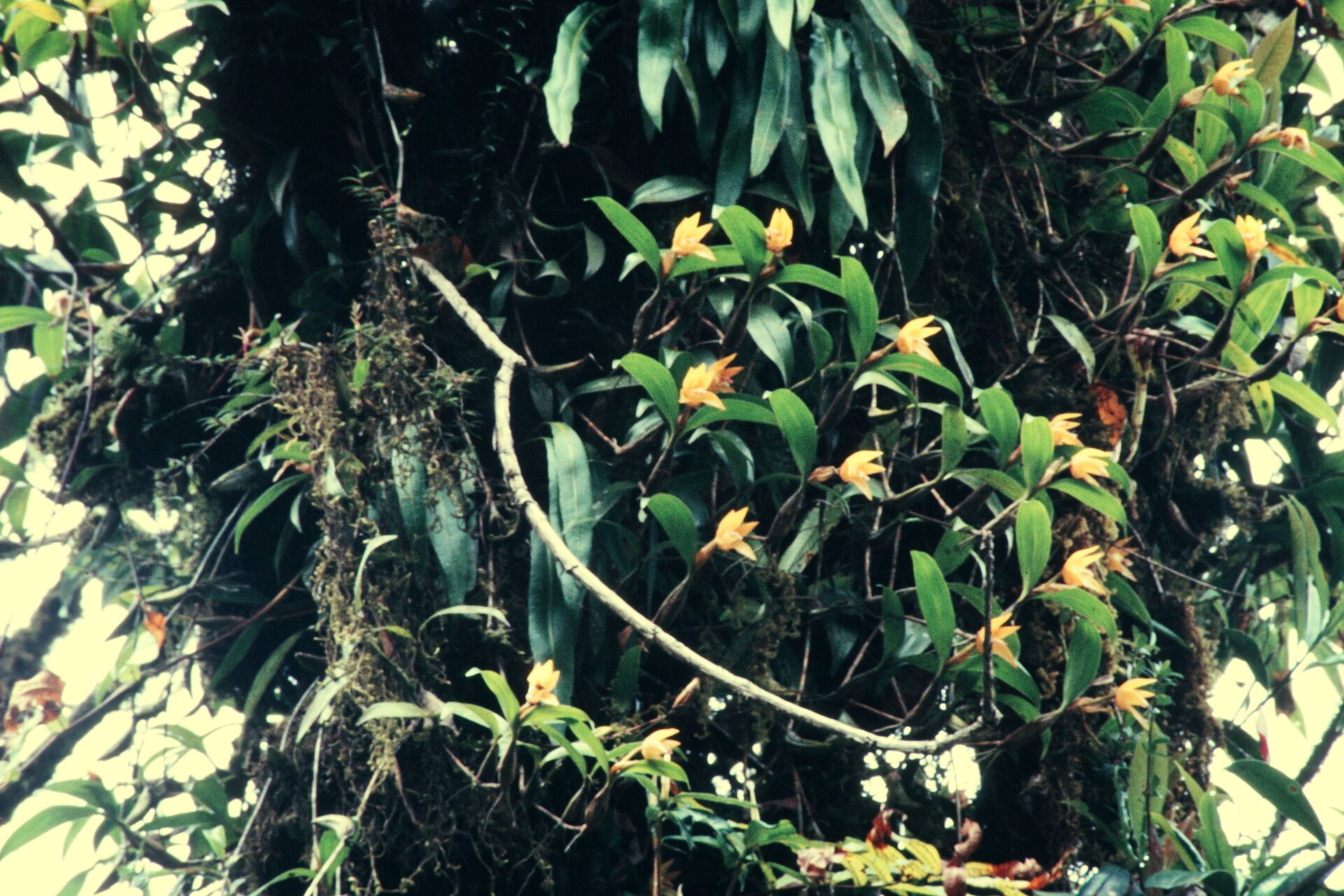
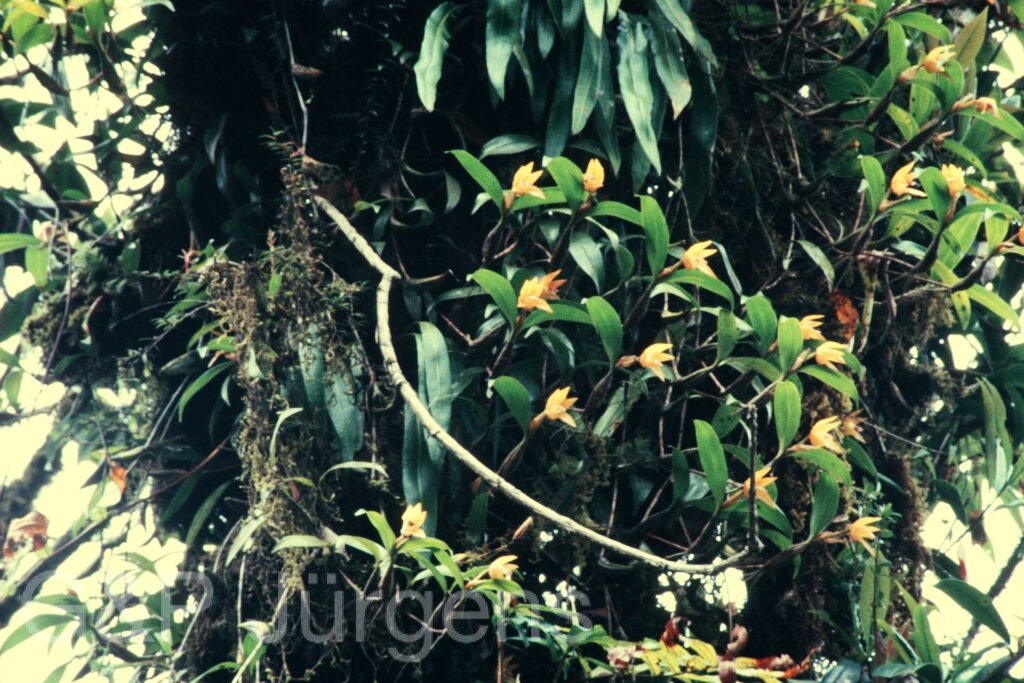
Dendrobium rotundatum Hook.f. is an epiphytic orchid of the eastern Himalaya and adjacent ranges, distributed through Nepal, northern India, Bhutan and into south-western China and Myanmar, with a GBIF record of about 122 occurrences (including a cultivated citation from Belgium) that reflects its relatively narrow distribution and inconspicuous habit. It grows perched on the trunks and branches of trees in cool, humid temperate broadleaf and mixed forest, where mossy bark and high atmospheric moisture sustain its epiphytic roots. The illustrated plant was recorded at Tashigaon in eastern Nepal at 3100 m in May, an elevation at the cool, montane end of the genus's range and a season corresponding to flowering as spring conditions return to the forest.
It is a small epiphyte with slender, often pendent to ascending stems (pseudobulbs) that are somewhat swollen and jointed, bearing distichous, thin-textured, oblong to lanceolate leaves along their length, these often deciduous in the dormant season. The flowers are produced from the nodes, solitary or few together, and are relatively small; the sepals and petals are subequal, with the lateral sepals united at the base to the column foot to form a short, rounded mentum or chin, an attribute echoed in the epithet rotundatum. The labellum is entire to obscurely three-lobed, the disc often bearing low ridges or a callus, and the column is short and footed in the typical Dendrobium pattern. The fruit is a ribbed, dehiscent capsule releasing dust-like seeds.
Dendrobium, with its centre of diversity in tropical and subtropical Asia, is one of the largest orchid genera, and the cool-growing, small-flowered Himalayan species such as D. rotundatum represent its montane, temperate fringe. As an epiphyte it depends on intact, humid old-growth forest and on mycorrhizal fungi for seed germination, making it sensitive to logging and habitat degradation. Like most orchids it is listed under CITES Appendix II to regulate international trade, and although not separately assessed as threatened, its restricted range and habitat specificity warrant ongoing monitoring of wild populations.
Author: Hook.f. · Sources: POWO (Kew), GBIF, Flora of China, Orchids of Nepal (Raskoti), The Genus Dendrobium (Wood)