Tag:

Spring

D.Don

Bhutan2015 187
Bhutan Zhemgang 1000m, October
Bhutan2015 188
Bhutan Zhemgang 1000m, October
Bhutan2014 194
Bhutan Trashyangtse 2100m, May
Bhutan2014 195
Bhutan Trashyangtse 2100m, May

Description

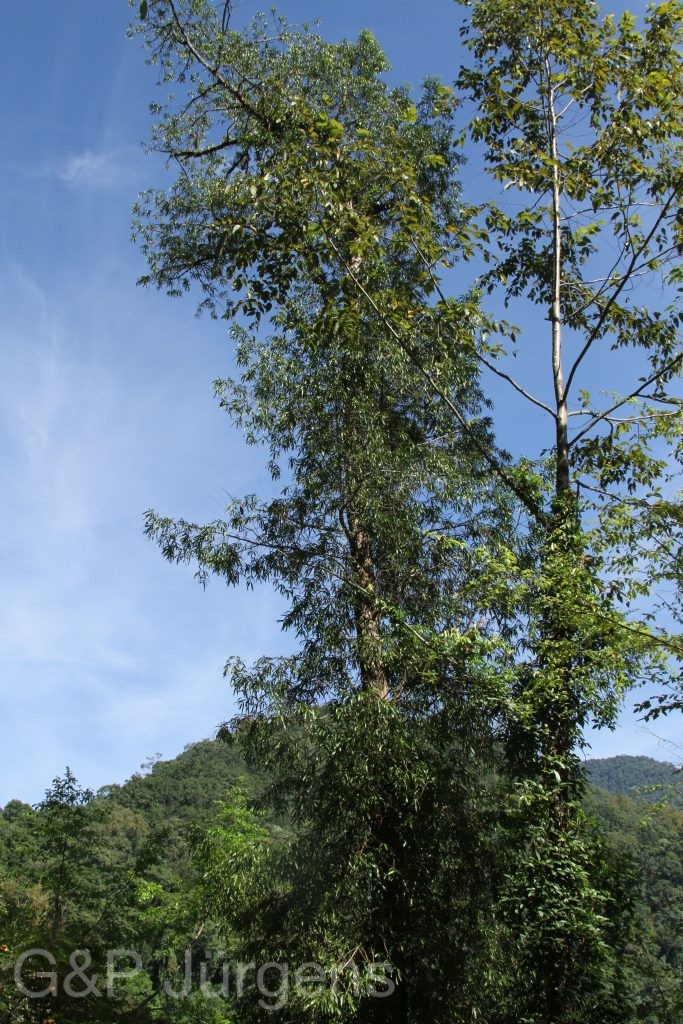
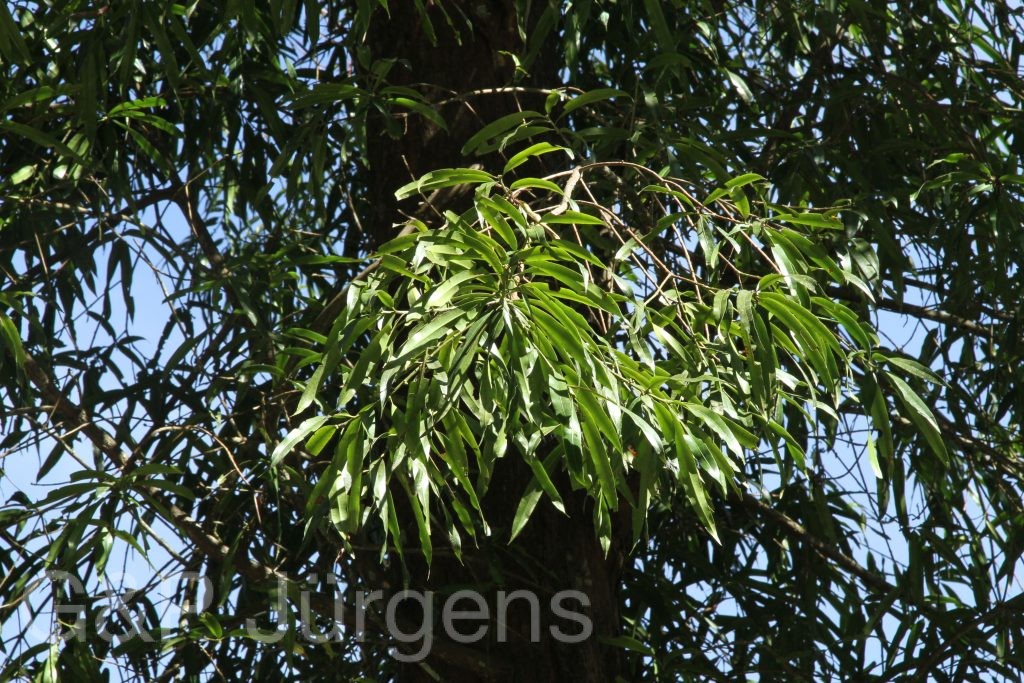
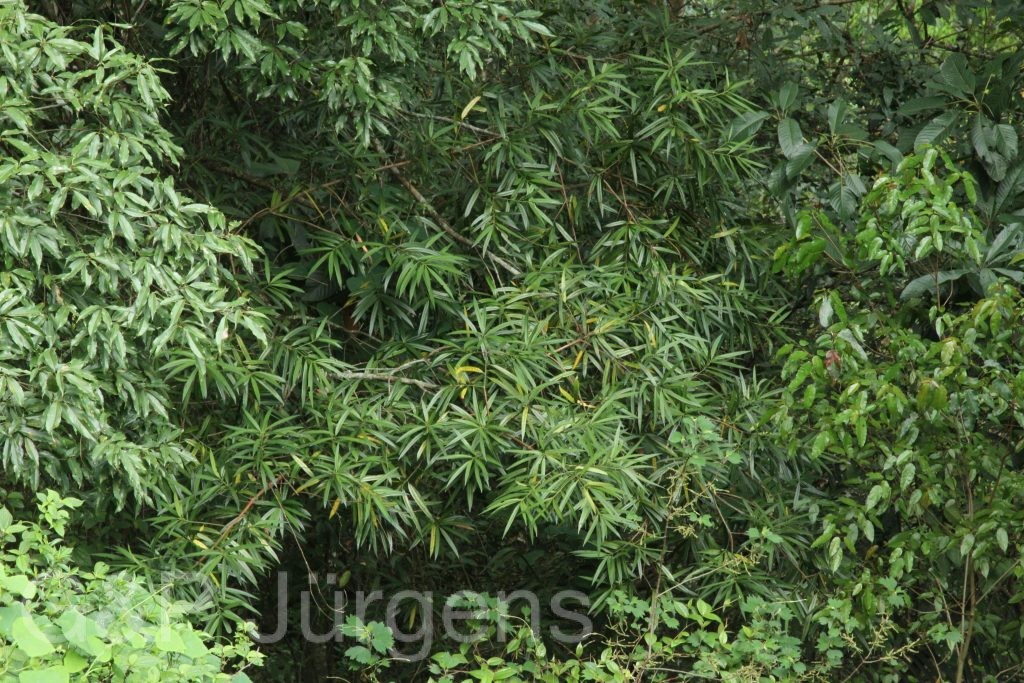
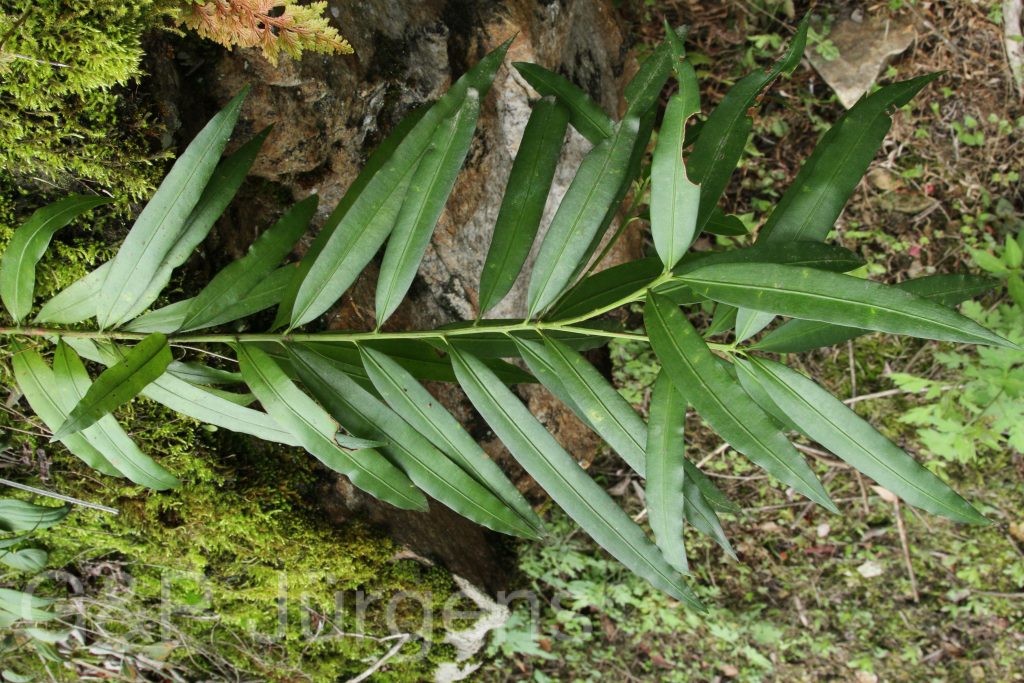
Podocarpus neriifolius, the brown pine or oleander-leaved podocarp, is a broadly distributed evergreen conifer of tropical and subtropical Asia and the western Pacific, with GBIF recording over 3,100 occurrences from Papua New Guinea, Fiji, Indonesia, Vietnam, China, Malaysia, the Solomon Islands, the Philippines, India, Thailand, Nepal, Vanuatu, Cambodia, Laos and beyond. In the eastern Himalaya it occurs in warm broad-leaved and mixed forest of the foothills and lower mountains, generally between about 500 and 2100 m. The images from Zhemgang in Bhutan at 1000 m, in October, and from Trashyangtse at 2100 m, in May, bracket its altitudinal range in that country, showing it as a scattered emergent or canopy tree in humid, evergreen subtropical forest on well-drained slopes.

It is an evergreen tree commonly 10-25 m tall, occasionally much larger, with grey to brown, fibrous, flaking bark and a dense crown. The leaves are spirally arranged but often appearing two-ranked, simple, narrowly lanceolate and leathery with a prominent midrib and a long, gradually tapering apex, recalling the foliage of oleander as the epithet indicates. The species is dioecious: pollen cones are slender, cylindrical and borne in leaf axils, while the seed cones are reduced to one or two ovules seated on a swollen, fleshy receptacle (the epimatium and aril) that ripens red to purple, the single seed crowned by a green to bluish covering and dispersed by birds.

Podocarpus is the largest genus of the Southern Hemisphere-centred family Podocarpaceae, and P. neriifolius is among its most wide-ranging species, exhibiting considerable variation in leaf size across its vast area. It is valued for its fine, even timber, which has led to local overexploitation, though its enormous geographic range means it is assessed by the IUCN as Least Concern overall. In the Himalaya it represents a tropical-Gondwanan conifer lineage reaching its northern limits in the warm forests of the eastern foothills.

Author: D.Don · Sources: POWO (Kew), GBIF, Flora of China Vol. 4, Flora of Bhutan Vol. 1, Flora of Nepal, de Laubenfels' revision of Podocarpus and the Podocarpaceae
Buch.-Ham. ex D. Don

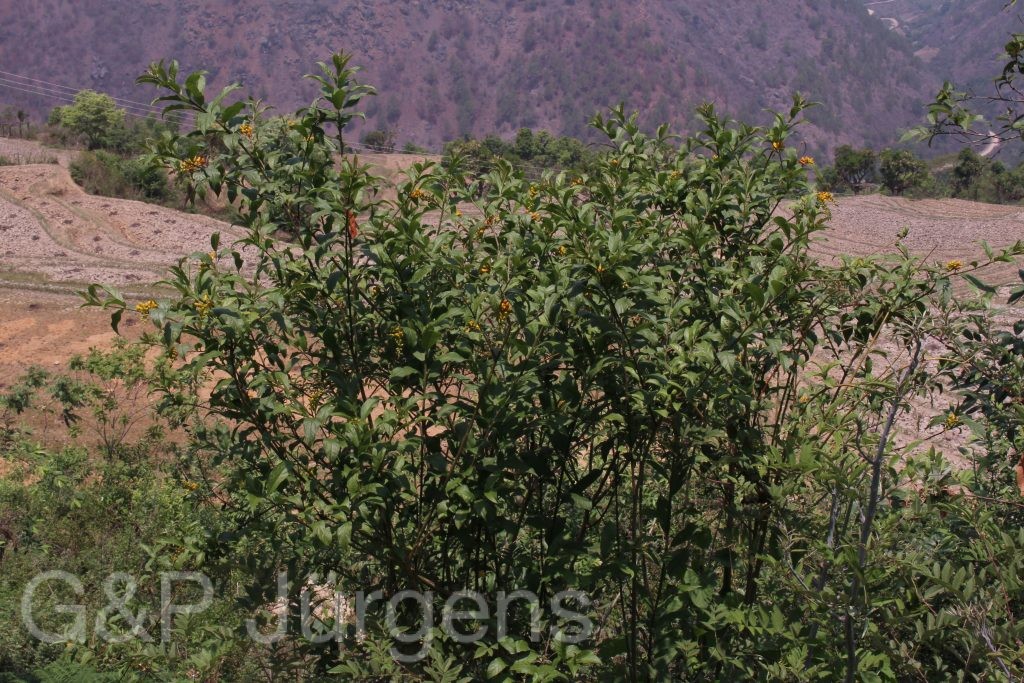
Bhutan2014 669
Bhutan Wangdi-Phodrang 2280, May

Description

Polygala arillata is a shrubby milkwort of the Himalaya and Southeast Asia, distributed from Nepal, NE India and Bhutan through southern China to Myanmar, Thailand, Vietnam, Bangladesh, Sri Lanka and Malesia, with 2,908 GBIF occurrences. It grows in temperate and subtropical broad-leaved forest, forest margins, clearings and shrubby slopes, commonly between about 1,000 and 2,800 m. The Bhutanese collection from Wangdi Phodrang at about 2,280 m in May reflects its late-spring flowering in mid-montane forest, where it grows as a conspicuous understorey or edge shrub.

It is an erect shrub or small tree 1–3 m tall with terete, finely pubescent branchlets. The leaves are alternate, elliptic to obovate-oblong, 8–18 cm long, acuminate, entire and shortly petiolate, often somewhat membranous. The inflorescence is a pendent terminal or leaf-opposed raceme of showy flowers; each flower has five sepals, the two inner enlarged into petaloid, deep yellow to reddish wings, and three petals fused into a tube with a fringed keel, the whole strongly zygomorphic. The fruit is a fleshy, laterally compressed, reddish capsule, and the seeds bear a conspicuous white aril, from which the epithet arillata is derived.

The species belongs to the large, cosmopolitan genus Polygala and is among its more robust, woody Asian representatives. GBIF treats the name as accepted. The arillate seeds suggest dispersal by birds or ants attracted to the fleshy appendage, and the showy keeled flowers are adapted to insect pollination. Widespread and locally common, it is of least concern; its roots and bark are used in regional traditional medicine.

Author: Buch.-Ham. ex D. Don · Sources: POWO (Kew), Flora of China Vol. 11, Flora of Bhutan Vol. 1, GBIF, Bennett: Polygalaceae in Hooker's Flora of British India (1882)

L.

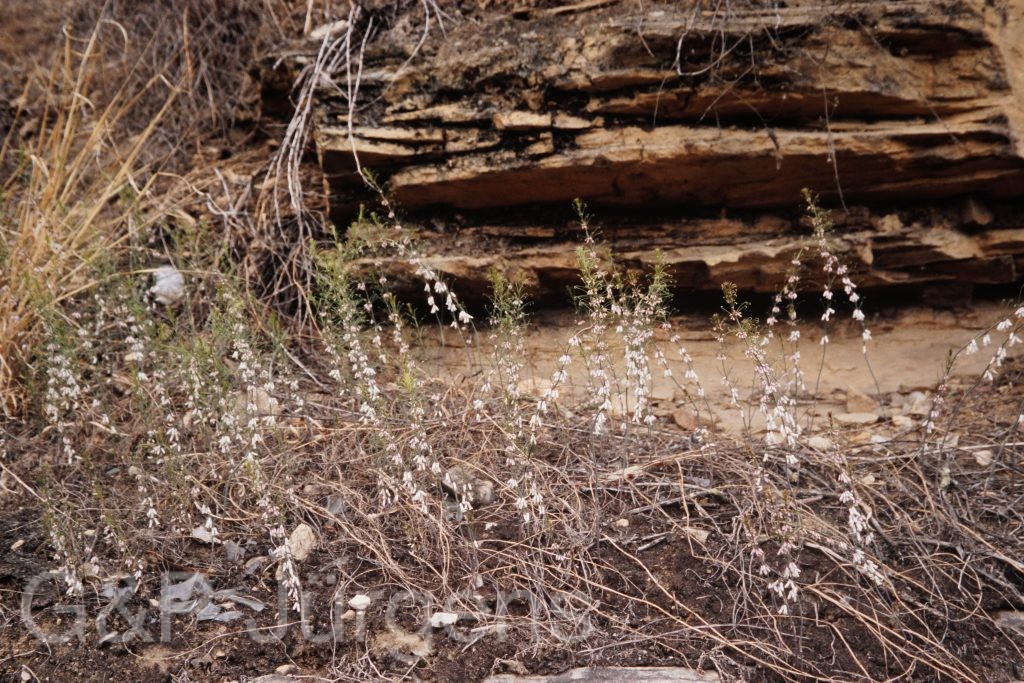
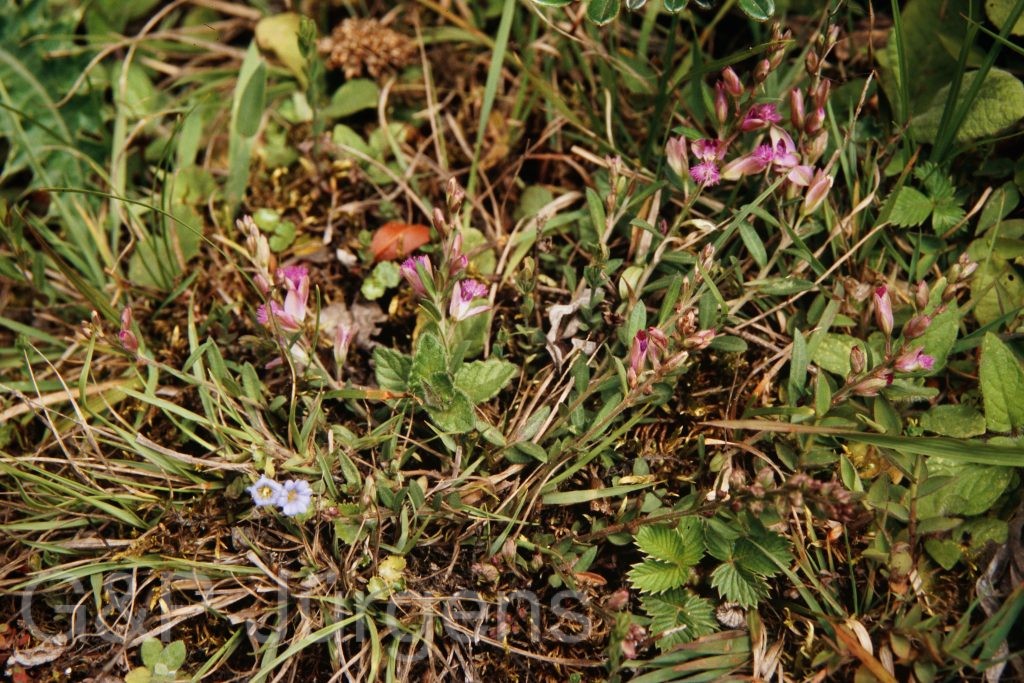
Bh2008 521 G796
Bhutan Punakha 2400m, May

Description

Polygala sibirica L. is a small perennial milkwort with one of the widest distributions in its genus, ranging across temperate Eurasia from eastern Europe through Central and northern Asia to the Himalaya, China, Japan and southward into Southeast Asia and Australasia. GBIF records confirm its presence in Russia, China, Mongolia, India, Nepal, Bhutan, Pakistan, Korea, Japan and many other countries, with several thousand occurrences. It grows on dry grassy slopes, open stony banks and forest margins from the lowlands to about 3,000 m. The plant photographed at Punakha in Bhutan at 2,400 m, flowering in May, exemplifies its occurrence on sunny montane slopes.

The species is a tufted perennial herb arising from a woody rootstock, with several ascending to spreading, often hairy stems 10–30 cm long. The leaves are alternate, sessile or nearly so, lanceolate to elliptic, the lower ones smaller. The flowers are borne in lax terminal racemes; the two large petaloid lateral sepals (wings) are greenish-veined, and the small blue to purplish corolla bears a conspicuous fringed keel-petal crest. The fruit is a flattened, narrowly winged, obcordate capsule containing two hairy seeds with a small aril.

Polygala sibirica is closely allied to the medicinally important P. tenuifolia, and its roots are similarly used in traditional Chinese medicine (yuan zhi) as a source of saponins. Its enormous range and ecological tolerance make it one of the most successful milkworts, and it is of least conservation concern.

Author: L. · Sources: POWO (Kew), GBIF, Flora of China Vol. 11, Flora of Bhutan Vol. 1, Bennett: Polygalaceae in Hooker's Flora of British India

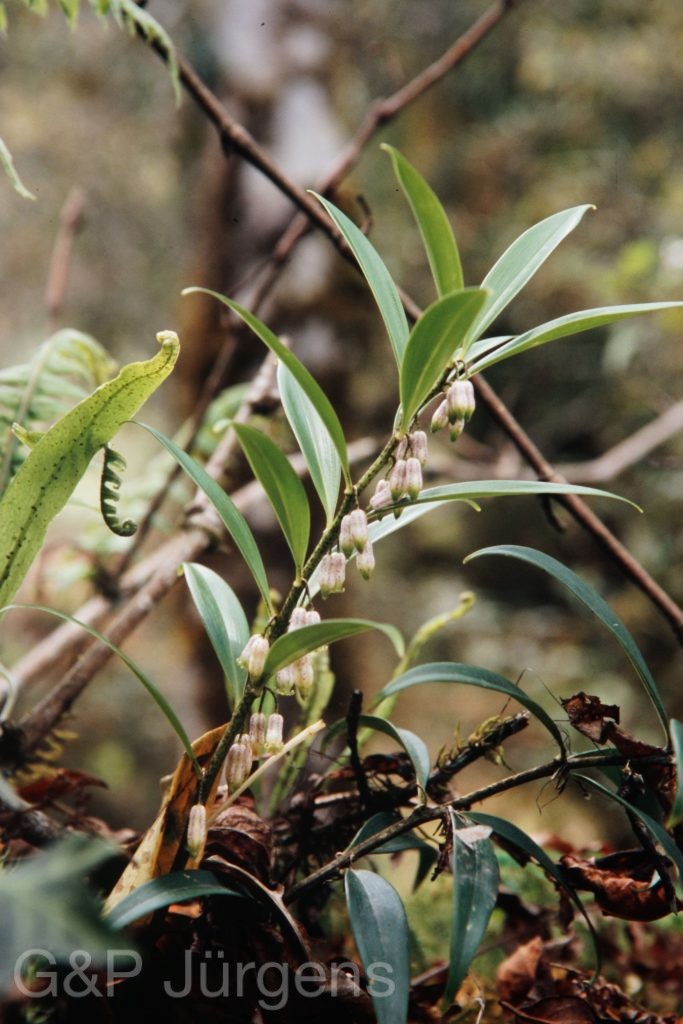
Baker

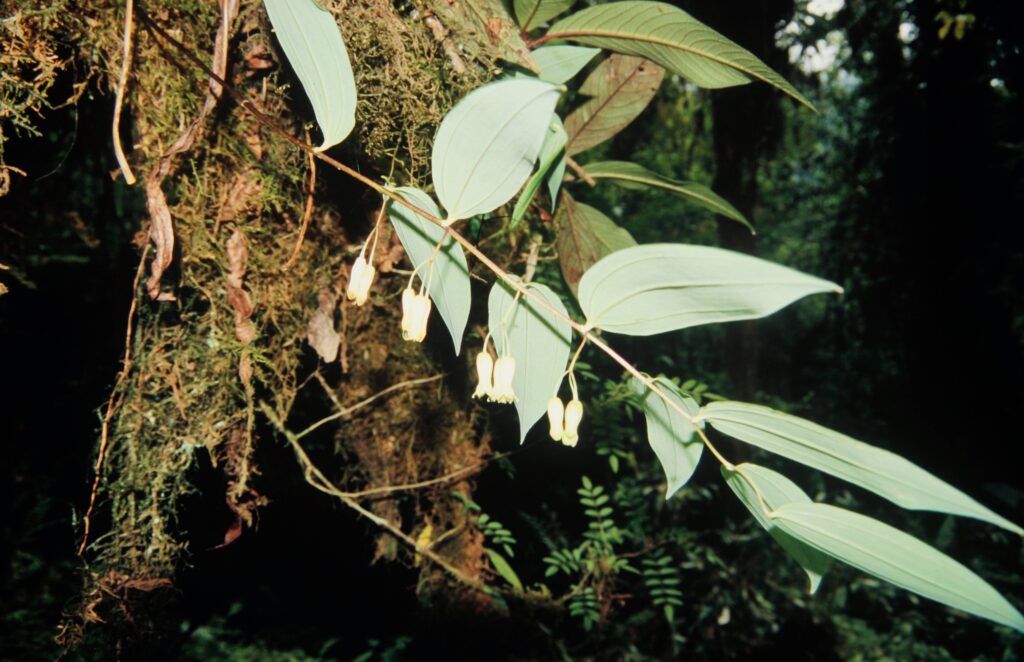
Sikkim 2006 315 ergebnis
India West-Bengal, Chaana 1800m, May

Description

Polygonatum brevistylum is a rhizomatous perennial of the eastern Himalaya and adjacent ranges. GBIF documents it (some 27 occurrences) from Nepal, India, Bhutan and Myanmar, in moist temperate forest, forest margins, shrubberies and shaded banks. It grows in cool, humus-rich soils within the broadleaved and mixed conifer zone, generally between about 1,500 and 3,000 m. The photographed plant is from Chaana in West Bengal (Darjeeling–Sikkim Himalaya) at around 1,800 m, flowering in May, a representative low-montane station for the species as it sends up shoots in spring.

The plant has a stout, knotty, horizontally creeping rhizome from which arises an erect or arching stem. The leaves are alternate, ovate to elliptic and acuminate, glabrous, sessile or shortly petiolate. The flowers are pendent and borne in few-flowered axillary clusters; the perianth is tubular-campanulate, white to greenish-white, with six short lobes, and, as the epithet brevistylum signals, a notably short style. The fruit is a globose berry, ripening blue-black to purplish and containing several seeds.

Polygonatum (Solomon's-seal), now placed in Asparagaceae (formerly Convallariaceae or Liliaceae sensu lato), is taxonomically intricate in the Himalaya, where several closely allied rhizomatous species occur. The short style and the clustered axillary flowers are useful diagnostic characters separating P. brevistylum from sympatric congeners. Himalayan Polygonatum rhizomes are widely gathered for food and traditional medicine, so localised harvesting pressure may affect accessible populations.

Author: Baker · Sources: POWO (Kew), Flora of China Vol. 24, Flora of Bhutan Vol. 3, GBIF, Jeffrey: The Genus Polygonatum (Liliaceae) in Eastern Asia

(Wall.) Royle

Bh2008 611 P920
Bhutan, Punakha 2400m, May

Description

Polygonatum cirrhifolium is a rhizomatous perennial herb widely distributed across the Himalaya and the mountains of central and western China, recorded from China, Nepal, India, Bhutan, Myanmar and Vietnam, with around 2251 georeferenced records (records from Canada, Norway and Britain reflect cultivation). It occurs in temperate forest, forest margins, shrubberies and grassy alpine slopes, on moist humus-rich soils typically between about 2000 and 4000 m. The photographed plant from Punakha in Bhutan at 2400 m, flowering in May, sits near the lower edge of its broad altitudinal span.

It has a stout, knotted, horizontal rhizome from which arises an erect to arching stem. The narrow, linear-lanceolate leaves are borne in whorls of three or more, and the epithet cirrhifolium refers to their slender apices, which are characteristically prolonged and curled into tendril-like tips. The pendent flowers hang one to four together in the leaf axils; each perianth is tubular, pale rose-purple to whitish, the six tepals fused into a cylinder with short lobes and enclosing six stamens. The fruit is a globose berry that ripens from red to purplish-black.

Polygonatum, in Asparagaceae subfamily Nolinoideae, is here represented by a whorled-leaved species readily told from P. oppositifolium by its tendrilled leaf tips. The rhizome, known in Chinese and Himalayan medicine, is gathered as a tonic drug, and the species is among the sources of the herbal material huangjing. The pendent nectar-bearing flowers are bumblebee-pollinated and the berries bird-dispersed. Though widespread and not threatened overall, sustained medicinal harvesting locally depletes wild populations.

Author: (Wall.) Royle · Sources: POWO (Kew), GBIF, Flora of China, Flora of Bhutan, Annotated Checklist of the Flowering Plants of Nepal, Jeffrey monograph of Polygonatum

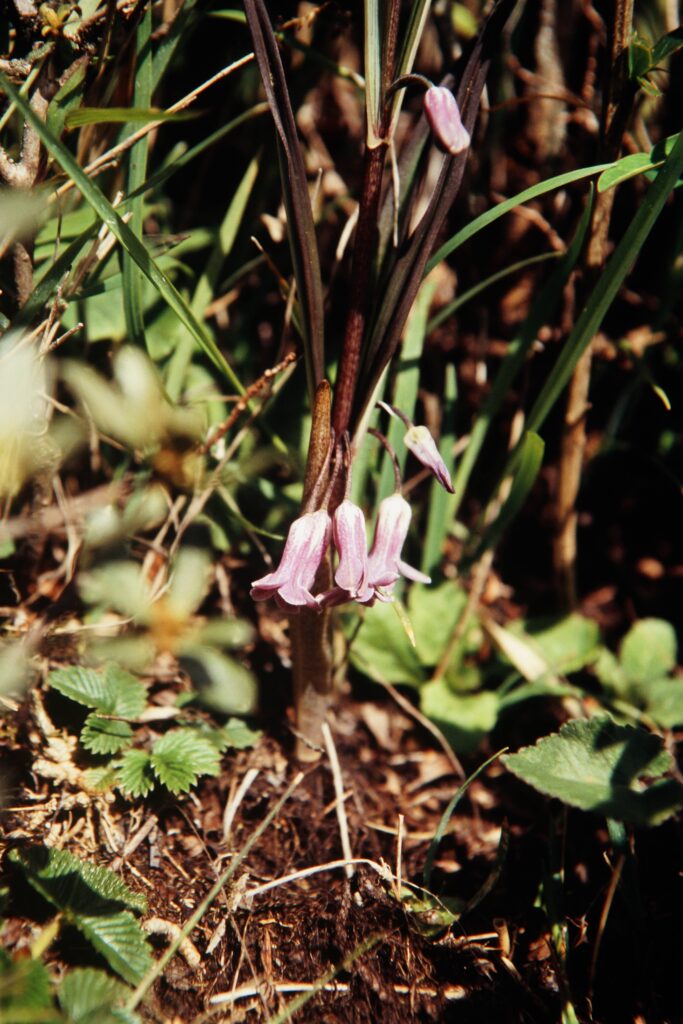
Baker

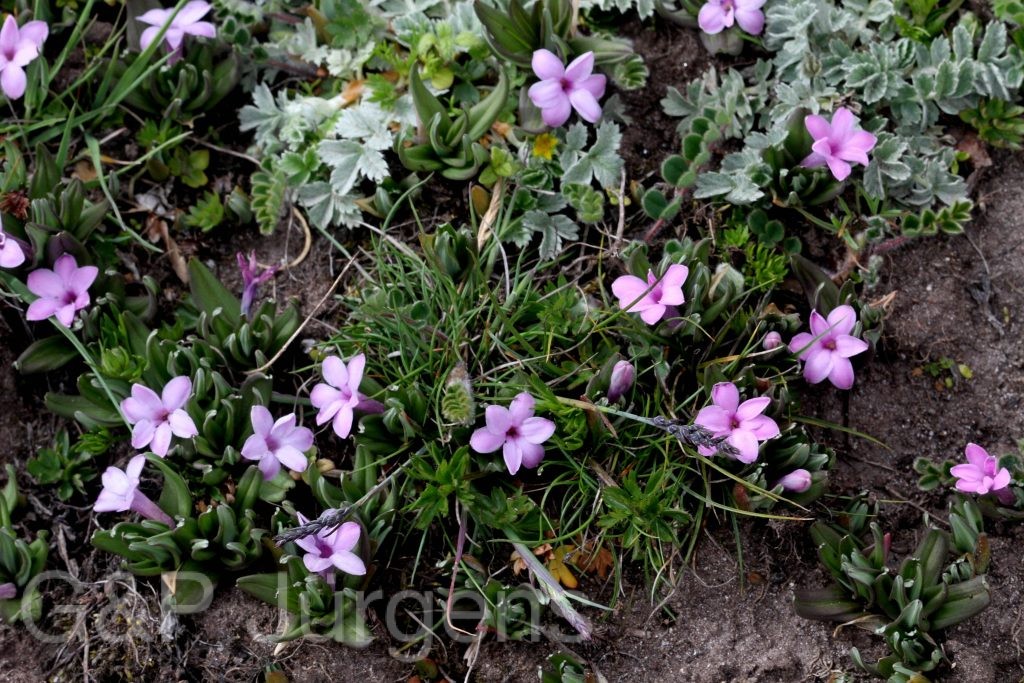
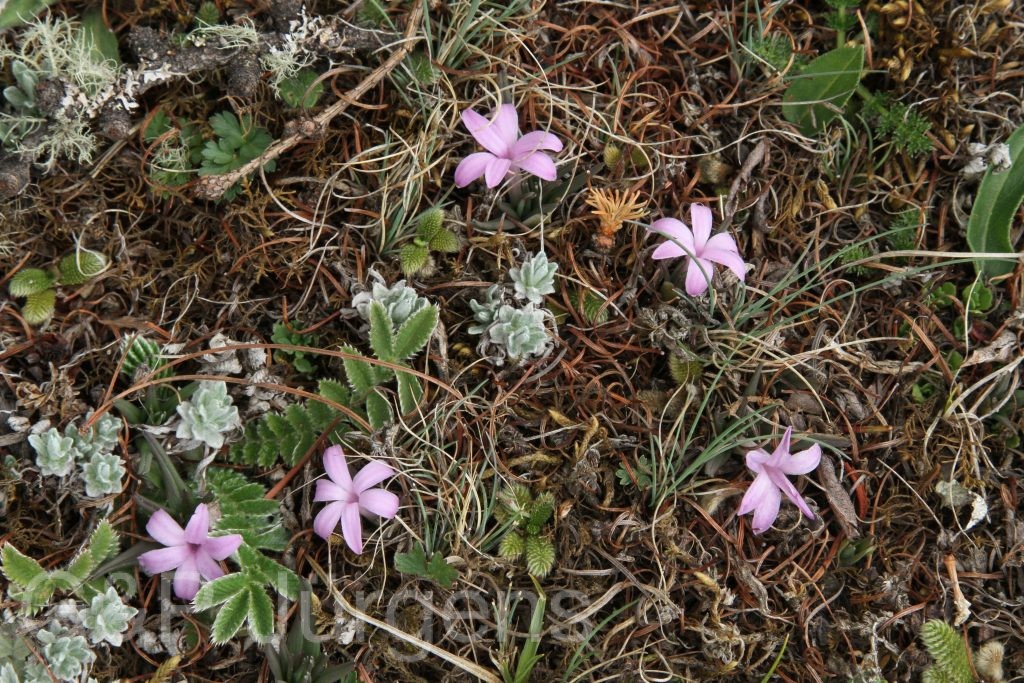
Sikkim2011 51
Sikkim Vista-valley 3800m, June
Bhutan2014 991
Bhutan Chele-La 4000m, May

Description

Polygonatum hookeri is a dwarf alpine Solomon's-seal of the Sino-Himalayan high mountains, recorded from China, Nepal, India, Bhutan and Pakistan across some 400 GBIF occurrences. The illustrated plants were photographed in the Vista-valley of Sikkim at 3800 m in June and on the Chele-La in Bhutan at 4000 m in May. It grows in open alpine turf, on grassy slopes, stony meadows and the margins of rhododendron scrub, typically between 3000 and 4500 m, forming low patches in short high-elevation vegetation where it flowers soon after snowmelt.

The plant is a diminutive rhizomatous perennial, spreading by a slender creeping rhizome and producing very short, sometimes almost stemless aerial shoots. The leaves are small, narrowly elliptic to oblong and crowded toward the top of the shoot. The flowers are solitary or paired and conspicuously large relative to the plant, bell- to funnel-shaped, lilac, rose-pink or purplish, borne low among the leaves; the perianth is tubular with six short lobes. The fruit is a small globose berry, ripening red, containing few seeds.

Long placed in the Liliaceae or Convallariaceae, Polygonatum is now treated in the Asparagaceae (subfamily Nolinoideae). P. hookeri is among the smallest and most alpine members of the genus, its dwarf cushion-like habit an adaptation to the harsh high-mountain environment, and it is much esteemed by rock-garden growers. The bird-dispersed berries aid colonisation of new ground. The species is widespread across the high Himalaya and of least conservation concern.

Author: Baker · Sources: POWO (Kew), GBIF, Flora of China, Flora of Bhutan, Flora of Nepal, Jeffrey – The Genus Polygonatum (Liliaceae/Asparagaceae) revision

(Wall.) Royle

Nepal 97 328 P653
Nepal Arun-Valley 2000m May

Description

Polygonatum oppositifolium is a rhizomatous perennial herb of the Himalaya and adjacent mountains, ranging through India, Nepal, China, Bhutan and Myanmar, with around 184 georeferenced records concentrated along the southern Himalayan flank (several distant country codes reflect cultivation or data artefacts rather than wild populations). It grows in moist, shaded broad-leaved and mixed forest, on banks and among rocks in leaf-litter-rich soils at middle elevations. The photographed plant from the Arun Valley of eastern Nepal at about 2000 m, flowering in May, typifies its warm-temperate forest habitat.

The plant has a creeping, knotted, fleshy rhizome from which arises an arching to suberect stem. As the epithet indicates, the lanceolate to ovate-lanceolate leaves are predominantly opposite (occasionally whorled), sessile to shortly petiolate, acuminate and prominently veined. The flowers hang in short axillary cymes; each perianth is tubular and greenish-white, the six tepals fused into a cylindrical tube with short recurved lobes, enclosing six included stamens with filaments adnate to the tube. The fruit is a small globose berry, ripening dark blue to blackish and containing few seeds.

Polygonatum (Solomon's seal), placed in Asparagaceae subfamily Nolinoideae, is distinguished from related genera by its rhizome scars and tubular flowers. P. oppositifolium is notable within the Himalayan members for its opposite leaf arrangement. The pendent flowers are bumblebee-pollinated and the berries bird-dispersed. The rhizomes are gathered locally in traditional medicine; while not currently regarded as threatened, such harvesting and forest degradation warrant monitoring of wild stands.

Author: (Wall.) Royle · Sources: POWO (Kew), GBIF, Flora of China, Annotated Checklist of the Flowering Plants of Nepal, Flora of Bhutan, Jeffrey monograph of Polygonatum

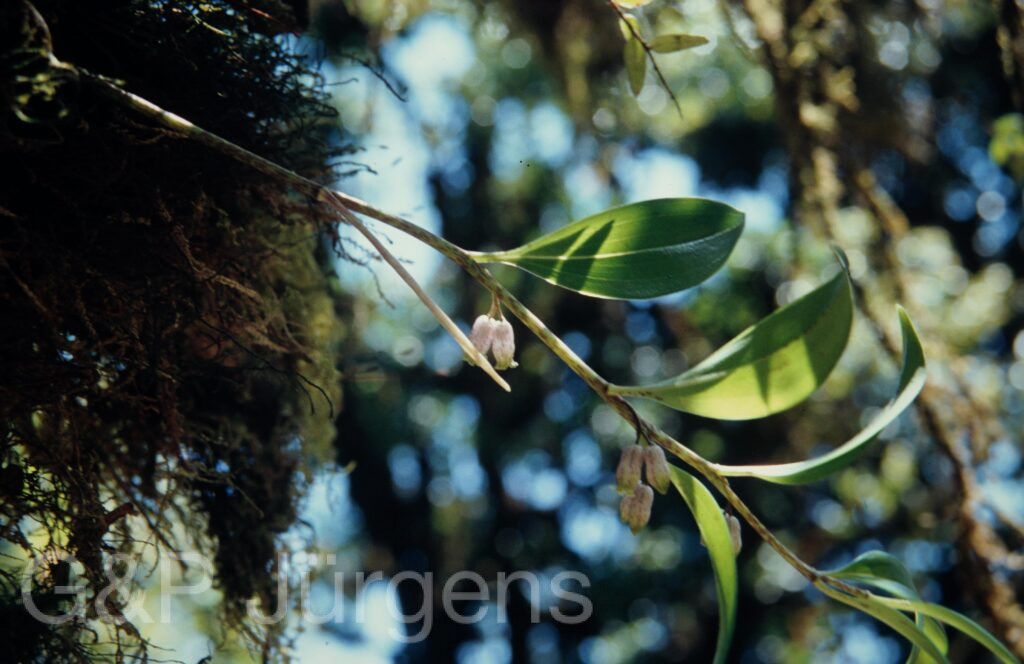
Royle ex Kunth

Bh2008 333 P513
Bhutan Phobjika 2700m, April
Nepal 1994 59 ergebnis
Ost-Nepal Bhalukhob 
1900m April

Description

Polygonatum punctatum is a Sino-Himalayan Solomon's seal distributed through China, Nepal, India, Bhutan, Myanmar, Thailand, Vietnam and Laos, with over 450 georeferenced occurrences and additional records from cultivation. It is a plant of cool, shaded temperate forest, mossy banks, rock ledges and humus-rich slopes, where it often grows as a lithophyte or epiphyte. The populations documented at Phobjikha in Bhutan at about 2700 m and at Bhalukhob in eastern Nepal at about 1900 m, both in April, reflect its montane forest habitat, emerging and flowering in spring.

The species grows from a creeping, knotted rhizome that produces an arching to pendent leafy stem. The leaves are alternate, sometimes appearing sub-opposite, ovate to lanceolate and acuminate, often somewhat leathery. Slender axillary inflorescences bear one to several tubular flowers; the perianth is fused into a narrow cylindrical tube, greenish-white and frequently marked with purple dots or spots (the punctate patterning evoked by the epithet), with six short lobes and included stamens. The fruit is a small globose berry, dark purple to blackish when ripe, containing a few seeds.

Within Asparagaceae (formerly Convallariaceae or Liliaceae sensu lato), Polygonatum is a Northern Hemisphere genus whose East Asian and Himalayan species are taxonomically intricate, separated by leaf arrangement, flower number, perianth markings and rhizome form. The frequently epiphytic or saxicolous habit of P. punctatum is unusual within the largely terrestrial genus. Widespread and locally common, it is not regarded as threatened, though several Himalayan congeners are harvested for the medicinal rhizome.

Author: Royle ex Kunth · Sources: POWO (Kew), GBIF, Flora of Bhutan, Flora of Nepal, Flora of China, Jeffrey's revision of Polygonatum

(L.) All.

Bh09 60 P108 ergebnis
Bhutan Jili-La 3500m, May

Description

Polygonatum verticillatum ((L.) All.), the whorled Solomon's-seal, is a temperate to subalpine rhizomatous herb with a remarkably broad Eurasian range. It extends from western and central Europe across Russia and the Caucasus to Central Asia, the Himalaya and southwest China; the very large number of GBIF occurrences (over 121,000) reflects its abundance across European mountains, though the Himalayan populations recorded from Nepal and Bhutan represent the easternmost segment of its distribution. It grows in shady deciduous and coniferous woodland, on grassy slopes and among rocks in alpine meadows, ascending to around 3,800 m, as exemplified by the collection from Jili-La in Bhutan at 3,500 m in May.

The plant arises from a creeping, knotted, horizontal rhizome and produces erect, terete, glabrous stems 30–80 cm tall. The leaves are sessile and arranged in distinct whorls of three to eight at each node, narrowly lanceolate to linear-oblong and acuminate, with the upper ones often subverticillate. The pendent, tubular-campanulate flowers are greenish-white, borne singly or in axillary clusters of two to four on slender pedicels; the perianth tube is six-lobed at the mouth and encloses six included stamens. The fruit is a globose berry that ripens from green through red to a deep purplish-black.

Within the genus the species is distinguished by its whorled leaf arrangement, contrasting with the alternate, distichous leaves of the related P. multiflorum and P. odoratum. The Himalayan rhizomes are valued in Ayurvedic and Tibetan medicine, where the plant is one of the sources traded as "Meda," a use that locally threatens wild stands through overharvesting. Across its wide global range, however, the species remains common and is assessed as of least concern.

Author: (L.) All. · Sources: POWO (Kew), Flora of Nepal, GBIF, Flora of China Vol. 24, Jeffrey: The Genus Polygonatum (Liliaceae) in Eastern Asia (1980)

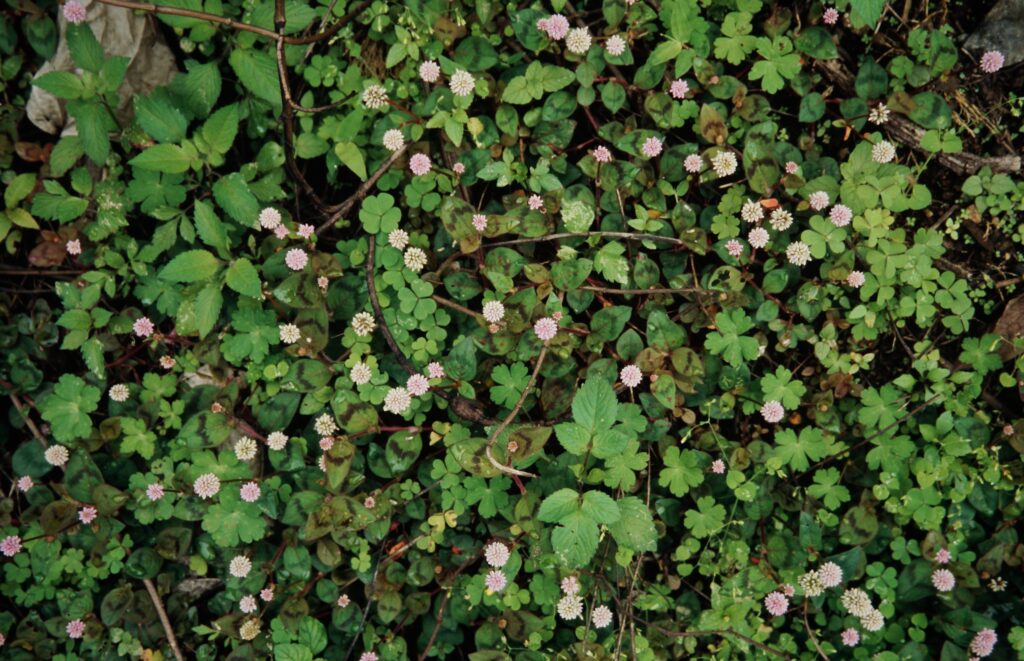
D.Don

Sikkim 2006 261 ergebnis
India West-Bengal, Lingza 1300m, May

Description

Polygonum microcephalum is a herb of the eastern Himalaya and montane Southeast Asia, widely distributed from Nepal and north-east India through Bhutan and south-western China (Yunnan, Sichuan, Xizang) to northern Myanmar and Vietnam. The very large global occurrence figures returned under the accepted genus Persicaria reflect aggregated records of the broader complex; this taxon is properly treated as Persicaria microcephala (D. Don) H. Gross. It grows in moist, shaded situations — forest understorey, streamsides, ditches and disturbed clearings — chiefly between about 800 and 2,800 m. The plant photographed at Lingza in West Bengal, India, at 1,300 m in May represents its typical low-montane subtropical broadleaf forest habitat.

It is a perennial herb with slender, often reddish, ascending to scrambling stems rooting at the lower nodes, the swollen nodes sheathed by membranous, cylindrical ochreae. The leaves are alternate, ovate to broadly lanceolate, acuminate, frequently marked with a dark chevron and red venation, the surfaces sometimes finely pubescent. The flowers are minute and aggregated into small, dense, head-like or short-spike inflorescences, the perianth of five tepals white to pinkish; stamens commonly eight. The fruit is a trigonous, dark, shining achene enclosed within the persistent perianth.

The segregation of Persicaria from Polygonum sensu lato, supported by molecular phylogenetics, places this species in a large genus characterised by ochreate sheaths and capitate or spiciform inflorescences. The dark-marked, often red-flushed foliage has brought certain forms into cultivation. The species is widespread, ecologically adaptable and of no conservation concern, behaving locally as a colonist of disturbed ground.

Author: D.Don · Sources: POWO (Kew), Flora of China Vol. 5, Flora of Bhutan Vol. 1, GBIF, Hong et al.: Polygonaceae in Flora of China