Tag:

Summer

(DC.) Pimenov & Kljuykov
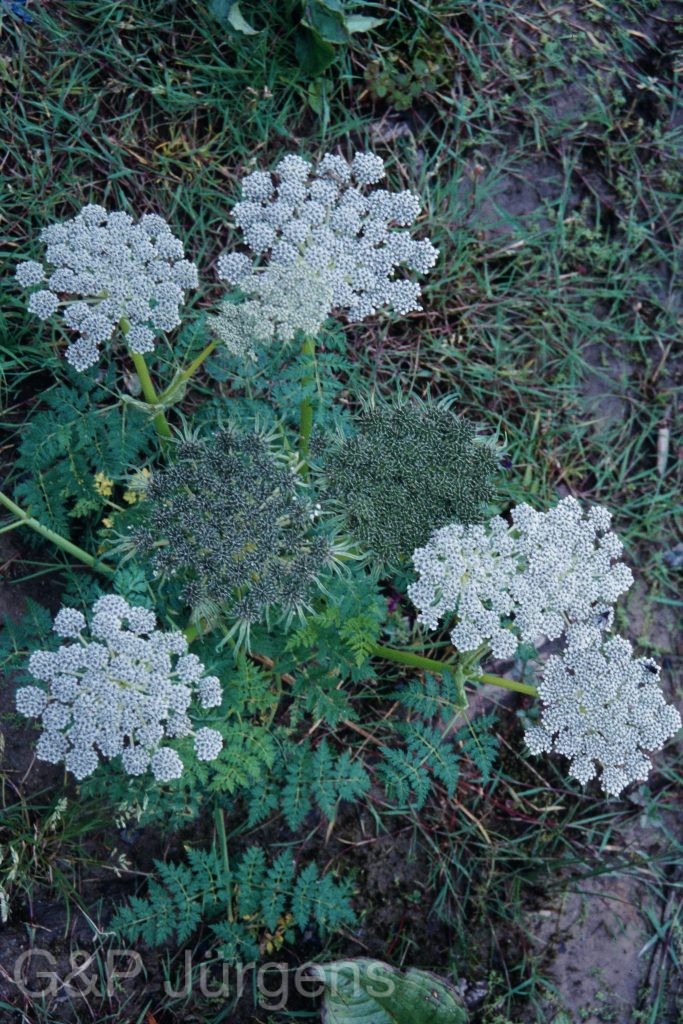
Sikkim2003 98 P135
Sikkim below Dzongri 3700m 08.2003
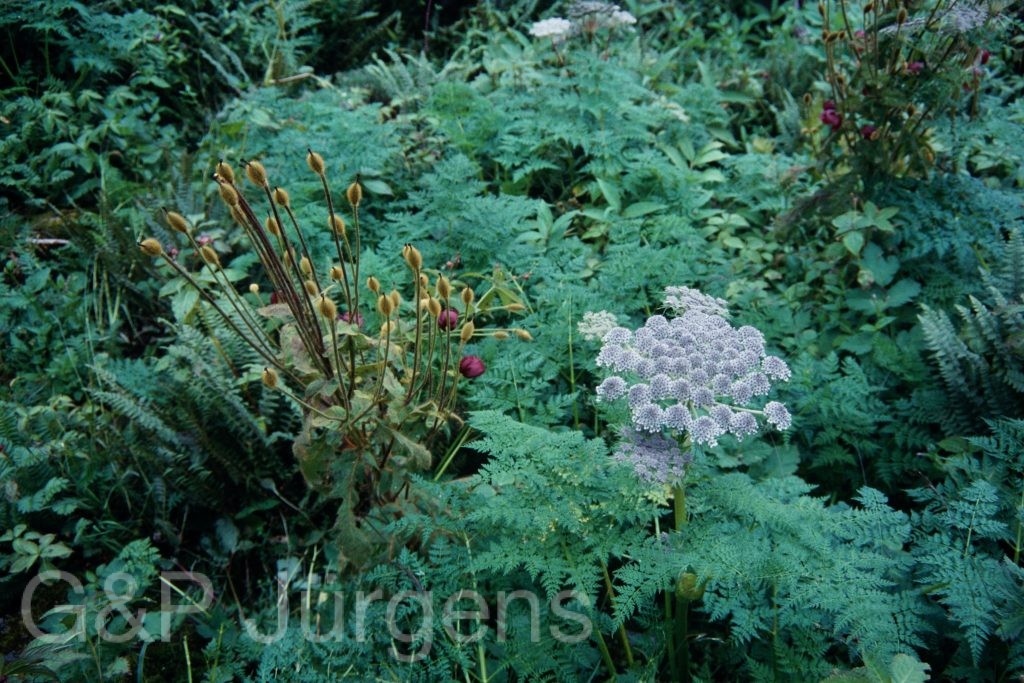
Sikkim2003 161 P214
Sikkim below Dzongri 3900m, August

Description

Ligusticopsis wallichiana is a Himalayan umbellifer ranging from Pakistan and northern India through Nepal, Sikkim and Bhutan into south-western China and Myanmar. The 406 GBIF records lie chiefly within this native arc, the European and North American points reflecting herbarium and garden material. It occupies subalpine and alpine meadows, forest clearings, open slopes and streamsides, generally between about 3000 and 4300 m, where it is a characteristic tall herb of moist Himalayan grassland. The plants photographed below Dzongri in Sikkim at 3700 to 3900 m in August illustrate the species at the height of the monsoon flowering season on these damp, herb-rich slopes.

It is a stout, glabrous perennial herb arising from a thick, aromatic rootstock, with erect, ribbed, often purplish stems. The leaves are large and several times pinnate (ternate-pinnate), the ultimate segments lanceolate to ovate and toothed, the lower leaves long-petiolate with sheathing bases. The inflorescence is a terminal compound umbel with numerous rays, subtended by narrow bracts and bracteoles; the small flowers are white. The fruit is an oblong-ellipsoid, dorsally compressed schizocarp with prominently winged lateral ribs, splitting into two mericarps.

Long familiar as Selinum wallichianum (its WordPress URL preserves that name), the species was transferred to Ligusticopsis by Pimenov and Kljuykov in their revision of the Selinum-Ligusticum complex, reflecting carpological and molecular evidence. The aromatic root has a history of use in Himalayan folk medicine. Common and widespread across its range, it is not considered threatened and forms a conspicuous element of high Himalayan meadow vegetation.

Author: (DC.) Pimenov & Kljuykov · Sources: POWO (Kew), GBIF, Flora of Bhutan, Flora of China, Pimenov & Kljuykov Umbelliferae revision
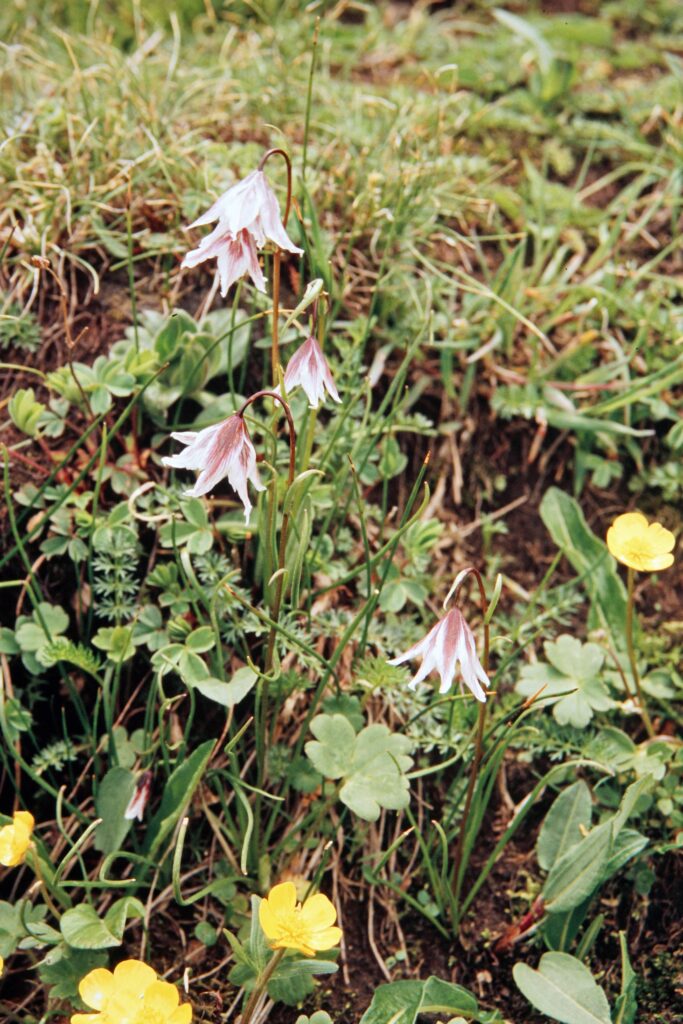
Lilium nanum

by GP Jürgens

Klotzsch

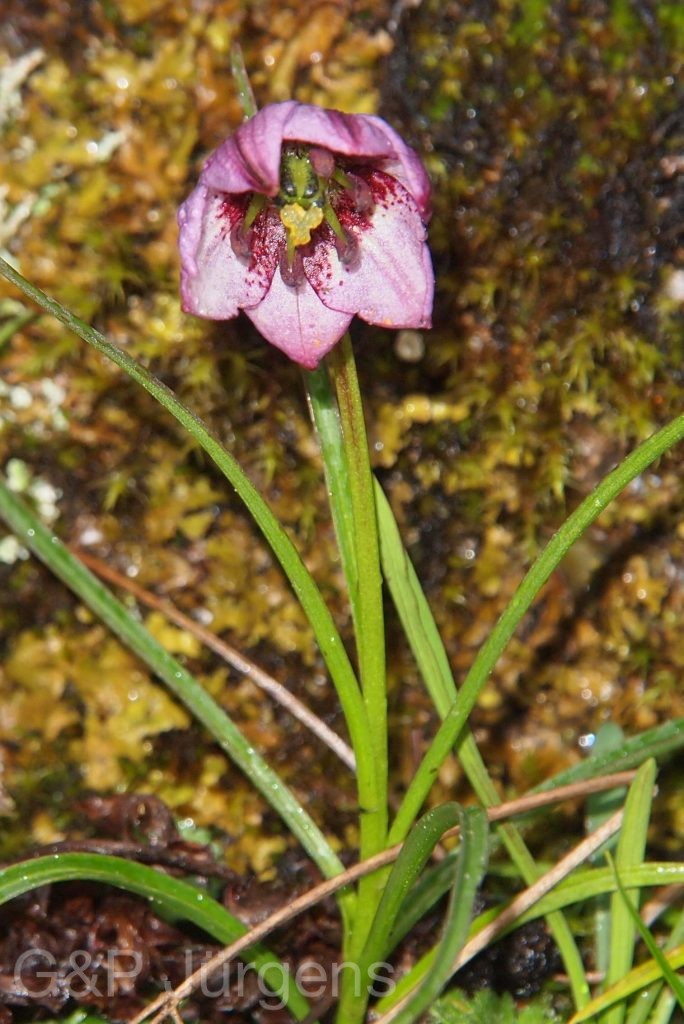
BhutanPG2011 250
Bhutan Tsochenchen, 3800m June
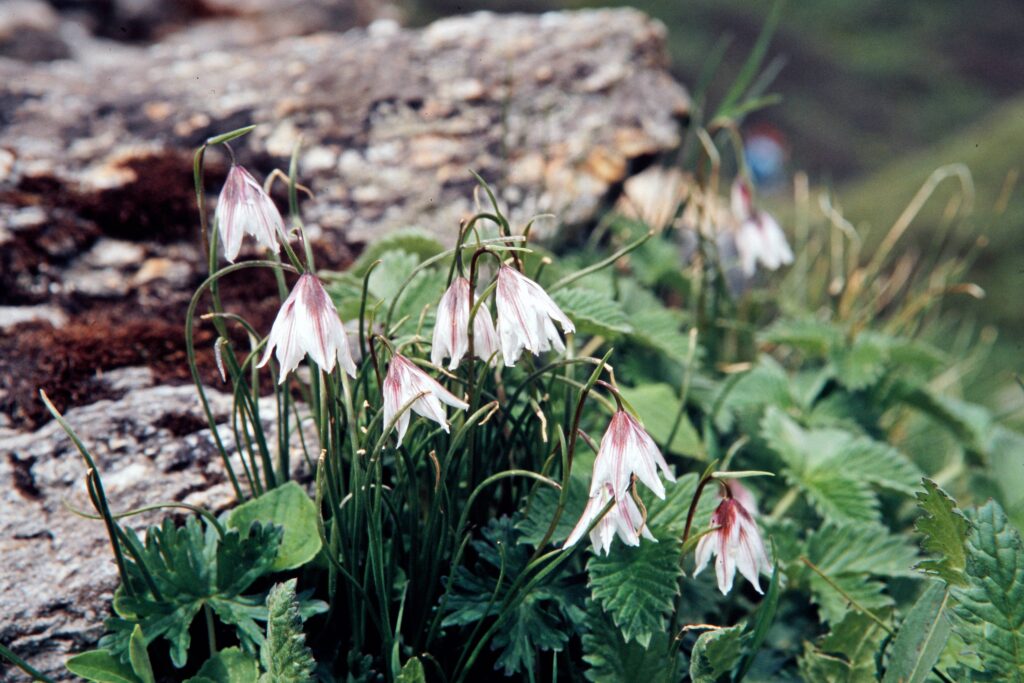
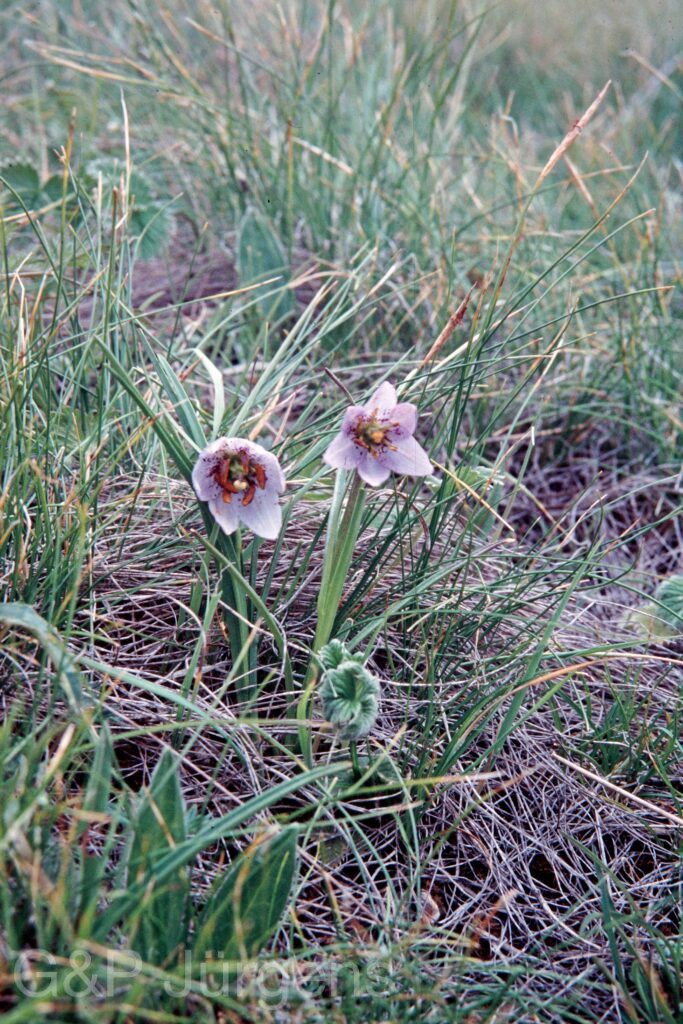
Nepal 99 123 ergebnis
West-Nepal South of Rara-Lake 3650m, June

Description

Lilium nanum is a diminutive alpine lily of the Himalaya and adjoining China, recorded from China, Nepal, India, Bhutan and Myanmar, with GBIF documenting some 410 occurrences (outlying records reflecting cultivation). It grows in subalpine and alpine meadows, open Rhododendron and juniper scrub, grassy slopes and stabilised screes, generally between 3000 and 4500 m. The photographed plants were found in Bhutan at Tsochenchen at 3800 m and in West Nepal south of Rara Lake at 3650 m, both in June, when this early-summer flowerer nods amid the freshly greening alpine sward soon after snowmelt.

It is a small bulbous perennial, the bulb ovoid with few lanceolate scales, giving rise to a slender, erect, unbranched stem rarely exceeding a hand-span in height. The leaves are scattered, linear to narrowly lanceolate, sessile and grass-like. The plant bears a solitary (rarely paired), nodding, broadly campanulate flower with six free, recurved-tipped tepals coloured pinkish-purple to deep purple, often tessellated or veined darker within and yellowish at the base. There are six stamens with versatile anthers and a superior, three-locular ovary topped by a slender style; the fruit is an erect, ribbed, loculicidal capsule producing flat, winged, wind-dispersed seeds.

The species belongs to genus Lilium (Liliaceae) and is among the smallest of all true lilies, sometimes treated with var. flavidum, a yellow-flowered variant of the eastern Himalaya. Prized by alpine gardeners, it is challenging in cultivation owing to its high-altitude requirements. While its broad range buffers it against extinction, local populations face pressure from grazing, bulb collection and warming-driven habitat shifts.

Author: Klotzsch · Sources: POWO (Kew), GBIF, Flora of China, Flora of Bhutan, Flora of Nepal, The Genus Lilium (Comber/McRae)

Lilium nepalense

by GP Jürgens

D.Don

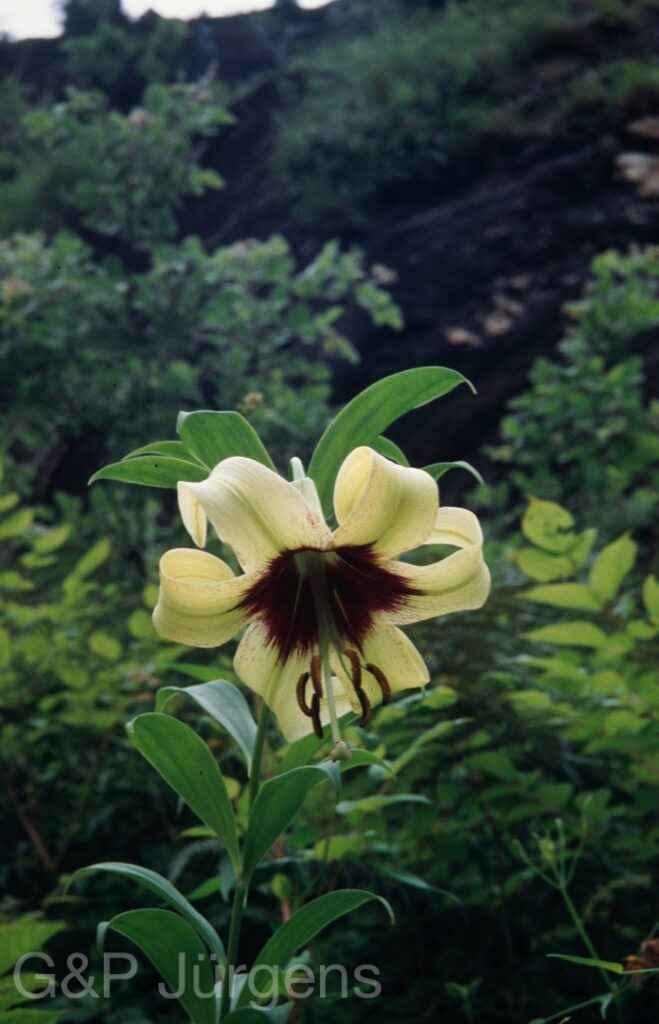
BhutanPG2011 703 01 01
Bhutan Luksor, 2700m July
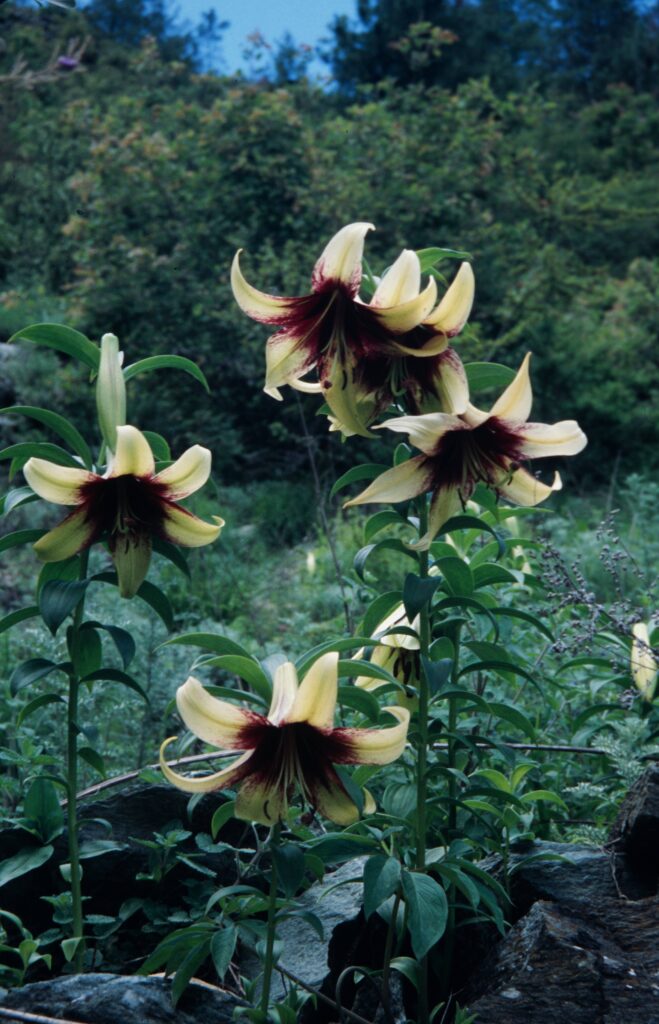
Nepal 99 900 ergebnis
West-Nepal Sepka 2700m, July
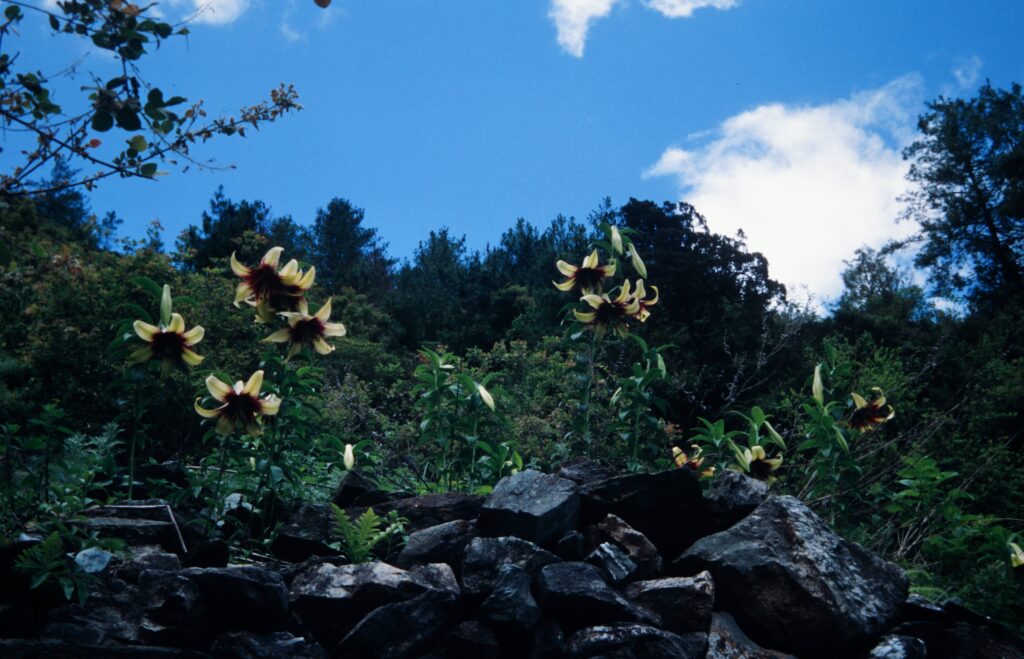
Nepal 99 1005 ergebnis
West-Nepal Sepka 2700m, July
Nepal 99 1006 ergebnis
West-Nepal Sepka 2700m, July

Description

Lilium nepalense is a striking Himalayan lily native to Nepal, Bhutan, northern India and south-western China, extending into Myanmar; GBIF records (around 206 occurrences) also reflect numerous cultivated and naturalised collections in Europe and South-East Asia, as it is widely grown as an ornamental. In its natural range it inhabits cool, humid temperate to subalpine slopes, growing among shrubberies, in forest clearings, on grassy banks and along the margins of oak, rhododendron and conifer woodland on rich, well-drained humic soils. The collections from Luksor in Bhutan and Sepka in western Nepal, both near 2700 m in July, illustrate its mid-montane elevation and monsoon-season flowering.

The plant grows from a stoloniferous bulb with loosely imbricate white scales, the underground stem often wandering before emerging. The erect, leafy aerial stem bears scattered, lanceolate to ovate, sessile or shortly petiolate leaves with prominent parallel venation. The flowers, borne singly or few in a lax raceme, are large, nodding and broadly funnelform to trumpet-shaped; the six recurved tepals are luminous greenish-yellow to pale chartreuse with a dramatic deep maroon to purple-black throat blotch, giving the species its horticultural celebrity. The six stamens carry large versatile anthers, and the slender style ends in a capitate three-lobed stigma. The superior ovary develops into an erect, oblong, three-valved capsule with numerous flat, winged seeds.

Described by D. Don, Lilium nepalense belongs to a Sino-Himalayan group of trumpet lilies and is prized in cultivation for its colour contrast and fragrance, having earned horticultural recognition in temperate gardens. Its stoloniferous bulb is an adaptation for vegetative spread through loose montane soils. While locally frequent, wild populations face pressure from over-collection of bulbs, grazing and habitat disturbance, making sustainable propagation important for relieving demand on natural stands.

Author: D.Don · Sources: POWO (Kew), GBIF, Flora of Bhutan, Flora of China, Stainton Flowers of the Himalaya, The Genus Lilium (Jefferson-Brown)

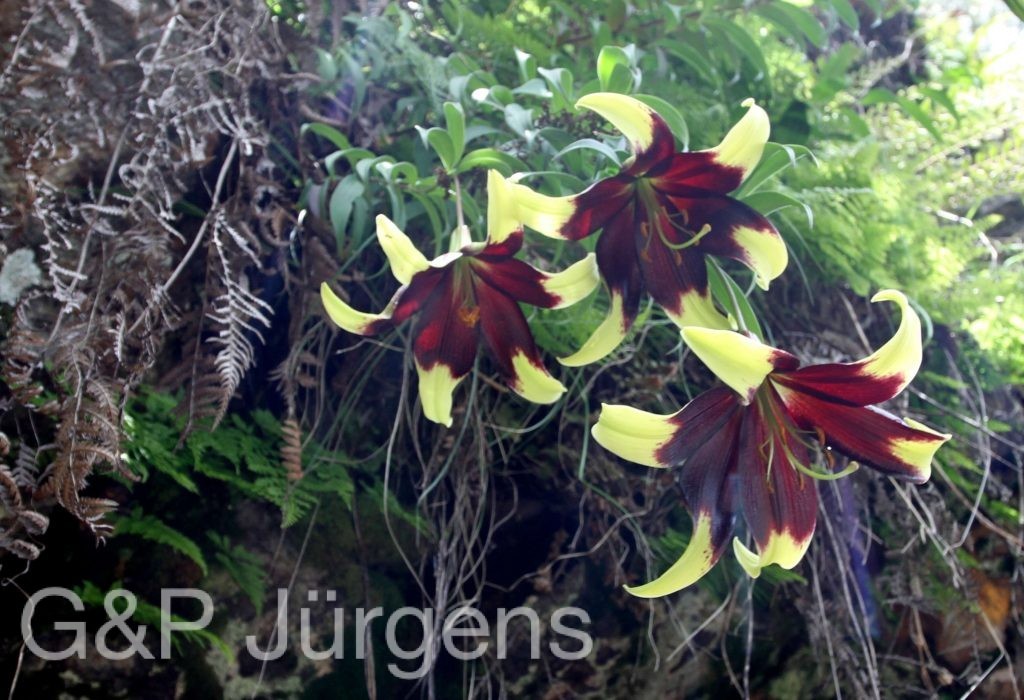
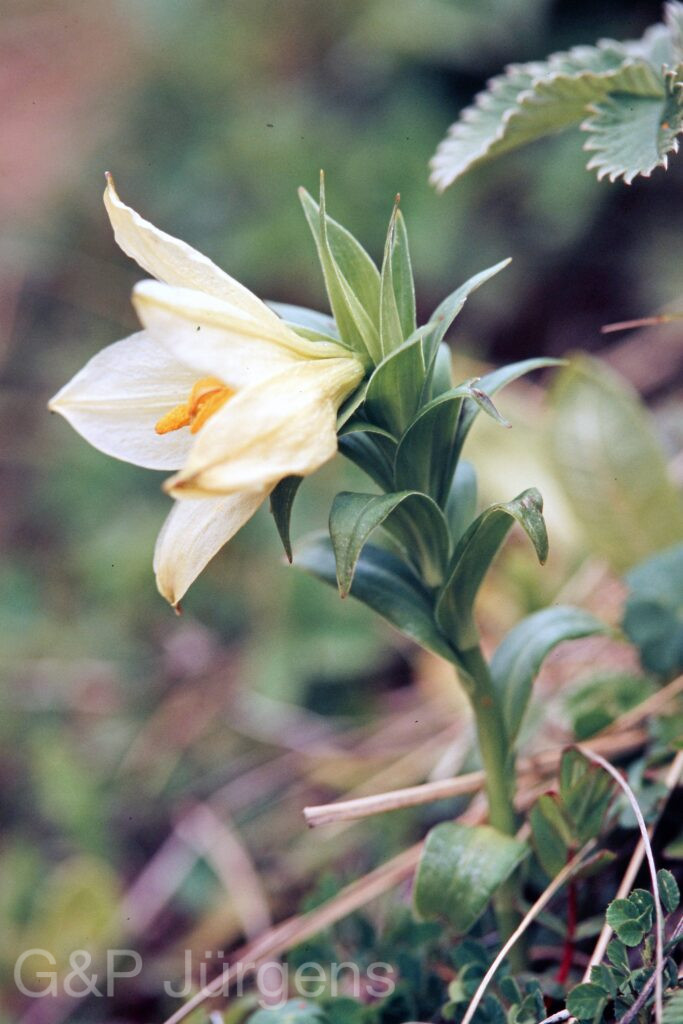
Baker

Garh 07 146 ergebnis
India Garhwal Kinkhola 3500m, June

Description

Lilium oxypetalum is a small subalpine lily restricted to the western and central Himalaya, with native occurrences in northern India and Nepal (the remaining GBIF country codes reflect cultivated or naturalised records outside the native range). It grows in open coniferous and birch-rhododendron forest, forest margins and grassy slopes, typically between 3,000 and 4,000 m. The photographed plant was found at Kinkhola in Garhwal at about 3,500 m in June, flowering as the snow retreats and the subalpine meadows green up early in the growing season.

The plant arises from a small, ovoid bulb of loose, white scales and produces a slender, erect, unbranched stem 15-40 cm tall. The leaves are scattered along the stem, lanceolate to elliptic, sessile and few in number. The flower is usually solitary and nodding, broadly campanulate rather than reflexed, with six tepals that are pale yellow to greenish-yellow, sometimes flushed purplish, and taper to acute, recurving tips. The six stamens are shorter than the tepals and bear versatile anthers; the superior ovary develops into an erect, oblong, three-valved loculicidal capsule with flat, winged seeds.

With its solitary, bell-shaped flower and short stature, L. oxypetalum is morphologically distinctive among Himalayan lilies and has at times been segregated in the genus Nomocharis-allied groups, reflecting the close relationship between Lilium and Nomocharis now confirmed by molecular work. The yellow-flowered var. insigne extends the variation. As a narrowly distributed, attractive bulb, the species faces localised pressure from collection and grazing, and its restricted alpine range warrants monitoring under a warming climate.

Author: Baker · Sources: POWO (Kew), GBIF, Flora of China Vol. 24 (Liliaceae), Flora of Nepal, Comber: A New Classification of the Genus Lilium

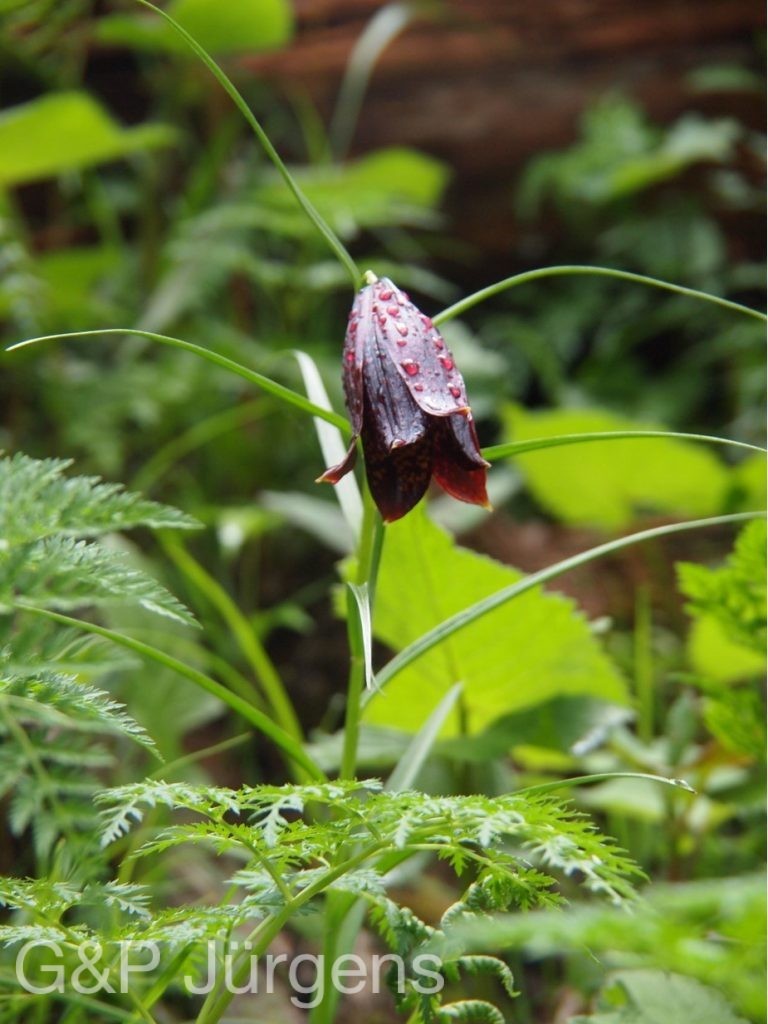
Stearn

A3EB14BDCA574E78ABE6D96A22255803
Bhutan Tsochenchen, 3550m June

Description

Lilium sherriffiae is a slender bulbous perennial endemic to the eastern Himalaya, restricted to Bhutan and adjacent Nepal and known from only about 13 documented occurrences, making it one of the rarer Himalayan lilies. It grows among subalpine scrub, in open coniferous forest, on grassy slopes and at meadow margins, typically between 3000 and 3900 m. The illustrated material was gathered at Tsochenchen in Bhutan at 3550 m in June, during the short alpine flowering season that follows snowmelt at these elevations.

The plant arises from a small ovoid bulb of imbricate scales and produces a single erect, wiry stem 30-70 cm tall bearing scattered, narrowly linear-lanceolate leaves. The flower is usually solitary and pendent, the perianth campanulate with six segments that are strongly recurved only at the tips. The colouring is highly distinctive: the segments are dull purplish-maroon outside and conspicuously chequered or tessellated with yellow-green within, recalling a Fritillaria. The six stamens bear versatile anthers and the superior ovary develops into an erect, ribbed loculicidal capsule containing flat, papery, wind-dispersed seeds.

Named for the collector George Sherriff, the species is prized horticulturally yet remains scarce in cultivation owing to its specialised requirements. Its fritillary-like nodding flower is adapted to pollination by bumblebees active in the cool subalpine climate. Given its narrow geographic range, small number of known populations and the pressures of grazing and collection, L. sherriffiae is of genuine conservation concern and merits formal assessment and in-situ protection.

Author: Stearn · Sources: POWO (Kew), GBIF, Flora of Bhutan, Annotated Checklist of the Flowering Plants of Nepal, The Genus Lilium (Jefferson-Brown), RHS Lily species monograph

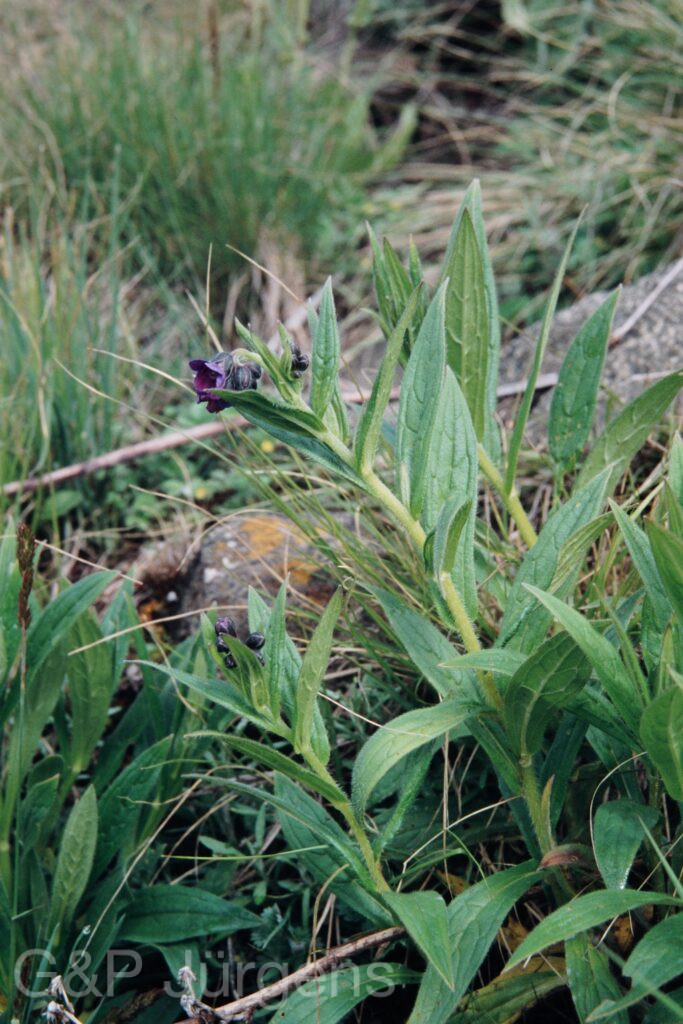
Baill.

Nepal 99 350 ergebnis
Nepal Kalomura 3710m, June
Nepal 99 350 ergebnis
Nepal Kalomura 3710m, June

Description

Lindelofia longiflora (Benth.) Baill. is a robust perennial herb of the borage family native to the western and central Himalaya and the adjoining mountains of Central Asia. Its core native range covers Pakistan, northern India and Nepal, with numerous additional records from Europe, North America, Russia and New Zealand reflecting its cultivation as an ornamental and its escape from gardens. It grows in open subalpine and alpine meadows, on grassy slopes, forest margins and stony banks, generally between about 2,500 and 4,000 m. The photographed plant at Kalomura in Nepal, recorded at 3,710 m in June, is typical of its preference for moist, well-drained montane grassland during the early monsoon flush.

The plant develops from a stout, woody rootstock, producing erect, leafy, bristly-hairy stems. The leaves are alternate, the lower long-petiolate and the upper sessile, narrowly oblong-lanceolate, entire and roughly hispid on both surfaces. The inflorescence is a terminal, often branched, scorpioid cyme bearing nodding flowers; the corolla is deep violet-blue to purple, tubular and conspicuously long, exceeding the calyx, with prominent scales (fornices) in the throat. The fruit comprises four nutlets that are flattened and marginally winged with a row of hooked, glochidiate spines aiding epizoochorous dispersal.

Lindelofia belongs to tribe Cynoglosseae, near Cynoglossum and Adelocaryum, and the long-tubed, winged-nutlet morphology distinguishes it within the group. The species is widely grown in alpine and herbaceous-border horticulture, which accounts for its scattered naturalised occurrences across temperate regions. Within its native Himalayan range it remains common and is not considered threatened, while in some introduced areas its self-sowing habit warrants monitoring.

Author: Baill. · Sources: POWO (Kew), GBIF, Flora of Pakistan, Flora of Nepal, Kazmi: Boraginaceae of West Pakistan and Kashmir

(Thunberg) Lindl.

Bhutan2014 786
Bhutan Wangdi Mo-Chu 1400m, May
BhutanPG2011 609 01
Bhutan Ludlow-Sherriff-Trail Ken-La, 4300m July
Also included: Cotoneaster microphyllus Lindb.
Bhutan2014 784
Bhutan Ludlow-Sherriff-Trail Ken-La, 4300m July
Sikkim2003 28 P39
Sikkim Rathong-Chu 1200m 08.2003

Hook.

Nepal 99 296 ergebnis
West-Nepal Kalmura 4100m, June

Description

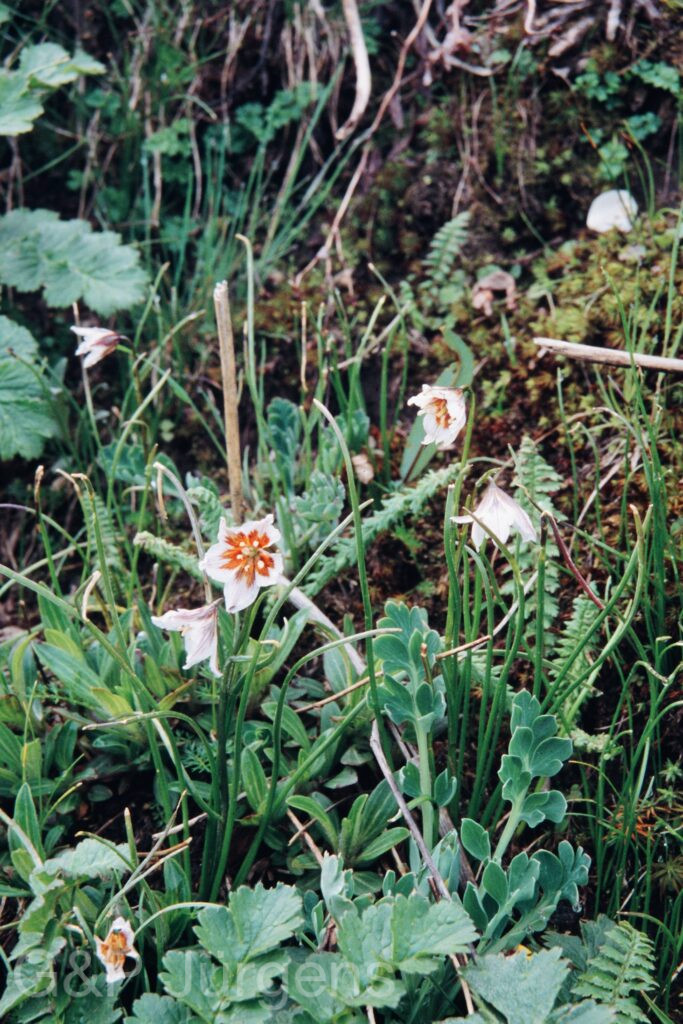
Lloydia longiscapa Hook. is a delicate bulbous geophyte of the high Himalaya. According to GBIF (about 75 occurrences) it ranges across Nepal, northern India, southern China (Tibetan plateau margins) and Bhutan, growing in alpine meadows, on grassy and rocky slopes and among open turf near the upper limit of vegetation. It is a true high-alpine plant, recorded chiefly between 3,500 and 4,500 m. The populations documented at Kalmura in West Nepal (4,100 m) and Khiar Kutti in Garhwal (3,900 m), both flowering in June, illustrate its phenology as a snow-melt species that emerges and blooms shortly after the retreat of the winter snowpack.

The plant develops from a small ovoid bulb enclosed in membranous tunics, producing one or few slender stems. The leaves are narrowly linear, almost grass-like, with basal leaves longer than the few reduced cauline ones. The flowers are solitary or few, erect, broadly campanulate, with six free, white to pale yellowish tepals usually marked with fine purplish veins and a small nectary at the base; the long, slender scape gives the species its epithet "longiscapa". Stamens are six, the ovary superior and three-locular, maturing into a loculicidal capsule containing numerous flat seeds.

GBIF flags this name as a synonym; the genus Lloydia is now widely subsumed within Gamochaeta-unrelated Gagea (Gagea sensu lato), so the taxon is best treated under the accepted concept indicated by current authorities while retaining Lloydia longiscapa as the working name. As a snow-bed and alpine-turf specialist it exemplifies the bulbous "spring ephemeral" strategy adapted to short Himalayan growing seasons, and its restricted high-elevation habitat warrants attention under scenarios of alpine climate change.

Author: Hook. · Sources: POWO (Kew), Flora of China Vol. 24, Flora of Nepal, GBIF, Stearn: Notes on the genus Lloydia

Franch.

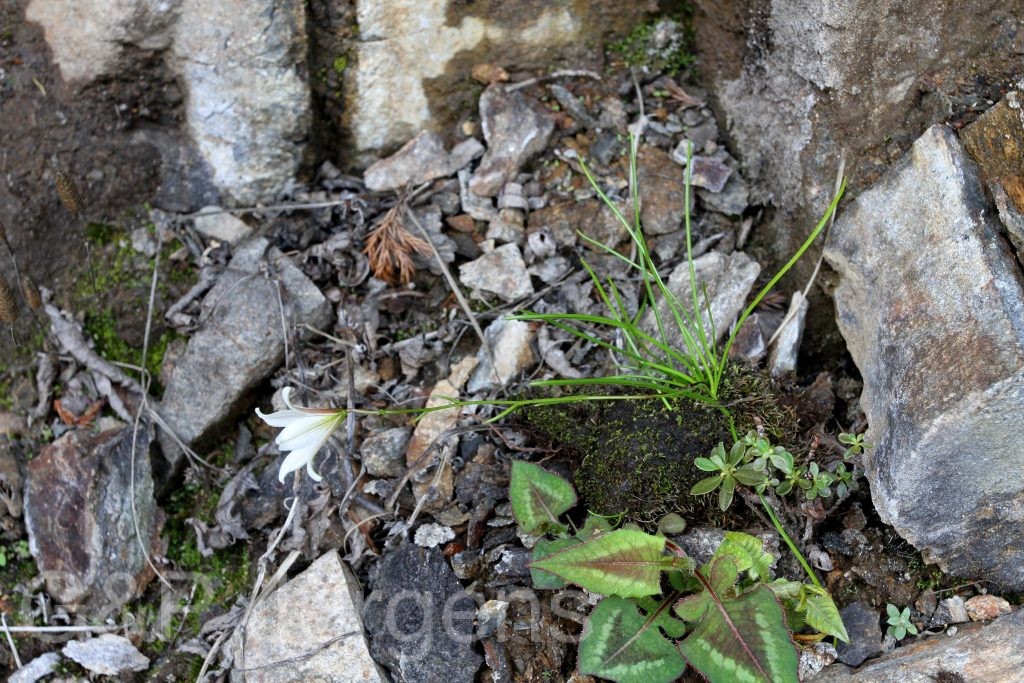
BhutanPG2011 123
Bhutan Tsochenchen, 3550m June

Description

Lloydia yunnanensis is a small alpine bulbous herb ranging across south-central China (notably Yunnan and Xizang), the Indian Himalaya, Bhutan and Nepal, with around one hundred and thirty GBIF records testifying to a fairly continuous high-mountain distribution. It grows in alpine and subalpine meadows, on grassy and rocky slopes, in open scrub and among rocks, typically between about 3000 and 4500 m. The photographed plant from Tsochenchen in Bhutan at 3550 m, flowering in June, is characteristic of its early-summer flowering as the snow recedes from the upper pastures it favours.

The species arises from a small ovoid bulb with a fibrous tunic and produces a slender, erect stem. The leaves are few, narrowly linear and grass-like, the lower ones basal and the upper cauline and reduced. The flowers are solitary or few, erect, with six free, spreading tepals that are white to pale yellow, often veined or tinged with purple toward the base and bearing a nectary at the inner base; the six stamens have slender filaments and the superior ovary bears a single style. The fruit is a small loculicidal capsule containing numerous flat seeds.

Lloydia yunnanensis is here treated under the accepted name Lloydia yunnanensis. Although the genus Lloydia has frequently been merged into Gagea in modern molecular treatments, the segregate name is retained here following the input. Its dwarf stature, bulb-protected perennating organ and rapid post-snowmelt flowering are classic adaptations to the brief alpine growing season. The species is widespread and not regarded as threatened, though high-altitude grassland degradation could affect local populations.

Author: Franch. · Sources: POWO (Kew), GBIF, Flora of China, Flora of Bhutan, Peruzzi & Zarrei revision of Gagea/Lloydia (Liliaceae monograph)

Wall.

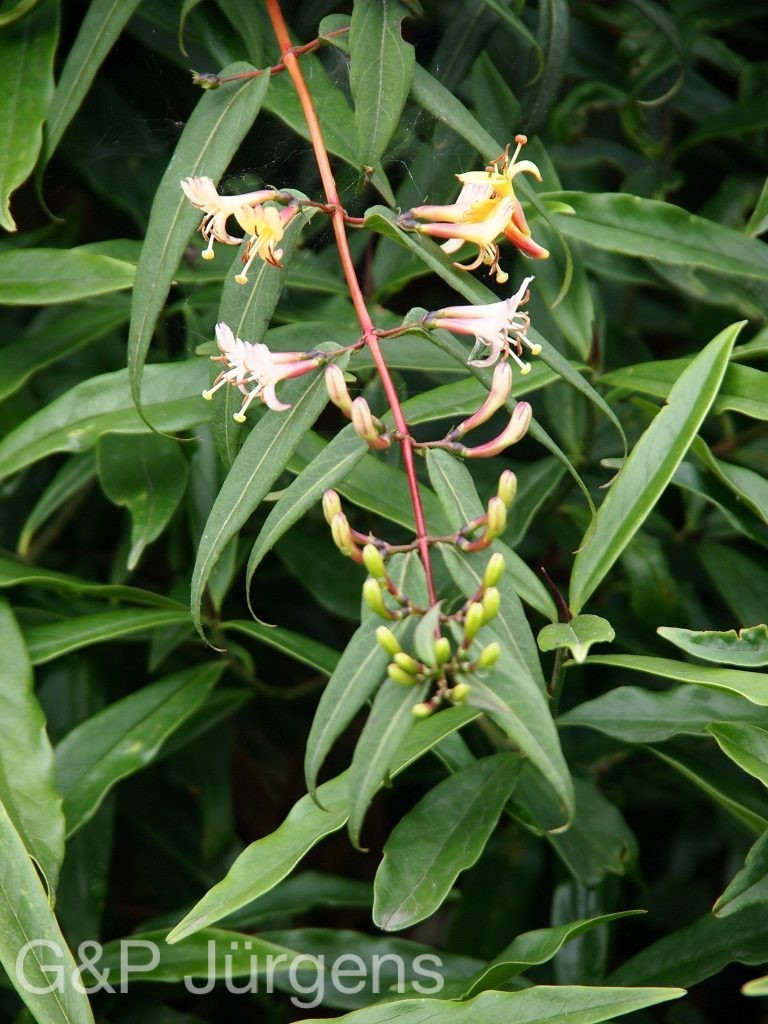
BhutanPG2011 3
Bhutan Paro, 2400m June

Description

Lonicera acuminata is a widespread evergreen or semi-evergreen climbing honeysuckle distributed across the Himalaya and montane East and Southeast Asia, with native records from China, Taiwan, Japan, Nepal, India, Bhutan, the Philippines and Indonesia, alongside numerous cultivated and naturalised occurrences in Europe and North America; GBIF documents over 12,000 occurrences. It inhabits forest margins, thickets, ravines and scrubby slopes, mostly between 1000 and 3000 m, scrambling over shrubs and trees in mixed broadleaf and conifer forest. The Bhutanese photograph from Paro at about 2400 m in June shows it flowering in its typical mid-elevation woodland-edge setting.

The plant is a twining woody liana with slender, often purplish, hairy young branches. The leaves are opposite, ovate-oblong to lanceolate, acuminate at the apex as the epithet indicates, entire, and frequently ciliate and pubescent along the margins and veins. The flowers are paired in the leaf axils on short peduncles, the corolla bilabiate and tubular, opening pale yellow and often suffused with reddish or purplish tones, the slender tube exceeding the lobes and the stamens and style exserted. The bracts are small and the calyx teeth short. The fruit is a small globose to ovoid berry, ripening purple-black and bearing few seeds.

Within the large, taxonomically intricate genus Lonicera (Caprifoliaceae), L. acuminata belongs to the climbing subgenus Periclymenum and shows considerable variation in indumentum and leaf form across its range, accounting for a long list of synonyms. Its tubular, exserted-stamen flowers point to pollination by long-tongued insects, while the fleshy berries are dispersed by birds. Broadly distributed and frequent, it is of no conservation concern and is grown ornamentally for its fragrant flowers and vigorous growth.

Author: Wall. · Sources: POWO (Kew), GBIF, Flora of China, Flora of Bhutan, Annotated Checklist of the Flowering Plants of Nepal, Rehder's revisions of Lonicera