Author

GP Jürgens

Hook.f.

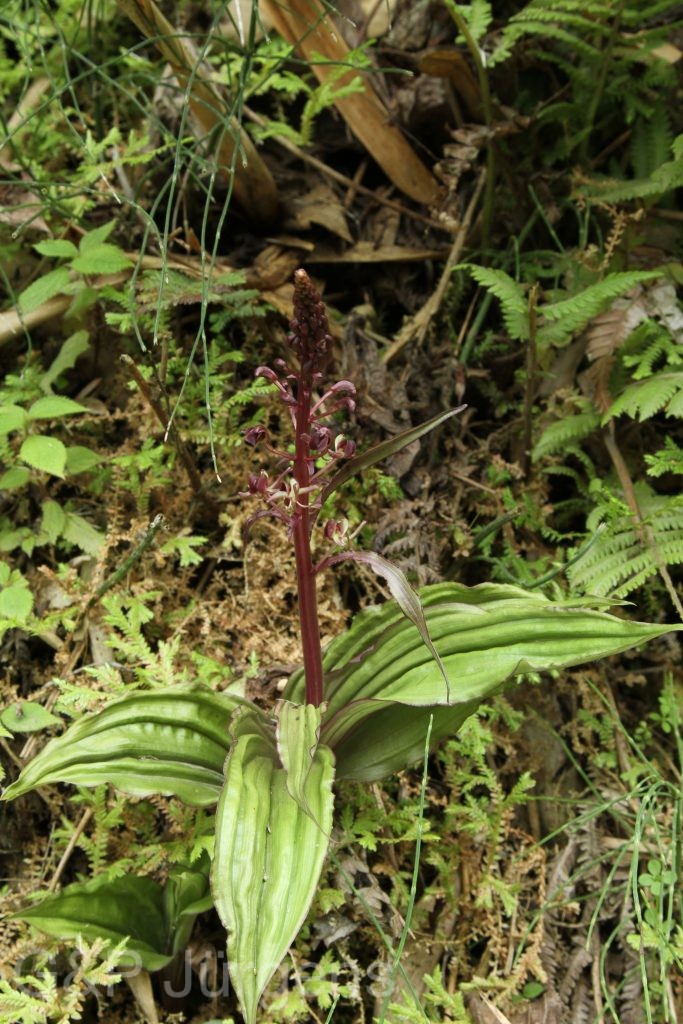
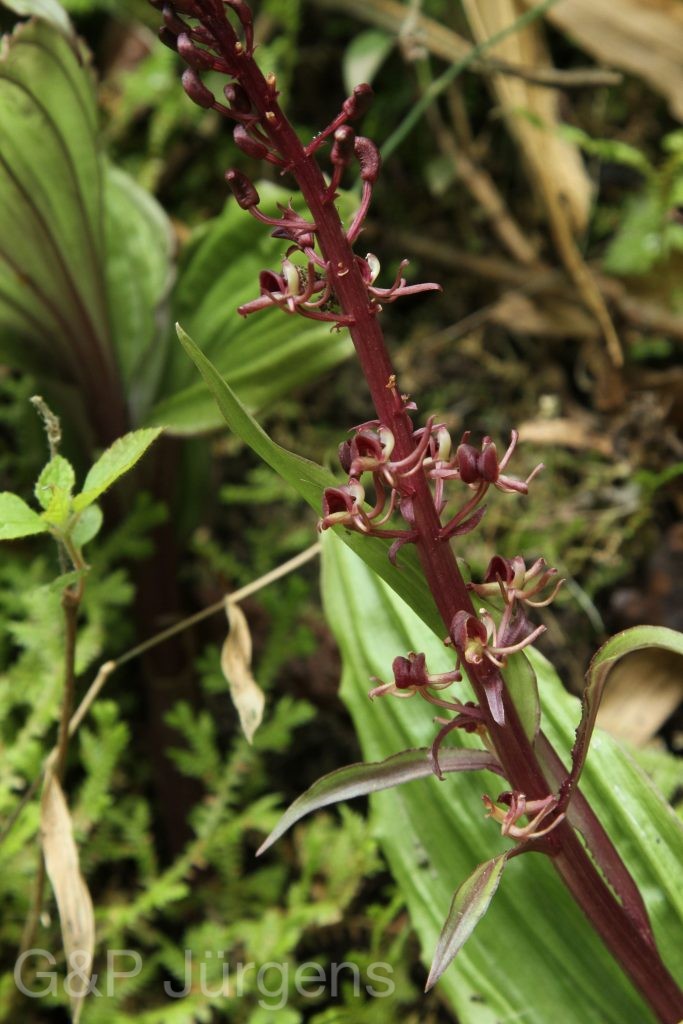
Sikkim2004 93 G163
Sikkim West-Bengal, Bersay 2700m April
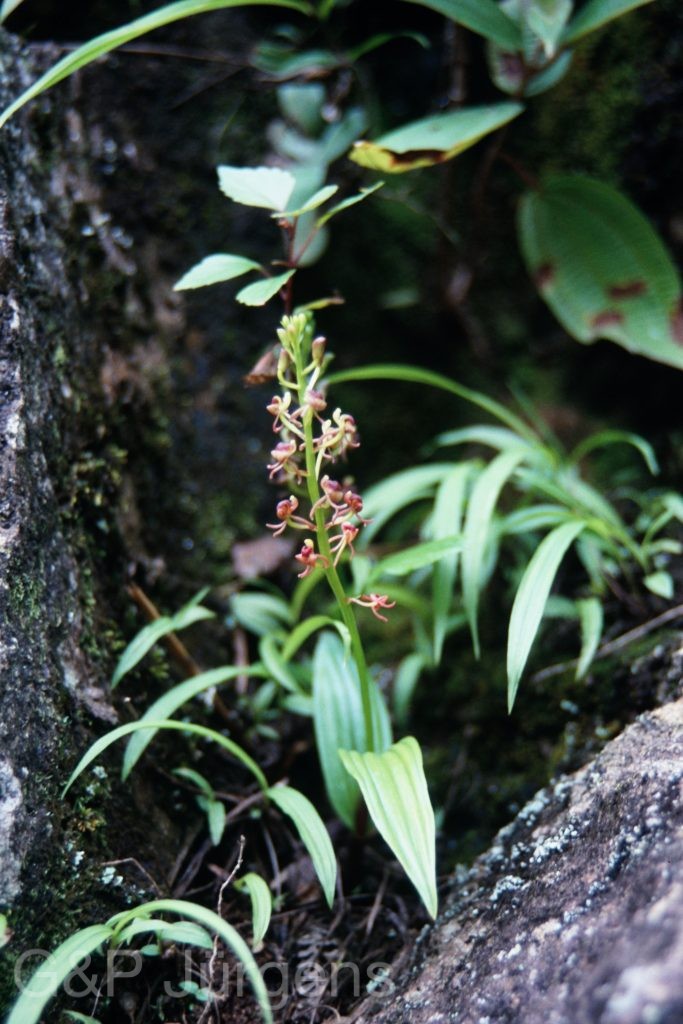
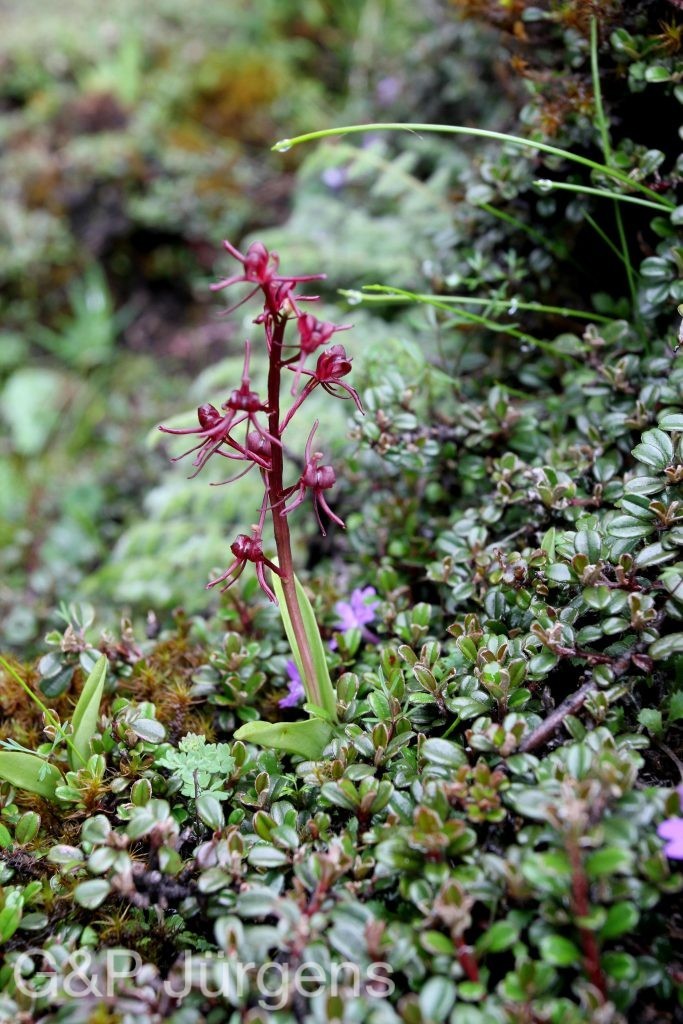
Sikkim2004 117 G201
Sikkim West-Bengal, Bersay 2700m April

Description

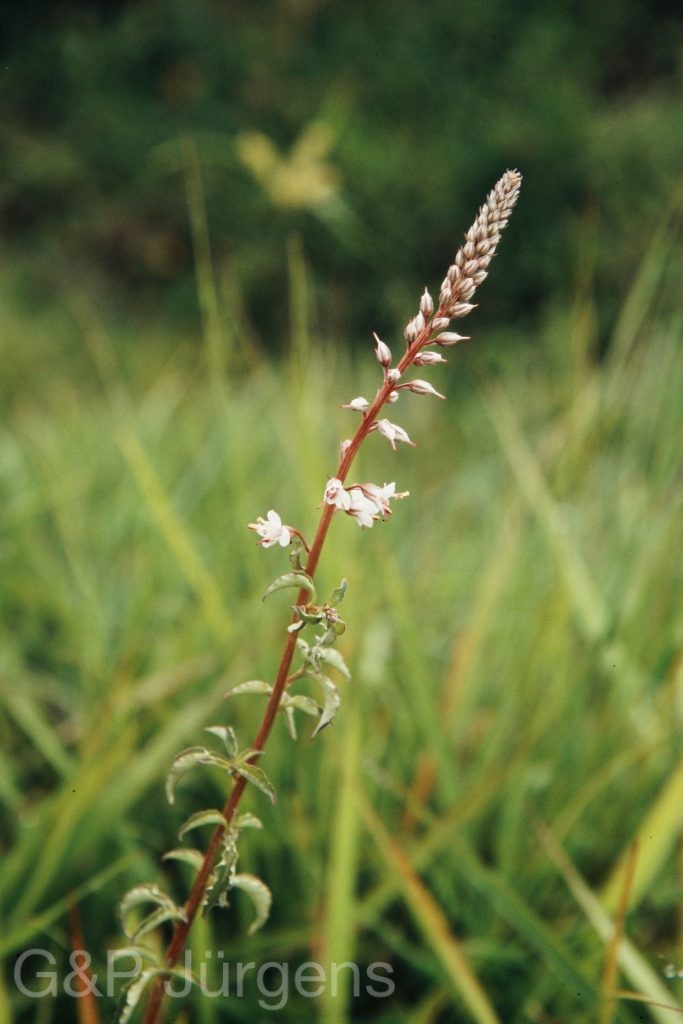
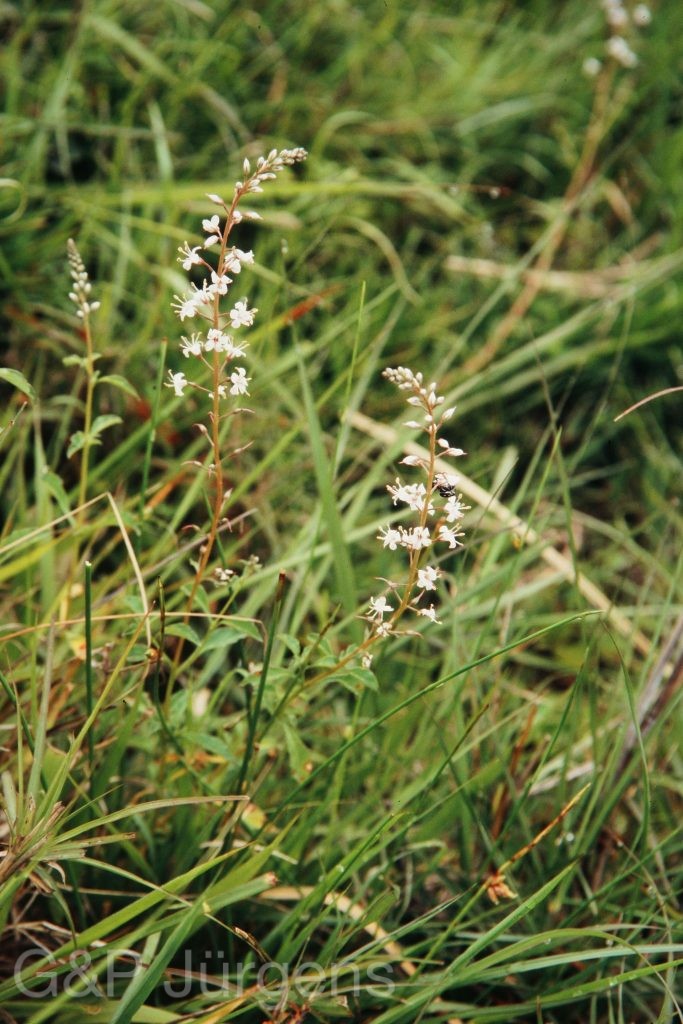
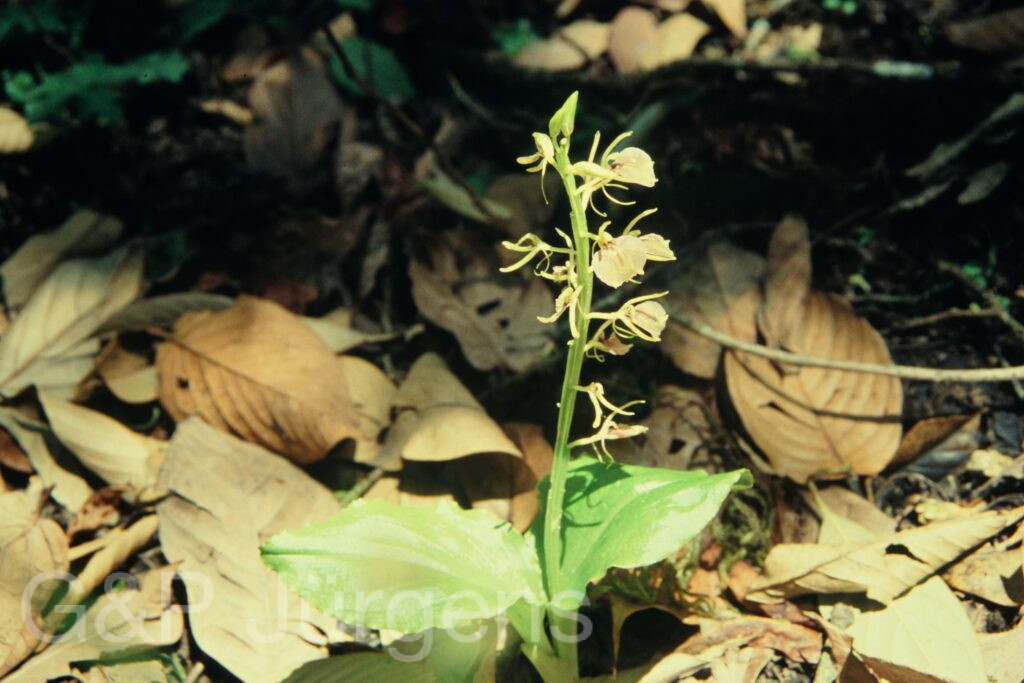
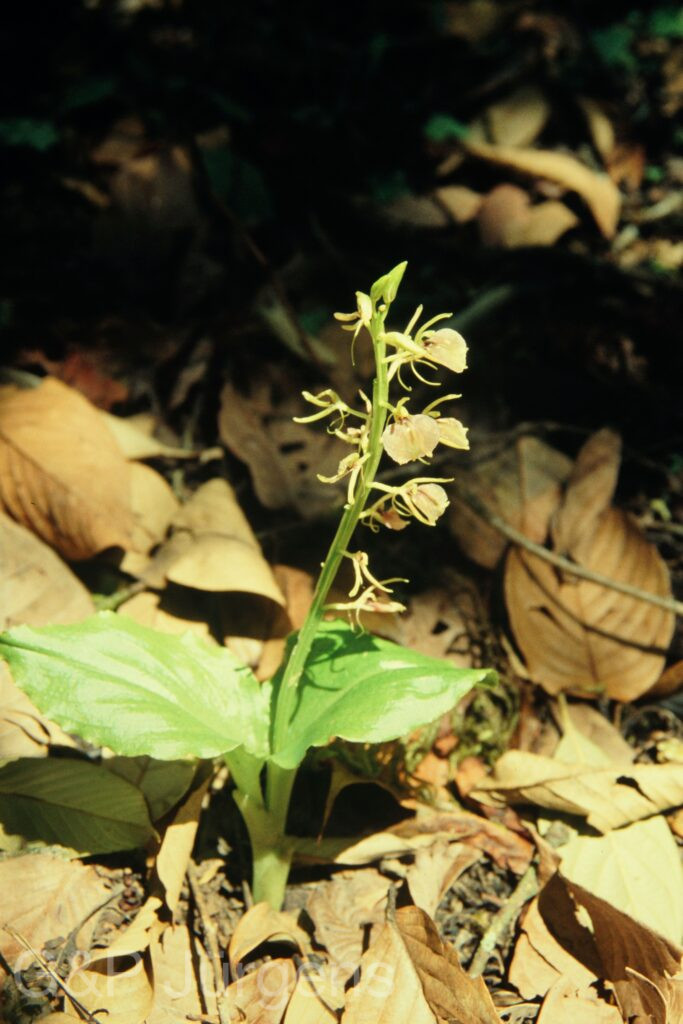
Liparis cathcartii is an East Himalayan terrestrial orchid known from a restricted range spanning northern India (Sikkim, West Bengal, Darjeeling), Nepal, Bhutan and south-eastern China; its modest tally of about 60 georeferenced occurrences (IN, CN, NP, BT) marks it as a regional endemic of the moist temperate forest belt. It grows in shaded, humus-rich leaf litter and on mossy banks within broad-leaved and mixed forest, generally between about 2000 and 3000 m. The plant photographed at Bersay on the Sikkim-West Bengal border at 2700 m in April, flowering early in the season, is typical of its cool, humid forest-floor habitat.

It is a small terrestrial herb arising from clustered, fleshy pseudobulbs partly sheathed by membranous scales. From each pseudobulb arise a few thin-textured, plicate, ovate to elliptic leaves with sheathing bases. The slender erect scape bears a lax raceme of several small flowers, greenish to purplish-brown in colour, with narrow spreading sepals and filiform petals; the lip (labellum) is the most distinctive organ, broad, recurved and often emarginate, contrasting with the slender column characteristic of the genus. The fruit is a small ellipsoid, ribbed capsule releasing abundant dust-like seeds dispersed by wind.

Liparis is a large, near-cosmopolitan genus of subtribe Malaxidinae, with Himalayan species notably diverse; L. cathcartii is allied to other temperate plicate-leaved members of the genus. Like most orchids it depends on mycorrhizal fungi for germination and is protected internationally under CITES Appendix II. Its narrow distribution and reliance on undisturbed forest make it sensitive to habitat loss, though it persists locally where forest cover remains intact.

Author: Hook.f. · Sources: POWO (Kew), GBIF, Flora of Bhutan, Flora of China, The Orchids of Sikkim Himalaya (King & Pantling), Genera Orchidacearum (Pridgeon et al.)
(Thunberg) Lindl.

Bhutan2014 786
Bhutan Wangdi Mo-Chu 1400m, May
BhutanPG2011 609 01
Bhutan Ludlow-Sherriff-Trail Ken-La, 4300m July
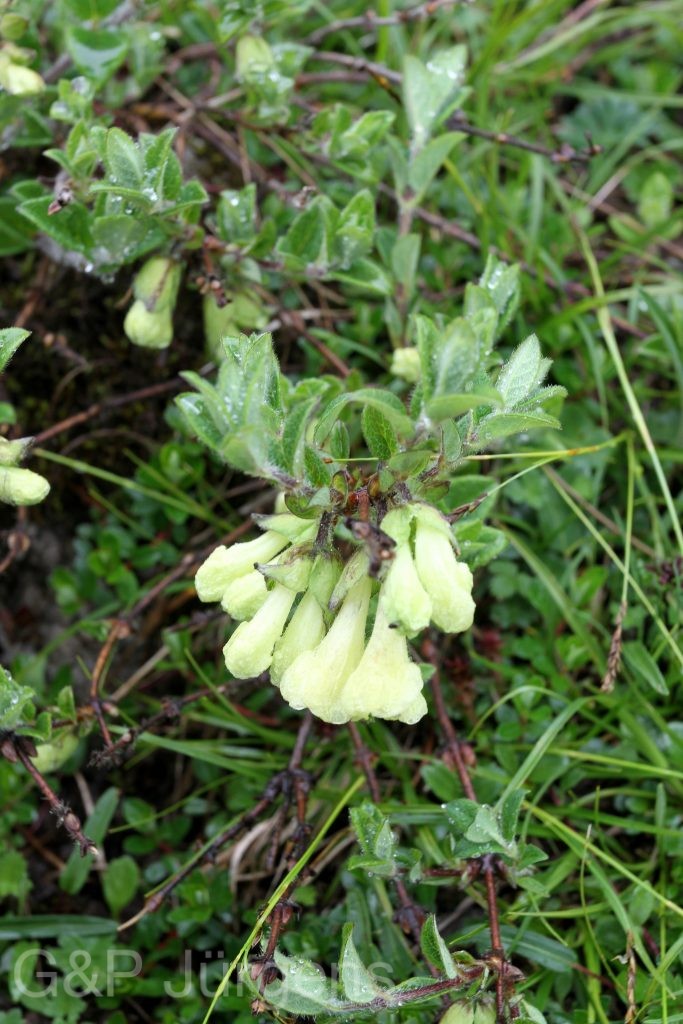
Also included: Cotoneaster microphyllus Lindb.
Bhutan2014 784
Bhutan Ludlow-Sherriff-Trail Ken-La, 4300m July
Sikkim2003 28 P39
Sikkim Rathong-Chu 1200m 08.2003

Wall.

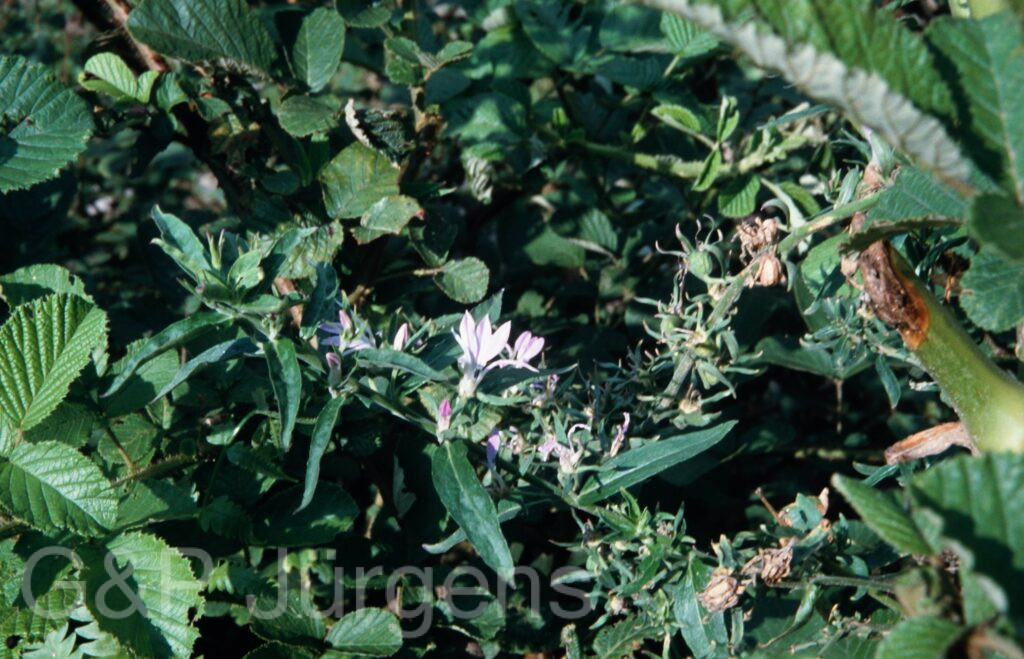
Nepal 2001 514 ergebnis ergebnis
Nepal (Gorkha) Mulabari 1340m, May

Description

Lobelia rosea is a slender annual or short-lived herb of the eastern Himalaya and Indo-Burmese region, ranging from Nepal, Bhutan and north-east India through Myanmar, Thailand, Laos and Vietnam to southern China and peninsular Malaysia. GBIF records 112 occurrences across this subtropical to warm-temperate arc. It favours moist open ground, stream and paddy margins, damp grassy banks and disturbed clearings at low to middle elevations. The plant from Mulabari in Gorkha, central Nepal, at 1340 m in May is a typical pre-monsoon population on humus-rich soil in light shade.

It is a delicate herb with erect or ascending, simple or sparingly branched stems exuding milky latex when broken. The leaves are alternate, sessile or shortly petiolate, ovate to lanceolate, serrate to denticulate and thin in texture. The flowers are borne in lax terminal racemes on slender pedicels. The corolla is markedly zygomorphic and two-lipped, pink to rose-purple (whence rosea), the tube split dorsally and the lower lip three-lobed; the five anthers are connate around the style into the Lobelia tube, the two lower ones tufted apically. The fruit is a small two-valved capsule dehiscing apically to shed numerous minute, reticulate seeds.

Lobelia, the largest genus of Campanulaceae (subfamily Lobelioideae), is sometimes segregated, but molecular evidence supports its retention within an expanded Campanulaceae. L. rosea belongs to a group of small-flowered Asian annuals delimited chiefly by corolla colour, leaf shape and capsule form. Like its congeners it contains piperidine alkaloids, and several Asian Lobelia species feature in traditional medicine. Widespread and weedy, persisting readily in disturbed seasonally moist habitats, it is of no conservation concern.

Author: Wall. · Sources: POWO (Kew), GBIF, Flora of China Vol. 19, Flora of Bhutan Vol. 2, Annotated Checklist of the Flowering Plants of Nepal, Lammers world checklist of Campanulaceae

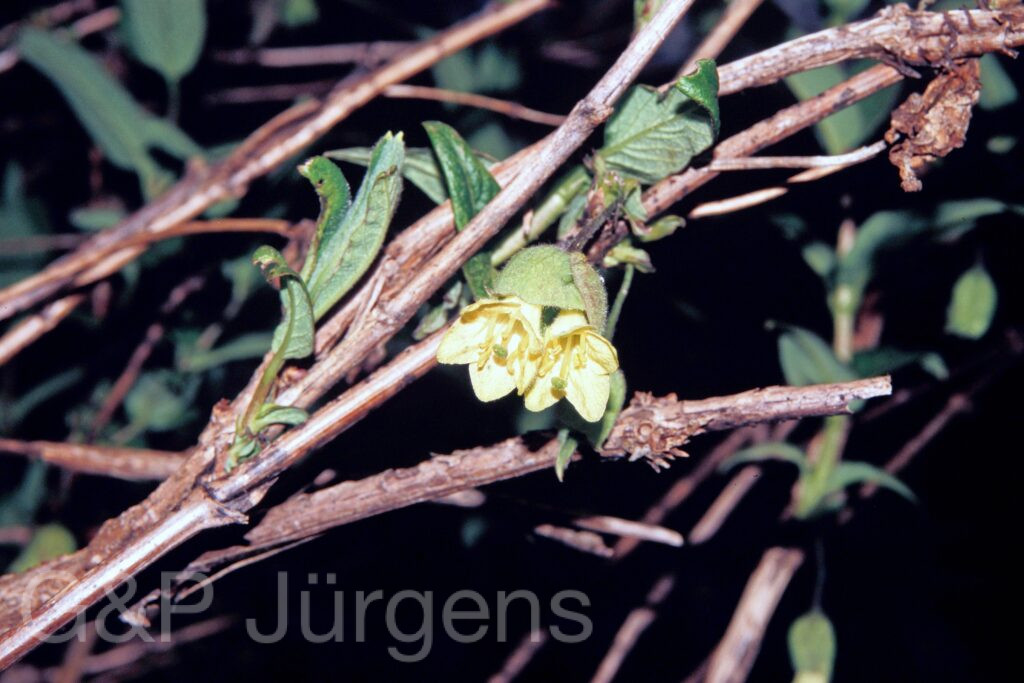
(Hook. f. & Thomson) Q. E. Yang, Landrein, Borosova & J. Osborne

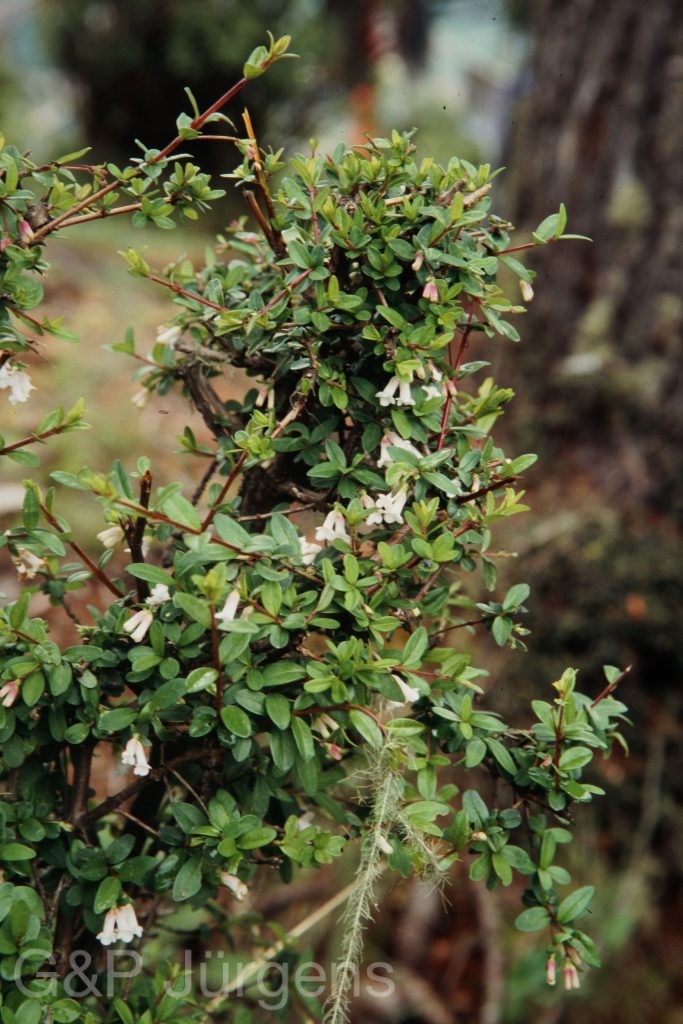
Bh09 326 P532
Bhutan Tumching-La, 3700m June

Description

Lonicera angustifolia var. myrtillus is a high-montane to subalpine shrub of the Himalaya and adjacent ranges, recorded from China, Nepal, India, Pakistan, Bhutan, Afghanistan and Myanmar; GBIF holds about 873 occurrences for the taxon, with scattered cultivated records elsewhere. It is characteristic of the upper temperate and subalpine zone, typically between roughly 3000 and 4000 m, the photographed plant deriving from Tumching-La in Bhutan at 3700 m in June, at the onset of flowering. It grows in open coniferous and rhododendron forest, at the forest-line ecotone, and among scrub on rocky, well-drained slopes, often forming part of the dwarf-shrub understorey.

This variety is a small, much-branched deciduous shrub with slender, often arching twigs and small, opposite, entire leaves that are narrowly oblong to elliptic, the var. myrtillus being notably small-leaved and bilberry-like in aspect. The flowers are borne in axillary pairs on short peduncles; each pair subtended by bracts, the tubular-funnelform corolla is white to pale pink, weakly two-lipped or nearly regular. The paired ovaries are partly connate, and at maturity produce small, fused, juicy berries that ripen red, dispersed by birds, as is typical of the genus.

The combination (Hook. f. & Thomson) Q. E. Yang, Landrein, Borosova & J. Osborne reflects modern revisionary work on Himalayan Lonicera within an enlarged Caprifoliaceae. As an intraspecific taxon of a widespread, ecologically tolerant species, it is of no conservation concern, and like other shrubby honeysuckles it contributes nectar and fleshy fruit to subalpine pollinator and frugivore networks at the upper forest margin.

Sources: POWO (Kew), GBIF, Flora of China, Flora of Bhutan, Flora of Pakistan, Yang et al. revision of Lonicera (Caprifoliaceae), Rehder Synopsis of the Genus Lonicera

Pall. ex Schult.

BhutanPG2011 590
Bhutan Kem-La 4100m, July
Garh 07 111 ergebnis
India Garhwal Meggu Kichatti 3200m, June

Description

Lonicera hispida is a deciduous shrub of the high mountains of Central and High Asia, ranging through the Himalaya from Pakistan and India to Nepal and Bhutan, across Tibet and western China, and northward into the Tien Shan, Pamir-Alai and Altai of Central Asia and Russia. It grows in subalpine and alpine scrub, open coniferous forest, stream banks and rocky slopes, typically between about 2500 and 4500 m. The photographed material comes from Kem-La in Bhutan at around 4100 m and from Meggu Kichatti in Indian Garhwal at about 3200 m, flowering in June and July. With over 3100 georeferenced records it is a well-documented and widespread montane honeysuckle.

It forms an erect, much-branched shrub up to about 2 m, the young shoots and petioles bristly-hispid with stiff spreading hairs and glandular bristles, the older bark exfoliating. The leaves are opposite, oblong to elliptic, ciliate and bristly-margined, often glaucous beneath. The flowers are borne in axillary pairs subtended by large, broad, persistent bracts that enlarge in fruit; the corolla is tubular-funnelform, white to pale yellow, weakly two-lipped, with a gibbous base and exserted stamens and style. The paired ovaries are partly united, and the fruit is a fleshy berry, red at maturity, the bracts often colouring and partly enclosing the twin fruits.

Lonicera hispida belongs to section Isika and is distinguished by its conspicuously hispid bristly indumentum and large floral bracts. It is morphologically variable across its enormous range, and several varieties have been recognised. The berries are taken by birds, aiding dispersal. As a common, broadly distributed alpine shrub it is of least conservation concern.

Author: Pall. ex Schult. · Sources: POWO (Kew), GBIF, Flora of China, Flora of Bhutan, Rehder's revision of Lonicera

Wall.

Bh09 39 P71
Bhutan Paro 2400m, June

Description

Lonicera webbiana is a deciduous shrub of the temperate Himalaya and adjoining Central Asian mountains, distributed from Afghanistan, Pakistan and Kyrgyzstan eastwards through Kashmir, northern India, Nepal and Bhutan into south-western China and Myanmar, with over 2000 occurrence records (those from Europe and North America representing cultivated material). It grows in coniferous and mixed forest, forest margins, thickets and shrubberies, chiefly between about 2400 and 3600 m. The specimen photographed at Paro in Bhutan at 2400 m in June illustrates its early-summer flowering within the upper temperate forest belt.

The shrub reaches 2-3 m, with hollow young branches and ovate to elliptic-lanceolate leaves that are acuminate at the apex, often ciliate and softly pubescent beneath. Flowers are borne in pairs on a slender, drooping peduncle, each pair subtended by small linear bracts; the corolla is two-lipped and reddish to purplish, the tube short and gibbous at the base. The paired ovaries are largely free, and the fruit develops into red, ellipsoid berries which are partly fused at the base, a feature aiding recognition of the species.

Lonicera webbiana belongs to Caprifoliaceae and to the large, taxonomically complex section Isoxylosteum (the bush honeysuckles); it has at times been confused with related Himalayan species such as L. quinquelocularis and L. angustifolia. The nectar-bearing flowers attract long-tongued bees and other pollinators, while the conspicuous red berries are dispersed by birds. Widespread and locally frequent across an extensive range, the species is of least conservation concern and is a characteristic understorey shrub of Himalayan fir and spruce forests.

Author: Wall. · Sources: POWO (Kew), GBIF, Flora of China, Flora of Pakistan, Flora of Bhutan, Rehder revision of Lonicera, Annotated Checklist of the Flowering Plants of Nepal

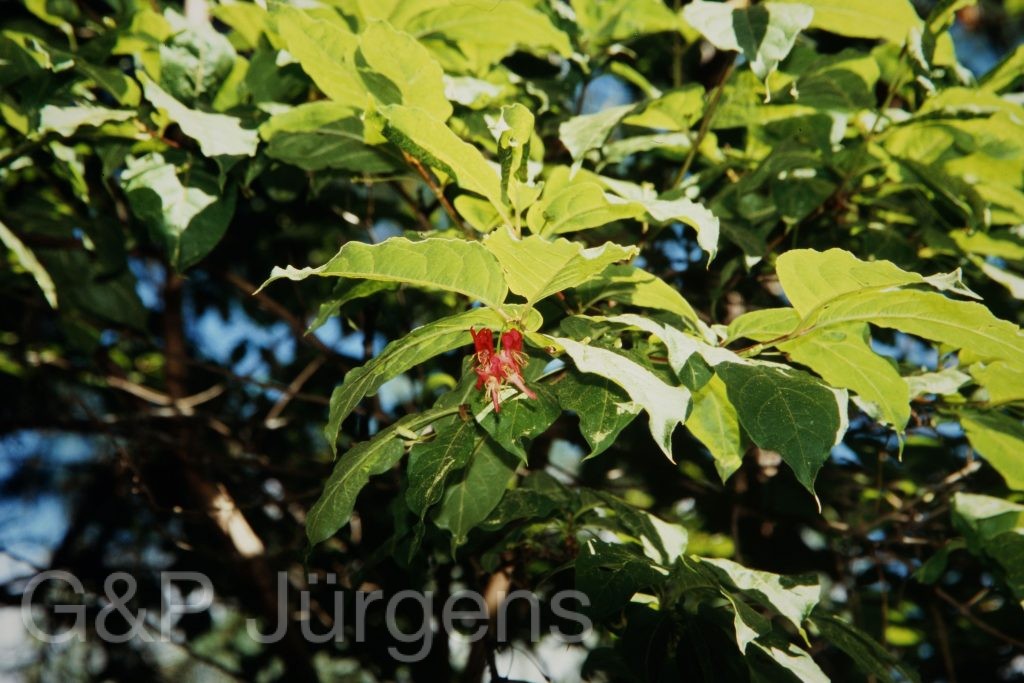
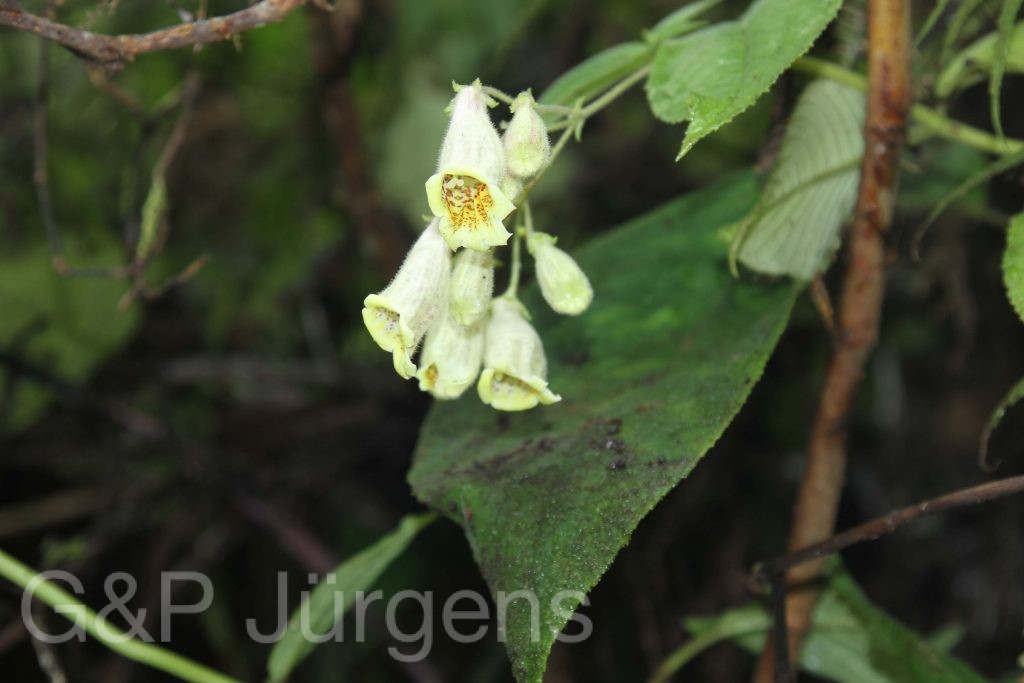
(C.B.Clarke) B.L.Burtt.

Bhutan2012 997
Bhutan Trithangebe 900m, October
Bhutan2012 998
Bhutan Trithangebe 900m, October

Description

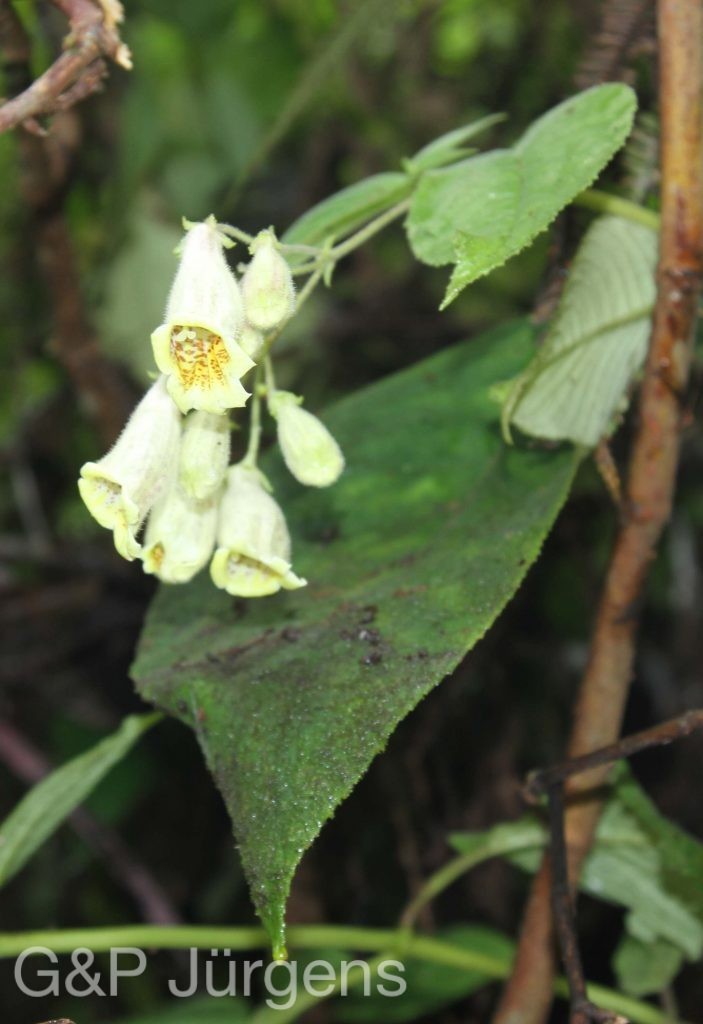
Loxostigma kurzii is an epiphytic or lithophytic gesneriad of the eastern Himalaya and the Sino-Himalayan borderlands, recorded by GBIF (about 165 occurrences) from China, India, Nepal, Bhutan and Myanmar. It inhabits the humid subtropical and warm-temperate forest belt, growing on mossy tree trunks, shaded cliffs and dripping rock faces in deep shade and high humidity. The illustrated plant was found in Bhutan at Trithangebe at about 900 m in October, a low, frost-free montane forest locality typical of the species, which descends well below the conifer zone into the broadleaved evergreen forests of the foothills.

The plant is a soft, somewhat fleshy herb with pendulous or ascending, often rooting stems clothed in soft hairs. The leaves are opposite, those of a pair frequently unequal, ovate to elliptic, with a crenate-serrate margin and a pubescent surface. The flowers are solitary or few in the leaf axils, each on a slender pedicel; the calyx is five-parted, and the corolla is large, tubular-funnelform and yellow, often marked within with purplish lines and slightly two-lipped at the mouth. There are four didynamous stamens with coherent anthers, and a superior ovary bearing the obliquely placed stigma from which the genus takes its name (Loxostigma). The fruit is a long, slender, twisted capsule splitting to release many minute seeds.

The taxon is sometimes treated as Briggsia kurzii, reflecting past uncertainty over generic limits within the didymocarpoid Gesneriaceae; molecular work has placed Loxostigma as a distinct lineage near Briggsia. As a forest epiphyte dependent on undisturbed, humid woodland it is sensitive to deforestation, though it remains locally frequent and is not formally assessed as threatened.

Author: (C.B.Clarke) B.L.Burtt. · Sources: POWO (Kew), GBIF, Flora of China, Flora of Bhutan, Annotated Checklist of the Flowering Plants of Nepal, Weber and Burtt's classification of the Gesneriaceae

(Jacq.) P.H.Raven

Nepal 95 27 P42 ergebnis
Nepal Darondi-Khola 630m Octobre

Description

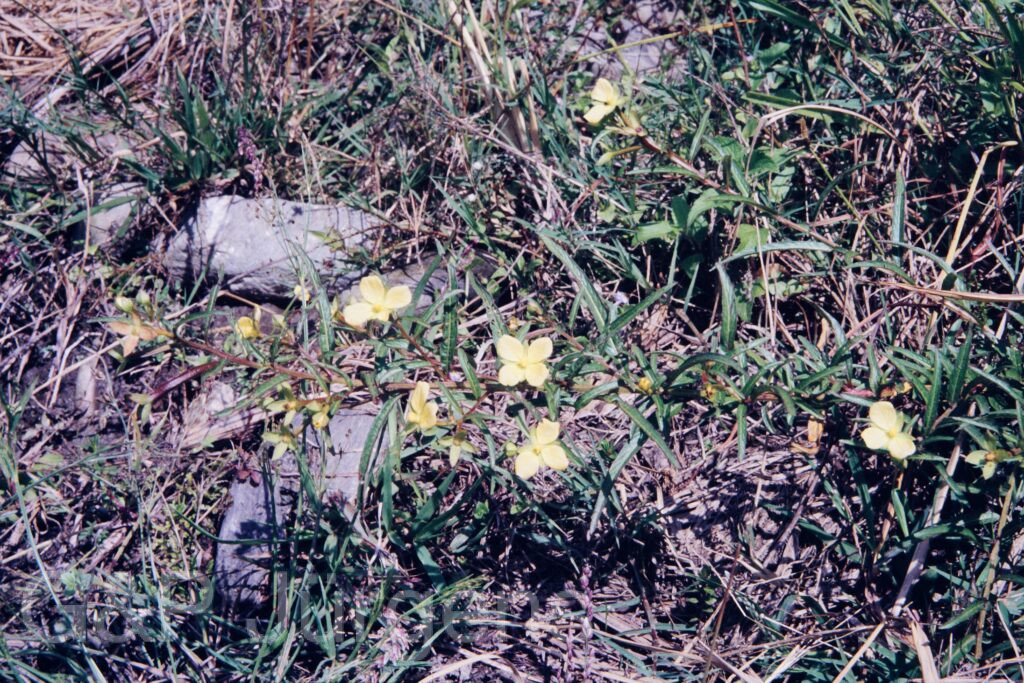
Ludwigia octovalvis (Jacq.) P.H.Raven is a pantropical wetland herb or subshrub of the willowherb family, one of the most widespread members of the genus. GBIF documents over 37,000 records across the tropics and warm temperate zones — the Americas (USA, Mexico, Brazil, Peru, Ecuador, Cuba, Puerto Rico), Africa and the western Indian Ocean (South Africa, Madagascar, Réunion), Australia, and tropical and subtropical Asia (China, Taiwan, Japan, Indonesia). In the Himalayan foothills it occupies marshes, ditches, paddy margins, riverbanks and other seasonally wet ground at low elevations, as for the photographed plant from Nepal, Darondi-Khola, 630 m, in October.

The plant is an erect, much-branched annual or short-lived perennial 0.5–2 m tall with terete to weakly four-angled, often reddish stems that are pubescent above. Leaves are alternate, lanceolate to narrowly elliptic, entire, acuminate and shortly petiolate. Flowers are solitary in the upper leaf axils, 4-merous, with four bright yellow, obovate petals and four green sepals; the inferior, narrowly cylindric ovary is conspicuous. The fruit is a slender, ribbed, octovalved (eight-grooved) capsule — the source of the epithet — splitting to release numerous small seeds embedded in the dry pith, well suited to water and gravity dispersal.

Ludwigia is taxonomically complex, and L. octovalvis is a variable aggregate within which several subspecies and forms have been recognised. Its broad pantropical range, weediness in rice agriculture and ready colonisation of disturbed wet ground make it ecologically successful and locally a useful medicinal plant. It is not of conservation concern.

Author: (Jacq.) P.H.Raven · Sources: POWO (Kew), GBIF, Flora of China Vol. 13, Flora of Nepal, Flora of Bhutan Vol. 2, Raven: Monograph of the genus Jussiaea / Ludwigia (Reinwardtia)

(Wall.) Drude

Nepal 97 517 P1015
Nepal Chinchilla 1950m May
Nepal 2001 521 ergebnis ergebnis
Nepal (Gorkha) Mulabari 1360m, May

Description

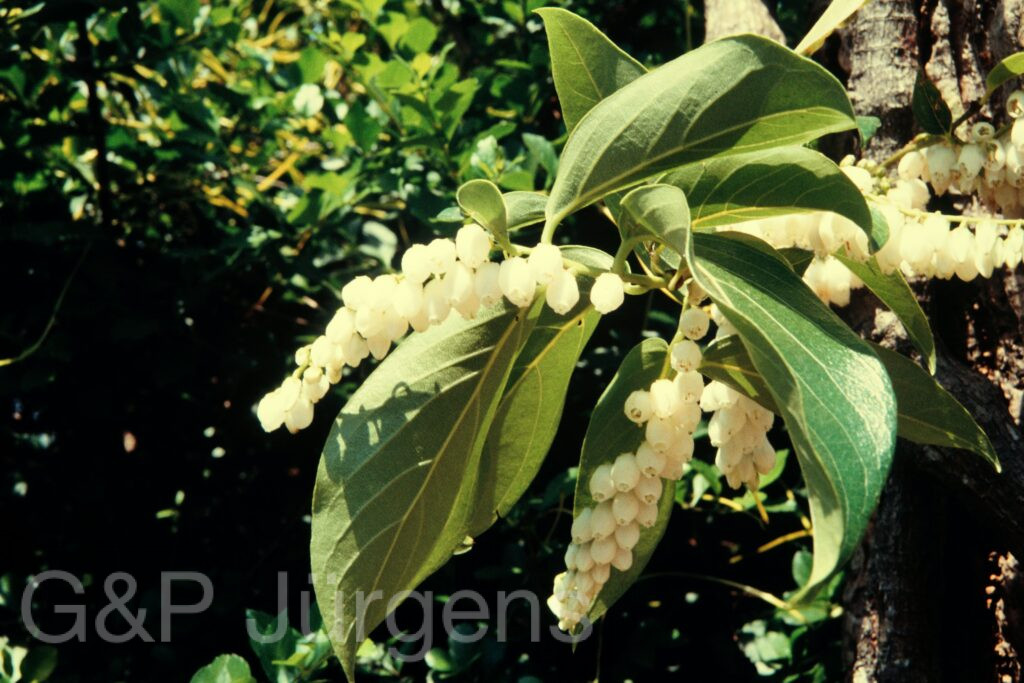
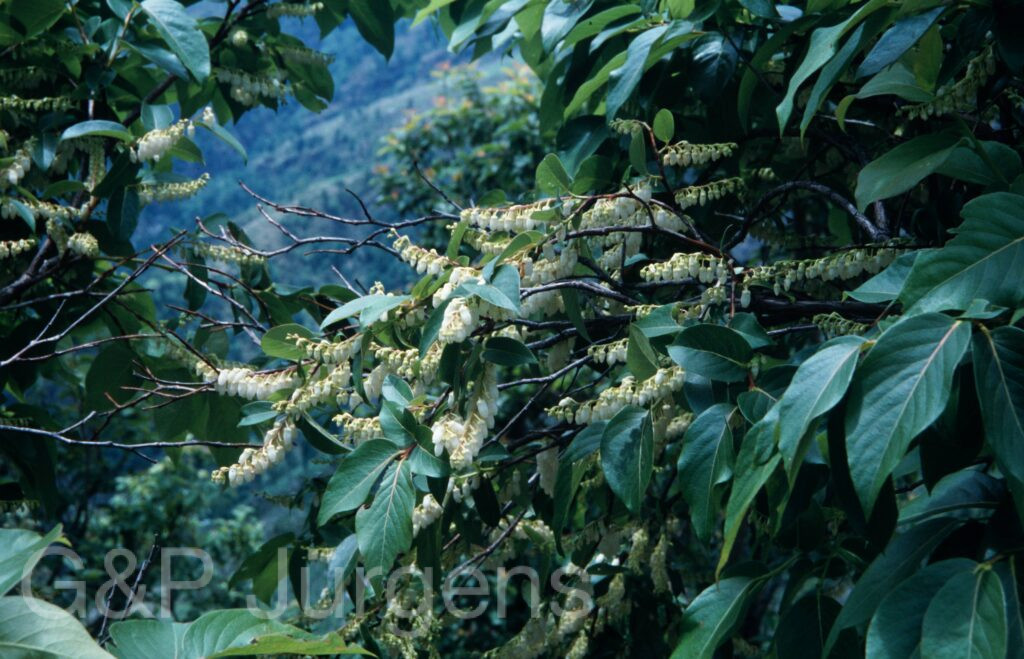
Lyonia ovalifolia is a widespread Sino-Himalayan and East Asian shrub or small tree distributed from China, Japan and Taiwan through Nepal, India, Bhutan, Pakistan, Myanmar, Thailand and Indochina, with a large GBIF dataset of over 13000 records. It grows on open hillsides, forest margins, thickets and in pine and oak forest understorey, typically between about 1000 and 3000 m. The illustrated plants from Chinchilla at 1950 m and Mulabari in Gorkha at 1360 m in Nepal, both flowering in May, are typical of its subtropical to temperate montane habitats, where it is a common component of the secondary scrub and open forest of the Himalayan midlands.

It is a deciduous to semi-evergreen shrub or small tree with reddish-brown, often somewhat zigzag young branchlets. The leaves are alternate, ovate to ovate-elliptic or ovate-lanceolate, with an entire margin, an acuminate apex and a rounded to subcordate base, with pinnate venation. The flowers are borne in axillary racemes along the shoots, each with a small five-lobed calyx and an urceolate (urn-shaped) white corolla with five short recurved lobes, ten included stamens and a superior ovary. The fruit is a small, ovoid, woody, five-valved loculicidal capsule with a persistent thickened placental axis, releasing numerous minute seeds.

Lyonia belongs to the subfamily Vaccinioideae of the Ericaceae and, in common with many members of that family, contains grayanotoxin-type diterpenes, making the foliage toxic to livestock; the plant has local uses as an insecticide and in folk medicine. The urn-shaped flowers are pollinated by bees and other insects, and the tiny seeds are wind-dispersed from the dehiscing capsules. As an abundant and ecologically tolerant species across a vast range, L. ovalifolia is of least conservation concern.

Author: (Wall.) Drude · Sources: POWO (Kew), GBIF, Flora of China Vol. 14, Flora of Bhutan Vol. 2, Flora of Nepal, Flora of Pakistan, Judd Revision of Lyonia (Ericaceae) monograph

Wall.

Bh09 395 P626
Bhutan Mo-Chu, 1350m June
Bh09 396 P628
Bhutan Mo-Chu, 1350m June

Description

Lysimachia lobelioides is a slender herb ranging widely through the Himalaya and Southeast Asia, recorded from China, India, Bhutan, Nepal, Myanmar, Thailand, Laos, Vietnam, Taiwan and New Caledonia, with 647 occurrences logged in GBIF. It favours moist, shaded and disturbed places at low to middle elevations: stream banks, ditches, damp grassy ground, field margins and open forest, broadly between 300 and 2500 m. The Bhutanese collection illustrated, from the Mo-Chu valley at 1350 m in June, typifies its occurrence in warm subtropical river-valley habitats during the early monsoon, when it flowers freely on damp, fertile soils.

It is an annual or short-lived perennial with weak, erect to decumbent, often quadrangular stems 10-40 cm long, glabrous and sometimes rooting at the lower nodes. The leaves are alternate, ovate to lanceolate, thin in texture, shortly petiolate and frequently dotted with dark glandular punctations. The small flowers are borne singly in the upper leaf axils on filiform pedicels; the corolla is white to pale pink, deeply five-lobed and shorter than or about equalling the lanceolate calyx lobes, with five stamens. The fruit is a small globose capsule dehiscing by valves and releasing numerous minute angular seeds.

Lysimachia (Primulaceae, formerly Myrsinaceae in part) is a large, near-cosmopolitan genus best developed in eastern Asia; L. lobelioides belongs to a group of small-flowered, axillary-flowered annuals. Its wide distribution, weedy tendency and tolerance of disturbed wet ground make it ecologically adaptable and of no conservation concern. The disjunct New Caledonian records are biogeographically notable, pointing to long-distance dispersal of this colonising species across the Indo-Pacific.

Author: Wall. · Sources: POWO (Kew), GBIF, Flora of China, Flora of Bhutan, Revision of the Genus Lysimachia (Primulaceae)