Author

GP Jürgens

Klatt

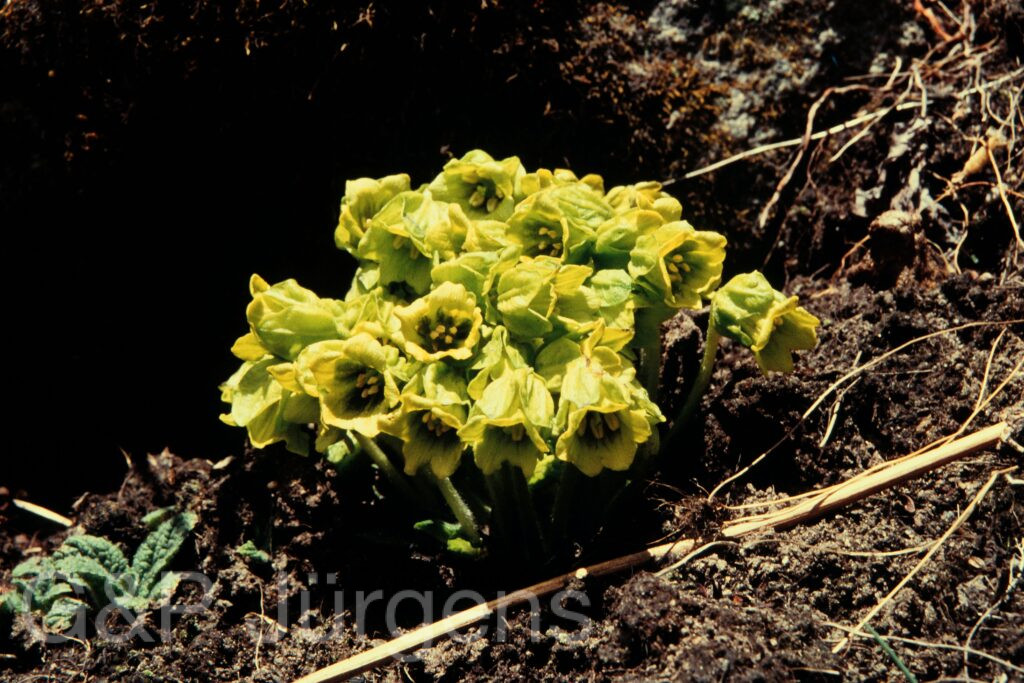
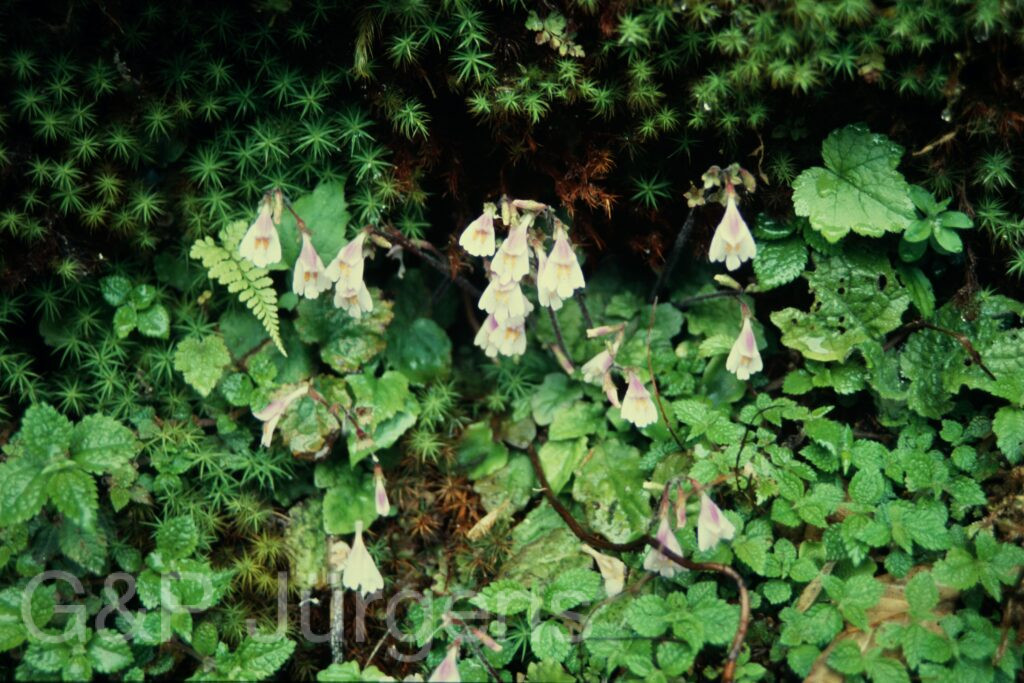
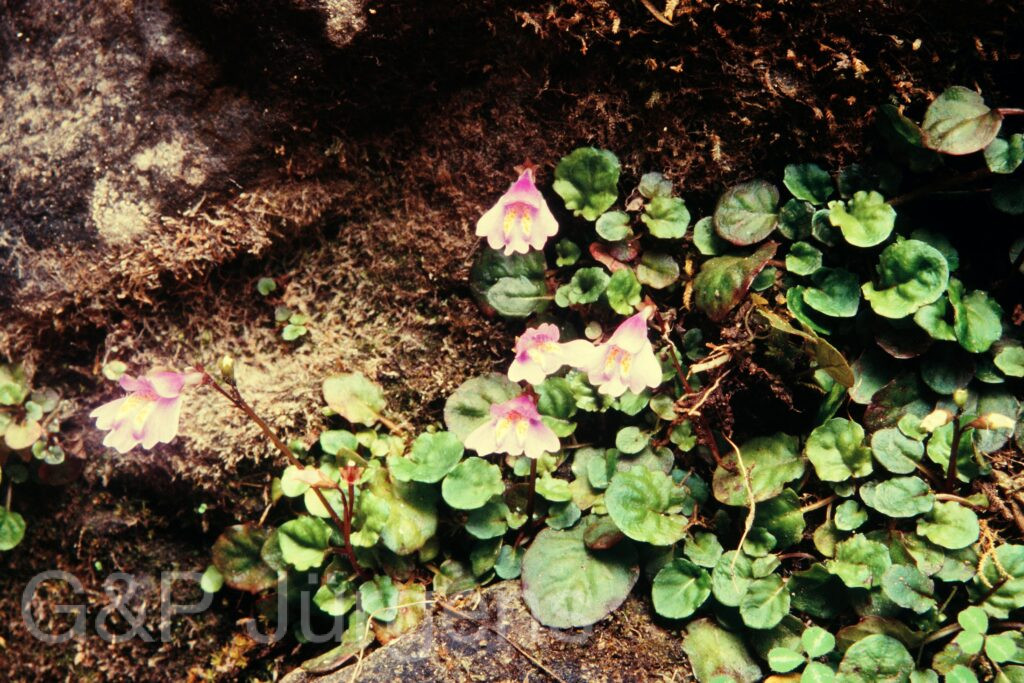
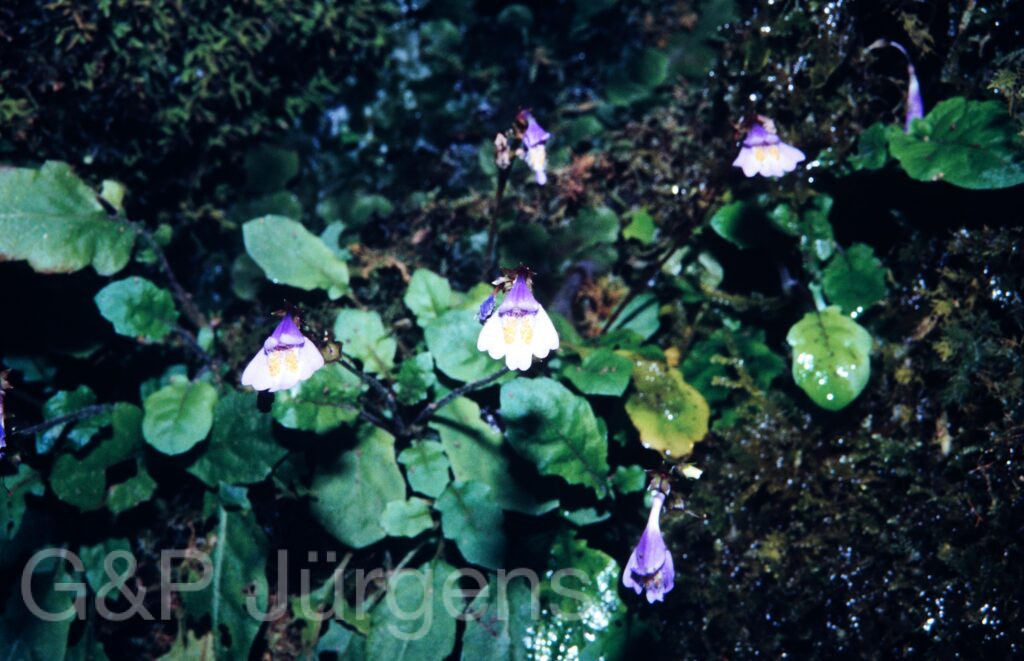
Nepal 2001 255 ergebnis ergebnis
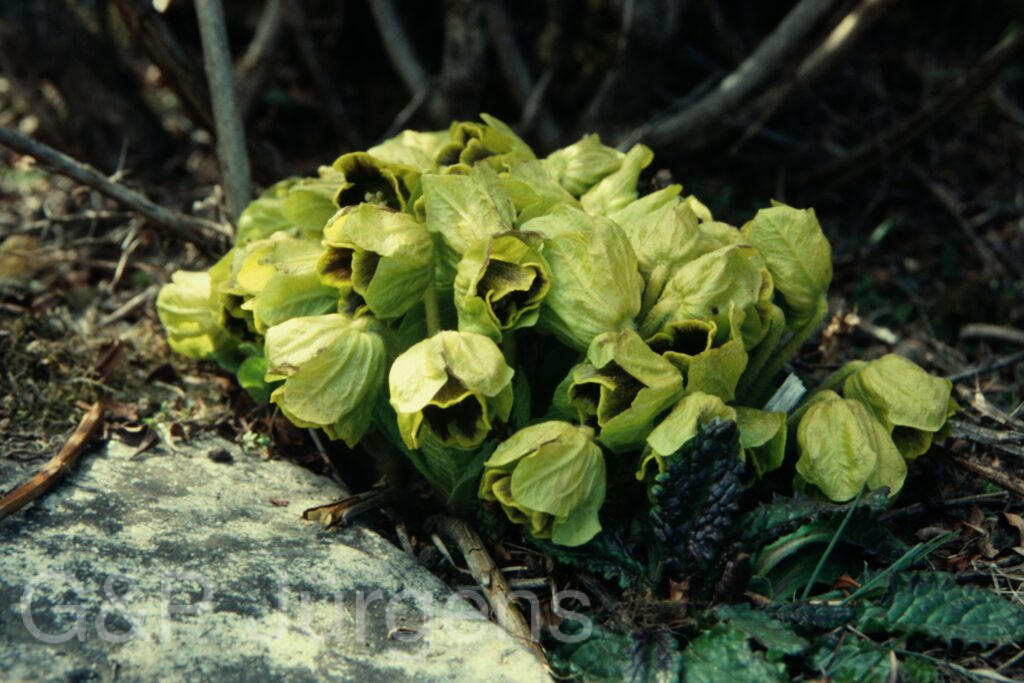
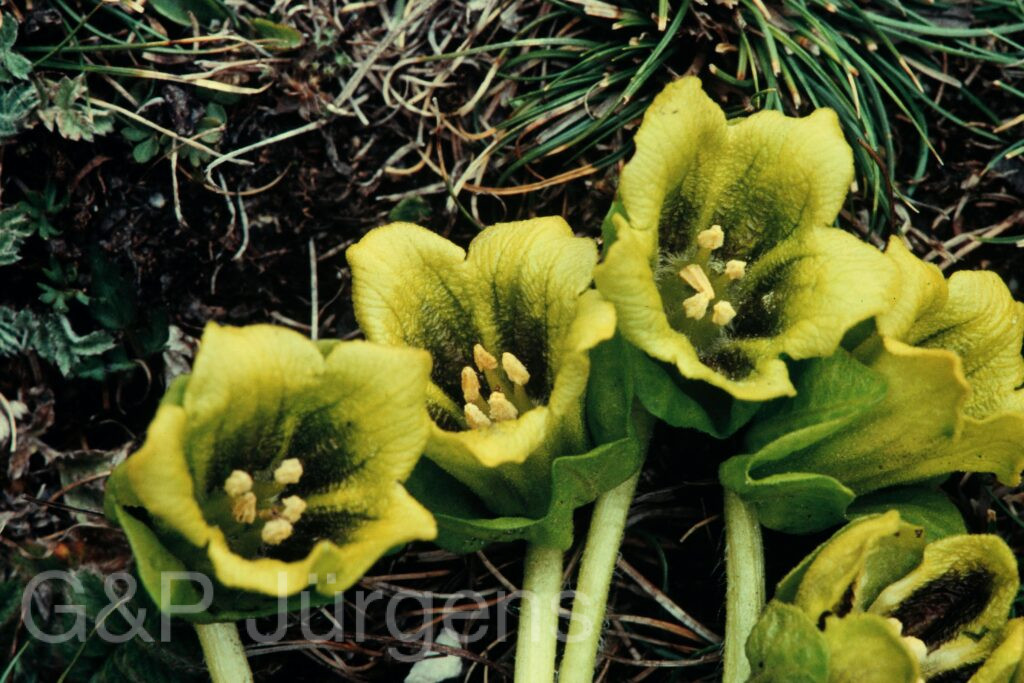
Nepal (Gorkha) Niuli Kharka 2700m, May
Nepal 2001 256 ergebnis ergebnis
Nepal (Gorkha) Niuli Kharka 2700m, May

Description

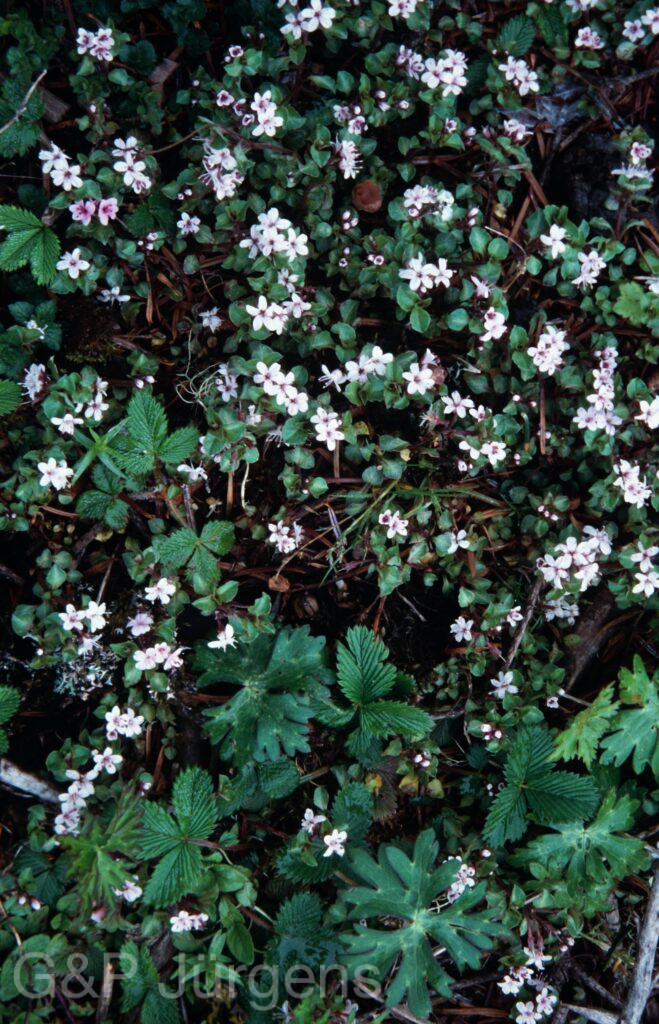
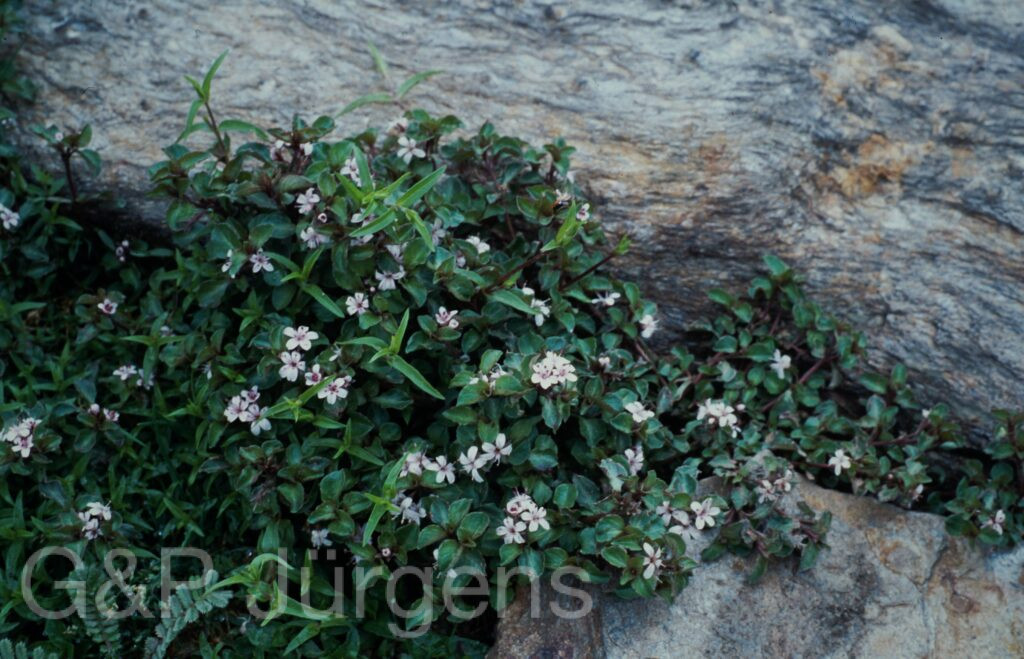
Lysimachia prolifera is a Sino-Himalayan species distributed across the central and eastern Himalaya and southwestern China, with verified occurrences in Nepal, India, Bhutan, China, Myanmar and Pakistan; outlying records from Japan and the United States among the roughly 194 collections almost certainly reflect cultivated or misdetermined material. It is a plant of moist temperate to subalpine habitats, favouring shaded forest margins, streamsides, mossy banks and damp grassy clearings. The photographed population at Niuli Kharka in Gorkha, Nepal, at about 2700 m and flowering in May, is typical of its mid-montane band where snowmelt and monsoon moisture keep the substrate reliably humid.

The species is a perennial herb with slender, often decumbent to ascending stems arising from a creeping rhizomatous base. The leaves are simple, opposite or sometimes whorled, ovate to lanceolate, entire-margined and frequently gland-dotted, narrowing to a short petiole or sessile base. The flowers are borne singly in the leaf axils or in lax leafy racemes; the corolla is rotate and five-lobed, typically yellow, the lobes spreading and often marked with darker glands. Stamens are five, opposite the corolla lobes and shortly connate at the base, the ovary superior with a single style. The fruit is a small, globose, dehiscent capsule containing numerous minute angular seeds.

Within Primulaceae, Lysimachia is a large, taxonomically intricate genus now circumscribed broadly, and species such as L. prolifera are distinguished by subtle differences in leaf arrangement, gland distribution and inflorescence form that have historically caused confusion. Ecologically it contributes to the herbaceous understorey of Himalayan forests and is visited by generalist pollinating insects. No specific conservation concern is recorded for this widespread montane species, though, like many Himalayan herbs, it is locally sensitive to forest clearance, trampling and grazing along trekking corridors.

Author: Klatt · Sources: POWO (Kew), GBIF, Flora of Nepal, Flora of China, Flora of Bhutan, Hu's monograph of Lysimachia (Primulaceae)
Hook.f. & Thomson

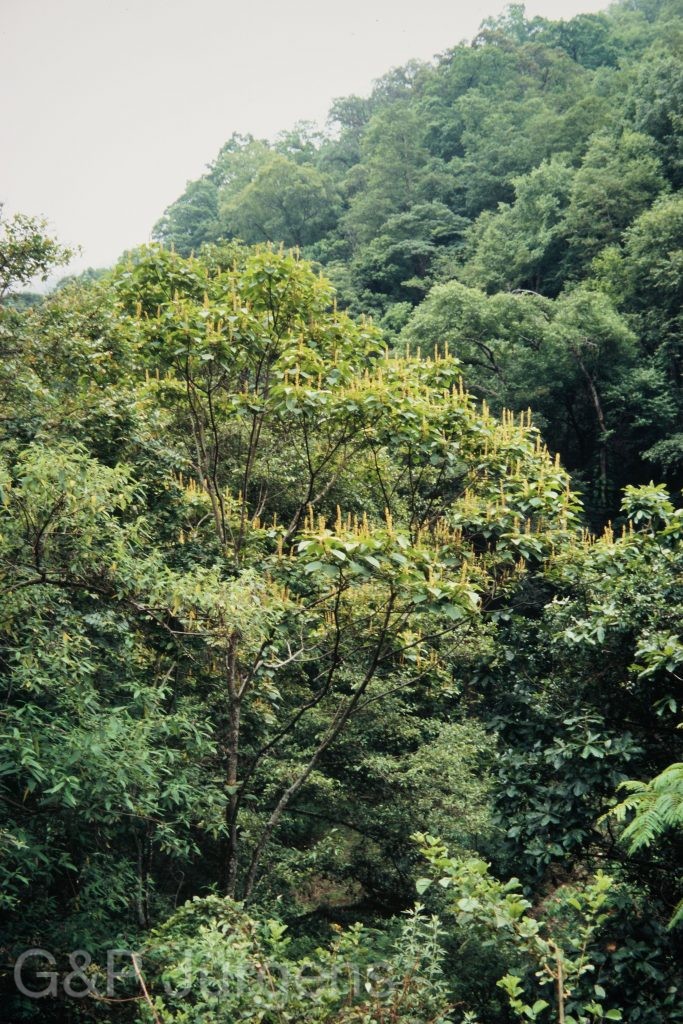
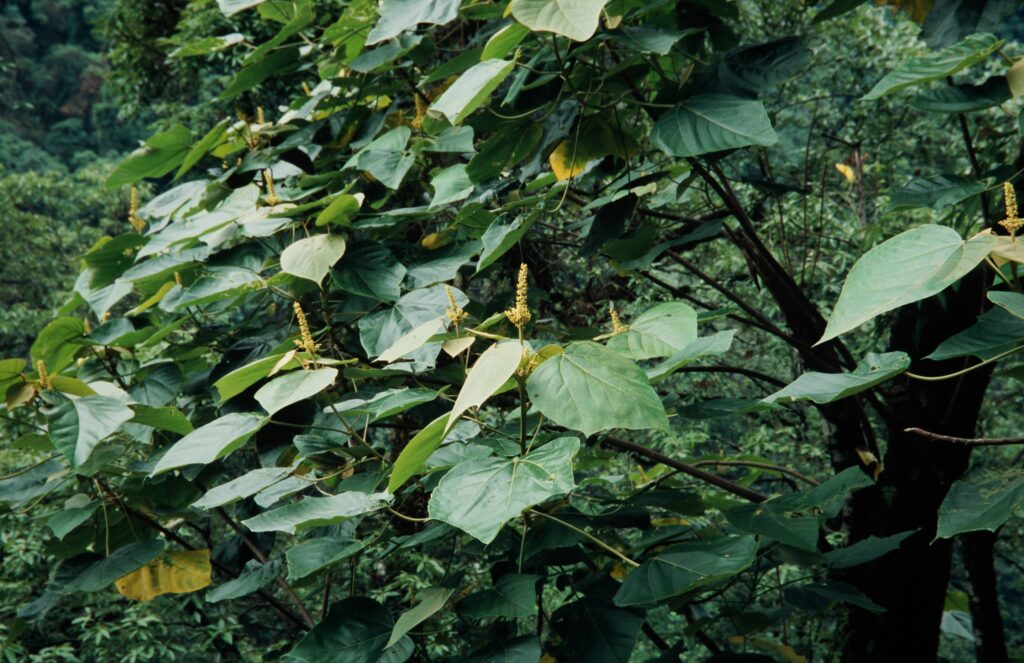
Nepal 97 118 P204
Nepal Mewa-Khola 2470m April
Nepal 97 119 G206 2
Nepal Mewa-Khola 2470m April
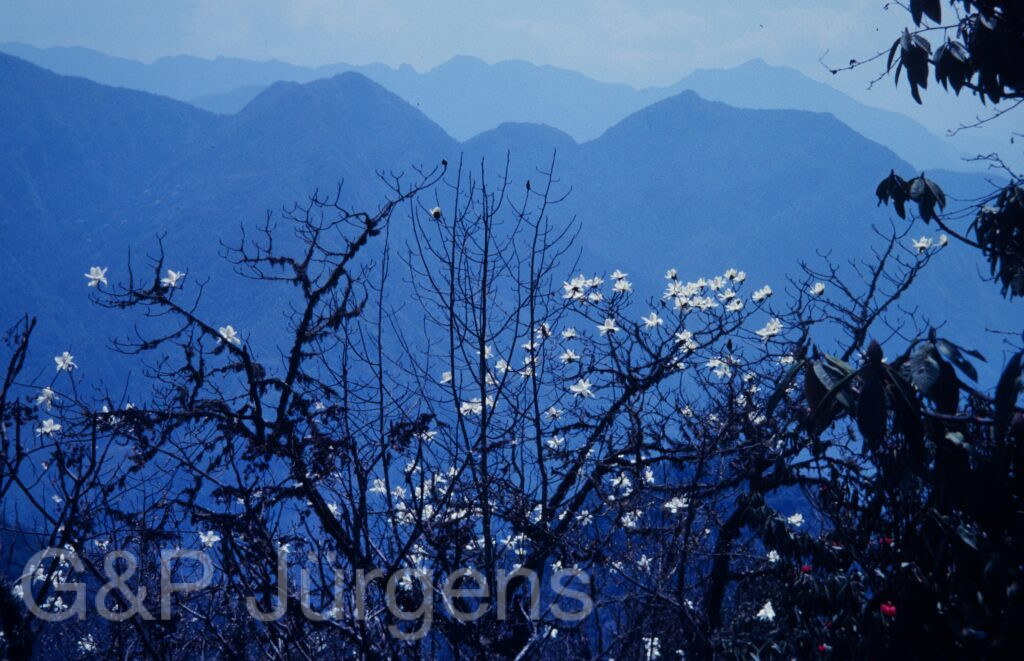
Nepal1992 149 P216 ergebnis
Nepal Simbua-Khola 2500m March 

Description

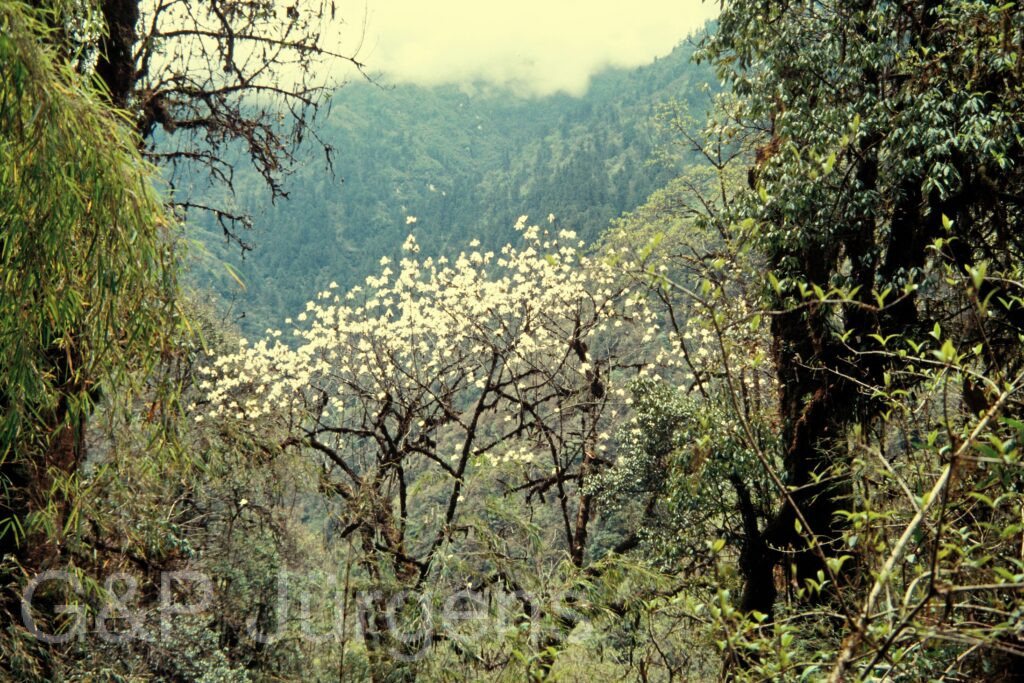
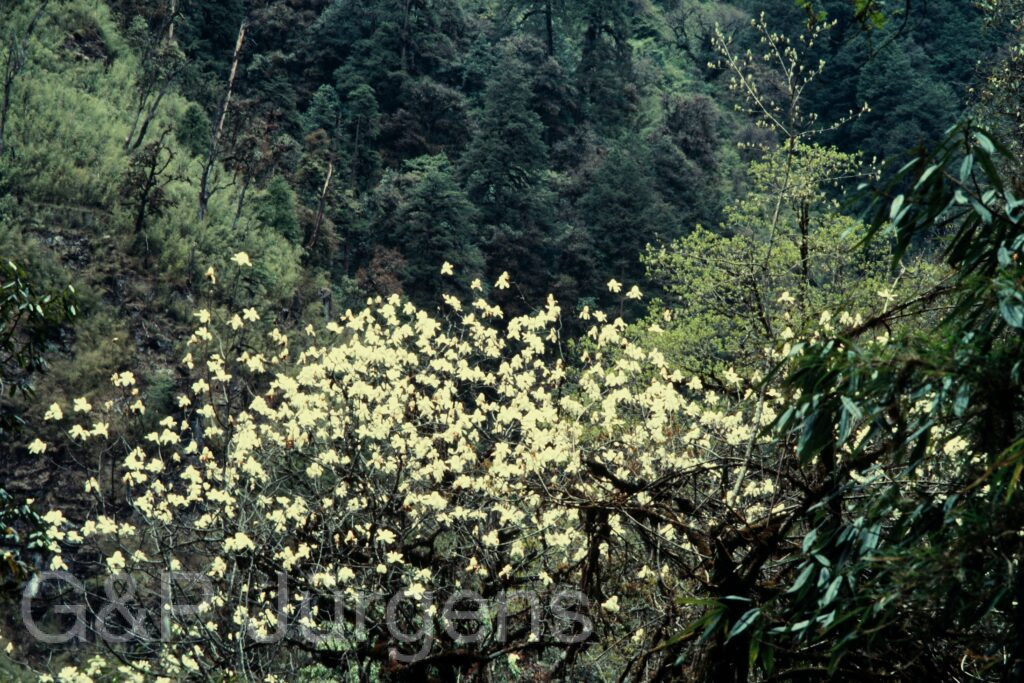
Magnolia campbellii, Campbell's magnolia, is a large deciduous tree of the eastern Himalaya, native from Nepal through Sikkim and Bhutan into NE India, Myanmar and SW China; the additional GBIF codes (GB, IE, US, NZ, JP, DE and others) among its roughly 807 occurrences reflect its renown as a cultivated ornamental. The plants photographed grow in eastern Nepal in the Mewa-Khola (c. 2,470 m, April) and Simbua-Khola (c. 2,500 m, March) valleys, flowering before leaf flush in early spring. In the wild it inhabits temperate broadleaf and mixed forest on humid, well-drained slopes, typically between 2,100 and 3,000 m, often as an emergent tree among oak, rhododendron and laurel.

It is a tree reaching 20–30 m with a stout trunk, grey bark and stout, often pubescent young twigs marked by ringed stipular scars. The leaves are alternate, elliptic to obovate, entire, glaucous and finely hairy beneath. The large, solitary, precocious flowers are among the most spectacular of the genus, cup-and-saucer in form, 15–25 cm across, with numerous tepals ranging from deep rose-pink to white; as in all Magnoliaceae the receptacle bears spirally arranged stamens below an elongate gynoecium of free carpels. The fruit is an aggregate of follicles forming a cylindrical, often twisted etaerio that splits to expose red, arillate seeds suspended on slender funicular threads.

Magnolia campbellii belongs to subgenus Yulania, the precocious-flowering Asian magnolias, and its early bloom on bare branches is a defining feature exploited in horticulture, where numerous selections and hybrids exist. Though widely grown, wild populations face pressure from logging and forest conversion, and the species is regarded as of conservation interest across parts of its native range, making intact mid-montane Himalayan forest important to its persistence.

Author: Hook.f. & Thomson · Sources: POWO (Kew), Flora of China Vol. 7, Flora of Bhutan Vol. 1, GBIF, Hunt (ed.): Magnolias and their Allies

DC.

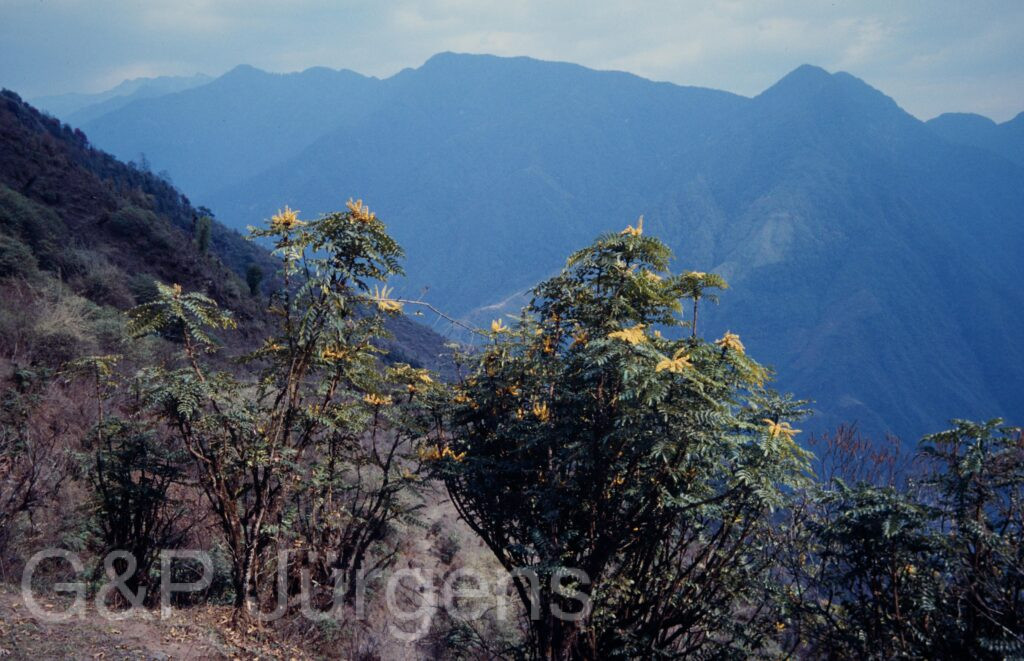
Nepal1992 158 P231 ergebnis
Nepal Yamphudin 1800m March 

Description

Mahonia napaulensis is a Himalayan evergreen shrub distributed from central Nepal eastward through northeast India, Bhutan, and Myanmar to southern China (Yunnan, Sichuan, Guizhou), with outlying populations recorded in northern Thailand, Vietnam, and Indonesia. GBIF documents nearly 985 occurrences across its range. The species inhabits montane broadleaved and mixed forests, forest clearings, and rocky slopes at elevations of 1,100–2,800 m. Near Yamphudin in eastern Nepal at 1,800 m, it occurs in the understorey of mid-hill Quercus–Rhododendron forests, flowering conspicuously in the dry pre-monsoon months of February to April.
Mahonia napaulensis is an erect, often sparsely branched shrub growing to 2–5 m tall. The leaves are imparipinnately compound, 25–45 cm long, with 7–15 pairs of coriaceous, ovate-lanceolate leaflets that are spinose-serrate along the margins and glossy dark green above. The inflorescence consists of 5–12 fascicled racemes arising from the stem apex, each 12–25 cm long, bearing densely arranged yellow flowers. Individual flowers are trimerous with 6 sepals in two whorls, 6 petals, and 6 stamens with valvate dehiscence. The fruit is a globose berry, 7–10 mm in diameter, blue-black with a waxy bloom at maturity, containing 2–5 seeds.
Mahonia napaulensis is closely allied to M. acanthifolia, from which it is distinguished by its more numerous leaflet pairs and generally longer racemes. Some authorities have treated these taxa as conspecific, but molecular phylogenetic studies support their separation. The berries are consumed by birds, particularly bulbuls and laughingthrushes, which serve as the primary seed dispersers. The species is widely cultivated as an ornamental in temperate gardens worldwide, valued for its architectural foliage and fragrant winter flowers.

Author: DC. · Sources: POWO (Kew), GBIF, Flora of China Vol. 6, Flora of Nepal Checklist, Adhikari et al.: Berberidaceae of Nepal (2010)

(Lindl.) Kuntze

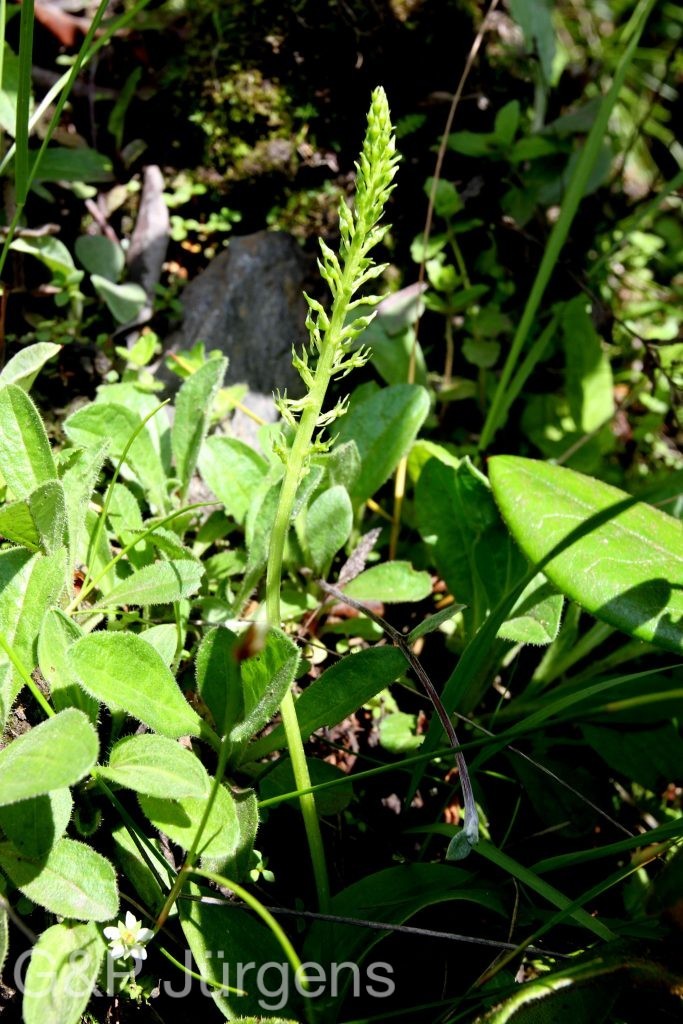
BhutanPG2011 788 01 01
Bhutan Chele-La, 3750m July

Description

Malaxis muscifera is a small terrestrial orchid widespread through the Himalaya and adjacent China, recorded from Nepal, India, China, Bhutan, Pakistan and Myanmar, with some 237 occurrences in GBIF. It grows in moist temperate to subalpine forest and forest margins, among shaded humus, mossy banks and grassy clearings, broadly between about 2,500 and 4,000 m. The plant figured was photographed at Chele-La in western Bhutan at around 3,750 m in July, when the species flowers during the summer monsoon in the cool, damp conditions of the upper conifer and Rhododendron belt.

It is a slender, glabrous perennial herb arising from a small pseudobulb-like, fleshy stem-base. There are usually two, occasionally more, ovate to elliptic, plicate-veined leaves clasping the lower stem by their sheathing bases. The erect stem terminates in a long, dense, many-flowered raceme of minute greenish to yellowish flowers. The narrow sepals and the very slender, thread-like petals spread or reflex, giving the inflorescence its characteristic spidery aspect; the labellum is uppermost through resupination, broadly cordate-auriculate at the base and abruptly contracted to a narrow apex, embracing the short column. The fruit is a small ellipsoid capsule with numerous dust-like seeds.

Malaxis is a large, mainly tropical and warm-temperate genus, and M. muscifera, with its narrowly filiform petals, is among the most distinctive Himalayan representatives, the epithet alluding to the fly-like floral appearance. The flowers are pollinated by small insects, and germination requires mycorrhizal fungi. Frequent and locally abundant across the Himalaya, it is of low conservation concern, though, as an orchid, it is covered by the CITES Appendix II listing of the family.

Author: (Lindl.) Kuntze · Sources: POWO (Kew), GBIF, Flora of China, Flora of Bhutan, Annotated Checklist of the Flowering Plants of Nepal, Pridgeon et al. Genera Orchidacearum

Müll.Arg.

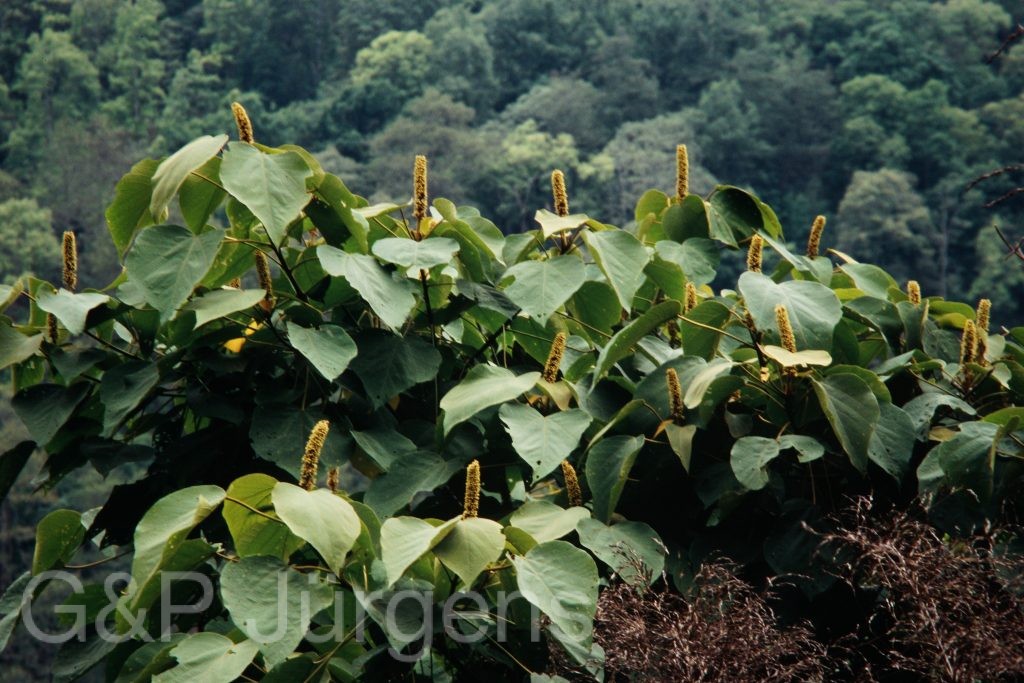
Bh09 231 P387
Bhutan Wangdi, 1650m June
Bh09 380 G601
Bhutan Wangdi, 1650m June
Sikkim 2006 255 ergebnis
India West-Bengal, Lingza 1250m, May

Description

Mallotus nepalensis is a small tree or shrub of the subtropical to lower-temperate Himalaya and its eastern extensions, documented by GBIF (972 occurrences) across China, Nepal, India, Bhutan, Myanmar, Taiwan, Vietnam, Japan and Pakistan. It grows in secondary forest, scrub, forest edges and along streams and clearings, characteristically as a light-demanding component of disturbed and successional vegetation, mostly between about 800 and 2000 m. The collections from Wangdi in Bhutan at 1650 m in June and from Lingza in West Bengal at 1250 m in May illustrate its montane-subtropical distribution along the southern Himalayan front.

The plant is a deciduous shrub or small tree whose young branchlets, petioles and inflorescences are clothed in stellate hairs and reddish, granular peltate glands typical of the genus. The leaves are alternate, long-petiolate, broadly ovate to deltoid, often with two glands at the blade base and a pair of basal lateral nerves, the lower surface pale and gland-dotted. The plant is dioecious; minute apetalous flowers are borne in slender terminal and axillary racemes or panicles, the staminate with numerous stamens, the pistillate with a softly spiny ovary. The fruit is a globose, three-lobed capsule beset with soft processes and covered in red glandular powder.

Mallotus belongs to subfamily Acalyphoideae of the Euphorbiaceae and is characterised by its stellate indumentum and resinous peltate glands, the latter yielding the dye-like powder for which several species are known. Ecologically it behaves as a pioneer, regenerating freely in gaps and along disturbed margins, its capsular fruit and small seeds aiding rapid colonisation. The species is common and of no conservation concern.

Author: Müll.Arg. · Sources: POWO (Kew), GBIF, Flora of China Vol. 11, Flora of Bhutan Vol. 1, Flora of Nepal, Airy Shaw Euphorbiaceae of the Indian subcontinent

C.B.Clarke

Sikkim2004 215 G367
Sikkim/India Gometang 3900m May
Nepal 97 203 P415
Nepal Thudam 3850m April
Nepal 97 202 P414
Nepal Thudam 3850m April

Description

Mandragora caulescens is a stout alpine perennial of the high Himalaya and Tibetan borderlands, distributed across southwestern China (Xizang, Yunnan, Sichuan), northern India, Nepal, Bhutan and Myanmar; GBIF documents some 540 collections, indicating it is locally frequent within its high-elevation range. It occupies open alpine meadows, grassy slopes, scrub margins and stony pasture, generally between about 2500 and 4500 m, often in moist, well-drained turf. The photographed plants were recorded at Gometang on the Sikkim/India border at about 3900 m in May and at Thudam in eastern Nepal near 3850 m in April, typical of this snowmelt-associated meadow species.

Unlike the stemless Mediterranean mandrakes, this species is caulescent, developing a short, leafy aerial stem from a large, fleshy, often forked taproot. The leaves are clustered, oblong to oblanceolate, tapering to the base, entire or sinuate, and somewhat fleshy. The flowers are solitary on long, decurved or nodding peduncles among the leaves; the corolla is broadly campanulate, dull purple to brownish-violet or rarely greenish, five-lobed, subtended by a deeply lobed persistent calyx. The fruit is a globose, fleshy berry seated in the enlarged calyx.

The placement of Mandragora has long been debated; it is treated here in Solanaceae, in which it is conventionally classified, though some authors segregate it. M. caulescens is the principal Asian representative of the genus and, like its western relatives, contains tropane alkaloids and features in regional ethnomedicine. Widespread across the high Sino-Himalayan ranges, it is not regarded as globally threatened.

Author: C.B.Clarke · Sources: POWO (Kew), GBIF, Flora of China Vol. 17, Flora of Bhutan Vol. 2, Flora of Nepal, Flora of Pakistan, Ungricht et al. revision of the genus Mandragora

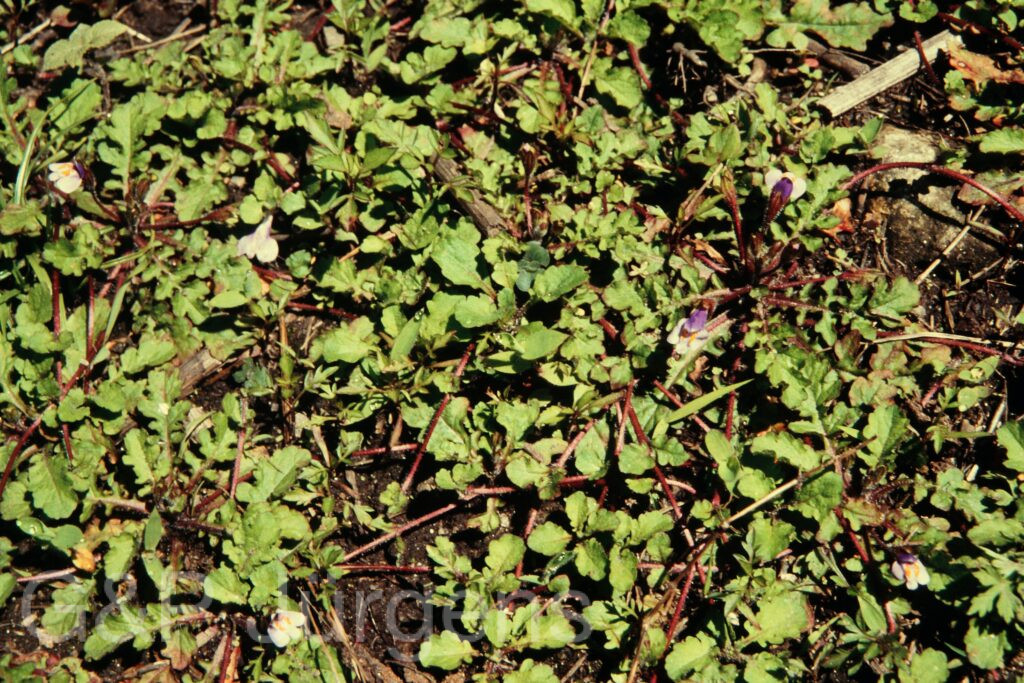
Mazus dentatus

by GP Jürgens

Wall. ex Benth.

Sikkim2004 11 P17
Sikkim West-Bengal, Sambon 1800m April
Nepal 97 97 P160
Nepal Dongen 2360m April
Nepal1992 174 P255 ergebnis
Nepal Mamanke 1800m March 

Description

Mazus dentatus is a small herbaceous plant of the eastern Himalaya, recorded from northern India (Sikkim, Darjeeling), Nepal and Bhutan; GBIF holds only about 48 records, consistent with a restricted, narrow distribution. It grows in moist, shaded or semi-open habitats such as damp banks, grassy slopes, terraced field margins, ditches and stream sides at lower to middle elevations, broadly between about 1500 and 2500 m. The photographed material came from Sambon in the Sikkim/West Bengal hills at around 1800 m in April, from Dongen in Nepal near 2360 m in April and from Mamanke at about 1800 m in March, the early-spring flowering typical of this moisture-loving herb.

The plant is a low, soft, more or less hairy annual or short-lived perennial with slender ascending or decumbent stems. The leaves are mostly in a basal rosette and opposite below, obovate to spathulate, narrowed to a winged petiole, with a coarsely toothed (dentate) margin that gives the species its epithet. The flowers are borne in lax terminal racemes; the corolla is strongly two-lipped, pale violet to bluish, the short upper lip two-lobed and the larger lower lip three-lobed and marked with yellow and darker spots on a raised palate. The fruit is a small capsule enclosed in the persistent calyx.

Mazus, long placed in Scrophulariaceae and later in its own family Mazaceae, is treated here in Phrymaceae following the broad circumscription adopted in several recent floras. The genus is distinguished by its palate-bearing, bilabiate corolla and rosulate habit. M. dentatus is a localised eastern Himalayan plant of disturbed, moist ground; though not formally assessed, its limited range warrants attention.

Author: Wall. ex Benth. · Sources: POWO (Kew), GBIF, Flora of China Vol. 18, Flora of Bhutan Vol. 2, Flora of Nepal, Flora of Pakistan, Bonati revision of Asian Mazus

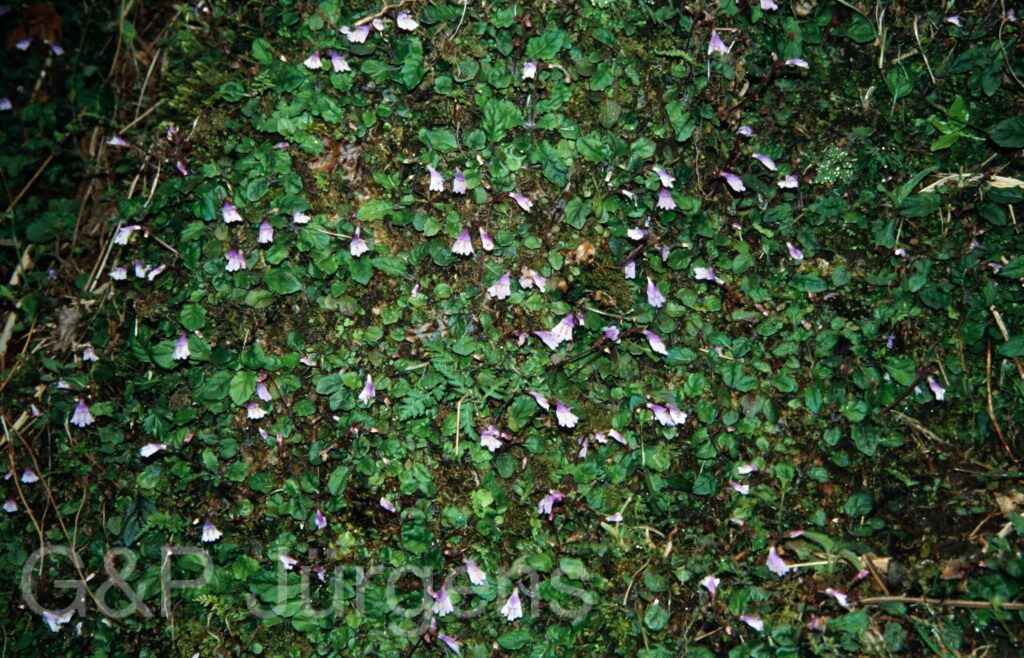
D. Don

Nepal 97 273 P558
Nepal Bagong-Khola 2650m April
Nepal 2001 86 ergebnis ergebnis
East-Nepal Gupka Pokhari 2920m, April

Description

Mazus surculosus D.Don is a small, creeping perennial herb of moist temperate habitats in the Himalaya and adjacent mountains. GBIF records it from India, Nepal, China, Bhutan and Pakistan, with some 230 occurrences, indicating a Sino-Himalayan distribution. It grows on damp, shaded ground — streamsides, wet banks, mossy turf and the margins of paths and forest clearings — typically between about 2,000 and 3,200 m. The illustrated material is from central Nepal at Bagong-Khola, 2,650 m, and from East Nepal at Gupka Pokhari, 2,920 m, both flowering in April, in keeping with its early-spring phenology.

The plant is mat-forming, spreading by slender, rooting stolons or surculose runners (whence surculosus), from which arise short ascending flowering shoots. The leaves are mostly in a basal rosette, obovate to spathulate, crenate-toothed, narrowed to a winged petiole, with a few smaller opposite leaves on the stem. The flowers are borne in lax, few-flowered racemes; the corolla is strongly bilabiate, blue-violet to purple, the short upper lip two-lobed and the larger lower lip three-lobed and marked with white and yellow palatal ridges spotted with darker colour. The fruit is a small, rounded, loculicidal capsule enclosed by the persistent calyx, releasing numerous minute seeds.

Mazus, formerly placed in Scrophulariaceae, is now referred to Phrymaceae (or the segregate Mazaceae) on molecular grounds, and the input family Phrymaceae reflects this modern placement. The genus is centred in temperate and subtropical Asia. As a widespread, weedy creeper of damp open ground, M. surculosus is common and not of conservation concern.

Author: D. Don · Sources: POWO (Kew), GBIF, Flora of China Vol. 18, Flora of Bhutan Vol. 2, Flora of Nepal, Beardsley & Olmstead: Redefining Phrymaceae (American Journal of Botany)

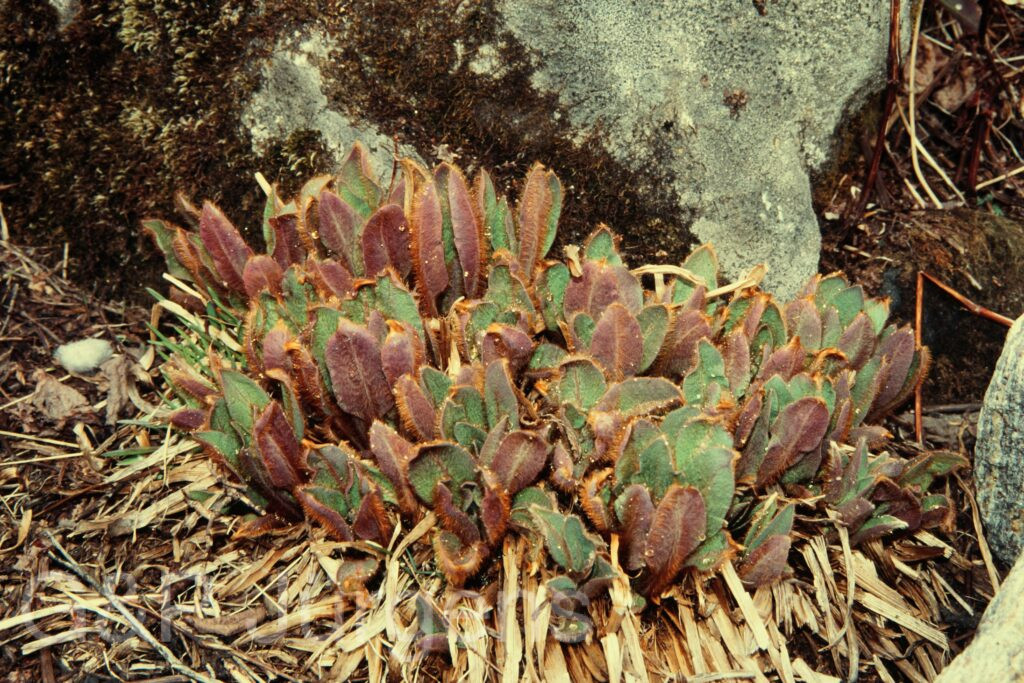
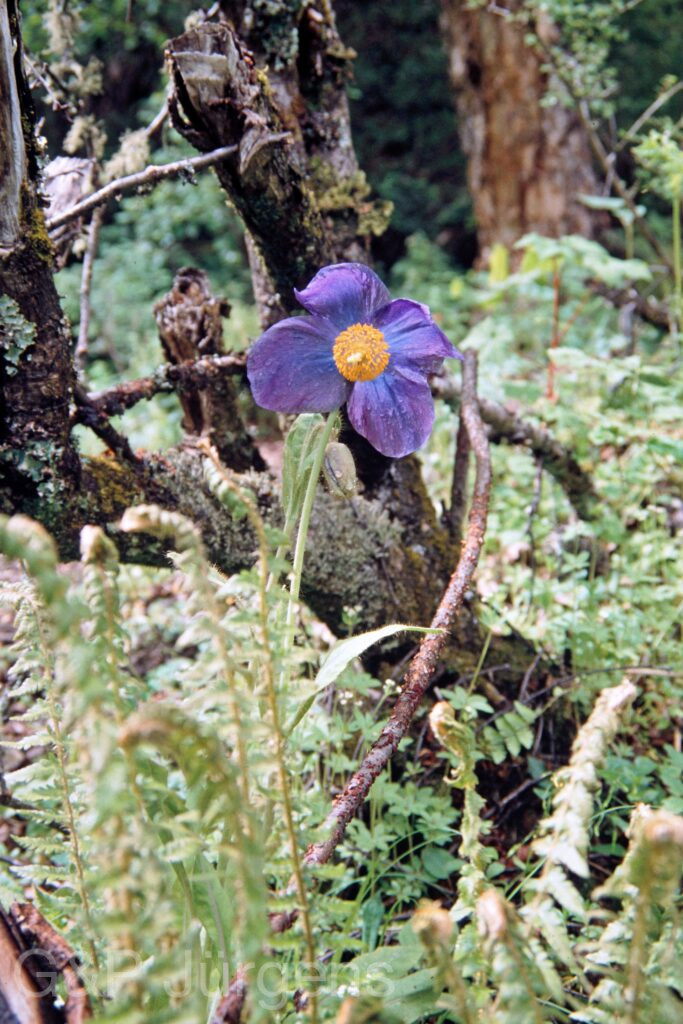
Prain

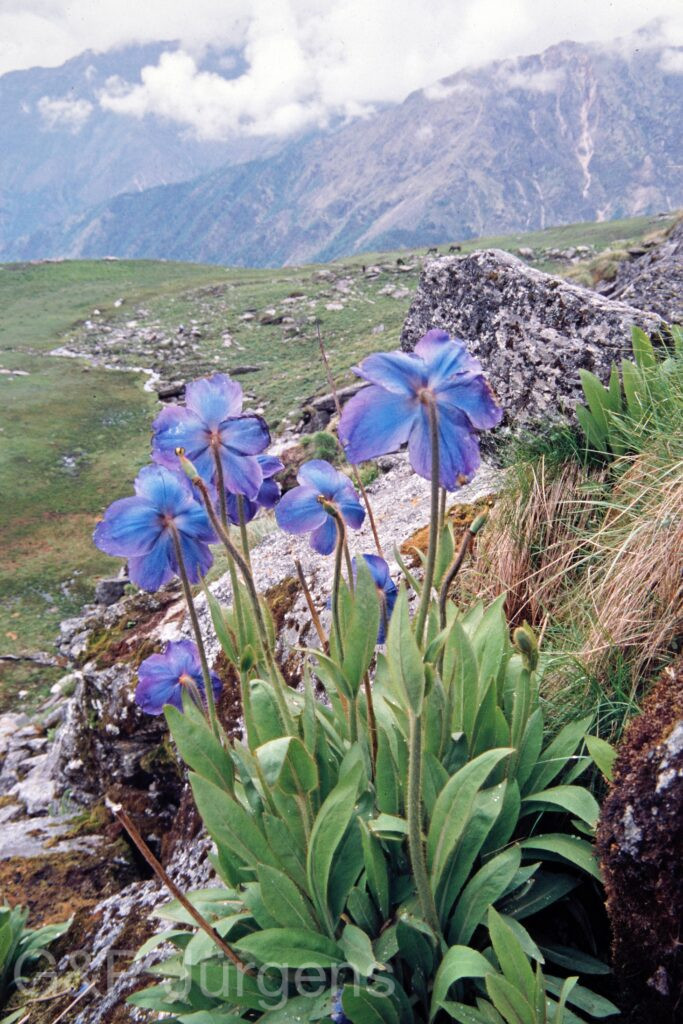
Nepal 97 187 G369
Nepal Tayla-La 4050m April
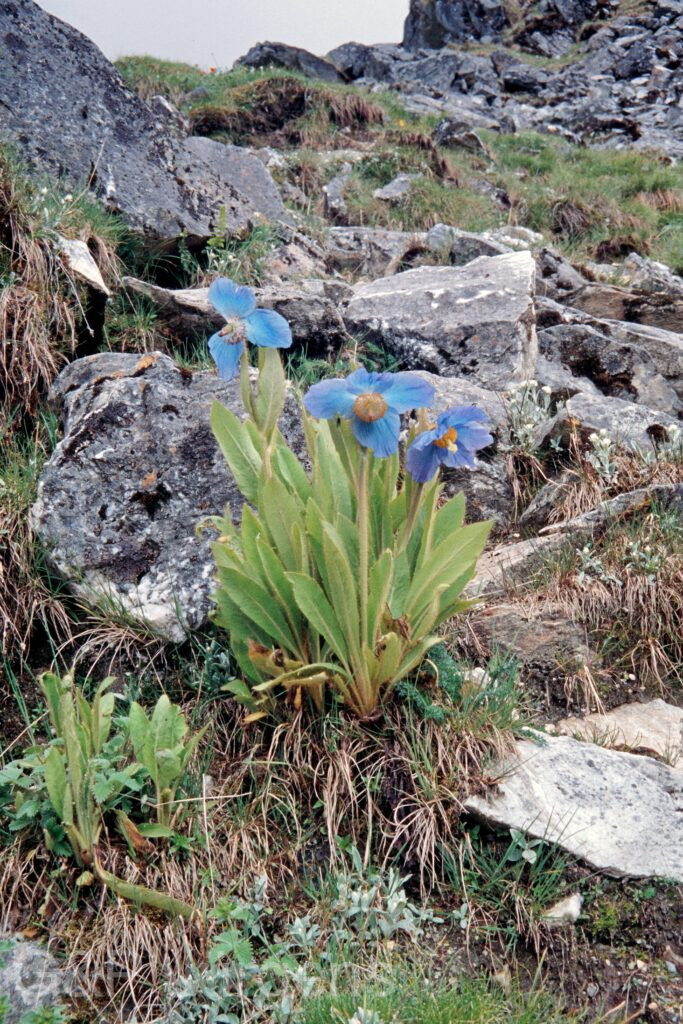
Nepal 99 107 ergebnis
West-Nepal South of Rara-Lake 3600m, June
Nepal 99 280 ergebnis
West-Nepal Kalomura 4100m, June
Nepal 99 281 ergebnis
West-Nepal Kalomura 4100m, June

Description

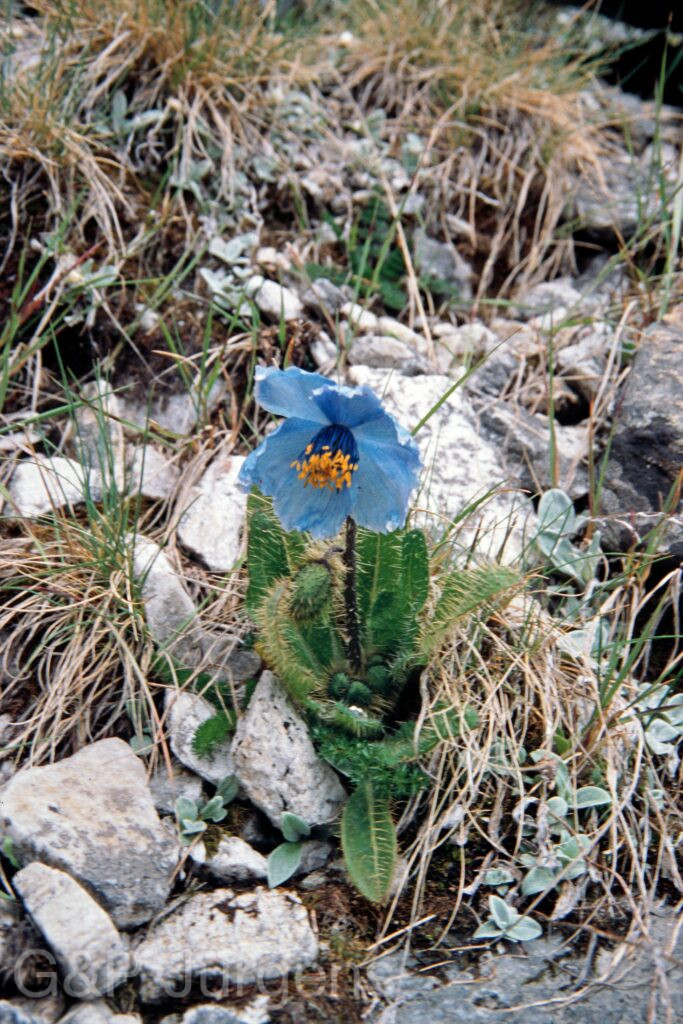
Meconopsis grandis is a high-altitude perennial of the eastern and central Himalaya, distributed across Nepal, northern India, Sikkim, Bhutan and adjacent southern Tibet (China), with cultivated and naturalised records reflected in the European data (United Kingdom, Belgium, Norway, Sweden). GBIF documents some 266 occurrences, a figure inflated by its long horticultural history as one of the celebrated "blue poppies." In its native range it grows in moist alpine meadows, open scrub, the margins of Rhododendron thickets and along streamsides on humus-rich, well-drained acidic soils. The collections illustrated span the snowmelt belt between roughly 3600 and 4100 m, from Tayla-La in central Nepal at 4050 m in April to the slopes south of Rara Lake at 3600 m and Kalomura at 4100 m in June, where it flowers as the monsoon advances.

It forms a stout, deciduous perennial from a thick rootstock, with a basal rosette of oblanceolate to elliptic leaves clothed in rust-coloured to fulvous bristly hairs, the blades narrowing into a winged petiole and often shallowly toothed. The flowering scape is erect, bristly and bears one to several large nodding flowers, each typically with four (sometimes more) broad, satiny, overlapping petals of intense azure to violet-blue, occasionally purplish. Numerous golden stamens surround a stout ovary crowned by a short, well-defined style and capitate to clavate stigma. The fruit is an elongate, ellipsoid to narrowly ovoid capsule, bristly-hairy, dehiscing by short apical valves to release small seeds.

Meconopsis grandis belongs to a taxonomically intricate complex of perennial blue poppies and has historically hybridised in cultivation, giving rise to the widely grown Meconopsis × sheldonii. Variation in flower colour, leaf indumentum and monocarpic versus polycarpic habit has prompted recognition of several subspecies and forms by different authors. Ecologically it is pollinated chiefly by bumblebees attracted to its conspicuous corolla. Though not formally assessed as threatened across its wide range, populations are localised and sensitive to grazing pressure, trampling and the warming of alpine habitats, making it a flagship species for Himalayan montane conservation.

Author: Prain · Sources: POWO (Kew), GBIF, Flora of Bhutan, Flora of Nepal, Annotated Checklist of the Flowering Plants of Nepal, Christopher Grey-Wilson – The Genus Meconopsis

Hook.f. & Thomson

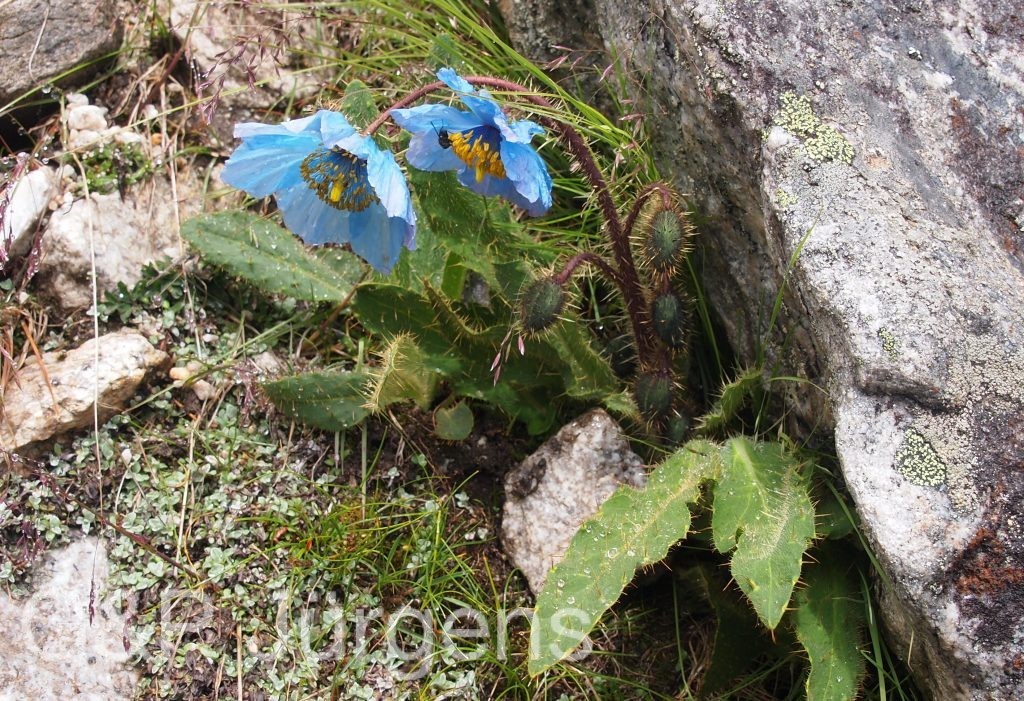
BhutanPG2011 552 1
Bhutan Ludlow-Sherriff-Trail Dem-Tso, 4650m July
BhutanPG2011 664
Bhutan Ludlow-Sherriff-Trail Dem-Tso, 4700m July
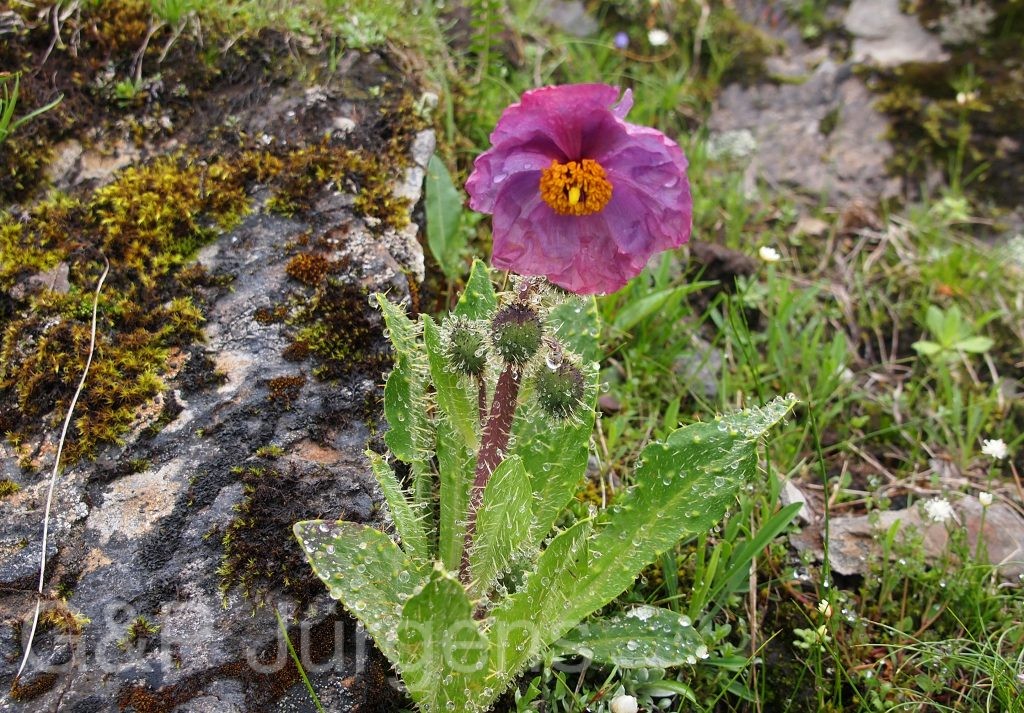
Nepal 99 328 ergebnis
West-Nepal Kalmura 4300m, June

Description

Meconopsis horridula is one of the most widespread of the blue poppies, distributed across the high Himalaya and the Tibetan plateau through China, Nepal, Bhutan and India, with a large dataset of around 1472 occurrences (records reported from cultivation in Britain, Canada and elsewhere reflect its horticultural celebrity). It inhabits open stony slopes, scree, moraine, rock crevices and high alpine turf, typically between about 4000 and 5000 m. The photographed plants from Dem-Tso on the Ludlow-Sherriff Trail in Bhutan at 4650–4700 m in July, and from Kalmura in West Nepal at 4300 m in June, are characteristic of its preference for exposed, well-drained high-elevation ground.

It is a monocarpic herb, the whole plant densely armed with stiff, spreading, pale to purplish spines. The leaves form a basal rosette and are oblanceolate, entire to lobed and likewise spiny on both surfaces and along the petiole. Flowering stems bear nodding, saucer-shaped flowers, solitary on long scapes or several on a leafy raceme; the four (to six) petals are sky-blue to purple or occasionally reddish, surrounding a boss of yellow stamens and a stout ovary topped by a short style. The fruit is an erect, narrowly ellipsoid, bristly capsule dehiscing by apical valves to release numerous small seeds.

Meconopsis horridula, described by Hooker and Thomson, has long served as a catch-all for variable spiny blue poppies, and modern revisions have segregated several taxa (such as M. racemosa and M. prattii) formerly lumped under it. Being monocarpic, individuals flower once and die after seed-set. Though locally common, the genus is subject to over-collection of seed and pressure from trekking and grazing across its range.

Author: Hook.f. & Thomson · Sources: POWO (Kew), GBIF, Flora of China (Papaveraceae), Annotated Checklist of the Flowering Plants of Nepal, Grierson & Long Flora of Bhutan, Christopher Grey-Wilson's monograph The Genus Meconopsis