
(Jacq.) P.H.Raven
Description
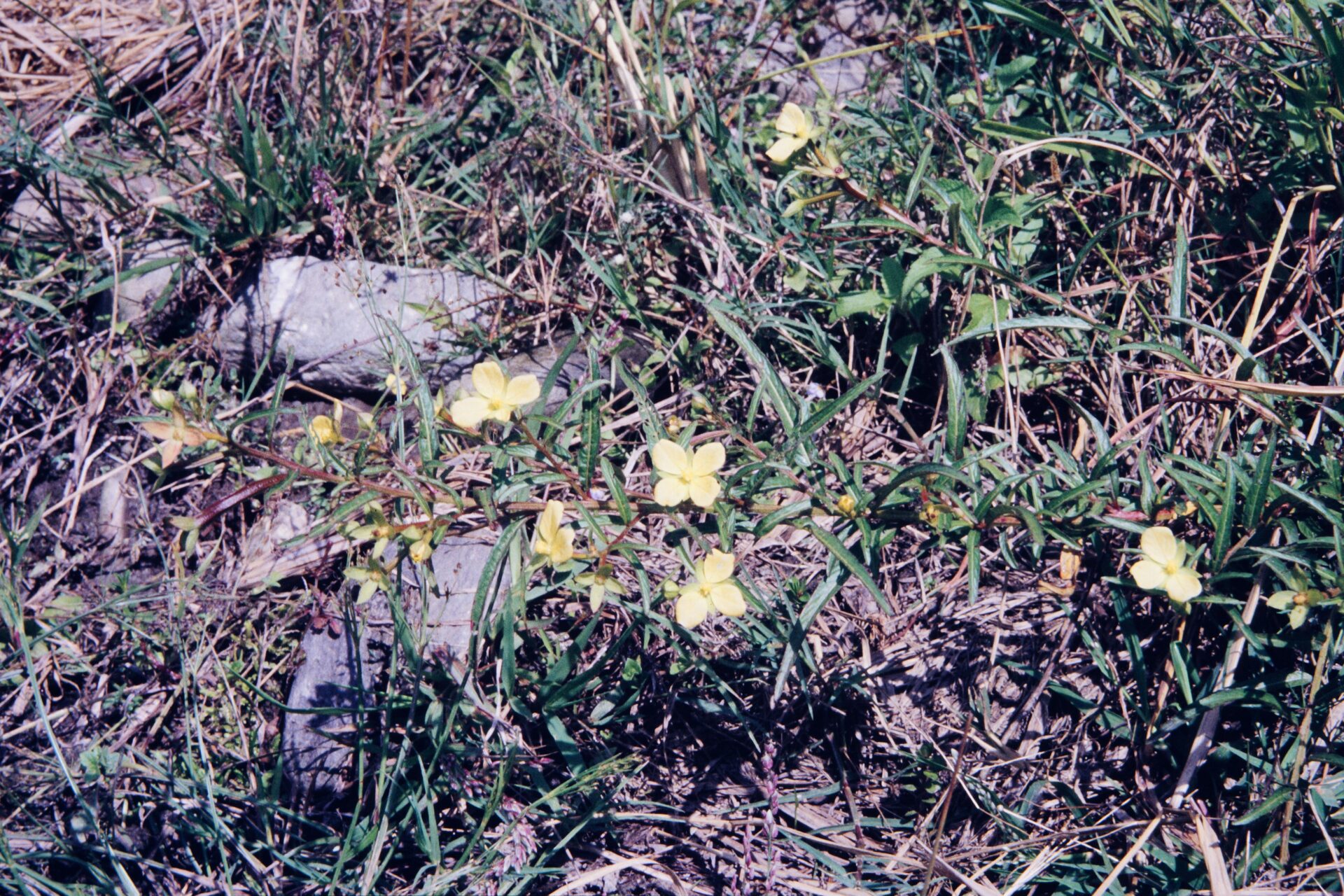
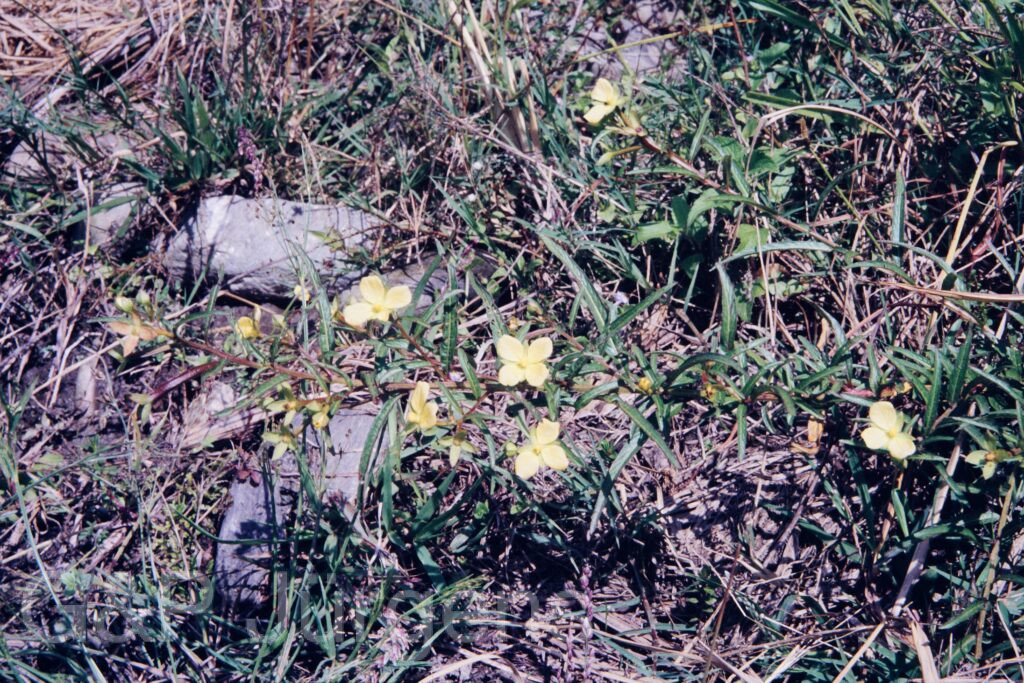
Ludwigia octovalvis (Jacq.) P.H.Raven is a pantropical wetland herb or subshrub of the willowherb family, one of the most widespread members of the genus. GBIF documents over 37,000 records across the tropics and warm temperate zones — the Americas (USA, Mexico, Brazil, Peru, Ecuador, Cuba, Puerto Rico), Africa and the western Indian Ocean (South Africa, Madagascar, Réunion), Australia, and tropical and subtropical Asia (China, Taiwan, Japan, Indonesia). In the Himalayan foothills it occupies marshes, ditches, paddy margins, riverbanks and other seasonally wet ground at low elevations, as for the photographed plant from Nepal, Darondi-Khola, 630 m, in October.
The plant is an erect, much-branched annual or short-lived perennial 0.5–2 m tall with terete to weakly four-angled, often reddish stems that are pubescent above. Leaves are alternate, lanceolate to narrowly elliptic, entire, acuminate and shortly petiolate. Flowers are solitary in the upper leaf axils, 4-merous, with four bright yellow, obovate petals and four green sepals; the inferior, narrowly cylindric ovary is conspicuous. The fruit is a slender, ribbed, octovalved (eight-grooved) capsule — the source of the epithet — splitting to release numerous small seeds embedded in the dry pith, well suited to water and gravity dispersal.
Ludwigia is taxonomically complex, and L. octovalvis is a variable aggregate within which several subspecies and forms have been recognised. Its broad pantropical range, weediness in rice agriculture and ready colonisation of disturbed wet ground make it ecologically successful and locally a useful medicinal plant. It is not of conservation concern.
Author: (Jacq.) P.H.Raven · Sources: POWO (Kew), GBIF, Flora of China Vol. 13, Flora of Nepal, Flora of Bhutan Vol. 2, Raven: Monograph of the genus Jussiaea / Ludwigia (Reinwardtia)