Author

G & P Jürgens

(C.B.Clarke) C.B.Shang
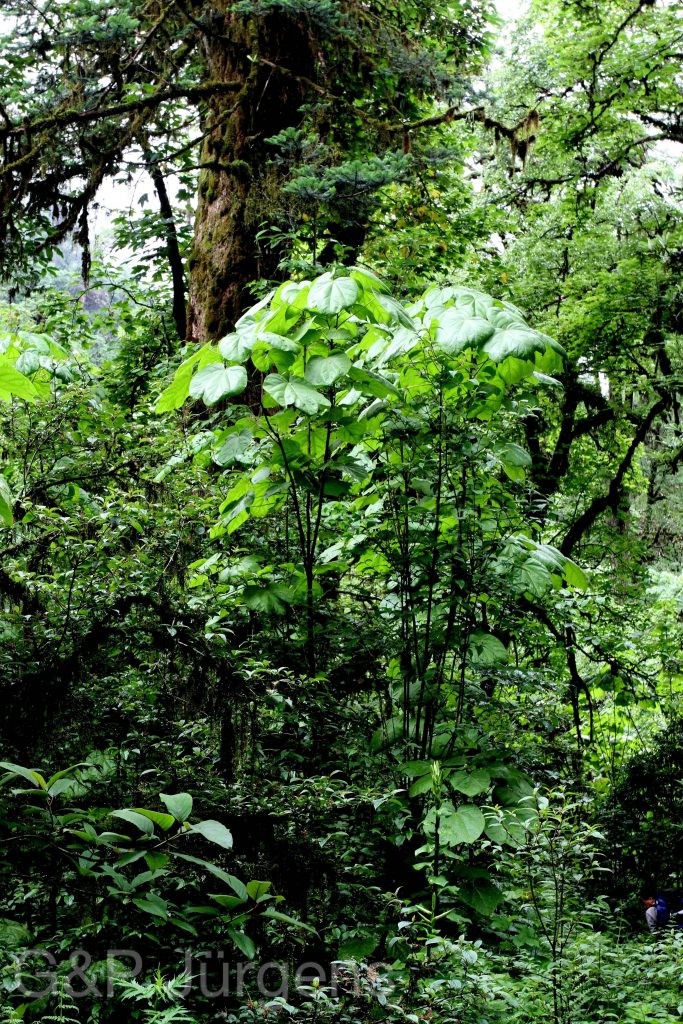
Sikkim2011 387
Sikkim Lachung 3200m, June
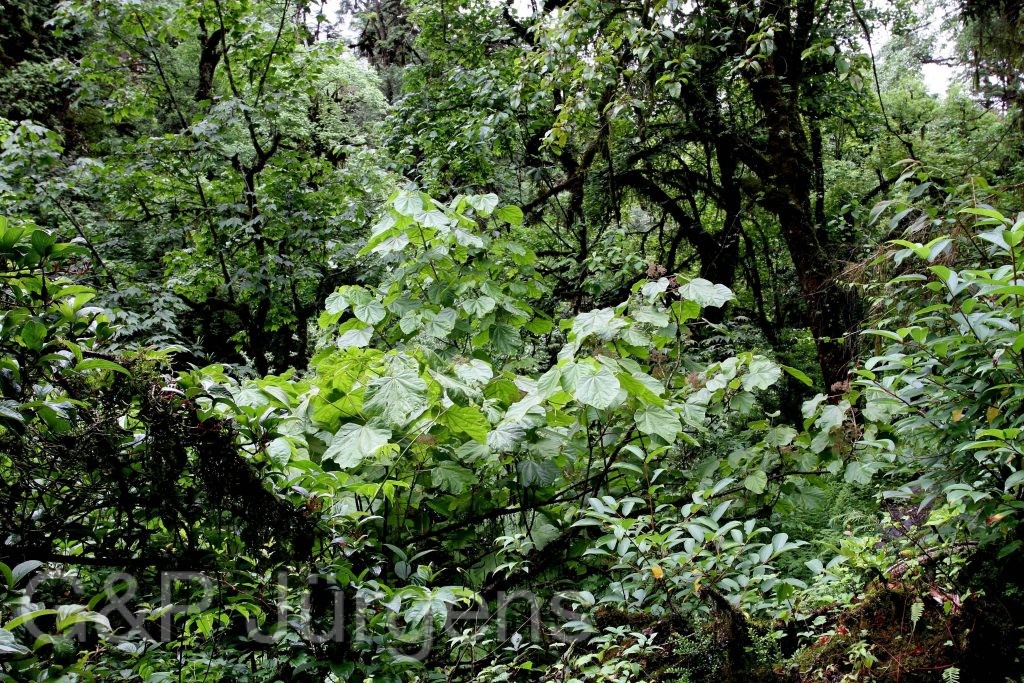
Sikkim2011 389
Sikkim Lachung 3200m, June
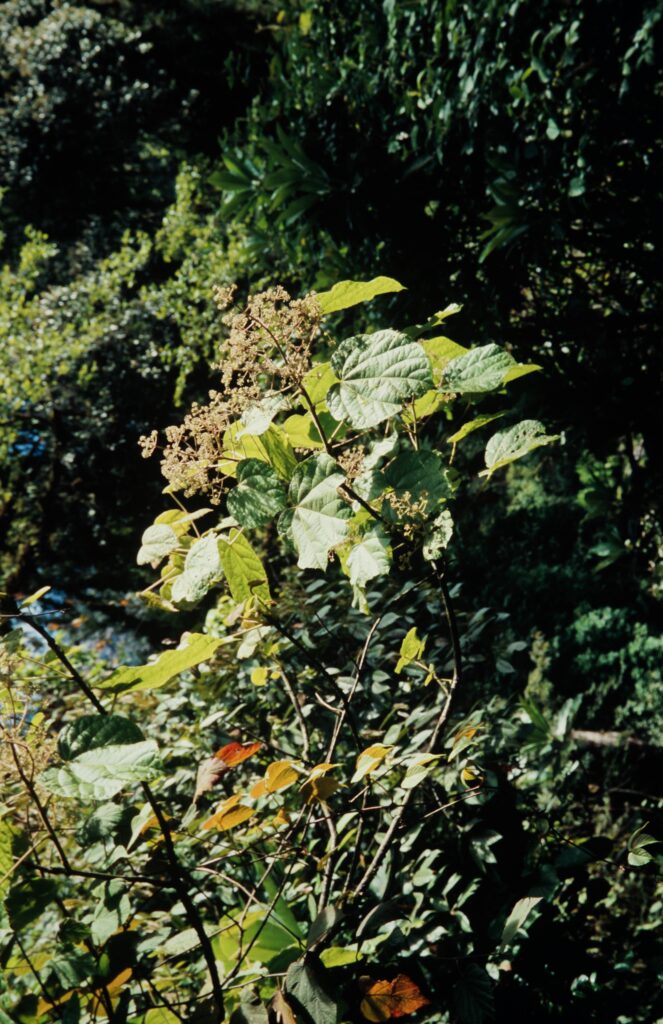
Sikkim 2006 327 ergebnis
India West-Bengal, Tolung 2400m, May

Description

Merrilliopanax alpinus is a small tree or shrub of the eastern Himalaya and south-western China, recorded from Nepal, northern India, Bhutan and Yunnan, a comparatively narrow range reflected in only some 59 occurrence records. It inhabits moist, evergreen broad-leaved and mixed montane forest and forest margins, generally between about 2000 and 3500 m, often in shaded, humid ravines. The images here derive from Sikkim at Lachung (3200 m, June) and from the Tolung area of West Bengal (2400 m, May), localities typical of the rich, mist-bathed mid-montane forests where the genus reaches its diversity.

The plant is an evergreen with stout, sparingly branched stems bearing simple, leathery leaves clustered toward the branch tips. The leaves are large, ovate to elliptic, entire or shallowly toothed, glabrous and shining above and frequently rusty-tomentose beneath, on long petioles. The inflorescence is a terminal panicle of small umbels; the flowers are small, polygamous and greenish, with a reduced calyx, several petals and stamens, and an inferior ovary. The fruit is a small, globose to ellipsoid drupe crowned by the persistent styles.

Merrilliopanax is a small genus of the Araliaceae segregated from the broadly defined Schefflera/Aralia complex and is restricted to the Sino-Himalayan region; M. alpinus was described by C.B.Clarke and transferred to the genus by C.B.Shang. Its simple (rather than compound) leaves distinguish it from many relatives. The drupes are bird-dispersed, and the species is a localised but characteristic element of eastern Himalayan cloud forest. Its restricted range makes it of biogeographic interest and potentially sensitive to forest loss, though no formal threat assessment is widely established.

Author: (C.B.Clarke) C.B.Shang · Sources: POWO (Kew), GBIF, Flora of China, Flora of Bhutan, Shang revision of Merrilliopanax, Frodin & Govaerts World Checklist of Araliaceae
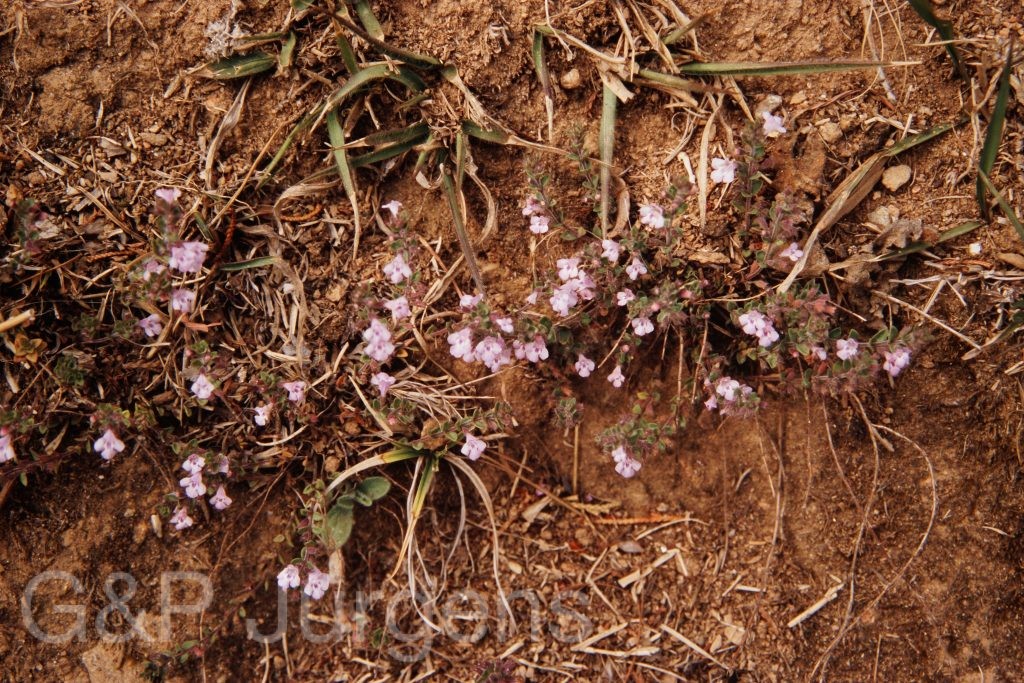
Benth.

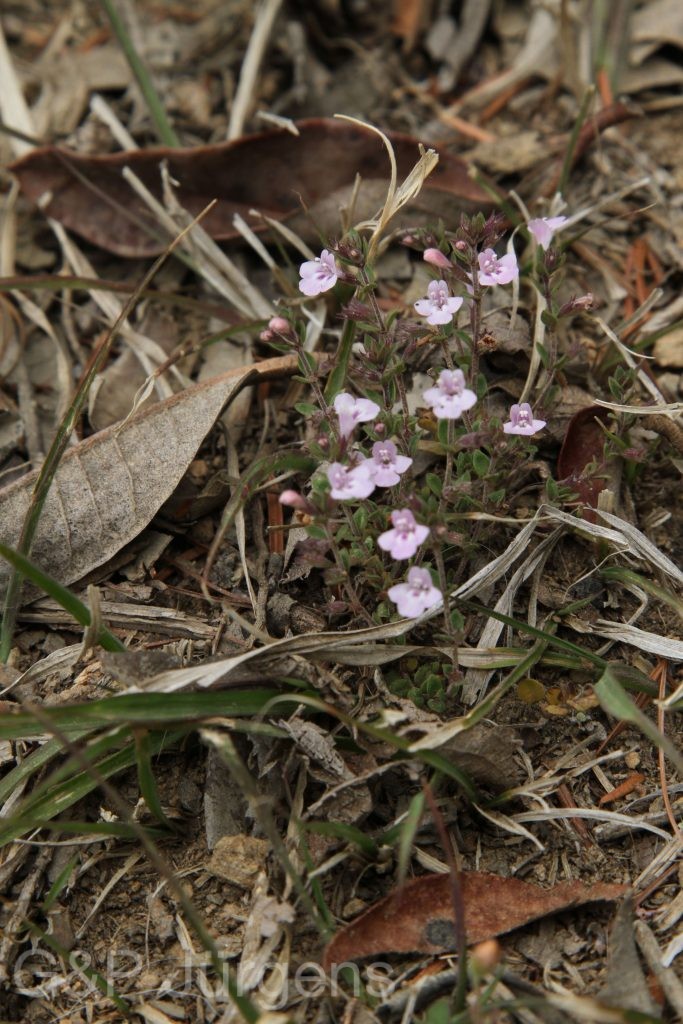
Bhutan2014 1027
Bhutan Paro 2320m, May
Bh2008 553 G837
Bhutan Paro 1900m April

Description

Micromeria biflora is an aromatic herb of remarkably wide Palaeotropical-to-Himalayan distribution, ranging from tropical and southern Africa (Ethiopia, Kenya, Tanzania, South Africa, Zimbabwe, Cameroon, Congo and others) through the Arabian Peninsula (Saudi Arabia, Yemen) and across to Afghanistan, Pakistan, India, Nepal, Bhutan, Myanmar and China; its nearly 1700 georeferenced occurrences underline this broad Old World range. It grows on dry, open, rocky and grassy slopes, banks and disturbed ground in the warm-temperate and montane belts, commonly between about 1500 and 2800 m. The plants documented around Paro in Bhutan at 1900-2320 m in April and May occupy exactly such sunny, well-drained hillsides.

It is a slender, much-branched perennial subshrub forming low, wiry tufts from a woody base, the quadrangular stems finely pubescent and clothed with a strong thyme-like aroma. The leaves are small, opposite, ovate to elliptic, entire and often revolute-margined, gland-dotted and short-petiolate. The pink to pale purple flowers are borne in axillary pairs or small few-flowered whorls, hence the epithet biflora; each has a tubular, ribbed, two-lipped calyx and a bilabiate corolla with the lower lip three-lobed, with four didynamous stamens. The fruit comprises four smooth, ovoid nutlets enclosed in the persistent calyx.

Micromeria belongs to tribe Mentheae of the Lamiaceae, allied to Clinopodium and Satureja, and the generic limits of this group have been much revised on molecular grounds. Rich in volatile monoterpene oils, M. biflora is widely used in folk medicine and as an aromatic herb. Its extensive range and tolerance of disturbed, arid habitats make it a successful and unthreatened species.

Author: Benth. · Sources: POWO (Kew), GBIF, Flora of China, Flora of Bhutan, Flora of Pakistan, Flora of Tropical East Africa, Harley's treatment of Labiatae

Hemsl.

Bhutan2012 863
Bhutan Nangsephal 2850m, October

Description

Microula sikkimensis Hemsl. is a Sino-Himalayan herb recorded by GBIF in China, Nepal, Bhutan and India, with 1011 occurrences documenting a fairly continuous distribution along the higher Himalaya and into south-western China. It grows on open slopes, grassy banks, fallow ground, trail margins and forest clearings in the temperate to subalpine zones, typically between about 2500 and 4000 m. The plant photographed at Nangsephal in Bhutan, at roughly 2850 m in October, reflects its occurrence in the cool temperate belt of the eastern Himalaya and its persistence into the autumn.

The species is a hispid annual or short-lived herb with spreading, bristly stems clothed in stiff, often pustular-based hairs typical of the family. The leaves are alternate, oblong to lanceolate, sessile or short-petiolate and roughly hairy on both surfaces. The flowers are small and borne in leafy-bracted cymes; the corolla is blue to bright blue with a short tube, a spreading five-lobed limb and small scales (fornices) closing the throat. The fruit characteristically separates into four nutlets that bear a dorsal aperture and marginal teeth or wings, a diagnostic feature of the genus Microula.

Microula is a genus largely centred on the Himalaya and the Qinghai-Tibetan plateau, distinguished within the Boraginaceae by its sculptured, apertured nutlets, and M. sikkimensis is among its more widespread and variable species. The barbed or toothed nutlets promote epizoochorous dispersal, attaching to animal fur and clothing, which aids colonisation of disturbed ground. The species is common across its range and of no conservation concern, forming a characteristic element of the weedy and meadow flora of the central and eastern Himalaya.

Author: Hemsl. · Sources: POWO (Kew), GBIF, Flora of China, Flora of Bhutan, Flora of Nepal, Riedl Boraginaceae of the Himalaya

Benth.

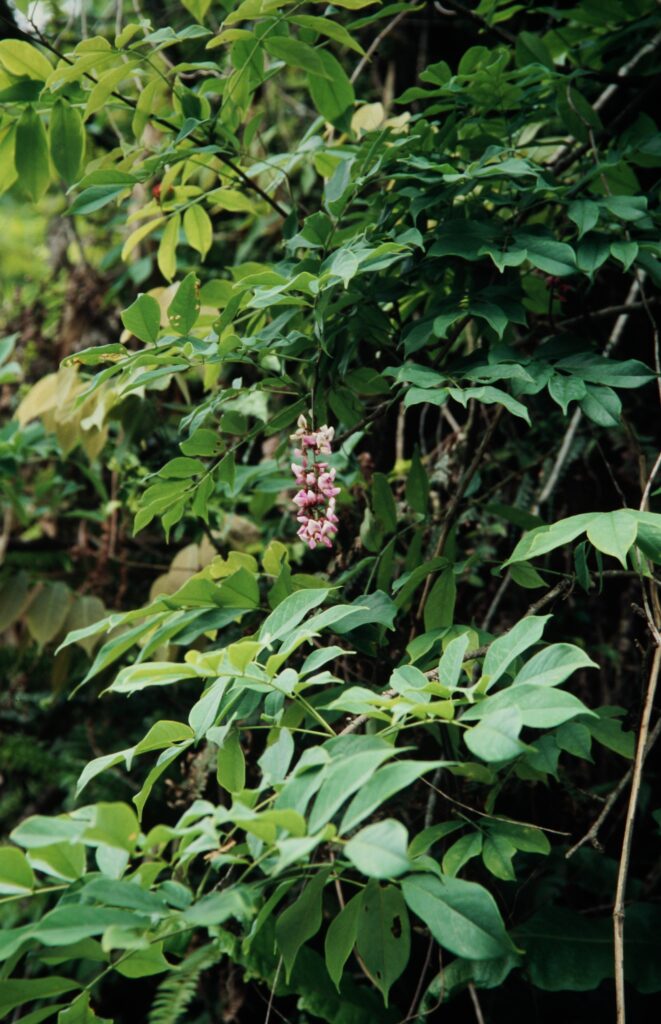
Sikkim 2006 269 ergebnis
India West-Bengal, Lingza 1300m, May

Description

Millettia pachycarpa is a robust woody climber of the eastern Himalaya and South-East Asia, ranging from Nepal, Bhutan and north-east India through Bangladesh, Myanmar, Thailand, Laos and Vietnam to southern China and Taiwan. GBIF holds around 2140 occurrences across this subtropical to warm-temperate range. It grows in broad-leaved forest, forest margins, ravines and along streams, scrambling over trees at low to middle elevations. The plant from Lingza in the Darjeeling hills of West Bengal at 1300 m in May represents a typical eastern Himalayan population, flowering in spring before the monsoon.

It is a large, woody, deciduous liana with stout twining stems. Its leaves are alternate and imparipinnate, with numerous opposite, oblong to oblong-lanceolate leaflets that are dark green and somewhat leathery, glabrescent above and finely appressed-hairy beneath. The flowers are borne in long, dense, pendulous axillary racemes or panicles, the corolla papilionaceous and lilac to purplish-pink, the standard broad and often silky-hairy outside enclosing the wing and keel petals; the stamens are diadelphous and the ovary superior. The fruit is a large, thick, woody pod (the epithet pachycarpa meaning thick-fruited), pendulous and often tuberculate, indehiscent or tardily so, with one to several large hard seeds.

Millettia belongs to tribe Millettieae of the papilionoid Fabaceae, a group much revised in recent decades with several Asian species transferred to allied genera; M. pachycarpa is retained in Millettia in current treatments. The plant is notable for its high content of rotenoids and isoflavonoids: the seeds and roots have long been used as fish poison and insecticide across its range, and it is an important source of rotenone-type compounds. Widespread and frequent in eastern Himalayan forests, it is of no conservation concern.

Author: Benth. · Sources: POWO (Kew), GBIF, Flora of China Vol. 10, Flora of Bhutan Vol. 1, Annotated Checklist of the Flowering Plants of Nepal, Geesink revision of Millettieae

(Gamble) Ohashi

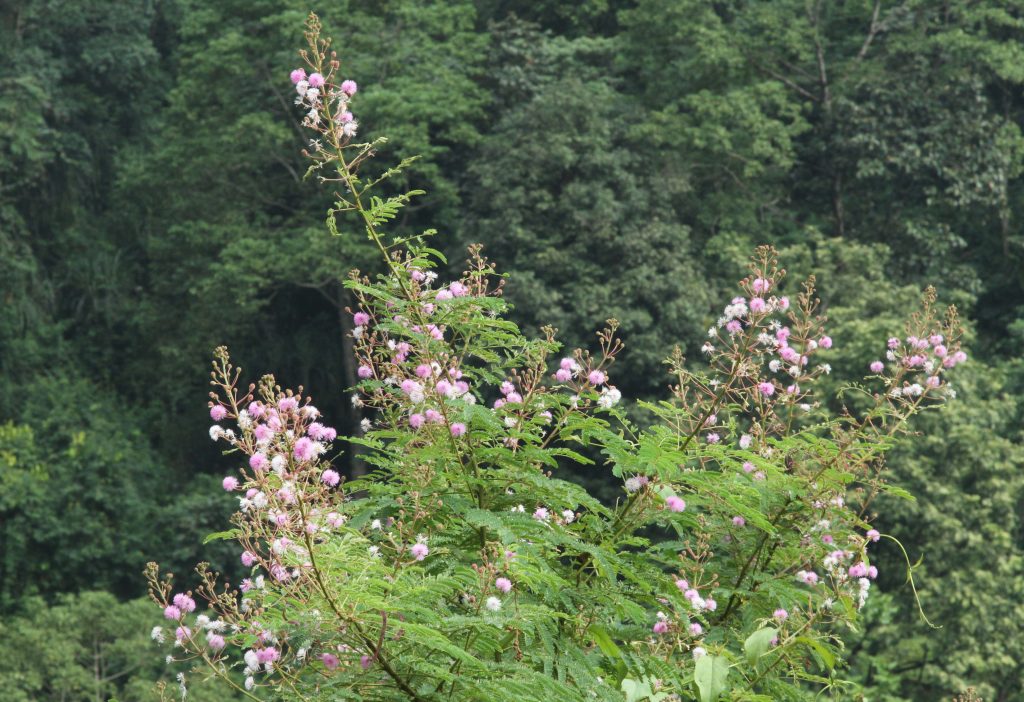
Bhutan2012 723
Bhutan Galephu 400m, October

Description

Mimosa rubicaulis subsp. himalayana is a scrambling, prickly shrub of the lower Himalayan foothills and adjacent plains, recorded from India, Pakistan, Nepal, Afghanistan and Bhutan, with additional scattered records (IN, PK, NP, AF, BT, MM, JP, MU) totalling around 219 occurrences. It favours warm, seasonally dry sites: open scrub, forest margins, hedgerows, ravines and disturbed roadside thickets in the subtropical zone, generally below about 1500 m. The plant photographed at Galephu in southern Bhutan at 400 m in October grew in the hot, humid duar foothills, where its straggling, armed branches form dense, often impenetrable tangles among other secondary vegetation following the monsoon.

It is a much-branched shrub or subscandent woody climber with terete, reddish stems bearing scattered, recurved prickles. The leaves are bipinnate, with several pairs of pinnae each carrying numerous small, oblong-linear, asymmetric leaflets, the rachis prickly and often glandular. The flowers are tiny and crowded into globose or shortly cylindrical heads, pink to pale purple, each flower with numerous long, exserted stamens giving the heads a fluffy appearance. The fruit is a flat, oblong, jointed pod (a craspedium) that breaks transversely into one-seeded segments at maturity, the persistent margins remaining as an empty frame.

Mimosa belongs to the mimosoid clade of the Fabaceae (subfamily Caesalpinioideae in current circumscription), characterised by actinomorphic flowers with valvate petals and free stamens. Subsp. himalayana, raised from M. rubicaulis, represents the montane-fringe Himalayan element of a widespread Asian species. The recurved prickles and rapid clonal spread make it an effective coloniser of degraded land, and locally it is used as a living hedge and for fuel. It is not of conservation concern, being common and weedy across its broad subtropical range.

Author: (Gamble) Ohashi · Sources: POWO (Kew), GBIF, Flora of Bhutan, Flora of Pakistan, Mimosoid legumes monograph (Barneby, Sensitivae Censitae)

L.

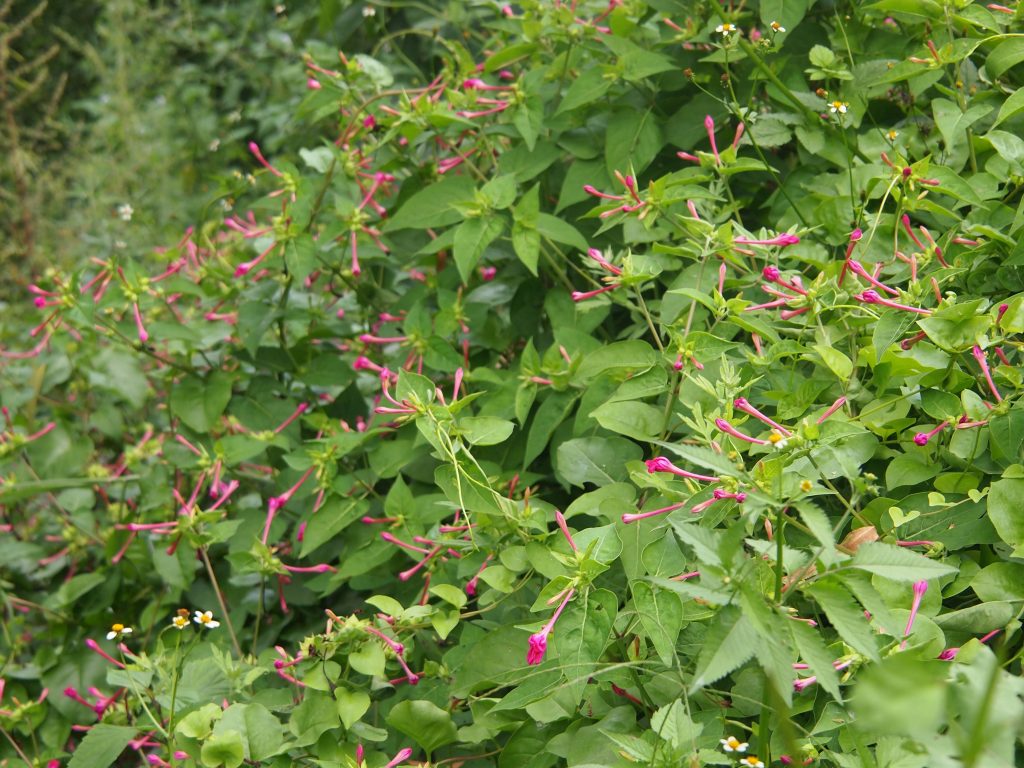
Bhutan2012 425
Bhutan Wangdi 2300m, June

Description

Mirabilis jalapa, the four-o'clock flower or marvel-of-Peru, is native to tropical America but is now cultivated and naturalised across virtually the entire warm and temperate world; GBIF's very large total of around 48896 records spans France, Spain, the United States, Mexico, Italy, Germany, Brazil, China, Japan, South Africa, India and many other countries, reflecting its ubiquity as an ornamental and garden escape. It thrives in disturbed, sunny habitats, including gardens, roadsides, walls, waste ground and village margins, and readily persists around human settlements. The plant photographed at Wangdi (Wangdue) in Bhutan at about 2300 m in June represents one such cultivated and locally escaping occurrence in the Himalayan mid-hills, where it flowers freely through the warm months.

It is a bushy perennial herb arising from a thick, tuberous root, with erect, swollen-noded, dichotomously branched stems. The leaves are opposite, ovate, acuminate and entire, with a deep green blade. The flowers, which characteristically open in the late afternoon and remain open overnight (hence the vernacular name), are borne in terminal clusters; each consists of a brightly coloured, funnel-shaped, petaloid perianth (lacking true petals) subtended by a calyx-like involucre of bracts. The perianth ranges through magenta, red, yellow, white and variegated forms, often on the same plant. The fruit is a hard, ribbed, blackish achene (anthocarp) enclosed in the persistent perianth base.

As a member of the Nyctaginaceae, M. jalapa exhibits classic vespertine, often fragrant flowers adapted to pollination by long-tongued moths and hawkmoths, while it is also self-compatible. The genus is celebrated in genetics as the organism in which Carl Correns demonstrated cytoplasmic (extranuclear) inheritance through variegated leaf colour. Robust, self-seeding and tuberous, the species is highly persistent in cultivation and is not of conservation concern; rather, it is a minor weed of warm regions.

Author: L. · Sources: POWO (Kew), GBIF, Flora of China Vol. 5, Flora of Bhutan Vol. 1, Flora of Nepal, Bittrich & Kühn Nyctaginaceae (Families and Genera of Vascular Plants)

(L.) G.Don

Nepal 99 876 ergebnis
Nepal Murwa 3400m, July

Description

Modiola caroliniana is a pantropical and warm-temperate weed of American origin, now naturalized on every continent. GBIF documents over 23,700 occurrences, with the densest concentrations in the southeastern United States, southern South America, Australia, and New Zealand. While the species typically colonises disturbed lawns, roadsides, and cultivated land at low to moderate elevations, the present collection from Murwa in Nepal at 3,400 m represents a remarkably high-altitude record. In the Himalayan region it is known primarily as a casual introduction, exploiting anthropogenic disturbance along trade routes and settlement margins.
Modiola caroliniana is a prostrate to decumbent perennial herb with slender, creeping stems that root at the nodes, forming dense mats. Stems are sparsely to moderately stellate-pubescent. Leaves are alternate, palmately 5–7-lobed, 2–5 cm in diameter, with crenate margins; stipules are ovate, scarious. Flowers are solitary and axillary, small (8–12 mm across), with five salmon-pink to orange-red petals, each narrowly obovate and slightly emarginate. The staminal column is characteristic of Malvaceae. The fruit is a schizocarp, 6–8 mm in diameter, composed of 15–22 mericarps arranged in a disc; each mericarp bears two divergent, spine-like awns at the apex and contains a single reniform seed. The barbed mericarps facilitate epizoochorous dispersal.
Modiola is a monotypic genus, distinguished from related genera such as Malva and Sida by its spiny mericarps and prostrate, stoloniferous habit. Its occurrence at 3,400 m in western Nepal is biogeographically noteworthy, well above its typical altitudinal range of sea level to 1,500 m. This high-elevation record likely reflects transport along the heavily trafficked trails connecting lowland Nepal with trans-Himalayan passes. The species' ability to establish at such altitudes hints at a broader climatic tolerance than generally assumed and warrants monitoring as a potential indicator of upward weed migration under changing climate conditions.

Author: (L.) G.Don · Sources: POWO (Kew), GBIF, Flora of China Vol. 12, Fryxell: The Natural History of the Cotton Tribe (1979), Press et al.: Annotated Checklist of the Flowering Plants of Nepal (2000)

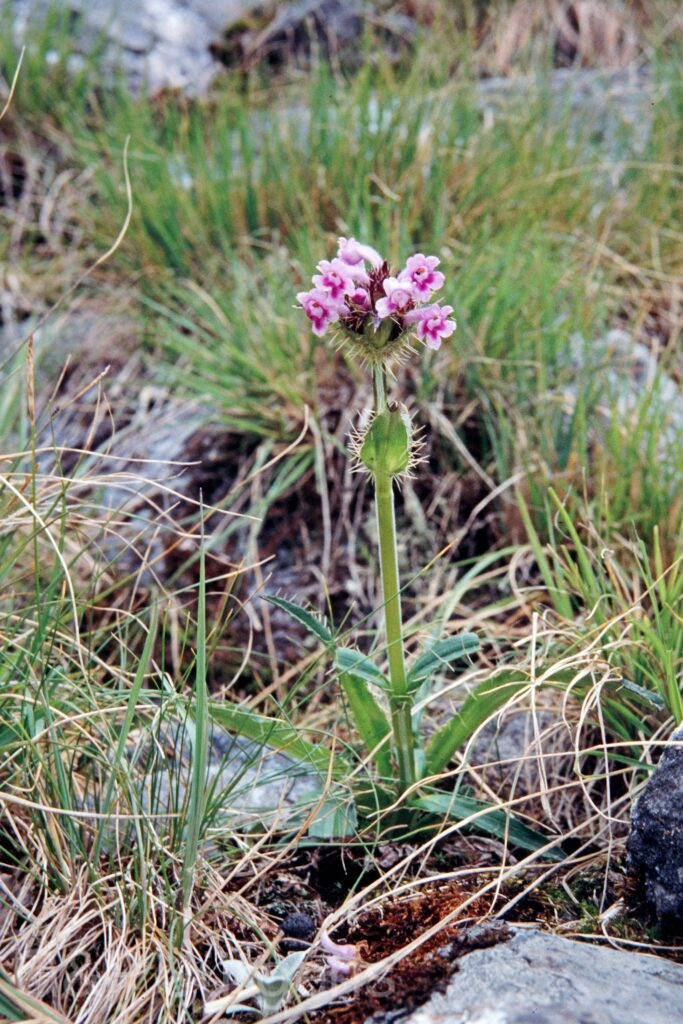
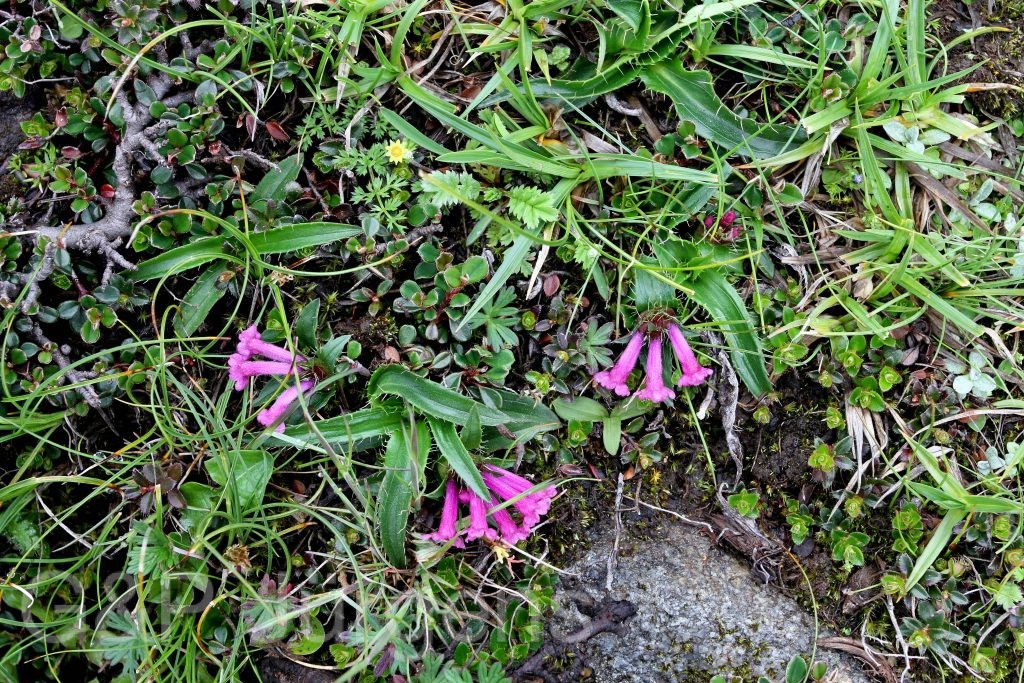
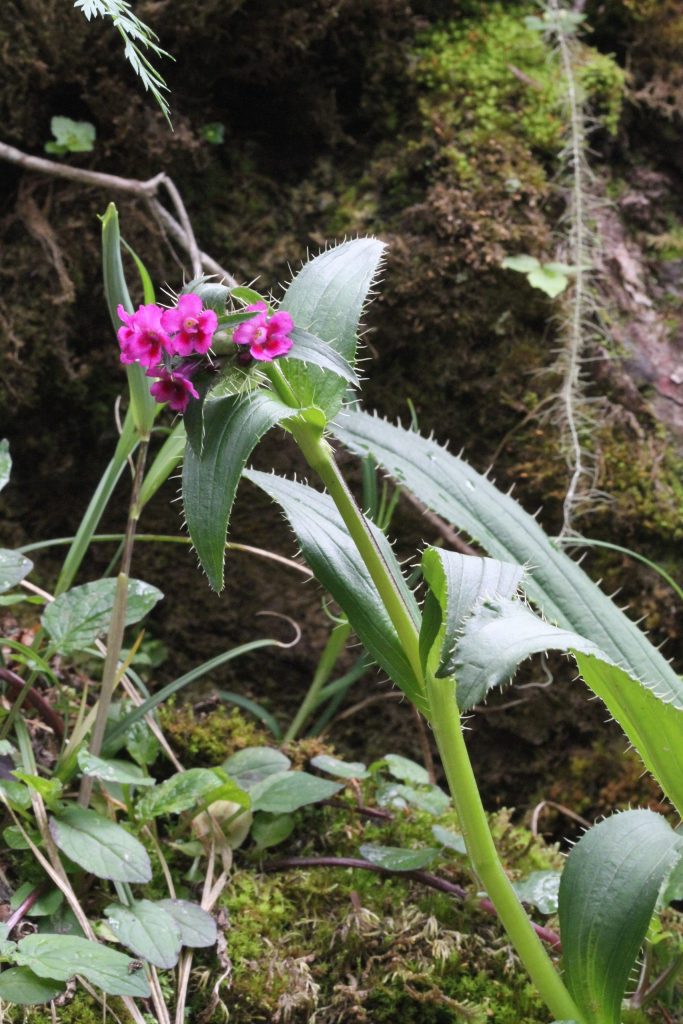
D. Don

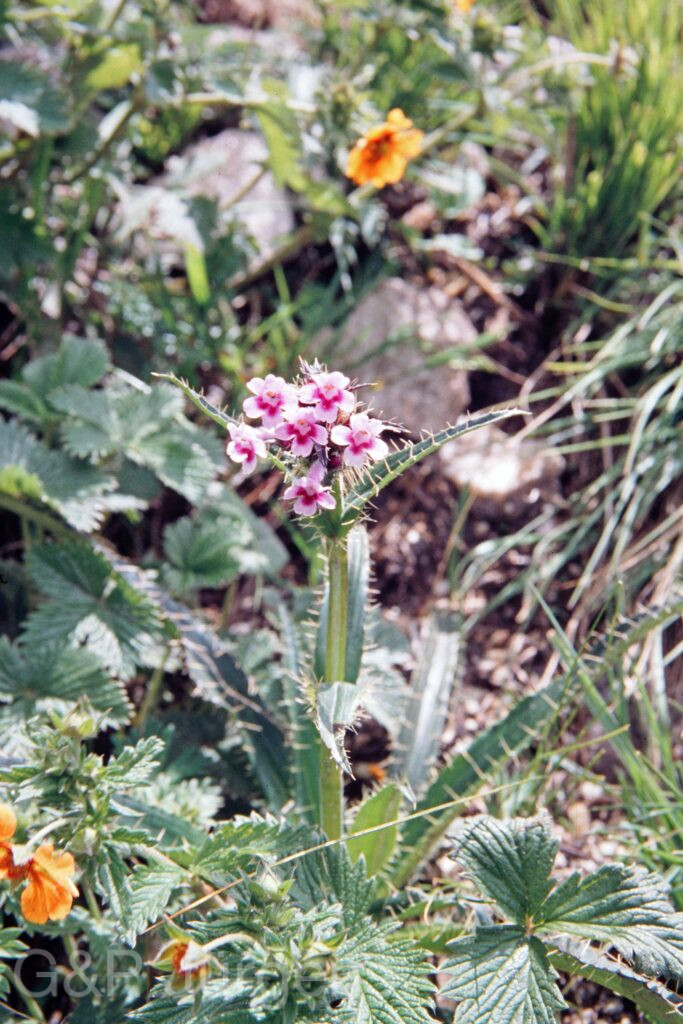
Nepal 99 277 ergebnis
West-Nepal Kalomura 3900m, June
Nepal 99 276 ergebnis
West-Nepal Kalomura 3900m, June

Description

Morina nepalensis is a high-mountain perennial of the Sino-Himalayan region, ranging through China, Nepal, India, Bhutan and Pakistan, with GBIF recording 239 occurrences across this arc. It inhabits open alpine pastures, grassy slopes, rocky meadows and shrubby hollows above the treeline, typically between about 3000 and 4500 m. The illustrated plants were photographed in West Nepal at Kalomura at 3900 m and in Bhutan on the Ludlow-Sherriff Trail near Warrtlang-La at 4450 m, both in June, exemplifying the subalpine to alpine turf where the species is most frequent during the early summer flush.

The plant forms a stout rosette from a thick taproot, the basal leaves narrowly oblong to lanceolate, sessile or amplexicaul and conspicuously armed along the margins with stiff spinose teeth. The flowering stem is erect, terminating in interrupted whorls of flowers subtended by spiny pinnatifid bracts. Each flower sits within a tubular involucel and a two-lipped calyx; the corolla is gamopetalous, curved and white to pink, often deepening to rose with age, with a slender tube and five spreading lobes. There are two fertile stamens and a single inferior ovary maturing into an achene enclosed by the persistent involucel.

Long placed in the segregate family Morinaceae, the genus Morina is now subsumed within an expanded Caprifoliaceae, consistent with the input family. POWO and GBIF treat M. nepalensis as the accepted name. The colour change of the corolla after pollination is a notable floral signal, and the species contributes to the showy alpine herbfields grazed by Himalayan livestock.

Author: D. Don · Sources: POWO (Kew), GBIF, Flora of China, Flora of Bhutan, Annotated Checklist of the Flowering Plants of Nepal, Revision of Morinaceae (Dipsacales monograph)

Wall. ex DC.

Nepal 99 354 ergebnis
West-Nepal Kalmura 3800m, June
Nepal 99 355 ergebnis
West-Nepal Kalmura 3800m, June
Sikkim2003 371 P520
Sikkim Lachen Tista valley 3600m August

Description

Morina polyphylla is a Himalayan high-altitude herb recorded from Nepal, northern India and Bhutan, with roughly 54 documented occurrences. It inhabits open subalpine to alpine meadows, rocky slopes and grazed pasture, generally between about 3300 and 4200 m. The collections illustrated here, from Kalmura in West Nepal at 3800 m in June and from the Tista valley above Lachen in Sikkim at 3600 m in August, span the early and late monsoon flowering periods and typify its preference for moist, well-drained turf and stony ground in full sun above the treeline.

It is a stout perennial forming a basal rosette of numerous narrowly oblong to lanceolate leaves whose margins are pinnately lobed and armed with stiff spinescent teeth, the texture rigid and the surfaces often shining. The erect flowering stem bears whorls of flowers subtended by spiny floral bracts arranged in interrupted verticillasters. Each flower has a tubular, oblique calyx and a slender-tubed, curved corolla that is two-lipped, typically pale to deep pink or whitish, the long tube adapted to long-tongued pollinators. There are usually two fertile stamens; the inferior ovary ripens into a single-seeded achene enclosed by the persistent involucel.

GBIF treats the name as a synonym, with Morina polyphylla retained as the accepted name; the species belongs to the Morinoideae, now placed within an expanded Caprifoliaceae. Its spiny, thistle-like architecture deters grazing in heavily pastured alpine zones, and the protandrous, long-tubed flowers favour cross-pollination by bumblebees and lepidopterans. The species remains widespread across its montane range with no recognised conservation threat.

Author: Wall. ex DC. · Sources: POWO (Kew), GBIF, Flora of Bhutan Vol. 2, Flora of Nepal, Flora of China Vol. 19, A Taxonomic Revision of the Morinaceae

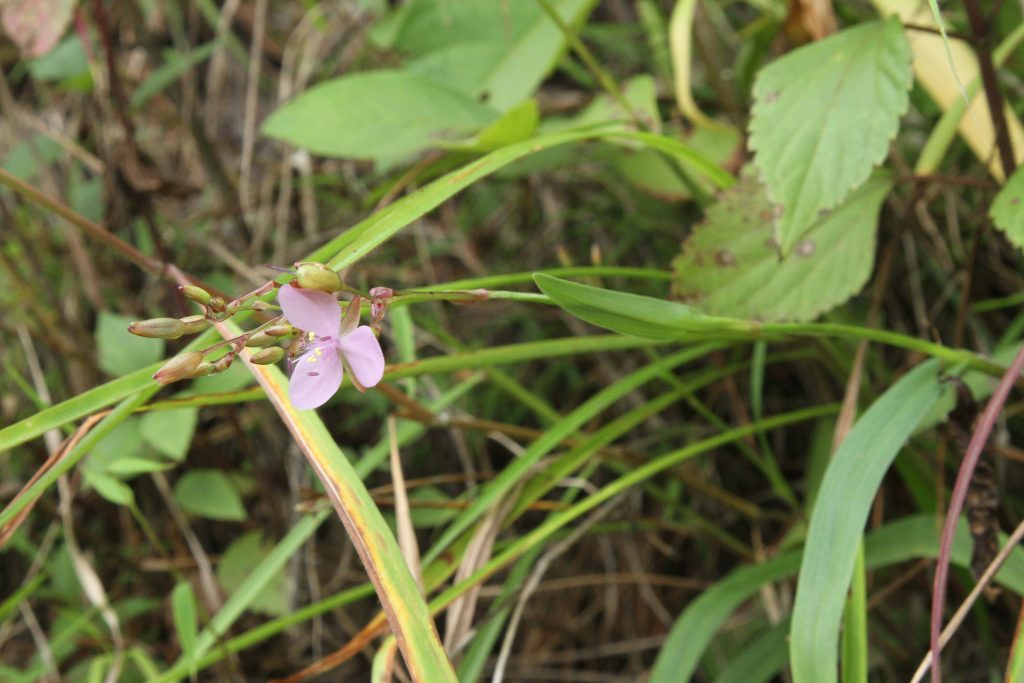
(G.Brückn.

Bhutan2012 426
Bhutan Wangdi 2700m, September

Description

Murdannia divergens (G.Brückn.) Faden ex D.Y.Hong is a dayflower relative widely distributed across tropical and subtropical Asia, recorded by GBIF from China, India, Taiwan, Nepal, Myanmar, Thailand, Vietnam, Bhutan and Laos, with over 500 occurrences. It grows in damp grassland, open forest, scrub, marshy ground and along streamsides, lowland to montane. The Bhutanese material from Wangdi at 2700 m in September reflects its occurrence well into the temperate zone and its late-monsoon flowering, when soil moisture supports the succulent growth typical of the family.

It is a perennial or sometimes annual herb with fleshy roots and ascending to decumbent stems rooting at the lower nodes. The leaves are alternate, linear to linear-lanceolate, sheathing at the base in the manner of the Commelinaceae, with parallel venation. The inflorescence is a terminal, often divergently branched (as the epithet suggests) thyrse, the flowers actinomorphic with three free, ephemeral blue to violet or pinkish-mauve petals and bearded stamens with staminodes, typically three fertile. Each flower lasts a single day; the fruit is a small three-locular loculicidal capsule releasing few rugose seeds.

Murdannia, segregated from Aneilema and Commelina, comprises herbs of seasonally wet ground, and M. divergens belongs to its montane-adapted members. Its day-lasting flowers are pollinated by small bees and hoverflies attracted to the stamen hairs and pollen-presenting anthers. The wide Asian range and ecological flexibility of the species make it common in seasonally moist habitats; it is not threatened, though its dependence on wetland margins links local abundance to monsoon hydrology.

Author: (G.Brückn. · Sources: POWO (Kew), GBIF, Flora of China Vol. 24, Flora of Bhutan Vol. 3, Flora of Nepal, Faden revisions of Asian Commelinaceae