Author

G & P Jürgens

(L.) Spreng.

Bhutan2014 150
Bhutan Trashigang 2000m, May
Bhutan2014 236
Bhutan Trashigang 2000m, May

Description

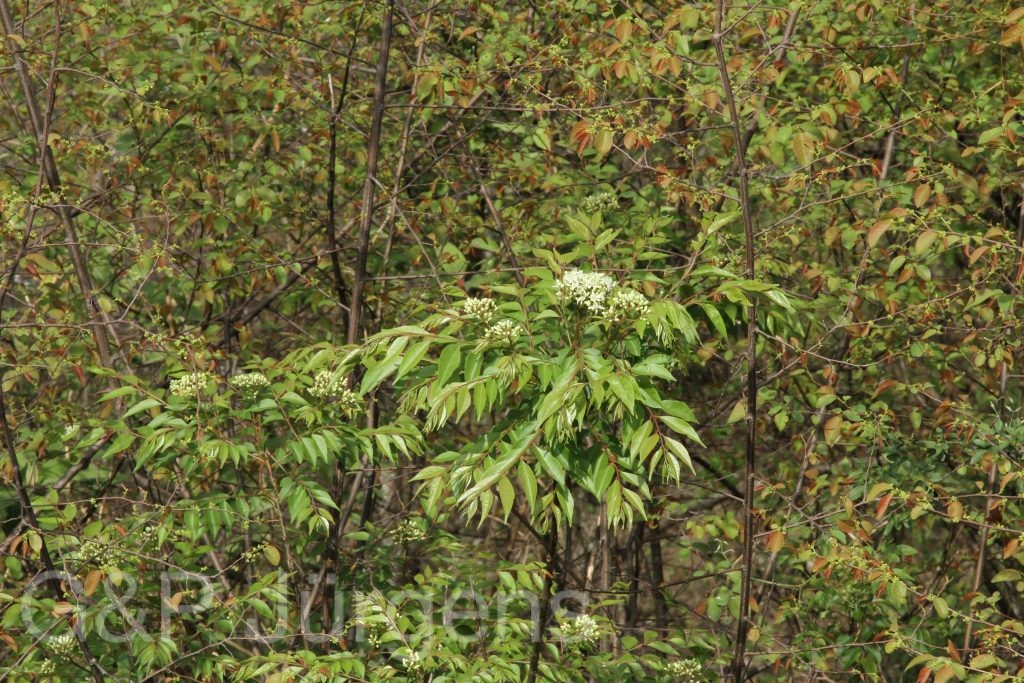
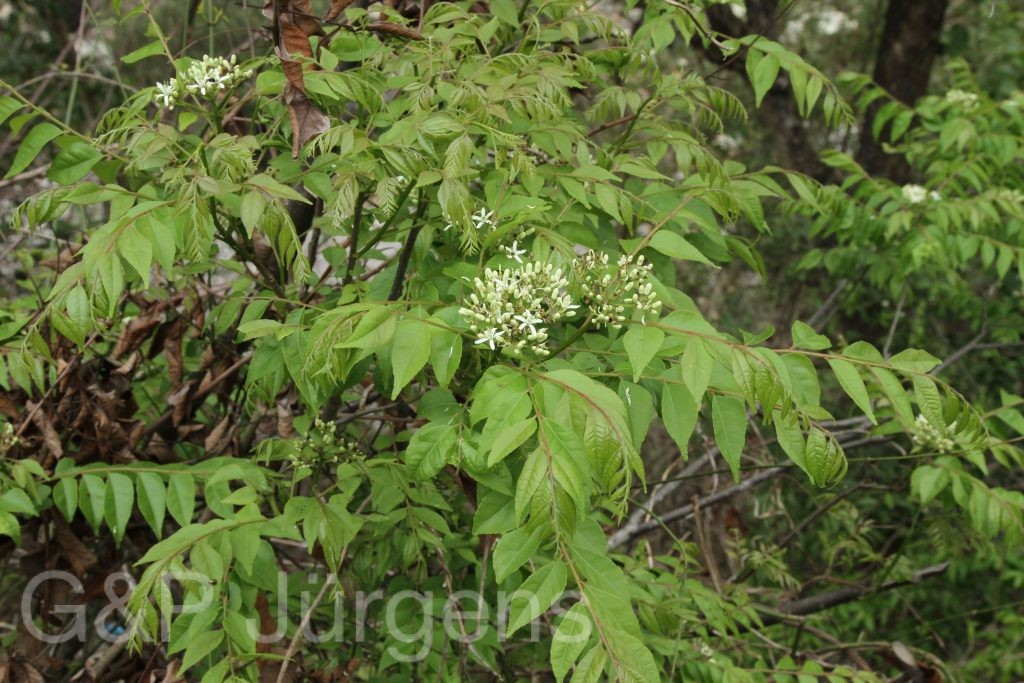
Murraya koenigii, the curry-leaf tree, is native to the Indian subcontinent and Indo-China and is now pantropically cultivated and naturalised, reflected in its very wide GBIF distribution spanning India, Sri Lanka, Nepal, Bhutan, China, Southeast Asia, Australia, Africa and the Americas. In its native range it grows in subtropical deciduous and semi-evergreen forest, scrub, forest margins and as an escape near settlements, from the plains up to about 1600 m, occasionally higher. The photographed plant from Trashigang in eastern Bhutan, at roughly 2000 m and flowering in May, sits near the upper limit of its altitudinal range in warm, sheltered hill forest.

The species is a small, aromatic, much-branched shrub or tree with thin grey to brownish bark. The leaves are alternate, imparipinnate, with numerous ovate-lanceolate, oblique-based, crenulate leaflets that are strongly aromatic when crushed and gland-dotted, as throughout the Rutaceae. The flowers are borne in terminal corymbose panicles, small, white, fragrant and bisexual, with five petals, ten stamens and a superior ovary. The fruit is a small ellipsoid to ovoid berry ripening from green through red to glossy black, with thin sweetish pulp and usually one or two seeds; the seeds are notably recalcitrant.

The genus commemorates the Swedish physician J. A. Murray, and the species epithet honours Johann Gerhard König. The plant is of great economic and culinary importance, its leaves indispensable in South Asian cuisine, and it is widely valued in traditional medicine. Its gland-dotted, essential-oil-rich foliage typifies the Rutaceae, and bird-dispersed berries account for its frequent escape and naturalisation; it is abundant and of no conservation concern.

Author: (L.) Spreng. · Sources: POWO (Kew), GBIF, Flora of China Vol. 11, Flora of Bhutan Vol. 1, Flora of Nepal, A Monograph of the Genus Murraya (Rutaceae)
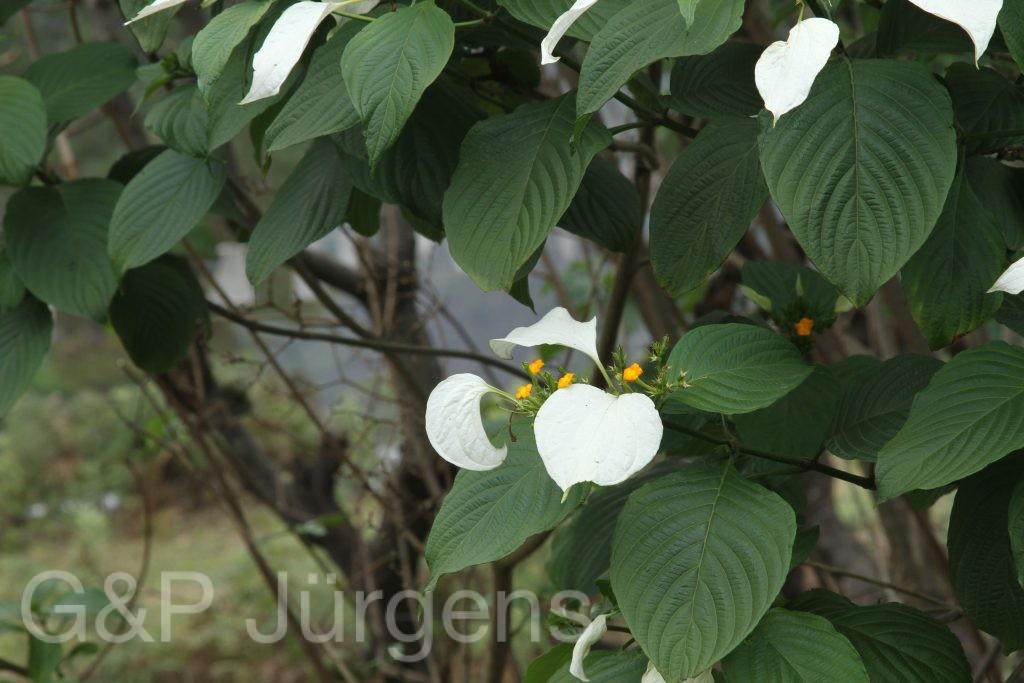
Hook.f.

Bhutan2014 279
Bhutan Trithangebe near a farmhouse 700m, May
Bhutan2014 281
Bhutan Trithangebe near a farmhouse 700m, May
Bhutan2014 282
Bhutan Trithangebe near a farmhouse 700m, May

Description

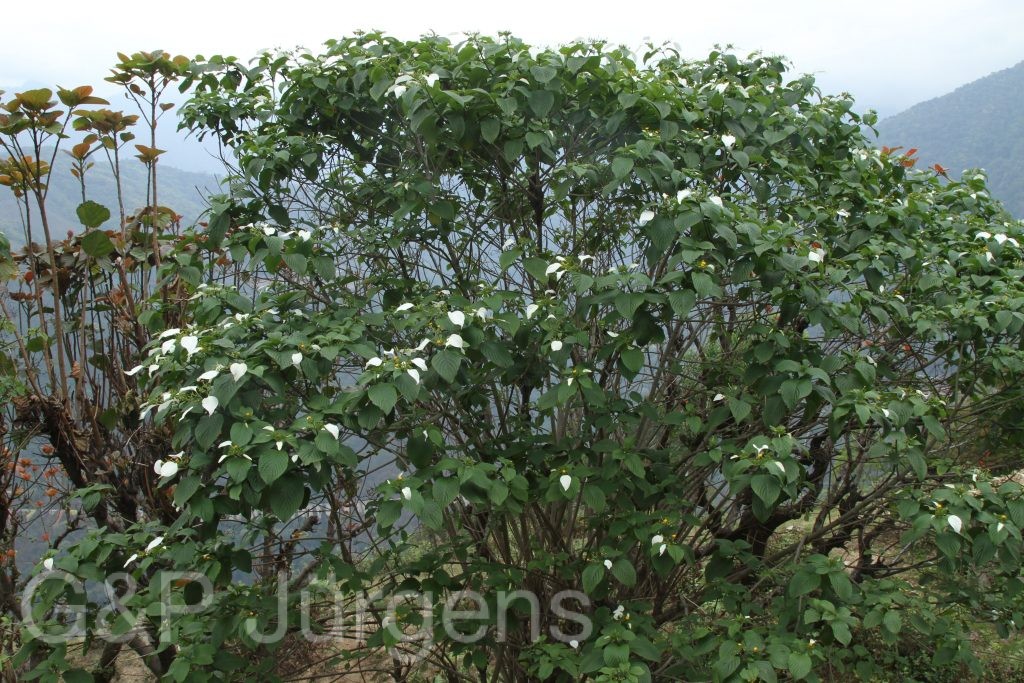
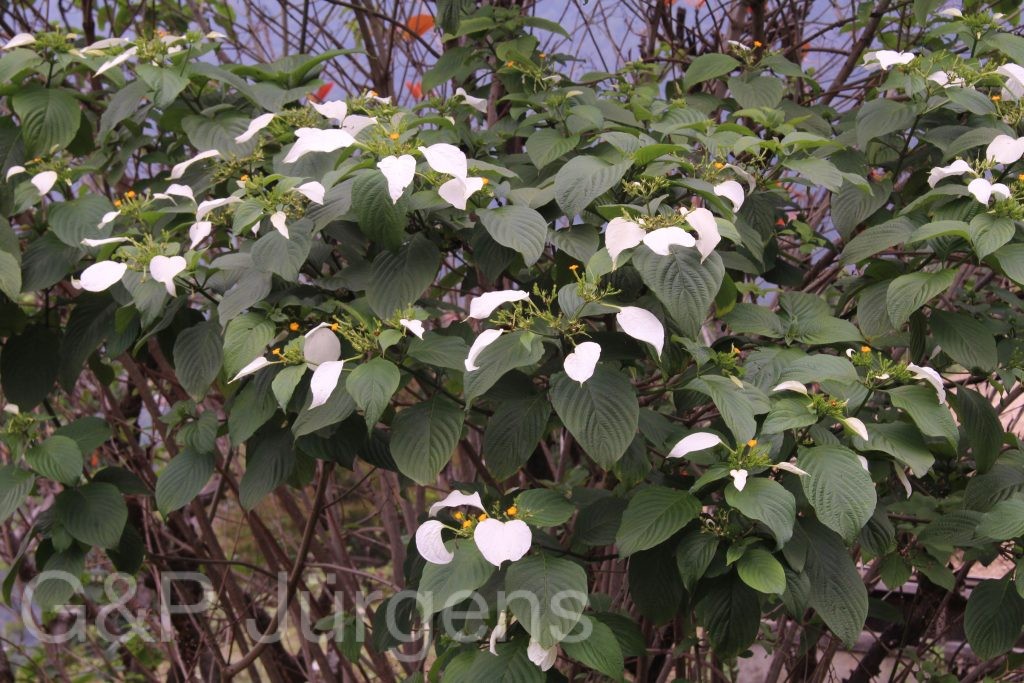
Mussaenda roxburghii is a shrub of the eastern Himalayan and Indo-Burmese lowlands and foothills, ranging across India, Nepal, Bhutan, Bangladesh and Myanmar; GBIF logs some 145 occurrences including a few cultivated records farther afield. It grows in warm subtropical hill forest, along forest margins, stream banks, roadside thickets and clearings, generally from near sea level to about 1500 m. The photographed individual grows in Bhutan at Trithangebe beside a farmhouse at around 700 m in May, a typical habitat for this species, which thrives in the humid pre-monsoon warmth of the lower hills near villages.

The species is an erect to scrambling shrub with terete, finely pubescent young branches. The leaves are opposite, ovate to elliptic, acuminate, entire and softly hairy beneath, with interpetiolar stipules. The inflorescence is a terminal corymbose cyme of numerous small flowers; its most striking feature is the enlargement of a single calyx lobe of certain flowers into a large, white, leaf-like petaloid bract advertising the inflorescence. The fertile flowers have a narrowly tubular orange to yellow corolla with five spreading lobes and a hairy throat. The fruit is a small fleshy berry crowned by the persistent calyx and containing minute seeds.

Mussaenda roxburghii Hook.f. exemplifies the genus's showy semaphylls, the expanded white calyx lobes that aid pollinator attraction and recur across tropical Rubiaceae. Widespread and locally common through the Indo-Himalayan foothills, it is not regarded as threatened and persists in secondary vegetation. Related Himalayan congeners such as M. treutleri are sometimes confused with it, and the group remains a focus of regional taxonomic study.

Author: Hook.f. · Sources: POWO (Kew), GBIF, Flora of Bhutan, Flora of British India, taxonomic revisions of Mussaenda (Rubiaceae)

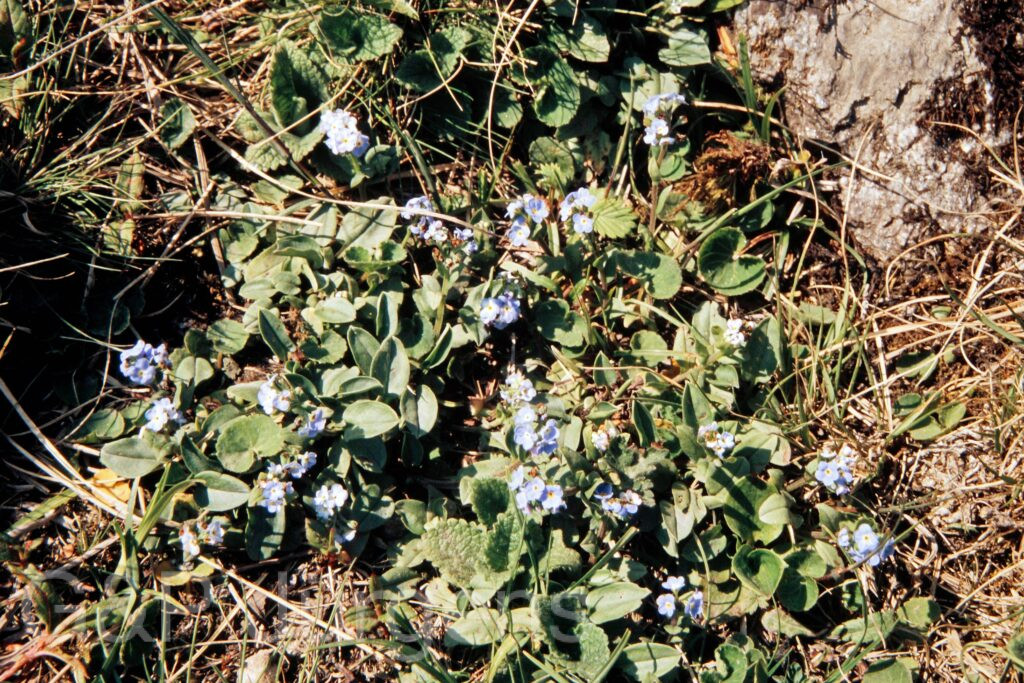
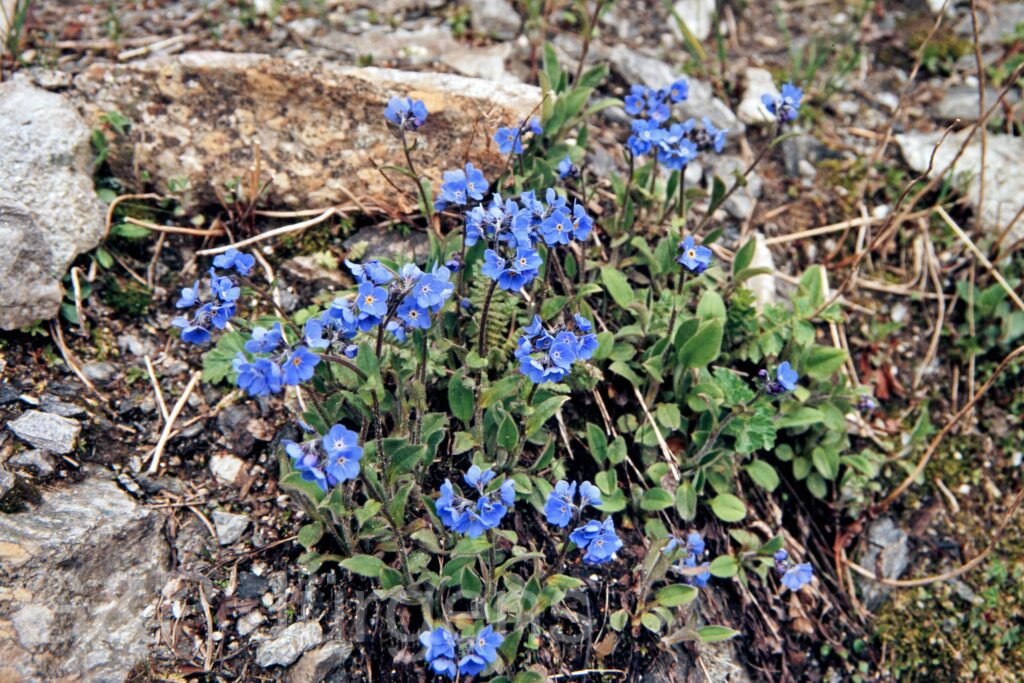
Hoffm.

Garh 07 196 ergebnis
India Garhwal Panwali 3250m, June
Garh 07 391 ergebnis
India Garhwal Kia-Kutti 3950m, June

Description

Myosotis sylvatica, the wood forget-me-not, is a widespread temperate herb whose native core lies across Europe and western Asia, with very large GBIF representation (over 171,000 records) from Britain, Germany, France, Scandinavia and the Alpine countries, plus naturalised populations in North America, Australia and New Zealand. In the western Himalaya it occurs as a montane element, as shown by the Garhwal collections at Panwali around 3250 m and Kia-Kutti near 3950 m, both in June. There it grows in moist meadows, along streamsides and on grassy alpine slopes, favouring cool, humus-rich soils with reliable seasonal moisture.

The plant is a softly hairy biennial or short-lived perennial forming a basal rosette from which arise erect to ascending leafy stems. The lower leaves are oblanceolate and stalked, the upper sessile and oblong. The inflorescence is the characteristic scorpioid cyme of the genus, uncoiling as the flowers open. Each flower has a five-lobed hairy calyx and a salverform corolla with a short tube and flat, usually sky-blue limb of five rounded lobes, the throat closed by yellow scales. The gynoecium develops into four smooth, shining, dark nutlets seated on the persistent calyx.

Myosotis is a taxonomically intricate genus in which M. sylvatica is distinguished from the annual field forget-me-nots by its larger, flat-faced flowers and from M. scorpioides by its drier habitats and hooked-haired calyx. Widely grown as a cottage-garden ornamental, it self-seeds freely and has escaped cultivation across several continents. The species is globally secure and of least concern, its abundance contrasting with the restricted ranges of many Himalayan congeners.

Author: Hoffm. · Sources: POWO (Kew), GBIF, Flora of China Vol. 16, Flora of Pakistan, Flora of Nepal, Flora Europaea (Tutin et al.)

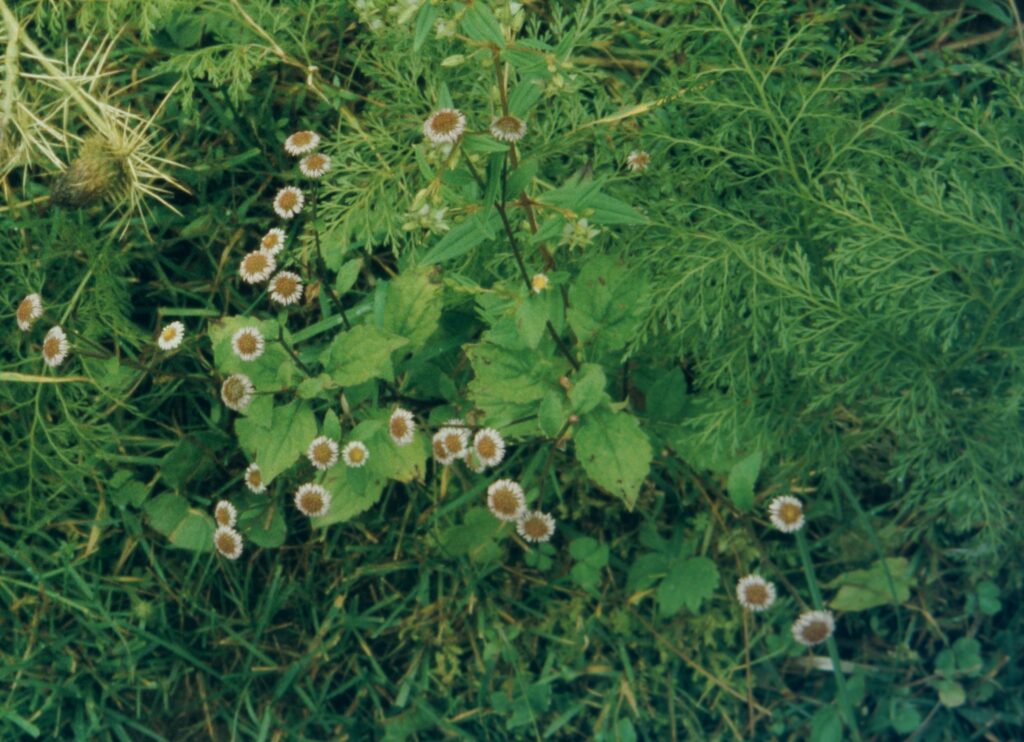
Less.

Garw 2005 77
India Garhwal Auli-Gaushon 3100m, October

Description

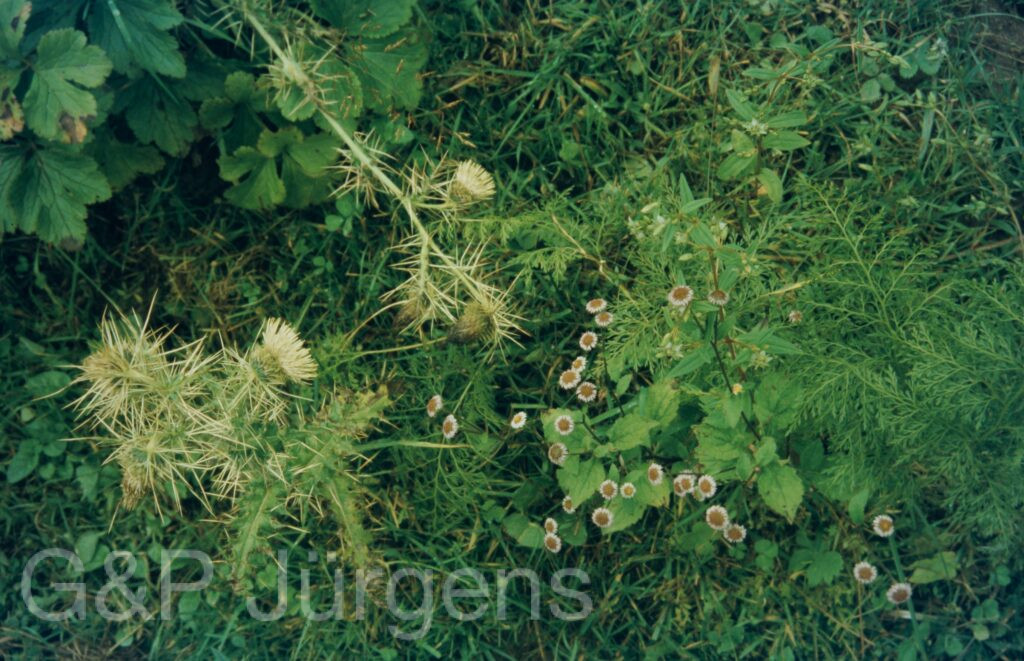
Myriactis nepalensis is an annual or short-lived perennial herb in the daisy family, widespread across the Himalayas from Pakistan through Nepal, India (Sikkim, Garhwal), and Bhutan to southwest China. It thrives in moist forest margins, shady banks, and disturbed ground at 1,500–3,500 m elevation.

The plant grows 15–60 cm tall with erect, branching stems. Leaves are alternate, ovate to broadly lanceolate, coarsely toothed, and softly hairy. The small flower heads (5–8 mm across) are borne in loose terminal clusters, with white ray florets surrounding yellow disc florets. Flowering occurs from August to November.

Often overlooked due to its small flower heads, Myriactis nepalensis plays an important ecological role as a late-season nectar source for pollinators at high elevations.

Author: Less. · Sources: POWO (Kew), Flora of Nepal Checklist, GBIF

Grierson & D.G. Long

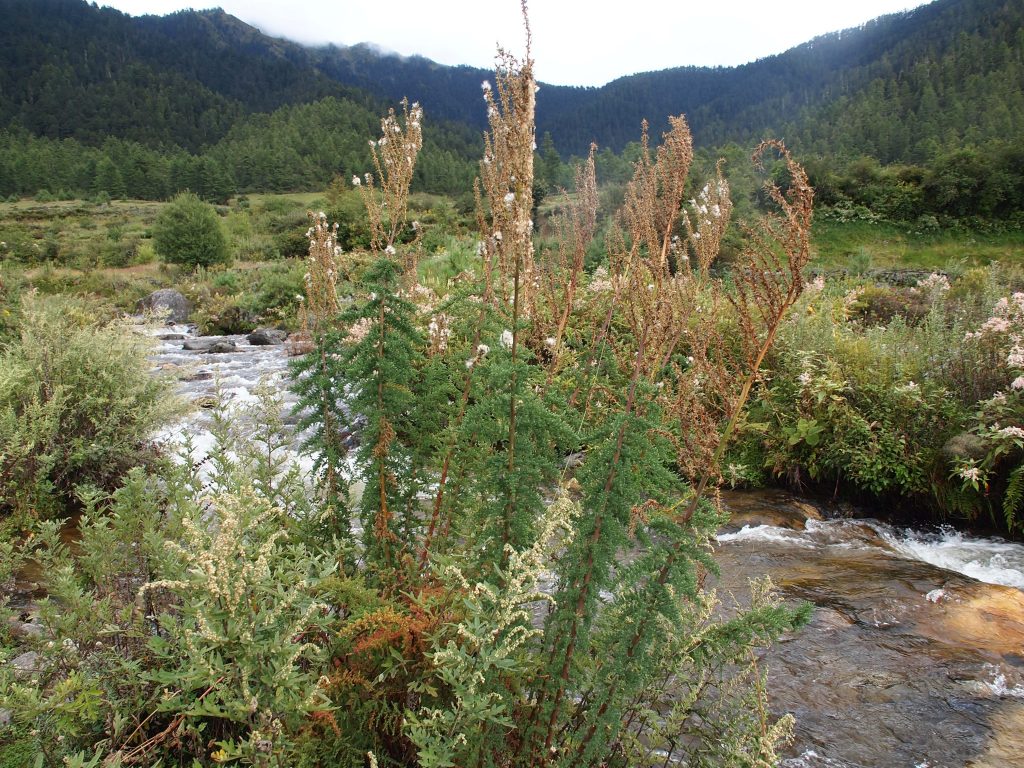
Bhutan2012 206
Bhutan Haa-valley 3000m, September

Description

Myricaria albiflora Grierson & D.G. Long is a narrowly distributed shrub of the Tamaricaceae, known only from the eastern Himalaya in Bhutan and immediately adjacent India, where GBIF holds just 13 georeferenced records, underscoring its restricted range and rarity. Like other members of the genus it is a riparian specialist, colonising open gravel and shingle bars, sandy braided riverbeds, moraine and the stony margins of high mountain streams, habitats that are periodically disturbed by flooding and ice. The photographed plant from the Haa valley in western Bhutan at about 3,000 m in September lies within its subalpine river-valley habitat, where it flowers and fruits in the latter part of the growing season.

It is a low, much-branched deciduous shrub with slender reddish wand-like branchlets densely clothed in small, sessile, scale-like to narrowly lanceolate leaves arranged in spirals, giving the twigs a tamarisk-like, heath-like aspect. The flowers are borne in dense terminal racemes; each has five sepals and, distinctively for this species, five white (rather than the usual pink to purplish) petals, with the filaments of the stamens connate below into a tube. The superior ovary matures into a slender three-valved capsule releasing numerous minute seeds tipped with a tuft of long white hairs (a coma) that aids wind dispersal.

The genus Myricaria comprises riverine shrubs of Eurasian mountains closely allied to Tamarix, distinguished by their partly fused stamens and comose seeds. M. albiflora was described as a Bhutanese endemic for the Flora of Bhutan and is defined chiefly by its white flowers. Given its very small known range and dependence on dynamic riverine habitats vulnerable to hydrological change, dam construction and gravel extraction, it warrants careful monitoring, though it has not been formally assessed.

Author: Grierson & D.G. Long · Sources: POWO (Kew), Flora of Bhutan Vol. 2, Flora of China Vol. 13, GBIF, Zhang & Zhang: Revision of Myricaria (Tamaricaceae) (2003)

W.W. Sm.

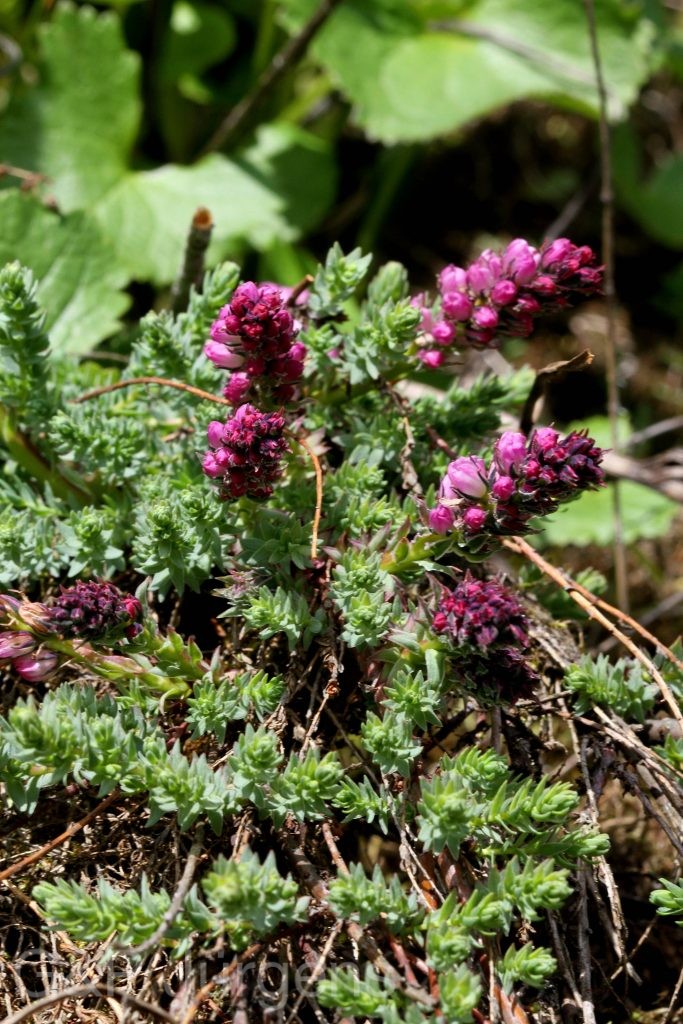
Sikkim2011 227
Sikkim Yumthang-Chu 3600m, September
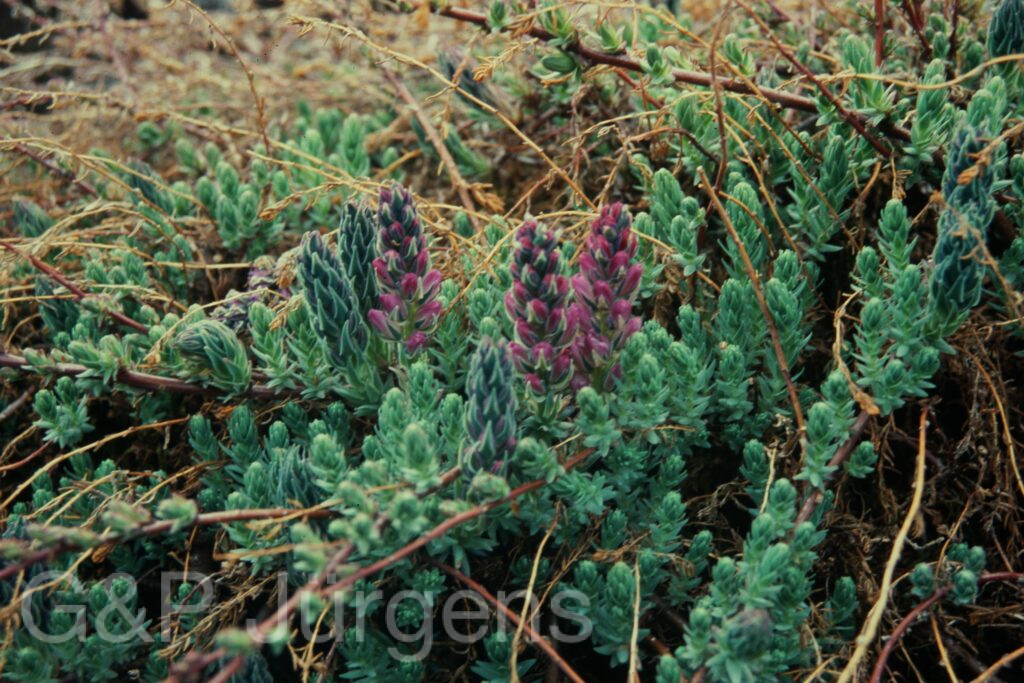
Sikkim2004 285 P498
Sikkim/India Dzongri 3900m May

Description

Myricaria rosea W.W.Sm. is a tamarisk-like shrub of the Tamaricaceae native to the eastern and central Himalaya and adjacent China. GBIF records, numbering 268 occurrences, place it in China, Nepal, India, Bhutan and Myanmar. The species is a riparian specialist of high-altitude valleys, colonising gravel bars, glacial outwash, moraine and the sandy margins of mountain streams, generally between 3,300 and 4,300 m. The illustrated plants from the Yumthang-Chu in Sikkim at 3,600 m in September and from Dzongri at 3,900 m in May span its flowering and fruiting seasons in the alpine and subalpine riverine zone.

The plant is a low, much-branched, decumbent to erect shrub with slender, reddish-brown, flexible branchlets. The leaves are small, sessile, scale-like to narrowly lanceolate, glaucous and densely overlapping along the twigs, an adaptation to the dry, exposed habitat. The flowers are borne in dense, terminal, spike-like racemes; each has five rose-pink to purplish petals, a five-parted calyx, and ten stamens whose filaments are connate at the base into a tube, a key character separating Myricaria from the related Tamarix. The fruit is a narrowly conical capsule splitting into three valves to release numerous tiny seeds, each crowned with a tuft of long, basally awned hairs that aids wind and water dispersal.

Myricaria comprises a small group of Central Asian and Sino-Himalayan shrubs of disturbed, unstable riparian and glacial substrates, and M. rosea is one of the distinctly pink-flowered eastern Himalayan members. Ecologically these shrubs are important pioneer colonisers that stabilise braided river gravels and moraine, providing early successional cover; their dependence on natural flood and sediment regimes makes them sensitive to hydrological alteration of high mountain rivers.

Author: W.W. Sm. · Sources: POWO (Kew), GBIF, Flora of China Vol. 13, Flora of Bhutan Vol. 2, Flora of Nepal, Zhang & Zhang: A taxonomic revision of Myricaria (Tamaricaceae)

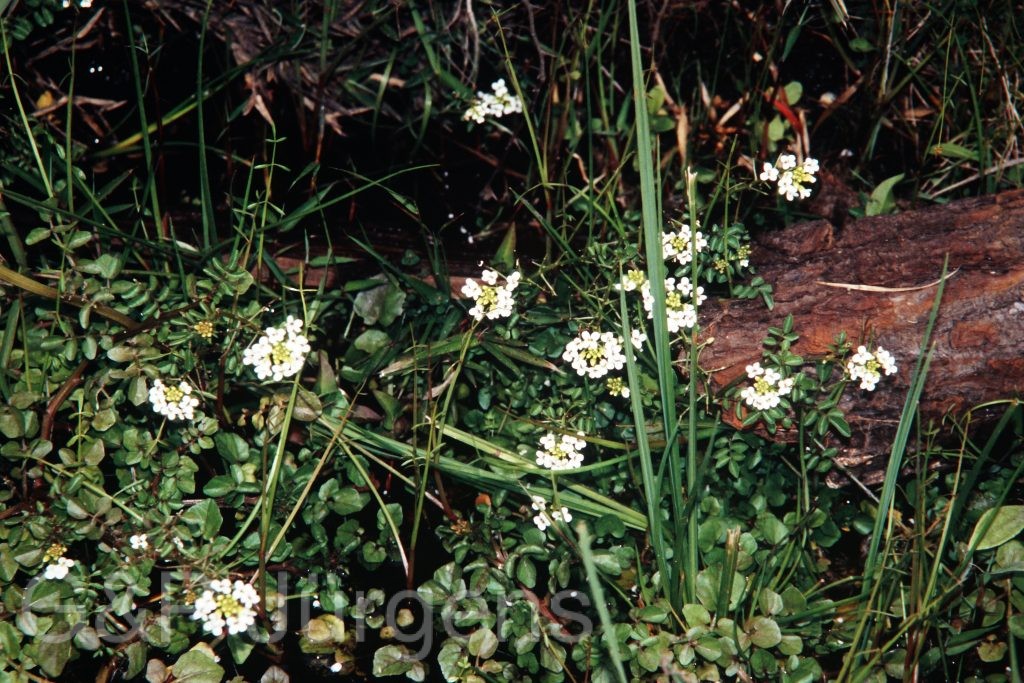
R.Br.

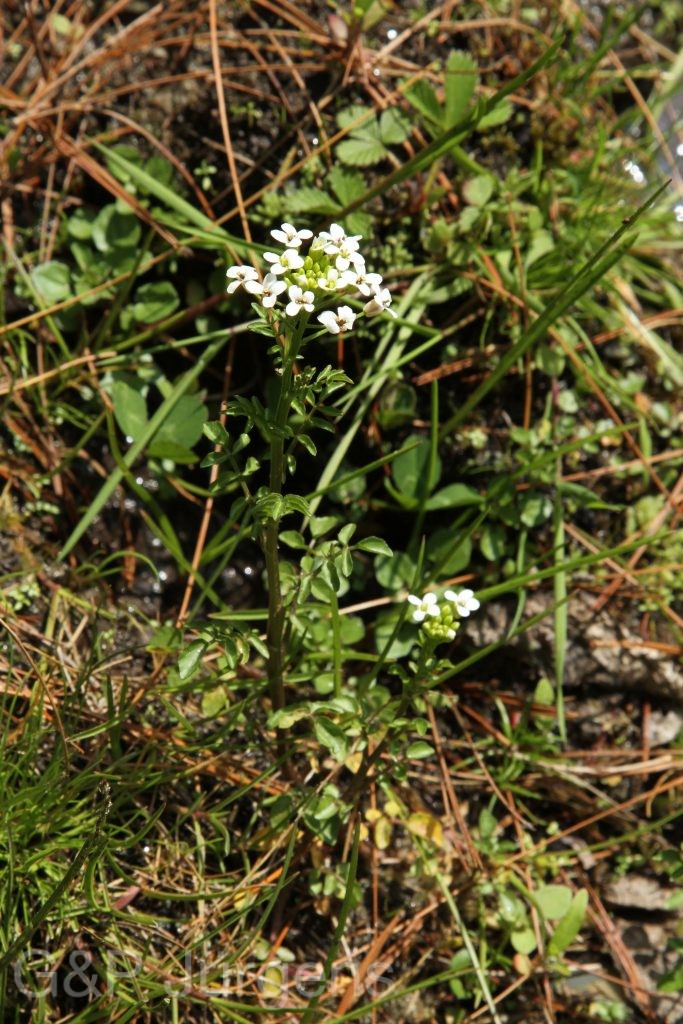
Bhutan2014 845
Bhutan Thimphu 2500m, May
Bh09 253 G421
Bhutan Phobjika, 2900m June

Description

Nasturtium officinale R.Br., the common watercress, is a cosmopolitan aquatic to semi-aquatic perennial native to Europe and western Asia but now naturalised almost worldwide, as the GBIF total of over 150,000 occurrences across the United Kingdom, France, Iberia, central Europe, North and Central America, New Zealand, Australia, Japan and beyond attests. It grows in clean, slow-flowing or still fresh water: streams, ditches, springs, flushes and the muddy margins of ponds, typically on base-rich substrates. In the Himalaya it occurs as an established member of the aquatic flora, the illustrated plants having been recorded at Thimphu in Bhutan at 2500 m in May and at Phobjika at 2900 m in June, where it colonises cool montane watercourses and irrigation channels.

The plant is a glabrous, succulent perennial with hollow, ascending to procumbent stems that root freely at the lower nodes and often float. The leaves are pinnately compound with one to several pairs of ovate to oblong lateral leaflets and a larger, rounded, often cordate terminal leaflet, the margins entire to sinuate. The inflorescence is a terminal raceme of small white flowers, each with four sepals, four clawed white petals arranged in the cruciform pattern typical of the mustard family, and six tetradynamous stamens with yellow anthers. The fruit is a slender, slightly curved cylindrical silique borne on a spreading pedicel, containing two rows of small reticulate seeds in each locule.

Long cultivated as a leaf vegetable for its peppery, vitamin-rich foliage, watercress has been carried far beyond its natural range and is a frequent naturalised escape. It hybridises with the related Nasturtium microphyllum to form the sterile N. × sterile, and the genus is now firmly distinguished from the unrelated garden "nasturtium" (Tropaeolum). Ecologically it is a bioindicator of relatively unpolluted, well-oxygenated water and provides cover and food for aquatic invertebrates. Globally it is of least concern; indeed in some regions it behaves as an aggressive coloniser of waterways rather than a species at risk.

Author: R.Br. · Sources: POWO (Kew), GBIF, Flora of China, Flora Europaea, Brassicaceae of the World (Al-Shehbaz)

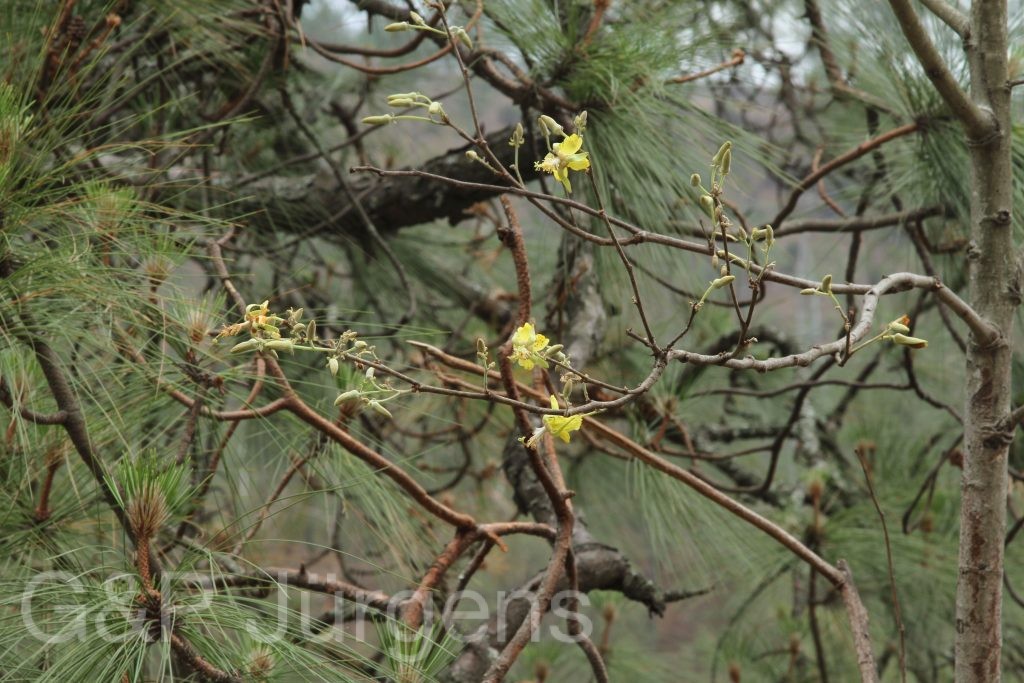
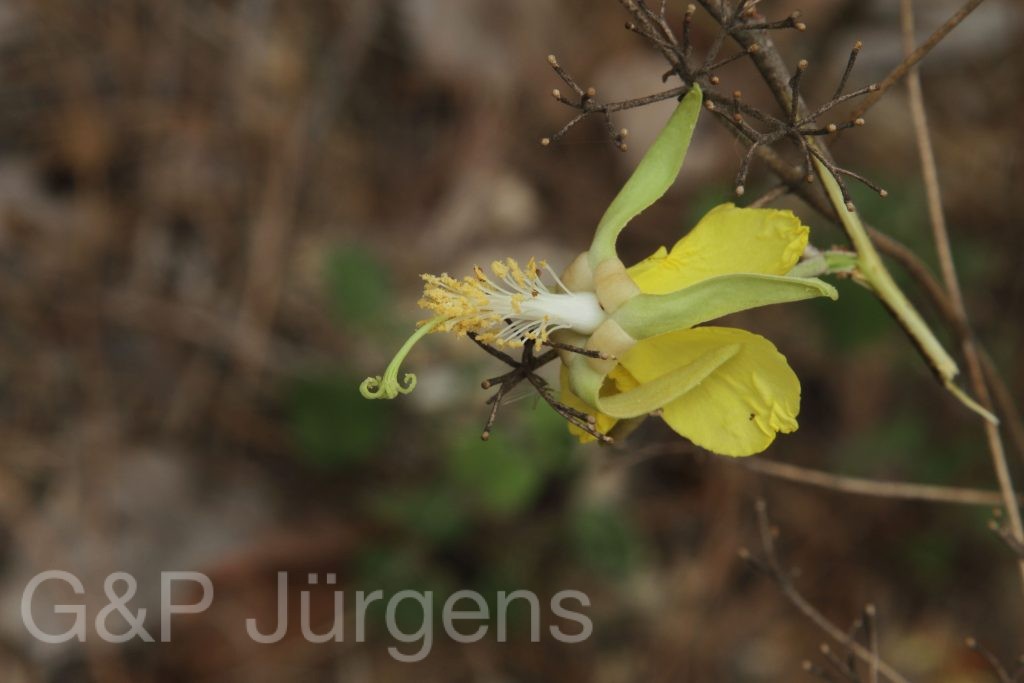
(Griff.) D.G. Long & A.G. Mill.

Bhutan2014 257
Bhutan Karu-Chu 1800m, May
Bhutan2014 258
Bhutan Karu-Chu 1800m, May

Description

Nayariophyton zizyphifolium is a little-collected shrub of the Eastern Himalayan foothills and adjacent Indo-Burmese region, known from a modest 45 georeferenced records concentrated in India (IN), Nepal (NP) and Bhutan (BT), with a peripheral occurrence in Thailand (TH). It is a plant of warm subtropical to lower temperate valleys and hill slopes, occurring in open forest, scrub and on rocky banks at low to middle elevations. The plant photographed at Karu-Chu in Bhutan at about 1800 m in May reflects this warm, sheltered river-valley habitat, well below the alpine flora and typical of the species' restricted foothill range. Under the name used here GBIF treats the record as a synonym, with Nayariophyton zizyphifolium itself standing as the currently accepted name.

It is an erect, somewhat woody shrub with stellate-pubescent young branches. The leaves are alternate, ovate to broadly elliptic with a serrate margin and a three-veined base, recalling the foliage of Ziziphus, from which the specific epithet zizyphifolium derives; they are clothed, especially beneath, with stellate hairs typical of the Malvaceae. The flowers are axillary, subtended by an epicalyx, with five sepals and five petals in the usual mallow arrangement and a column of fused stamens surrounding the style. The fruit is a schizocarpic, several-segmented mericarp characteristic of the genus, the dry segments separating at maturity.

Nayariophyton (Malvaceae) is a small, taxonomically isolated genus of the Eastern Himalaya, and the combination here reflects the revisionary work of D.G. Long and A.G. Miller for the Flora of Bhutan. Its scant collection record and narrow foothill distribution make it of biogeographic interest as an element of the Indo-Himalayan endemic flora. Given its limited known range and the conversion of low-elevation valley habitat, the species warrants attention from a conservation standpoint, though it has not been formally assessed.

Author: (Griff.) D.G. Long & A.G. Mill. · Sources: POWO (Kew), GBIF, Flora of Bhutan, Flora of British India, Long and Miller revision of Eastern Himalayan Malvaceae

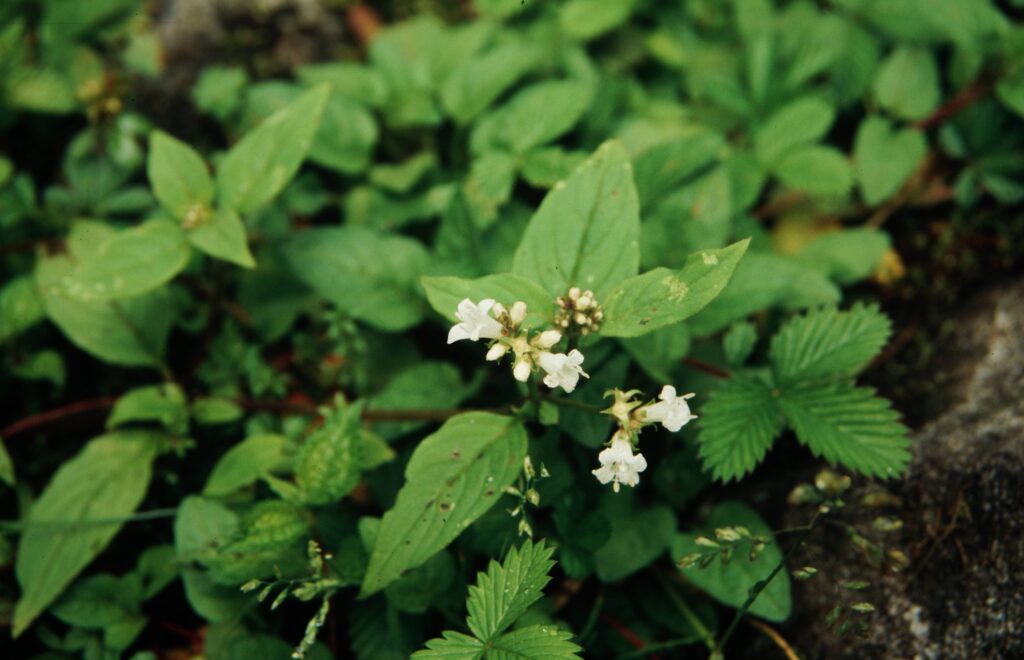
(L.f.) W.H.Lewis

Sikkim 2006 467 ergebnis
India West-Bengal, Ruigi-Chu 2000m, May

Description

Neanotis hirsuta (L.f.) W.H.Lewis is a slender herbaceous member of the Rubiaceae with a remarkably broad Asian-Pacific distribution, recorded from India, Nepal, Bhutan, Pakistan and Sri Lanka eastwards through China, Taiwan, Japan and Korea, across Southeast Asia (Myanmar, Thailand, Vietnam, Malaysia, Indonesia, Philippines) to New Guinea and the Solomon Islands; with over 2,700 georeferenced occurrences it is among the more frequently collected species in this group. It grows in moist, shaded situations on forest floors, along streambanks, on damp rocks and trail margins and in disturbed grassy ground. The photographed plant from Ruigi-Chu in West Bengal at about 2,000 m in May reflects its presence in the humid mid-montane forests of the eastern Himalaya.

The species is a weak, creeping to ascending annual or short-lived perennial with slender, often hairy, four-angled stems that root at the lower nodes. The leaves are opposite, ovate to lanceolate, with interpetiolar stipules bearing fine bristles. Small flowers are borne in axillary and terminal clusters; each has a four-lobed calyx, a white to pale lilac funnelform corolla with four spreading lobes, four stamens and an inferior bilocular ovary. The fruit is a small didymous capsule that splits to release numerous minute angular seeds.

The genus Neanotis was segregated from Anotis and the broad Hedyotis–Oldenlandia complex by W. H. Lewis, and species delimitation within it remains intricate owing to subtle differences in habit and indumentum. Tolerant of disturbance, N. hirsuta often behaves as a pioneer of moist open ground and can be locally weedy. It is widespread and of no conservation concern.

Author: (L.f.) W.H.Lewis · Sources: POWO (Kew), Flora of China Vol. 19, Flora of Bhutan Vol. 2, GBIF, Lewis: Revision of the genus Neanotis (1966)

(DC.) Brouillet

Garw 2005 77 ergebnis ergebnis
India Garhwal Gaushon 3000m, September

Description

Neobrachyactis anomala is a Himalayan composite distributed from Pakistan and Iran eastward through India, Nepal, Bhutan and southern Tibet (China), with around 153 records in GBIF. It is a plant of disturbed and open montane to subalpine ground: rocky slopes, screes, riverbanks, fallow fields, roadsides and forest clearings, generally between about 2500 and 4000 m. The population photographed at Gaushon in Garhwal, India, at around 3000 m in September occupies this kind of late-season, semi-ruderal high-mountain habitat where the species sets seed before winter.

It is an annual or short-lived herb with erect, often branched stems bearing alternate, lanceolate to oblong leaves that are toothed or pinnately lobed and somewhat glandular or hairy. The small heads (capitula) are numerous, arranged in a leafy panicle, each with an involucre of narrow bracts. As the generic relationship to Brachyactis implies, the heads are disciform: the marginal florets are female, filiform and very shortly rayed or rayless, surrounding numerous yellowish bisexual disc florets. The fruit is a small flattened cypsela crowned by a pappus of fine bristles facilitating wind dispersal.

The species was long placed in Brachyactis and allied to Erigeron and Aster, but molecular phylogenetic work in the Astereae led Brouillet to transfer it to the segregate genus Neobrachyactis, reflected in its current author citation. Its annual, ruderal strategy and abundant wind-dispersed achenes suit it to colonising unstable and disturbed alpine terrain. It is widespread and locally common, and as a weedy pioneer it is under no conservation concern; if anything such opportunistic species may expand with increasing human disturbance of mountain landscapes.

Author: (DC.) Brouillet · Sources: POWO (Kew), GBIF, Flora of China, Flora of Pakistan, Annotated Checklist of the Flowering Plants of Nepal, Brouillet Systematics of North American Astereae