Tag:

Bhutan

Flowers of Bhutan — 1326 plant species documented across the Bhutanese Himalaya, from dense broadleaf and conifer forests to alpine scrub and meadows. Bhutan’s largely intact wilderness shelters an exceptional diversity of orchids, rhododendrons, primulas and Himalayan poppies, many of them regional endemics. Each species page includes a botanical description, distribution, habitat and flowering time, with the original photograph and its recorded altitude and locality.

L.

Bhutan2012 425
Bhutan Wangdi 2300m, June

Description

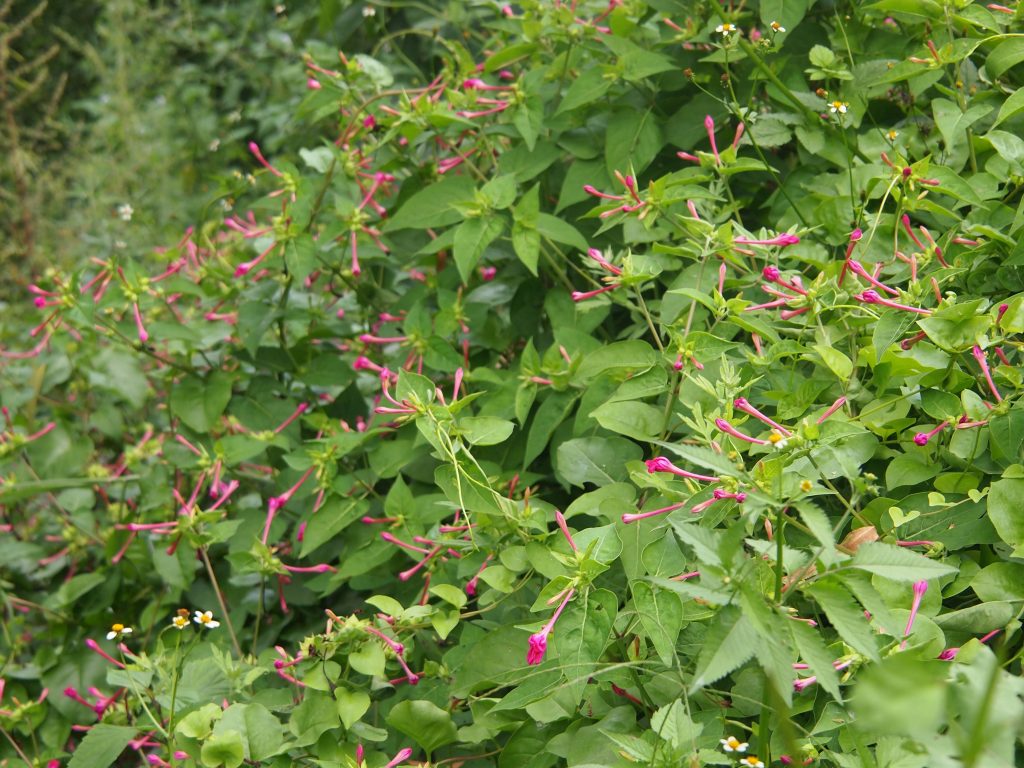
Mirabilis jalapa, the four-o'clock flower or marvel-of-Peru, is native to tropical America but is now cultivated and naturalised across virtually the entire warm and temperate world; GBIF's very large total of around 48896 records spans France, Spain, the United States, Mexico, Italy, Germany, Brazil, China, Japan, South Africa, India and many other countries, reflecting its ubiquity as an ornamental and garden escape. It thrives in disturbed, sunny habitats, including gardens, roadsides, walls, waste ground and village margins, and readily persists around human settlements. The plant photographed at Wangdi (Wangdue) in Bhutan at about 2300 m in June represents one such cultivated and locally escaping occurrence in the Himalayan mid-hills, where it flowers freely through the warm months.

It is a bushy perennial herb arising from a thick, tuberous root, with erect, swollen-noded, dichotomously branched stems. The leaves are opposite, ovate, acuminate and entire, with a deep green blade. The flowers, which characteristically open in the late afternoon and remain open overnight (hence the vernacular name), are borne in terminal clusters; each consists of a brightly coloured, funnel-shaped, petaloid perianth (lacking true petals) subtended by a calyx-like involucre of bracts. The perianth ranges through magenta, red, yellow, white and variegated forms, often on the same plant. The fruit is a hard, ribbed, blackish achene (anthocarp) enclosed in the persistent perianth base.

As a member of the Nyctaginaceae, M. jalapa exhibits classic vespertine, often fragrant flowers adapted to pollination by long-tongued moths and hawkmoths, while it is also self-compatible. The genus is celebrated in genetics as the organism in which Carl Correns demonstrated cytoplasmic (extranuclear) inheritance through variegated leaf colour. Robust, self-seeding and tuberous, the species is highly persistent in cultivation and is not of conservation concern; rather, it is a minor weed of warm regions.

Author: L. · Sources: POWO (Kew), GBIF, Flora of China Vol. 5, Flora of Bhutan Vol. 1, Flora of Nepal, Bittrich & Kühn Nyctaginaceae (Families and Genera of Vascular Plants)
L.

Bh09 307 G504
Bhutan Yetong-La, 3050m June
Nepal 99 882 ergebnis
West-Nepal Suli-Khola 3000m, July

Description

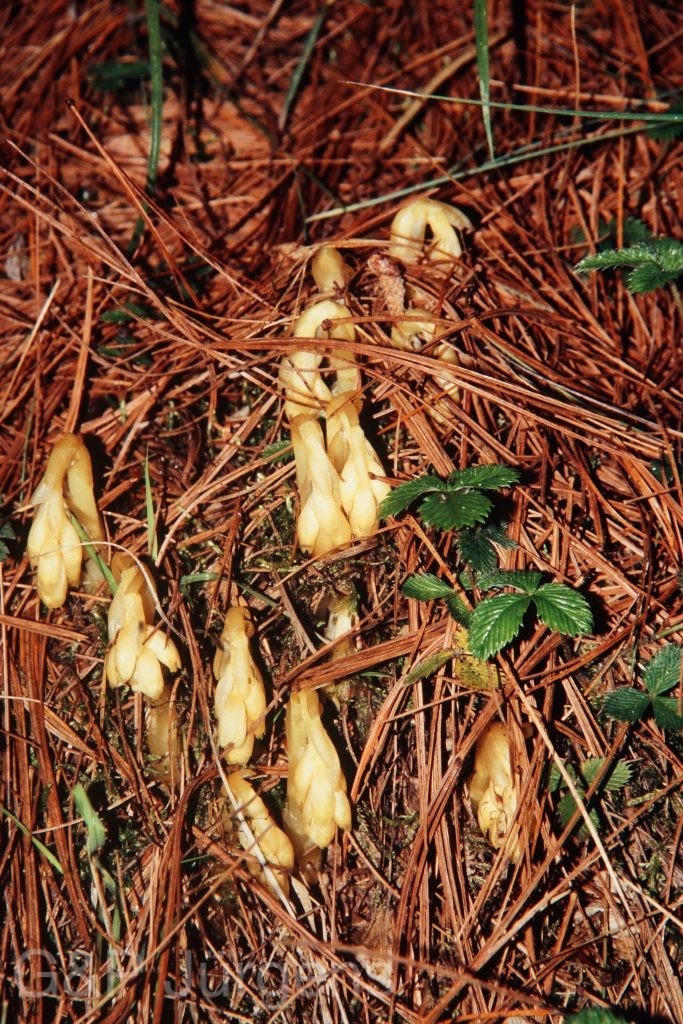
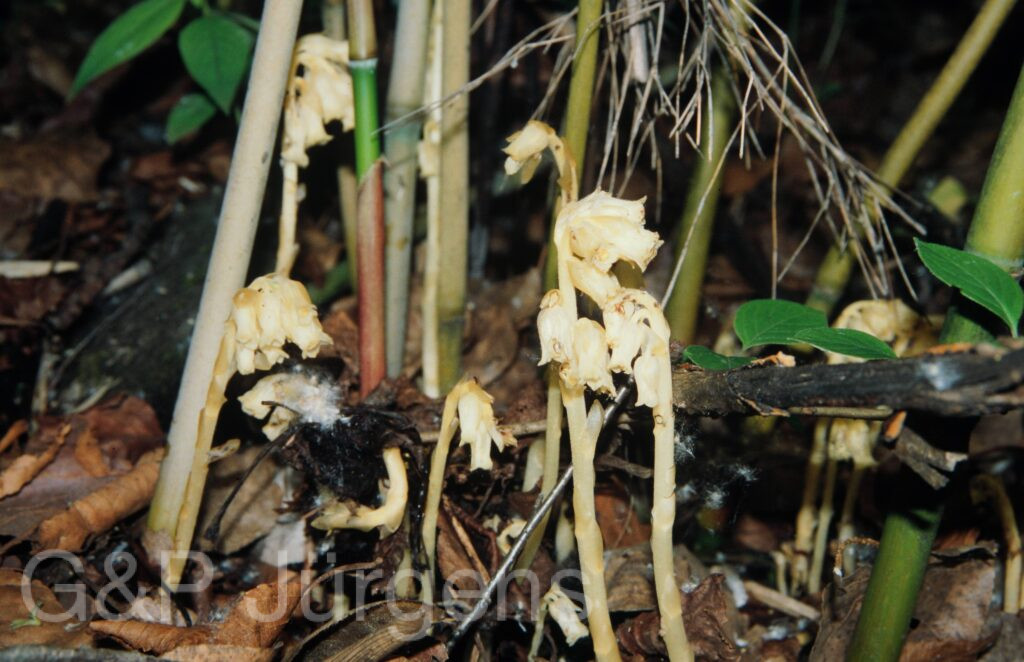
Monotropa hypopitys, the yellow bird's-nest, is a circumboreal mycoheterotroph of remarkably broad distribution, with GBIF amassing over 56,000 occurrences spanning North America, Europe and temperate Asia, including the United States, France, Canada, Russia, Germany, Scandinavia and Japan. It grows in the deep shade and leaf litter of coniferous and broadleaved forests, lacking chlorophyll and obtaining its carbon indirectly from surrounding trees via shared ectomycorrhizal fungi. The Himalayan records from Yetong-La in Bhutan at about 3050 m in June and Suli-Khola in western Nepal near 3000 m in July document its occurrence in shaded temperate fir, oak and rhododendron forest along the southern margin of its vast range. Here gbif_status is SYNONYM, with Monotropa hypopitys taken as the accepted name (often referred to Hypopitys monotropa).

The entire plant is a waxy, fleshy herb of pale yellow, ivory or pinkish-brown colour, wholly devoid of green pigment. The simple, unbranched stem is clothed in scale-like, alternate, bract-form leaves in place of true foliage. At anthesis the stem nods at the apex, bearing a short, secund, few-flowered raceme of pendent, urn-shaped to campanulate flowers; the lateral flowers are usually 4-merous and the terminal 5-merous, with free or loosely cohering petals and eight to ten stamens. After pollination the inflorescence becomes erect, the ovary maturing into an ovoid capsule releasing enormous numbers of minute, dust-like seeds.

Long placed in its own family Monotropaceae, M. hypopitys is now firmly embedded within Ericaceae subfamily Monotropoideae, a lineage of obligate mycoheterotrophs whose nutrition depends entirely on a tripartite plant-fungus-tree relationship. Its dust seeds require fungal infection to germinate, tying its distribution closely to suitable mycorrhizal hosts. Despite its enormous global range it is inconspicuous and of least concern overall, though sensitive to forest clearance that severs its underground fungal connections.

Author: L. · Sources: POWO (Kew), GBIF, Flora of China, Flora Europaea, Flora of Bhutan, Wallace monograph of Monotropoideae

Wall. ex DC.

Sikkim2003 372 G521
Sikkim Tista valley 3500m August
Nepal 99 84 ergebnis
West-Nepal Bhulbhule 3200m, June
Garw 2005 36 ergebnis ergebnis
India Garhwal Valley of flowers 3100m, September

Description

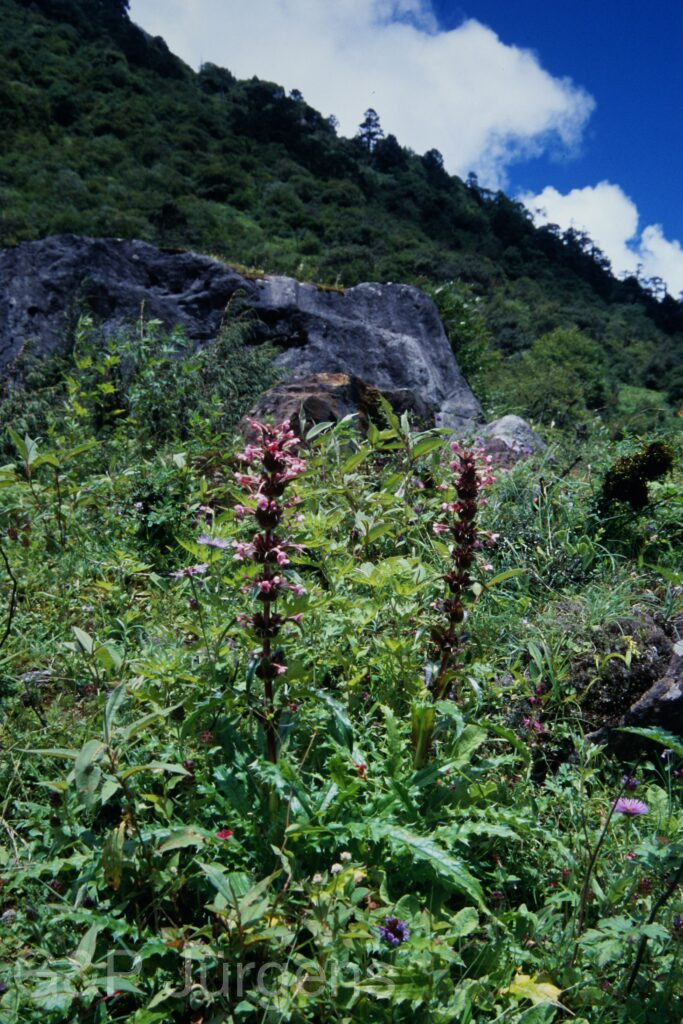
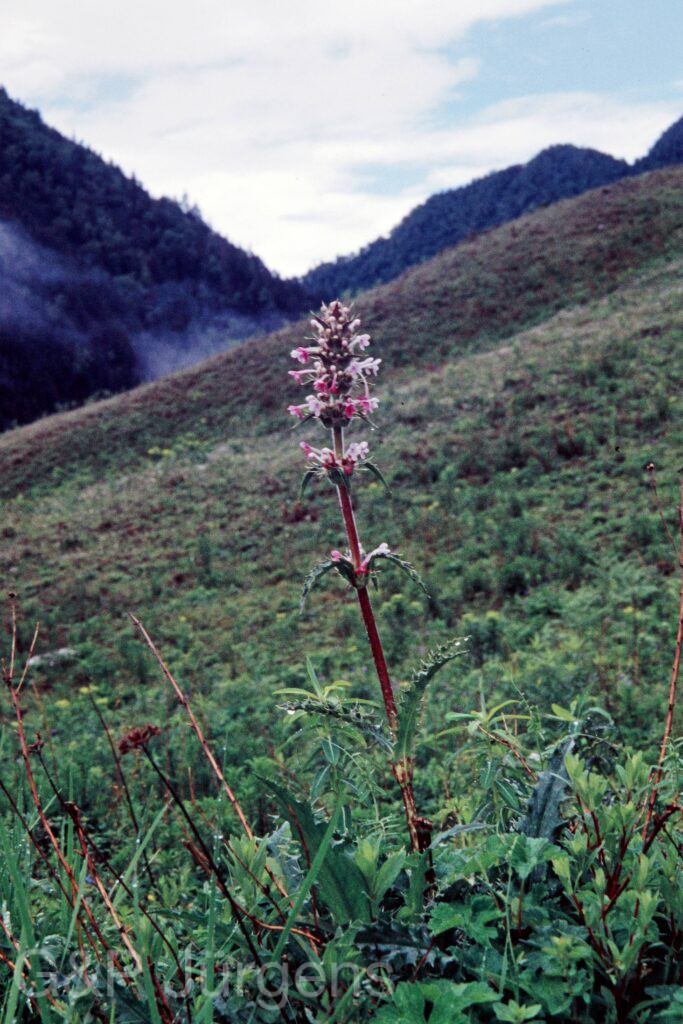
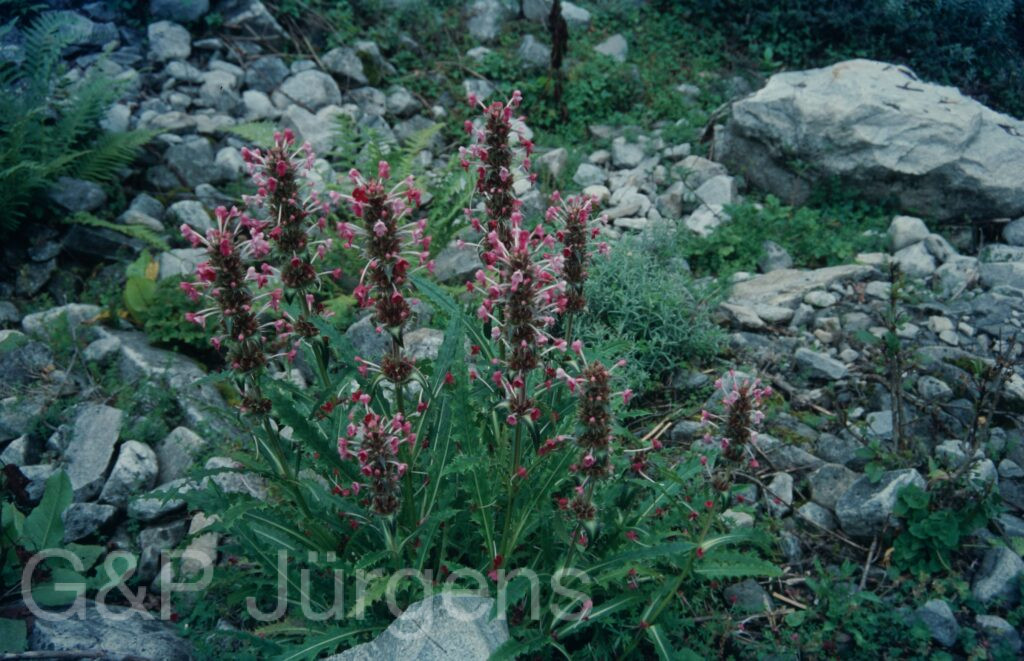
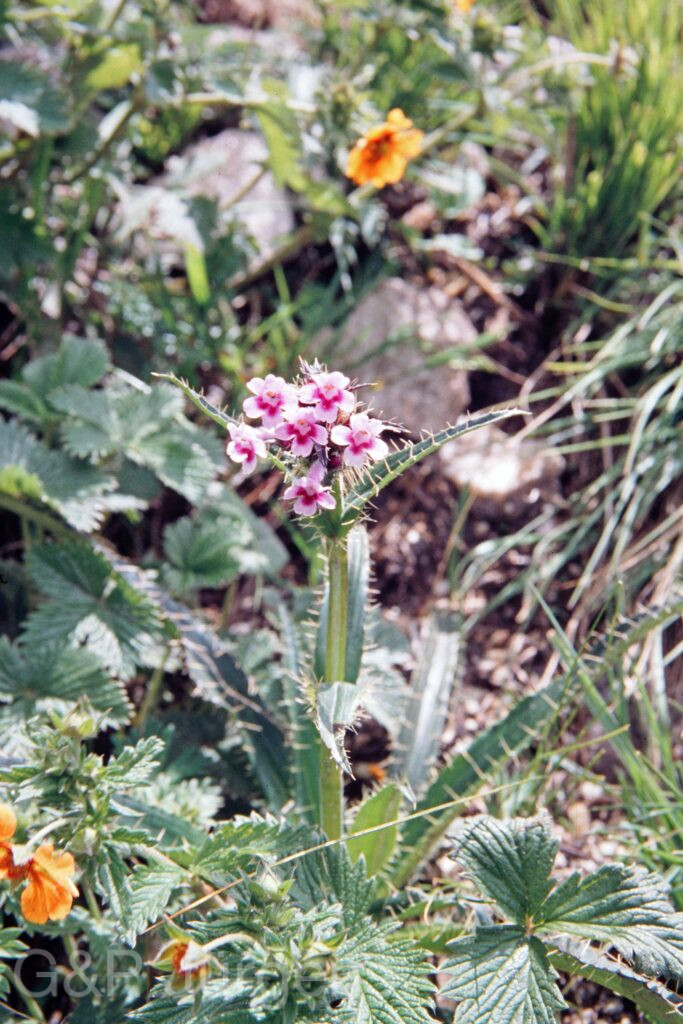
Morina longifolia, the Himalayan whorlflower, is native to the Himalaya across Pakistan, India, Nepal and Bhutan, with naturalised and cultivated records in Europe and North America (Norway, Germany, Denmark, Sweden, the United States) reflected among its roughly 125 GBIF occurrences. It grows on open alpine and subalpine slopes, in stony meadows, grassy clearings and among low scrub on well-drained soils above the forest. The cited localities, the Tista valley in Sikkim at 3500 m in August, Bhulbhule in western Nepal at 3200 m in June, and the Valley of Flowers in Garhwal at 3100 m in September, span its range of roughly 3000-4000 m, where it flowers through the summer monsoon.

It is a robust, erect perennial herb forming a basal rosette of long, narrow, linear-lanceolate leaves whose margins are conspicuously spiny-toothed, giving a thistle-like appearance, the whole plant aromatic when crushed. The flowering stem rises stoutly and bears the flowers in well-separated, spiny-bracted whorls (verticillasters) up the upper axis. Each flower has a tubular, curved, two-lipped corolla that opens white and ages through pink to deep crimson, so flowers of several colours appear together in one whorl. Two stamens are fertile, the slender style is exserted, and the inferior ovary develops into a small one-seeded achene enclosed within the persistent involucel.

The genus Morina, with its spiny leaves and whorled bicoloured flowers, has been placed variously in its own family Morinaceae or within Dipsacaceae, and is treated by current systems within an enlarged Caprifoliaceae; molecular work confirms its position near the teasels and valerians in the Dipsacales. The long-tubed flowers are pollinated by long-tongued insects, and the species is widely grown as an ornamental, accounting for its scattered occurrences far beyond its native range.

Author: Wall. ex DC. · Sources: POWO (Kew), GBIF, Flora of Pakistan, Flora of Bhutan, Cannon revision of Morina, Bell Dipsacales phylogeny

D. Don

Nepal 99 277 ergebnis
West-Nepal Kalomura 3900m, June
Nepal 99 276 ergebnis
West-Nepal Kalomura 3900m, June

Description

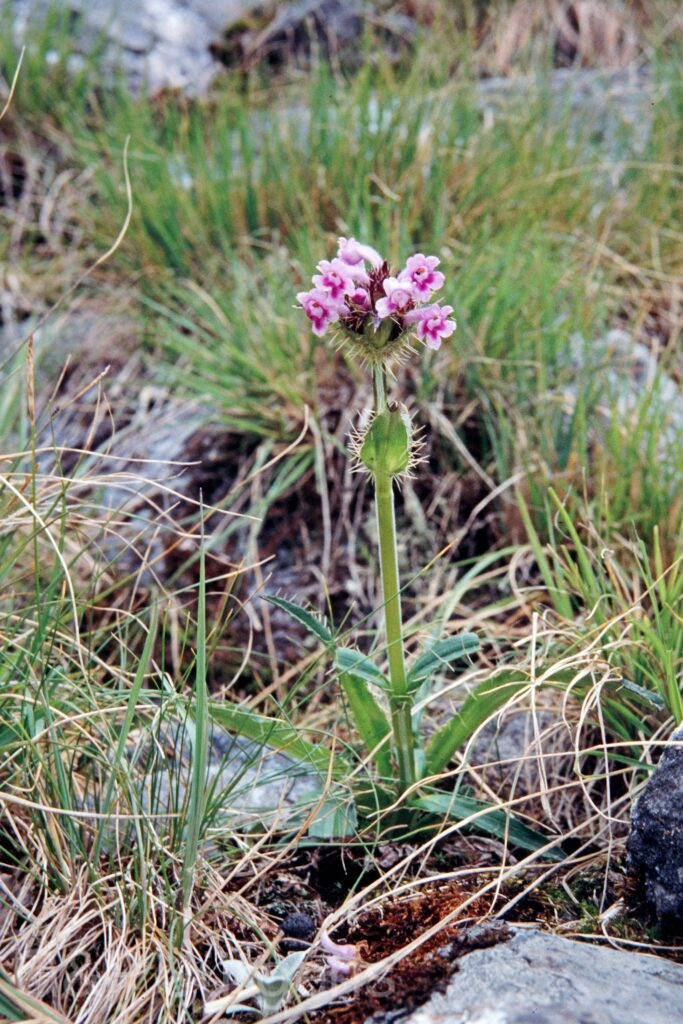
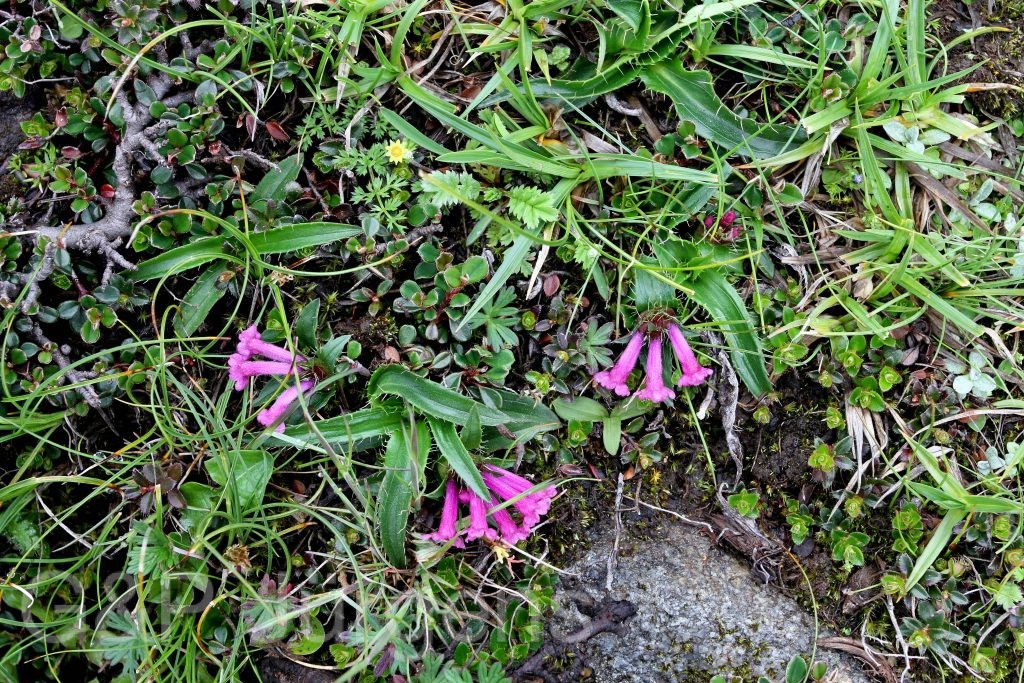
Morina nepalensis is a high-mountain perennial of the Sino-Himalayan region, ranging through China, Nepal, India, Bhutan and Pakistan, with GBIF recording 239 occurrences across this arc. It inhabits open alpine pastures, grassy slopes, rocky meadows and shrubby hollows above the treeline, typically between about 3000 and 4500 m. The illustrated plants were photographed in West Nepal at Kalomura at 3900 m and in Bhutan on the Ludlow-Sherriff Trail near Warrtlang-La at 4450 m, both in June, exemplifying the subalpine to alpine turf where the species is most frequent during the early summer flush.

The plant forms a stout rosette from a thick taproot, the basal leaves narrowly oblong to lanceolate, sessile or amplexicaul and conspicuously armed along the margins with stiff spinose teeth. The flowering stem is erect, terminating in interrupted whorls of flowers subtended by spiny pinnatifid bracts. Each flower sits within a tubular involucel and a two-lipped calyx; the corolla is gamopetalous, curved and white to pink, often deepening to rose with age, with a slender tube and five spreading lobes. There are two fertile stamens and a single inferior ovary maturing into an achene enclosed by the persistent involucel.

Long placed in the segregate family Morinaceae, the genus Morina is now subsumed within an expanded Caprifoliaceae, consistent with the input family. POWO and GBIF treat M. nepalensis as the accepted name. The colour change of the corolla after pollination is a notable floral signal, and the species contributes to the showy alpine herbfields grazed by Himalayan livestock.

Author: D. Don · Sources: POWO (Kew), GBIF, Flora of China, Flora of Bhutan, Annotated Checklist of the Flowering Plants of Nepal, Revision of Morinaceae (Dipsacales monograph)

Wall. ex DC.

Nepal 99 354 ergebnis
West-Nepal Kalmura 3800m, June
Nepal 99 355 ergebnis
West-Nepal Kalmura 3800m, June
Sikkim2003 371 P520
Sikkim Lachen Tista valley 3600m August

Description

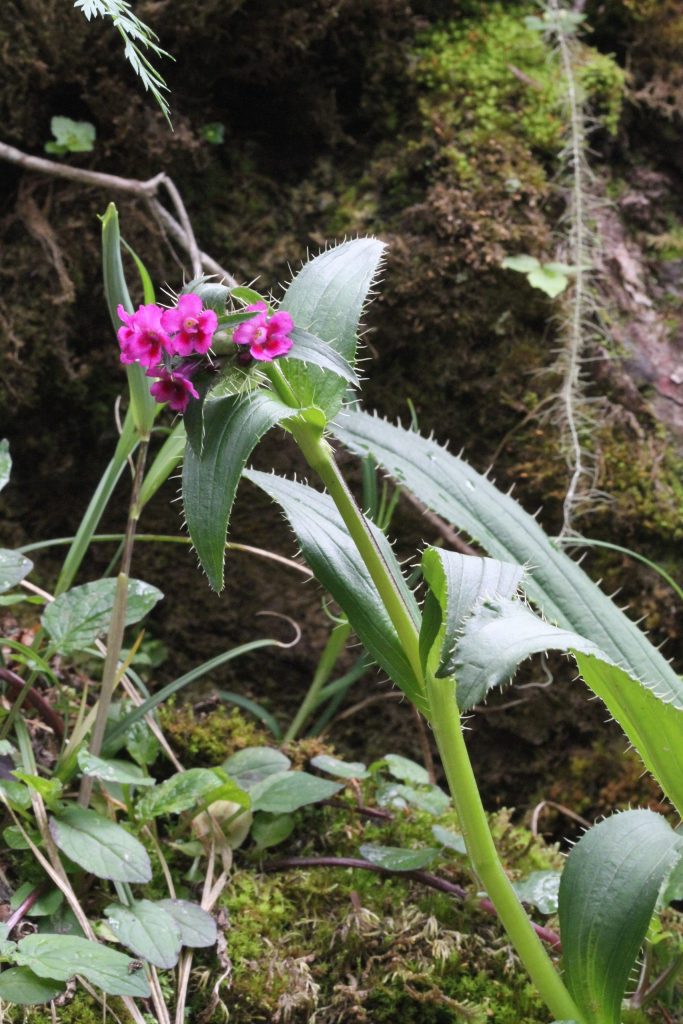
Morina polyphylla is a Himalayan high-altitude herb recorded from Nepal, northern India and Bhutan, with roughly 54 documented occurrences. It inhabits open subalpine to alpine meadows, rocky slopes and grazed pasture, generally between about 3300 and 4200 m. The collections illustrated here, from Kalmura in West Nepal at 3800 m in June and from the Tista valley above Lachen in Sikkim at 3600 m in August, span the early and late monsoon flowering periods and typify its preference for moist, well-drained turf and stony ground in full sun above the treeline.

It is a stout perennial forming a basal rosette of numerous narrowly oblong to lanceolate leaves whose margins are pinnately lobed and armed with stiff spinescent teeth, the texture rigid and the surfaces often shining. The erect flowering stem bears whorls of flowers subtended by spiny floral bracts arranged in interrupted verticillasters. Each flower has a tubular, oblique calyx and a slender-tubed, curved corolla that is two-lipped, typically pale to deep pink or whitish, the long tube adapted to long-tongued pollinators. There are usually two fertile stamens; the inferior ovary ripens into a single-seeded achene enclosed by the persistent involucel.

GBIF treats the name as a synonym, with Morina polyphylla retained as the accepted name; the species belongs to the Morinoideae, now placed within an expanded Caprifoliaceae. Its spiny, thistle-like architecture deters grazing in heavily pastured alpine zones, and the protandrous, long-tubed flowers favour cross-pollination by bumblebees and lepidopterans. The species remains widespread across its montane range with no recognised conservation threat.

Author: Wall. ex DC. · Sources: POWO (Kew), GBIF, Flora of Bhutan Vol. 2, Flora of Nepal, Flora of China Vol. 19, A Taxonomic Revision of the Morinaceae

Morus indica

by GP Jürgens

L.

Nepal 97 362 P710
Nepal Arun-Valley 1700m May

Description

Morus indica L. is a deciduous tree or shrub of the mulberry family, widely distributed across temperate and subtropical Asia and extensively cultivated. GBIF documents over 14,000 records from China, India, Taiwan, Korea, Japan, Myanmar, the Philippines and Thailand, together with introductions in Europe and the Americas, reflecting its long history of cultivation for sericulture and fruit. In the Himalaya it occurs in subtropical and lower temperate forest, along valley sides, field margins and roadsides; the photographed plant is from Nepal, the Arun Valley, at 1,700 m in May, a typical mid-elevation montane setting.

The plant is a small to medium tree with grey, fissured bark and milky latex. The leaves are alternate, ovate, often unequally cordate at the base, with a serrate or dentate margin and an acuminate apex; juvenile and coppice leaves are frequently variously lobed, a common feature of the genus. The plant is dioecious or monoecious, the inconspicuous unisexual flowers borne in short, dense, pendent axillary catkins (spikes); staminate flowers have four tepals and four stamens, pistillate flowers a superior ovary with a bifid stigma. The fruit is a fleshy sorosis (multiple fruit) formed from the accrescent perianths, ripening from greenish through red to dark purple-black and edible.

The taxonomy of Asian Morus is unsettled, with M. indica often treated as part of the variable M. alba complex and subject to differing circumscriptions. The species is of major economic importance as the principal food plant of the silkworm and as a fruit and fodder tree, and is consequently both wild and widely naturalised; it is not of conservation concern.

Author: L. · Sources: POWO (Kew), GBIF, Flora of China Vol. 5, Flora of Nepal, Flora of Bhutan Vol. 1, Berg: Moraceae (Flora Malesiana)

(Buch.-Ham. ex Roxb.) Maxim.

Bhutan2015 32
Bhutan Dochu-La 2800m, October
Bhutan2015 33
Bhutan Dochu-La 2800m, October

Description

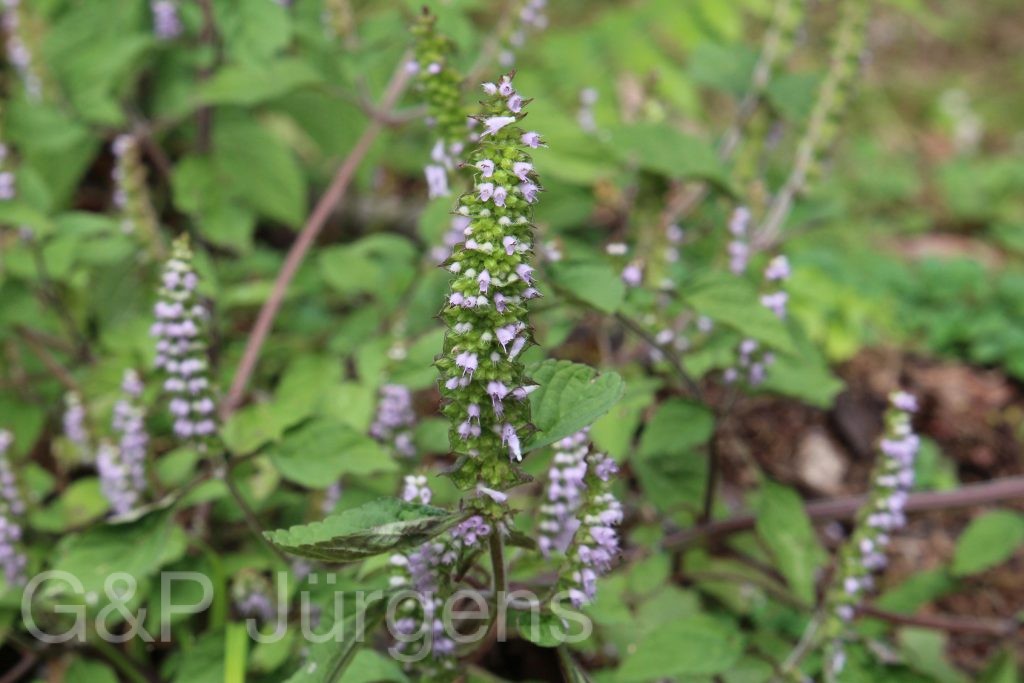
Mosla dianthera is a widespread annual mint of monsoonal Asia, ranging from the Himalaya (Nepal, Bhutan, India, Pakistan, Bangladesh, Myanmar) across China, Korea, Japan, Taiwan and the Russian Far East south into mainland and insular Southeast Asia; with over 7000 GBIF occurrences it is among the most frequently recorded species of its genus. It grows in disturbed and seasonally moist ground, including roadsides, field margins, fallow land, streambanks and open grassy slopes from the lowlands into the temperate hills, as recorded at Dochu-La in Bhutan at 2800 m. As an autumn-flowering annual it completes its cycle on the late monsoon moisture, flowering and fruiting in October.

It is a slender, erect, aromatic annual herb with the quadrangular stems typical of the Lamiaceae, often much branched and sparsely hairy. The leaves are opposite, petiolate, ovate-lanceolate to lanceolate, serrate along the margin and gland-dotted, releasing a pungent scent when crushed. The flowers are borne in lax, terminal and axillary racemes; each two-lipped corolla is small, pale pink to purplish, with a notched upper lip and a three-lobed lower lip. Diagnostic for Mosla are the two fertile stamens (the epithet "dianthera" referring to the two anthers) and the reticulately pitted nutlets. The fruit comprises four small, dry, one-seeded nutlets enclosed in the persistent, gland-dotted calyx.

Mosla is a small Asian genus segregated from Orthodon and allied to Perilla and Elsholtzia within the subfamily Nepetoideae, characterised by the reduction to two stamens and by aromatic terpene-rich foliage. The essential oils of M. dianthera are used in traditional medicine, and the plant is a minor nectar source for bees and other insects. Being a ruderal, broadly tolerant annual of vast geographic range, it is of least conservation concern and is sometimes weedy. (The associated WordPress link erroneously references Pogostemon benghalensis; the taxon treated here is Mosla dianthera.)

Author: (Buch.-Ham. ex Roxb.) Maxim. · Sources: POWO (Kew), GBIF, Flora of China, Flora of Bhutan, Li & Hedge's treatment of the Lamiaceae

Mucuna macrocarpa

by GP Jürgens

Wall.

Nepal 1994 57 ergebnis
Ost-Nepal Bhalukhob 
1800m April
Nepal 1994 55 ergebnis
Ost-Nepal Bhalukhob 
1800m April

Description

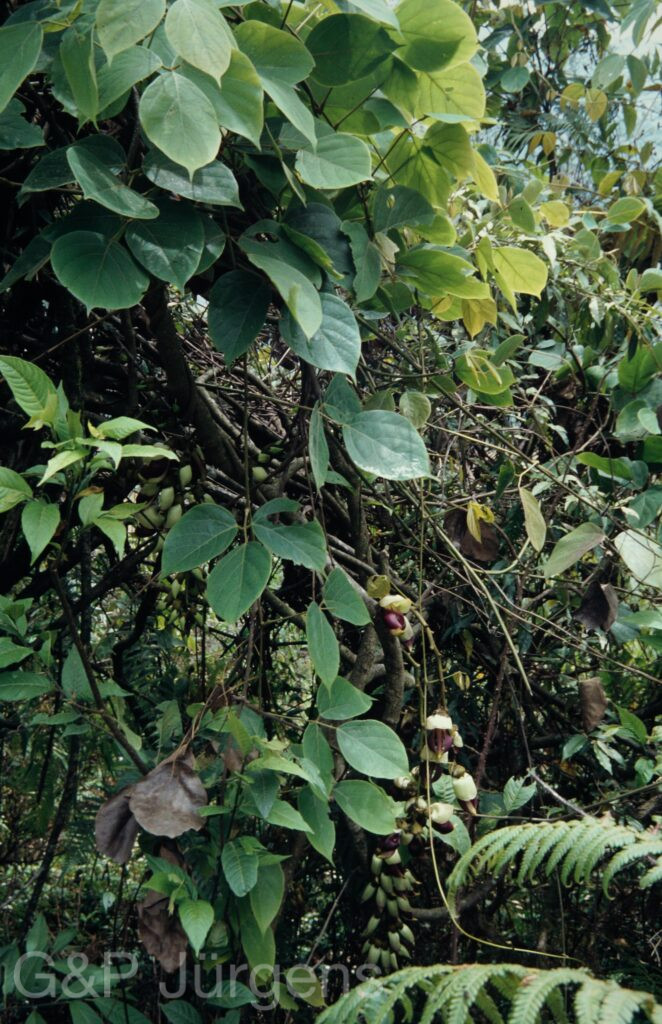
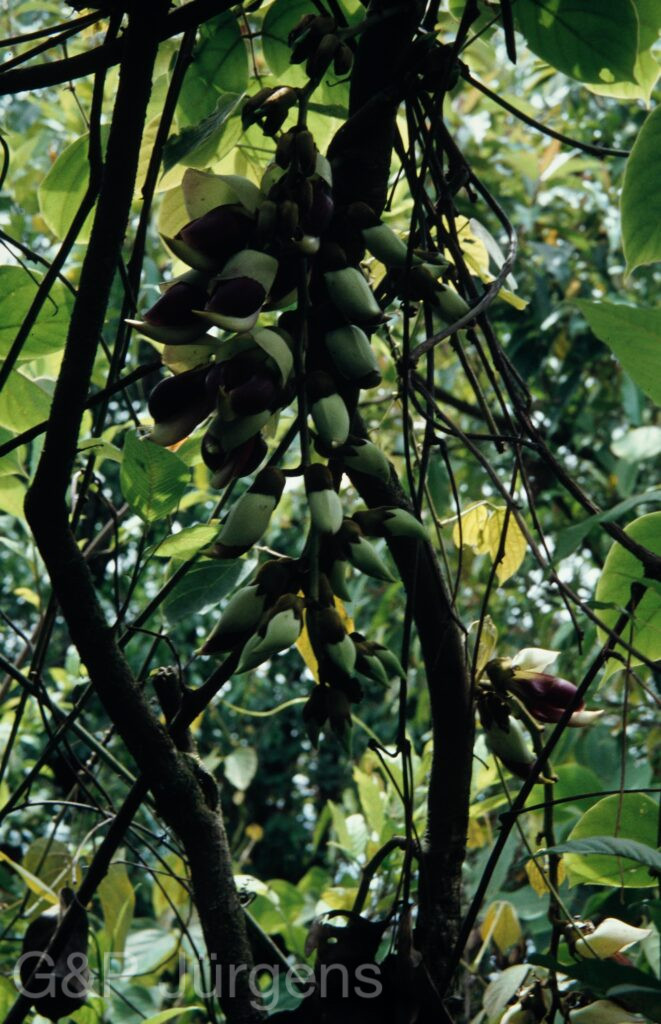
Mucuna macrocarpa is a large woody climber of subtropical and tropical Asia, ranging from Taiwan, Japan and China through Thailand, Laos, Myanmar, India, Vietnam, Nepal, Malaysia and Bhutan; GBIF records some 2100 occurrences, making it by far the best-documented species in this set. It scrambles through warm broadleaved and evergreen forest, along forest edges and ravine slopes at lower montane elevations. The photographed plant grows at Bhalukhob in East Nepal at about 1800 m, flowering in April, in humid subtropical hill forest.

It is a robust, perennial liana with stout woody stems and trifoliolate leaves bearing large, broadly ovate to elliptic leaflets. The pendent, cauliflorous to ramiflorous inflorescences carry showy papilionaceous flowers with a dark, often deep purple to maroon or greenish keel and standard, the keel curved and enclosing the stamens and style. The fruit is a large, woody, oblong pod, broad and often flattened, conspicuously ribbed or winged and clothed in irritant hairs, enclosing several hard, disc-shaped seeds.

The species is accepted. Mucuna is noted for explosive, mechanically triggered flowers adapted to vertebrate pollination: in this and related species the keel snaps open under the manipulation of nectar-feeding bats and, locally, other mammals or large birds, a celebrated case of chiropterophily. The stinging pod hairs deter herbivores, while the buoyant seeds are reported to disperse by water. Its wide range and frequency indicate a secure conservation status across monsoon Asia.

Author: Wall. · Sources: POWO (Kew), GBIF, Flora of China, Flora of Bhutan, Wilmot-Dear's revisions of Asian Mucuna (Leguminosae)

(G.Brückn.

Bhutan2012 426
Bhutan Wangdi 2700m, September

Description

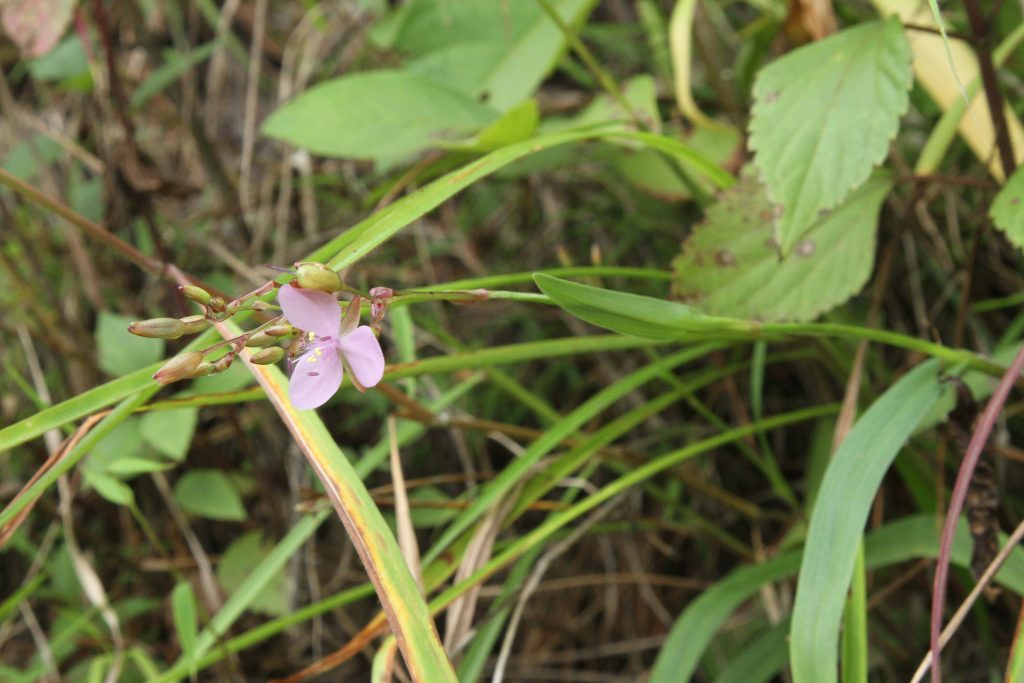
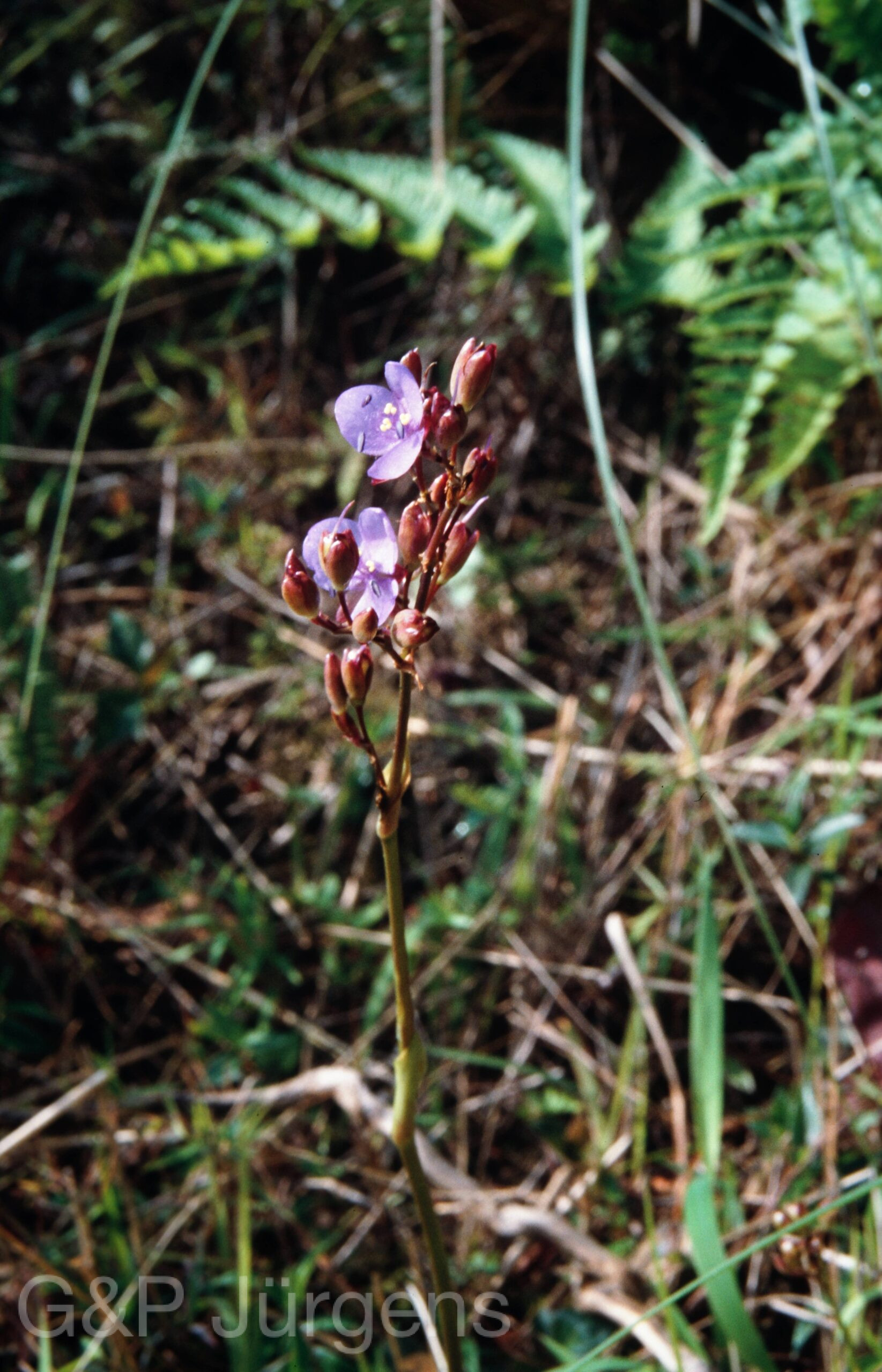
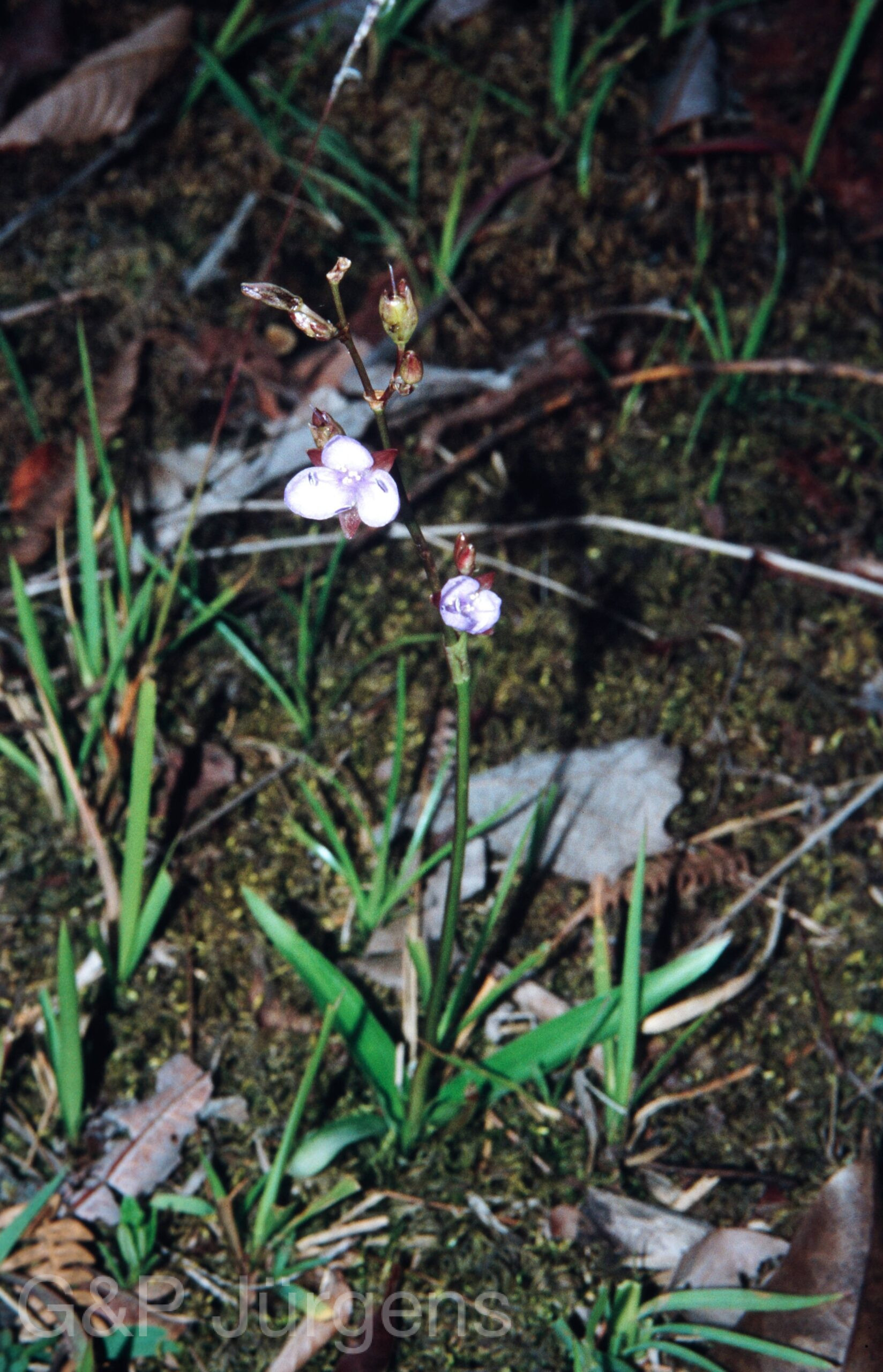
Murdannia divergens (G.Brückn.) Faden ex D.Y.Hong is a dayflower relative widely distributed across tropical and subtropical Asia, recorded by GBIF from China, India, Taiwan, Nepal, Myanmar, Thailand, Vietnam, Bhutan and Laos, with over 500 occurrences. It grows in damp grassland, open forest, scrub, marshy ground and along streamsides, lowland to montane. The Bhutanese material from Wangdi at 2700 m in September reflects its occurrence well into the temperate zone and its late-monsoon flowering, when soil moisture supports the succulent growth typical of the family.

It is a perennial or sometimes annual herb with fleshy roots and ascending to decumbent stems rooting at the lower nodes. The leaves are alternate, linear to linear-lanceolate, sheathing at the base in the manner of the Commelinaceae, with parallel venation. The inflorescence is a terminal, often divergently branched (as the epithet suggests) thyrse, the flowers actinomorphic with three free, ephemeral blue to violet or pinkish-mauve petals and bearded stamens with staminodes, typically three fertile. Each flower lasts a single day; the fruit is a small three-locular loculicidal capsule releasing few rugose seeds.

Murdannia, segregated from Aneilema and Commelina, comprises herbs of seasonally wet ground, and M. divergens belongs to its montane-adapted members. Its day-lasting flowers are pollinated by small bees and hoverflies attracted to the stamen hairs and pollen-presenting anthers. The wide Asian range and ecological flexibility of the species make it common in seasonally moist habitats; it is not threatened, though its dependence on wetland margins links local abundance to monsoon hydrology.

Author: (G.Brückn. · Sources: POWO (Kew), GBIF, Flora of China Vol. 24, Flora of Bhutan Vol. 3, Flora of Nepal, Faden revisions of Asian Commelinaceae

(Stokes) Faden

Description

Murdannia edulis is a tuberous-rooted dayflower relative distributed across tropical and subtropical Asia, from the Himalaya (Nepal, Bhutan, northeast India) through southern China, Taiwan, Myanmar, Thailand and Indochina to Malesia, the Philippines and New Guinea. It grows in open grassland, scrub, forest margins and seasonally moist banks, often on disturbed or cultivated ground, principally at low to mid elevations. The plant recorded at Mulabari in the Gorkha district of Nepal at 1,340 m in May represents its presence in the warm subtropical foothill zone, where it emerges and flowers with the onset of the pre-monsoon rains.

The plant is a perennial herb arising from a cluster of fleshy, fusiform, fascicled tuberous roots that store water and nutrients. The leaves are mostly radical, linear to lanceolate, sheathing at the base and arranged in a basal tuft, with parallel venation typical of the family. The inflorescence is a scapose, terminal panicle of cincinni bearing ephemeral, actinomorphic flowers with three free, pink to pale blue or mauve petals and conspicuous bearded staminodes accompanying the fertile stamens. The fruit is a small, loculicidal, ellipsoid capsule containing few angular seeds.

The genus Murdannia, segregated from Aneilema and Commelina, is distinguished by its enantiostylous, regular flowers and characteristic stamen arrangement; M. edulis was transferred to the genus by Faden, its basionym attributed to Stokes. As the epithet indicates, the starchy tuberous roots are edible and have been used as a famine or supplementary food across its range. The species is widespread, weedy and adaptable, and is of no conservation concern.

Author: (Stokes) Faden · Sources: POWO (Kew), Flora of China Vol. 24, Flora of Nepal, GBIF, Faden: Commelinaceae systematics