Tag:

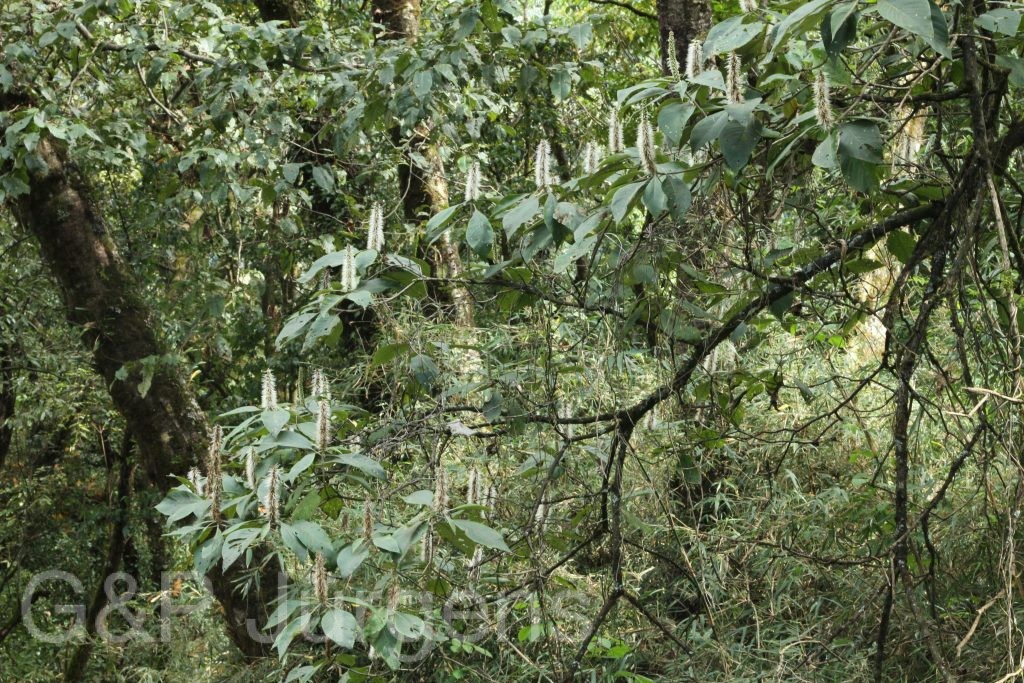
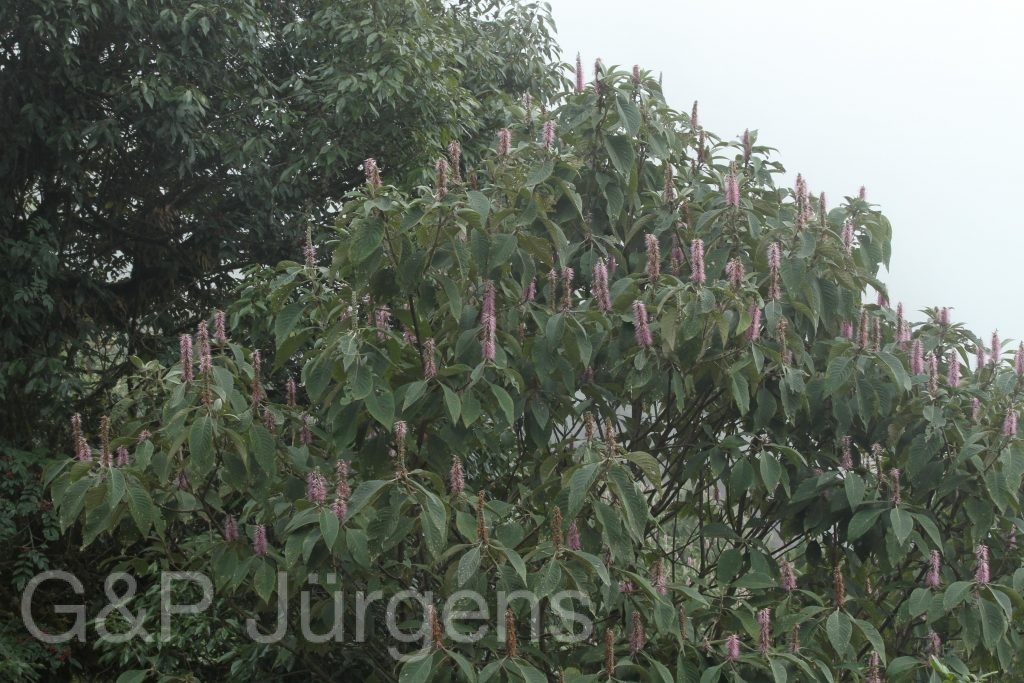
Montane (1500-2500 m)

Sm.

Bhutan2015 595
Bhutan Mo-Chu 1900m, October
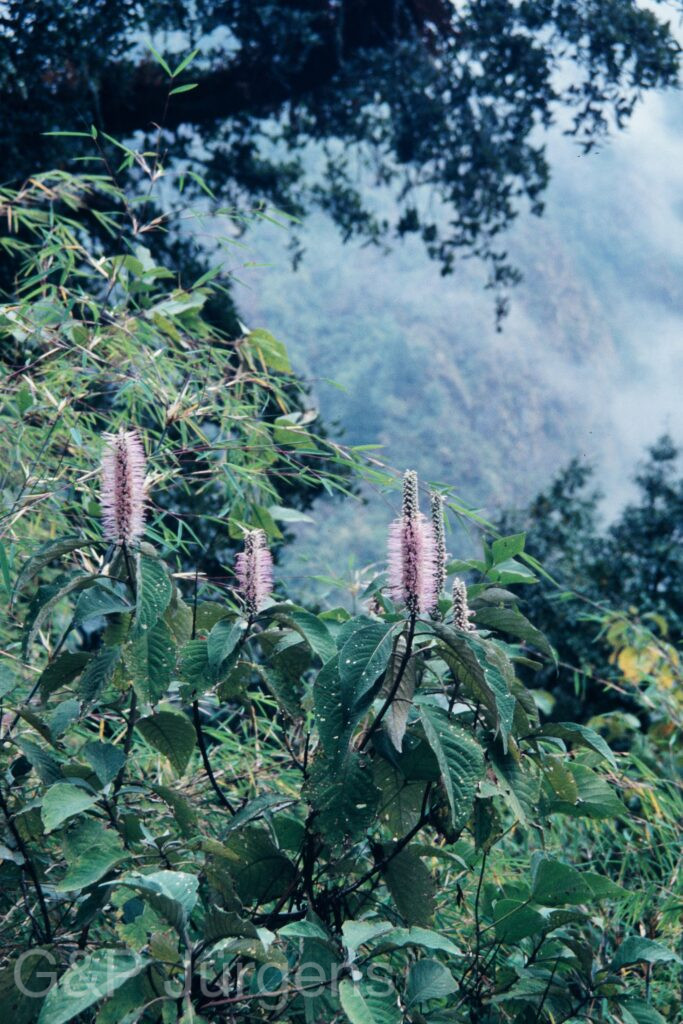
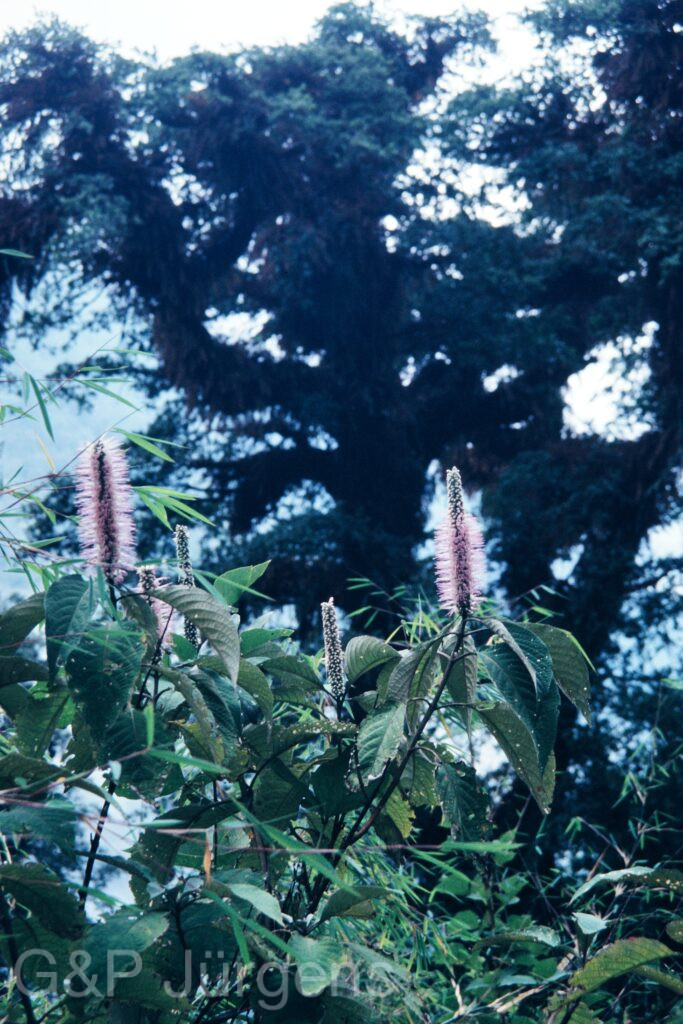
Bhutan2012 1307
Bhutan Mo-Chu 1900m, October

Description

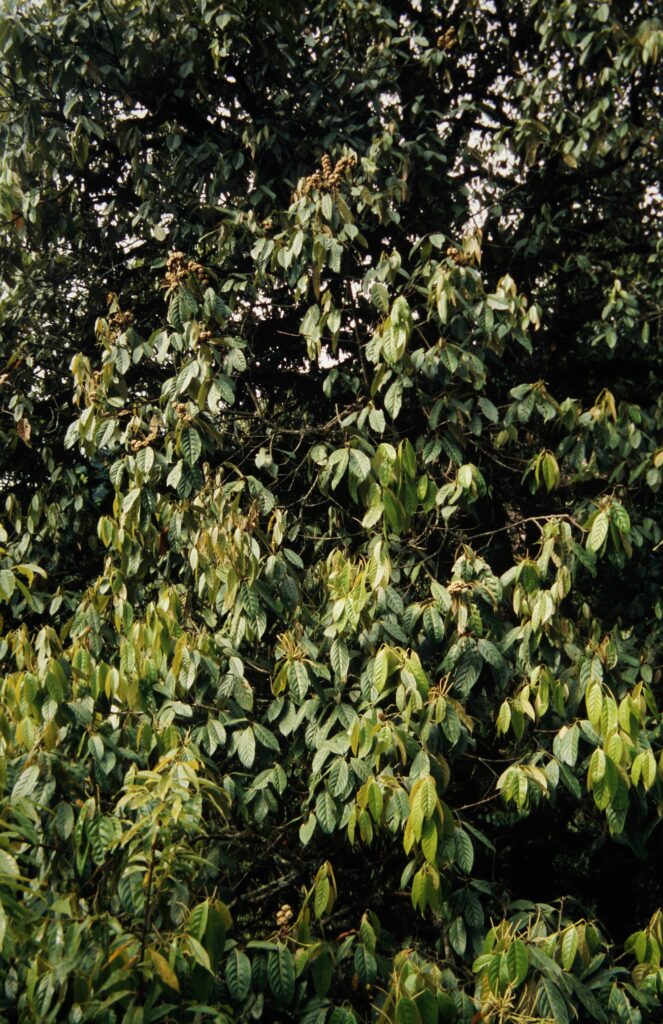
Leucosceptrum canum is a soft-wooded shrub or small tree of the Himalaya and southwestern China, distributed through China, Nepal, India, Bhutan and Myanmar and east to Indochina (CN, NP, IN, BT, MM, VN, TH, BD, LA, with further records), one of the more frequently collected species here with about 515 occurrences. It grows in moist temperate forest, on shaded slopes, ravine sides, forest margins and clearings, typically in the warm- to cool-temperate belt. The gatherings cited are from the Mo-Chu valley in Bhutan at 1900 m and from Trisuli in Nepal at 2700 m, both flowering in October, reflecting its autumn-to-early-winter blooming in the mid-montane forest zone.

The plant is a coarse shrub or small tree with stout, four-angled young branches densely clothed, like the leaf undersides and inflorescence, in a greyish (canous) tomentum from which the epithet derives. The leaves are large, opposite, elliptic to oblong-lanceolate, with a serrate margin, an acuminate apex and prominent venation. The flowers are crowded into a dense, terminal, cylindrical spike-like thyrse with conspicuous bracts; the calyx is tubular and five-toothed, and the white to pale yellow, two-lipped corolla has a short tube and exserted, declinate stamens. The fruit comprises four small nutlets (an eremocarp) enclosed in the persistent calyx.

Leucosceptrum is a small genus placed in the subfamily Lamioideae (or basal lineages) of the Lamiaceae and is of phylogenetic interest as part of an early-diverging Asian woody assemblage allied to Comanthosphace. The conspicuous, nectar-rich autumn inflorescences attract bees, butterflies and birds, and the species is notable for the production of defensive sesquiterpenes secreted by glandular trichomes. Widespread and common across the Himalaya into China, L. canum is of no conservation concern and is locally valued for fuel and as a bee plant.

Author: Sm. · Sources: POWO (Kew), GBIF, Flora of Bhutan, Flora of China, Labiatae of the Himalaya (Lamiaceae revision)
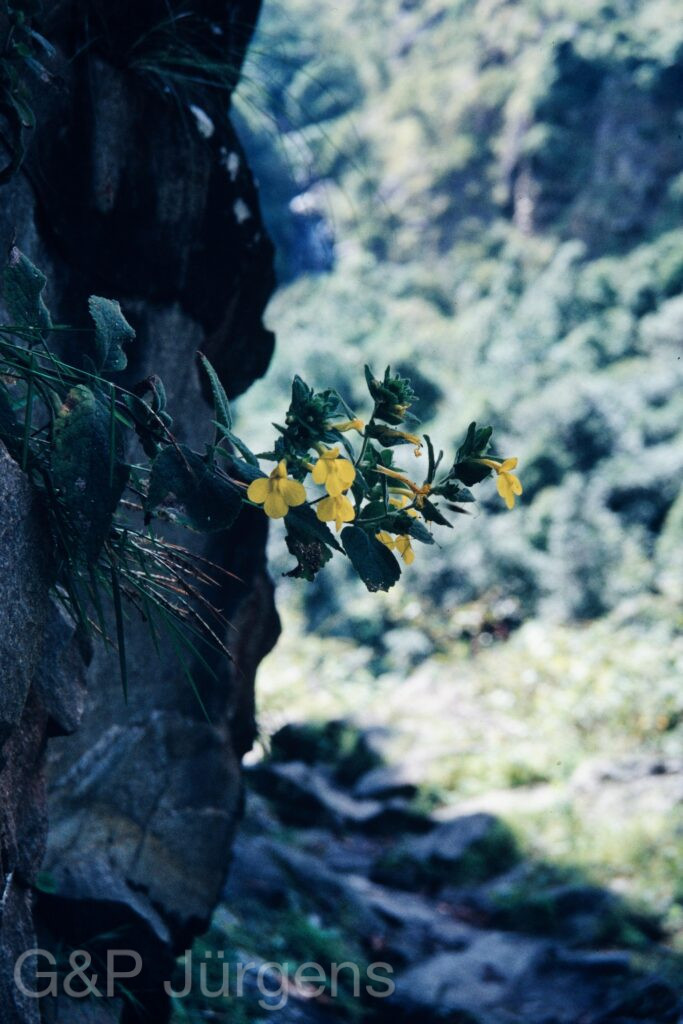
(C.B.Clarke) Hand.-Mazz.

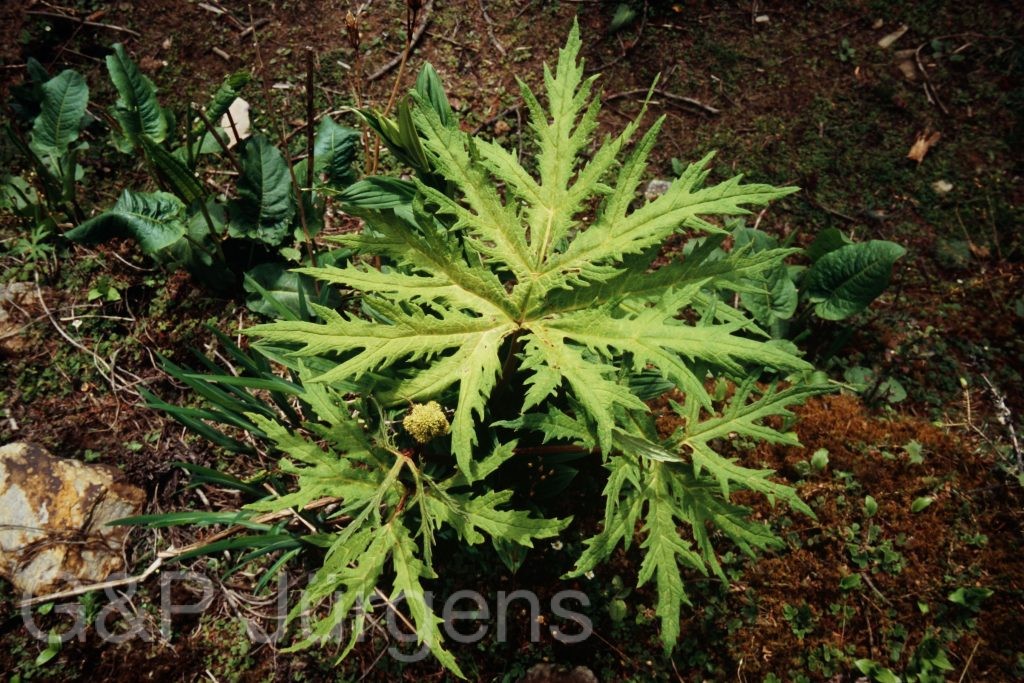
Bh09 38 P69
Bhutan Paro 2400m, June

Description

Ligularia mortonii is an East Himalayan endemic distributed across Bhutan, Nepal and adjacent north-eastern India, with GBIF documenting some 81 georeferenced occurrences concentrated along the inner Himalayan ranges. It is a plant of moist subalpine to temperate environments, favouring damp meadows, streamsides, forest margins and open grassy slopes where summer monsoon moisture is reliable. The photographed material from Paro in western Bhutan at around 2400 m, flowering in June, typifies its altitudinal preference in the temperate broadleaf and conifer belt, though populations ascend higher into subalpine pastures. Its restricted range marks it as a regional element of the Sino-Himalayan flora.

A robust perennial herb arising from a short stout rhizome bearing fibrous roots, it produces erect, often purplish, sparsely arachnoid-pubescent stems. The basal and lower cauline leaves are long-petiolate with reniform to cordate, palmately veined blades, the margins dentate to denticulate; upper leaves are progressively reduced and amplexicaul with sheathing bases. The capitula are radiate, several to many in an elongate raceme or narrow panicle, each subtended by small bracts. Involucral phyllaries are uniseriate and herbaceous; ray florets are yellow, ligulate and pistillate, surrounding numerous tubular yellow disc florets. The fruit is a glabrous cylindric cypsela crowned by a pappus of fine barbellate bristles.

The genus Ligularia (tribe Senecioneae) is centred on the mountains of China and the Himalaya, where it has radiated extensively, and species delimitation often rests on leaf shape, capitulescence form and phyllary characters. L. mortonii, based on Senecio mortonii, exemplifies the taxonomic complexity of the group. Like many congeners it accumulates pyrrolizidine alkaloids, and its nectar-rich heads attract bumblebees and other montane pollinators. Though not formally assessed as threatened, its dependence on intact subalpine meadow and forest-edge habitat renders it locally vulnerable to grazing pressure and land-use change.

Author: (C.B.Clarke) Hand.-Mazz. · Sources: POWO (Kew), GBIF, Flora of Bhutan, Flora of China, Annotated Checklist of the Flowering Plants of Nepal, Liu's Monograph of Ligularia (Senecioneae)

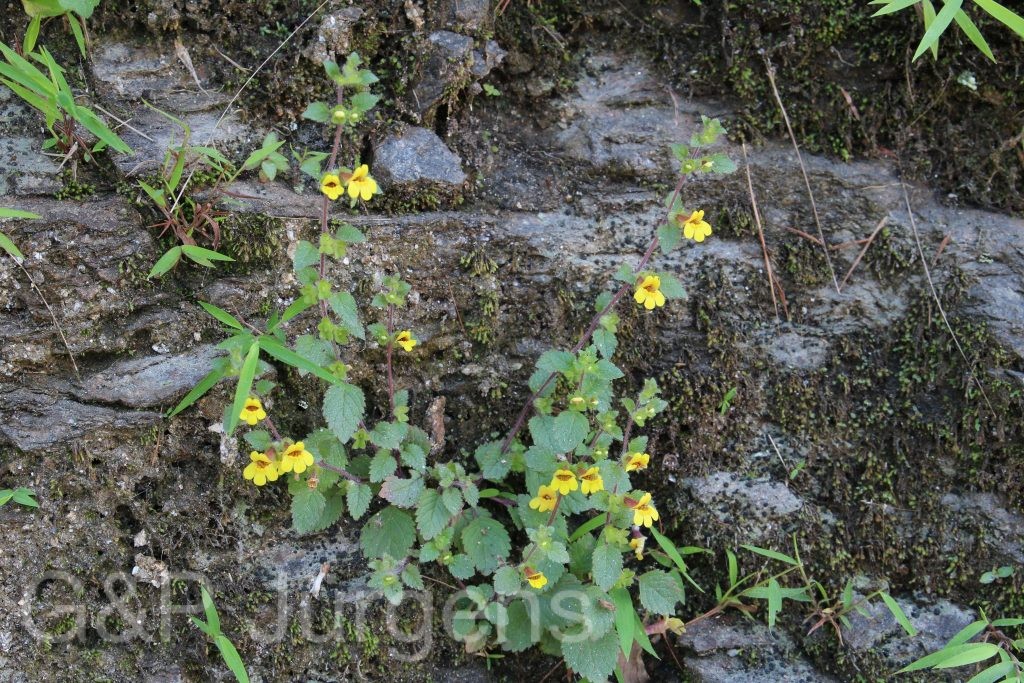
Benth.

Nepal 95 249 P429 ergebnis
Nepal Valley of Buri Gandaki, Kholabensi 2100m October

Description

Lindenbergia grandiflora is a Himalayan herb ranging from Nepal and northern India through Bhutan into south-western China, with naturalised or introduced records noted elsewhere (including Italy and Vietnam among the catalogued occurrences). It is characteristically a plant of rocky places, old walls, dry banks, cliff ledges and other lithic, sun-exposed habitats at low to mid elevations, broadly between about 700 and 2,400 m. The plant photographed in the valley of the Buri Gandaki at Kholabensi, Nepal, at 2,100 m in October, captures its autumn flowering on the steep, well-drained slopes of an inner Himalayan river gorge.

It is an erect, branched, glandular-pubescent perennial or biennial herb with somewhat woody-based stems. The leaves are opposite below, ovate to lanceolate, with crenate-serrate margins and a softly hairy surface. The flowers are borne in the upper leaf axils, forming a leafy terminal raceme; the corolla is comparatively large for the genus, bright yellow, weakly two-lipped with a short tube and spreading lobes, the throat often bearing reddish markings. The calyx is campanulate and five-toothed; stamens four, didynamous. The fruit is a septicidal capsule with numerous small seeds.

Lindenbergia, formerly placed in Scrophulariaceae, is now referred variously to Orobanchaceae or, as here, to Plantaginaceae depending on classification; molecular studies place it among the basal, non-parasitic lineages near the Orobanchaceae, unlike its hemiparasitic relatives. The genus is a small Old World group centred on tropical Asia and Africa. The species is locally frequent on suitable rocky substrates and is not regarded as threatened.

Author: Benth. · Sources: POWO (Kew), Flora of China Vol. 18, Flora of Bhutan Vol. 2, GBIF, Fischer: Scrophulariaceae (Genera Orobanchaceae & allies)

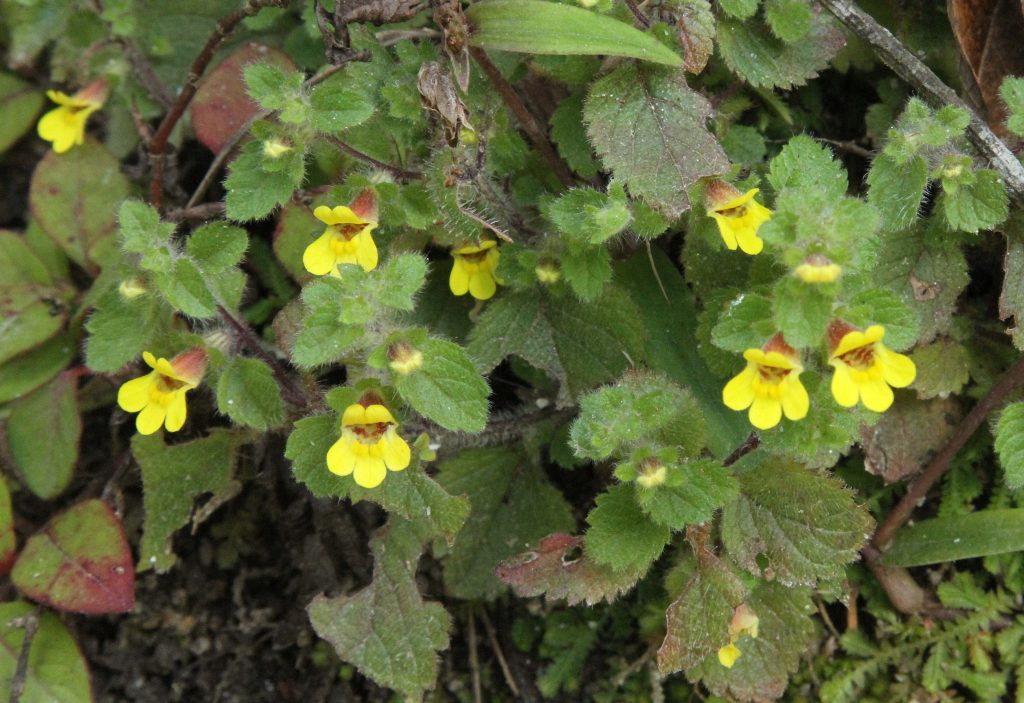
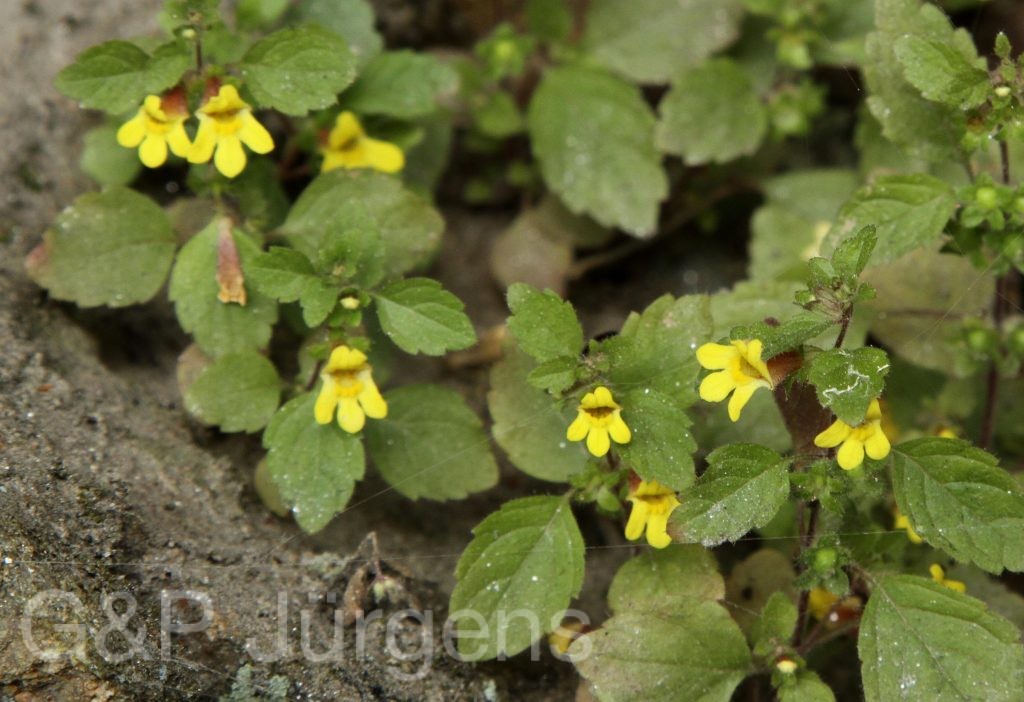
(Roxburgh ex D. Don) Brühl

Bhutan2015 73
Bhutan Wangdi Phodrang 1500m, October
Bhutan2012 410
Bhutan Wangdi 2700m, September
Bhutan2012 654
Bhutan Tserang 1200m, September

Description

Lindenbergia muraria is a widespread herb of warm-temperate and subtropical Asia, recorded across India, China, Nepal, Bhutan, Myanmar, Thailand, Vietnam, Cambodia, Bangladesh, Pakistan and into parts of Arabia and Africa; GBIF logs 585 occurrences over this broad range. As its epithet implies, it is a colonist of old walls, rock crevices, stony banks, roadsides and waste ground, generally from the lowlands up to about 2700 m. The illustrated plants come from several Bhutanese stations, Wangdue Phodrang at 1500 m in October, Wangdue at 2700 m in September and Tsirang at 1200 m in September, spanning the autumn flowering of this ruderal species across a wide elevational band.

The plant is an erect to ascending annual or short-lived perennial herb, the stems softly pubescent and often glandular-hairy. Leaves are opposite below and sometimes alternate above, ovate to ovate-lanceolate, with a serrate margin and short petiole. The flowers are solitary or paired in the upper leaf axils, forming a leafy terminal spike-like inflorescence; each has a tubular, five-toothed calyx and a yellow, two-lipped corolla with a short tube, the lower lip three-lobed and often marked. There are four didynamous stamens, and the superior ovary ripens into a small, ovoid, septicidal capsule containing numerous minute seeds.

Lindenbergia, long placed in Scrophulariaceae, is now referred to the broadly circumscribed Plantaginaceae (consistent with the input family) following molecular reclassification, occupying a basal position near the family's scrophularioid lineages. POWO and GBIF accept the name. Its tolerance of walls and disturbed mineral substrates underlies its wide, weedy distribution across monsoon Asia.

Author: (Roxburgh ex D. Don) Brühl · Sources: POWO (Kew), GBIF, Flora of China, Flora of Bhutan, Flora of British India, Annotated Checklist of the Flowering Plants of Nepal, Revision of Lindenbergia (Plantaginaceae/Scrophulariaceae)

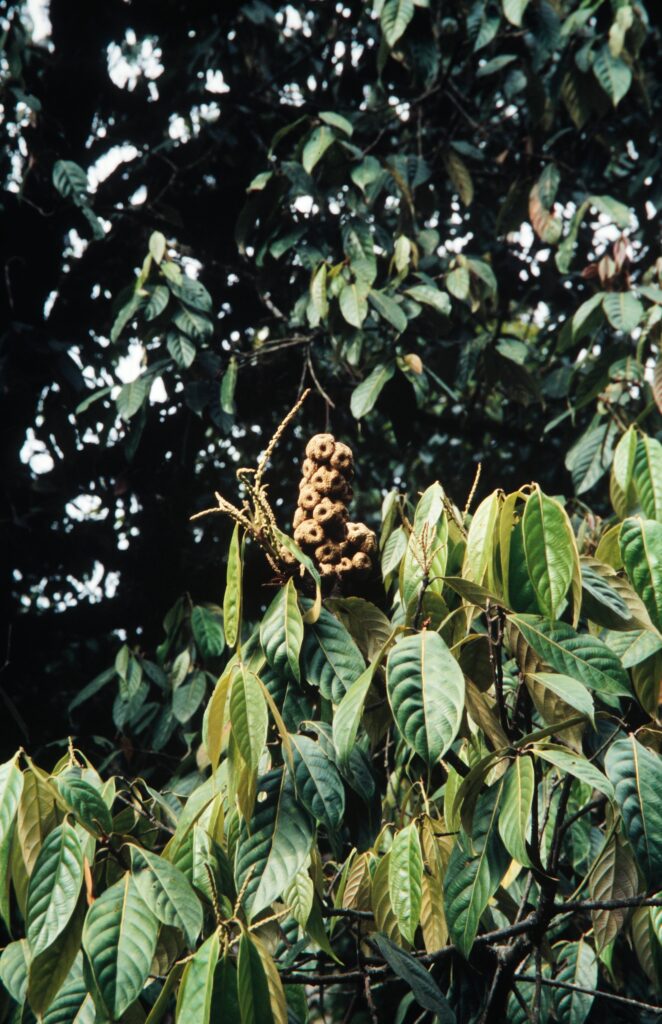
Rehder

Description

Lithocarpus pachyphyllus is a stone oak widely distributed across the eastern Himalaya and adjacent Southeast Asia, with records from China, India, Nepal, Myanmar, Bhutan, Thailand and Vietnam and a substantial occurrence base of around 229 georeferenced collections. It is a canopy and subcanopy tree of montane evergreen broadleaved forest, forming a conspicuous element of the laurophyllous oak-laurel belt on humid, well-drained slopes. The tree photographed at Ramman in West Bengal (India) at about 2250 m in May represents its characteristic position in the mid-montane cloud-forest zone, where Lithocarpus and Quercus species dominate the wet temperate forests of the southern Himalayan front.

It is an evergreen tree with a dense, rounded crown and grey, finely fissured bark. The leaves are coriaceous and pachyphyllous (thick-textured, as the epithet indicates), elliptic to oblong-lanceolate, entire-margined, glabrous and glossy above and dull beneath, with a prominent midrib and arcuate lateral veins. As in all Lithocarpus, the staminate flowers are borne in erect, rigid catkins rather than the pendulous catkins of true oaks, while the pistillate flowers are clustered at the base of the inflorescence axis. The fruit is a thick-walled nut seated in a woody cupule whose scales are typically arranged in concentric rings; the acorns are often densely aggregated along the rachis.

Lithocarpus is distinguished from Quercus chiefly by its erect staminate catkins and frequently aggregated, sessile fruits, features expressed clearly in this species. Its heavy, animal-dispersed acorns provide an important mast resource for montane wildlife, while the species contributes substantially to the structure and carbon stock of Himalayan oak forest. Although not currently of conservation concern across its broad range, local populations are reduced by timber extraction and the conversion of mid-elevation forest, making it a key indicator of intact wet temperate woodland.

Author: Rehder · Sources: POWO (Kew), GBIF, Flora of China Vol. 4, Flora of Bhutan Vol. 1, Flora of Nepal, Camus Les Chênes: Monographie du genre Lithocarpus

Lam.

Sikkim 2006 457 ergebnis
India West-Bengal, Ruigi-Chu 2100m, May

Description

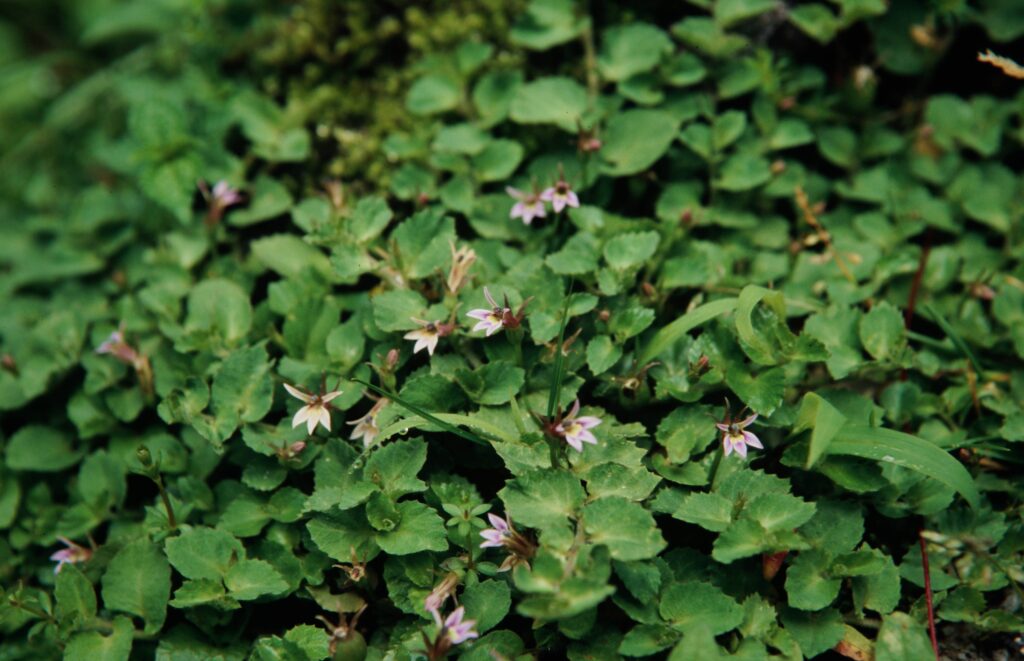
Lobelia nummularia is a creeping, mat-forming perennial herb of the Campanulaceae (subfamily Lobelioideae), widely distributed across tropical and subtropical Asia. GBIF data (over 2,600 occurrences) confirm a broad native range spanning the eastern Himalaya, southern China, Taiwan, Indochina, the Malesian region and Papua New Guinea, with naturalised or cultivated records further afield. The species favours shaded, humid forest floors, mossy banks, ravine sides and the margins of streams in evergreen broadleaved and subtropical montane forest. The collection from the Ruigi-Chu valley in West Bengal at 2,100 m in May illustrates its habit of carpeting damp, sheltered ground in the lower montane belt.

The slender, prostrate stems root at the nodes and form extensive mats. Leaves are alternate, small, orbicular to broadly ovate or cordate, shortly petiolate, with shallowly crenate to serrate margins, the rounded coin-like blades giving rise to the epithet nummularia. The solitary axillary flowers are borne on long, filiform pedicels. The corolla is bilabiate, pale purplish-pink to whitish, with the two upper lobes erect and the three lower lobes spreading; the five anthers are fused into a tube around the style. The fruit is a small, more or less globose to subglobose capsule containing numerous minute seeds.

Members of subfamily Lobelioideae are characterised by their resupinate, strongly zygomorphic flowers and connate anthers, and like many lobelias the species contains piperidine alkaloids. As a ground-cover element of intact understorey, L. nummularia contributes to soil stabilisation on humid forest banks. Its very wide distribution renders it secure overall, though forest clearance threatens local populations dependent on continuous shade and humidity.

Author: Lam. · Sources: POWO (Kew), Flora of China Vol. 19, Flora of Bhutan Vol. 2, GBIF, Lammers: World Checklist and Bibliography of Campanulaceae (2007)

Wall.

Garw 2005 418 ergebnis
India Garhwal Didina 2470m, September

Description

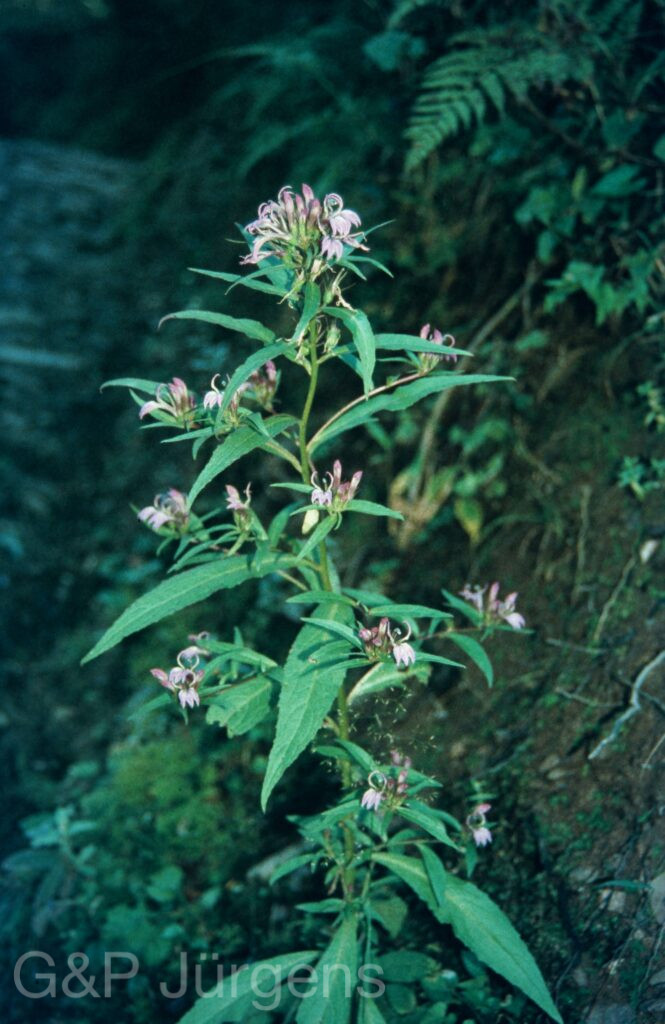
Lobelia pyramidalis is a widespread Asian lobelia ranging through the Himalaya and into mainland Southeast Asia and southern China, with GBIF records from India, Nepal, Bhutan, Bangladesh, China, Taiwan, Myanmar, Thailand and Japan (a few extralimital records from the United States represent cultivation or introductions). Its nearly 419 documented occurrences confirm a broad and well-collected distribution. The species grows on grassy banks, open hillsides, forest margins, roadside cuttings and moist disturbed ground from the lowlands up to roughly 2,800 m. The photographed plant from Didina in Garhwal, India, at 2,470 m flowering in September illustrates its preference for the temperate Himalayan zone, where it flowers late in or after the monsoon.

The plant is an erect biennial or short-lived perennial herb with a tall, simple, pyramidal flowering stem reaching up to a metre or more. The leaves are alternate, sessile and crowded below, lanceolate to oblanceolate with finely toothed margins, the lower ones forming a basal rosette. The inflorescence is a long, dense, spike-like terminal raceme of many small zygomorphic flowers, each subtended by a leafy bract; the corolla is bilabiate and pale blue to lilac or whitish, with the two upper lobes erect and the three lower lobes spreading. The fruit is a small two-valved capsule containing numerous minute seeds.

The species belongs to Lobelia subgenus Tupa-related Asian lineages and, like its congeners, contains piperidine alkaloids that render it acrid and medicinally noteworthy in folk traditions. Its tolerance of disturbed and secondary habitats makes it locally common and of no conservation concern. Its wide latitudinal and altitudinal amplitude makes it a useful indicator of the disturbed grassland flora across monsoonal Asia.

Author: Wall. · Sources: POWO (Kew), Flora of China Vol. 19, Flora of Bhutan Vol. 2, GBIF, Lammers: World Checklist and Bibliography of Campanulaceae

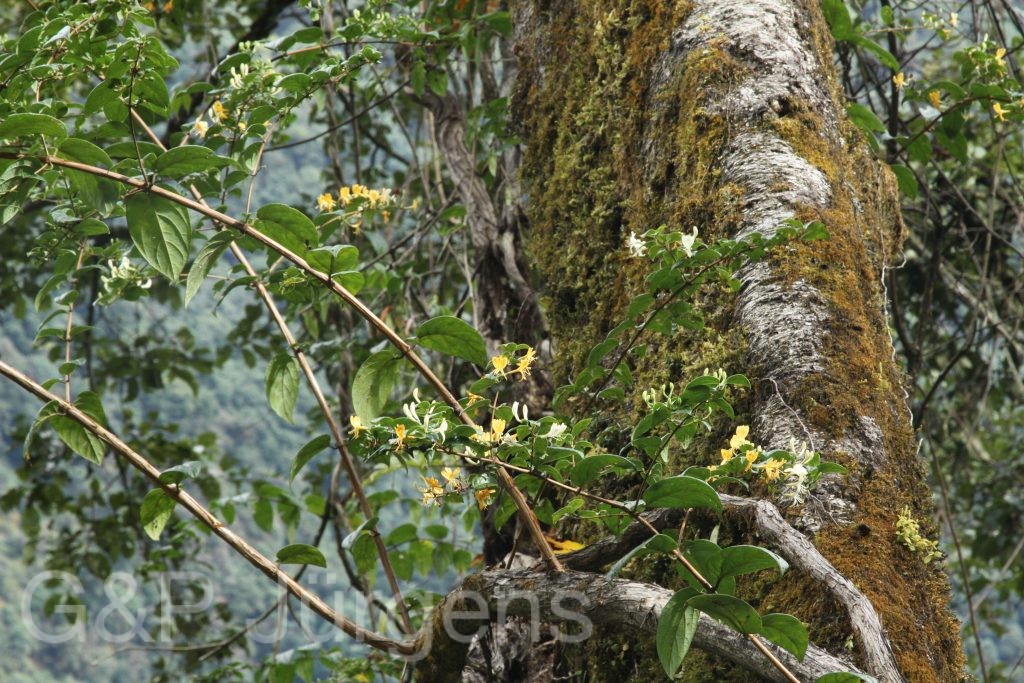
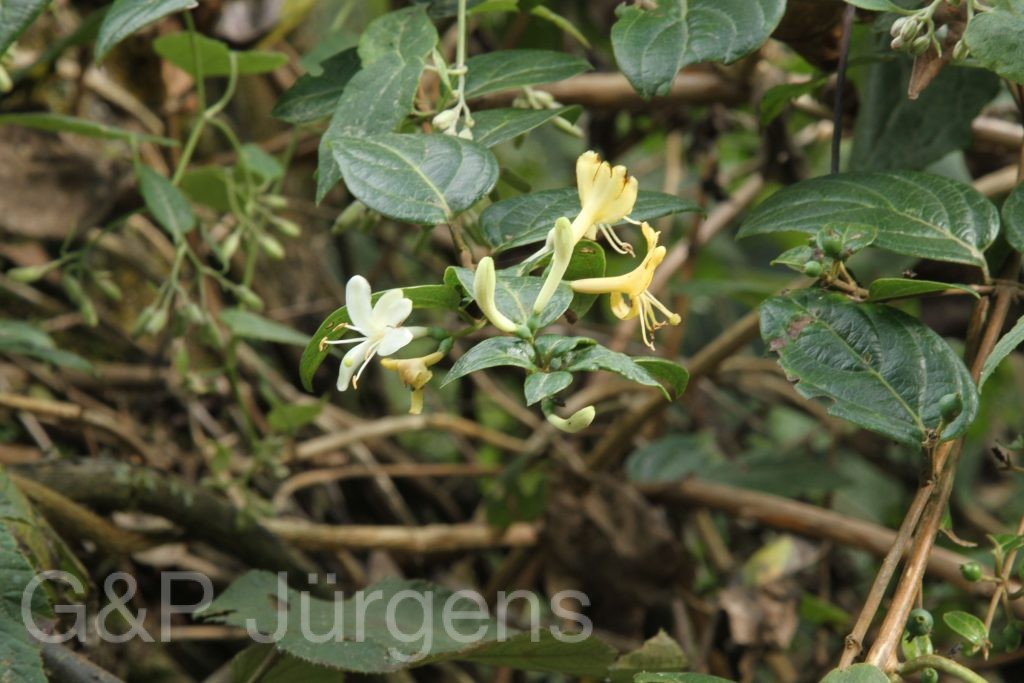
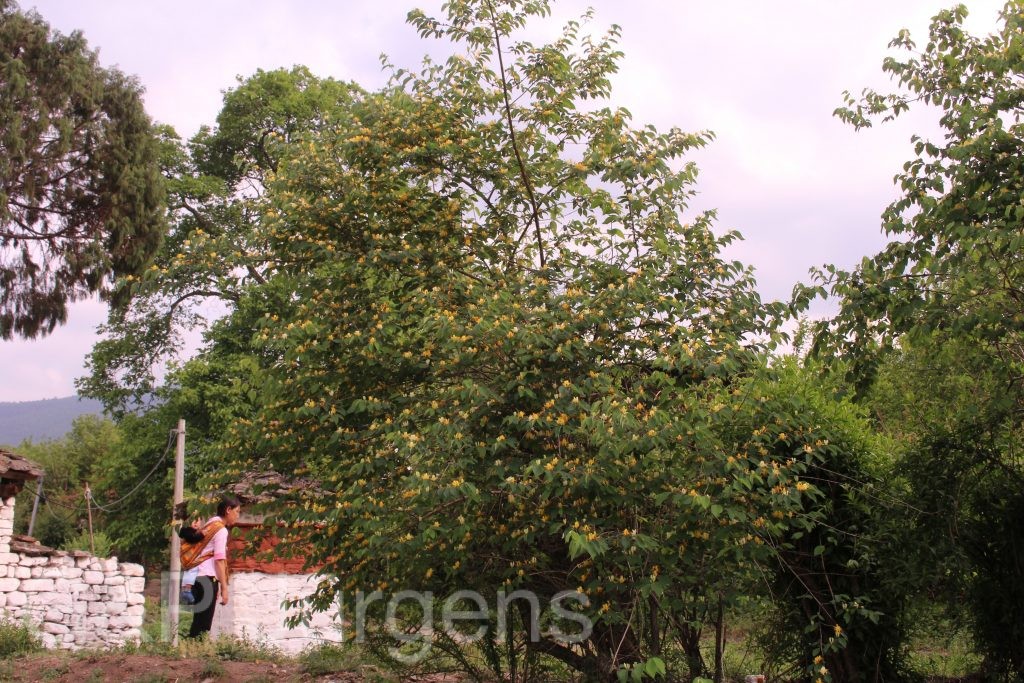
Wall.

BhutanPG2011 3
Bhutan Paro, 2400m June

Description

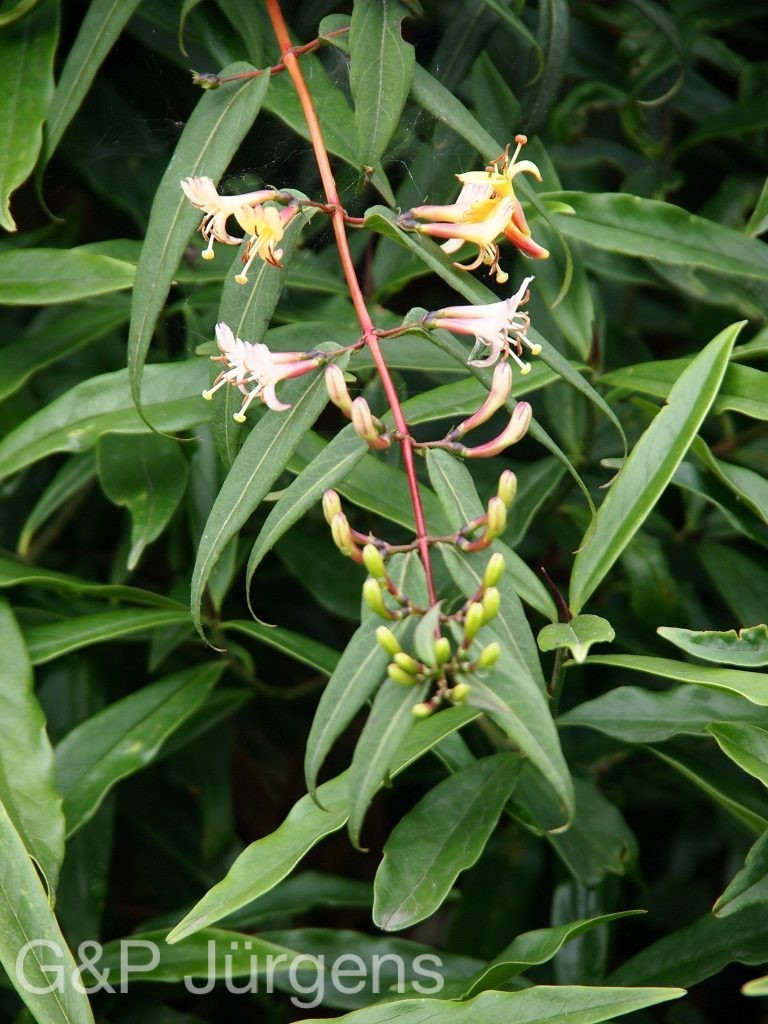
Lonicera acuminata is a widespread evergreen or semi-evergreen climbing honeysuckle distributed across the Himalaya and montane East and Southeast Asia, with native records from China, Taiwan, Japan, Nepal, India, Bhutan, the Philippines and Indonesia, alongside numerous cultivated and naturalised occurrences in Europe and North America; GBIF documents over 12,000 occurrences. It inhabits forest margins, thickets, ravines and scrubby slopes, mostly between 1000 and 3000 m, scrambling over shrubs and trees in mixed broadleaf and conifer forest. The Bhutanese photograph from Paro at about 2400 m in June shows it flowering in its typical mid-elevation woodland-edge setting.

The plant is a twining woody liana with slender, often purplish, hairy young branches. The leaves are opposite, ovate-oblong to lanceolate, acuminate at the apex as the epithet indicates, entire, and frequently ciliate and pubescent along the margins and veins. The flowers are paired in the leaf axils on short peduncles, the corolla bilabiate and tubular, opening pale yellow and often suffused with reddish or purplish tones, the slender tube exceeding the lobes and the stamens and style exserted. The bracts are small and the calyx teeth short. The fruit is a small globose to ovoid berry, ripening purple-black and bearing few seeds.

Within the large, taxonomically intricate genus Lonicera (Caprifoliaceae), L. acuminata belongs to the climbing subgenus Periclymenum and shows considerable variation in indumentum and leaf form across its range, accounting for a long list of synonyms. Its tubular, exserted-stamen flowers point to pollination by long-tongued insects, while the fleshy berries are dispersed by birds. Broadly distributed and frequent, it is of no conservation concern and is grown ornamentally for its fragrant flowers and vigorous growth.

Author: Wall. · Sources: POWO (Kew), GBIF, Flora of China, Flora of Bhutan, Annotated Checklist of the Flowering Plants of Nepal, Rehder's revisions of Lonicera

Wall.

Bhutan2015 600
Bhutan Gasa 1950m, October
Bhutan2015 601
Bhutan Gasa 1950m, October

Description

Lonicera glabrata is a Himalayan and Sino-Himalayan honeysuckle distributed from Nepal and India through Bhutan and Myanmar into south-western China; its c. 150 georeferenced records concentrate along the temperate forest belt of the eastern Himalaya. It grows in broadleaf and mixed forest, forest margins, thickets and shrubby slopes, generally between 1500 and 3000 m. The plant photographed at Gasa in northern Bhutan at 1950 m in October occupies the temperate forest zone, where its autumn fruiting follows the late-spring to early-summer flowering typical of the species.

It is a glabrous deciduous shrub, sometimes scandent, 1.5-3 m tall, distinguished as the epithet "glabrata" implies by its smooth, hairless foliage. The leaves are opposite, ovate to lanceolate, acuminate, entire and rather thin in texture. The flowers are borne in axillary pairs on a slender common peduncle, each two-lipped and creamy-white to pale yellow, fragrant, with a slender tube. Paired bracteoles subtend the ovaries. The fruit is a paired berry, the two ripening red to purplish-black, the partly fused pairs offering a conspicuous food reward. The four to five stamens and slender style are exserted from the corolla mouth.

Described by Wallich (as Wall.), L. glabrata belongs to Lonicera section Coeloxylosteum of the Caprifoliaceae, a group of paired-flowered Himalayan shrubs. The tubular, nectar-rich flowers are pollinated by bees and long-tongued insects, while the colourful berries are dispersed by birds. The species is widespread within its range and locally common in forest understorey, with no significant conservation concern, though it is sensitive to deforestation of mid-elevation broadleaf woodland.

Author: Wall. · Sources: POWO (Kew), GBIF, Flora of Bhutan, Flora of China, Flora of Nepal, Rehder's monograph of Lonicera (Caprifoliaceae)

Hardw.

Bhutan2014 1083
Bhutan Paro 2000m, May

Description

Lonicera quinquelocularis is a deciduous shrub of the Himalayan and Sino-Himalayan temperate zone, ranging from Afghanistan and Pakistan eastward through India, Nepal and Bhutan into south-western China; with some 873 georeferenced records it is among the better-documented honeysuckles of the region (European and North American records reflect cultivation). It grows in open forest, scrub, forest margins, riverine thickets and rocky hillsides, chiefly between 1500 and 3000 m. The illustrated plant from Paro in western Bhutan at 2000 m, flowering in May, typifies its occurrence in the temperate broadleaf and conifer zone where it forms part of the understorey and forest-edge shrub community.

It is a much-branched shrub 2-5 m tall with greyish, peeling bark and ovate to elliptic, entire leaves that are softly pubescent, often greyish beneath, arranged in opposite pairs. The flowers are borne in axillary pairs on a common peduncle; each is two-lipped and creamy-white, ageing to yellow, fragrant, with a short tube. The bracts and bracteoles subtend the paired ovaries. A diagnostic feature reflected in the epithet is the five-locular ovary. The most striking character is the fruit: the two berries of each pair fuse and ripen translucent, the seeds visible within, turning purple-black, giving rise to the English name "translucent-berry honeysuckle."

Described by Hardwicke (as Hardw.), the species belongs to Lonicera section Coeloxylosteum of the Caprifoliaceae. The conspicuous semi-transparent berries are dispersed by birds, while the nectar-rich flowers attract bees and other insects. The species is widespread and locally common, used as fuel and hedging and occasionally cultivated as an ornamental; it is not considered threatened.

Author: Hardw. · Sources: POWO (Kew), GBIF, Flora of Bhutan, Flora of Pakistan, Flora of China, Rehder's monograph of Lonicera (Caprifoliaceae)