Tag:

Myanmar

Flowers of the Myanmar Himalaya — 604 species recorded from northern Myanmar (Burma) and the eastern Himalayan borderlands, a biodiversity hotspot linking the Himalaya to the mountains of Yunnan and Southeast Asia. The region’s forests and alpine slopes hold a rich flora of rhododendrons, orchids, balsams and gentians. Every page gives a botanical description, distribution, habitat and flowering time with the original photograph.

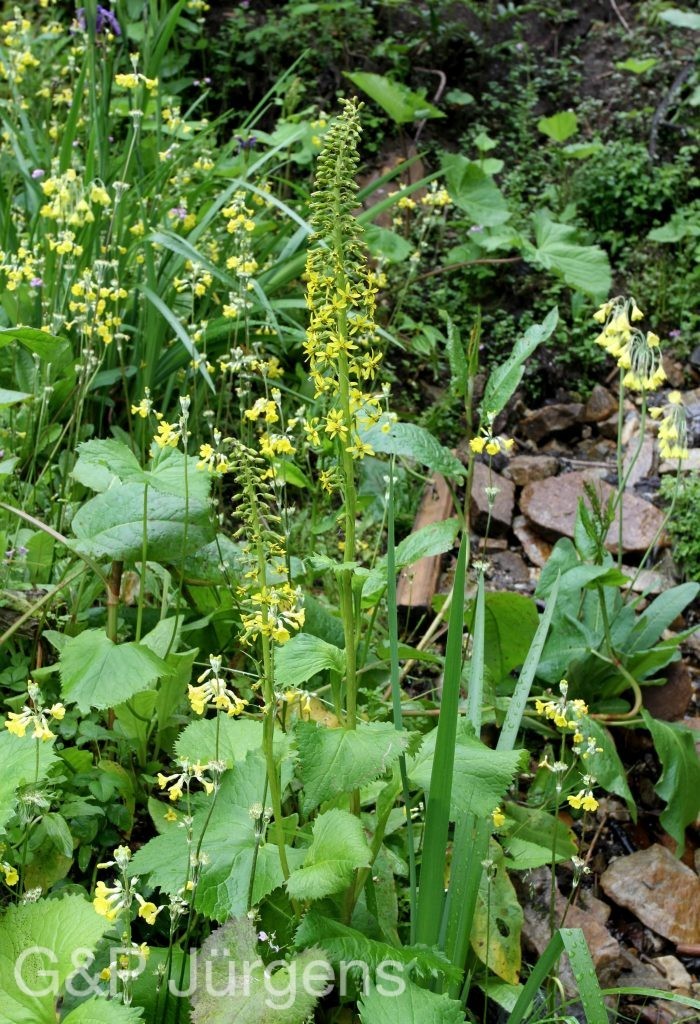
Turcz.

BhutanPG2011 810 01 01
Bhutan Chele-La 3900m, August

Also: Primula smithiana Craib / Primula sikkimensis Hook.f.

Description

Ligularia fischeri is a robust, broadly distributed temperate-montane composite ranging across East Asia and the Himalaya, recorded from Japan, Korea (KR, KP), China, Russia, Mongolia, Nepal, India, Bhutan, Pakistan and Myanmar (JP, KR, CN, RU, NP, KP, IN, MN, BT, PK, MM), with nearly 3000 GBIF occurrences; further records from Europe and North America reflect cultivation and naturalisation. It favours moist, fertile situations: streamsides, wet meadows, marshy ground, forest margins and damp open slopes from montane to alpine elevations. The photographed plant grew on the Chele-La in Bhutan at 3900 m in August, flowering through the monsoon among tall herbaceous vegetation, here associated with Primula smithiana and Primula sikkimensis.

It is a stout perennial herb with a thick, fibrous-rooted rhizome producing erect flowering stems up to 1–1.5 m or more. The basal leaves are large, long-petiolate and reniform-cordate, with toothed margins and a broad, deeply cordate base, the petioles sheathing at the stem; cauline leaves diminish upward and become more clasping. The inflorescence is an elongate terminal raceme or narrow panicle of several to many radiate capitula, each subtended by a cylindric involucre of few phyllaries. The heads bear a few showy, ligulate, golden-yellow ray florets surrounding numerous yellow tubular disc florets. The fruit is a glabrous, cylindric, ribbed cypsela crowned by a pappus of whitish to brownish capillary bristles.

Ligularia (tribe Senecioneae) is a large genus of the temperate Old World especially diverse in the mountains of China; L. fischeri, described by Turczaninow, is among its most familiar and economically used species, its young leaves and shoots being gathered as a traditional vegetable and the plant valued horticulturally for damp gardens. Ecologically it is a tall-herb component of moist subalpine communities and a generalist food source for late-summer pollinators. Common and widespread, it is of least conservation concern.

Author: Turcz. · Sources: POWO (Kew), GBIF, Flora of China Vol. 20-21, Flora of Bhutan, Flora of Nepal, Ligularia monograph (Liu, Senecioneae of China)
(C.B.Clarke) Hand.-Mazz.

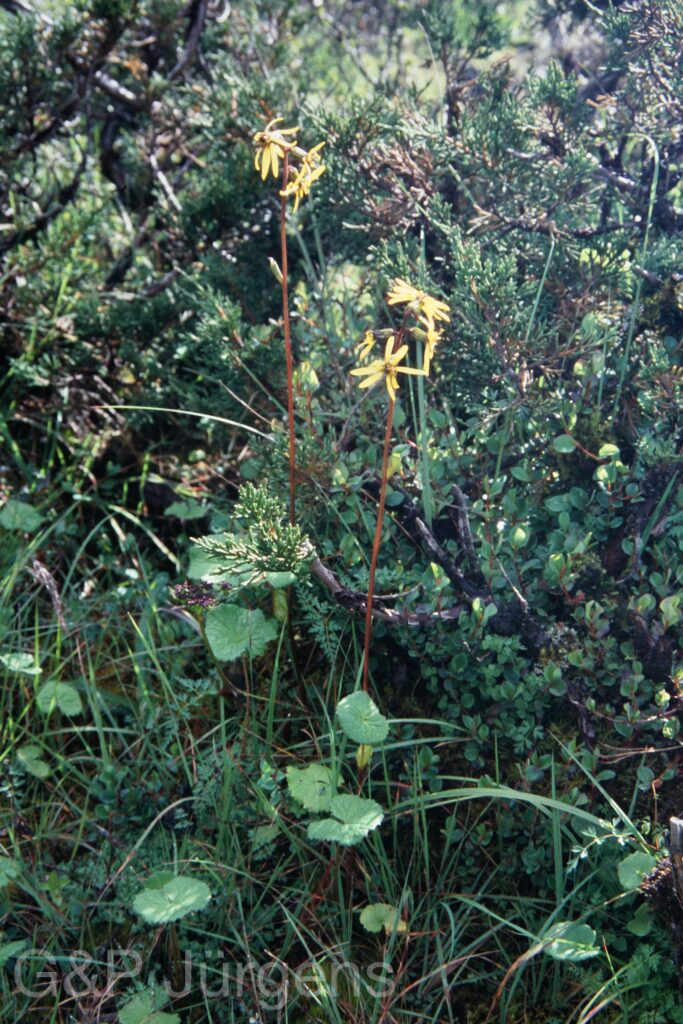
Sikkim2003 242 G332
Sikkim Dzongri 4100m, August

Description

Ligularia hookeri is a robust perennial herb of the eastern Himalaya and adjacent China, recorded from China, Nepal, India, Bhutan and Myanmar, with around 574 georeferenced records spanning the subalpine and alpine zones. It inhabits alpine meadows, open grassy slopes, forest margins and damp, rocky ground, often in seepage areas and along streams. The plant photographed at Dzongri in Sikkim at 4100 m, flowering in August, is characteristic of its high-elevation summer habitat, where it flowers at the height of the monsoon among other tall meadow herbs.

It arises from a stout rootstock and produces a cluster of large basal leaves on long, sometimes purplish petioles; the blades are broadly reniform to orbicular-cordate, palmately veined and toothed at the margin. The flowering stem is erect and stout, bearing few to several large capitula in a lax raceme or corymb. Each head has an involucre of broad bracts and is radiate, with conspicuous yellow to orange-yellow ligulate ray florets surrounding numerous tubular yellow disc florets. The fruit is a glabrous cylindrical cypsela crowned by a pappus of fine bristles.

Ligularia, of tribe Senecioneae, is distinguished from related Senecio and Cremanthodium by its radiate, erect, large-headed inflorescences and broad cordate leaves; C. B. Clarke first described this taxon, later combined in Ligularia by Handel-Mazzetti. The showy heads are pollinated by bumblebees, butterflies and flies of the high meadows, and the pappose cypselae are wind-dispersed. The species is widespread across the eastern Himalaya and of no current conservation concern, though it forms a conspicuous and ecologically important element of alpine pastures.

Author: (C.B.Clarke) Hand.-Mazz. · Sources: POWO (Kew), GBIF, Flora of China, Flora of Bhutan, Annotated Checklist of the Flowering Plants of Nepal, Liu monograph of Ligularia

(DC.) Pimenov & Kljuykov

Sikkim2003 98 P135
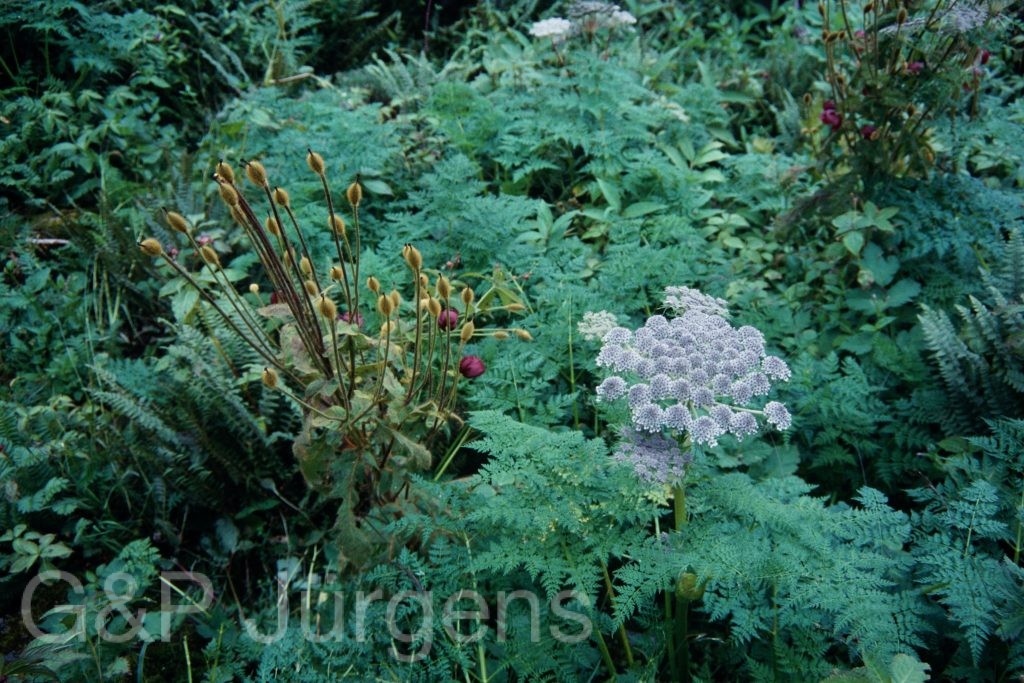
Sikkim below Dzongri 3700m 08.2003
Sikkim2003 161 P214
Sikkim below Dzongri 3900m, August

Description

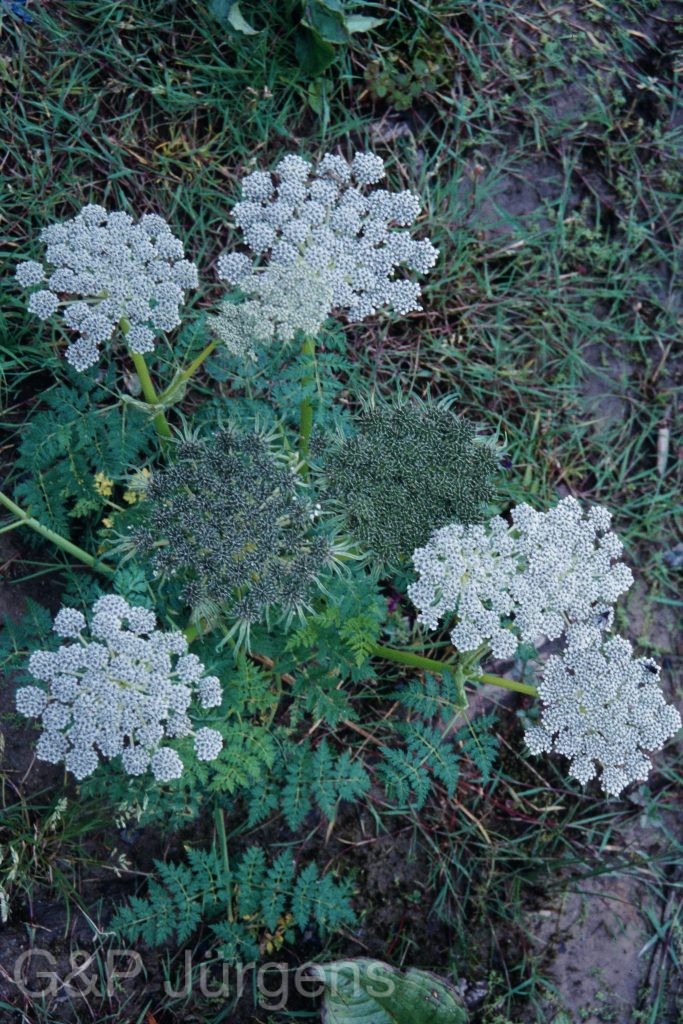
Ligusticopsis wallichiana is a Himalayan umbellifer ranging from Pakistan and northern India through Nepal, Sikkim and Bhutan into south-western China and Myanmar. The 406 GBIF records lie chiefly within this native arc, the European and North American points reflecting herbarium and garden material. It occupies subalpine and alpine meadows, forest clearings, open slopes and streamsides, generally between about 3000 and 4300 m, where it is a characteristic tall herb of moist Himalayan grassland. The plants photographed below Dzongri in Sikkim at 3700 to 3900 m in August illustrate the species at the height of the monsoon flowering season on these damp, herb-rich slopes.

It is a stout, glabrous perennial herb arising from a thick, aromatic rootstock, with erect, ribbed, often purplish stems. The leaves are large and several times pinnate (ternate-pinnate), the ultimate segments lanceolate to ovate and toothed, the lower leaves long-petiolate with sheathing bases. The inflorescence is a terminal compound umbel with numerous rays, subtended by narrow bracts and bracteoles; the small flowers are white. The fruit is an oblong-ellipsoid, dorsally compressed schizocarp with prominently winged lateral ribs, splitting into two mericarps.

Long familiar as Selinum wallichianum (its WordPress URL preserves that name), the species was transferred to Ligusticopsis by Pimenov and Kljuykov in their revision of the Selinum-Ligusticum complex, reflecting carpological and molecular evidence. The aromatic root has a history of use in Himalayan folk medicine. Common and widespread across its range, it is not considered threatened and forms a conspicuous element of high Himalayan meadow vegetation.

Author: (DC.) Pimenov & Kljuykov · Sources: POWO (Kew), GBIF, Flora of Bhutan, Flora of China, Pimenov & Kljuykov Umbelliferae revision

Lilium nanum

by GP Jürgens

Klotzsch

BhutanPG2011 250
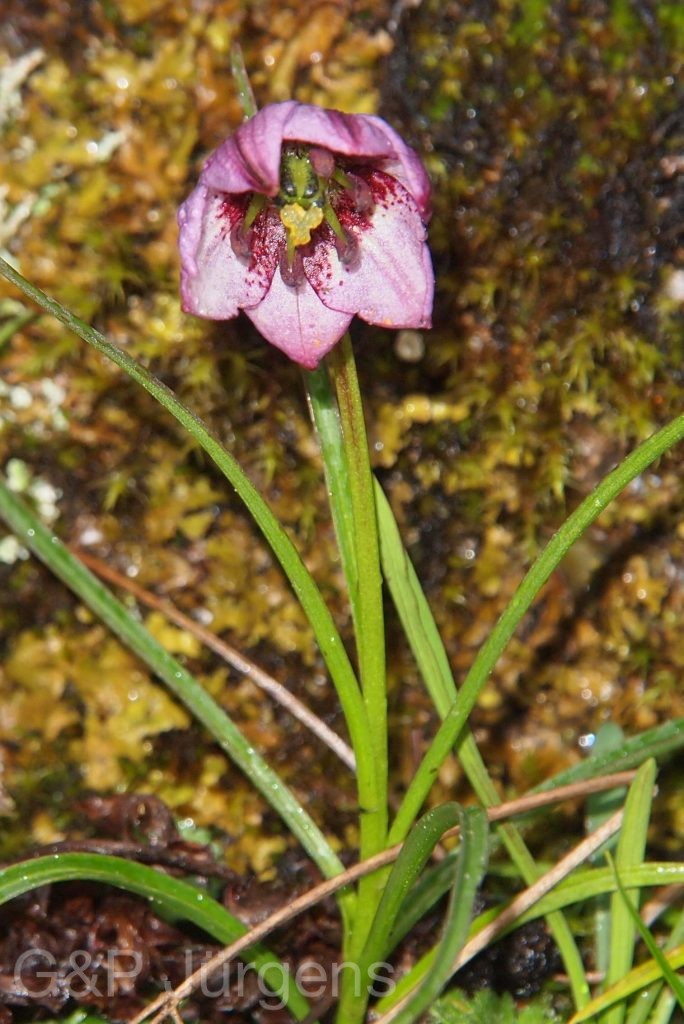
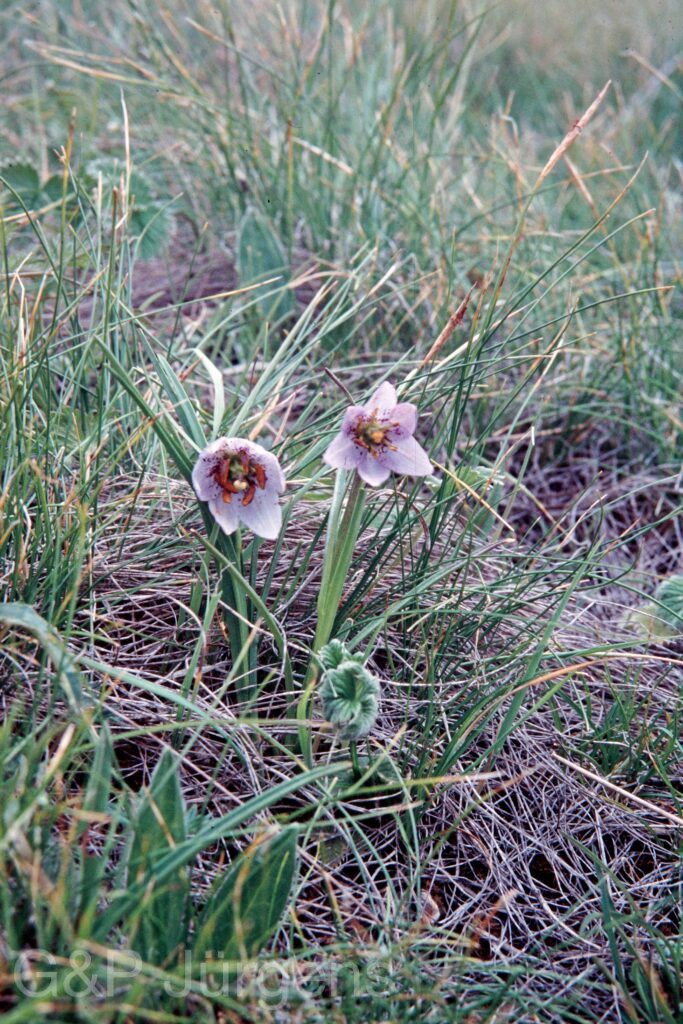
Bhutan Tsochenchen, 3800m June
Nepal 99 123 ergebnis
West-Nepal South of Rara-Lake 3650m, June

Description

Lilium nanum is a diminutive alpine lily of the Himalaya and adjoining China, recorded from China, Nepal, India, Bhutan and Myanmar, with GBIF documenting some 410 occurrences (outlying records reflecting cultivation). It grows in subalpine and alpine meadows, open Rhododendron and juniper scrub, grassy slopes and stabilised screes, generally between 3000 and 4500 m. The photographed plants were found in Bhutan at Tsochenchen at 3800 m and in West Nepal south of Rara Lake at 3650 m, both in June, when this early-summer flowerer nods amid the freshly greening alpine sward soon after snowmelt.

It is a small bulbous perennial, the bulb ovoid with few lanceolate scales, giving rise to a slender, erect, unbranched stem rarely exceeding a hand-span in height. The leaves are scattered, linear to narrowly lanceolate, sessile and grass-like. The plant bears a solitary (rarely paired), nodding, broadly campanulate flower with six free, recurved-tipped tepals coloured pinkish-purple to deep purple, often tessellated or veined darker within and yellowish at the base. There are six stamens with versatile anthers and a superior, three-locular ovary topped by a slender style; the fruit is an erect, ribbed, loculicidal capsule producing flat, winged, wind-dispersed seeds.

The species belongs to genus Lilium (Liliaceae) and is among the smallest of all true lilies, sometimes treated with var. flavidum, a yellow-flowered variant of the eastern Himalaya. Prized by alpine gardeners, it is challenging in cultivation owing to its high-altitude requirements. While its broad range buffers it against extinction, local populations face pressure from grazing, bulb collection and warming-driven habitat shifts.

Author: Klotzsch · Sources: POWO (Kew), GBIF, Flora of China, Flora of Bhutan, Flora of Nepal, The Genus Lilium (Comber/McRae)

Lilium nepalense

by GP Jürgens

D.Don

BhutanPG2011 703 01 01
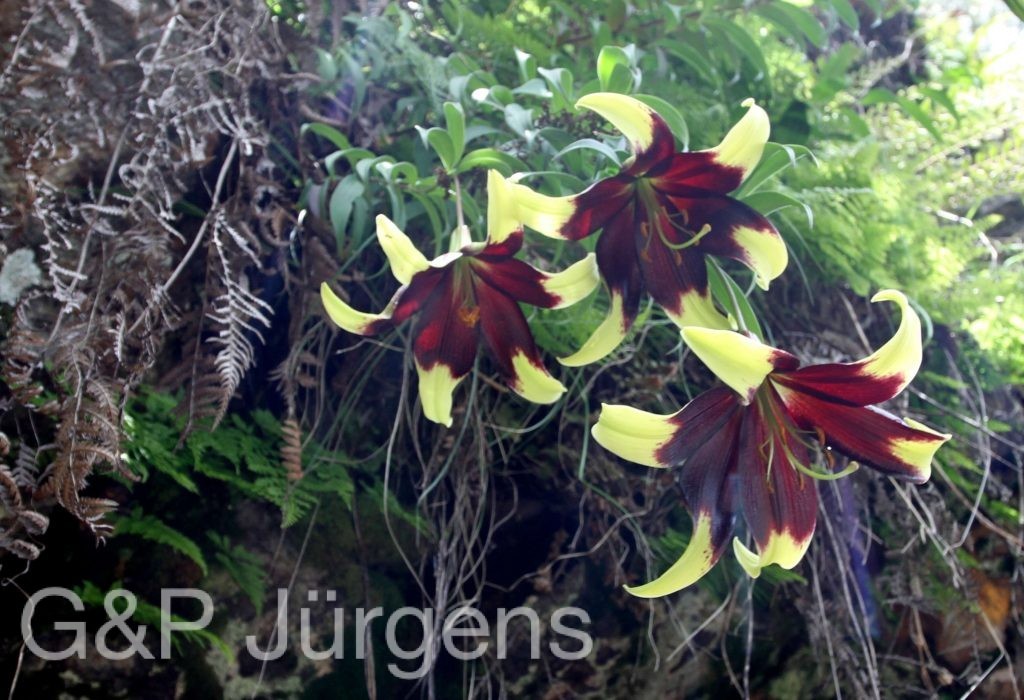
Bhutan Luksor, 2700m July
Nepal 99 900 ergebnis
West-Nepal Sepka 2700m, July
Nepal 99 1005 ergebnis
West-Nepal Sepka 2700m, July
Nepal 99 1006 ergebnis
West-Nepal Sepka 2700m, July

Description

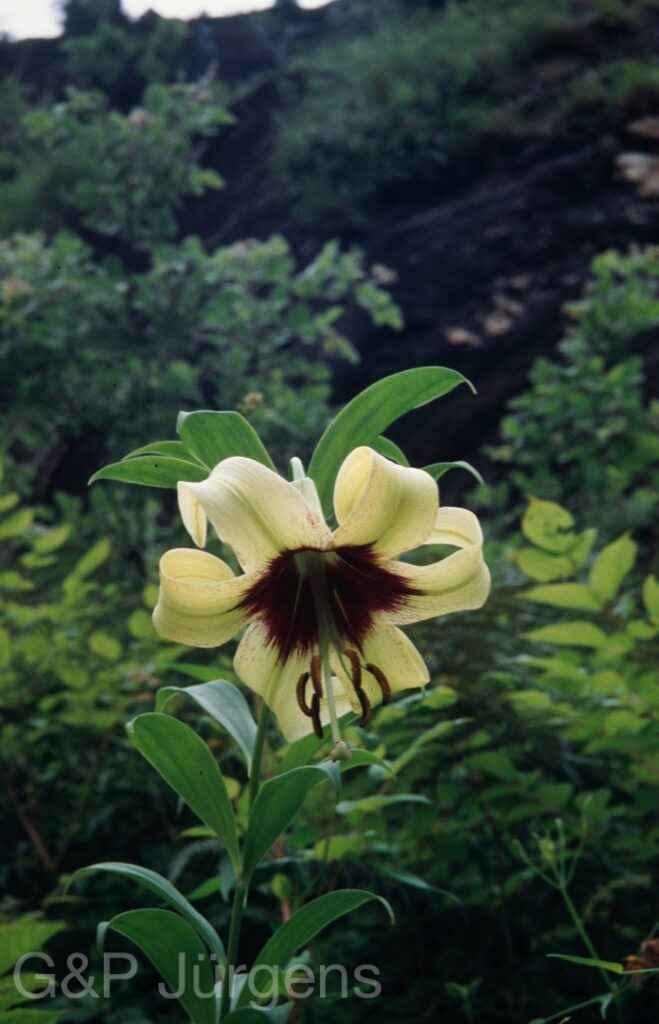
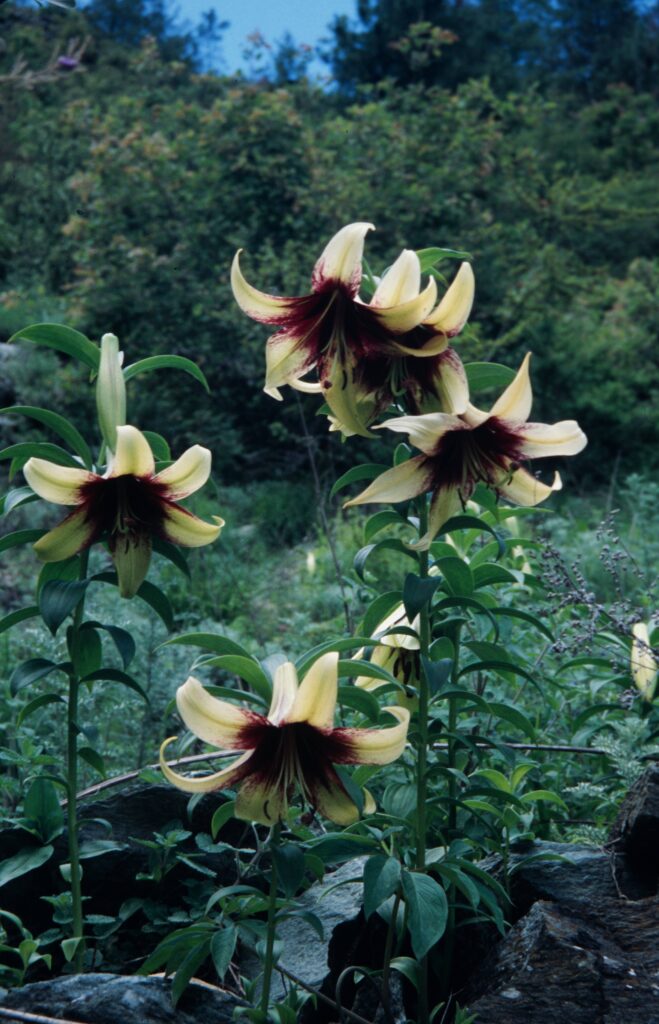
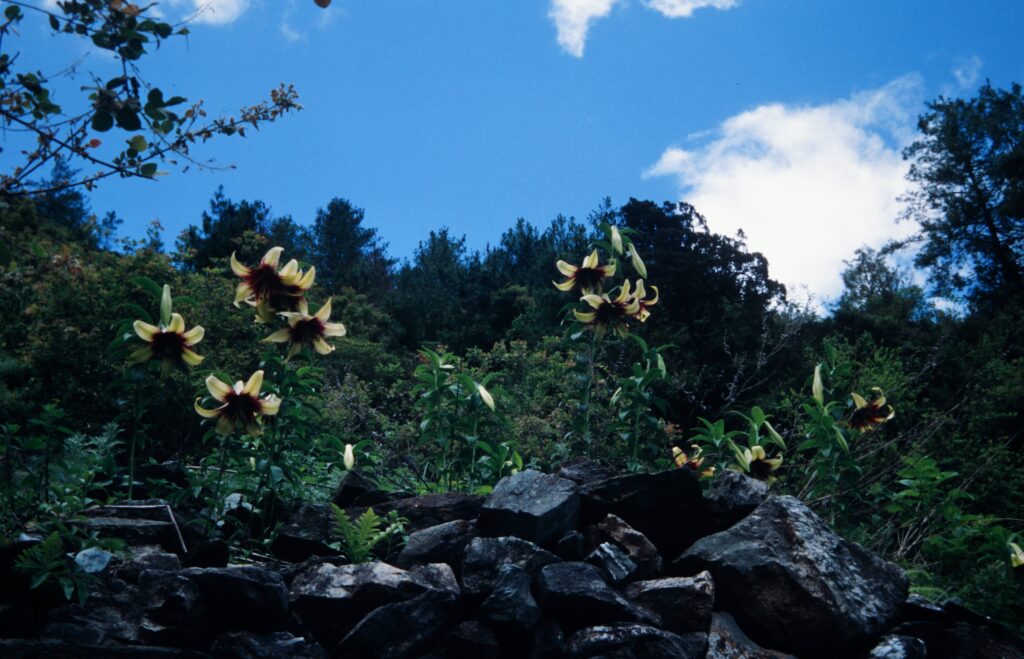
Lilium nepalense is a striking Himalayan lily native to Nepal, Bhutan, northern India and south-western China, extending into Myanmar; GBIF records (around 206 occurrences) also reflect numerous cultivated and naturalised collections in Europe and South-East Asia, as it is widely grown as an ornamental. In its natural range it inhabits cool, humid temperate to subalpine slopes, growing among shrubberies, in forest clearings, on grassy banks and along the margins of oak, rhododendron and conifer woodland on rich, well-drained humic soils. The collections from Luksor in Bhutan and Sepka in western Nepal, both near 2700 m in July, illustrate its mid-montane elevation and monsoon-season flowering.

The plant grows from a stoloniferous bulb with loosely imbricate white scales, the underground stem often wandering before emerging. The erect, leafy aerial stem bears scattered, lanceolate to ovate, sessile or shortly petiolate leaves with prominent parallel venation. The flowers, borne singly or few in a lax raceme, are large, nodding and broadly funnelform to trumpet-shaped; the six recurved tepals are luminous greenish-yellow to pale chartreuse with a dramatic deep maroon to purple-black throat blotch, giving the species its horticultural celebrity. The six stamens carry large versatile anthers, and the slender style ends in a capitate three-lobed stigma. The superior ovary develops into an erect, oblong, three-valved capsule with numerous flat, winged seeds.

Described by D. Don, Lilium nepalense belongs to a Sino-Himalayan group of trumpet lilies and is prized in cultivation for its colour contrast and fragrance, having earned horticultural recognition in temperate gardens. Its stoloniferous bulb is an adaptation for vegetative spread through loose montane soils. While locally frequent, wild populations face pressure from over-collection of bulbs, grazing and habitat disturbance, making sustainable propagation important for relieving demand on natural stands.

Author: D.Don · Sources: POWO (Kew), GBIF, Flora of Bhutan, Flora of China, Stainton Flowers of the Himalaya, The Genus Lilium (Jefferson-Brown)

Schult.f.

Bhutan2012 515
Bhutan Wangdi 2600m, September
Bhutan2012 516
Bhutan Wangdi 2600m, September

Description

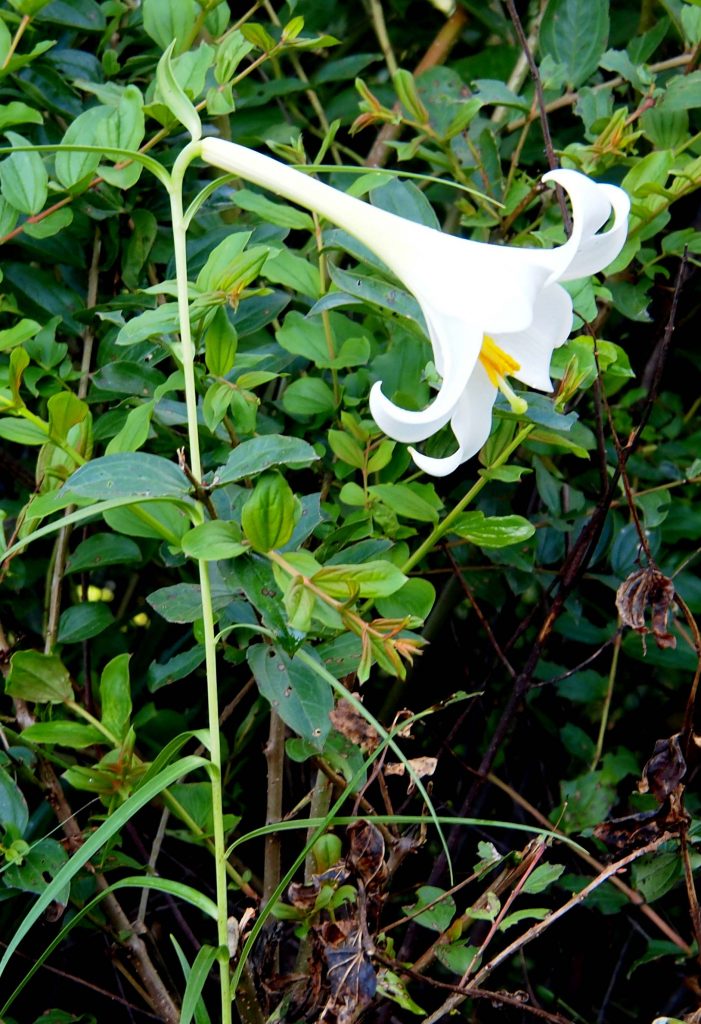
Lilium wallichianum is a tall, trumpet-flowered lily of the Himalaya, ranging from northern India and Nepal through Bhutan to Myanmar, with naturalised or cultivated occurrences elsewhere; GBIF records (c. 217) reflect both its native distribution and its presence in cultivation. In the wild it grows on grassy and shrubby slopes, in forest clearings, scrub and along the margins of temperate forest, generally between about 1500 and 2700 m. The photographed plant from Wangdi (Wangdue Phodrang) in Bhutan, at 2600 m and flowering in September, is characteristic of its late-summer to autumn flowering in mid-elevation montane vegetation.

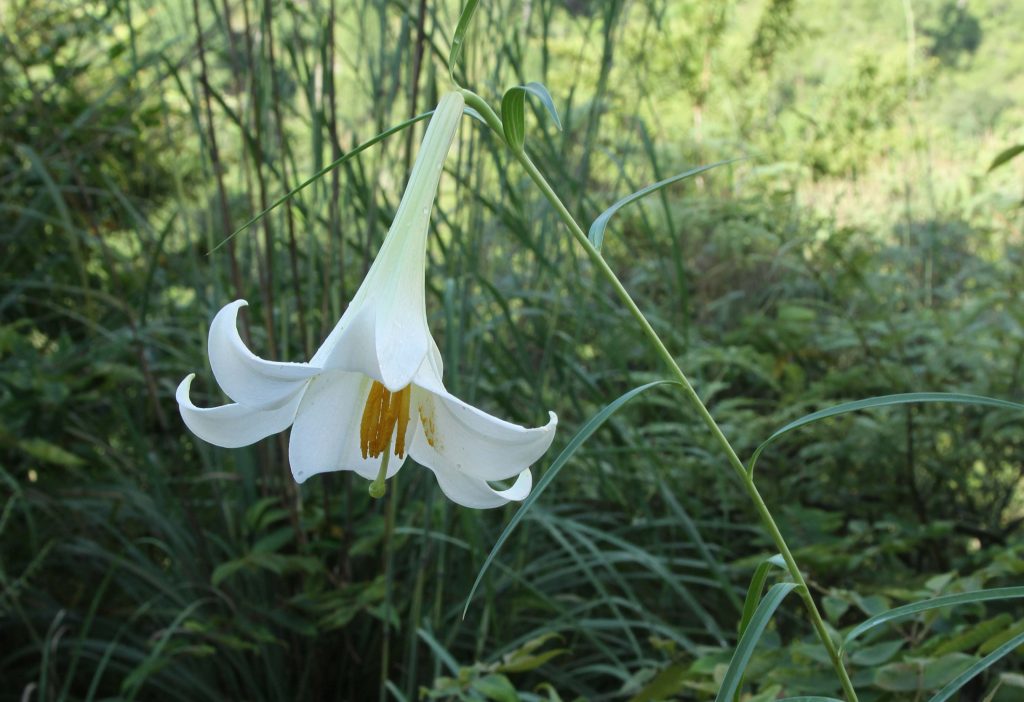
The plant arises from a stoloniferous, white, scaly bulb and produces a stout, erect stem up to 1–2 m tall bearing scattered, narrowly linear to linear-lanceolate leaves. The flowers are large, solitary or few, long-tubular to trumpet-shaped and powerfully fragrant; the six perianth segments are white, often flushed greenish or rose-purple externally, recurving at the tips. The flowers are typically held horizontally or somewhat declined, with six stamens bearing versatile anthers and a long, slender style ending in a three-lobed stigma. The fruit is an erect, oblong, loculicidal capsule containing numerous flat, papery, wind-dispersed seeds.

Lilium wallichianum belongs to the trumpet- or Aurelian-lily group (section Leucolirion / Lilium), the Asiatic trumpet lilies prized in horticulture for their fragrance and elegant form; it has contributed to the breeding of garden trumpet hybrids. The epithet commemorates Nathaniel Wallich, the Danish botanist who pioneered the study of Himalayan flora. Although locally not uncommon, wild populations of showy lilies are vulnerable to bulb collection and grazing, warranting habitat protection.

Author: Schult.f. · Sources: POWO (Kew), GBIF, Flora of Bhutan, Flora of Nepal, The Genus Lilium (Liberty Hyde Bailey / Comber classification)

(Roxburgh ex D. Don) Brühl

Bhutan2015 73
Bhutan Wangdi Phodrang 1500m, October
Bhutan2012 410
Bhutan Wangdi 2700m, September
Bhutan2012 654
Bhutan Tserang 1200m, September

Description

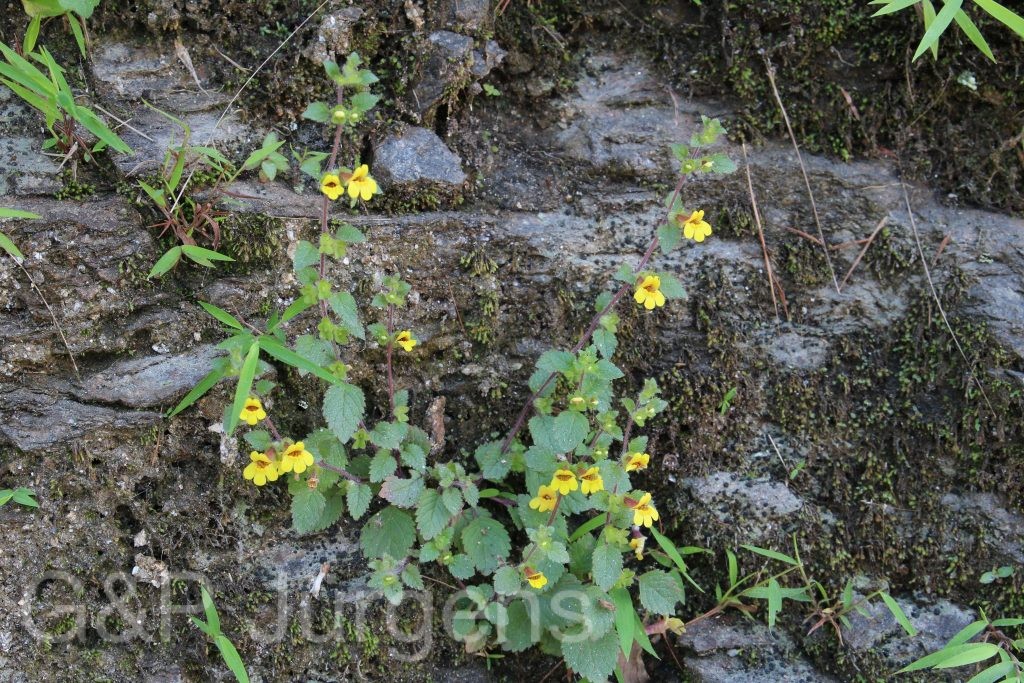
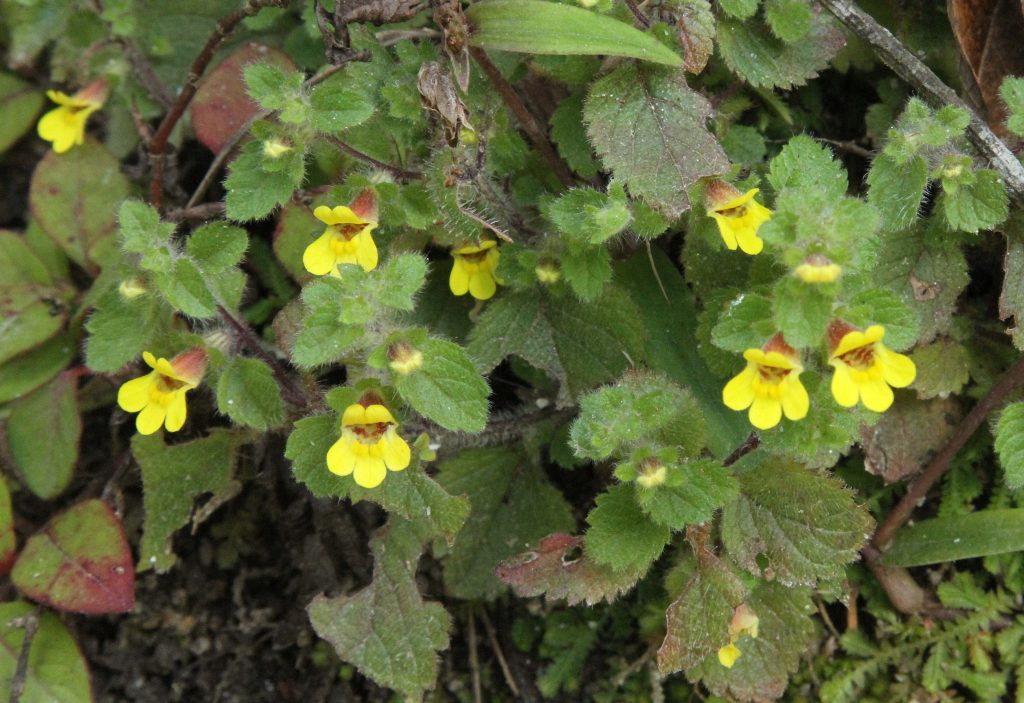
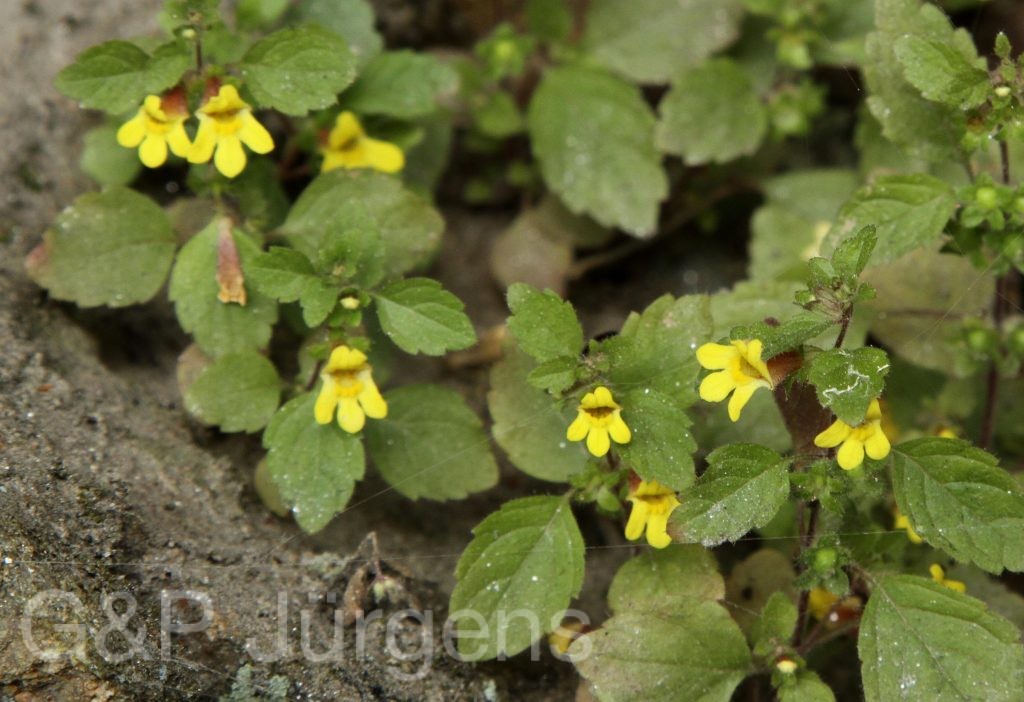
Lindenbergia muraria is a widespread herb of warm-temperate and subtropical Asia, recorded across India, China, Nepal, Bhutan, Myanmar, Thailand, Vietnam, Cambodia, Bangladesh, Pakistan and into parts of Arabia and Africa; GBIF logs 585 occurrences over this broad range. As its epithet implies, it is a colonist of old walls, rock crevices, stony banks, roadsides and waste ground, generally from the lowlands up to about 2700 m. The illustrated plants come from several Bhutanese stations, Wangdue Phodrang at 1500 m in October, Wangdue at 2700 m in September and Tsirang at 1200 m in September, spanning the autumn flowering of this ruderal species across a wide elevational band.

The plant is an erect to ascending annual or short-lived perennial herb, the stems softly pubescent and often glandular-hairy. Leaves are opposite below and sometimes alternate above, ovate to ovate-lanceolate, with a serrate margin and short petiole. The flowers are solitary or paired in the upper leaf axils, forming a leafy terminal spike-like inflorescence; each has a tubular, five-toothed calyx and a yellow, two-lipped corolla with a short tube, the lower lip three-lobed and often marked. There are four didynamous stamens, and the superior ovary ripens into a small, ovoid, septicidal capsule containing numerous minute seeds.

Lindenbergia, long placed in Scrophulariaceae, is now referred to the broadly circumscribed Plantaginaceae (consistent with the input family) following molecular reclassification, occupying a basal position near the family's scrophularioid lineages. POWO and GBIF accept the name. Its tolerance of walls and disturbed mineral substrates underlies its wide, weedy distribution across monsoon Asia.

Author: (Roxburgh ex D. Don) Brühl · Sources: POWO (Kew), GBIF, Flora of China, Flora of Bhutan, Flora of British India, Annotated Checklist of the Flowering Plants of Nepal, Revision of Lindenbergia (Plantaginaceae/Scrophulariaceae)

(Roxb.) Rehder

Bhutan2015 82
Bhutan Wangdi Galegphug 800m, October
Bhutan2015 83
Bhutan Wangdi Galegphug 800m, October

Description

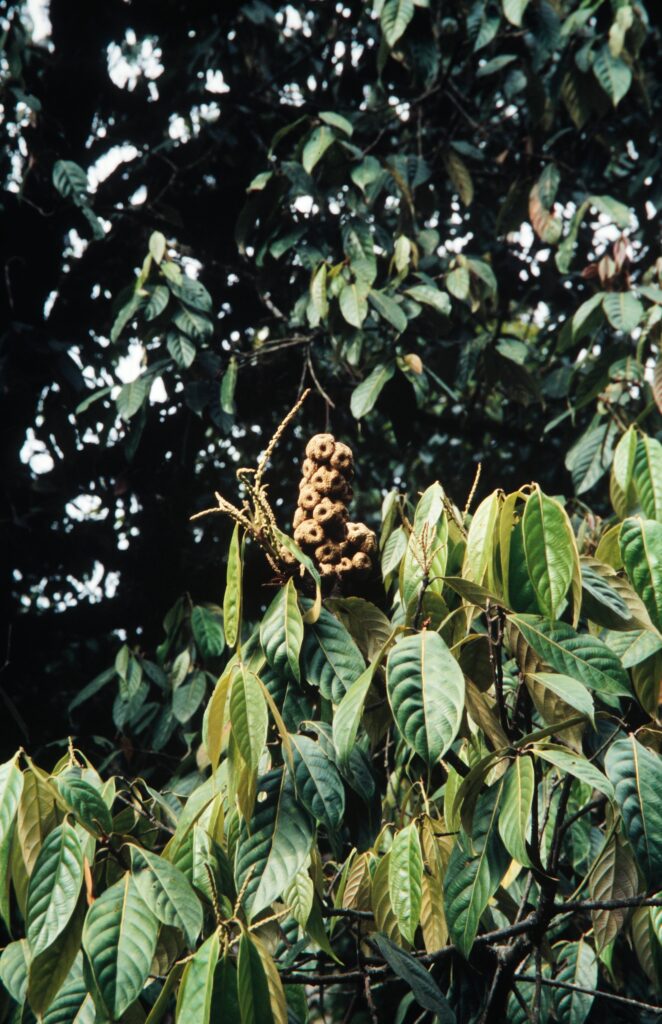
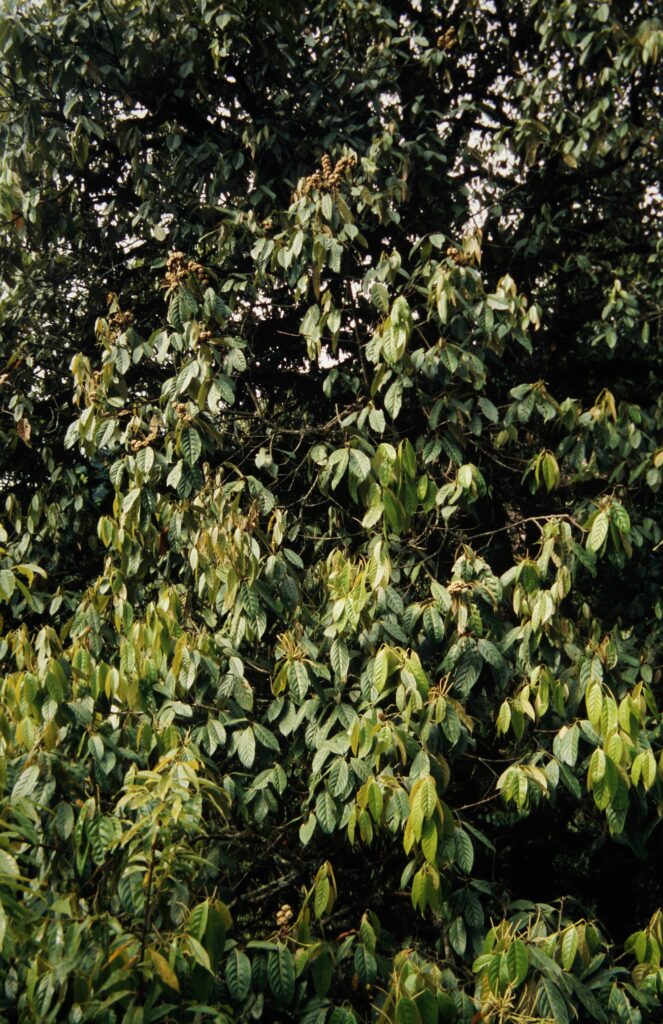
Lithocarpus fenestratus is an evergreen stone-oak widely distributed across the eastern Himalaya and Indo-Burma, ranging from Nepal, Bhutan and north-eastern India through Bangladesh, Myanmar, Thailand, Laos, Vietnam and Cambodia into southern China and Taiwan. GBIF aggregates over 1080 occurrences, concentrated in the montane forests of South-East Asia and the Sino-Himalayan borderlands. It is a canopy or sub-canopy tree of subtropical and warm-temperate evergreen broad-leaved forest, often in mixed laurel-oak associations on hill slopes, generally from the lowlands up to around 2000 m. The tree photographed in Bhutan near Wangdue/Gelephu (800 m, October) reflects its presence in the warm foothill forests of the southern Bhutanese duars.

The species is a medium to large tree with greyish, fissured bark and stout twigs. The leaves are simple, alternate, coriaceous, elliptic to oblong-elliptic, entire and pinnately veined, glabrous and lustrous above and often glaucous or thinly tomentose beneath. The flowers are unisexual, borne in erect catkin-like spikes, the male inflorescences elongate and the female flowers seated singly or in clusters at the base of mixed spikes. The diagnostic fruit is the acorn: a hard nut wholly or largely enclosed by a woody cupule covered in concentric, often lamellate rings, maturing over more than one season and dispersed by gravity and rodents.

Lithocarpus is a large Asian genus distinguished from Quercus by its erect (rather than pendulous) male catkins and its frequently enclosing, ringed cupules. L. fenestratus, transferred to the genus by Rehder, has a broad range and considerable foliar variation, and several infraspecific taxa have been recognised regionally. As a widespread, often dominant forest tree it is not globally threatened, though locally exploited for timber and important as mast for forest wildlife.

Author: (Roxb.) Rehder · Sources: POWO (Kew), GBIF, Flora of China, Flora of Bhutan, Flora of Thailand, Annotated Checklist of the Flowering Plants of Nepal, monograph of Asian Lithocarpus (Camus)

Rehder

Description

Lithocarpus pachyphyllus is a stone oak widely distributed across the eastern Himalaya and adjacent Southeast Asia, with records from China, India, Nepal, Myanmar, Bhutan, Thailand and Vietnam and a substantial occurrence base of around 229 georeferenced collections. It is a canopy and subcanopy tree of montane evergreen broadleaved forest, forming a conspicuous element of the laurophyllous oak-laurel belt on humid, well-drained slopes. The tree photographed at Ramman in West Bengal (India) at about 2250 m in May represents its characteristic position in the mid-montane cloud-forest zone, where Lithocarpus and Quercus species dominate the wet temperate forests of the southern Himalayan front.

It is an evergreen tree with a dense, rounded crown and grey, finely fissured bark. The leaves are coriaceous and pachyphyllous (thick-textured, as the epithet indicates), elliptic to oblong-lanceolate, entire-margined, glabrous and glossy above and dull beneath, with a prominent midrib and arcuate lateral veins. As in all Lithocarpus, the staminate flowers are borne in erect, rigid catkins rather than the pendulous catkins of true oaks, while the pistillate flowers are clustered at the base of the inflorescence axis. The fruit is a thick-walled nut seated in a woody cupule whose scales are typically arranged in concentric rings; the acorns are often densely aggregated along the rachis.

Lithocarpus is distinguished from Quercus chiefly by its erect staminate catkins and frequently aggregated, sessile fruits, features expressed clearly in this species. Its heavy, animal-dispersed acorns provide an important mast resource for montane wildlife, while the species contributes substantially to the structure and carbon stock of Himalayan oak forest. Although not currently of conservation concern across its broad range, local populations are reduced by timber extraction and the conversion of mid-elevation forest, making it a key indicator of intact wet temperate woodland.

Author: Rehder · Sources: POWO (Kew), GBIF, Flora of China Vol. 4, Flora of Bhutan Vol. 1, Flora of Nepal, Camus Les Chênes: Monographie du genre Lithocarpus

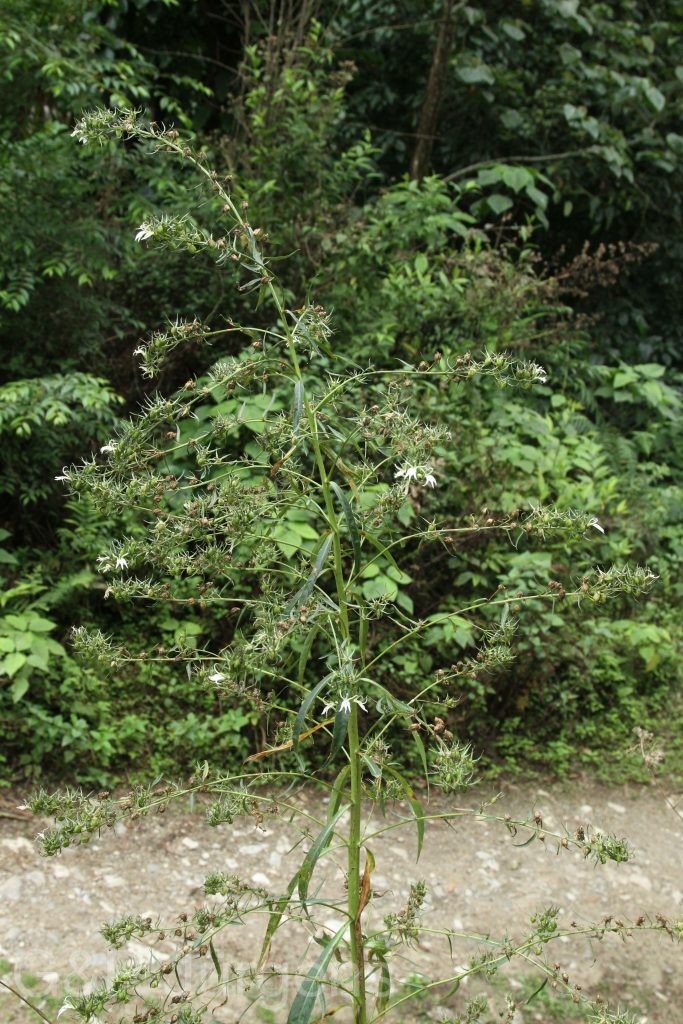
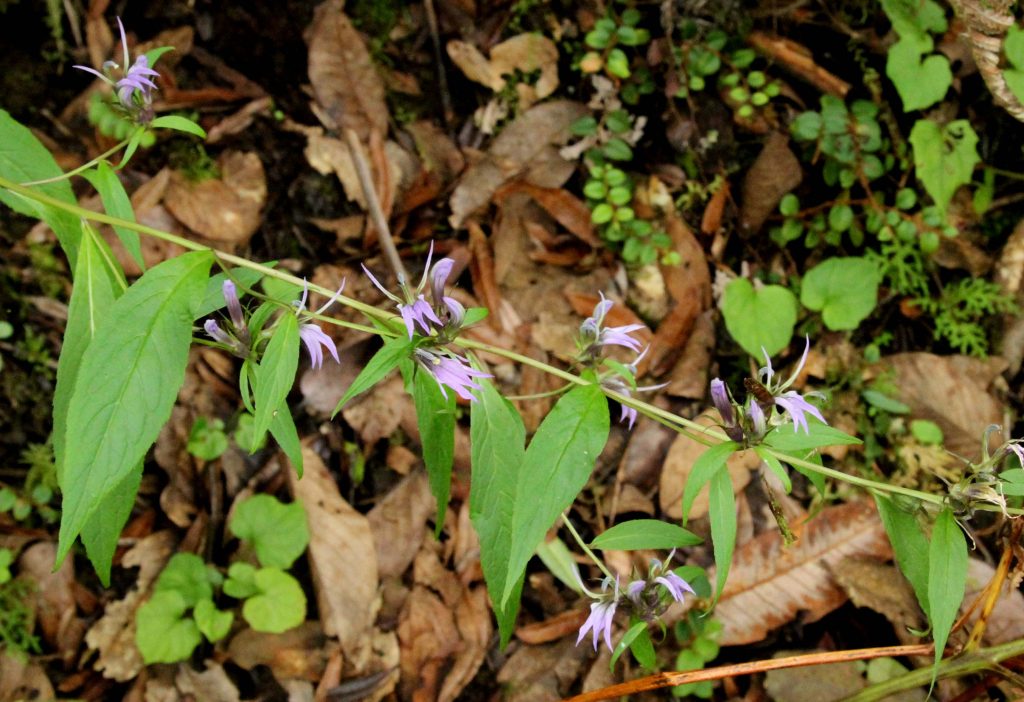
Roth

Bhutan2015 35
Bhutan Dochu-La 2700m, October
Bhutan2015 36
Bhutan Dochu-La 2700m, October
Bhutan2014 286
Bhutan Trithangebe at a farm, 800m May
Bhutan2012 338
Bhutan Dochu-La 3000m, September

Description

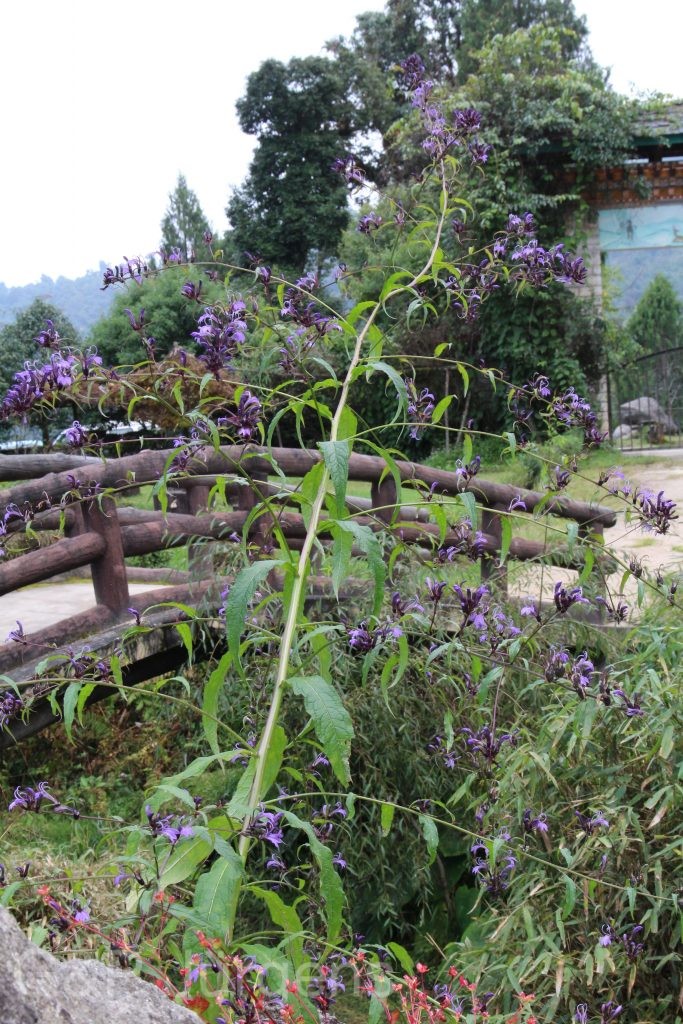
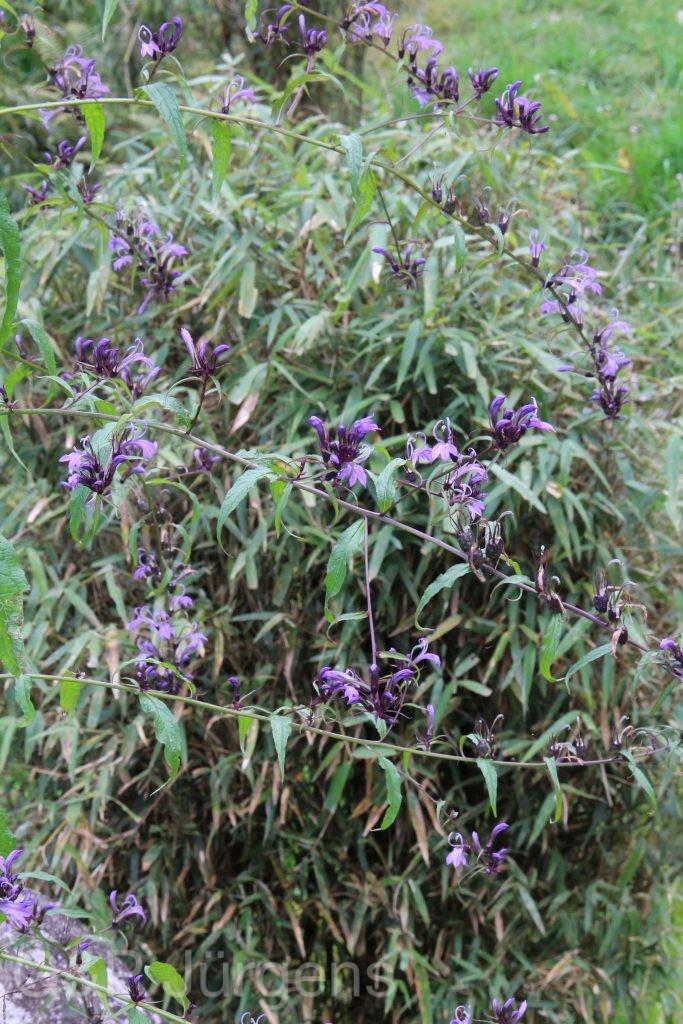
Lobelia nicotianifolia is a robust, wide-ranging lobelia of the Indian subcontinent and tropical Asia, documented from India, China, Sri Lanka, Nepal, the Philippines, Thailand, Myanmar, Indonesia, Bangladesh, Vietnam, Bhutan, Laos, Malaysia and Taiwan, with around 763 occurrences making it one of the better-collected species in this set; New World records reflect cultivation or error. It occupies a wide altitudinal span, from warm foothill farmland to cool montane forest margins, favouring open, disturbed, moist ground along roadsides, clearings and field edges. The Bhutanese collections illustrate this breadth, ranging from a farm at Trithangebe at about 800 m in May to the Dochu-La between roughly 2700 and 3000 m flowering in September and October.

It is a tall, stout biennial or short-lived perennial herb, sometimes exceeding two metres, with an erect, little-branched stem exuding acrid milky latex when cut. The leaves are large, alternate, lanceolate to elliptic, finely toothed and tobacco-like in size and texture, hence the epithet nicotianifolia, the lower ones forming a substantial basal array. The flowers are borne in a long, dense terminal raceme; each is zygomorphic with a tubular, two-lipped corolla, typically pale greenish-white to bluish, split nearly to the base, the upper lip of two narrow lobes and the lower of three, the stamens connate into a staminal tube around the style. The fruit is a many-seeded capsule dehiscing at the apex.

Within Campanulaceae, Lobelia is a large genus distinguished by strongly bilabiate flowers and syngenesious anthers, and tall species such as this are notable for their imposing single-stemmed inflorescences and their pyridine alkaloids related to lobeline, giving them a long history of medicinal and folk use. The acrid latex deters herbivores, and the protandrous flowers favour outcrossing by insect visitors. Common and adaptable across a vast range, the species is of no conservation concern and behaves as a colonist of disturbed, anthropogenic habitats.

Author: Roth · Sources: POWO (Kew), GBIF, Flora of Bhutan, Flora of China, Flora of British India, Lammers's monographic studies of Lobelia (Campanulaceae)