Tag:

Nepal

Flowers of Nepal — 1313 wild plant species documented from the Nepalese Himalaya, from subtropical foothills to high alpine meadows above 4,000 m. Nepal’s dramatic elevation gradient makes it one of the richest botanical regions on Earth, home to rhododendrons, primulas, gentians and the famed blue poppies (Meconopsis). Every entry gives a botanical description, native distribution, habitat and flowering season, alongside the original field photograph and the location where it was taken.

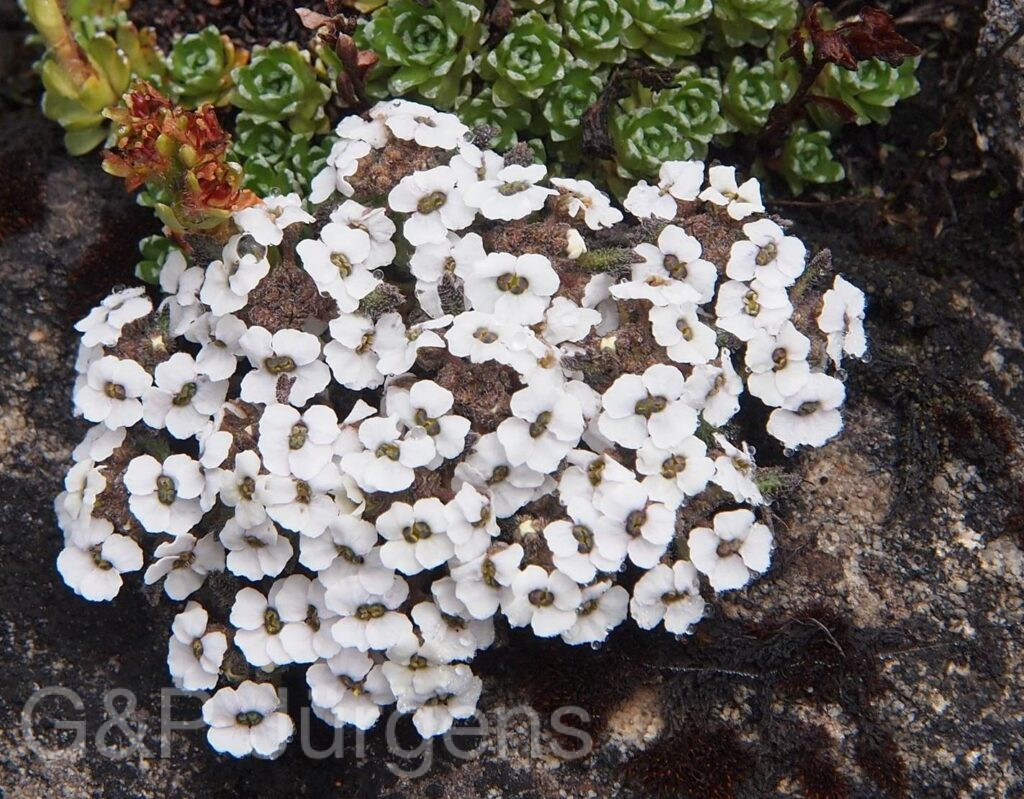
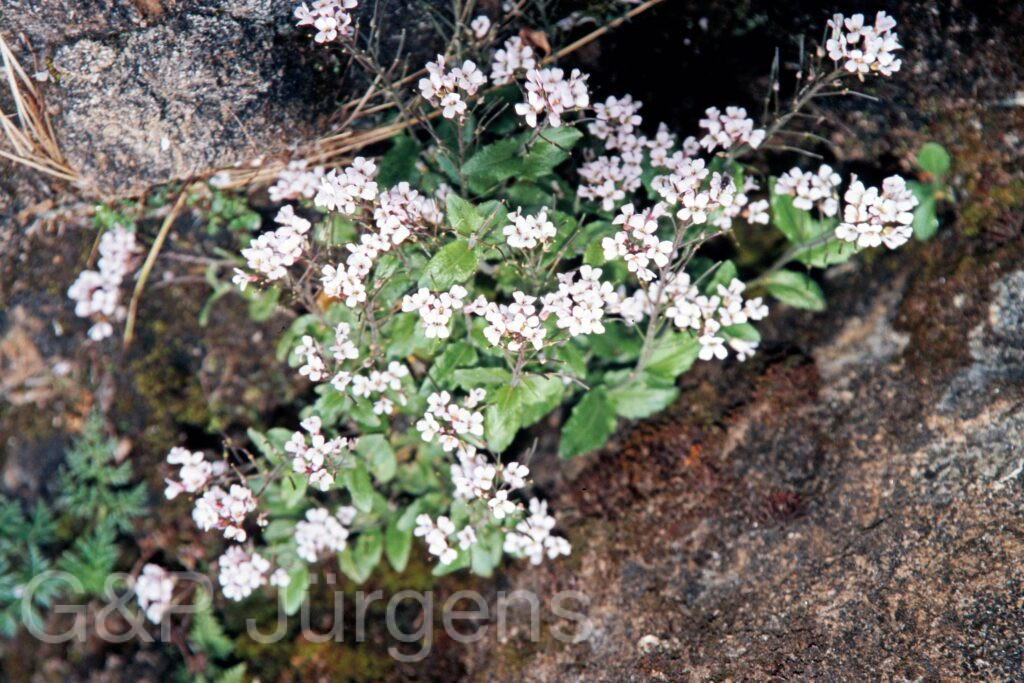
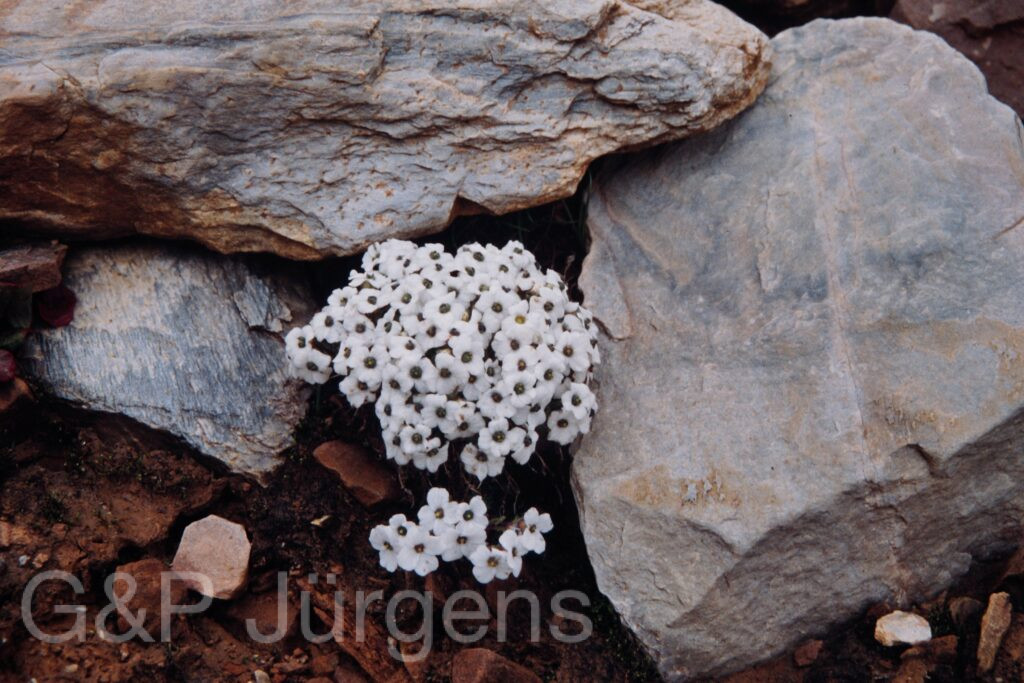
(H.Pearson) Al-Shehbaz & Warwick
Bh09 80 G136
Bhutan Jangchulakha, 3750m June

Description

Aphragmus hobsonii is a high-alpine crucifer of the eastern Himalaya and adjacent Tibet, with GBIF records from Nepal, Bhutan and China amounting to roughly 55 occurrences (a Papua New Guinea datum is almost certainly an error). It is a plant of cold, open habitats near the upper limit of vegetation: stony alpine turf, scree margins, moraines and damp gravelly flushes, typically between about 3500 and 4500 m. The specimen depicted at Jangchulakha in Bhutan at 3750 m in June, flowering early in the alpine summer, is characteristic of its occupation of exposed, well-drained high-mountain ground.

It is a small, cushion- or tuft-forming perennial herb arising from a branched caudex topped by a slender taproot. The leaves are mostly basal, entire, oblanceolate to spathulate and narrowed to the base, often forming a dense rosette. The flowers are arranged in a short, congested raceme that scarcely elongates in fruit; the four petals are white to pale lilac, clawed and arranged in the cruciform pattern of the family. The fruit is a short silique or silicula, the seeds in one or two rows, dehiscing by two valves in the typical brassicaceous manner.

Aphragmus is a small genus of cold high-mountain Asia whose generic limits have been revised through molecular study, and the present species was transferred here by Al-Shehbaz and Warwick from earlier placements, reflecting ongoing reassessment of Himalayan crucifer relationships. Its compact, low-growing habit is a clear adaptation to wind exposure, intense radiation and short growing seasons at extreme elevations. Though not formally assessed, its specialised high-alpine niche makes it potentially vulnerable to upslope habitat compression under climate change.

Author: (H.Pearson) Al-Shehbaz & Warwick · Sources: POWO (Kew), GBIF, Flora of China (Brassicaceae), Flora of Bhutan, Annotated Checklist of the Flowering Plants of Nepal, Al-Shehbaz systematic studies in Brassicaceae
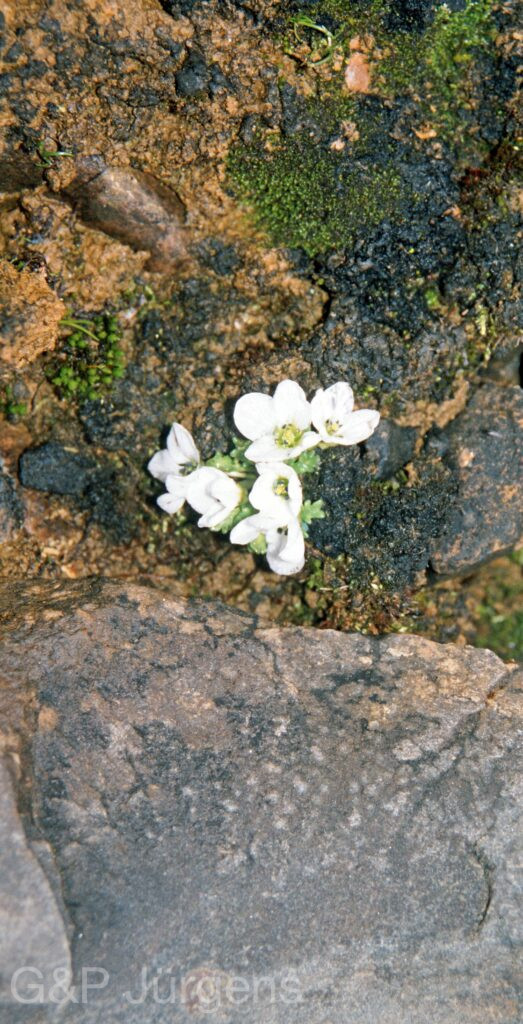
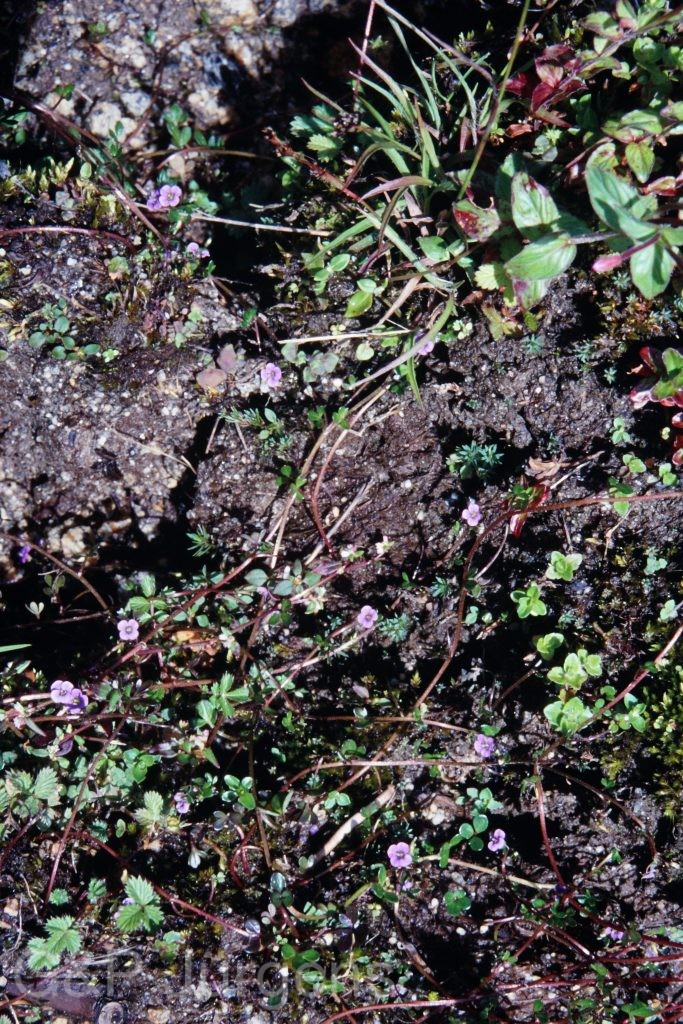
(H.Hara) Al-Shehbaz, G.Q.Hao & J.Q.Liu

Nepal 99 640 ergebnis
West-Nepal Kagmara-La 5000m, July

Description

Aphragmus minutus is a diminutive crucifer of the highest Himalaya and adjacent Tibetan and Indo-Burmese mountains, recorded by GBIF (about 34 occurrences) from India, Nepal, Bhutan, Myanmar and China. It is a subnival specialist, growing on open scree, gravelly flats, moraine and fine-grained alpine soils close to the upper limit of vascular plant life, where it endures intense cold, wind and a very short growing season. The illustrated plant was found in West Nepal on the Kagmara La at about 5000 m in July, an elevation typical of the species and among the highest at which flowering plants occur in the region.

It is a tiny, low, cushion- or rosette-forming perennial, as the epithet minutus implies, arising from a slender taproot crowned by a branched caudex. The leaves are crowded, small, entire or slightly toothed, spathulate to oblanceolate, glabrous or nearly so. The flowers are borne in a short, congested raceme scarcely raised above the foliage; each has four greenish sepals and four small white to pale lilac petals in the cruciform arrangement of the family, with tetradynamous stamens. The fruit is a short, oblong to ellipsoid silicula with a persistent style, dehiscing to release a few seeds, its compact form an adaptation to the brief alpine summer.

The species was transferred to Aphragmus on molecular and morphological grounds, the binomial (H. Hara) Al-Shehbaz, G. Q. Hao and J. Q. Liu reflecting that recombination; Aphragmus is a small high-Asian genus of the Brassicaceae centred on the Himalaya and Tibetan Plateau. As an extreme high-altitude cushion plant it is naturally rare and very localised but faces few direct threats beyond climate change, which may compress the habitat of such ceiling-dwelling alpines.

Author: (H.Hara) Al-Shehbaz, G.Q.Hao & J.Q.Liu · Sources: POWO (Kew), GBIF, Flora of China, Flora of Bhutan, Annotated Checklist of the Flowering Plants of Nepal, Al-Shehbaz's systematic studies of Asian Brassicaceae

(Hook.f. & Thomson) Jafri

Nepal 99 635 ergebnis
West-Nepal Kagmara-La 5000m, July
BhutanPG2011 415
Bhutan Ludlow-Sherriff-Trail Warrtlang-La 4400m July

Description

Aphragmus oxycarpus is a high-alpine crucifer of the Himalaya and adjacent Central Asian and Tibetan ranges, recorded from China, India, Nepal, Pakistan, Bhutan, Afghanistan, Tajikistan, Kyrgyzstan and Myanmar; the distant European, British, Japanese and North American records (some 540 in total) represent database artefacts rather than native populations. It is a cushion- to mat-forming plant of the upper alpine and subnival zones, colonising scree, moraine, gravelly slopes and the margins of late-lying snow. The documented stations are strikingly high: West Nepal's Kagmara-La at around 5000 m and Bhutan's Warrtlang-La at about 4400 m, both flowering in July during the brief alpine summer.

It is a small perennial herb with a stout, often multicipital caudex topped by rosettes of fleshy, spathulate to oblanceolate leaves with entire or slightly toothed margins. The flowering stems are short and few-leaved, bearing compact corymbose racemes of small white to pale lilac flowers with the four spreading petals and tetradynamous stamens characteristic of the family. The fruit, from which the epithet derives, is an ovoid to lanceolate, acute-tipped silicle that is somewhat flattened and few-seeded, the septum often reduced or perforate as is typical of the genus.

Aphragmus is a small genus of high-mountain Brassicaceae whose generic and species limits have been repeatedly revised through molecular work, and A. oxycarpus, originally described under Hooker and Thomson and later transferred by Jafri, exemplifies the dwarf, snow-bed habit of the group. Such plants endure extreme cold, intense radiation and a very short growing season, relying on the caudex for perennation. The species is widespread across remote high terrain and faces no recognised threat, though alpine cushion communities are increasingly cited as sensitive indicators of climate-driven upslope shifts.

Author: (Hook.f. & Thomson) Jafri · Sources: POWO (Kew), GBIF, Flora of Pakistan, Flora of China, Flora of Bhutan, Al-Shehbaz revisionary studies of Aphragmus (Brassicaceae)

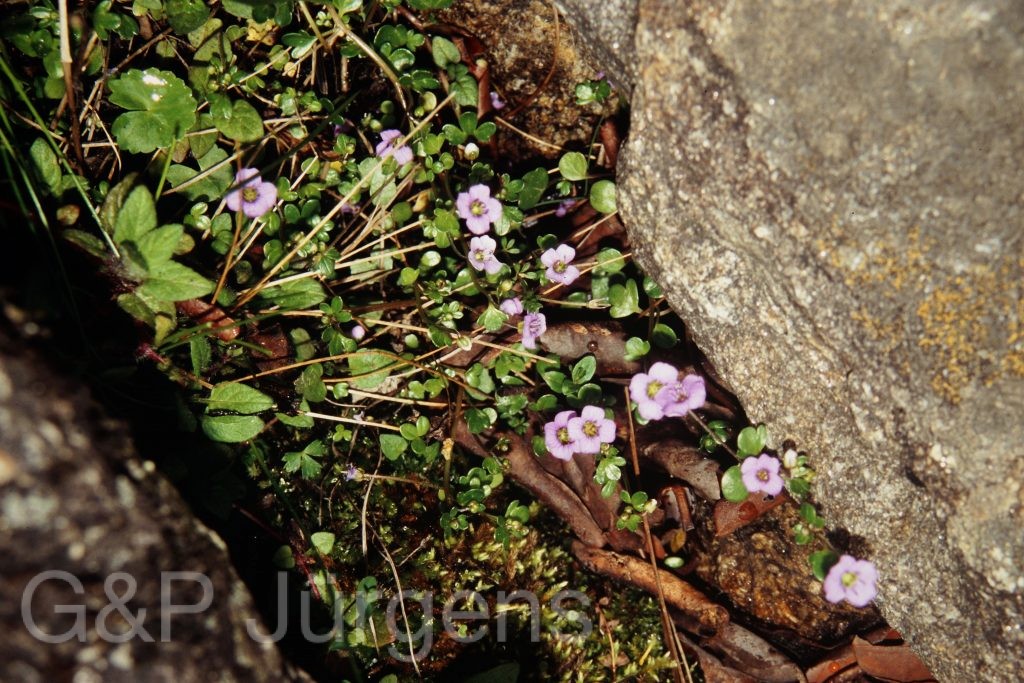
(W.W.Sm.) Al-Shehbaz & Warwick

Sikkim2003 104 P142
Sikkim below Dzongri 3850m, August

Description

Aphragmus serpens is a diminutive alpine crucifer of the eastern and central Himalaya, recorded from India, Nepal, Bhutan and China, with some 74 georeferenced occurrences indicating a scattered but recurrent presence across the high ranges. It is a plant of cold, open alpine habitats — gravelly and stony slopes, moraine debris, rock ledges and the margins of snow-melt seepages — typically well above treeline. The illustrated material from below Dzongri in Sikkim, at about 3850 m and photographed in August, is representative of the late-summer flowering of this species in the moist eastern Himalayan alpine zone.

The plant is a small, low-growing perennial with a slender, often creeping or trailing habit reflected in the epithet serpens. It arises from a thin rootstock and forms loose tufts or mats of mostly basal leaves; these are small, entire to slightly toothed, narrowed to a petiole, and more or less glabrous to sparsely hairy. The inflorescence is a short, few-flowered raceme; the flowers are typically cruciform with four small petals, usually white to pale lilac or pinkish, four sepals and the characteristic tetradynamous androecium of six stamens. The fruit is a short, oblong to ovoid silicula containing few seeds, the slender style persisting at the apex.

The genus Aphragmus comprises a small group of high-alpine Asian crucifers whose generic limits and species circumscriptions have been substantially revised, this combination being attributed to Al-Shehbaz & Warwick in the course of modern molecular and morphological reassessment of the Brassicaceae. As a specialist of severe high-altitude environments, A. serpens is intimately tied to short, cool growing seasons and reliable snow-melt moisture, and its restricted alpine niche makes it potentially sensitive to climatic warming, though its wide if sparse distribution suggests it is not at present under acute threat.

Author: (W.W.Sm.) Al-Shehbaz & Warwick · Sources: POWO (Kew), GBIF, Flora of China (Brassicaceae), Flora of Bhutan, Al-Shehbaz: monographic revisions of Himalayan Brassicaceae

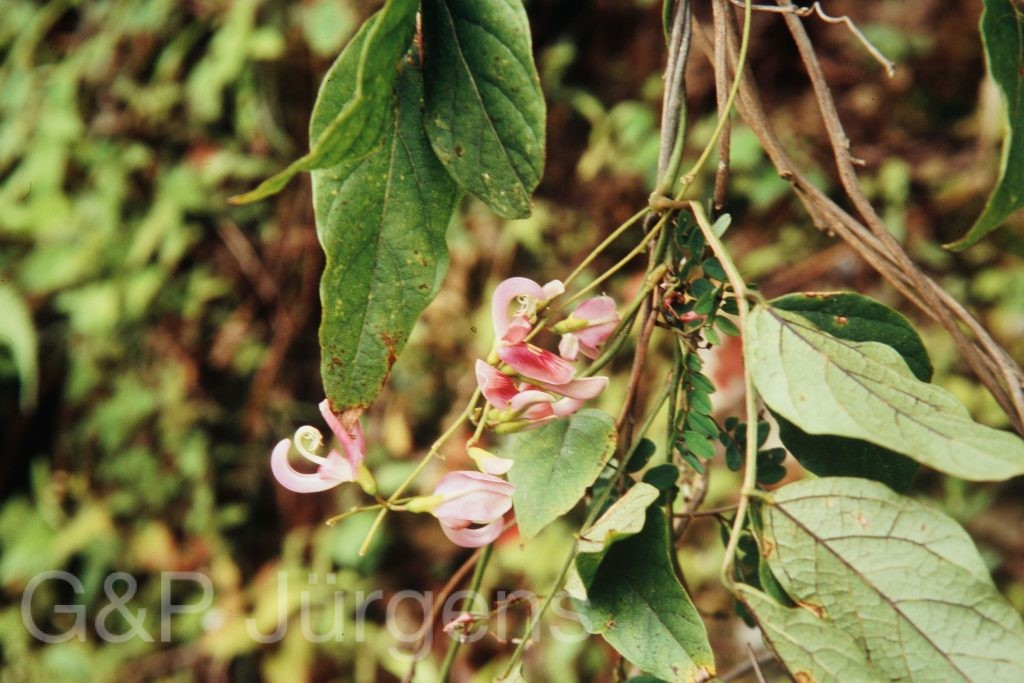
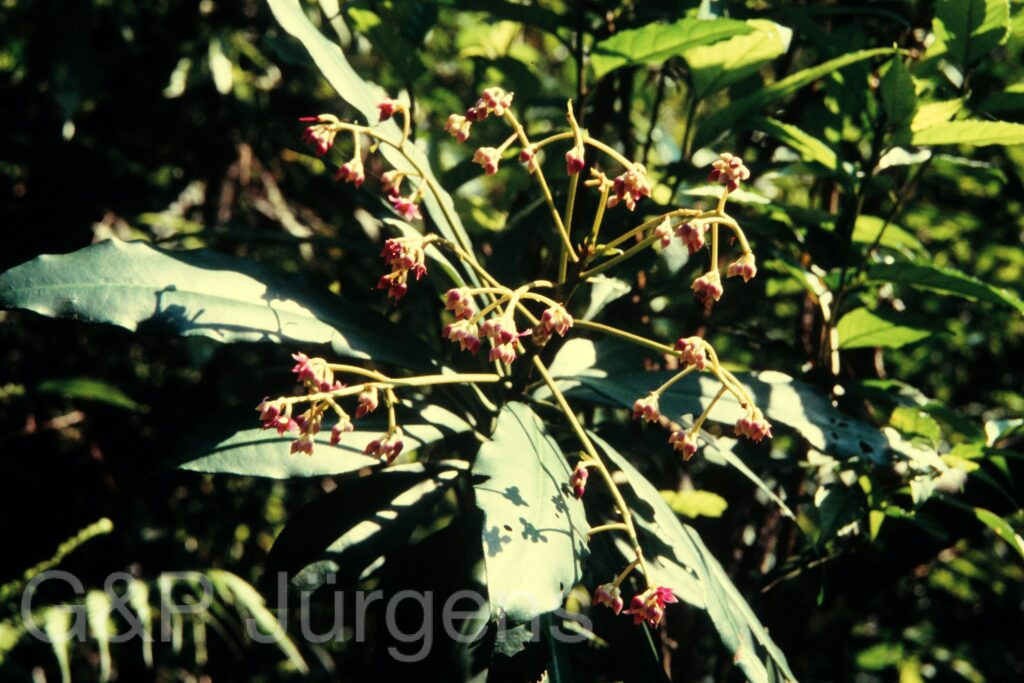
Apios carnea

by GP Jürgens

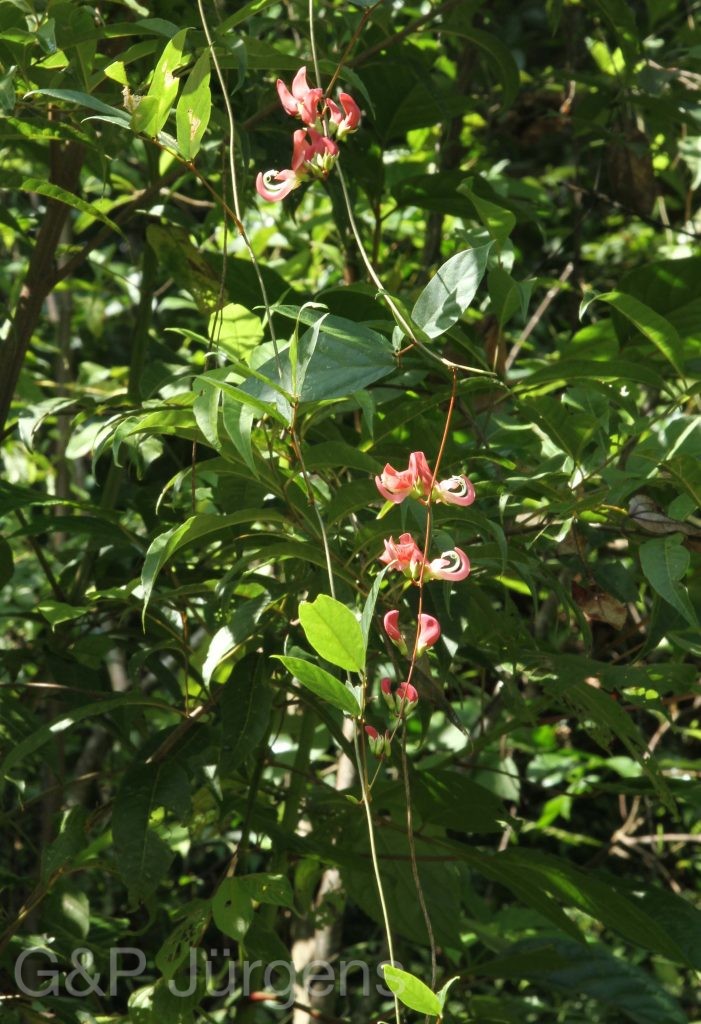
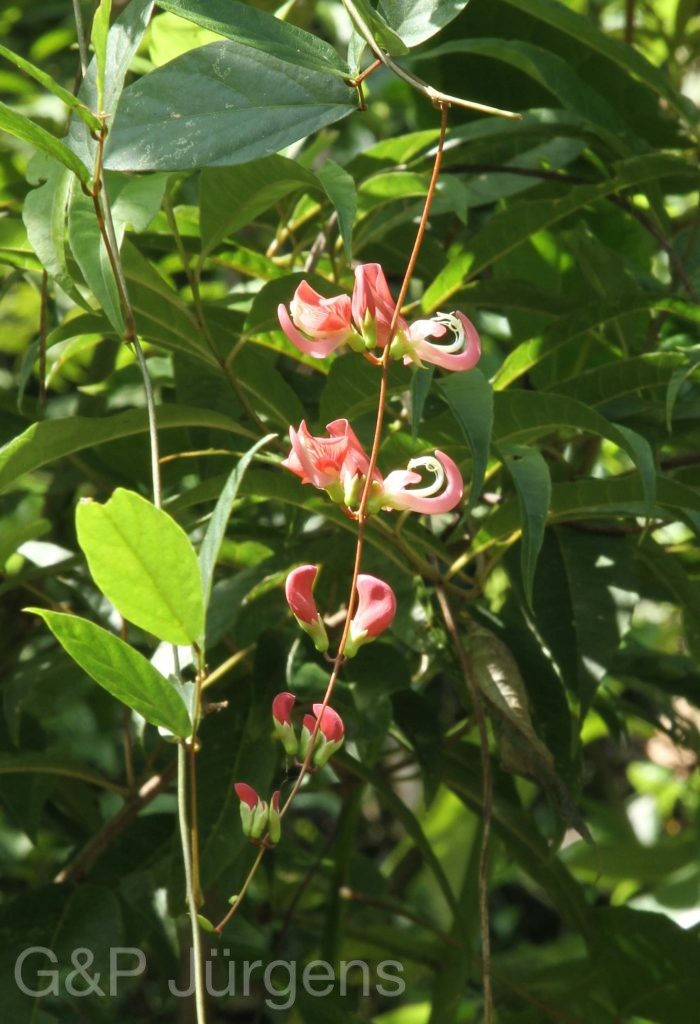
(Wall.) Benth.

Bhutan2012 990
Bhutan Trithangebe, 1100m October
Bhutan2012 991
Bhutan Trithangebe, 1100m October
Bh09 242 P405
Bhutan Wangdi, 2000m June

Description

Apios carnea is widely distributed through the Himalaya and into south-east and east Asia, recorded from Nepal, north-east India, Bhutan, Myanmar, China, Thailand, Laos, Vietnam, Malaysia, Korea and Japan among its 887 georeferenced occurrences. It is a climbing herb of forest margins, thickets, streamsides and clearings in warm-temperate to subtropical settings, scrambling over shrubs and into the lower canopy. The Bhutan records at Trithangebe (1100 m, October) and Wangdi (2000 m, June) illustrate a broad altitudinal tolerance from about 1000 to 2400 m, flowering through the warm wet season.

It is a perennial twining vine arising from a tuberous, fleshy rootstock, with slender, herbaceous, somewhat woody-based stems. The leaves are pinnately compound (imparipinnate) with usually five to seven ovate-lanceolate, acuminate leaflets. The flowers are borne in dense axillary racemes and are typical papilionate legumes, flesh-pink to dull reddish or salmon, with a broad standard, incurved keel and the characteristic coiled keel-and-style of the genus. The fruit is a slender, elongate, dehiscent legume containing several seeds.

The genus Apios belongs to tribe Phaseoleae of subfamily Faboideae, allied to climbing beans, and the twisted keel enclosing the spirally coiled style and stamens is a notable floral specialisation promoting cross-pollination by bees. As a nitrogen-fixing legume it contributes to soil enrichment, and its tubers have been used locally as food. Common and widespread across its range, it is of no conservation concern, though it is regionally valued both as an ornamental climber and a wild food plant.

Author: (Wall.) Benth. · Sources: POWO (Kew), GBIF, Flora of Bhutan, Flora of China, Flora of Nepal, Lackey Phaseoleae revision (Advances in Legume Systematics)

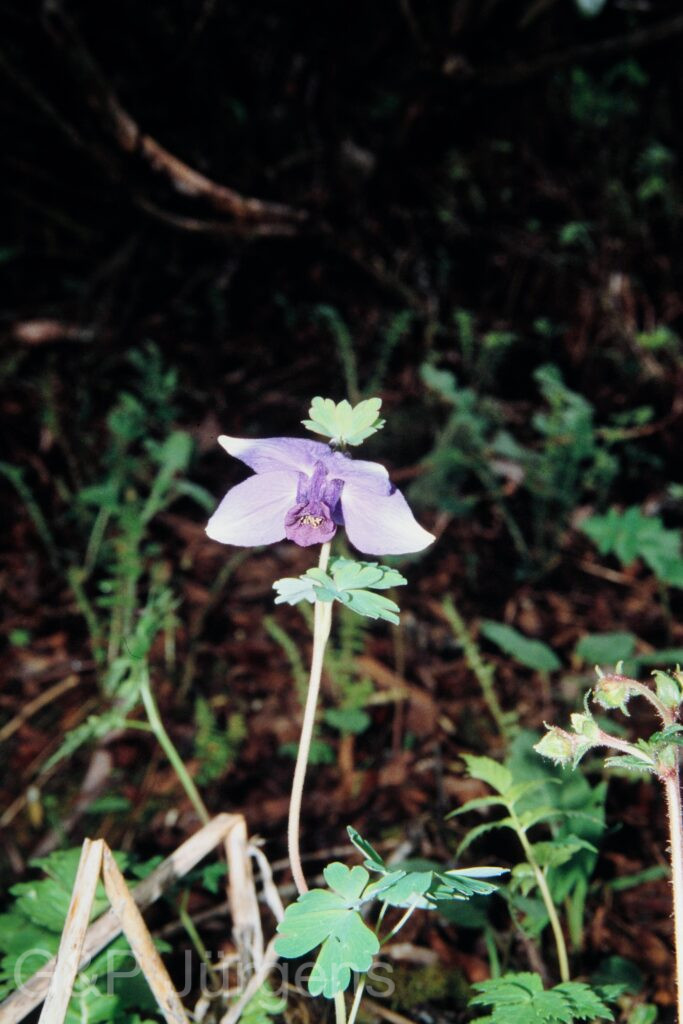
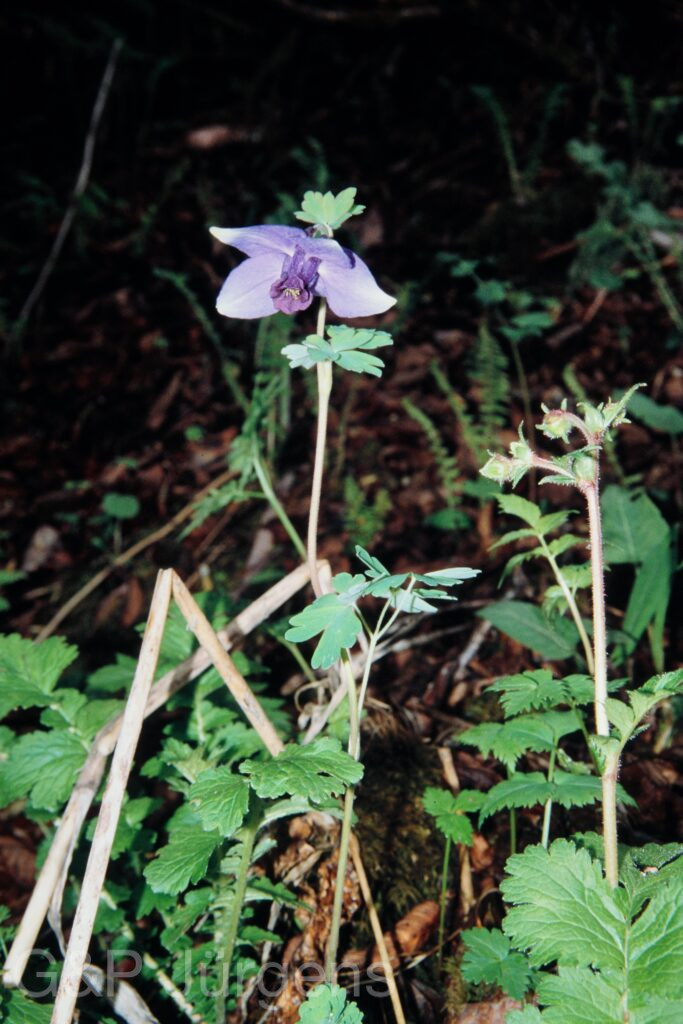
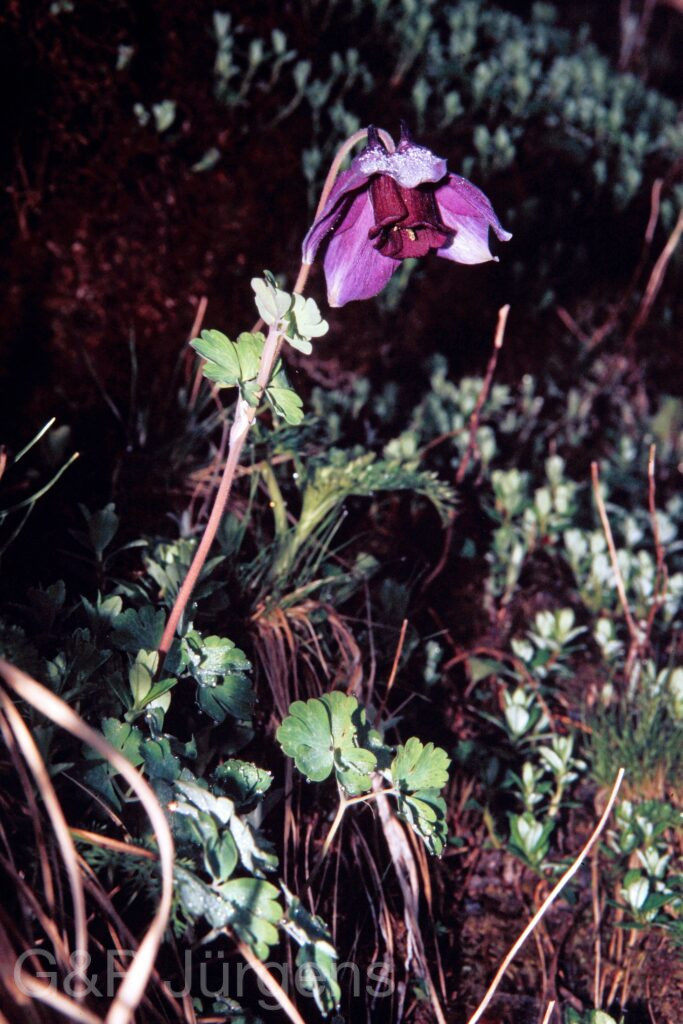
(Baker) Falc. ex Munz.

Description

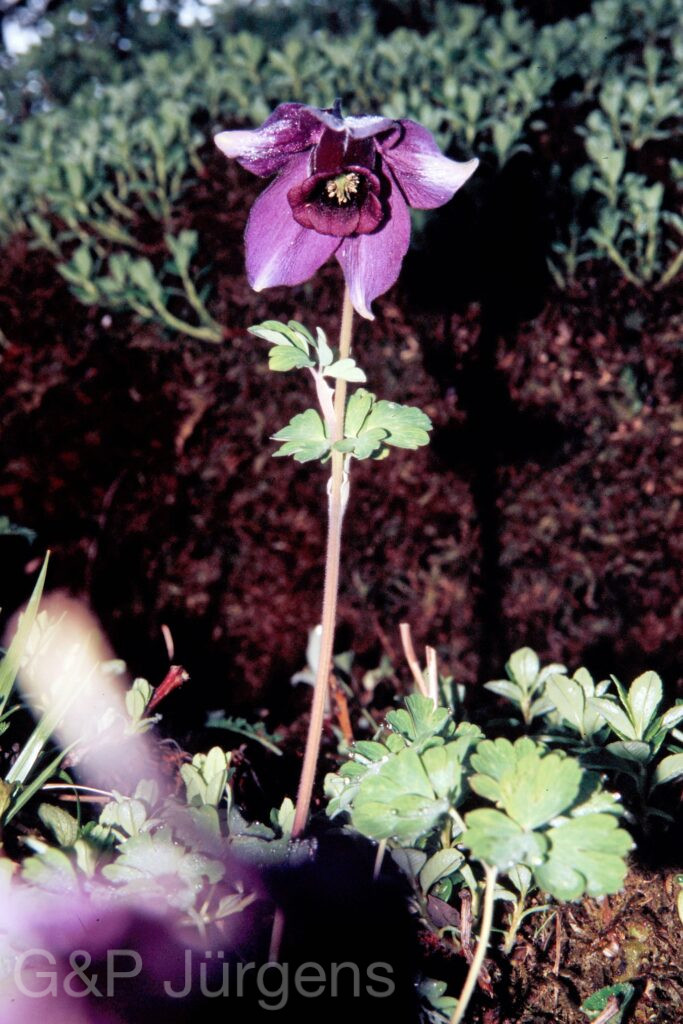
Aquilegia nivalis is a dwarf alpine columbine of the western Himalaya, with GBIF recording around 105 occurrences from Pakistan, India and Nepal. It is restricted to the high alpine zone, growing in moist rocky meadows, screes, glacial moraine and snowbed turf, broadly between 3300 and 4500 m. The photographed plants come from West Nepal south of Tara Lake (3300 m, June) and from Garhwal in India at Meggu Kichatti (3400 m, June), flowering soon after snowmelt on cool, well-drained, gravelly substrates near the upper limit of vascular vegetation.

The plant is a compact perennial arising from a stout rootstock, forming a low tuft of long-petioled, ternately divided basal leaves with rounded, lobed, somewhat glaucous segments. The flowering stem is short and often single-flowered, nodding the large solitary flower well above the foliage. The flower is dark purple to blackish-violet, with five petaloid sepals and five tubular petals each prolonged backward into a short, stout, incurved spur far shorter than in lowland columbines. Numerous stamens surround the carpels, the inner stamens reduced to membranous staminodes. The fruit is a cluster of erect, beaked follicles releasing small black seeds.

Aquilegia (Ranunculaceae) is a model genus for the study of rapid adaptive radiation, in which spur length and flower colour track pollinator shifts; the very short spur and dark, nodding flower of A. nivalis reflect adaptation to a harsh, short alpine season. GBIF treats the name as accepted. Its narrow western-Himalayan range and high-elevation specialism make it a notable endemic, potentially sensitive to climatic warming and snowpack change.

Author: (Baker) Falc. ex Munz. · Sources: POWO (Kew), GBIF, Flora of Pakistan, Flora of British India, Munz monograph of Aquilegia

Royle

Nepal 99 65 ergebnis
West-Nepal Nyor Gaad 2700m, June
Garh 07 245 ergebnis
India Garhwal Barron Chatti 2450m, June

Description

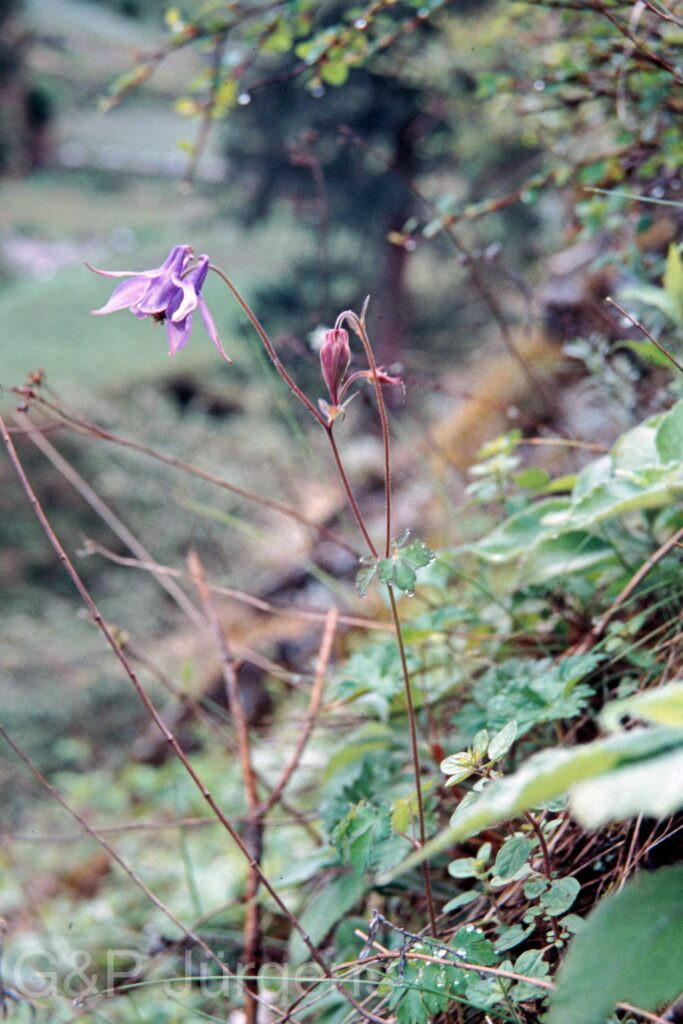
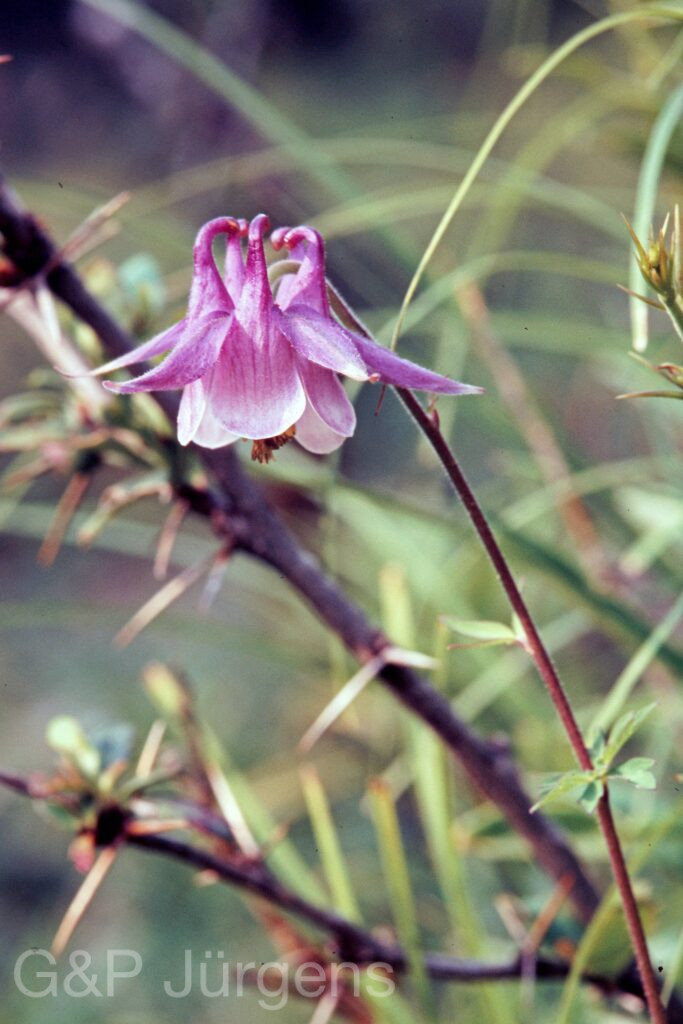
Aquilegia pubiflora is a columbine of the western and central Himalaya, recorded from Afghanistan, Pakistan, India, Nepal and adjacent China. It grows in shady forest, scrub, grassy slopes, stream banks and rocky places in the temperate montane belt, generally between about 2000 and 3600 m. The photographed plants come from Nyor Gaad in West Nepal at around 2700 m and from Barron Chatti in Indian Garhwal at about 2450 m, both flowering in June. With around 240 georeferenced occurrences it is a moderately well-documented and characteristic Himalayan member of its genus along forest margins and in semi-open habitats of the inner valleys.

It is an erect perennial herb up to about 1 m, arising from a stout rootstock, the stems branched above and finely pubescent. The leaves are mostly basal and biternate, the leaflets obovate and lobed, glaucous and softly hairy especially beneath. The nodding to half-nodding flowers are borne on slender pedicels; each has five petaloid sepals and five petals, the petals prolonged backward into prominent hooked or incurved nectar spurs that are the diagnostic feature of Aquilegia. The flowers are pale to deep purple, lilac or whitish, finely pubescent on the outside, as the epithet pubiflora indicates. The numerous stamens are exserted, the inner ones forming membranous staminodes, and the carpels are five and free, ripening into erect, pubescent, many-seeded follicles.

Aquilegia pubiflora belongs to the Asian assemblage of the genus and is distinguished by its softly hairy, spurred flowers and biternate foliage; it intergrades with related Himalayan columbines and has been treated under varying circumscriptions. Like other columbines it is pollinated by long-tongued insects attracted to the nectar spurs. As a widespread temperate herb it is of least conservation concern.

Author: Royle · Sources: POWO (Kew), GBIF, Flora of China, Flora Iranica, Munz monograph of Aquilegia

J.Wen

Bh2008 330 P510
Bhutan Tongsa 2400m, April

Description

Aralia gigantea is a large herbaceous to subwoody member of the ginseng family ranging across the eastern Himalaya and adjacent uplands, with GBIF logging 145 occurrences in China, Nepal, India, Myanmar and Bhutan. It grows in moist temperate broad-leaved and mixed forest, along ravines, forest clearings and damp shaded slopes, generally between roughly 2000 and 3000 m. The illustrated plant was recorded in Bhutan near Tongsa (Trongsa) at about 2400 m in April, a representative mid-montane forest station for the species, where it springs up among tall-herb communities as the growing season begins.

The plant is a robust, sparsely prickly herb with stout, somewhat pithy stems arising from a thickened rootstock. Leaves are very large, alternate and two- to three-pinnately compound, the numerous ovate leaflets serrate and acuminate, borne on prickly rachides. The inflorescence is a massive terminal panicle of many small umbels, the individual flowers small, greenish-white and five-merous, with a reduced calyx, five petals, five stamens and an inferior ovary crowned by free or basally united styles. The fruit is a small subglobose drupe, ribbed and dark when ripe, containing several flattened pyrenes and attractive to birds.

The species belongs to a group of giant herbaceous Aralia centred on East and Southeast Asia, distinguished from woody congeners by its large compound foliage and herb-like habit. POWO and GBIF accept the name as currently circumscribed. Its size and rapid seasonal growth make it a conspicuous component of Himalayan tall-herb forest understorey, and like related Aralia it has minor ethnobotanical use.

Author: J.Wen · Sources: POWO (Kew), GBIF, Flora of China, Flora of Bhutan, Annotated Checklist of the Flowering Plants of Nepal, Systematics of Aralia (Araliaceae monograph)

O.E.Schulz

Garh 07 137 ergebnis
India Garhwal Kinkhola 3500m, June

Description

Arcyosperma primulifolium is a Himalayan crucifer of high-elevation forest and meadow margins, with GBIF recording 99 occurrences from India, Nepal, Pakistan and Bhutan. It occupies moist, shaded slopes, forest edges and damp turf in the upper temperate to subalpine zone, often among rocks and along the transition between birch-rhododendron forest and open alpine pasture. The image was taken at Kinkhola in Garhwal, India, at about 3500 m in June, when the plants flower as the high meadows green up after the spring thaw.

It is a perennial herb with a stout rootstock from which arise a rosette of long-petioled, lyrate to pinnatifid basal leaves; the lamina, with its rounded, crenate terminal lobe, recalls the foliage of a primrose, as the epithet primulifolium notes. The flowering stems are erect and bear smaller, less divided leaves below an elongating raceme. The flowers are white, with four sepals, four clawed petals and the tetradynamous stamens of the Brassicaceae. The fruit is a slender, somewhat flattened silique that distinguishes the monotypic genus; the seeds are arranged in the pod in the manner reflected by the generic name Arcyosperma.

Arcyosperma (Brassicaceae) is a monotypic genus segregated by O. E. Schulz, restricted to the Himalaya and allied within the family's diverse Asian montane crucifers. Its distinctive lyrate leaves and fruit characters set it apart from related genera such as Cardamine and Draba with which it co-occurs. Being a narrow-ranged montane endemic of a single species, it is of particular taxonomic and biogeographic interest, and like other high-Himalayan herbs its populations depend on intact subalpine forest and meadow habitats.

Author: O.E.Schulz · Sources: POWO (Kew), GBIF, Flora of Pakistan, Annotated Checklist of the Flowering Plants of Nepal, Jafri's Flora of West Pakistan (Brassicaceae), Schulz's treatment of Cruciferae in Engler's Das Pflanzenreich

Roxb.

Nepal 97 458 P882
Nepal Arun-Valley 900m May

Description

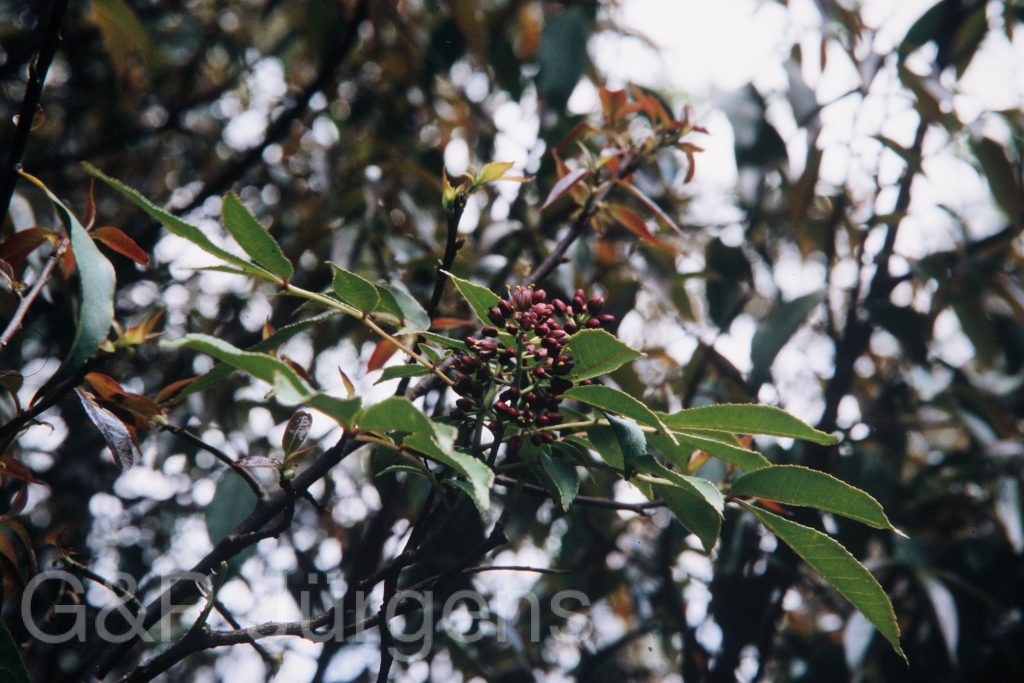
Ardisia solanacea is a widespread tropical and subtropical shrub of South and Southeast Asia, recorded from India, Nepal, China, Bangladesh, Myanmar, Thailand, Sri Lanka, Malaysia and Indonesia, and naturalised or cultivated more widely; its 865 GBIF records make it one of the better-documented species in this group. It occupies lowland and lower-hill forest, forest margins, secondary thickets and roadside scrub, generally below about 1500 m. The plant photographed in the Arun Valley of eastern Nepal at 900 m, flowering in May, typifies its preference for warm, humid lower-montane settings.

It is an evergreen shrub or small tree with glabrous, terete branchlets. The leaves are alternate, elliptic to obovate-oblong, leathery, entire and obscurely gland-dotted, tapering to a short petiole. The inflorescences are lateral, umbellate to corymbose racemes borne on short specialised branchlets; the flowers are pinkish to rose-purple, with five reflexed, often punctate corolla lobes and prominent connivent anthers forming a cone, in the characteristic Ardisia fashion. The fruit is a depressed-globose, single-seeded drupe that ripens from red to glossy purplish-black.

In GBIF the name carries a synonym flag, but Ardisia solanacea Roxb. is the accepted name for this taxon. The species sits within Ardisia (Myrsinoideae of Primulaceae, formerly Myrsinaceae), a large pantropical genus distinguished by glandular punctations and drupaceous fruits. It is common, weedy in places, and of no conservation concern; its fruits are eaten by birds and the plant is used locally in traditional medicine.

Author: Roxb. · Sources: POWO (Kew), GBIF, Flora of China, Flora of Nepal, Pipoly & Chen revision of Asian Ardisia