Tag:

Sikkim

Flowers of Sikkim — 350 species from the Sikkim Himalaya in northeast India, a compact yet botanically extraordinary region that climbs from subtropical valleys to the alpine zone beneath Kangchenjunga. Sikkim is a classic centre of Himalayan plant diversity, celebrated for its rhododendrons, primulas, orchids and gentians. Each entry provides a botanical description, distribution, habitat and flowering season with the original field photograph.

Hook. f.

Sikkim2003 276 G379
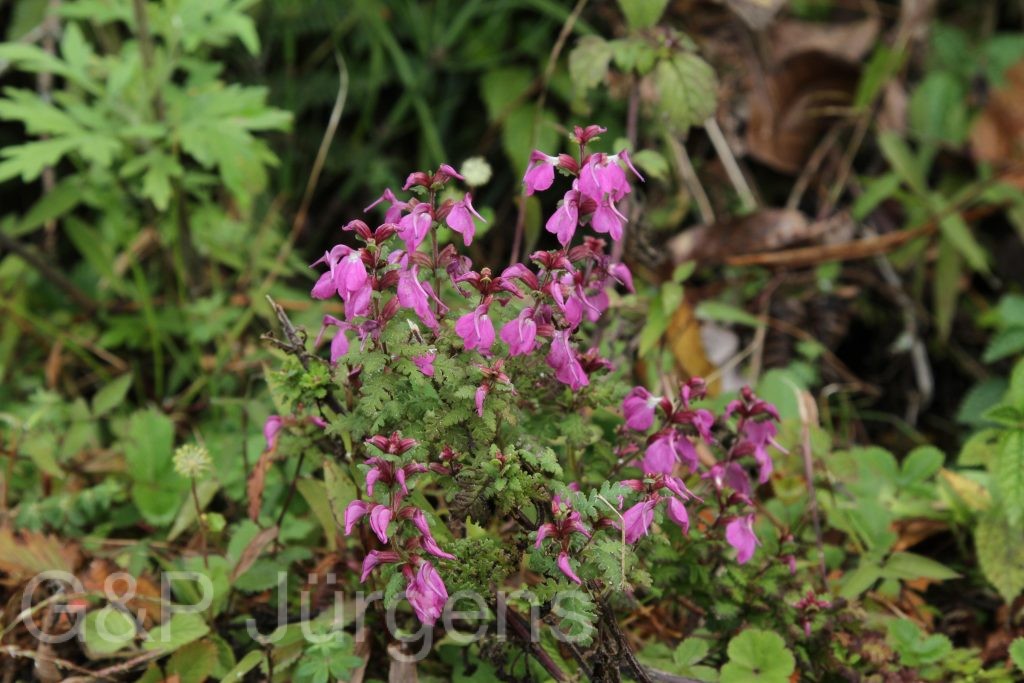
Sikkim Dzongri 4300m, August

Description

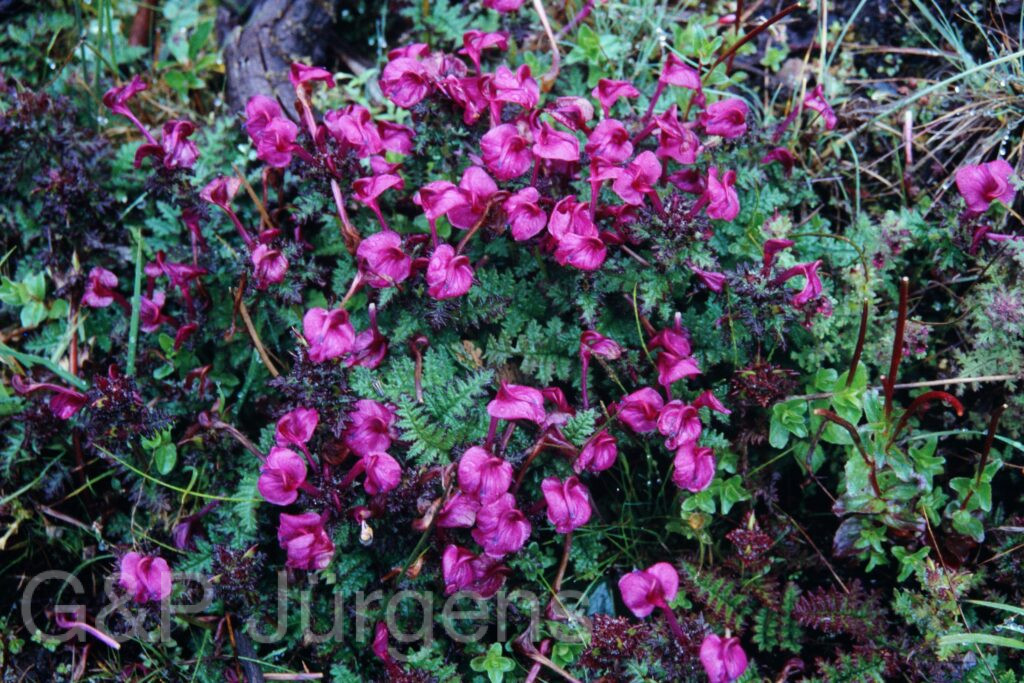
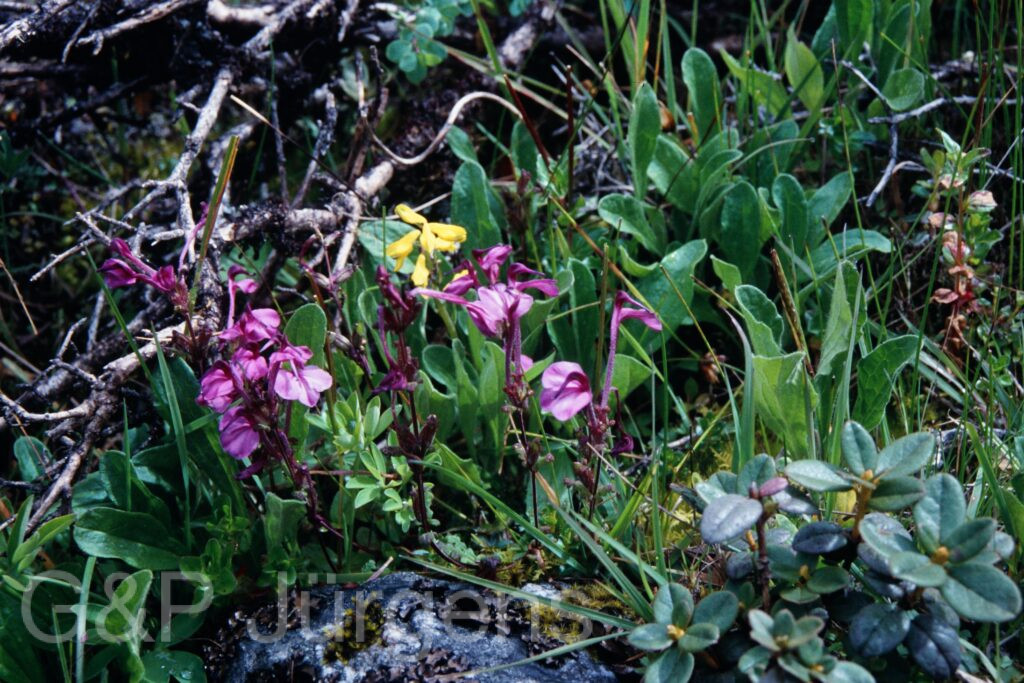
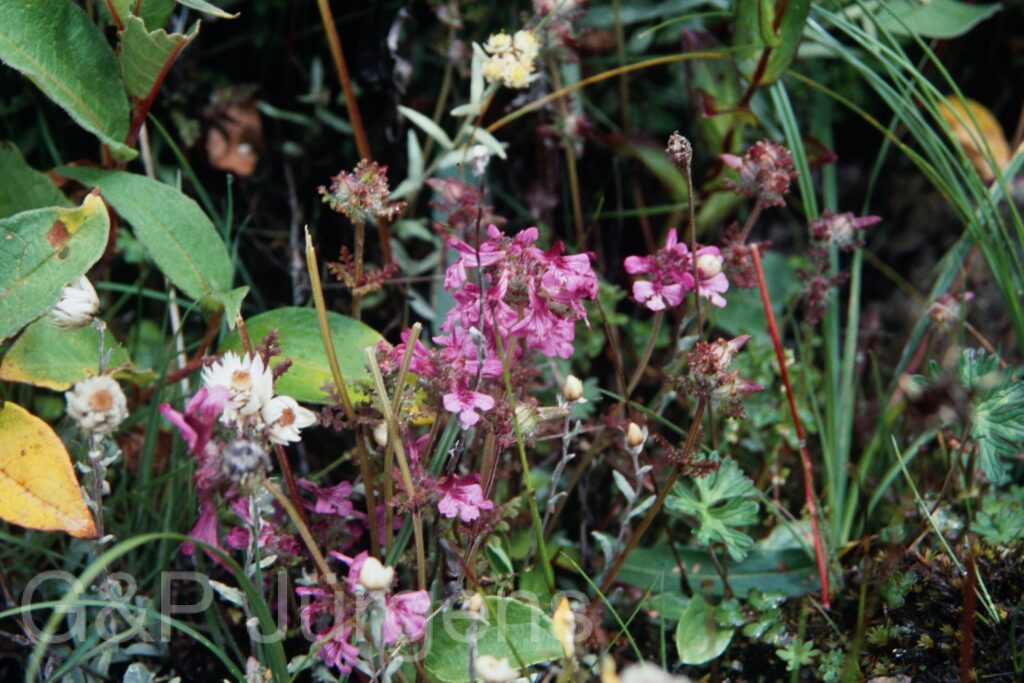
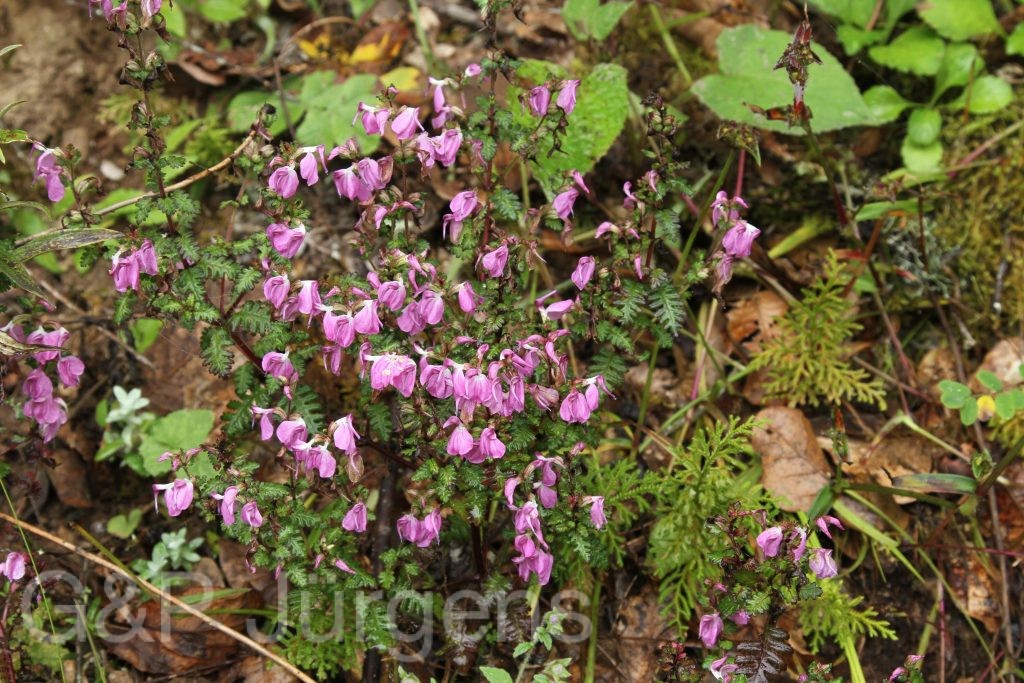
Pedicularis elwesii is a hemiparasitic herb of the eastern Himalaya and adjacent high mountains of southwestern China, with a distribution spanning China, Nepal, India, Bhutan and Myanmar and some 532 georeferenced records compiled by GBIF. It is a plant of the alpine zone, characteristically inhabiting moist meadows, open turf, streamsides and stony slopes above the treeline, generally between about 3500 and 4500 m. The photographed material from Sikkim, on the Dzongri ridge at 4300 m in August, typifies its preferred habitat among short alpine grassland during the summer flowering peak that follows snowmelt and coincides with the monsoon.

It is a perennial forming a tuft of erect to ascending stems from a stout rootstock, with chiefly basal and cauline pinnatisect to pinnatipartite leaves whose oblong segments are toothed and crenate. The showy inflorescence is a dense terminal spike subtended by leaf-like bracts. As in many Himalayan louseworts the corolla is strongly two-lipped: a hooded galea formed by the upper lip, here often produced into a slender beak, encloses the anthers, while the broad three-lobed lower lip serves as a landing platform. Flowers are typically rose-pink to purplish; the fruit is an oblique, beaked loculicidal capsule.

The species belongs to the large, taxonomically intricate genus Pedicularis, exceptionally diversified in the Sino-Himalayan region where floral specialisation reflects coevolution with long-tongued bumblebee pollinators. Like its congeners it is a root hemiparasite, drawing water and nutrients through haustorial connections to neighbouring alpine plants while retaining functional chlorophyll. No major conservation concern is recognised given its wide range, though its meadows are sensitive to grazing and climatic shifts.

Author: Hook. f. · Sources: POWO (Kew), GBIF, Flora of China, Flora of Bhutan, Pedicularis monograph (Tsoong / Prain)
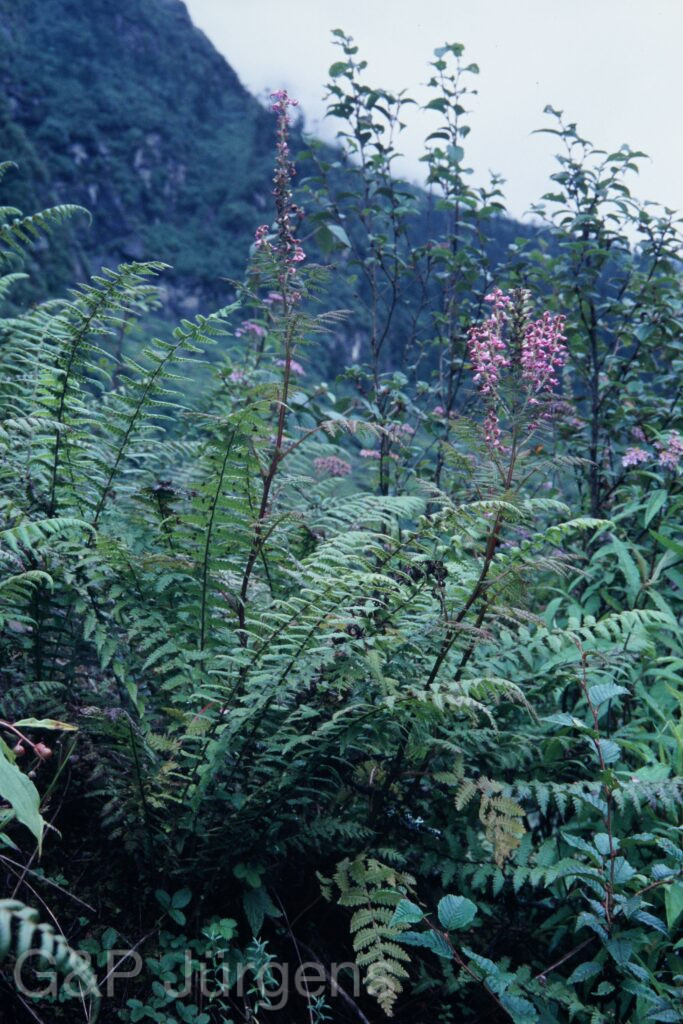
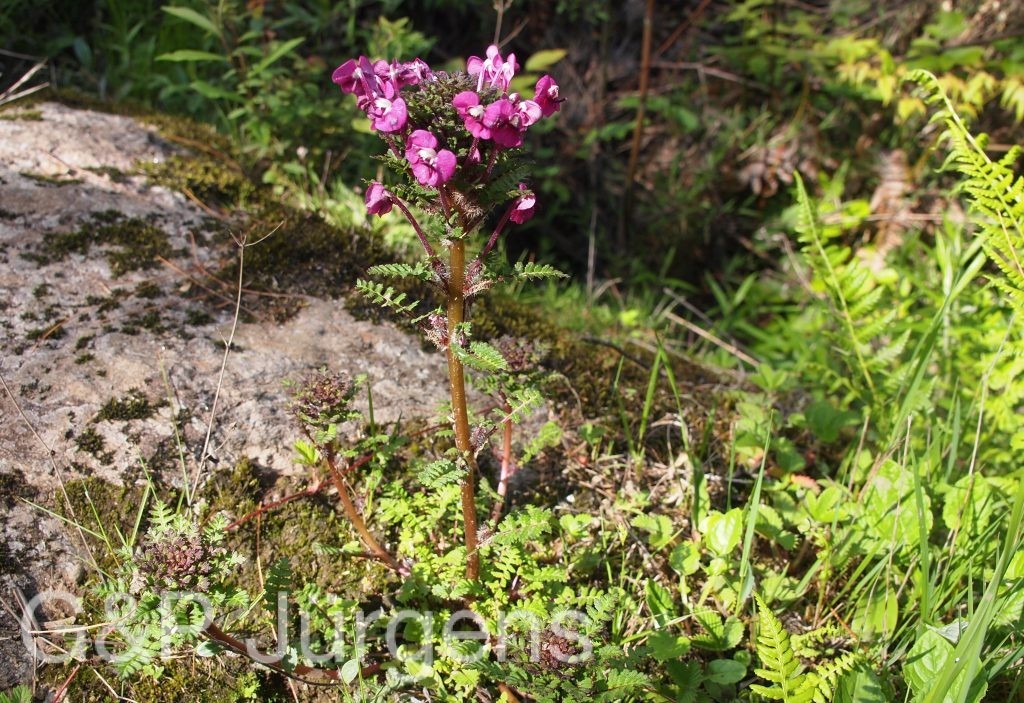
Hook. f.

Sikkim2003 486 P678
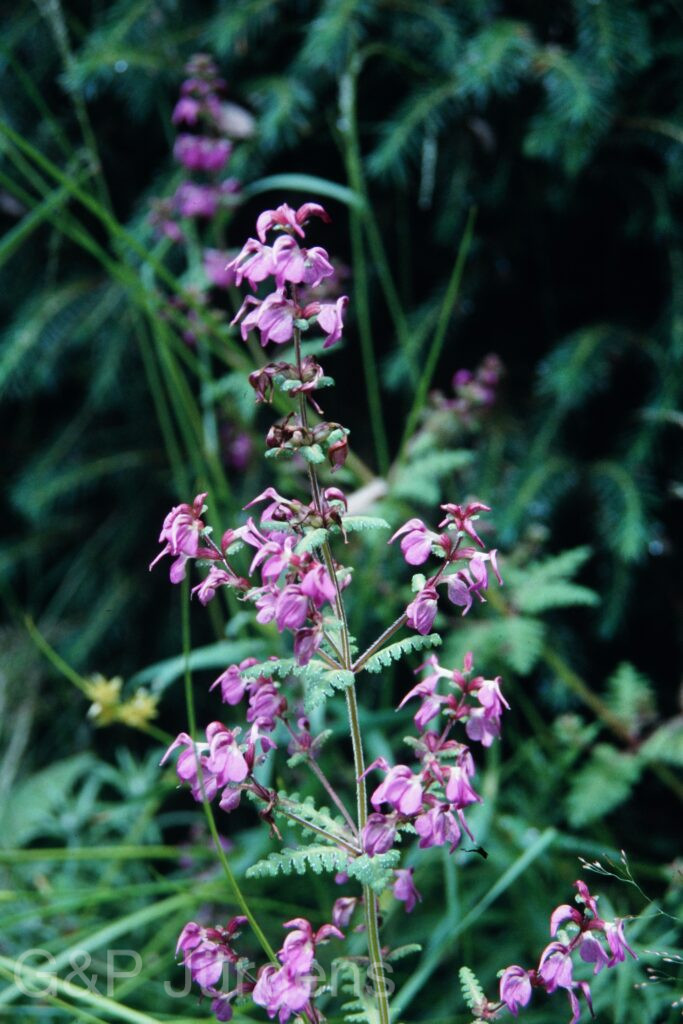
Sikkim Lachung Valley 3600m August

Description

Pedicularis excelsa is a tall hemiparasitic herb of the eastern Himalaya, recorded from Bhutan, India, Nepal, China and Mongolia; with only about 42 georeferenced records it is a regionally restricted subalpine to alpine species. It grows in open subalpine meadows, moist grassy slopes, forest clearings and streamsides, typically between 3000 and 4200 m. The plant photographed in the Lachung Valley of Sikkim at 3600 m in August occupies the monsoon-flushed alpine meadow zone, flowering at the height of the short Himalayan summer alongside other tall meadow herbs.

As the epithet "excelsa" suggests, it is among the taller lousteworts, an erect herb 40-100 cm tall with a stout taproot that forms haustorial connections to neighbouring plant roots. The stem bears pinnatisect leaves with toothed segments, partly basal and partly cauline. The flowers are crowded into a dense, elongate terminal spike; each corolla is strongly bilabiate, pink to purplish-red, with the upper lip (galea) compressed and beaked, enclosing the four didynamous stamens, and a broad spreading three-lobed lower lip. The calyx is tubular and toothed. The fruit is an oblique, beaked capsule containing several seeds.

Described by Hooker f. (Hook. f.), P. excelsa belongs to the large genus Pedicularis, now placed in the Orobanchaceae (formerly Scrophulariaceae), which reaches extraordinary diversity in the Sino-Himalaya. As a root hemiparasite it supplements its own photosynthesis by tapping host roots. The beaked galea is adapted to pollination by long-tongued bumblebees, which the Himalayan Pedicularis radiation has exploited through diverse corolla forms. Its restricted range and meadow habitat make it sensitive to overgrazing, though no formal threat status is assigned.

Author: Hook. f. · Sources: POWO (Kew), GBIF, Flora of Bhutan, Flora of China, Flora of Sikkim Himalaya, Prain's revision of Indian Pedicularis (Orobanchaceae)

Hook.f.

BhutanPG2011 88
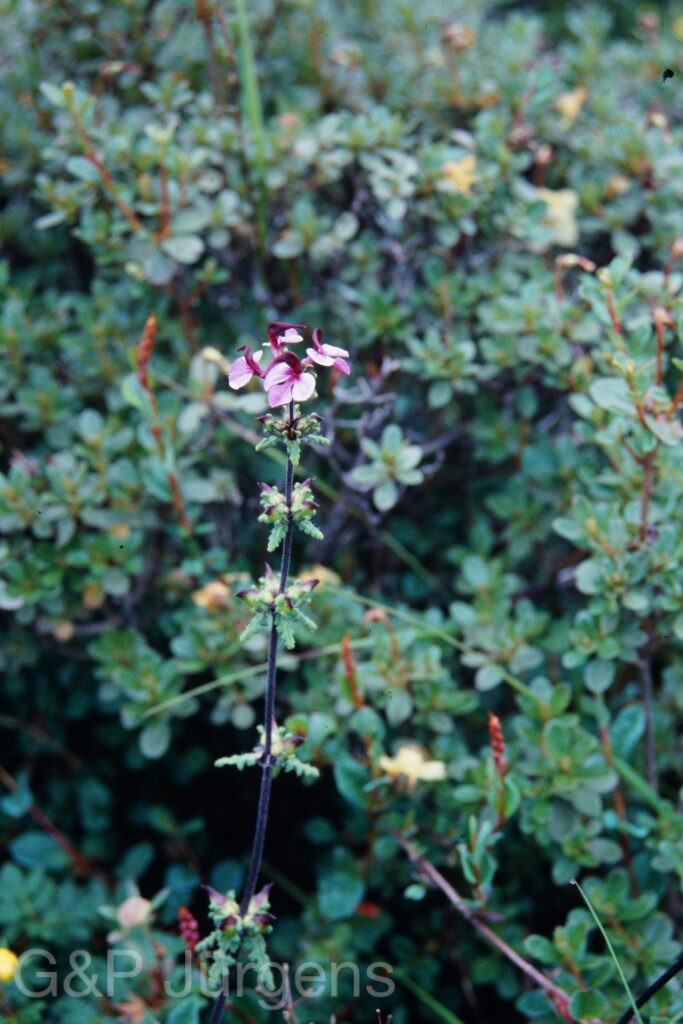
Bhutan Chogcham, 3100m June
Sikkim2003 434 P603
Sikkim Dzongri 4100m, August
Sikkim2003 248 P341
Sikkim Dzongri 4100m, August

Description

Pedicularis flexuosa is an Eastern Himalayan louseword recorded from Nepal, northern India, Bhutan, southwestern China and Mongolia, with around 202 occurrences distributed along the high Himalaya and adjacent Tibetan plateau margins. It spans the upper montane to alpine zone, the images documenting it at Chogcham in Bhutan at about 3100 m in June and at Dzongri in Sikkim at about 4100 m in August during the monsoon. It grows in alpine and subalpine meadow, open grassy slopes, scrub margins and damp turf on moist, well-drained ground, behaving as a hemiparasite drawing water and nutrients from the roots of surrounding grasses and herbs through haustorial connections.

It is an erect perennial herb arising from a short rootstock, with simple or sparingly branched stems that are often somewhat flexuous, as the epithet implies. The leaves are alternate to subopposite and pinnatisect, the segments toothed, giving the characteristic fern-like foliage of the genus. The flowers are borne in a terminal spike or interrupted raceme; the corolla is strongly two-lipped and pinkish-purple to rose, the galea (upper lip) hooded and often beaked, enclosing the four didynamous stamens, while the lower lip is three-lobed and spreading. The fruit is an oblique, laterally compressed capsule containing several seeds.

The species, described by J.D. Hooker, belongs to the large and taxonomically complex genus Pedicularis within the Orobanchaceae, a clade of green root-hemiparasites. The elaborate galeate corolla is adapted to pollination by long-tongued bumblebees, and the diverse corolla architecture across the genus underpins striking floral radiation in the Sino-Himalayan region. Locally frequent in suitable alpine grassland, P. flexuosa has not been formally assessed but is not regarded as threatened across its montane range.

Author: Hook.f. · Sources: POWO (Kew), GBIF, Flora of China, Flora of Bhutan, Pedicularis revision (Sino-Himalayan species, after Tsoong)

Hook. f.

Sikkim2003 496 G694
Sikkim Lachung Valley 3600m August

Description

Pedicularis globifera is a Sino-Himalayan hemiparasite distributed across China (CN), Nepal (NP), India (IN) and Bhutan (BT), with 293 GBIF occurrences indicating it is reasonably frequent through the central and eastern Himalaya. It inhabits open alpine meadows, damp grassy slopes and the margins of seepages and streams in the high subalpine to alpine zone, commonly between about 3500 and 4500 m. The figured plant was photographed in the Lachung Valley of Sikkim at around 3600 m in August, at the height of the monsoon flowering period when alpine Pedicularis are most conspicuous.

It is a perennial herb with a thickened rootstock, the parasitic roots forming haustoria on host grasses and sedges. Stems are erect, bearing leaves that are pinnately lobed to pinnatisect with crenate-toothed segments. The flowers are arranged in a dense, head-like or globose terminal cluster, the feature evoked by the epithet globifera. The calyx is tubular and lobed; the corolla is bilabiate, with an arched, beakless or shortly beaked galea forming the upper lip and a broad three-lobed lower lip. The four didynamous stamens lie within the galea. Fruit is an oblique, compressed capsule enclosing several seeds.

Pedicularis reaches its global diversity peak in the high mountains of western China and the Himalaya, and species such as P. globifera contribute to the spectacular alpine displays of these grasslands while playing an ecological role as bumblebee-pollinated hemiparasites that influence community structure. The genus is now firmly placed in Orobanchaceae following recognition of its parasitic biology and phylogenetic position.

Author: Hook. f. · Sources: POWO (Kew), GBIF, Flora of China, Flora of Nepal, Flora of Bhutan, Tsoong's Monograph of the genus Pedicularis

Wall. ex Benth.

Bhutan2012 834
Bhutan Trongsa 1850m, October
Bhutan2012 1299
Bhutan Trashigang 1820m, October
Sikkim2003 388 P550
Sikkim Zemu Valley 3300m August

Description

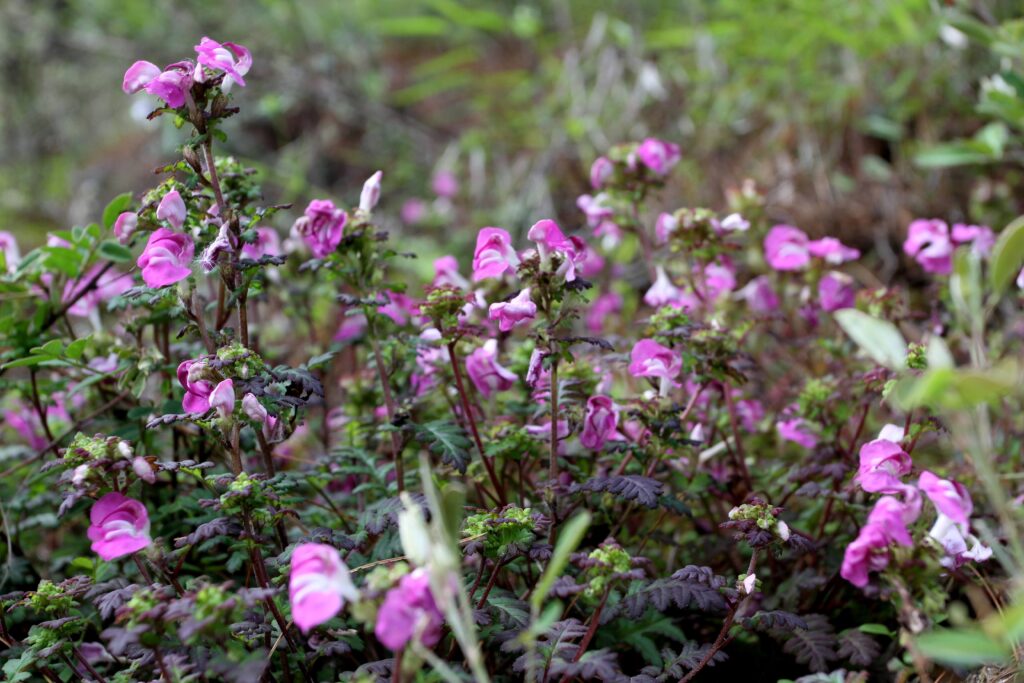
Pedicularis gracilis Wall. ex Benth. is a hemiparasitic herb of the Himalaya and adjacent mountains, occurring across China, Nepal, India, Bhutan, Pakistan and Myanmar. It is recorded from Bhutan at Trongsa and Trashigang between 1820 and 1850 m, flowering in October, and from the Zemu Valley in Sikkim at about 3300 m in August, spanning the warm temperate to subalpine zones. The species grows in open forest, scrub, grassy slopes, meadows and along stream banks, generally between 1500 and 3500 m, where, like all lousewort, it attaches to the roots of neighbouring plants as a facultative root hemiparasite. Its roughly 1008 GBIF records indicate a common and widely distributed species.

The plant is a slender, erect annual or short-lived perennial with a fibrous root system and a tall, sparingly branched stem. The leaves are alternate and pinnatisect, the segments themselves toothed or incised, giving a fern-like aspect. The flowers are borne in a long, lax, leafy-bracted terminal raceme; each has a tubular five-lobed calyx and a two-lipped corolla in pink to rose-purple, the upper lip (galea) hooded and beaked to enclose the four didynamous stamens, the lower lip three-lobed and spreading. The fruit is an obliquely ovoid, beaked capsule containing several seeds.

Pedicularis is one of the largest genera of the Sino-Himalaya, with the region a global centre of its diversity, and the intricate galea forms are closely tied to specialisation upon long-tongued bumblebee pollinators. As a hemiparasite the genus can influence community composition and is sensitive to changes in host vegetation. Being widespread and frequent, P. gracilis is of no particular conservation concern, though it serves as a useful indicator of intact montane grassland and forest-edge habitats.

Author: Wall. ex Benth. · Sources: POWO (Kew), GBIF, Flora of China, Flora of Bhutan, Flora of Nepal, Pedicularis monographs (Prain; Tsoong)

Prain ex Maxim.

Sikkim2003 255 P349
Sikkim Dzongri 4100m August

Description

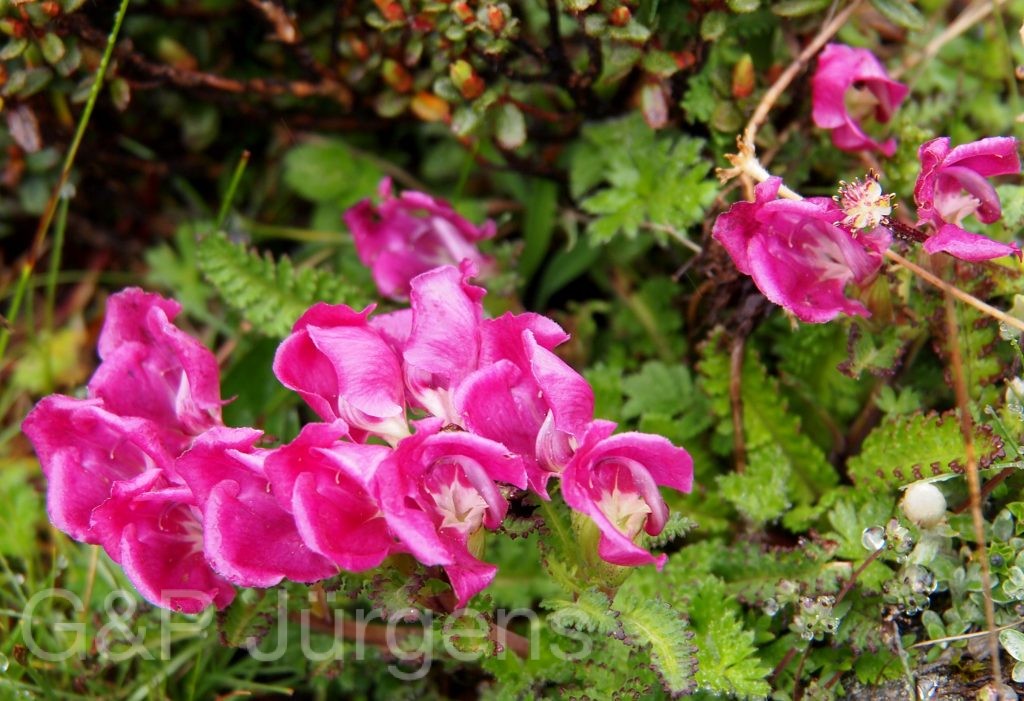
Pedicularis instar is a high-alpine lousewort endemic to the eastern and central Himalaya, recorded from Nepal, the Indian state of Sikkim, Bhutan and adjacent southern China (Xizang); its tally of around 19 GBIF occurrences reflects both genuine rarity and the difficulty of access to its habitat. It is confined to open alpine meadows, moist turf, streamsides and scree margins above the treeline, broadly from 3,800 to 4,800 m. The plant photographed at Dzongri in western Sikkim at 4,100 m in August represents the species in full flower during the late-summer monsoon, when the alpine sward is most active and the soils reliably moist.

It is a perennial hemiparasitic herb arising from a short rootstock, with one or several erect, often glabrescent stems. The leaves are alternate to subopposite, pinnatisect into closely set, oblong, crenate-serrate segments, the basal leaves long-petiolate. The flowers are borne in a terminal raceme subtended by leafy bracts; each has a tubular, toothed calyx and a strongly two-lipped corolla, the galea (upper lip) helmet-shaped and frequently produced into a slender beak, while the lower lip is three-lobed and spreading. The corolla colour ranges from pink to purplish-red. The fruit is a flattened, asymmetrical capsule enclosing several seeds and dehiscing loculicidally.

Pedicularis is exceptionally species-rich in the Sino-Himalayan alpine zone, and P. instar belongs to the assemblage of beaked-galea species whose floral architecture is closely tied to pollination by long-tongued bumblebees. As a root hemiparasite it draws water and nutrients from neighbouring alpine plants while partly photosynthesising itself, a strategy contributing to fine-scale community structure in alpine turf. Its narrow elevational band and restricted Himalayan range make it potentially vulnerable to climate-driven habitat compression and grazing pressure, though it has not yet received a formal IUCN assessment.

Author: Prain ex Maxim. · Sources: POWO (Kew), GBIF, Flora of China, Flora of Bhutan, Pedicularis of the Himalaya (Prain), monograph of Sino-Himalayan Pedicularis

(Klotzsch) Tsoong

Sikkim2003 90 P125
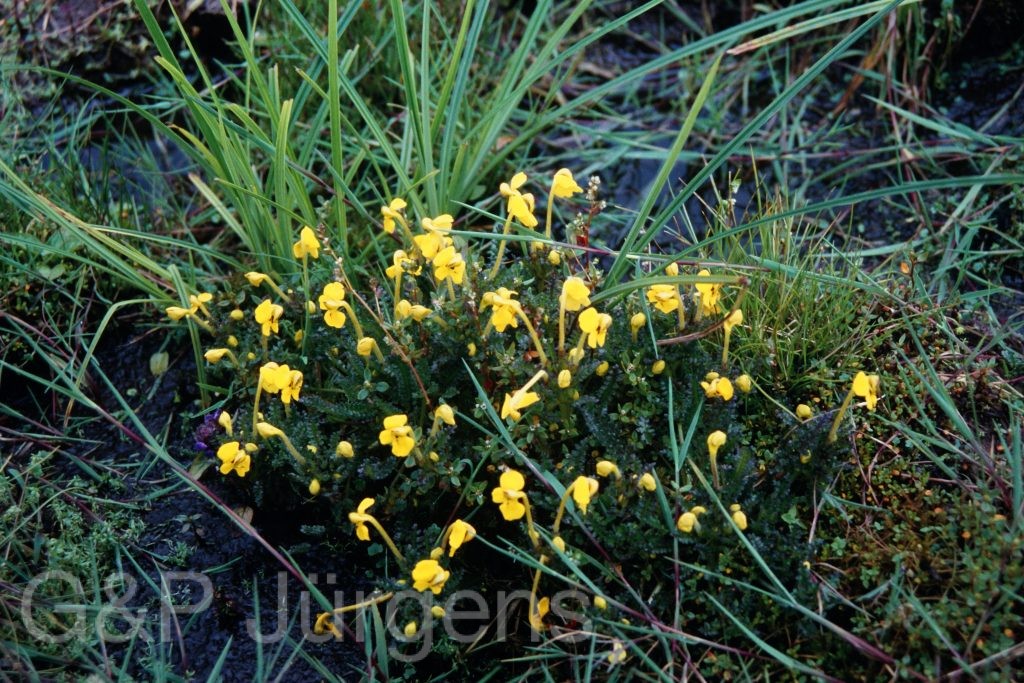
Sikkim above Choka 3200m 08.2003
Sikkim2003 199 G278
Sikkim above Choka 3200m 08.2003

Description

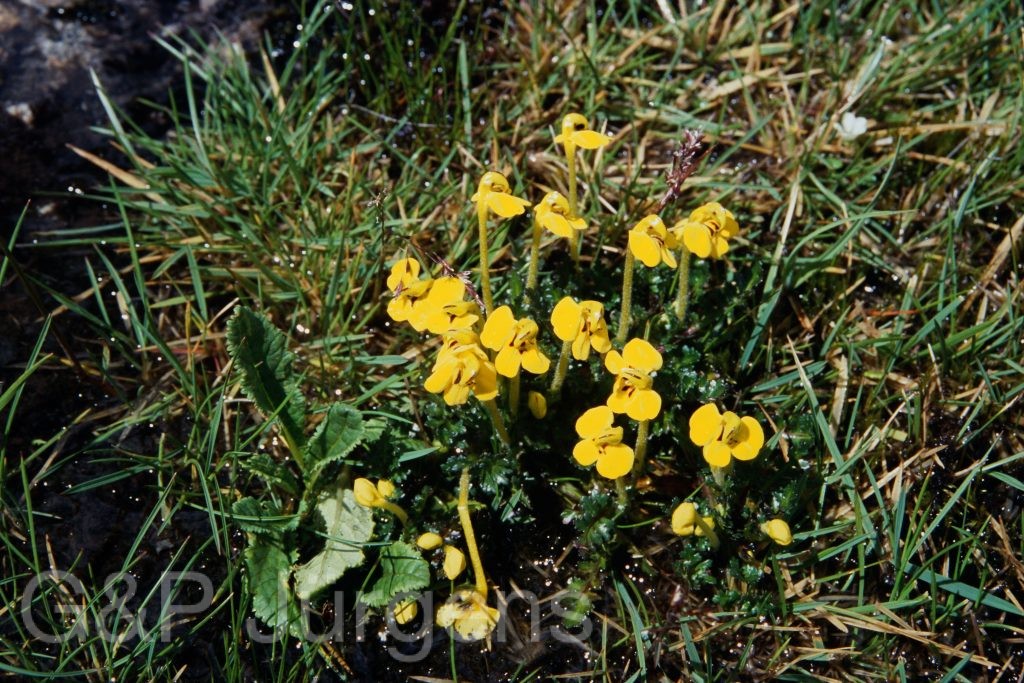
Pedicularis longiflora var. tubiformis is a hemiparasitic herb distributed across the high mountains of the eastern and central Himalaya and the Sino-Himalayan region, recorded from China, Nepal, India, Bhutan and Pakistan, with some 832 georeferenced occurrences documented in GBIF. It is a plant of moist alpine and subalpine habitats, favouring wet meadows, marshy ground, streamsides, seepage slopes and the margins of glacial pools, typically between 2700 and 4500 m. The photographed material was gathered in Sikkim above Choka at about 3200 m in August, during the summer monsoon when its populations flower most freely among the saturated turf.

The plant forms low tufted clumps from a fibrous rootstock, the several ascending to erect stems bearing both basal and cauline leaves. The leaves are oblong-lanceolate in outline and pinnately divided into closely set, crenate-dentate segments, often somewhat glabrous to sparsely hairy. The flowers are solitary or few in the upper axils, conspicuous for their very long, slender corolla tube that gives the species its epithet; the corolla is bright yellow, the galea (upper lip) abruptly bent and prolonged into a slender beak, while the lower lip is three-lobed and spreading. The fruit is an obliquely ovoid, beaked capsule enclosing several seeds.

Variety tubiformis is distinguished within the polymorphic P. longiflora complex chiefly by the proportions and curvature of the corolla tube and beak. As with most members of the genus, it is a root hemiparasite drawing water and nutrients through haustorial connections to neighbouring alpine plants, and its long-tubed yellow flowers are adapted to pollination by long-tongued bumblebees. Pedicularis reaches its greatest diversity in this part of Asia, and such wetland specialists are sensitive to hydrological change and grazing pressure on alpine pastures.

Author: (Klotzsch) Tsoong · Sources: POWO (Kew), GBIF, Flora of China, Flora of Bhutan, Pedicularis monograph (Tsoong)

H.L.Li

BhutanPG2011 534
Bhutan Ludlow-Sherriff-Trail Dem-Tso, 4650m June

Description

Pedicularis megalochila is a high-alpine lousewort of the Eastern Himalaya, distributed across Bhutan, Sikkim and adjacent India, eastern Nepal and southern Tibet (Xizang) in China, with GBIF logging 62 occurrences over CN, BT, NP and IN. It inhabits open alpine turf, moist meadows, seepage slopes and the margins of glacial tarns at considerable altitude, typically between about 4000 and 4800 m. The photographed plant was recorded in Bhutan along the Ludlow-Sherriff Trail near Dem-Tso at 4650 m, flowering in June, consistent with the brief summer flowering window of high-elevation Pedicularis.

The species is a low perennial herb with a stout rootstock and short, ascending stems. The leaves are largely basal and rosulate, pinnatisect into closely set, toothed segments, with reduced cauline leaves. The flowers are aggregated into a dense terminal head or short spike, each subtended by a leafy bract. As the epithet megalochila implies, the zygomorphic corolla bears a notably large lower lip; the corolla is two-lipped, the upper lip forming a hooded, often beaked galea enclosing the four didynamous stamens, the colour ranging from rose-purple to pink. The calyx is tubular and toothed, and the fruit is an oblique, laterally compressed capsule containing few seeds.

Like all members of Pedicularis (now placed in Orobanchaceae), it is a hemiparasite, attaching by haustoria to the roots of neighbouring alpine plants while retaining green, photosynthetic foliage. The genus is exceptionally diverse and rapidly radiating in the Sino-Himalayan alpine zone, where bumblebee pollination and corolla architecture drive species differentiation. Its remote high-altitude habitat affords natural protection, and no specific conservation threat is currently documented.

Author: H.L.Li · Sources: POWO (Kew), GBIF, Flora of Bhutan, Flora of China (Scrophulariaceae/Orobanchaceae), H.L.Li and Tsoong revisions of Himalayan Pedicularis

Prain

Sikkim2003 205 P285
Sikkim Dzongri 3900m, August
BhutanPG2011 719 ergebnis
Bhutan Timphu 2490m, July

Description

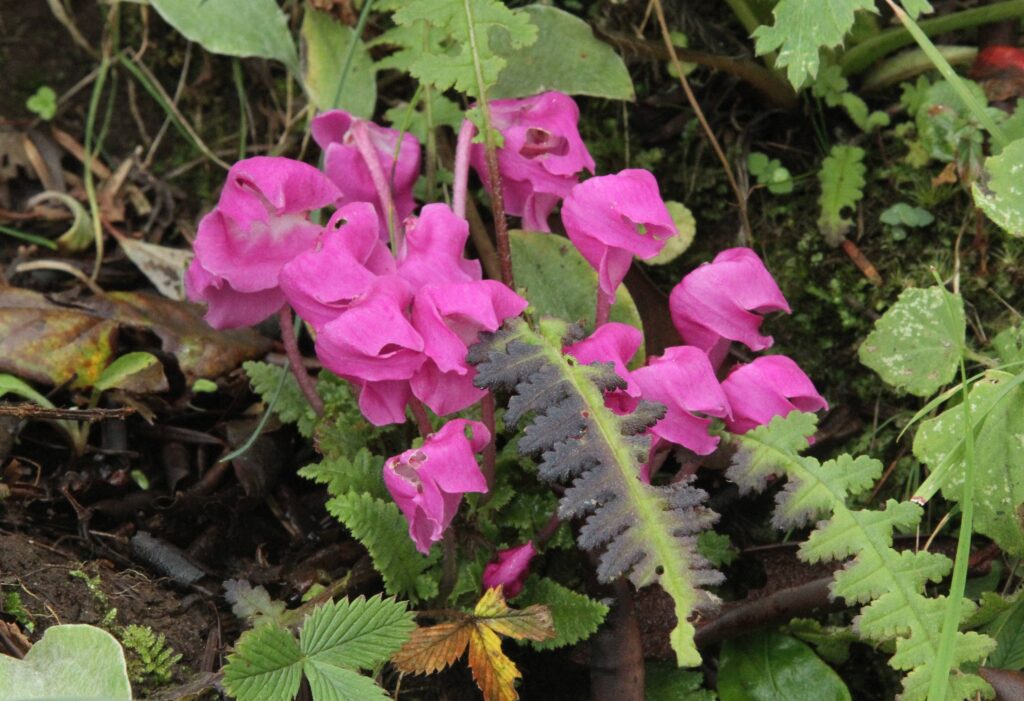
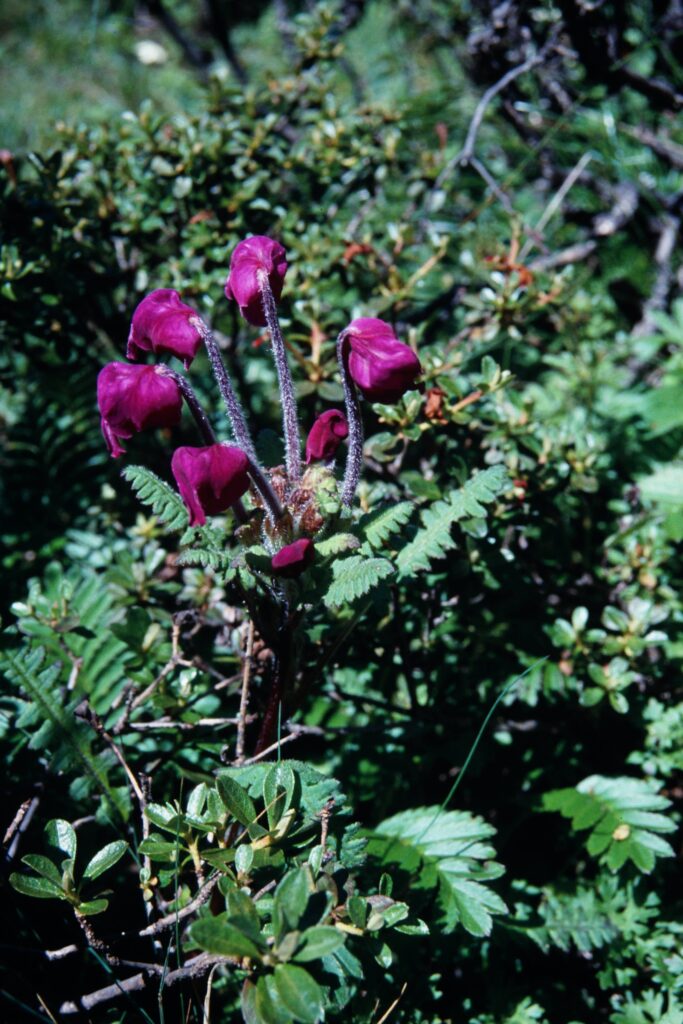
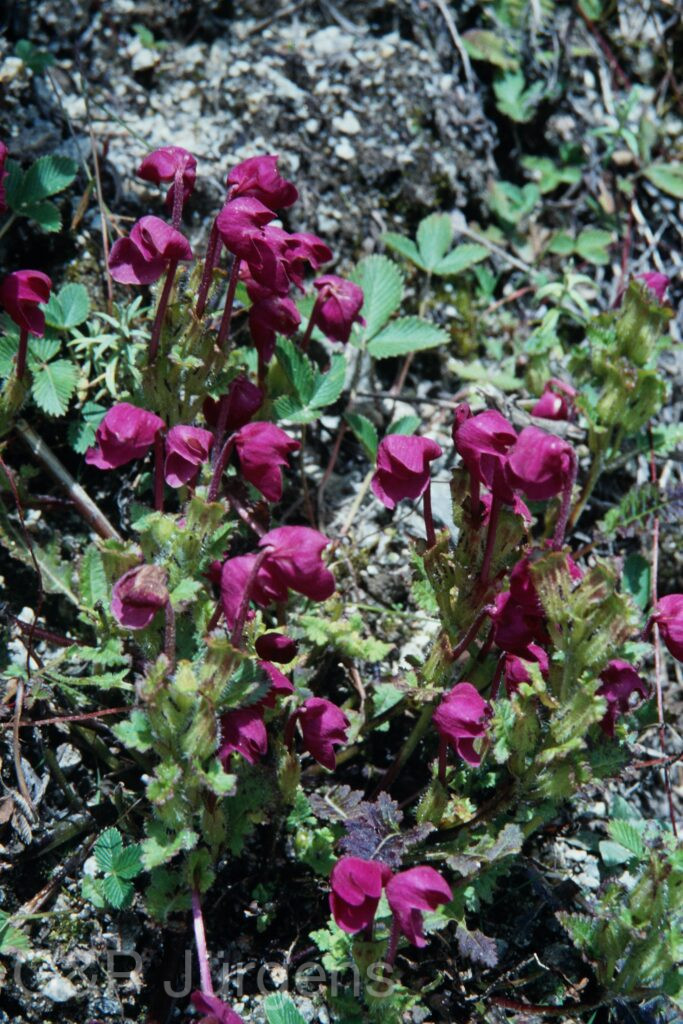
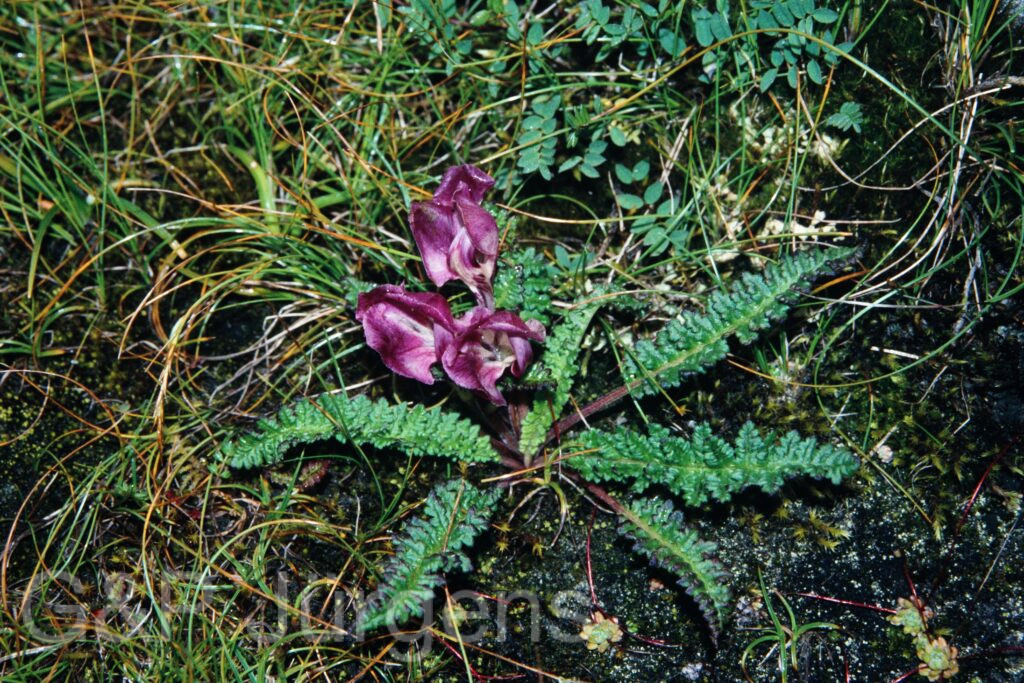
Pedicularis pantlingii is an alpine hemiparasitic herb of the eastern Himalaya, distributed across India (notably Sikkim), China, Bhutan, Myanmar and Nepal, with the Austrian (AT) record almost certainly representing cultivated or herbarium-derived material rather than a natural occurrence. The roughly 114 georeferenced collections concentrate along the high mountain arc from Sikkim and Bhutan into adjacent south-eastern Tibet. It favours moist alpine meadows, open grassy slopes, streamsides and the margins of rhododendron and dwarf-shrub thickets. As the photographed material from Sikkim's Dzongri at 3900 m in August and from Bhutan near Thimphu at 2490 m in July shows, the species ranges from upper temperate to alpine elevations, flowering through the summer monsoon when these pastures are at their most lush.

Like most members of the genus, it is a semi-parasitic perennial drawing water and nutrients from neighbouring roots via haustoria. The stems arise from a short rootstock and bear leaves that are oblong to lanceolate in outline and pinnatisect, the segments toothed and often crisped at the margin. The flowers are borne in a terminal spike or raceme, each subtended by a leafy bract, with a tubular, toothed calyx. The corolla is strongly two-lipped and characteristically galeate: the hooded upper lip (galea) is frequently prolonged into a slender beak enclosing the four didynamous stamens, while the spreading three-lobed lower lip forms a landing platform for bumblebee pollinators. The fruit is an obliquely ovoid, laterally compressed capsule containing several seeds.

The genus Pedicularis (lousewort) is exceptionally diverse in the Sino-Himalayan region, which forms its global centre of speciation, and the elaborate corolla beaks reflect tight coevolution with long-tongued bumblebees. Commemorating the collector Robert Pantling of the Sikkim botanical surveys, P. pantlingii is a regional endemic of restricted range. Although not formally assessed as threatened, its dependence on intact alpine pasture makes it sensitive to overgrazing and climate-driven upslope shifts of montane vegetation.

Author: Prain · Sources: POWO (Kew), GBIF, Flora of China Vol. 18, Flora of Bhutan Vol. 2, Flora of Nepal, Tsoong's Monograph of the Genus Pedicularis

(Prain ex Maxim.) Pennell

Bhutan2012 290 ergebnis
Bhutan Tsotchentchen 3980m, June
Sikkim2003 173 P234 ergebnis
Sikkim Dzongri, 3900m August
Sikkim2003 375 G526 ergebnis
Sikkim Dzongri, 3900m August

Description

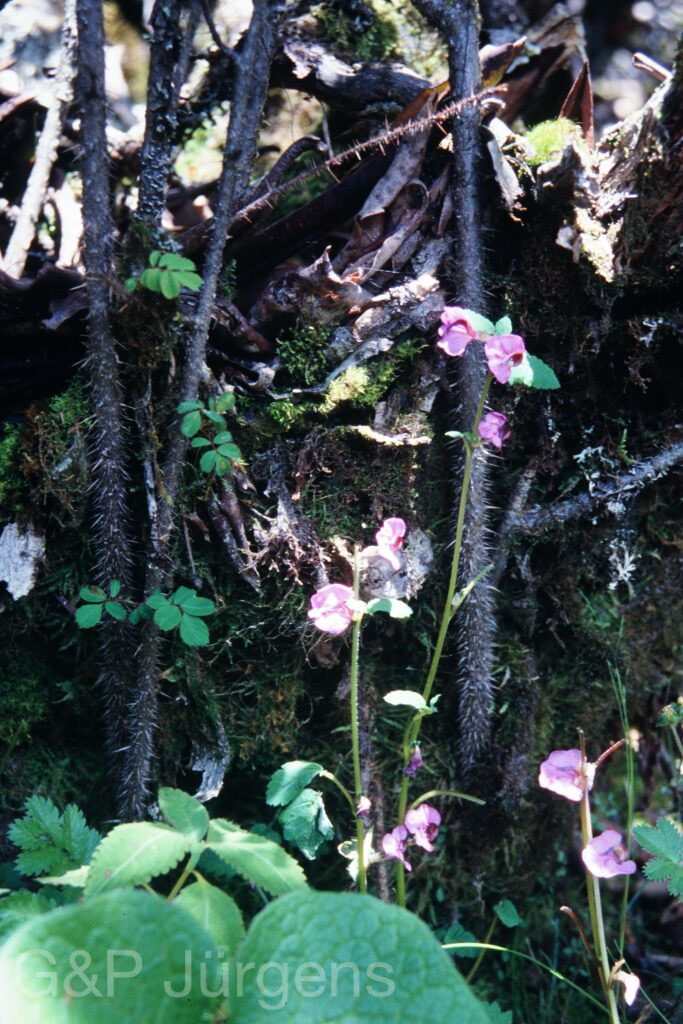
Pedicularis pauciflora is a hemiparasitic herb of the eastern Himalaya, distributed across Nepal, NE India (Sikkim, West Bengal) and Bhutan, with GBIF documenting some 43 georeferenced records concentrated in this narrow arc. It is a plant of the alpine and subalpine zone, occupying moist meadows, open turf and rocky slopes between roughly 3,500 and 4,200 m. The photographed populations at Tsotchentchen in Bhutan (3,980 m, flowering in June) and at Dzongri in Sikkim (3,900 m, August) typify its habitat in cool, well-drained alpine grassland kept moist by monsoon precipitation and snowmelt.

It is a perennial forming a slender, often few-stemmed tuft from a fibrous rootstock. The leaves are pinnatisect, the lobes oblong and crenate-dentate, glabrous to sparsely hairy and arranged in a basal rosette with a few reduced cauline leaves. As the epithet pauciflora indicates, the inflorescence is few-flowered, the flowers borne in the upper leaf axils. The zygomorphic corolla is bilabiate with a galeate upper lip prolonged into a slender beak and a spreading three-lobed lower lip, in shades of pink to purple-rose. The fruit is an obliquely ovoid capsule enclosing several seeds.

Like all Pedicularis, the genus exemplifies facultative root hemiparasitism, drawing water and nutrients from host roots via haustoria while retaining functional photosynthesis. The galeate, beaked corolla is an adaptation to pollination by long-tongued bumblebees prevalent at high elevation. Pedicularis is a notoriously large and taxonomically complex genus in the Himalaya, and P. pauciflora is best distinguished from allied species by its reduced flower number and beak morphology. Its restricted alpine range makes it potentially sensitive to grazing pressure and climatic shifts in the high Himalaya.

Author: (Prain ex Maxim.) Pennell · Sources: POWO (Kew), Flora of Bhutan Vol. 2, GBIF, Flora of China Vol. 18, Yamazaki: Revision of the Asiatic Pedicularis (Scrophulariaceae)