
Wall. ex Benth.
Description
Pedicularis gracilis Wall. ex Benth. is a hemiparasitic herb of the Himalaya and adjacent mountains, occurring across China, Nepal, India, Bhutan, Pakistan and Myanmar. It is recorded from Bhutan at Trongsa and Trashigang between 1820 and 1850 m, flowering in October, and from the Zemu Valley in Sikkim at about 3300 m in August, spanning the warm temperate to subalpine zones. The species grows in open forest, scrub, grassy slopes, meadows and along stream banks, generally between 1500 and 3500 m, where, like all lousewort, it attaches to the roots of neighbouring plants as a facultative root hemiparasite. Its roughly 1008 GBIF records indicate a common and widely distributed species.
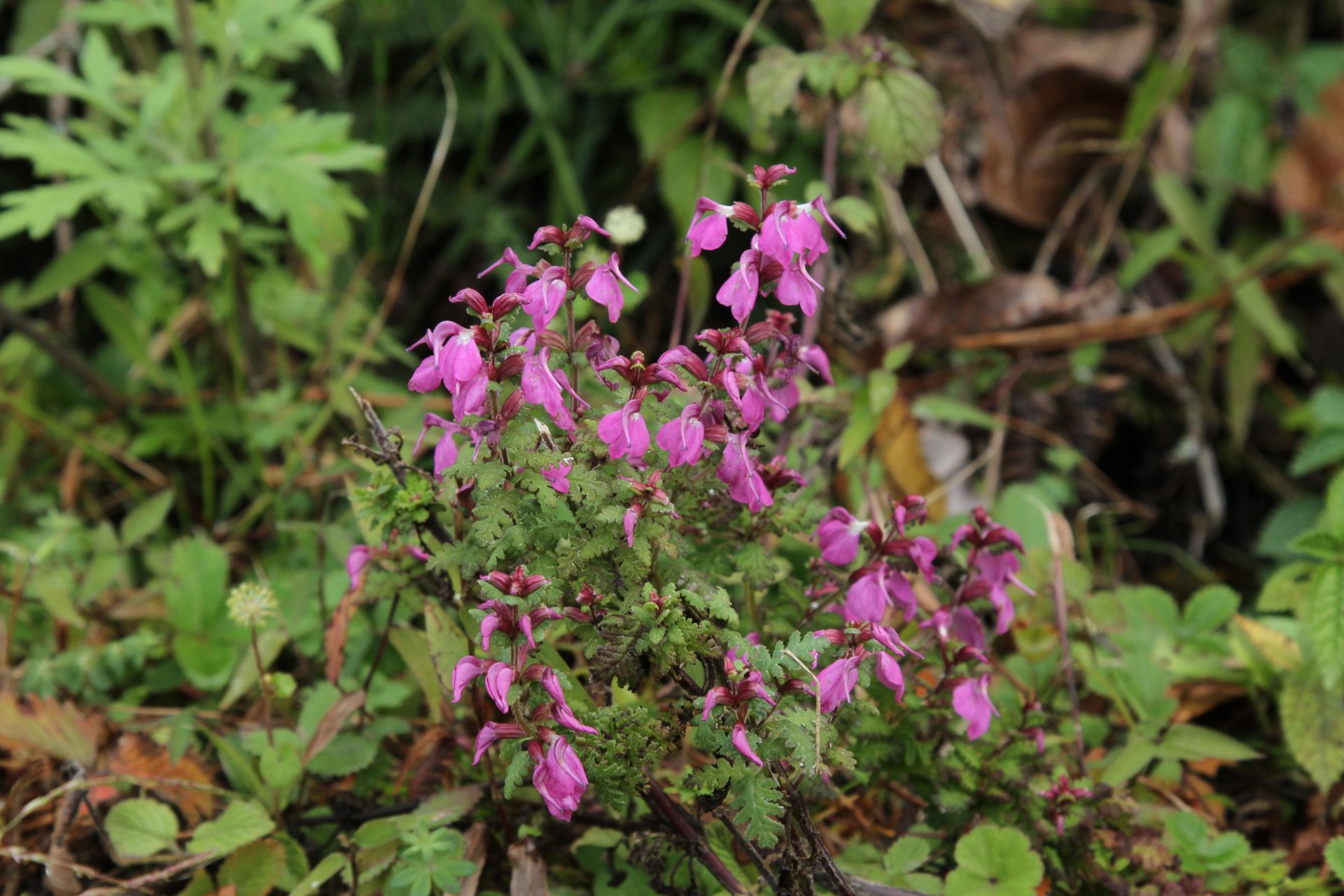
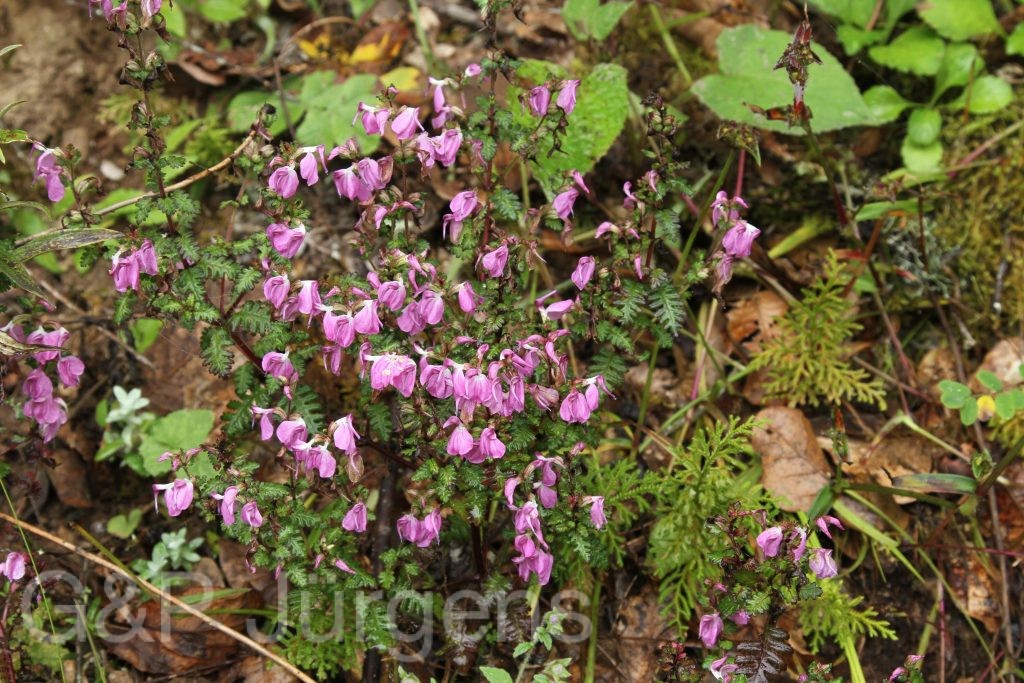
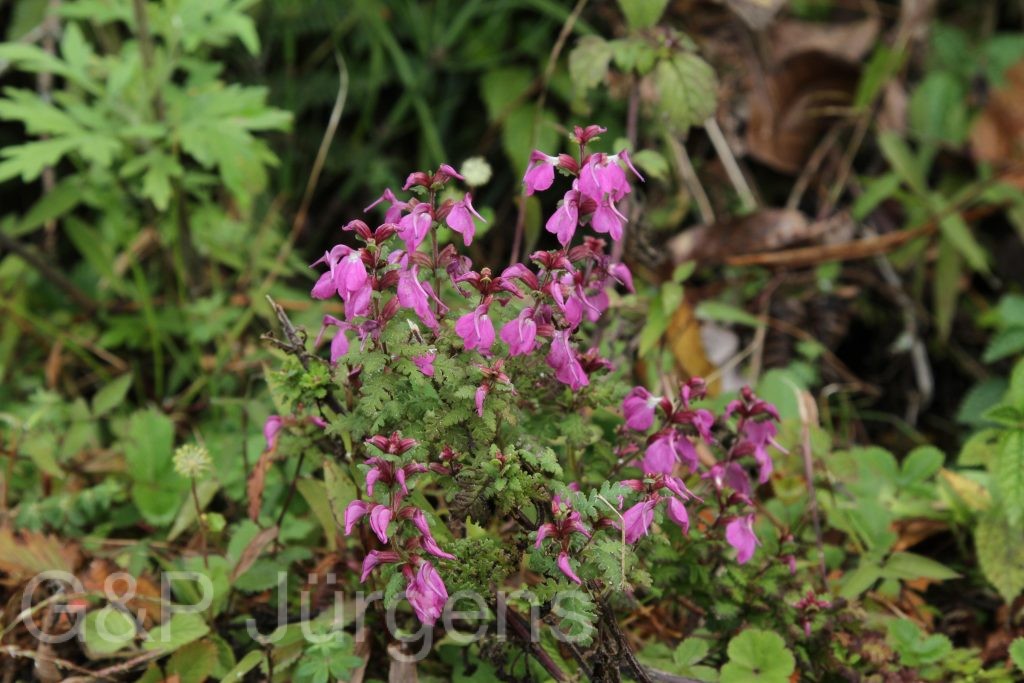
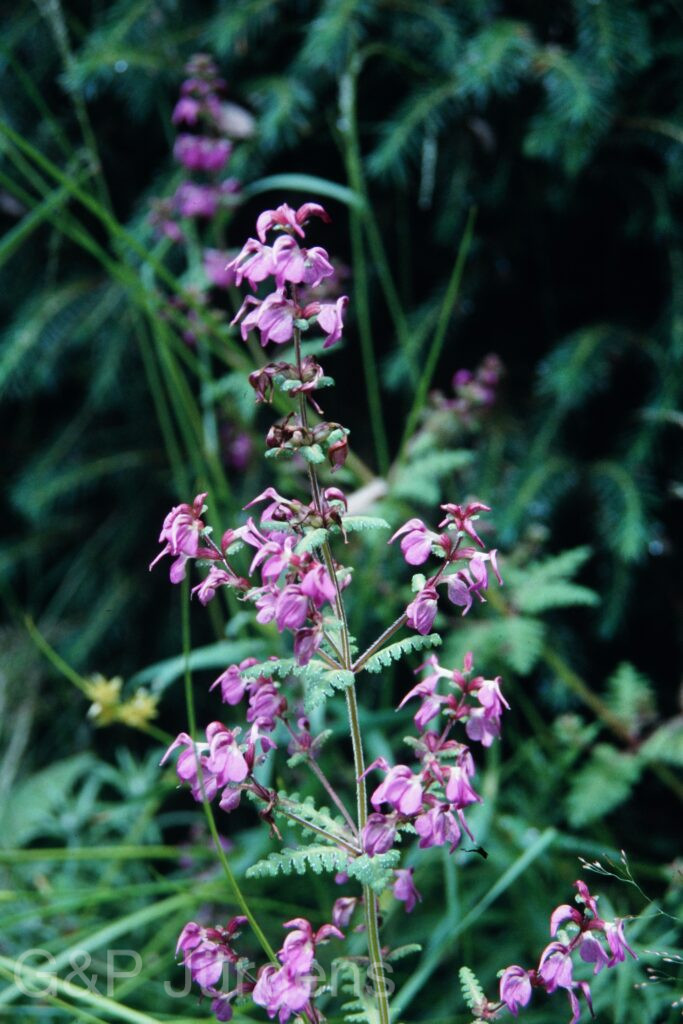
The plant is a slender, erect annual or short-lived perennial with a fibrous root system and a tall, sparingly branched stem. The leaves are alternate and pinnatisect, the segments themselves toothed or incised, giving a fern-like aspect. The flowers are borne in a long, lax, leafy-bracted terminal raceme; each has a tubular five-lobed calyx and a two-lipped corolla in pink to rose-purple, the upper lip (galea) hooded and beaked to enclose the four didynamous stamens, the lower lip three-lobed and spreading. The fruit is an obliquely ovoid, beaked capsule containing several seeds.
Pedicularis is one of the largest genera of the Sino-Himalaya, with the region a global centre of its diversity, and the intricate galea forms are closely tied to specialisation upon long-tongued bumblebee pollinators. As a hemiparasite the genus can influence community composition and is sensitive to changes in host vegetation. Being widespread and frequent, P. gracilis is of no particular conservation concern, though it serves as a useful indicator of intact montane grassland and forest-edge habitats.
Author: Wall. ex Benth. · Sources: POWO (Kew), GBIF, Flora of China, Flora of Bhutan, Flora of Nepal, Pedicularis monographs (Prain; Tsoong)