Tag:

Spring

Cass.

Bh2008 487 P756
Bhutan Samtengang 2100, May
Bh09 355 G572
Bhutan Samtengang 2100, May

Description

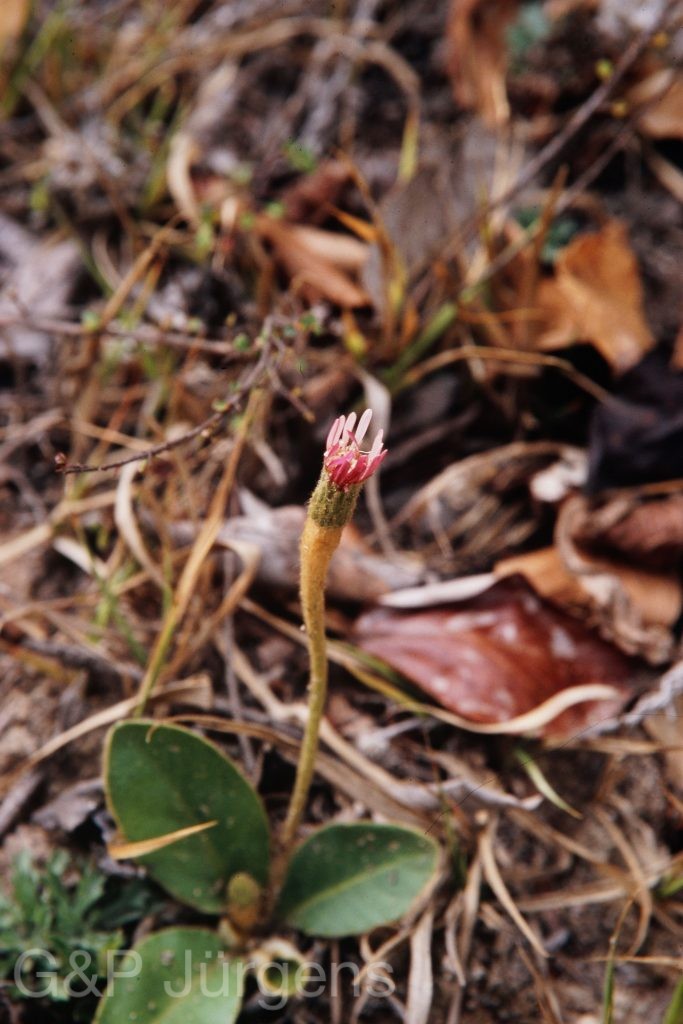
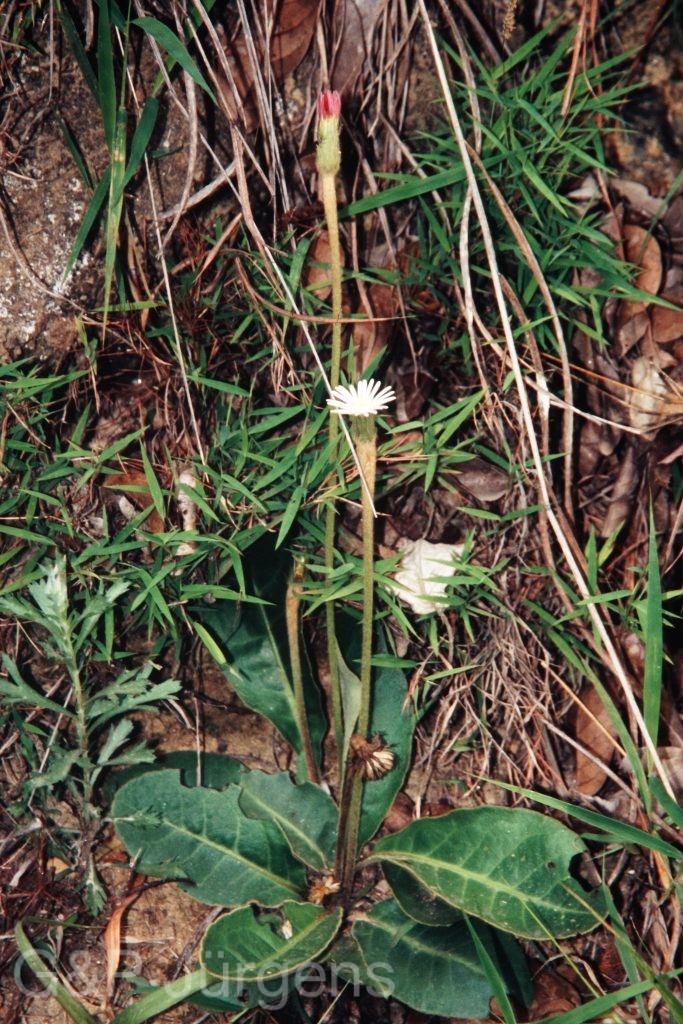
Gerbera piloselloides is a remarkably wide-ranging species spanning the palaeotropics, with GBIF recording over 2780 occurrences from South Africa, Madagascar and tropical East and Central Africa eastward through the Himalaya and southern China to Myanmar and Thailand. Across this disjunct Afro-Asian range it occupies open grassland, sunny hill slopes, sparse pine forest, roadsides and disturbed pasture, generally on well-drained, often acidic soils. In the Eastern Himalaya it occurs in the subtropical to lower temperate zone, the figured plant from Samtengang in central Bhutan at about 2100 m flowering in May, a season coinciding with the onset of the warm months when the basal rosettes throw up their solitary scapes.

The species is a stemless perennial herb forming a flat rosette from a short rhizome. The leaves are entire, oblanceolate to obovate-spathulate, narrowed to the base, green and thinly hairy above but conspicuously white-tomentose beneath. From the rosette centre arise one or more slender, leafless, woolly scapes each terminating in a single heterogamous capitulum. The involucre is campanulate with imbricate phyllaries; the outer female florets are bilabiate, white to pinkish above and reddish beneath, encircling tubular bisexual disc florets. The fruit is a narrowly fusiform, beaked, hairy cypsela bearing a pappus of numerous barbellate bristles.

Referable to Cassini, the binomial Gerbera piloselloides is accepted by GBIF; it has at times been segregated into the genus Piloselloides, and the name is treated here as accepted following current consensus. Within the tribe Mutisieae, Gerbera is noted for its bilabiate marginal florets, and the broad Old World distribution of this taxon reflects both ancient biogeographic connections and tolerance of disturbed, fire-maintained grassland. Its colonising ability in open habitats makes it secure across its range, and it is of no conservation concern.

Author: Cass. · Sources: POWO (Kew), GBIF, Flora of Bhutan, Flora of China, Flora Zambesiaca, Hansen's revision of Gerbera (Mutisieae)
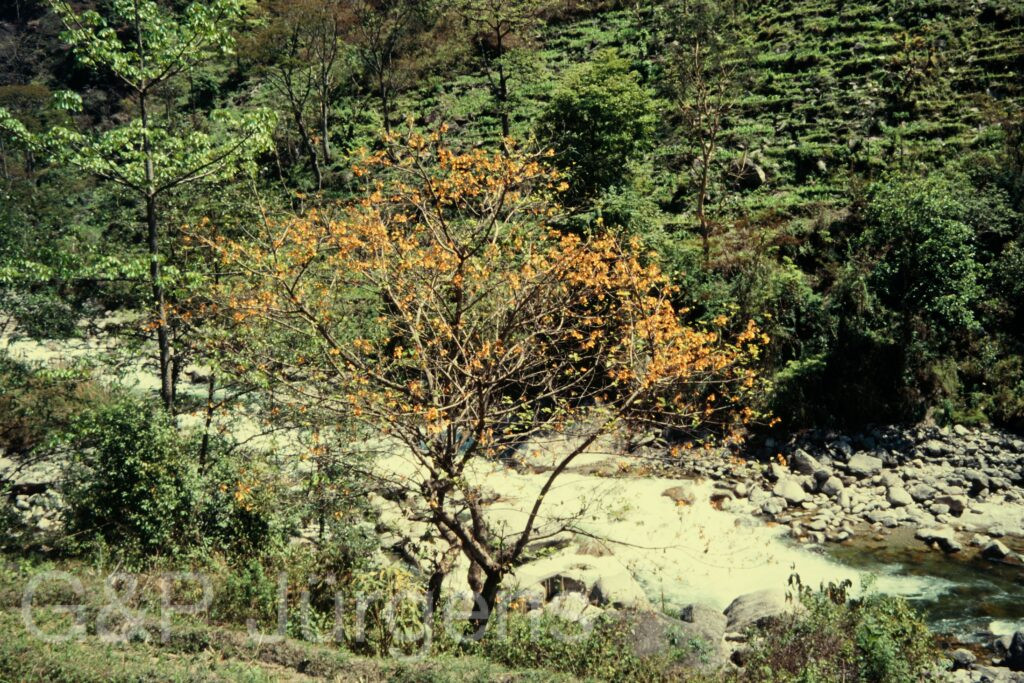
Gmelina arborea

by GP Jürgens

Roxb.

Nepal 97 56 P78
Nepal Mewa-Khola 1160m April
Nepal 97 54 P84
Nepal Mewa-Khola 1160m April

Description

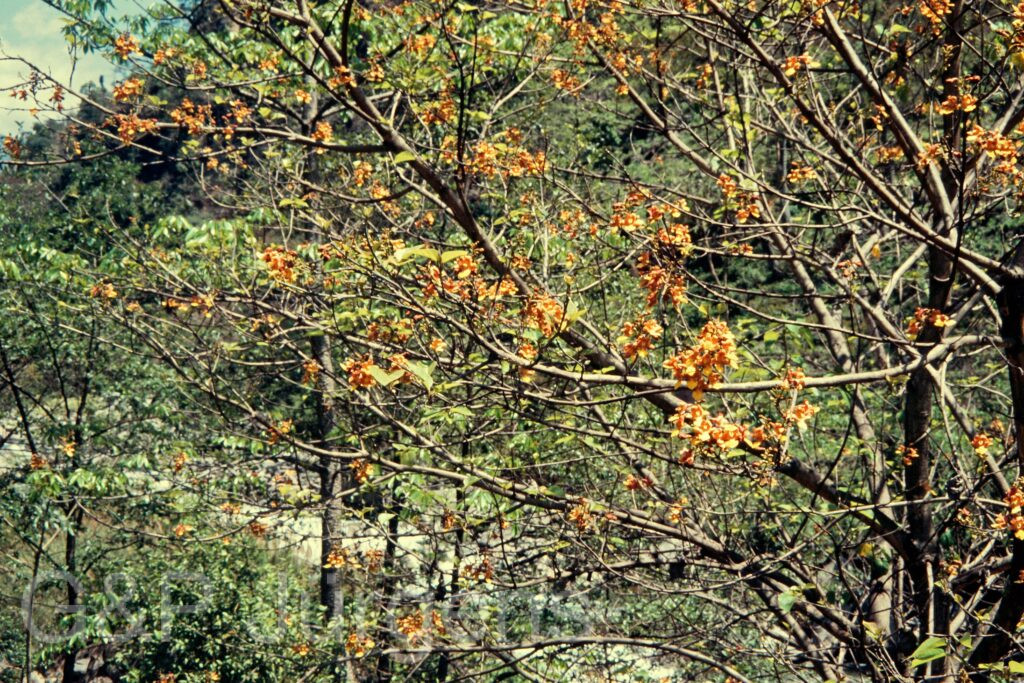
Gmelina arborea, known as gamhar or white teak, is a fast-growing tropical tree native to the Indian subcontinent and Southeast Asia, ranging through Nepal, India, Sri Lanka, Myanmar, Thailand, Indochina, China, Indonesia and the Philippines; it is now extensively planted in tropical Africa and the Americas, and its 12,900 GBIF occurrences across countries from Colombia and Brazil to Nigeria, Tanzania and Mexico largely reflect this pantropical forestry use. In its native range it grows in moist and dry deciduous forest and along watercourses from the lowlands to about 1,500 m. The plant photographed along the Mewa Khola in eastern Nepal at 1,160 m in April shows it flowering in the leafless or newly leafing state typical of the dry pre-monsoon season in the Himalayan foothills.

It is a medium-sized to large deciduous tree reaching 15-30 m, with a straight bole, greyish bark and a spreading crown. The leaves are opposite, broadly ovate to cordate, 10-25 cm long, acuminate and entire, glabrescent above and finely fulvous-tomentose beneath, with gland-dotted petioles. The flowers are showy and brownish-yellow to orange-yellow, borne in terminal panicles that appear when the tree is largely leafless; the corolla is bilabiate and funnelform with a swollen tube, and the four didynamous stamens are included. The fruit is a fleshy, ovoid to obovoid drupe, yellow when ripe, with a hard stone enclosing one to several seeds.

Gmelina, traditionally placed in Verbenaceae but now referred to Lamiaceae, comprises some thirty-five Old World tropical species, of which G. arborea is by far the most economically important. Its rapid growth, pale lightweight timber and suitability for pulp and plantation forestry have made it one of the most widely cultivated hardwoods in the tropics, while its nectar-rich flowers attract bees and its drupes are taken by mammals and birds. Long valued in traditional medicine and listed among the classical Ayurvedic drugs, the species is abundant and of least concern, though its plantations occasionally naturalise beyond cultivation.

Author: Roxb. · Sources: POWO (Kew), GBIF, Flora of China, Annotated Checklist of the Flowering Plants of Nepal, World Agroforestry database, revision of Gmelina (Lamiaceae)

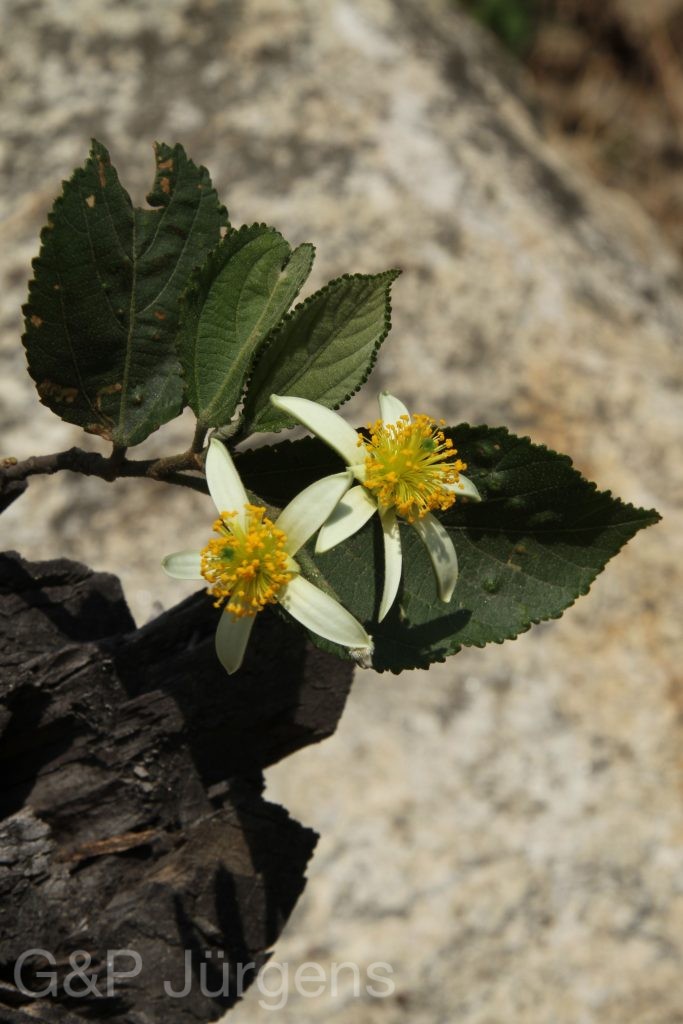
DC.

Bhutan2014 718
Bhutan Wangdi Phodrang 2000m, May

Description

Grewia serrulata is a shrub or small tree of the Indomalayan tropics, distributed through India, Nepal, Bangladesh, Myanmar, Malaysia, Bhutan, Indonesia, the Philippines, Pakistan and Thailand, with around 382 GBIF occurrences. It is a plant of warm subtropical to tropical hill forest, growing in open woodland, forest margins, scrub, ravine slopes and along roadsides and clearings, generally on well-drained ground in the foothill and lower montane belt. The record from Wangdi Phodrang in Bhutan at about 2000 m in May illustrates its occurrence in the warm temperate to subtropical zone of the eastern Himalayan foothills, flowering in the pre-monsoon season.

The plant is a much-branched shrub or small tree with young branchlets bearing stellate pubescence. The alternate, simple leaves are ovate to oblong-lanceolate with an asymmetric, rounded to subcordate base, an acuminate apex, a finely serrulate margin (as the epithet denotes) and prominent palmate basal venation, the lower surface often paler and stellate-hairy. The flowers are borne in small axillary or leaf-opposed cymes; each has five sepals, five spreading yellow to whitish petals each with a basal nectariferous gland, and a prominent central androgynophore bearing numerous stamens around a superior ovary. The fruit is a small, lobed, fleshy drupe, becoming reddish to purplish-black at maturity and bearing few stones.

Described by de Candolle, Grewia serrulata belongs to a large genus formerly placed in Tiliaceae but now subsumed, following molecular phylogenetics, within the broadly circumscribed Malvaceae (subfamily Grewioideae); the input family is retained accordingly. The genus is well known for its tough bast fibres and edible drupes, and several species are gathered for fruit, fodder and fibre. As a widespread, adaptable component of secondary and disturbed forest, G. serrulata is not regarded as threatened, though locally valued for its useful products.

Author: DC. · Sources: POWO (Kew), GBIF, Flora of British India, Flora of Bhutan, Flora of China, Bayer & Kubitzki treatment of Malvaceae

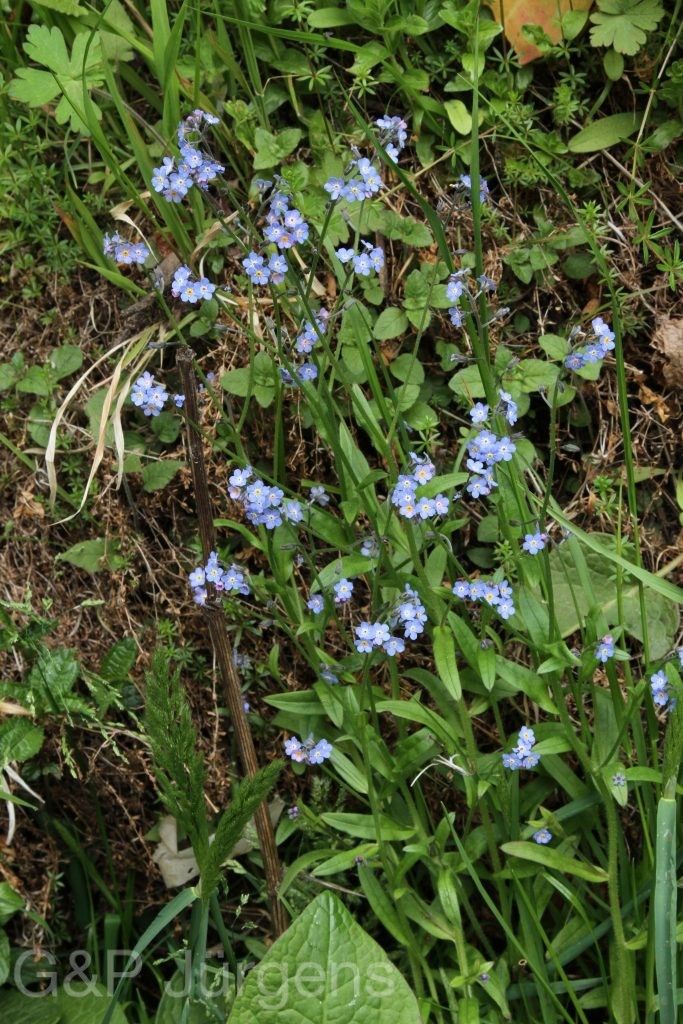
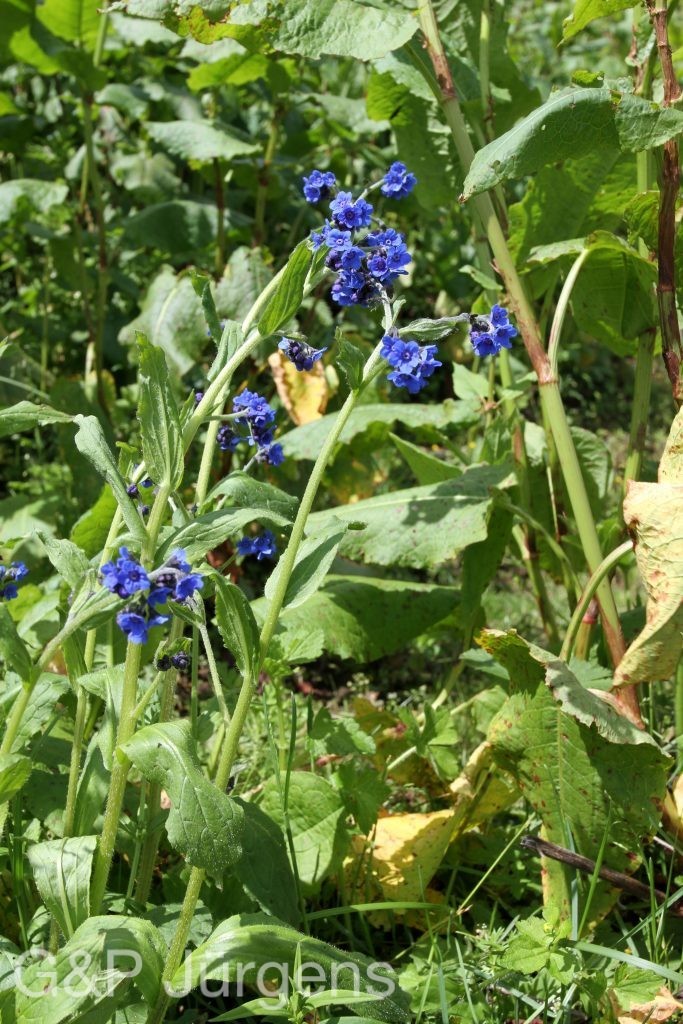
R.R.Mill

Bhutan2014 1055
Bhutan Takthsang 2900m, May
BhutanPG2011 766
Bhutan Chele-La, 3800m July

Description

Hackelia bhutanica is a forget-me-not relative of the eastern Himalaya, described from Bhutan and also recorded from India and Nepal, with a comparatively small number of occurrences (31 georeferenced records) consistent with a localised eastern Himalayan range. It grows on shaded banks, forest margins, open slopes and among rocks in the temperate to subalpine zones. The illustrated plants from Bhutan — at Takthsang around 2900 m in May and at Chele-La near 3800 m in July — span a broad altitudinal range and show the species flowering from late spring at lower elevations into mid-summer at higher ones, tracking the seasonal advance of conditions up the mountain.

The plant is an erect biennial or perennial herb, more or less roughly hairy throughout, with a leafy stem arising from a basal cluster of leaves. The leaves are alternate, narrowly lanceolate to oblong, entire and hispid. The flowers are borne in elongating, scorpioid (coiled) cymes typical of the Boraginaceae; each has a five-lobed calyx and a small, salver-shaped, blue corolla with a short tube and five spreading lobes closed at the throat by raised scales (fornices). The fruit characteristic of Hackelia consists of four nutlets whose margins bear glochidiate (barbed, hooked) prickles, an adaptation for dispersal by attachment to passing animals.

Hackelia is segregated from the closely allied Lappula and the broader stickseed group within Boraginaceae, distinguished largely by nutlet ornamentation; the species was described by R. R. Mill, a specialist in the Bhutanese and Himalayan flora. As a restricted eastern Himalayan endemic known from relatively few localities, H. bhutanica warrants attention from a conservation standpoint, its persistence depending on the maintenance of the temperate forest and open subalpine habitats it occupies.

Author: R.R.Mill · Sources: POWO (Kew), GBIF, Flora of Bhutan, Flora of China (Boraginaceae), Mill: revisionary studies of Himalayan Boraginaceae

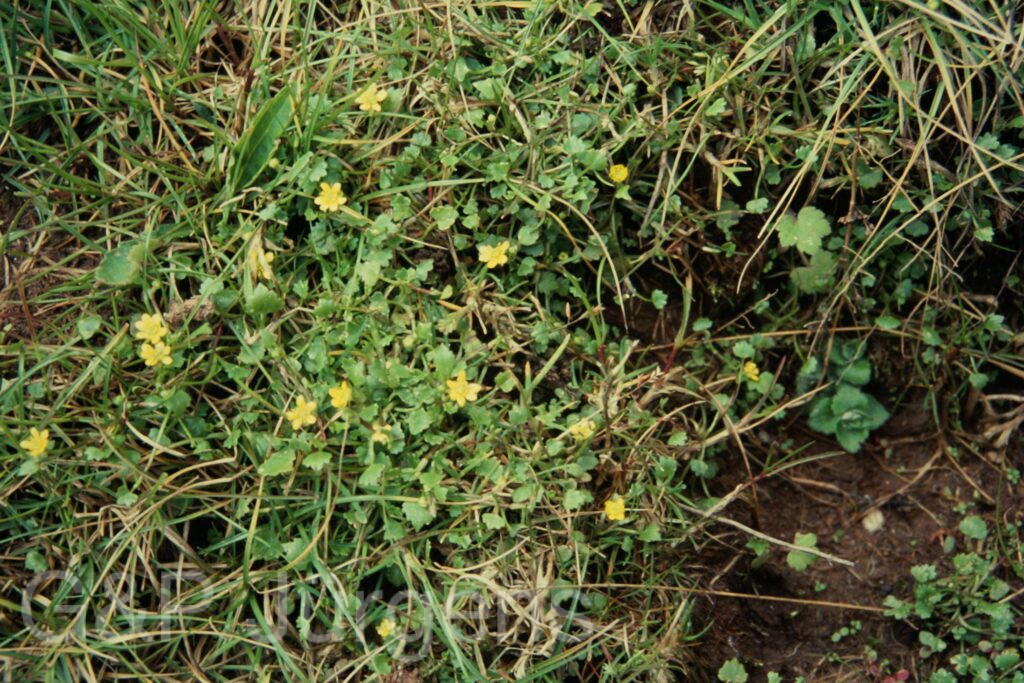
(Adams) Komarov

Sikkim2004 68 P119
Sikkim West-Bengal, Bersay 2800m April

Description

Halerpestes sarmentosa is a widely distributed stoloniferous perennial of saline and moist open ground across temperate Eurasia, documented from Russia, China, India, Mongolia, Kazakhstan, Afghanistan, Tajikistan, Pakistan, Kyrgyzstan, Nepal and Uzbekistan, with disjunct and partly introduced records in the Americas (the more than 2170 GBIF occurrences include adventive populations). It favours damp meadows, lake and stream margins, marshy depressions and alkaline flats, typically from the lowlands to around 4500 m. The plant photographed at Bersay (Sikkim, West Bengal) at about 2800 m in April reflects its occurrence in moist montane grassland during early flowering.

The species is a low, mat-forming herb spreading by slender rooting stolons (sarmentose runners), from which arise long-petiolate basal leaves. The leaf blades are simple, ovate to reniform or somewhat three-lobed, with crenate margins and a cordate to truncate base, rather thick and slightly fleshy. The leafless scapes bear one to a few small flowers; the five spreading sepals subtend five narrow, yellow, nectariferous petals each with a basal scale. Stamens and carpels are numerous, the latter densely aggregated on an elongating receptacle and maturing into a globose to ovoid head of small, flattened, faintly ribbed achenes with a short straight beak.

Halerpestes was segregated from Ranunculus on the basis of its stoloniferous halophytic habit, leathery entire leaves and distinctive achene structure, the genus being centred on the steppe and saline wetlands of Central Asia. The taxon is also catalogued under the orthographic variant Halerpestes sarmentosus. Ecologically it is a salt-tolerant wetland colonist of grazed and disturbed shores; its broad range and tolerance of human-modified habitats render it of least concern, and its near-cosmopolitan spread illustrates the biogeographic links between Eurasian and American cold-temperate floras.

Author: (Adams) Komarov · Sources: POWO (Kew), GBIF, Flora of China, Flora of Bhutan, Annotated Checklist of the Flowering Plants of Nepal, Tamura's monograph of Ranunculaceae

(Maxim.) Hand.-Mazz.

Sikkim2004 282 P494 ergebnis
Sikkim Dzongri 4000m, May

Description

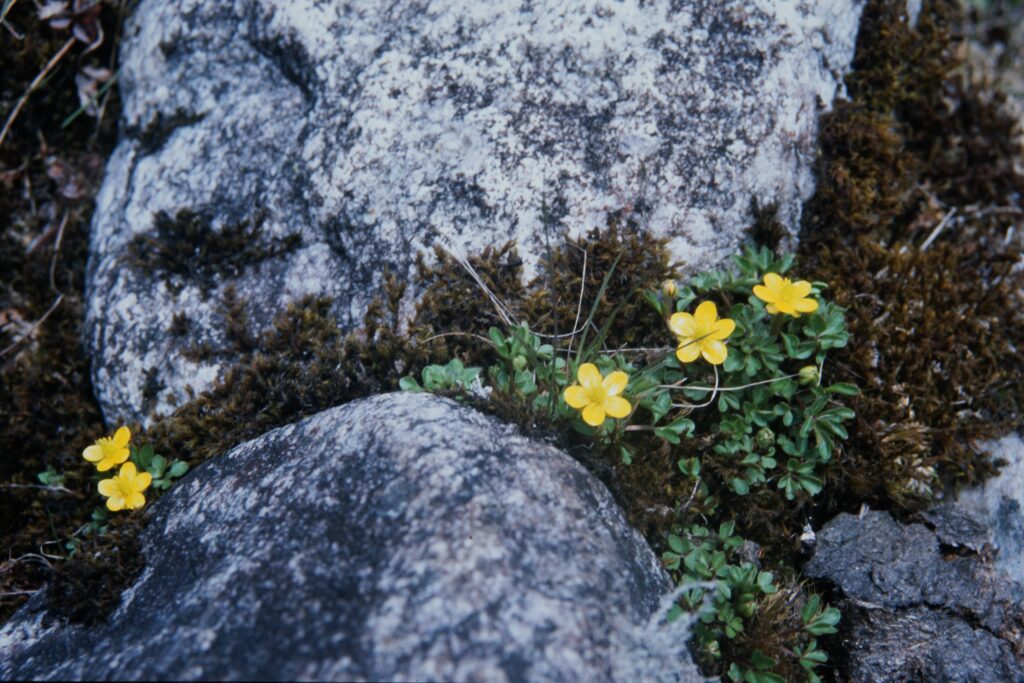
Halerpestes tricuspis is a small, stoloniferous perennial of the Ranunculaceae, distributed across the high mountains of Central Asia and the Himalaya. GBIF records (377 occurrences) document its presence in China, Nepal, India, Bhutan, Mongolia and Pakistan, where it occupies the alpine and subalpine zone. It is a characteristic plant of moist, often saline or marshy ground, the margins of glacial lakes, seepage flushes and streamsides, typically between 3,000 and 5,000 m. The photographed material from Dzongri in Sikkim at around 4,000 m in May exemplifies this preference for wet alpine meadows where snowmelt sustains permanently damp substrates.

The plant forms low mats by means of slender, rooting stolons. The leaves are basal, long-petiolate, with a small, fleshy, broadly cuneate to obovate blade that is characteristically three-toothed or shallowly three-lobed at the apex, the feature from which the epithet tricuspis derives. Flowering scapes are leafless and rise just above the foliage, each bearing one to few small, bright yellow flowers. The flowers have five sepals and five glossy petals each with a basal nectary scale; the numerous stamens surround a domed receptacle that develops into a globose to ovoid head of small, compressed, finely ridged achenes.

Formerly placed in Ranunculus, the genus Halerpestes is distinguished by its stoloniferous habit, the toothed leaf apices and the longitudinally ribbed achenes adapted to wetland dispersal. The species is an indicator of intact alpine wetland and flush communities, habitats sensitive to grazing pressure, trampling and hydrological change driven by glacial retreat. Though not currently of conservation concern owing to its wide range, its dependence on specialised wet microhabitats makes local populations vulnerable.

Author: (Maxim.) Hand.-Mazz. · Sources: POWO (Kew), Flora of China Vol. 6, Flora of Bhutan Vol. 1, GBIF, Tamura: Die natürlichen Pflanzenfamilien – Ranunculaceae (1995)

(Benth.) B.H.Choi & H.Ohashi

Sikkim2011 44
Bhutan Chele-La 4000m, May
Sikkim2011 78
Sikkim Vista-valley 3700m, June
Sikkim2011 44 1
Sikkim Vista-valley 3700m, June

Description

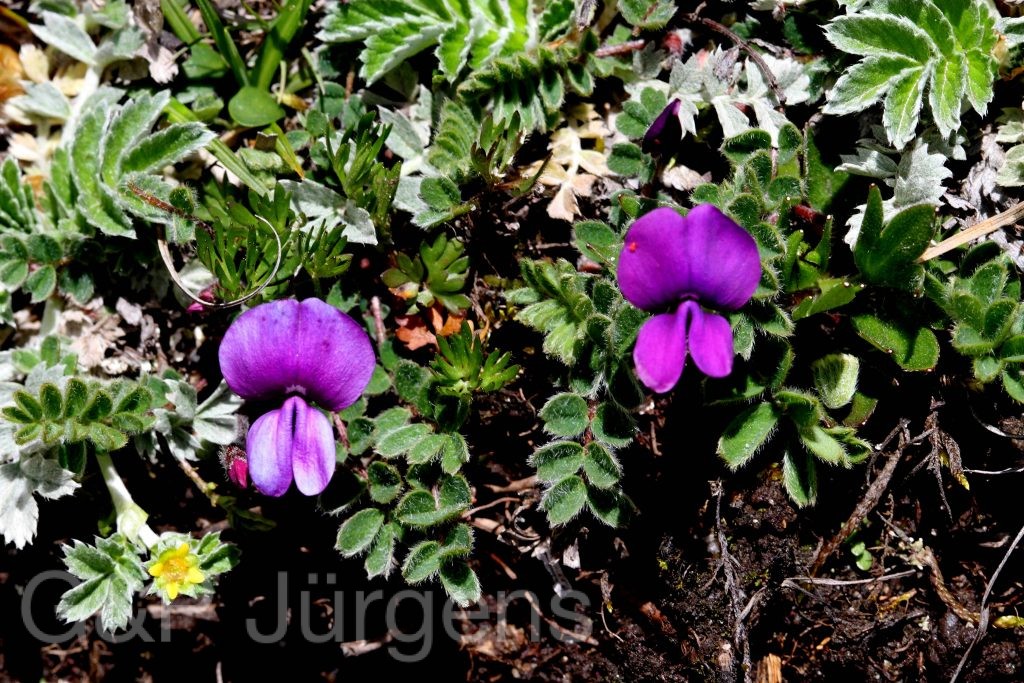
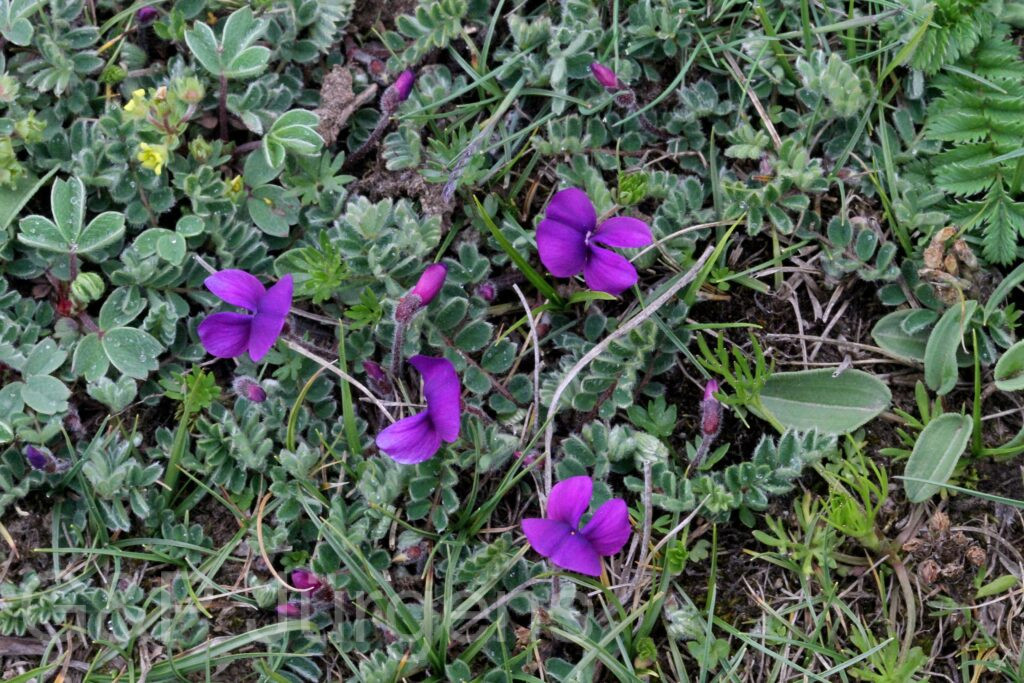
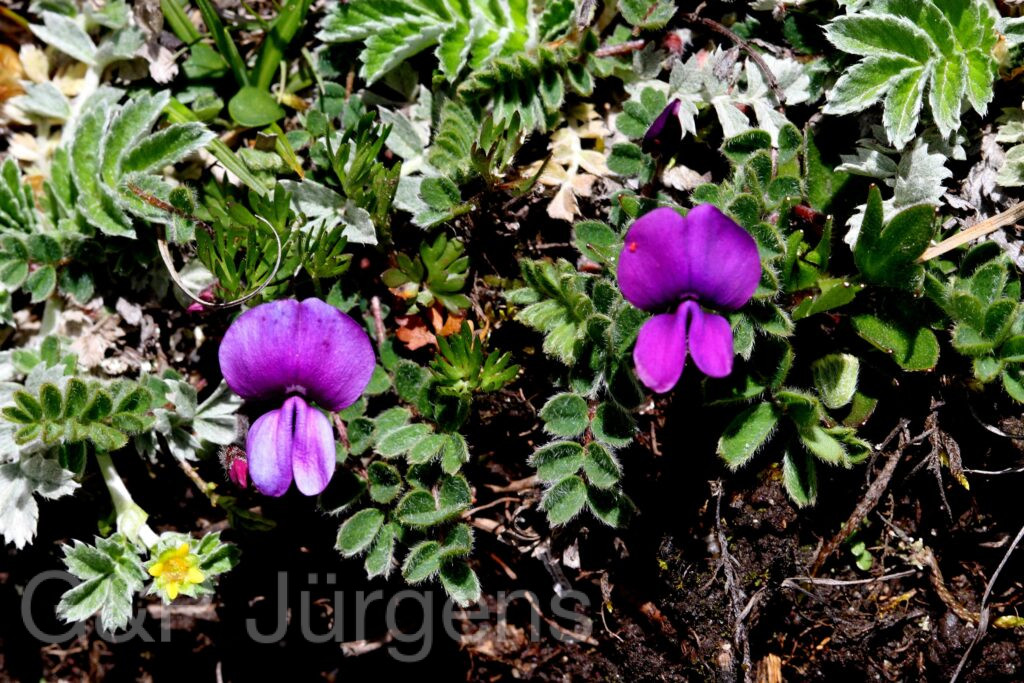
Hedysarum tibeticum is a high-alpine legume of the Himalaya and Tibetan plateau, distributed across China, India, Nepal and Bhutan, with around 295 GBIF records; it has historically also been treated under the name Stracheya tibetica, reflecting earlier generic placement. It grows on open stony alpine slopes, gravelly pastures, moraine flats and dry grassy banks near and above treeline, generally between about 3500 and 4500 m. The collections cited from Chele-La in Bhutan at 4000 m in May and from the Vista-valley in Sikkim at 3700 m in June show its early-summer flowering across the high eastern Himalaya.

It is a low, cushion- or mat-forming perennial herb arising from a stout woody rootstock and deep taproot. The leaves are imparipinnate with several pairs of small, oblong to elliptic leaflets that are often appressed-hairy. The flowers are borne in short, dense racemes; each is the typical papilionaceous pea-flower, with a standard, two wings and a keel, coloured pink to purplish-red. The diagnostic fruit is a flattened, transversely jointed lomentum that breaks at maturity into one-seeded segments, the articles often margined or prickly, aiding epizoochorous dispersal.

The taxon has been the subject of nomenclatural revision, the monotypic genus Stracheya having been merged into Hedysarum by Choi and Ohashi on the basis of morphological and molecular evidence, so that POWO now treats Hedysarum tibeticum as accepted. The low cushion habit and deep root are adaptations to wind, cold and the thin soils of the high plateau, while the jointed lomentum is an efficient dispersal device. Widespread across the Tibetan borderlands, the species is not considered threatened and is a characteristic component of high-alpine legume communities.

Author: (Benth.) B.H.Choi & H.Ohashi · Sources: POWO (Kew), GBIF, Flora of China (Fabaceae), Flora of Bhutan, Annotated Checklist of the Flowering Plants of Nepal, Choi & Ohashi systematic revision of Hedysarum

Hook.f. & Thomson ex C.B.Clarke

Sikkim 2006 40 ergebnis
India West-Bengal, Chainribas 1660m, May

Description

Helwingia himalaica is a Sino-Himalayan shrub distributed from China through Nepal, India, Bhutan and Myanmar to Vietnam, with over 1300 documented occurrences spanning the eastern Himalaya and southwest China. It grows in the understorey of evergreen and mixed broad-leaved forest, along shaded ravines and moist montane slopes, typically between roughly 1300 and 2700 m. The photographed plant from Chainribas in West Bengal, India at 1660 m, flowering in May, is characteristic of its occurrence in humid, shaded subtropical to lower temperate forest in the eastern Himalaya, where it forms part of the shrub layer.

It is a dioecious, evergreen to semi-evergreen shrub with slender, glabrous branches. The leaves are alternate, lanceolate to narrowly elliptic or oblong, with a setulose-serrulate margin, an acuminate apex and a cuneate base, and small filiform stipule-like appendages at the petiole base. The most remarkable feature is the epiphyllous inflorescence: the small, greenish, four- to five-merous unisexual flowers are borne in clusters on the upper surface (adaxial midrib) of the leaf, a phenomenon resulting from the adnation of the floral axis to the petiole and midrib. Staminate flowers occur in small umbels and pistillate flowers singly or few together, the latter with an inferior ovary that ripens into a small, fleshy, black or red drupe.

Helwingia is the sole genus of the small family Helwingiaceae in the order Aquifoliales, distinguished from related families chiefly by its unique epiphyllous flowering. The greenish flowers are insect-pollinated, and the berry-like drupes are dispersed by birds. As a widespread and locally common forest understorey shrub across the Sino-Himalayan region, H. himalaica (the accepted name) is not considered threatened.

Author: Hook.f. & Thomson ex C.B.Clarke · Sources: POWO (Kew), GBIF, Flora of China Vol. 14, Flora of Bhutan Vol. 2, Flora of Nepal, Soltis et al. Aquifoliales phylogenetic studies (monograph)

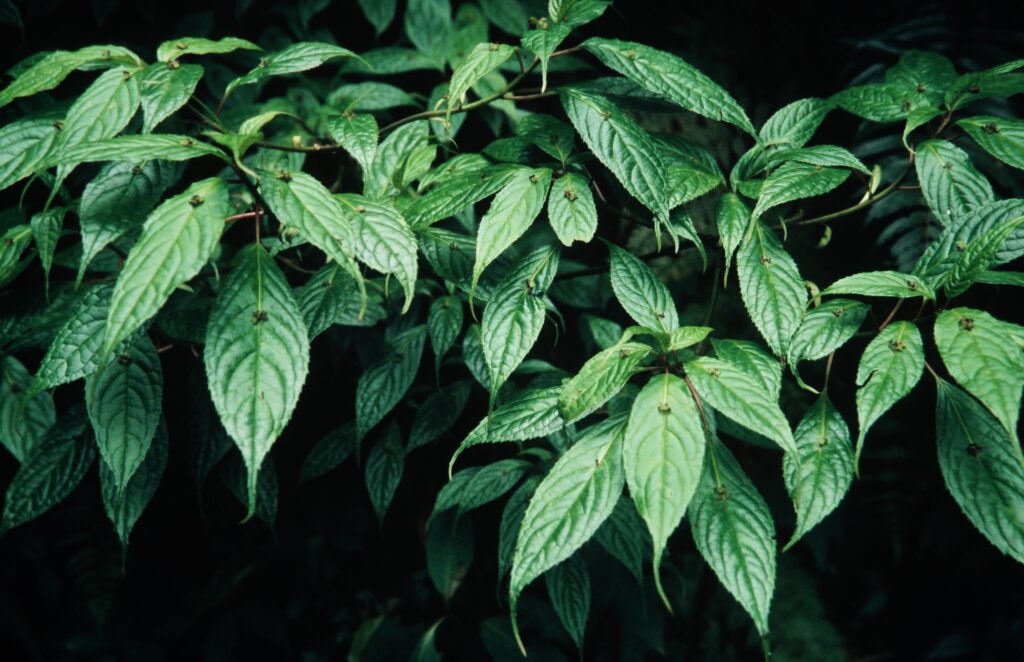
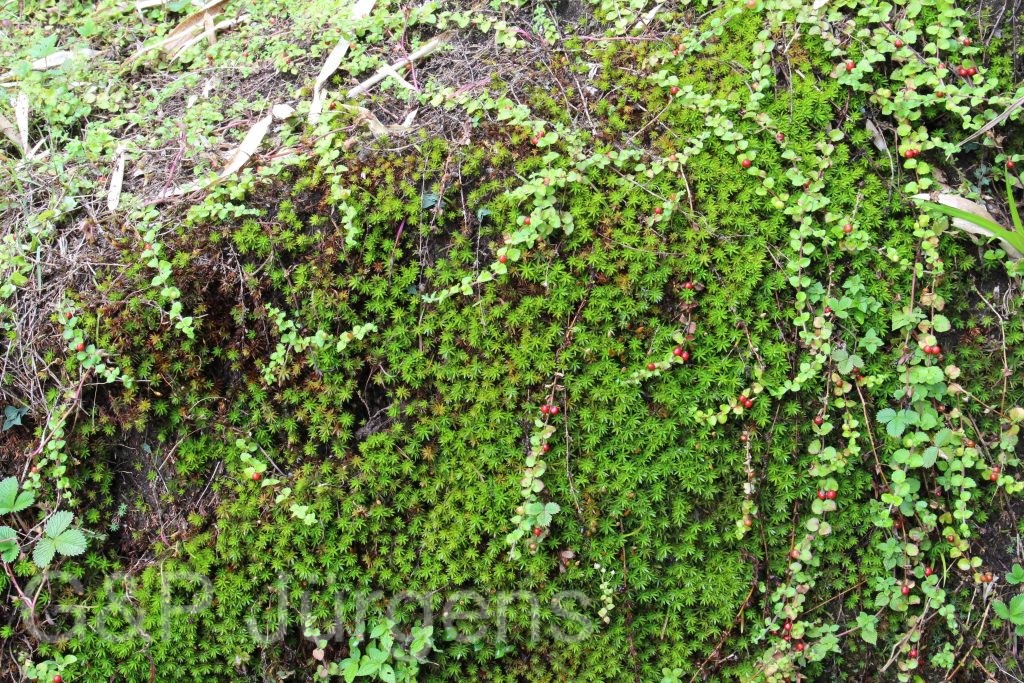
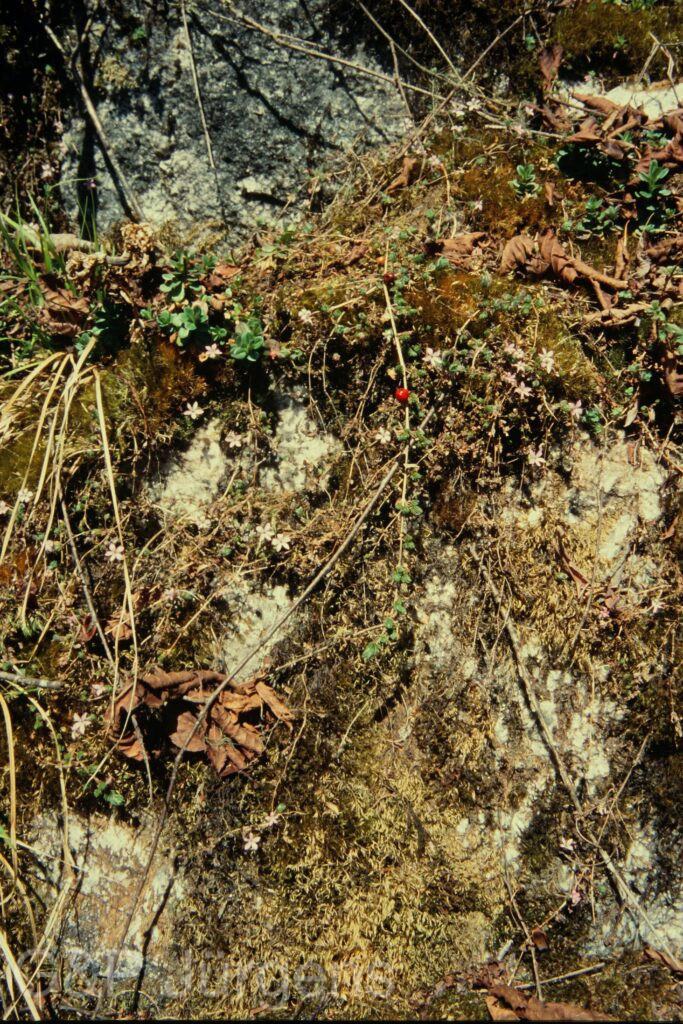
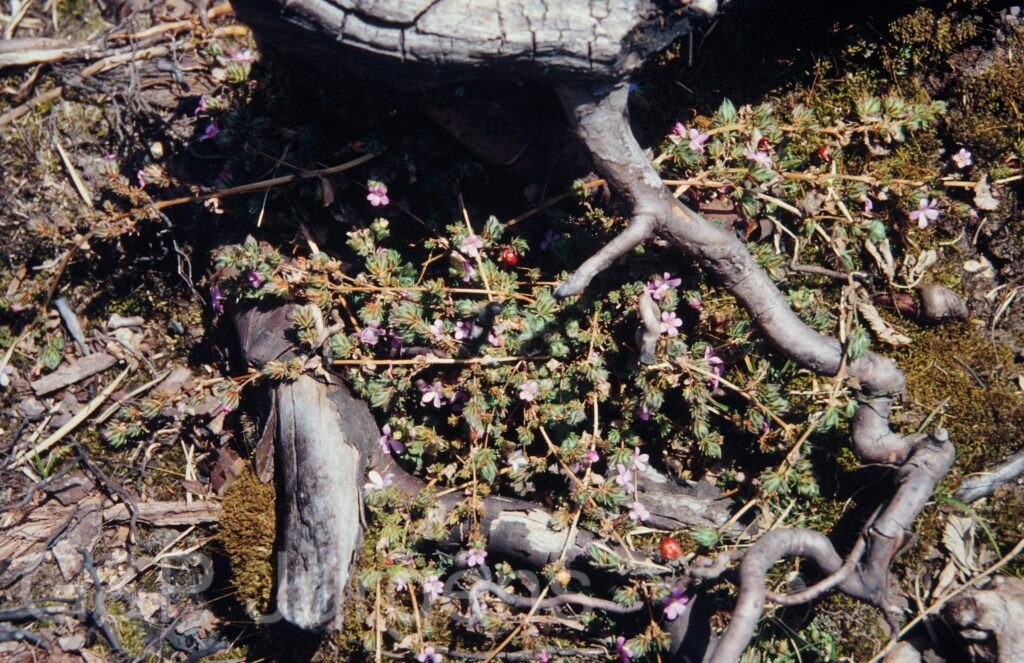
Wall.

Bhutan2015 39
Bhutan Dochu-La 2700m, October
Sikkim2004 301 G524
Sikkim/India Choka 3800m May
Nepal 1994 90 ergebnis
Ost-Nepal Jaljale Himal
3100m April

Description

Hemiphragma heterophyllum is a widespread Asian creeping herb extending along the Himalaya from Pakistan through Nepal, Sikkim, Bhutan and northeast India to China and Taiwan, and southward into the mountains of Myanmar, Thailand, Vietnam, the Philippines and Indonesia, with naturalised records elsewhere; GBIF logs 2751 occurrences across this broad range. It grows on open banks, grassy slopes, mossy rocks, forest paths and disturbed ground in the temperate to alpine zone, roughly 2500 to 4000 m. The cited records from Dochu-La in Bhutan (2700 m, October), Choka in Sikkim (3800 m, May) and the Jaljale Himal in eastern Nepal (3100 m, April) demonstrate its wide elevational and seasonal amplitude.

It is a small, mat-forming perennial herb with slender, much-branched, prostrate and rooting stems. The leaves are conspicuously dimorphic, as the epithet heterophyllum indicates: those on the main stems are broad, orbicular to reniform and crenate, while the clustered axillary fascicles bear numerous narrow, needle-like (acicular) leaves. The flowers are small, solitary and nearly sessile in the leaf axils, with a campanulate calyx and a pink to white rotate-campanulate corolla. The fruit is the most striking feature: a fleshy, berry-like, bright scarlet to orange globose capsule that is exserted among the foliage and conspicuous in fruit.

The sole species of the genus Hemiphragma, it is now placed in Plantaginaceae following the dismemberment of the traditional Scrophulariaceae, having formerly been assigned to that family. Its brightly coloured fleshy fruits suggest endozoochorous dispersal by birds, unusual within its largely dry-fruited relatives. The species is abundant, ecologically versatile and frequently colonises trodden or disturbed habitats, so it is of least conservation concern; its capacity to establish outside its native range is reflected in scattered exotic records.

Author: Wall. · Sources: POWO (Kew), GBIF, Flora of China Vol. 18, Flora of Bhutan Vol. 2, Flora of Nepal, Genera Plantarum and Hooker's Flora of British India

(G.Don ex Loudon) Lowry & G.M.Plunkett

Bhutan2014 71
Bhutan Trashigang 1350m, May

Description

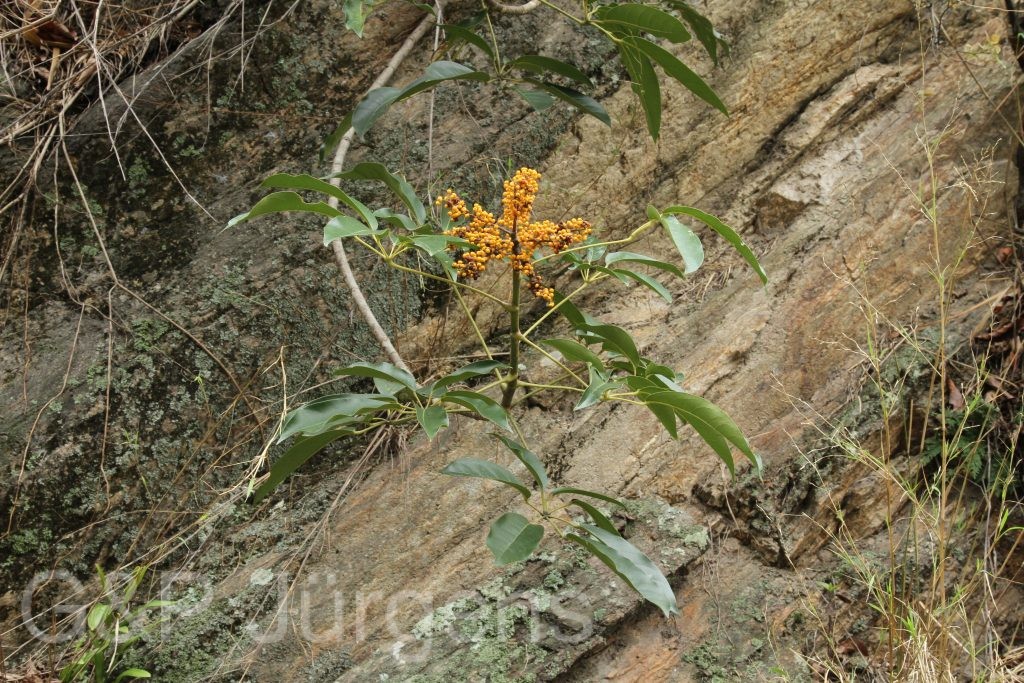
Heptapleurum digitatum is an Indo-Himalayan and Indo-Malesian tree distributed from the eastern Himalaya through northeastern India, Bangladesh, Myanmar and Thailand into the Malesian region, with GBIF recording around 116 occurrences across India, Bhutan, Nepal, Bangladesh, Myanmar, Thailand, Indonesia and Malaysia. It is a plant of warm subtropical to lower montane broadleaf forest, occurring in the foothill belt; the illustrated material comes from Trashigang in eastern Bhutan at 1350 m, flowering in May. It favours humid, evergreen and semi-evergreen forest, ravine slopes and stream banks, where it grows as an understorey to canopy tree, sometimes epiphytic or hemi-epiphytic when young.

The species is a small to medium-sized evergreen tree with stout, often sparsely branched stems bearing conspicuous leaf scars. The leaves are large, alternate, long-petiolate and digitately (palmately) compound, with several to many oblong-elliptic, entire, glabrous, coriaceous leaflets radiating from the petiole apex, the whole giving the characteristic umbrella-plant silhouette of the genus. The numerous small flowers are five-merous, with minute petals and an inferior ovary, arranged in umbellules grouped into large, much-branched terminal panicles. The fruit is a small, subglobose, slightly ribbed drupe with several pyrenes, attractive to birds.

The combination (G.Don ex Loudon) Lowry & G.M.Plunkett reflects the segregation of the Asian "Schefflera" lineages, this species having long been treated under Schefflera. Heptapleurum sensu stricto is now recognised as a large palaeotropical genus within Araliaceae. Widespread and frequent in suitable forest, the species is not considered threatened, and its bird-dispersed drupes and accessible nectar make it an important resource in subtropical forest food webs.

Author: (G.Don ex Loudon) Lowry & G.M.Plunkett · Sources: POWO (Kew), GBIF, Flora of Bhutan, Flora of China, Flora of British India (Hooker), Lowry & Plunkett revision of Schefflera/Heptapleurum (Araliaceae), Frodin & Govaerts World Checklist of Araliaceae