Tag:

Spring

King & Pantl.

Nepal 1994 27 ergebnis
Ost-Nepal Kandbari 600m April

Description

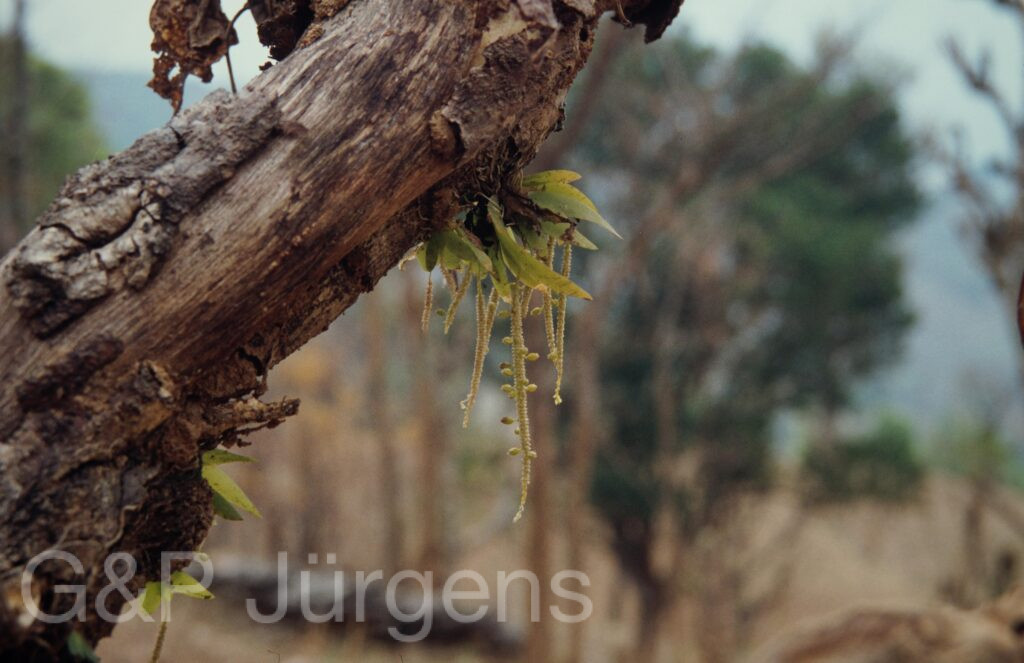
Oberonia falcata is a small epiphytic orchid ranging through the lowland and submontane forests of the eastern Himalaya and Southeast Asia, recorded from India, Nepal, Bhutan, Myanmar (implied regionally), Thailand, Cambodia, Vietnam, Taiwan and Malaysia, with a modest 67 occurrences in GBIF. It grows on the trunks and branches of trees in warm, humid evergreen and semi-evergreen forest, generally at low to moderate elevations. The illustrated plant was collected in eastern Nepal near Kandbari (Khandbari) at about 600 m in April, a typically low, frost-free station consistent with the genus's preference for sheltered, shaded humid forest.

Like other Oberonia, the species is a tufted, stemless to short-stemmed epiphyte with a fan of distichous, laterally flattened (equitant), fleshy leaves that are falcate (sickle-shaped), as the epithet records. From the centre of the leaf-fan arises a slender erect to arching inflorescence densely covered with minute flowers arranged in whorls along the rachis. The individual flowers are tiny and inconspicuous, orange to brownish, with a deeply lobed lip characteristic of the genus; the column is very short. The fruit is a small ellipsoid capsule releasing dust-fine seeds.

Oberonia is a large pantropical Old World genus distinguished by its iris-like flattened leaf-fans and miniature whorled flowers, and species delimitation rests largely on lip morphology. As an epiphyte dependent on undisturbed humid forest canopy, O. falcata is vulnerable to deforestation and the harvesting of host trees across its range. Its minute, scentless flowers are thought to be pollinated by small insects, and like nearly all orchids it relies on mycorrhizal fungi for seed germination and establishment.

Author: King & Pantl. · Sources: POWO (Kew), GBIF, Flora of Bhutan, Orchids of Nepal, Genera Orchidacearum (Oberonia)
Hook.f.

Description

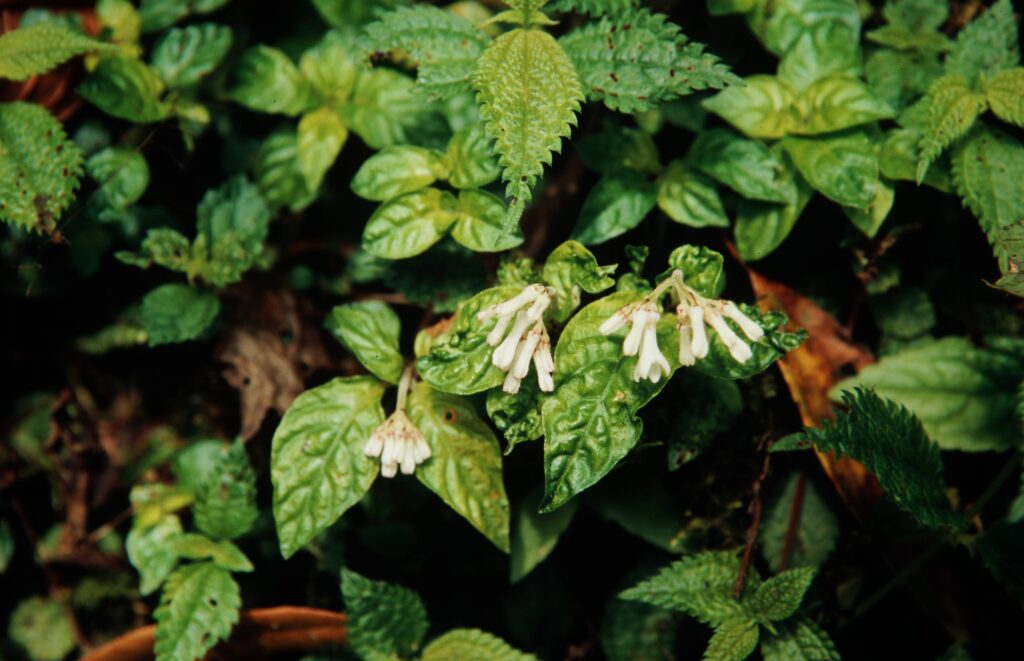
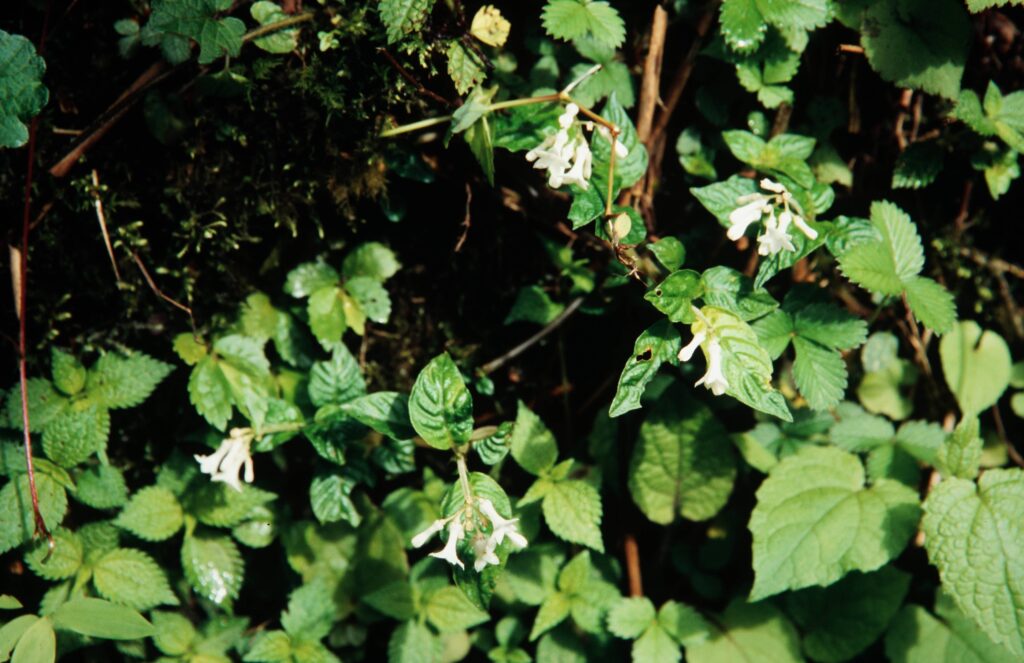
Ophiorrhiza treutleri is an eastern Himalayan understorey herb confined to India, Nepal and Bhutan, documented by roughly 39 georeferenced records that cluster in the moist mid-montane forests of the region. It is a plant of shaded, humid habitats, growing on the floor of dense evergreen and mixed broadleaved forest, along streamsides, mossy banks and damp ravines where atmospheric humidity remains high throughout the year. The specimen photographed at Tolung in West Bengal (India) at about 2200 m in May reflects its typical occurrence in the cool, perpetually damp montane belt, where it flowers in spring beneath a closed canopy.

It is a small perennial or weakly suffrutescent herb with slender, often decumbent stems that root at the lower nodes and bear a sparse indumentum. The leaves are opposite, ovate to elliptic-lanceolate, acuminate at the apex and somewhat asymmetric at the base, with conspicuous lateral venation and small interpetiolar stipules characteristic of the family. The inflorescence is a terminal, scorpioid cyme; the flowers are small, white to pinkish and tubular, with a five-lobed corolla and an inferior bilocular ovary. As in many Ophiorrhiza, the species is distylous, producing pin and thrum flowers. The fruit is a characteristically broad, didymous (two-lobed) capsule that dehisces loculicidally to release numerous minute angular seeds.

Ophiorrhiza belongs to the tribe Ophiorrhizeae of the Rubiaceae and is notable for the accumulation of camptothecin and related alkaloids, which has drawn pharmacological interest to several species. The heterostyly of O. treutleri promotes outcrossing through insect-mediated pollination, while its capsular fruits are adapted to rain-splash and gravity dispersal in the still air of the forest floor. As an obligate shade species tied to undisturbed montane forest, it is vulnerable to canopy opening, and its conservation is effectively linked to the protection of intact eastern Himalayan woodland.

Author: Hook.f. · Sources: POWO (Kew), GBIF, Flora of China Vol. 19, Flora of Bhutan Vol. 2, Flora of Nepal, Deb & Mondal Revision of the Genus Ophiorrhiza (Rubiaceae)

(Willd.) Haw.

Bhutan2014 693
Bhutan Pele-La 2800m, May

Description

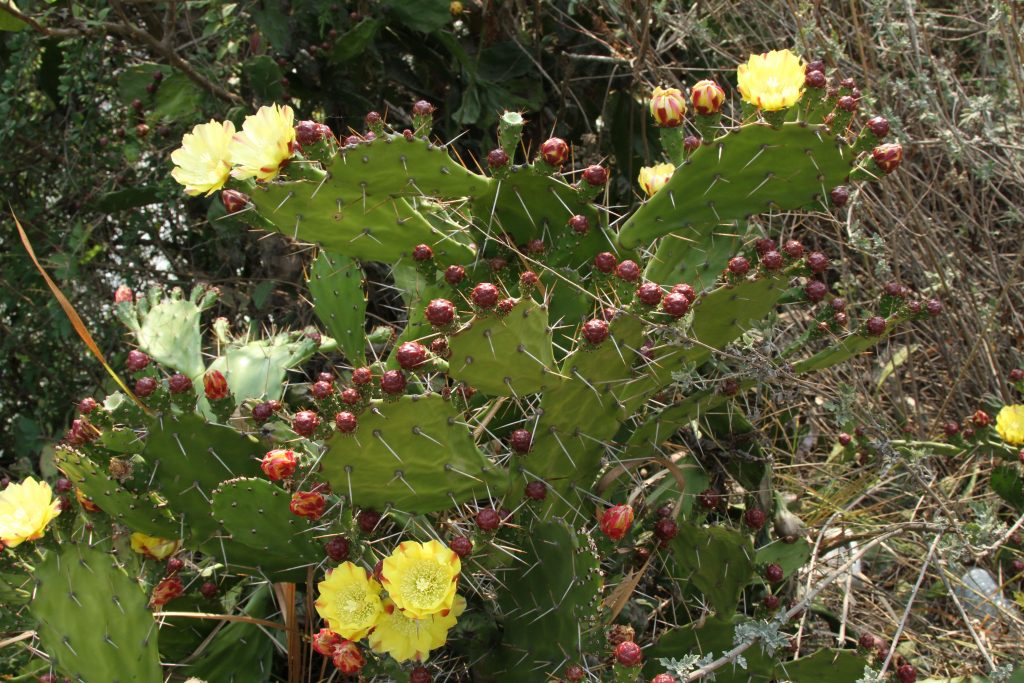
Opuntia monacantha is a prickly-pear cactus native to subtropical South America (Brazil, Argentina, Uruguay and Paraguay) that has become one of the most widely naturalised Opuntia species in the world. Its 4754 GBIF occurrences span Australia, South Africa, the Mediterranean, East Africa, India, China, Nepal, Bhutan and many other regions, almost all representing introduced and frequently invasive populations. In the Himalaya it persists as an escape from cultivation on dry, sunny, rocky slopes, banks, walls and disturbed ground in warm valleys. The record from the Pele-La area of Bhutan at about 2800 m in May is notable as a relatively high-elevation occurrence, the plant having been spread through cultivation as a hedge and ornamental into the inner dry valleys of the eastern Himalaya.

It is a succulent shrub to small tree, sometimes developing a distinct cylindrical woody trunk, with a branched crown of flattened green photosynthetic stem-segments (cladodes or pads). The pads are obovate to oblong, glossy green and somewhat flaccid, bearing areoles that produce tufts of minute barbed glochids and usually one or few (occasionally none) stout spines, the sparse armature giving rise to the epithet monacantha. The leaves are reduced to tiny caducous scales. The flowers are large, solitary, sessile on the pad margin, with a rotate perianth of bright yellow tepals often reddish at the base and numerous stamens. The fruit is a fleshy, obovoid, reddish-purple berry, frequently proliferous, the pulp edible and the seeds dispersed by frugivores.

The genus Opuntia is among the most successful of invasive plant lineages, the readily detached, root-forming cladodes enabling vigorous vegetative spread, while the bird- and mammal-dispersed fruits extend its reach. O. monacantha is regarded as a noxious weed in several countries and has been a target of biological control using cochineal insects. In the Himalayan context it is an introduced naturalised alien rather than a native element; its conservation status is irrelevant in the usual sense, the concern instead being its potential to colonise and degrade dry montane slopes.

Author: (Willd.) Haw. · Sources: POWO (Kew), GBIF, Flora of China Vol. 13, Flora of Pakistan, Flora of Nepal, Anderson The Cactus Family

King ex C.B.Clarke

Bh2008 14 G24
Bhutan Thimphu-Chu, 2800m April
Nepal 2001 110 ergebnis ergebnis
East-Nepal Gupka Pokhari 3200m, April

Description

Osmanthus suavis King ex C.B.Clarke is an evergreen shrub or small tree of the olive family endemic to the eastern Himalaya and adjacent mountains, recorded from Nepal, India, Bhutan, China and Myanmar (158 GBIF occurrences). It grows in the understorey and margins of temperate broad-leaved and mixed conifer forest, on slopes, ridges and forest edges roughly between 2400 and 3500 m. It was documented in Bhutan along the Thimphu-Chu at 2800 m in April and in eastern Nepal at Gupka Pokhari around 3200 m, also in April, its flowering coinciding with the spring warming of the mid-montane forest belt.

It forms a densely branched shrub with grey, lenticellate bark. The leaves are opposite, coriaceous, elliptic to ovate-lanceolate, the margins entire or sparsely spinulose-serrate, glossy dark green above and dotted with minute glands beneath. The fragrant flowers are small and clustered in short axillary fascicles or cymes; the corolla is white to cream, gamopetalous with four spreading lobes united into a short tube, bearing two stamens, and the whole shrub is sweetly scented in flower, as the epithet suavis records. The fruit is an ovoid drupe ripening blue-black, with a single hard-walled stone.

Osmanthus belongs to tribe Oleeae and is centred on East and Southeast Asia, with O. suavis representing the Himalayan extension of this largely Sino-Japanese genus, allied to the fragrant cultivated O. fragrans. Its scented insect-pollinated flowers and drupaceous bird-dispersed fruits are typical of the genus. While not formally threatened, it is dependent on intact temperate forest and is locally valued as an ornamental and for its aromatic blossoms.

Author: King ex C.B.Clarke · Sources: POWO (Kew), GBIF, Flora of China, Flora of Bhutan, Flora of Nepal, Oleaceae monograph (Green revision of Osmanthus)

Hochst. & Steud.

Bhutan2014 151
Bhutan Trashigang 1700m, May

Description

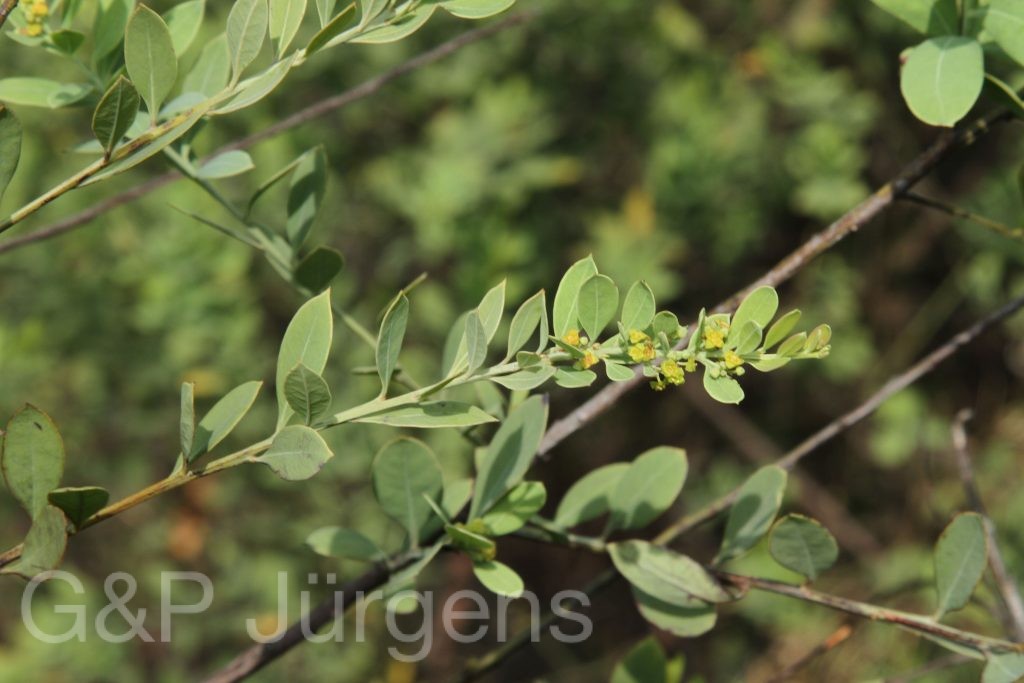
Osyris lanceolata, the East African sandalwood, is a remarkably wide-ranging evergreen shrub spanning the Mediterranean basin, much of Africa and southern Asia; its roughly 4217 GBIF records reach from Spain, Portugal and Morocco through eastern and southern Africa (Kenya, Tanzania, Ethiopia, South Africa, Zimbabwe, Namibia, Angola) to India, Sri Lanka, Nepal, China and Bhutan. In the eastern Himalaya it occupies warm, dry montane slopes, as recorded near Trashigang in eastern Bhutan at about 1700 m in May. It favours open woodland, scrub and rocky hillsides on well-drained soils, persisting as a hardy, drought-tolerant component of seasonally dry vegetation.

The plant is a glabrous, much-branched shrub or small tree with slender, angular green twigs and alternate, leathery leaves that are narrowly lanceolate to elliptic, sometimes reduced and scale-like. Like other Santalaceae it is a hemiparasite, attaching by root haustoria to neighbouring plants while retaining green, photosynthetic foliage. The species is dioecious, bearing small, greenish-yellow flowers in axillary clusters on separate plants; the inferior ovary develops into a small, globose, fleshy drupe ripening red to blackish and dispersed by birds.

Osyris belongs to the sandalwood family, and O. lanceolata is exploited as a substitute for true sandalwood, its aromatic, oil-rich heartwood harvested for fragrant oil, carvings and incense. This demand has driven heavy, often illegal exploitation, particularly in East Africa, causing severe population declines and the listing of its populations under CITES Appendix II. The Himalayan populations form part of this broad, biogeographically intriguing range.

Author: Hochst. & Steud. · Sources: POWO (Kew), GBIF, Flora of China Vol. 5, Flora of Bhutan Vol. 1, Flora of Nepal, Flora of Tropical East Africa (Santalaceae)

Edgew. & Hook. f.

Bh2008 308 G476
Bhutan Tongsa, 3300m April

Description

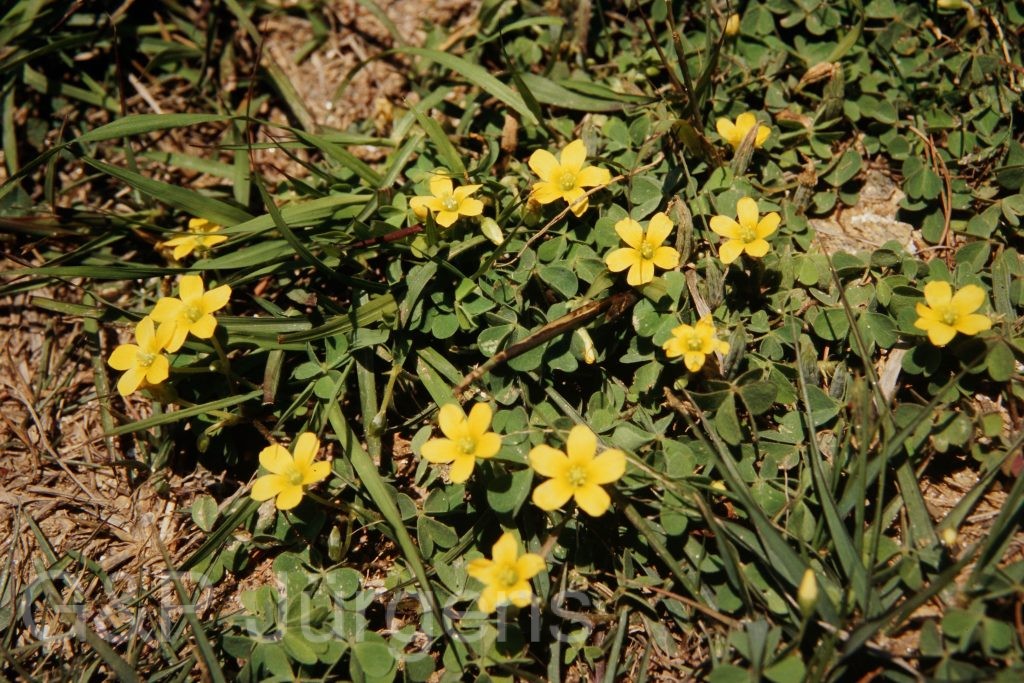
Oxalis griffithii is a woodland herb widely distributed across temperate eastern and southern Asia, ranging from the Himalaya (India, Nepal, Bhutan) through China, Taiwan, Japan, Korea, Myanmar and into Russia, with numerous cultivated and naturalised European records; GBIF logs 6798 occurrences across this broad area. It is a plant of shaded, humus-rich habitats, growing on the floor of temperate broad-leaved and conifer forests, on mossy banks and beside streams, chiefly between about 1500 and 3500 m. The photographed plant from Tongsa (Trongsa) in central Bhutan at 3300 m in April shows it flowering in early spring beneath the still-leafless forest canopy, when light reaches the understorey.

It is a small, delicate perennial herb arising from a slender, scaly, creeping rhizome or bulbil-bearing rootstock. The long-petiolate leaves are basal and trifoliolate, the leaflets obtriangular (broadly obcordate) and notched at the apex, folding downward at night and in dull weather (nyctinasty). The flowers are solitary on slender axillary scapes, with five sepals and five white petals usually marked with fine yellow or pinkish-purple veins at the base. The fruit is an elongate, cylindrical, five-angled loculicidal capsule that dehisces explosively, ejecting the small seeds whose fleshy aril everts to fling them from the parent plant.

The species belongs to Oxalis (Oxalidaceae), the largest genus of its family and the only one of the wood-sorrels well represented in temperate Asia. Its tissues are rich in oxalic acid and soluble oxalates, giving the characteristic sour taste. The explosive ballistic seed dispersal, nyctinastic leaf movements and capacity for vegetative spread by rhizomes and bulbils underlie its wide distribution and ready naturalisation. Common and ecologically adaptable, it is of least conservation concern.

Author: Edgew. & Hook. f. · Sources: POWO (Kew), GBIF, Flora of China Vol. 11, Flora of Bhutan Vol. 1, Flora of Nepal, Monograph of the Oxalidaceae (Knuth, Das Pflanzenreich)

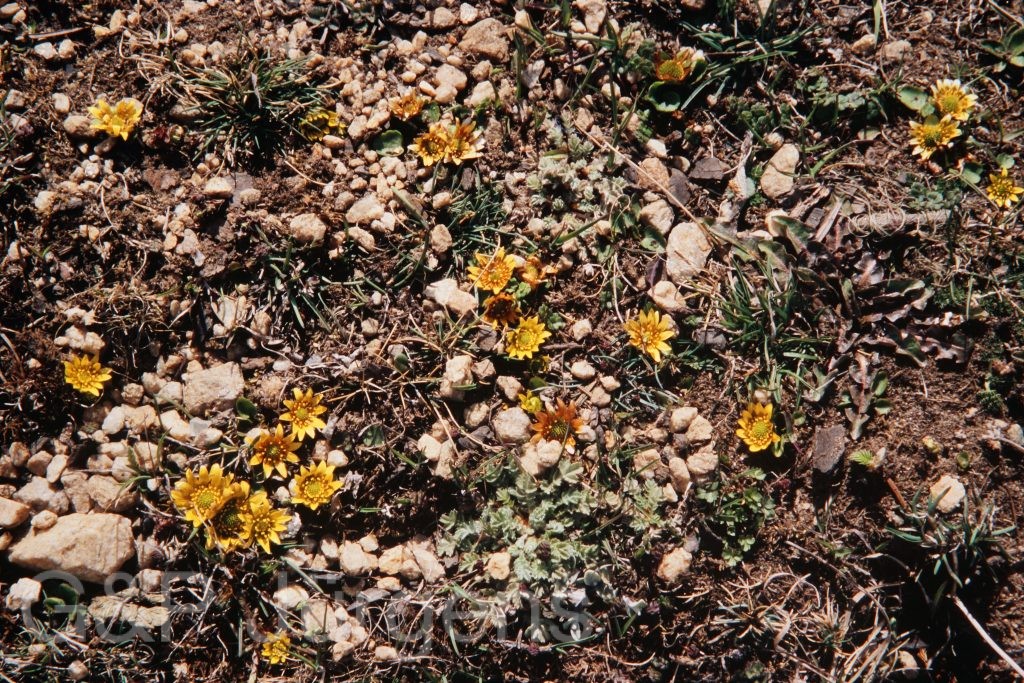
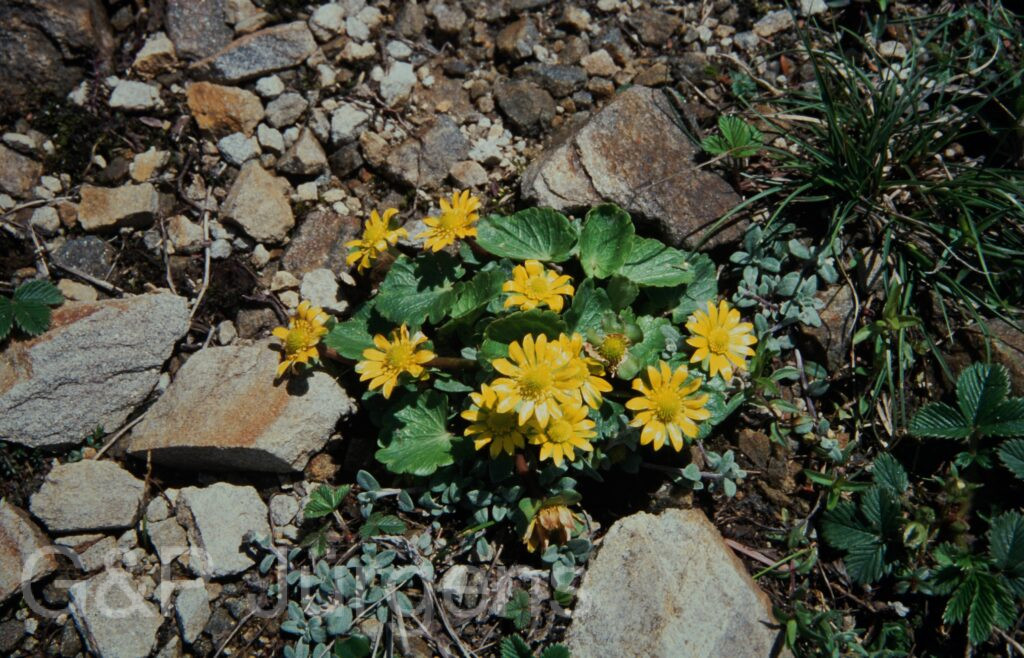
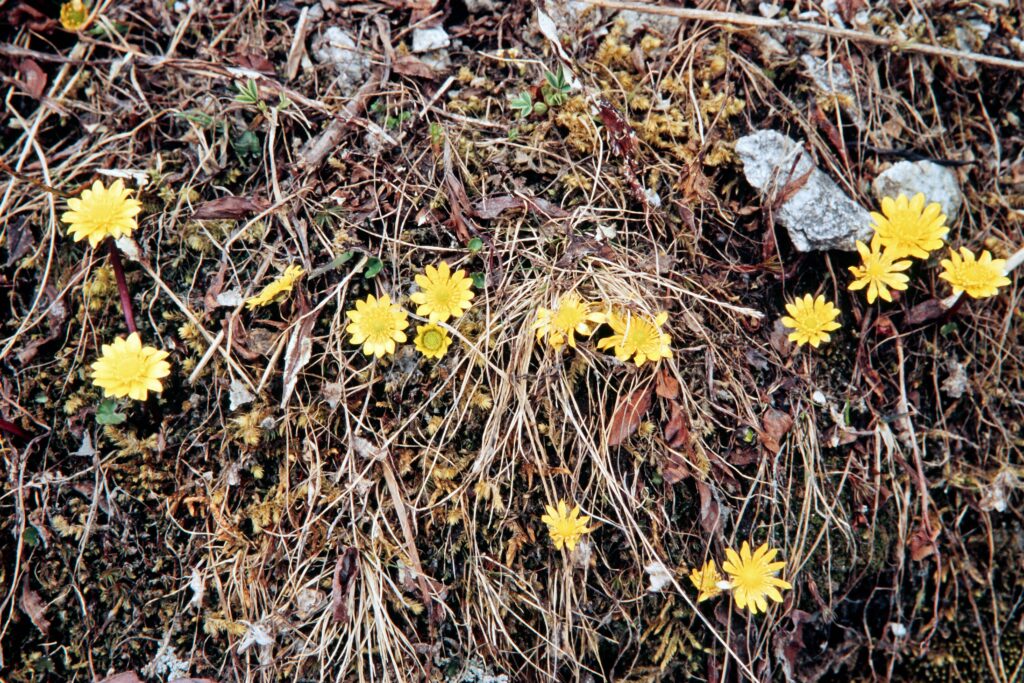
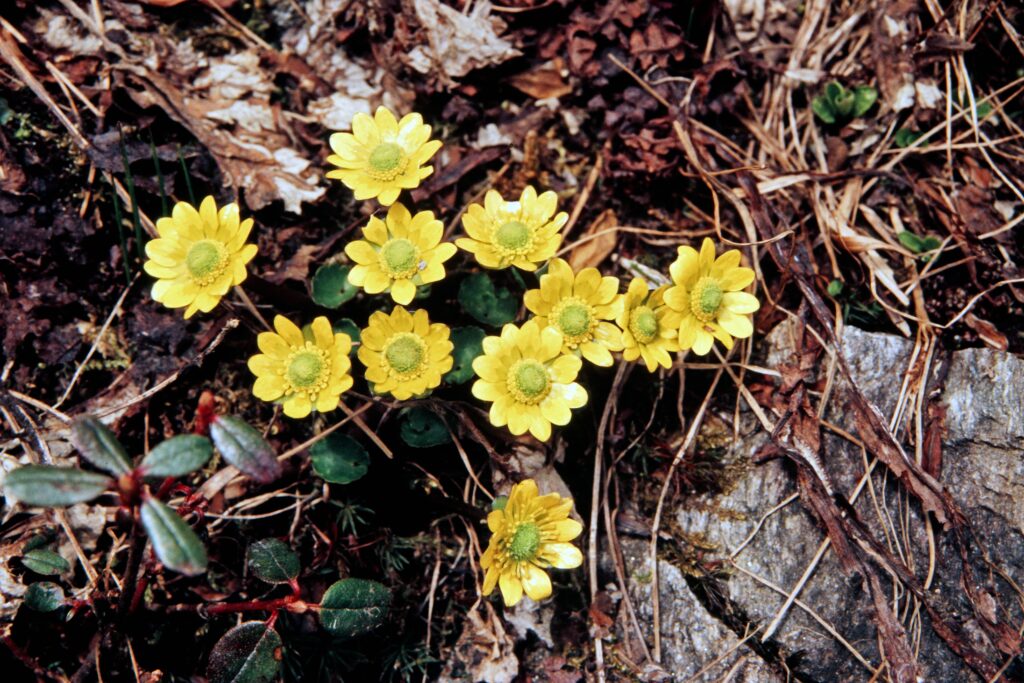
Hook.f. & Thomson

Bhutan2014 918
Bhutan Chele-La 4000m, May
Bh2008 568 P855
Bhutan Chele-La 3900m April
Nepal 2001 332 ergebnis ergebnis
Nepal (Gorkha) Rupina-La 3300m, May

Description

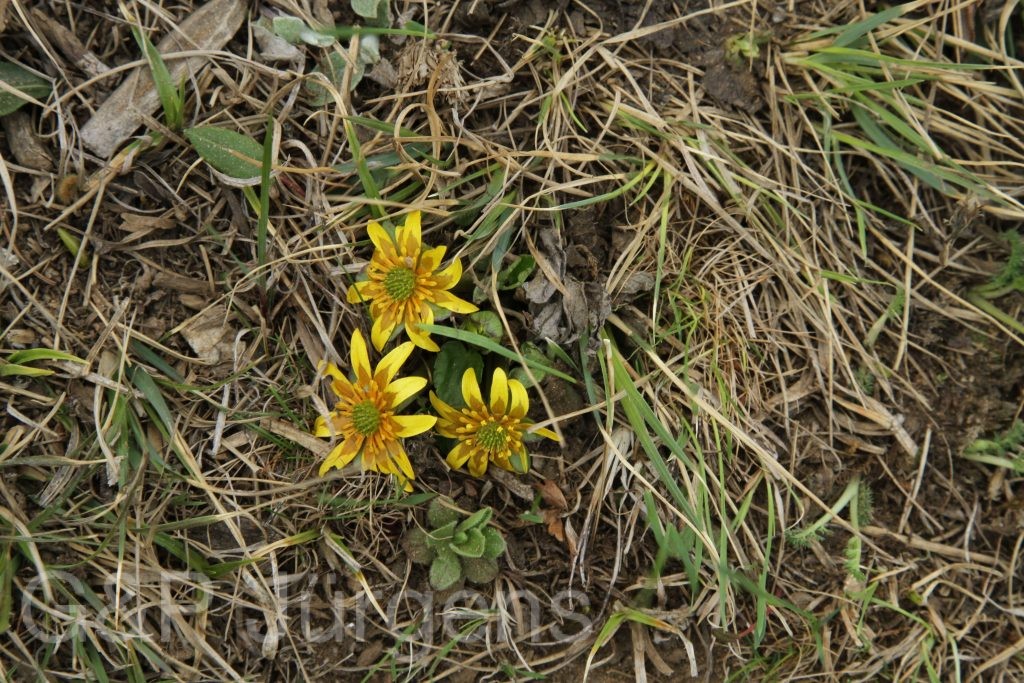
Oxygraphis polypetala is a high-alpine buttercup relative distributed across the Himalaya and Tibetan plateau, with records from India, Nepal, China, Russia, Bhutan and Pakistan and around 115 georeferenced occurrences. It is an early-flowering plant of damp alpine turf, snowmelt flushes, gravelly meadows and the margins of melting snow patches, generally between about 3300 and 4500 m. The illustrated collections—Chele-La in Bhutan at 3900–4000 m in April and May, Rupina-La in Gorkha, Nepal at 3300 m in May, and Khiar Kutti in Garhwal, India at 4100 m in June—capture its phenology of blooming almost immediately as the snow retreats.

It is a small, stemless perennial herb forming rosettes from a short rootstock. The leaves are all basal, long-petiolate, with an entire to obscurely crenate, ovate to elliptic, often somewhat fleshy blade. The flowers are solitary on leafless scapes; the perianth is conspicuous, with numerous (commonly ten or more, whence polypetala) narrow, glossy golden-yellow petaloid segments spreading star-like above a green calyx, surrounding many stamens and a domed head of carpels. The fruit is an aggregate of numerous small, beaked achenes borne on an elongating receptacle.

Oxygraphis is a small Asiatic genus segregated from Ranunculus on the basis of its persistent, leathery petals and achene structure; the name combination here, attributed to Hooker and Thomson, is treated as accepted despite synonym status in the source data. Its precocious flowering exemplifies the snowbed strategy of many high-Himalayan herbs that exploit the brief window of meltwater and warmth. Widely distributed and locally abundant, it is not regarded as threatened.

Author: Hook.f. & Thomson · Sources: POWO (Kew), GBIF, Flora of China (Ranunculaceae), Annotated Checklist of the Flowering Plants of Nepal, Grierson & Long Flora of Bhutan, Tamura's treatment of the Ranunculaceae

Andrews

Bhutan2014 950
Bhutan Haa-valley 640m, May
Bhutan2014 953
Bhutan Haa-valley 640m, May

Description

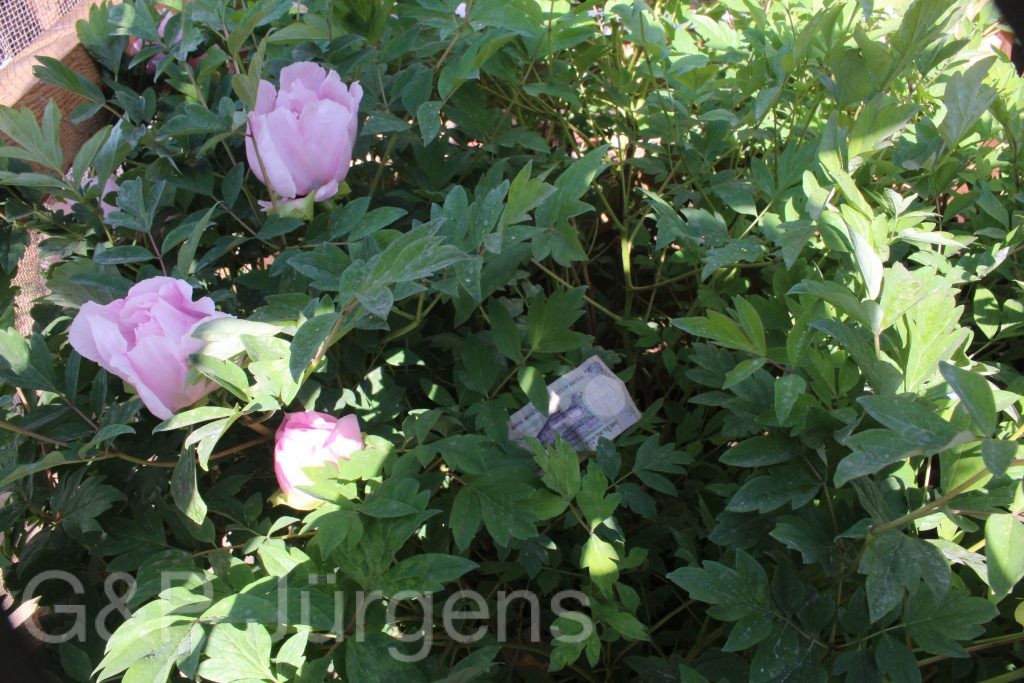
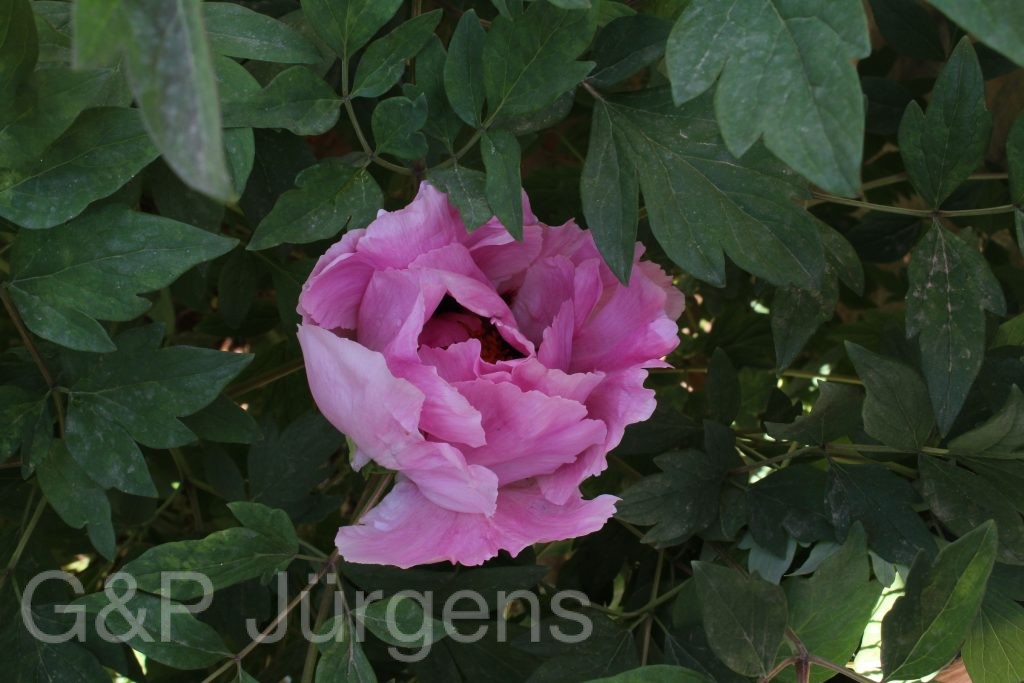
Paeonia suffruticosa, the tree peony, is a woody peony of Chinese origin that has been cultivated for well over a millennium and is now distributed worldwide through horticulture. Its GBIF dataset, with over 1,200 occurrences, reflects this mixed status, recording it from China, Korea, Japan and Taiwan as well as from a long list of countries where it occurs only in cultivation or as a garden escape, including the United States, Canada, Russia, Ukraine, and many European nations such as Germany, France, Spain, Italy, Sweden, Norway, Estonia, the Czech Republic, Belgium and Great Britain, alongside a record from Bhutan. The photographed plant from the Haa valley in Bhutan, at about 640 m and flowering in May, almost certainly represents cultivated or naturalised material grown around dwellings and monasteries, consistent with the species' long history as an ornamental rather than a wild Himalayan native.

It is a deciduous shrub up to about 2 m tall, with erect, branching woody stems, in contrast to the herbaceous, dying-back peonies. The leaves are alternate, large and biternately to bipinnately compound, the leaflets ovate, often lobed and glaucous beneath. The flowers are solitary and terminal and exceptionally large and showy, single to fully double in cultivated forms, with broad petals in white, pink, red, purple or yellow tones surrounding numerous stamens; a conspicuous fleshy, leathery disk forms a sheath partly enclosing the carpels. The fruit is a cluster of several densely tomentose follicles that split to release the large, rounded, dark seeds.

Paeonia, the only genus of Paeoniaceae, is divided into herbaceous and woody (section Moutan) groups, and P. suffruticosa in the strict sense is now understood to be a complex hybrid cultigen derived from several wild Chinese tree-peony species rather than a single wild taxon. As the celebrated "king of flowers" (mudan) of Chinese horticulture, it is enormously important culturally, medicinally (the root bark, mudanpi, is a traditional drug) and ornamentally, and exists in innumerable cultivars. As a cultigen it has no wild conservation status of its own, although the wild ancestral species of the Moutan group, several narrowly endemic in China, are of considerable conservation concern.

Author: Andrews · Sources: POWO (Kew), GBIF, Flora of China Vol. 6, Flora of Bhutan Vol. 1, Flora of Nepal, Flora of Pakistan, Hong's monograph Peonies of the World

Seem.

Sikkim 2006 316 ergebnis
India West-Bengal, Chaana 1800m, May

Description

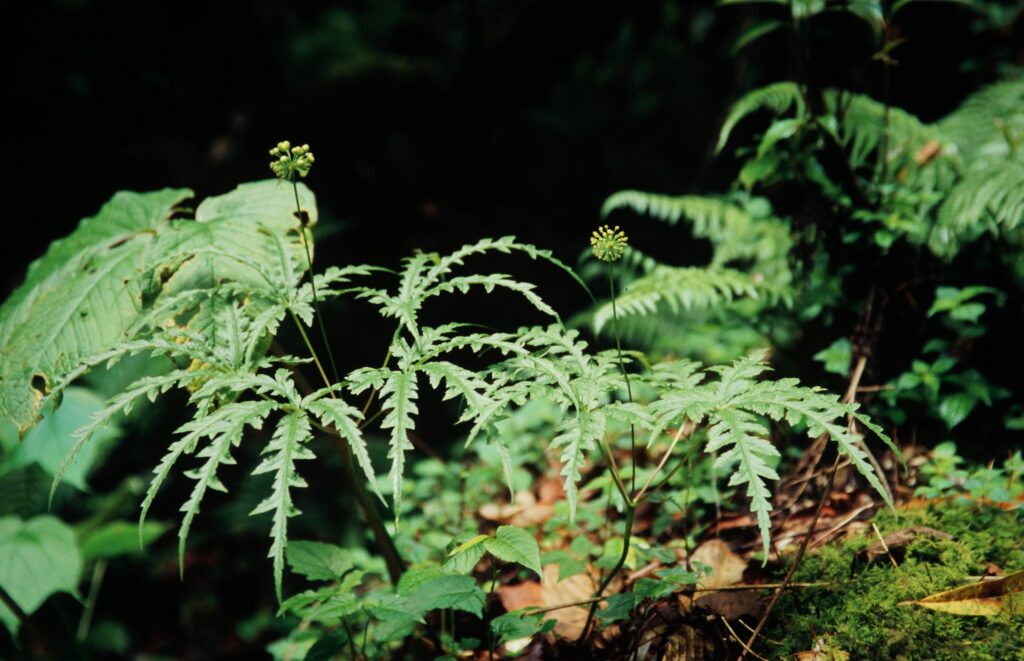
Panax bipinnatifidus is a Sino-Himalayan ginseng distributed through the eastern Himalaya and adjacent uplands of mainland Asia, with GBIF documenting some 900 occurrences across India, Nepal, Bhutan, China, Myanmar, Vietnam and Thailand. It is a herb of shaded, humus-rich temperate broad-leaved and conifer forests, growing among leaf litter on cool, moist slopes and in mossy understorey, generally between about 1800 and 3500 m. The photographed plant from Chaana in West Bengal, India, at roughly 1800 m and flowering in May, sits at the lower edge of this altitudinal band, typical of its occurrence beneath dense Himalayan forest canopy where it relies on consistent shade and well-drained organic soils.

It is a glabrous perennial herb arising from a stout, often moniliform (beaded) or fusiform fleshy rhizome that creeps horizontally. The single erect aerial stem bears a terminal whorl of (usually three to five) long-petiolate, palmately compound leaves, the leaflets characteristically deeply bipinnatifid or pinnately divided with the laminae much dissected, a feature that distinguishes the species and gives it its epithet. From the centre of the leaf whorl rises a slender peduncle terminating in a solitary, simple umbel of small greenish-white, pentamerous, mostly bisexual flowers with an inferior two-celled ovary and two styles. The fruit is a small, laterally compressed, red drupe that turns red at maturity, often with a black apical spot.

The genus Panax, the true ginsengs, is taxonomically complex in the Himalaya, where P. bipinnatifidus has historically been confused with P. pseudoginseng and treated under several varieties (var. bipinnatifidus, var. angustifolius) and synonyms; molecular and morphological work has helped clarify the dissected-leaved entity. Like its congeners it accumulates triterpenoid ginsenosides in the rhizome and is harvested as a substitute for ginseng across the Himalaya, which together with habitat loss exposes wild populations to over-collection. The species is consequently of growing conservation concern and is regarded as threatened or vulnerable in parts of its range, prompting interest in cultivation and sustainable management.

Author: Seem. · Sources: POWO (Kew), GBIF, Flora of China Vol. 13, Flora of Bhutan Vol. 2, Flora of Nepal, Flora of Pakistan, Wen's monograph of Panax (Araliaceae)

(Rchb.f.) Garay

Bh2008 319 G494
Bhutan Jakar, 2950m April

Description

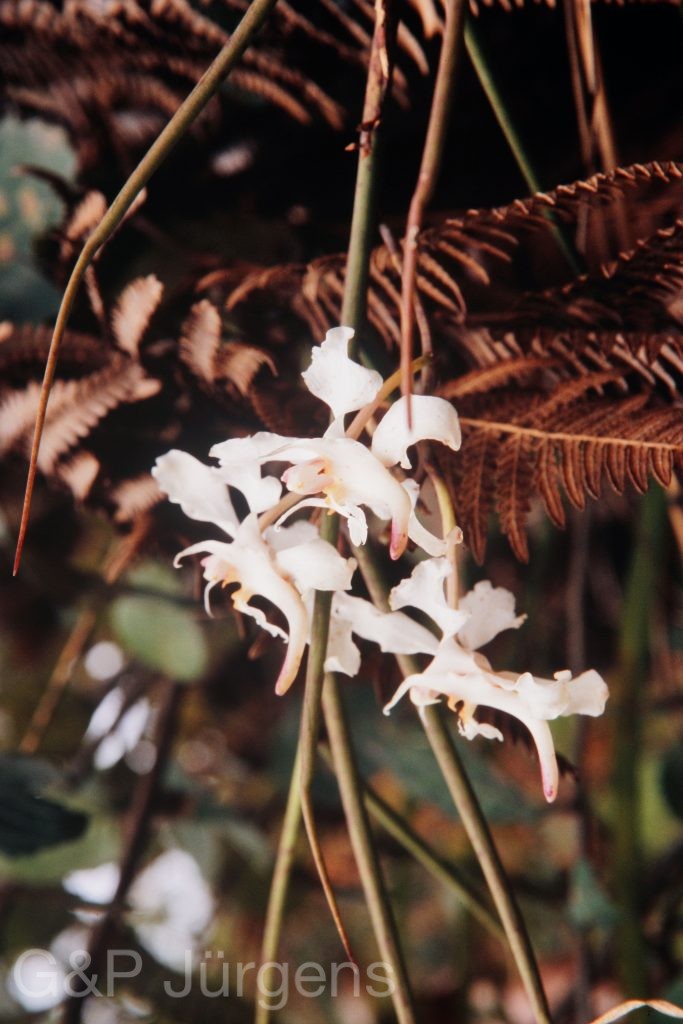
Papilionanthe vandarum is an epiphytic orchid distributed across the eastern Himalaya and adjoining Indo-Burmese ranges, with records from India, Nepal, Bhutan and Myanmar; GBIF documents some 49 occurrences, the additional points from Belgium, the United States and Great Britain reflecting cultivated material in botanical collections. It grows on tree trunks and mossy branches in humid broad-leaved and coniferous forest, frequently in the montane belt between roughly 1500 and 3000 m, where seasonal monsoon moisture alternates with a drier cool season. The photographed plant from Jakar in central Bhutan at about 2950 m, flowering in April, is typical of its upper elevational range, where it flowers before the summer rains.

The species is readily recognised by its monopodial, scrambling habit and slender, terete (pencil-like) leaves that replace the flattened laminae of most orchids, an adaptation reducing water loss in exposed epiphytic sites. Stems are elongate, branching and rooting freely along their length by means of thick, greyish aerial roots. The inflorescences are short, few-flowered racemes bearing large, showy flowers; sepals and petals are white to pale, broad and somewhat undulate, while the trilobed labellum is prominent, with a spurred base and a coloured throat. The fruit is a dry, elongate dehiscent capsule releasing innumerable dust-like seeds.

Formerly placed in Aerides and Vanda, the species was transferred to Papilionanthe (a small Asian genus of terete-leaved monopodial orchids) by Garay; its terete foliage and pendent habit distinguish it from true Vanda. Like all wild orchids it is listed on CITES Appendix II, and populations are locally threatened by forest clearance and over-collection, though it remains fairly widespread across its Himalayan range.

Author: (Rchb.f.) Garay · Sources: POWO (Kew), GBIF, Flora of Bhutan, Orchids of Bhutan, Genera Orchidacearum (Pridgeon et al.)