
Hochst. & Steud.
Description
Osyris lanceolata, the East African sandalwood, is a remarkably wide-ranging evergreen shrub spanning the Mediterranean basin, much of Africa and southern Asia; its roughly 4217 GBIF records reach from Spain, Portugal and Morocco through eastern and southern Africa (Kenya, Tanzania, Ethiopia, South Africa, Zimbabwe, Namibia, Angola) to India, Sri Lanka, Nepal, China and Bhutan. In the eastern Himalaya it occupies warm, dry montane slopes, as recorded near Trashigang in eastern Bhutan at about 1700 m in May. It favours open woodland, scrub and rocky hillsides on well-drained soils, persisting as a hardy, drought-tolerant component of seasonally dry vegetation.
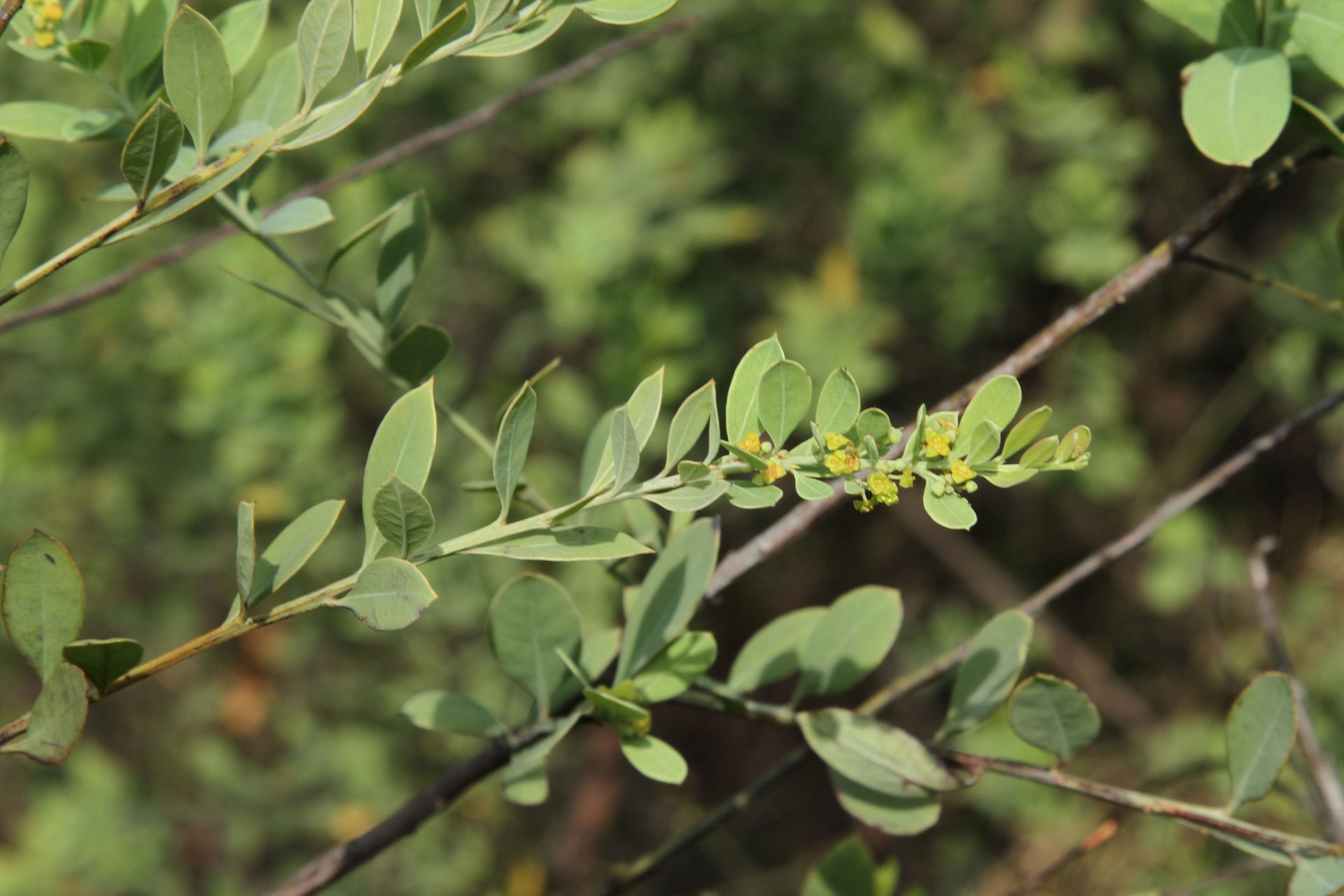
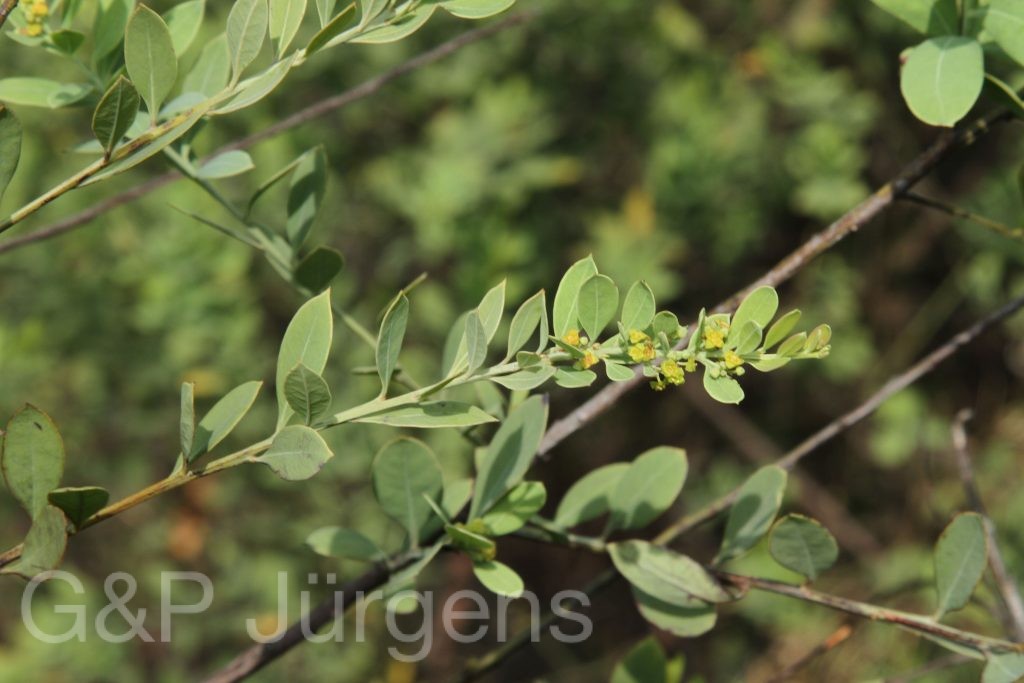
The plant is a glabrous, much-branched shrub or small tree with slender, angular green twigs and alternate, leathery leaves that are narrowly lanceolate to elliptic, sometimes reduced and scale-like. Like other Santalaceae it is a hemiparasite, attaching by root haustoria to neighbouring plants while retaining green, photosynthetic foliage. The species is dioecious, bearing small, greenish-yellow flowers in axillary clusters on separate plants; the inferior ovary develops into a small, globose, fleshy drupe ripening red to blackish and dispersed by birds.
Osyris belongs to the sandalwood family, and O. lanceolata is exploited as a substitute for true sandalwood, its aromatic, oil-rich heartwood harvested for fragrant oil, carvings and incense. This demand has driven heavy, often illegal exploitation, particularly in East Africa, causing severe population declines and the listing of its populations under CITES Appendix II. The Himalayan populations form part of this broad, biogeographically intriguing range.
Author: Hochst. & Steud. · Sources: POWO (Kew), GBIF, Flora of China Vol. 5, Flora of Bhutan Vol. 1, Flora of Nepal, Flora of Tropical East Africa (Santalaceae)