Tag:

Subalpine (2500-3500 m)

L.

Nepal 1989 65
Nepal Bhatang 2915m, April
Nepal 99 362 ergebnis
West-Nepal Kalomura 3600m, June

Description

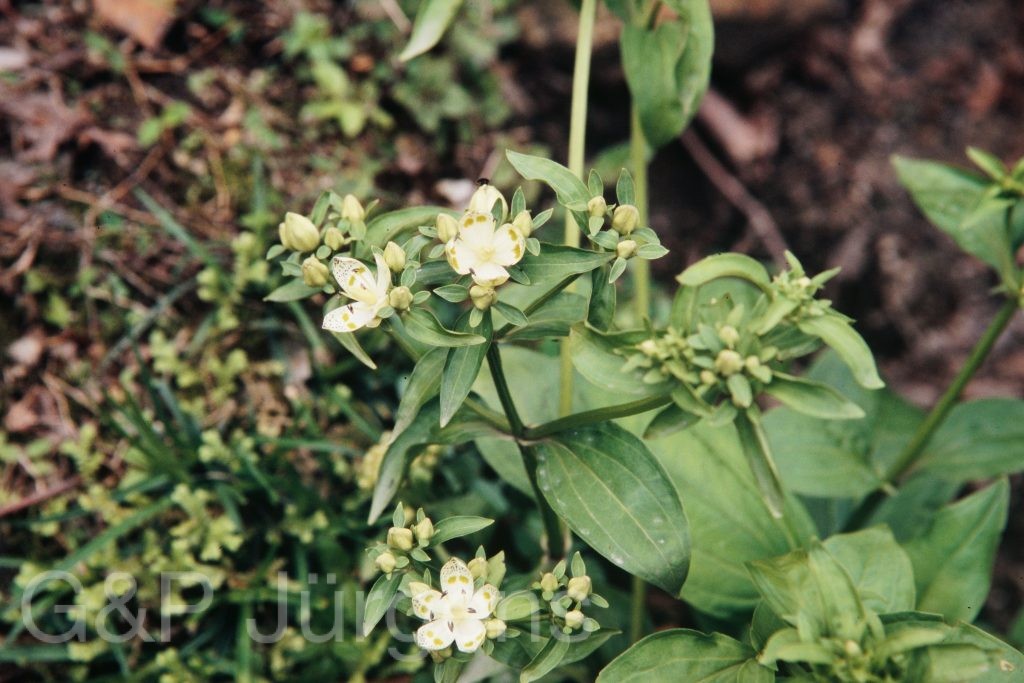
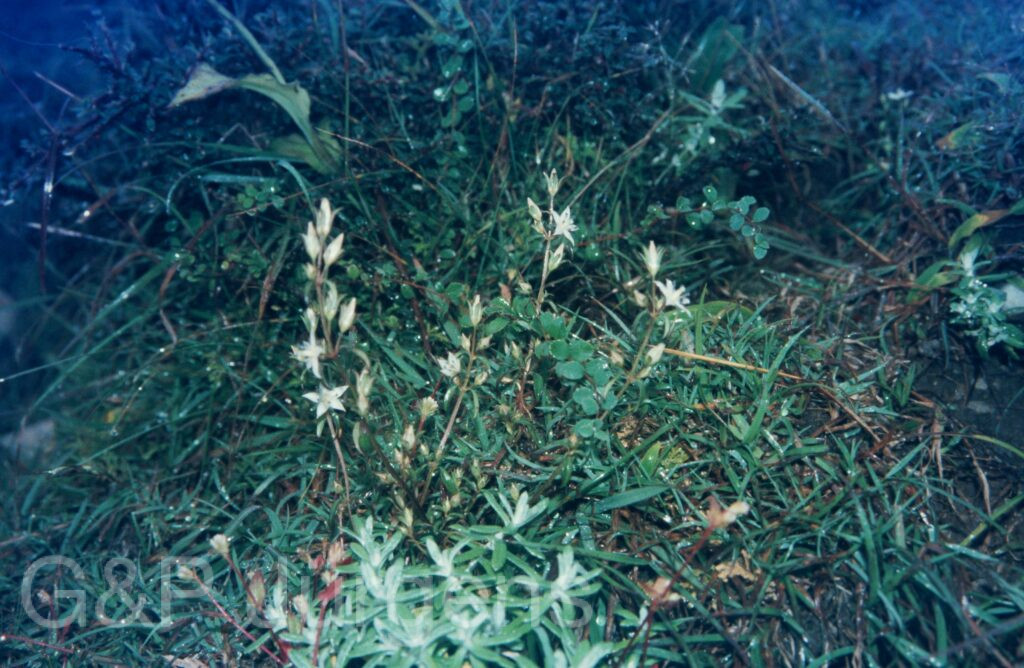
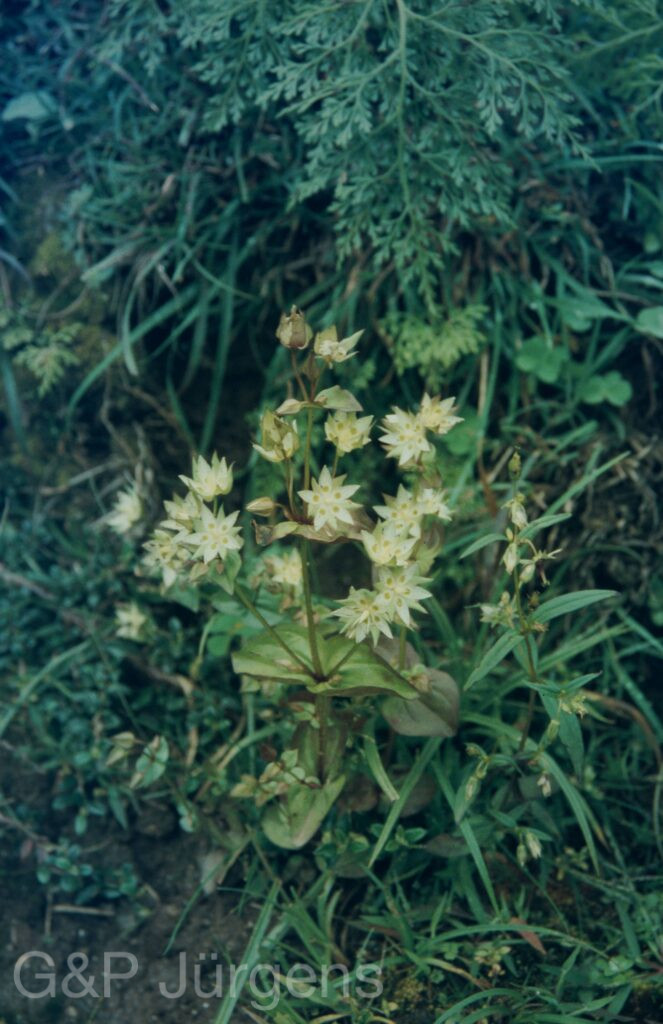
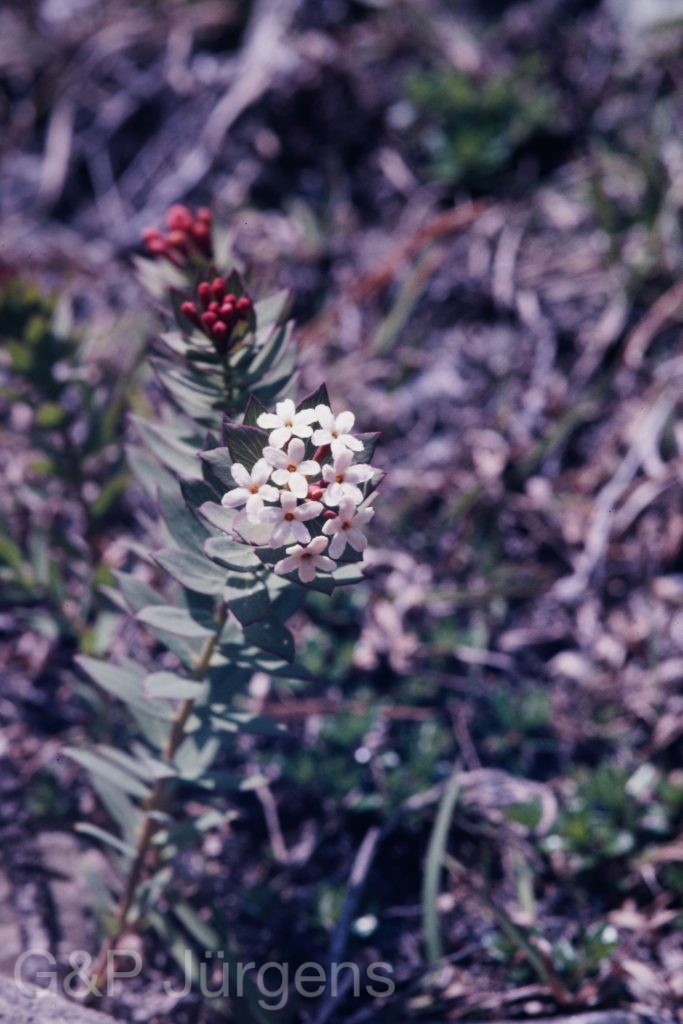
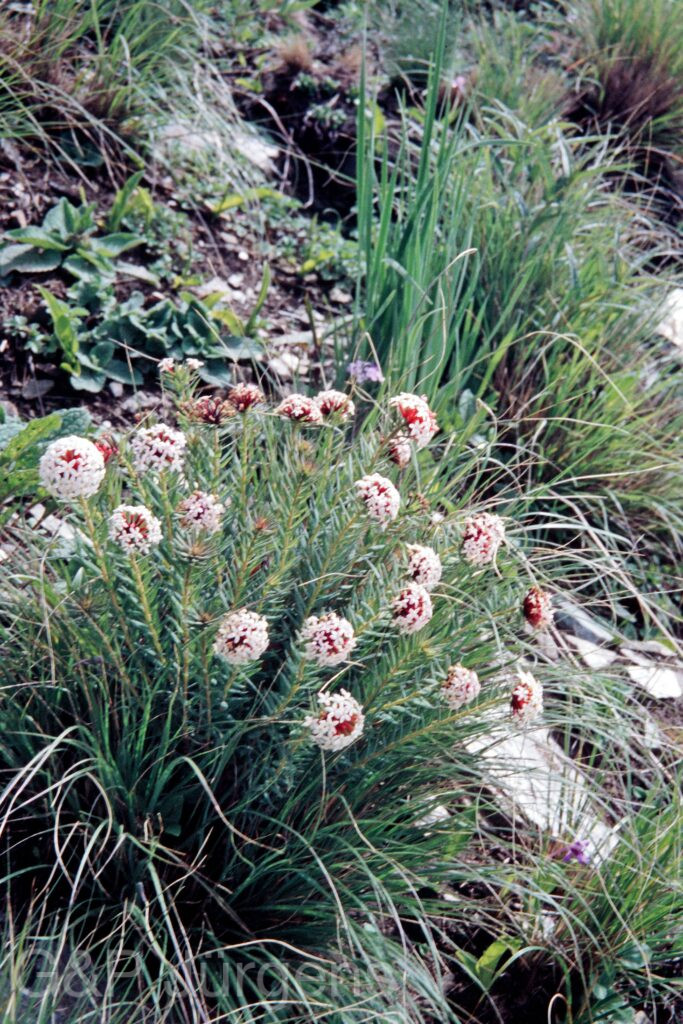
Stellera chamaejasme is a widespread perennial herb of the dry uplands of Central and East Asia, recorded by GBIF from China, Russia, Mongolia, Nepal, India, Bhutan, Kazakhstan, Korea, Iran and Turkey, among others, across some 3,400 georeferenced occurrences. It is characteristic of arid and semi-arid grasslands, alpine and subalpine meadows, sunny rocky slopes and overgrazed pastures on the Tibetan Plateau and throughout the trans-Himalaya, generally between about 2,600 and 4,500 m. The cited Nepalese records, from Bhatang at 2,915 m in April and from Kalomura in West Nepal at 3,600 m in June, span its lower temperate and upper subalpine occurrences and bracket its long spring-to-summer flowering season. It thrives on poor, dry soils where grazing has reduced competing vegetation.

The plant grows from a thick, woody, deep-seated taproot and rootstock, producing numerous erect, slender, unbranched leafy stems in a dense tuft. The leaves are numerous, alternate, crowded, narrowly lanceolate to elliptic, sessile and entire. The flowers are borne in a dense terminal capitate head; each flower lacks petals but has a showy, petaloid, tubular calyx whose five spreading lobes are commonly white above and flushed rose-red to purplish in bud on the outside, producing a striking bicoloured head. There are typically ten stamens in two whorls within the calyx tube, and the fruit is a small dry achene-like nutlet enclosed in the persistent base of the perianth.

Stellera chamaejasme is the best-known species of its genus within Thymelaeaceae and is notorious as a toxic, unpalatable indicator of rangeland degradation; its expansion is regarded across Tibet and Mongolia as a sign of overgrazing, since livestock avoid the poisonous foliage and roots. The plant is rich in bioactive diterpenoids and lignans and has a long history in Tibetan and Chinese traditional medicine, while its tough bast fibres have been used in papermaking. Though abundant and in no way threatened, it is ecologically significant as both a grassland weed and a chemically defended species of considerable pharmacological interest.

Author: L. · Sources: POWO (Kew), GBIF, Flora of China Vol. 13, Flora of Bhutan Vol. 2, Flora of Nepal, Flora of Pakistan, Tan & Wang: revision of Asian Thymelaeaceae and the Stellera complex

(Wall. ex DC.) C.Shih

Bhutan2012 428
Bhutan Wangdi 3300m, June

Description

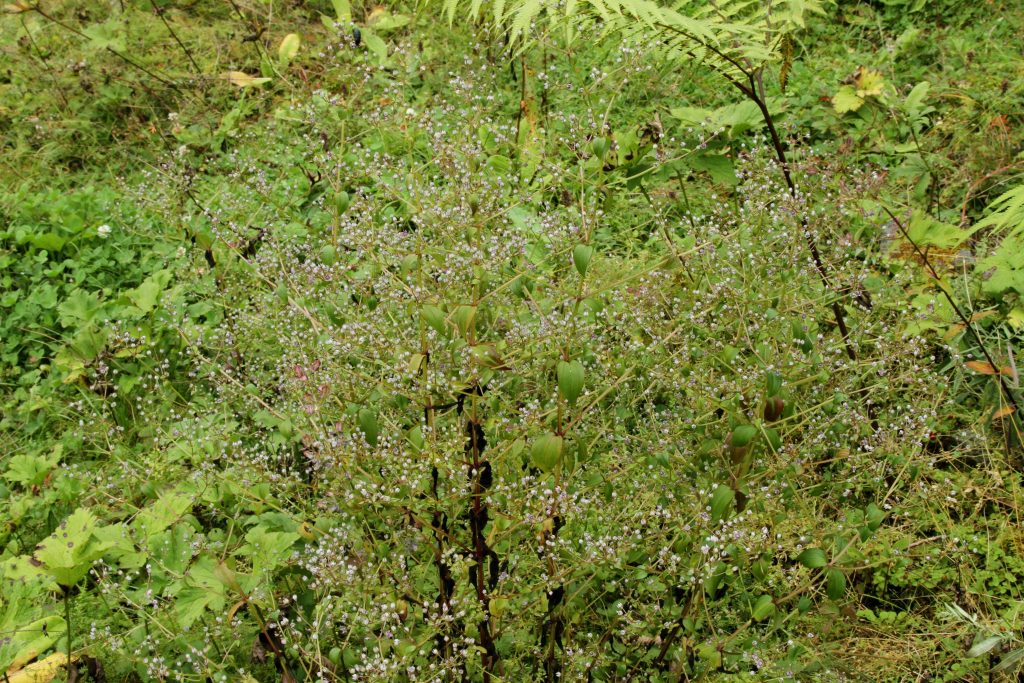
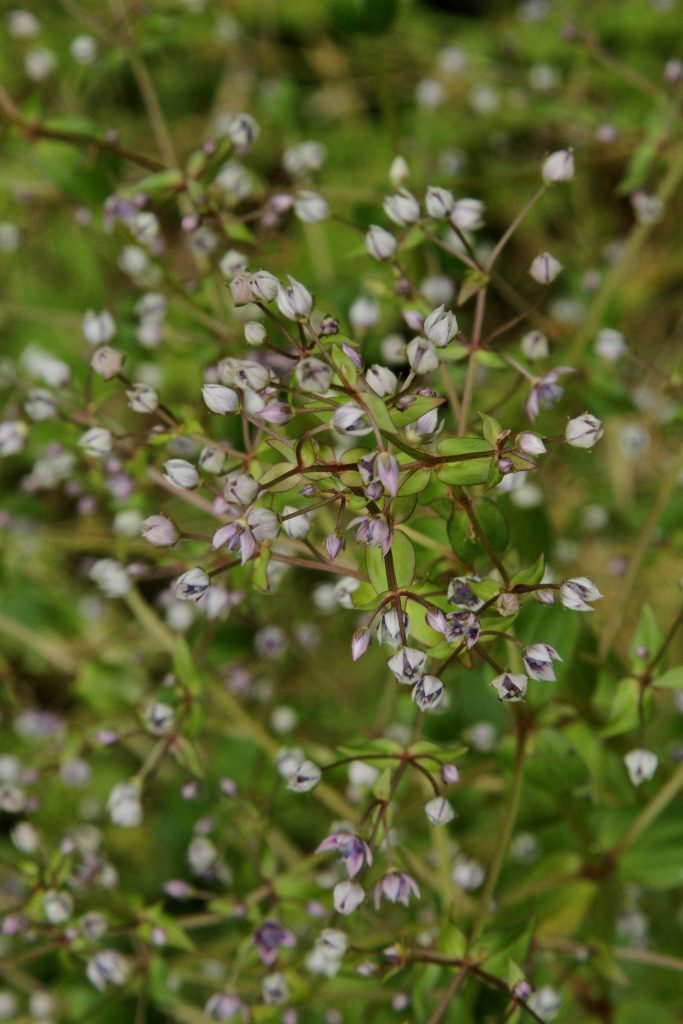
Stenoseris graciliflora is a slender herbaceous composite of the temperate to subalpine Himalaya, ranging through China, India, Nepal, Myanmar and Bhutan, with 160 GBIF records tracing its distribution along the moist montane forest belt and adjoining clearings. It typically grows in forest margins, shrubberies and grassy openings on humus-rich soils between roughly 2500 and 3800 m. The illustrated plant was collected near Wangdi in western Bhutan at about 3300 m in June, in the upper temperate zone where the monsoon supports a tall-herb flora amid fir and rhododendron forest.

In GBIF the name is treated as a synonym, with Stenoseris graciliflora maintained as the accepted name for this entity. The plant is an erect perennial with slender, often leafy and branching stems exuding milky latex when broken, as is typical of the lettuce tribe. The leaves are thin, the lower ones often lyrate-pinnatifid and narrowing to a winged petiole, the upper smaller and clasping. The inflorescence is a lax, narrow panicle of small, few-flowered capitula, each enclosed by a cylindrical involucre of imbricate phyllaries; the florets are all ligulate and pale blue to lilac. The fruit is a flattened, ribbed cypsela bearing a soft white pappus of fine bristles.

Stenoseris is a small genus of the tribe Cichorieae (Lactuceae), segregated from Cicerbita and Lactuca on the basis of its slender capitula, achene morphology and pappus characters. The basionym authority (Wall. ex DC.) C.Shih reflects the species' long taxonomic passage among these closely allied genera. As a widespread montane herb it is not regarded as threatened, though it serves as a useful indicator of intact, humid temperate forest understorey.

Author: (Wall. ex DC.) C.Shih · Sources: POWO (Kew), GBIF, Flora of China, Flora of Bhutan, Compositae of the Himalaya (Cichorieae monographs)

D.Don

CA5B74EED12643D5951B19E897481F0A
Bhutan Chogcham, 3300m June
Sikkim2003 474 P657
Sikkim Lachung Valley 3200m August

Description

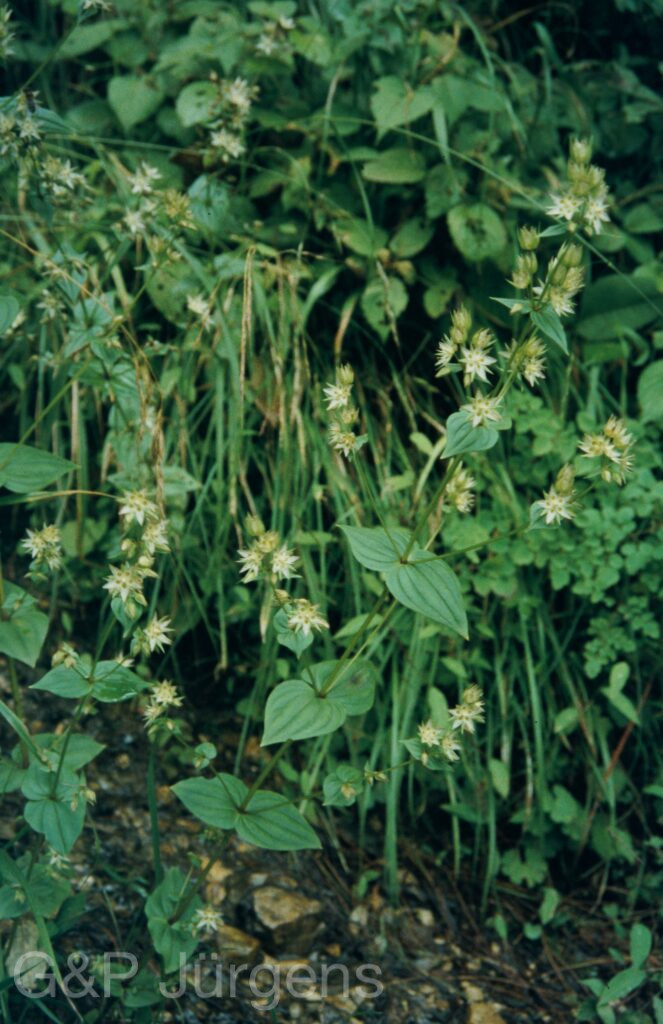
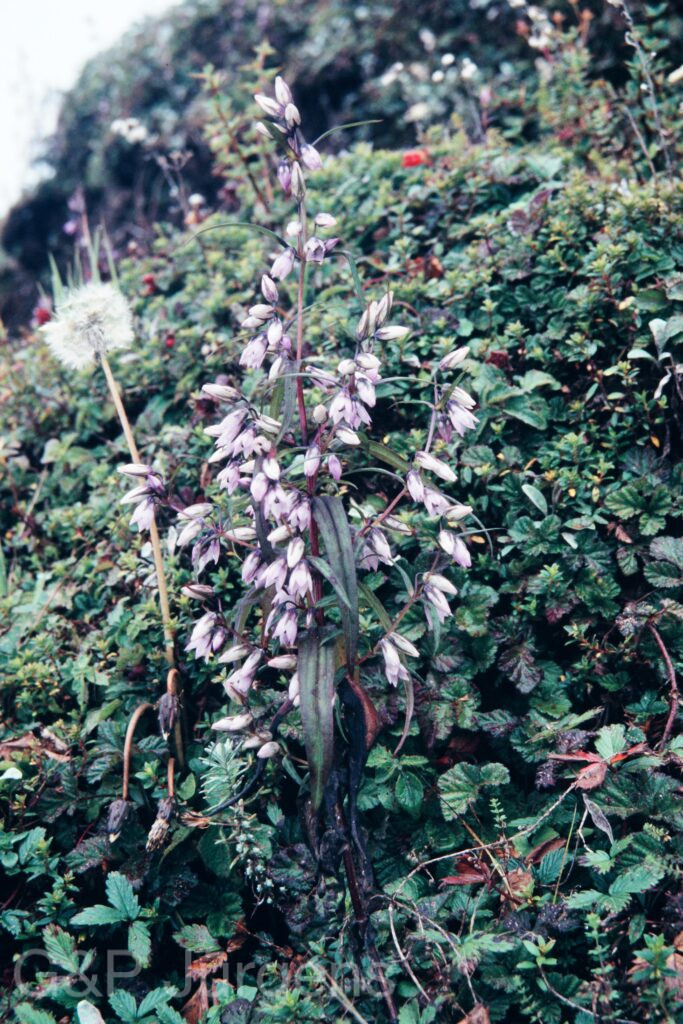
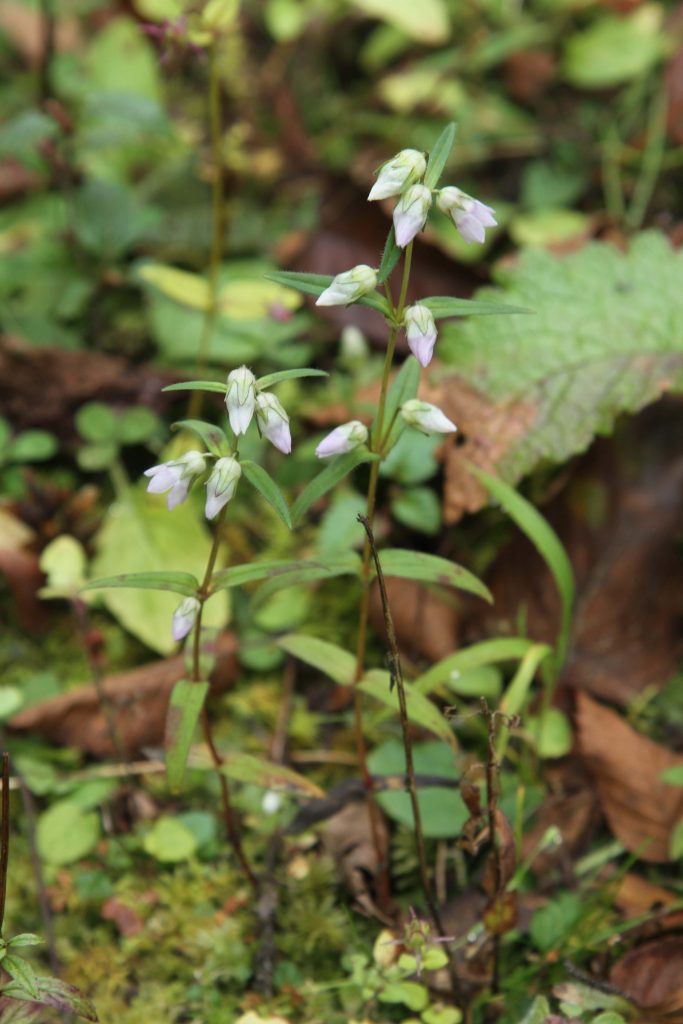
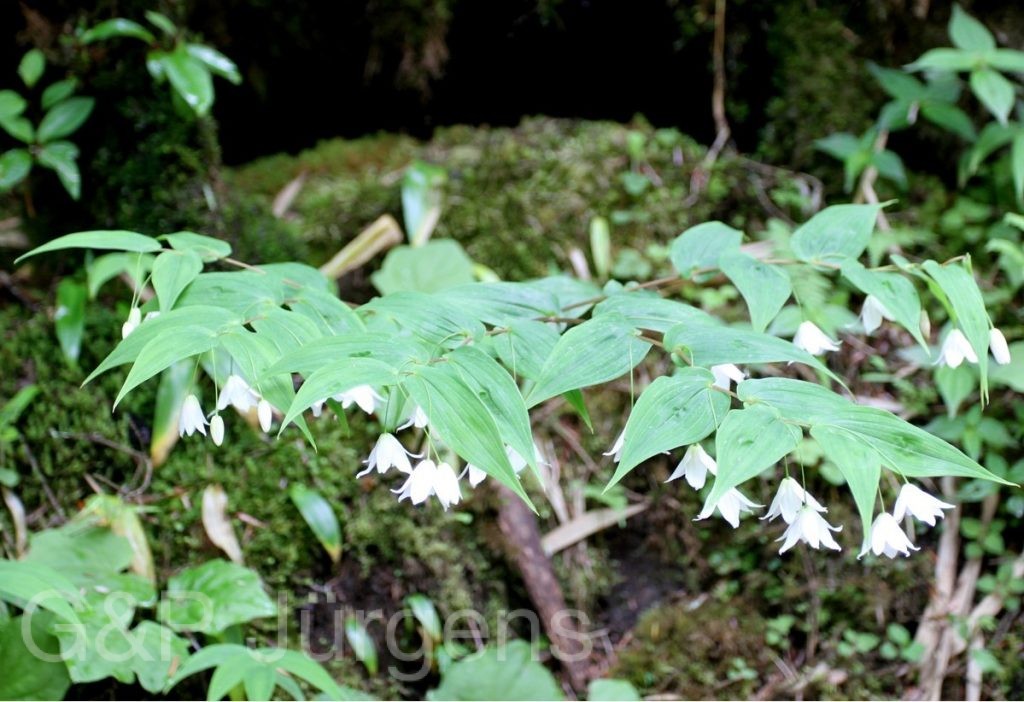
Streptopus simplex, a twistedstalk of the Sino-Himalayan region, is distributed across China (CN), Nepal (NP), Bhutan (BT), India (IN), Myanmar (MM) and Japan (JP), with 726 GBIF occurrences indicating it is a frequent component of high forest. It grows in shaded, humid temperate and subalpine coniferous and broadleaf forest, in bamboo thickets, ravines and on mossy slopes, typically between about 3000 and 4000 m. The illustrated plants came from Chogcham in Bhutan at around 3300 m in June and the Lachung Valley of Sikkim at about 3200 m in August, spanning the early- and late-monsoon flowering and fruiting seasons.

It is a slender perennial herb arising from a short creeping rhizome, with an erect, simple or sparingly branched stem. The leaves are alternate, sessile and somewhat clasping, ovate to lanceolate with entire margins and parallel venation. The flowers are solitary and nodding, borne on slender pedicels that hang beneath the leaves; the perianth consists of six free, campanulate to spreading tepals, white to pink and often purple-spotted within. There are six stamens, and the ovary is superior. The fruit is a globose, fleshy red berry containing several seeds, providing dispersal by birds and other animals.

Streptopus is now placed in Liliaceae sensu lato (the family cited verbatim here), within the Lilioid monocots; some treatments segregate it variably among the lily allies. The genus has a disjunct circumboreal and montane Asian-American distribution, and S. simplex represents its Himalayan and East Asian extension, of biogeographic interest as part of the temperate forest-floor herb flora.

Author: D.Don · Sources: POWO (Kew), GBIF, Flora of China, Flora of Bhutan, Flora of Nepal, Monograph of the genus Streptopus

Buch.-Ham. ex D.Do

Bhutan2012 415
Bhutan Wangdi 2700m, September
Bhutan2012 416
Bhutan Wangdi 2700m, September

Description

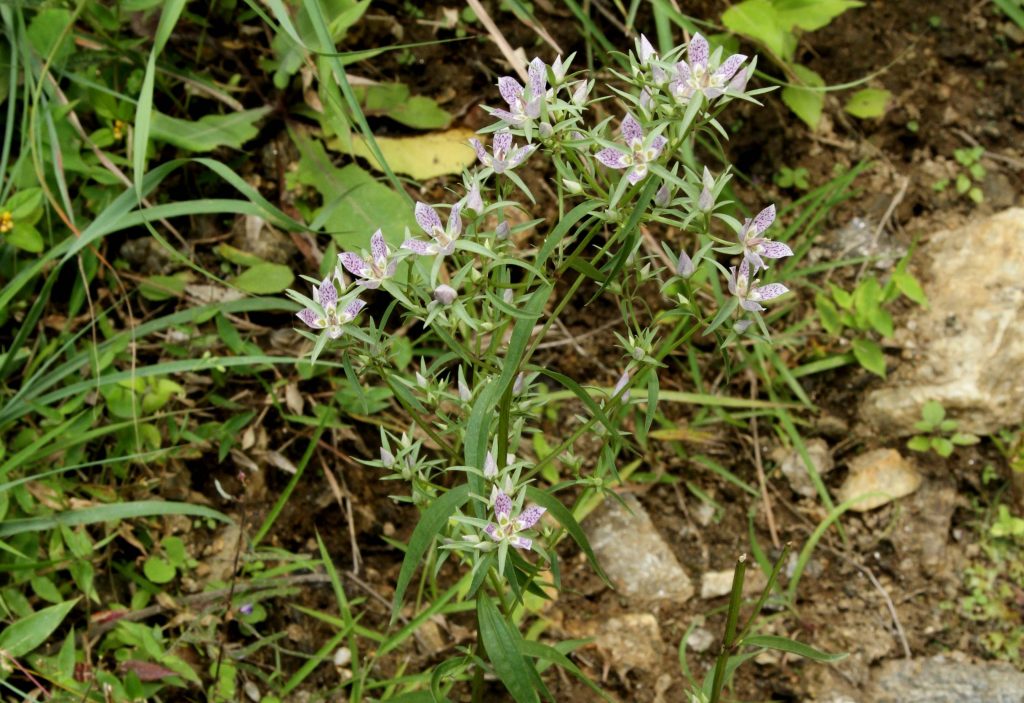
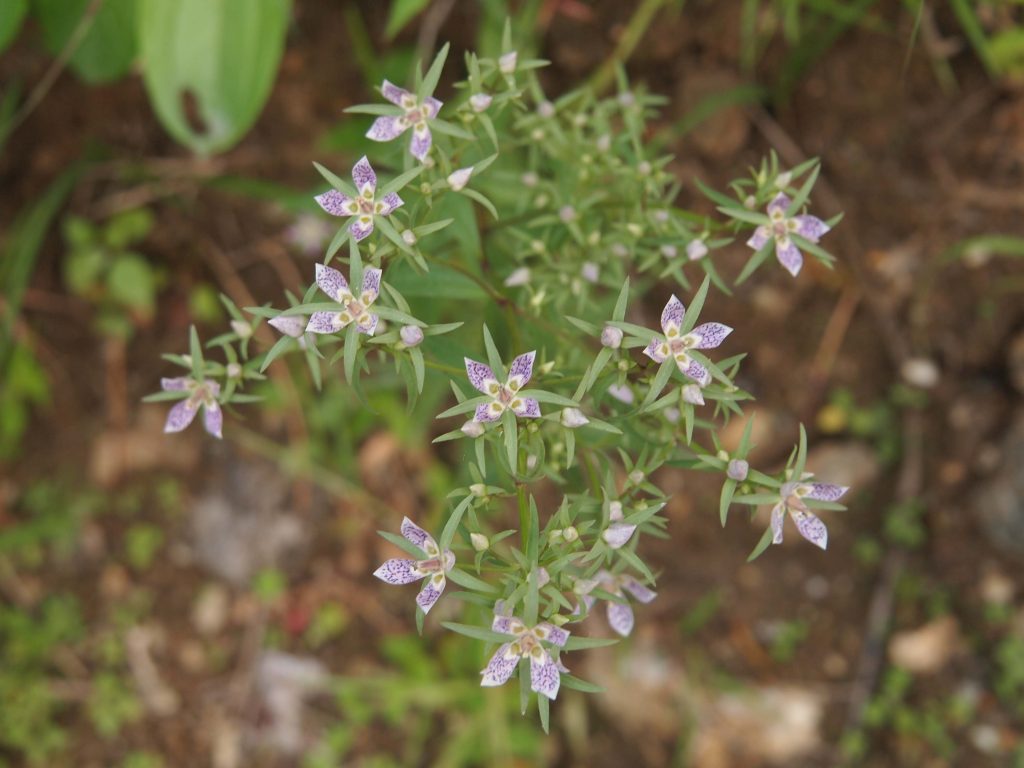
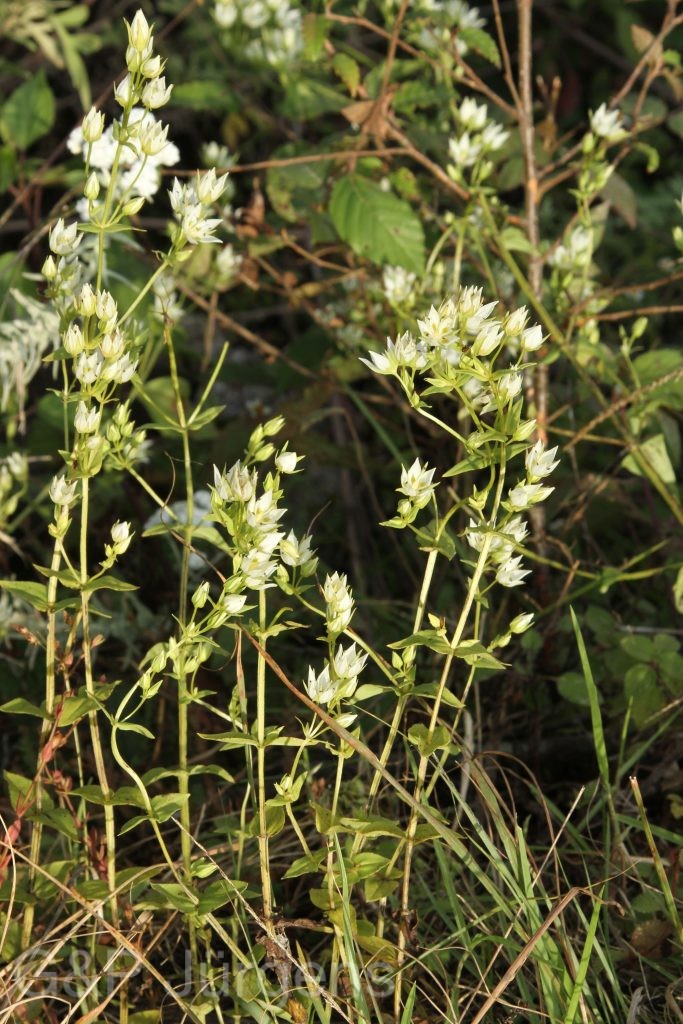
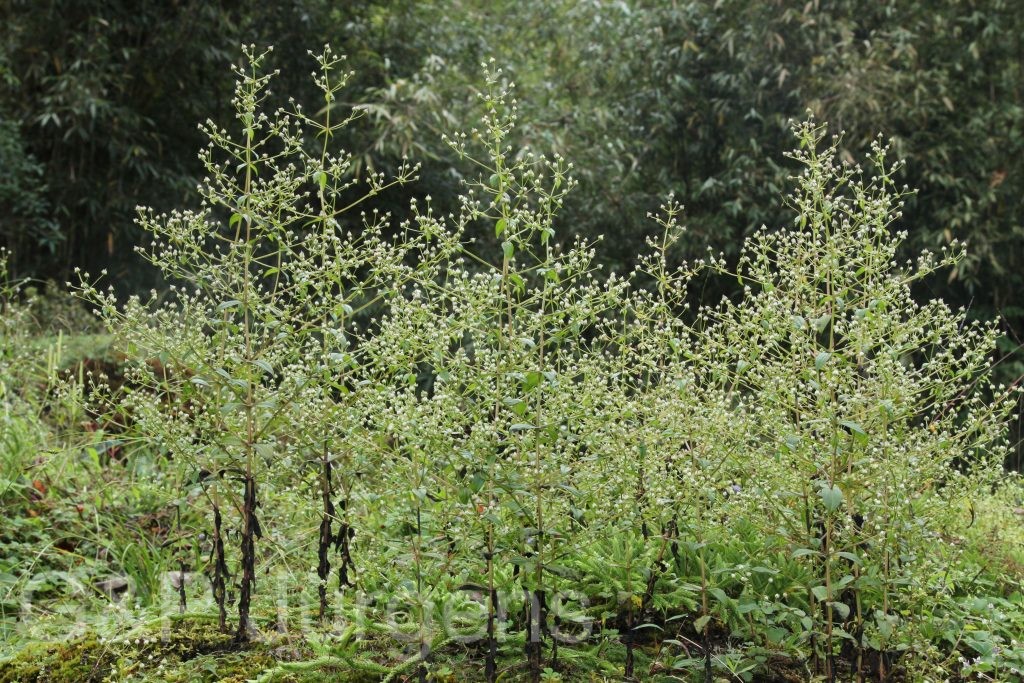
Swertia angustifolia is a slender annual or biennial herb widespread across the Himalaya and montane Asia, recorded from China, India, Nepal, Myanmar, Thailand, Pakistan, Bhutan and beyond, with peripheral records (KR, ZA, SG, US) reflecting introduction or cultivated material. Its roughly 1,000 georeferenced collections make it one of the better-documented species in this group, ranging through the subtropical to temperate hill belt. It grows on open grassy slopes, fallow fields, roadsides, forest margins and disturbed ground, often as a pioneer of seasonally moist sites. The photographed plant from Bhutan near Wangdi at 2700 m, flowering in September, is characteristic of its autumn flowering at the close of the monsoon.

It is an erect, glabrous herb with a slender, quadrangular, usually much-branched stem arising from a thin taproot. The opposite leaves are narrowly lanceolate to linear, sessile, entire and acute, the epithet angustifolia referring to their narrowness. The flowers are numerous, small and borne in a lax, leafy, paniculate cyme. The corolla is rotate and typically four- or five-merous, white to pale greenish or purplish, each lobe bearing one or two nectary glands (foveae) fringed with hairs near its base, a diagnostic feature of the genus. Stamens equal the corolla lobes in number, and the superior, one-celled ovary develops into a many-seeded capsule.

Swertia is a large genus of the gentian family, richest in the Sino-Himalayan region, and many species (notably the chiretta group) are economically important in traditional medicine for their intensely bitter secoiridoid glycosides. S. angustifolia is a common, weedy, wide-ranging species of no conservation concern, frequently colonising agricultural and disturbed land. Its small, fly- and bee-pollinated flowers and prolific seed set underpin its success as a montane ruderal.

Author: Buch.-Ham. ex D.Do · Sources: POWO (Kew), GBIF, Flora of China Vol. 16, Flora of Bhutan Vol. 2, Flora of Nepal, Clarke's Monograph of Asiatic Gentianaceae

(Siebold & Zucc.) Hook. f. & Thomson ex C.B. Clarke

Bhutan2012 354
Bhutan Doch-La, 3000m September
Bhutan2012 355
Bhutan Doch-La, 3000m September
Bh2008 65 P106
Bhutan Punaka-Chu, 1600m April

Description

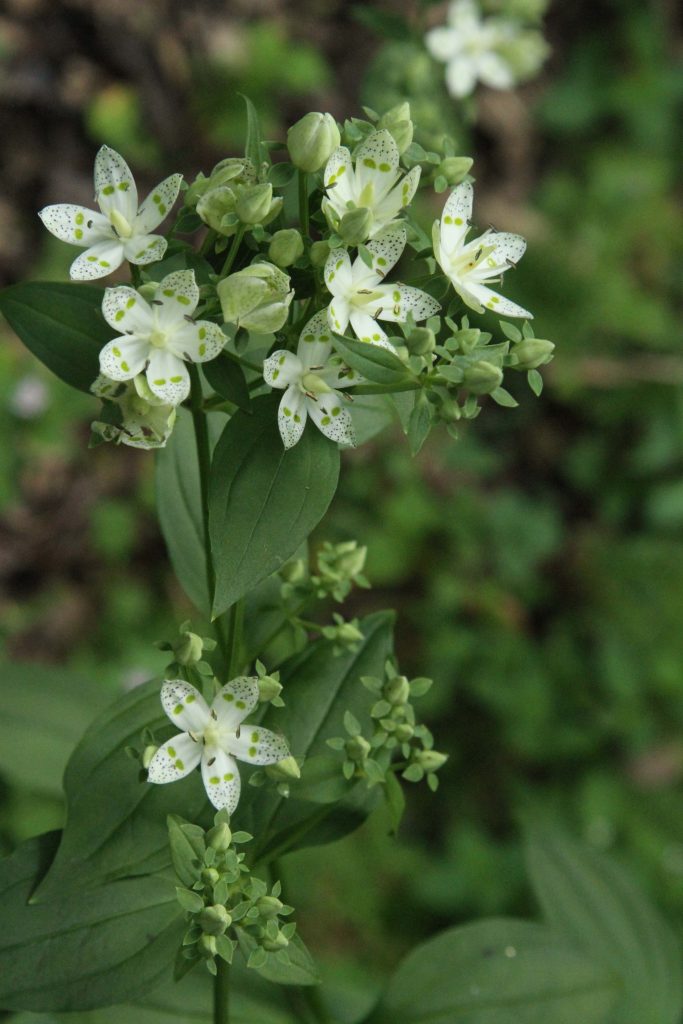
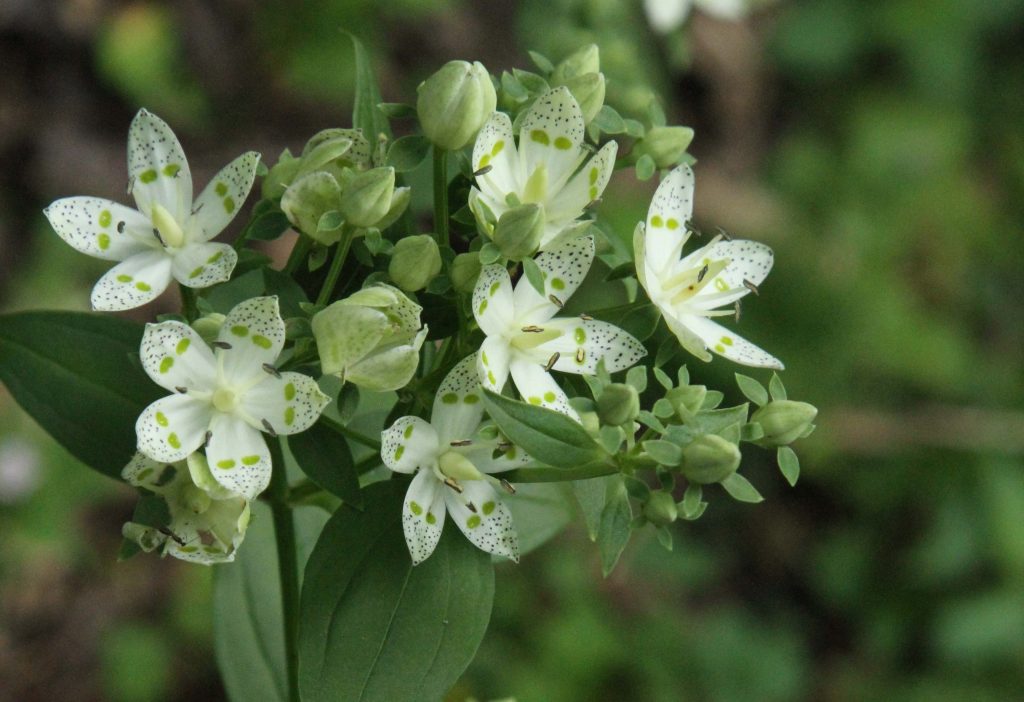
Swertia bimaculata is a widely distributed Asian gentian recorded by GBIF in nearly 3,942 occurrences spanning China, Japan, Korea, India, Bhutan, Nepal, Myanmar, Indonesia, Malaysia and Vietnam, making it one of the most far-ranging members of its genus. It occupies forest margins, grassy slopes, meadows and streamsides over a broad altitudinal span from lowland valleys to the subalpine zone. The Bhutanese collections illustrated, one from the Dochu La at 3000 m flowering in September and another from the Punakha Chu at 1600 m in April, demonstrate both its wide elevational tolerance and a flowering season extended by the diversity of habitats it occupies.

The species is a tall, erect annual or biennial herb with an angular, often branched stem arising from a slender taproot. The leaves are opposite, sessile to short-petiolate and broadly elliptic to lanceolate, with prominent arcuate veins. Flowers are numerous in a large, lax terminal panicle; the corolla is rotate and deeply four- to five-lobed, the lobes pale greenish-white to yellowish and finely dotted or streaked with purple. Each lobe bears two conspicuous dark glandular nectaries—the paired "two spots" of the epithet bimaculata—fringed with long fimbriae. The superior ovary develops into a narrowly ovoid septicidal capsule releasing many small seeds.

Swertia is a taxonomically complex, pharmacologically notable genus whose bitter secoiridoid-rich species are widely used in traditional Asian medicine, and S. bimaculata is among those harvested for such purposes. The fringed nectary glands and spotted corolla attract bees and flies that effect cross-pollination. Despite its medicinal exploitation the species remains common and ecologically plastic across its enormous range and is not regarded as threatened.

Author: (Siebold & Zucc.) Hook. f. & Thomson ex C.B. Clarke · Sources: POWO (Kew), GBIF, Flora of China, Flora of Bhutan, Flora of Japan, Revision of the Genus Swertia (Hara)

(G. Don) Wall. ex. C.B. Clarke

Bhutan2015 464
Bhutan Trongsa 2100m, October
Garw 2005 276 ergebnis
India Garhwal Kunol 2600m, September

Description

Swertia cordata is a Himalayan gentian relative ranging along the entire arc from Afghanistan and Pakistan through India, Nepal, Bhutan and into south-western China and Myanmar, documented by some 332 GBIF records. It favours moist, shaded banks, grassy forest clearings, stream margins and humid open slopes within the temperate zone, broadly between 1800 and 3000 m. The material illustrated from Trongsa in central Bhutan at 2100 m in October and from Kunol in the Garhwal Himalaya at 2600 m in September reflects its late-season flowering, when the post-monsoon humidity sustains the soft foliage of this short-lived herb.

It is an erect annual or biennial with a slender, quadrangular and often branched stem. The basal and lower cauline leaves are conspicuously cordate at the base and shortly petiolate, while the upper leaves become sessile and amplexicaul; all are thin, ovate and prominently veined. The flowers are borne in lax terminal and axillary cymose panicles, the corolla typically four-merged, rotate and pale blue to lilac with darker veining, each lobe bearing the nectary pits or foveae diagnostic of Swertia, fringed by scale-like appendages. The fruit is a septicidal capsule containing numerous small seeds.

Swertia is a large, taxonomically demanding genus widely exploited in Himalayan ethnomedicine for its bitter secoiridoid glycosides, and S. cordata shares this chemistry. The basal foveae govern a specialised pollination relationship in which nectar is hidden beneath protective fringes. The species is not regarded as threatened given its wide distribution, but collection for medicinal use and habitat loss along forest margins warrant monitoring of accessible populations.

Author: (G. Don) Wall. ex. C.B. Clarke · Sources: POWO (Kew), GBIF, Flora of Bhutan, Annotated Checklist of the Flowering Plants of Nepal, Flora of China (Gentianaceae), Revision of the genus Swertia

(C.B. Clarke) C.B. Clarke

Bhutan2015 31
Bhutan Thimphu 2300m, October
Bhutan2012 321
Bhutan Dochu-La, 3100m September
Bhutan2012 322
Bhutan Dochu-La, 3100m September

Description

Swertia macrosperma is a widespread gentian-family herb of Asia, exceptionally well represented in GBIF with about 1613 occurrences spanning Taiwan, China, India, Nepal, Bhutan, Myanmar, Bangladesh, Japan and beyond. It is a plant of open, moist montane settings, growing on grassy slopes, forest margins, clearings, banks and damp meadows in the temperate to lower subalpine belt. The material photographed in Bhutan, at Thimphu around 2300 m in October and at the Dochu-La pass near 3100 m in September, illustrates its autumn flowering season, when these post-monsoon slopes carry the late display typical of many Himalayan swertias.

It is an erect annual to biennial herb with slender, often quadrangular and branched stems arising from a basal rosette of leaves. The cauline leaves are opposite, sessile to shortly petiolate and ovate to lanceolate. The flowers are borne in lax terminal and axillary cymes forming a diffuse panicle; each is usually four- or five-merous with a rotate, deeply parted corolla that is whitish, pale greenish or tinged with purple and frequently spotted, and each corolla lobe bears one or two fringed nectary glands (foveolae) diagnostic of the genus. The fruit is a septicidal capsule that, as the epithet indicates, releases comparatively large seeds.

Swertia is a large genus of tribe Swertieae, distinguished from Gentiana by its rotate, deeply divided corolla and conspicuous nectary pits. Several species, including this one, are gathered for traditional medicine on account of their bitter secoiridoid compounds. As an abundant and ecologically tolerant species across a vast range, S. macrosperma is of no conservation concern, though localised harvesting pressure on bitter Swertia species is documented elsewhere in the genus.

Author: (C.B. Clarke) C.B. Clarke · Sources: POWO (Kew), GBIF, Flora of China, Flora of Bhutan, Flora of Nepal, Ho & Pringle Gentianaceae revision

(D.Don) C.B.Clarke

Nepal 95 109 P195 ergebnis
Nepal below Rupien La 3100m October
Bhutan2012 857

Description

Swertia purpurascens is a Himalayan gentian distributed across Nepal, India, Pakistan, Afghanistan, Bhutan and adjacent China, with around 322 occurrences recorded in GBIF. It grows on open grassy slopes, in subalpine scrub, along forest margins and in moist montane meadows, generally between about 1800 and 3600 m. The individual illustrated below the Rupien La in Nepal at 3100 m, flowering in October at the close of the monsoon, reflects the species' characteristic late-season phenology, when many Himalayan swertias bloom on rain-moistened upper slopes before the onset of cold and the senescence of the herb layer.

The plant is an erect annual or short-lived herb 20–80 cm tall, with a slender, four-angled, often branched stem arising from a thin taproot. The leaves are opposite, sessile or shortly petiolate, lanceolate to ovate-lanceolate, three- to five-nerved and entire-margined. The inflorescence is a lax, narrow panicle of numerous flowers. Each flower is typically four-merous, the corolla rotate and divided nearly to the base into lobes that are pale purplish to greenish, often purple-tinged or veined, each lobe bearing one or two nectary pits fringed with characteristic fimbriae. The four stamens alternate with the corolla lobes, and the superior ovary develops into a many-seeded septicidal capsule.

Swertia is a large genus of the Gentianaceae centred on the Sino-Himalayan region, where it has radiated extensively, and the nectary fimbriae of the corolla provide key diagnostic characters separating its species. The nomenclatural history of this taxon is entangled with that of S. ciliata, with which it has frequently been confused; the source page links it to that name, but POWO and GBIF treat S. purpurascens as the accepted entity. As with other swertias, the plant has a reputation in Himalayan ethnomedicine as a bitter febrifuge. It remains widespread and is not considered threatened across its broad montane range.

Author: (D.Don) C.B.Clarke · Sources: POWO (Kew), GBIF, Flora of Nepal, Flora of Bhutan Vol. 2, Flora of Pakistan, A Revision of the Genus Swertia (Gentianaceae) in Asia

T.N.Ho & S.W.Liu

Garw 2005 227 ergebnis ergebnis
India Garhwal Simkarok 2600m, September

Description

Swertia rotundiglandula is a temperate montane herb originally described from China, where the bulk of its 15 georeferenced records are concentrated, indicating a comparatively restricted and infrequently collected range. The species inhabits moist, humus-rich situations along forest margins, shaded banks, and open grassy slopes within the temperate zone. The collection illustrated from Simkarok in Garhwal, India, at 2600 m in September extends knowledge of its occurrence westward into the Western Himalaya and documents its late-summer to autumn flowering, when the genus typically reaches peak bloom on cool, well-watered slopes.

The plant is a slender erect herb arising from a fibrous root system, with quadrangular to terete stems that may be simple or branched above. The leaves are opposite, sessile or shortly petiolate, lanceolate to elliptic, entire, and three- to several-veined. The flowers are borne in lax terminal and axillary cymes, the corolla rotate and typically four- or five-merous with lobes that are deeply divided nearly to the base. The defining feature, reflected in the epithet, is the pair of rounded, fringed nectary glands seated at the base of each corolla lobe. The androecium consists of stamens alternating with the lobes, and the superior ovary matures into a septicidal capsule containing numerous small seeds.

Swertia is a large genus of the Gentianaceae distinguished from Gentiana by its rotate corolla and conspicuous lobe-borne nectaries, characters used extensively in delimiting its many Sino-Himalayan species. Numerous Swertia are valued in traditional medicine for bitter secoiridoid compounds. The narrow documented distribution and low occurrence count of S. rotundiglandula suggest it is genuinely localised or under-collected, warranting further field survey to clarify its conservation status.

Author: T.N.Ho & S.W.Liu · Sources: POWO (Kew), GBIF, Flora of China, Flowers of the Himalaya (Polunin & Stainton), Ho & Liu monograph of Swertia (Gentianaceae)

G.Don

Garw 2005 59 ergebnis ergebnis
India Garhwal Valley of flowers 3400m, September

Description

Swertia speciosa is a robust Himalayan gentian distributed through India, Pakistan, Nepal and China, the roughly 132 georeferenced records spanning the moist temperate and subalpine zones of the western and central Himalaya. It favours damp, open situations: tall-herb meadows, forest clearings, streamsides, shrubberies and grassy slopes, generally between about 2700 and 3900 m. The plant was photographed in the Garhwal Valley of Flowers at 3400 m in September, a habitat typical of the species, where it flowers in the late monsoon among lush herbaceous vegetation on cool, humus-rich soils.

It is one of the largest swertias, a stout erect biennial or short-lived perennial herb reaching well over a metre, with a hollow, often purple-tinged, four-angled stem. The leaves are large, ovate to elliptic, prominently several-nerved, the basal ones petiolate and the cauline ones sessile and opposite. The inflorescence is a broad, leafy, much-branched panicle of numerous flowers. Each flower is four- or five-merous with a rotate, greenish-yellow corolla conspicuously veined and dotted with dark purple, the lobes bearing paired fringed nectary pits (foveolae) near the base. The fruit is a many-seeded ovoid capsule splitting septicidally.

Swertia (tribe Gentianeae) is a large Old World genus in which species are separated chiefly by nectary number, position and the form of their marginal fringes, and S. speciosa is distinguished by its great stature and richly veined corolla. Like its relatives it is rich in bitter secoiridoid glycosides and is gathered in Himalayan folk medicine as a tonic and febrifuge, sold under the trade complex of "chiretta." Though widespread and not formally assessed as threatened, such medicinal harvesting warrants monitoring of wild stands.

Author: G.Don · Sources: POWO (Kew), GBIF, Flora of China, Annotated Checklist of the Flowering Plants of Nepal, Flowers of the Himalaya (Polunin & Stainton)