Tag:

Subalpine (2500-3500 m)

King ex C.B. Clarke

Bhutan2014 793
Bhutan
Sikkim2004 94 P164
Sikkim West-Bengal, Bersay 2700m April
Sikkim2004 329 P530
Sikkim West-Bengal, Bersay 2700m April

Description

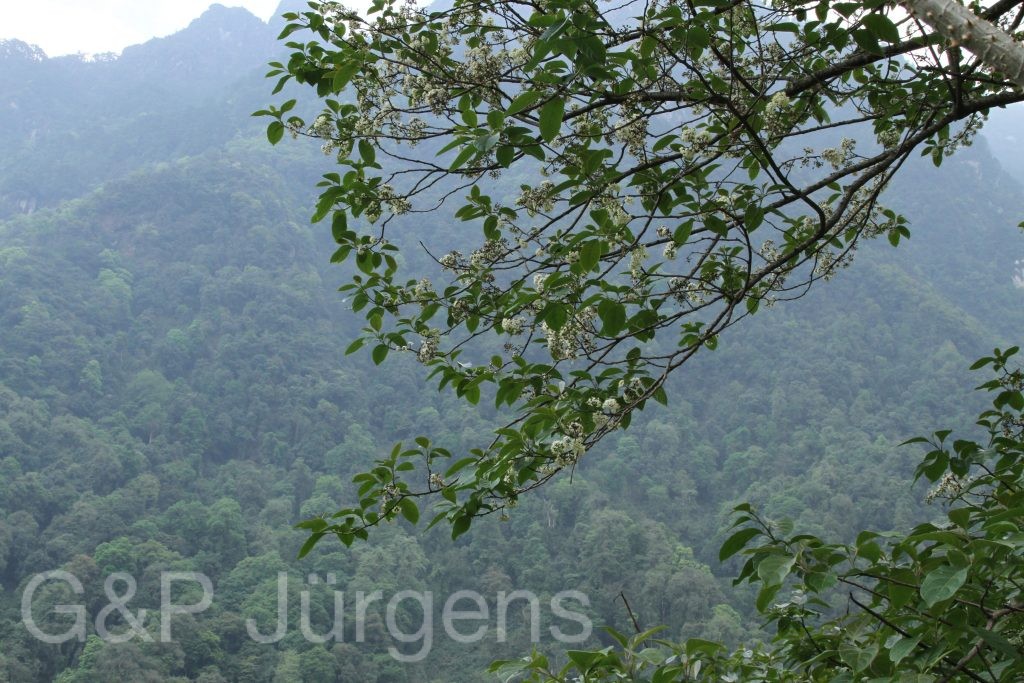
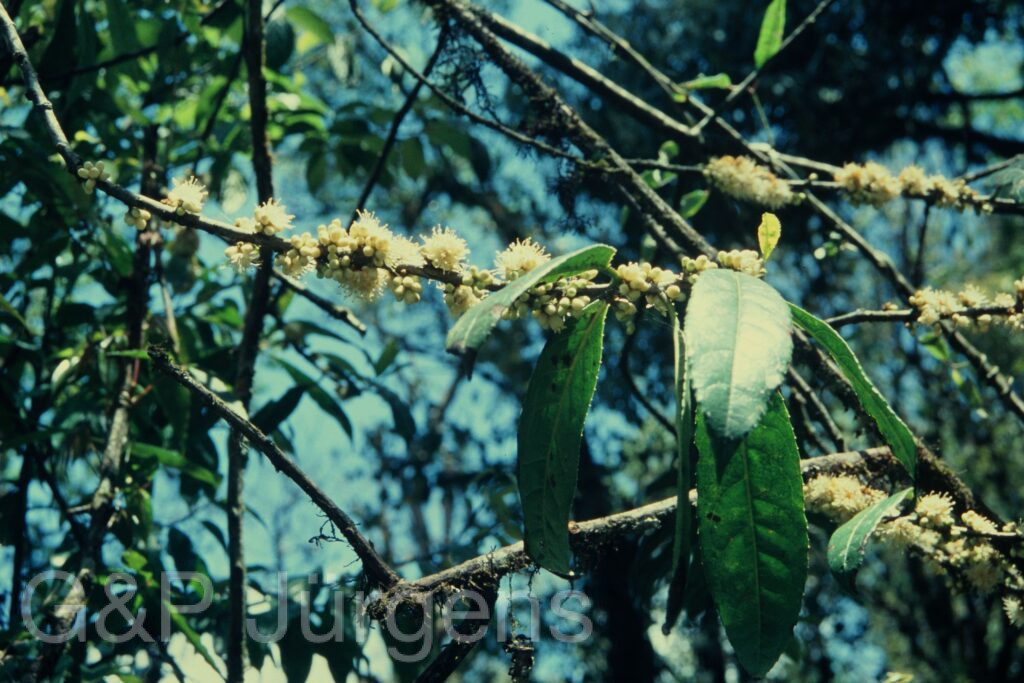
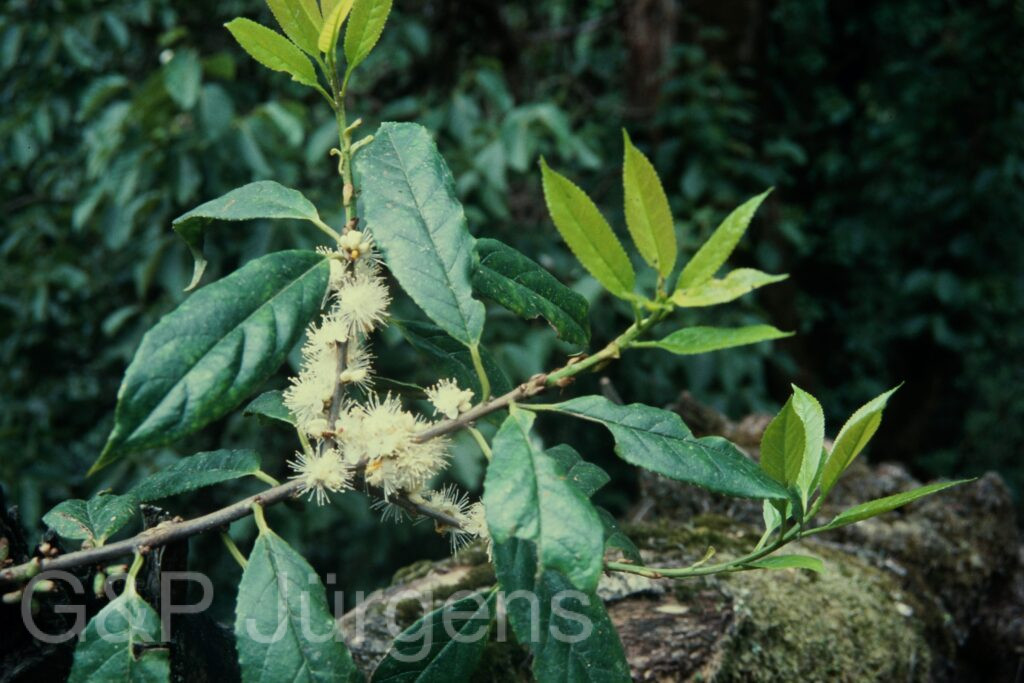
Symplocos glomerata is an Asian tree distributed from the Himalaya and northern India through Bhutan, Nepal and Myanmar into southern China, Taiwan, Indochina and the Malesian region. Its 572 GBIF records span this broad range, indicating a widespread but locally distributed species of evergreen and mixed montane forest. It grows in broadleaved and laurel-dominated forests, on slopes and ridges, typically in the warm-temperate to lower-subtropical montane belt. The plant photographed at Bersay in the Sikkim-West Bengal border region at about 2700 m in April illustrates its occurrence in the moist mid-elevation forests of the Eastern Himalaya, flowering in early spring.

It is a small evergreen tree or shrub with leathery, alternate leaves that are elliptic to oblong, with serrate to crenate margins and a glabrous, glossy upper surface. The flowers are borne in dense, sessile, glomerate clusters in the leaf axils, as the epithet glomerata indicates; each is small, white and fragrant, with a five-lobed corolla and numerous stamens united at the base in fascicles, a characteristic of the genus. The fruit is a small, ovoid to cylindric drupe crowned by the persistent calyx lobes.

Symplocos is the sole genus of the Symplocaceae, distinguished by its polyandrous flowers and aluminium-accumulating tissues; several species, including this one, have been used to yield yellow dyes and mordants. S. glomerata varies considerably across its wide range and has accumulated numerous synonyms and infraspecific names. Widely distributed and ecologically tolerant, it is not regarded as threatened and is a common constituent of Asian montane forest.

Author: King ex C.B. Clarke · Sources: POWO (Kew), GBIF, Flora of Bhutan, Flora of China, Nooteboom Symplocaceae monograph
Buch.-Ham. ex D. Don

Bh2008 155 P254
Bhutan Phobjika 2650m, April

Description

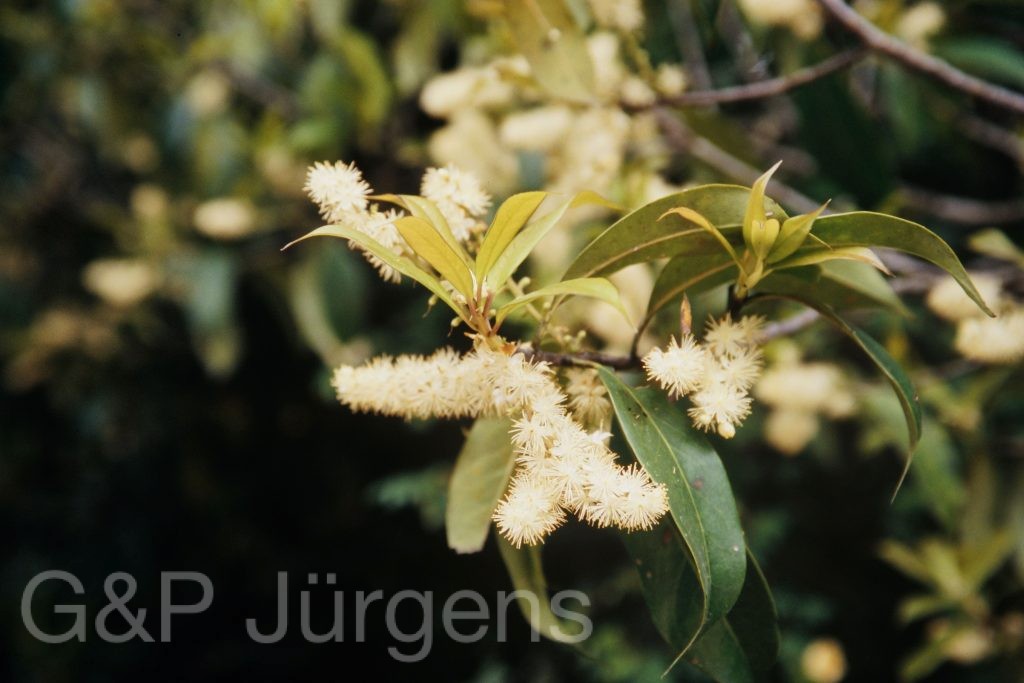
Symplocos sumuntia is a broadly distributed East Asian and Himalayan tree, recorded from Nepal, north-east India, Bhutan and Bangladesh eastward through China, Taiwan, Japan and Korea to Indochina and Myanmar, with thousands of catalogued occurrences spanning this wide range. It is a constituent of broadleaved evergreen and mixed montane forests, occurring on slopes, ridges and forest margins from the warm subtropical lowlands to the cool temperate belt, broadly between about 800 and 2,800 m. The tree photographed at Phobjika in central Bhutan at 2,650 m in April was recorded in flower, the white blossom opening in spring before or with the new foliage.

It is an evergreen shrub or small to medium tree with smooth grey bark and slender, often glabrous twigs. The leaves are alternate, simple, coriaceous, narrowly elliptic to lanceolate, acuminate, with finely serrate to subentire margins and an entire to undulate texture. The flowers are small, white and fragrant, borne in short axillary racemes or panicles; the corolla is five-lobed, the numerous stamens united at the base into fascicles adnate to the corolla, a hallmark of the family. The fruit is an ovoid to ellipsoidal drupe crowned by the persistent calyx, ripening blue-black to purple.

Symplocos, the sole genus of Symplocaceae, is taxonomically complex, and S. sumuntia (Buch.-Ham. ex D. Don) has historically encompassed numerous regional variants and synonyms. The leaves and bark are valued locally as a source of mordant (aluminium-accumulating tissues used in dyeing) and in traditional medicine. As a widespread forest species it is not of conservation concern, though it depends on the integrity of subtropical montane forest.

Author: Buch.-Ham. ex D. Don · Sources: POWO (Kew), Flora of China Vol. 15, Flora of Bhutan Vol. 2, GBIF, Nooteboom: Revision of Symplocaceae (1975)

(Wall. ex DC.) C.Jeffrey & Y.L.Chen

Garw 2005 172 ergebnis ergebnis
India Garhwal Shertoli 3100m, September

Description

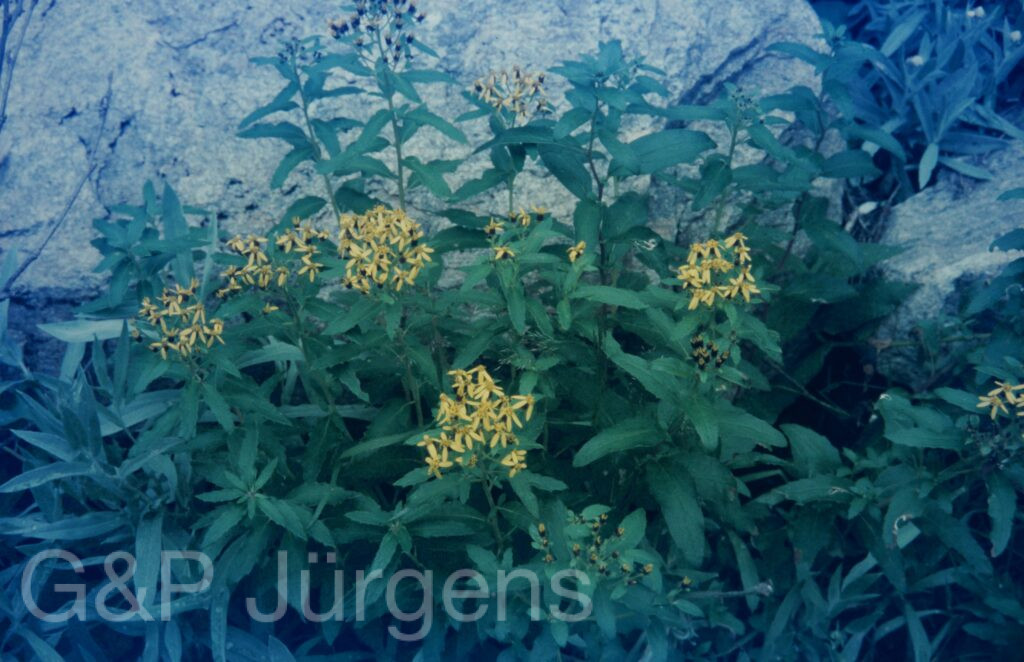
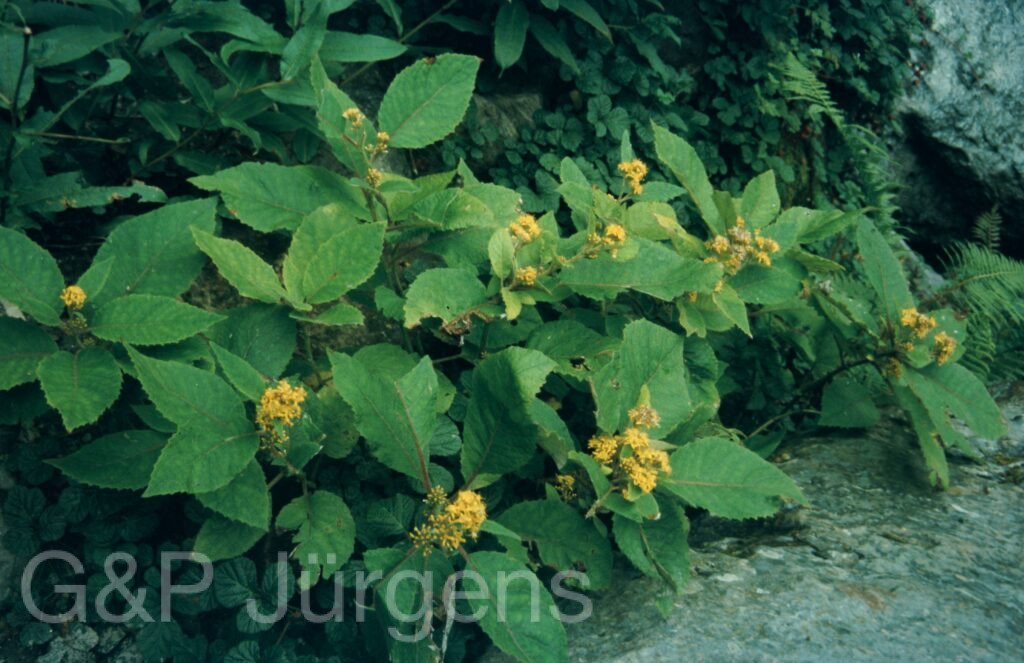
Synotis alata is a robust ragwort-allied composite of the Himalaya and southwestern China, documented by GBIF (330 occurrences) from Nepal, India, Bhutan, Myanmar and China. It grows in forest clearings, shrubberies, along streamsides and on grassy slopes within the upper temperate and subalpine zones, typically between about 2500 and 3500 m. The plant photographed at Shertoli in Garhwal, India, at 3100 m in September captures its late-monsoon to autumn flowering, when these tall herbs come into bloom along moist montane margins after the rains.

The species is a perennial herb with erect, often winged or narrowly alate stems, a feature reflected in the epithet "alata". The leaves are alternate, ovate to elliptic-lanceolate, sharply toothed and frequently decurrent down the stem to form the characteristic wings, with a thinly hairy lower surface. The capitula are numerous and arranged in a broad terminal corymbose panicle; each head is radiate with a few yellow ligulate ray florets surrounding a disc of yellow tubular florets, subtended by an involucre of uniseriate phyllaries with small calyculate bracts. The fruit is a cylindrical, ribbed cypsela bearing a copious white pappus of fine barbellate bristles that aids wind dispersal.

Synotis was segregated from the vast genus Senecio by C. Jeffrey and Y. L. Chen, who recognised its distinctive style and pollen characters; S. alata is a typical member of this Sino-Himalayan group. The wind-borne pappus permits rapid colonisation of disturbed and successional ground, and the bright capitula attract a range of generalist butterfly and bee pollinators. The species is common and widespread across its range and is not considered to be of conservation concern.

Author: (Wall. ex DC.) C.Jeffrey & Y.L.Chen · Sources: POWO (Kew), GBIF, Flora of China, Flora of Bhutan, Annotated Checklist of the Flowering Plants of Nepal, The Senecioneae of the Himalaya (Jeffrey)

(Wall. ex DC.) C.Jeffrey & Y.L.Chen

Garw 2005 51 ergebnis ergebnis
India Garhwal Valley of flowers 3400m, September

Description

Synotis kunthiana is a Sino-Himalayan composite distributed across the central and eastern Himalaya, with verified records from India, Nepal and Bhutan and roughly 56 georeferenced occurrences in GBIF. It is a plant of the upper temperate and subalpine zones, typically occupying moist forest margins, shrubberies, streamsides and open herb-rich slopes between about 2800 and 3800 m. The photographed population in the Garhwal Himalaya, in the renowned Valley of Flowers at around 3400 m, flowering in September, exemplifies its late-season phenology in tall-herb communities flushed by the receding monsoon.

It is a perennial herb with erect, often somewhat woody-based stems arising from a short rhizome, the stems leafy and frequently floccose-tomentose when young. The leaves are alternate, ovate to elliptic-lanceolate, acuminate, with a serrate to denticulate margin and a thinly arachnoid-pubescent abaxial surface. The capitula are numerous, small and arranged in lax terminal corymbose-paniculate cymes; each head bears an involucre of uniseriate phyllaries subtended by a few calyculate bracteoles, with yellow radiate ray florets surrounding the disc. The fruit is a cylindrical, ribbed cypsela crowned by a copious white pappus of fine barbellate bristles.

The genus Synotis was segregated from Senecio sensu lato by C. Jeffrey and Y. L. Chen on the basis of style-branch and capitular characters, and S. kunthiana is based on the Wallichian Senecio kunthianus. The species remains locally common across its range and is not considered threatened, though its dependence on intact subalpine tall-herb meadows makes it a useful indicator of grazing pressure and habitat continuity.

Author: (Wall. ex DC.) C.Jeffrey & Y.L.Chen · Sources: POWO (Kew), GBIF, Flora of Bhutan, Flora of China, Jeffrey & Chen revision of Asiatic Senecioneae (Synotis)

DC.

Bhutan2012 628
Bhutan Wangdi 2600m September
Bhutan2012 734
Bhutan Galephu 650m, October

Description

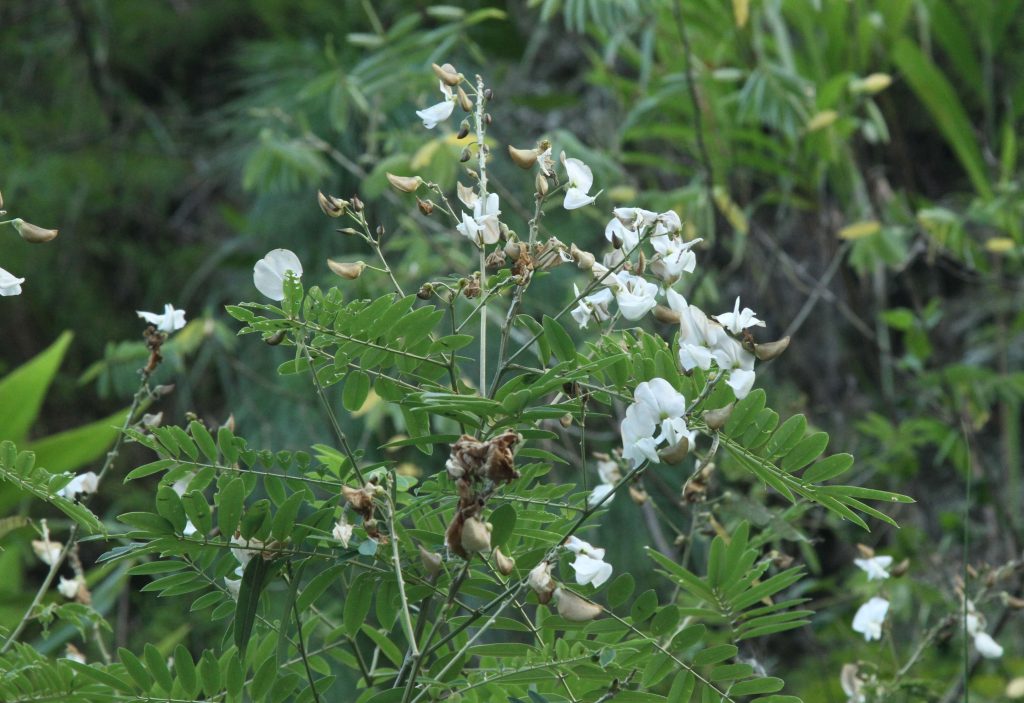
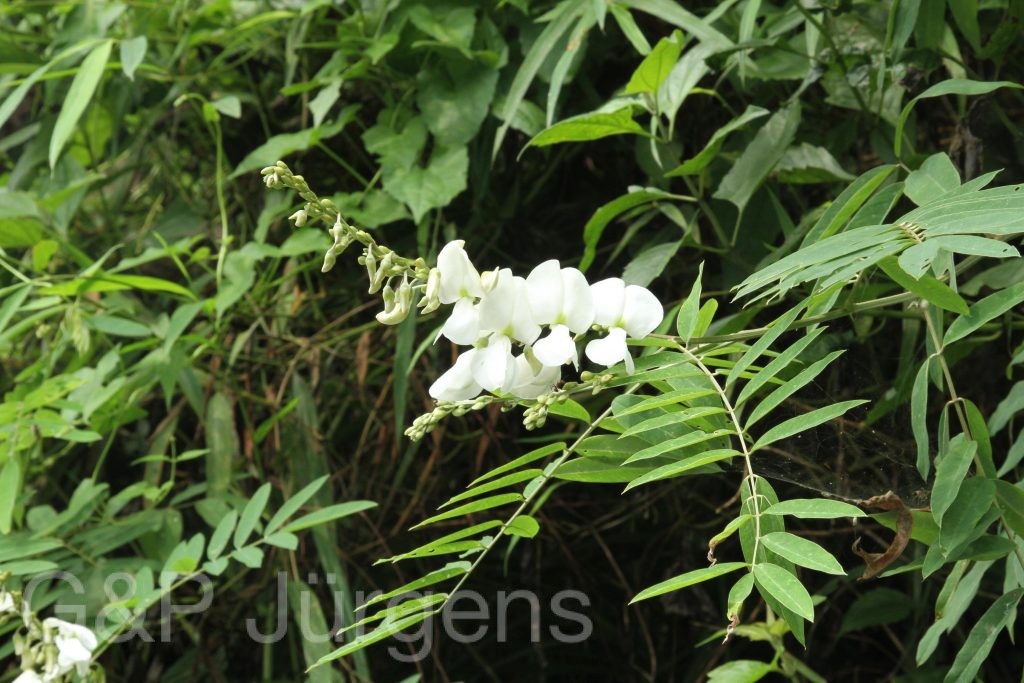
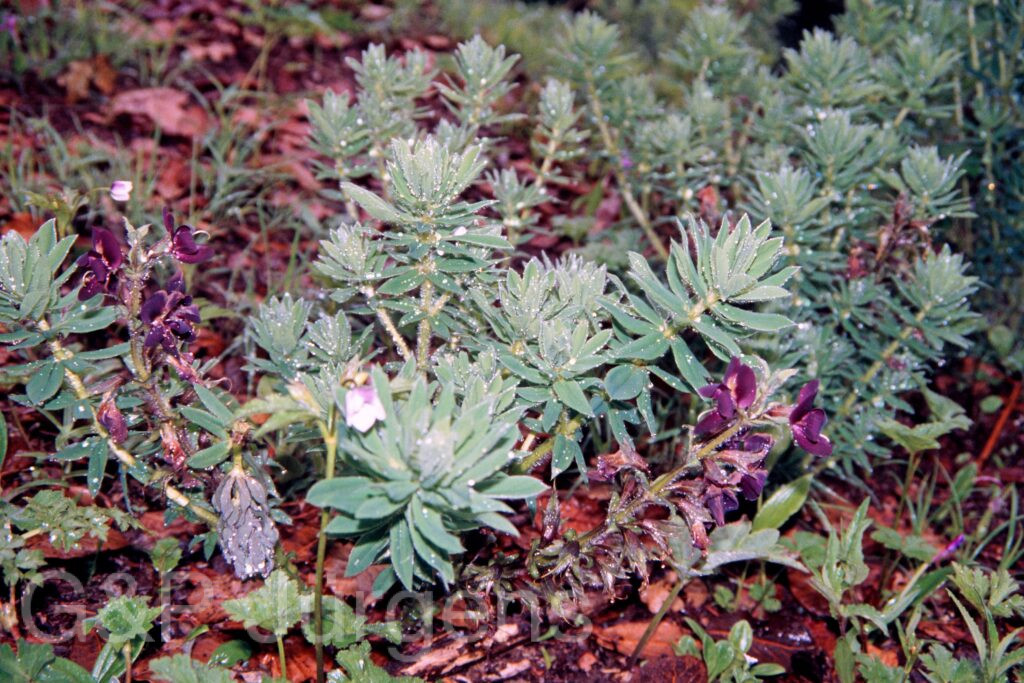
Tephrosia candida is a shrubby legume native to the Indian subcontinent and adjacent Himalaya, including India, Nepal and Bhutan, but now pantropically naturalised through widespread cultivation, with GBIF records from Brazil, Indonesia, Taiwan, China, Papua New Guinea, Australia, Madagascar, the Caribbean, the Mascarenes and beyond. It thrives in warm subtropical and tropical conditions on forest margins, roadsides, river banks and disturbed open ground. The Bhutanese collections illustrate its altitudinal breadth, from Galephu in the foothills at about 650 m in October to Wangdi at 2600 m flowering in September.

The plant is an erect, much-branched shrub up to about 3 m, with silky-pubescent young growth. The leaves are imparipinnate with numerous (often 8-12 pairs of) narrowly oblong leaflets that are silky-sericeous beneath, giving the foliage a greyish sheen. The flowers are borne in dense terminal racemes; each papilionate flower has a campanulate pubescent calyx and a white to pale pink or cream corolla with a broad standard silky on the outer face, the keel and wings enclosing diadelphous stamens. The fruit is a flattened, linear, densely velvety-pubescent dehiscent pod that twists on splitting to expel several seeds.

A member of the papilionoid Fabaceae and tribe Millettieae, T. candida is a nitrogen-fixing species long valued as a green manure, cover crop, fallow improver and erosion-control plant, which explains its extensive intentional dispersal across the tropics. Like other Tephrosia it contains rotenoid compounds and has been used as a fish poison and insecticide. Robust and weedy in cultivation, it is in no way of conservation concern and can become locally naturalised.

Author: DC. · Sources: POWO (Kew), GBIF, Flora of Bhutan, Flora of British India, Brummitt's and related revisions of Tephrosia (Leguminosae)

Blume

Bhutan2012 407
Bhutan Wangdi 2500m, June

Description

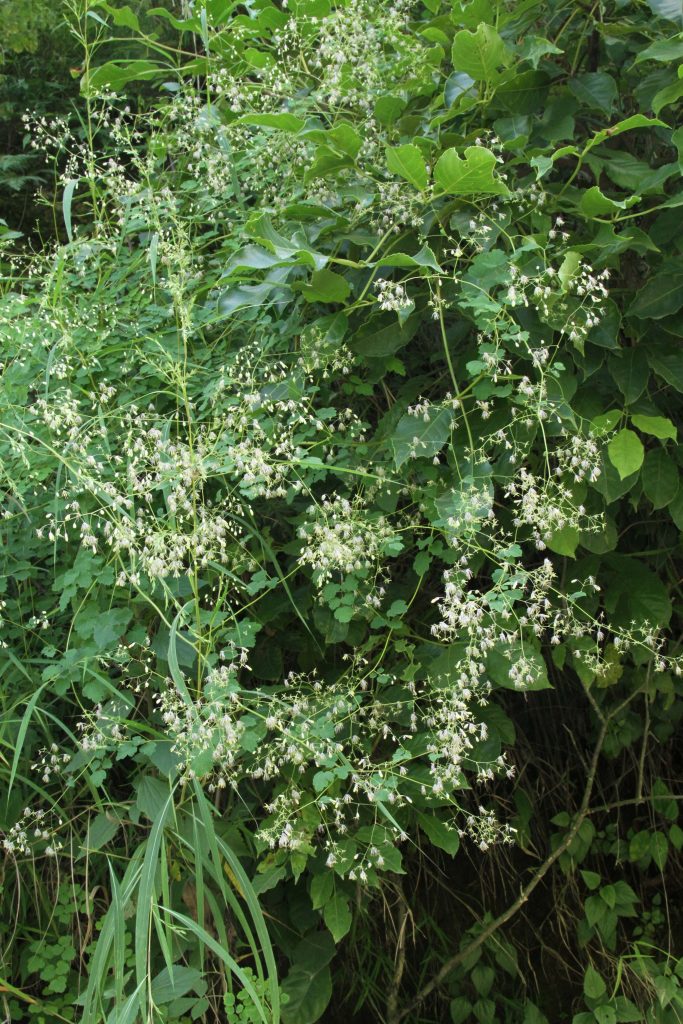
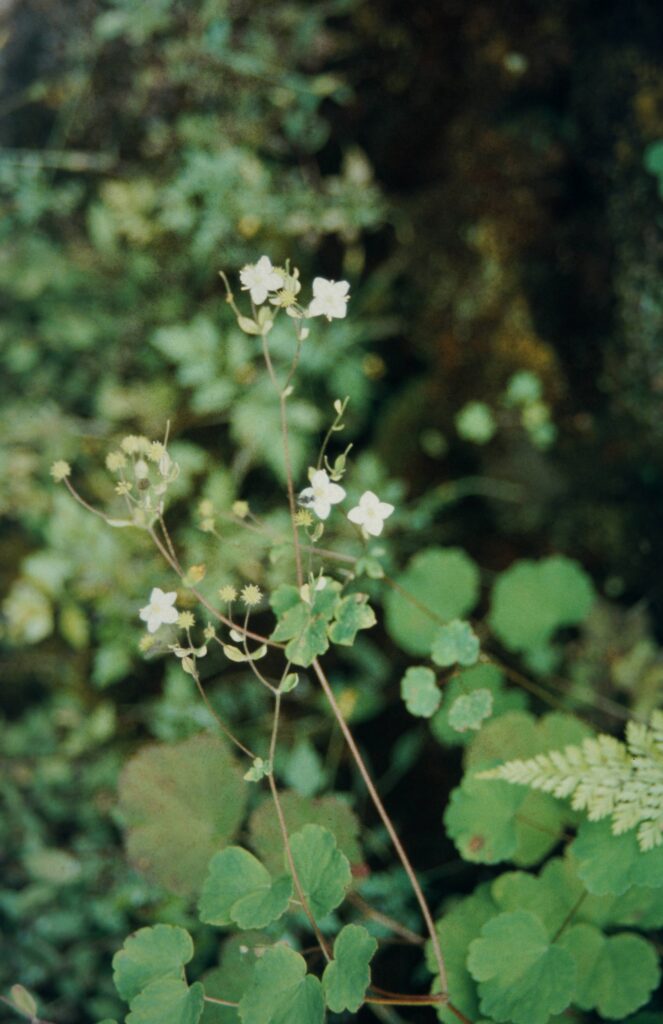
Thalictrum javanicum Blume is a widespread meadow-rue ranging across tropical and subtropical Asia. GBIF documents some 1366 occurrences from India, Sri Lanka, Nepal, Bhutan, Myanmar and southern China through Taiwan, Japan and into the Malesian uplands of Indonesia. It occupies moist, shaded habitats: streamsides, forest floors, damp ravines, clearings and grassy banks, mainly at middle elevations between roughly 1500 and 3000 m, descending lower in the tropics. The plant photographed near Wangdi in Bhutan at 2500 m in June, during the early monsoon, reflects its association with the cool, humid broad-leaved and conifer forest belt of the Himalaya.

It is a glabrous perennial herb forming erect stems 30-100 cm tall from a short rhizome. The leaves are two- to four-times ternately compound, the ultimate leaflets obovate to suborbicular, three-lobed and crenate at the apex, thin in texture, with conspicuous stipels at the divisions of the petiole. The inflorescence is a lax terminal panicle of small, apetalous flowers; the perianth consists of inconspicuous, caducous greenish sepals, the floral display provided instead by the numerous spreading stamens with slender filaments and oblong anthers. The fruit is a cluster of sessile to shortly stipitate, ribbed, ellipsoid achenes tipped by a short curved beak.

Thalictrum is a large, taxonomically intricate genus characterised by reduced, wind- and generalist-insect-pollinated flowers and considerable variation in stamen and achene morphology, generating a complex synonymy across its broad range. T. javanicum is among the most ecologically plastic species, tolerating a wide altitudinal and geographic span, which accounts for its abundant collection record. It is a common, unthreatened component of Asian montane forest understoreys, and several Thalictrum species, including this one, contain isoquinoline alkaloids used in regional ethnomedicine.

Author: Blume · Sources: POWO (Kew), GBIF, Flora of China, Flora of Bhutan, Flora of Java, Annotated Checklist of the Flowering Plants of Nepal

Wall.

Garw 2005 277 ergebnis
India Garhwal Kunol 2650m, October

Description

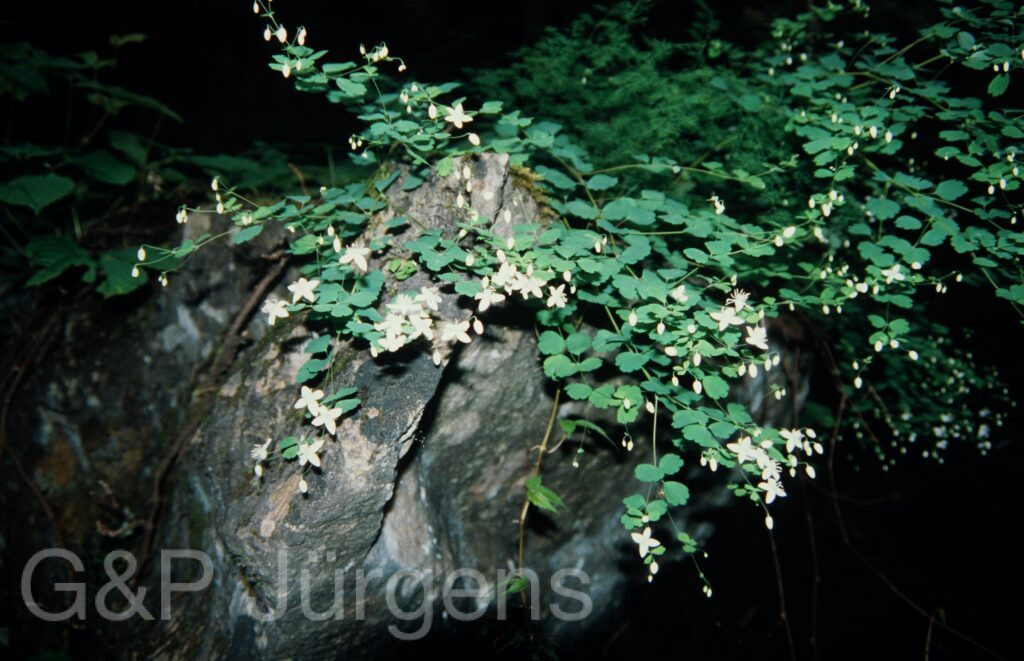
Thalictrum reniforme is a perennial herb distributed across the Himalayan arc from northern India through Nepal and Bhutan to southwestern China (Yunnan, Xizang, Sichuan). It occurs in moist, shaded habitats including forest margins, thickets, stream banks, and damp meadows at elevations of 1,800–3,500 m. The species is well represented in the western Himalayan foothills, as demonstrated by collections from Kunol in the Garhwal region of Uttarakhand, India, at 2,650 m, where plants have been observed in fruit as late as October.
The plant produces erect to ascending stems 30–80 cm tall from a short, fibrous-rooted rhizome. The leaves are bi- to triternately compound; the leaflets are distinctive for the genus, being reniform to orbicular, 1–3 cm wide, with a crenate to shallowly lobed margin. The leaflet surfaces are thin-textured and often glaucous beneath. The inflorescence is a lax, terminal panicle bearing numerous small, apetalous flowers. The sepals are four, ovate, greenish to purplish, caducous. The stamens are pendulous, with slender filaments and oblong anthers. The achenes are few per flower, stipitate, fusiform to obliquely ovoid, ribbed longitudinally, 3–5 mm long including the stipe.
Thalictrum reniforme is readily distinguished from most congeners by its conspicuously reniform leaflets, a character that inspired Wallich's specific epithet. The species belongs to a taxonomically challenging genus in which species boundaries are often obscured by morphological plasticity and hybridisation. With approximately 248 occurrence records in GBIF spanning India, Nepal, Bhutan, and China, it is moderately well collected. Ecologically, it contributes to the herbaceous understorey diversity of Himalayan temperate forests. No specific conservation concerns have been raised, though continued monitoring of its forest-dependent habitats remains advisable given ongoing pressures from logging and agricultural encroachment.

Author: Wall. · Sources: POWO (Kew), GBIF, Flora of China Vol. 6, Flora of Bhutan Vol. 1, Tamura: Thalictrum in Die Natürlichen Pflanzenfamilien (1995)

Hook. f. & Thomson

Nepal 99 893 ergebnis
West-Nepal Suli-Khola 2800m, July

Description

Thalictrum virgatum Hook.f. & Thomson is a widespread Sino-Himalayan meadow rue ranging from the Himalaya of Nepal, India and Bhutan eastward into south-western and central China; the comparatively large GBIF dataset of 498 occurrences attests to its abundance across the temperate Himalayan belt. It favours moist, shaded forest floors, streamsides, scrub margins and grassy slopes within the temperate to subalpine zone, broadly between 2400 and 4000 m. The photographed plant along the Suli-Khola in West Nepal at about 2800 m, flowering in July, is typical of its monsoon-season anthesis in the cool, humid, well-watered understorey of the moist temperate forest.

The species is a slender, erect, glabrous perennial herb with wiry, virgate stems arising from a short rootstock. The leaves are alternate and two- to three-pinnately compound, the ultimate leaflets small, thin, obovate to orbicular and shallowly three-lobed or crenate. The inflorescence is a lax, few-flowered, diffusely branched panicle or raceme; the small, pendulous flowers lack petals and instead bear four to five petaloid, caducous sepals that are whitish, pink-tinged or purplish. The numerous stamens have slender filaments and conspicuous anthers, giving the open flowers a delicate, dangling aspect. The fruit is a small cluster of stipitate, ribbed achenes.

Thalictrum is a large north-temperate genus of wind- and insect-pollinated petal-less Ranunculaceae, and T. virgatum belongs to the slender-stemmed, lax-panicled assemblage of the Sino-Himalaya. Its delicate habit and nodding pink-tinted flowers have brought it into specialist cultivation as a woodland ornamental. Being widespread, ecologically tolerant and locally common throughout the moist temperate Himalaya, it is of no conservation concern, and like many congeners it contains benzylisoquinoline alkaloids of pharmacological interest.

Author: Hook. f. & Thomson · Sources: POWO (Kew), GBIF, Flora of China, Flora of Bhutan, Annotated Checklist of the Flowering Plants of Nepal, B. A. Lecoyer — Monographie du genre Thalictrum

Benth.

Sikkim2011 151
Sikkim Kalep 3670m, June
Nepal 99 452 ergebnis
West-Nepal Naphukana 3080m, June

Description

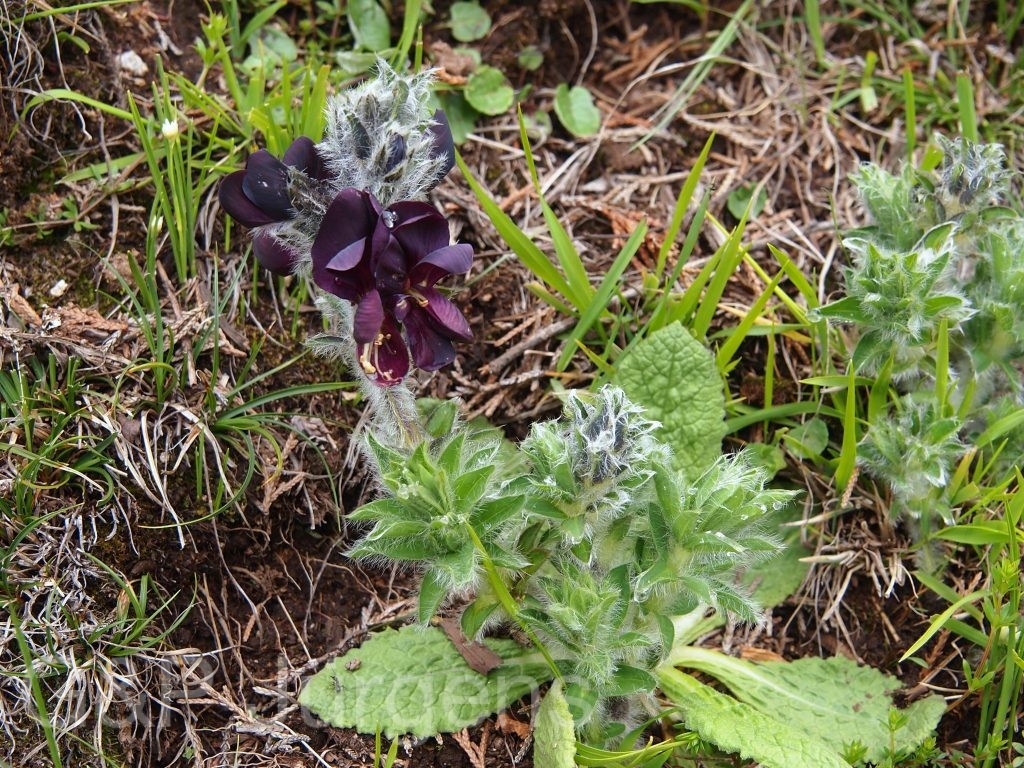
Thermopsis barbata Benth. is a distinctive legume of the high Himalaya, occurring across China, India, Nepal and Bhutan. It is documented from Sikkim at Kalep around 3670 m and from West-Nepal at Naphukana near 3080 m, both flowering in June, within the subalpine to alpine belt. The species favours open stony slopes, dry grassy hillsides, gravelly pastures and the margins of alpine scrub, typically between 3000 and 4500 m, on well-drained, often disturbed substrates exposed to strong sun and seasonal aridity. Its roughly 606 GBIF records indicate a widespread but characteristically montane Himalayan range.

The plant is a robust perennial herb arising from a stout rootstock, the erect stems and foliage conspicuously clothed in long, soft, silky to villous hairs that give the epithet barbata. The leaves are palmately trifoliolate with elliptic to obovate leaflets and large persistent stipules. The flowers are arranged in a dense terminal raceme and are notably large for the genus, the papilionaceous corolla a deep purple to violet-maroon rather than the yellow usual in Thermopsis, subtended by hairy bracts and an enlarged calyx. The fruit is a hairy, flattened, several-seeded legume.

Thermopsis barbata is exceptional within its predominantly yellow-flowered, north-temperate genus for its dark purple corolla and dense pubescence, traits interpreted as adaptations to the cold, high-radiation alpine environment. Like many genistoid legumes it contains quinolizidine alkaloids that deter herbivores. Widespread and locally frequent across its range, it is not regarded as threatened, though high-altitude grazing and pasture degradation may locally affect populations.

Author: Benth. · Sources: POWO (Kew), GBIF, Flora of China, Flora of Nepal, Flora of British India, Legumes of the World (Lewis et al.)

(Wall. ex Kunth) Maxim.

Bh09 218 G366
Bhutan Wangdi 2250m, June
Nepal 99 897 ergebnis
West-Nepal Sepka 2760m, July
Sikkim 2006 453 ergebnis
India West-Bengal, Tolung 2200m, May

Description

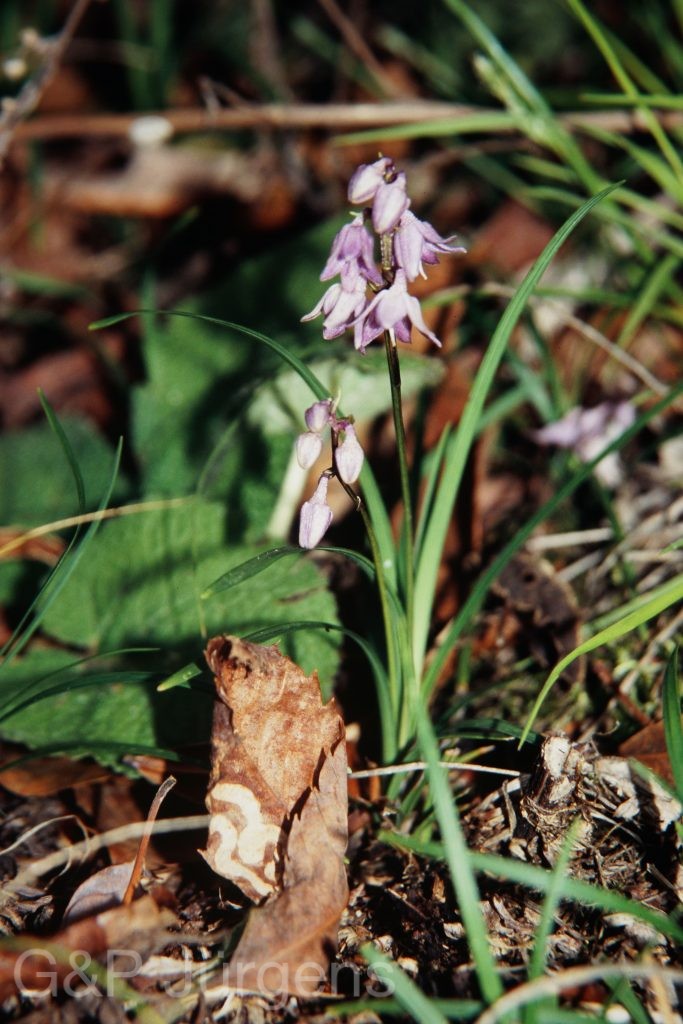
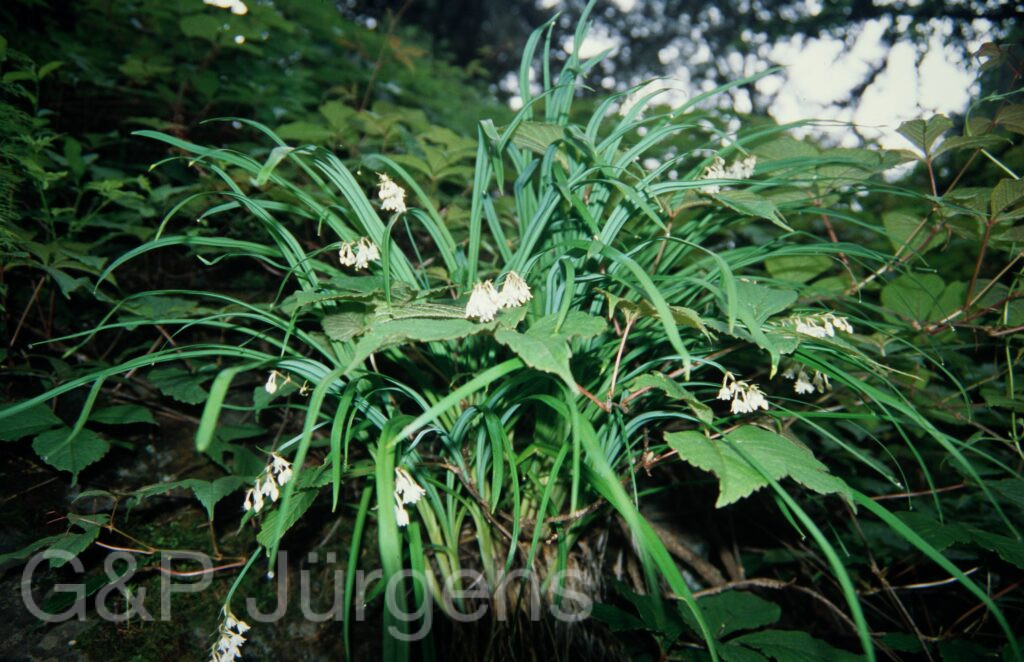
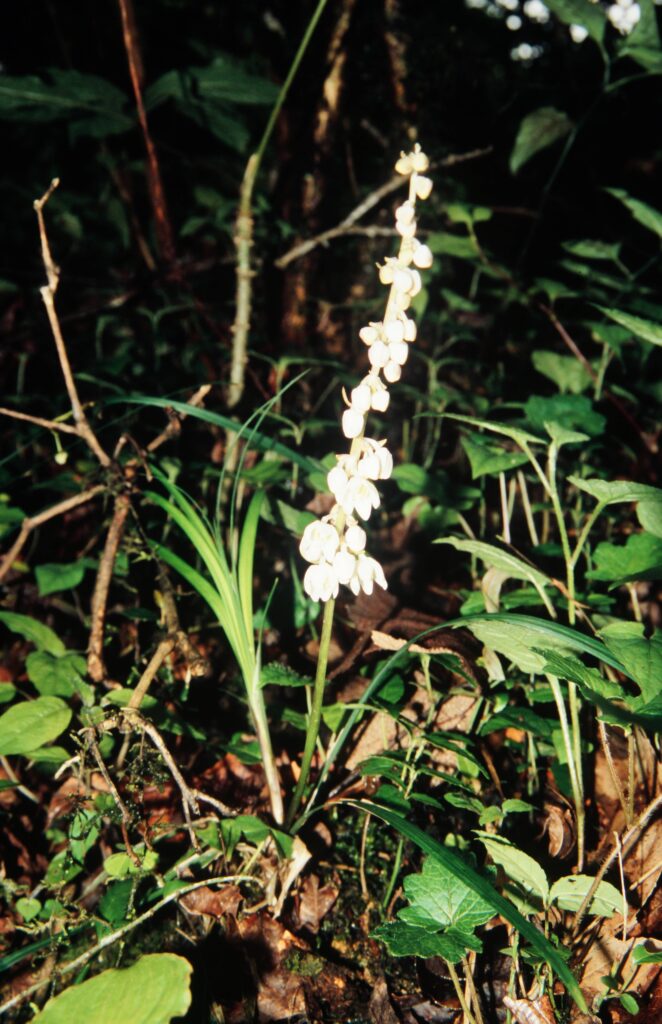
Theropogon pallidus is the sole species of its genus, a rhizomatous woodland herb distributed along the Himalaya from Nepal through northern India, Bhutan and south-western China into Myanmar and Thailand. GBIF lists some 264 occurrences concentrated in Nepal, China, India and Bhutan, with outliers in Myanmar and Thailand. It grows in shaded, humus-rich soils of temperate broad-leaved and mixed forest, on mossy banks, ravine sides and beneath shrubbery, broadly between about 1800 and 3000 m. The accompanying images span its range, from Bhutan at Wangdi (2250 m, June) and West Nepal at Sepka (2760 m, July) to West Bengal at Tolung (2200 m, May), illustrating its early-summer flowering across the mid-montane forest belt.

The plant arises from a short, creeping rhizome and forms tufts of narrowly linear, grass-like basal leaves that are channelled, arching and somewhat fleshy. The flowering scape is erect and leafless, bearing a lax, secund raceme of pendulous, bell-shaped flowers; each flower is subtended by a membranous bract and hangs on a slender, jointed pedicel. The perianth is white to pale pink, the six tepals fused below into a campanulate tube with recurved lobes, enclosing six stamens with short filaments. The ovary is superior and trilocular, maturing into a globose, fleshy berry that ripens red, containing few rounded seeds.

Theropogon is a monotypic genus of the Asparagaceae (formerly Convallariaceae or Liliaceae sensu lato), morphologically intermediate between Ophiopogon and Convallaria and allied to the lily-of-the-valley group by its nodding campanulate flowers and berry fruit. Its disjunct, narrowly montane distribution makes it of biogeographic interest as a relict of Sino-Himalayan forest flora. The species is locally frequent and faces no broad conservation concern, though it depends on intact shaded forest understorey.

Author: (Wall. ex Kunth) Maxim. · Sources: POWO (Kew), GBIF, Flora of China, Flora of Bhutan, An Annotated Checklist of the Flowering Plants of Nepal, Genera of Convallariaceae