Tag:

Subalpine (2500-3500 m)

(Blume) Cogn.

Bhutan2012 476
Bhutan Wangdi, 2500m September
Bhutan2015 63
Bhutan Wangdi, 2500m September
Bh09 229 P385
Bhutan Wangdi, 1600m June

Description

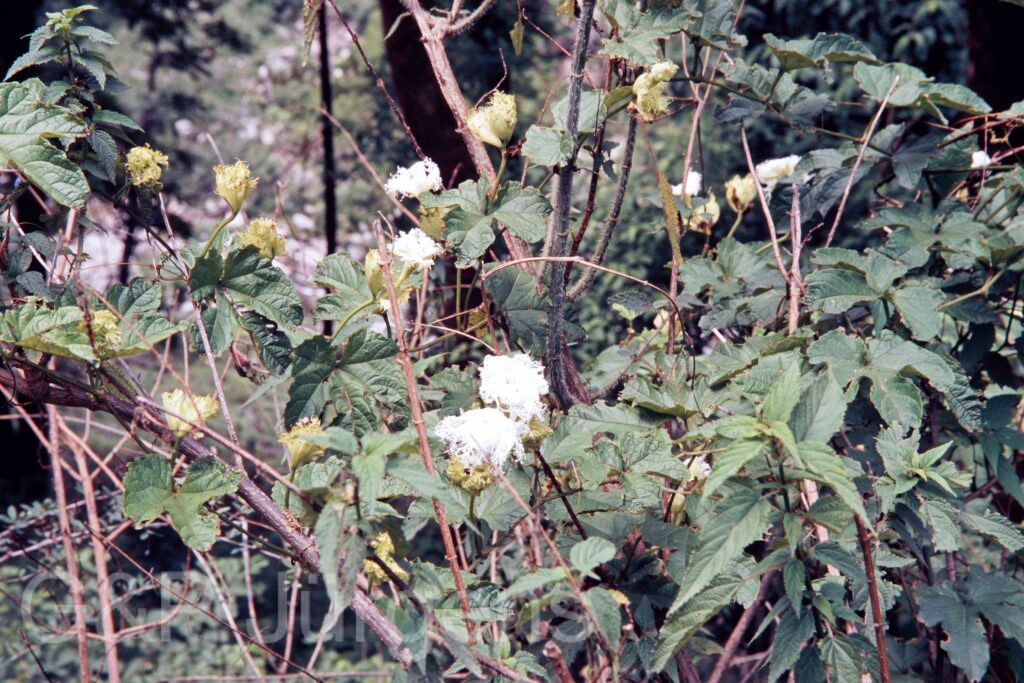
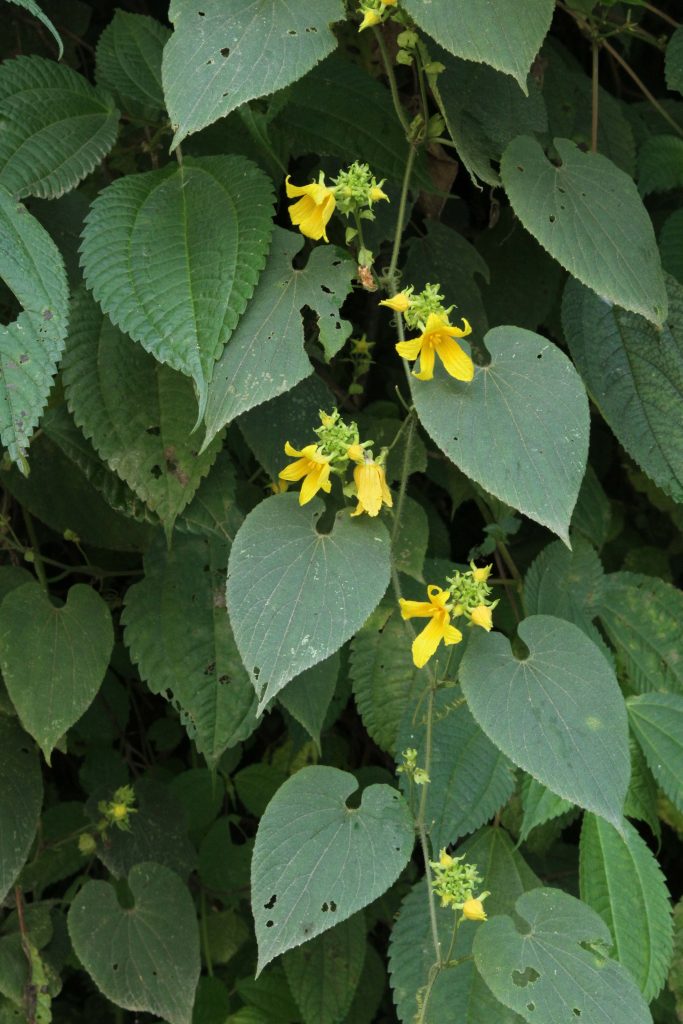
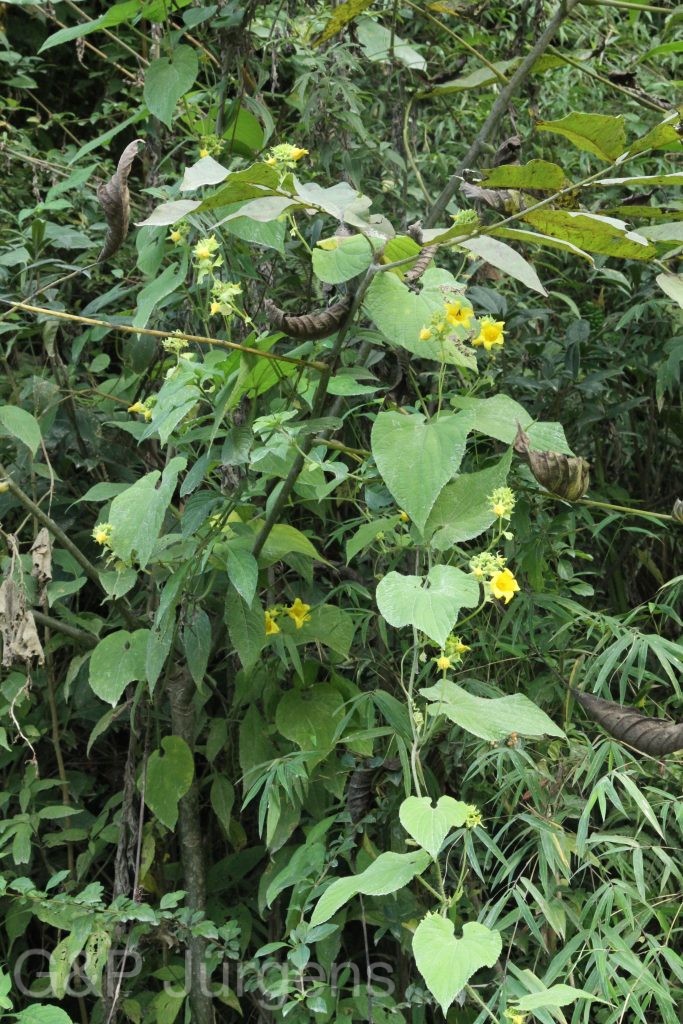
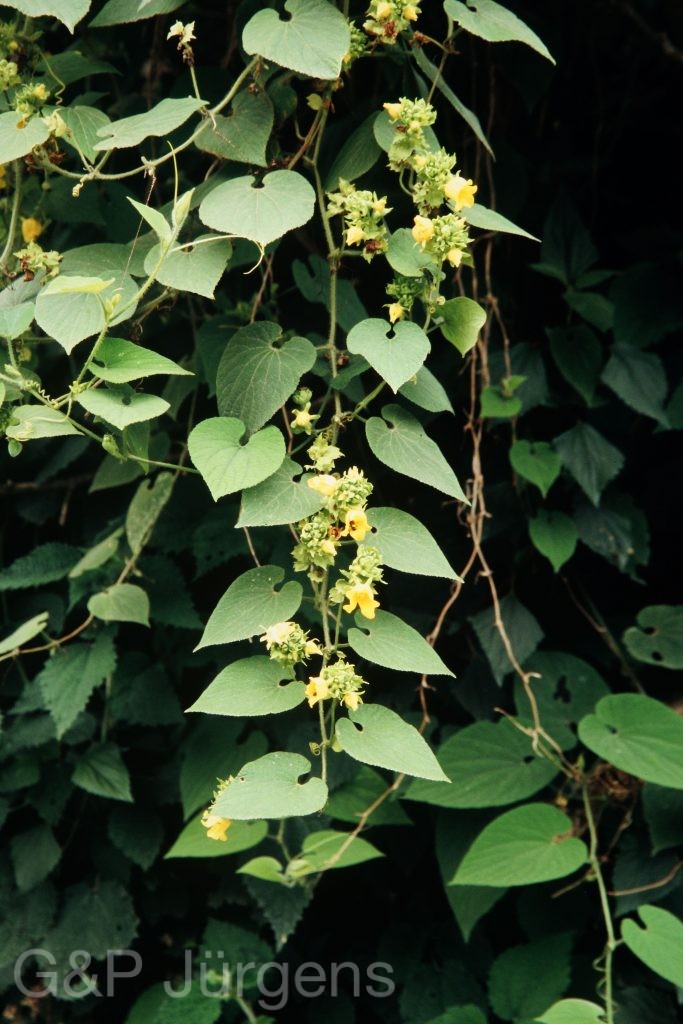
Thladiantha cordifolia is a climbing cucurbit distributed across the Sino-Himalayan and Indomalayan region, from Nepal, India, Bhutan and Bangladesh through Myanmar, Thailand, Vietnam, Laos and Malaysia into southern China, Indonesia and the Philippines; cultivated and casual records (ES, AU, JP, RO, DE, HU) inflate its GBIF country list, which rests on about 1,084 occurrences. The plants shown come from western Bhutan near Wangdue Phodrang, recorded at 1,600 m in June and 2,500 m in September, illustrating its altitudinal spread. It is a vine of forest margins, thickets, hedgerows and disturbed slopes in warm-temperate to subtropical country, typically between about 1,000 and 2,800 m, scrambling over shrubs and into the lower canopy.

It is a herbaceous to somewhat woody perennial climber arising from a tuberous rootstock, the stems angular and hispid and bearing simple or two-branched tendrils opposite the leaves. The leaves are cordate-ovate with a deeply cordate base, an acuminate apex and a denticulate margin, scabrid on both surfaces. The plant is dioecious; the male flowers are borne in axillary racemes and the females usually solitary, both yellow and campanulate with five-lobed corollas, the male flowers with the reduced stamen complement typical of the genus and the female with an inferior ovary. The fruit is an ovoid to oblong fleshy berry, often longitudinally ribbed and red at maturity, containing numerous flattened seeds.

Thladiantha is an Asian genus of the tribe Sicyoeae distinguished by its tuberous habit, dioecy and characteristic stamen arrangement. Its tubers and fruits have local food and medicinal uses. As a vigorous and widespread plant of secondary vegetation, T. cordifolia is not of conservation concern; indeed several Thladiantha species behave as garden escapes in temperate regions.

Author: (Blume) Cogn. · Sources: POWO (Kew), Flora of China Vol. 19, Flora of Bhutan Vol. 2, GBIF, Jeffrey: A review of the Cucurbitaceae
Wall. ex. D.Don.

Bhutan2012 363
Bhutan Wangdi 2500m, September

Description

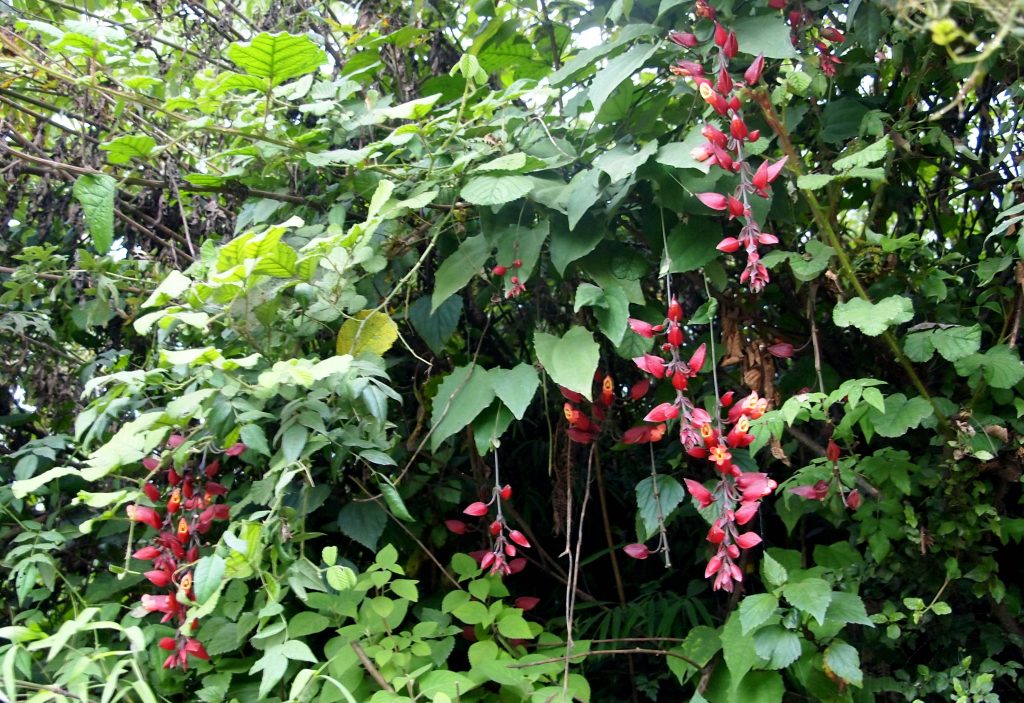
Thunbergia coccinea Wall. ex D.Don is a vigorous woody climber of the eastern Himalaya and Indo-Burmese region, with GBIF documenting nearly 692 occurrences across India, China, Nepal, Bhutan, Myanmar, Thailand, Laos, Sri Lanka and Bangladesh, alongside numerous cultivated records in tropical and subtropical gardens worldwide. In the wild it scrambles through the canopy of moist broadleaved and subtropical forest, along streamsides and forest margins, flowering in the post-monsoon months. The illustrated plant from Wangdi (Wangdue Phodrang) in western Bhutan at 2500 m in September captures it at the upper edge of its altitudinal range, twining over shrubs and trees in humid hill forest.

The species is a perennial liana with twining stems and opposite, petiolate leaves that are ovate to cordate, acuminate, with toothed to entire margins and palmate basal venation. The flowers hang in long, pendulous, many-flowered racemes; each scarlet to brick-red corolla is tubular and curved with a slightly oblique, shortly five-lobed limb, subtended by paired bracteoles, and contains four didynamous stamens. The fruit is the characteristic acanthaceous capsule, beaked and explosively dehiscent, ejecting a few flattened seeds borne on retinacula.

Thunbergia, sometimes segregated in Thunbergiaceae but generally placed in Acanthaceae, comprises Old World tropical climbers and shrubs, several grown ornamentally; T. coccinea is valued in horticulture for its dramatic drooping red flower chains. Its bird- and insect-visited blooms point to a mixed pollination syndrome. The species is widespread and not of conservation concern, though as a forest liana it depends on the persistence of intact moist montane and submontane woodland.

Author: Wall. ex. D.Don. · Sources: POWO (Kew), GBIF, Flora of Bhutan, Flora of China, Acanthaceae of the Indian Subcontinent, Bremekamp studies on Thunbergia

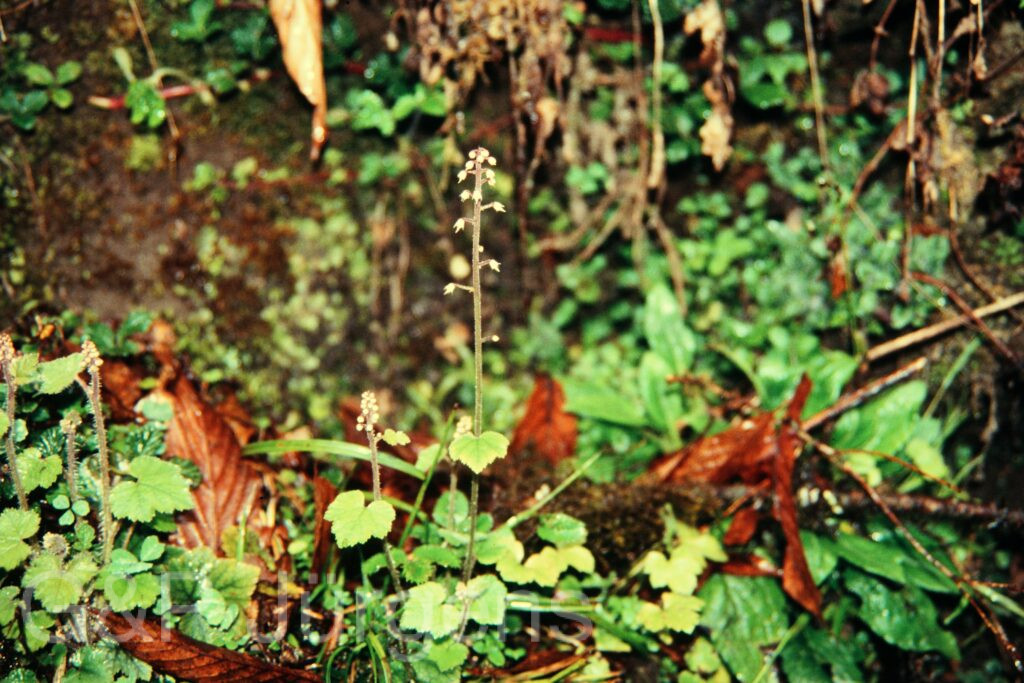
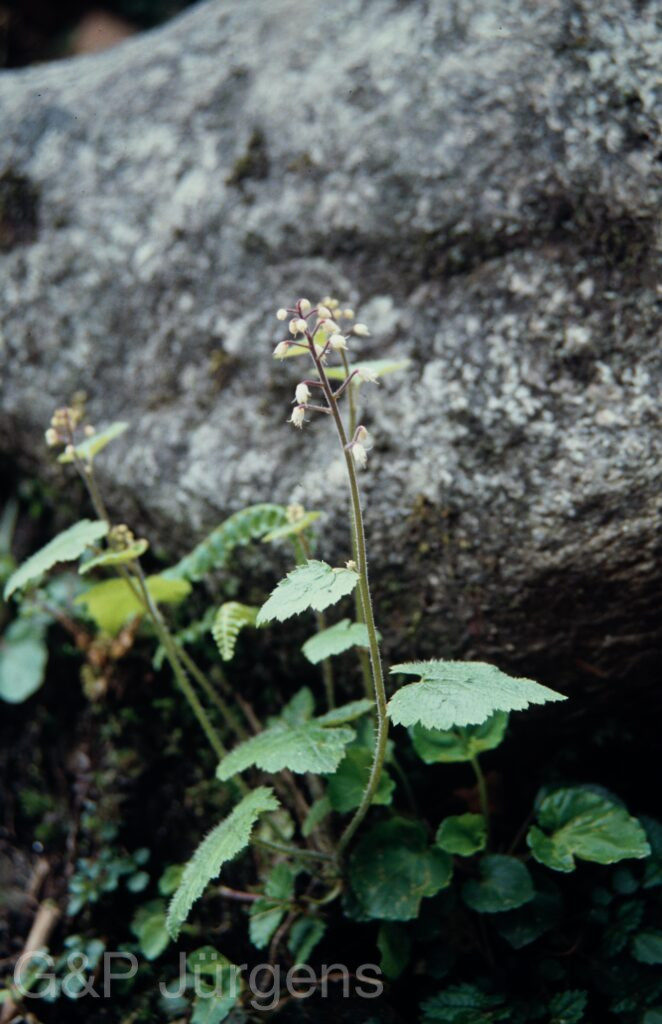
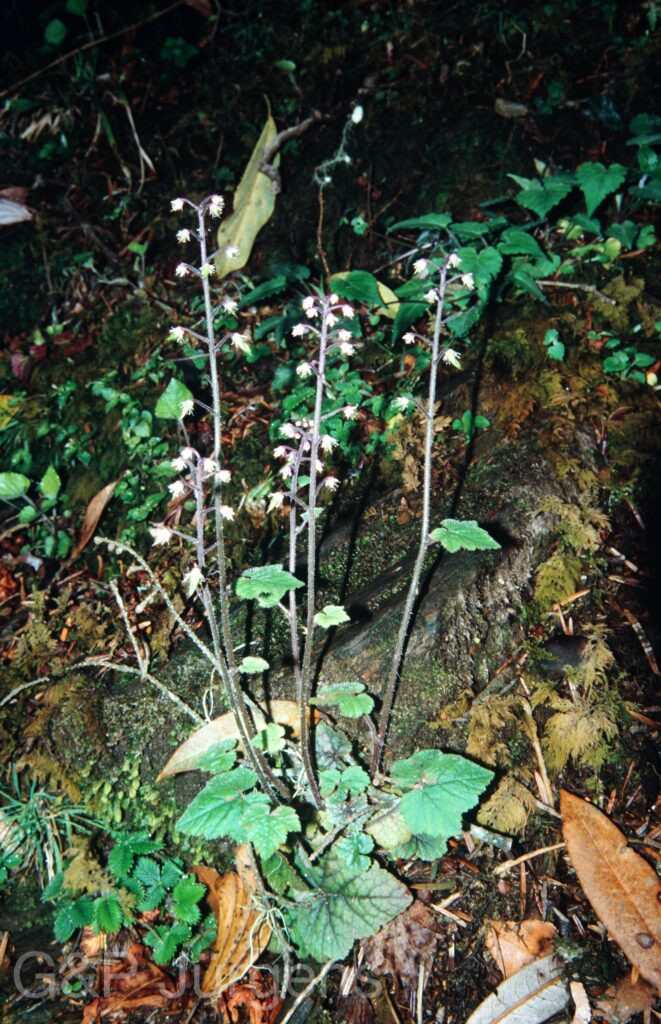
D. Don

Bhutan2014 588
Bhutan Phobjika 2810m, May
Nepal 97 128 G222
Nepal Mewa-Khole 2500m April
Nepal 1994 194 ergebnis
Ost-Nepal Mewa-Khola 2100m April
Nepal 2001 252 ergebnis ergebnis
Nepal (Gorkha) Niuli Kharka 2700m, May

Description

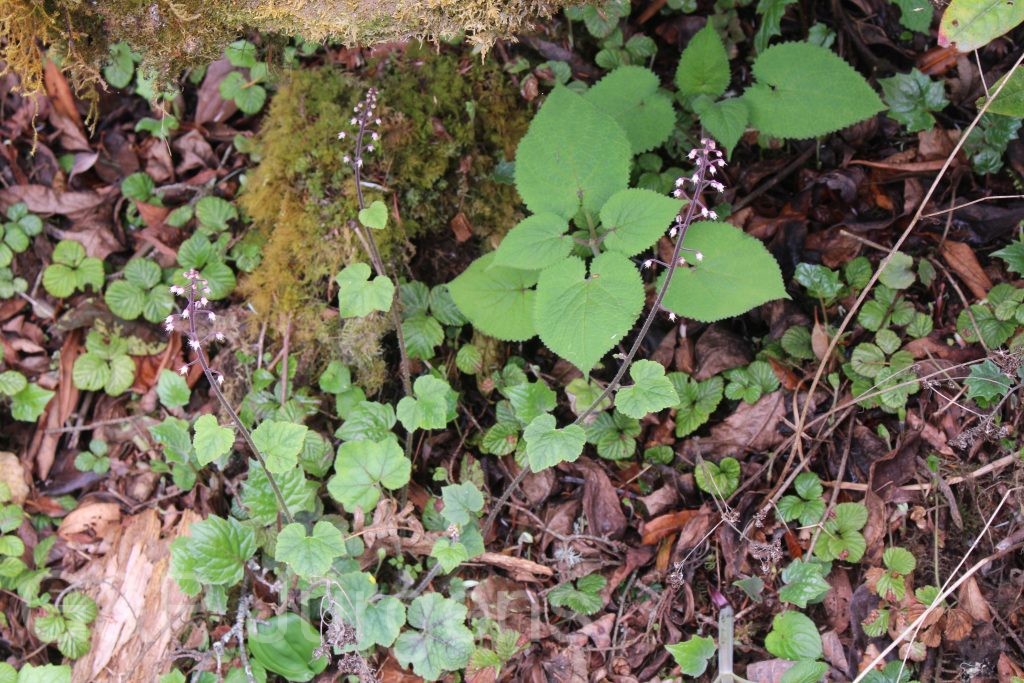
Tiarella polyphylla is a perennial herb with a wide East Asian and Himalayan distribution, recorded from China, Japan, Korea, Taiwan, Nepal, India, Bhutan and Myanmar, and reliably documented by over 4300 GBIF occurrences. It is a plant of cool, shaded, humid forests, growing in moist humus-rich soil along streamsides, on mossy banks and in the understorey of broadleaved and mixed forest, generally between about 1500 and 3500 m. The photographed populations span Bhutan (Phobjika, 2810 m, May) and eastern and central Nepal (Mewa Khola 2100-2500 m, and Gorkha at Niuli Kharka 2700 m), flowering through the spring months.

The plant grows from a short rhizome and produces a basal rosette of long-petioled leaves; the lamina is cordate-orbicular, shallowly three- to five-lobed, with toothed margins and scattered hairs. The slender, erect flowering stem bears a few reduced cauline leaves and terminates in a narrow, elongate raceme of small flowers. Each flower has five white to greenish, narrow petals and conspicuously exserted stamens, giving the inflorescence a delicate, foamy appearance. The fruit is a distinctive two-valved capsule with markedly unequal valves, splitting to release the small seeds.

Tiarella is a small genus of the Saxifragaceae, and T. polyphylla is the principal Asian representative, the remaining species being North American; this disjunction is a classic example of the eastern Asian-North American floristic link. The plant is shade-tolerant and clonal, often forming loose colonies on forest floors. Though not threatened across its broad range, it depends on intact moist forest and is locally sensitive to logging and disturbance of streamside habitats.

Author: D. Don · Sources: POWO (Kew), GBIF, Flora of China, Flora of Bhutan, Saxifragaceae monograph

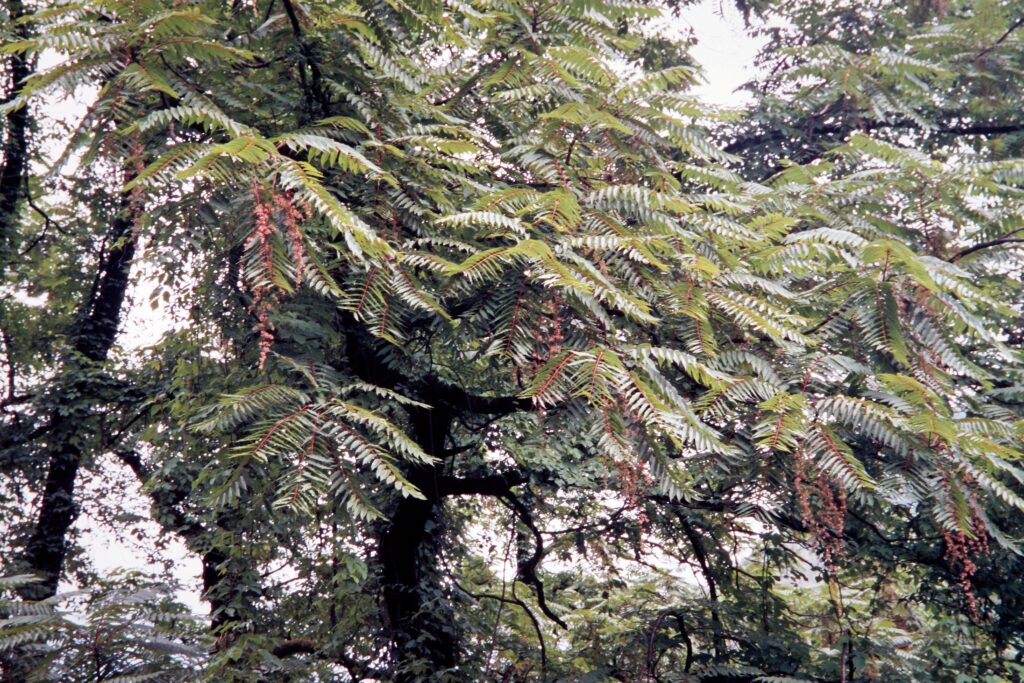
(L.) Kuntze

Garh 07 283 ergebnis
Indi Garhwal Belak Khal 2600m, June

Description

Toxicodendron succedaneum ((L.) Kuntze), the wax tree or Japanese wax tree, is a deciduous tree of the Anacardiaceae native across eastern and southern Asia, ranging from the Himalaya (India, Nepal) through China, Taiwan, Korea and Japan to Southeast Asia (Myanmar, Thailand, Vietnam, Cambodia, Malaysia, Indonesia). With around 6,400 GBIF occurrences, it is well documented, and the species has also become naturalised and locally invasive in Australia, New Zealand and elsewhere. In the Himalaya it grows in temperate broad-leaved forest, on open slopes and forest edges, ascending to roughly 2,600 m, as shown by the Garhwal record from Belak Khal at 2,600 m in June.

The plant is a small to medium-sized tree reaching 8–10 m, with smooth grey bark and a spreading crown that turns brilliant scarlet and orange in autumn. The leaves are alternate and imparipinnate, 25–35 cm long, with 7–15 lanceolate to oblong, entire, glabrous leaflets that are glaucous beneath and taper to an acuminate apex. The small, yellowish-green, functionally unisexual flowers are borne in axillary panicles, the species being dioecious. The fruit is a flattened, asymmetrical, pale brown drupe whose mesocarp is rich in vegetable wax.

As in other members of Toxicodendron, the resinous sap contains urushiol-type allergens that can cause severe contact dermatitis, and the plant should be handled with caution. Economically it has long been cultivated in Japan and China for the wax ("sumac wax") extracted from the fruits, used in candles, polishes and cosmetics. The genus was formerly merged into Rhus, but is now consistently segregated on the basis of its irritant sap and pendulous, papery-fruited inflorescences. The species is abundant and of no conservation concern.

Author: (L.) Kuntze · Sources: POWO (Kew), Flora of Nepal, GBIF, Flora of China Vol. 11, Min & Barfod: Anacardiaceae in Flora of China (2008)

(L.) Lehm.

Nepal 99 565 ergebnis
West-Nepal Hurikot 2700m, June
Nepal 99 564 ergebnis
West-Nepal Hurikot 2700m, June
Nepal 99 910 ergebnis
West-Nepal Hanke 2700m, July

Description

Trichodesma indicum (L.) Lehm. is a herb of the borage family widespread across the Old World tropics and subtropics, native through India, Pakistan, Nepal, Sri Lanka and Myanmar and extending to Southeast Asia, Africa and Australia, with over 1150 GBIF occurrences. It is a weedy plant of open dry ground, fallow fields, roadsides, wastelands and gravelly slopes, typically at low elevations but ascending in the inner Himalayan valleys. In western Nepal it was recorded at Hurikot at 2700 m in June and at nearby Hanke at the same elevation in July, an unusually high station reflecting warm, dry rain-shadow habitats in the upper Karnali region.

It is an erect, branching annual covered throughout with stiff, bulbous-based bristly hairs giving a harsh, scabrid texture. The leaves are mostly opposite below and alternate above, sessile, oblong to lanceolate, the margins entire and undersurface hispid. The flowers are solitary or in lax leafy cymes, nodding on recurved pedicels; the calyx is deeply lobed and sagittate at the base, and the pale blue to bluish-white corolla is rotate with a short tube and a twisted, beaked cone of connivent anthers projecting from the throat, a hallmark of the genus. The fruit separates into four ovoid, tuberculate nutlets enclosed by the enlarged, persistent calyx.

Trichodesma is distinguished within tribe Boragineae by its protruding, spirally twisted anther cone, and T. indicum is the most widely distributed species, much used in traditional South Asian medicine. Its bristly indumentum and burr-like calyx-enclosed nutlets aid epizoochorous dispersal, while its ruderal ecology has carried it far beyond its native range as an introduced weed. Common and adaptable, it is of no conservation concern.

Author: (L.) Lehm. · Sources: POWO (Kew), GBIF, Flora of China, Flora of Pakistan, Flora of British India, Boraginaceae monograph (Kazmi revision of Trichodesma)

DC.

Garw 2005 274 ergebnis
India Garhwal Kunol 2550m, September

Description

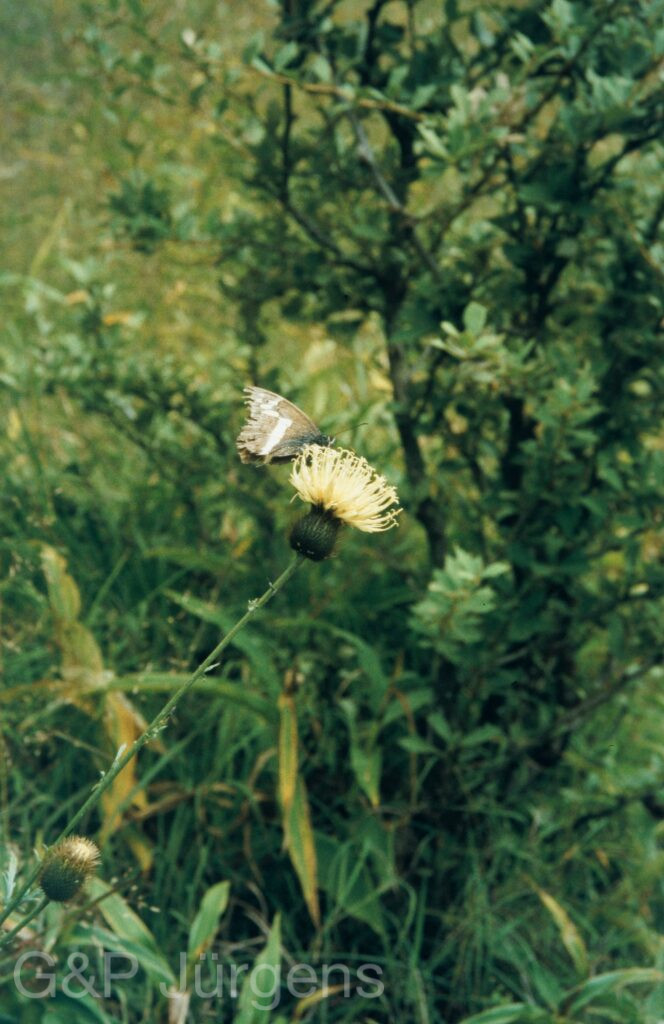
Tricholepis elongata is a thistle-like composite of the Himalaya and adjacent regions, with roughly 120 GBIF occurrences recorded chiefly from India, Nepal and Pakistan. It is a plant of warm to cool temperate slopes, favouring open, sunny, often dry and somewhat rocky or grassy ground, scrub margins, banks and disturbed sites in the montane zone. The specimen photographed at Kunol in Garhwal, India, at about 2550 m in September was recorded toward the close of the monsoon, the late-summer to autumn flowering period when many montane thistle relatives in this elevational band come into bloom.

It is an erect, branched perennial or biennial herb, the stems slender and elongate as the epithet suggests, bearing alternate leaves that are linear to lanceolate, entire to toothed or somewhat divided, and frequently roughened. The capitula are solitary or few at the branch tips and are homogamous, composed wholly of slender tubular disc florets, pink to purple in colour. The involucral bracts (phyllaries) are numerous, narrow and tapering, often with finely fringed or hair-tipped margins, a feature reflected in the generic name. The fruit is a small cypsela crowned by a pappus of fine bristles or scales that promotes wind dispersal.

Tricholepis belongs to tribe Cardueae, the thistle tribe, and is distinguished by its finely dissected or ciliate phyllary appendages and bristly pappus. The genus is centred on the Indian subcontinent and the Himalaya. As a species of open and frequently disturbed montane habitats, T. elongata is not of conservation concern; such thistle-relatives provide nectar and pollen to a range of insect pollinators and contribute to the herbaceous flora of dry temperate slopes.

Author: DC. · Sources: POWO (Kew), GBIF, Flora of Pakistan, Hooker Flora of British India, Flora of Nepal, Susanna & Garcia-Jacas Cardueae systematics

Lour.

Garh 07 292 ergebnis
India Garhwal, Belak Khal 2750m, June

Description

Trichosanthes tricuspidata is a climbing cucurbit widely distributed through tropical and subtropical Asia, from the Himalaya (India, Nepal, Bhutan) across China, Myanmar, Thailand and Indochina to Sri Lanka, Malesia, the Philippines and northern Australia. It is a liana of forest margins, thickets, secondary scrub and hedgerows, scrambling over shrubs and trees by means of tendrils. Though most frequent in the lowlands and lower hills, it ascends well into the temperate zone; the plant recorded at Belak Khal in Garhwal at 2,750 m in June marks an upper-elevation occurrence in the western Himalaya, flowering with the early summer warmth.

The plant is a perennial herbaceous to woody climber with branched tendrils and a tuberous rootstock. The leaves are alternate, broadly ovate to orbicular in outline and palmately three- to five-lobed, the lobes often again toothed or cuspidate, cordate at the base. The plant is dioecious; the flowers are white with the petals fringed into the long, lacy filaments characteristic of the genus, the male flowers in racemes and the females solitary. The fruit is a globose to ovoid berry that ripens bright orange-red, marked with pale stripes when young, containing flattened seeds embedded in pulp.

The genus Trichosanthes, distinguished by its delicately fimbriate corolla lobes, is a large Indo-Pacific group of considerable ethnobotanical importance. Trichosanthes tricuspidata, described by Loureiro, is well known in traditional medicine, its roots and fruit used in Ayurvedic and folk preparations despite the toxic, purgative nature of the fruit pulp. Widespread and ecologically versatile, ranging from tropical lowland to temperate montane forest, the species is common and is not regarded as threatened.

Author: Lour. · Sources: POWO (Kew), Flora of China Vol. 19, Flora of Bhutan Vol. 2, GBIF, de Boer & Thulin: Trichosanthes revision

Wall. ex D.Don

Nepal 99 141 ergebnis
West-Nepal South of Rara-Lake 3800m, June
Nepal 2001 308 ergebnis ergebnis
Nepal (Gorkha) Kharka 3100m, May

Description

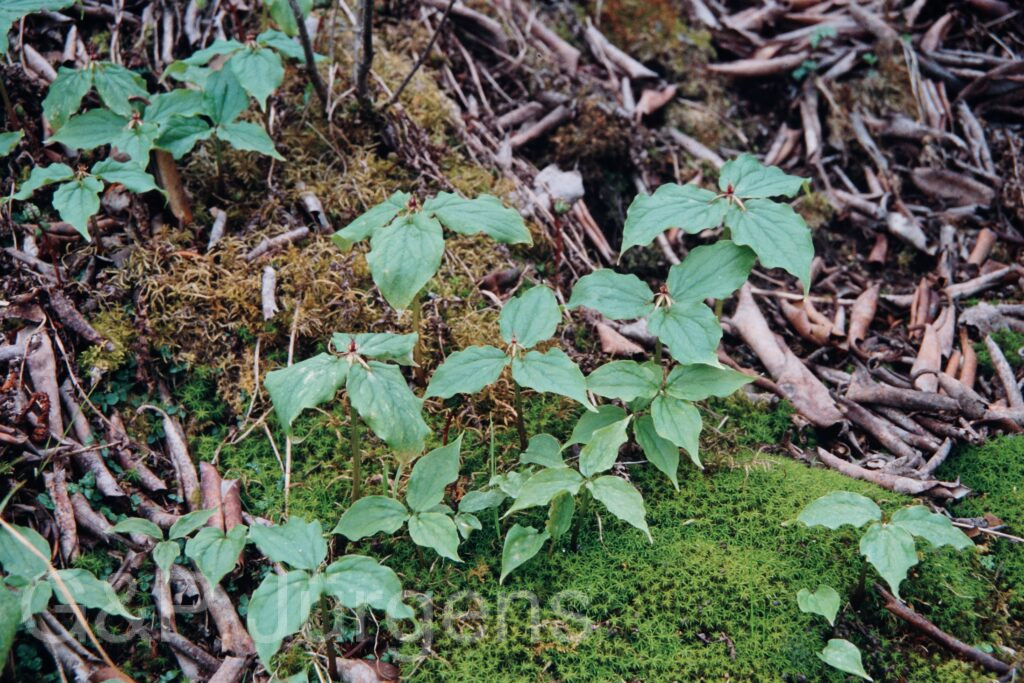
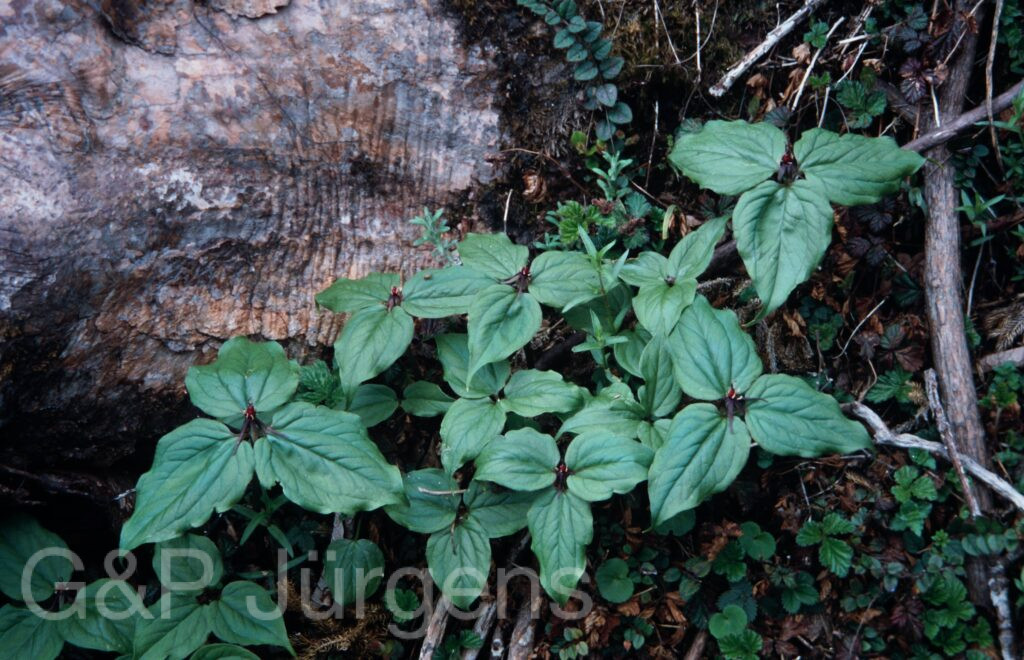
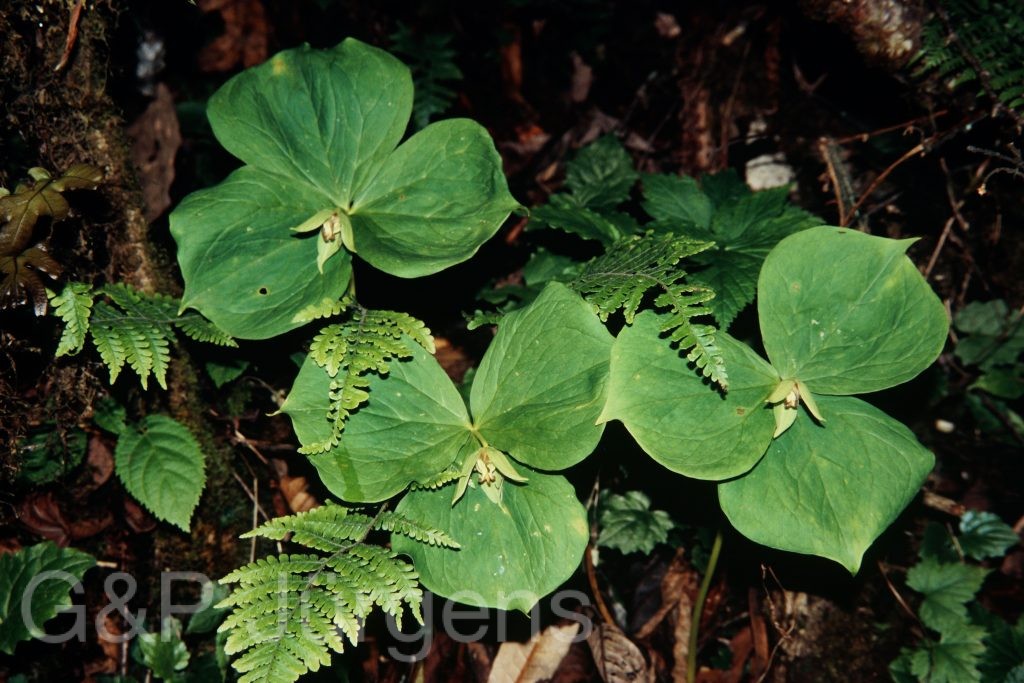
Trillium govanianum is a rhizomatous perennial herb of the family Melanthiaceae and the sole representative of the otherwise North American and East Asian genus Trillium in the Himalaya. GBIF data confirm a core distribution through Pakistan, India and Nepal, extending into Bhutan and the western fringe of China. It is a plant of moist, shaded temperate and subalpine forest, growing on humus-rich soils beneath Abies, Betula and rhododendron, and in damp alpine scrub and meadow margins, typically between about 2,800 and 4,000 m. The collections illustrated from south of Rara Lake in west Nepal at 3,800 m in June and from Kharka in Gorkha at 3,100 m in May are characteristic of this shaded, high-montane habitat.

The species arises from a short, thick, creeping rhizome and produces a single erect stem 10–30 cm tall bearing the diagnostic whorl of three broadly ovate, net-veined, sessile leaves at its summit. From the centre of this whorl a solitary, sessile or shortly stalked flower is borne; it is small and dark, with three narrow green sepals and three slender petals that are deep maroon to purplish-brown, accompanied by six stamens and a three-loculed ovary. The fruit is a fleshy, reddish berry-like capsule containing several seeds, in contrast to the dry capsules of many congeners.

The presence of a single Trillium in the Himalaya is of considerable biogeographic interest, representing a disjunct outlier of a genus otherwise centred on temperate North America and Japan. The species, locally known as nag chhatri, has become the focus of intense and unsustainable harvesting for its rhizome, which is traded for purported steroidal saponin content. This pressure, combined with slow growth and a narrow ecological niche, has raised serious conservation concern, and the plant is now regarded as threatened across much of its range.

Author: Wall. ex D.Don · Sources: POWO (Kew), GBIF, Flora of Nepal, Flora of Pakistan, Annotated Checklist of the Flowering Plants of Nepal, Farmer & Schilling: Phylogenetics of Trillium

Maxim.

Bh2008 35 P57
Bhutan Doch-La, 3000m April
Bh09 212 G355
Bhutan Paro, 2400m June

Description

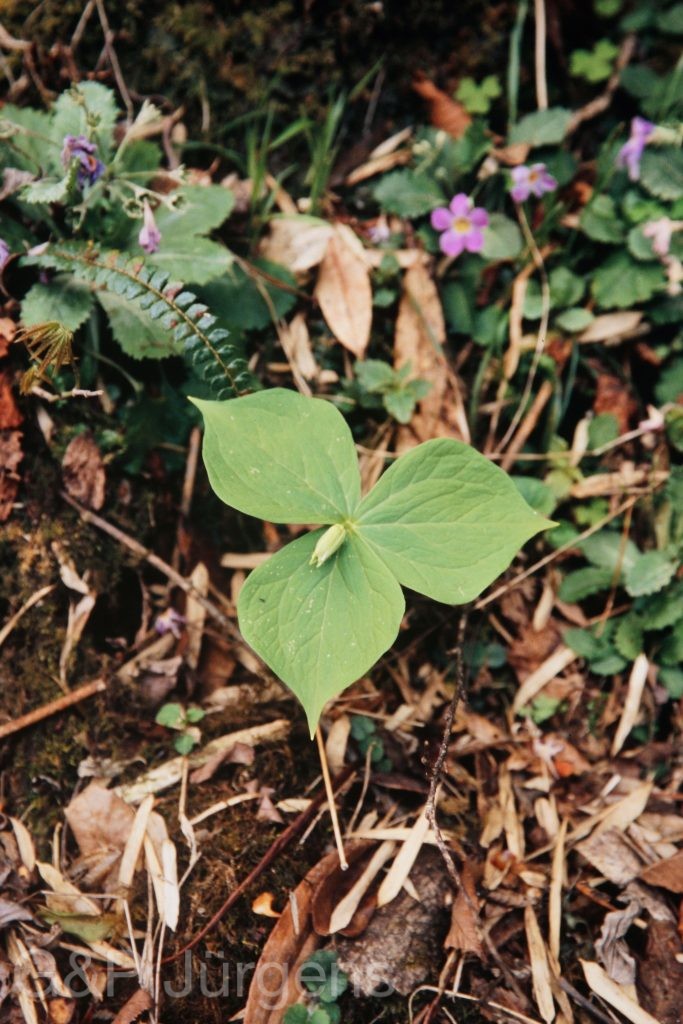
Trillium tschonoskii is a wide-ranging woodland herb of temperate East and South Asia, distributed from Japan, Korea and Taiwan through eastern and central China and into the Himalaya, reaching India, Bhutan and Nepal, with records also from the Russian Far East. With more than two thousand GBIF occurrences it is by far the most widespread Asian trillium, though it thins markedly toward its western Himalayan limit. It is a plant of cool, shaded, humus-rich broadleaved and conifer forest, favouring moist slopes and stream banks, generally between about 2300 and 3600 m in the Himalaya. The Bhutanese material illustrated, from Doch-La at 3000 m in April and from Paro at 2400 m in June, spans the species' flowering season as it tracks elevation, emerging soon after snowmelt in the deep shade of the forest floor.

The plant is a glabrous perennial arising from a short, thick, horizontal rhizome, producing a single erect stem that bears at its summit a single whorl of three broadly rhombic to ovate, net-veined, sessile or short-stalked leaves. Above this whorl a solitary flower is borne on a short erect pedicel. The flower is trimerous, with three green, lanceolate sepals and three white (sometimes ageing pinkish) ovate petals; six stamens with prominent anthers surround a superior, three-locular ovary topped by three recurved stigmas. The fruit is a fleshy, ovoid, reddish to dark berry-like capsule containing numerous seeds, each bearing an oily elaiosome that promotes dispersal by ants.

Trillium, now placed in the Melanthiaceae, is a classic component of the temperate deciduous forest flora of the Northern Hemisphere, and T. tschonoskii is the principal Asian representative reaching the Himalaya, exemplifying the floristic links between East Asian and Sino-Himalayan woodlands. Its slow growth, dependence on undisturbed forest humus and ant-mediated seed dispersal make it sensitive to habitat disturbance, and like many trilliums it has horticultural appeal and some traditional medicinal use of the rhizome, which can drive local collection. Although broadly distributed and not globally threatened, its peripheral Himalayan populations warrant monitoring as forest cover and microclimate change.

Author: Maxim. · Sources: POWO (Kew), GBIF, Flora of China Vol. 24, Flora of Bhutan Vol. 3 Part 1, Flora of Nepal, Trillium (Frederick W. Case and Roberta B. Case)

Wall.

Bh09 321 G527
Bhutan Jakar 3200m, June
Sikkim2003 377 G529
Sikkim Tista valley 3400m August

Description

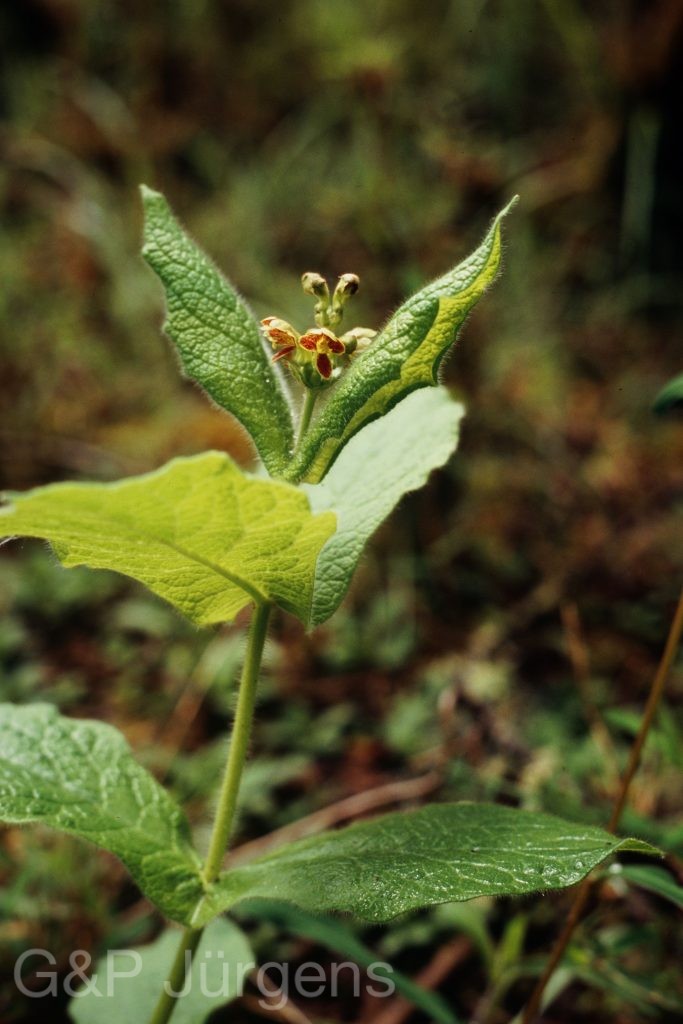
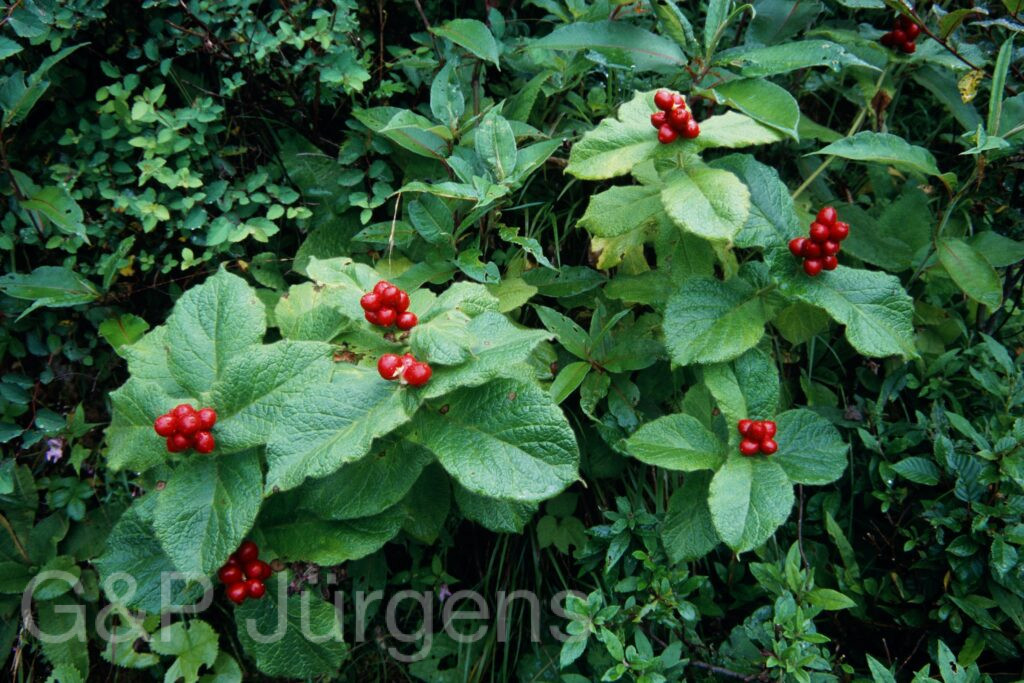
Triosteum himalayanum is a Sino-Himalayan perennial herb distributed across China, Nepal, Bhutan, Sikkim and northern India, with GBIF aggregating around 990 occurrences. It is characteristic of the upper temperate to subalpine forest belt, recorded here from Jakar in Bhutan at 3200 m in June and the Tista valley in Sikkim at 3400 m in August. The species grows in moist shaded forest, woodland margins, scrub and tall-herb communities along streams and on cool, humus-rich slopes, typically between roughly 2500 and 4000 m, where it forms part of the shade-tolerant understorey flora.

It is an erect, softly hairy herbaceous perennial 0.4-1 m tall arising from a stout rhizome, the stems unbranched and glandular-pubescent. The leaves are opposite, large, broadly obovate to elliptic, often shortly connate at the base around the stem (perfoliate to subconnate), entire to shallowly lobed and softly hairy on both surfaces. Small tubular flowers are clustered in dense axillary and terminal verticels; the corolla is dull purplish to greenish-yellow, weakly two-lipped, and the calyx bears persistent, leafy, ciliate lobes. The most conspicuous feature is the fruit, a fleshy, bright red, bristly-hairy drupe crowned by the persistent calyx and containing three bony pyrenes.

Triosteum (horse-gentian) is a small, disjunct genus of about six species in eastern Asia and North America, now placed within an enlarged Caprifoliaceae; this striking amphi-Pacific distribution makes it a classic example of the eastern-Asian-North-American biogeographic link. T. himalayanum is widespread and locally common within its montane range and is not of conservation concern; its showy red drupes are dispersed by birds, and the rhizome has a place in regional herbal traditions.

Author: Wall. · Sources: POWO (Kew), GBIF, Flora of China, Flora of Bhutan, Flora of British India (Hooker), Gould & Donoghue revision of Triosteum (Caprifoliaceae)