Tag:

Subtropical (<1500 m)

Hook.f.

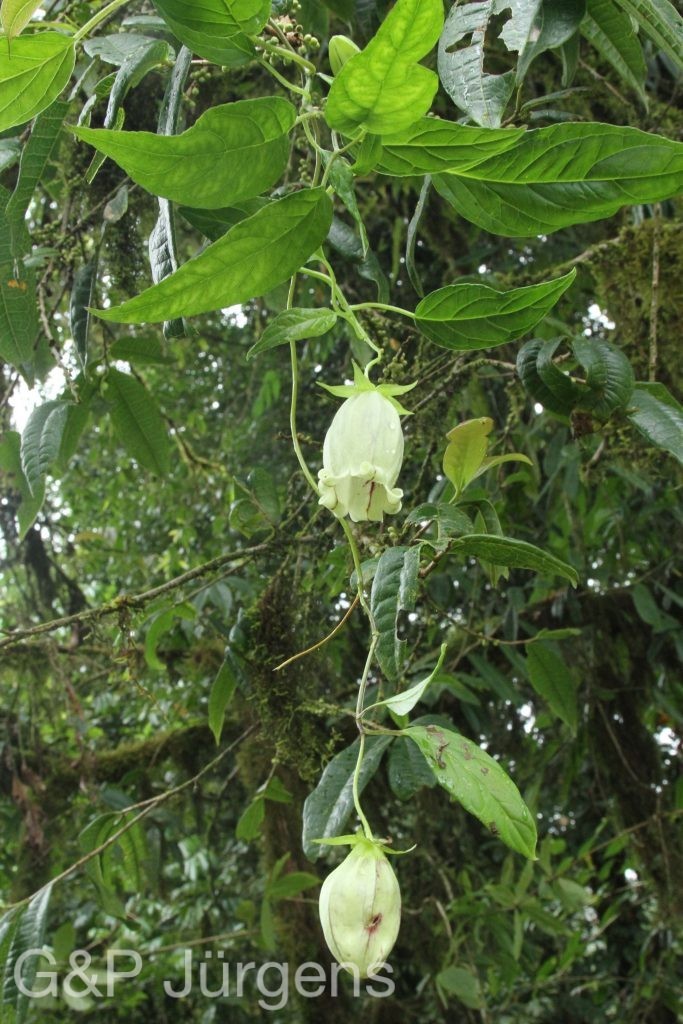
Bhutan2012 672
Bhutan Tserang 1000m, September
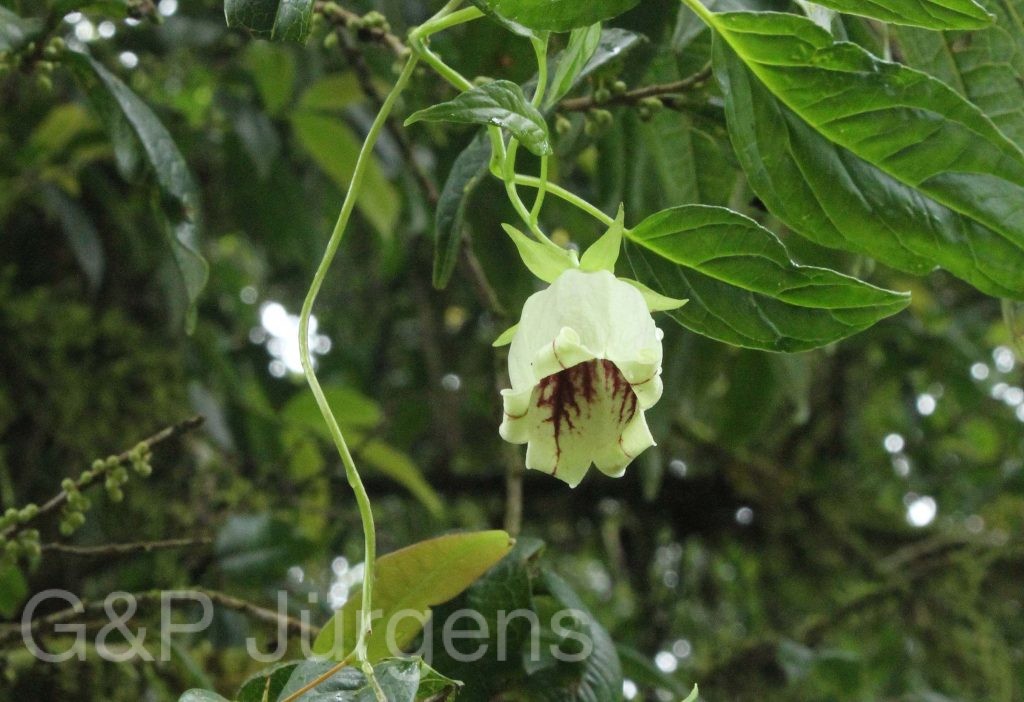
Bhutan2012 675
Bhutan Tserang 1000m, September

Description

Codonopsis inflata is a herbaceous twining perennial of the eastern and central Himalaya, recorded from India, Nepal, Bhutan, China and Myanmar. It grows in forest margins, thickets, scrub and among tall herbs on shaded slopes and stream banks in the subtropical to lower temperate belt, generally between about 1000 and 2500 m, scrambling over surrounding vegetation. The photographed plant comes from Tserang in Bhutan at around 1000 m, flowering in September. With around 107 georeferenced records it is a moderately documented Himalayan bellflower relative, characteristic of the humid, vegetated lower montane zone where its slender climbing stems are supported by neighbouring shrubs and herbs.

It arises from a fleshy, often swollen rootstock and produces slender, twining, glabrous stems that exude latex when cut and emit the characteristic foetid odour of the genus. The leaves are alternate or subopposite, ovate to lanceolate, with entire to shallowly toothed margins and slender petioles. The flowers are solitary and nodding on long pedicels; the calyx has five lobes adnate to the lower part of the ovary, and the corolla is broadly campanulate to somewhat inflated, pale greenish, yellowish or bluish and usually marked within by darker veins or blotches. There are five stamens, and the inferior to half-inferior ovary ripens into a capsule that dehisces to release numerous small seeds.

Codonopsis is a large Sino-Himalayan genus, several species of which are valued in traditional Chinese and Himalayan medicine, the fleshy roots (dang shen) used as tonics; C. inflata shares this ethnobotanical use. Its taxonomy is complicated by variation in corolla form and by close affinity to allied Himalayan species. As a fairly widespread plant of vegetated montane habitats it is of least conservation concern.

Author: Hook.f. · Sources: POWO (Kew), GBIF, Flora of China, Flora of Bhutan, Lammers monograph of Campanulaceae (Codonopsis)
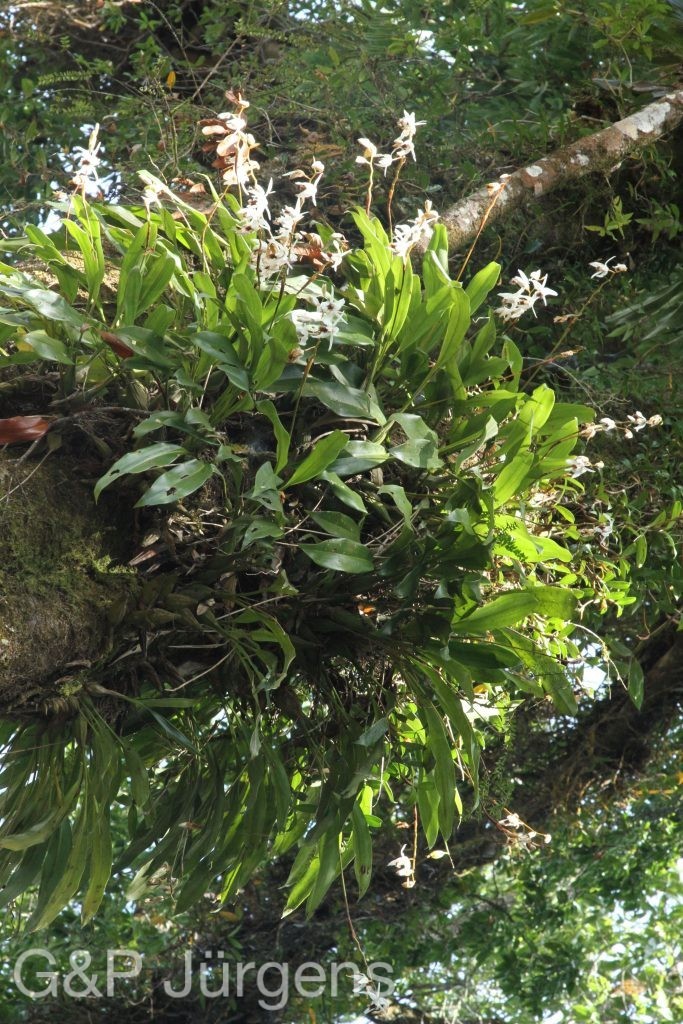
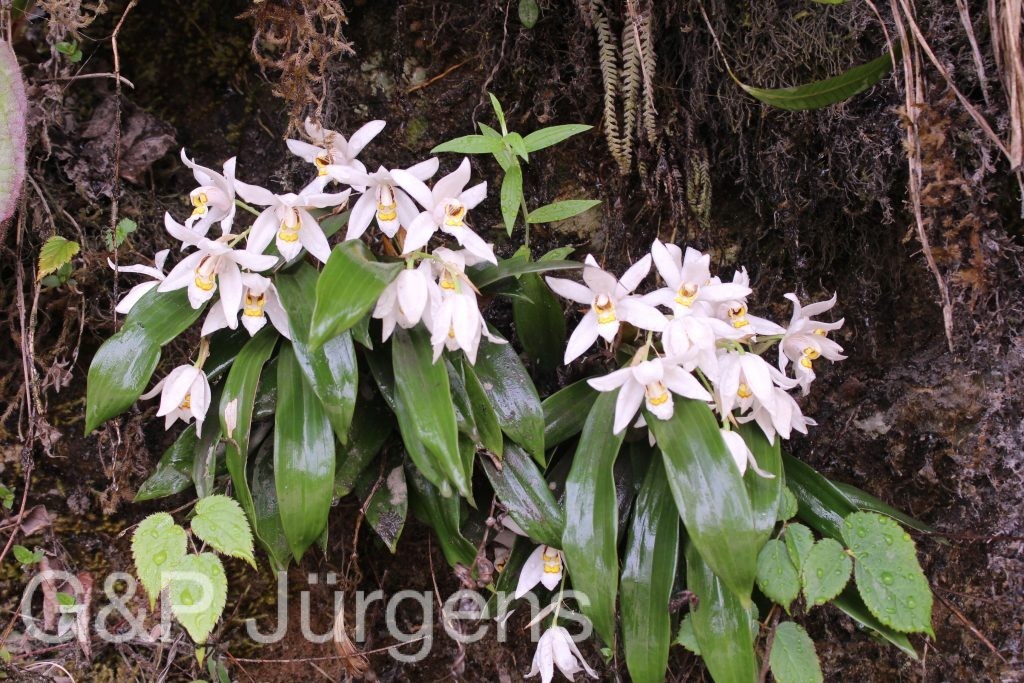
Lindl. ex Griff.

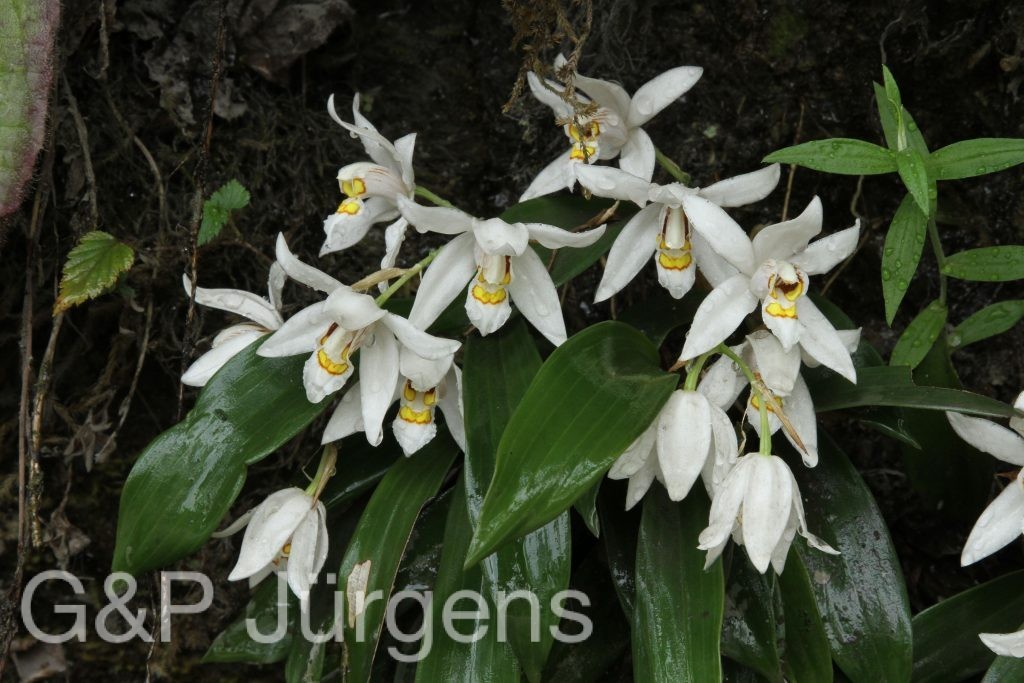
Bhutan2015 216
Bhutan Zhemgang 910m, October

Description

Coelogyne barbata is an Eastern Himalayan orchid recorded from China, north-eastern India, Bhutan, Myanmar, Bangladesh and Nepal, with GBIF documenting over a hundred occurrences across the region. It grows as an epiphyte on mossy tree trunks and large branches, and sometimes as a lithophyte on shaded, humus-covered rocks, in humid broad-leaved evergreen montane forest with abundant atmospheric moisture. The species occupies low to middle elevations of the warm-temperate belt; the photographed plant from Zhemgang in central Bhutan at about 910 m, flowering in October, exemplifies its autumn anthesis at the lower end of its altitudinal range, when many congeners are also in bloom.

The plant forms ovoid to oblong-conical pseudobulbs spaced along a stout creeping rhizome, each bearing a pair of apical leaves. The leaves are large, elliptic-lanceolate, plicate and prominently veined, narrowed to a petiole. The inflorescence is an erect to arching, several- to many-flowered raceme arising from the apex of a developing growth, the flowers opening more or less simultaneously. The flowers are showy and white, with spreading sepals and petals; the labellum is the most distinctive feature, trilobed and white marked with dark brown to blackish blotches, its disc and margins of the side lobes conspicuously fringed with long brown or blackish bristly hairs, from which the epithet derives. The fruit is a ribbed capsule.

C. barbata is placed within Coelogyne section Fuliginosae (the elata/ovalis alliance of fimbriate-lipped species), distinguished from its relatives by the heavily bearded, dark-marked labellum. Recent generic recircumscriptions of Coelogyne based on molecular phylogenetics retain the species in the genus. Attractive and readily recognised, it is collected from the wild for horticulture, which together with the clearance of mid-elevation forest constitutes the principal threat to its populations.

Author: Lindl. ex Griff. · Sources: POWO (Kew), GBIF, Flora of China, The Orchids of Bhutan (Pearce & Cribb), Coelogyne and its Allies (Clayton & Cribb)

Lindl.

Bhutan2014 17
Bhutan Sandrup 800m, May
Bhutan2014 19
Bhutan Sandrup 800m, May

Description

Coelogyne corymbosa is an epiphytic orchid widely distributed through the eastern Himalaya and adjoining Southeast Asia, native to China, India, Nepal, Bhutan, Myanmar, Thailand, Laos and Vietnam, with 424 GBIF records making it one of the better-documented Coelogyne of the region. It is a cool-growing epiphyte and lithophyte of mossy montane and cloud forest, usually between about 1800 and 3000 m, though the caption locality of Sandrup in southern Bhutan at 800 m in May reflects collection in the warmer foothill belt at the lower margin of its range; the bulk of its populations occupy higher, mist-bathed forest.

The plant forms ovoid to oblong pseudobulbs, spaced along a creeping rhizome, each topped by a pair of narrowly elliptic, plicate leaves. The inflorescence is a short, few-flowered raceme produced from the apex of the young growth. The flowers are relatively large for the plant and brilliant white, with spreading lanceolate sepals and petals; the trilobed lip is the diagnostic feature, conspicuously marked in the throat with bright orange-yellow blotches ringed in dark reddish-brown, set off by raised, fringed keels. The fruit is a ribbed capsule.

Coelogyne is a large Asian genus of tribe Arethuseae, and C. corymbosa belongs to a group of small, high-elevation, white-flowered species distinguished by their boldly ocellate lips. Cool-growing and floriferous, it is valued in cultivation, but its principal habitat in undisturbed mossy forest makes wild populations sensitive to logging and to the warming of montane climates. International trade is regulated under CITES Appendix II.

Author: Lindl. · Sources: POWO (Kew), GBIF, Flora of China, Flora of Bhutan, The Genus Coelogyne (Clayton & Cribb)

(L.) DeFilipps

Nepal 97 543 P1063
Nepal Sabha-Khola 1000m May

Description

Combretum indicum (L.) DeFilipps, the Rangoon creeper, is a vigorous woody climber of the Combretaceae native to tropical Asia and now pantropically cultivated and naturalised. Its native and introduced records span India, Nepal, Myanmar, Thailand, Indochina, southern China, Malaysia, Indonesia and the Philippines, with widespread escapes in tropical Africa, the Americas, Australia and the Pacific. It is a plant of warm lowland and foothill environments: forest margins, riverbanks, thickets and hedgerows, often in secondary and disturbed vegetation. The plant photographed along the Sabha-Khola in Nepal at 1,000 m in May reflects its occurrence in the warm sub-Himalayan zone, where it flowers in the pre-monsoon season.

The plant is a large scandent shrub or liana, climbing by means of persistent woody petiole bases that function as hooks. The leaves are opposite, elliptic to oblong, entire and shortly petiolate, with the petiole base hardening and remaining as a spinescent peg. The flowers are borne in terminal and axillary spike-like racemes and are famously colour-changing: each long-tubed, five-petalled flower opens white and turns through pink to deep red over successive days, fragrant especially at night, indicating moth pollination. The fruit is an ellipsoid, five-winged or five-angled, leathery pseudo-drupe.

Formerly placed in the genus Quisqualis, the species is universally grown as an ornamental for its showy, sweetly scented, colour-shifting inflorescences, and its seeds and leaves have a long history of use in traditional medicine, notably as an anthelmintic. This horticultural ubiquity accounts for its extensive naturalisation, and in some warm regions it behaves as an invasive, smothering native vegetation, so that its spread beyond cultivation warrants management attention.

Author: (L.) DeFilipps · Sources: POWO (Kew), GBIF, Flora of China Vol. 13, Flora of Nepal, Exell: Combretaceae (Flora Malesiana)

Edgew.

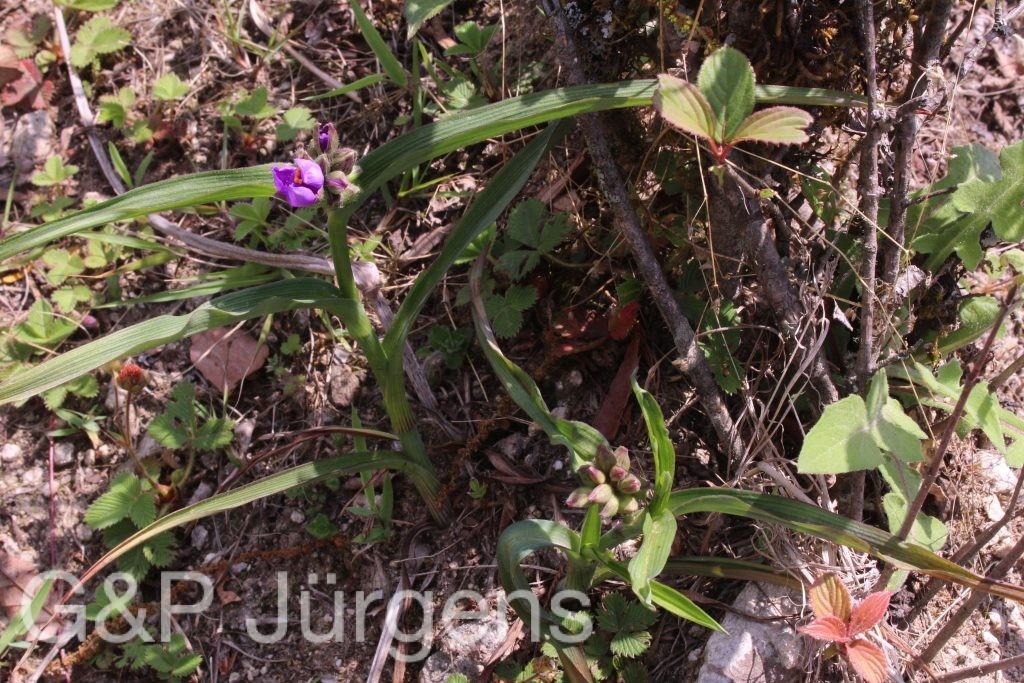
Bhutan2014 817
Bhutan Punaka 1310m, May
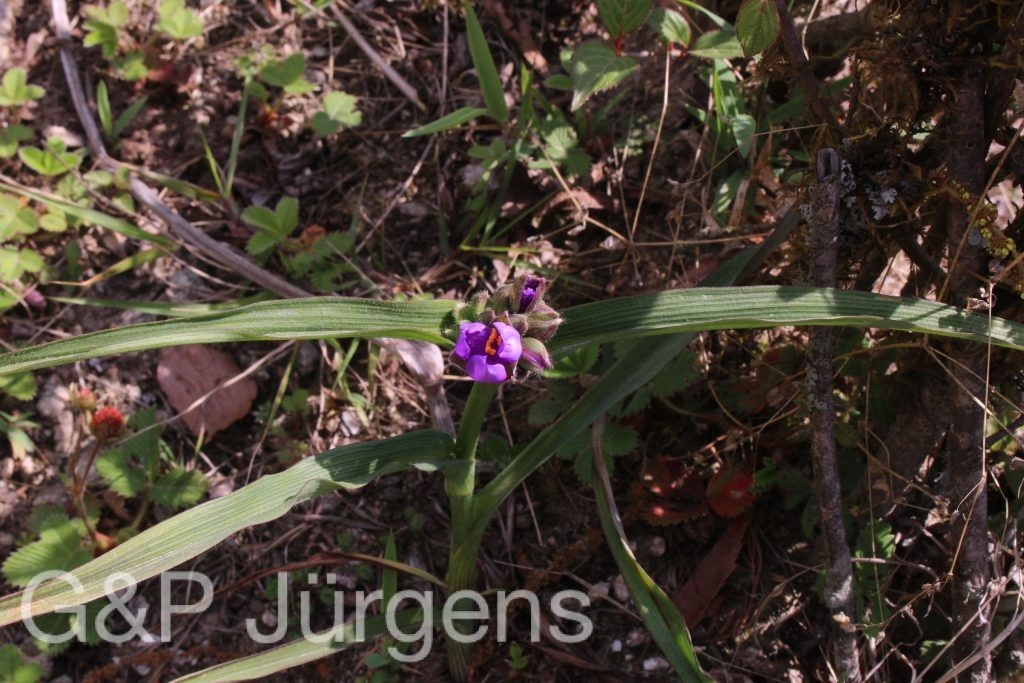
Bhutan2014 818
Bhutan Punaka 1310m, May

Description

Commelina maculata is a perennial herb of the Himalaya and adjacent Asian mountains, recorded by GBIF from China, Nepal, India, Thailand, Bhutan, Myanmar, Vietnam and Sri Lanka across about 310 occurrences. It grows in moist, often shaded places, along forest margins, on grassy and rocky banks, beside paths and watercourses, and in disturbed ground, generally at low to middle elevations. The plant photographed at Punakha in western Bhutan at about 1310 m, flowering in May, occupies the warm temperate valley habitat where this species is common in the early monsoon season.

The plant has ascending to decumbent, somewhat fleshy stems that root at the lower nodes, with sheathing leaf bases typical of the family. The leaves are alternate, lanceolate to ovate-lanceolate, with entire margins and a closed basal sheath, often with a fringe of hairs at the sheath mouth. The flowers emerge from a folded, boat-shaped spathe and are zygomorphic, with three sepals and three petals of which the two upper petals are larger and conspicuously blue, the lower one reduced and paler; there are six stamens, several modified as staminodes with cruciform antherodes. Each flower is ephemeral, opening for part of a single day. The fruit is a small loculicidal capsule containing few rugose seeds.

Commelina is a large pantropical genus whose Asian montane species, including C. maculata, are distinguished by spathe form, seed sculpturing and indumentum. The fleeting, nectarless flowers rely on pollen-foraging insects, and the staminodes function as a visual lure. As a plant of disturbed and marginal habitats the species is weedy, resilient and widely distributed, and it is of no conservation concern. Its broad Indo-Malayan to Himalayan range reflects the success of the genus in seasonally moist, sunny situations.

Author: Edgew. · Sources: POWO (Kew), GBIF, Flora of China, Flora of Bhutan, Faden Commelinaceae studies, Annotated Checklist of the Flowering Plants of Nepal

(Craib) B.L.Burtt

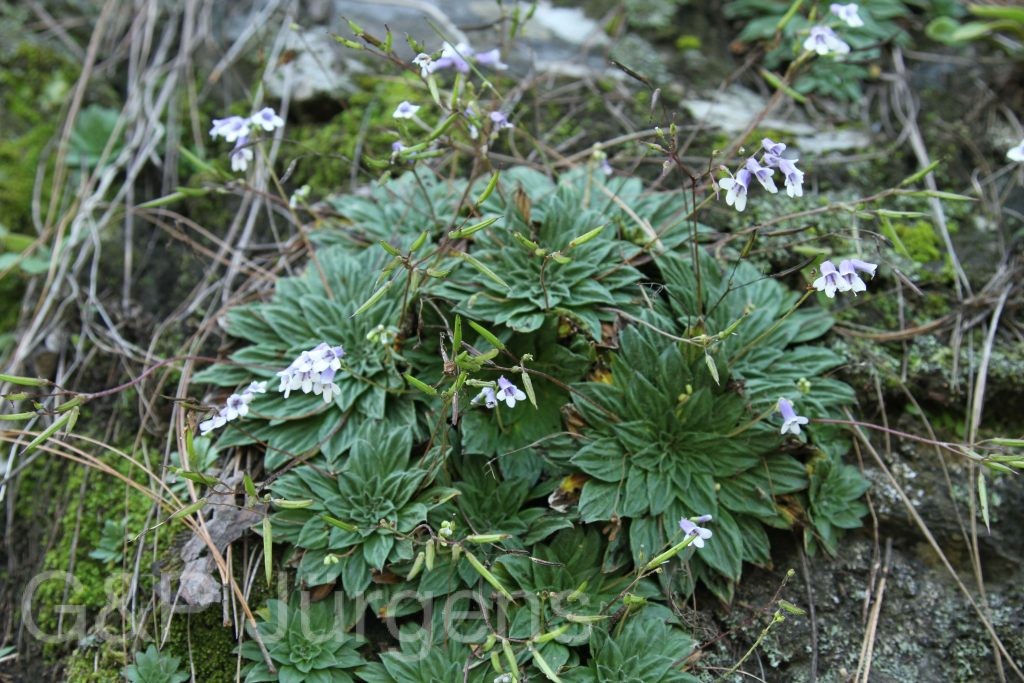
Bhutan2012 1027
Bhutan Trithangebe 900m, October
Bhutan2012 1028
Bhutan Trithangebe 900m, October

Description

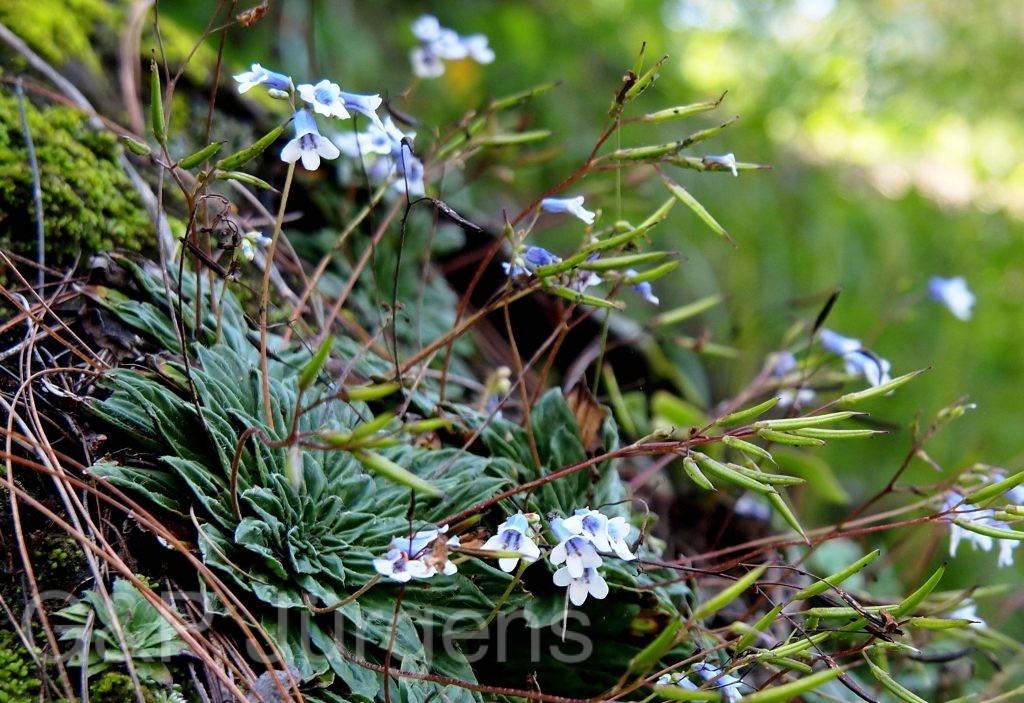
Corallodiscus cooperi is a narrowly distributed rosette herb of the eastern Himalaya, so far reliably known only from Bhutan, where the few catalogued occurrences point to a restricted, possibly endemic or near-endemic range. As with other members of the genus it is a lithophyte, growing on shaded, mossy rock faces, cliff ledges and boulders, often in the spray zone of streams or on damp, well-drained crags. The plant photographed at Trithangebe in Bhutan at 900 m in October occupies the warm subtropical foothill belt, lower than the montane elevations favoured by several congeners, flowering or fruiting into the autumn on its rocky substrate.

It is a small, perennial, acaulescent herb forming a dense, appressed basal rosette of leaves. The leaves are obovate to spathulate, thick-textured, with a green, often rugose and sparsely hairy upper surface and a densely brown- or rusty-tomentose lower surface, the margins crenate to entire. From the rosette arise slender, leafless scapes bearing few-flowered cymes; the flowers are small and weakly zygomorphic, with a tubular to campanulate, five-lobed corolla of blue to violet or purplish hue, and four didynamous stamens. The fruit is a slender, elongate capsule containing numerous minute seeds.

The placement here under "Corallodiscinae" reflects the subtribal rank of Corallodiscus within Gesneriaceae (subfamily Didymocarpoideae); the genus is a small Sino-Himalayan group of rosette-forming rock plants allied to Didymocarpus and Oreocharis. Its members are characteristically tolerant of seasonal desiccation. Given its apparently very limited known range, C. cooperi warrants attention as a potential narrow endemic of conservation interest, dependent on undisturbed rocky habitats.

Author: (Craib) B.L.Burtt · Sources: POWO (Kew), Flora of China Vol. 18, Flora of Bhutan Vol. 2, GBIF, Weber: Gesneriaceae in The Families and Genera of Vascular Plants

Kurz

Nepal 97 612 P1183
Nepal Godavari 1400m, May
Nepal 97 613 P1184
Nepal Godavari 1400m, May

Description

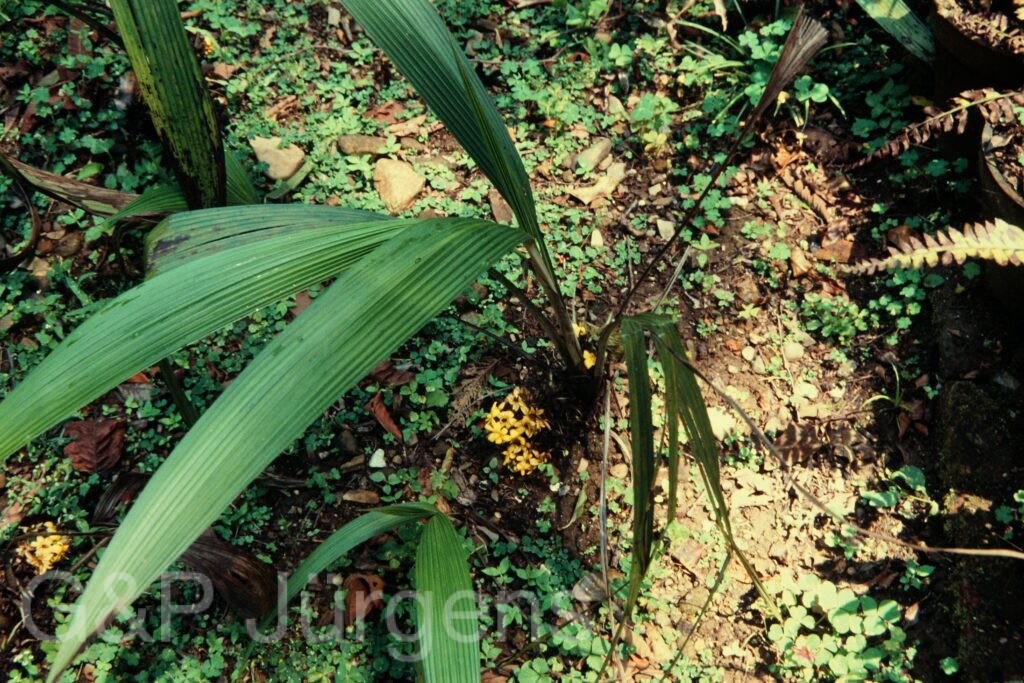
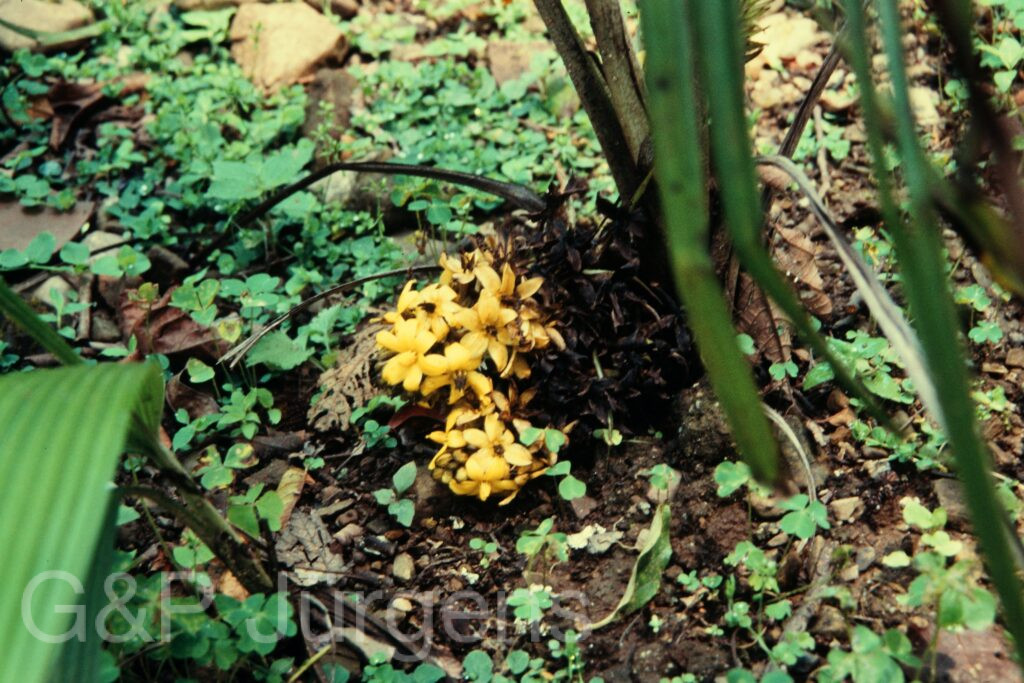
Curculigo gracilis Kurz (accepted by some authorities as Molineria gracilis, under which name the species page is filed) is a small rhizomatous herb of the Hypoxidaceae distributed through the eastern Himalaya and into Southeast Asia. GBIF records, numbering 70 occurrences, span China, Thailand, India, Nepal, Bhutan, Cambodia and Vietnam. The species grows in the shaded, humid understorey of subtropical and lower montane broadleaved forests, on moist, humus-rich banks and slopes, generally between roughly 700 and 1,800 m. The illustrated plant from Godavari near Kathmandu in Nepal at 1,400 m, in May, is typical of this damp mid-hill forest habitat.

The plant arises from a short, tuberous, vertical rhizome and produces a small tuft of basal leaves. The leaves are linear-lanceolate to narrowly elliptic, plicate (longitudinally pleated) and conspicuously veined, tapering to a slender petiole-like base and often thinly hairy. The flowers are borne on short, often subterranean to ground-level scapes hidden among the leaf bases; each flower is small, bright yellow, with six spreading tepals, and the ovary is inferior and frequently prolonged into a slender beak, a diagnostic feature of the genus. The fruit is a small, fleshy, indehiscent berry-like capsule containing black, often beaked seeds.

The generic limits of Curculigo and the segregate Molineria have long been disputed, and this species is treated under both names depending on the classification followed; the disposition adopted here follows the source page in recognising Molineria gracilis as the accepted combination. As a forest-floor geophyte of humid Asian woodlands, it is of no particular conservation concern across its range, but it contributes to the diversity of the shaded understorey and is part of a genus of modest economic and ethnobotanical interest in tropical Asia.

Author: Kurz · Sources: POWO (Kew), GBIF, Flora of China Vol. 24, Flora of Bhutan Vol. 3, Flora of Nepal, Geerinck: Hypoxidaceae studies

Salisb.

Bhutan2014 285
Bhutan Trithangebe near a farmhouse 800m, May
Nepal1992 189 P276 ergebnis
Nepal Banyang 2100m March 
Nepal1992 190 P277 ergebnis
Nepal Banyang 2100m March 
Nepal 2001 30 ergebnis ergebnis
East-Nepal Korong 1150m, April

Description

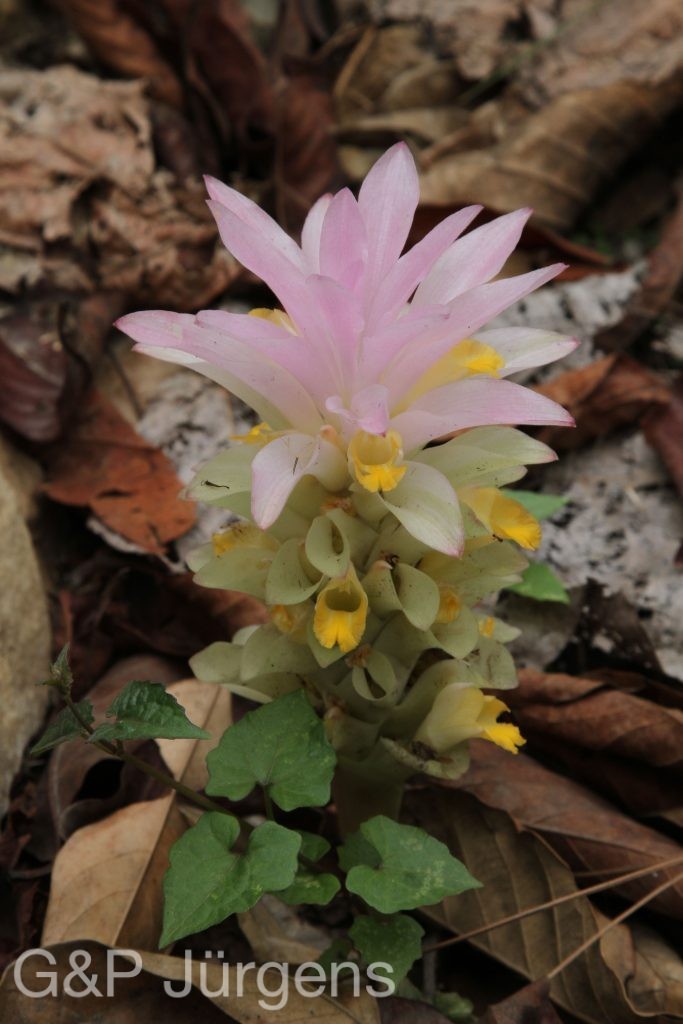
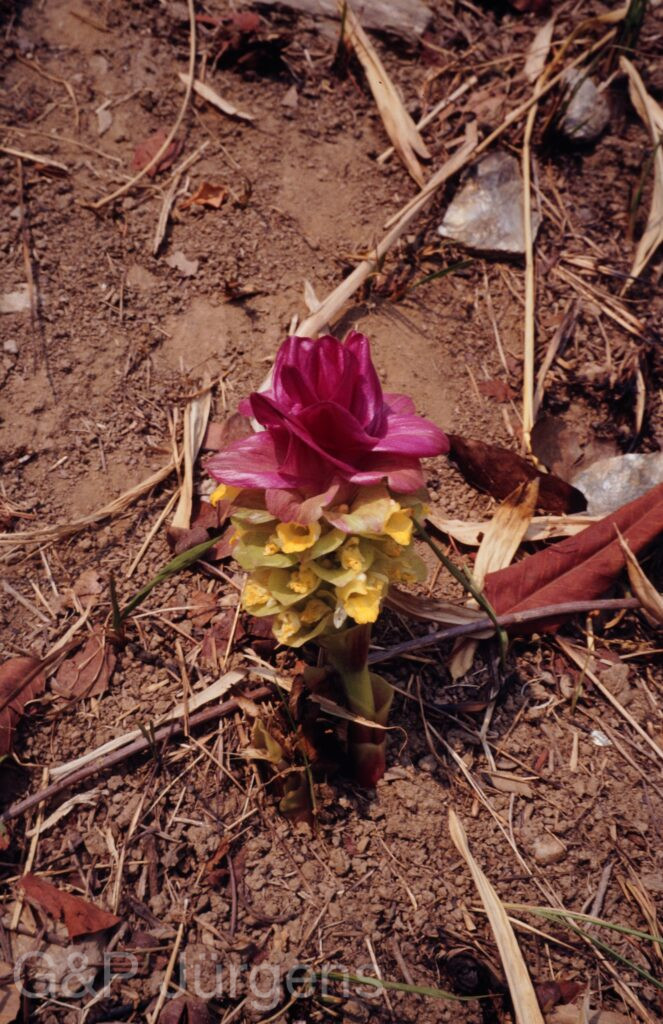
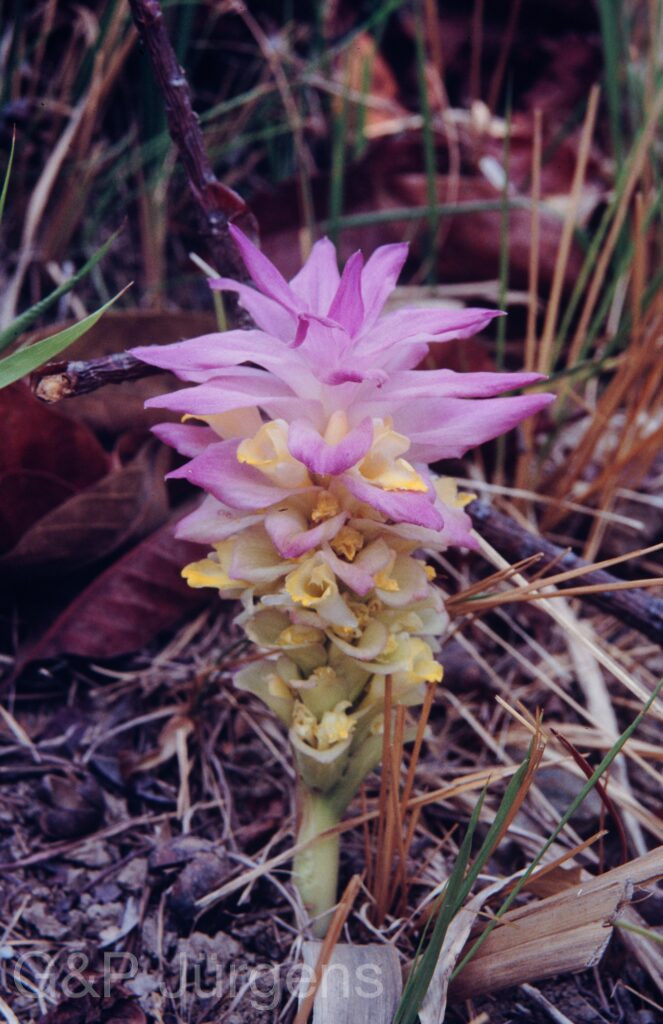
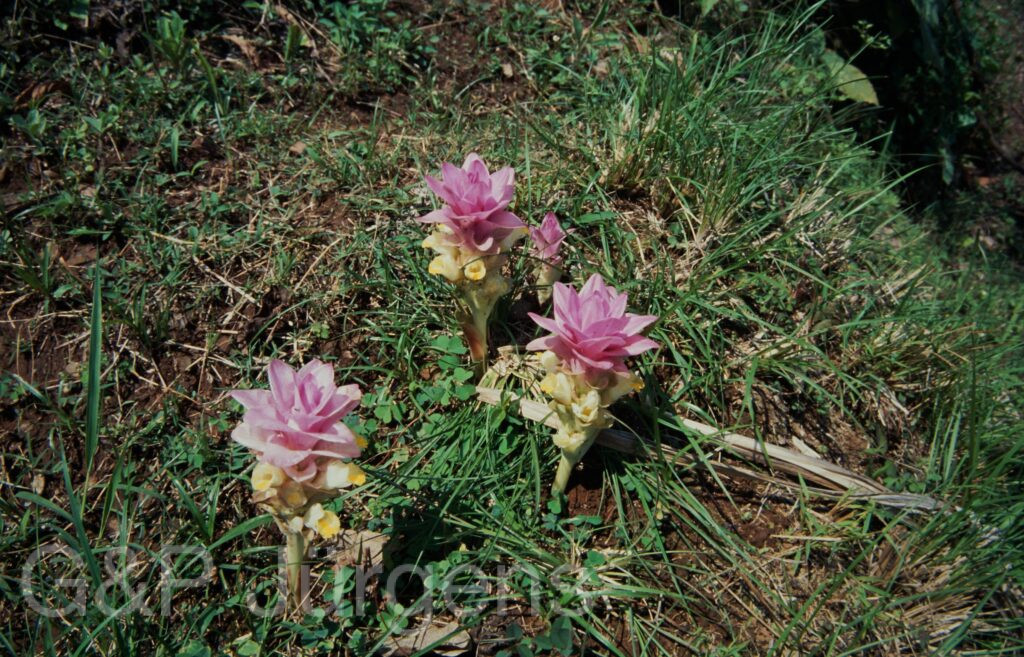
Curcuma aromatica, wild or yellow zedoary, is a South and Southeast Asian rhizomatous herb with a broad distribution documented by 490 GBIF occurrences across China (CN), India (IN), Hong Kong (HK), Bhutan (BT), Sri Lanka (LK), Myanmar (MM), Thailand (TH), Nepal (NP), Vietnam (VN), Bangladesh (BD), Laos (LA), Pakistan (PK), Indonesia (ID), Korea (KR), Malaysia (MY) and Taiwan (TW), with cultivated records in Japan (JP), Colombia (CO) and Britain (GB). It grows in moist deciduous and semi-evergreen forest, scrub and forest margins, often near habitation as a semi-cultivated medicinal plant. The illustrated collections span Bhutan at Trithangebe near a farmhouse at 800 m in May and the Nepalese sites of Banyang at 2100 m in March and Korong in East-Nepal at 1150 m in April.

It is a stout perennial arising from a fleshy, aromatic, internally orange-yellow rhizome bearing sessile and stalked tubers. The pseudostem supports large oblong to oblong-lanceolate leaves, pubescent beneath. The inflorescence appears before or with the leaves as a lateral spike, its lower fertile bracts green and the upper sterile coma bracts tinged pink to rose; the flowers are pale yellow with a tubular calyx, a hooded dorsal corolla lobe and a deflexed, emarginate yellow labellum. Fruit is a capsule, though spread is mainly clonal.

Widely employed in traditional medicine and as a cosmetic and culinary turmeric substitute, C. aromatica is rich in aromatic essential oils and curcuminoids. It is frequently confused with C. zedoaria, from which it differs in floral and rhizome characters. The family is cited verbatim as Zingiberacaea (Zingiberaceae).

Author: Salisb. · Sources: POWO (Kew), GBIF, Flora of China, Flora of Bhutan, Flora of British India, Revision of the genus Curcuma (Skornickova et al.)

Roxb.

Bhutan2012 1238
Bhutan Trashigang 1150m, October

Description

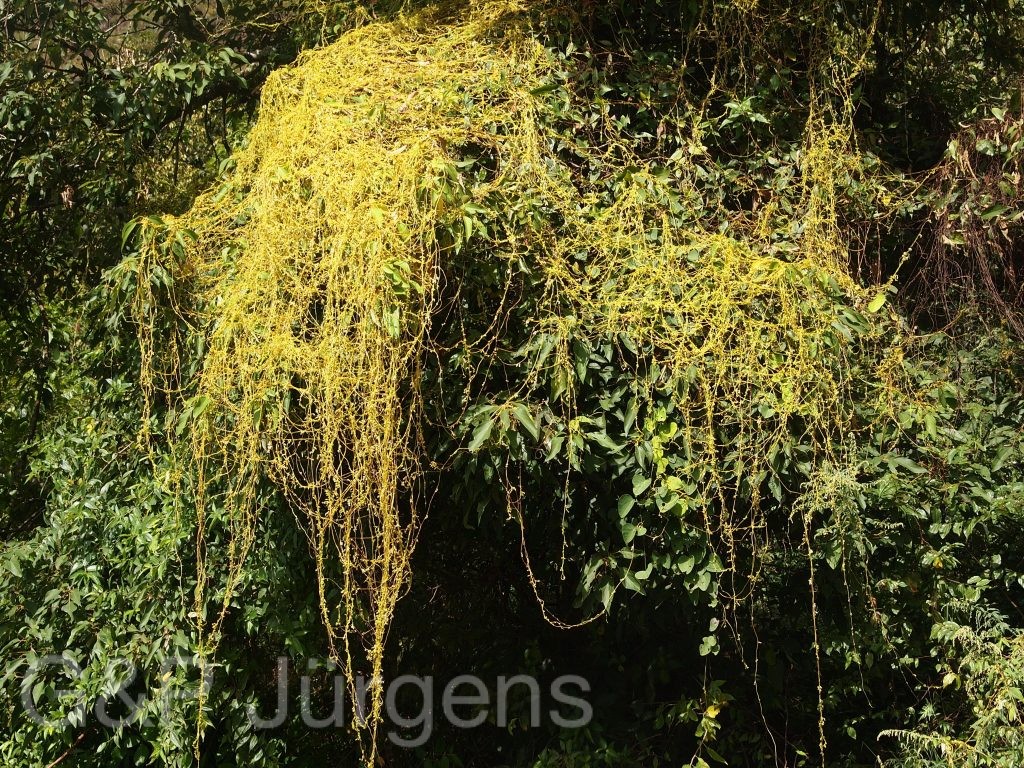
Cuscuta reflexa, the giant or Asian dodder, is a widely distributed parasitic vine ranging across South, Central and Southeast Asia and beyond, with GBIF documenting more than 1000 occurrences from India, Pakistan, Nepal, China, Afghanistan, Sri Lanka, Bangladesh, Bhutan, Thailand and Myanmar among others. It occurs from the plains into the lower hills, the photographed plant deriving from Trashigang in eastern Bhutan at 1150 m in October. As an obligate stem holoparasite it has no true habitat preference of its own but follows that of its hosts, smothering shrubs, hedges and trees along forest margins, scrub, roadsides and cultivated ground in warm subtropical settings.

The plant is a leafless, rootless twining parasite with stout, fleshy, glabrous stems coloured yellow, orange or reddish, attaching to hosts by means of haustoria that penetrate the vascular tissue. Leaves are reduced to minute scales and chlorophyll is largely absent. The flowers are comparatively large for the genus, white to creamy, fragrant, and crowded in dense lateral racemes; the campanulate corolla has reflexed lobes (hence the epithet) and bears characteristic infrastaminal scales within the tube. The fruit is a globose capsule capped by the persistent corolla and opening circumscissily to release several seeds.

Cuscuta (now placed within an enlarged Convolvulaceae rather than a segregate Cuscutaceae) comprises around 200 holoparasitic species. C. reflexa is economically significant as a pest of cultivated and ornamental plants, yet is simultaneously valued in traditional South Asian medicine. Far from threatened, it is locally abundant and weedy; its parasitism exerts measurable effects on host vigour and on plant-community structure where it proliferates.

Author: Roxb. · Sources: POWO (Kew), GBIF, Flora of China, Flora of Bhutan, Flora of Pakistan, Flora of British India (Hooker), Yuncker Monograph of the Genus Cuscuta

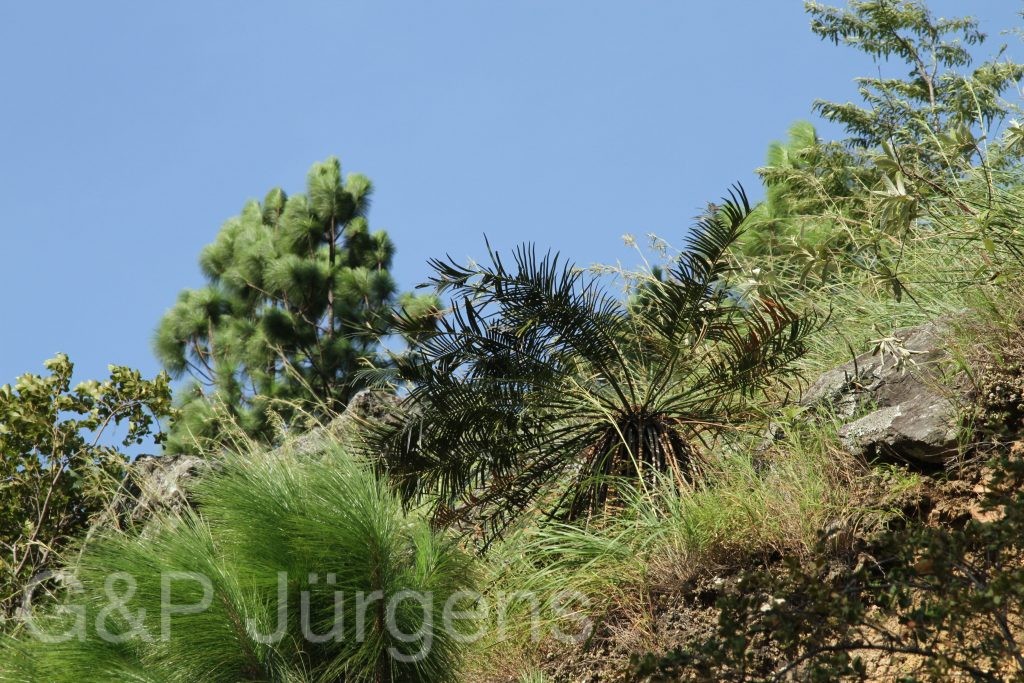
Cycas pectinata

by GP Jürgens

Buch.-Ham.

Bhutan2012 1055
Bhutan Koma-Chu-Valley 900m, October
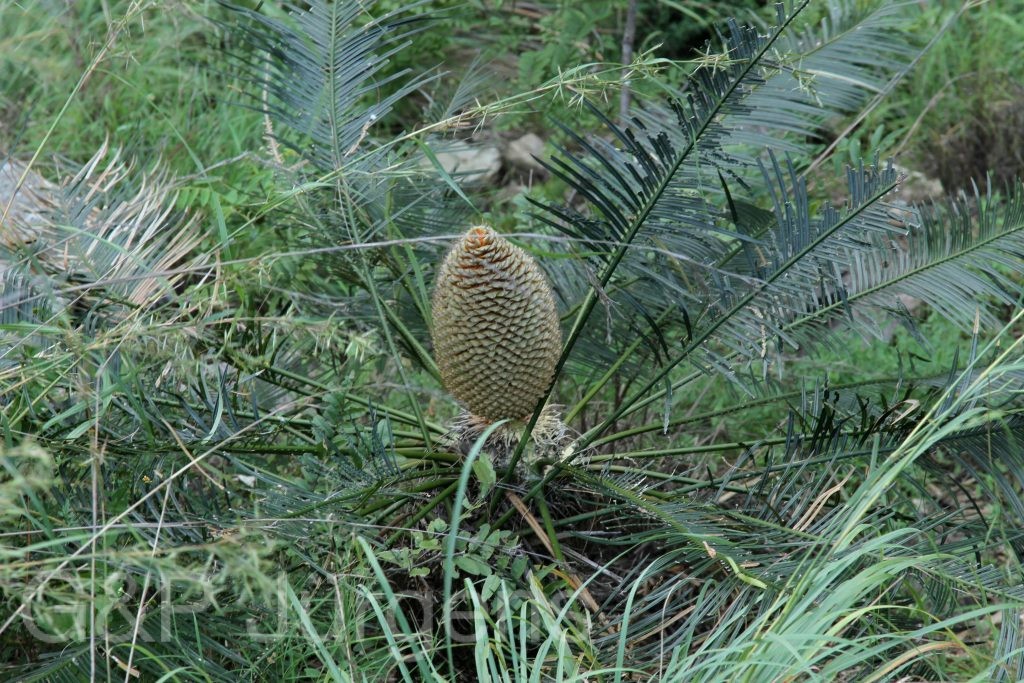
Bhutan2012 1057
Bhutan Koma-Chu-Valley 900m, October

Description

Cycas pectinata is a large arborescent cycad of the eastern Himalayan foothills and Indochina, recorded by GBIF from Thailand, India, Vietnam, China, Bhutan, Nepal, Myanmar and Bangladesh, among others, across about 318 georeferenced occurrences. It inhabits warm subtropical to tropical situations, growing on hill slopes, in open dry forest, on limestone outcrops, in scrub and along forest margins, generally at low elevations. The photographed plant from the Koma-Chu valley in southern Bhutan at about 900 m in October typifies its occurrence in the warm inner valleys of the foothill zone, where it tolerates seasonally dry, well-drained and often rocky substrates exposed to strong sunlight.

The plant develops a stout, columnar, unbranched trunk that may reach several metres in height, crowned by a rosette of large, once-pinnate, dark green leaves with numerous narrow, rigid, spine-tipped leaflets and a spiny petiole base. Like all cycads it is strictly dioecious. The male plants produce a large solitary terminal pollen cone, ovoid to cylindrical and yellow to orange-brown; the female plants bear loose, open clusters of megasporophylls rather than a closed cone, each megasporophyll with a pectinate (comb-like, hence pectinata) lateral fringe of teeth and bearing ovules along its margins. The large seeds are drupe-like, ovoid and become orange-brown to reddish at maturity.

Cycas pectinata is one of the most widely distributed Asian species of Cycas, the sole genus of the ancient family Cycadaceae, a lineage of gymnosperms of considerable evolutionary antiquity that reproduces through motile, swimming sperm and relies on insect (weevil and beetle) pollination. The species is of high conservation interest: like cycads generally it is listed on CITES Appendix II, and wild populations are depleted by over-collection for ornament and religious use, seed and starch harvesting, and habitat loss, so that the species is regarded as threatened across much of its range despite its broad distribution.

Author: Buch.-Ham. · Sources: POWO (Kew), GBIF, Flora of China Vol. 4, Flora of Bhutan Vol. 1, Flora of Nepal, Flora of Pakistan, Hill & Lindstrom: revision of the Cycas pectinata complex (and The Cycad Pages)