Tag:

Summer

U.C.Bhattach.

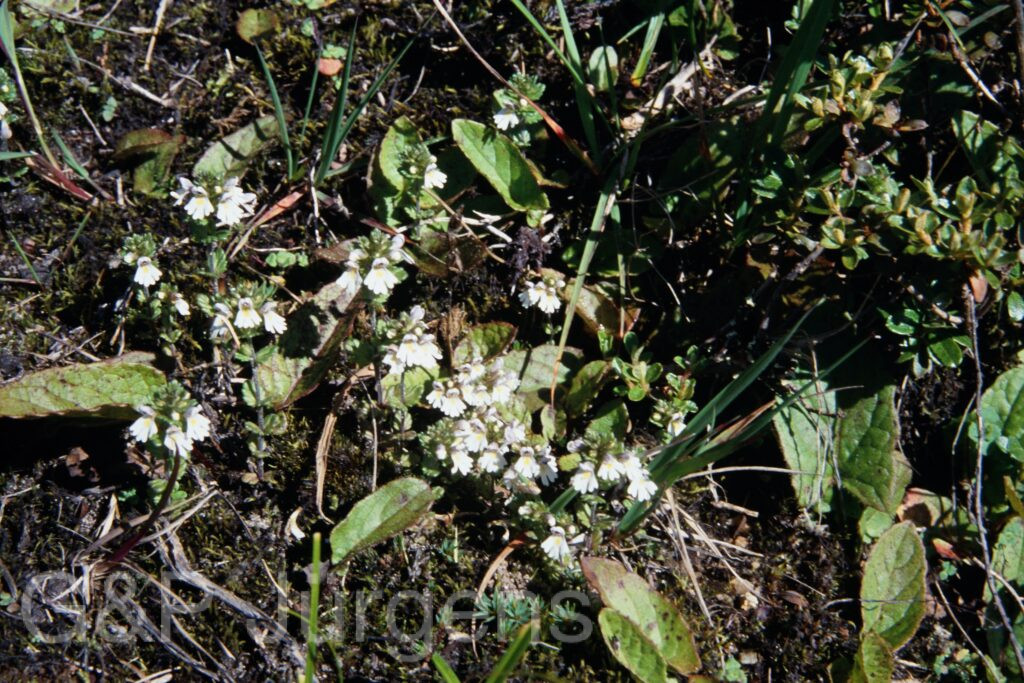
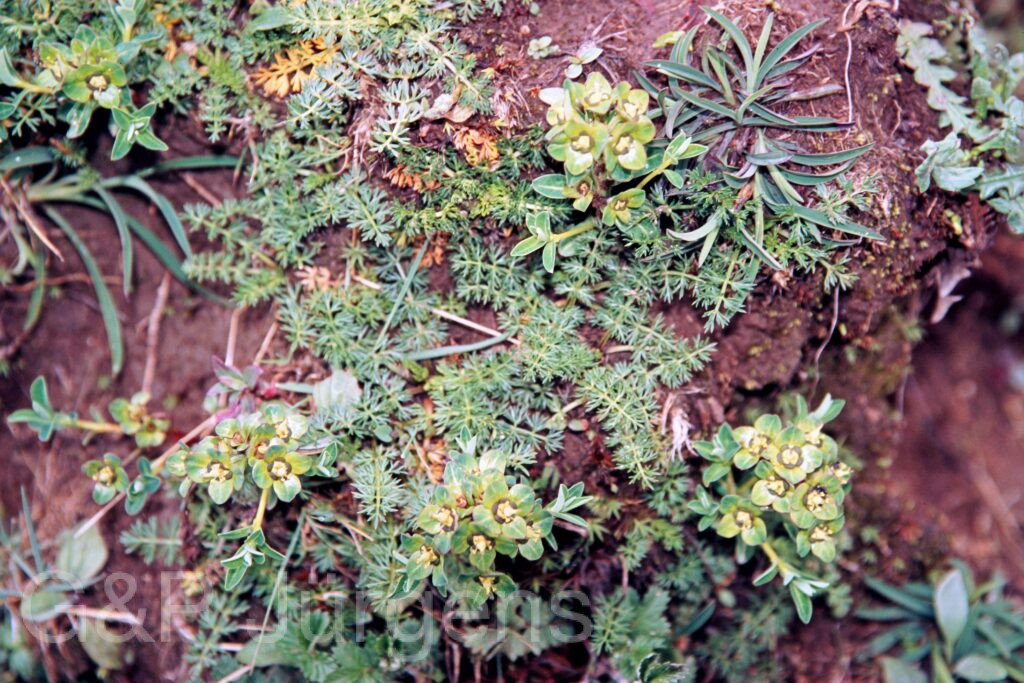
Garh 07 272 ergebnis
India Garhwal Belak Khal 2900m, June

Description

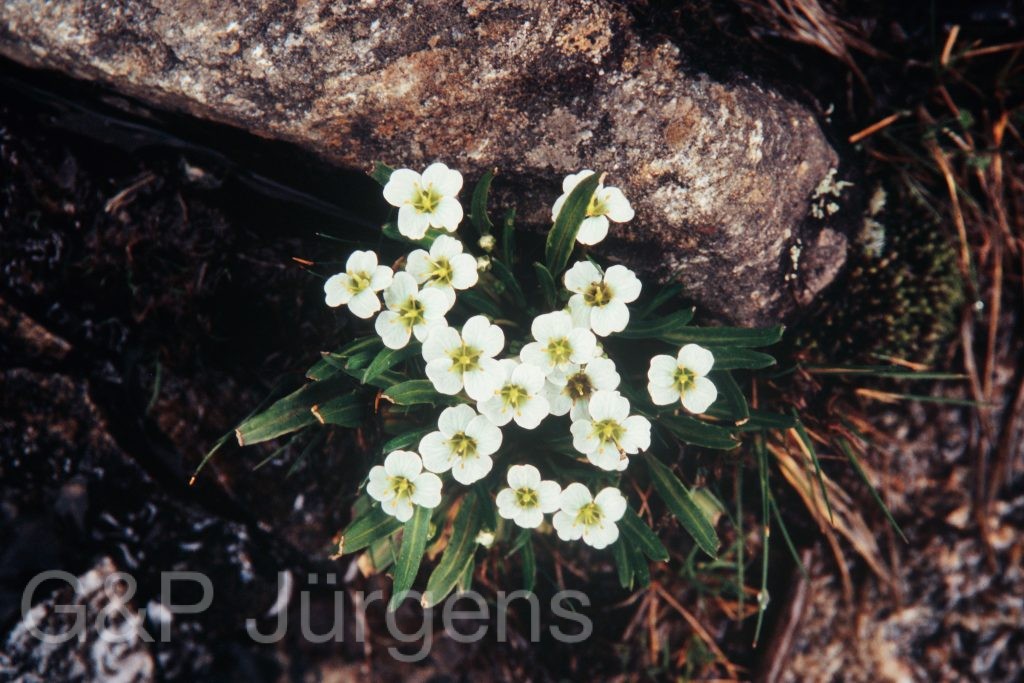
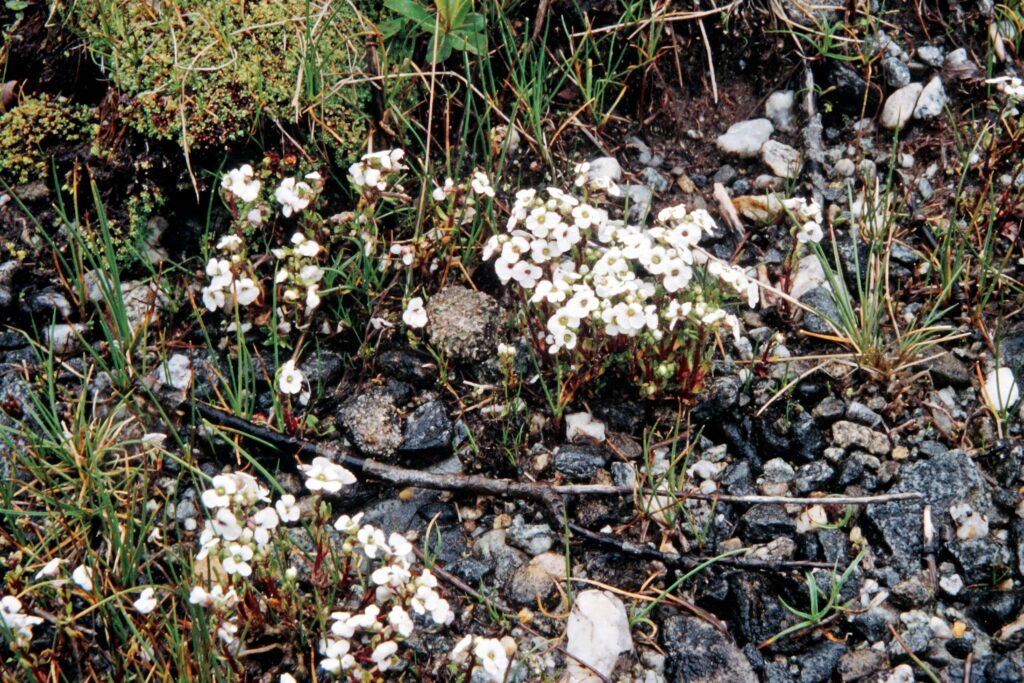
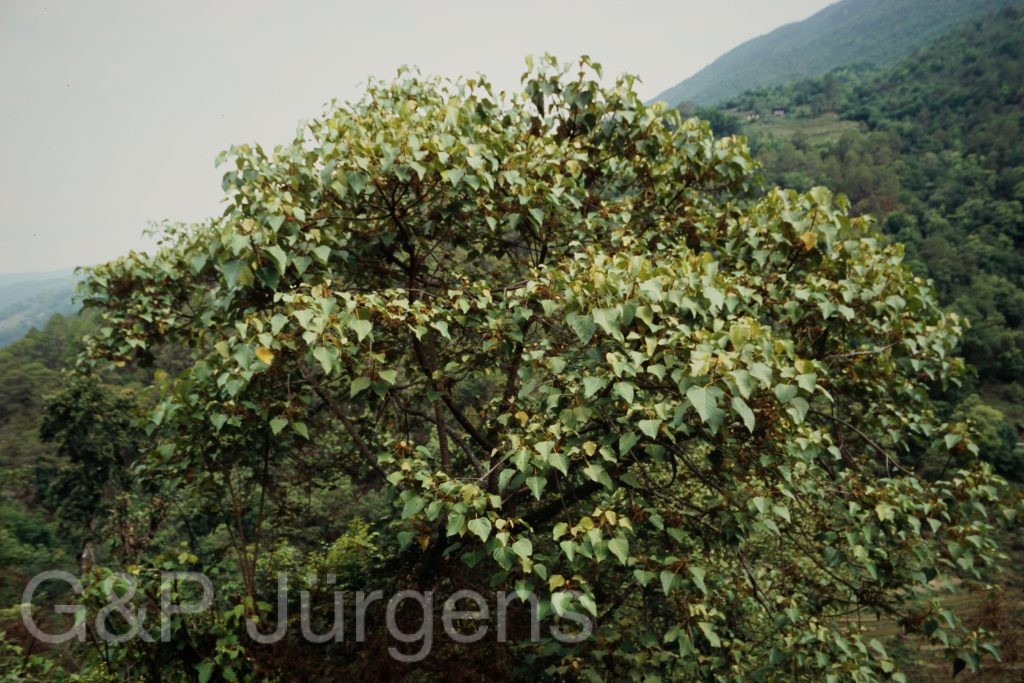
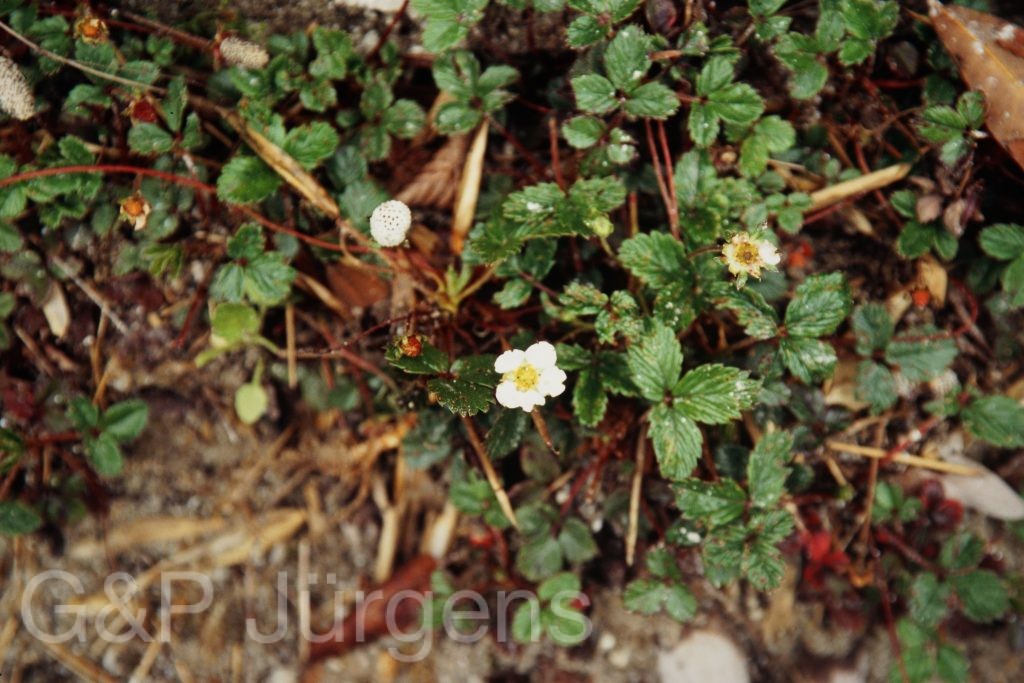
Euphorbia sharmae is a poorly known spurge apparently endemic to the western Himalaya of India, where it is recorded only from the Garhwal Himalaya of Uttarakhand. With very few documented occurrences, it appears to be a narrow regional endemic of temperate montane habitats, growing on open grassy slopes, forest clearings and rocky banks. The plant photographed at Belak Khal in Garhwal at 2,900 m in June occupies the cool temperate belt, flowering early in the warm season; the scarcity of records underscores how localised and infrequently collected the species is.

Like other members of the genus, the plant is a herbaceous perennial exuding milky white latex when damaged. It produces erect to ascending stems from a perennating rootstock, bearing alternate, entire, oblong to lanceolate cauline leaves and a terminal umbel-like arrangement of branches subtended by a whorl of leaf-like ray-leaves. The reproductive units are cyathia, the specialised pseudanthia diagnostic of Euphorbia, each comprising a cup-shaped involucre bearing crescent-shaped nectar glands and enclosing reduced unisexual flowers around a central stalked ovary. The fruit is a three-lobed schizocarpic capsule splitting into mericarps to release the seeds.

Euphorbia is among the largest and most cosmopolitan of angiosperm genera, and its Himalayan herbaceous representatives belong to the diverse subgenus Esula. Euphorbia sharmae, described by U. C. Bhattacharyya, is one of several narrowly distributed Indian endemics whose limits remain incompletely understood owing to sparse collection. Its restricted known range and the absence of population data place it among taxa of potential conservation concern, warranting targeted survey to clarify its distribution and status.

Author: U.C.Bhattach. · Sources: POWO (Kew), Flora of India (BSI), Flora of Uttar Pradesh, GBIF, Radcliffe-Smith: Euphorbia systematics
Boiss.

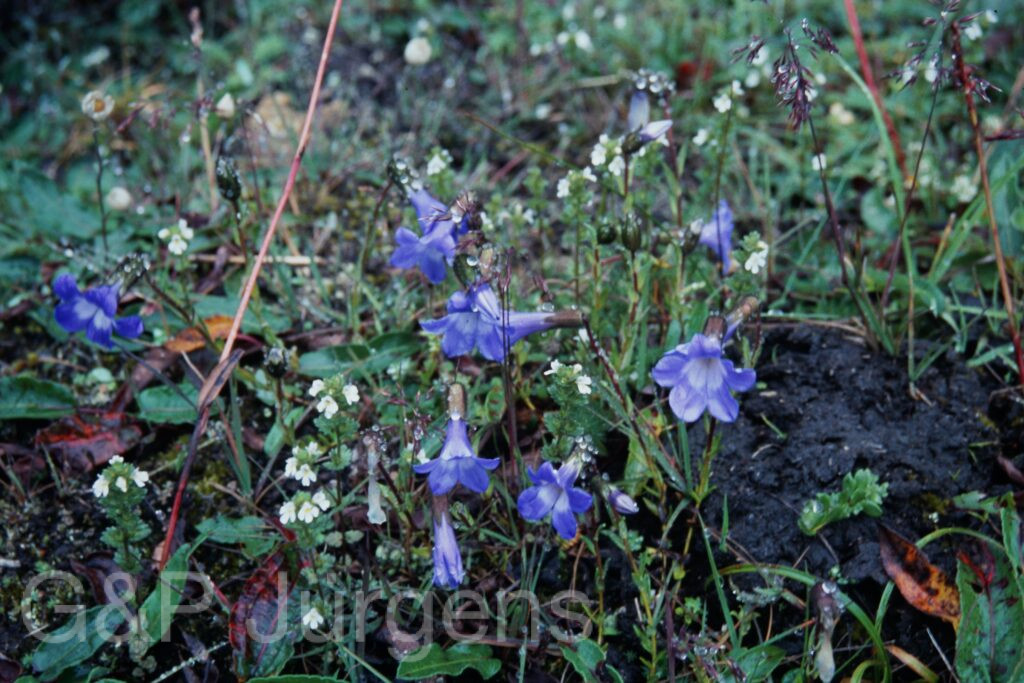
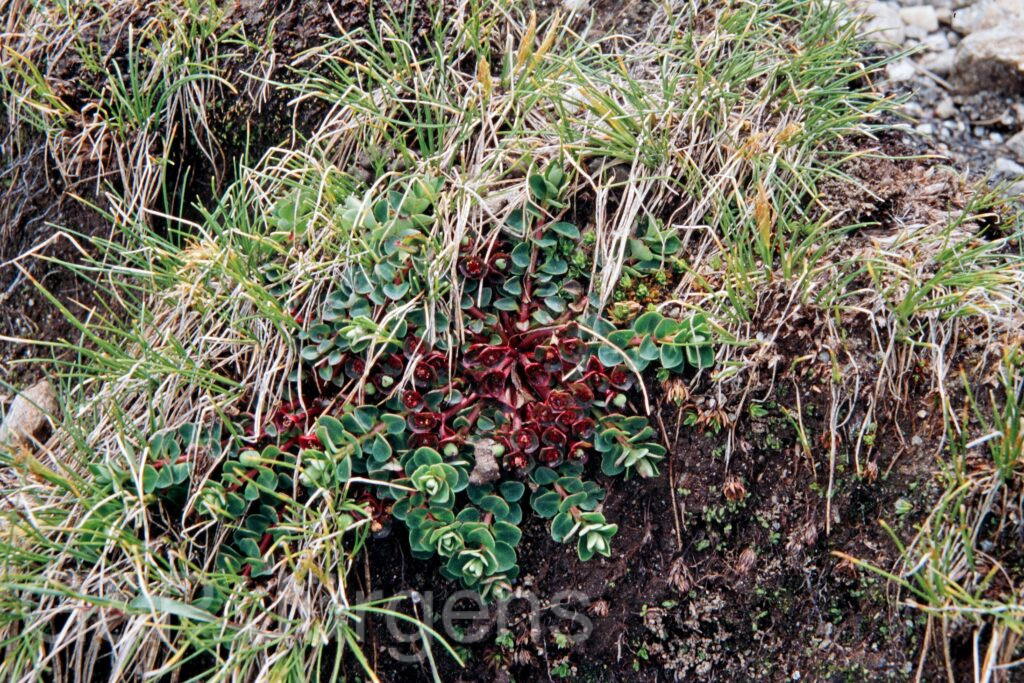
Nepal 99 313 ergebnis
West-Nepal Kalmura 4200m, June
Nepal 99 314 ergebnis
West-Nepal Kalmura 4200m, June

Description

Euphorbia stracheyi is a widespread high-altitude spurge of the Himalaya and the Tibetan Plateau, distributed from Nepal, northern India and Bhutan eastward into SW China, with outlying records southeast to Laos and Vietnam. The GBIF dataset, with around 946 occurrences across CN, NP, IN, BT, LA and VN, confirms this broad Sino-Himalayan range. The plant shown was photographed in western Nepal at Kalmura at about 4,200 m in June. It is a true alpine, growing on open stony slopes, gravelly pastures, moraine and turf between roughly 3,000 and 4,800 m, where its prostrate, mat-forming habit suits the cold, exposed and seasonally snow-covered ground.

The species arises from a slender, often elongate creeping rhizome bearing numerous decumbent to ascending reddish stems. The leaves are small, alternate, obovate to oblong and entire. As in all Euphorbia, the inflorescence is a cyathium: the apparent flowers are condensed pseudanthia in which crescent-shaped or transversely elliptic nectar glands surround reduced unisexual flowers, the female reduced to a single stalked tricarpellate ovary and the males to single stamens, the whole subtended by leafy, often reddish-tinged bracts. The fruit is a smooth three-lobed schizocarpic capsule that splits into three mericarps, releasing ovoid seeds; the plant exudes the milky latex typical of the genus.

Euphorbia stracheyi belongs to the subgenus Esula, a group of herbaceous spurges well represented at high elevations across central Asia. Its dwarf, cushion-like form and reddish coloration are adaptations to intense radiation and short growing seasons. The caustic latex deters herbivory and the species is locally common; it is not considered threatened, though like all Euphorbia it falls under CITES listing of the genus for trade-monitoring purposes.

Author: Boiss. · Sources: POWO (Kew), Flora of China Vol. 11, Flora of Bhutan Vol. 1, GBIF, Radcliffe-Smith: Euphorbia in the Flora of Pakistan

D. Don

Sikkim2003 179 G245
Sikkim Dzongri 4100m 08.2003
Sikkim2003 504 P704
Sikkim Dzongri 4100m, August

Description

Euphrasia simplex is an alpine eyebright of the Himalaya, recorded from India and Nepal, and known from only a handful of georeferenced occurrences (five in GBIF), reflecting both its small stature, which makes it easily overlooked, and its restricted high-altitude range. It is a plant of short alpine turf, open grassy slopes and moist meadows above treeline. The illustrated material from Dzongri in Sikkim, gathered at about 4100 m in August, is characteristic of its occurrence high in the eastern Himalayan alpine zone, where it flowers in the late-summer growing season among low alpine vegetation.

The plant is a small, slender annual, as the epithet simplex suggests often little-branched or unbranched, with an erect, leafy stem. The leaves are small, opposite, sessile and ovate with a few coarse, often bristle-tipped teeth. The flowers are borne in the axils of the upper leaves, forming a leafy terminal spike; each has a tubular, four-lobed calyx and a two-lipped (bilabiate) corolla, the upper lip hooded and the lower lip three-lobed and spreading, the whole typically white to pale lilac with darker veining and a yellow throat-blotch. The fruit is a small, flattened, two-valved capsule containing several seeds.

Like other members of its genus, E. simplex is a hemiparasite, photosynthetic but attaching by haustoria to the roots of neighbouring grasses and herbs to draw water and nutrients; the genus has been transferred from the traditional Scrophulariaceae to the Orobanchaceae in light of this parasitic habit and molecular evidence. Euphrasia is notoriously difficult taxonomically owing to plasticity and hybridisation, and the high-altitude Himalayan species are imperfectly known. Its rarity in collections makes the status of E. simplex uncertain, and further field survey would clarify its true distribution and abundance.

Author: D. Don · Sources: POWO (Kew), GBIF, Flora of Nepal, Annotated Checklist of the Flowering Plants of Nepal, Yeo: monographic studies of the genus Euphrasia

(W.W.Sm.) H.Hara

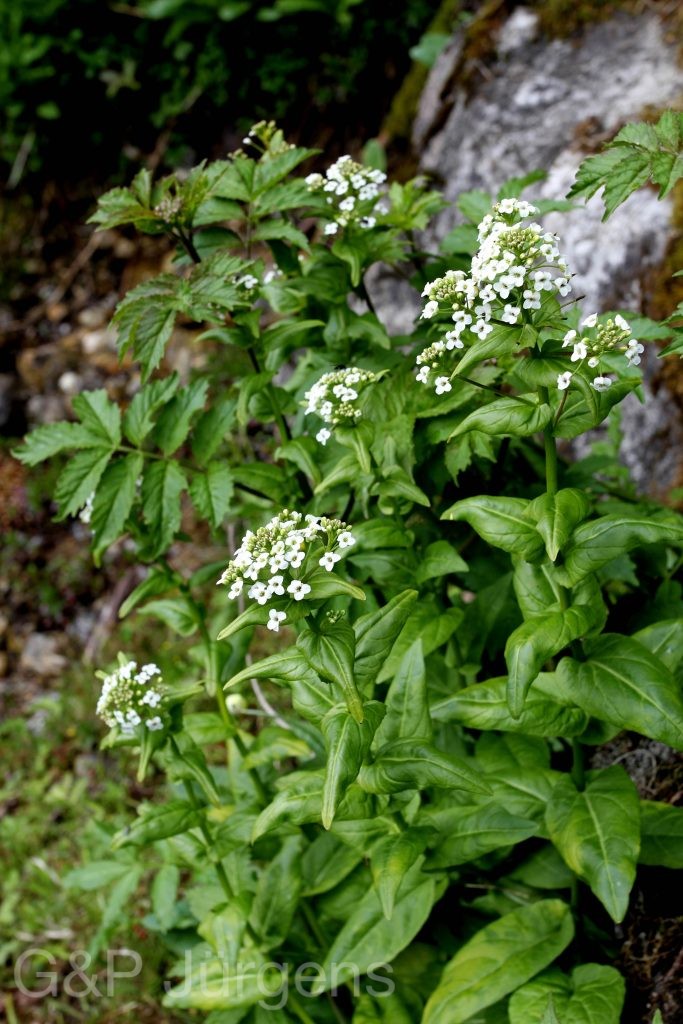
BhutanPG2011 656 ergebnis
Bhutan Thitha-Tso 4360m,July

Description

Eutrema heterophyllum is an alpine crucifer of the high mountains of central Asia and the Himalaya, recorded from China, Nepal, Bhutan, Japan, Tajikistan and Kyrgyzstan, with GBIF logging 226 occurrences. It grows on open alpine slopes, damp gravelly flats, screes and the moist margins of glacial lakes and snowmelt rills. The photographed plant comes from Thitha Tso in Bhutan at about 4360 m, flowering in July, a cold, high-elevation lakeside habitat typical of the species' upper-alpine preference.

It is a small, glabrous perennial or biennial herb arising from a slender rootstock, with one or more ascending stems. As the epithet heterophyllum signals, the foliage is variable: basal leaves are often petiolate and entire to lobed, while the cauline leaves differ in shape and become smaller upward. The flowers are borne in a terminal raceme, small, with four white petals in the cruciferous cross arrangement and six tetradynamous stamens. The fruit is a slender, somewhat flattened silique containing the seeds in a single row.

The taxon is accepted, having been transferred to Eutrema by H. Hara from W.W. Smith's original placement. Eutrema, the genus of wasabi, has been substantially recircumscribed by molecular work that drew in numerous small alpine Sino-Himalayan species formerly scattered among other crucifer genera. As a cold-adapted, broadly distributed high-altitude herb it exemplifies the central-Asian alpine element of the Himalayan flora and is unlikely to be threatened, though dependent on intact periglacial habitats.

Author: (W.W.Sm.) H.Hara · Sources: POWO (Kew), GBIF, Flora of China, Flora of Bhutan, Al-Shehbaz's systematic studies of Brassicaceae

Hook.f. & Thomson

Sikkim2011 248
Sikkim Yumthang 3800m, June

Description

Eutrema himalaicum Hook.f. & Thomson is an alpine crucifer of the high Himalaya and adjacent China, recorded from China, India and Bhutan, with around 249 georeferenced occurrences in GBIF (further scattered records reflect cultivation and herbarium holdings). It occupies moist alpine meadows, streamsides, seepage slopes, gravelly flats and rocky places near snowmelt, generally between about 3500 and 4800 m. The photographed plant was found at Yumthang in Sikkim at about 3800 m in June, in the lush, well-watered subalpine to alpine turf that this small herb favours as the snow recedes.

The plant is a slender annual or short-lived perennial with erect or ascending, often glabrous stems arising from a basal rosette. The leaves are simple, the basal ones petiolate with ovate to deltoid or somewhat hastate blades (recalling the form once distinguished as E. deltoideum), the cauline leaves smaller and shortly stalked to subsessile. The flowers are small and borne in terminal racemes; each has four white petals arranged in the cruciform pattern typical of the family, four free sepals and the tetradynamous stamens of the Brassicaceae. The fruit is a slender silique, the seeds in a single row within each locule.

The genus Eutrema, which includes the cultivated wasabi (E. japonicum), has been substantially recircumscribed by molecular studies, absorbing several formerly segregate Himalayan genera; this accounts for the species' nomenclatural history and the alternate epithet seen on the source page. As a snowbed and seepage specialist it is adapted to short, cool growing seasons. The species is fairly widespread within its alpine band and not of conservation concern, though sensitive to habitat disturbance.

Author: Hook.f. & Thomson · Sources: POWO (Kew), GBIF, Flora of China, Flora of Bhutan, Al-Shehbaz revision of Eutrema and Tribe Eutremeae, Hara Flora of the Eastern Himalaya

(Hook.f. & Thomson) Al-Shehbaz, G.Q.Hao & J.Quan Liu

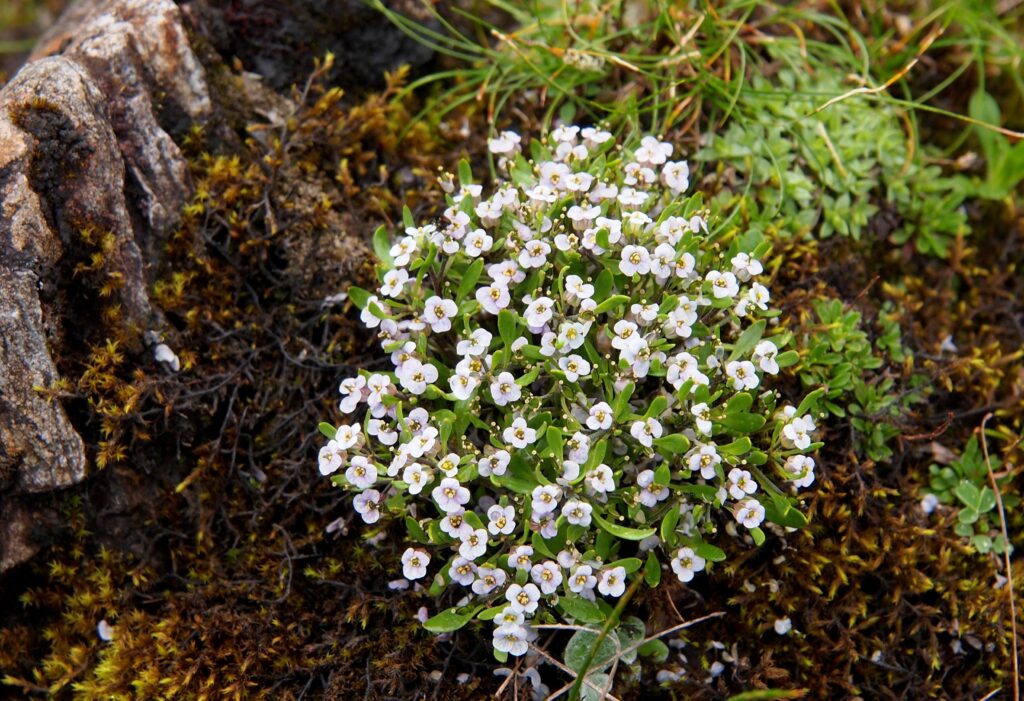
Bh09 144 P255
Bhutan Al-Shehbaz, 4100m June

Description

Eutrema scapiflorum (Hook.f. & Thomson) Al-Shehbaz, G.Q.Hao & J.Quan Liu is a dwarf alpine crucifer of the high Sino-Himalaya, recorded from China, India, Nepal, Bhutan and Myanmar. The species is illustrated from Bhutan at approximately 4100 m, flowering in June, consistent with its occurrence in the upper alpine belt. It inhabits open stony slopes, moraines, fellfield, gravelly flushes and the margins of snow-fed rills, generally between 3800 and 5000 m, where it endures intense insolation, freezing nights and a compressed growing season. With around 630 GBIF records it is a genuinely high-elevation specialist, scarce and patchily distributed across its range.

The plant is a small, glabrous, cushion- to rosette-forming perennial arising from a stout caudex and taproot. The basal leaves are crowded, spathulate to oblong-obovate, entire or obscurely toothed, and rather fleshy. As the epithet scapiflorum implies, the white flowers are borne on short, nearly leafless scapes scarcely exceeding the foliage, each flower with four spreading petals and the typical cruciferous tetradynamous androecium. The fruit is a short, oblong to linear silique or silicle, somewhat flattened, dehiscing to release a few seeds in two rows.

The taxon was long placed in the segregate genus Pegaeophyton (as P. scapiflorum), reflected in its original webpage URL, but molecular phylogenetic analyses have shown Pegaeophyton to be nested within Eutrema, prompting the present transfer. It belongs to the tribe Eutremeae, a predominantly Himalayan and Central Asian lineage of cold-adapted mustards. Its restricted high-alpine niche renders it sensitive to upslope vegetation shifts and the retreat of late-lying snow, though no formal conservation assessment has yet been made.

Author: (Hook.f. & Thomson) Al-Shehbaz, G.Q.Hao & J.Quan Liu · Sources: POWO (Kew), GBIF, Flora of China, Flora of Bhutan, Annotated Checklist of the Flowering Plants of Nepal, Al-Shehbaz revisions of Himalayan Brassicaceae

(Jeffrey & W.W.Sm.) Al-Shehbaz & Warwick

Nepal 99 525 ergebnis
Nepal Churt-Khola 3500m, July

Description

Eutrema verticillatum is a high-alpine crucifer of the Sino-Himalayan region, recorded from Nepal and adjacent SW China, with 96 GBIF occurrences indicating a relatively narrow, high-elevation distribution. It occupies open alpine turf, gravelly slopes, moist screes, streamsides and snow-flush ground in the upper alpine zone. The collection from the Churt Khola in Nepal at about 3,500 m in July is consistent with its summer flowering in cold, moist high-mountain habitats, where it grows as a low herb among rock and short alpine vegetation.

It is a glabrous perennial herb arising from a slender rootstock, with one to several erect or ascending stems. The basal and lower cauline leaves are petiolate and entire to slightly toothed, the upper leaves becoming sessile; the specific epithet alludes to a crowded, apparently whorled arrangement of leaves or flowers along the stem. The inflorescence is a terminal raceme of small white to pale flowers with the four petals and tetradynamous stamens typical of the family. The fruit is a silique or short silicula, the valves with a distinct midvein, dehiscing to release the seeds, as is characteristic of Eutrema.

The input family is recorded as "Uncategorized," but the species belongs to Brassicaceae (tribe Eutremeae); the binomial follows the recircumscription of Eutrema by Al-Shehbaz and Warwick, who transferred this taxon (basionym in Smelowskia/Braya) into the genus, and GBIF treats it as accepted. As a narrowly distributed Himalayan high-alpine endemic with few records, it warrants monitoring, though no formal conservation assessment is established.

Author: (Jeffrey & W.W.Sm.) Al-Shehbaz & Warwick · Sources: POWO (Kew), Flora of China Vol. 8, Flora of Nepal, GBIF, Al-Shehbaz & Warwick: Eutrema (Brassicaceae) revision (2005)

(R.Br. ex Griff.) R.W.Br.

Bh09 232 P388
Bhutan Wangdi, 1700m June

Description

Exbucklandia populnea is an evergreen tree of the family Hamamelidaceae, distributed through the eastern Himalaya and into Southeast Asia. GBIF records document its presence in China, India, Bhutan, Nepal, Myanmar, Thailand, Laos, Vietnam, Malaysia, Indonesia and Sri Lanka, defining a broad Sino-Himalayan to Indo-Malayan range. It is a tree of moist, montane evergreen broad-leaved forest, often locally dominant in mid-elevation forest and on ridge crests, typically between about 1,000 and 2,500 m. The individual illustrated near Wangdue Phodrang (Wangdi) in Bhutan at around 1,700 m in June is characteristic of this humid mid-montane forest belt.

The species is a tall tree reaching 20–30 m with a straight bole and smooth grey bark. The leaves are alternate, long-petiolate, with broadly ovate, palmately three- to five-veined, often shallowly lobed blades reminiscent of a poplar, hence the epithet populnea; they are leathery and glabrous, with the petiole bearing conspicuous, large, paired stipules that sheath the bud and leave an annular scar on falling. The flowers are small, apetalous and aggregated into dense, rounded, capitate heads, the heads themselves grouped on a common axis; each head bears stamens and bicarpellate ovaries. The fruit is a woody capsule, several aggregated into a globose head, dehiscing to release small winged seeds.

The genus Exbucklandia is an isolated member of the relictual, largely Asian family Hamamelidaceae, a group of considerable phylogenetic interest in understanding early angiosperm woody lineages. The conspicuous stipules and capitate, apetalous inflorescences are diagnostic. The timber is locally used in construction and the species is an important canopy component of eastern Himalayan evergreen forest. Though widely distributed and not globally threatened, its montane forest habitat is locally subject to logging and conversion.

Author: (R.Br. ex Griff.) R.W.Br. · Sources: POWO (Kew), GBIF, Flora of China Vol. 9, Flora of Bhutan Vol. 1, Flora of Nepal, Endress: Hamamelidaceae and adjacent families

J.Gay

Bh09 291 P480
Bhutan Pele-La, 3200m June

Description

Fragaria daltoniana, the Sikkim strawberry, is a Himalayan wild strawberry native to Nepal, India, Bhutan, southern Tibet (China) and northern Myanmar; the additional GBIF country codes (USA, Norway, France, Sweden, Armenia) reflect cultivated material and herbarium holdings rather than wild range, the dataset listing some 181 records. It grows in moist montane forest margins, clearings, mossy banks, grassy slopes and along streamsides, generally between about 2500 and 4000 m. The plant photographed at the Pele-La in Bhutan at around 3200 m in June represents its typical temperate-forest belt habitat.

It is a slender, stoloniferous perennial herb forming open mats by rooting runners. The trifoliolate leaves are long-petiolate, the leaflets thin, obovate and coarsely serrate, sparsely hairy. Solitary or few white flowers are borne on slender pedicels, each with five spreading petals, numerous stamens and an epicalyx alternating with the sepals. The fleshy receptacle ripens into the diagnostic fruit: an elongate, narrowly ovoid to oblong scarlet 'strawberry' bearing numerous achenes superficially on its surface, larger and more cylindrical than in most relatives but reputedly insipid.

Fragaria daltoniana is one of the few strawberries of the Sino-Himalayan region and is notable to horticulturists and breeders as a wild diploid genetic resource within the genus. Its long, narrow red receptacle distinguishes it from the rounder fruits of F. nubicola and F. vesca, with which it can co-occur. The species is not considered threatened, being locally common across a wide range, though it depends on cool, humid forest-edge microhabitats vulnerable to deforestation and to climatic drying at the lower limits of its altitudinal band.

Author: J.Gay · Sources: POWO (Kew), GBIF, Flora of Bhutan, Flora of China, Annotated Checklist of the Flowering Plants of Nepal, Staudt Taxonomic Studies in the Genus Fragaria

D.Don

Sikkim2011 68
Sikkim Tanghu 3900m, June
Sikkim2011 69
Sikkim Tanghu 3900m, June
Sikkim2004 414 G713
Sikkim/India Yumthang 3700m May
Sikkim2004 415 P712
Sikkim/India Yumthang 3700m May

Description

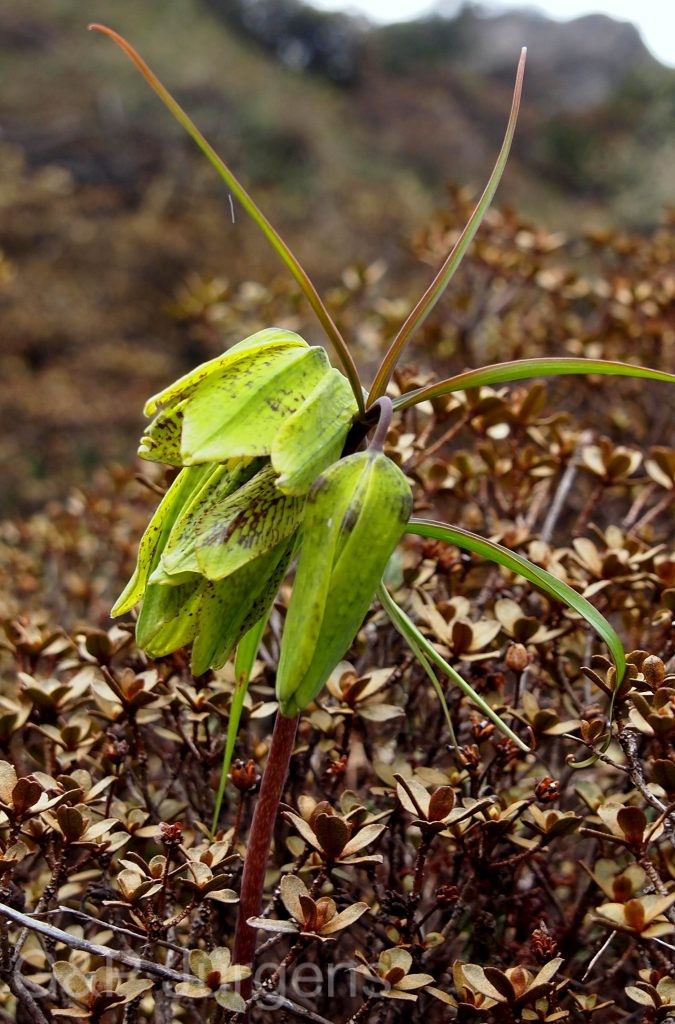
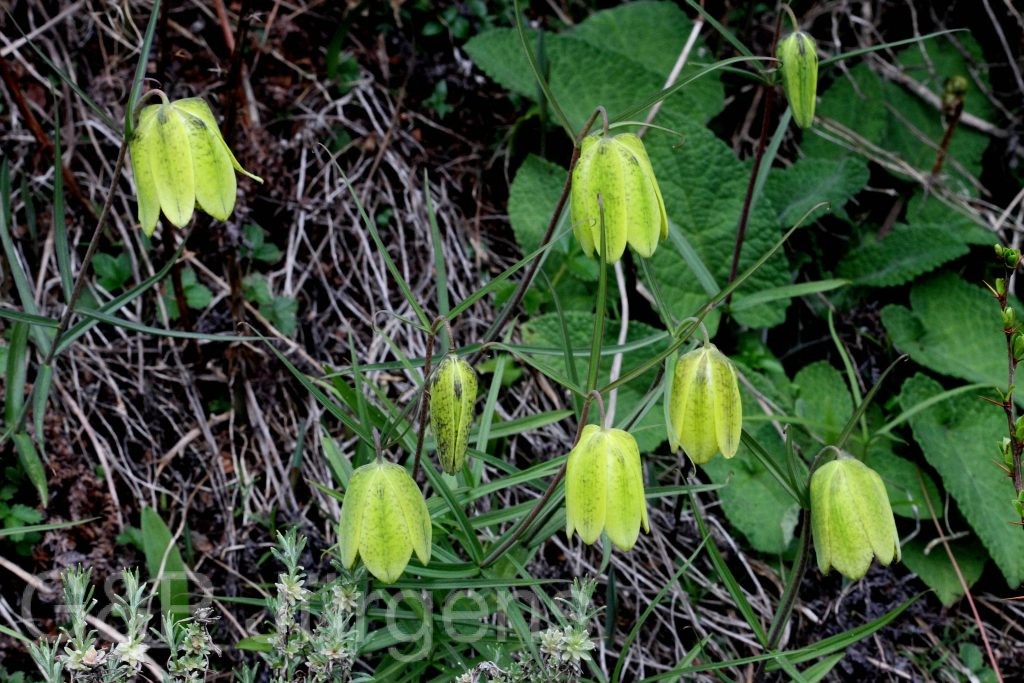
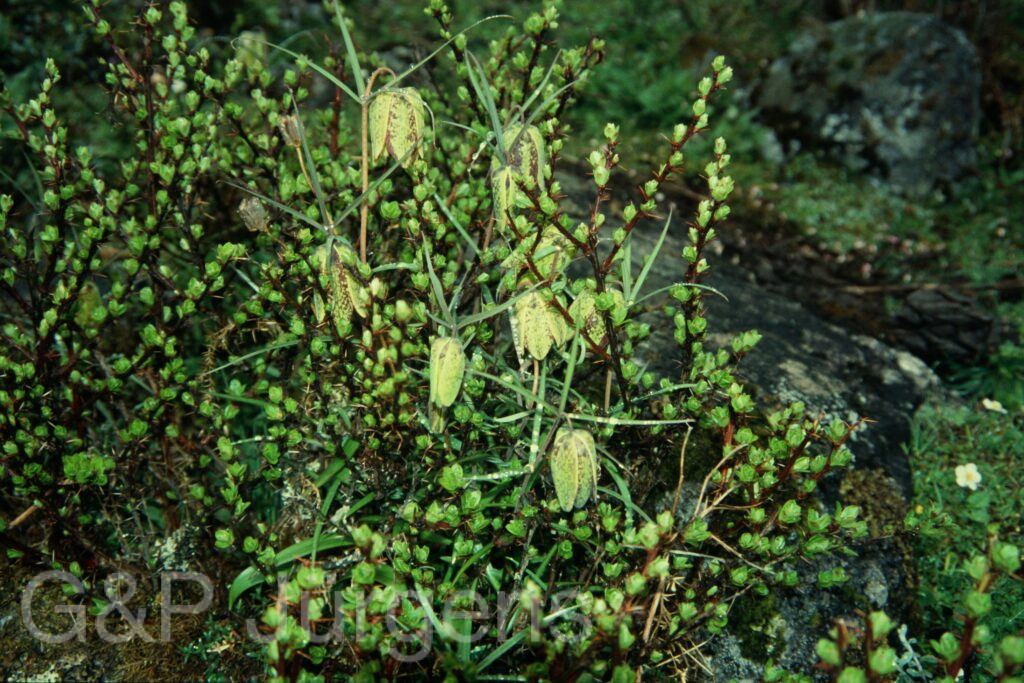
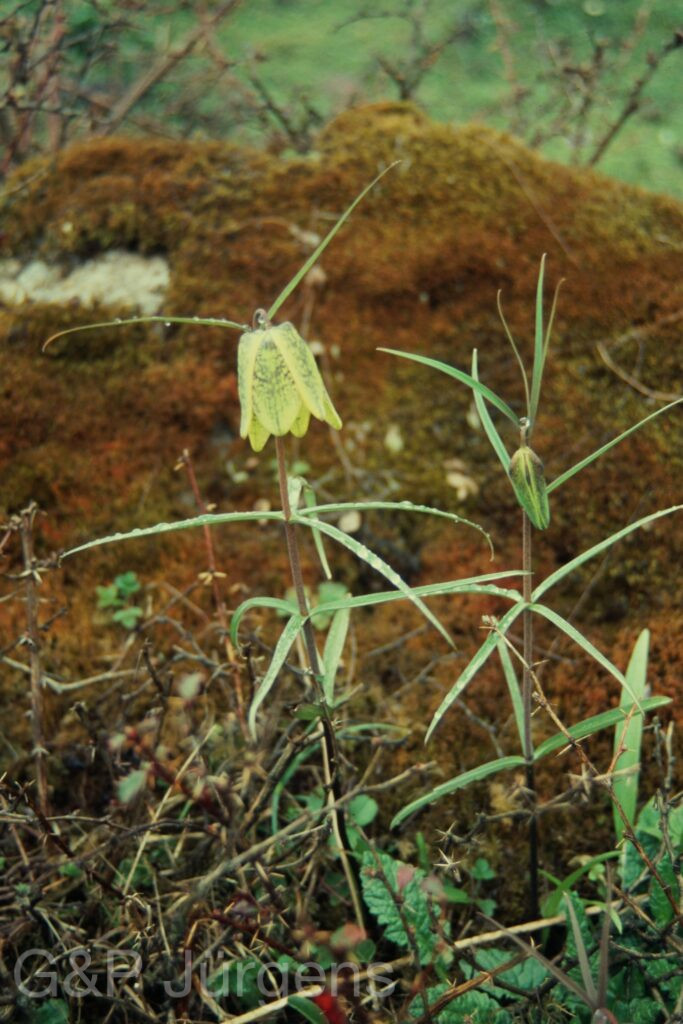
Fritillaria cirrhosa is a bulbous alpine lily of the Himalaya and the Hengduan mountains, native to China, India, Nepal, Pakistan, Bhutan and Myanmar, the very large total of c. 962 records reflecting its wide range and economic importance. It inhabits alpine meadows, scrub, rocky slopes, screes and grassy clearings, mostly between roughly 3200 and 4600 m. The illustrated plants were photographed at Tanghu in Sikkim at 3900 m in June and at Yumthang on the Sikkim/India border at 3700 m in May, sites characteristic of the species, which flowers shortly after snowmelt on cool, moist, well-drained high-montane ground.

It is a perennial herb arising from a small bulb of a few fleshy scales. The slender erect stem bears scattered to whorled, linear to lanceolate leaves, the uppermost of which are prolonged into slender, curling, tendril-like tips, the cirrhose feature from which the epithet derives. The flowers are usually solitary and nodding, broadly campanulate, with six tepals that are yellowish-green to purplish and conspicuously tessellated (chequered) with darker purple-brown; a nectary gland sits near the base of each tepal. The six stamens surround a superior trilocular ovary with a three-lobed style. The fruit is an erect, six-angled or narrowly winged loculicidal capsule.

Fritillaria (Liliaceae) is a Holarctic genus delimited by section on bulb structure, leaf arrangement and style form, and F. cirrhosa is a polymorphic species of the subgenus Fritillaria. Its dried bulb is the source of the renowned traditional Chinese medicine "chuan bei mu," used as an antitussive, and this heavy commercial harvesting is the principal conservation concern: although still widespread, the species is subject to intense wild collection, and the chuan bei mu trade has prompted cultivation efforts and regulatory attention across its range.

Author: D.Don · Sources: POWO (Kew), GBIF, Flora of China, Flowers of the Himalaya (Polunin & Stainton), Rix monograph of Fritillaria