Author

G & P Jürgens

Boiss.

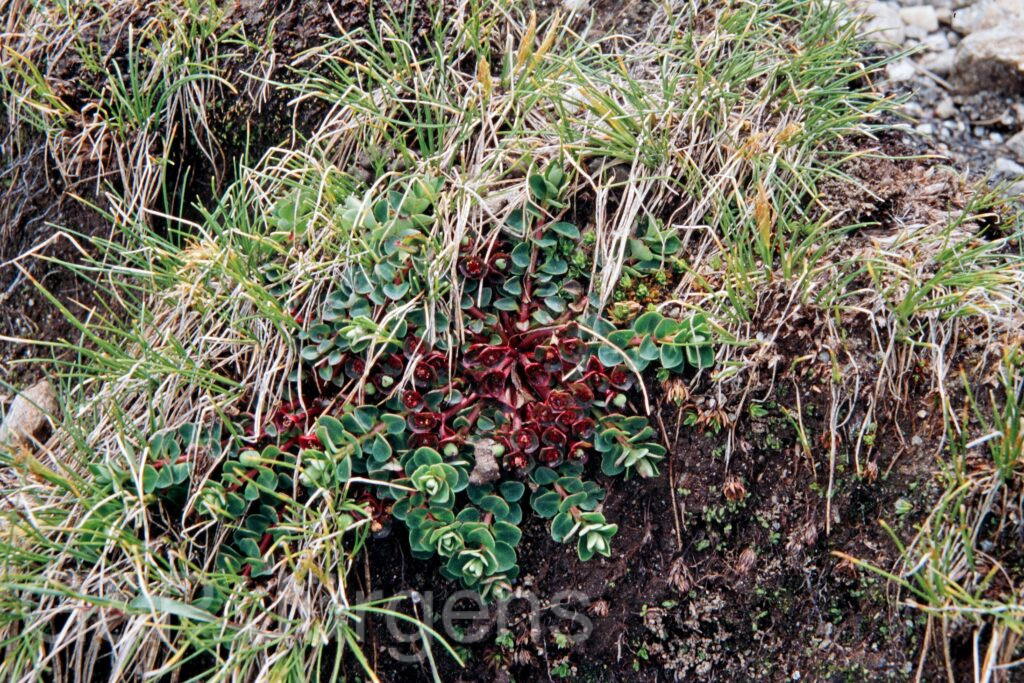
Nepal 99 313 ergebnis
West-Nepal Kalmura 4200m, June
Nepal 99 314 ergebnis
West-Nepal Kalmura 4200m, June

Description

Euphorbia stracheyi is a widespread high-altitude spurge of the Himalaya and the Tibetan Plateau, distributed from Nepal, northern India and Bhutan eastward into SW China, with outlying records southeast to Laos and Vietnam. The GBIF dataset, with around 946 occurrences across CN, NP, IN, BT, LA and VN, confirms this broad Sino-Himalayan range. The plant shown was photographed in western Nepal at Kalmura at about 4,200 m in June. It is a true alpine, growing on open stony slopes, gravelly pastures, moraine and turf between roughly 3,000 and 4,800 m, where its prostrate, mat-forming habit suits the cold, exposed and seasonally snow-covered ground.

The species arises from a slender, often elongate creeping rhizome bearing numerous decumbent to ascending reddish stems. The leaves are small, alternate, obovate to oblong and entire. As in all Euphorbia, the inflorescence is a cyathium: the apparent flowers are condensed pseudanthia in which crescent-shaped or transversely elliptic nectar glands surround reduced unisexual flowers, the female reduced to a single stalked tricarpellate ovary and the males to single stamens, the whole subtended by leafy, often reddish-tinged bracts. The fruit is a smooth three-lobed schizocarpic capsule that splits into three mericarps, releasing ovoid seeds; the plant exudes the milky latex typical of the genus.

Euphorbia stracheyi belongs to the subgenus Esula, a group of herbaceous spurges well represented at high elevations across central Asia. Its dwarf, cushion-like form and reddish coloration are adaptations to intense radiation and short growing seasons. The caustic latex deters herbivory and the species is locally common; it is not considered threatened, though like all Euphorbia it falls under CITES listing of the genus for trade-monitoring purposes.

Author: Boiss. · Sources: POWO (Kew), Flora of China Vol. 11, Flora of Bhutan Vol. 1, GBIF, Radcliffe-Smith: Euphorbia in the Flora of Pakistan
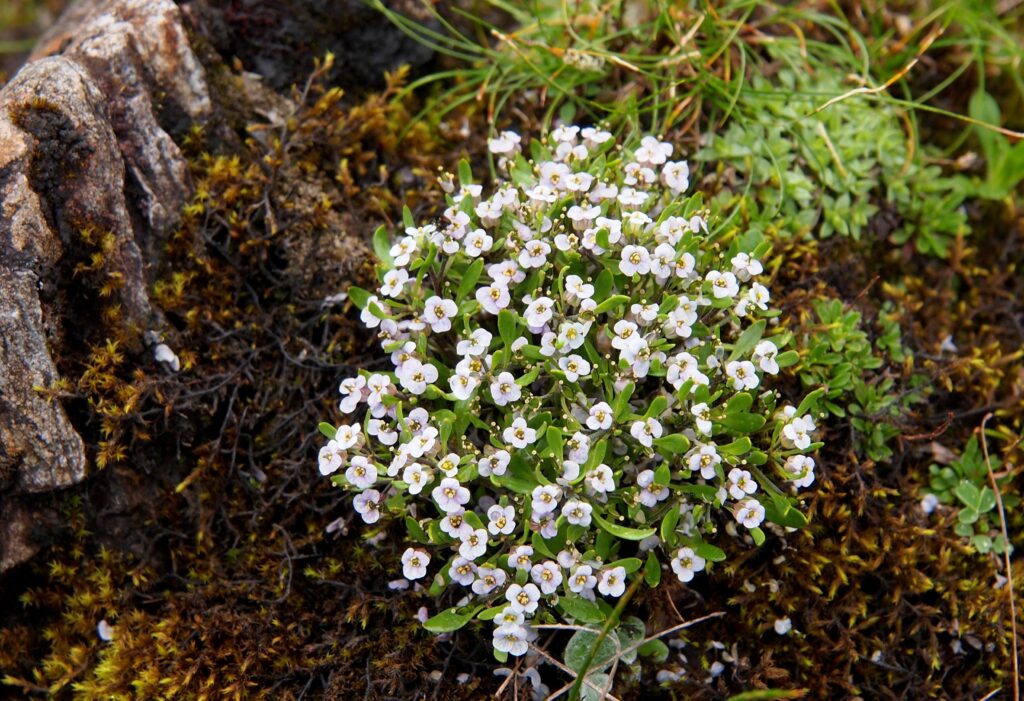
(W.W.Sm.) H.Hara

BhutanPG2011 656 ergebnis
Bhutan Thitha-Tso 4360m,July

Description

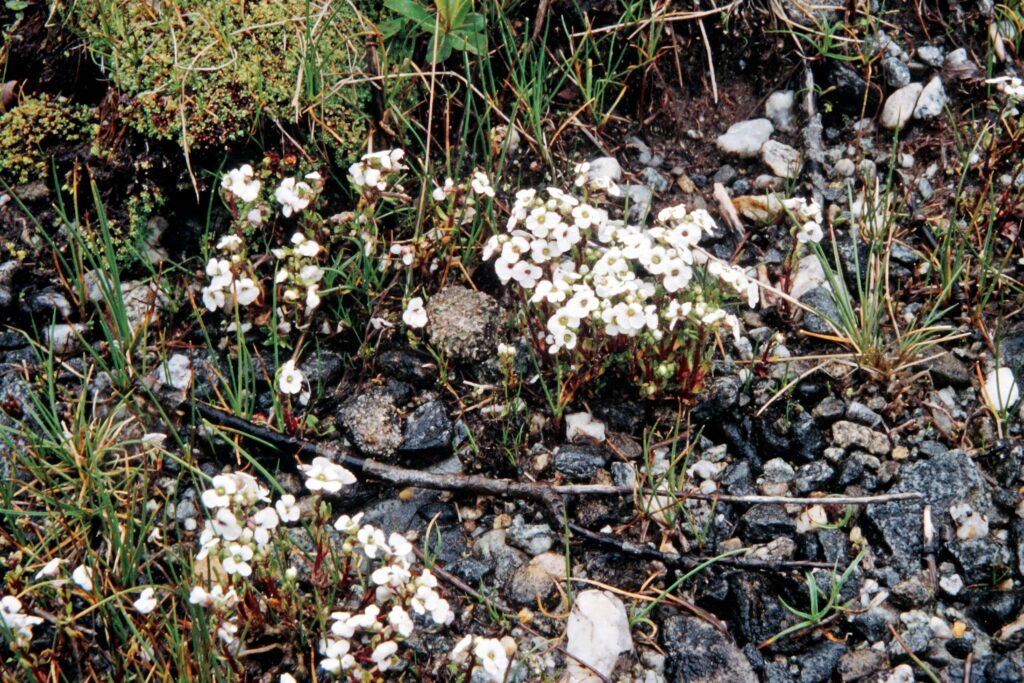
Eutrema heterophyllum is an alpine crucifer of the high mountains of central Asia and the Himalaya, recorded from China, Nepal, Bhutan, Japan, Tajikistan and Kyrgyzstan, with GBIF logging 226 occurrences. It grows on open alpine slopes, damp gravelly flats, screes and the moist margins of glacial lakes and snowmelt rills. The photographed plant comes from Thitha Tso in Bhutan at about 4360 m, flowering in July, a cold, high-elevation lakeside habitat typical of the species' upper-alpine preference.

It is a small, glabrous perennial or biennial herb arising from a slender rootstock, with one or more ascending stems. As the epithet heterophyllum signals, the foliage is variable: basal leaves are often petiolate and entire to lobed, while the cauline leaves differ in shape and become smaller upward. The flowers are borne in a terminal raceme, small, with four white petals in the cruciferous cross arrangement and six tetradynamous stamens. The fruit is a slender, somewhat flattened silique containing the seeds in a single row.

The taxon is accepted, having been transferred to Eutrema by H. Hara from W.W. Smith's original placement. Eutrema, the genus of wasabi, has been substantially recircumscribed by molecular work that drew in numerous small alpine Sino-Himalayan species formerly scattered among other crucifer genera. As a cold-adapted, broadly distributed high-altitude herb it exemplifies the central-Asian alpine element of the Himalayan flora and is unlikely to be threatened, though dependent on intact periglacial habitats.

Author: (W.W.Sm.) H.Hara · Sources: POWO (Kew), GBIF, Flora of China, Flora of Bhutan, Al-Shehbaz's systematic studies of Brassicaceae

(Jeffrey & W.W.Sm.) Al-Shehbaz & Warwick

Nepal 99 525 ergebnis
Nepal Churt-Khola 3500m, July

Description

Eutrema verticillatum is a high-alpine crucifer of the Sino-Himalayan region, recorded from Nepal and adjacent SW China, with 96 GBIF occurrences indicating a relatively narrow, high-elevation distribution. It occupies open alpine turf, gravelly slopes, moist screes, streamsides and snow-flush ground in the upper alpine zone. The collection from the Churt Khola in Nepal at about 3,500 m in July is consistent with its summer flowering in cold, moist high-mountain habitats, where it grows as a low herb among rock and short alpine vegetation.

It is a glabrous perennial herb arising from a slender rootstock, with one to several erect or ascending stems. The basal and lower cauline leaves are petiolate and entire to slightly toothed, the upper leaves becoming sessile; the specific epithet alludes to a crowded, apparently whorled arrangement of leaves or flowers along the stem. The inflorescence is a terminal raceme of small white to pale flowers with the four petals and tetradynamous stamens typical of the family. The fruit is a silique or short silicula, the valves with a distinct midvein, dehiscing to release the seeds, as is characteristic of Eutrema.

The input family is recorded as "Uncategorized," but the species belongs to Brassicaceae (tribe Eutremeae); the binomial follows the recircumscription of Eutrema by Al-Shehbaz and Warwick, who transferred this taxon (basionym in Smelowskia/Braya) into the genus, and GBIF treats it as accepted. As a narrowly distributed Himalayan high-alpine endemic with few records, it warrants monitoring, though no formal conservation assessment is established.

Author: (Jeffrey & W.W.Sm.) Al-Shehbaz & Warwick · Sources: POWO (Kew), Flora of China Vol. 8, Flora of Nepal, GBIF, Al-Shehbaz & Warwick: Eutrema (Brassicaceae) revision (2005)

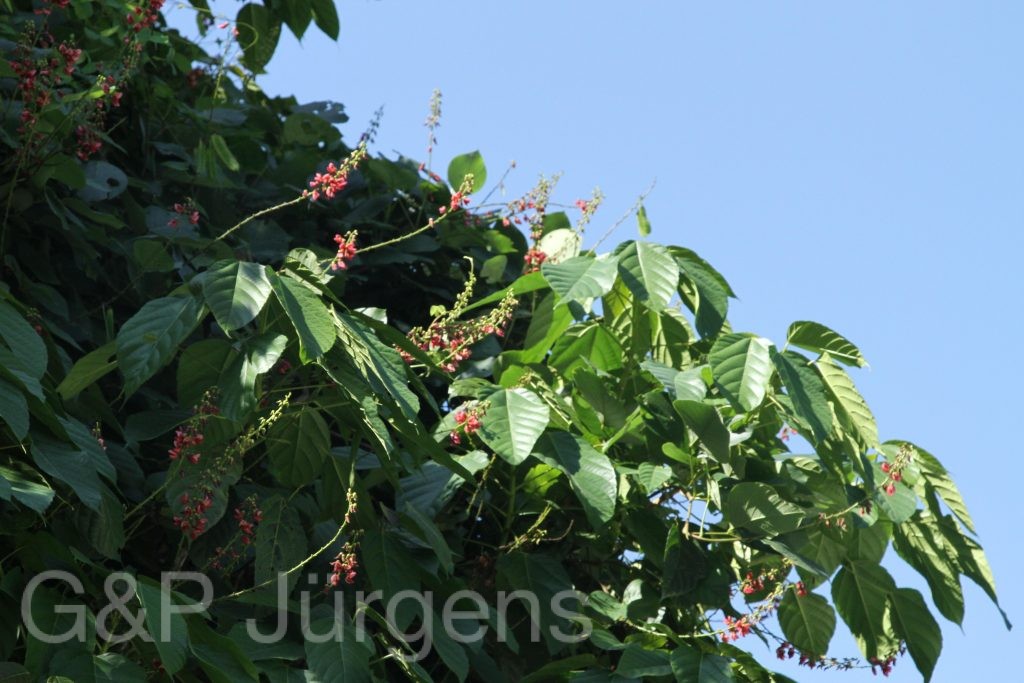
Wall. ex Benth.

Bhutan2015 109
Bhutan Galephu 500m, October

Description

Flemingia paniculata Wall. ex Benth. is a subshrubby legume of the warm submontane belt of tropical and subtropical Asia, recorded from Thailand, Myanmar, India, Nepal, Malaysia, China, Bhutan, Laos and the Philippines, with about 106 georeferenced occurrences in GBIF. It grows in open forest, scrub, grassy slopes, forest margins and disturbed ground at low to moderate elevations, broadly from near sea level to around 1500 m. The photographed plant was found at Galephu in southern Bhutan at about 500 m in October, in the hot, humid foothill zone where the species flourishes in seasonally dry secondary vegetation.

The plant is an erect or ascending perennial herb or small shrub with ribbed, often pubescent stems. The leaves are characteristically unifoliolate (reduced to a single leaflet, unlike the trifoliolate condition of many congeners), the blade ovate to elliptic, prominently veined and frequently glandular, subtended by persistent stipules. The flowers are borne in dense terminal and axillary panicles; the papilionaceous corolla is typically purplish to pinkish, enclosed by a calyx whose lobes are unequal. The fruit is a small, inflated, two-seeded legume that is somewhat hairy and gland-dotted, dehiscing to release the seeds.

Flemingia belongs to the tribe Phaseoleae and is closely allied to Cajanus, distinguished by its glandular indumentum and pod structure; the genus has medicinal and dye uses across its range, several species yielding the orange resin known as waras. Plants help colonise disturbed and degraded slopes and, as nitrogen-fixing legumes, contribute to soil enrichment. The species is widespread and not of conservation concern, though its foothill habitats face pressure from agricultural expansion.

Author: Wall. ex Benth. · Sources: POWO (Kew), GBIF, Flora of China, Flora of Bhutan, Flora of Thailand, Lewis et al. Legumes of the World

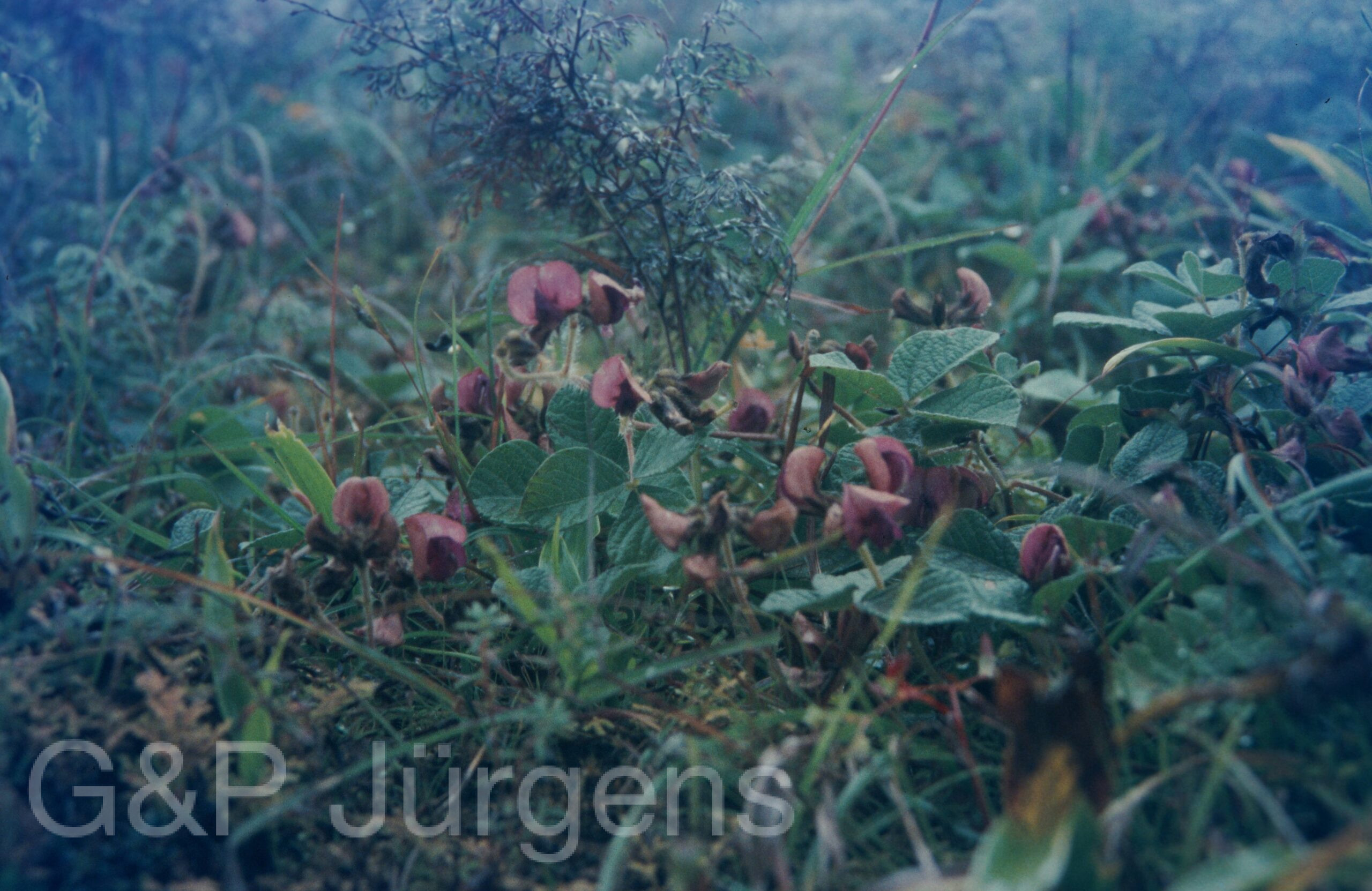
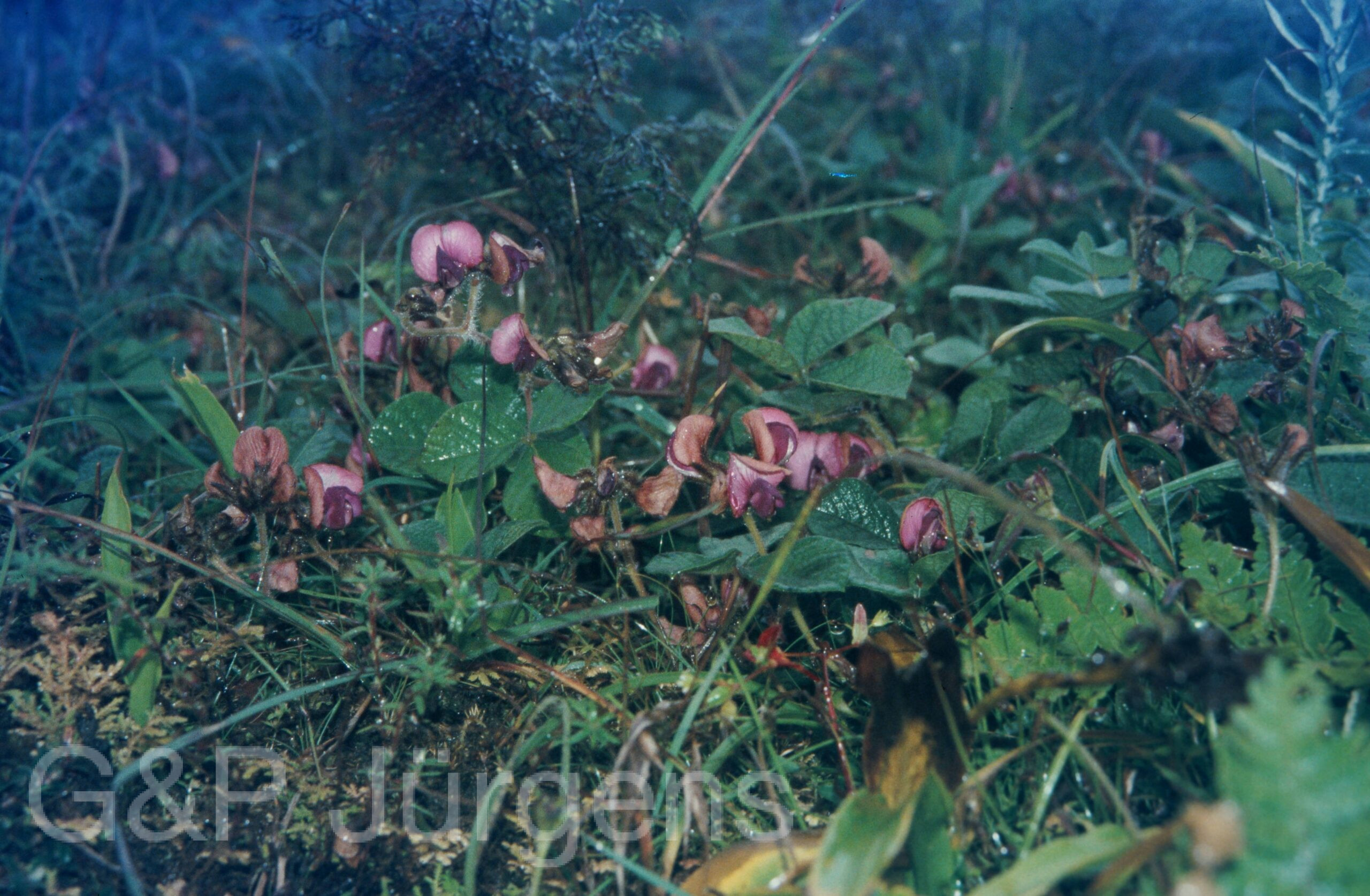
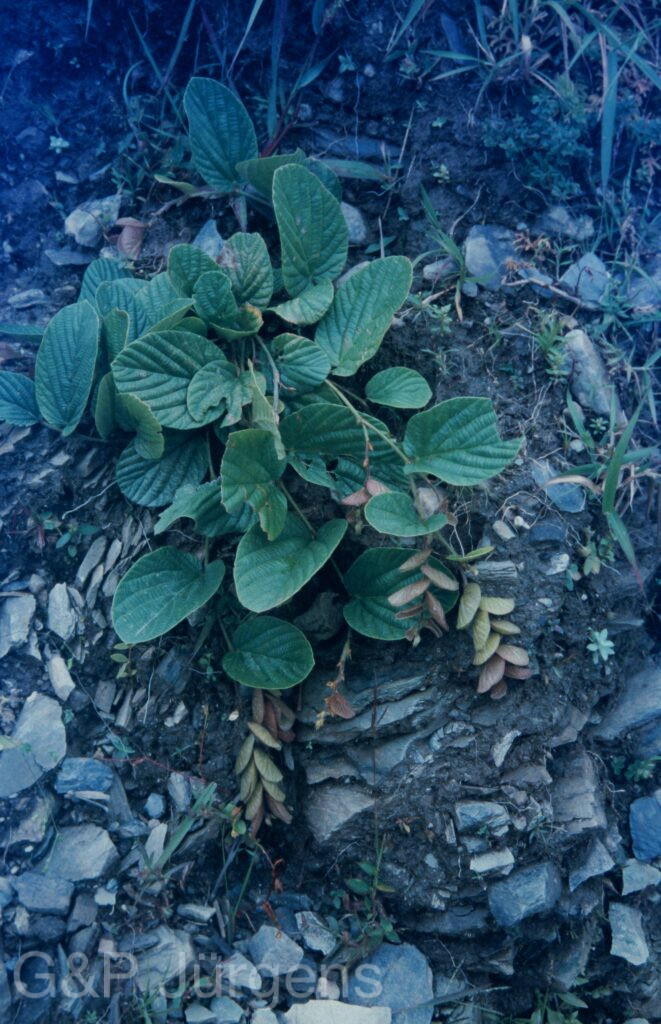
Roxb.

Description

Flemingia procumbens is a prostrate, sub-Himalayan legume distributed from the western Himalaya eastward through Nepal into southern China, with scattered records reaching Laos and New Guinea. GBIF documents some 61 occurrences across India, China, Nepal, Laos and Papua New Guinea, reflecting a discontinuous range spanning warm-temperate montane slopes and submontane grasslands. The species favours open, sunny banks, terraced field margins, dry hill grasslands and stony, well-drained soils, typically flowering in late summer and early autumn. The material illustrated here was gathered in India at Garhwal, Simkarok, at about 2600 m in September, an elevation characteristic of its mid-altitude preference along the outer Himalayan ranges.

The plant is a low perennial herb or subshrub with trailing to decumbent, often somewhat woody stems arising from a stout rootstock, the younger branches finely pubescent. The leaves are pinnately trifoliolate with prominent stipules, the leaflets elliptic to obovate, entire-margined and glandular-punctate beneath, borne on short petiolules. Small papilionaceous flowers, pink to purplish, are aggregated in dense axillary or terminal racemes subtended by bracts; the calyx is deeply lobed and the standard petal exceeds the wings and keel. The fruit is a small, turgid, two-seeded pod which dehisces explosively at maturity, releasing minute, smooth seeds.

Flemingia is a genus of the tribe Phaseoleae closely allied to Moghania and frequently subsumed within or segregated from it by various authors; the gland-dotted foliage and inflated pods are diagnostic of the group. Several species yield the orange resinous dye and dusting powder known as waras, harvested from glandular hairs of the inflorescences. F. procumbens has no recognised conservation concern given its broad if sparse distribution, though montane grassland habitats face pressure from grazing and land conversion.

Author: Roxb. · Sources: POWO (Kew), GBIF, Flora of China, Flora of British India, The Legumes of the Indian Subcontinent, A Revision of the Genus Flemingia (Leguminosae-Papilionoideae)

(L.) W.T.Aiton

Garw 2005 246 ergebnis ergebnis
India Garhwal Sitel 1850m, September

Description

Flemingia strobilifera is a widespread shrub of tropical and subtropical Asia, now pantropical through introduction, recorded from India, China, Nepal, Myanmar, Thailand, Taiwan, the Philippines, Malaysia, Indonesia, Papua New Guinea and numerous tropical American localities; its roughly 3874 georeferenced records make it by far the most abundantly documented species in this group. It thrives in open forest, scrub, grassland, roadsides and disturbed ground from the lowlands to about 1900 m. The plant photographed at Sitel in the Garhwal Himalaya at 1850 m, flowering in September, marks the upper subtropical edge of its Himalayan range.

It is an erect, branching shrub to about 1-2 m with finely pubescent, angled stems. The leaves are simple (not trifoliolate as in most relatives), ovate to elliptic, acuminate, with three prominent basal veins and entire margins. The species is at once recognised by its inflorescence: the small purplish papilionaceous flowers are enclosed within conspicuous, accrescent, folded and reniform bracts that overlap to form a cone- or strobilus-like cluster, hence the epithet strobilifera. The fruit is a small, inflated, two-seeded pod hidden among the persistent bracts.

Flemingia, of tribe Phaseoleae, is distinguished from Cajanus and allies by its glandular pods and, in this species, the showy enclosing bracts. F. strobilifera is highly variable and several infraspecific forms have been recognised. It is widely used in folk medicine and as a green manure and cover crop, and its nitrogen-fixing root nodules aid soil improvement on poor ground. A vigorous coloniser, it is locally regarded as weedy and is of no conservation concern.

Author: (L.) W.T.Aiton · Sources: POWO (Kew), GBIF, Flora of China, Flora of British India, Annotated Checklist of the Flowering Plants of Nepal, Mukerjee revision of Flemingia

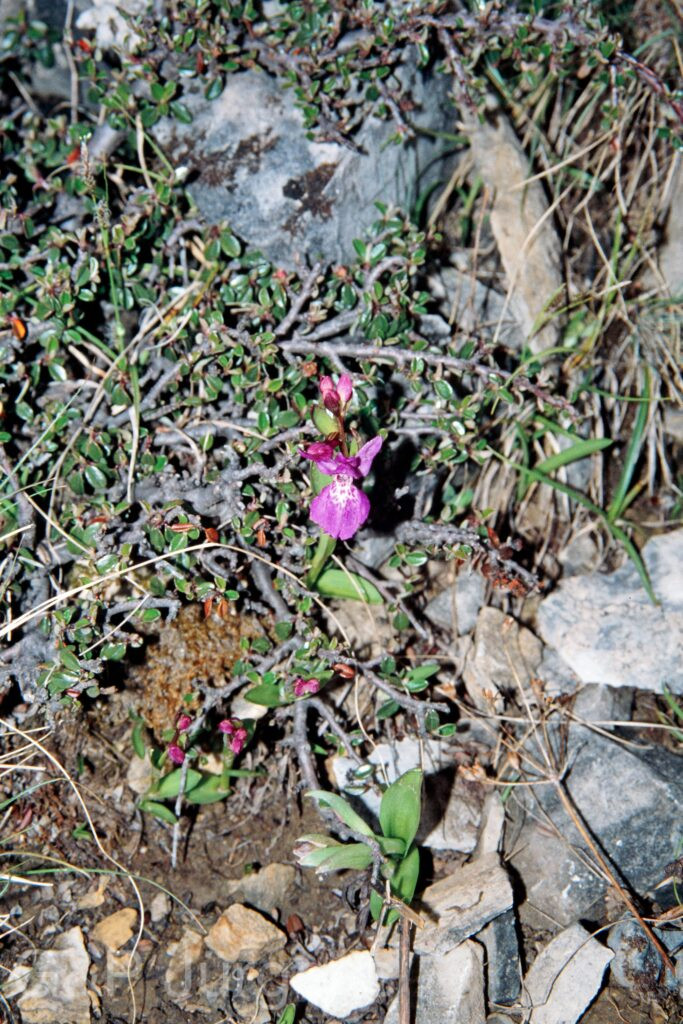
(Maxim.) S.C.Chen, P.J.Cribb & S.W.Gale

Nepal 99 34 ergebnis
West-Nepal Chere 3000m June

Description

Galearis roborovskii is a terrestrial orchid distributed across the high mountains of Central and East Asia, with georeferenced records documented from China, Nepal, Bhutan, India, Myanmar, Japan and Russia, comprising about 154 occurrences in GBIF. It is a plant of cool, moist alpine and subalpine habitats, favouring open meadows, grassy slopes, streambanks and forest margins where snowmelt maintains soil moisture through the growing season. The species generally occurs between roughly 2500 and 4000 m, and the population photographed at Chere in West Nepal at about 3000 m in June, at the onset of the monsoon flowering season, falls within this montane belt.

It is a small, glabrous, tuberous geophyte arising from ovoid to oblong fleshy tuberoids. The slender, erect stem bears one or two basal leaves that are oblong-elliptic to lanceolate, sheathing at the base and often fleshy. The inflorescence is a short, few-flowered terminal raceme subtended by leaf-like bracts. The flowers are purple to rose-pink, with the dorsal sepal and petals converging to form a loose hood (galea) over the column; the lateral sepals spread or are reflexed, and the trilobed labellum is deflexed and produced basally into a slender, cylindric to clavate spur. The fruit is a small erect dehiscent capsule releasing abundant dust-like seeds.

The genus Galearis was resurrected and recircumscribed on molecular grounds, and this species was transferred from Orchis by S.C.Chen, P.J.Cribb and S.W.Gale; it sits within subtribe Orchidinae. Like most temperate terrestrial orchids it depends on mycorrhizal fungi for germination and establishment, rendering it sensitive to grazing, trampling and habitat disturbance. Though presently widespread and not formally assessed as threatened across its broad Himalayan to Sino-Russian range, localised populations warrant monitoring against alpine land-use pressures.

Author: (Maxim.) S.C.Chen, P.J.Cribb & S.W.Gale · Sources: POWO (Kew), GBIF, Flora of China, Flora of Bhutan, Flora of Nepal, Pearce & Cribb The Orchids of Bhutan

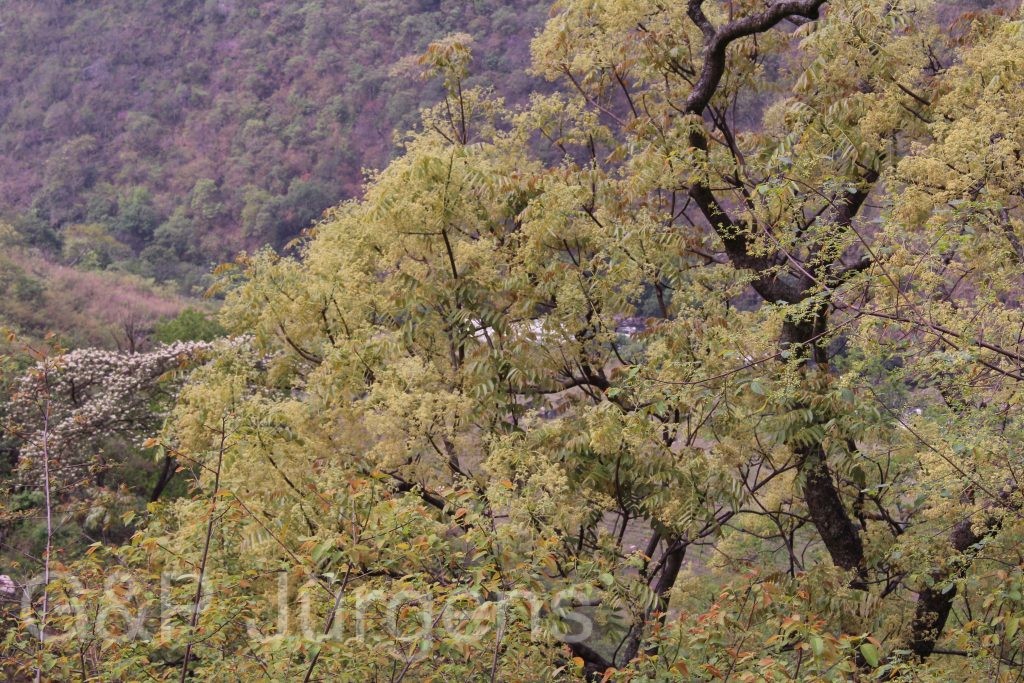
Decne.

Bhutan2014 140
Bhutan Trashigang 1600m, May
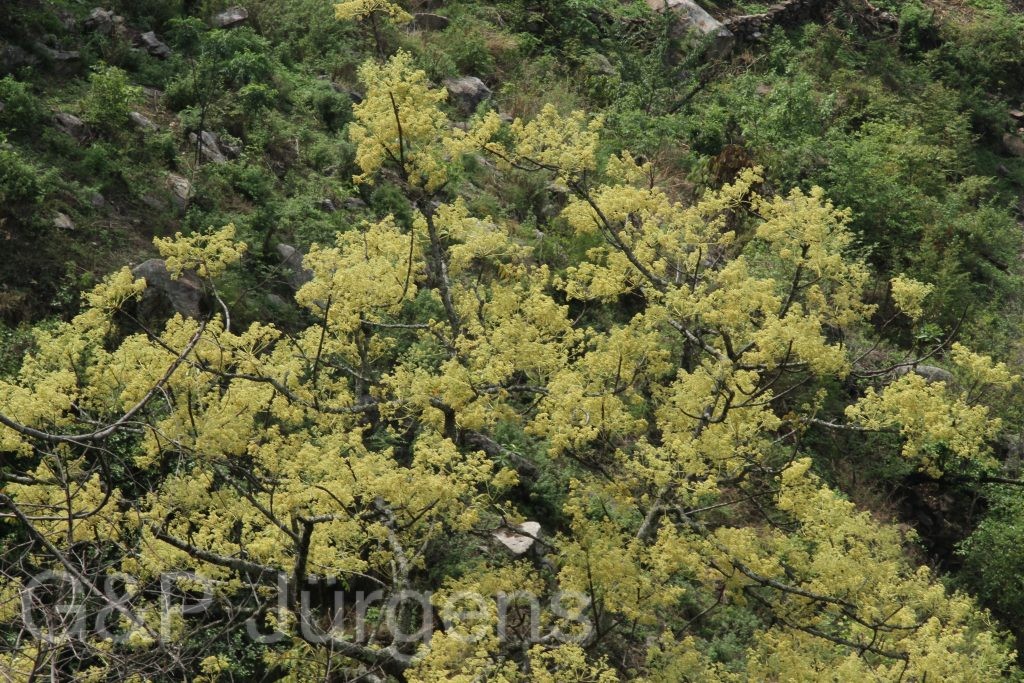
Bhutan2014 142
Bhutan Trashigang 1600m, May

Description

Garuga floribunda is a tree of broad Indo-Pacific distribution, ranging from the Himalayan foothills and southern China through Southeast Asia and Malesia to New Guinea, Australia and the islands of the western Pacific, with over 1300 occurrences in GBIF spanning countries from India and Bhutan to the Philippines, Vanuatu, Samoa and Tonga. It is a component of seasonally dry and monsoon forest, secondary forest, open hillsides and coastal to lowland woodland, generally at low to moderate elevations though ascending into the foothills. The individual photographed at Trashigang in eastern Bhutan at 1600 m in May, near the upper, north-western limit of the species, illustrates its presence in the warm subtropical hill forest of the eastern Himalaya.

The plant is a medium to large deciduous tree with imparipinnate, alternate, often crowded leaves clustered toward the branch ends, the leaflets opposite, serrate and frequently pubescent, the foliage typically flushing reddish when young. The flowers, produced in profusion in large terminal and axillary panicles (hence floribunda), are small and yellowish to greenish-white, five-merous, with the petals borne on the rim of a cup-shaped floral receptacle and the stamens inserted around a fleshy disc. The fruit is a small, fleshy, globose drupe ripening dark, containing a hard, ridged stone with one to several seeds.

Garuga is a small genus of the resin-producing family Burseraceae, the frankincense and myrrh family, and like many of its relatives the bark exudes an aromatic resin. The genus differs from most Burseraceae in its pinnate, toothed leaves and abundant small flowers. The species is wide-ranging and ecologically versatile, occurring on a variety of soils in seasonal climates, and is bird- and animal-dispersed via its fleshy drupes. It is widespread and common across its enormous range and is not regarded as threatened, being locally used for timber, fodder and as a source of resin.

Author: Decne. · Sources: POWO (Kew), GBIF, Flora of China Vol. 11, Flora of Bhutan Vol. 2, Flora Malesiana (Burseraceae), A Monograph of the Genus Garuga (Burseraceae)

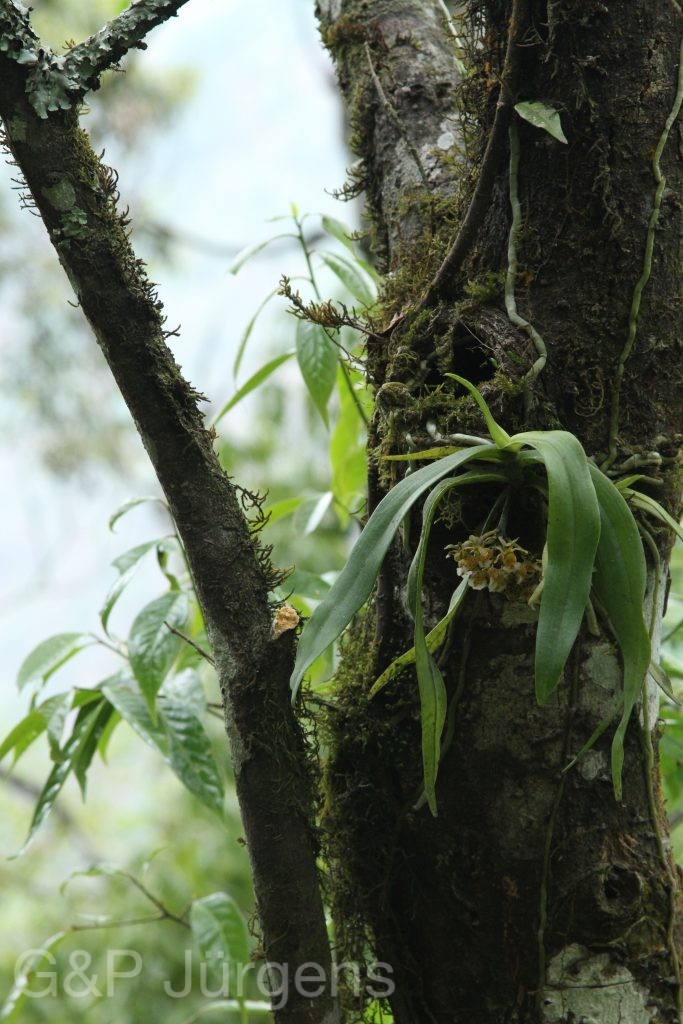
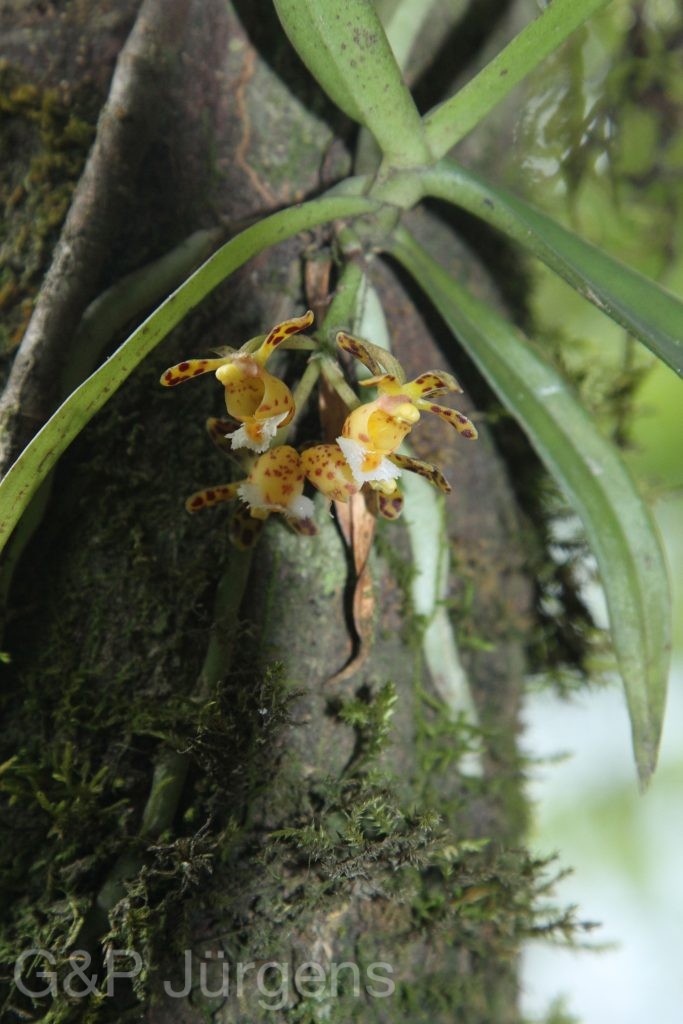
(Buch.-Ham. ex Sm.) D.Don

Bhutan2014 463
Bhutan Trongtsa 2030m, May
Bhutan2014 464
Bhutan Trongtsa 2030m, May

Description

Gastrochilus calceolaris is a widespread epiphytic orchid of the eastern Himalaya and tropical-subtropical Asia, recorded by GBIF from China, India, Nepal, Bhutan, Myanmar and onwards through Vietnam, Thailand, Malaysia, the Philippines and Indonesia, with 356 georeferenced occurrences. It grows on the trunks and branches of broadleaved evergreen trees in humid montane and lower temperate forest, typically between about 1000 and 2300 m. The plant illustrated was photographed near Trongtsa (Trongsa) in central Bhutan at 2030 m in May, a setting of mossy oak and rhododendron forest where atmospheric moisture favours vandaceous epiphytes.

The species is a monopodial epiphyte with a short, stout stem clad in the persistent sheathing bases of distichous, ligulate to oblong leaves that are coriaceous and unequally bilobed at the apex. Numerous flexuous aerial roots anchor the plant. The short, pendent racemes bear several to many subumbellate flowers; the sepals and petals are yellowish green blotched with reddish brown. The labellum is three-lobed with a conspicuous saccate, helmet- or slipper-shaped hypochile (the source of the epithet calceolaris) and a fringed, transversely oblong epichile bearing a hairy central callus. The column is short and the pollinia are waxy.

First described as Aerides calceolaris by Buchanan-Hamilton ex Smith and transferred to Gastrochilus by D. Don, the species is the type-bearing representative of a genus of some five dozen Asian epiphytes segregated from Saccolabium. Though locally frequent across a vast range and not assessed as globally threatened, populations are vulnerable to forest clearance and to collection for the ornamental orchid trade.

Author: (Buch.-Ham. ex Sm.) D.Don · Sources: POWO (Kew), GBIF, Flora of Bhutan, Flora of China, The Genus Gastrochilus (Z.H. Tsi monograph), Orchids of Bhutan

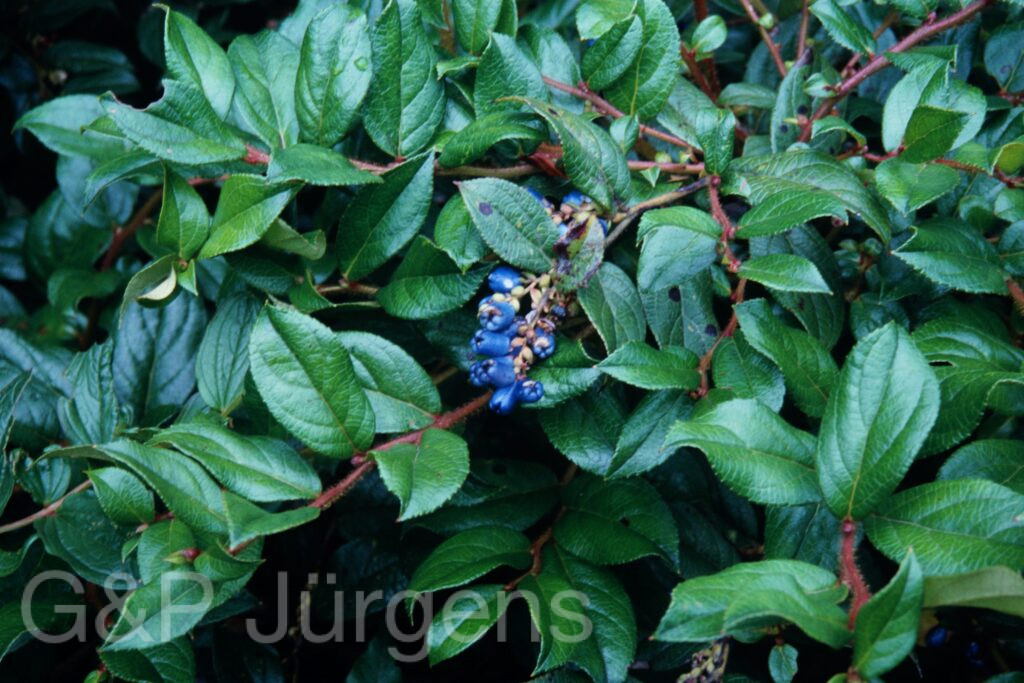
C.B.Clarke

Sikkim2003 409 P569
Sikkim Zemu Valley 3400m August

Description

Gaultheria hookeri is an evergreen shrub native to the eastern Himalayas and extending into southwestern China and northern Myanmar. Its range encompasses Nepal, northeast India (Sikkim, Arunachal Pradesh), Bhutan, Myanmar, and China (Yunnan, Xizang, Sichuan). The species is a characteristic element of upper temperate to subalpine forests, occurring at elevations of 2,500–4,000 m in Rhododendron-Abies forests, bamboo thickets, and along stream margins. It is well documented from the Zemu Valley in Sikkim at 3,400 m, where it can be found growing in the understorey of dense montane forests during August.
Gaultheria hookeri forms a densely branched, spreading to erect shrub 0.3–1.5 m tall. The young branchlets are setose-hispid with rusty brown hairs. The leaves are alternate, coriaceous, ovate to elliptic-ovate, 4–10 cm long, with a serrate to serrulate margin, the veins impressed above and prominent beneath. The flowers are borne in short axillary racemes; each flower has a campanulate to urceolate corolla, white to pinkish, 4–6 mm long. The calyx is five-lobed and becomes fleshy and enlarged in fruit, enclosing the capsule to form a conspicuous, globose, fleshy pseudoberry that is blue to deep purple-black at maturity, 8–12 mm in diameter.
Described by C.B. Clarke and named in honour of Sir Joseph Dalton Hooker, who extensively explored the Sikkim Himalaya, G. hookeri is one of the more robust and widely collected species in the genus across the eastern Himalayan region. With over 750 occurrence records in GBIF, it is comparatively well documented. The species is of ecological importance as a food source for montane birds and mammals that disperse its fleshy fruits. Its aromatic, wintergreen-scented foliage, rich in methyl salicylate, is occasionally used in traditional medicine. The species has also been introduced to cultivation in botanical gardens in Europe and North America.

Author: C.B.Clarke · Sources: POWO (Kew), GBIF, Flora of Bhutan Vol. 2, Flora of China Vol. 14, Hooker: Flora of British India Vol. 3 (1882)