Tag:

Alpine (>3500 m)

Maxim.

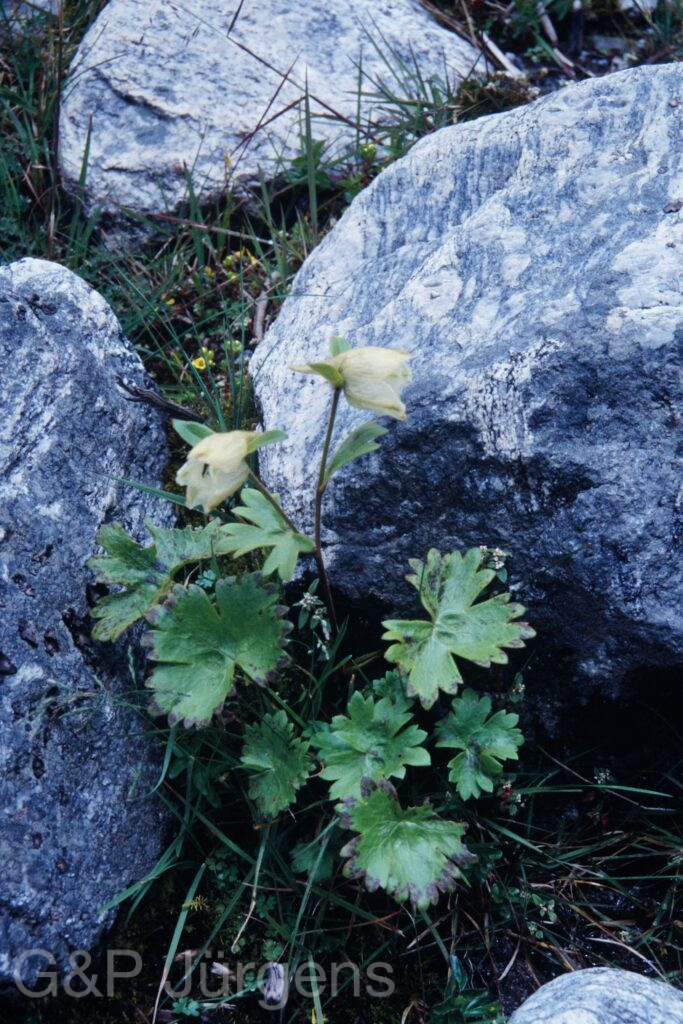
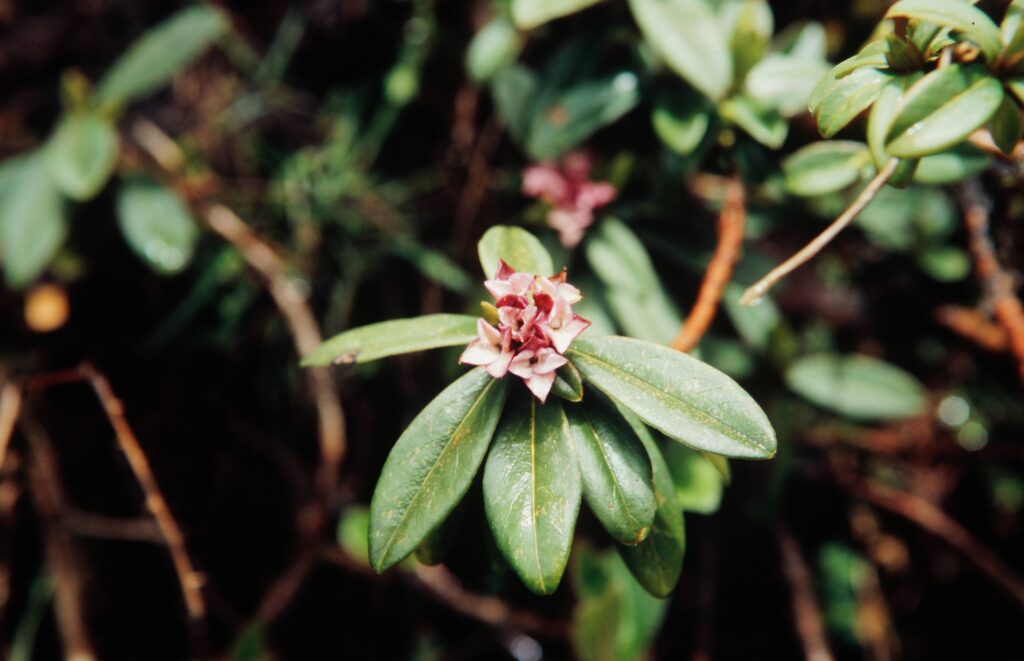
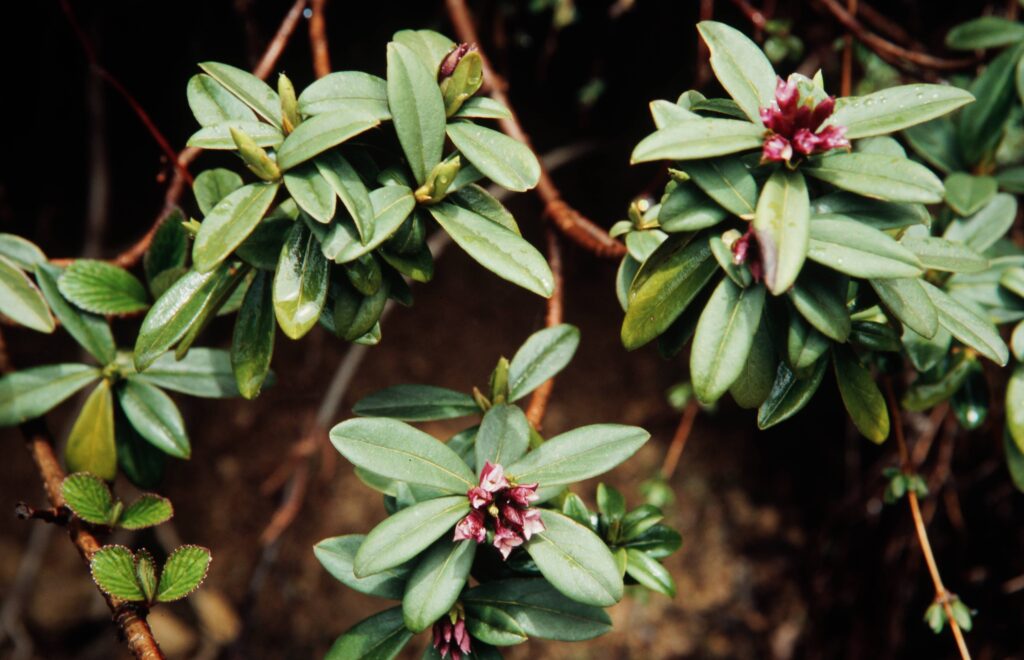
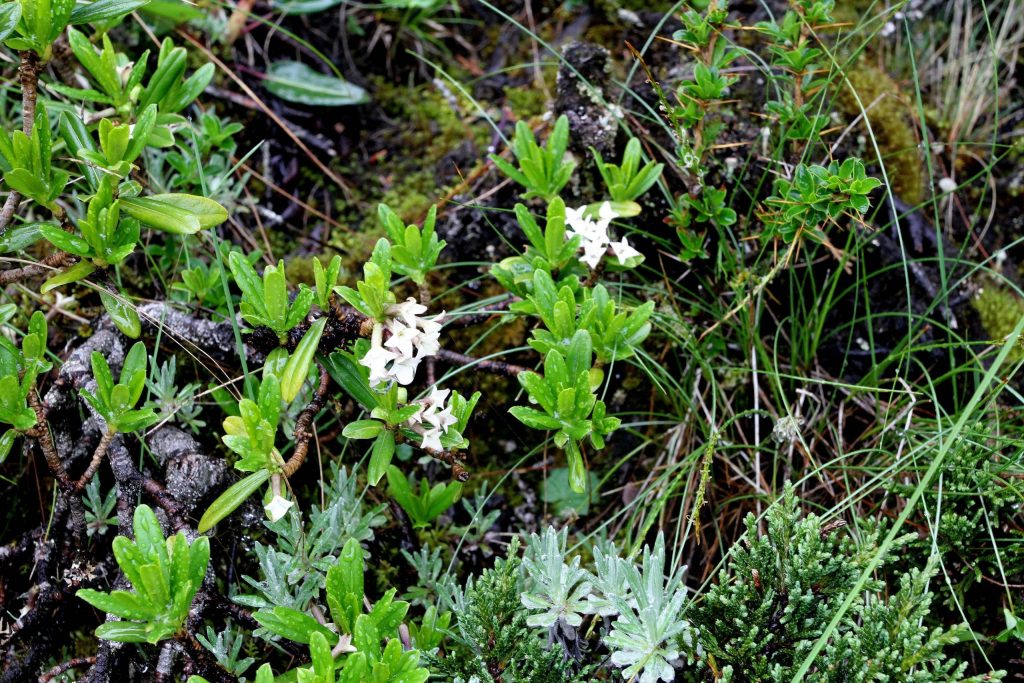
BhutanPG2011 486 scaled
Bhutan Ludlow-Sherriff-Trail Warrtlang-La, 4350m June

Description

Daphne tangutica is distributed across a broad elevational and geographical range from the eastern Himalayas to central and western China, with the core of its distribution in Sichuan, Gansu, and Qinghai provinces. GBIF records over 1,150 occurrences, predominantly from China, with additional records from Bhutan, India, Nepal, and Pakistan. The species inhabits Rhododendron scrub, alpine meadows, rocky slopes, and open coniferous forest margins at 2,500–4,500 m elevation. Collections from Tamrong in West Bengal at 3,200 m and from the Warrtlang-La along the Ludlow–Sherriff Trail in Bhutan at 4,350 m demonstrate its remarkable altitudinal amplitude within the eastern Himalayan region.
Daphne tangutica is an evergreen shrub, typically 0.5–1.5 m tall, compact and densely branched. Leaves are alternate, clustered towards the branch tips, oblanceolate to elliptic, 3–8 cm long, coriaceous, dark glossy green above and paler beneath, with entire revolute margins. Flowers are borne in dense terminal clusters of 3–8, each flower with a tubular hypanthium 10–14 mm long, the four spreading lobes white internally and purplish-rose externally. The flowers are intensely fragrant. Stamens are eight, in two whorls, inserted on the hypanthium tube. The fruit is an ovoid drupe, 6–8 mm long, red at maturity, containing a single seed.
Daphne tangutica was described by Maximowicz in 1882 from material collected in Gansu. It is closely related to D. retusa, and the two species have been confused in herbaria; D. tangutica is generally distinguished by its longer, more lanceolate leaves and more elongate hypanthium tube. The occurrence at 4,350 m on the Warrtlang-La approaches the upper limit for any Daphne species in the Himalayas and attests to the species' tolerance of extreme alpine conditions. It has been widely introduced into horticulture in Europe and North America, prized for its fragrant spring flowers and compact evergreen habit.

Author: Maxim. · Sources: POWO (Kew), GBIF, Flora of China Vol. 13, Flora of Bhutan Vol. 2, Brickell & Mathew: Daphne — The Genus in the Wild and in Cultivation (1976)
Royle

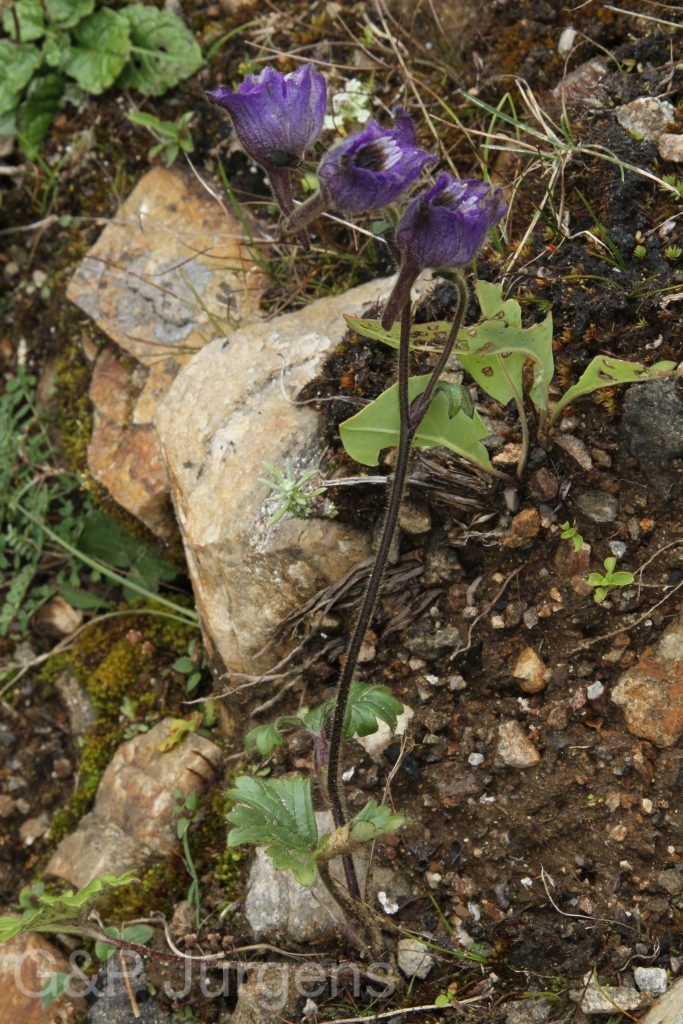
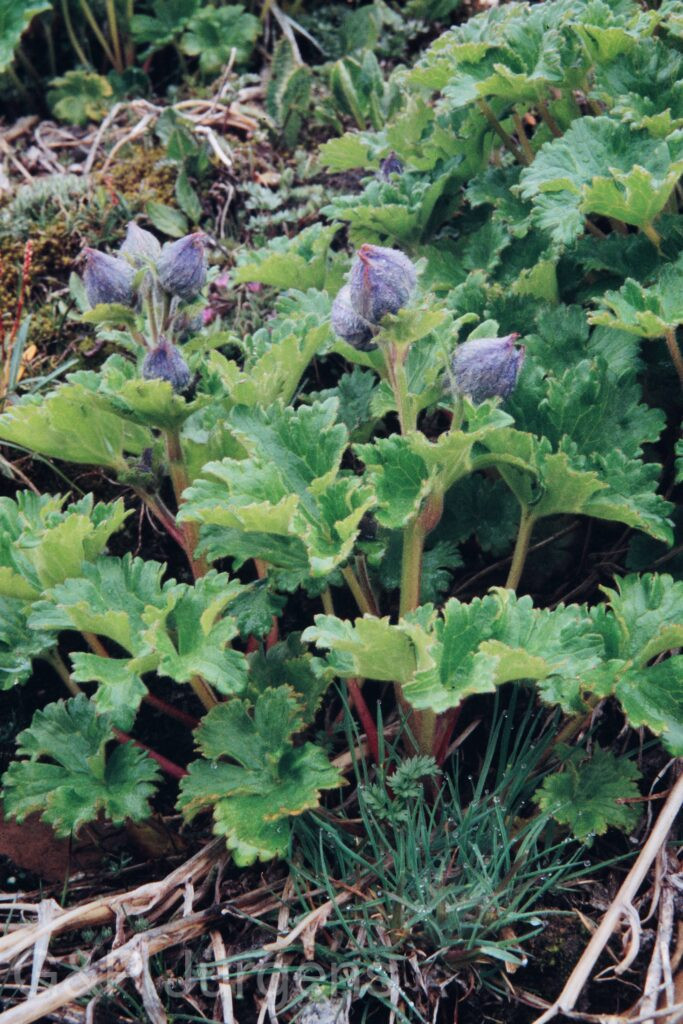
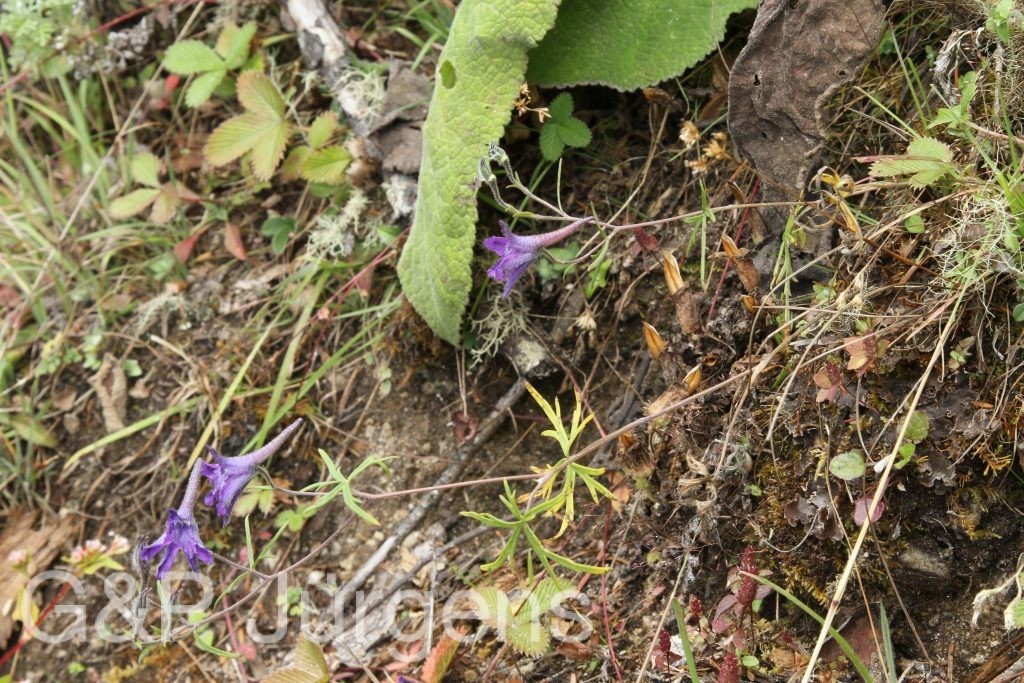
Nepal 99 666 ergebnis
West-Nepal Kagmara-La 5500m, July

Description

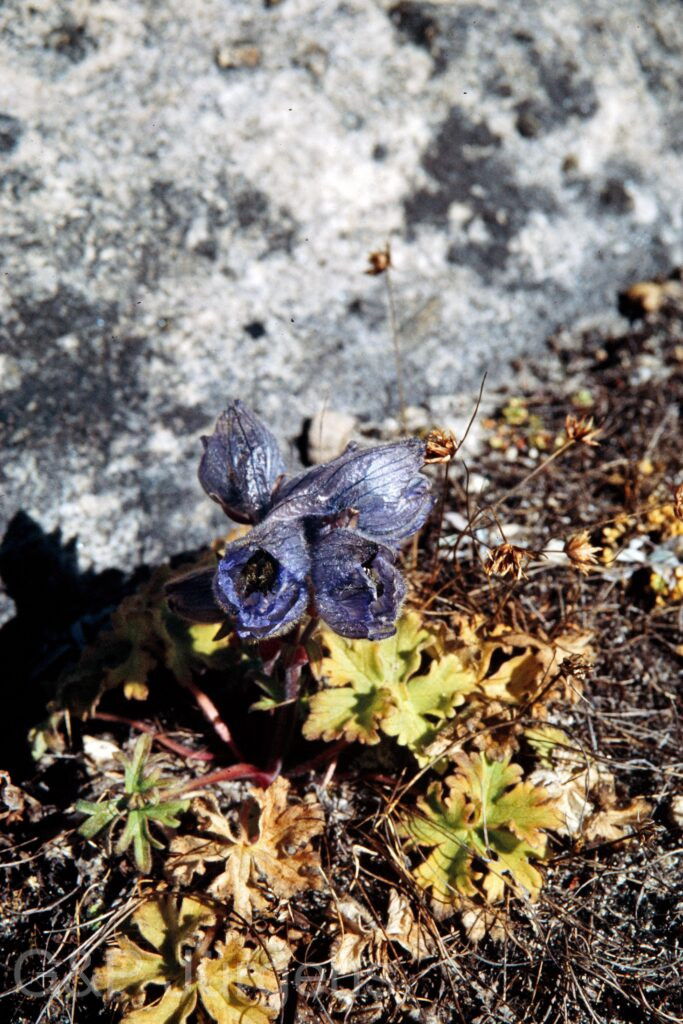
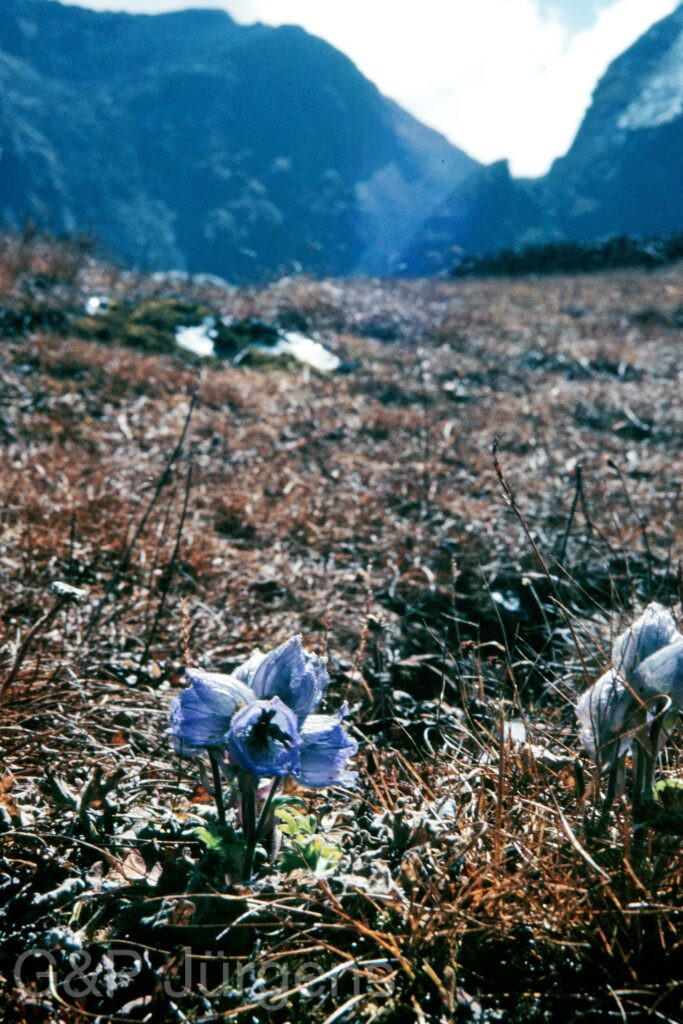
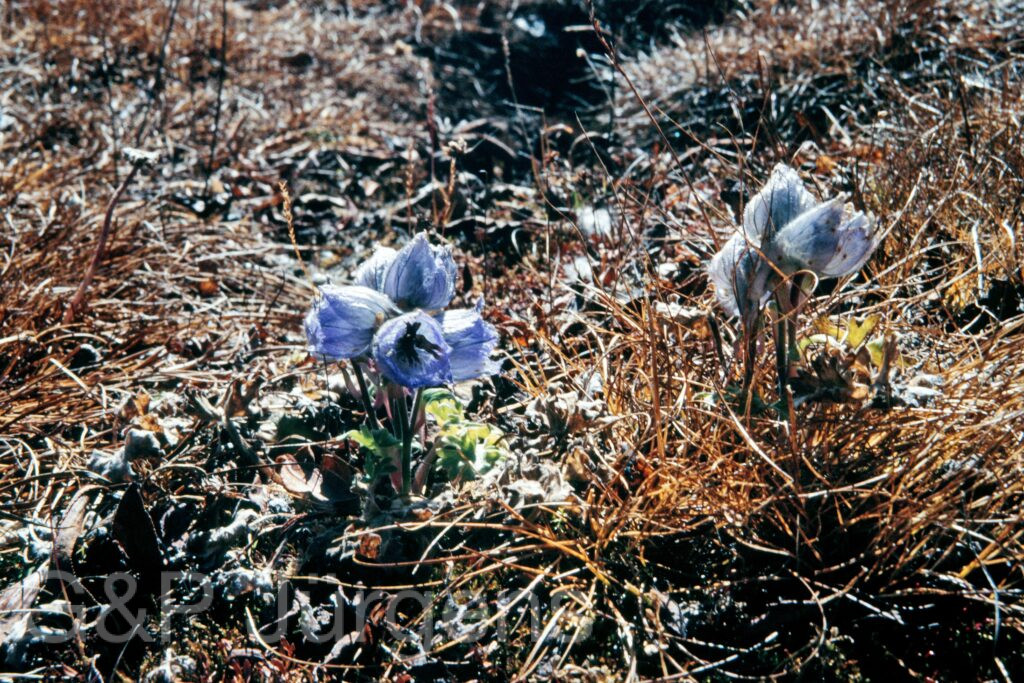
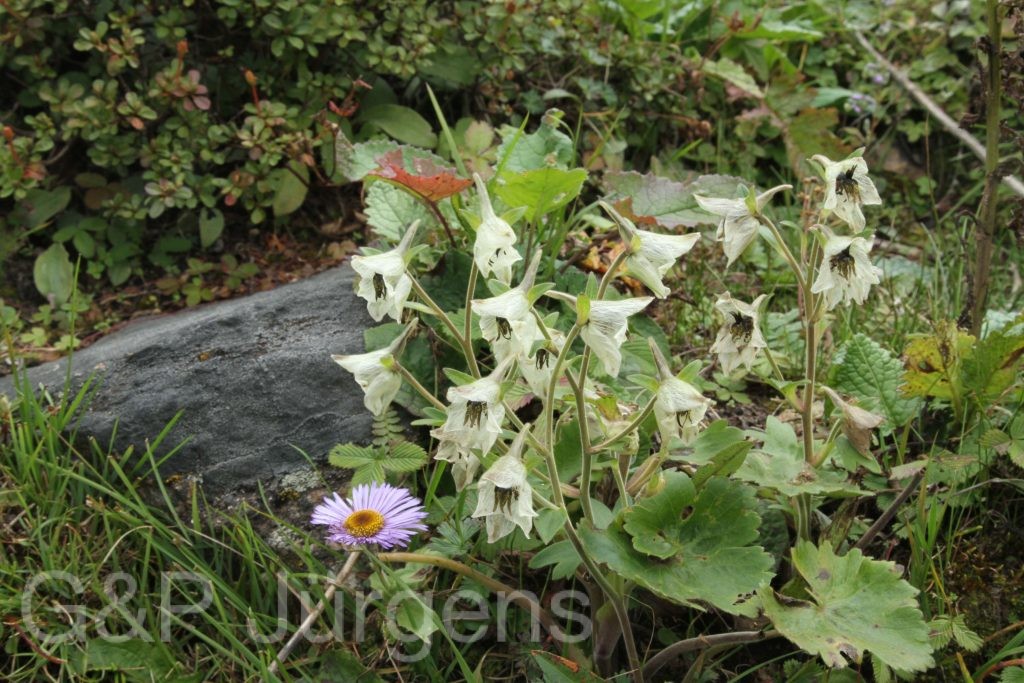
Delphinium brunonianum is a high-alpine perennial of the inner Himalaya and adjacent Central Asian ranges, recorded from Afghanistan, Pakistan, Tajikistan, Uzbekistan and Iraq eastward through northern India, Nepal and Bhutan into south-western China (Tibetan plateau), with some 698 georeferenced GBIF occurrences across this circum-Tibetan arc. It inhabits open stony slopes, screes, moraines and short alpine turf at extreme elevations, typically between about 4000 and 5500 m. The photographed plant from the Kagmara La in West Nepal at 5500 m in July represents the upper range of the species, where it flowers briefly during the short post-monsoon window on wind-exposed, gravelly ground.

It forms a low, tufted herb 8-20 cm tall arising from a stout rootstock, the whole plant glandular-pubescent and emitting a strong musky odour. The leaves are mostly basal, reniform to orbicular in outline and palmately three- to five-lobed with crenate segments. The few-flowered inflorescence bears unusually large, nodding, inflated flowers; the five petaloid sepals are pale to deep blue-purple, broadly ovate, the upper one prolonged into a short blunt spur, and the dark, hairy petals form a contrasting central boss. The fruit is a cluster of three erect, glandular follicles releasing winged seeds.

The species belongs to Delphinium sect. Brunoniana, a small group of musk-scented, large-flowered high-altitude larkspurs. Its strong scent and inflated corolla are associated with bumblebee pollination in a cold, insect-poor environment. Widely used in Tibetan and Himalayan folk medicine, it remains locally common across a vast remote range and is not considered threatened, though it is restricted to fragile alpine habitats sensitive to climate warming and grazing pressure.

Author: Royle · Sources: POWO (Kew), GBIF, Flora of China, Flora of Pakistan, Annotated Checklist of the Flowering Plants of Nepal, Munz monograph of Delphinium

Jacquem. ex Cambess.

Bhutan2015 676
Bhutan Chele-La 3960m, October

Description

Delphinium caeruleum is an alpine larkspur of the high Himalaya and the Qinghai-Tibetan plateau, distributed across south-western China, northern India, Nepal and Bhutan, well represented in GBIF with 646 occurrences. It inhabits dry alpine meadows, open grassy slopes, sandy and gravelly turf and rocky pastures, typically between 3000 and 5000 m, often on relatively arid, well-drained ground. The photographed plant was found at Chele-La in Bhutan at 3960 m in October, a notably late flowering for this short, cushion-like high-elevation species at the close of the growing season on an exposed pass.

It is a low perennial herb, often only 5-30 cm tall, arising from a slender taproot, with erect or ascending stems and finely dissected leaves divided into narrow linear segments, the lower leaves long-petiolate. The flowers are few in a lax raceme or sometimes solitary, and are an intense deep blue to violet-blue. Each flower has five showy petaloid sepals, the upper one prolonged backward into a slender spur, enclosing the smaller true petals, of which the upper pair forms the nectariferous spur and the lower pair is often bearded. The fruit is a cluster of three erect, glabrous to pubescent follicles releasing winged or scaly seeds.

The spurred flower with its concealed nectar reservoir is adapted to pollination by long-tongued bumblebees, abundant in Himalayan alpine grassland. Within Delphinium it belongs to a group of dwarf, blue-flowered, plateau and high-alpine larkspurs. Like other members of the genus it contains diterpenoid alkaloids and is toxic to livestock, which contributes to its persistence in grazed pasture. Wide-ranging and locally common across the Tibetan and Himalayan highlands, it is of least concern, and several Sino-Himalayan Delphinium species, this among them, feature in traditional Tibetan medicine.

Author: Jacquem. ex Cambess. · Sources: POWO (Kew), GBIF, Flora of China, Flora of Bhutan, Munz: A Revision of Delphinium

Hook.f. & Thomson

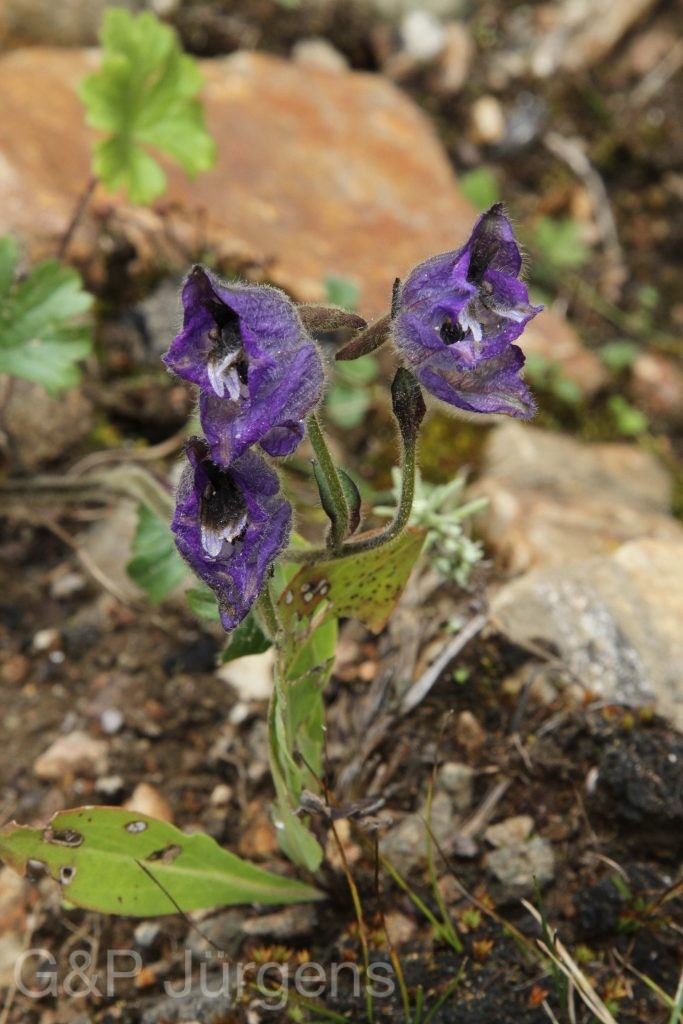
Nepal 95 415 G723 ergebnis
Nepal Jaisuli Kund 4200m October

Description

Delphinium glaciale is a high-alpine larkspur distributed across the central and eastern Himalaya, with documented occurrences in Nepal, India, Bhutan and southern Tibet (China); GBIF records some 85 collections from this range. It is a plant of the upper alpine and subnival zones, typically encountered between roughly 4000 and 5000 m on open screes, moraines, glacial forelands and stony alpine turf, as reflected by the population photographed near Jaisuli Kund in Nepal at about 4200 m in October. It tolerates a short growing season, intense insolation and prolonged snow cover.

The species is a dwarf, cushion-forming or compactly tufted perennial herb arising from a stout woody rootstock. Stems are short, ascending and densely covered, like the foliage, in spreading whitish to yellowish hairs that lend the plant a shaggy appearance. The leaves are palmately divided into narrow segments, mostly basal or crowded toward the stem base. The inflorescence is few-flowered and condensed; the zygomorphic flowers are deep blue to violet-blue, the posterior sepal prolonged into a stout spur enclosing two nectariferous petals, the whole densely pubescent externally. The fruit is a cluster of erect, hairy follicles releasing small angular seeds.

Within Delphinium the species belongs to the assemblage of dwarf, glandular- or villous-haired Sino-Himalayan high-alpine larkspurs adapted to glacial habitats, a feature echoed in the epithet glaciale. Its compact habit and dense indumentum are classic adaptations to wind exposure and cold. Like most members of the genus it contains diterpenoid alkaloids and is toxic to livestock. No specific conservation assessment has been published; its restriction to remote subnival terrain confers natural protection, though high-altitude warming and habitat shifts may threaten such narrowly zoned alpine specialists.

Author: Hook.f. & Thomson · Sources: POWO (Kew), GBIF, Flora of Nepal, Flora of Bhutan, Flora of China, Annotated Checklist of the Flowering Plants of Nepal, Munz Monograph of Delphinium

Kitam. & Tamura

Nepal 95 413 P722 ergebnis
Nepal Jaisuli Kund 4450m October
Nepal 95 414 P724 ergebnis
Nepal Jaisuli Kund 4450m October

Description

Delphinium nepalense is a high-alpine larkspur of the Central and Western Himalaya, recorded from Nepal, Bhutan and Pakistan; GBIF holds about 51 occurrences, reflecting a limited but genuine montane distribution. It is a plant of the upper alpine zone, growing on open grassy slopes, stony meadows, screes and the margins of glacial tarns, as documented at Jaisuli Kund in Nepal at 4450 m. At such elevations it experiences a brief, cool growing season and flowers comparatively late, persisting into October as shown in the field record, when many co-occurring alpines have already set seed.

It is a perennial herb arising from a fibrous to somewhat tuberous rootstock, with erect or ascending stems. The leaves are palmately divided into narrow lobes or segments, the lower ones long-petiolate and the upper progressively reduced and sessile. The inflorescence is a few-flowered raceme of strongly zygomorphic flowers; the five petaloid sepals are blue to violet-purple, the uppermost prolonged backward into a prominent spur that encloses the nectar-bearing spurs of the two upper petals, while the smaller petals form a contrasting honey-guide at the throat. The fruit is a cluster of erect follicles splitting along the ventral suture to release flattened, scaly or winged seeds.

The species was described by Kitamura & Tamura, authorities on the Himalayan Ranunculaceae. Within Delphinium it belongs to the perennial Himalayan element, allied to species such as D. brunonianum and D. kamaonense. As in much of the genus, the flowers are pollinated chiefly by bumblebees adapted to probing the long spur, and the foliage contains diterpenoid alkaloids that render the plant toxic and unpalatable to grazing livestock. Although not formally assessed for conservation, its restricted high-altitude range makes it sensitive to grazing intensity and to the upslope compression of alpine habitat under a warming climate.

Author: Kitam. & Tamura · Sources: POWO (Kew), GBIF, Flora of Nepal, Flora of Pakistan, Munz's monograph of the genus Delphinium

Hook.f. & Thomson

Bhutan2012 283
Bhutan Shele-La, 3900m September
Sikkim2003 283 P389
Sikkim Saniti-Lake 4300m August

Description

Delphinium viscosum is an alpine perennial of the Himalaya, recorded from India, Nepal, Bhutan and China, with 105 occurrences in GBIF reflecting its restricted high-altitude range. It inhabits open alpine slopes, stony meadows, scree margins and rocky pastures, generally between 3500 and 4500 m, where it flowers in late summer and early autumn. The collections figured, from Bhutan's Shele-La at 3900 m in September and Sikkim's Saniti-Lake at 4300 m in August, illustrate its occupancy of cold, exposed alpine terrain at the upper limit of herbaceous vegetation, on well-drained gravelly soils among low alpine swards.

The plant arises from a thickened, somewhat woody rootstock, producing erect stems usually 15-40 cm tall that are conspicuously glandular-viscid and hairy, the sticky pubescence giving the species its epithet. The leaves are alternate, orbicular to reniform in outline and palmately divided into several broad, toothed or further-lobed segments. The inflorescence is a few-flowered terminal raceme of showy zygomorphic flowers; the five petaloid sepals are deep blue to violet, the uppermost prolonged backward into a prominent spur enclosing the nectariferous true petals. The fruit is a cluster of usually three erect, glandular follicles releasing winged or scaly seeds.

Delphinium (Ranunculaceae) is a large genus of the northern temperate zone with a notable Sino-Himalayan radiation of alpine species; D. viscosum belongs to the glandular, spur-flowered montane group adapted to short alpine seasons. Like all larkspurs it contains toxic diterpenoid alkaloids. Its spurred flowers favour pollination by long-tongued bumblebees. With a limited high-alpine distribution, it is potentially sensitive to grazing and climatic change, though its remote habitats afford some natural protection.

Author: Hook.f. & Thomson · Sources: POWO (Kew), GBIF, Flora of China, Flora of Bhutan, A Taxonomic Revision of Himalayan Delphinium (Ranunculaceae)

C.Marquand & Airy Shaw

Bhutan2012 270
Bhutan Shele-La, 4000m September
Bhutan2012 271
Bhutan Shele-La, 4000m September

Description

Delphinium wardii C.Marquand & Airy Shaw is a high-alpine larkspur of very limited distribution; GBIF holds only about 10 occurrences, from Bhutan, neighbouring China (southern Tibet) and northeastern India. It is a plant of open alpine habitats, growing on stony slopes, rocky meadows, scree and grassy turf above the treeline, generally between about 3800 and 4500 m. The individual photographed at Shele-La in Bhutan at 4000 m in September, flowering in the late-season alpine zone, exemplifies its occupation of cold, well-drained, exposed high-altitude sites near the upper limit of vascular plant growth in the eastern Himalaya.

It is a perennial herb arising from a fibrous to somewhat woody rootstock, with erect stems of modest height, often pubescent in the upper parts. The leaves are palmately divided into narrow lobes or segments, the basal leaves long-petiolate and the cauline ones smaller and shorter-stalked. The flowers are borne in a few-flowered terminal raceme; each is zygomorphic with five petaloid sepals, the uppermost prolonged backward into a conspicuous spur, the whole flower deep blue to violet-blue. Within the sepals sit the smaller petals, the upper pair extended into nectar-bearing spurs enclosed in the sepaline spur. The fruit is a cluster of several erect follicles releasing angular, scaly seeds.

The genus Delphinium is well represented in the Sino-Himalayan alpine flora, where its spurred, bee-pollinated flowers are adapted to long-tongued bumblebees that probe the nectar spurs. Like its congeners the plant contains diterpenoid alkaloids and is poisonous to livestock. With an extremely small known range, very few documented collections and confinement to a narrow, climatically vulnerable high-alpine band, Delphinium wardii is a regionally restricted endemic of the eastern Himalaya whose limited occurrence record warrants particular attention to its conservation.

Author: C.Marquand & Airy Shaw · Sources: POWO (Kew), GBIF, Flora of Bhutan, Flora of China, Annotated Checklist of the Flowering Plants of Nepal, Wang & Warnock revision of Delphinium

Hook.f. & Thomson

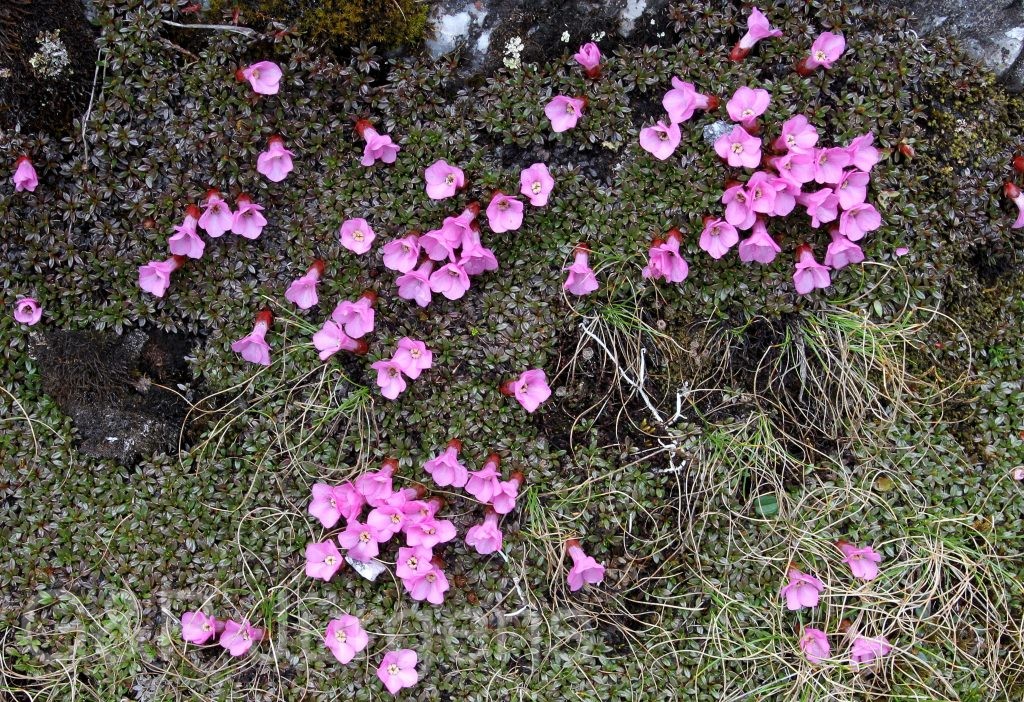
BhutanPG2011 447
Bhutan Jule-Tso, 4100m June

Description

Diapensia himalaica Hook.f. & Thomson is a high-alpine cushion plant of the Sino-Himalayan mountains, recorded from China, India, Nepal, Bhutan and Myanmar (CN, IN, NP, BT, MM), with GBIF documenting some 304 occurrences. It is a plant of the upper alpine and subnival belt, on exposed rocky ridges, gravelly slopes, moraines and turf margins, generally above 4000 m where wind exposure and a short growing season prevail. The Bhutanese material from Jule-Tso at 4100 m in June illustrates its early-summer flowering after snow-melt, when the cushions are studded with relatively large solitary flowers.

It forms a compact, evergreen, woody cushion of densely crowded shoots clothed in small, leathery, imbricate leaves. These are narrowly spathulate to oblong, sessile, with a thickened entire margin and a coriaceous texture resisting desiccation. The flowers are solitary and terminal on short stalks scarcely exceeding the cushion, actinomorphic and five-merous, with a persistent calyx and a campanulate to rotate corolla of fused white to pale pink petals; the five stamens are adnate to the corolla tube. The fruit is a small loculicidal capsule with numerous minute wind-dispersed seeds.

Diapensia is the type genus of the small, isolated family Diapensiaceae, an arctic-alpine lineage of ericalean affinity, and D. himalaica is the Himalayan vicariant of the circumboreal D. lapponica complex. The compact cushion habit is a classic adaptation to cold, wind-swept, nutrient-poor high mountains. Its biogeographic importance lies in linking the Himalayan high-alpine flora to arctic and boreal cushion-plant communities, and as a slow-growing specialist it is sensitive to climate change.

Author: Hook.f. & Thomson · Sources: POWO (Kew), GBIF, Flora of Bhutan Vol. 2, Flora of China Vol. 14, Flora of Nepal, Scott & Day monograph of the Diapensiaceae

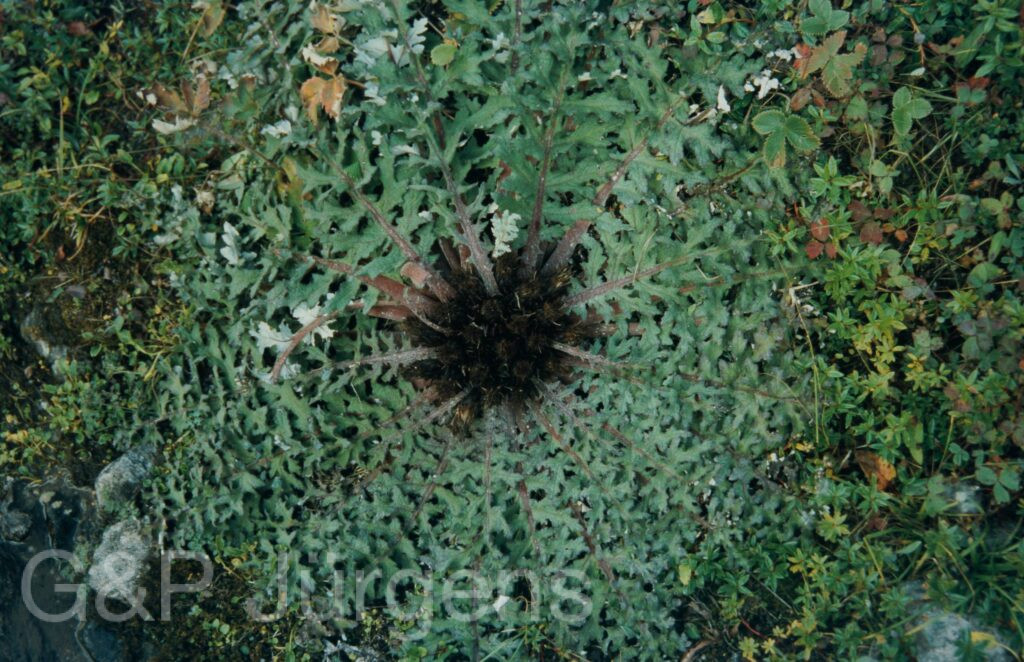
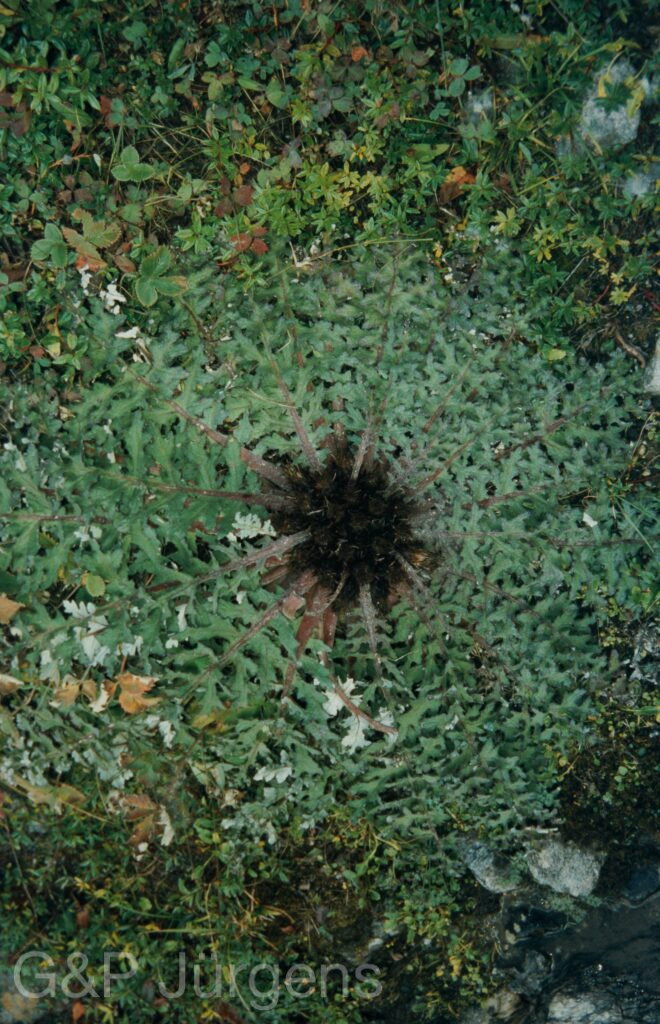
DC. ex Royle

Garw 2005 308 ergebnis ergebnis
India Garhwal Kuari-Pass 3700m, September

Description

Dolomiaea macrocephala is a stemless alpine thistle-relative of the western and central Himalaya and adjacent Central Asian highlands, recorded from India, Nepal, Pakistan, China, Iran and Mongolia, with about 131 occurrences in GBIF. It grows on open alpine slopes, stony pastures and grazed meadows of the upper subalpine and alpine zones, generally between 3000 and 4500 m, often in well-drained turf exposed to full sun. The photograph from the Kuari Pass in Garhwal, India, at about 3700 m in September shows the plant in fruit late in the alpine season among the short turf of the high-meadow belt.

The species is a perennial, essentially acaulescent herb arising from a stout taproot and a short rootstock. The leaves form a flat or appressed basal rosette and are pinnatifid to lyrate with spiny-toothed margins, green above and frequently white-tomentose beneath. As the specific epithet indicates, the conspicuously large flower heads are sessile or nearly so, sitting in the centre of the rosette; the involucre bears numerous imbricate, often spine-tipped phyllaries surrounding a head of purple, tubular disc florets. The achenes are oblong and crowned by a pappus of plumose or barbellate bristles aiding wind dispersal.

The genus Dolomiaea was long included within Jurinea and Saussurea and belongs to the thistle tribe Cardueae of the Asteraceae; molecular studies support its recognition as a distinct Sino-Himalayan and Central Asian lineage. The ground-hugging rosette and centrally clustered heads represent a typical adaptation to wind exposure and heavy grazing at high elevation. Several species, including this one, have a history of use in Tibetan and Himalayan herbal medicine. Widespread across its montane range, D. macrocephala is not regarded as threatened.

Author: DC. ex Royle · Sources: POWO (Kew), GBIF, Flora of China, Flora of Pakistan, Annotated Checklist of the Flowering Plants of Nepal, Susanna and Garcia-Jacas revisions of the Cardueae

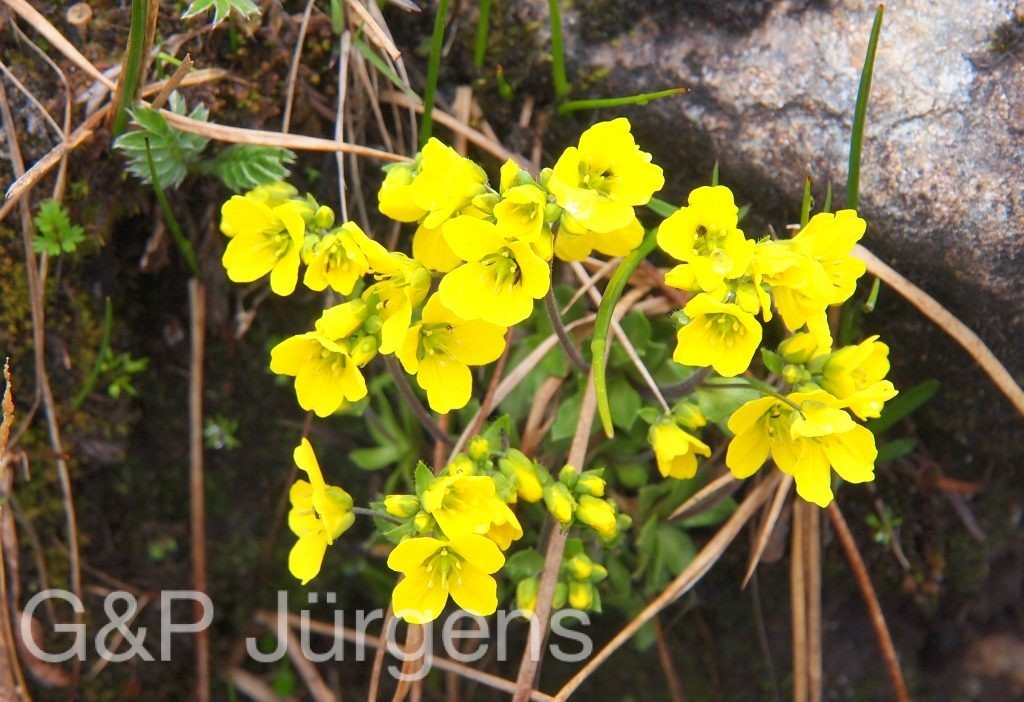
H.Hara 

BhutanPG2011 418
Bhutan Ludlow-Sherriff-Trail Warrtlang-La, 4400m June

Description

Draba bhutanica H.Hara is a narrowly distributed alpine crucifer recorded only from Bhutan and adjacent China (gbif_countries: BT, CN), with a mere 13 occurrences in GBIF, marking it as a rare Eastern Himalayan high-mountain endemic. It occupies the upper alpine zone, growing on open stony slopes, scree, gravelly ridges and rock crevices near the limits of vascular plant life. The image record from the Ludlow-Sherriff Trail at Warrtlang-La in Bhutan at 4400 m, in June, situates it in the early-summer high alpine, where short-statured perennials flower briefly after snowmelt on exposed, well-drained ground.

It is a small, low, tufted or cushion-forming perennial herb, typically clothed in the branched, stellate or forked trichomes characteristic of the genus, giving a greyish indumentum. The leaves are small, entire to slightly toothed, crowded into basal rosettes. The flowering scapes are short and bear few-flowered terminal racemes. The flowers conform to the cruciferous plan, with four sepals, four clawed yellow (or whitish) petals in a cross, and tetradynamous stamens. The fruit is a small silicula, ovate to elliptic and somewhat flattened, dehiscing by two valves to release several seeds.

Draba is a large, predominantly arctic-alpine genus, and its Sino-Himalayan species are taxonomically intricate; D. bhutanica has been associated with the segregate Chrysobraya, reflecting unsettled generic limits in the region. Its cushion habit and dense indumentum are classic adaptations to cold, high-radiation, desiccating alpine environments. Given its extremely restricted range and few records, the species is of considerable conservation and biogeographic interest as a Bhutanese alpine endemic.

Author: H.Hara · Sources: POWO (Kew), GBIF, Flora of China (Brassicaceae), Flora of Bhutan, Al-Shehbaz systematic studies of Himalayan Draba and Cruciferae