Tag:

Alpine (>3500 m)

Majumdar

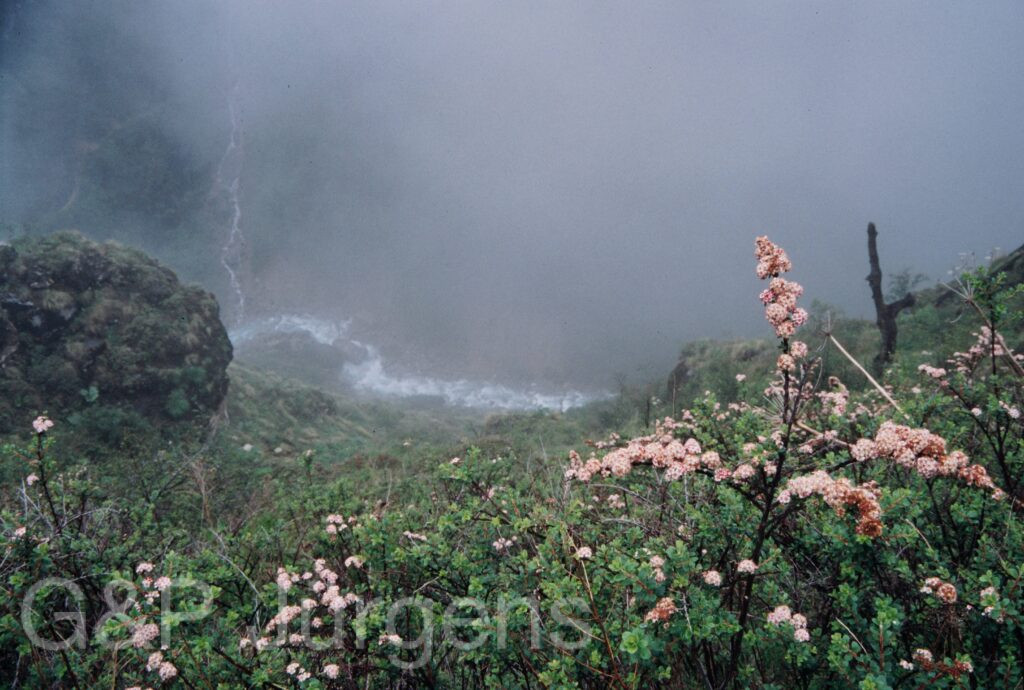
Bhutan2012 241
Bhutan, Shele-La 4000m, September
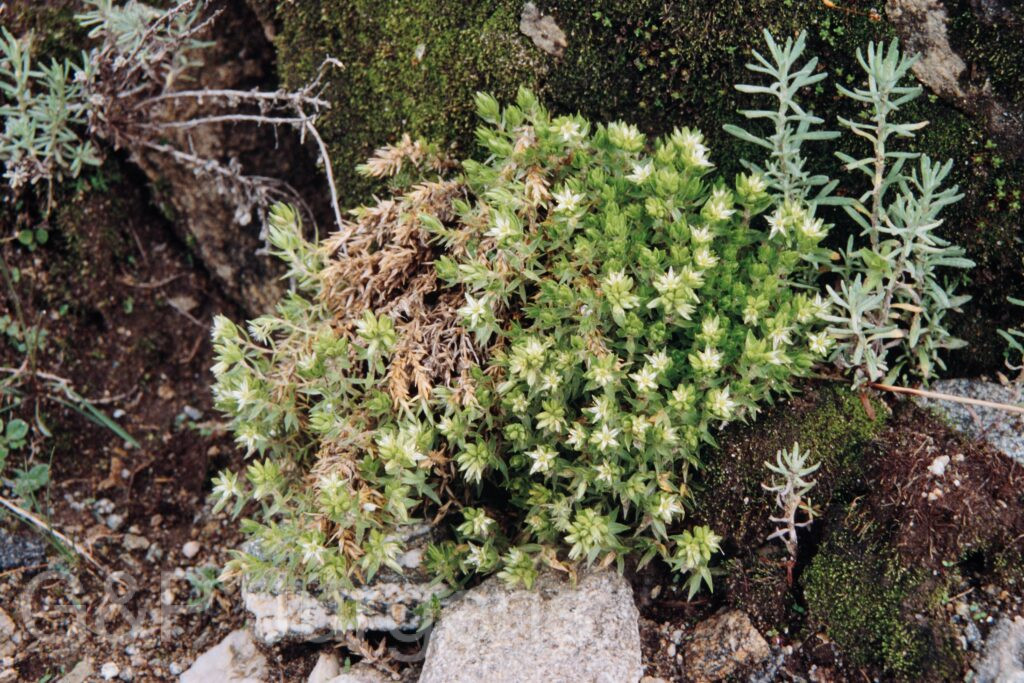
Bhutan2012 242
Bhutan, Shele-La 4000m, September

Description

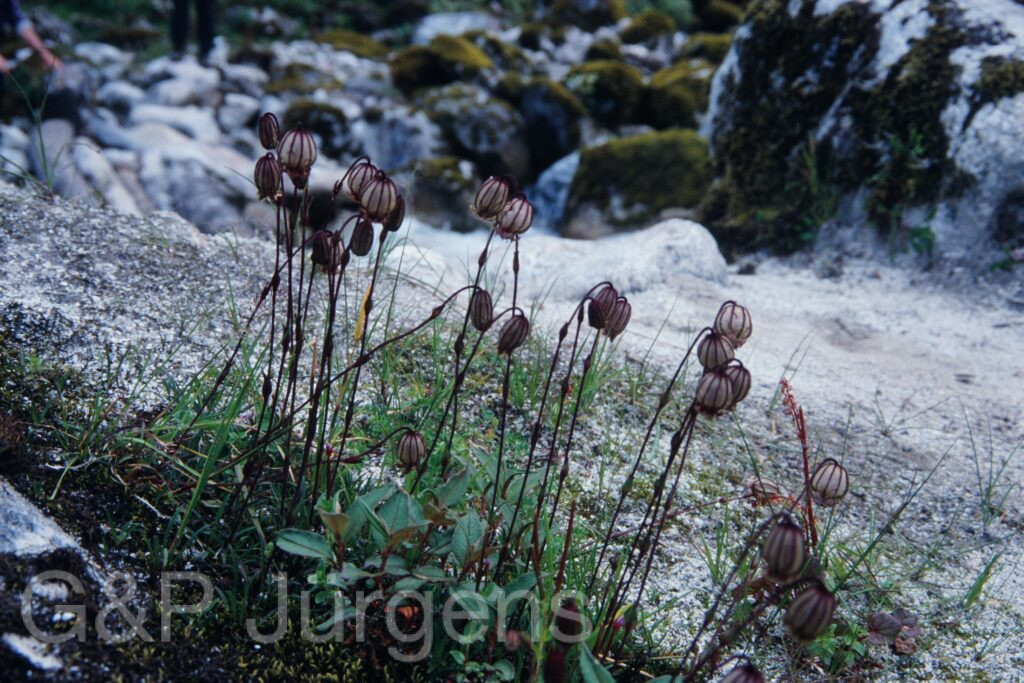
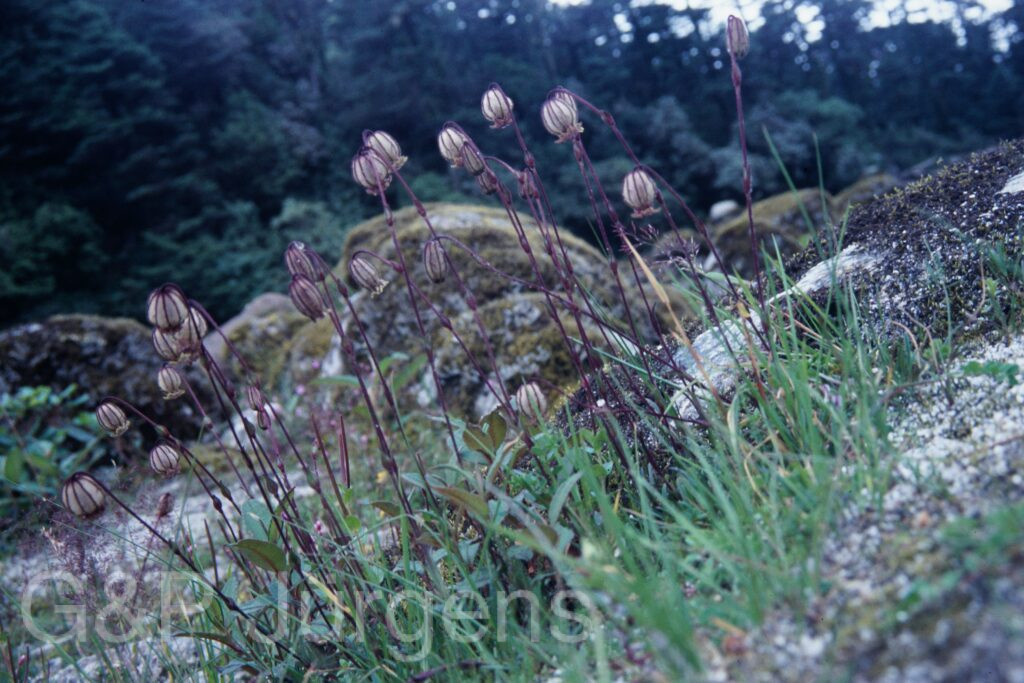
Silene nepalensis is a Himalayan campion distributed from Pakistan through Nepal and northern India to Bhutan and south-central China, the nearly four hundred GBIF records confirming a fairly broad high-montane range across the range. It occupies alpine and subalpine meadows, open stony slopes, rock crevices and the margins of scrub above the forest, where it flowers into the late season. The photographed plant from the Shele-La in Bhutan at 4000 m, flowering in September, illustrates its tolerance of the cold, exposed high passes and its comparatively late, autumn flowering at the upper limits of the alpine zone.

The species is a tufted perennial herb arising from a stout, often woody rootstock and producing several ascending to erect stems. The leaves are opposite, narrowly lanceolate to linear and somewhat ciliate at the margins. The flowers are borne in a lax cyme; the calyx is tubular to clavate, ten-veined and inflated in fruit, while the five petals are clawed with a bifid, white to pinkish limb and a small coronal scale at the throat. The androecium has ten stamens and the ovary three styles; the fruit is a capsule dehiscing by six apical teeth and containing numerous reniform seeds.

Silene nepalensis is an accepted species of the large, taxonomically difficult genus Silene (Caryophyllaceae, tribe Sileneae), where the inflated ten-veined calyx and clawed coronate petals are diagnostic. Its perennating woody base and crevice habit are adaptations to the desiccating winds and shallow soils of the high Himalaya. The species is widespread and not currently regarded as threatened, though its alpine populations are sensitive to grazing pressure and warming-driven range contraction.

Author: Majumdar · Sources: POWO (Kew), GBIF, Flora of China, Flora of Bhutan, Bocquet & Chowdhuri revision of Himalayan Silene (Caryophyllaceae monograph)
(Edgew.) Majumdar

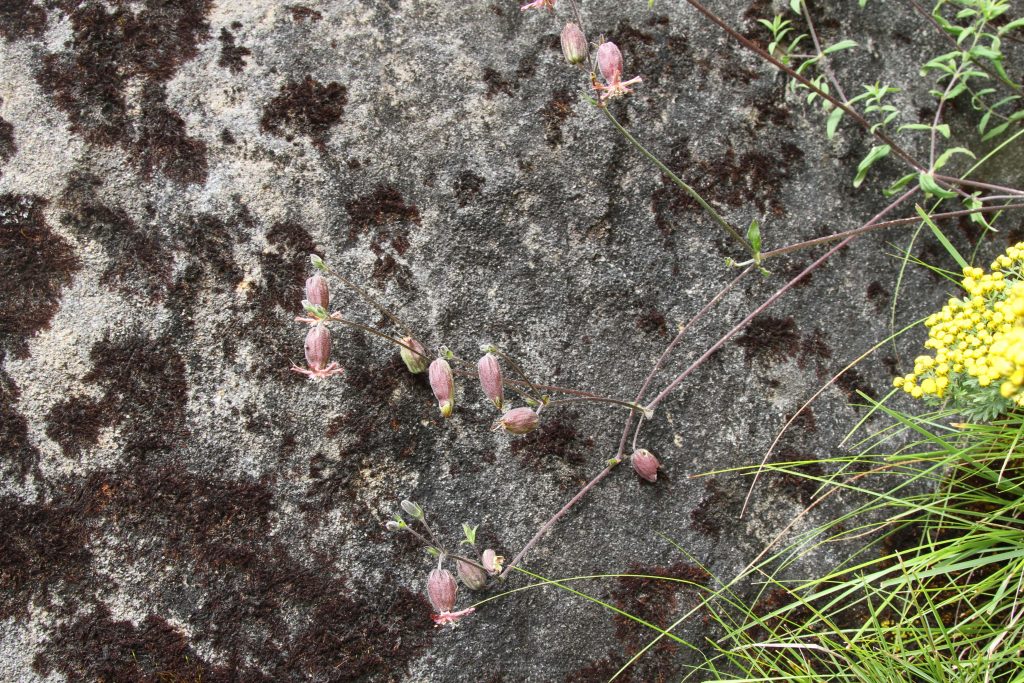
Sikkim2003 215 G299
Sikkim Dzongri 3900m, August
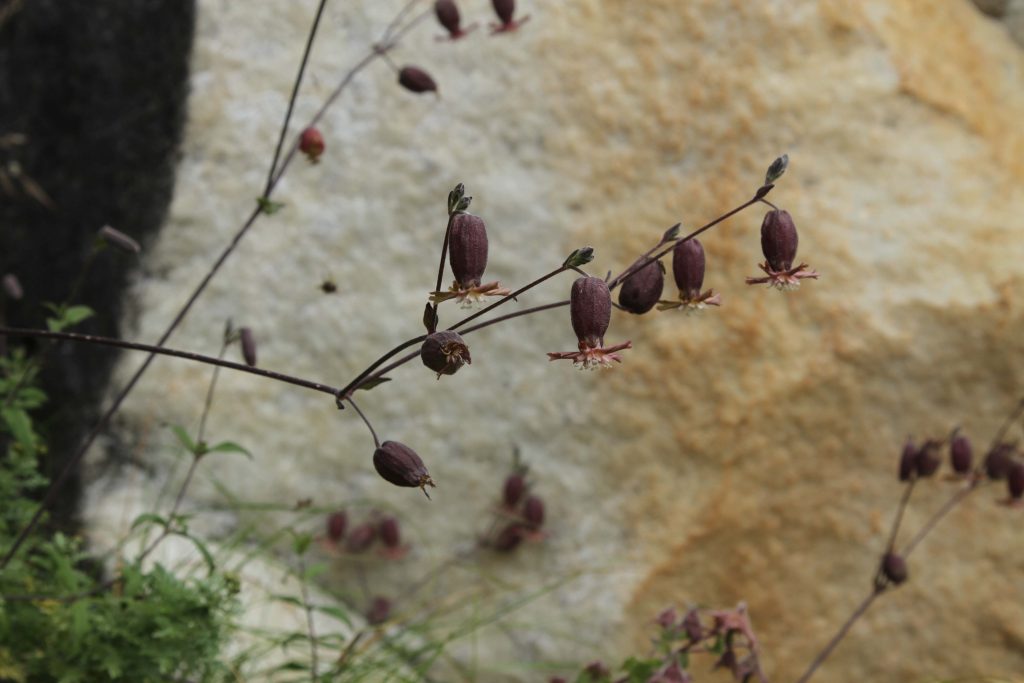
Sikkim2003 216 P300
Sikkim Dzongri 3900m, August

Description

Silene nigrescens is an alpine campion of the Himalaya and adjacent mountains, ranging across China, Nepal, India and Bhutan and into Myanmar; GBIF records about 410 occurrences concentrated in the eastern and central Himalaya. It grows in high alpine meadows, grassy slopes, screes and stony pastures, generally between about 3500 and 4800 m. The illustrated plant was photographed at Dzongri in Sikkim at around 3900 m in August, during the monsoon flowering season when these dark-flowered campions colour the short turf of the eastern Himalayan uplands above the rhododendron scrub.

The species is a perennial herb growing from a slender, branched rootstock, forming low tufts of ascending to erect stems that are often glandular-hairy above. The leaves are opposite, sessile, narrowly lanceolate to oblanceolate, the lower ones crowded near the base. The flowers are nodding and few, with an inflated, ten-nerved, often dark-purple to nearly blackish calyx that gives the species its name; the petals are dingy purple to brownish with a bilobed limb and a small ligulate scale at the throat. The flower has three styles, and the capsule dehisces by six teeth, releasing numerous reniform seeds.

Described as (Edgew.) Majumdar from an Edgeworth basionym, Silene nigrescens belongs to the high-alpine, dark-calyx group of Himalayan Silene whose species limits are notoriously difficult owing to variation in vestiture and flower colour. Its broad eastern-Himalayan to southwest Chinese distribution makes it secure, and it forms part of the characteristic flora of monsoon-influenced alpine meadows, pollinated mainly by insects drawn to its sombre nodding flowers.

Author: (Edgew.) Majumdar · Sources: POWO (Kew), GBIF, Flora of China, Flora of Bhutan, Bocquet: Revision of Himalayan Silene

Bocquet & N.P.Saxena

Sikkim2003 259 P357
Sikkim Dzongri 4200m, August

Description

Silene purii is a narrowly distributed high-alpine herb of the eastern Himalaya, recorded by GBIF only from Bhutan, with just four occurrences and closely allied populations extending into adjacent Sikkim. It occupies open turf, rocky slopes, moraine and grassy hollows above the treeline, generally between about 3900 and 4500 m. The illustrated plant was photographed at Dzongri in Sikkim at roughly 4200 m in August, during the brief monsoon flowering season when these tufted campions exploit the short, cool growing window of the eastern Himalayan summits.

The species is a perennial herb forming low tufts from a branched woody rootstock. The stems are short, ascending and often glandular-pubescent, bearing opposite, narrowly lanceolate to linear, somewhat fleshy leaves crowded toward the base. The flowers are few, terminal and shortly stalked; the calyx is tubular to inflated, ten-nerved and frequently purplish, while the petals are pink to purple with a bilobed or notched limb and a small scale at the throat. The ovary bears three styles and matures into a capsule dehiscing by six apical teeth, releasing numerous reniform seeds.

Named for its collector, Silene purii (Bocquet & N.P.Saxena) is one of many Himalayan campions whose limits remain poorly understood owing to scant collections and the plasticity of alpine Silene. Its extreme rarity in the herbarium record and restricted known range make it of considerable phytogeographic interest as an eastern Himalayan endemic. The paucity of records suggests it may be genuinely localised and potentially vulnerable, warranting targeted survey and conservation assessment.

Author: Bocquet & N.P.Saxena · Sources: POWO (Kew), GBIF, Flora of Bhutan, Flora of China, Bocquet: Revision of Silene sect. Physolychnis

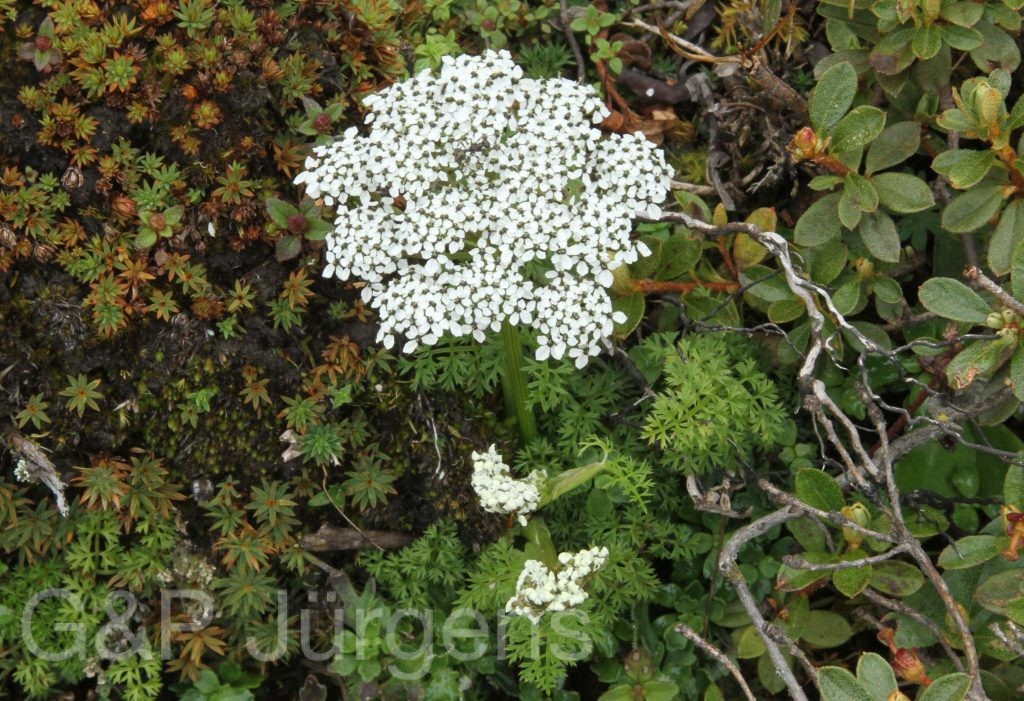
(Fedde ex H. Wolff) A.K. Mukh. & Constance

Bhutan2012 79
Bhutan Shele-La, 4000m September

Description

Sinocarum wolffianum is a small alpine umbellifer of the Himalaya and south-western China, recorded from China, northern India, Nepal and Bhutan, a restricted distribution reflected in only about 54 occurrence records. It grows on open alpine meadows, turf, screes and rocky slopes, typically between roughly 3500 and 4500 m. The specimen photographed at Shele-La in Bhutan at about 4000 m in September illustrates its late-season presence in the high alpine zone, where short-statured umbellifers persist among the cushion vegetation.

The plant is a small, slender perennial arising from a tuberous or fusiform root, usually only a few centimetres to about 15 cm tall. The leaves are mostly basal, finely divided (ternately to pinnately dissected) into narrow, linear ultimate segments, on slender petioles sheathing at the base. The inflorescence is a small, lax compound umbel, often lacking or with few bracts and bracteoles; the flowers are minute, with white to pinkish petals and the inferior ovary typical of the family. The fruit is a small, ovoid to oblong schizocarp splitting into two ribbed mericarps.

Sinocarum (Apiaceae, subfamily Apioideae) is a small Sino-Himalayan genus of dwarf alpine umbellifers segregated from Carum and allied genera, and its species circumscription has been revised by workers including Mukherjee and Constance, who established the present combination. The genus is taxonomically intricate, with several narrow-range high-mountain taxa. Pollinated by generalist alpine insects, the mericarps are dispersed passively. As a localised high-elevation endemic of limited known range, it is of biogeographic interest and likely sensitive to climatic change in its alpine habitat.

Author: (Fedde ex H. Wolff) A.K. Mukh. & Constance · Sources: POWO (Kew), GBIF, Flora of China, Flora of Bhutan, Annotated Checklist of the Flowering Plants of Nepal, Pimenov & Leonov The Genera of the Umbelliferae

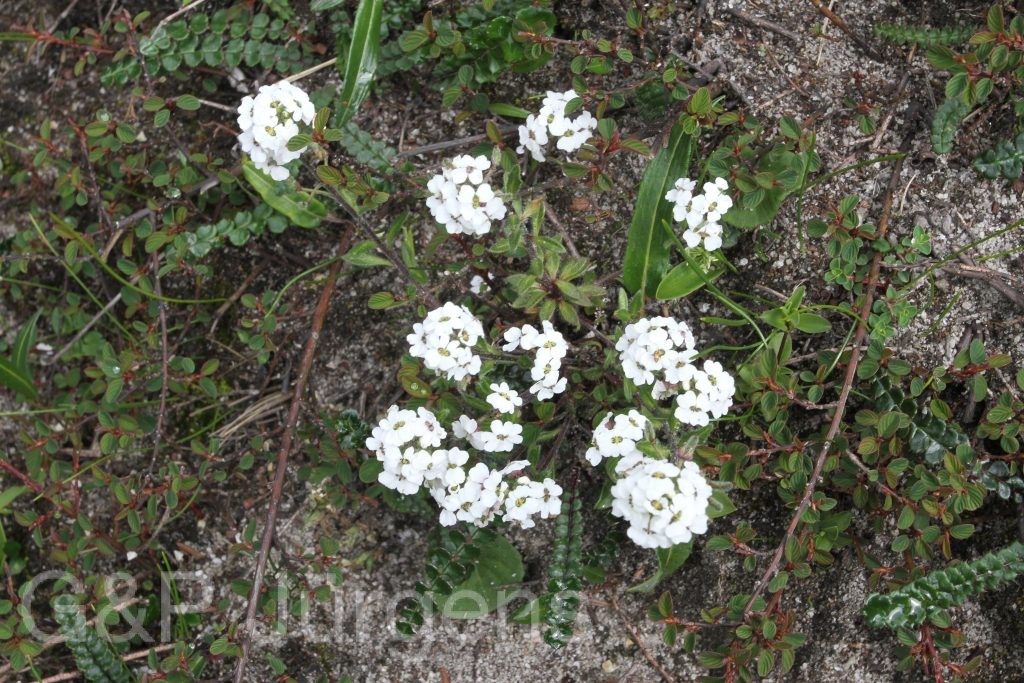
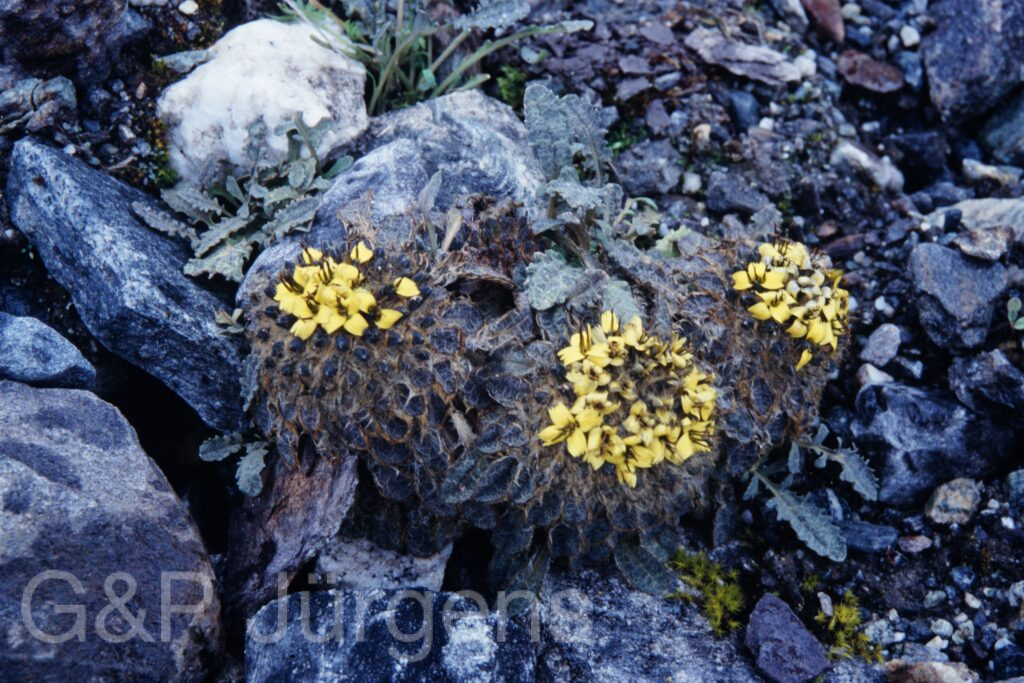
(Hook.f. & Thomson) Botsch.

BhutanPG2011 204
Bhutan Tsochenchen 3700m, June

Description

Solms-laubachia platycarpa is a high-alpine crucifer of the eastern Himalaya and the Hengduan-Tibetan region, recorded from China, India and Bhutan, with only about 26 GBIF occurrences reflecting its restricted, hard-to-reach habitat. It is a true cushion-plant of the upper alpine zone, growing among scree, gravel, rock crevices and stony turf, typically above about 3500 m and often to well over 4000 m. The plant shown from Tsochenchen in Bhutan at 3700 m, flowering in June, occupies the exposed, frost-prone substrates characteristic of the genus.

It is a low, densely tufted perennial herb with a stout, branched woody caudex clothed in the persistent petiole-bases of former leaves and topped by rosettes of small, entire, fleshy, oblanceolate to spathulate leaves. The flowers are borne singly or few on short scapes scarcely exceeding the leaf cushions and have four white to pale lilac or purplish petals in the typical cruciferous arrangement. The diagnostic fruit is a flattened, broadly elliptic to orbicular, latiseptate silicula with a persistent style and a few large seeds, the broad flat silique giving the epithet platycarpa.

Solms-laubachia (combined by Botschantzev from Hooker & Thomson's basionym) is a small genus centred on the Qinghai-Tibetan Plateau, allied to Desideria and the alpine Crucifereae; molecular work has clarified its boundaries within tribe Euclidieae. Restricted to fragile high-alpine substrates, such narrowly distributed cushion crucifers are potentially vulnerable to climate-driven habitat contraction and merit monitoring.

Author: (Hook.f. & Thomson) Botsch. · Sources: POWO (Kew), GBIF, Flora of Bhutan, Flora of China, Yue et al. systematics of Solms-laubachia

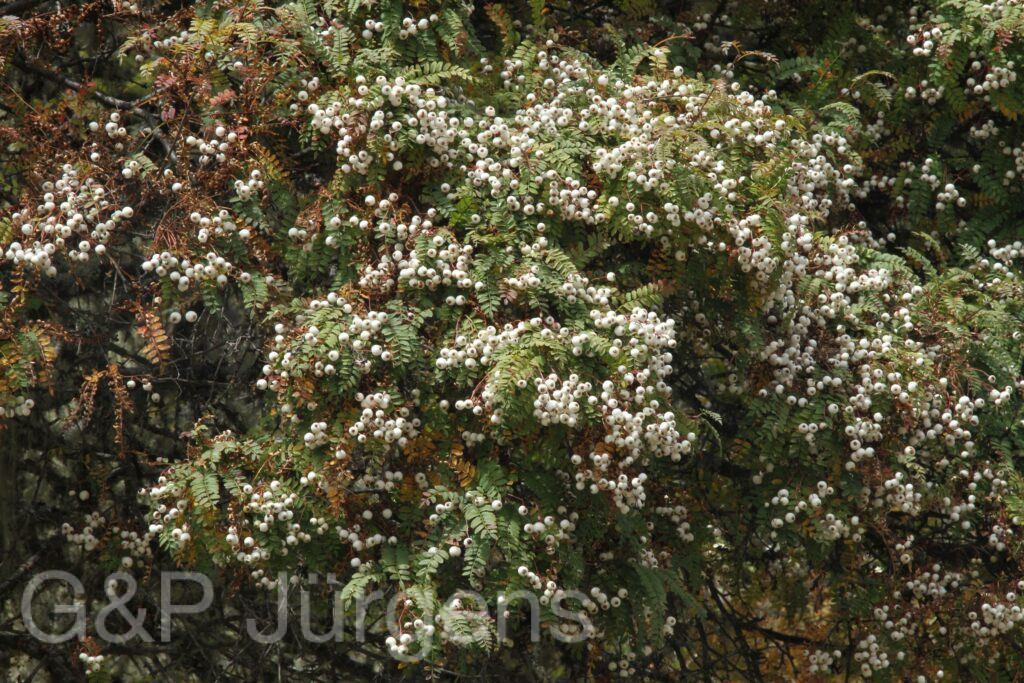
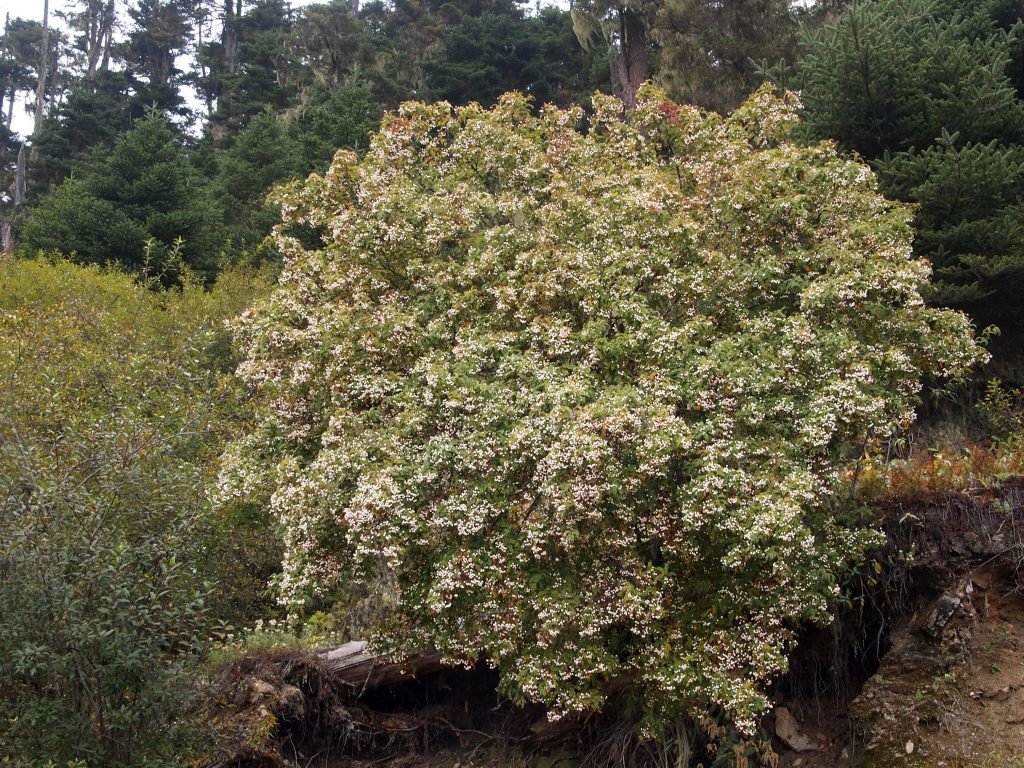
Wenz.

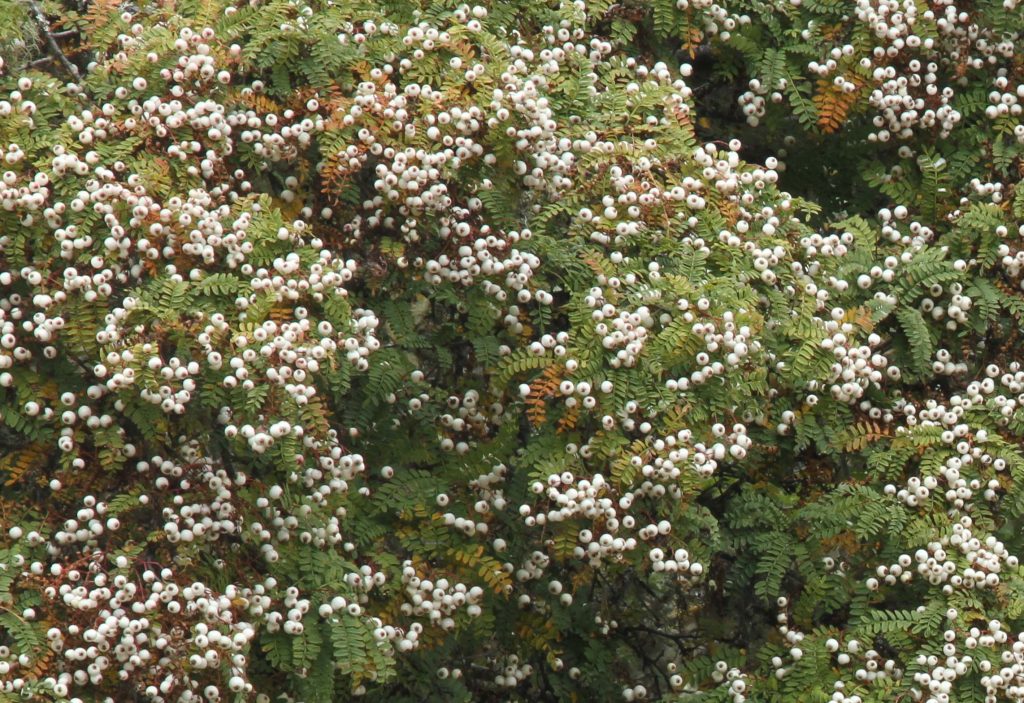
Bhutan2015 371
Bhutan Tumching-La 4000m, October
Bhutan2012 906
Bhutan Tumching-La 3900m, October
Bhutan2012 907
Bhutan Tumching-La 3900m, October

Description

Sorbus microphylla is a high-montane to subalpine deciduous shrub or small tree distributed along the Himalayan arc from Pakistan through Nepal, northern India, Sikkim and Bhutan into south-central China and Myanmar, with the GBIF dataset recording some 344 occurrences including ex-situ collections in Britain, Belgium and North America. It occupies open coniferous and Rhododendron forest, forest margins and alpine thickets, typically between 3000 and 4300 m. The photographed plants were gathered at Tumching-La in Bhutan at 3900-4000 m in October, the fruiting season, where the species forms part of the krummholz and dwarf-shrub community below the treeline.

It is a slender shrub, often 1-3 m tall, with reddish-brown to purplish glabrescent young branches bearing conspicuous lenticels. The leaves are imparipinnate with 10-15 or more pairs of small, crowded, oblong leaflets that are sharply serrate toward the apex, dark green above and paler beneath, turning rich crimson in autumn, the rachis often narrowly winged. The white to pinkish flowers are borne in small terminal corymbs, each with five petals, numerous stamens and two to three styles. The fruit is a small globose pome, white, pink-tinged or pale rose, 6-8 mm across, persisting after leaf-fall.

The species belongs to Sorbus subgenus Albocarmesinae, the white- and pink-fruited Himalayan-Sino mountain ashes, a complex group in which apomixis and hybridisation blur species limits. Its small leaflets and pale fruits distinguish it from related S. ursina and S. foliolosa. The pomes are an important autumn food for thrushes and other montane birds, which disperse the seed. Widespread and locally common across a broad range, it is not considered threatened, though valued horticulturally for its delicate foliage and persistent rosy fruit.

Author: Wenz. · Sources: POWO (Kew), GBIF, Flora of China, Flora of Bhutan, McAllister: The Genus Sorbus

unknown

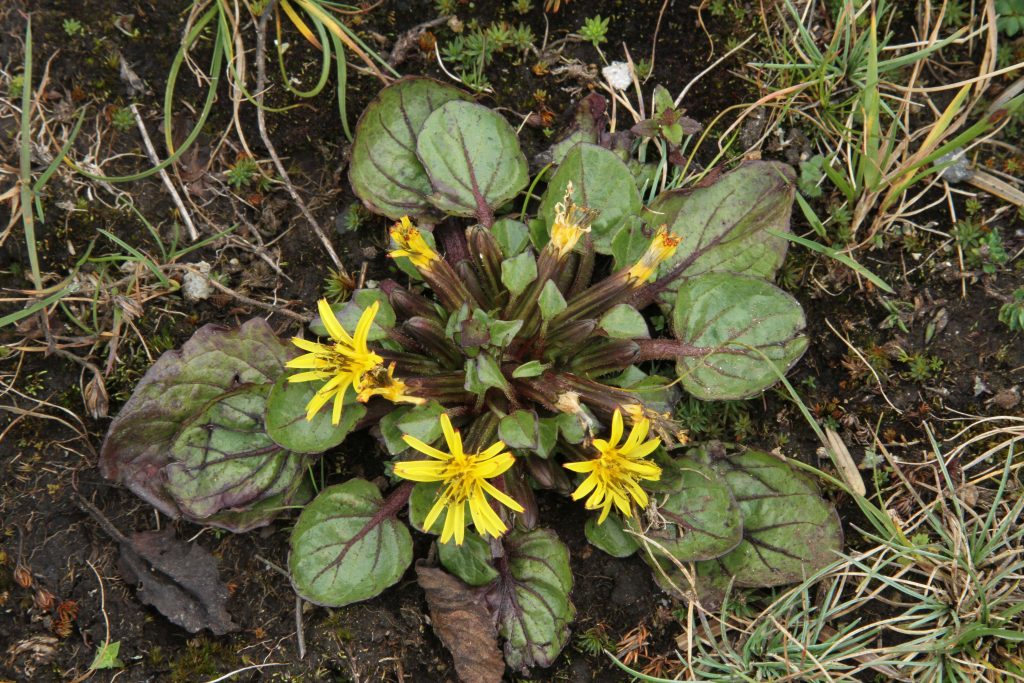
Bhutan2012 281
Bhutan Shele-La, 4100m September

Description

Soroseris depressa is a cushion-forming alpine composite of the high Himalaya and Tibetan margins, documented from Bhutan, India, China, Nepal and Japan, with about 62 GBIF occurrences. It is a specialist of the highest open ground, colonising scree, gravelly alpine turf, moraines and stony flats well above the treeline, commonly between about 4000 and 5000 m. The photographed material comes from the Shele-La in Bhutan at 4100 m in September, a wind-exposed pass where the species hugs the substrate among sparse alpine cushion vegetation late in the season.

The plant is a low, compact perennial herb with a stout, deep-seated taproot and a contracted, often subterranean caudex from which the leaves and capitula are densely crowded at ground level, forming a flattened ("depressa") rosette or cushion. The leaves are linear-oblanceolate to spathulate, entire to pinnatifid, and frequently woolly or glandular. The capitula are aggregated into a dense, head-like synflorescence sunk among the leaves; each is ligulate with yellow to whitish strap-shaped florets, enclosed by an involucre of few phyllaries. The fruit is a slender, ribbed cypsela crowned by a pappus of fine bristles.

Soroseris is a small genus of the tribe Cichorieae endemic to the Sino-Himalayan and Tibetan high mountains, and S. depressa (also treated under the name Tibetoseris depressa) exemplifies the extreme cushion habit evolved in response to cold, desiccation and short growing seasons. Its restriction to fragile high-alpine substrates makes it sensitive to climate warming and trampling, though its remote habitat affords some protection.

Author: unknown · Sources: POWO (Kew), GBIF, Flora of China, Flora of Bhutan, Annotated Checklist of the Flowering Plants of Nepal, Systematics of Cichorieae (Asteraceae)

Stebbins

Sikkim2003 292 P406 2
Sikkim Dzongri 4300m August

Description

Soroseris pumila is a high-alpine cushion composite restricted to the eastern Himalaya, recorded from Nepal, northern India (Sikkim) and Bhutan, with only about 97 GBIF records reflecting both its narrow range and the inaccessibility of its habitat. It is a plant of the upper alpine and subnival zones, growing on open screes, gravelly flats, moraine and stony turf well above the treeline, typically between about 4000 and 5000 m. The Sikkim population imaged at Dzongri at 4300 m in August captures the species in its characteristic late-summer flowering, when the brief post-snowmelt growing season allows these dwarf perennials to bloom and set seed.

The plant is a diminutive, often almost stemless perennial with a stout, deep taproot and a congested rosette or low tuft of leaves pressed close to the substrate, an adaptation to wind, cold and intense irradiation. The leaves are narrowly oblanceolate to spathulate, entire to pinnately lobed, and the foliage exudes milky latex when broken. The capitula are crowded into a dense terminal cluster nestled among the leaves; each head is ligulate with yellow ray florets, the corollas five-toothed. The fruit is a cypsela bearing a pappus of soft white bristles that facilitates wind dispersal across the open high-mountain terrain.

Soroseris is a small genus of cushion-forming lactucoid composites endemic to the high mountains of the Sino-Himalaya, and S. pumila is among the most reduced, dwarfed members, its compact habit typical of the subnival flora. Its restricted distribution and specialised habitat at the upper limit of plant life make it a notable element of eastern Himalayan alpine biogeography; while not formally assessed, such narrow-range high-elevation endemics are intrinsically vulnerable to climatic warming and habitat shift.

Author: Stebbins · Sources: POWO (Kew), GBIF, Flora of China, Flora of Bhutan, Annotated Checklist of the Flowering Plants of Nepal, Stebbins' revision of Soroseris and Crepidinae (monograph)

Hook.f.

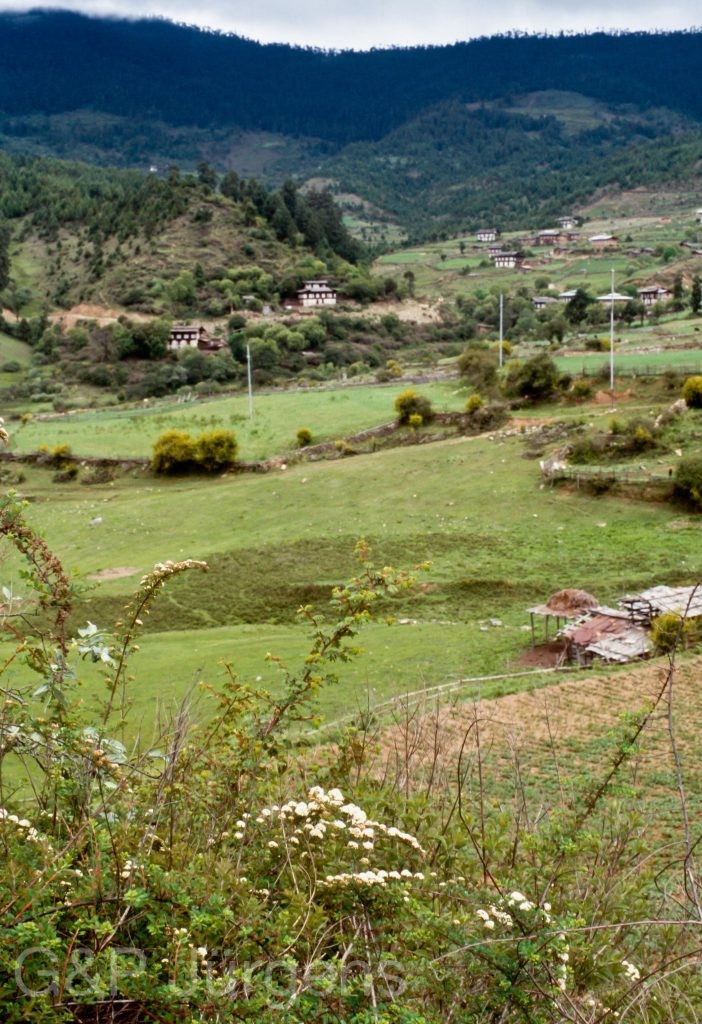
Bhut09 528G 14.06.
Bhutan Jakar 2600m, June
Nepal 99 585 ergebnis
West-Nepal Garpung-Khola 3500m, July

Description

Spiraea arcuata is a Himalayan and Sino-Himalayan shrub native to Nepal, China, India, Bhutan and Myanmar, with about 376 GBIF records, supplemented by cultivated occurrences in Europe and North America. It grows in the temperate and subalpine zone on open hillsides, forest margins, scrub and rocky slopes. The cited records span its altitudinal range, from Jakar in central Bhutan at around 2600 m flowering in June to the Garpung-Khola in western Nepal at about 3500 m in July, where it forms part of the deciduous shrub component of montane vegetation on well-drained slopes.

The plant is a deciduous shrub with slender, arching to recurved branches, the epithet alluding to their curving habit. The leaves are small, alternate, simple, obovate to oblong-elliptic, entire or with a few apical teeth, glabrous to thinly hairy and often paler beneath. The white flowers are numerous and crowded in dense, rounded, corymb-like clusters borne along the branches; each small flower has five petals, a shallow hypanthium, numerous stamens, and several free carpels. The fruit is a cluster of small, dehiscent follicles each containing several narrow seeds.

Described by Hooker f., S. arcuata belongs to the section of pink- to white-flowered Himalayan spiraeas. The genus is taxonomically intricate, with much intergradation among the alpine and subalpine species of the region. Several Himalayan Spiraea, including this one, are valued horticulturally for their profuse spring and early-summer flowering. With its broad distribution and tolerance of open and disturbed montane habitats, the species is not regarded as threatened.

Author: Hook.f. · Sources: POWO (Kew), GBIF, Flora of Bhutan, Flora of China, Rehder's account of Spiraea

H. Hara

Nepal 99 554 ergebnis
West-Nepal Churta-Khola 4230m, June

Description

Stellaria congestiflora is a high-alpine chickweed of the Himalaya, recorded from Nepal, China, Bhutan and India, a restricted and infrequently collected distribution reflected in its small number of georeferenced records. It grows in alpine meadows, on stony slopes, screes and the gravelly margins of streams and snowbeds at high elevations, generally well above 4000 m. The plant photographed at Churta-Khola in West Nepal at 4230 m in June is a characteristic occurrence in the cold, open alpine zone, flowering soon after snowmelt at the upper limit of vascular plant growth.

It is a small, tufted or mat-forming perennial herb arising from a slender, branched rootstock. The stems are short, slender and often densely clothed, bearing opposite, sessile, narrowly lanceolate to linear leaves. As the epithet indicates, the small white flowers are aggregated into congested, head-like terminal clusters subtended by leafy bracts, rather than borne in the open, spreading cymes typical of many relatives. Each flower has five sepals and five deeply bifid white petals, ten stamens and a superior ovary bearing three styles; the fruit is a capsule dehiscing by valves to release several small seeds.

Stellaria is a large, cosmopolitan genus of the Caryophyllaceae distinguished by the deeply two-cleft petals, and the dense, congested inflorescence of S. congestiflora, described by H.Hara, separates it from the looser-flowered Himalayan species. Its narrow, high-elevation range makes it potentially sensitive to alpine climate change and habitat shifts, though its remote habitat limits direct human pressure. As a cushion-like alpine herb it contributes to the sparse but specialised flora of the upper screes and snowbed margins.

Author: H. Hara · Sources: POWO (Kew), GBIF, Flora of China, Annotated Checklist of the Flowering Plants of Nepal, Hara's Flora of Eastern Himalaya, monographic studies of Himalayan Stellaria (Caryophyllaceae)