Tag:

Alpine (>3500 m)

DC.

BhutanPG2011 384
Bhutan Shele-La, 3600m September
Bhutan2012 33
Bhutan Shele-La, 3600m September
Bhutan2012 325
Bhutan Dochu-La, 3600m September
Nepal 95 137 P230 ergebnis
Nepal South of Rupina La 3650m October

Description

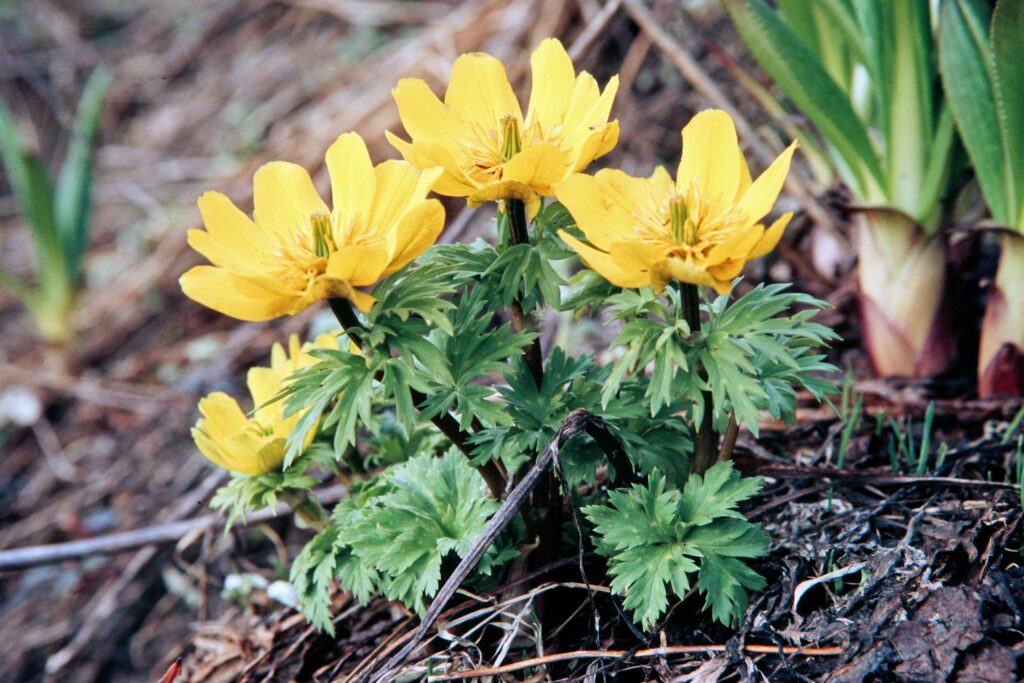
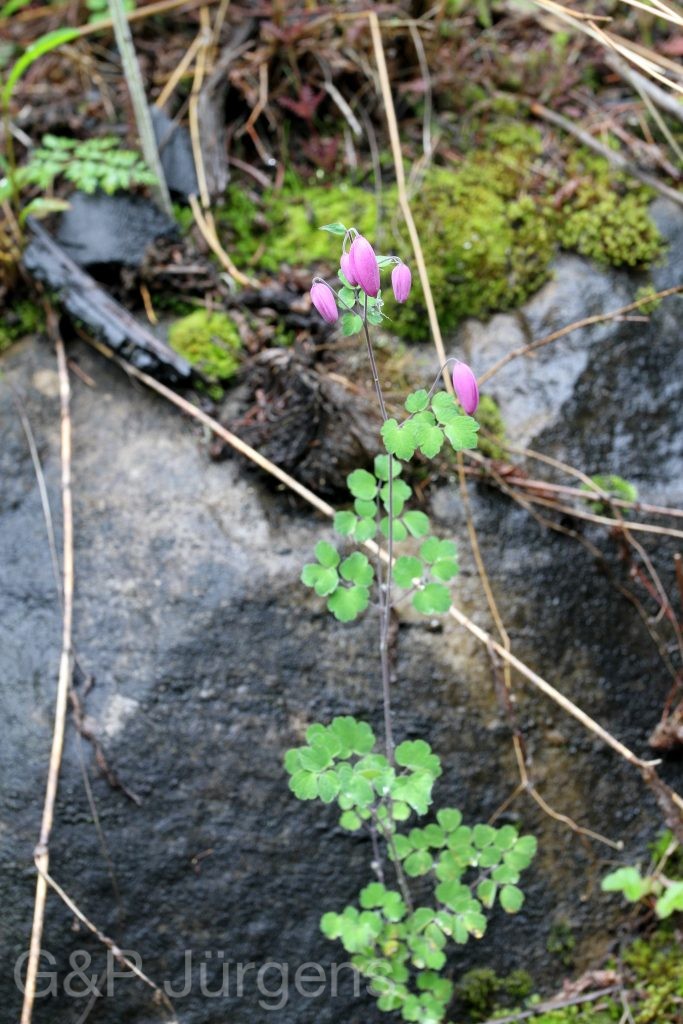
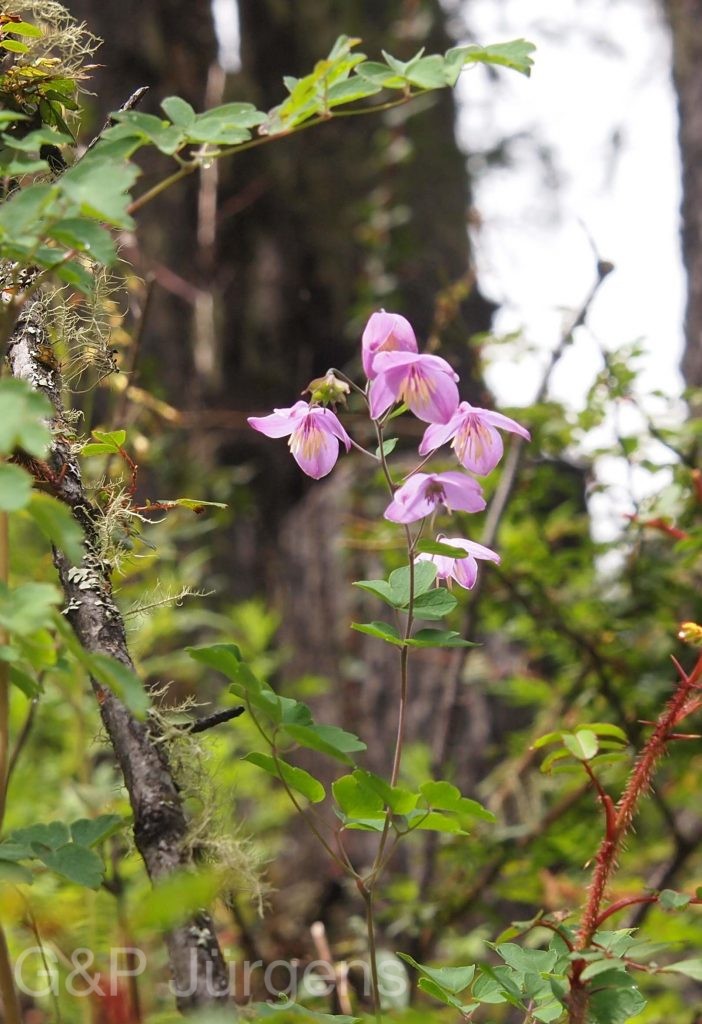
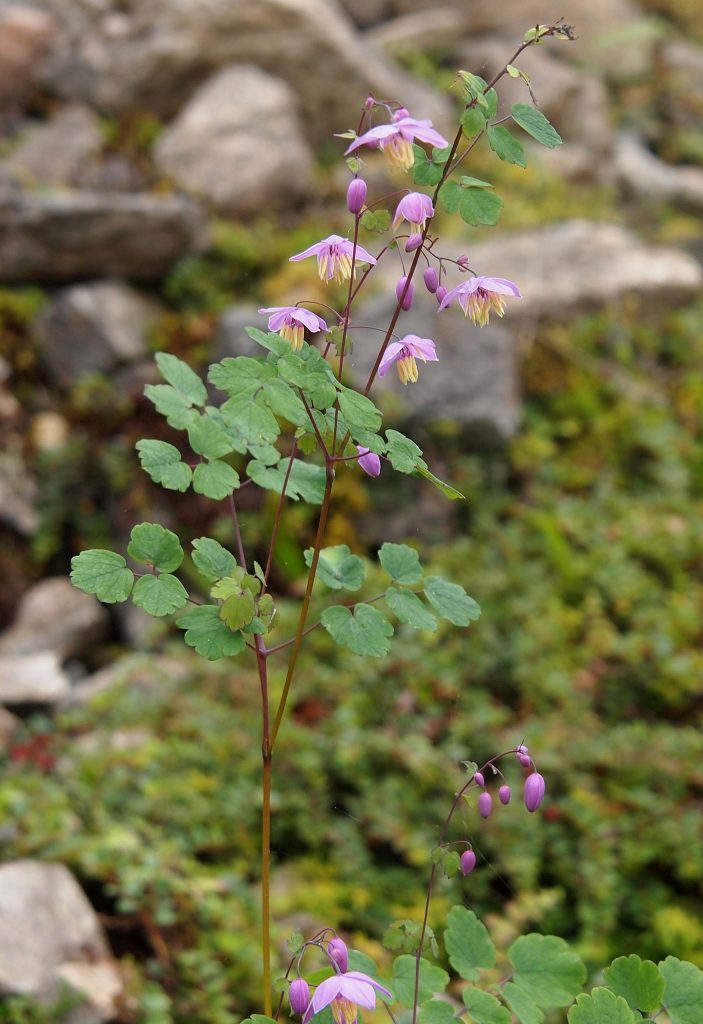
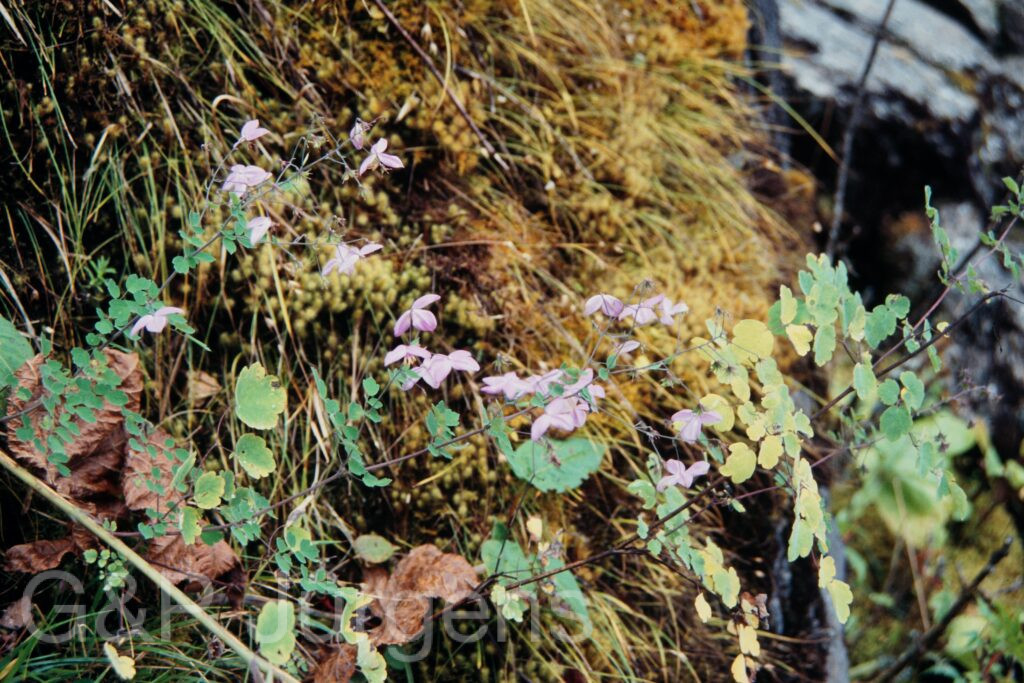
Thalictrum chelidonii is a Himalayan meadow-rue distributed through Nepal, north-east India, Bhutan and south-west China, with 178 georeferenced occurrences. It grows in moist, often partly shaded sites along forest margins, in subalpine scrub, on grassy and rocky slopes and beside streams in the upper temperate to subalpine zones. The cited collections at Shele-La and Dochu-La in Bhutan (both about 3600 m, September) and south of Rupina La in Nepal (3650 m, October) reflect its typical altitudinal range of roughly 2700-4000 m, where it flowers and fruits late in the growing season.

It is an erect perennial herb with slender, branching, often glaucous stems and large, two- to three-times ternately or pinnately compound leaves; the leaflets are rounded to obovate, lobed and toothed, recalling those of Aquilegia. Unlike many wind-pollinated meadow-rues, T. chelidonii has conspicuous flowers in which the four or five petaloid sepals are well developed, lilac to rose-purple, surrounding numerous spreading stamens with slender filaments. The carpels are several and free, ripening into a cluster of stipitate, longitudinally ribbed achenes that hang on slender stalks.

Within Ranunculaceae the genus Thalictrum is distinctive for its apetalous flowers in which sepals and stamens provide the floral display; the showy coloured sepals of this species point to insect rather than purely wind pollination. The pendent, winged-ribbed achenes aid dispersal. Widespread and locally common across the central and eastern Himalaya, the species is of no conservation concern, and like several relatives it contains isoquinoline alkaloids of ethnomedicinal interest.

Author: DC. · Sources: POWO (Kew), GBIF, Flora of Bhutan, Flora of China, Flora of Nepal, Tamura Ranunculaceae treatment (Die natürlichen Pflanzenfamilien)
Franch.

BhutanPG2011 817 01 01
Bhutan Chele-La, 3700m July

Also: Iris Clarkei Hook.f.

Description

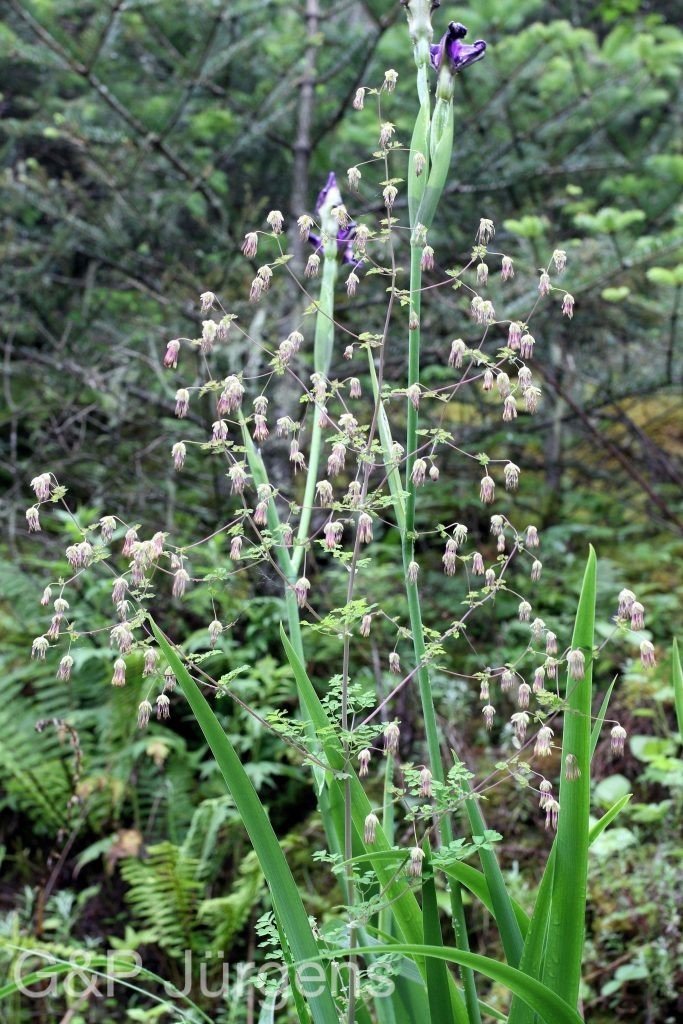
Thalictrum leuconotum is an alpine meadow rue distributed across the eastern Himalaya and adjacent Sino-Himalayan ranges, with verified records from China, Nepal and Bhutan (GBIF documents some 152 occurrences). It inhabits subalpine and alpine meadows, open grassy slopes, forest margins and the rocky banks of seasonal streams, typically between about 3000 and 4200 m. The species was photographed on the Chele-La in western Bhutan at 3700 m in July, a high pass where it flowers among dwarf rhododendron scrub and herbaceous turf during the brief growing season.

The plant is an erect perennial herb arising from a short, fibrous-rooted rhizome, the stems glabrous to minutely pubescent and branched in the upper part. The leaves are several times ternately compound, the ultimate leaflets thin, obovate to suborbicular and shallowly lobed or crenate, often glaucous and conspicuously whitish beneath, a feature alluded to in the epithet "leuconotum" (white-backed). The inflorescence is a lax, spreading panicle of small apetalous flowers; the showy parts are the numerous pendulous stamens with slender filaments, while the four caducous sepals are greenish to purplish. The fruit is a cluster of small, ribbed, stipitate achenes.

Within Thalictrum, a large and taxonomically intricate genus, T. leuconotum belongs to the broad assemblage of Sino-Himalayan species characterised by reduced perianths and reliance on wind pollination. Its glaucous, white-backed foliage and montane ecology distinguish it from sympatric congeners. As a widespread high-elevation herb of relatively undisturbed alpine pastures, it is not considered threatened, though localised grazing pressure and habitat change may affect populations across its range.

Author: Franch. · Sources: POWO (Kew), GBIF, Flora of Bhutan, Flora of China, Annotated Checklist of the Flowering Plants of Nepal, Monograph of Thalictrum (Boivin)

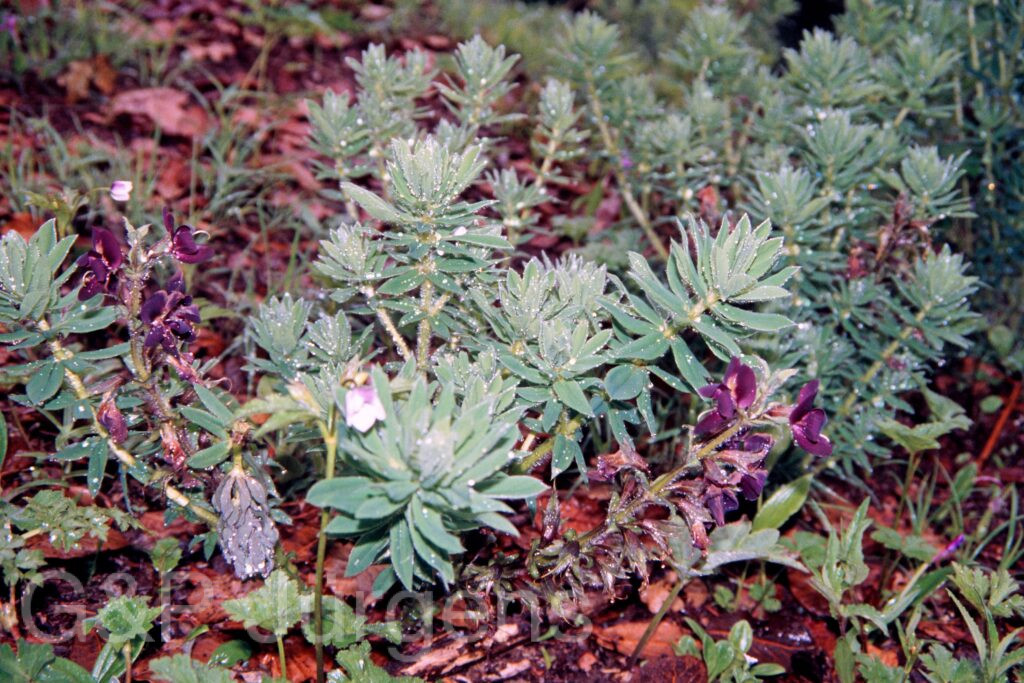
Benth.

Sikkim2011 151
Sikkim Kalep 3670m, June
Nepal 99 452 ergebnis
West-Nepal Naphukana 3080m, June

Description

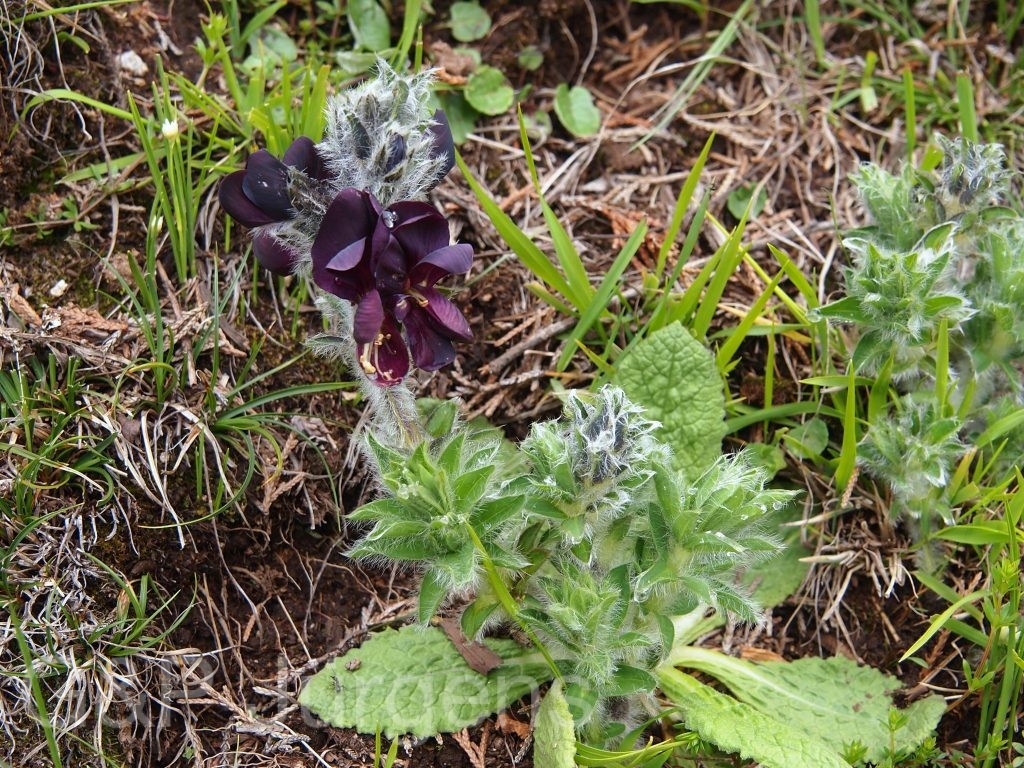
Thermopsis barbata Benth. is a distinctive legume of the high Himalaya, occurring across China, India, Nepal and Bhutan. It is documented from Sikkim at Kalep around 3670 m and from West-Nepal at Naphukana near 3080 m, both flowering in June, within the subalpine to alpine belt. The species favours open stony slopes, dry grassy hillsides, gravelly pastures and the margins of alpine scrub, typically between 3000 and 4500 m, on well-drained, often disturbed substrates exposed to strong sun and seasonal aridity. Its roughly 606 GBIF records indicate a widespread but characteristically montane Himalayan range.

The plant is a robust perennial herb arising from a stout rootstock, the erect stems and foliage conspicuously clothed in long, soft, silky to villous hairs that give the epithet barbata. The leaves are palmately trifoliolate with elliptic to obovate leaflets and large persistent stipules. The flowers are arranged in a dense terminal raceme and are notably large for the genus, the papilionaceous corolla a deep purple to violet-maroon rather than the yellow usual in Thermopsis, subtended by hairy bracts and an enlarged calyx. The fruit is a hairy, flattened, several-seeded legume.

Thermopsis barbata is exceptional within its predominantly yellow-flowered, north-temperate genus for its dark purple corolla and dense pubescence, traits interpreted as adaptations to the cold, high-radiation alpine environment. Like many genistoid legumes it contains quinolizidine alkaloids that deter herbivores. Widespread and locally frequent across its range, it is not regarded as threatened, though high-altitude grazing and pasture degradation may locally affect populations.

Author: Benth. · Sources: POWO (Kew), GBIF, Flora of China, Flora of Nepal, Flora of British India, Legumes of the World (Lewis et al.)

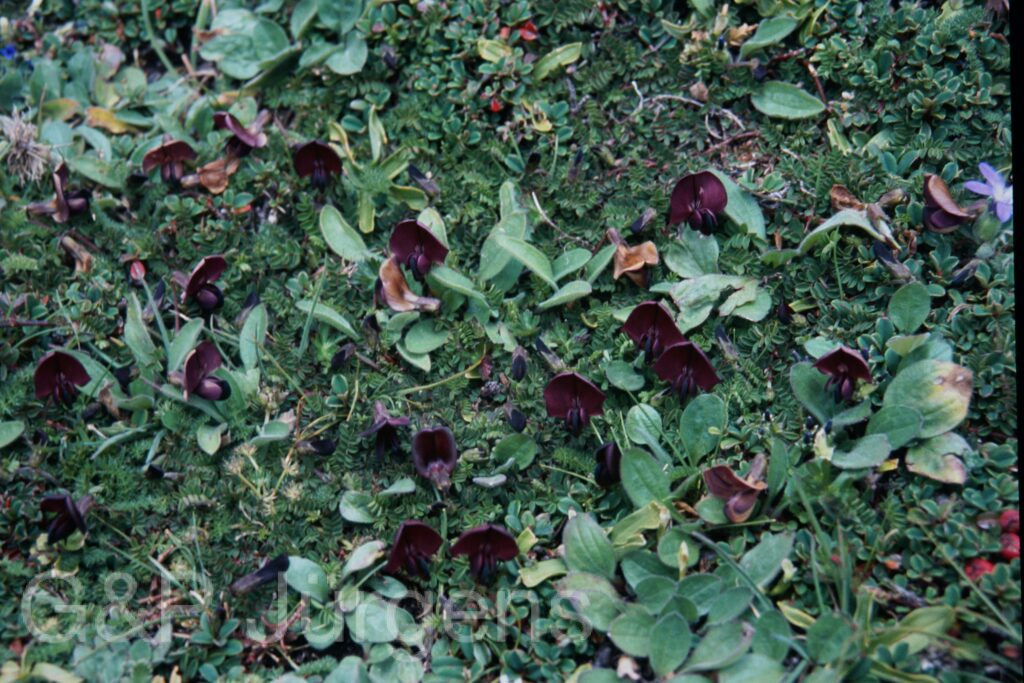
Tibetia himalaica

by GP Jürgens

(Baker) H.B. Cui

Sikkim2003 527 P735
Sikkim Yume Samdong 4600m August
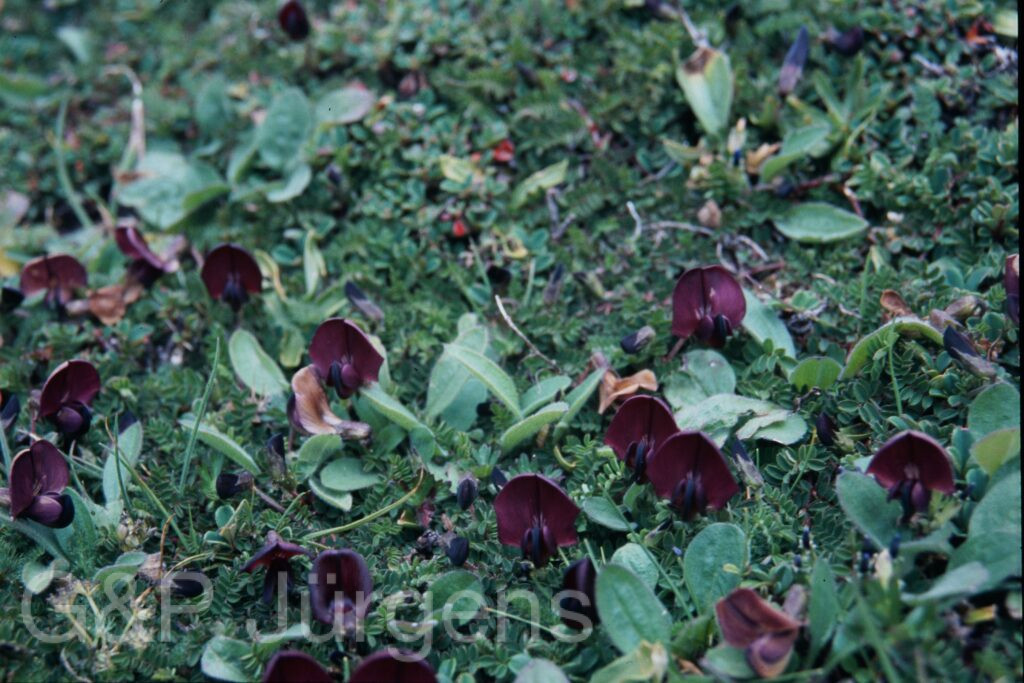
Sikkim2003 528 P736
Sikkim Yume Samdong 4600m August

Description

Tibetia himalaica is a high-altitude legume of the Sino-Himalayan region, distributed across the Tibetan Plateau and adjoining mountains in China, Nepal, India and Bhutan; GBIF records over 800 occurrences concentrated in the high alpine belt. It is a plant of alpine meadows, short turf, gravelly slopes, riverine flats and open stony ground, typically between 3,000 and 5,000 m. The individual photographed at Yume Samdong in northern Sikkim at 4,600 m in August captures the species near the upper limit of its range, flowering during the late-summer monsoon on the cold, well-drained alpine soils characteristic of this trans-Himalayan locality.

It is a low, cushion-forming or mat-like perennial herb arising from a slender, often woody taproot and a branched caudex, the stems short and largely prostrate. The leaves are imparipinnate, with several pairs of small, obovate to elliptic, often emarginate leaflets on short petioles, the whole appressed-pubescent. The flowers are solitary or few in an umbel-like arrangement on slender scapes; each is a typical papilionaceous flower with a campanulate, hairy calyx and a blue to purplish or violet corolla comprising a broad standard, oblong wings and an incurved keel. The fruit is a cylindrical, glabrescent legume that dehisces to release several small seeds.

Tibetia is a small genus of about half a dozen species segregated from Gueldenstaedtia, restricted to the high mountains of the Sino-Himalayan and Central Asian region and distinguished by its solitary or few-flowered scapes, persistent stipules and alpine cushion habit. As a nitrogen-fixing legume forming root nodules with rhizobia, T. himalaica contributes to soil enrichment in nutrient-poor alpine turf and is grazed by livestock and wild herbivores. Its wide but high-altitude distribution renders it ecologically secure at present, though high-elevation specialists of this kind are regarded as potentially sensitive to climate warming; it has not been formally assessed for the IUCN Red List.

Author: (Baker) H.B. Cui · Sources: POWO (Kew), GBIF, Flora of China, Flora of Bhutan, Annotated Checklist of the Flowering Plants of Nepal, revision of Tibetia and Gueldenstaedtia (Fabaceae)

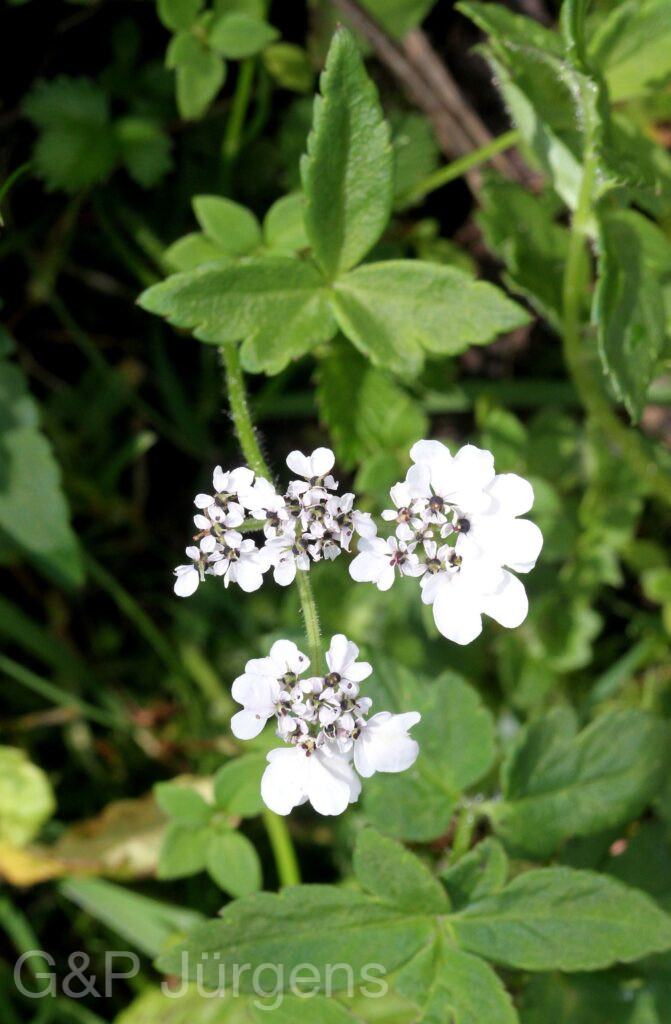
DC.

Sikkim2011 224
Sikkim Yumthang 3600m, June

Description

Tordyliopsis brunonis DC. is a monotypic genus of Apiaceae endemic to the high Himalaya. GBIF data (121 occurrences) document its occurrence in Nepal, north India (including Sikkim), Bhutan, and adjacent southwest China, where it inhabits open alpine meadows, rocky slopes, and grazed turf. The species was photographed at Yumthang in Sikkim at 3,600 m in June, consistent with its alpine ecology in the subalpine-to-alpine belt between roughly 3,000 and 4,500 m, where it flowers as snowmelt recedes. It typically grows in moist, humus-rich pockets among boulders and in herb-rich pasture.

The plant is a low perennial herb arising from a stout taproot, with short, often more or less prostrate or ascending stems. The leaves are pinnate to bipinnate with toothed leaflets, forming a basal cluster. As in most Apiaceae the inflorescence is a compound umbel, here subtended by conspicuous bracts and bracteoles; the small white to pinkish flowers give rise to dorsally compressed mericarps whose lateral wings and ribbed dorsal surface recall those of Tordylium, the genus from which the name ("resembling Tordylium") derives.

Tordyliopsis occupies an isolated position within subfamily Apioideae and has been the subject of debate regarding its tribal placement, owing to its distinctive winged fruit anatomy. As a Himalayan endemic restricted to high elevations, it is potentially vulnerable to climate-driven upslope habitat contraction and intensive summer grazing, though no formal IUCN assessment exists. It serves as a useful indicator of intact alpine meadow communities.

Author: DC. · Sources: POWO (Kew), Flora of China Vol. 14, Flora of Bhutan Vol. 2, GBIF, Pimenov & Leonov: The Genera of the Umbelliferae (1993)

Benth. ex C.B.Clarke

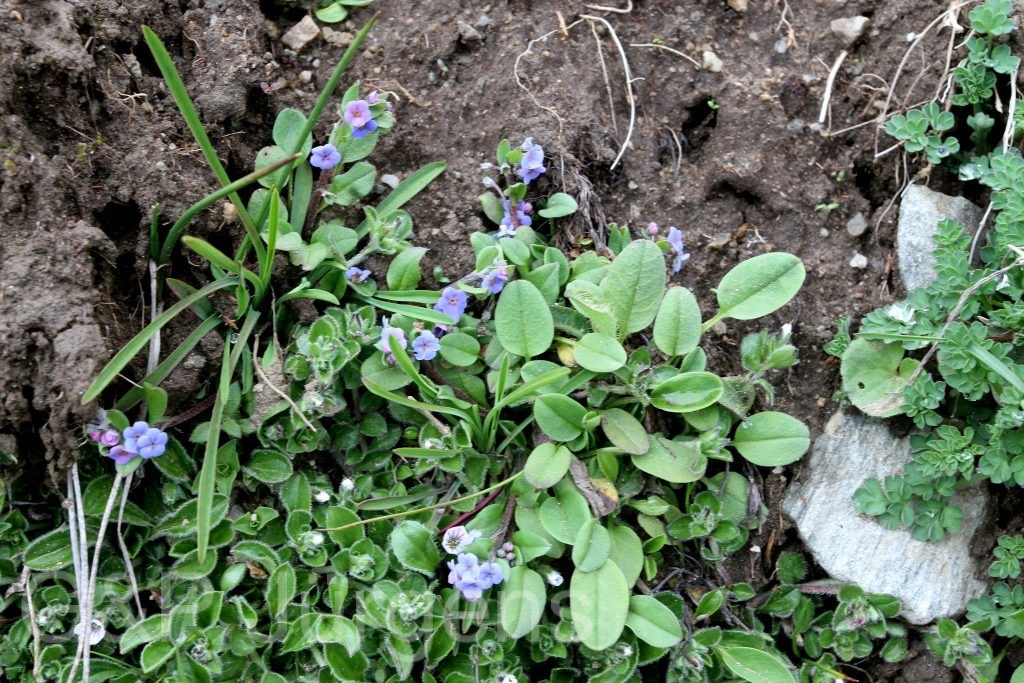
BhutanPG2011 452
Bhutan Tsochenchen, 3550m June
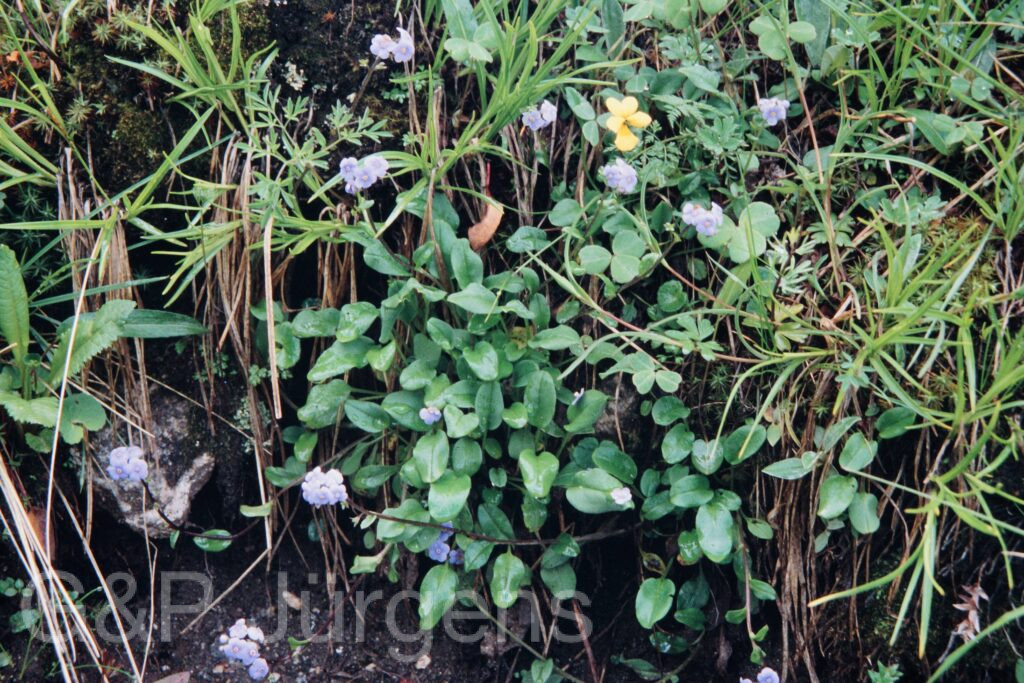
Nepal 99 516 ergebnis
West-Nepal Churta-Khola 3800m, June
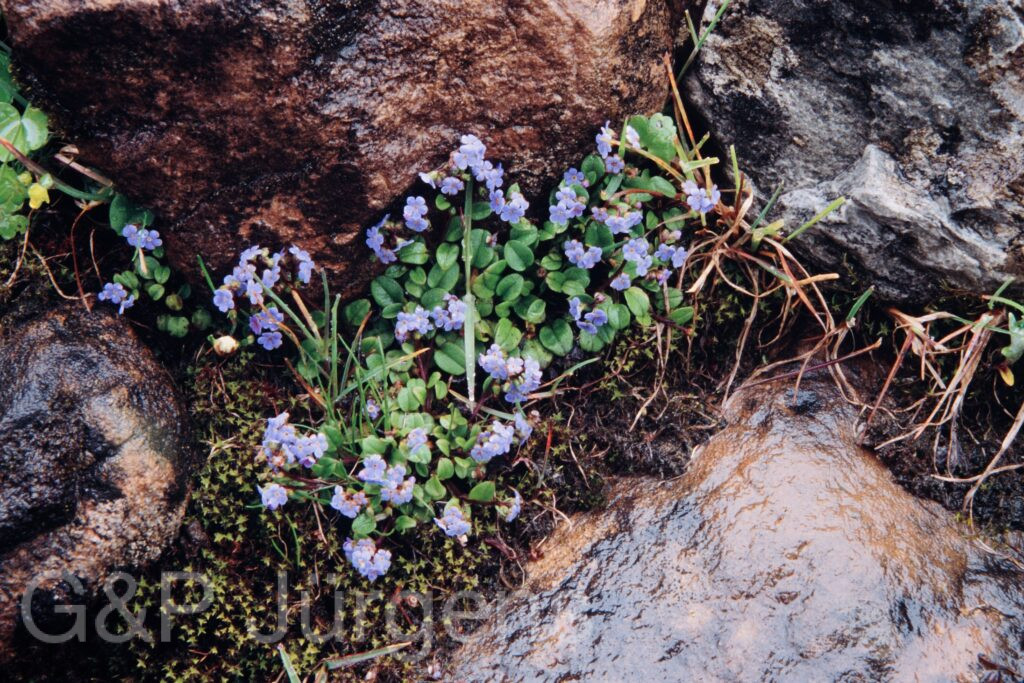
Nepal 99 615 ergebnis
West-Nepal Kagmara-La 4100m, July

Description

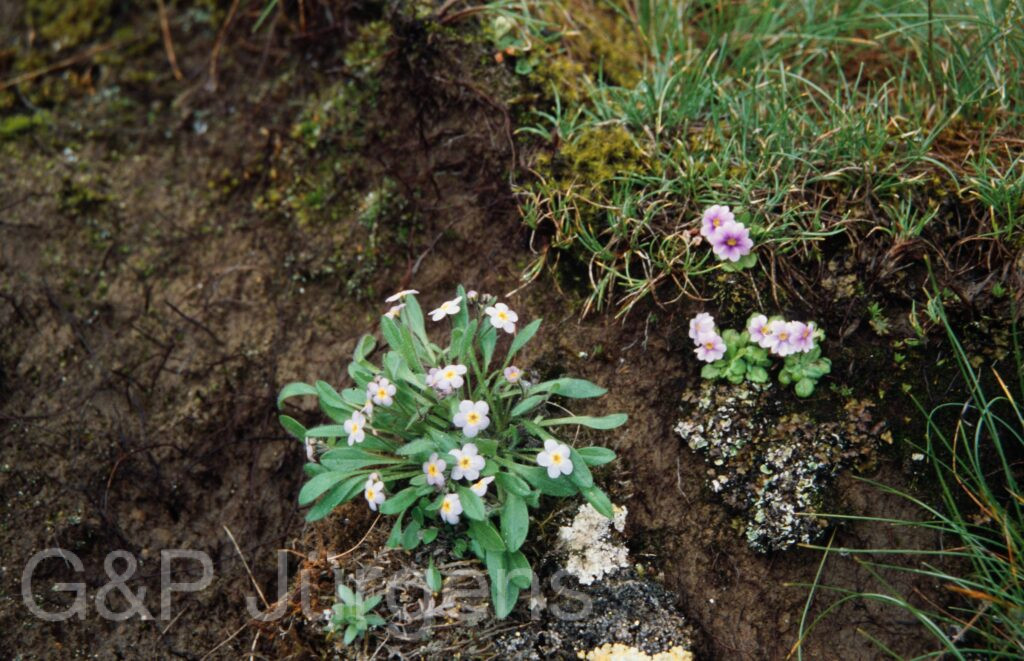
Trigonotis rotundifolia is a low-growing alpine forget-me-not relative of the Himalaya, with roughly 106 GBIF records across India, Nepal, China and Bhutan. It is a true high-alpine specialist, colonising open stony slopes, screes, moraine, rock crevices and short turf well above the treeline. The locations documented for the photographed material span a broad altitudinal band, from Tsochenchen in Bhutan at about 3550 m in June, through Churta-Khola in West Nepal at 3800 m, to the Kagmara-La at around 4100 m in July, confirming its preference for the upper subalpine to alpine zone where snow lingers and the season is brief.

It is a small, mat- or cushion-forming perennial herb with a branched rootstock and short, often prostrate or ascending stems clothed in appressed to spreading hairs. The leaves are small, crowded, and rounded to orbicular or spathulate, as the epithet indicates, narrowing into a winged petiole. The flowers are borne singly or in few-flowered leafy cymes; each has a deeply five-lobed calyx and a salverform to rotate, bright blue corolla with five yellow or white throat appendages (fornices) typical of the tribe. The fruit comprises four small, smooth, trigonous to keeled nutlets borne on short pedicels.

The genus Trigonotis is distinguished from Myosotis chiefly by nutlet morphology, the nutlets being triangular or pyramidal rather than dorsiventrally compressed. The genus is centred on the Sino-Himalayan and East Asian region, and the dwarf cushion habit of this species reflects convergent adaptation to cold, exposed, wind-pruned alpine sites. It is not formally assessed for conservation but, as a high-elevation endemic, is intrinsically sensitive to alpine habitat shifts under climate change.

Author: Benth. ex C.B.Clarke · Sources: POWO (Kew), GBIF, Flora of China, Flora of Bhutan, Flora of Nepal, Riedl Boraginaceae of the Himalaya

I.M. Johnst.

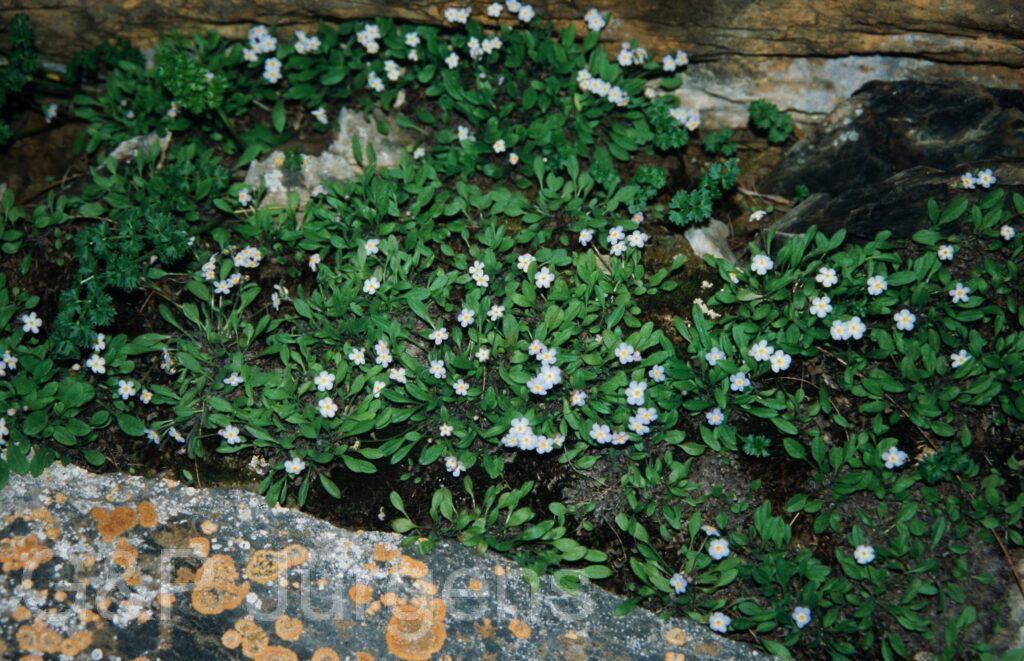
Nepal 99 812 ergebnis
West-Nepal, Baga-La-Phedi 4300m, July
Nepal 99 813 ergebnis
West-Nepal, Baga-La-Phedi 4300m, July

Description

Trigonotis tibetica is a small alpine forget-me-not relative distributed across the Tibetan Plateau and the high Himalaya, recorded from China, India, Nepal, Bhutan and Pakistan, and reasonably well collected (c. 278 records in GBIF) across this broad arc. It inhabits open alpine turf, gravelly slopes, stabilised screes and the margins of meadows, typically between about 3500 and 5000 m, where snowmelt provides moisture through the brief summer. The photographed plant from West Nepal at Baga-La-Phedi (4300 m, July) is typical of the species in mid-summer flower in this cold, well-drained high-elevation setting.

The plant is a low, often tufted perennial herb with a slender taproot and prostrate to ascending stems, the whole frequently appressed-strigose or hispid. The leaves are small, spathulate to oblong-elliptic, entire, and crowded toward the base. The inflorescence is a short, ebracteate or basally bracteate cyme that elongates in fruit; the flowers are small and gamopetalous, with a blue (occasionally white) rotate to shallowly campanulate corolla bearing five vaulted faucal scales at the throat. The androecium has five included stamens; the gynoecium develops into the characteristic four nutlets, which in Trigonotis are conspicuously trigonous and tetrahedral, often borne on short gynobasic stalks.

The genus Trigonotis (tribe Trigonotideae) is distinguished from Myosotis and allied forget-me-nots chiefly by these sharply angled, pyramidal nutlets. Note that this taxon has historically been treated under Microula, and the source links accordingly to a Microula tibetica page; current nomenclature places the accepted name in Trigonotis. As a widespread plateau and Himalayan alpine, the species is not considered threatened.

Author: I.M. Johnst. · Sources: POWO (Kew), GBIF, Flora of China (Boraginaceae), Flora of Nepal, Flora of Pakistan, Monograph of Trigonotis (I.M. Johnston)

Wall. ex D.Don

Nepal 99 141 ergebnis
West-Nepal South of Rara-Lake 3800m, June
Nepal 2001 308 ergebnis ergebnis
Nepal (Gorkha) Kharka 3100m, May

Description

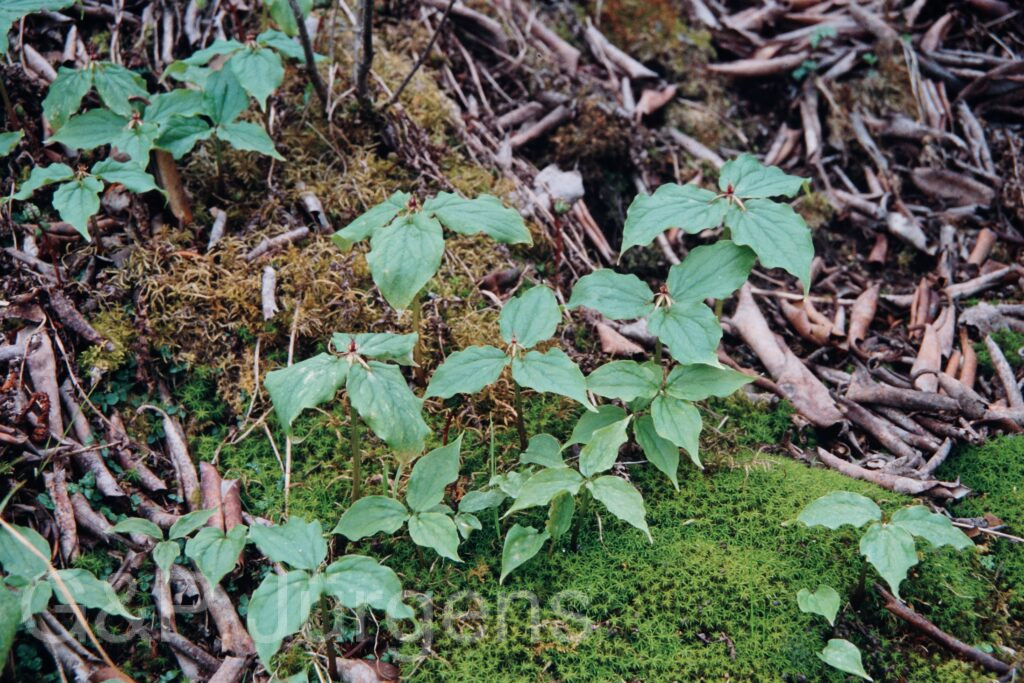
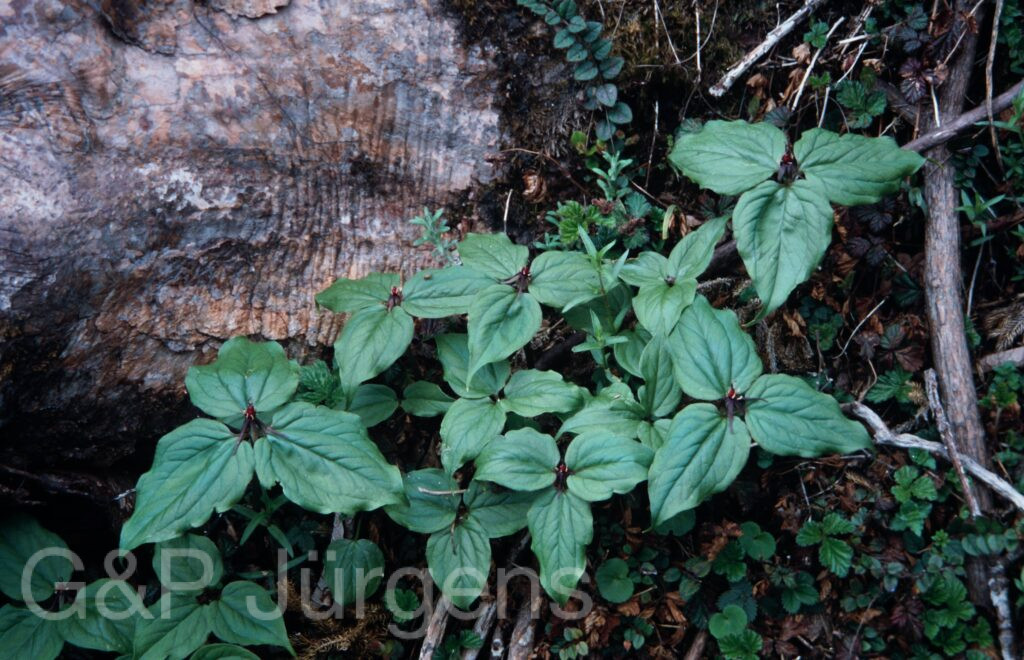
Trillium govanianum is a rhizomatous perennial herb of the family Melanthiaceae and the sole representative of the otherwise North American and East Asian genus Trillium in the Himalaya. GBIF data confirm a core distribution through Pakistan, India and Nepal, extending into Bhutan and the western fringe of China. It is a plant of moist, shaded temperate and subalpine forest, growing on humus-rich soils beneath Abies, Betula and rhododendron, and in damp alpine scrub and meadow margins, typically between about 2,800 and 4,000 m. The collections illustrated from south of Rara Lake in west Nepal at 3,800 m in June and from Kharka in Gorkha at 3,100 m in May are characteristic of this shaded, high-montane habitat.

The species arises from a short, thick, creeping rhizome and produces a single erect stem 10–30 cm tall bearing the diagnostic whorl of three broadly ovate, net-veined, sessile leaves at its summit. From the centre of this whorl a solitary, sessile or shortly stalked flower is borne; it is small and dark, with three narrow green sepals and three slender petals that are deep maroon to purplish-brown, accompanied by six stamens and a three-loculed ovary. The fruit is a fleshy, reddish berry-like capsule containing several seeds, in contrast to the dry capsules of many congeners.

The presence of a single Trillium in the Himalaya is of considerable biogeographic interest, representing a disjunct outlier of a genus otherwise centred on temperate North America and Japan. The species, locally known as nag chhatri, has become the focus of intense and unsustainable harvesting for its rhizome, which is traded for purported steroidal saponin content. This pressure, combined with slow growth and a narrow ecological niche, has raised serious conservation concern, and the plant is now regarded as threatened across much of its range.

Author: Wall. ex D.Don · Sources: POWO (Kew), GBIF, Flora of Nepal, Flora of Pakistan, Annotated Checklist of the Flowering Plants of Nepal, Farmer & Schilling: Phylogenetics of Trillium

Lindl.

Description

Trollius acaulis is a dwarf perennial of the high Himalaya, ranging along the alpine belt from Afghanistan and Pakistan through the western and central Himalaya into Nepal, Uttarakhand and Himachal Pradesh, and the western Tibetan Plateau in China. GBIF aggregates 188 georeferenced records, the species being strongest in the north-west. It grows in open alpine turf, moist grassy slopes, screes and snow-melt flushes, typically between 3000 and 4500 m. The plant photographed at Khiar Kutti in Garhwal at 3900 m in June is characteristic, flowering as the snow recedes.

It forms a compact, almost stemless herb arising from a short fibrous-rooted rhizome, the flowering stem reduced so the bloom appears to rest on the foliage (hence acaulis). The basal leaves are long-petiolate and palmately divided into deeply incised, toothed segments, glabrous and somewhat fleshy. The solitary flower is large, broadly cup-shaped and golden-yellow, the petaloid sepals enclosing numerous narrow nectariferous petals and a dense boss of stamens. The fruit is a head of many sessile, longitudinally veined follicles, each beaked and dehiscing ventrally to shed small angular seeds.

Within Ranunculaceae, Trollius (the globeflowers) is allied to Anemone and Ranunculus but set apart by its persistent petaloid sepals and clustered follicles. T. acaulis is among the most reduced, high-altitude members of the genus, its acaulescent habit an adaptation to short seasons, intense insolation and wind exposure. Like its congeners it yields acrid protoanemonin and is unpalatable to stock. Not assessed as threatened, it is nonetheless sensitive to overgrazing and the upward shift of climatic belts.

Author: Lindl. · Sources: POWO (Kew), GBIF, Flora of China Vol. 6, Flora of Pakistan, Flora of Bhutan Vol. 1, Annotated Checklist of the Flowering Plants of Nepal, Doroszewska monograph of the genus Trollius

D.Don

BhutanPG2011 332
Bhutan Jule-Tso 4250m, June

Description

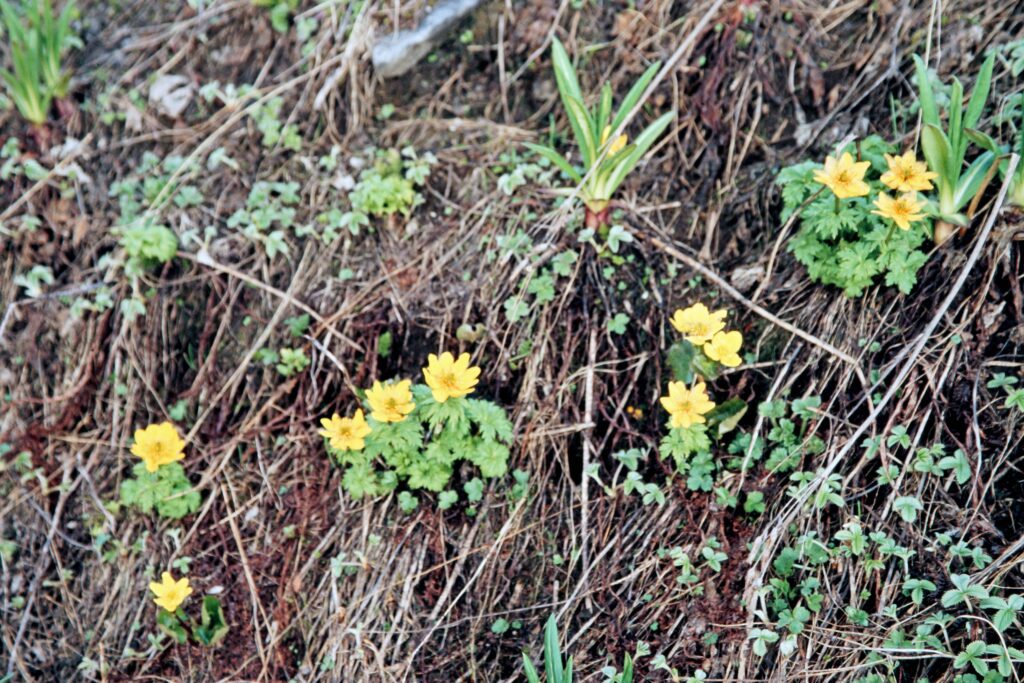
Trollius pumilus is a dwarf globeflower of the high alpine zone of the Himalaya and western China, native to China, Nepal, India and Bhutan, with over 520 georeferenced records (those reported from Europe, Canada and Japan representing cultivated and herbarium material). It grows in moist alpine meadows, on grassy and peaty slopes and beside snow-melt streams, typically between about 3500 and 4800 m. The photographed plant was recorded at Jule-Tso in Bhutan at 4250 m, flowering in June, early in the alpine growing season as snowbeds retreat and the high pastures come into bloom.

The species is a small, tufted perennial herb with a short rhizome and fibrous roots, the basal leaves long-petiolate with palmately three- to five-partite blades, the segments further lobed and toothed. The flowering stems are low, simple and few-leaved, bearing usually a single terminal flower. The flower is shallowly bowl-shaped and does not close into the globe characteristic of some congeners; the five or more petaloid sepals are bright golden-yellow, often flushed purplish or greenish outside, surrounding numerous small linear nectariferous petals (staminodes) and many stamens. The fruit is a cluster of several many-seeded follicles with short beaks.

Trollius, of the family Ranunculaceae and tribe Helleboreae, comprises the globeflowers of northern temperate and alpine regions; T. pumilus is among the smallest, distinguished by its open, single-flowered, low-growing habit. As an early snow-melt alpine it is insect-pollinated and a familiar component of Himalayan high-meadow flora. Widespread and locally abundant, it is of no conservation concern and is occasionally grown as an alpine ornamental.

Author: D.Don · Sources: POWO (Kew), GBIF, Flora of Bhutan, Flora of China, A Monograph of the Genus Trollius (Doroszewska)