
Benth. ex C.B.Clarke
Description
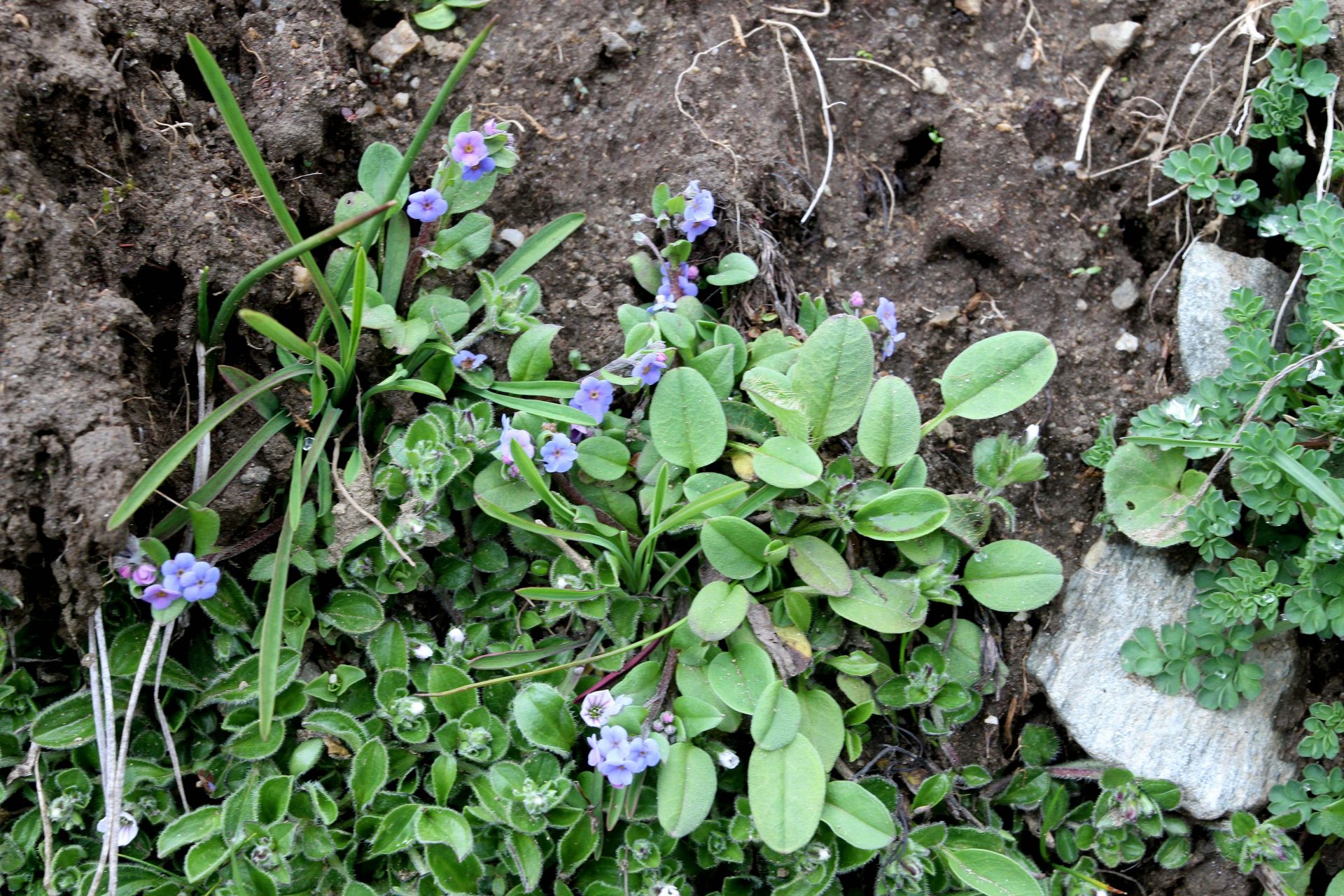
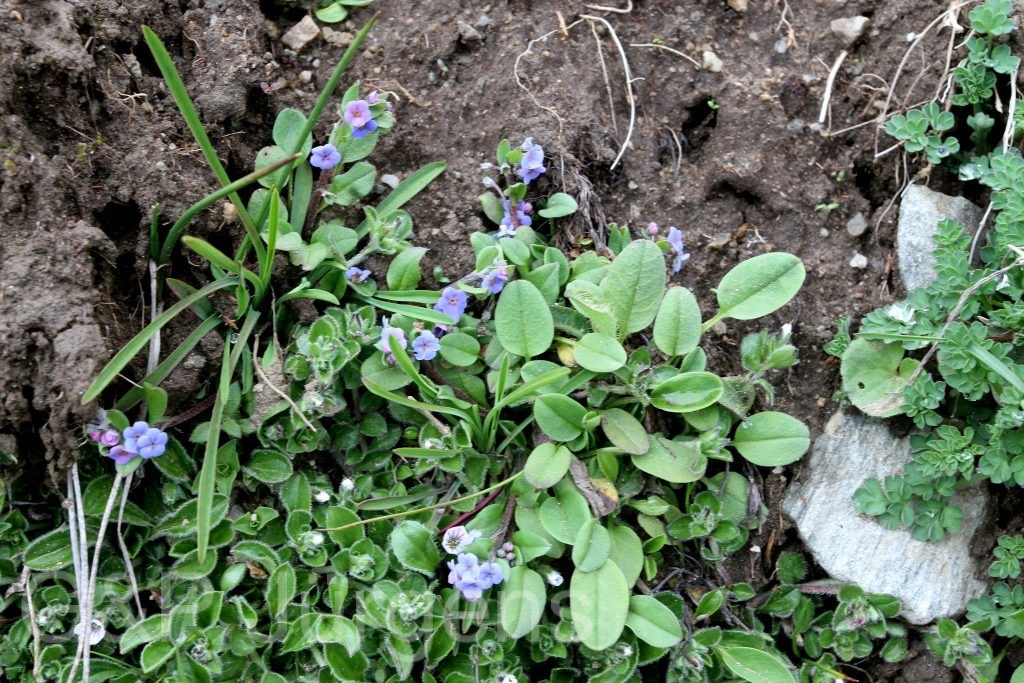
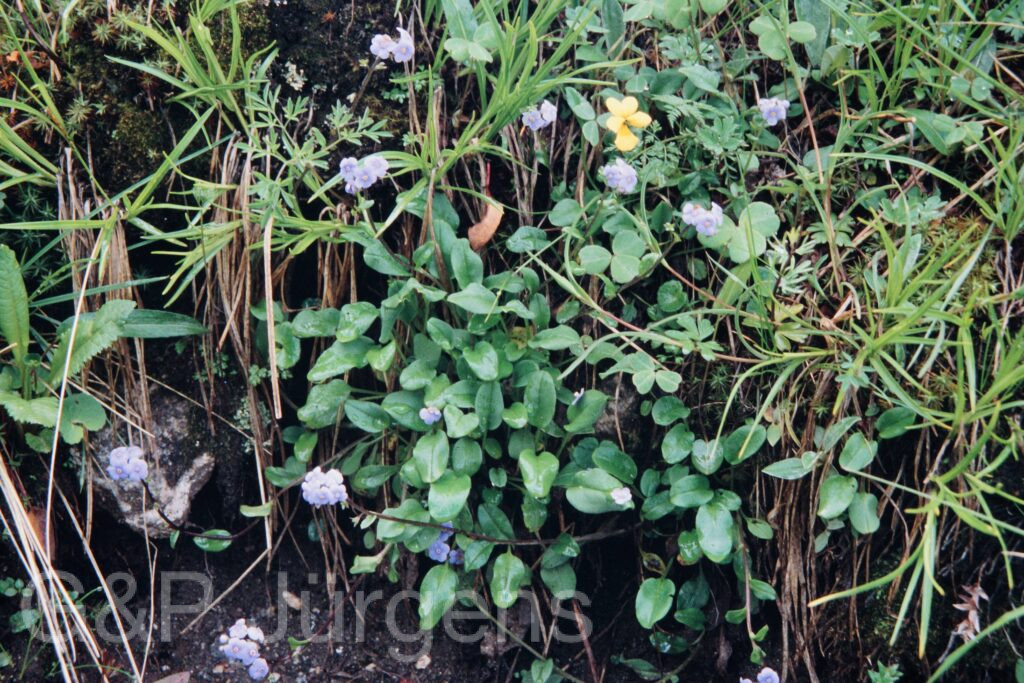
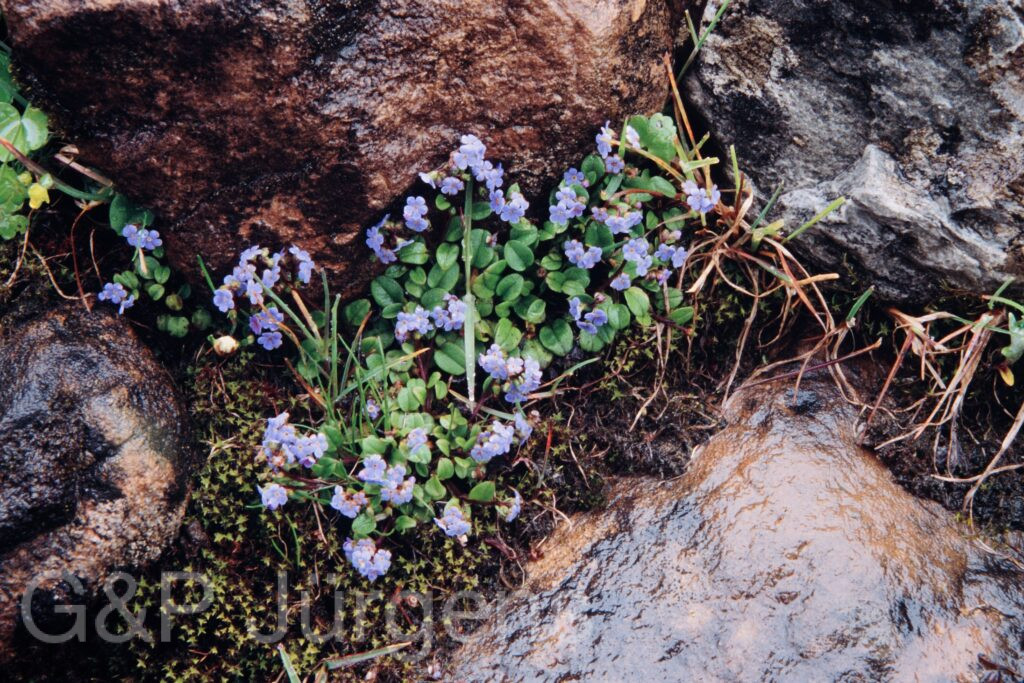
Trigonotis rotundifolia is a low-growing alpine forget-me-not relative of the Himalaya, with roughly 106 GBIF records across India, Nepal, China and Bhutan. It is a true high-alpine specialist, colonising open stony slopes, screes, moraine, rock crevices and short turf well above the treeline. The locations documented for the photographed material span a broad altitudinal band, from Tsochenchen in Bhutan at about 3550 m in June, through Churta-Khola in West Nepal at 3800 m, to the Kagmara-La at around 4100 m in July, confirming its preference for the upper subalpine to alpine zone where snow lingers and the season is brief.
It is a small, mat- or cushion-forming perennial herb with a branched rootstock and short, often prostrate or ascending stems clothed in appressed to spreading hairs. The leaves are small, crowded, and rounded to orbicular or spathulate, as the epithet indicates, narrowing into a winged petiole. The flowers are borne singly or in few-flowered leafy cymes; each has a deeply five-lobed calyx and a salverform to rotate, bright blue corolla with five yellow or white throat appendages (fornices) typical of the tribe. The fruit comprises four small, smooth, trigonous to keeled nutlets borne on short pedicels.
The genus Trigonotis is distinguished from Myosotis chiefly by nutlet morphology, the nutlets being triangular or pyramidal rather than dorsiventrally compressed. The genus is centred on the Sino-Himalayan and East Asian region, and the dwarf cushion habit of this species reflects convergent adaptation to cold, exposed, wind-pruned alpine sites. It is not formally assessed for conservation but, as a high-elevation endemic, is intrinsically sensitive to alpine habitat shifts under climate change.
Author: Benth. ex C.B.Clarke · Sources: POWO (Kew), GBIF, Flora of China, Flora of Bhutan, Flora of Nepal, Riedl Boraginaceae of the Himalaya