Tag:

Alpine (>3500 m)

Wall. & DC.

Bhutan2012 269
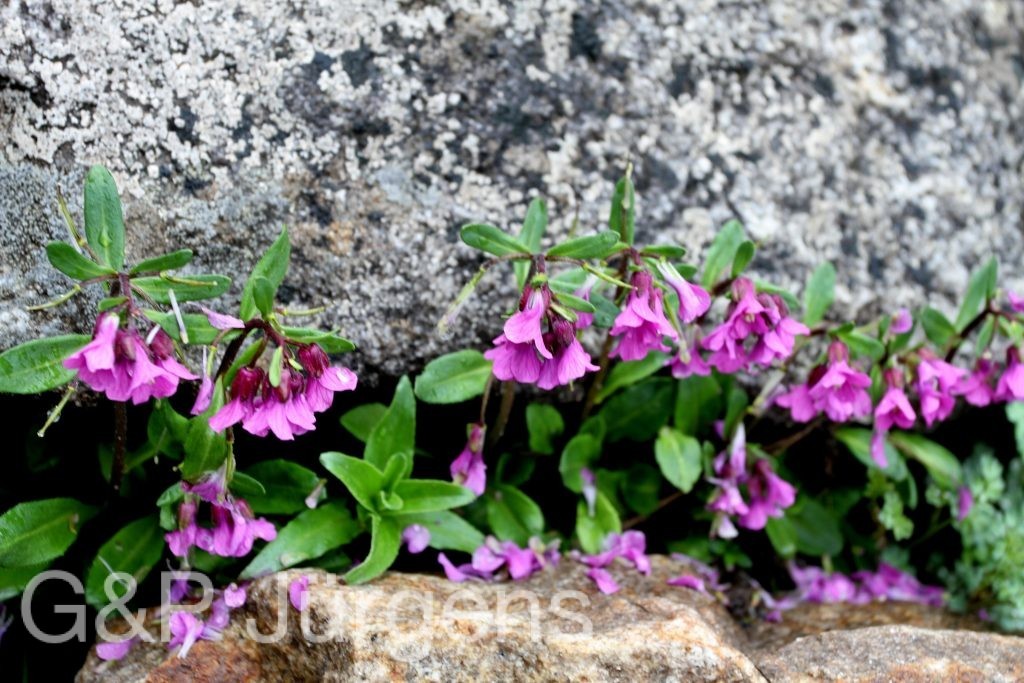
Bhutan Shele-La, 4100m September

Description

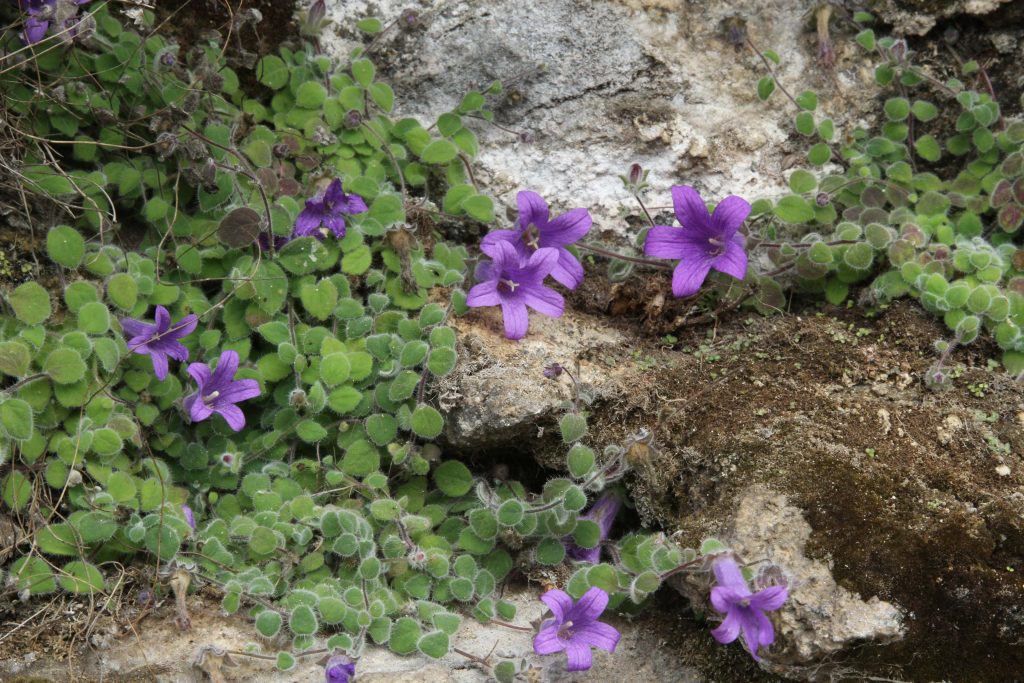
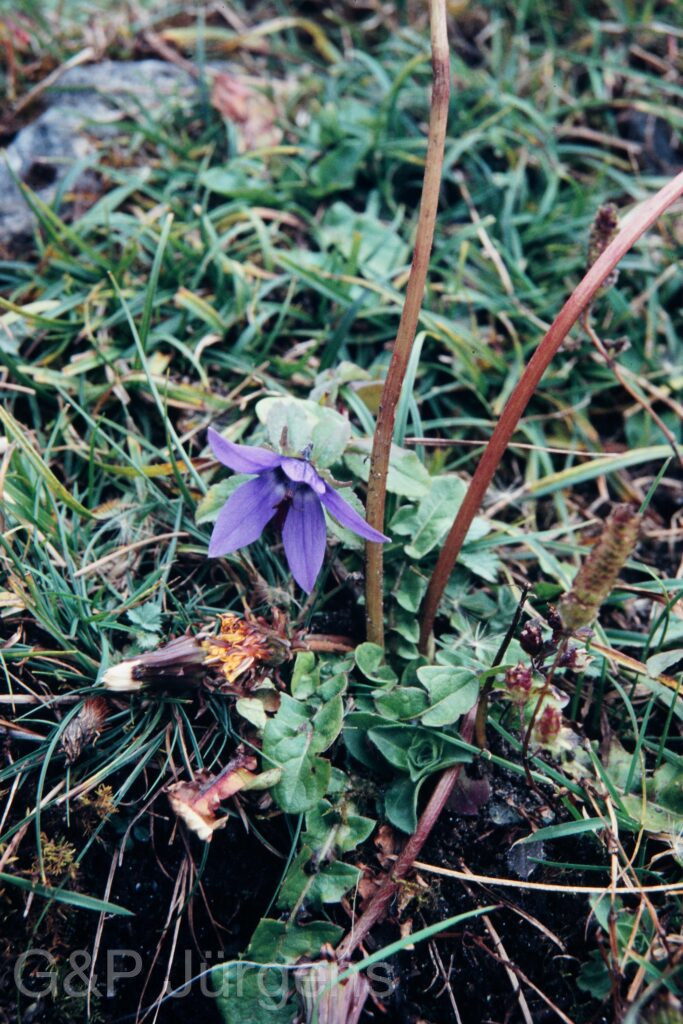
Campanula argyrotricha is a Himalayan bellflower ranging through India, Nepal, Bhutan, Pakistan and southern Tibet (China), with about 90 georeferenced records in GBIF. It is characteristic of the alpine zone, growing on open rocky slopes, screes, cliff ledges, moraine debris and short alpine meadows, generally between about 3500 and 4500 m. The plants illustrated were recorded at the Shele-La in Bhutan at around 4100 m in September, a typical late-season alpine setting where the species flowers as the monsoon recedes.

It is a low, tufted perennial herb whose epithet, meaning silvery-haired, refers to the conspicuous silvery-white indumentum clothing stems and foliage. From a slender rootstock arise several short, ascending or decumbent stems bearing small, ovate to oblong leaves with crenate to entire margins, often crowded near the base. The flowers are solitary or few, nodding to outward-facing, the broadly campanulate corolla blue to pale violet and divided to about the middle into spreading lobes; the calyx lobes are narrow and the whole exterior, including the reflexed appendages between the calyx teeth in related taxa, is silky-hairy. The fruit is a nodding capsule dehiscing by basal pores to shed numerous minute seeds.

Campanula in the Himalaya comprises numerous dwarf, hairy alpine species whose delimitation is often difficult, and C. argyrotricha is distinguished chiefly by its dense silvery vestiture and small nodding blue flowers. Such cushion-like, hairy alpines are well adapted to wind, drought and cold at high elevation. The species has not been formally assessed for conservation, but it appears locally frequent across a broad Himalayan range; like many high-altitude endemics it could be sensitive to grazing pressure and climate-driven upslope movement of vegetation zones.

Author: Wall. & DC. · Sources: POWO (Kew), GBIF, Flora of Bhutan, Flora of China, Annotated Checklist of the Flowering Plants of Nepal, Flora of Pakistan, Lammers Revision of Campanulaceae
Wall.

Nepal 95 392 P693 ergebnis
Nepal Bahanjyang 3800m October
Nepal 95 393 P694 ergebnis
Nepal Bahanjyang 3800m October

Description

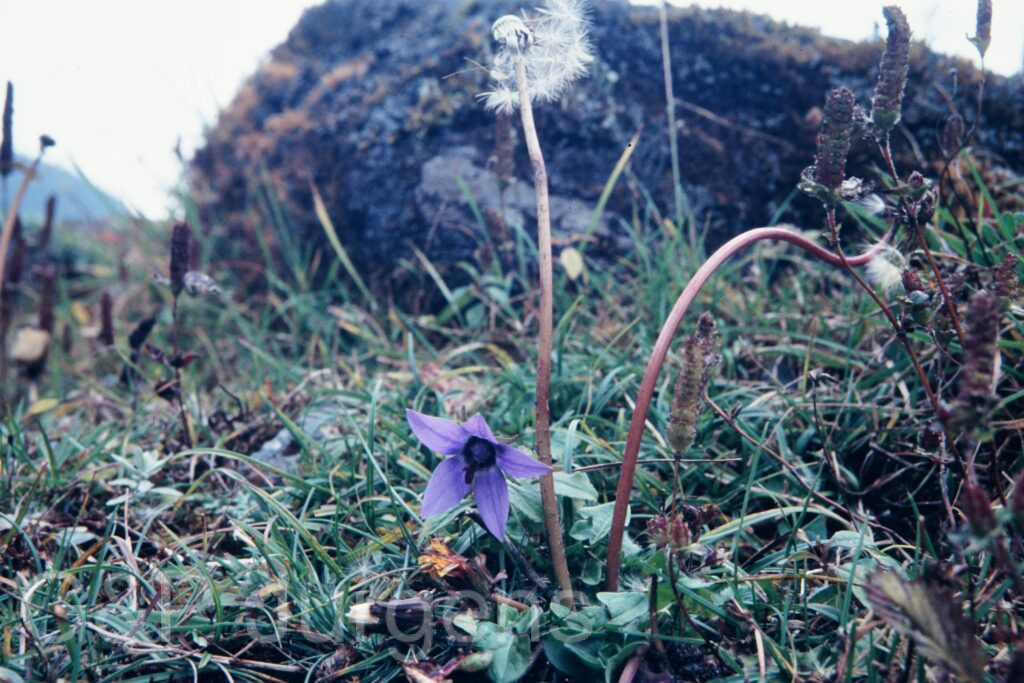
Campanula aristata Wall. is a slender alpine bellflower of the high Himalaya and Tibetan borderlands, ranging across China, India, Nepal, Pakistan and Bhutan, with about 557 occurrences in GBIF. It grows on open stony slopes, alpine turf, rock crevices and gravelly screes, characteristically at high elevations of roughly 3,000-5,000 m. The photographed plant comes from Bahanjyang in Nepal at 3,800 m, recorded in October, consistent with its occupation of the upper alpine zone where flowering and fruiting extend into the late season.

It is a small, slender, erect annual or short-lived perennial herb, typically only a few centimetres to about 20 cm tall, with a basal rosette of linear to oblanceolate leaves and narrow, sessile, entire cauline leaves. The flowers are solitary or few at the stem apex; the calyx is its most distinctive feature, with very long, narrow, awn-like (aristate) lobes that often equal or exceed the corolla, hence the epithet. The corolla is narrowly tubular to campanulate, pale blue to violet, with short erect lobes. The fruit is a capsule dehiscing by basal pores to shed numerous minute seeds.

Campanula (Campanulaceae) is a large, mainly Northern Hemisphere genus, with the Himalayan high-alpine species forming a distinctive group of dwarf, narrow-flowered herbs. C. aristata is readily recognised among them by its conspicuously elongate, bristle-like calyx lobes, an adaptation thought to aid in the wind-exposed alpine setting. Widespread across the Himalayan-Tibetan alpine belt and occupying abundant natural habitat, it is of no conservation concern.

Author: Wall. · Sources: POWO (Kew), GBIF, Flora of China, Flora of Pakistan, Annotated Checklist of the Flowering Plants of Nepal, Hooker Flora of British India, Campanulaceae revisionary studies

Hook.f. & Thomson

BhutanPG2011 103
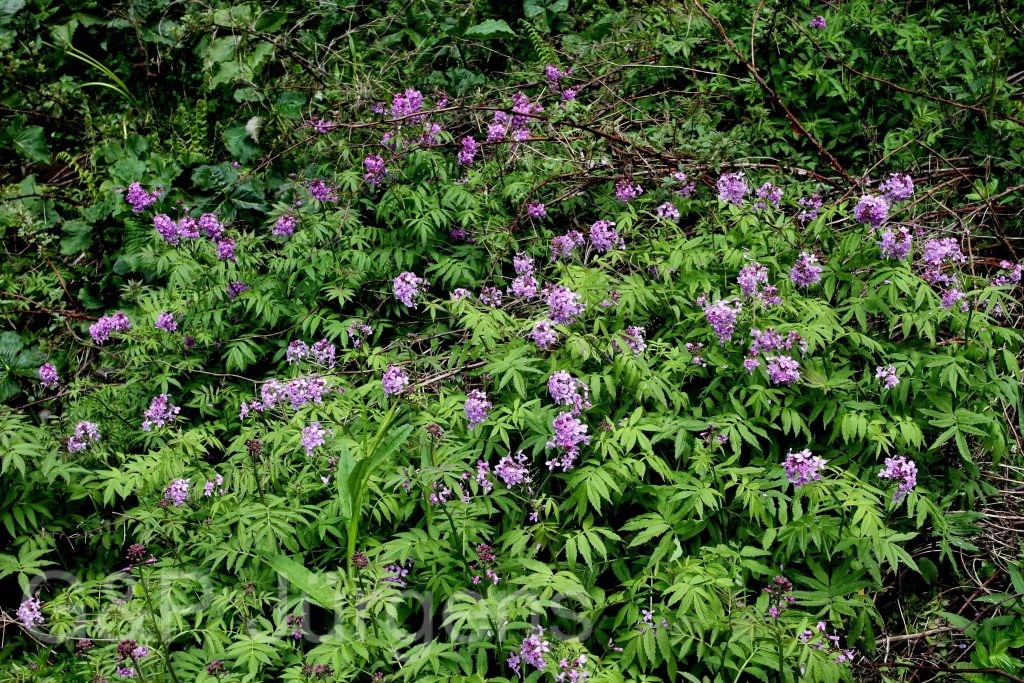
Bhutan Chogcham, 3450m June
BhutanPG2011 685 01 01 scaled
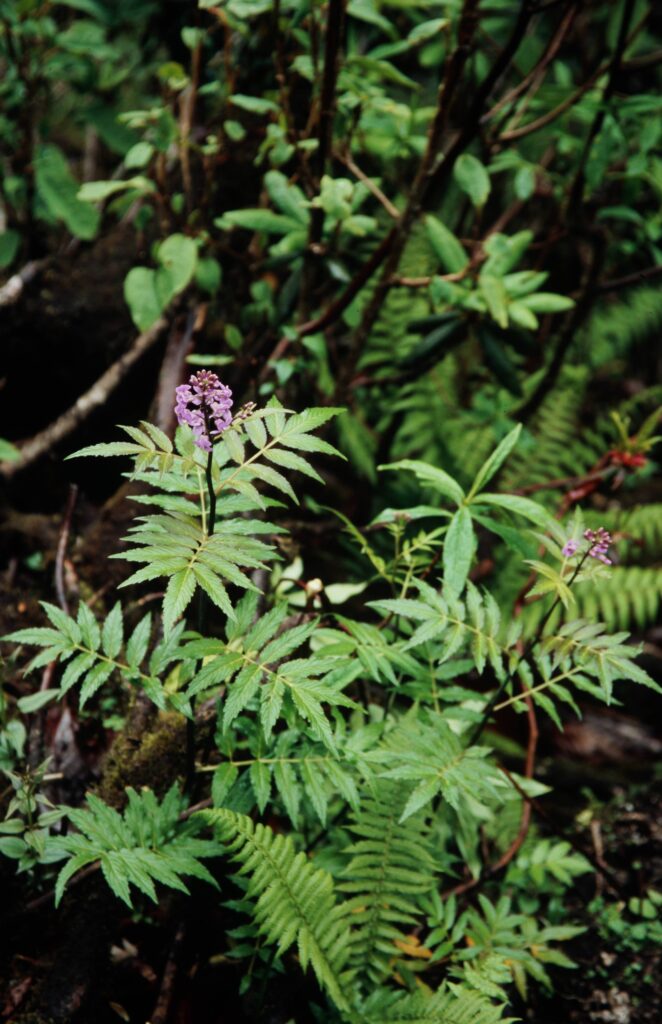
Bhutan Luksor, 2900m July
BhutanPG2011 116 scaled
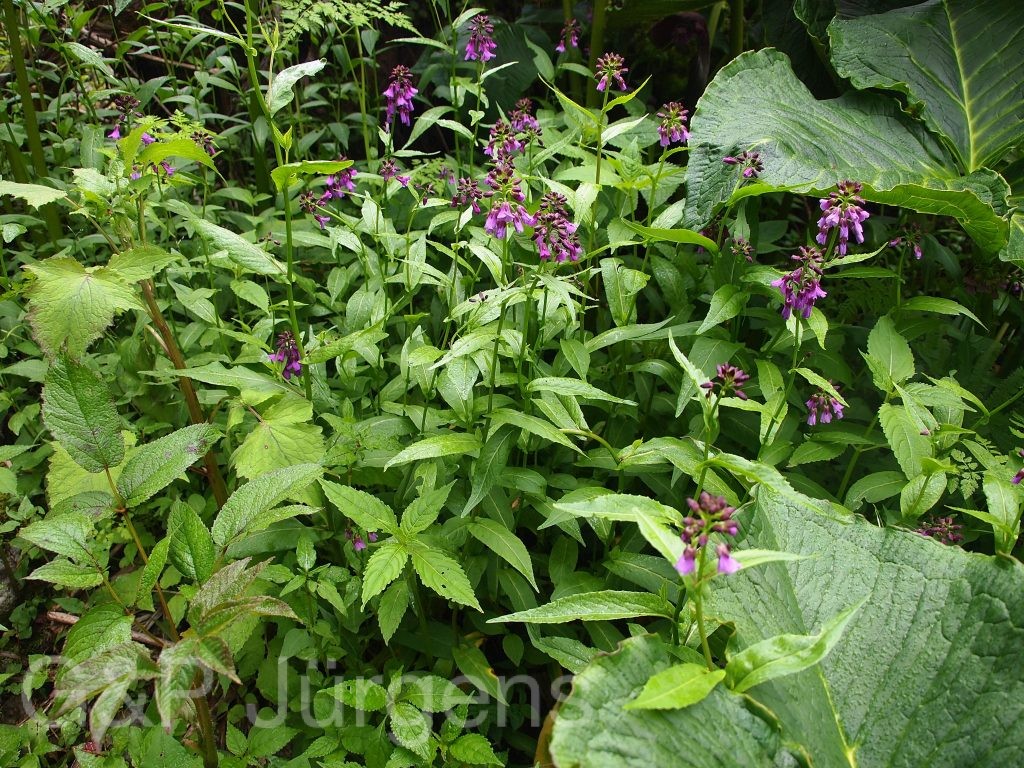
Bhutan Tsochenchen, 3500m June

Description

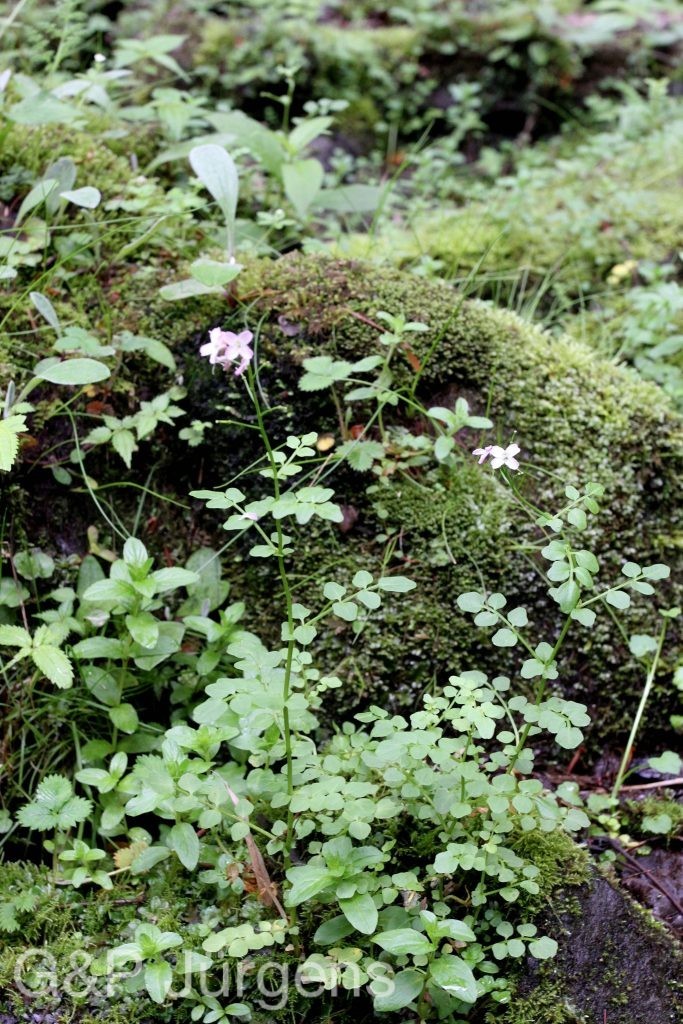
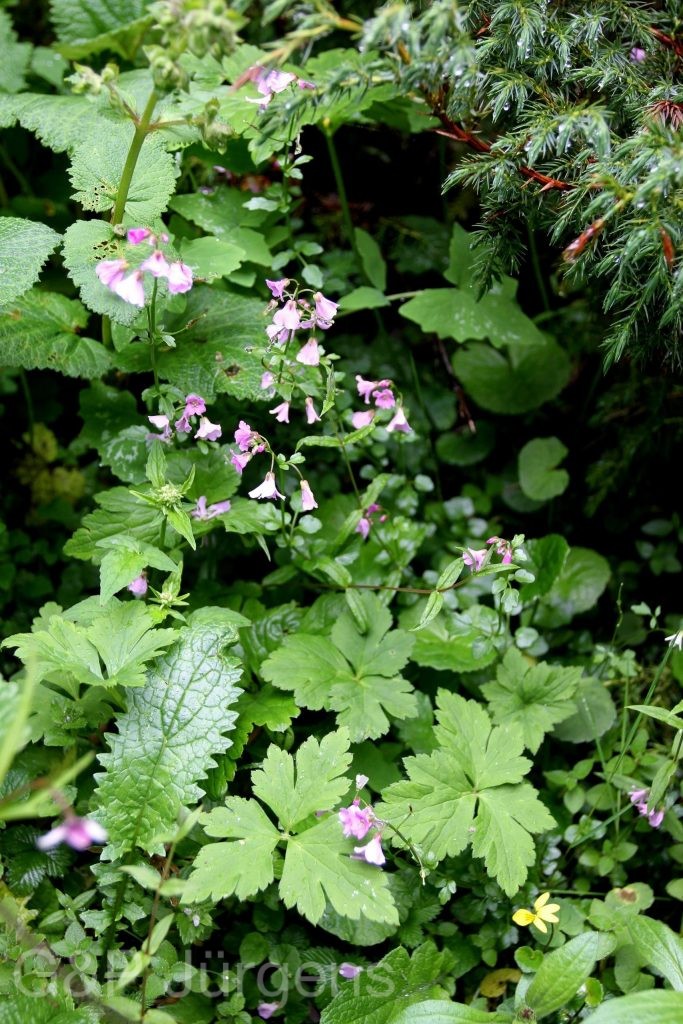
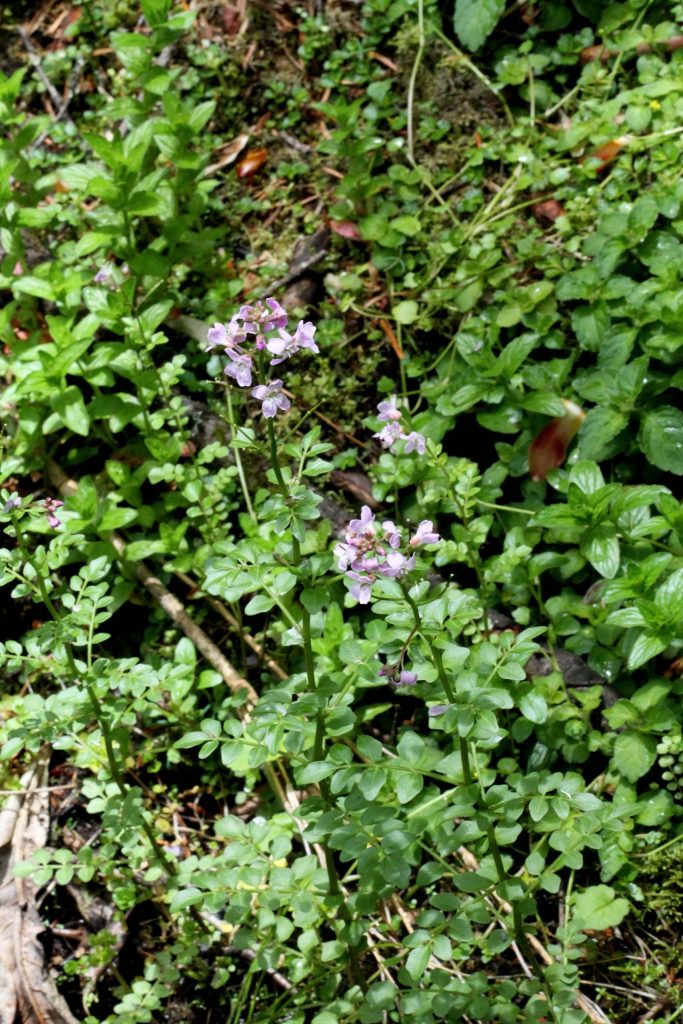
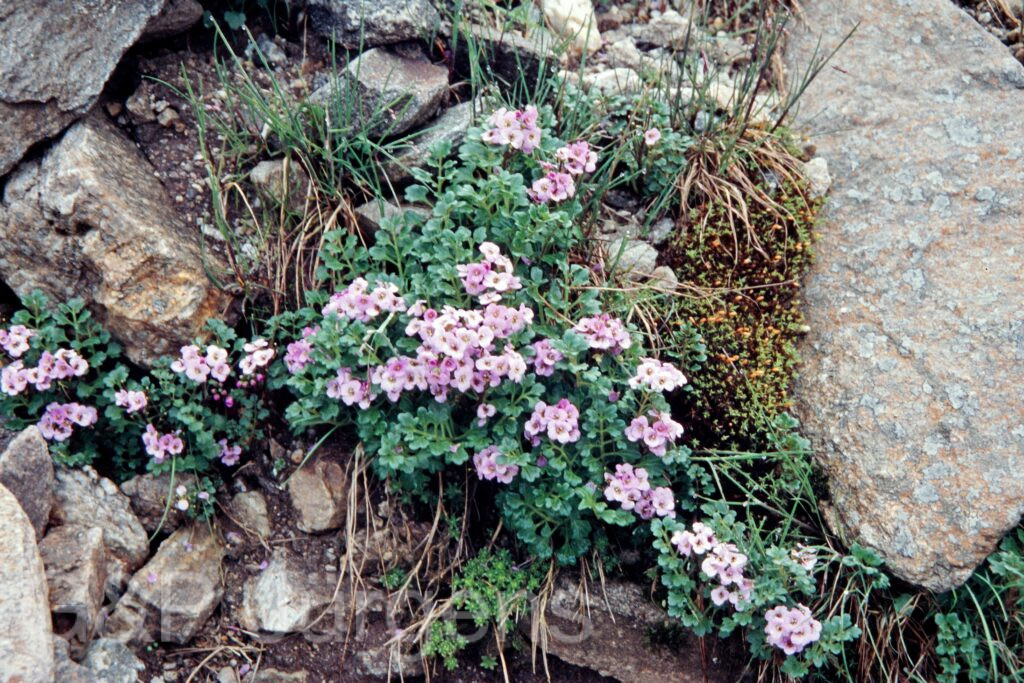
A perennial bittercress of the eastern Himalaya and adjacent mountains, recorded from China, Bhutan, India, Nepal and Myanmar, with around 577 GBIF occurrences. It is a plant of cool, wet ground, frequenting stream banks, seepages, marshy meadows, damp forest floors and shaded rocky places in the temperate to subalpine belt, mostly between about 2800 and 3800 m. The featured collections come from several Bhutanese sites in June and July, including Chogcham at 3450 m, Luksor at 2900 m and Tsochenchen at 3500 m, all moist, sheltered montane habitats.

The species grows from a slender rhizome, producing erect or ascending, glabrous to sparsely hairy stems. The leaves are pinnately compound, the lower with several pairs of stalked, ovate to lanceolate, toothed leaflets and a larger terminal leaflet; cauline leaves are similar but reduced upward. The inflorescence is a terminal raceme of small white to pale lilac flowers, each with four sepals and four clawed, spreading petals in the typical cruciform pattern, six tetradynamous stamens and a superior bilocular ovary. The fruit is a slender, linear, slightly flattened silique that dehisces elastically from the base, scattering the small seeds in a single row per locule.

Accepted by POWO and GBIF, C. griffithii belongs to a taxonomically intricate genus in which Himalayan species are distinguished by leaf division, petal size and habitat. Like many bittercresses it is closely tied to permanently moist microhabitats and the elastic silique aids local seed dispersal. It is widespread and often locally common in suitable damp ground across its range, and is not considered threatened, though it depends on intact montane wetlands and riparian zones.

Author: Hook.f. & Thomson · Sources: POWO (Kew), GBIF, Flora of Bhutan, Flora of China, Jafri monograph of Brassicaceae

O.E.Schulz

Nepal 99 539 ergebnis
West-Nepal Churta-Khola 4000m, June

Description

Cardamine loxostemonoides is a Himalayan and Sino-Himalayan bittercress recorded from Nepal, Pakistan, China, India and Bhutan, the South African and other anomalous entries among its roughly 156 occurrences best treated as database noise rather than native range. It is an alpine to subalpine herb of cool, moist habitats, growing along snowmelt rills, in damp meadows, beside streams and on seepage slopes where the soil stays saturated. The photographed plant from the Churta-Khola in West Nepal, at about 4000 m and flowering in June, is typical of its high-montane preference and its early-summer flowering coinciding with the surge of meltwater following snow retreat.

It is a perennial herb arising from a slender rhizome, with erect to ascending, often few-branched stems. The leaves are pinnately compound or pinnatisect with several pairs of lateral leaflets or segments, the terminal one frequently larger, the texture thin and the margins entire to lobed. The flowers are arranged in terminal racemes and show the regular four-petalled cruciform corolla of the family, white to pale pink or lilac, with six tetradynamous stamens. The fruit is a slender, linear, laterally compressed silique that dehisces elastically by two valves coiling from the base to fling the seeds, the style persisting as a short beak; the epithet alludes to a resemblance in stamen form to Loxostemon.

Cardamine is a large, cosmopolitan genus within Brassicaceae notable for frequent polyploidy and hybridisation, traits that complicate species delimitation in the Himalayan alpine flora. Like many relatives it favours moist, disturbed microsites and disperses by explosive silique dehiscence, allowing rapid colonisation of freshly exposed ground. The species is widespread across the high Himalaya and faces no specific conservation threat, although its dependence on reliable snowmelt moisture makes such hygrophilous alpine herbs potentially responsive to changes in precipitation and glacial regime.

Author: O.E.Schulz · Sources: POWO (Kew), GBIF, Flora of China, Flora of Pakistan, Flora of Bhutan, Al-Shehbaz revisionary studies of Cardamine (Brassicaceae)

Willd.

Sikkim2011 373
Sikkim Lada-La 3800m, June
Sikkim 2006 356 ergebnis
India West-Bengal, Tamrong 2750m, May

Description

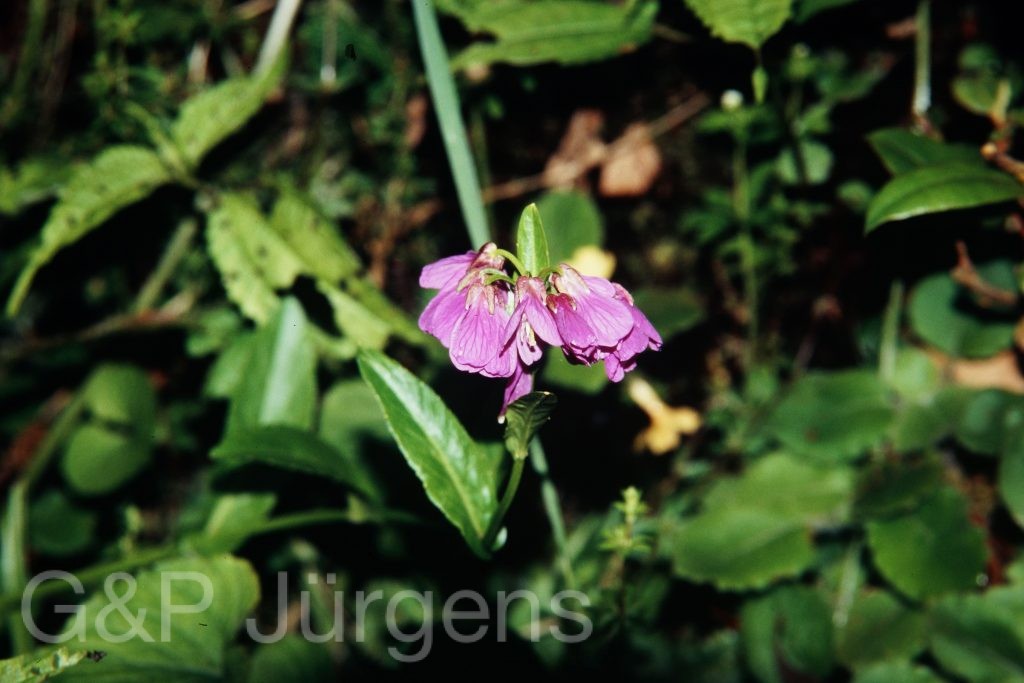
Cardamine macrophylla Willd. is a robust perennial crucifer with a broad distribution across temperate Asia, occurring in China, Russia, India, Nepal, Bhutan, Pakistan, Japan, Kazakhstan, Mongolia, Korea and elsewhere. In the Himalaya it is recorded from Sikkim at Lada-La near 3800 m, flowering in June, and from Tamrong in West Bengal at about 2750 m in May, spanning the temperate to subalpine zones. The species favours moist, shaded habitats: streamsides, wet meadows, forest margins, ravines and seepage slopes, generally between 2000 and 4000 m, on rich, humose soils. Its roughly 5068 GBIF records reflect a genuinely widespread and frequently collected species across its extensive range.

The plant arises from a creeping, scaly rhizome and produces erect, stout, leafy stems up to 70 cm or more. The leaves are pinnately compound with several pairs of large, lanceolate to ovate, serrate leaflets, the foliage notably ample for the genus, accounting for the epithet macrophylla. The flowers are borne in dense terminal corymbose racemes and are showy, with four spreading petals of pink, lilac to purplish hue and the usual tetradynamous stamens. The fruit is a long, linear, flattened silique that dehisces elastically to scatter the seeds in a single row.

Cardamine belongs to the tribe Cardamineae, a large and taxonomically complex genus in which polyploidy and hybridisation are widespread; C. macrophylla itself encompasses considerable morphological and cytological variation, with several infraspecific taxa and allied forms recognised across its range. Spreading both by seed and by rhizome, it can form extensive clonal stands in suitable wet ground. Widespread and ecologically tolerant, it is of no conservation concern, and the rhizome and young shoots are used locally as a wild vegetable.

Author: Willd. · Sources: POWO (Kew), GBIF, Flora of China, Flora of Nepal, Flora of Bhutan, Cardamine systematic revisions (Al-Shehbaz)

(D.Don) Wall.

Sikkim2011 380
Sikkim Lada-La 3800m, June
BhutanPG2011 602 01 1
Bhutan Ludlow-Sherriff-Trail Kem-La, 4300m July
Bh09 213 G356
Bhutan Ludlow-Sherriff-Trail Kem-La, 4300m July

Description

Cardamine violacea is a Sino-Himalayan crucifer recorded from Nepal, China (chiefly Xizang), Bhutan and India, with GBIF aggregating around 82 occurrences. It is a herb of high-altitude moist habitats, occupying alpine meadows, seepage slopes, stream banks and the margins of melting snow patches generally between about 3500 and 4500 m. The accompanying records illustrate this band well: material from the Lada-La in Sikkim at 3800 m flowering in June, and from the Kem-La on the Ludlow–Sherriff Trail in Bhutan at 4300 m in July, the later eastern flowering reflecting the persistence of snow cover at greater elevation. The plant favours cool, consistently damp ground rich in organic matter.

It is a slender perennial herb arising from a creeping rhizome, the stems erect to ascending and usually simple. The leaves are pinnately compound or lyrate, with a few pairs of lateral leaflets and a larger terminal segment, the margins entire to coarsely toothed; basal and cauline leaves grade in size up the stem. The inflorescence is a terminal corymb-like raceme that elongates in fruit. Flowers bear four sepals and four free, clawed petals coloured violet to purple, an unusual hue in a genus dominated by white-flowered species, with the typical tetradynamous androecium of six stamens. The fruit is a slender, linear, flattened silique that dehisces explosively to scatter the seeds.

The taxon was described as Arabis violacea by D.Don and transferred to Cardamine by Wallich; the cited Himalayan plants have at times been segregated as subsp. bhutanica. Cardamine is a large cosmopolitan genus, and its Himalayan alpine members form a difficult complex in which characters of leaf division and petal colour are critical for identification. As a specialist of snowmelt-fed alpine habitats, C. violacea is potentially vulnerable to reduced and earlier snowmelt, though its broad distribution and remote terrain limit immediate concern.

Author: (D.Don) Wall. · Sources: POWO (Kew), GBIF, Flora of China, Flora of Bhutan, Annotated Checklist of the Flowering Plants of Nepal, Jafri 'Brassicaceae' treatment

(Wall.) D. Don

Sikkim2011 135
Sikkim Tanghu 4000m, June
Sikkim2011 137
Sikkim Tanghu 4000m, June

Description

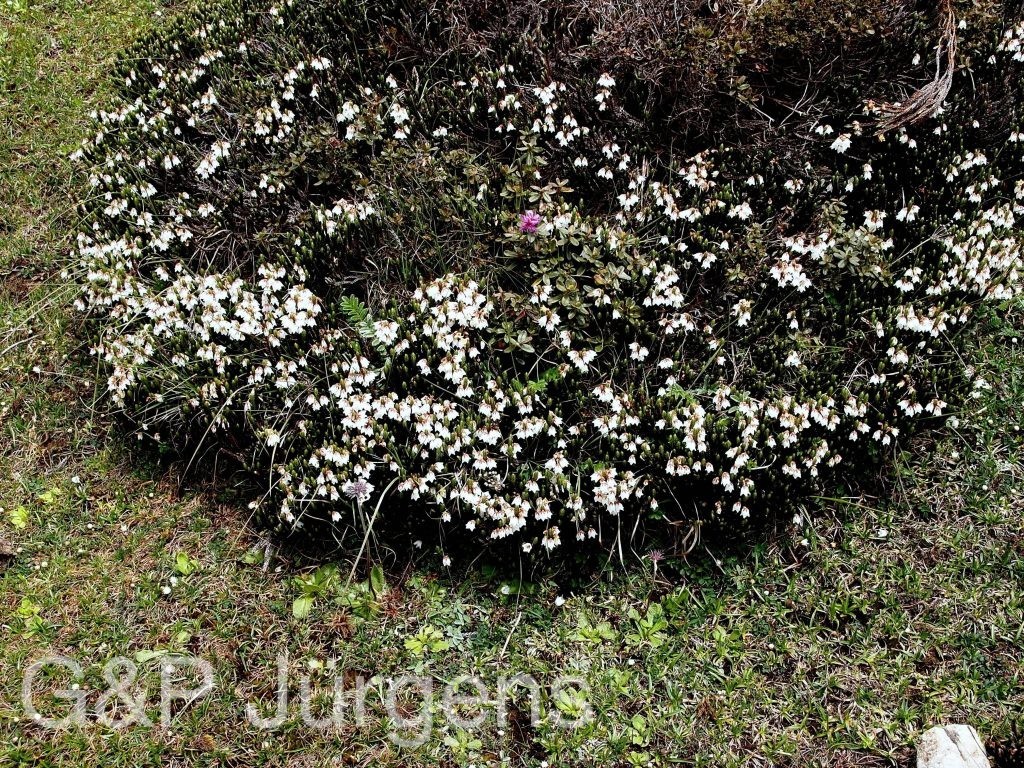
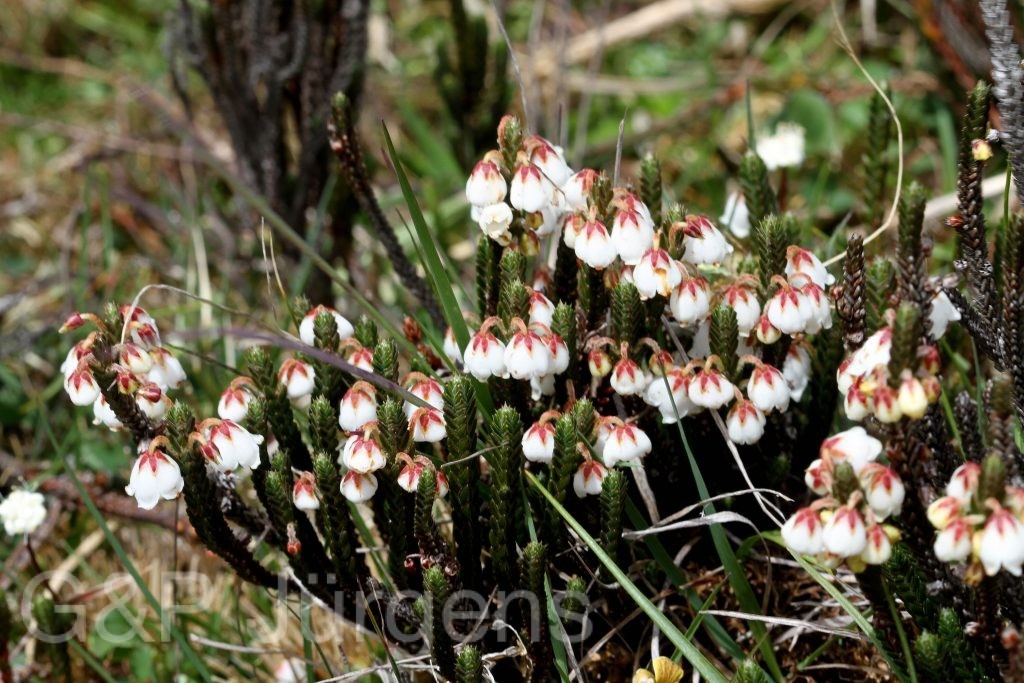
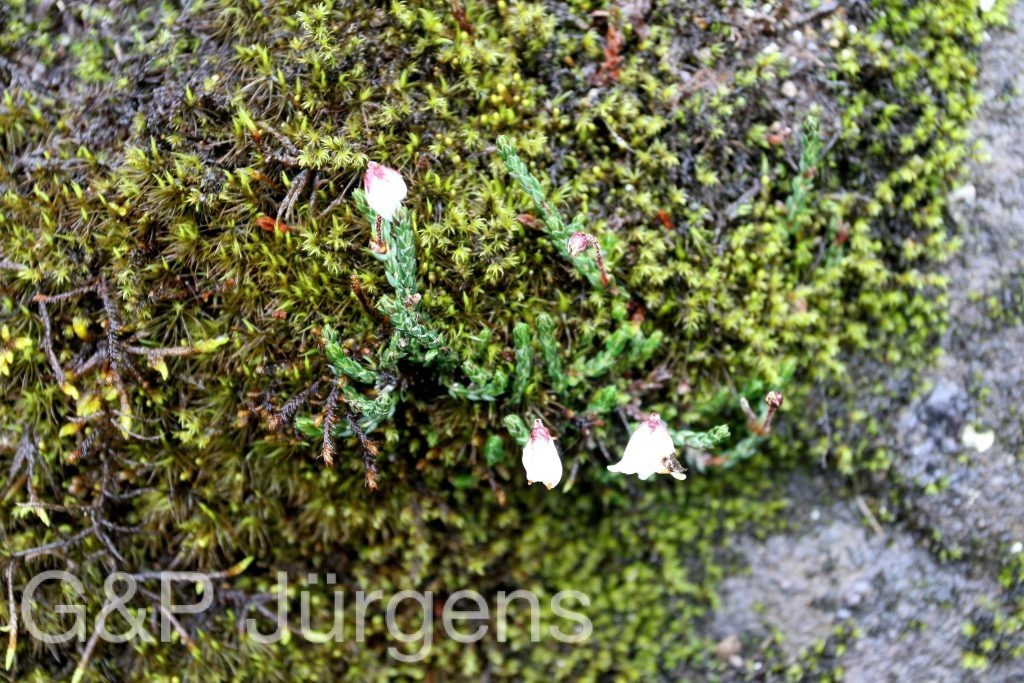
Cassiope fastigiata (Wall.) D. Don is a dwarf evergreen shrublet of the high Himalaya, recorded by GBIF from Nepal, India, China, Bhutan, Pakistan and Bangladesh across some 762 occurrences. It is a characteristic component of the alpine and subalpine zone, forming low cushions and mats on open rocky slopes, moraines, peaty banks and the margins of Rhododendron scrub, typically between 3300 and 4500 m. The plant photographed at Sikkim Tanghu around 4000 m in June, at the onset of the monsoon flowering season, exemplifies its preference for cool, humid, well-drained sites kept moist by snowmelt.

The species forms erect to ascending, much-branched stems clothed in four neat ranks of small, imbricate, scale-like leaves pressed close to the stem in the manner typical of the genus. Each leaf is ovate-oblong and keeled, with a conspicuous narrow membranous white margin and a deep dorsal furrow, giving the shoots a four-angled, whipcord appearance. The solitary nodding flowers arise from the upper leaf axils on slender, often reddish pedicels; the corolla is broadly campanulate, white, five-lobed and about 7-9 mm long, subtended by a reddish calyx. Stamens are ten, with awned anthers, and the fruit is a small globose loculicidal capsule.

Within Ericaceae, Cassiope is placed in the subfamily Cassiopoideae and is distinguished from related heaths by its four-ranked imbricate leaves and campanulate flowers. Cassiope fastigiata is among the most widespread Himalayan species of the genus and is locally abundant, so it is not regarded as threatened, though as a slow-growing alpine specialist it is sensitive to grazing pressure and warming-induced upward shifts of vegetation. It is of biogeographic interest as part of a cold-adapted, largely circum-Himalayan element.

Author: (Wall.) D. Don · Sources: POWO (Kew), GBIF, Flora of Bhutan, Flora of China, Flora of Pakistan, Stevens monograph of Ericaceae

Hook.f. & Thomson

BhutanPG2011 401
Bhutan Warrtlang-La, 4500m June

Description

Cassiope selaginoides is a dwarf, mat-forming alpine shrub of the Himalaya and Sino-Himalayan ranges, documented in GBIF (about 854 occurrences) from China, India, Bhutan, Nepal and Myanmar. It is characteristic of high alpine slopes, rocky ridges, moorland and the upper margins of dwarf-shrub heath, typically growing between 3500 and 4800 m, often forming low cushions and carpets among rocks and moss. The photographed population on the Warrtlang-La in Bhutan at 4500 m in June represents this exposed, high-alpine habitat, where it flowers soon after snowmelt at the start of the brief growing season.

It is a small, prostrate to ascending evergreen shrub with slender, wiry, much-branched stems densely clothed in tiny, imbricate, scale-like leaves arranged in four ranks, giving the shoots a clubmoss-like (selaginoid) appearance from which the epithet derives. The small, nodding flowers are solitary on slender, reddish pedicels arising from the upper leaf axils; each has a persistent calyx and a white, broadly campanulate, five-lobed corolla, sometimes tinged pink, with eight to ten included stamens bearing awned anthers. The fruit is a small, dehiscent, subglobose capsule containing numerous minute seeds.

Cassiope, a small genus of subfamily Cassiopoideae within the Ericaceae, comprises arctic and high-alpine cushion shrubs of which the Himalayan species form a distinctive radiation alongside C. fastigiata and C. wardii. Like other ericaceous heath plants it associates with ericoid mycorrhizal fungi, enabling survival on acidic, nutrient-poor alpine soils. Widespread across the high Himalaya and locally abundant, it is of Least Concern, contributing to the structure and stabilisation of alpine heath communities above the tree line.

Author: Hook.f. & Thomson · Sources: POWO (Kew), GBIF, Flora of China, Flora of Bhutan, Annotated Checklist of the Flowering Plants of Nepal, Stevens revision of Cassiope and Ericaceae

Hook.f.

BhutanPG2011 681 01 01
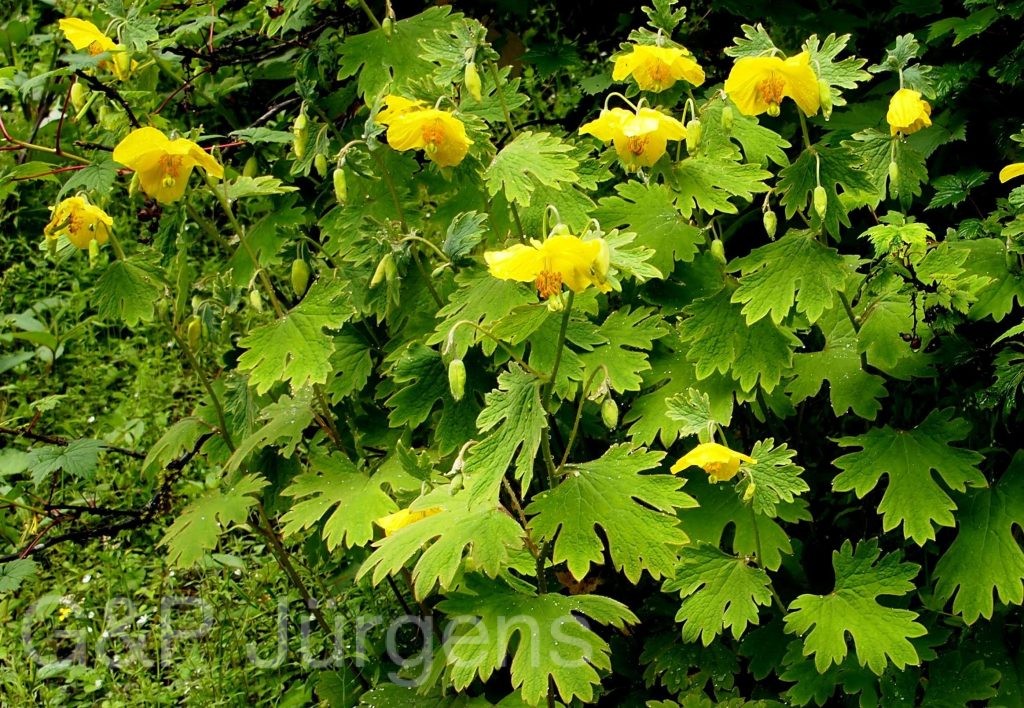
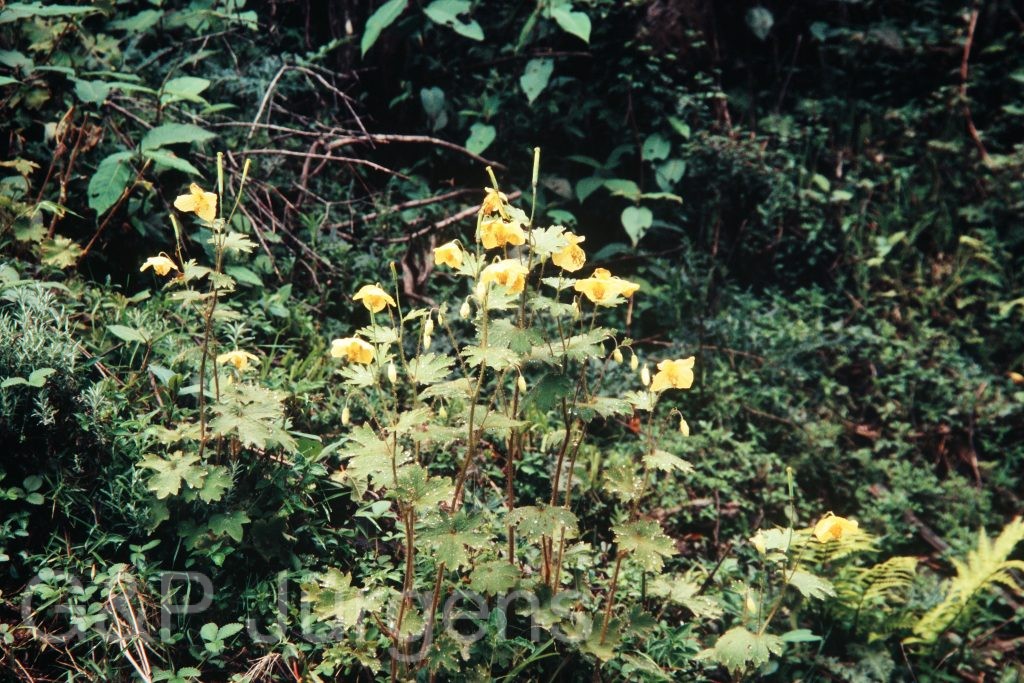
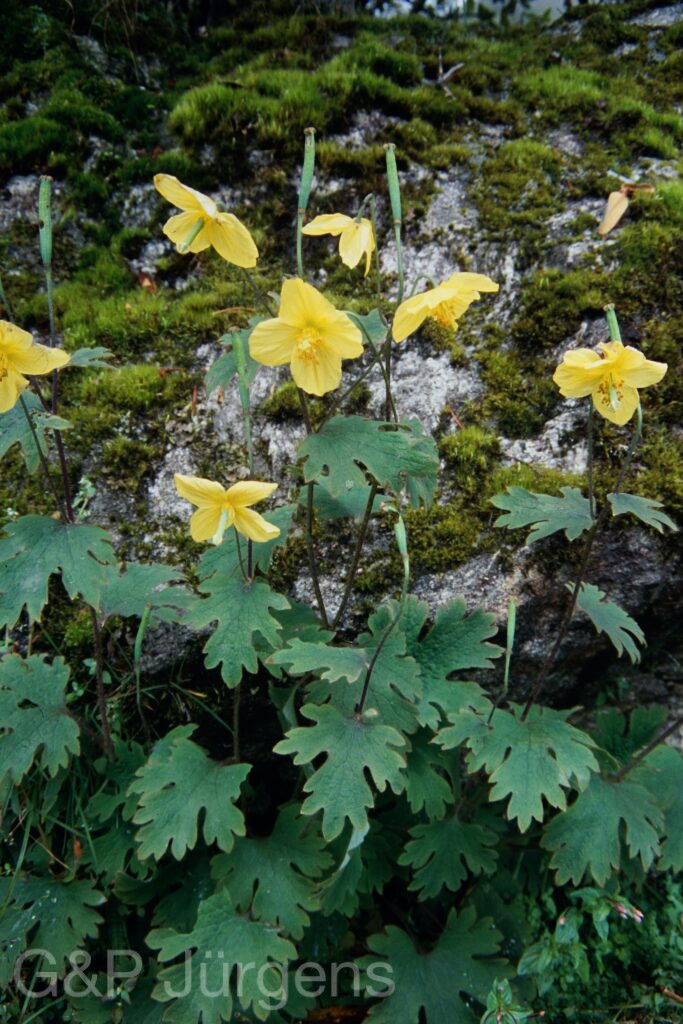
Bhutan Luksor, 3000m July
Bh09 293 G482
Bhutan Tongsa 2400m, June
Sikkim2003 152 G203
Sikkim Dzongri 4000m 08.2003

Description

Cathcartia villosa is an eastern Himalayan poppywort distributed through India, Nepal, Bhutan and southern Tibet (China), the GBIF dataset holding about 110 records (codes for Canada and Great Britain reflect cultivated and herbarium material). It grows in cool, humid montane and subalpine settings: shaded forest margins, mossy rocks, ravine sides and damp banks, broadly between about 2400 and 4000 m. The collections illustrated span this gradient, from Tongsa in Bhutan at around 2400 m and Luksor at 3000 m to Dzongri in Sikkim near 4000 m, recorded between June and August.

It is a softly villous perennial herb clothed throughout in long, spreading yellowish-brown hairs. The leaves are mostly basal, long-petiolate, the blade rounded and palmately lobed to crenate, the whole densely hairy and yielding a coloured latex when broken, as is typical of the poppy family. One or a few nodding, golden-yellow flowers are borne on slender hairy scapes; each has two caducous sepals, four broad spreading petals, numerous stamens and a superior ovary. The fruit is an elongate, hairy capsule dehiscing by valves to shed many small seeds.

Long treated within Meconopsis, this plant is now widely referred to the segregate genus Cathcartia, a Sino-Himalayan group of yellow-flowered, villous poppyworts distinguished from true Meconopsis by molecular and morphological evidence; older sources and the source URL still use the name Meconopsis villosa. It is valued in temperate gardens as an elegant woodland perennial. The species is locally frequent across its range and is not formally assessed as threatened, but it depends on cool, moist forest-edge habitats susceptible to deforestation and to climatic warming.

Author: Hook.f. · Sources: POWO (Kew), GBIF, Flora of Bhutan, Flora of China, Annotated Checklist of the Flowering Plants of Nepal, Grey-Wilson The Genus Meconopsis

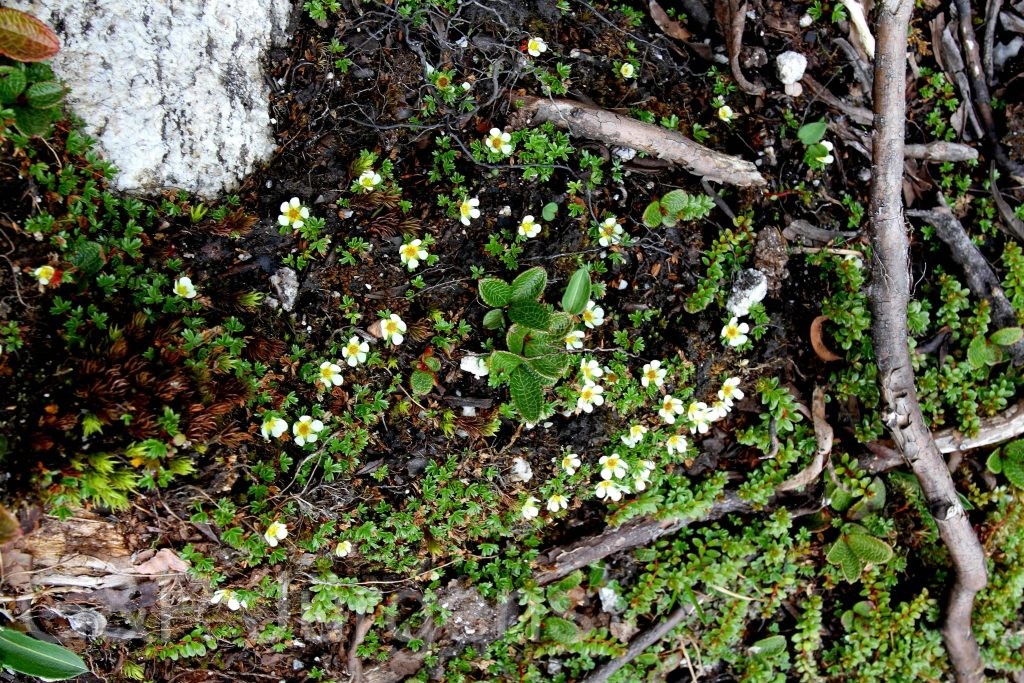
(W.W.Sm.) Smedmark

Sikkim2011 285
Sikkim Lada-La 3800m, June
Sikkim2011 286
Sikkim Lada-La 3800m, June
Nepal 2001 285 ergebnis ergebnis
Nepal (Gorkha) Lambra Kharka 3100m, May

Description

Chamaecallis perpusilloides is a diminutive alpine cushion herb of the eastern Himalaya and adjacent China, recorded from China, Nepal, Myanmar and Bhutan; its roughly 64 georeferenced collections trace a narrow Sino-Himalayan distribution. The species occupies the upper subalpine and alpine belt, where it grows in short turf, among rocks and on humus-rich, well-drained alpine slopes. The gatherings noted in the caption, from Lada-La in Sikkim at 3800 m in June and from Lambra Kharka in Gorkha, Nepal at 3100 m in May, are representative, the plant flowering early in the season at roughly 3000-4500 m on cool, moist, often grazed pasture.

It is a low, tufted to mat-forming perennial growing from a slender branched rootstock that gives rise to dense rosettes of small leaves. The leaves are crowded, trifoliolate with cuneate, few-toothed leaflets, and somewhat hairy, forming compact rosettes pressed close to the ground. The small flowers are solitary or few in number on short pedicels and barely overtop the foliage; they have five sepals alternating with an epicalyx, five small petals and few stamens, the receptacle bearing a small cluster of carpels that mature into dry achenes.

This taxon, based on the basionym described by W. W. Smith and transferred by Smedmark to the segregate genus Chamaecallis, exemplifies the recent dismemberment of the broadly defined Sibbaldia on molecular and morphological evidence; the original web placement under the Sibbaldia name reflects that history. The dwarf cushion habit and early flowering are adaptations to a short, cold growing season at high elevation. Pollination is by generalist alpine insects. No formal Red List assessment exists, but its restricted high-montane niche makes it potentially sensitive to alpine warming and grazing pressure.

Author: (W.W.Sm.) Smedmark · Sources: POWO (Kew), GBIF, Flora of China, Annotated Checklist of the Flowering Plants of Nepal, Sibbaldia phylogeny (Smedmark) monograph