
(W.W.Sm.) Smedmark
Description
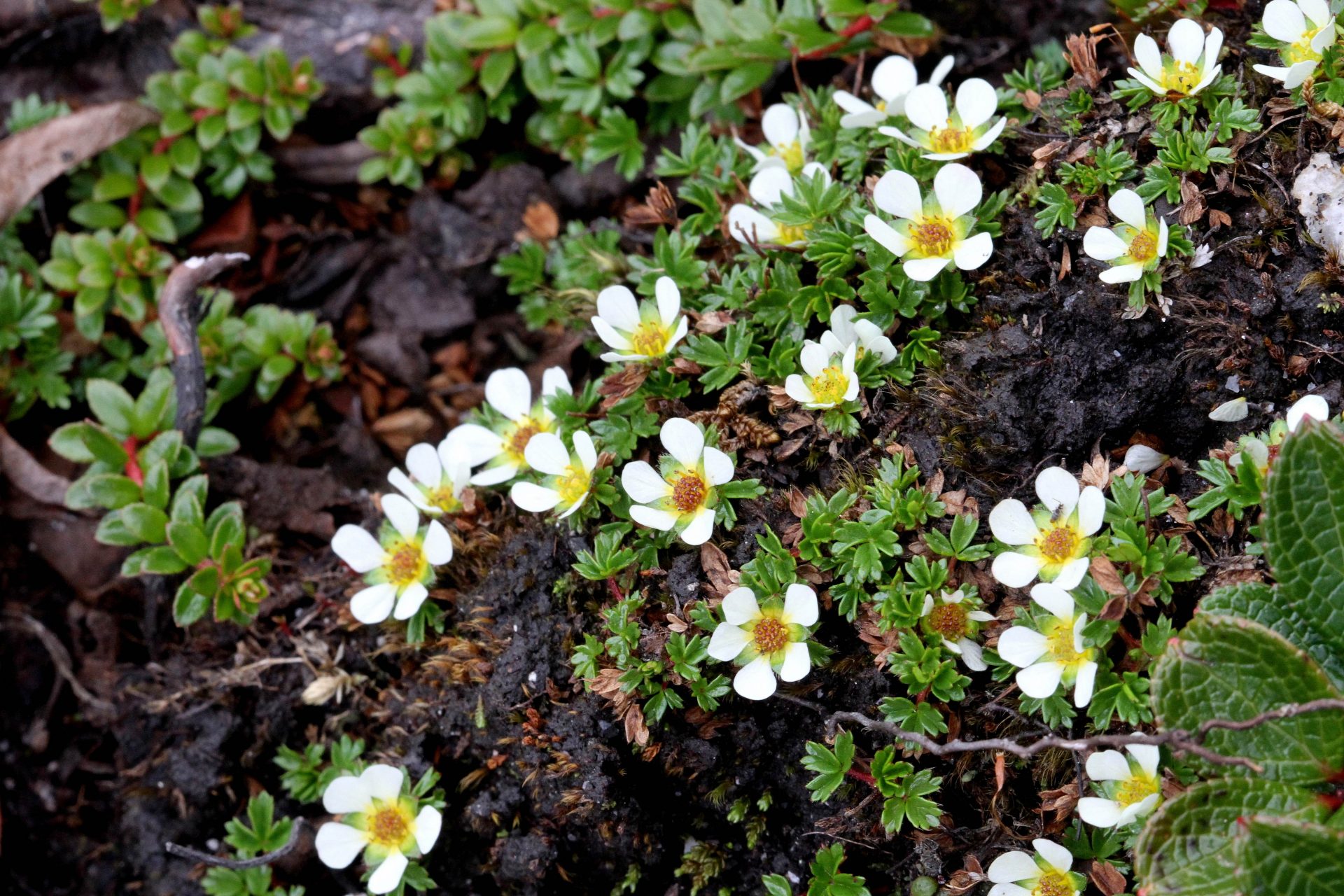
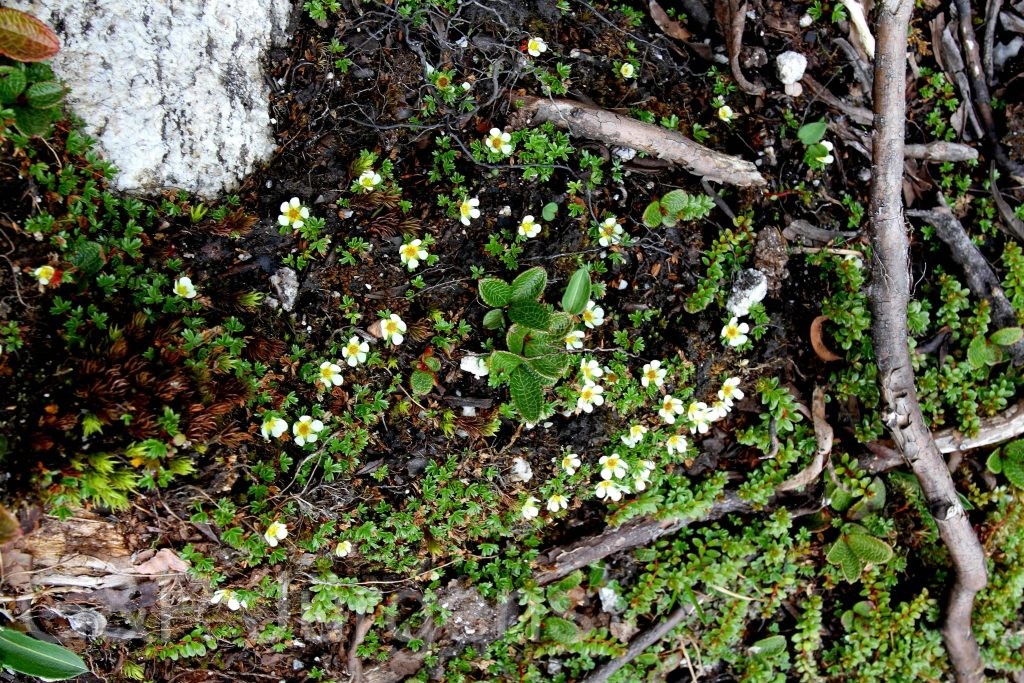
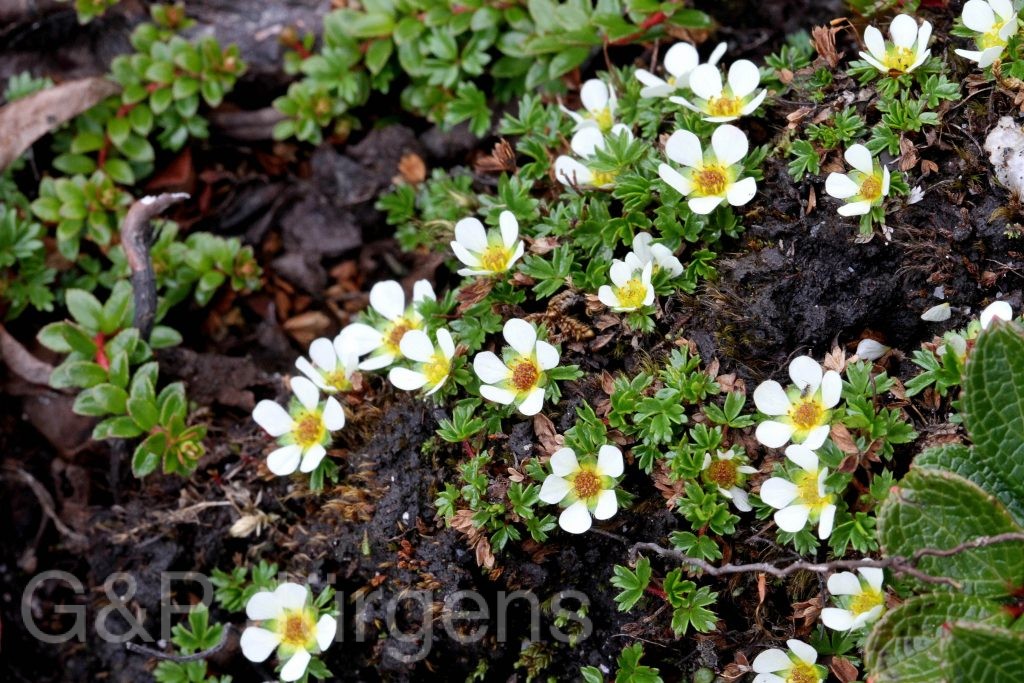
Chamaecallis perpusilloides is a diminutive alpine cushion herb of the eastern Himalaya and adjacent China, recorded from China, Nepal, Myanmar and Bhutan; its roughly 64 georeferenced collections trace a narrow Sino-Himalayan distribution. The species occupies the upper subalpine and alpine belt, where it grows in short turf, among rocks and on humus-rich, well-drained alpine slopes. The gatherings noted in the caption, from Lada-La in Sikkim at 3800 m in June and from Lambra Kharka in Gorkha, Nepal at 3100 m in May, are representative, the plant flowering early in the season at roughly 3000-4500 m on cool, moist, often grazed pasture.
It is a low, tufted to mat-forming perennial growing from a slender branched rootstock that gives rise to dense rosettes of small leaves. The leaves are crowded, trifoliolate with cuneate, few-toothed leaflets, and somewhat hairy, forming compact rosettes pressed close to the ground. The small flowers are solitary or few in number on short pedicels and barely overtop the foliage; they have five sepals alternating with an epicalyx, five small petals and few stamens, the receptacle bearing a small cluster of carpels that mature into dry achenes.
This taxon, based on the basionym described by W. W. Smith and transferred by Smedmark to the segregate genus Chamaecallis, exemplifies the recent dismemberment of the broadly defined Sibbaldia on molecular and morphological evidence; the original web placement under the Sibbaldia name reflects that history. The dwarf cushion habit and early flowering are adaptations to a short, cold growing season at high elevation. Pollination is by generalist alpine insects. No formal Red List assessment exists, but its restricted high-montane niche makes it potentially sensitive to alpine warming and grazing pressure.
Author: (W.W.Sm.) Smedmark · Sources: POWO (Kew), GBIF, Flora of China, Annotated Checklist of the Flowering Plants of Nepal, Sibbaldia phylogeny (Smedmark) monograph