Tag:

Autumn

(Royle) Wedd.

Bhutan2015 105
Bhutan Galephug 600m, October

Description

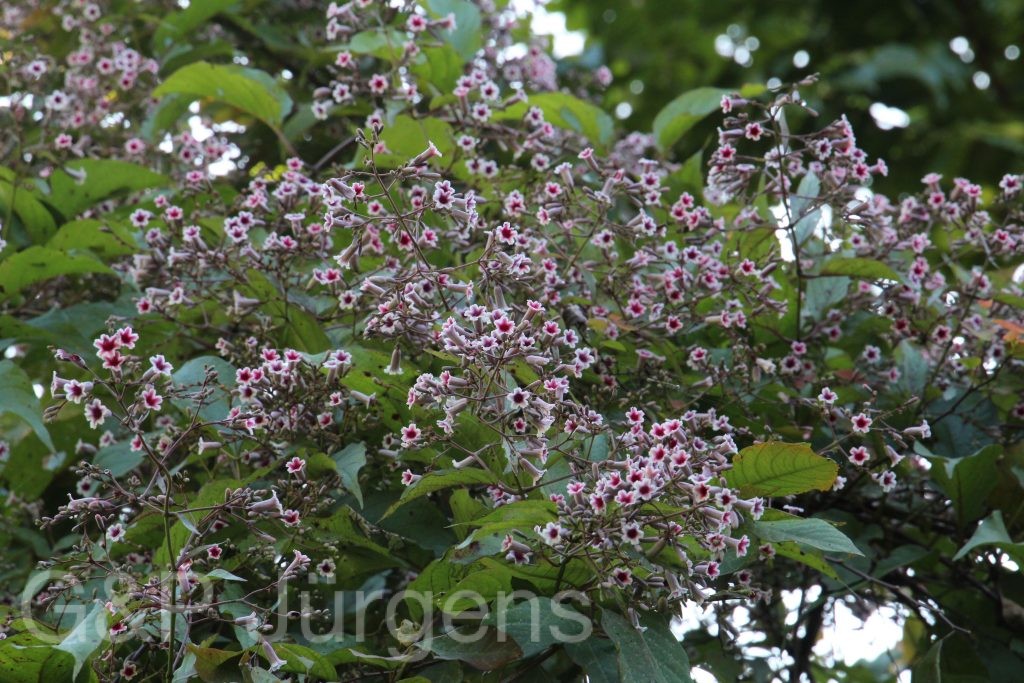
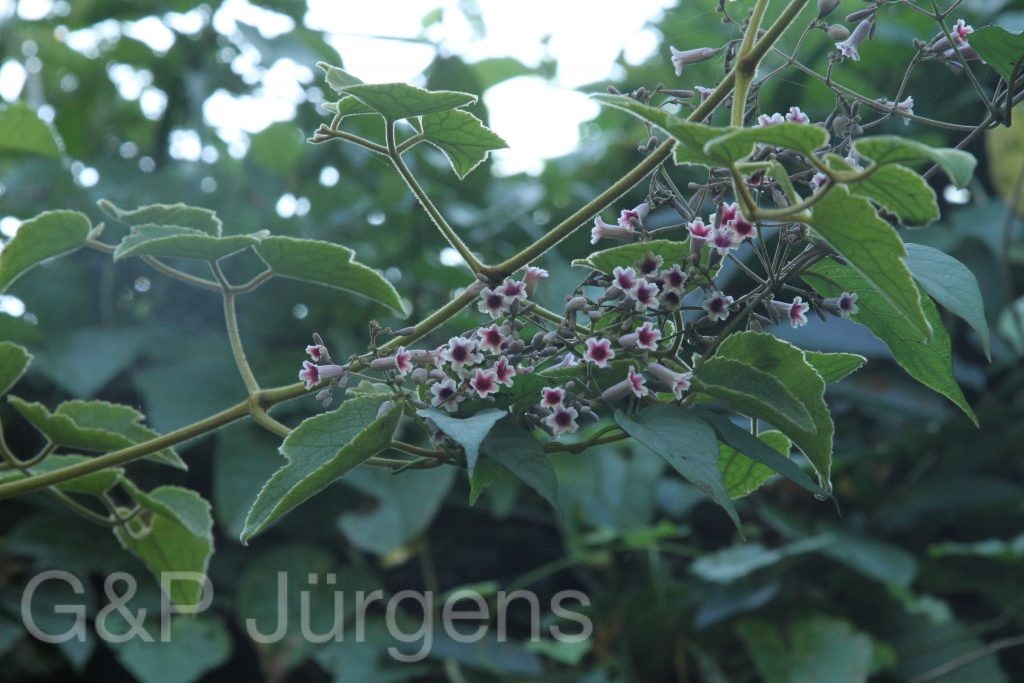
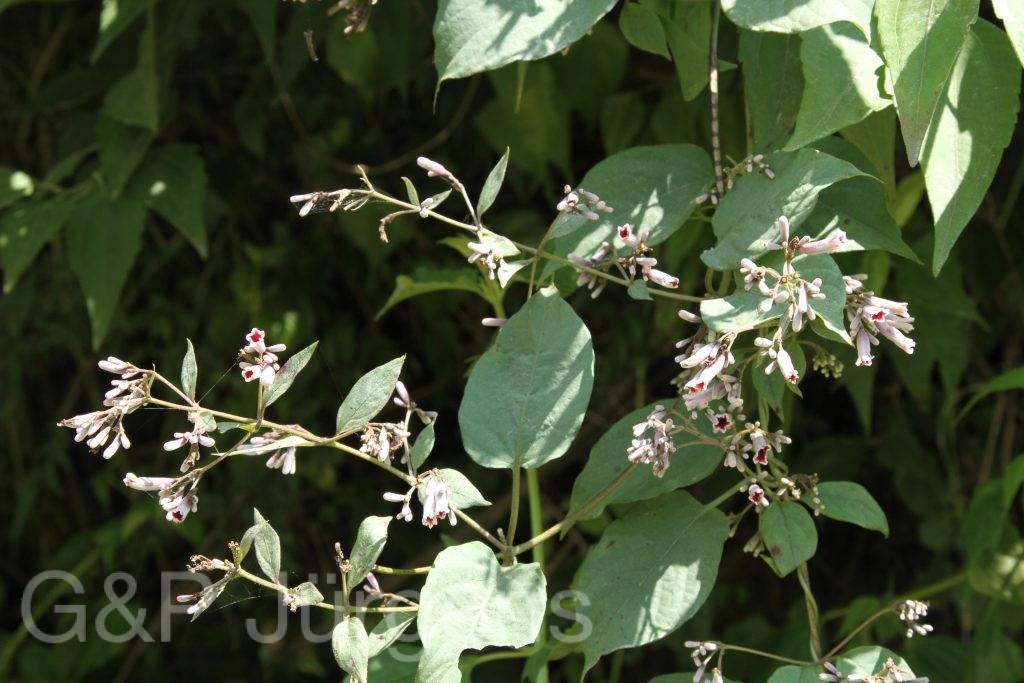
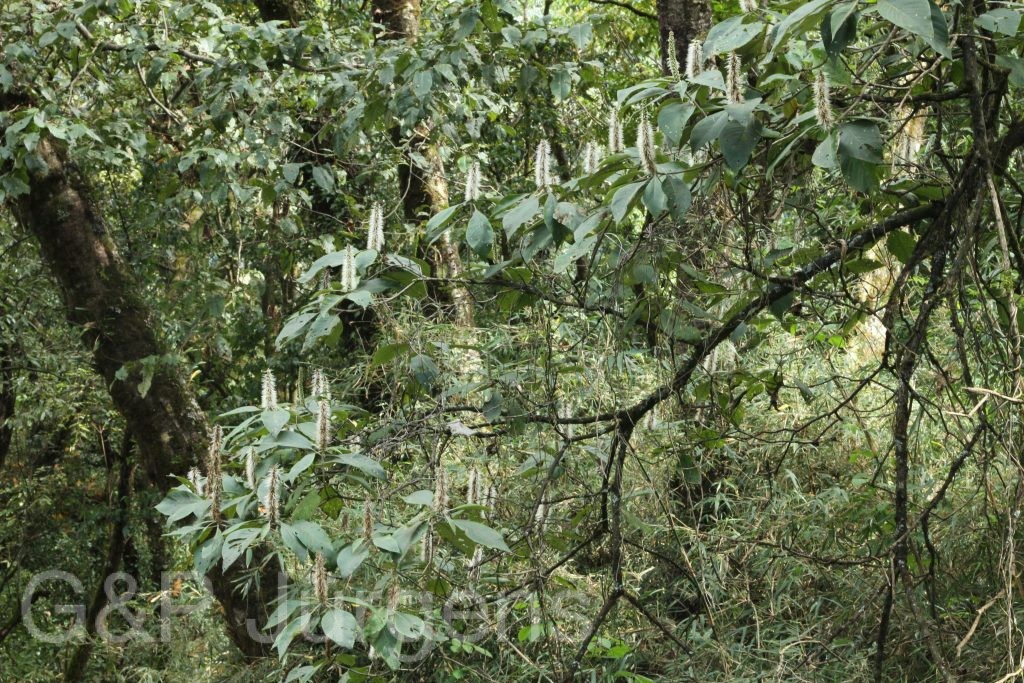
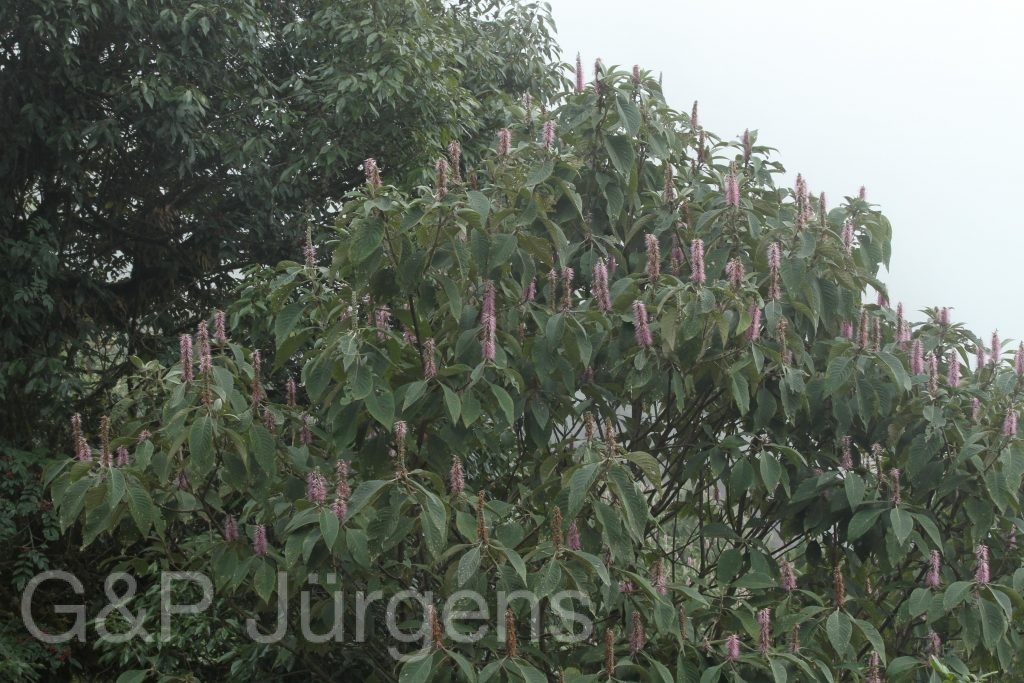
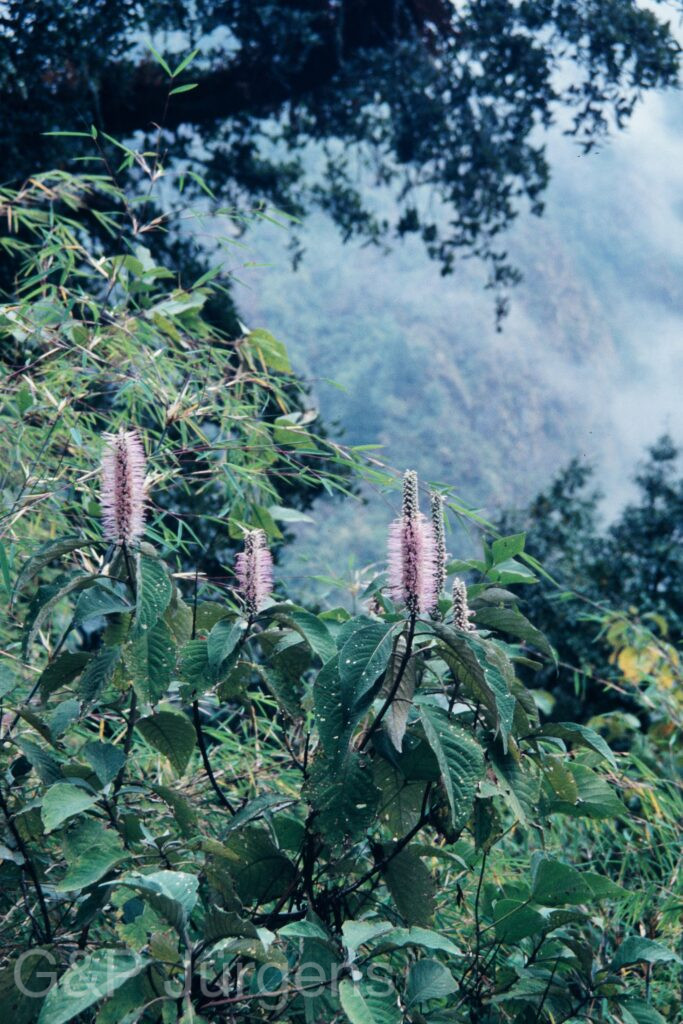
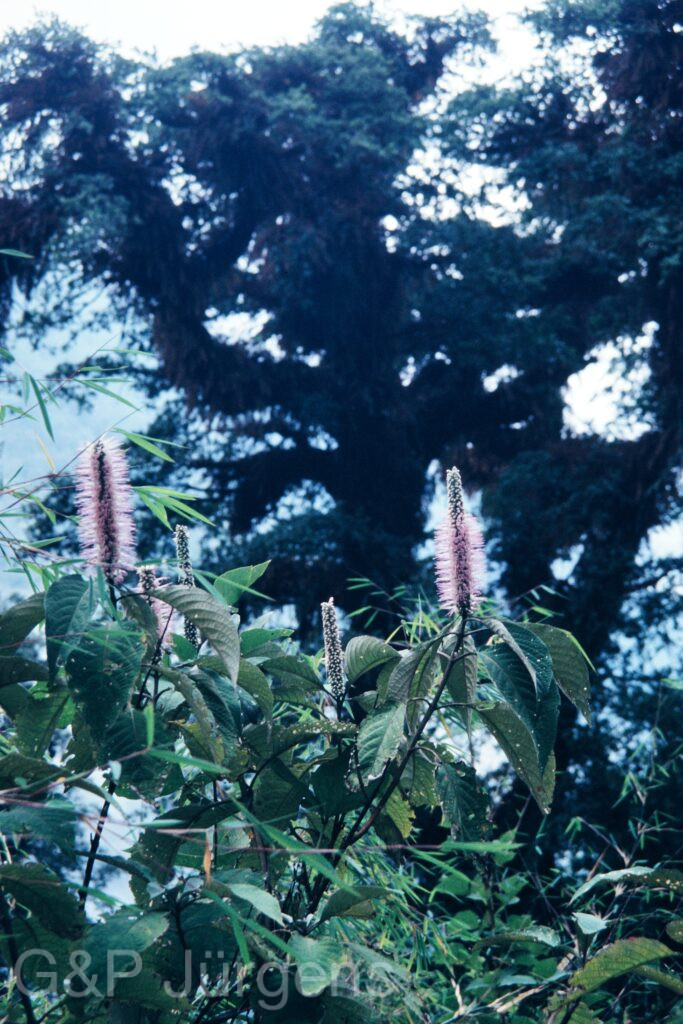
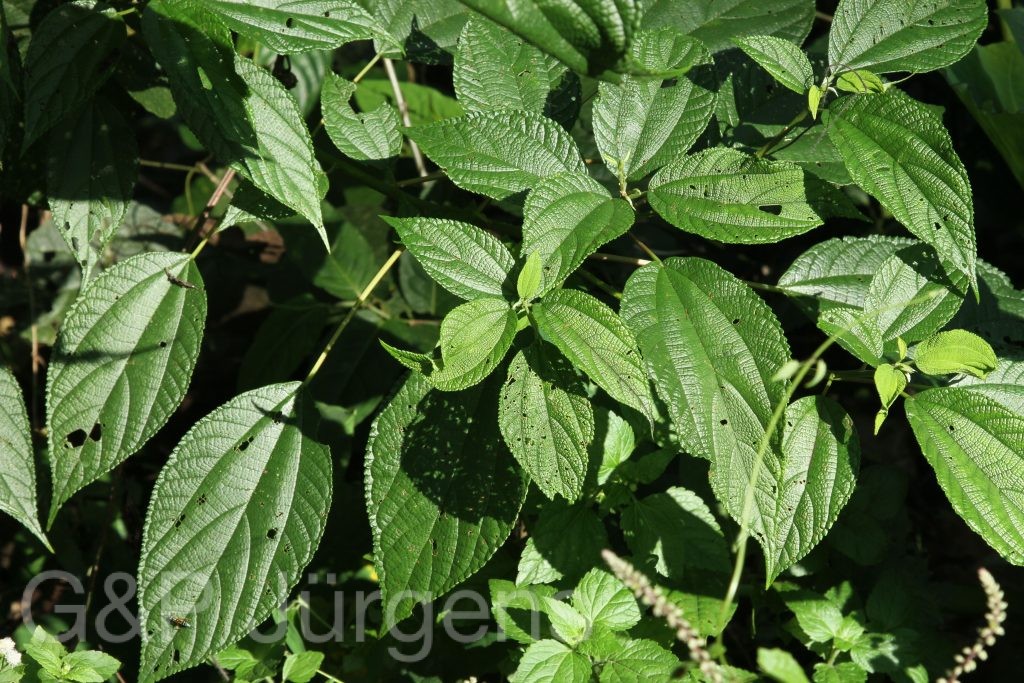
Lecanthus peduncularis is a widespread herb of tropical and subtropical Asia and beyond, ranging from the Himalaya (Nepal, India, Bhutan, Pakistan) through China, Taiwan, Japan and South-East Asia to Indonesia, the Philippines, Papua New Guinea and parts of Africa (Cameroon, Equatorial Guinea, Ethiopia); its very numerous GBIF records (over 2150) reflect this broad distribution. It grows in moist, shady places in evergreen and mixed forest, on damp banks, by streams, on dripping rocks and at forest margins, from the lowlands up to mid-montane elevations of around 2500 m. The photographed plant from Galephug in southern Bhutan at 600 m in October is typical of its warm, humid foothill habitat.

It is a soft, succulent perennial or annual herb with weak, ascending to creeping stems, glabrous to sparsely hairy and rooting at the lower nodes. The opposite leaves are ovate to elliptic, membranous, with a serrate to crenate-dentate margin, an acuminate apex and conspicuous cystoliths, borne on slender petioles. The minute, unisexual flowers are crowded in flat, disc-like receptacular heads subtended by an involucre and carried on long, slender axillary peduncles, the long peduncle giving the species its epithet. The fruit is a small, compressed, ovoid achene.

The small genus Lecanthus belongs to the Urticaceae and is allied to Pilea and Elatostema, distinguished by its long-stalked, involucrate flower-heads. As a shade- and moisture-loving understorey herb of wide ecological tolerance, L. peduncularis is common and not of conservation concern; it has minor local use as a potherb and in traditional remedies across its Asian range.

Author: (Royle) Wedd. · Sources: POWO (Kew), GBIF, Flora of China, Flora of Bhutan, Annotated Checklist of the Flowering Plants of Nepal, Urticaceae revision (Friis & Wilmot-Dear)
Gand.

Sikkim2003 428 P595
Sikkim Chopta Valley 4100m August
Garw 2005 158 ergebnis
India Garhwal valley of flowers 3550m, October

Description

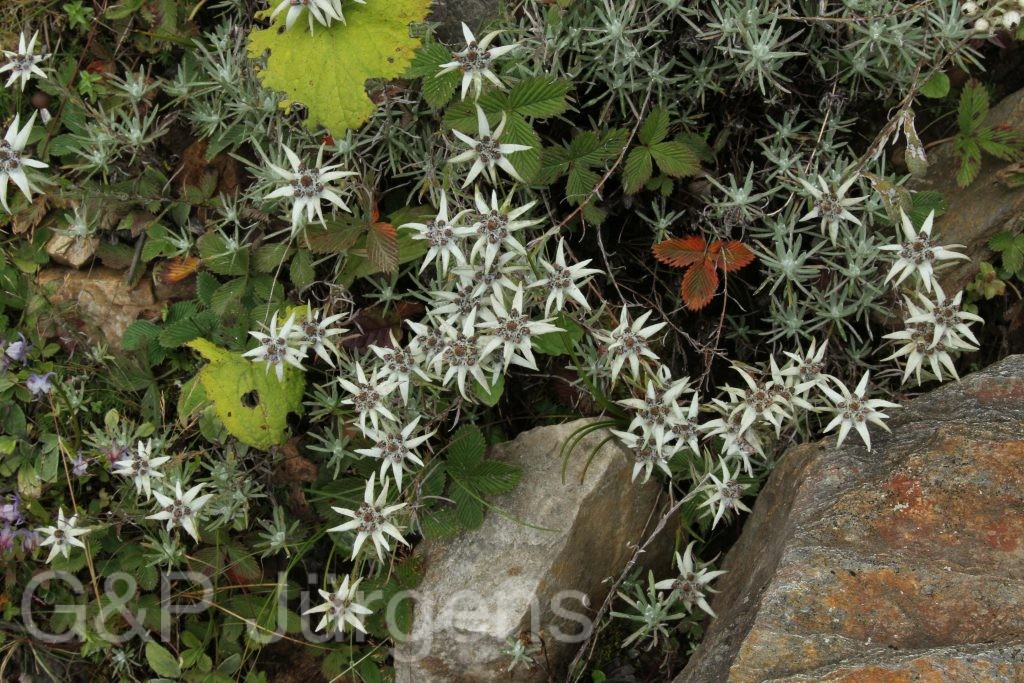
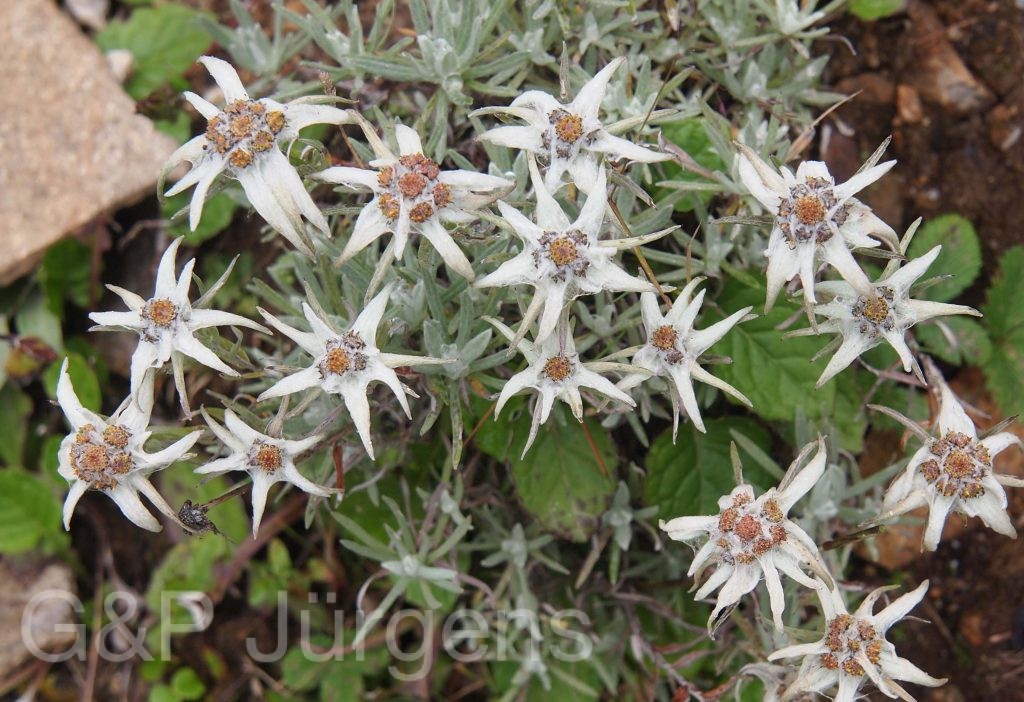
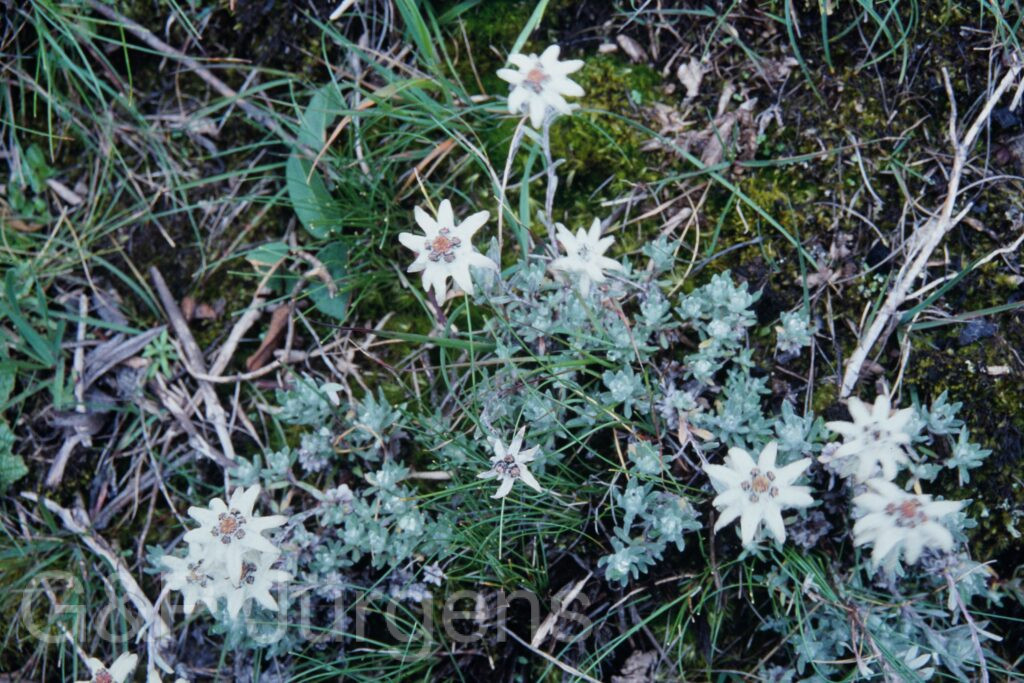
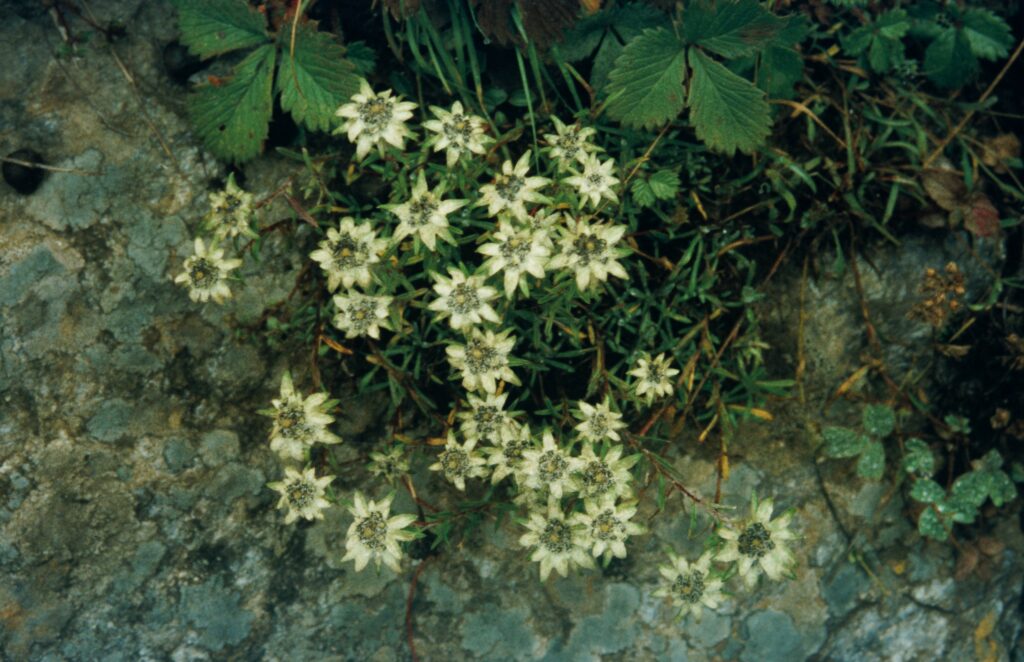
Leontopodium brachyactis is a high-alpine edelweiss of the Sino-Himalayan and Central Asian uplands, recorded from India, Pakistan, Nepal and China, with scattered occurrences extending west into Kyrgyzstan, Tajikistan, Afghanistan and Russia; the c. 92 georeferenced collections trace a distribution centred on the inner Himalaya and Tibetan margins. It inhabits open alpine turf, stony slopes, moraines and grazed meadows above the treeline, typically between 3500 and 4500 m. The species was photographed in the Sikkim Chopta Valley at 4100 m in August and in the Garhwal Valley of Flowers at 3550 m in October, sites representative of its preference for cold, well-drained, seasonally snow-covered ground.

It is a low, tufted, woolly perennial herb arising from a branched woody caudex, the stems erect to ascending and densely white-lanate. The leaves are linear to oblanceolate, entire, grey-green above and clothed beneath in a felt of appressed hairs that reflects intense montane irradiance. The capitula are small, several to many, aggregated into a dense terminal glomerule and subtended by a stellate ruff of leaf-like, densely tomentose floral bracts forming the characteristic edelweiss "star." The heads are heterogamous and disciform, with whitish corollas; the fruit is a small ribbed cypsela bearing a pappus of barbellate bristles.

The genus Leontopodium (tribe Gnaphalieae) is taxonomically intricate, its species delimited by indumentum, bract arrangement and capitulum structure, and L. brachyactis belongs to the compact-headed Himalayan element. Its dense white tomentum is a classic adaptation to alpine cold, desiccating winds and ultraviolet exposure. Though locally frequent across a wide range and not presently considered threatened, populations in accessible valleys face pressure from heavy summer grazing and increasing tourism in the Himalayan flower meadows.

Author: Gand. · Sources: POWO (Kew), GBIF, Flora of China, Flowers of the Himalaya (Polunin & Stainton), Handel-Mazzetti revision of Leontopodium

Beauverd

Bhutan2012 57
Bhutan Shele-La, 4100m September
Bhutan2012 61
Bhutan Shele-La, 4100m September

Description

Leontopodium jacotianum is a high-alpine edelweiss of the Sino-Himalayan region, recorded from Nepal, China, India, Bhutan, Pakistan and Myanmar (NP, CN, IN, BT, PK, MM), with a modest 546 GBIF occurrences reflecting its restriction to lofty, difficult terrain. It inhabits open alpine meadows, stony slopes, screes and rocky crevices above the treeline, where snow lies long and the growing season is brief. The photographed plant grew on the Shele-La in Bhutan at about 4100 m in September, flowering at the close of the monsoon season on exposed alpine turf typical of the genus across the eastern Himalaya.

It is a tufted perennial herb arising from a stout, branched caudex, forming compact cushions or small clumps of several flowering stems 5–25 cm tall, the whole densely grey-white lanate-tomentose. The basal and cauline leaves are spathulate to linear-oblong, sessile, woolly on both surfaces. The diagnostic feature is the terminal star of leaf-like floral bracts radiating beyond the capitula, densely felted with white woolly hairs and forming the familiar edelweiss "flower". Within this stellate ruff sit several crowded capitula; the heads contain yellowish tubular florets, the plants typically subdioecious with outer female and central functionally male florets. The fruit is a small cypsela crowned by a pappus of barbellate to subplumose bristles.

The genus Leontopodium (tribe Gnaphalieae) reaches its greatest diversity in the Himalaya and the mountains of western China, where numerous species are differentiated by indumentum, bract shape and habit; L. jacotianum, described by Beauverd, belongs to this dense Asiatic radiation. The thick woolly investment is an adaptation to intense ultraviolet radiation, desiccation and cold at high elevation. Though not currently assessed as threatened, such narrowly alpine specialists are sensitive to climatic warming and the upslope contraction of suitable habitat.

Author: Beauverd · Sources: POWO (Kew), GBIF, Flora of China Vol. 20-21, Flora of Bhutan, Flora of Nepal, Leontopodium monograph (Handel-Mazzetti, revision of the genus)

Spring.

Bhutan2015 289 1
Bhutan Zhemgang 1100m, October
Bhutan2015 291
Bhutan Zhemgang 1100m, October

Description

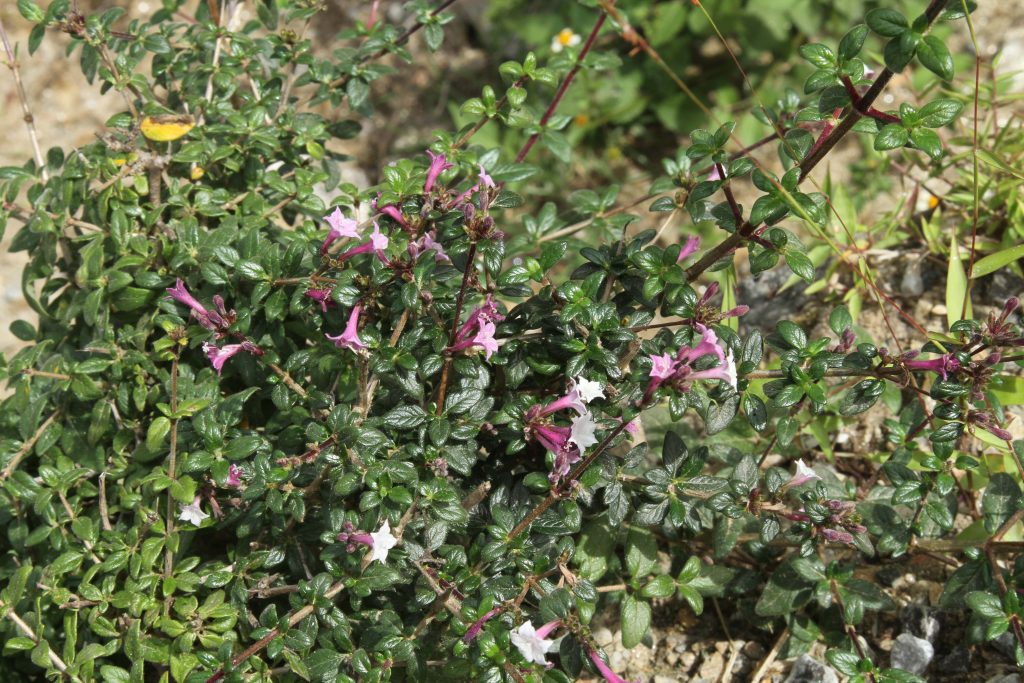
Leptodermis amoena is a narrowly distributed eastern Himalayan shrub recorded from Bhutan, neighbouring north-east India and adjacent southern China; with only about 18 GBIF occurrences it is among the more poorly collected members of its genus. It is a plant of warm-temperate to subtropical hill forest, occupying forest margins, open thickets, roadside banks and rocky slopes, broadly from 1,000 to 2,500 m. The plant photographed at Zhemgang in central Bhutan at 1,100 m in October illustrates its occurrence at the lower, subtropical end of this range, flowering late in the season on warm, well-drained slopes within the broad-leaved forest zone.

It is an erect, much-branched deciduous shrub up to about 1-2 m tall, with slender greyish to brownish branchlets that are puberulent when young. The leaves are opposite, small, elliptic to ovate-lanceolate, entire and shortly petiolate, subtended by interpetiolar stipules bearing a slender awn typical of the genus. The flowers are borne in few-flowered axillary or terminal cymose clusters and are tubular and funnelform, with a narrow corolla tube expanding into five spreading lobes and an often pubescent exterior; the colour ranges from pale lilac to pinkish or whitish. As in Leptodermis, the species is heterostylous, and the fruit is a small capsule splitting into valves to release narrow seeds.

Leptodermis (Rubiaceae, tribe Paederieae) comprises some forty species centred on the Sino-Himalayan region, distinguished by their awned stipules, tubular heterostylous flowers and septicidal capsules. L. amoena is characterised by its delicate, attractively coloured corollas, reflected in the epithet amoena ('charming'). Its restricted range, low collection density and dependence on mid-elevation forest suggest a species potentially sensitive to habitat conversion, though it has not been formally assessed and no global IUCN status is published. Targeted survey across the eastern Himalaya would clarify its true distribution and conservation needs.

Author: Spring. · Sources: POWO (Kew), GBIF, Flora of China, Flora of Bhutan, Rubiaceae of the Himalaya, monograph of Leptodermis

Spring.

Bhutan2012 317
Bhutan Paro-Chu, 2400m September

Description

Leptodermis ludlowii is a narrowly distributed Eastern Himalayan shrub, known from only about 26 georeferenced records confined to China (CN), Bhutan (BT) and India (IN). It is a plant of warm-temperate montane valleys, occupying open hillsides, dry scrub, rocky slopes and forest margins at middle elevations. The plant photographed along the Paro-Chu in western Bhutan at about 2400 m in September is characteristic of these sunny, well-drained inner-valley habitats, where the species flowers into the late monsoon. Its very restricted range and small number of collections mark it out as a regional endemic of the Eastern Himalaya.

It is a small, much-branched deciduous shrub with slender, often pubescent twigs. The leaves are opposite, small, ovate to elliptic, entire, and subtended by characteristic interpetiolar stipules with a membranous base and bristle-like awns, typical of the genus. The flowers are borne in small axillary or terminal clusters; each has a narrowly funnel-shaped, five-lobed corolla, usually white to pale pink or lilac, with the lobes spreading at the mouth. The slender corolla tube and the membranous, often persistent calyx are diagnostic of Leptodermis. The fruit is a small, dry capsule splitting into valves to release the seeds, which are enclosed in a thin, membranous testa from which the genus takes its name.

Leptodermis (Rubiaceae, tribe Paederieae) is an Asian genus centred on the Sino-Himalayan region, with many narrowly distributed, locally endemic species adapted to dry montane scrub. L. ludlowii, commemorating the collector Frank Ludlow, is one such restricted Eastern Himalayan endemic. Its very limited known range and scant collection record make it of conservation interest, although it has not been formally assessed; the integrity of mid-elevation valley scrub is important to its persistence.

Author: Spring. · Sources: POWO (Kew), GBIF, Flora of Bhutan, Flora of China, Robbrecht and Deb taxonomic studies of Asian Rubiaceae (Leptodermis)

H.J.P.Winkl

Bhutan2012 1036
Bhutan Trithangebe 900m, October

Description

Leptodermis stapfiana H.J.P.Winkl. is a shrub of the Rubiaceae distributed through the central and eastern Himalaya and into adjacent China. GBIF records it from Nepal, Bhutan, India and China, with 76 georeferenced occurrences. The species favours warm to cool temperate slopes, forest margins, scrub and roadside thickets, typically on well-drained, often rocky ground. The illustrated plant from Trithangebe in Bhutan at 900 m, flowering in October, reflects its preference for the lower montane belt, where it can form conspicuous patches of bloom late in the growing season after the main monsoon.

The plant is an erect to spreading, much-branched shrub with slender, greyish, often finely pubescent branchlets. The leaves are opposite, small, ovate to lanceolate, entire, shortly petiolate, and subtended by triangular, aristate stipules characteristic of the genus. Flowers are sessile and clustered in the leaf axils and at the branch tips; the corolla is narrowly funnel-shaped, white to pale lilac or pinkish, with five (rarely four) spreading lobes that are valvate and crisped-pubescent within the throat. The species is typically heterostylous, and the fruit is a small dry capsule splitting into valves to release angular seeds enclosed in a delicate membranous testa, the feature that gives Leptodermis its name.

Leptodermis is a taxonomically difficult Sino-Himalayan genus in which species are separated largely by leaf size, calyx-lobe number and indumentum, and L. stapfiana sits within this radiation centred on the eastern Himalaya and southwest China. It is not regarded as threatened, but as a hardy, late-flowering nectar source it contributes to montane pollinator networks and to the structural diversity of Himalayan scrub vegetation.

Author: H.J.P.Winkl · Sources: POWO (Kew), GBIF, Flora of China Vol. 19, Flora of Bhutan Vol. 2, Flora of Nepal, Deb & Rout: Studies in Indian Leptodermis (Rubiaceae)

Leucas ciliata

by G & P Jürgens

Benth.

Bhutan2015 62
Bhutan Wangdi Phodrang 2000m, October
Bhutan2015 460
Bhutan Wangdi Phodrang 2000m, October

Description

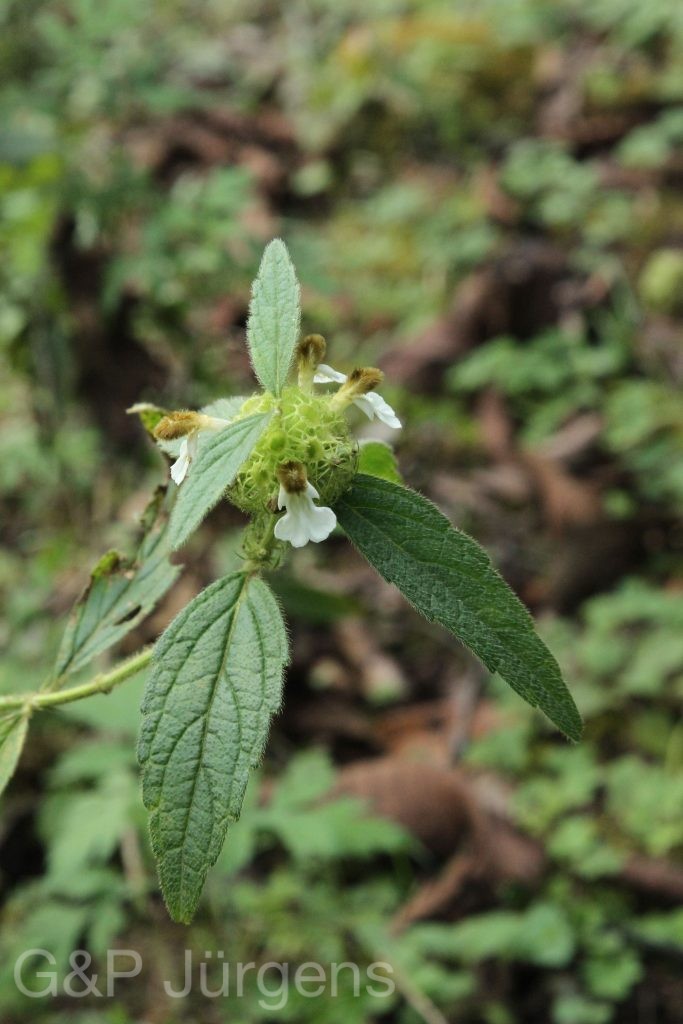
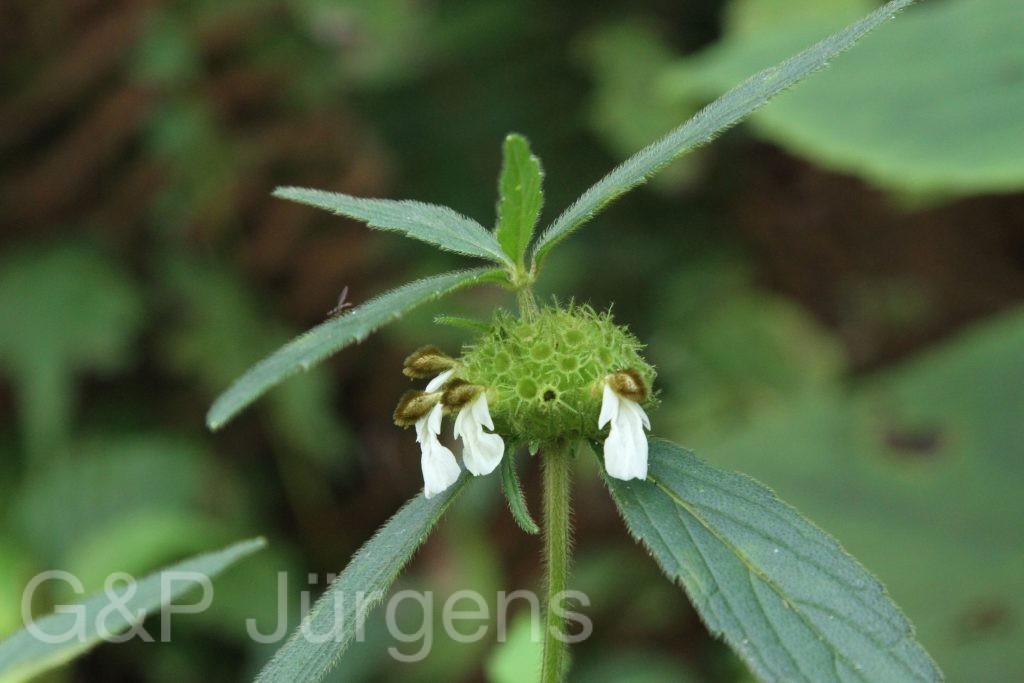
Leucas ciliata is a widely distributed Asian herb ranging across the Himalaya and into China, mainland Southeast Asia (Myanmar, Thailand, Laos, Vietnam), Bangladesh and beyond, with GBIF logging 573 occurrences over a broad set of countries including CN, IN, NP, BT, TH, MM, VN and BD. It is a plant of open, disturbed and seasonally moist ground, occurring on grassy slopes, forest margins, roadsides, scrub and cultivated land at low to mid elevations, generally up to about 2500 m. The photographed plant was recorded at Wangdi (Wangdue) Phodrang in west-central Bhutan around 2000 m, flowering in October at the close of the monsoon.

The species is an erect annual or short-lived perennial herb with the quadrangular stems typical of the Lamiaceae, clothed in spreading, often ciliate hairs. The leaves are opposite, ovate to lanceolate, toothed (crenate-serrate) and short-petiolate. The flowers are aggregated into dense, globose axillary whorls (verticillasters) subtended by bristly, ciliate bracts. Each flower has a tubular, ribbed calyx with spine-tipped teeth and a two-lipped white corolla in which the small upper lip is hooded and densely woolly outside while the larger lower lip is three-lobed; the four didynamous stamens lie beneath the galea. The fruit comprises four smooth nutlets enclosed in the persistent calyx.

Leucas is a large Old World genus of the subfamily Lamioideae, well represented in tropical Asia and Africa and characterised by woolly white corollas adapted to insect pollination. Several species, including L. ciliata, are used in traditional medicine. As a ruderal colonist of open and anthropogenic habitats it is common and widespread, and faces no conservation concern.

Author: Benth. · Sources: POWO (Kew), GBIF, Flora of Bhutan, Flora of China (Lamiaceae), Sebald revision of Leucas (Labiatae)

Sm.

Bhutan2015 595
Bhutan Mo-Chu 1900m, October
Bhutan2012 1307
Bhutan Mo-Chu 1900m, October

Description

Leucosceptrum canum is a soft-wooded shrub or small tree of the Himalaya and southwestern China, distributed through China, Nepal, India, Bhutan and Myanmar and east to Indochina (CN, NP, IN, BT, MM, VN, TH, BD, LA, with further records), one of the more frequently collected species here with about 515 occurrences. It grows in moist temperate forest, on shaded slopes, ravine sides, forest margins and clearings, typically in the warm- to cool-temperate belt. The gatherings cited are from the Mo-Chu valley in Bhutan at 1900 m and from Trisuli in Nepal at 2700 m, both flowering in October, reflecting its autumn-to-early-winter blooming in the mid-montane forest zone.

The plant is a coarse shrub or small tree with stout, four-angled young branches densely clothed, like the leaf undersides and inflorescence, in a greyish (canous) tomentum from which the epithet derives. The leaves are large, opposite, elliptic to oblong-lanceolate, with a serrate margin, an acuminate apex and prominent venation. The flowers are crowded into a dense, terminal, cylindrical spike-like thyrse with conspicuous bracts; the calyx is tubular and five-toothed, and the white to pale yellow, two-lipped corolla has a short tube and exserted, declinate stamens. The fruit comprises four small nutlets (an eremocarp) enclosed in the persistent calyx.

Leucosceptrum is a small genus placed in the subfamily Lamioideae (or basal lineages) of the Lamiaceae and is of phylogenetic interest as part of an early-diverging Asian woody assemblage allied to Comanthosphace. The conspicuous, nectar-rich autumn inflorescences attract bees, butterflies and birds, and the species is notable for the production of defensive sesquiterpenes secreted by glandular trichomes. Widespread and common across the Himalaya into China, L. canum is of no conservation concern and is locally valued for fuel and as a bee plant.

Author: Sm. · Sources: POWO (Kew), GBIF, Flora of Bhutan, Flora of China, Labiatae of the Himalaya (Lamiaceae revision)

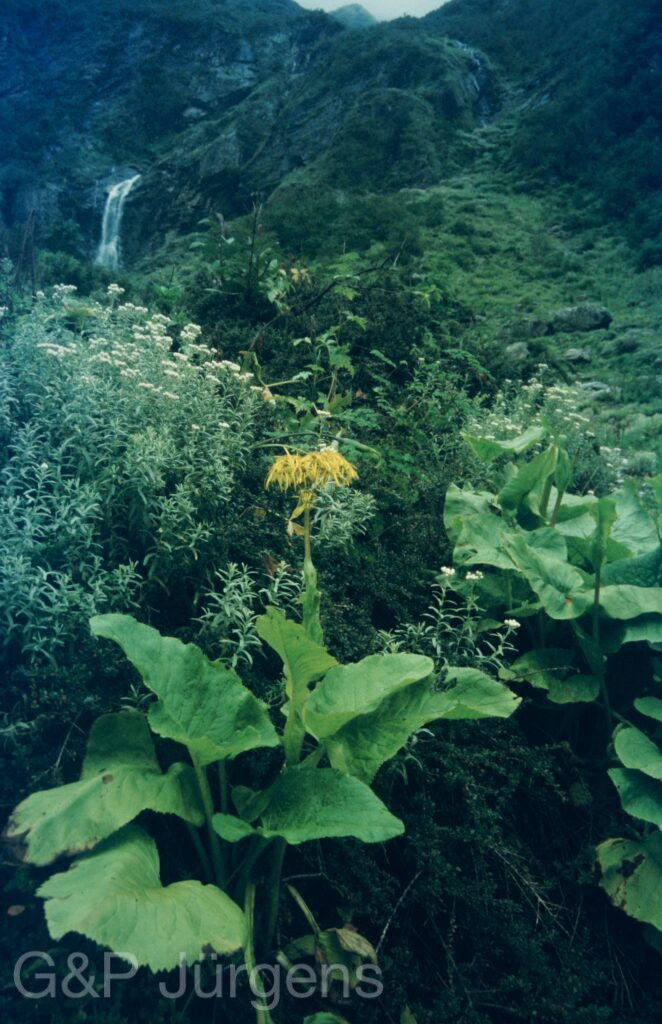
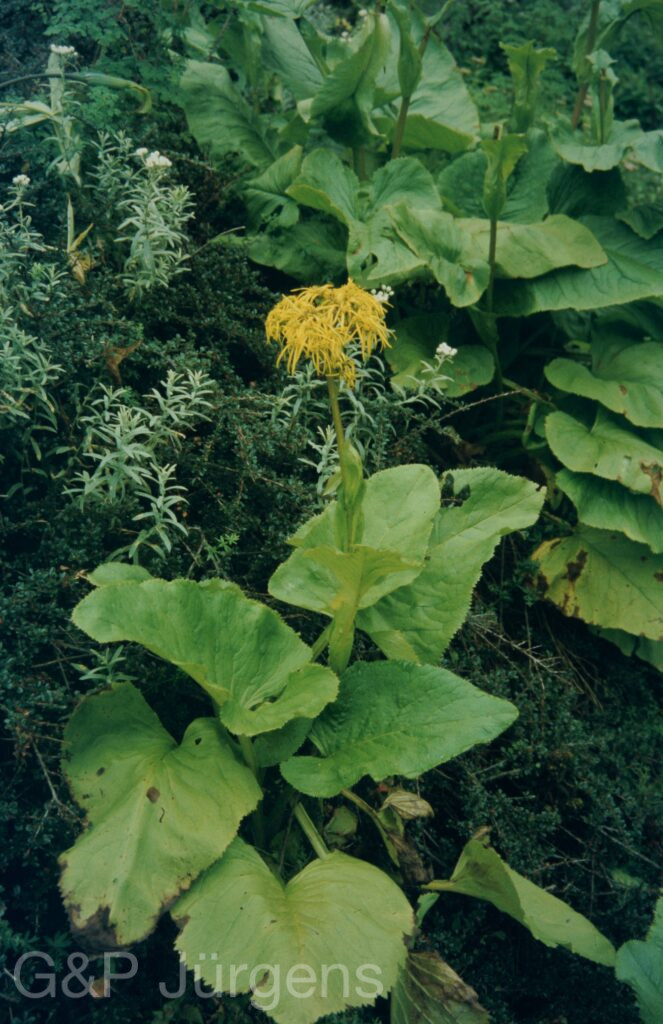
DC.

Garw 2005 33 ergebnis ergebnis
India Garhwal Valley of flowers 3050m, September
Garw 2005 34 ergebnis ergebnis
India Garhwal Valley of flowers 3050m, September

Description

Ligularia amplexicaulis DC. is a robust Himalayan composite ranging from Pakistan and northern India through Nepal and Bhutan into southwestern China (gbif_countries: NP, IN, BT, CN, PK, plus collection records coded US and CA), with around 271 occurrences in GBIF. It is characteristic of moist alpine and subalpine meadows, tall-herb slopes, forest clearings and streamside grassland, typically between about 2800 and 4300 m. The photographed plant from the celebrated Valley of Flowers in Garhwal at 3050 m, flowering in September, exemplifies its late-season presence in the rich monsoon-fed herb meadows for which that valley is famous.

It is a stout perennial herb arising from a short rhizome with fibrous roots. The lower leaves are large, reniform to broadly cordate and long-petiolate, the cauline leaves becoming sessile and conspicuously amplexicaul (stem-clasping), as the epithet records. The inflorescence is an elongate terminal raceme of numerous radiate capitula. Each head bears yellow ray florets and yellow tubular disc florets, subtended by a campanulate involucre of few subequal phyllaries; the achenes are glabrous and cylindric, crowned by a pappus of soft barbellate bristles.

Ligularia (tribe Senecioneae) is a large Sino-Himalayan genus centred on the eastern alpine flora, and the present species is part of the racemose-headed Himalayan assemblage. Like its relatives it accumulates pyrrolizidine alkaloids, deterring herbivory and rendering it of pharmacological and toxicological interest. The species is widespread and locally abundant in protected alpine areas such as Nanda Devi and the Valley of Flowers, and is not considered threatened.

Author: DC. · Sources: POWO (Kew), GBIF, Flora of China (Asteraceae: Senecioneae), Flora of Bhutan, Annotated checklist of the flowering plants of Nepal

Schult.f.

Bhutan2012 515
Bhutan Wangdi 2600m, September
Bhutan2012 516
Bhutan Wangdi 2600m, September

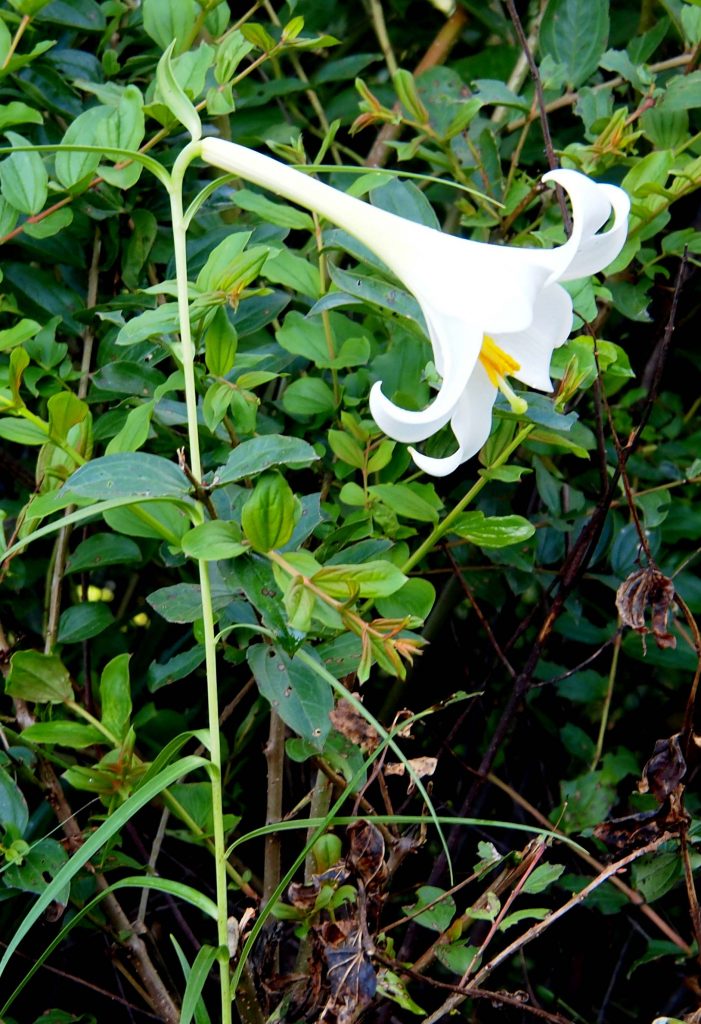
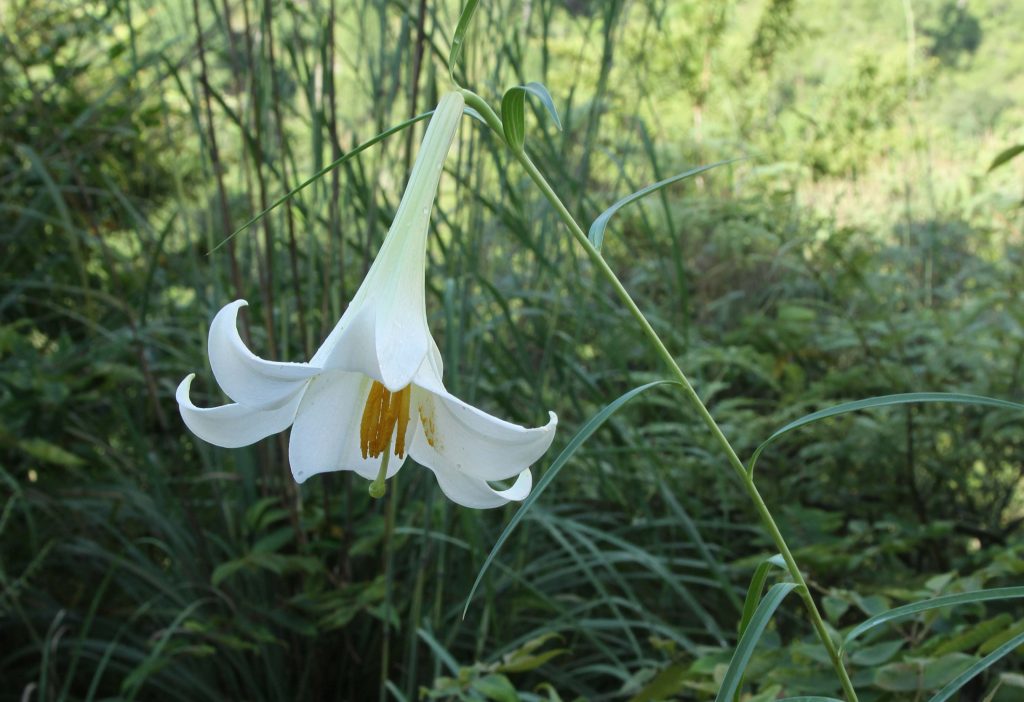
Description

Lilium wallichianum is a tall, trumpet-flowered lily of the Himalaya, ranging from northern India and Nepal through Bhutan to Myanmar, with naturalised or cultivated occurrences elsewhere; GBIF records (c. 217) reflect both its native distribution and its presence in cultivation. In the wild it grows on grassy and shrubby slopes, in forest clearings, scrub and along the margins of temperate forest, generally between about 1500 and 2700 m. The photographed plant from Wangdi (Wangdue Phodrang) in Bhutan, at 2600 m and flowering in September, is characteristic of its late-summer to autumn flowering in mid-elevation montane vegetation.

The plant arises from a stoloniferous, white, scaly bulb and produces a stout, erect stem up to 1–2 m tall bearing scattered, narrowly linear to linear-lanceolate leaves. The flowers are large, solitary or few, long-tubular to trumpet-shaped and powerfully fragrant; the six perianth segments are white, often flushed greenish or rose-purple externally, recurving at the tips. The flowers are typically held horizontally or somewhat declined, with six stamens bearing versatile anthers and a long, slender style ending in a three-lobed stigma. The fruit is an erect, oblong, loculicidal capsule containing numerous flat, papery, wind-dispersed seeds.

Lilium wallichianum belongs to the trumpet- or Aurelian-lily group (section Leucolirion / Lilium), the Asiatic trumpet lilies prized in horticulture for their fragrance and elegant form; it has contributed to the breeding of garden trumpet hybrids. The epithet commemorates Nathaniel Wallich, the Danish botanist who pioneered the study of Himalayan flora. Although locally not uncommon, wild populations of showy lilies are vulnerable to bulb collection and grazing, warranting habitat protection.

Author: Schult.f. · Sources: POWO (Kew), GBIF, Flora of Bhutan, Flora of Nepal, The Genus Lilium (Liberty Hyde Bailey / Comber classification)