Tag:

Autumn

(Benth.) Murata

Bhutan2015 29
Bhutan Dochu-La 2800m, October

Description

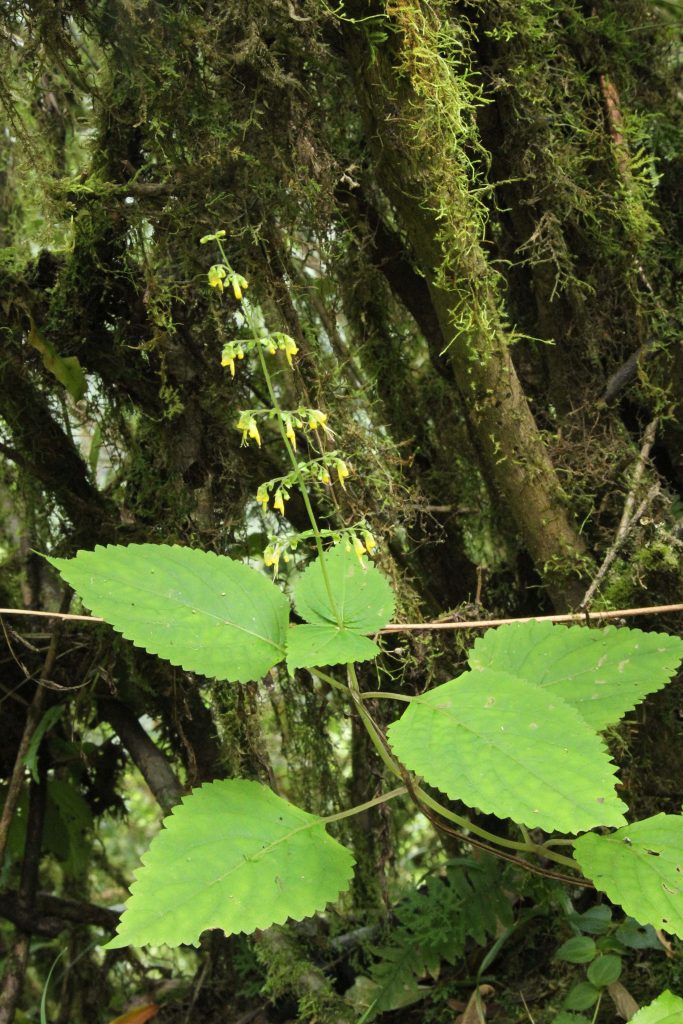
Isodon hispidus (Benth.) Murata is a perennial herb of the mint family distributed across the eastern Himalaya and the mountains of southern China and mainland Southeast Asia. GBIF records confirm its presence in Bhutan, India, China, Myanmar, Laos, Vietnam, Thailand and Korea, with an outlying record from Tanzania likely representing a cultivated or misidentified collection. It favours moist forest margins, shrubby clearings and open slopes in the temperate and subalpine zones, typically between 1,500 and 3,000 m. The photographed plant at the Dochu-La in Bhutan, at 2,800 m and flowering in October, exemplifies its preference for cool, humid montane habitats where autumn blooms persist after the monsoon.

The species forms an erect, branched herb 0.5–1.5 m tall arising from a woody rootstock, with quadrangular stems that are densely hispid with spreading hairs. The opposite leaves are ovate to broadly ovate, acuminate, with a coarsely serrate margin and a rugose, pubescent surface, narrowing to a winged petiole. The inflorescence is a lax terminal panicle composed of numerous cymes; the small flowers have a campanulate, two-lipped calyx and a pale violet to purplish corolla with the characteristic declinate lower lip of the genus, enclosing four exserted stamens. The fruit comprises four smooth, ovoid nutlets.

Isodon hispidus belongs to a large and taxonomically intricate genus (formerly placed in Rabdosia and Plectranthus) noted for diterpenoid chemistry of pharmacological interest. Several congeners are used in traditional Asian medicine, and the genus is a focus of phytochemical research into ent-kaurene diterpenoids. The species is widespread and not considered threatened across its broad range.

Author: (Benth.) Murata · Sources: POWO (Kew), GBIF, Flora of China Vol. 17, Flora of Bhutan Vol. 2, Murata: Revision of Asian Isodon (Lamiaceae)
(Buch.-Ham. ex D.Don) H.Hara

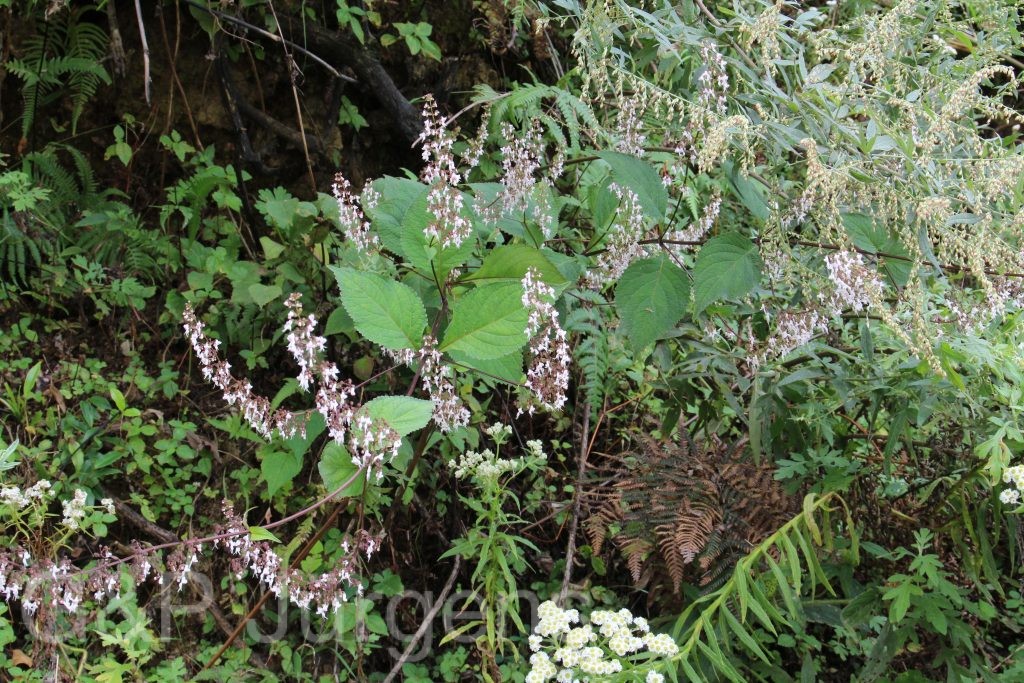
Bhutan2015 586
Bhutan Mo-Chu 1800m, October
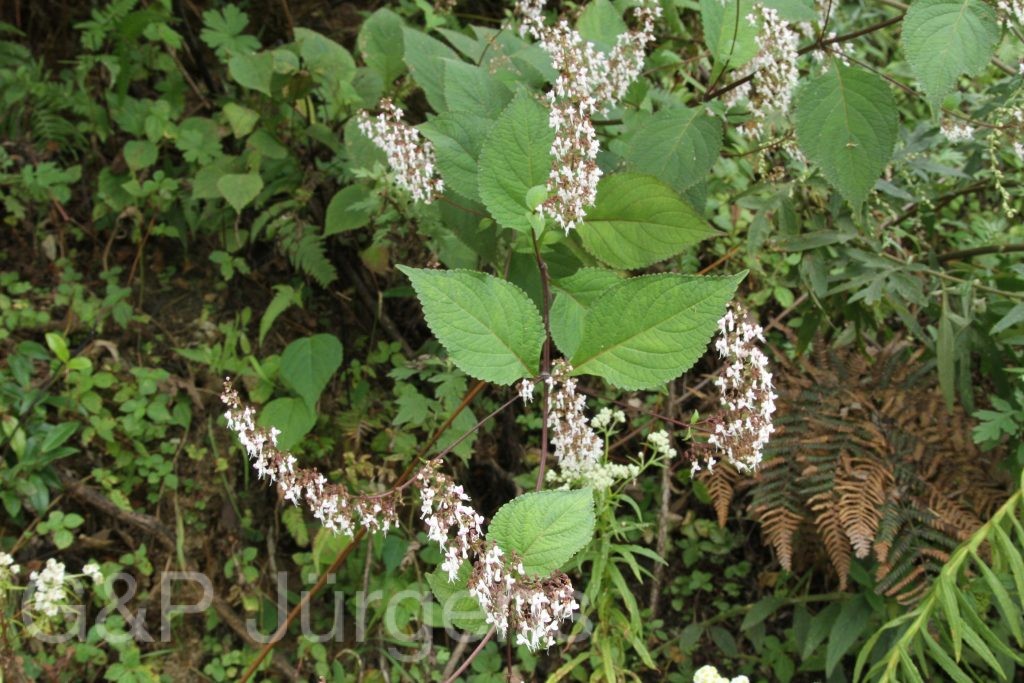
Bhutan2015 587
Bhutan Mo-Chu 1800m, October

Description

Isodon lophanthoides is a widespread herb of the Sino-Himalayan region, recorded from China, the Indian Himalaya, Nepal, Bhutan, Pakistan, Myanmar, Thailand, Laos, Vietnam, Bangladesh, Malaysia and Hong Kong, and represented by nearly two thousand georeferenced collections. It occupies a broad subtropical to warm-temperate belt, growing on moist shaded banks, forest margins, streamsides, grassy slopes and disturbed ground. In Bhutan it descends to warm river valleys, as along the Mo-Chu at about 1800 m where it was photographed flowering in October, the late-season anthesis typical of the genus.

The plant is an erect to ascending annual or short-lived perennial herb with quadrangular, often purple-tinged and pubescent or glandular stems. The leaves are opposite, ovate to broadly ovate, crenate-serrate, acuminate, and narrowed at the base into a winged petiole, often gland-dotted beneath. The inflorescence is a lax, much-branched terminal panicle of small cymes. The flowers have a bilabiate, glandular calyx that enlarges in fruit, and a small two-lipped corolla that is white to pale pink or purplish, dotted with darker spots, with a flat lower lip and four declinate didynamous stamens. The fruit consists of four smooth ovoid nutlets (mericarps).

Isodon (formerly included in a broad Rabdosia and Plectranthus) belongs to subfamily Nepetoideae of Lamiaceae; this species was described as Plectranthus lophanthoides by Buchanan-Hamilton and transferred by Hara. Several intraspecific varieties have been recognised across its range. Rich in bioactive ent-kaurane diterpenoids, it is used in Chinese herbal medicine, and its broad ecological tolerance and frequency mean it is not of conservation concern.

Author: (Buch.-Ham. ex D.Don) H.Hara · Sources: POWO (Kew), GBIF, Flora of China, Flora of Bhutan, Flora of Pakistan, taxonomic revisions of Isodon (Lamiaceae) by H. W. Li

(Wall.) Murata

Bhutan2012 352
Bhutan Wangdi 2200m, October

Description

An erect perennial mint of the Himalaya and adjacent mountains, recorded from Nepal, China, India, Bhutan and Myanmar, with about 180 GBIF occurrences. It grows on open slopes, scrub margins, forest edges, roadbanks and disturbed clearings in the warm-temperate and subtropical zones, generally between about 1500 and 2800 m, flowering into the autumn. The illustrated plant was photographed in October at Wangdi in Bhutan at around 2200 m, a sunny mid-elevation montane site typical of its late-season flowering.

The species is a tall, branching herb or subshrub with the characteristic quadrangular stems of the mint family, often finely pubescent. The leaves are opposite and decussate, ovate to ovate-lanceolate, acuminate, with serrate margins and a glandular-punctate, aromatic surface, borne on distinct petioles. The inflorescence is a lax, much-branched terminal panicle of small cymes. Each flower has a campanulate, two-lipped calyx and a small bilabiate corolla, pale lilac to whitish or bluish, with a short tube, a four-lobed upper portion and a larger boat-shaped lower lip enclosing the four declinate stamens. The fruit comprises four small, smooth, ovoid nutlets seated in the persistent calyx.

Accepted by POWO and GBIF, I. scrophularioides belongs to the genus Isodon (formerly within Rabdosia and Plectranthus), a group of mints rich in bioactive diterpenoids and of interest in traditional medicine and phytochemistry. The deflexed lower lip forms a landing platform for bee pollinators, and the dry nutlets are dispersed by gravity and disturbance. Adaptable and frequent in secondary habitats across its range, it is of no conservation concern and exemplifies the largely Asian, montane radiation of the genus.

Author: (Wall.) Murata · Sources: POWO (Kew), GBIF, Flora of China, Flora of Bhutan, Li revision of Isodon

(D.Don) Kudô

Bhutan2015 461
Bhutan Trongtsa 2100m, October

Description

Isodon ternifolius is a shrubby mint distributed across the eastern Himalaya and Southeast Asia, recorded by GBIF (477 occurrences) from China, India, Thailand, Nepal, Myanmar, Vietnam, Bhutan, Bangladesh and Laos. It occupies forest margins, thickets, open hillsides, roadsides and disturbed slopes, mostly at lower to mid montane elevations between roughly 500 and 2500 m. The plant photographed at Trongsa in central Bhutan at 2100 m in October illustrates its autumn flowering, when the airy inflorescences come into bloom along forested valley margins toward the upper end of its altitudinal range.

The species is an erect perennial herb or soft shrub with quadrangular, often densely pubescent stems. As suggested by the epithet, the leaves are frequently borne in whorls of three (ternate), in addition to the opposite arrangement typical of the family; they are ovate to lanceolate, crenate-serrate and shortly petiolate, with a velvety to tomentose indumentum. The flowers are small and arranged in many-flowered thyrses formed of axillary cymes. The corolla is bilabiate with a short tube, the upper lip four-lobed and reflexed and the lower lip boat-shaped and declinate to enclose the four stamens and the bifid style. The fruit comprises four smooth, ovoid nutlets enclosed within the persistent campanulate calyx.

Isodon, long included within Plectranthus or Rabdosia, is now recognised as a distinct genus of Old World mints noted for its rich array of bioactive ent-kaurane diterpenoids, several species being used in traditional Chinese medicine. The nectariferous bilabiate flowers are pollinated by bees and other insects, and the nutlets are dispersed passively from the persistent calyces. The species is common, weedy in disturbed habitats and not regarded as threatened.

Author: (D.Don) Kudô · Sources: POWO (Kew), GBIF, Flora of China, Flora of Bhutan, Flora of Thailand, Revision of the Genus Isodon (Li)

(Wall. ex DC.) B.Nord.

Sikkim2003 444 G617
Sikkim Chopta Valley 3900m August
Nepal 95 130 P222 ergebnis
Nepal south of Rupien La 3600m October
Bhutan2015 379
Bhutan Tumching-La 4000m, October

Description

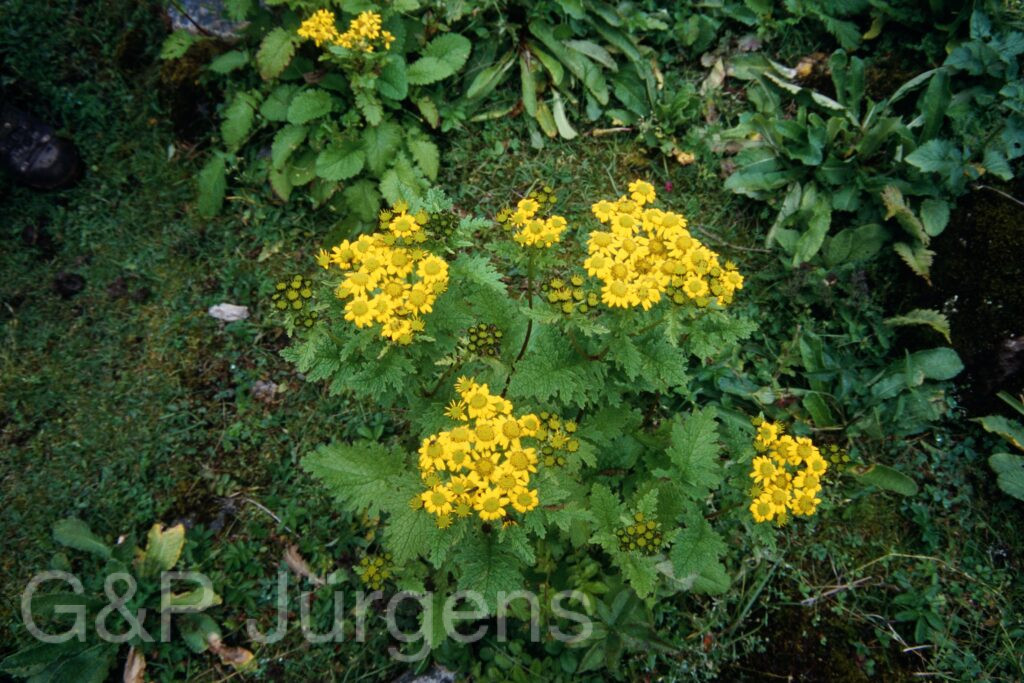
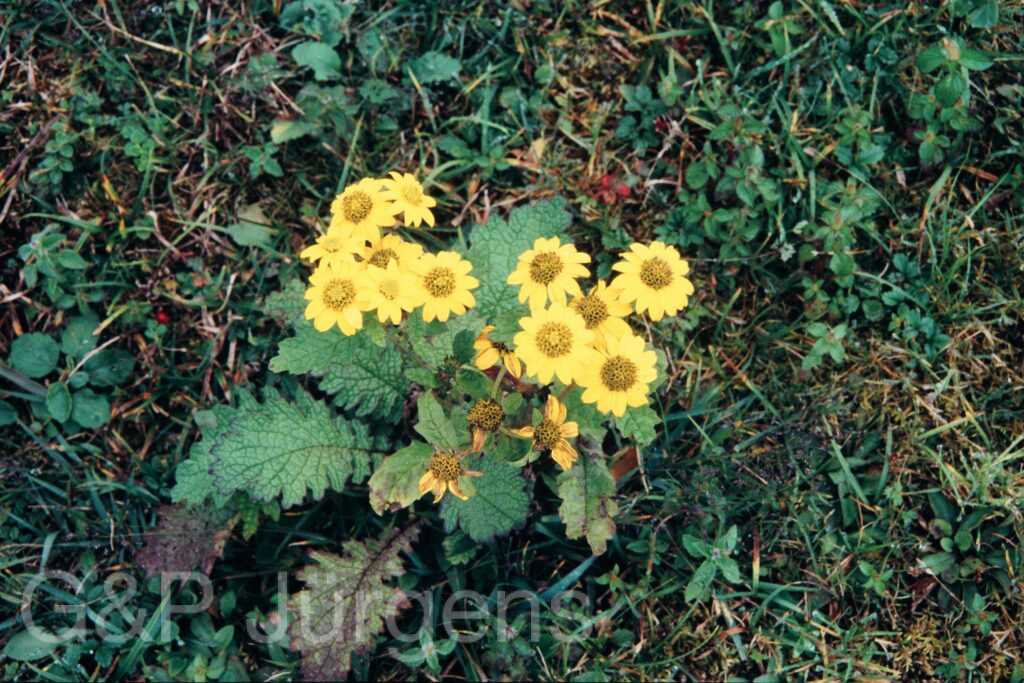
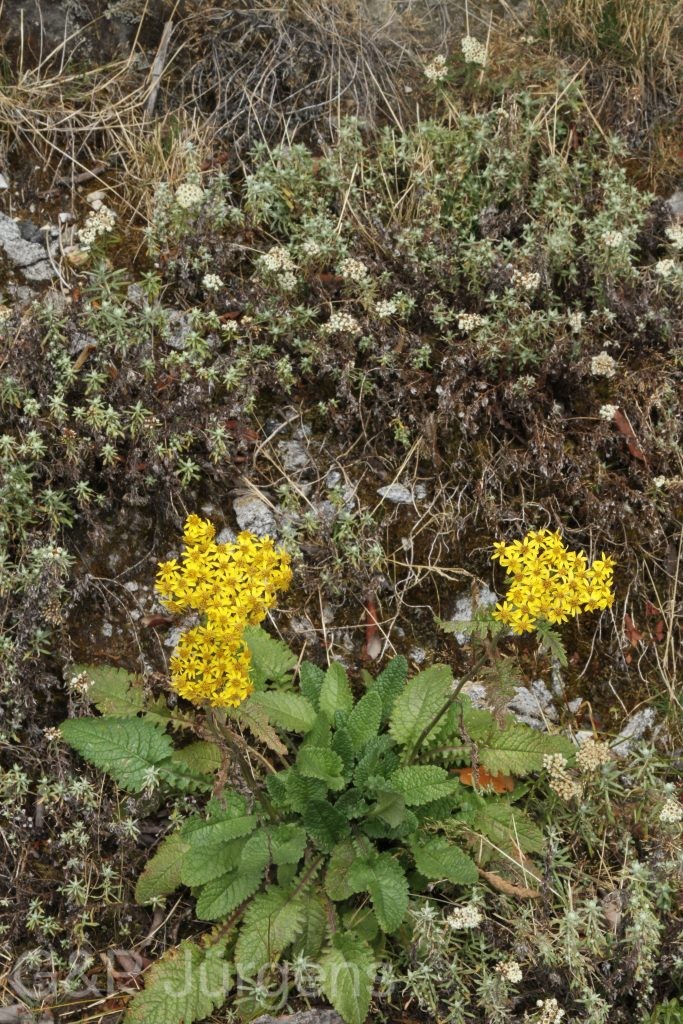
Jacobaea raphanifolia is a perennial herb of the high Himalaya and adjoining mountains of central Asia, recorded by GBIF (some 202 occurrences) from Nepal, India, China, Bhutan, Afghanistan, Pakistan and Myanmar, with scattered records reaching Kenya and South Africa that probably reflect cultivated or naturalised material. It is a plant of the upper subalpine and alpine zones, favouring moist meadows, streamsides, open scrub and damp rocky slopes. The species was photographed across a broad altitudinal band, in the Chopta Valley of Sikkim at about 3900 m in August, south of the Rupien La in Nepal at 3600 m in October, and on the Tumching La in Bhutan near 4000 m, a range centred between roughly 3500 and 4200 m.

It forms an erect, somewhat stout herb arising from a short, fibrous-rooted rhizome, with simple or branched leafy stems. The lower leaves are lyrate-pinnatifid to runcinate with a large terminal lobe, recalling a radish (raphanifolia), the margins toothed and the surfaces sparsely hairy; cauline leaves become smaller, sessile and often auriculate upwards. The capitula are radiate, several to many in a loose terminal corymb, subtended by a single row of narrow green phyllaries with a few short calyculate bracts. Ray florets are yellow, female and ligulate; the disc florets yellow, tubular and bisexual. The fruit is a ribbed, cylindrical cypsela crowned by a pappus of fine white capillary bristles.

The species belongs to a complex of montane ragworts segregated from Senecio into Jacobaea on molecular and morphological grounds. As a wide-ranging meadow herb of the alpine pastures it is locally common and of no conservation concern, though like many Senecioneae it contains pyrrolizidine alkaloids and is generally avoided by grazing stock, a trait that may favour its persistence in heavily pastured high valleys.

Author: (Wall. ex DC.) B.Nord. · Sources: POWO (Kew), GBIF, Flora of Bhutan, Flora of China, Annotated Checklist of the Flowering Plants of Nepal, Nordenstam's revision of Jacobaea and the Senecioneae

(P.J.Bergius) Willd.

Bhutan2012 787
Bhutan Zemgang 1900m, October
Bhutan2015 277
Bhutan Zhemgang 1000m, October

Description

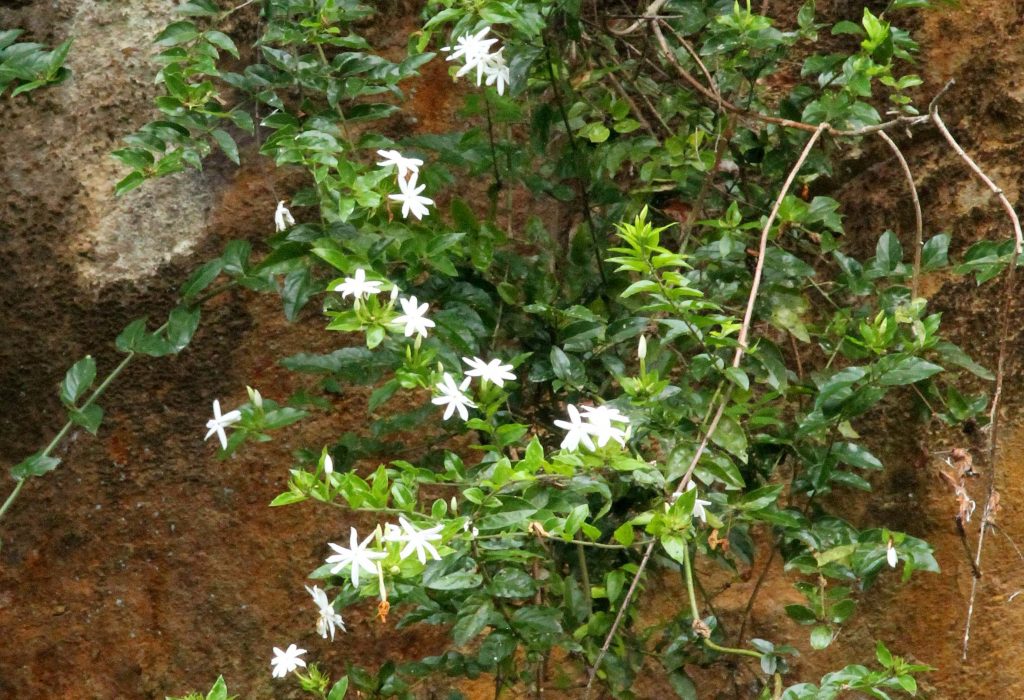
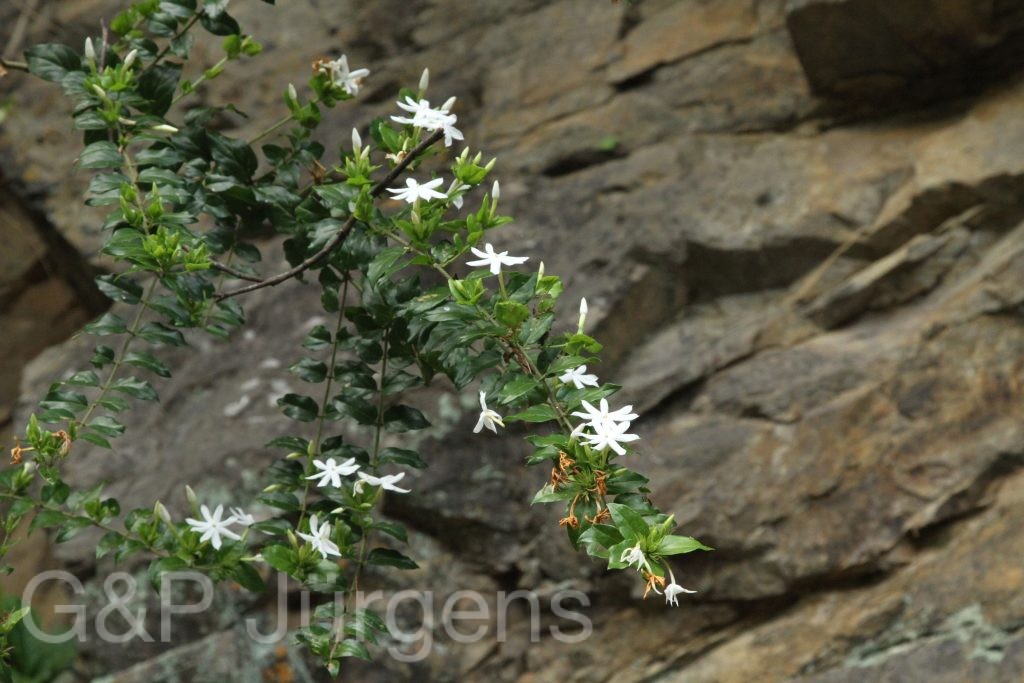
Jasminum elongatum is a scrambling jasmine of broad Indo-Pacific distribution, recorded by GBIF from Australia, Indonesia, China, Malaysia, the Philippines, New Guinea, Thailand, Vietnam and the eastern Himalaya, with over 2270 occurrences. It grows in subtropical and tropical forest margins, secondary thickets, riverine scrub and clearings, often climbing over shrubs and small trees on warm, well-watered slopes. The illustrated plants come from Bhutan in the Zhemgang district between about 1000 and 1900 m, flowering in October; across its range the species spans the lowlands to roughly 2000 m in the warm submontane belt.

The plant is a woody climber or sprawling shrub with slender, terete to slightly angled, pubescent twigs. The leaves are opposite and simple, ovate to ovate-lanceolate, acuminate, rounded to subcordate at the base, with appressed hairs especially along the veins beneath. The flowers are borne in terminal and axillary cymes, white and fragrant, with a slender corolla tube much longer than the calyx (the epithet elongatum referring to this elongated tube) opening into several spreading lobes; the calyx bears narrow, elongate teeth. The fruit is a black, two-lobed berry.

Jasminum is a large Old World genus of the Oleaceae whose white-flowered, opposite-leaved species form the core lineage distinct from the segregated yellow jasmines. Jasminum elongatum is variable in indumentum and leaf shape across its wide range, prompting a long synonymy. Its fragrant flowers are moth- and bee-pollinated and the berries bird-dispersed. Common, weedy and adaptable, it is of least concern and is occasionally grown for its scented blossom in tropical gardens.

Author: (P.J.Bergius) Willd. · Sources: POWO (Kew), GBIF, Flora of China, Flora of Bhutan, Jasminum monograph (Green)

Cauwet & S.B.Malla

Bhutan2012 244
Bhutan Shele-La, 3900m September

Description

Keraymonia cortiformis is a high-alpine umbellifer of the eastern Himalaya, restricted to Nepal, Bhutan and adjacent China, where GBIF records only about 30 occurrences, reflecting its narrow range and limited collection. It is a plant of the upper subalpine to alpine zone, growing on open stony slopes, screes, rock crevices and short alpine turf above the treeline, typically between roughly 3500 and 4500 m. The image from Shele-La in Bhutan at about 3900 m in September captures it in a characteristic exposed high-pass habitat, where late-season fruiting plants persist among cushion vegetation and frost-disturbed gravels.

It is a low, tufted perennial herb arising from a stout, often woody rootstock crowned by fibrous remains of old leaf bases. The stems are short, decumbent to ascending and few. Leaves are mostly basal, petiolate with sheathing bases, the blades one- to two-pinnate or ternately divided into small, crowded, oblong to cuneate segments, somewhat fleshy and glabrous to minutely scabrid. The inflorescence is a compact compound umbel with few short, unequal rays, subtended by bracts and bracteoles; flowers are small with white to pinkish petals. The fruit is an ovoid to oblong schizocarp, the mericarps dorsally compressed with prominent ribs and vittae characteristic of the genus.

Keraymonia is a small Himalayan genus segregated from broader concepts within the Apiaceae on fruit and habit characters; this species was described by Cauwet and S.B. Malla. Its cushion-forming, taprooted habit and reduced umbels are typical adaptations to cold, wind-exposed alpine environments with short growing seasons. Owing to its restricted distribution and small known population, it is of biogeographic interest as a high-elevation endemic, and warrants monitoring given the vulnerability of narrowly ranging alpine taxa to climatic warming.

Author: Cauwet & S.B.Malla · Sources: POWO (Kew), GBIF, Flora of Bhutan, Flora of China (Apiaceae), Pimenov & Leonov Genera of the Umbelliferae

Mast.

Bhutan2012 1294
Bhutan Trashigang 1720m, October
Bhutan2012 1295
Bhutan Trashigang 1720m, October

Description

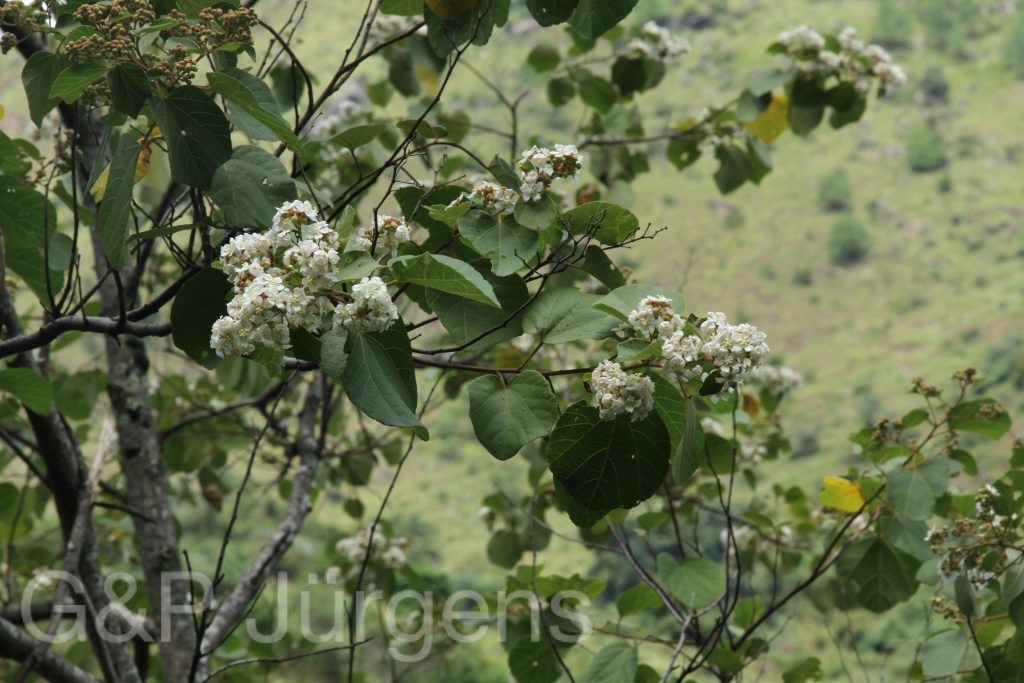
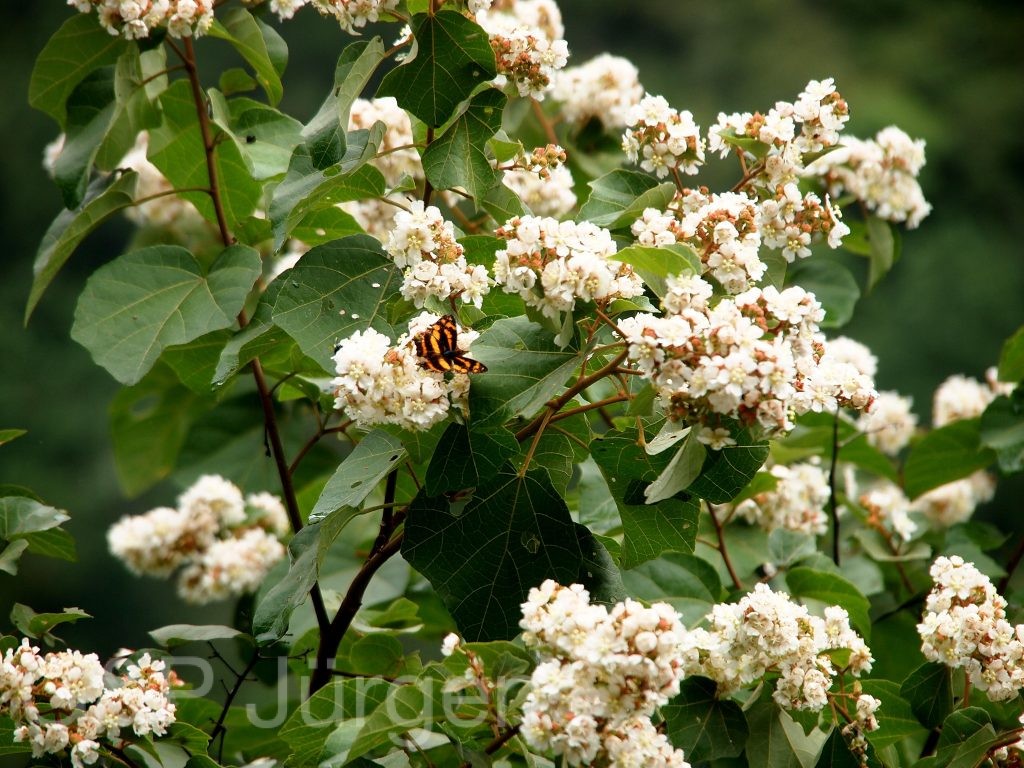
Kydia glabrescens is a small tree of the eastern Himalayan and Indo-Chinese region, recorded from China, Thailand, Nepal, Vietnam, Bhutan, India and Myanmar, with about 140 georeferenced occurrences. It occurs in subtropical and warm-temperate broadleaved forest, secondary woodland and forest margins at low to moderate elevations. The individual documented near Trashigang in eastern Bhutan at about 1720 m in October illustrates its mid-elevation habitat, flowering and fruiting in autumn on well-drained slopes within and at the edges of mixed hill forest.

The plant is a deciduous tree with grey bark whose young parts are stellate-tomentose but become more glabrescent with age, a feature underlying its epithet. The leaves are alternate, broadly ovate to suborbicular, palmately three- to five-veined and often shallowly lobed, with crenate-dentate margins. The flowers are borne in terminal and axillary panicles and are subtended by conspicuous epicalyx bracts that enlarge and become wing-like in fruit, a diagnostic feature of the genus; the small five-petalled corolla is white to pale pink, the stamens united into a staminal column typical of the Malvaceae. The fruit is a small capsule subtended by the accrescent, persistent bracts that aid wind dispersal.

Kydia is a small Asian genus traditionally placed in the Malvaceae (subfamily Grewioideae or related tribes in the broadly circumscribed family), distinguished by its enlarged fruiting epicalyx and dioecious or polygamous breeding system. The timber is used locally and the mucilaginous bark has minor traditional uses. Reasonably widespread through the eastern Himalaya and Southeast Asia, K. glabrescens is not considered threatened.

Author: Mast. · Sources: POWO (Kew), GBIF, Flora of Bhutan, Flora of China, Flora of British India, Tang, Gilbert & Dorr's account of Malvaceae

Kitam.

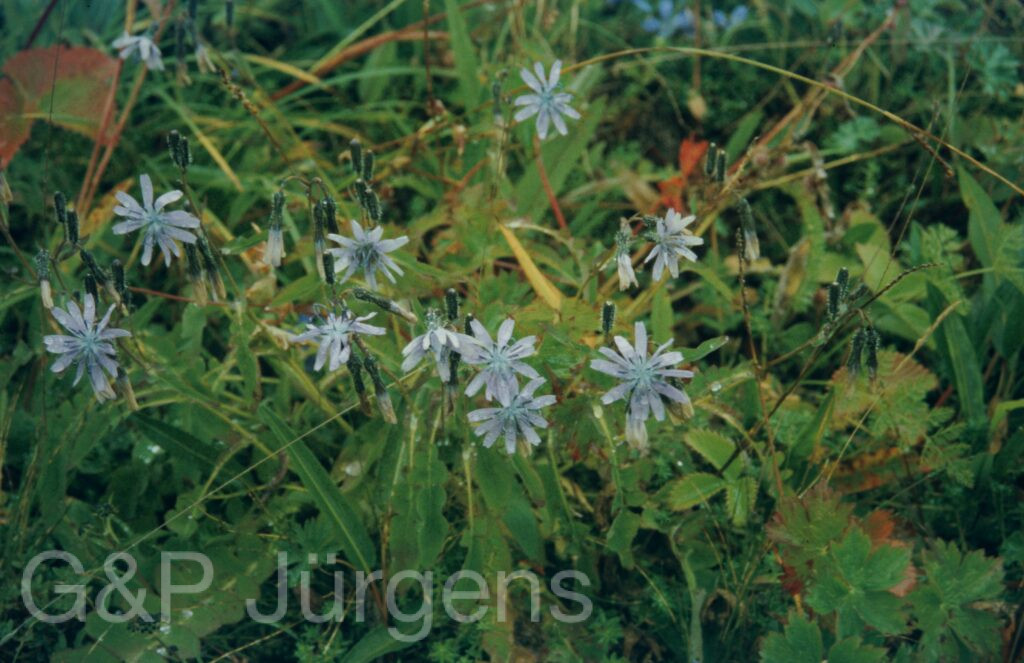
Garw 2005 68 ergebnis ergebnis
India Garhwal Valley of flowers 3200m, September

Description

Lactuca dolichophylla is a Himalayan and Central Asian perennial herb distributed through the Indian Himalaya, Pakistan, Nepal, Bhutan, southern China, Afghanistan, Russia and Myanmar, documented from a modest number of georeferenced collections. It is a plant of the subalpine and alpine zone, growing on open grassy slopes, herb-rich meadows, forest clearings and stony banks. The photographed material is from the Valley of Flowers in Garhwal, India, at about 3200 m in September, a celebrated high-montane meadow habitat where the species flowers in the late post-monsoon season.

The plant is an erect perennial herb with a leafy, often glaucous stem exuding milky latex when cut. The leaves are elongate and narrow, as the epithet 'dolichophylla' (long-leaved) implies, lanceolate to linear-lanceolate, entire to runcinate-lobed, with the upper leaves sessile and often clasping. The capitula are arranged in a lax paniculate-corymbose synflorescence; each head is ligulate, with an imbricate cylindrical involucre and several blue to bluish-purple or violet ray florets, a colour characteristic of the Himalayan blue-flowered lettuces. The fruit is a flattened, ribbed achene (cypsela) narrowed into a beak and crowned by a pappus of simple white capillary bristles.

Lactuca belongs to the tribe Cichorieae of Asteraceae, the dandelion-and-lettuce alliance with milky latex and ligulate florets. The blue-flowered Himalayan species, sometimes segregated under Cicerbita or Mulgedium, form a taxonomically intricate group, and this taxon was described by Kitamura. Wind-dispersed by its pappus, L. dolichophylla is a characteristic component of moist alpine meadows and is not regarded as threatened.

Author: Kitam. · Sources: POWO (Kew), GBIF, Flora of China, Flora of Pakistan, Kitamura's studies of Himalayan Cichorieae (Compositae)

(Siebold & Zucc.) Wedd

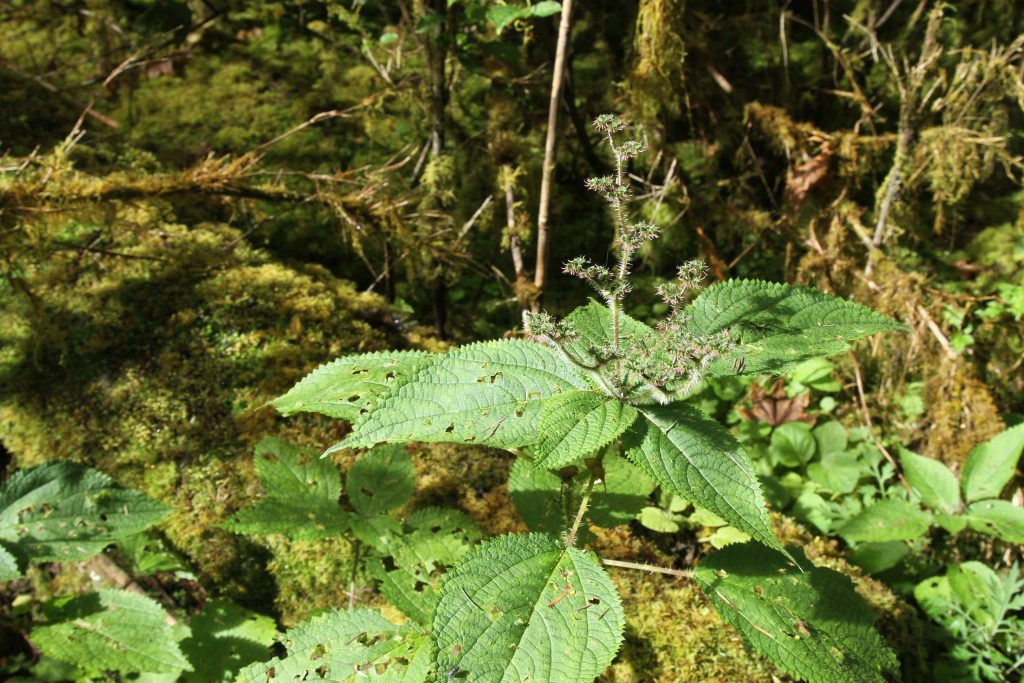
Bhutan2012 855
Bhutan Nangsephal 2800m, October

Description

Laportea bulbifera is a widespread perennial nettle ranging across East and South Asia, with GBIF documenting more than 4500 occurrences from Japan, China, Korea, the Russian Far East, the Himalaya, Taiwan and into Southeast Asia and Sri Lanka. It colonises moist forest margins, ravines, streamsides and shaded clearings, often forming patches on humus-rich soils in temperate and subtropical woodland. The photographed population grows in Bhutan at Nangsephal around 2800 m, still in flower or fruit in October; the species occurs broadly from the lowlands to roughly 3000 m, thriving where moisture and partial shade coincide.

The plant produces erect, often unbranched stems from a creeping rootstock, the herbage armed with stinging hairs delivering an irritant on contact. Distinctive bulbils (gemmae) form in the upper leaf axils, giving the epithet bulbifera and providing a means of vegetative propagation. The leaves are alternate, ovate to elliptic, acuminate, serrate-margined and three-nerved from the base, on slender petioles. Small unisexual flowers are borne in axillary, paniculate cymes, the female inflorescences asymmetric with the achene set obliquely on an enlarged pedicel; the dry, flattened achene is the fruit.

Laportea belongs to the Urticeae, the tribe of true stinging nettles, and L. bulbifera is among its most morphologically variable and geographically far-flung members, prompting recognition of several infraspecific forms across its enormous range. The axillary bulbils represent an effective clonal strategy in disturbed, shaded habitats. The species is abundant and of least concern; in parts of its range young shoots are gathered as a cooked vegetable and the fibrous stems occasionally used locally.

Author: (Siebold & Zucc.) Wedd · Sources: POWO (Kew), GBIF, Flora of China, Flora of Bhutan, Urticaceae monograph (Friis / Chen)