
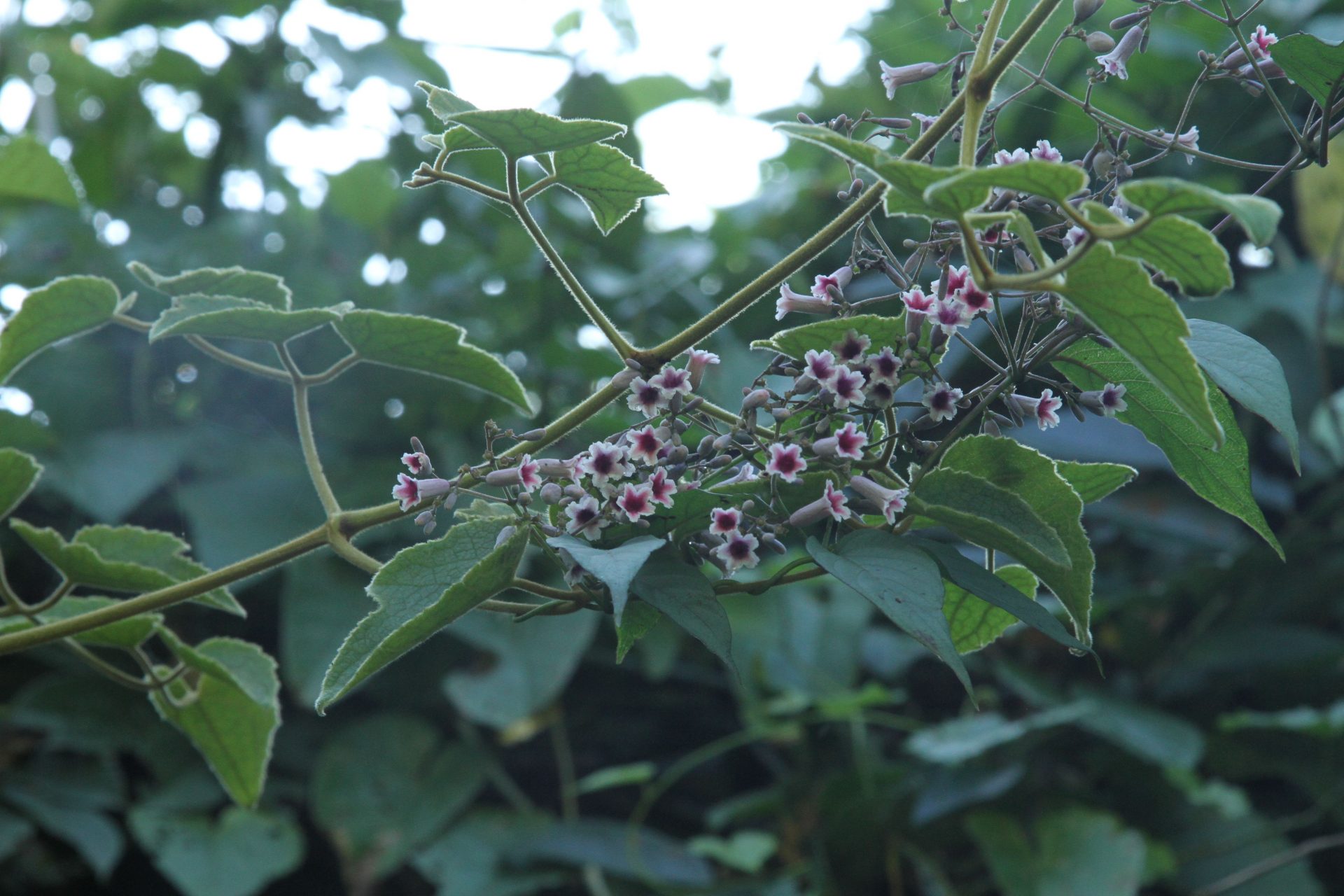
Spring.
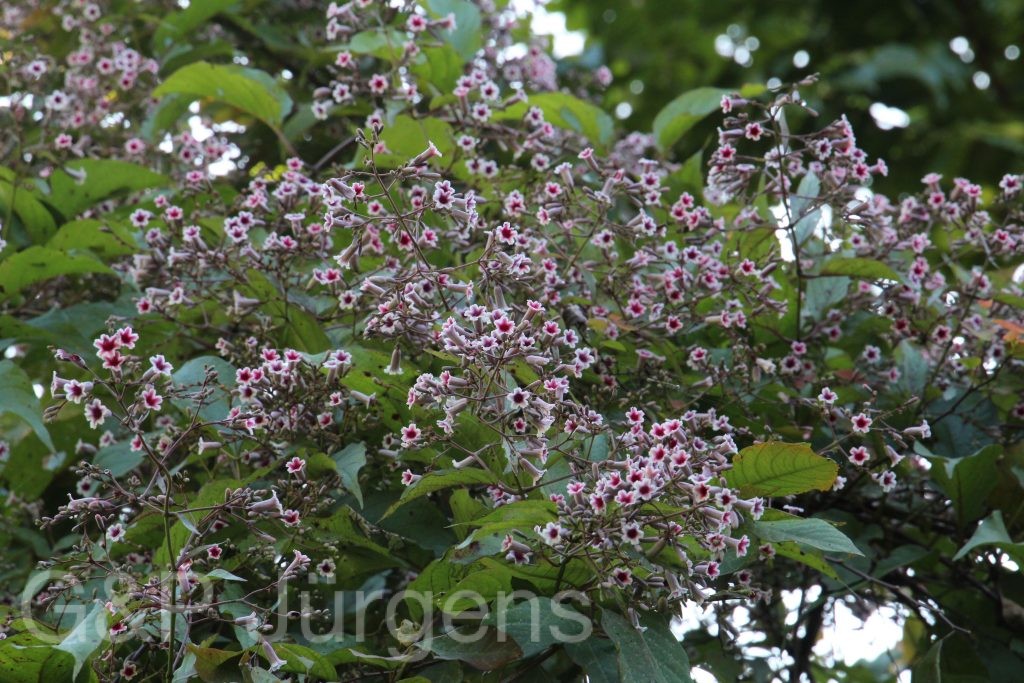
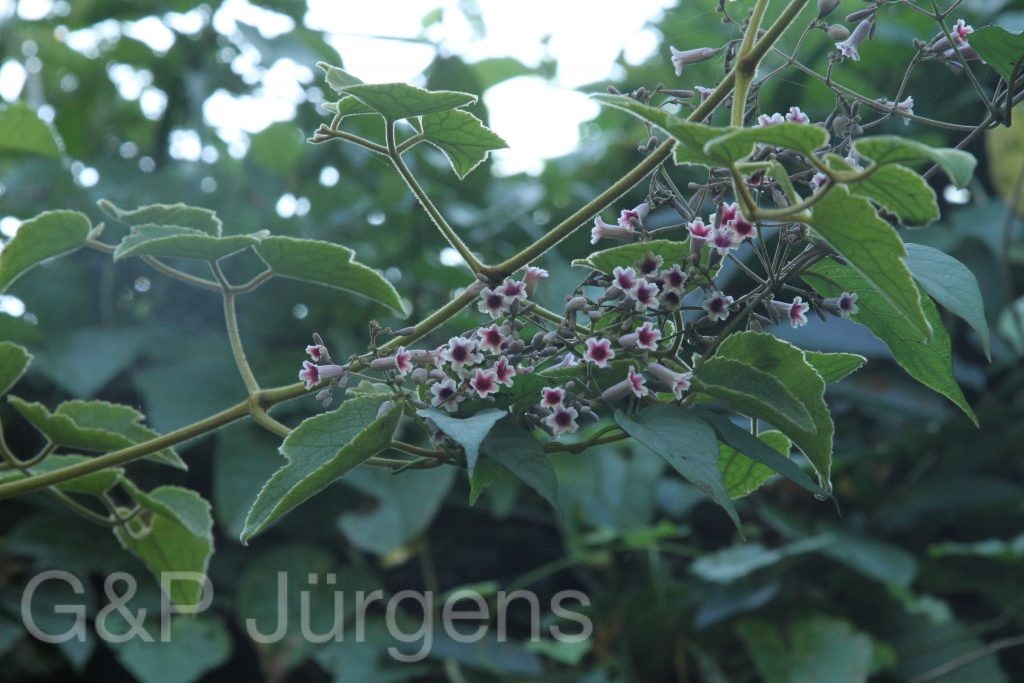
Description
Leptodermis amoena is a narrowly distributed eastern Himalayan shrub recorded from Bhutan, neighbouring north-east India and adjacent southern China; with only about 18 GBIF occurrences it is among the more poorly collected members of its genus. It is a plant of warm-temperate to subtropical hill forest, occupying forest margins, open thickets, roadside banks and rocky slopes, broadly from 1,000 to 2,500 m. The plant photographed at Zhemgang in central Bhutan at 1,100 m in October illustrates its occurrence at the lower, subtropical end of this range, flowering late in the season on warm, well-drained slopes within the broad-leaved forest zone.
It is an erect, much-branched deciduous shrub up to about 1-2 m tall, with slender greyish to brownish branchlets that are puberulent when young. The leaves are opposite, small, elliptic to ovate-lanceolate, entire and shortly petiolate, subtended by interpetiolar stipules bearing a slender awn typical of the genus. The flowers are borne in few-flowered axillary or terminal cymose clusters and are tubular and funnelform, with a narrow corolla tube expanding into five spreading lobes and an often pubescent exterior; the colour ranges from pale lilac to pinkish or whitish. As in Leptodermis, the species is heterostylous, and the fruit is a small capsule splitting into valves to release narrow seeds.
Leptodermis (Rubiaceae, tribe Paederieae) comprises some forty species centred on the Sino-Himalayan region, distinguished by their awned stipules, tubular heterostylous flowers and septicidal capsules. L. amoena is characterised by its delicate, attractively coloured corollas, reflected in the epithet amoena ('charming'). Its restricted range, low collection density and dependence on mid-elevation forest suggest a species potentially sensitive to habitat conversion, though it has not been formally assessed and no global IUCN status is published. Targeted survey across the eastern Himalaya would clarify its true distribution and conservation needs.
Author: Spring. · Sources: POWO (Kew), GBIF, Flora of China, Flora of Bhutan, Rubiaceae of the Himalaya, monograph of Leptodermis