Tag:

Autumn

Sweet

Bhutan2012 418
Bhutan Tserang 1300m, September
Bhutan2012 1341
Bhutan Sandrup 1500m, September
Nepal 95 346 P619 ergebnis
Nepal Tibling 2200m October

Description

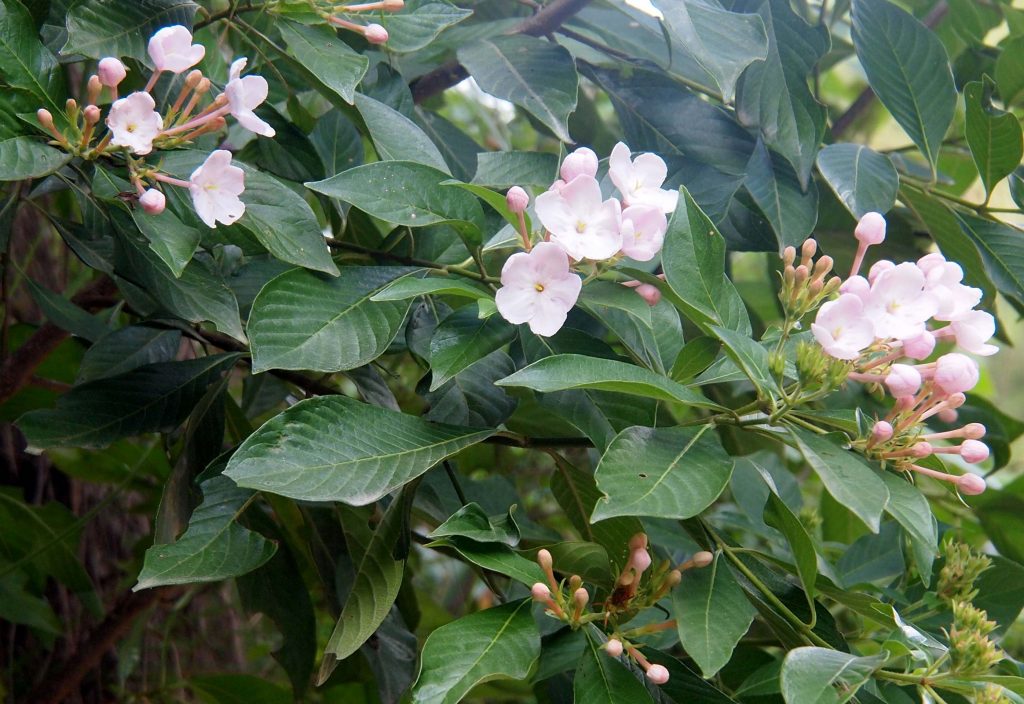
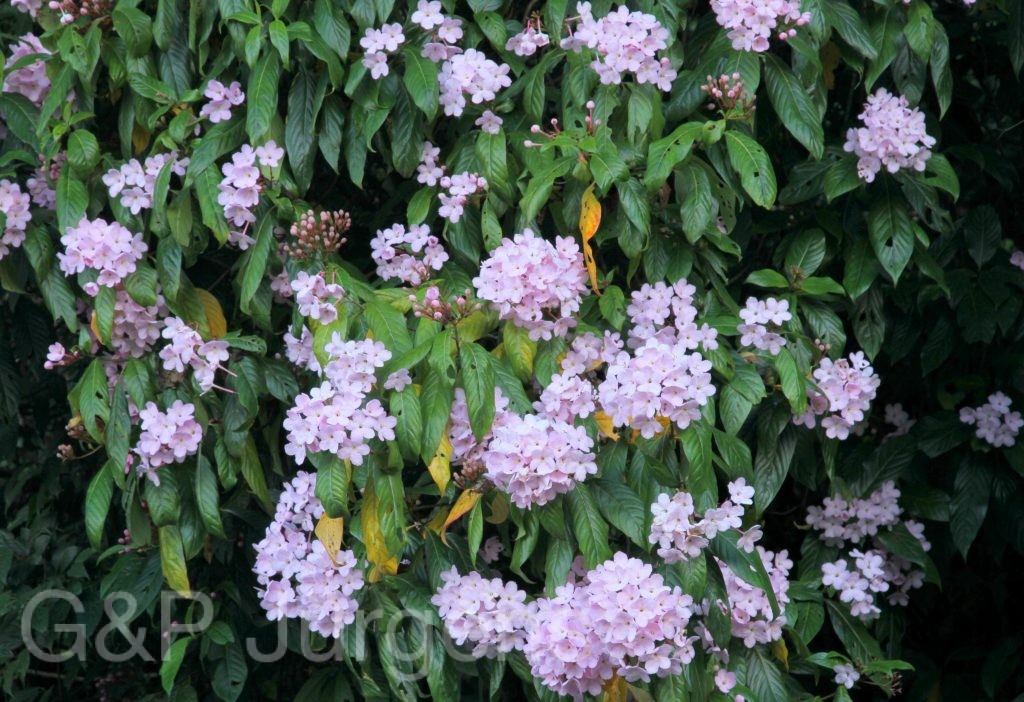
Luculia gratissima is a Himalayan and southwest Chinese shrub or small tree ranging from Nepal through Bhutan and northeast India into southern China, Myanmar, Thailand and Vietnam. GBIF records some 404 occurrences, including many cultivated specimens in temperate and subtropical regions worldwide. It inhabits subtropical to warm-temperate forest, forest margins, open hillsides and stream banks, generally between about 1000 and 2500 m. The photographed plants come from Bhutan at Tserang (1300 m) and Sandrup (1500 m) in September and from Tibling in Nepal at about 2200 m in October, the autumn flowering period typical of this fragrant species.

The species is an erect, branched shrub or small tree with terete, glabrescent branchlets. The leaves are opposite, large, elliptic to ovate-lanceolate, acuminate, with prominent pinnate venation and interpetiolar stipules. The flowers are borne in large terminal corymbose cymes and are showy and sweetly scented; each has a slender, elongate corolla tube opening into five spreading pink lobes, with small paired scales at the throat and exserted anthers. The fruit is an obovoid, ribbed, two-valved capsule that splits to release numerous small winged seeds adapted to wind dispersal.

Luculia gratissima Sweet is prized horticulturally for its fragrant pink autumn flowers and is widely grown in mild and subtropical gardens, which accounts for its many extralimital GBIF records. Within its native Himalayan and Indo-Chinese range it is widespread and not considered threatened. The genus Luculia, with its long-tubed scented flowers and winged capsular seeds, is of phylogenetic interest as an early-diverging lineage within the Rubiaceae.

Author: Sweet · Sources: POWO (Kew), GBIF, Flora of Bhutan, Flora of China, taxonomic revisions of Luculia (Rubiaceae)
C.B. Clarke

Bhutan2012 996
Bhutan Thritangebe 1000m, October

Description

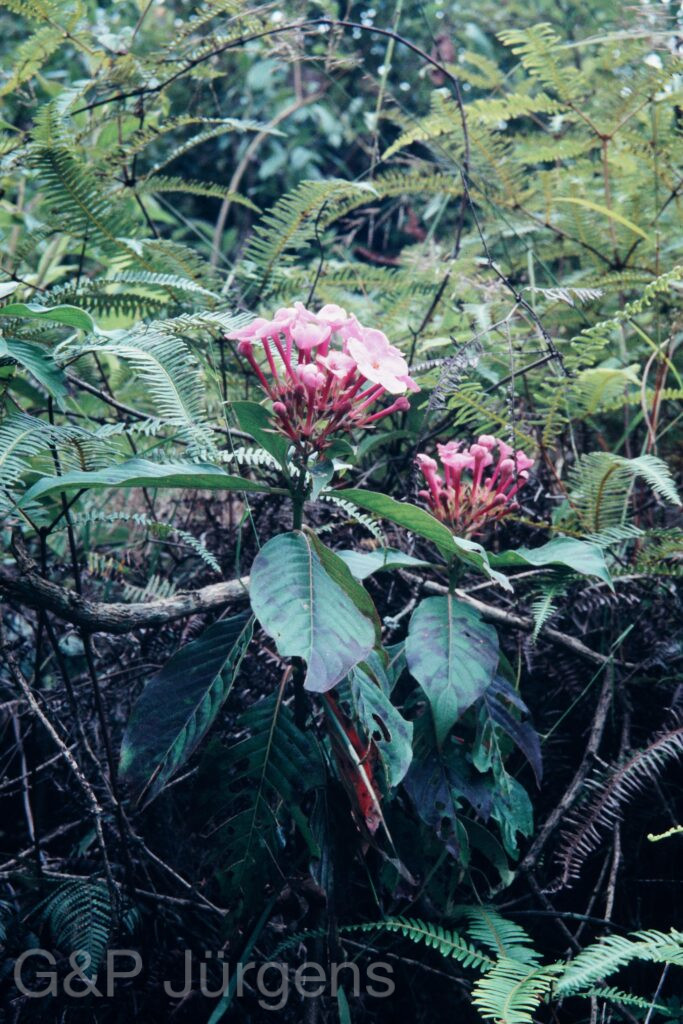
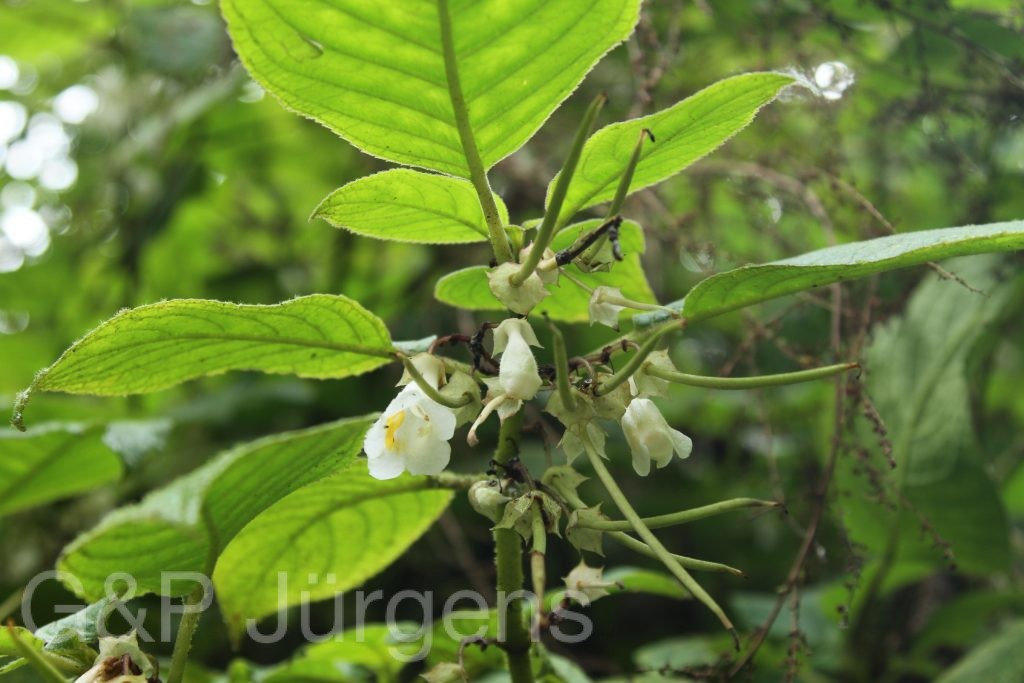
Lysionotus pubescens is an epiphytic or lithophytic gesneriad of the humid subtropical to lower montane forests of the eastern Himalaya and Indo-Burma, recorded from China, India, Bhutan, Myanmar, Vietnam and Sri Lanka. Its 75 georeferenced occurrences trace a belt of warm, moist evergreen forest where it grows perched on mossy tree trunks, branches and shaded rock faces. The plant photographed at Thritangebe in Bhutan at 1000 m in October reflects its preference for the warm, low-elevation forest zone, flowering in the post-monsoon period when humidity remains high beneath the canopy.

The plant is a small woody-based perennial with pendent or ascending stems bearing leaves in whorls of three or more, or sometimes opposite. The leaves are leathery, elliptic to oblong, with a toothed (serrate to crenate) margin, and as the epithet indicates the herbage is finely pubescent. The flowers are borne in short axillary cymes; the corolla is tubular and distinctly two-lipped (bilabiate), white to pale pink or pale violet, often with yellow or purple markings in the throat, with two fertile stamens. The diagnostic fruit is a long, slender, linear capsule that dehisces to release numerous minute seeds bearing fine appendages.

Lysionotus belongs to subtribe Didymocarpinae of the Gesneriaceae, the family group cited here, and is distinguished within it by its long siliqua-like capsule and frequently whorled leaves. The genus is centred on the Sino-Himalayan and Indo-Chinese region and is well represented in China. As an epiphyte dependent on intact humid forest, L. pubescens is locally common where suitable habitat persists but is sensitive to forest clearance.

Author: C.B. Clarke · Sources: POWO (Kew), GBIF, Flora of China, Flora of Bhutan, Gesneriaceae of the Old World monograph (Weber), Flowers of the Himalaya (Polunin & Stainton)

Müll.Arg.

Bhutan2015 199
Bhutan, Zhemgang 910m, October
Bhutan2015 557
Bhutan, Punaka 1240m, October
Bhutan2015 556
Bhutan, Punaka 1240m, October

Description

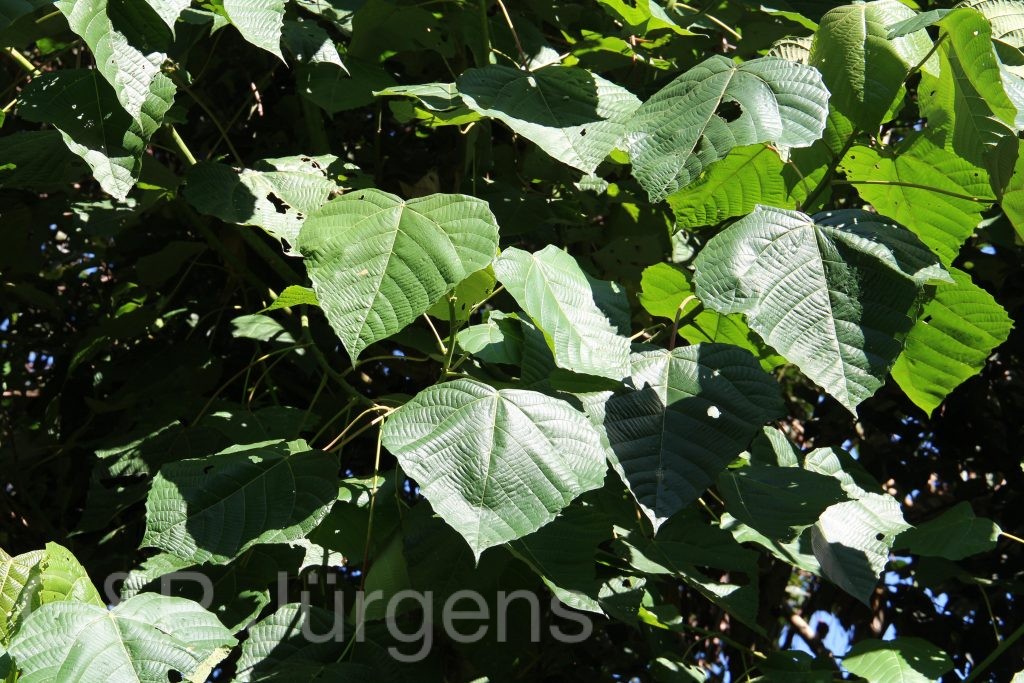
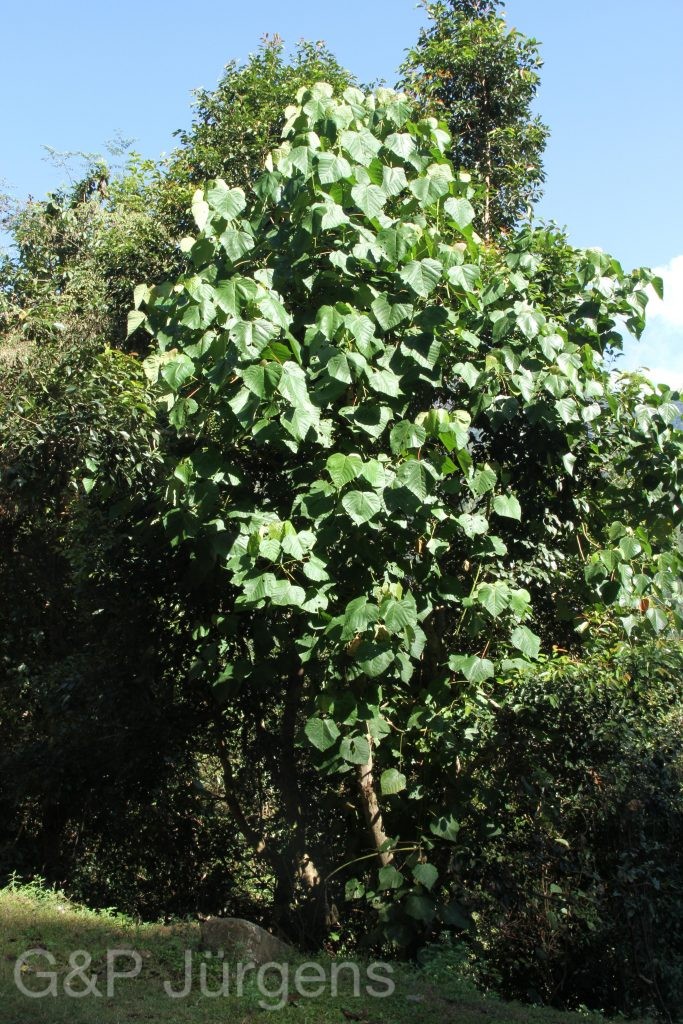
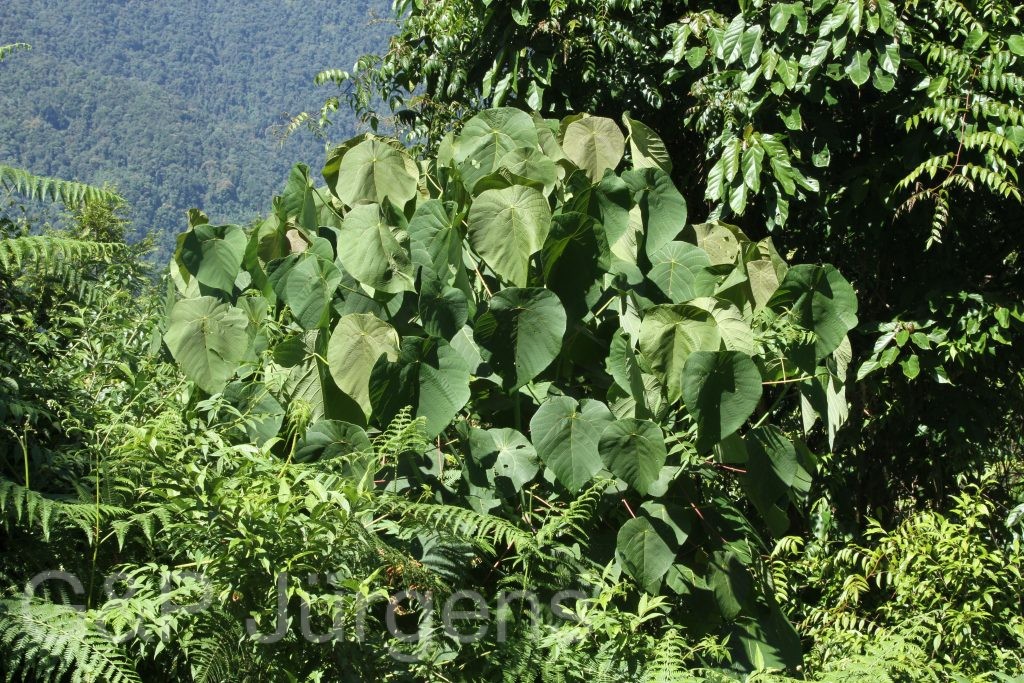
Macaranga denticulata is a fast-growing pioneer tree with a wide tropical and subtropical Asian distribution, its 1451 georeferenced occurrences spanning China, India, Nepal, Bhutan, Bangladesh, Myanmar, Thailand, Vietnam, Laos, Cambodia, Malaysia, Indonesia, the Philippines and beyond. It is a characteristic colonist of disturbed ground, forest gaps, road cuttings, secondary forest and abandoned swidden plots in warm, humid foothill country. The records from Zhemgang at 910 m and Punakha at 1240 m in Bhutan in October place it firmly in the low-elevation subtropical zone where it regenerates rapidly after disturbance and forms early-successional thickets and woodland.

The plant is a small to medium evergreen tree with smooth bark and somewhat whorled, spreading branches. The leaves are large, alternate, peltate or subpeltate, broadly ovate to triangular with a denticulate margin reflected in the epithet, palmately veined, and often bearing glands and pale tomentum beneath. As a member of the Euphorbiaceae it is dioecious, the small apetalous flowers borne in branched axillary inflorescences subtended by toothed or glandular bracts; male and female flowers occur on separate trees. The fruit is a small two-lobed capsule, the seeds often associated with a fleshy aril attractive to birds and ants.

Macaranga is a large palaeotropical genus famous for its myrmecophytic (ant-associated) species and its ecological role as a pioneer. M. denticulata is a non-myrmecophytic but ecologically important coloniser, valued for rapid biomass accumulation, soil stabilisation and as a nurse species in fallows. Its enormous range, abundance and affinity for disturbed habitats make it among the most secure and widespread trees in its family across tropical Asia.

Author: Müll.Arg. · Sources: POWO (Kew), GBIF, Flora of China, Flora of Bhutan, Revision of Macaranga (Euphorbiaceae) (Whitmore and successors), Trees of tropical Asia

(Hook.f.) Danser

Bhutan2012 698
Bhutan Galephu 850m, September

Description

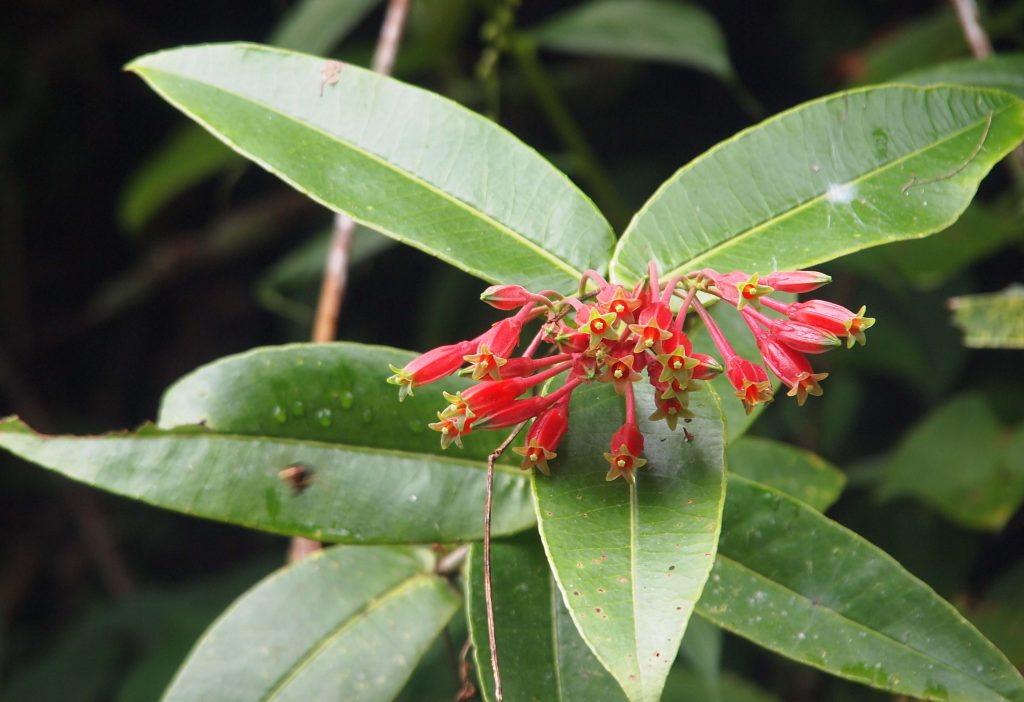
Macrosolen psilanthus is an eastern Himalayan hemiparasitic mistletoe distributed across India, Bhutan, Nepal and Bangladesh, with about 35 occurrences concentrated in the warm subtropical foothills and duars at the base of the Himalaya. It grows as a stem parasite on the branches of a range of broad-leaved trees and shrubs in subtropical broad-leaved forest, secondary woodland and along forest edges, predominantly at low elevations below about 1200 m. The photographed plant from Galephu in southern Bhutan at 850 m, flowering in September, is typical of its occurrence in the humid, low-altitude foothill forests of the eastern Himalayan front, where suitable host trees are abundant.

It is a glabrous, woody aerial hemiparasite attached to its host by a haustorial connection. The branches are terete to somewhat angled, and the leaves are opposite, coriaceous, ovate to elliptic-lanceolate, entire, with pinnate venation and a short petiole. The inflorescences are axillary spikes or racemes bearing opposite, decussate flowers, each subtended by a single bract. The flowers are bisexual with a calyculus crowning the inferior ovary and a tubular, six-merous corolla that is reddish, orange or greenish-yellow, the lobes reflexing at anthesis; the epithet psilanthus ("smooth-flowered") refers to the glabrous perianth. The six stamens are epipetalous. The fruit is a one-seeded berry whose seed is enveloped in viscin.

Macrosolen belongs to the Loranthaceae, the showy-flowered mistletoes, and like its relatives is an obligate hemiparasite drawing water and minerals from its host while photosynthesising in its own green leaves. The flowers are bird-pollinated (ornithophilous), and the viscin-coated seeds are dispersed by frugivorous birds such as flowerpeckers that deposit them on host branches. The species is locally frequent within its foothill range and is not considered threatened.

Author: (Hook.f.) Danser · Sources: POWO (Kew), GBIF, Flora of Bhutan Vol. 1, Flora of Nepal, Barlow Loranthaceae revisions for the Malesian and Asian region (monograph), Flora of British India

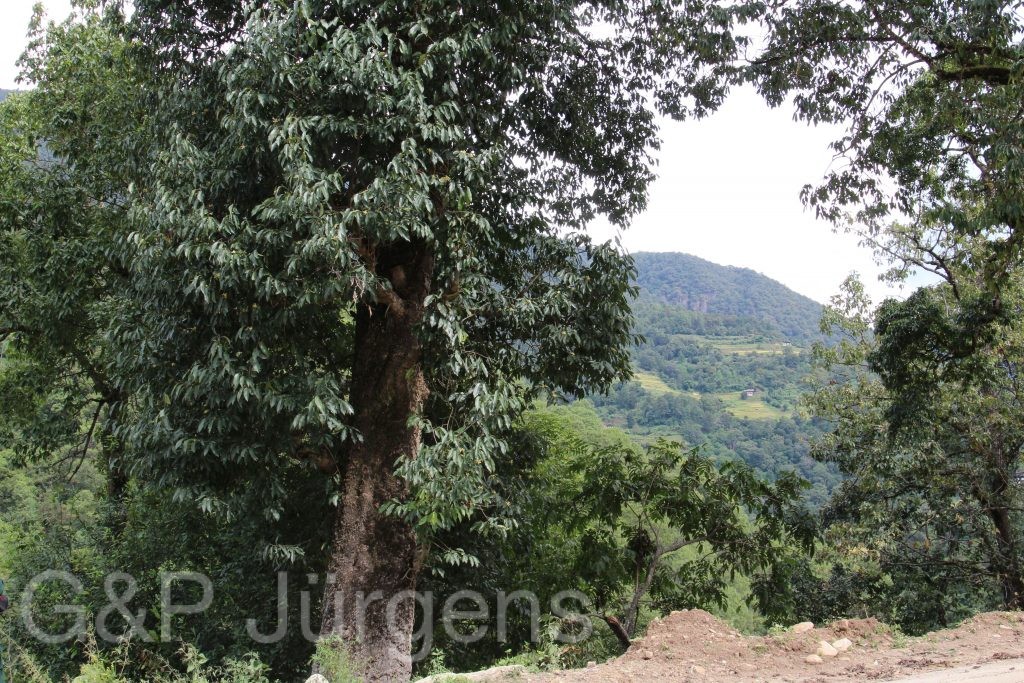
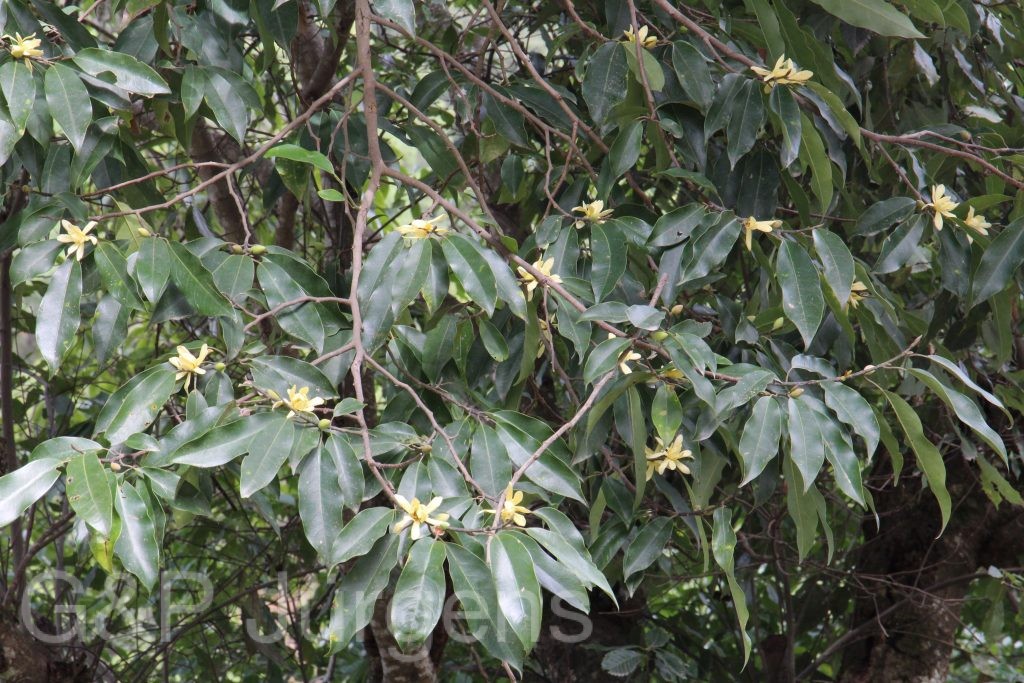
(Buch.-Ham. ex DC.) Figlar

Bhutan2012 435
Bhutan Dochu-La 2500m, October
Bhutan2015 517
Bhutan Dochu-La 2500m, October
Bhutan2015 519
Bhutan Dochu-La 2500m, October

Description

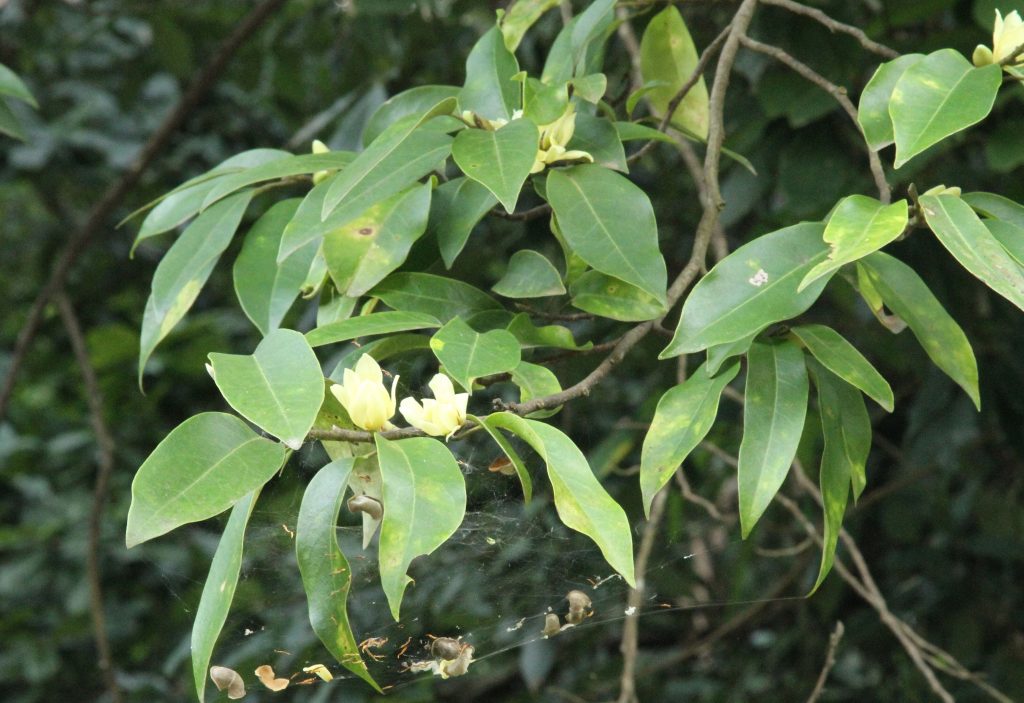
Magnolia kisopa (Buch.-Ham. ex DC.) Figlar is a Himalayan tree distributed across Nepal, China, India, Vietnam, Bhutan and Cambodia, with GBIF recording some 129 occurrences. It is a component of cool temperate to subtropical broad-leaved forest, on humid, well-drained slopes, in ravines and along forest margins in the mid-montane belt. The Bhutanese material from the Dochu-La at 2500 m, photographed in October, places it in the cool temperate evergreen and mixed forest zone, where it occurs as a scattered understorey to canopy tree.

It is a deciduous or semi-evergreen tree with smooth to slightly fissured bark and stout young twigs bearing the conspicuous stipular scars of the family. The leaves are simple, alternate, obovate to oblanceolate, entire-margined, with an acuminate apex and cuneate base, often glaucous beneath. The flowers are large, solitary and terminal, with a perianth of several free, fleshy white to creamy tepals undifferentiated into sepals and petals, surrounding the floral axis bearing numerous spiral stamens and free carpels. The fruit is an aggregate of follicles forming an oblong, cone-like etaerio dehiscing to expose seeds with a fleshy red sarcotesta.

Magnolia kisopa, formerly placed in Michelia, was transferred to a broadly circumscribed Magnolia by Figlar following molecular evidence uniting these Asian magnoliids. It belongs to the evergreen-leaved magnolias of the Sino-Himalayan and Southeast Asian region, an ancient lineage with beetle pollination and bird-dispersed arillate seeds. As a tree valued for timber and ornament, populations are locally affected by forest clearance, and the wider genus includes many taxa of conservation concern.

Author: (Buch.-Ham. ex DC.) Figlar · Sources: POWO (Kew), GBIF, Flora of China Vol. 7, Flora of Bhutan Vol. 1, Flora of Nepal, Figlar & Nooteboom magnolioid classification of the Magnoliaceae

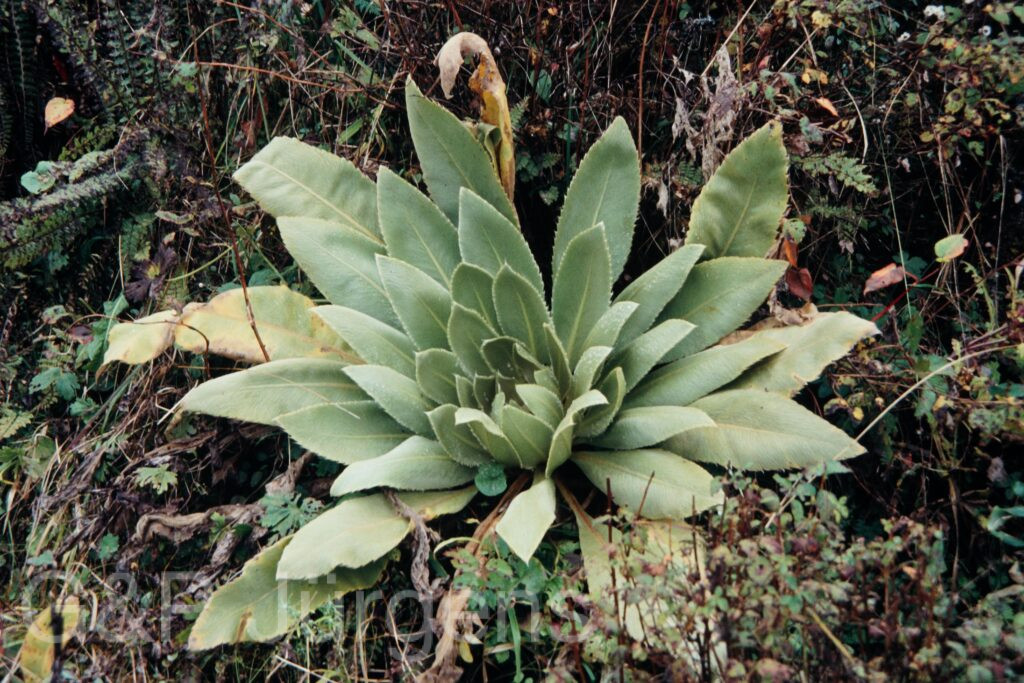
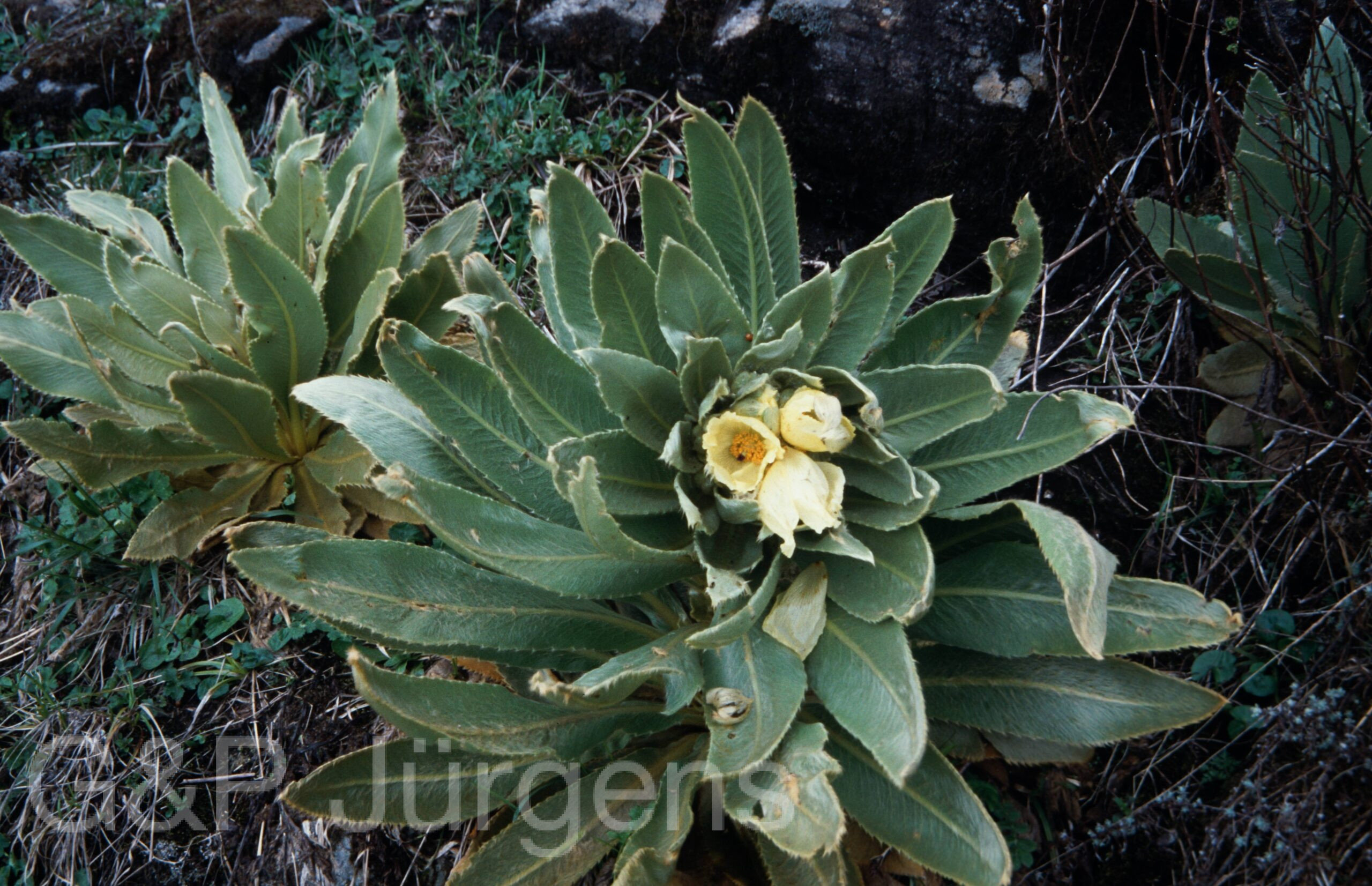
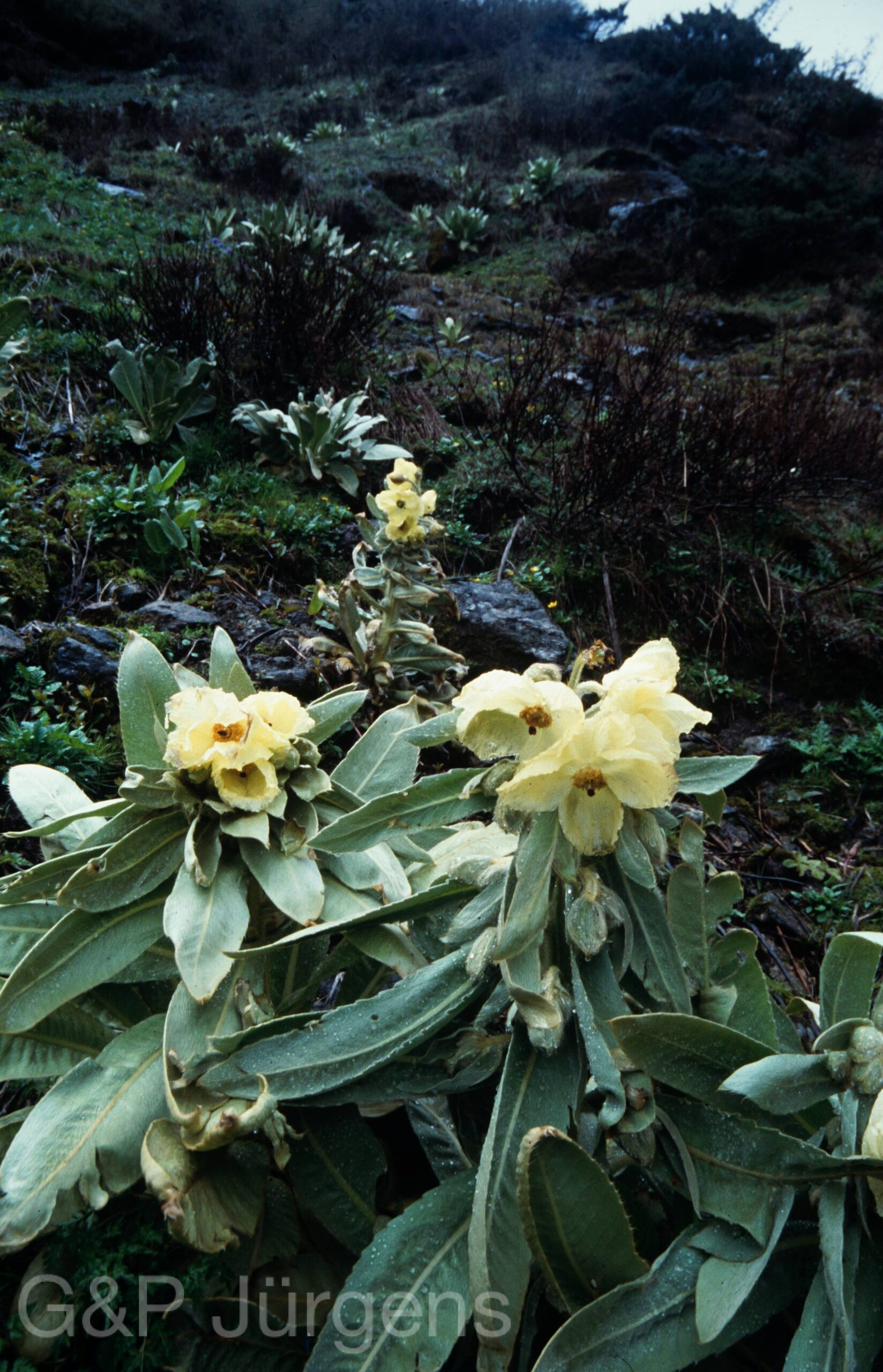
G.Taylor

Nepal 95 136.P229 ergebnis
Nepal south of Rupina La October

Description

Meconopsis regia is a stately monocarpic poppy endemic to central Nepal, the great majority of its roughly 100 documented records lying within that country. It is a plant of open rocky slopes, screes, cliff ledges and alpine grassland of the subalpine to alpine zones, typically between about 3000 and 4200 m. The illustrated material derives from the Rupina-La area in the Gorkha region of Nepal: a flowering plant at 3350 m in May and a withered specimen recorded south of the pass in October, together documenting the full annual cycle from spring growth to autumn senescence.

The species is celebrated for its magnificent overwintering rosette of large oblanceolate leaves clothed in dense golden to rusty-red silky hairs, which protect the resting bud through the alpine winter. After several years of rosette growth it bolts to produce a tall, stout, leafy flowering stem bearing numerous large flowers. The blooms are saucer-shaped with four broad, satiny petals of pale to golden yellow, surrounding a boss of many stamens and a stout ovary topped by a short style and capitate stigma. After flowering the plant dies, the ovary maturing into an elongate ribbed capsule that dehisces by apical pores to scatter the seeds.

Meconopsis is the iconic genus of Himalayan and Sino-Tibetan poppies, distinguished from Papaver largely by its distinctive style and stigma. As a narrow-range Nepalese endemic with a monocarpic, hapaxanthic life-history, M. regia is intrinsically vulnerable to over-collection and habitat disturbance and is of conservation interest despite lacking a formal IUCN assessment; it is also prized by alpine horticulturists.

Author: G.Taylor · Sources: POWO (Kew), GBIF, Annotated Checklist of the Flowering Plants of Nepal, Flowers of the Himalaya, The Genus Meconopsis (Grey-Wilson monograph), Flora of Nepal

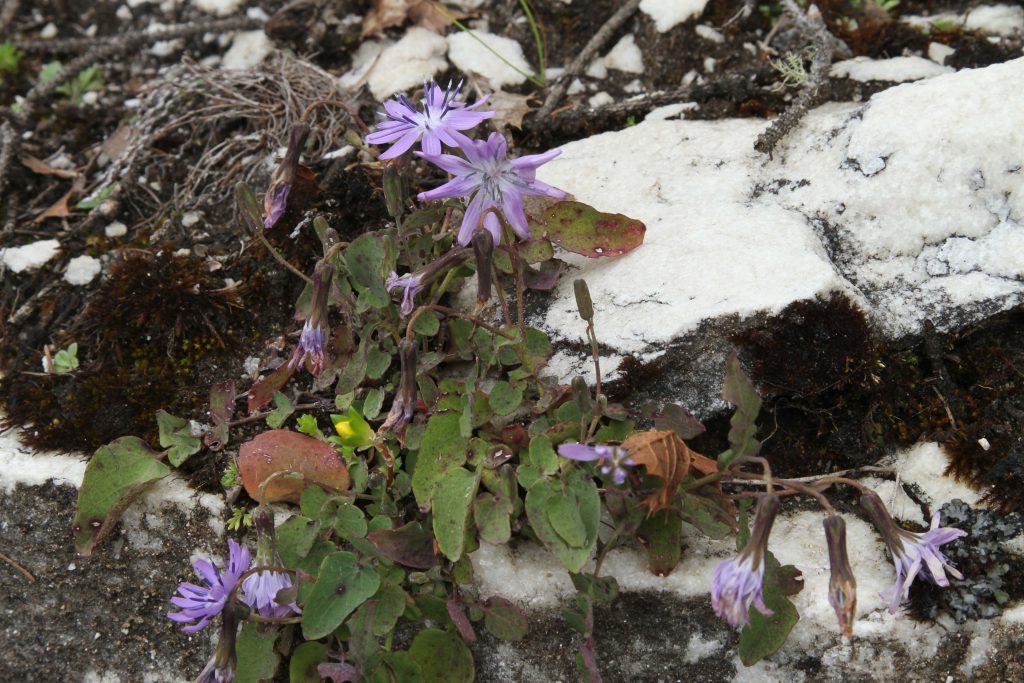
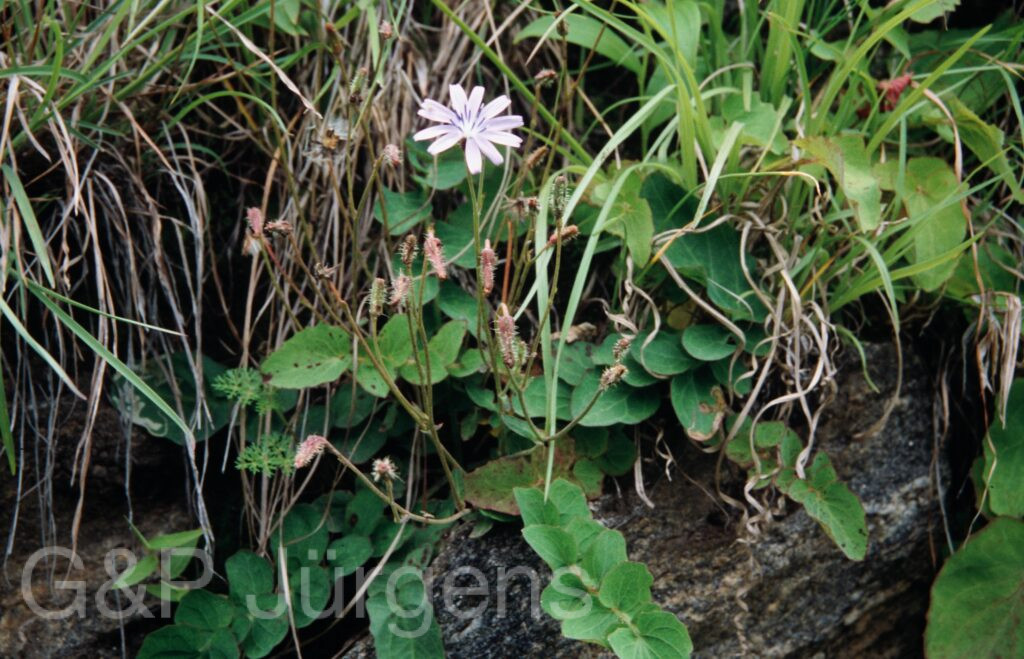
(Royle) N.Kilian

Bhutan2012 260
Bhutan Chele-La 3500m, September
Nepal 99 928 ergebnis
West-Nepal Roha 2700m, July

Description

Melanoseris macrorhiza (Royle) N.Kilian is a Himalayan and Sino-Himalayan blue-flowered lettuce relative recorded from Nepal, India, Pakistan, Afghanistan, Bhutan, China and Myanmar, with around 468 georeferenced occurrences in GBIF. It grows on open alpine and subalpine slopes, in moist meadows, among rocks and along forest margins, typically between about 2700 and 4000 m. The collections from Chele-La at 3500 m in September and from Roha in West Nepal at 2700 m in July illustrate its broad Himalayan altitudinal range and its late-summer to autumn flowering.

It is a perennial herb arising, as the epithet macrorhiza indicates, from a stout, thickened taproot or rootstock, with milky latex characteristic of the tribe Cichorieae. The stems are erect and leafy below, becoming branched in the inflorescence. The leaves are lyrate-pinnatifid to runcinate, the basal ones petiolate and the cauline ones often clasping with auriculate bases. The capitula are wholly ligulate, with blue to violet-blue strap-shaped florets and a cylindric involucre of imbricate phyllaries. The fruit is a flattened, ribbed cypsela narrowed toward the apex and bearing a pappus of white, soft bristles.

The species has a complex nomenclatural history, having been placed at various times in Lactuca, Cicerbita and Cephalorrhynchus before transfer to Melanoseris, a predominantly Asian genus segregated within the lettuce alliance on the basis of cypsela and pappus characters supported by molecular data. It is a widespread montane element of no particular conservation concern.

Author: (Royle) N.Kilian · Sources: POWO (Kew), GBIF, Flora of China, Flora of Pakistan, Kilian revision of Cichorieae (Melanoseris)

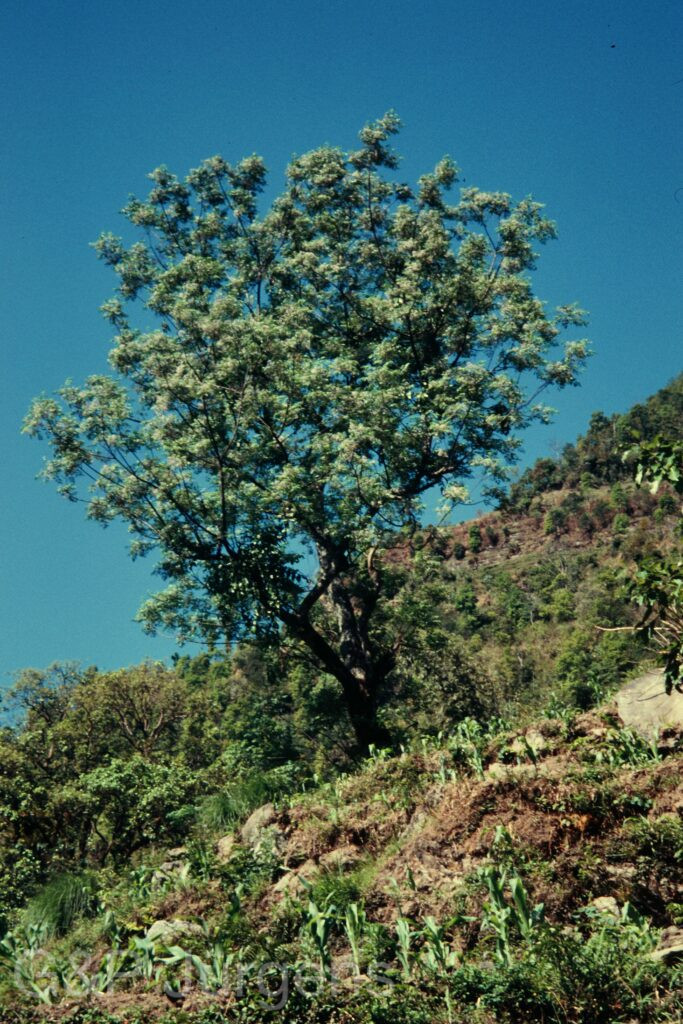
L.

Bhutan2015 547
Bhutan Mo-Shu 1450m, October
Bhutan2015 548
Bhutan Mo-Shu 1450m, October
Nepal 97 70 P109
Nepal above Mewa-Khola 1400m April

Description

Melia azedarach, the chinaberry or Persian lilac, is a fast-growing deciduous tree of immense range, native across South and Southeast Asia and into Australia but now widely cultivated and naturalised throughout the warm temperate and tropical world, a ubiquity reflected in its GBIF total of over 66,000 occurrences spanning the United States, Australia, South Africa, Spain, France, China, Brazil, India, Japan, Korea, Argentina and far beyond. In the Himalayan region it is common in the lower hills, around villages, on field margins and along roadsides up to about 1800 m. The images from Mo-Shu in Bhutan at 1450 m, in October, and from above the Mewa-Khola in Nepal at 1400 m, in April, capture both its fruiting and flowering seasons in the warm subtropical hill belt where it thrives on a wide range of soils.

It is a tree to 10-20 m with a spreading, rounded crown and fissured, dark bark. The large leaves are alternate and bipinnate to tripinnate, with numerous ovate-lanceolate, serrate, acuminate leaflets giving a light, feathery canopy. The fragrant flowers are borne in lax axillary panicles, each with five spreading lilac to pale-purple petals and a characteristic dark purple staminal tube formed from the fused filaments, a hallmark of the genus. The fruit is a globose, yellowish drupe that persists on the bare branches well into winter, containing a hard, ridged, several-seeded stone dispersed by birds.

Melia is a small Old World genus of the mahogany family Meliaceae, of which M. azedarach is by far the most widespread and variable, with numerous forms and cultivated selections; it is valued for timber, shade and traditional medicine, though its fruits and foliage are toxic to humans and many animals owing to limonoid compounds. Outside its native range it is frequently an aggressive coloniser of disturbed ground and is classed as an invasive weed in parts of the Americas, Africa and Australia, even as it remains a familiar and useful tree across the Himalayan foothills.

Author: L. · Sources: POWO (Kew), GBIF, Flora of China Vol. 11, Flora of Nepal, Flora of Pakistan, Pennington and Styles' monograph of the Meliaceae

Hemsl.

Bhutan2012 863
Bhutan Nangsephal 2850m, October

Description

Microula sikkimensis Hemsl. is a Sino-Himalayan herb recorded by GBIF in China, Nepal, Bhutan and India, with 1011 occurrences documenting a fairly continuous distribution along the higher Himalaya and into south-western China. It grows on open slopes, grassy banks, fallow ground, trail margins and forest clearings in the temperate to subalpine zones, typically between about 2500 and 4000 m. The plant photographed at Nangsephal in Bhutan, at roughly 2850 m in October, reflects its occurrence in the cool temperate belt of the eastern Himalaya and its persistence into the autumn.

The species is a hispid annual or short-lived herb with spreading, bristly stems clothed in stiff, often pustular-based hairs typical of the family. The leaves are alternate, oblong to lanceolate, sessile or short-petiolate and roughly hairy on both surfaces. The flowers are small and borne in leafy-bracted cymes; the corolla is blue to bright blue with a short tube, a spreading five-lobed limb and small scales (fornices) closing the throat. The fruit characteristically separates into four nutlets that bear a dorsal aperture and marginal teeth or wings, a diagnostic feature of the genus Microula.

Microula is a genus largely centred on the Himalaya and the Qinghai-Tibetan plateau, distinguished within the Boraginaceae by its sculptured, apertured nutlets, and M. sikkimensis is among its more widespread and variable species. The barbed or toothed nutlets promote epizoochorous dispersal, attaching to animal fur and clothing, which aids colonisation of disturbed ground. The species is common across its range and of no conservation concern, forming a characteristic element of the weedy and meadow flora of the central and eastern Himalaya.

Author: Hemsl. · Sources: POWO (Kew), GBIF, Flora of China, Flora of Bhutan, Flora of Nepal, Riedl Boraginaceae of the Himalaya

(Gamble) Ohashi

Bhutan2012 723
Bhutan Galephu 400m, October

Description

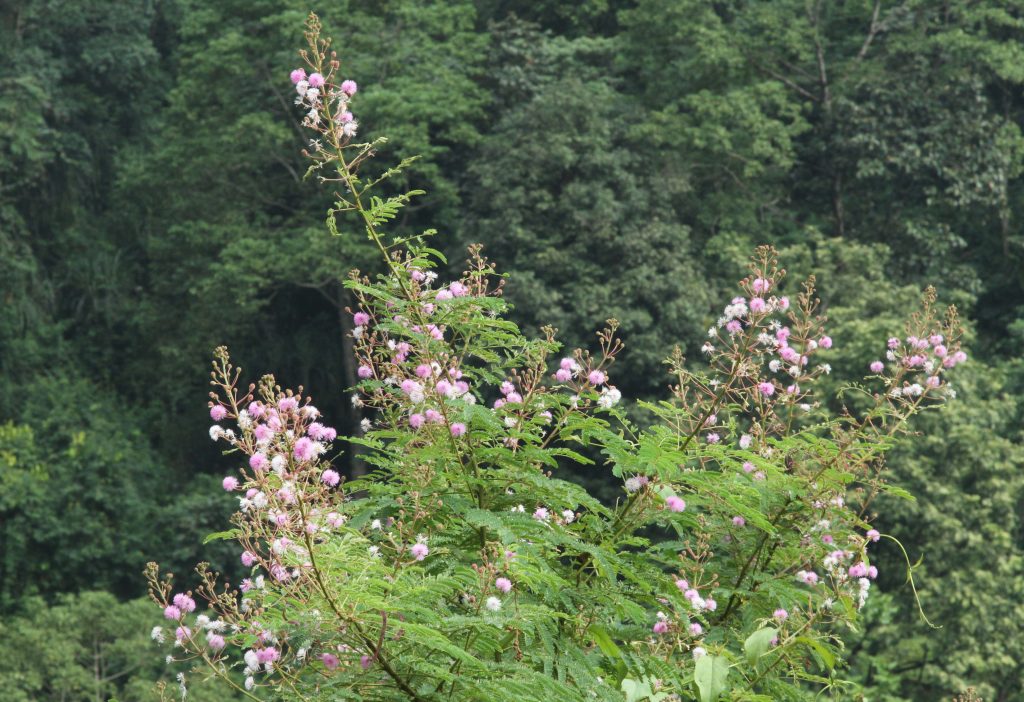
Mimosa rubicaulis subsp. himalayana is a scrambling, prickly shrub of the lower Himalayan foothills and adjacent plains, recorded from India, Pakistan, Nepal, Afghanistan and Bhutan, with additional scattered records (IN, PK, NP, AF, BT, MM, JP, MU) totalling around 219 occurrences. It favours warm, seasonally dry sites: open scrub, forest margins, hedgerows, ravines and disturbed roadside thickets in the subtropical zone, generally below about 1500 m. The plant photographed at Galephu in southern Bhutan at 400 m in October grew in the hot, humid duar foothills, where its straggling, armed branches form dense, often impenetrable tangles among other secondary vegetation following the monsoon.

It is a much-branched shrub or subscandent woody climber with terete, reddish stems bearing scattered, recurved prickles. The leaves are bipinnate, with several pairs of pinnae each carrying numerous small, oblong-linear, asymmetric leaflets, the rachis prickly and often glandular. The flowers are tiny and crowded into globose or shortly cylindrical heads, pink to pale purple, each flower with numerous long, exserted stamens giving the heads a fluffy appearance. The fruit is a flat, oblong, jointed pod (a craspedium) that breaks transversely into one-seeded segments at maturity, the persistent margins remaining as an empty frame.

Mimosa belongs to the mimosoid clade of the Fabaceae (subfamily Caesalpinioideae in current circumscription), characterised by actinomorphic flowers with valvate petals and free stamens. Subsp. himalayana, raised from M. rubicaulis, represents the montane-fringe Himalayan element of a widespread Asian species. The recurved prickles and rapid clonal spread make it an effective coloniser of degraded land, and locally it is used as a living hedge and for fuel. It is not of conservation concern, being common and weedy across its broad subtropical range.

Author: (Gamble) Ohashi · Sources: POWO (Kew), GBIF, Flora of Bhutan, Flora of Pakistan, Mimosoid legumes monograph (Barneby, Sensitivae Censitae)