Tag:

Autumn

Wall. ex DC.

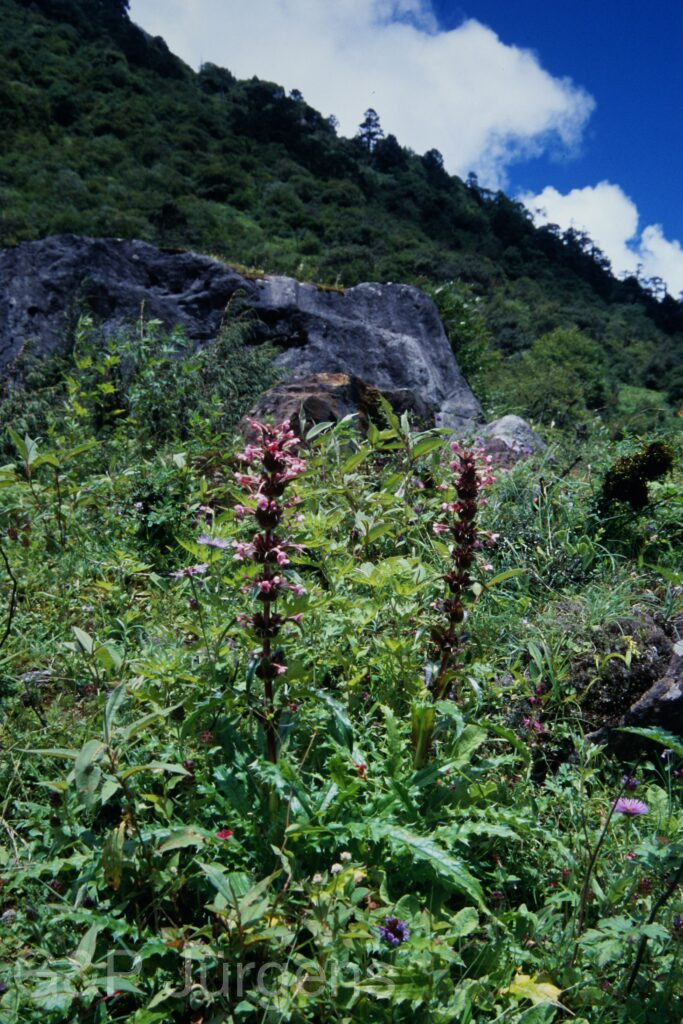
Sikkim2003 372 G521
Sikkim Tista valley 3500m August
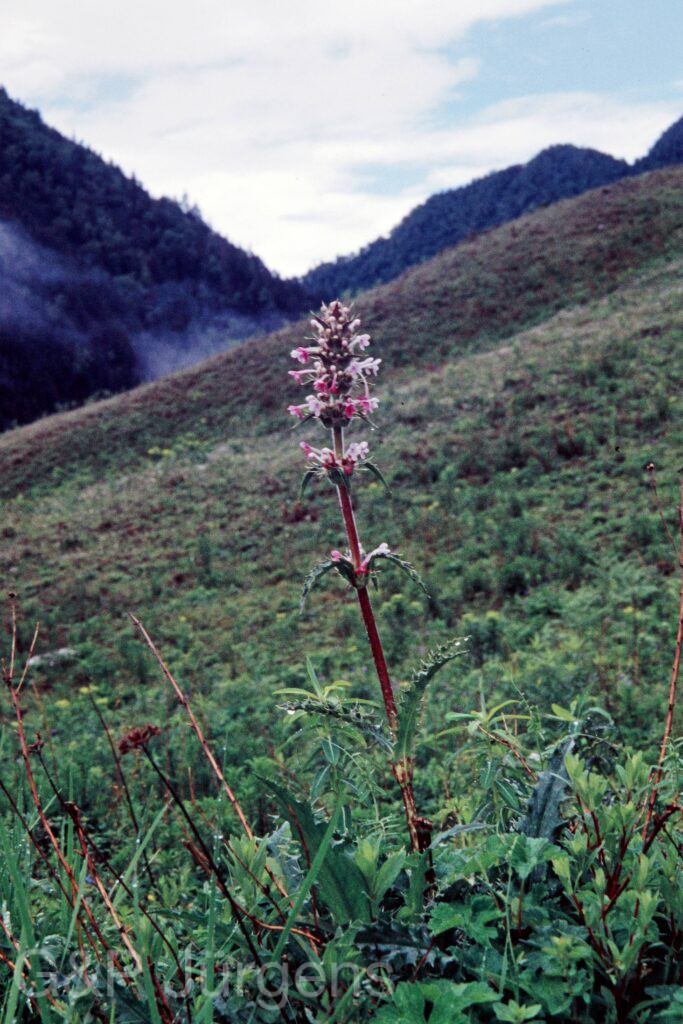
Nepal 99 84 ergebnis
West-Nepal Bhulbhule 3200m, June
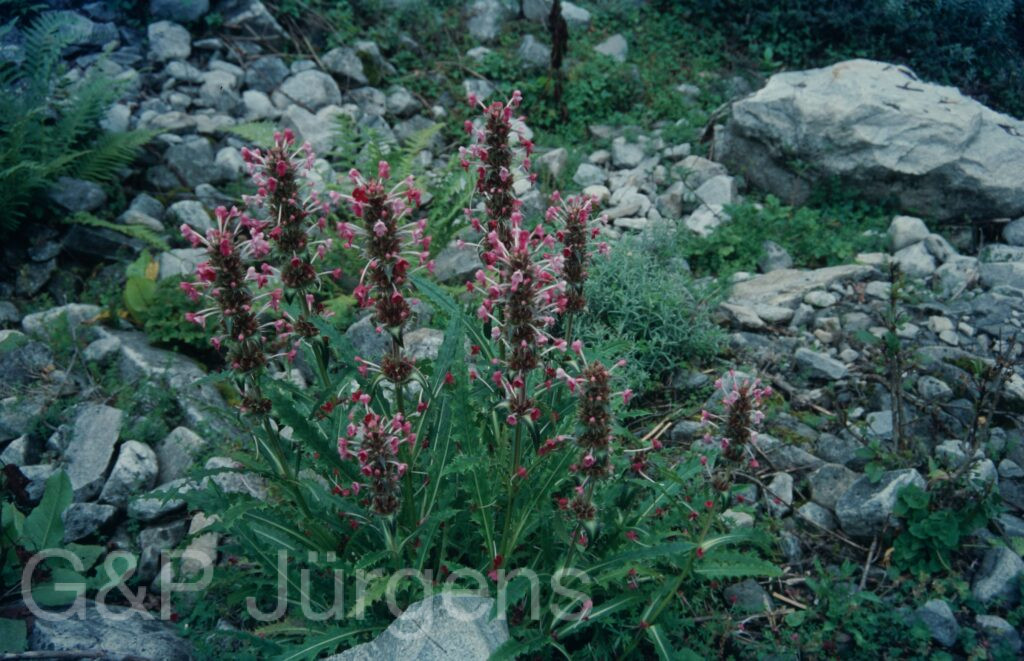
Garw 2005 36 ergebnis ergebnis
India Garhwal Valley of flowers 3100m, September

Description

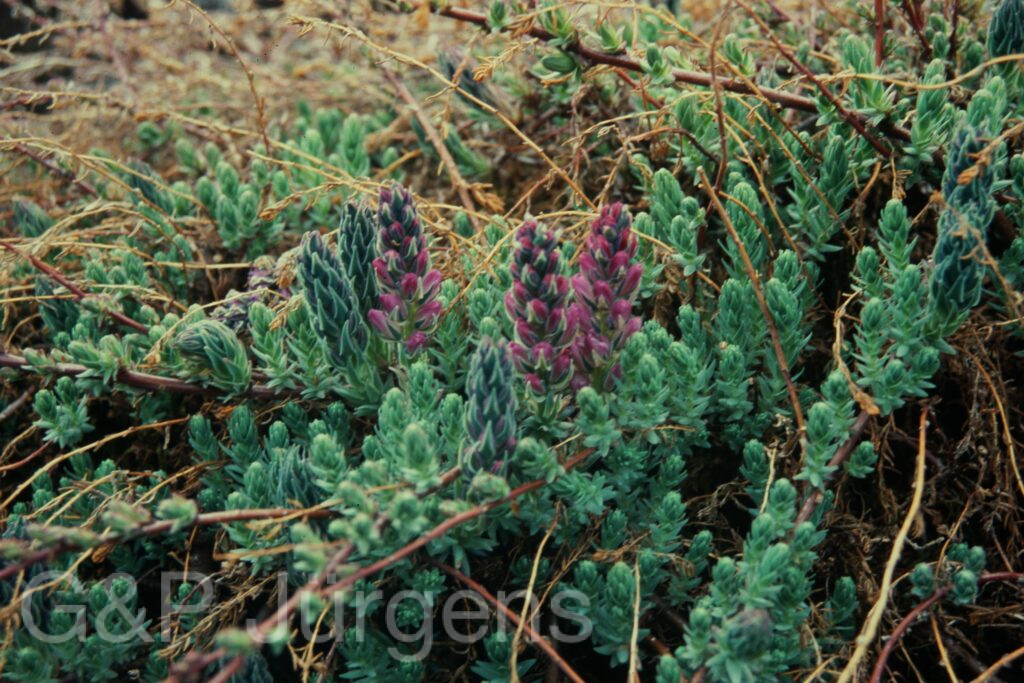
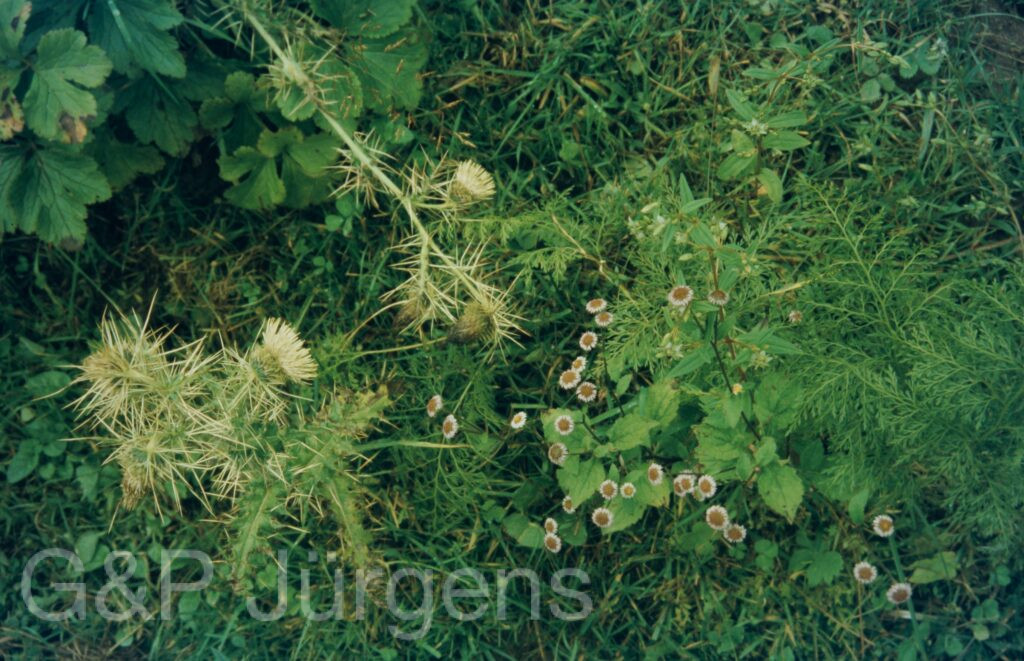
Morina longifolia, the Himalayan whorlflower, is native to the Himalaya across Pakistan, India, Nepal and Bhutan, with naturalised and cultivated records in Europe and North America (Norway, Germany, Denmark, Sweden, the United States) reflected among its roughly 125 GBIF occurrences. It grows on open alpine and subalpine slopes, in stony meadows, grassy clearings and among low scrub on well-drained soils above the forest. The cited localities, the Tista valley in Sikkim at 3500 m in August, Bhulbhule in western Nepal at 3200 m in June, and the Valley of Flowers in Garhwal at 3100 m in September, span its range of roughly 3000-4000 m, where it flowers through the summer monsoon.

It is a robust, erect perennial herb forming a basal rosette of long, narrow, linear-lanceolate leaves whose margins are conspicuously spiny-toothed, giving a thistle-like appearance, the whole plant aromatic when crushed. The flowering stem rises stoutly and bears the flowers in well-separated, spiny-bracted whorls (verticillasters) up the upper axis. Each flower has a tubular, curved, two-lipped corolla that opens white and ages through pink to deep crimson, so flowers of several colours appear together in one whorl. Two stamens are fertile, the slender style is exserted, and the inferior ovary develops into a small one-seeded achene enclosed within the persistent involucel.

The genus Morina, with its spiny leaves and whorled bicoloured flowers, has been placed variously in its own family Morinaceae or within Dipsacaceae, and is treated by current systems within an enlarged Caprifoliaceae; molecular work confirms its position near the teasels and valerians in the Dipsacales. The long-tubed flowers are pollinated by long-tongued insects, and the species is widely grown as an ornamental, accounting for its scattered occurrences far beyond its native range.

Author: Wall. ex DC. · Sources: POWO (Kew), GBIF, Flora of Pakistan, Flora of Bhutan, Cannon revision of Morina, Bell Dipsacales phylogeny

(Buch.-Ham. ex Roxb.) Maxim.

Bhutan2015 32
Bhutan Dochu-La 2800m, October
Bhutan2015 33
Bhutan Dochu-La 2800m, October

Description

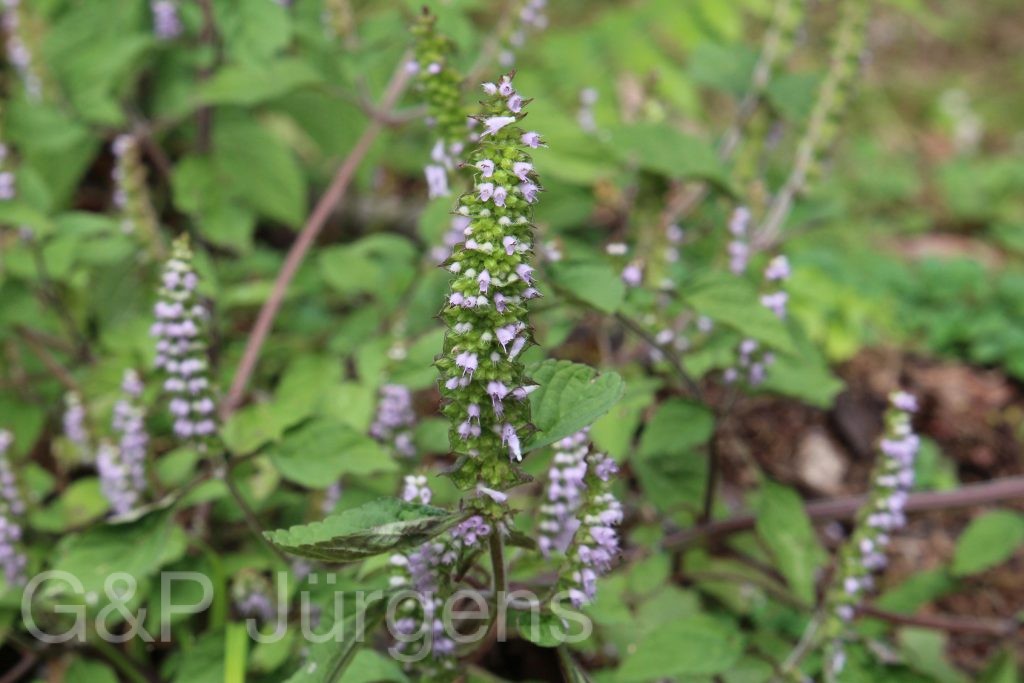
Mosla dianthera is a widespread annual mint of monsoonal Asia, ranging from the Himalaya (Nepal, Bhutan, India, Pakistan, Bangladesh, Myanmar) across China, Korea, Japan, Taiwan and the Russian Far East south into mainland and insular Southeast Asia; with over 7000 GBIF occurrences it is among the most frequently recorded species of its genus. It grows in disturbed and seasonally moist ground, including roadsides, field margins, fallow land, streambanks and open grassy slopes from the lowlands into the temperate hills, as recorded at Dochu-La in Bhutan at 2800 m. As an autumn-flowering annual it completes its cycle on the late monsoon moisture, flowering and fruiting in October.

It is a slender, erect, aromatic annual herb with the quadrangular stems typical of the Lamiaceae, often much branched and sparsely hairy. The leaves are opposite, petiolate, ovate-lanceolate to lanceolate, serrate along the margin and gland-dotted, releasing a pungent scent when crushed. The flowers are borne in lax, terminal and axillary racemes; each two-lipped corolla is small, pale pink to purplish, with a notched upper lip and a three-lobed lower lip. Diagnostic for Mosla are the two fertile stamens (the epithet "dianthera" referring to the two anthers) and the reticulately pitted nutlets. The fruit comprises four small, dry, one-seeded nutlets enclosed in the persistent, gland-dotted calyx.

Mosla is a small Asian genus segregated from Orthodon and allied to Perilla and Elsholtzia within the subfamily Nepetoideae, characterised by the reduction to two stamens and by aromatic terpene-rich foliage. The essential oils of M. dianthera are used in traditional medicine, and the plant is a minor nectar source for bees and other insects. Being a ruderal, broadly tolerant annual of vast geographic range, it is of least conservation concern and is sometimes weedy. (The associated WordPress link erroneously references Pogostemon benghalensis; the taxon treated here is Mosla dianthera.)

Author: (Buch.-Ham. ex Roxb.) Maxim. · Sources: POWO (Kew), GBIF, Flora of China, Flora of Bhutan, Li & Hedge's treatment of the Lamiaceae

(G.Brückn.

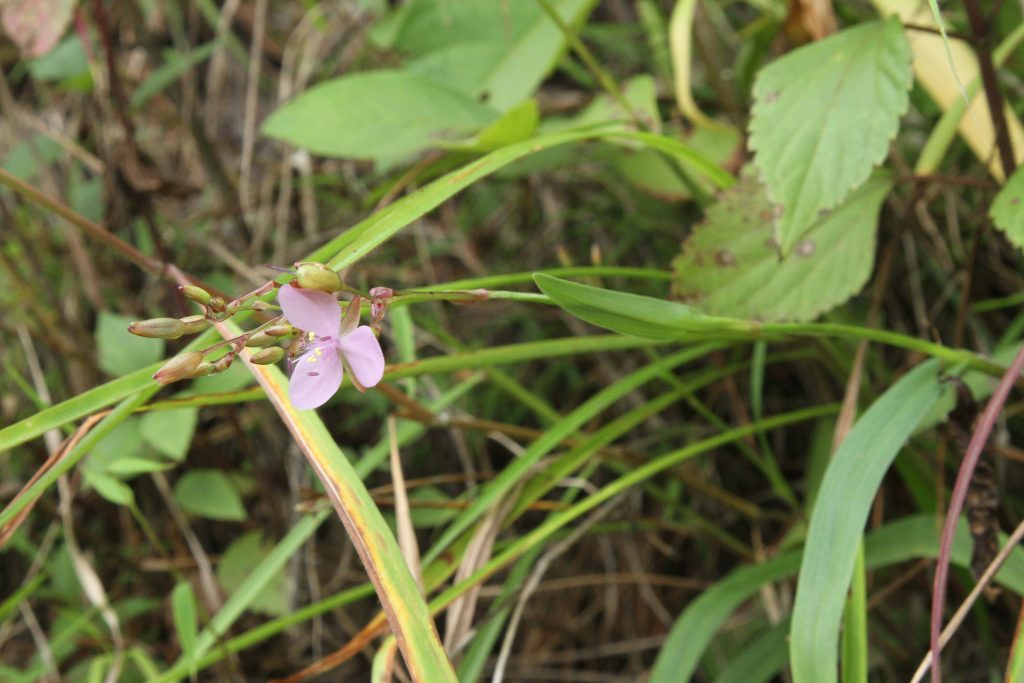
Bhutan2012 426
Bhutan Wangdi 2700m, September

Description

Murdannia divergens (G.Brückn.) Faden ex D.Y.Hong is a dayflower relative widely distributed across tropical and subtropical Asia, recorded by GBIF from China, India, Taiwan, Nepal, Myanmar, Thailand, Vietnam, Bhutan and Laos, with over 500 occurrences. It grows in damp grassland, open forest, scrub, marshy ground and along streamsides, lowland to montane. The Bhutanese material from Wangdi at 2700 m in September reflects its occurrence well into the temperate zone and its late-monsoon flowering, when soil moisture supports the succulent growth typical of the family.

It is a perennial or sometimes annual herb with fleshy roots and ascending to decumbent stems rooting at the lower nodes. The leaves are alternate, linear to linear-lanceolate, sheathing at the base in the manner of the Commelinaceae, with parallel venation. The inflorescence is a terminal, often divergently branched (as the epithet suggests) thyrse, the flowers actinomorphic with three free, ephemeral blue to violet or pinkish-mauve petals and bearded stamens with staminodes, typically three fertile. Each flower lasts a single day; the fruit is a small three-locular loculicidal capsule releasing few rugose seeds.

Murdannia, segregated from Aneilema and Commelina, comprises herbs of seasonally wet ground, and M. divergens belongs to its montane-adapted members. Its day-lasting flowers are pollinated by small bees and hoverflies attracted to the stamen hairs and pollen-presenting anthers. The wide Asian range and ecological flexibility of the species make it common in seasonally moist habitats; it is not threatened, though its dependence on wetland margins links local abundance to monsoon hydrology.

Author: (G.Brückn. · Sources: POWO (Kew), GBIF, Flora of China Vol. 24, Flora of Bhutan Vol. 3, Flora of Nepal, Faden revisions of Asian Commelinaceae

Less.

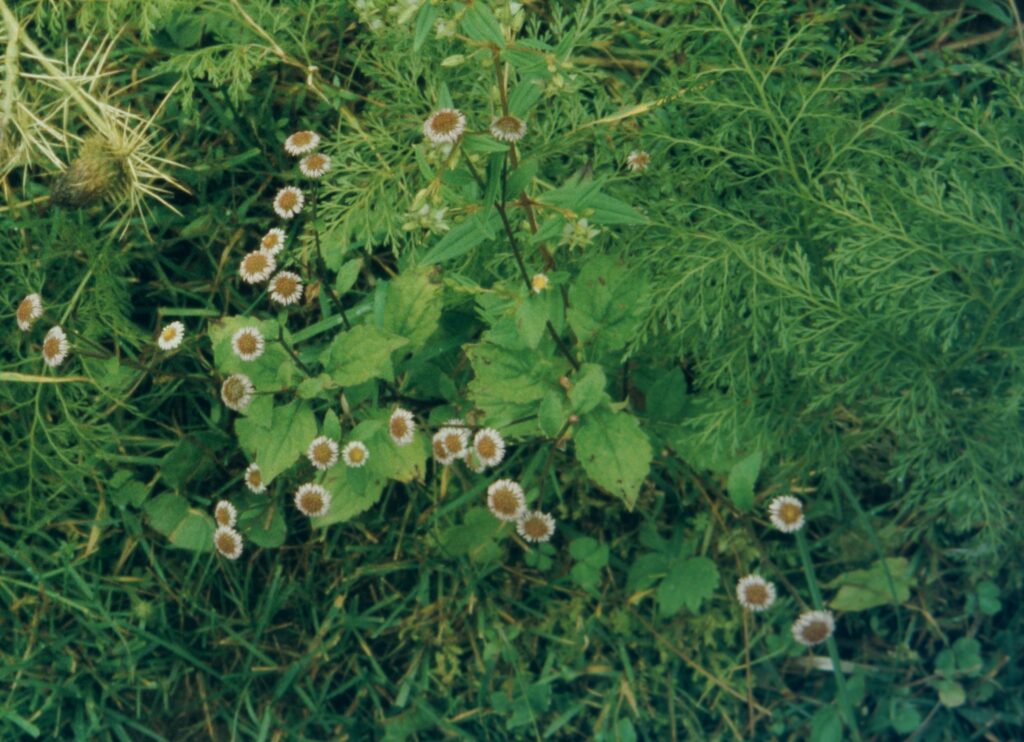
Garw 2005 77
India Garhwal Auli-Gaushon 3100m, October

Description

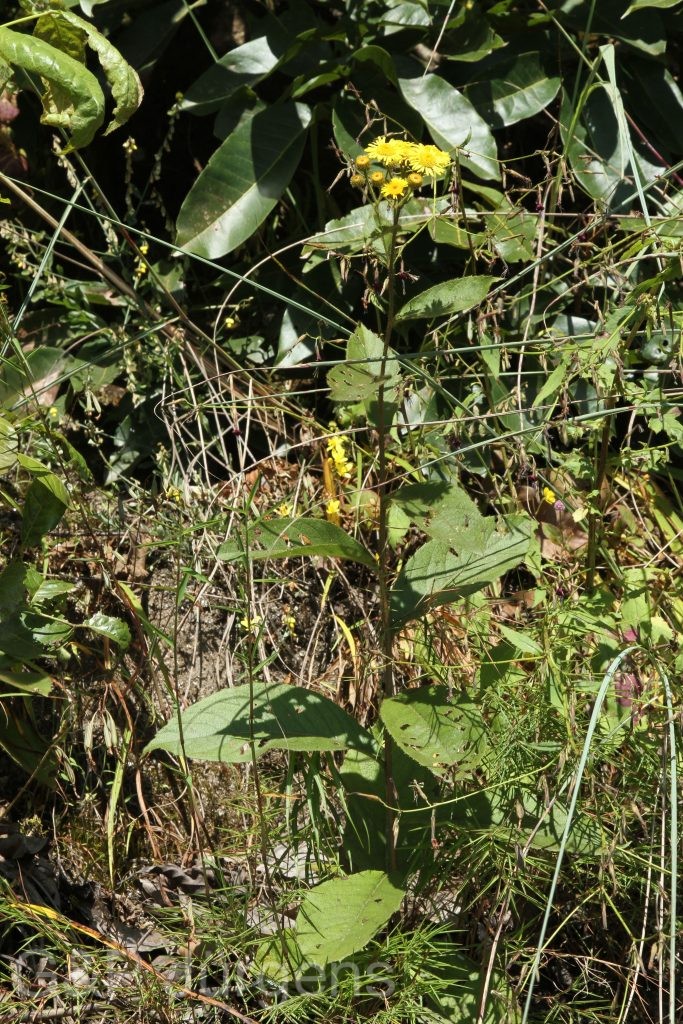
Myriactis nepalensis is an annual or short-lived perennial herb in the daisy family, widespread across the Himalayas from Pakistan through Nepal, India (Sikkim, Garhwal), and Bhutan to southwest China. It thrives in moist forest margins, shady banks, and disturbed ground at 1,500–3,500 m elevation.

The plant grows 15–60 cm tall with erect, branching stems. Leaves are alternate, ovate to broadly lanceolate, coarsely toothed, and softly hairy. The small flower heads (5–8 mm across) are borne in loose terminal clusters, with white ray florets surrounding yellow disc florets. Flowering occurs from August to November.

Often overlooked due to its small flower heads, Myriactis nepalensis plays an important ecological role as a late-season nectar source for pollinators at high elevations.

Author: Less. · Sources: POWO (Kew), Flora of Nepal Checklist, GBIF

Grierson & D.G. Long

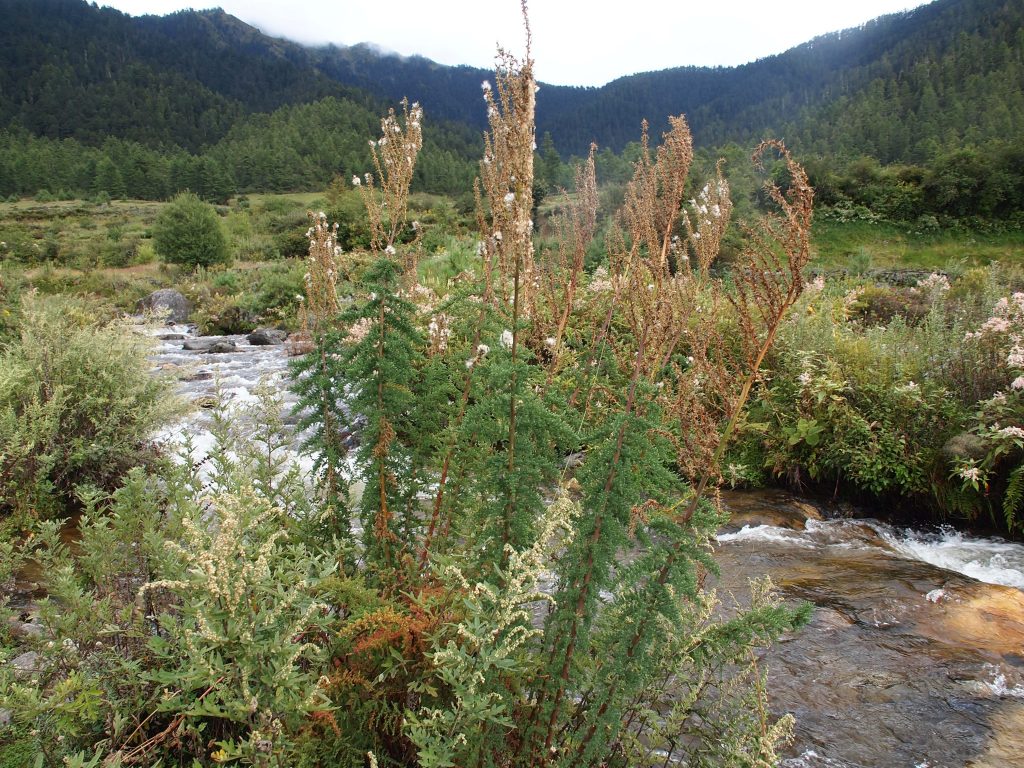
Bhutan2012 206
Bhutan Haa-valley 3000m, September

Description

Myricaria albiflora Grierson & D.G. Long is a narrowly distributed shrub of the Tamaricaceae, known only from the eastern Himalaya in Bhutan and immediately adjacent India, where GBIF holds just 13 georeferenced records, underscoring its restricted range and rarity. Like other members of the genus it is a riparian specialist, colonising open gravel and shingle bars, sandy braided riverbeds, moraine and the stony margins of high mountain streams, habitats that are periodically disturbed by flooding and ice. The photographed plant from the Haa valley in western Bhutan at about 3,000 m in September lies within its subalpine river-valley habitat, where it flowers and fruits in the latter part of the growing season.

It is a low, much-branched deciduous shrub with slender reddish wand-like branchlets densely clothed in small, sessile, scale-like to narrowly lanceolate leaves arranged in spirals, giving the twigs a tamarisk-like, heath-like aspect. The flowers are borne in dense terminal racemes; each has five sepals and, distinctively for this species, five white (rather than the usual pink to purplish) petals, with the filaments of the stamens connate below into a tube. The superior ovary matures into a slender three-valved capsule releasing numerous minute seeds tipped with a tuft of long white hairs (a coma) that aids wind dispersal.

The genus Myricaria comprises riverine shrubs of Eurasian mountains closely allied to Tamarix, distinguished by their partly fused stamens and comose seeds. M. albiflora was described as a Bhutanese endemic for the Flora of Bhutan and is defined chiefly by its white flowers. Given its very small known range and dependence on dynamic riverine habitats vulnerable to hydrological change, dam construction and gravel extraction, it warrants careful monitoring, though it has not been formally assessed.

Author: Grierson & D.G. Long · Sources: POWO (Kew), Flora of Bhutan Vol. 2, Flora of China Vol. 13, GBIF, Zhang & Zhang: Revision of Myricaria (Tamaricaceae) (2003)

W.W. Sm.

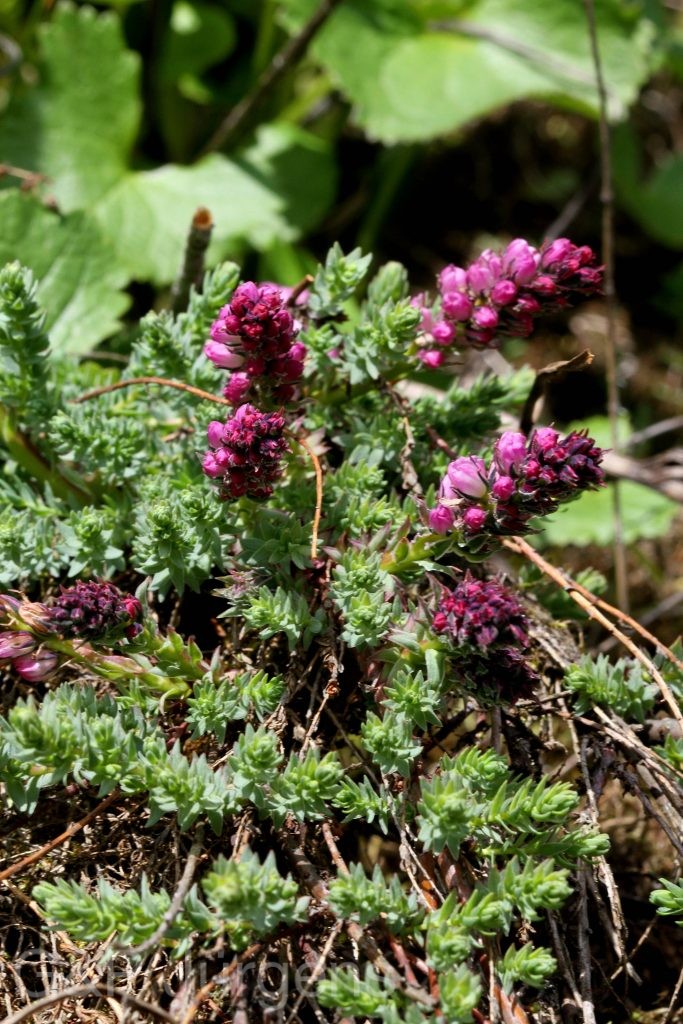
Sikkim2011 227
Sikkim Yumthang-Chu 3600m, September
Sikkim2004 285 P498
Sikkim/India Dzongri 3900m May

Description

Myricaria rosea W.W.Sm. is a tamarisk-like shrub of the Tamaricaceae native to the eastern and central Himalaya and adjacent China. GBIF records, numbering 268 occurrences, place it in China, Nepal, India, Bhutan and Myanmar. The species is a riparian specialist of high-altitude valleys, colonising gravel bars, glacial outwash, moraine and the sandy margins of mountain streams, generally between 3,300 and 4,300 m. The illustrated plants from the Yumthang-Chu in Sikkim at 3,600 m in September and from Dzongri at 3,900 m in May span its flowering and fruiting seasons in the alpine and subalpine riverine zone.

The plant is a low, much-branched, decumbent to erect shrub with slender, reddish-brown, flexible branchlets. The leaves are small, sessile, scale-like to narrowly lanceolate, glaucous and densely overlapping along the twigs, an adaptation to the dry, exposed habitat. The flowers are borne in dense, terminal, spike-like racemes; each has five rose-pink to purplish petals, a five-parted calyx, and ten stamens whose filaments are connate at the base into a tube, a key character separating Myricaria from the related Tamarix. The fruit is a narrowly conical capsule splitting into three valves to release numerous tiny seeds, each crowned with a tuft of long, basally awned hairs that aids wind and water dispersal.

Myricaria comprises a small group of Central Asian and Sino-Himalayan shrubs of disturbed, unstable riparian and glacial substrates, and M. rosea is one of the distinctly pink-flowered eastern Himalayan members. Ecologically these shrubs are important pioneer colonisers that stabilise braided river gravels and moraine, providing early successional cover; their dependence on natural flood and sediment regimes makes them sensitive to hydrological alteration of high mountain rivers.

Author: W.W. Sm. · Sources: POWO (Kew), GBIF, Flora of China Vol. 13, Flora of Bhutan Vol. 2, Flora of Nepal, Zhang & Zhang: A taxonomic revision of Myricaria (Tamaricaceae)

(Clarke ex Hook.f.) Kitam.

Bhutan2015 74
Bhutan Wangdi 1400m, October
Sikkim2011 73
Sikkim Tanghu 4000m, June
Bh09 25 G46
Bhutan Chele-La, 3500m June

Description

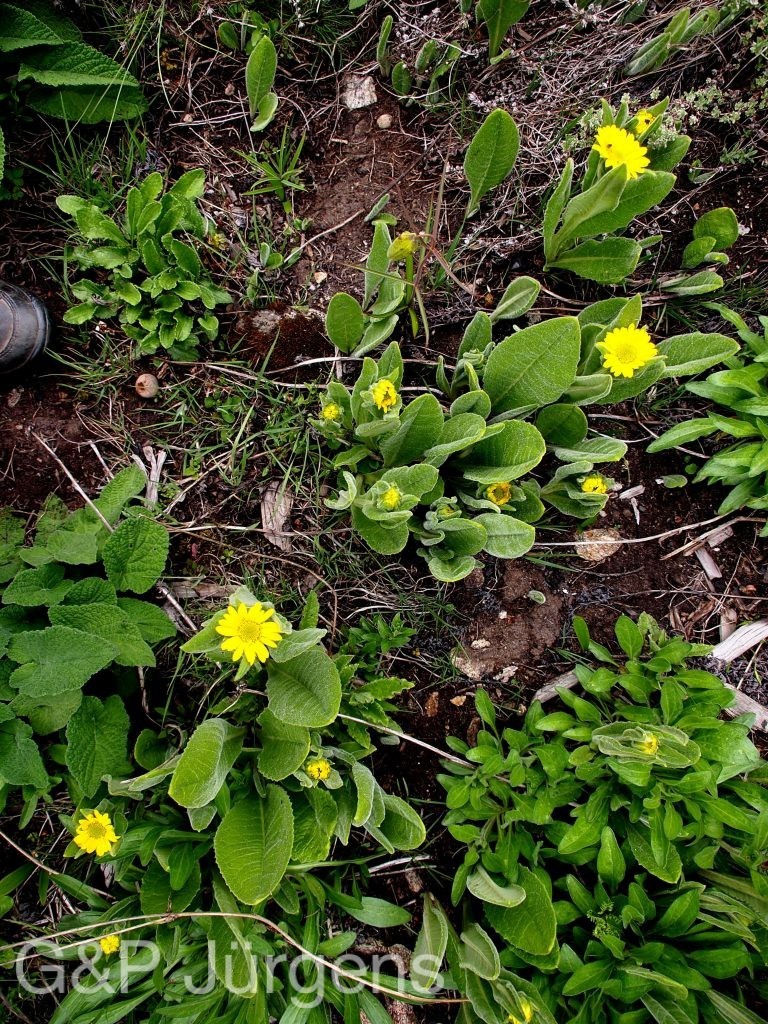
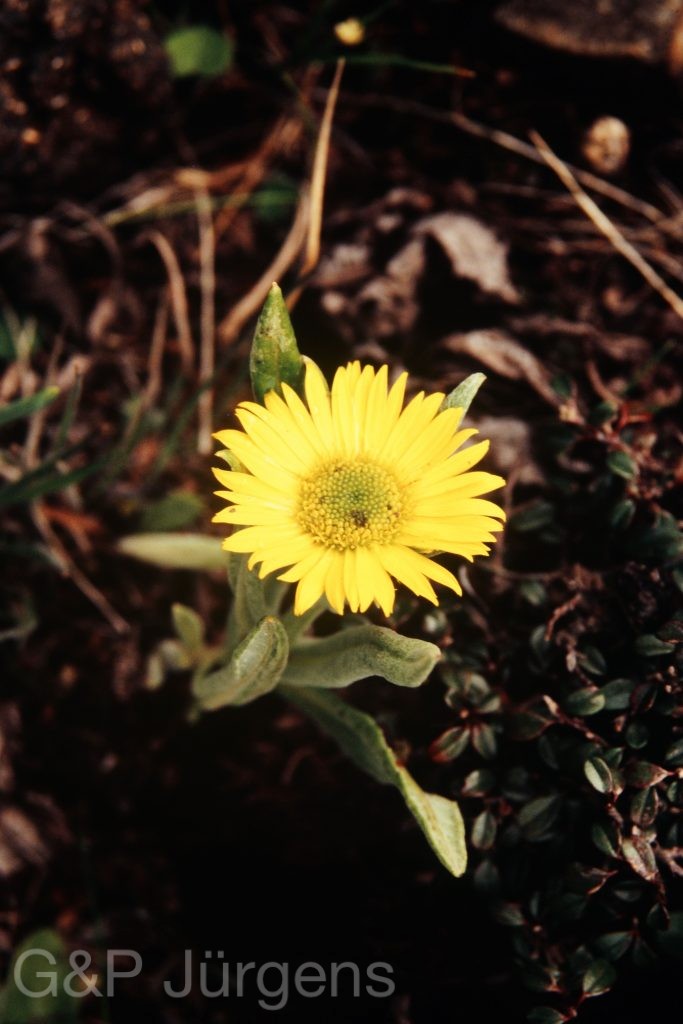
Nannoglottis hookeri is a Himalayan and Sino-Himalayan species recorded from Nepal, Pakistan, Bhutan, India and south-western China, GBIF logging about 145 occurrences across this arc. It inhabits a notably broad altitudinal span, from warm-temperate forest understorey and shrubby slopes to high subalpine and alpine meadows. The cited gatherings illustrate this amplitude: Wangdi in Bhutan at only 1400 m in October, Tanghu in Sikkim near 4000 m in June, and the Chele-La pass at around 3500 m in June. Such occurrence in moist, partly shaded ground, on humus-rich soils among rocks and along forest margins, characterises the species through the Eastern Himalayan ranges.

It is a perennial herb growing from a stout woody rhizome and producing erect, leafy, glandular-pubescent stems. The leaves are alternate, the lower ones petiolate with ovate to elliptic, coarsely toothed blades, becoming sessile and amplexicaul above; both surfaces bear scattered hairs. The capitula are radiate and arranged in a loose terminal corymb; the involucre is hemispheric with subequal, herbaceous phyllaries in few rows. Ray florets are yellow, ligulate and female, while the disc florets are tubular, yellow and bisexual. The cypselae are oblong and ribbed, surmounted by a pappus of slender barbellate bristles, an arrangement linking the genus to the Astereae.

Nannoglottis (Astereae) is a small Sino-Himalayan genus of fewer than a dozen species, distinguished by its radiate heads and montane forest ecology, and molecular work places it near the base of the tribe, making it of phylogenetic interest. Named for J. D. Hooker, N. hookeri is treated as an accepted species. Its dependence on cool, moist montane habitat and relatively narrow distribution warrant attention, though no formal threat status has been assigned; populations appear stable where forest cover persists.

Author: (Clarke ex Hook.f.) Kitam. · Sources: POWO (Kew), GBIF, Flora of Bhutan, Flora of China, Annotated Checklist of the Flowering Plants of Nepal, Gao's systematic study of Nannoglottis (Astereae)

(DC.) Brouillet

Garw 2005 77 ergebnis ergebnis
India Garhwal Gaushon 3000m, September

Description

Neobrachyactis anomala is a Himalayan composite distributed from Pakistan and Iran eastward through India, Nepal, Bhutan and southern Tibet (China), with around 153 records in GBIF. It is a plant of disturbed and open montane to subalpine ground: rocky slopes, screes, riverbanks, fallow fields, roadsides and forest clearings, generally between about 2500 and 4000 m. The population photographed at Gaushon in Garhwal, India, at around 3000 m in September occupies this kind of late-season, semi-ruderal high-mountain habitat where the species sets seed before winter.

It is an annual or short-lived herb with erect, often branched stems bearing alternate, lanceolate to oblong leaves that are toothed or pinnately lobed and somewhat glandular or hairy. The small heads (capitula) are numerous, arranged in a leafy panicle, each with an involucre of narrow bracts. As the generic relationship to Brachyactis implies, the heads are disciform: the marginal florets are female, filiform and very shortly rayed or rayless, surrounding numerous yellowish bisexual disc florets. The fruit is a small flattened cypsela crowned by a pappus of fine bristles facilitating wind dispersal.

The species was long placed in Brachyactis and allied to Erigeron and Aster, but molecular phylogenetic work in the Astereae led Brouillet to transfer it to the segregate genus Neobrachyactis, reflected in its current author citation. Its annual, ruderal strategy and abundant wind-dispersed achenes suit it to colonising unstable and disturbed alpine terrain. It is widespread and locally common, and as a weedy pioneer it is under no conservation concern; if anything such opportunistic species may expand with increasing human disturbance of mountain landscapes.

Author: (DC.) Brouillet · Sources: POWO (Kew), GBIF, Flora of China, Flora of Pakistan, Annotated Checklist of the Flowering Plants of Nepal, Brouillet Systematics of North American Astereae

(Wall.) Bennet

Bhutan2015 41
Bhutan Wangdi Phoang 2000m, October
Bhutan2012 941
Bhutan Tumching-La 2300m, October
Sikkim2003 40 K52.2
Sikkim above Yoksam 1860m 08.2003

Description

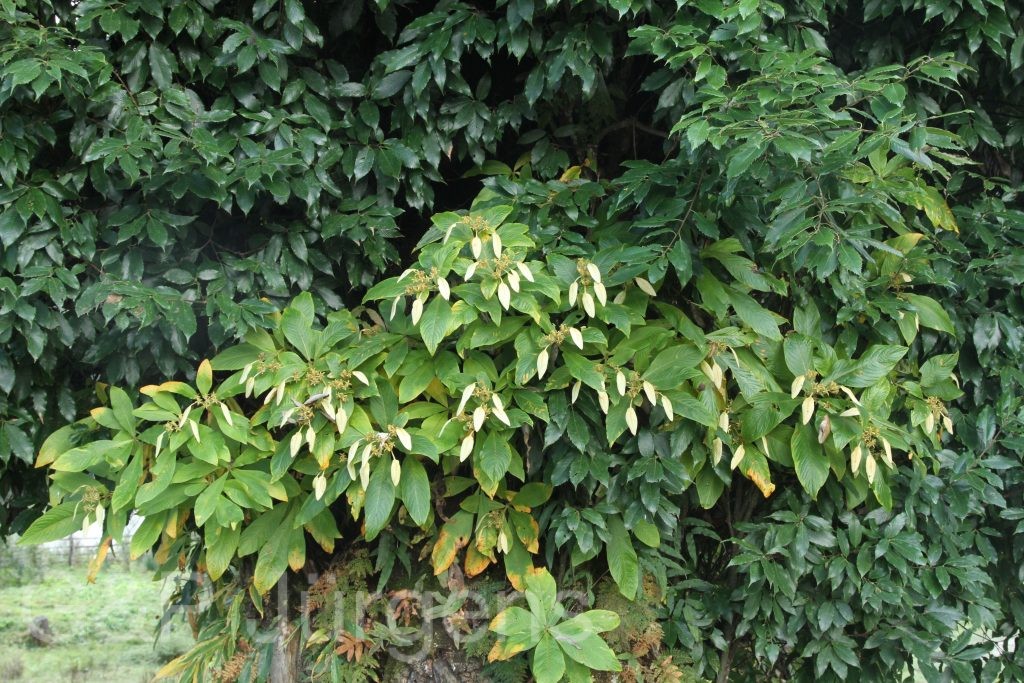
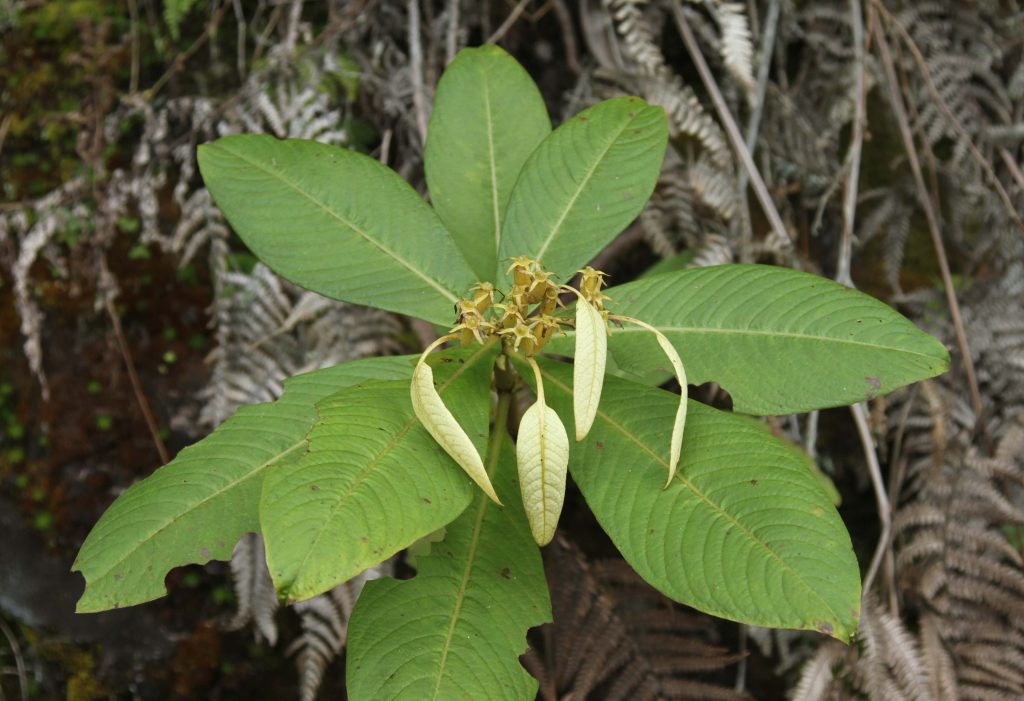
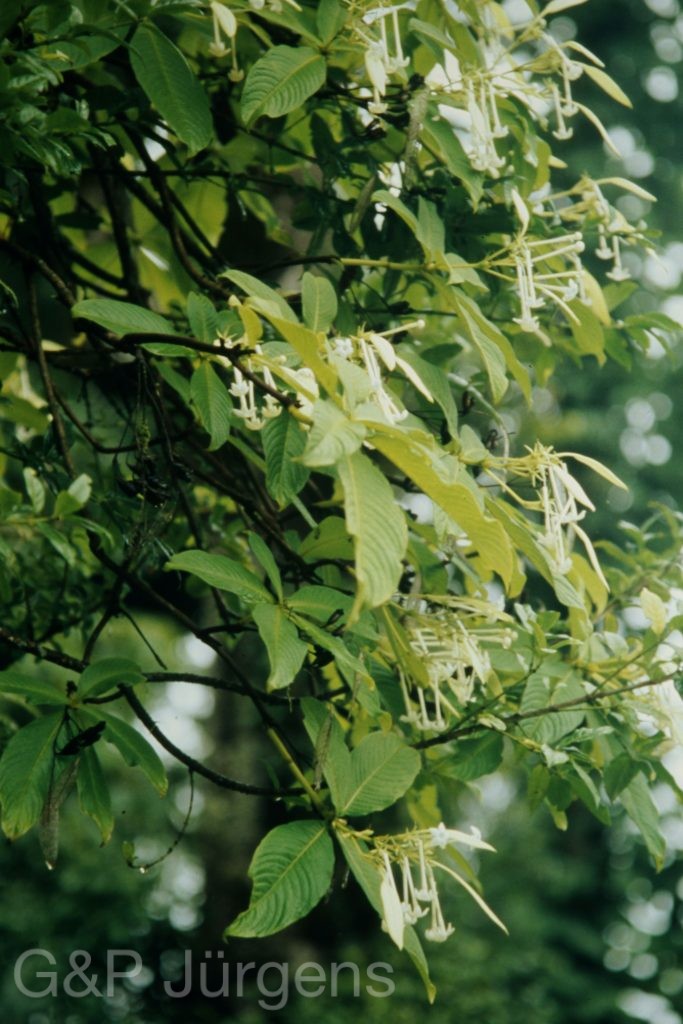
Neohymenopogon parasiticus is an epiphytic shrub of the eastern Himalaya and adjacent Sino-Himalayan and Indochinese mountains, distributed through China, Nepal, India, Thailand, Myanmar, Bhutan and Vietnam (gbif_countries: CN, NP, IN, TH, MM, BT, VN, ZZ, GB, PG), with some 438 GBIF occurrences. Despite the epithet it is not truly parasitic but grows perched on the trunks and mossy branches of trees in humid, mid-elevation broadleaved and mixed forest, occasionally also on rocks. The illustrated collections range from above Yoksam in Sikkim at about 1860 m up to Wangdi Phoang and Tumching-La in Bhutan at around 2000–2300 m, recorded in the late-monsoon to autumn months, reflecting its preference for moist, cloud-bathed submontane forest.

The plant is a glabrous to finely hairy epiphytic shrub with opposite, elliptic to obovate leaves clustered toward the branch tips, the stipules interpetiolar as in Rubiaceae. The flowers are borne in terminal cymose clusters and are showy by virtue of enlarged, white, petaloid calyx-lobes (calycophylls) that subtend the inflorescence and aid pollinator attraction, surrounding tubular corollas. The fruit is a ribbed, dehiscent capsule releasing many small, winged seeds suited to wind dispersal among the canopy.

Neohymenopogon was segregated from Hymenopogon to accommodate this distinctive Himalayan epiphytic lineage, and the species is placed in the madder family among the calycophyll-bearing Rubiaceae that mimic the petaloid bracts of Mussaenda and its allies. As an epiphyte dependent on intact, humid forest canopy, it is sensitive to deforestation, though it remains locally frequent across its range and is not currently of conservation concern.

Author: (Wall.) Bennet · Sources: POWO (Kew), GBIF, Flora of Bhutan, Flora of China, Flora of Nepal, Robbrecht's studies of Rubiaceae systematics

Benth.

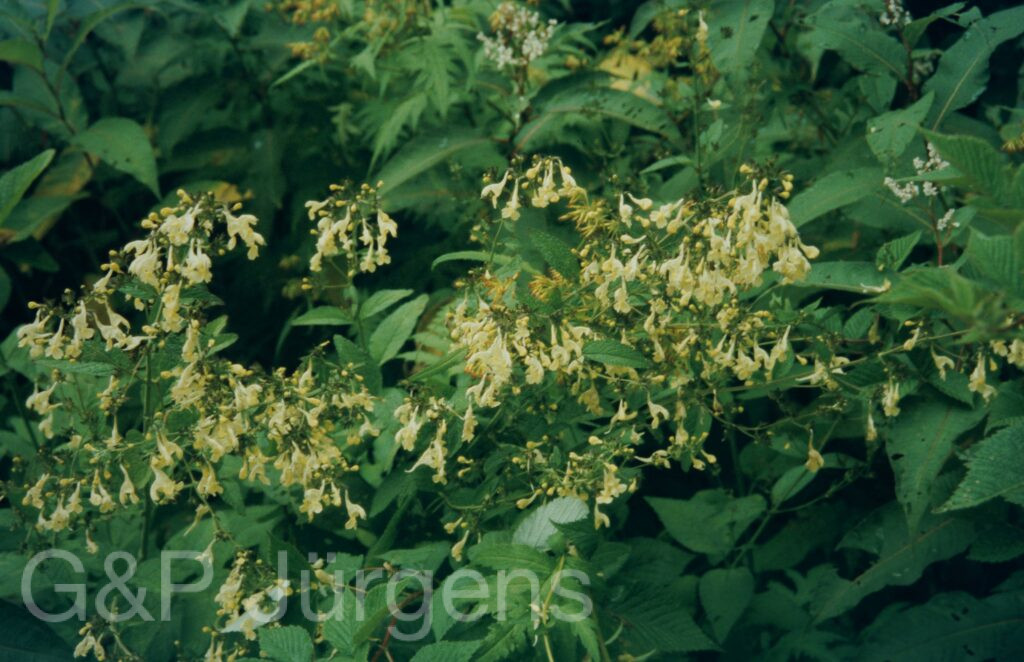
Garw 2005 67 ergebnis ergebnis
India Garhwal Valley of flowers 3350m, September

Description

Nepeta govaniana is a western Himalayan endemic catmint distributed through the mountains of northern India, Pakistan and adjacent China, with GBIF recording about 169 occurrences concentrated in the north-western ranges. It is a plant of the upper temperate and subalpine zone, generally between roughly 2400 and 3700 m, the photographed material coming from the Valley of Flowers in Indian Garhwal at 3350 m, still in flower in September. It grows in moist alpine and subalpine meadows, forest clearings, among shrubberies and along stream banks on cool, humus-rich soils, often in the open herb-rich grassland of the high western Himalaya.

The species is an erect, aromatic perennial herb reaching about 0.6-1 m, with simple or branched, finely pubescent quadrangular stems. The leaves are opposite, petiolate, ovate to ovate-oblong with a cordate or truncate base, acuminate apex and coarsely serrate margins, somewhat soft-hairy and pleasantly scented. Distinctively for a Nepeta, the flowers are pale yellow rather than blue or violet; they are borne in lax, often paniculate terminal cymes, the tubular calyx fifteen-nerved and two-lipped, the corolla two-lipped with a broad, notched lower lip. The fruit comprises four smooth ovoid nutlets.

Nepeta (Lamiaceae) is a large, mainly Eurasian genus, and N. govaniana is unusual in its soft yellow corollas, a feature that has made it a valued ornamental in temperate gardens. Its open, two-lipped flowers are visited and pollinated chiefly by bees. Locally frequent within its restricted western Himalayan range, it is not regarded as threatened, though its dependence on intact moist subalpine meadows links its fortunes to high-pasture land use.

Author: Benth. · Sources: POWO (Kew), GBIF, Flora of Pakistan, Flora Simlensis, Flora of British India (Hooker), Hedge revision of Himalayan Nepeta, Harley et al. Labiatae (Kubitzki, The Families and Genera of Vascular Plants)