
(Wall.) Bennet
Description
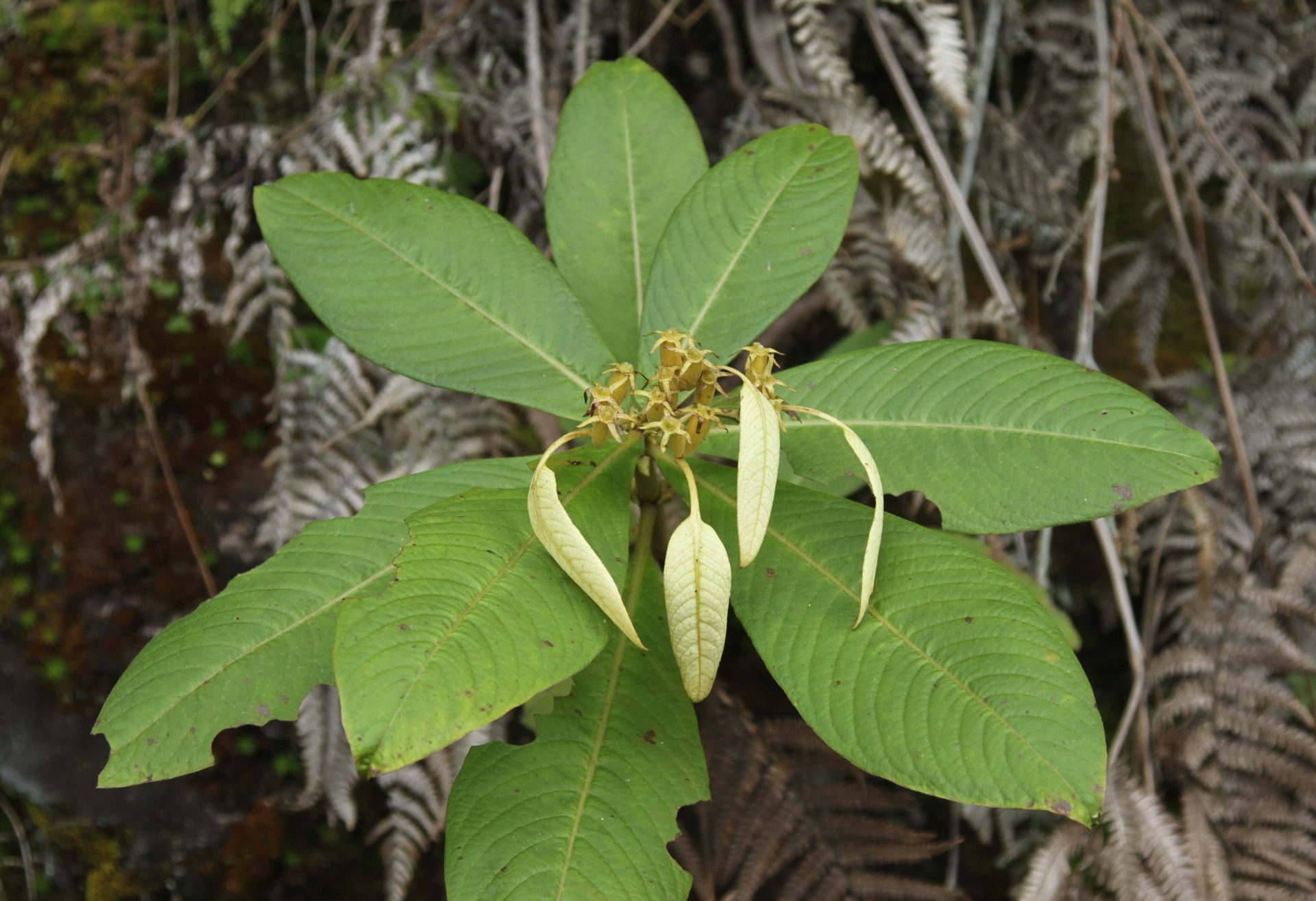
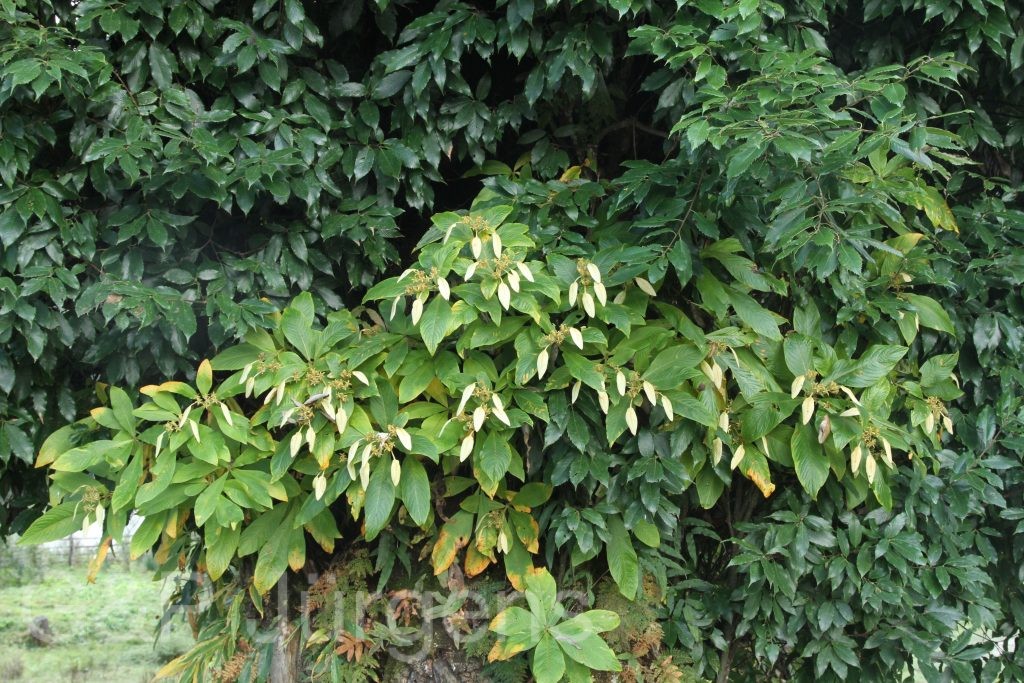
Neohymenopogon parasiticus is an epiphytic shrub of the eastern Himalaya and adjacent Sino-Himalayan and Indochinese mountains, distributed through China, Nepal, India, Thailand, Myanmar, Bhutan and Vietnam (gbif_countries: CN, NP, IN, TH, MM, BT, VN, ZZ, GB, PG), with some 438 GBIF occurrences. Despite the epithet it is not truly parasitic but grows perched on the trunks and mossy branches of trees in humid, mid-elevation broadleaved and mixed forest, occasionally also on rocks. The illustrated collections range from above Yoksam in Sikkim at about 1860 m up to Wangdi Phoang and Tumching-La in Bhutan at around 2000–2300 m, recorded in the late-monsoon to autumn months, reflecting its preference for moist, cloud-bathed submontane forest.
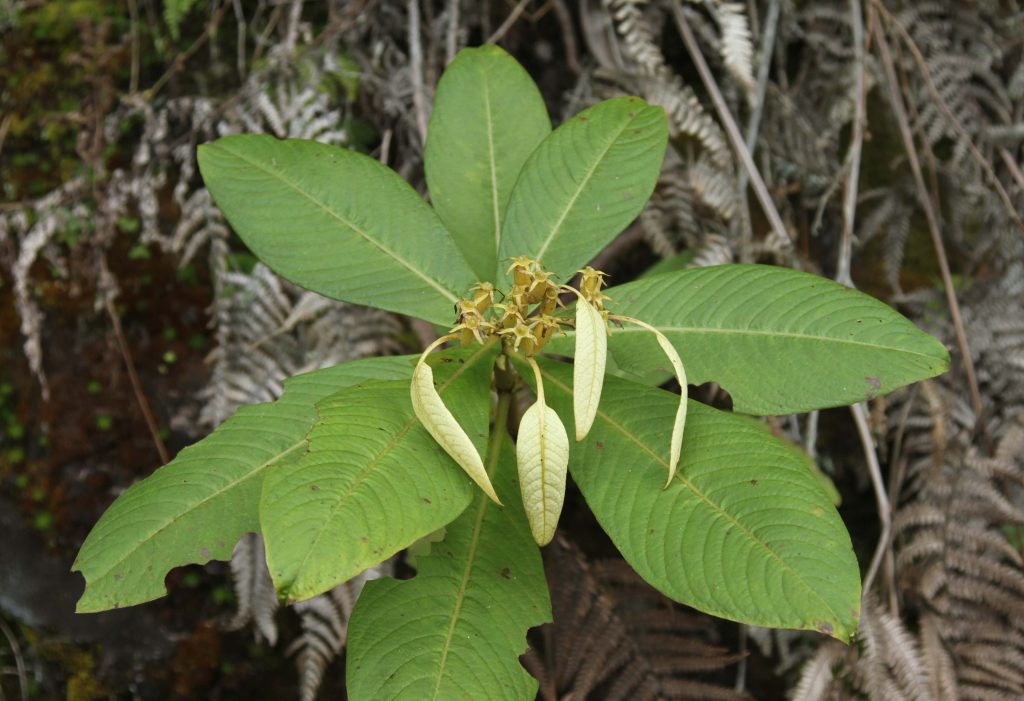
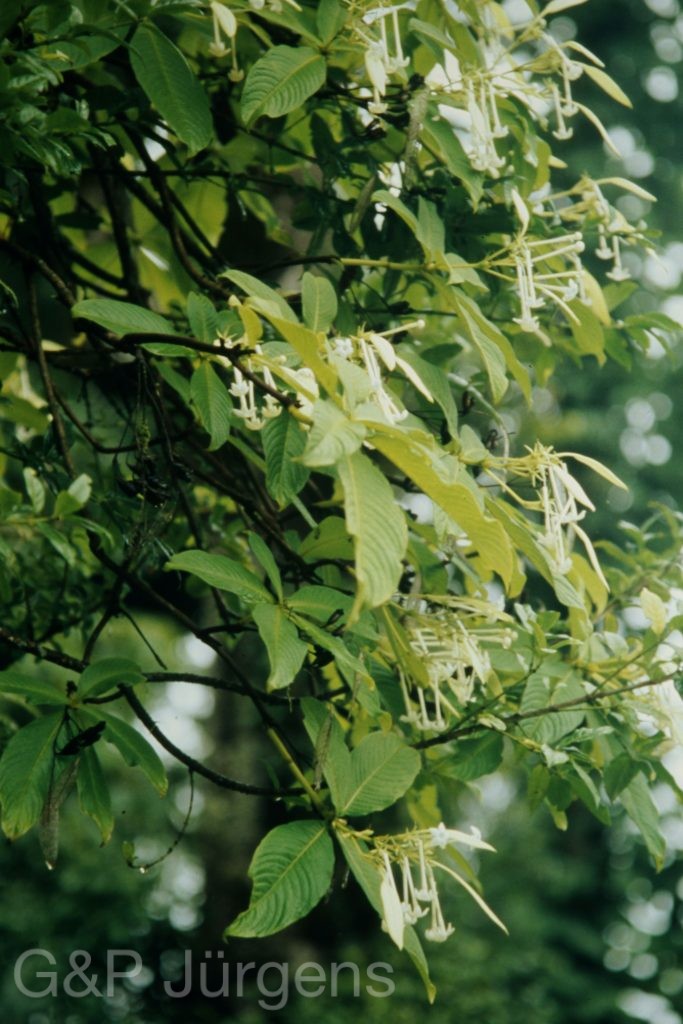
The plant is a glabrous to finely hairy epiphytic shrub with opposite, elliptic to obovate leaves clustered toward the branch tips, the stipules interpetiolar as in Rubiaceae. The flowers are borne in terminal cymose clusters and are showy by virtue of enlarged, white, petaloid calyx-lobes (calycophylls) that subtend the inflorescence and aid pollinator attraction, surrounding tubular corollas. The fruit is a ribbed, dehiscent capsule releasing many small, winged seeds suited to wind dispersal among the canopy.
Neohymenopogon was segregated from Hymenopogon to accommodate this distinctive Himalayan epiphytic lineage, and the species is placed in the madder family among the calycophyll-bearing Rubiaceae that mimic the petaloid bracts of Mussaenda and its allies. As an epiphyte dependent on intact, humid forest canopy, it is sensitive to deforestation, though it remains locally frequent across its range and is not currently of conservation concern.
Author: (Wall.) Bennet · Sources: POWO (Kew), GBIF, Flora of Bhutan, Flora of China, Flora of Nepal, Robbrecht's studies of Rubiaceae systematics