Tag:

Myanmar

Flowers of the Myanmar Himalaya — 604 species recorded from northern Myanmar (Burma) and the eastern Himalayan borderlands, a biodiversity hotspot linking the Himalaya to the mountains of Yunnan and Southeast Asia. The region’s forests and alpine slopes hold a rich flora of rhododendrons, orchids, balsams and gentians. Every page gives a botanical description, distribution, habitat and flowering time with the original photograph.

Hook.f.

Nepal 97 424 P815
Nepal Tashigaon 3100m May

Description

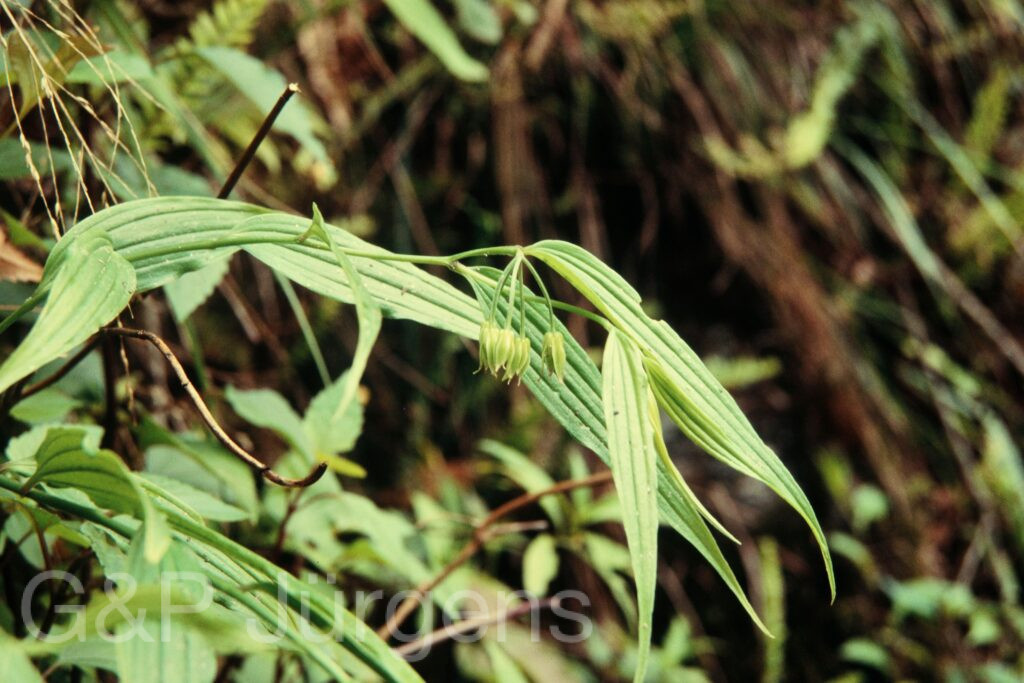
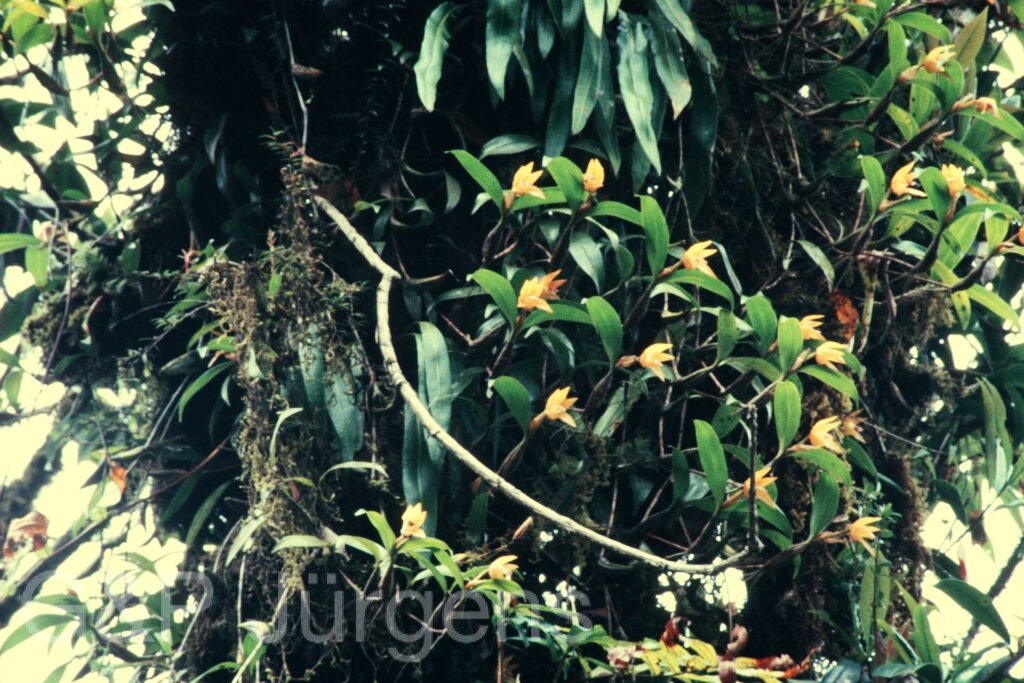
Dendrobium rotundatum Hook.f. is an epiphytic orchid of the eastern Himalaya and adjacent ranges, distributed through Nepal, northern India, Bhutan and into south-western China and Myanmar, with a GBIF record of about 122 occurrences (including a cultivated citation from Belgium) that reflects its relatively narrow distribution and inconspicuous habit. It grows perched on the trunks and branches of trees in cool, humid temperate broadleaf and mixed forest, where mossy bark and high atmospheric moisture sustain its epiphytic roots. The illustrated plant was recorded at Tashigaon in eastern Nepal at 3100 m in May, an elevation at the cool, montane end of the genus's range and a season corresponding to flowering as spring conditions return to the forest.

It is a small epiphyte with slender, often pendent to ascending stems (pseudobulbs) that are somewhat swollen and jointed, bearing distichous, thin-textured, oblong to lanceolate leaves along their length, these often deciduous in the dormant season. The flowers are produced from the nodes, solitary or few together, and are relatively small; the sepals and petals are subequal, with the lateral sepals united at the base to the column foot to form a short, rounded mentum or chin, an attribute echoed in the epithet rotundatum. The labellum is entire to obscurely three-lobed, the disc often bearing low ridges or a callus, and the column is short and footed in the typical Dendrobium pattern. The fruit is a ribbed, dehiscent capsule releasing dust-like seeds.

Dendrobium, with its centre of diversity in tropical and subtropical Asia, is one of the largest orchid genera, and the cool-growing, small-flowered Himalayan species such as D. rotundatum represent its montane, temperate fringe. As an epiphyte it depends on intact, humid old-growth forest and on mycorrhizal fungi for seed germination, making it sensitive to logging and habitat degradation. Like most orchids it is listed under CITES Appendix II to regulate international trade, and although not separately assessed as threatened, its restricted range and habitat specificity warrant ongoing monitoring of wild populations.

Author: Hook.f. · Sources: POWO (Kew), GBIF, Flora of China, Orchids of Nepal (Raskoti), The Genus Dendrobium (Wood)
Wall. ex Lindl.

Description

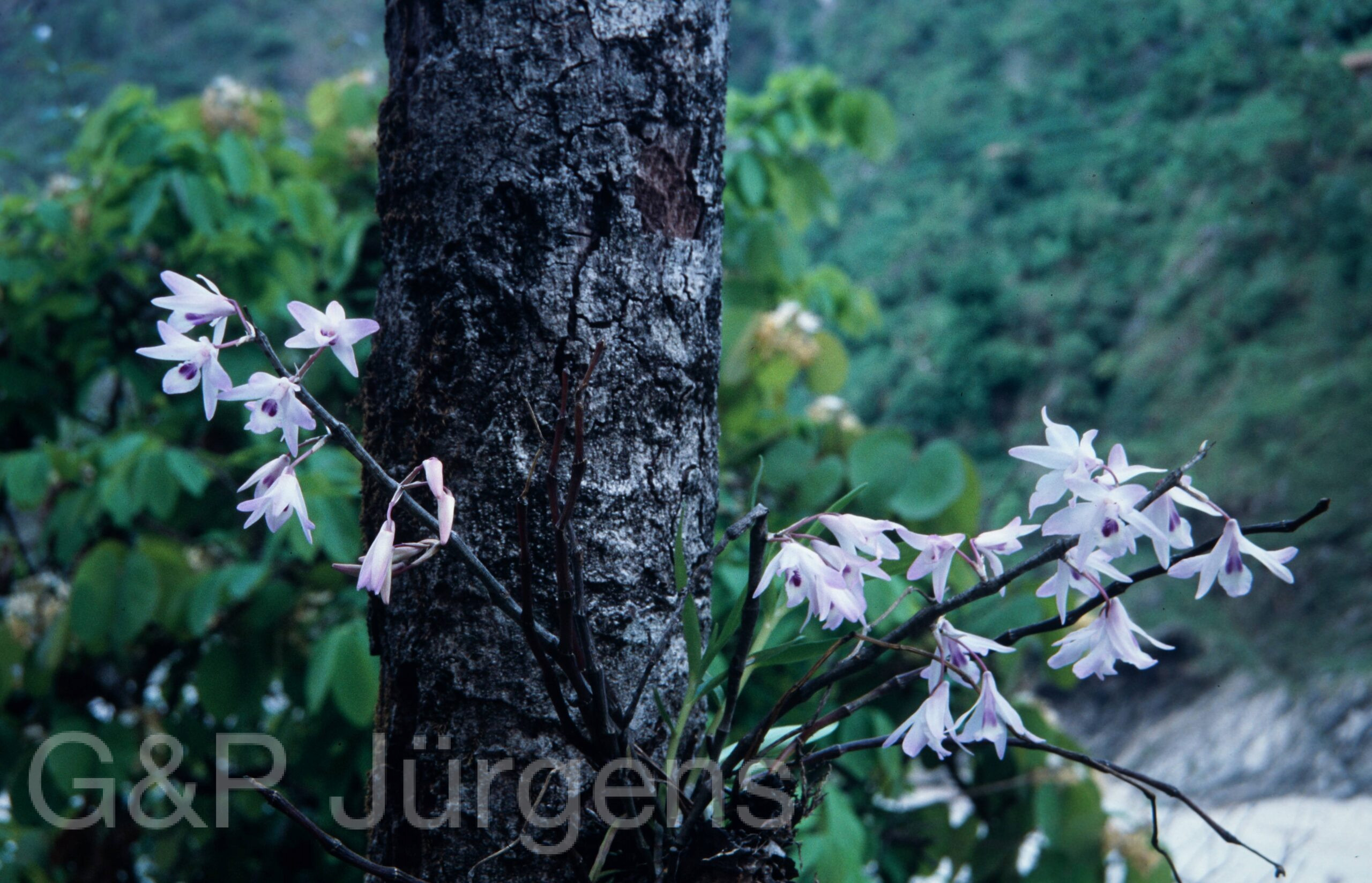
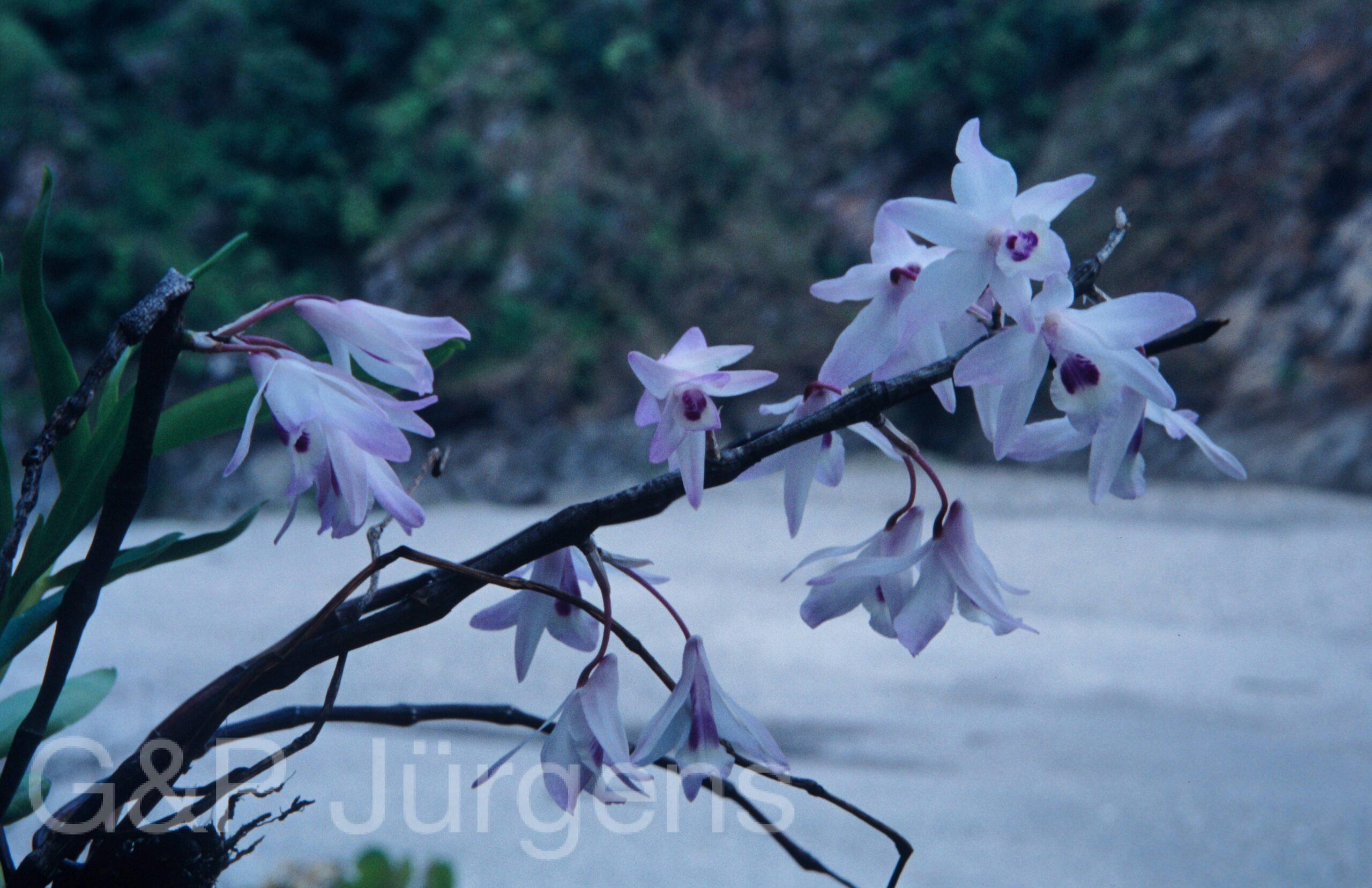
Dendrobium transparens is an epiphytic orchid distributed across the eastern and central Himalaya and into the Indo-Burmese region, recorded from India, Nepal, Bhutan, China, Myanmar and Thailand, with introduced or cultivated occurrences in western Europe. The species favours warm-temperate to subtropical broad-leaved forest, growing on tree trunks and mossy branches between roughly 800 and 1800 m. The photographed plant from Gorkha at Labubhesi, central Nepal, around 1200 m and flowering in May, is typical of its preferred mid-elevation, humid forested ravines where seasonal monsoon moisture and bright filtered light coincide.

The plant forms slender, pendent or sub-erect, cane-like stems that are somewhat flattened and longitudinally grooved, sheathed by membranous leaf-bases. The leaves are distichous, narrowly lanceolate, thin-textured and deciduous, leaving the leafless canes to bear flowers. Inflorescences are short, lateral, two- to three-flowered fascicles from the nodes of older stems. The flowers are translucent white to pale rose, the sepals and petals delicate and spreading; the labellum is broadly obovate to sub-orbicular, often marked with two deep magenta to purple blotches at the throat, and the short mentum gives the bloom its semi-pendent posture.

The specific epithet transparens alludes to the thin, almost translucent perianth segments. Within Dendrobium it belongs among the deciduous-leaved, soft-caned sections allied to D. nobile, a complex of considerable horticultural interest. As with most Himalayan epiphytic orchids, it is dependent on intact forest cover and mycorrhizal associations, and is vulnerable to habitat clearance and collection pressure, though it remains locally frequent across its broad range.

Author: Wall. ex Lindl. · Sources: POWO (Kew), GBIF, Flora of China Vol. 25, Flora of Bhutan Vol. 3, Flora of Nepal, The Genus Dendrobium (Wood)
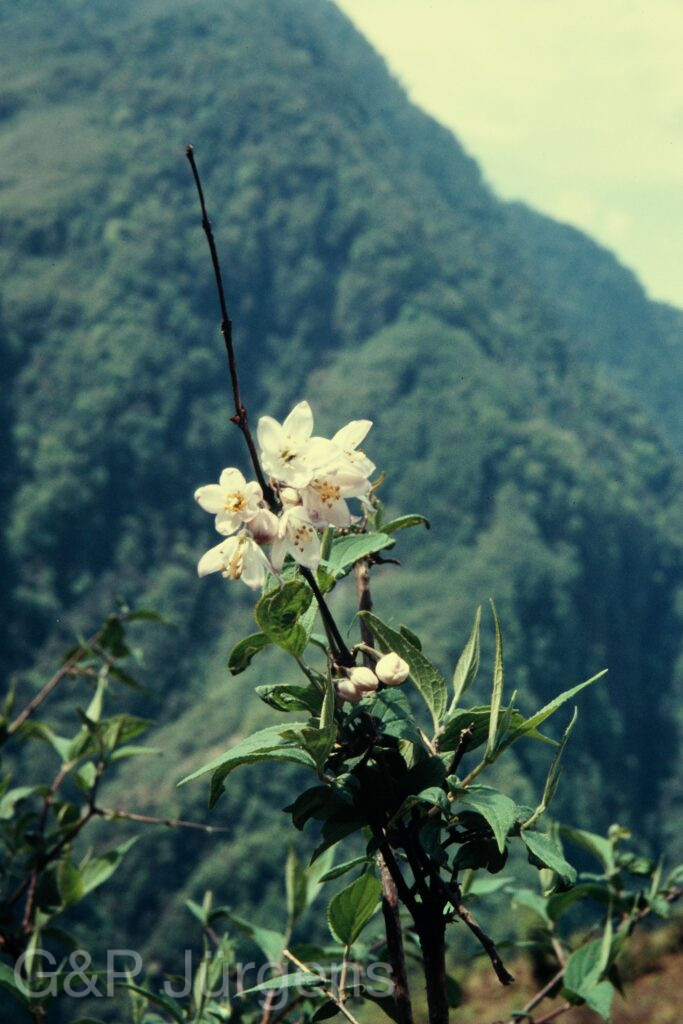
R.Br. ex Wall.

Nepal 97 304 P605
Nepal Honggaon 2360m, May

Description

Deutzia staminea is a deciduous shrub distributed across the western and central Himalayas, from Pakistan through northern India and Nepal to Bhutan, with populations extending into southwest China and northern Myanmar. GBIF records approximately 390 occurrences, with the majority from India and Nepal. The species occupies dry to mesic slopes, open forests, scrublands, and rocky hillsides at elevations of 1,500–3,200 m. At Honggaon in central Nepal at 2,360 m, it inhabits open Pinus–Quercus forests and rocky banks, where it flowers prolifically in May during the pre-monsoon season.
Deutzia staminea is a deciduous shrub reaching 1.5–4 m in height, with greyish-brown bark that exfoliates in thin flakes on older stems. Leaves are opposite, ovate to lanceolate, 3–8 cm long, with serrate margins and a rough texture from stellate trichomes on both surfaces. The inflorescence is a terminal corymb or panicle of 5–20 flowers. Flowers are pentamerous, 12–18 mm in diameter, with white petals that are oblong-elliptic and spreading. The stamens, 10 in number, are distinctive: the filaments are broadly winged and toothed at the apex, exceeding the petals — a character reflected in the specific epithet 'staminea.' The fruit is a hemispheric capsule, 4–6 mm across, dehiscing by 3–4 valves and releasing numerous small seeds.
Deutzia staminea is the most widespread Himalayan representative of the genus and is distinguished from the closely related D. compacta by its prominently toothed stamen filaments and generally laxer inflorescences. The species serves as an important early-season nectar resource for pollinators in mid-elevation Himalayan landscapes, where relatively few shrubs are in flower during the pre-monsoon period. It is occasionally cultivated in European gardens and has been in cultivation since its introduction by Wallich in the early nineteenth century.

Author: R.Br. ex Wall. · Sources: POWO (Kew), GBIF, Flora of China Vol. 8, Flora of Pakistan Vol. 192, Polunin & Stainton: Flowers of the Himalaya (1984)

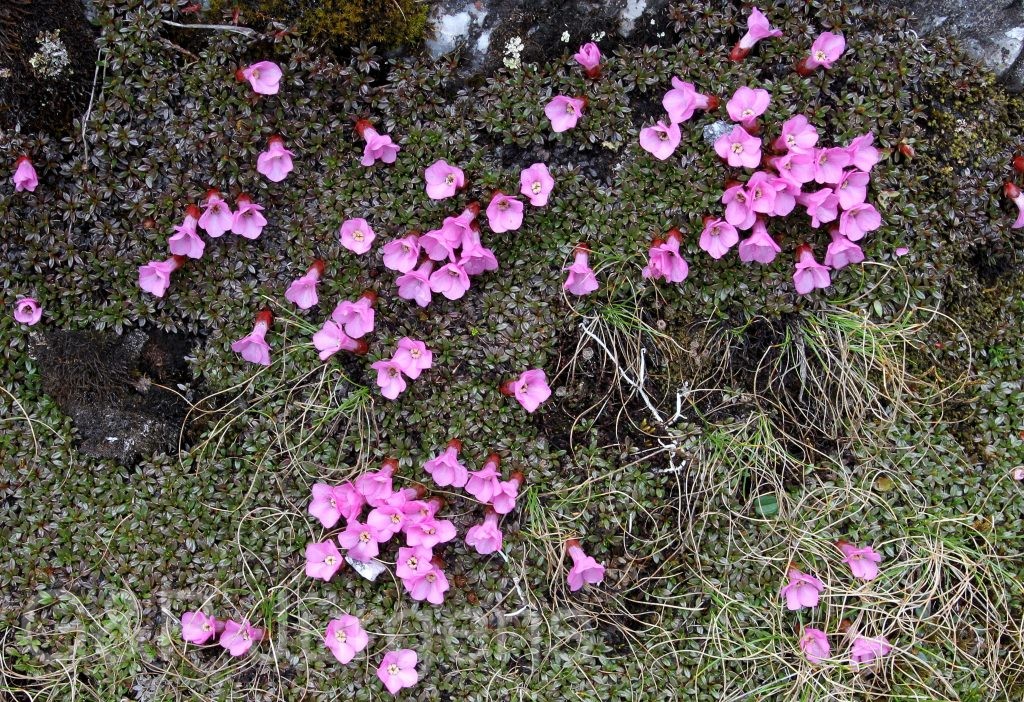
Hook.f. & Thomson

BhutanPG2011 447
Bhutan Jule-Tso, 4100m June

Description

Diapensia himalaica Hook.f. & Thomson is a high-alpine cushion plant of the Sino-Himalayan mountains, recorded from China, India, Nepal, Bhutan and Myanmar (CN, IN, NP, BT, MM), with GBIF documenting some 304 occurrences. It is a plant of the upper alpine and subnival belt, on exposed rocky ridges, gravelly slopes, moraines and turf margins, generally above 4000 m where wind exposure and a short growing season prevail. The Bhutanese material from Jule-Tso at 4100 m in June illustrates its early-summer flowering after snow-melt, when the cushions are studded with relatively large solitary flowers.

It forms a compact, evergreen, woody cushion of densely crowded shoots clothed in small, leathery, imbricate leaves. These are narrowly spathulate to oblong, sessile, with a thickened entire margin and a coriaceous texture resisting desiccation. The flowers are solitary and terminal on short stalks scarcely exceeding the cushion, actinomorphic and five-merous, with a persistent calyx and a campanulate to rotate corolla of fused white to pale pink petals; the five stamens are adnate to the corolla tube. The fruit is a small loculicidal capsule with numerous minute wind-dispersed seeds.

Diapensia is the type genus of the small, isolated family Diapensiaceae, an arctic-alpine lineage of ericalean affinity, and D. himalaica is the Himalayan vicariant of the circumboreal D. lapponica complex. The compact cushion habit is a classic adaptation to cold, wind-swept, nutrient-poor high mountains. Its biogeographic importance lies in linking the Himalayan high-alpine flora to arctic and boreal cushion-plant communities, and as a slow-growing specialist it is sensitive to climate change.

Author: Hook.f. & Thomson · Sources: POWO (Kew), GBIF, Flora of Bhutan Vol. 2, Flora of China Vol. 14, Flora of Nepal, Scott & Day monograph of the Diapensiaceae

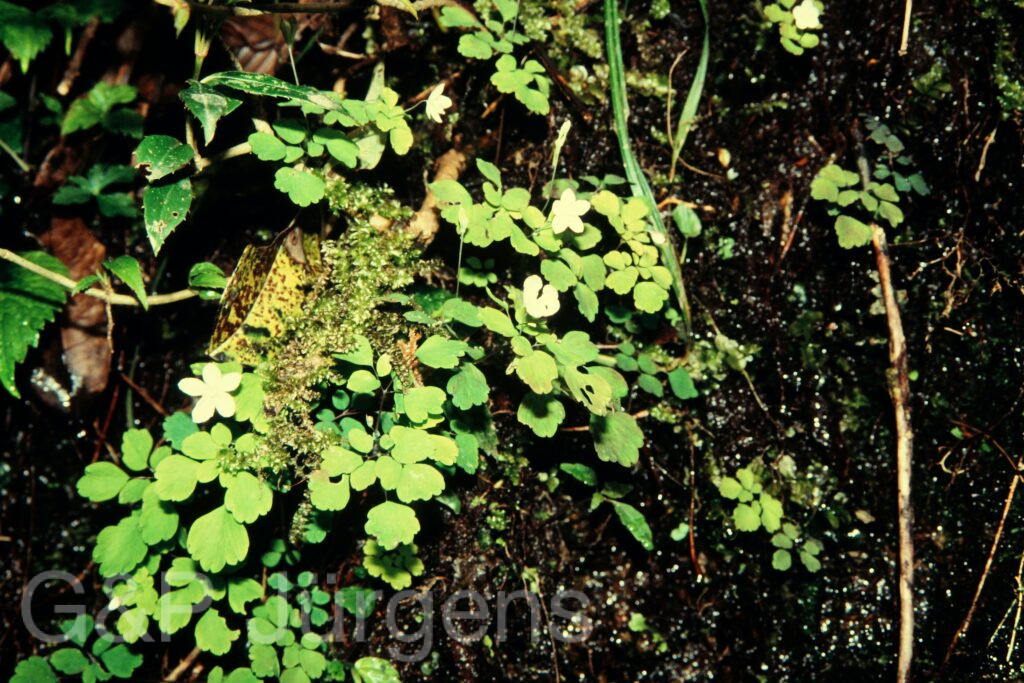
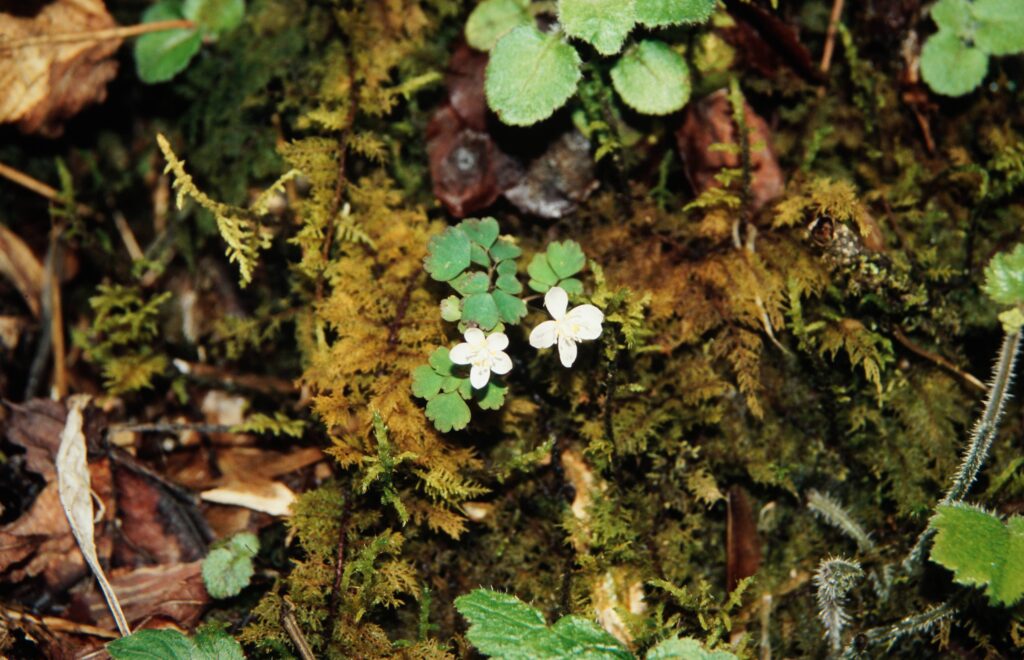
(Hook.f. & Thomson) W.T.Wang & P.K.Hsiao

Nepal 97 310 G614
Nepal Honggaon 2300m May
Sikkim 2006 33 2 ergebnis
India West-Bengal Tonglu 3200m, May

Description

Dichocarpum adiantifolium is a slender woodland buttercup relative of the Sino-Himalayan region, distributed through Taiwan, China, India, Nepal, Bhutan and Myanmar, with the comparatively rich total of about 286 GBIF records. It grows in cool, shaded, humus-rich situations: moist temperate forest floors, mossy rocks, ravine banks and streamsides, generally between about 2000 and 3500 m. The collections illustrated, from Honggaon in Nepal at around 2300 m and Tonglu in West Bengal at about 3200 m, both in May, represent its typical spring-flowering forest habitat.

It is a delicate, glabrous perennial herb arising from a short rhizome. The leaves are mostly basal, long-petiolate and compound, divided into numerous small, thin, fan-shaped to obovate leaflets that recall the fronds of a maidenhair fern (Adiantum), hence the epithet. Slender scapes bear loose, few-flowered cymes of small flowers, each with five white, petaloid sepals and small tubular or two-lipped nectary petals, numerous stamens and usually two carpels. The diagnostic fruit is a pair of divergent, flattened follicles spreading widely at maturity, a feature reflected in the generic name (from the Greek for divided fruit).

Dichocarpum is a small east Asian and Himalayan genus segregated from Isopyrum and allied to Thalictrum and Aquilegia within the Ranunculaceae; D. adiantifolium was originally described under Isopyrum and later transferred by Wang and Hsiao. The paired spreading follicles and ferny foliage make it readily recognisable. It is a fairly widespread forest-understorey species and is not regarded as threatened, though as a shade-demanding mesophyte it depends on intact, humid temperate forest and would be sensitive to logging and forest fragmentation.

Author: (Hook.f. & Thomson) W.T.Wang & P.K.Hsiao · Sources: POWO (Kew), GBIF, Flora of China, Flora of Bhutan, Annotated Checklist of the Flowering Plants of Nepal, Wang & Hsiao Revision of the Genus Dichocarpum

Lindl.

Nepal 99 891 ergebnis
West-Nepal Suli-Khola 2900m, July

Description

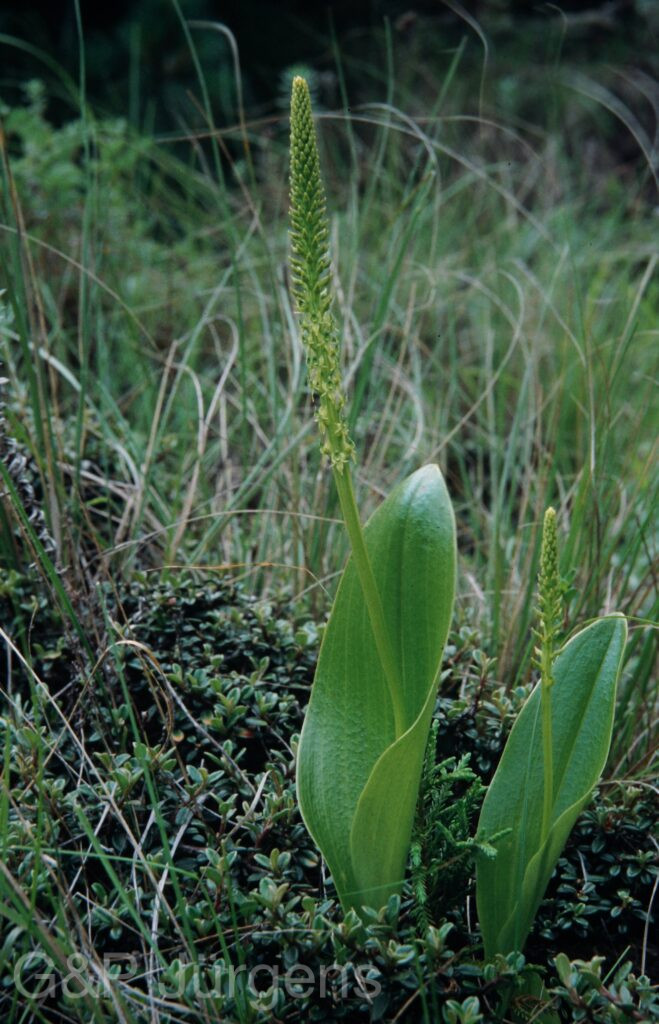
Dienia cylindrostachya is a terrestrial orchid distributed across the Himalaya and adjacent montane Asia, recorded from India, Nepal, Bhutan, China, Hong Kong, Myanmar and Pakistan, with GBIF documenting some 98 georeferenced occurrences. It favours humus-rich, shaded forest floors, mossy banks and damp grassy slopes in the temperate zone, typically between about 1500 and 3000 m. The photographed plant was found in West Nepal along the Suli-Khola at 2900 m in July, an elevation and season that coincide with its summer flowering during the monsoon, when soil moisture and atmospheric humidity are at a maximum.

The species is a small, glabrous herb arising from a fleshy, ovoid pseudobulb or thickened stem-base. It bears a few thin, plicate, ovate-elliptic to lanceolate leaves that are membranous and sheathing at the base. The inflorescence is an erect, slender, densely many-flowered cylindrical raceme, from which the epithet derives, carrying numerous minute, non-resupinate flowers in shades of greenish-yellow to purplish. The sepals and petals are small and spreading; the lip is broad, often auriculate or saccate at the base, and the column is short and stout. The fruit is a small, ellipsoid, ribbed capsule releasing dust-like seeds.

Long placed in Malaxis, the species is now treated in Dienia (Malaxidinae, Epidendroideae), a segregate distinguished by non-resupinate flowers and column structure. The family is rendered "Orchideaceae" in the source but the taxon belongs to the Orchidaceae. As an easily overlooked terrestrial of intact temperate forest, it is sensitive to deforestation, though its wide Asian range affords some resilience.

Author: Lindl. · Sources: POWO (Kew), GBIF, Flora of Nepal, Flora of China, Flora of Bhutan, Genera Orchidacearum (Pridgeon et al.)

(Roxb.) Sweet

Bhutan2012 1212
Bhutan Mo-Chu 1500m, October
Bhutan2015 565
Bhutan Mo-Chu 1500m, October
Bhutan2015 566
Bhutan Mo-Chu 1500m, October

Description

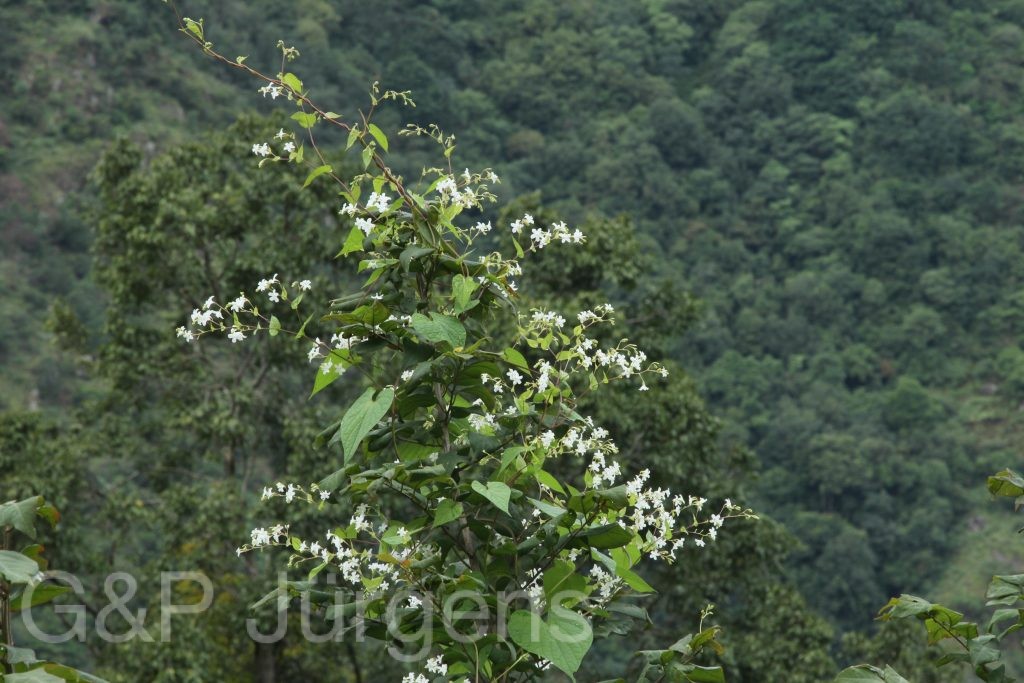
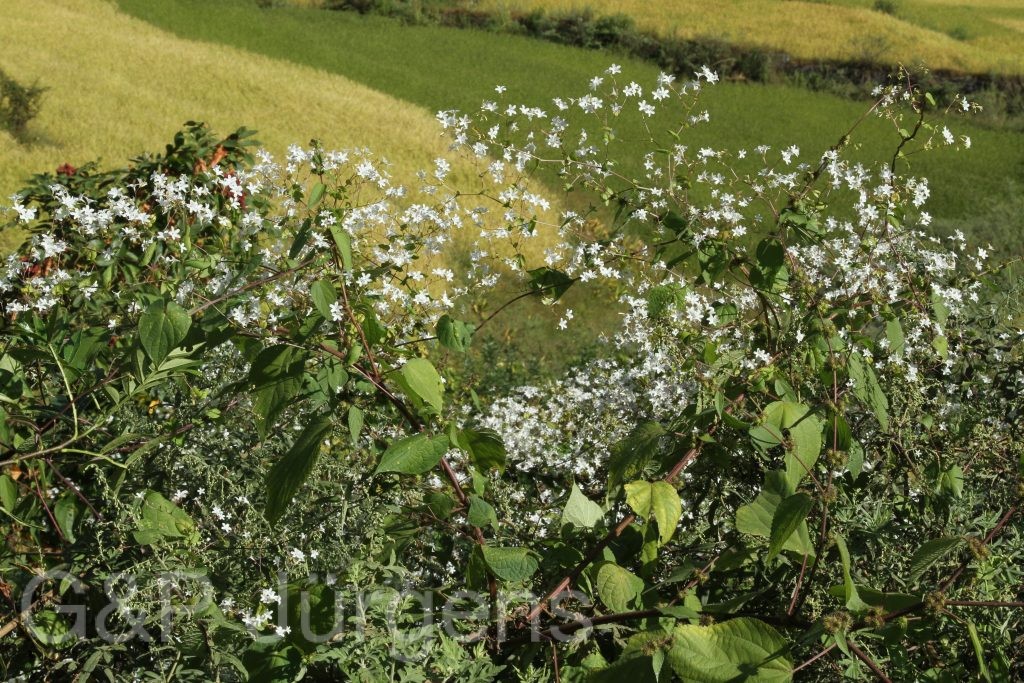
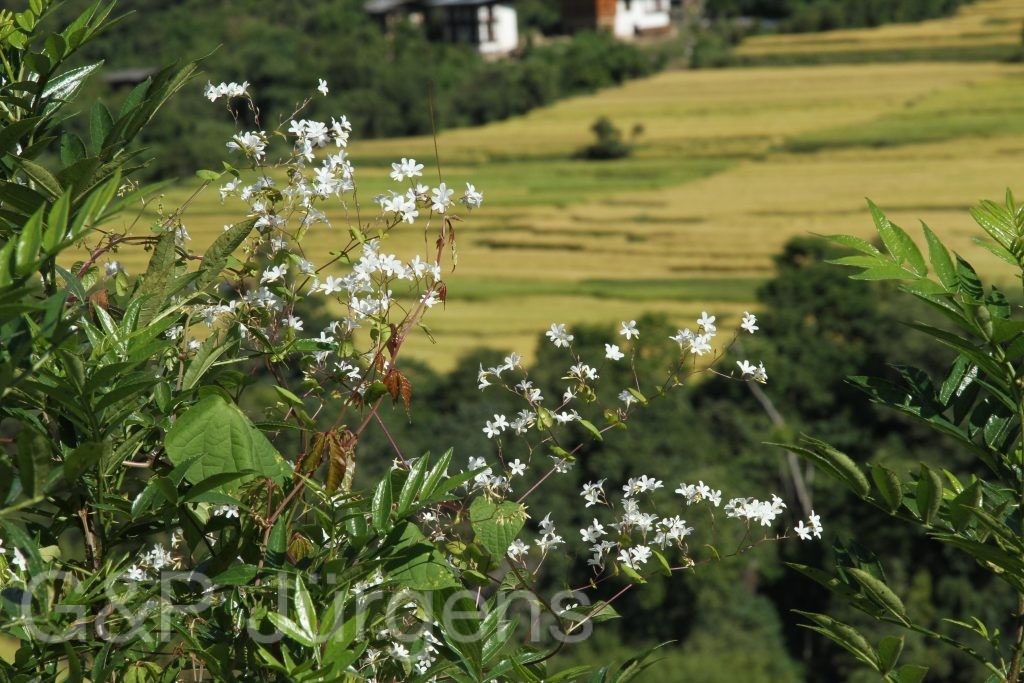
Dinetus racemosus is a twining climber of the morning-glory family widely distributed across the Himalaya, Indo-Burma and South-East Asia. GBIF records, numbering over 900, place it in India, Nepal, Bhutan and China through Myanmar, Thailand, Laos, Vietnam and Malaysia to Indonesia and Timor-Leste, with cultivated or naturalised records elsewhere. It occupies forest margins, thickets, hedgerows, scrubby roadsides and clearings in subtropical to warm-temperate zones, where it scrambles vigorously over shrubs and small trees. The photographed plant from the Mo Chu valley in Bhutan, at about 1500 m and flowering in October, illustrates its autumn-flowering habit in mid-elevation valley vegetation, where its conspicuous white inflorescences appear after the monsoon.

The species is a perennial, herbaceous to slightly woody, left-twining liana with slender, often pubescent stems. The leaves are alternate, long-petiolate, broadly ovate to ovate-cordate with a deeply cordate base and acuminate apex, the lamina entire and softly hairy. The flowers are borne in elongate, many-flowered, axillary and terminal racemes or panicles, a distinctive feature in a family more usually cymose. Each flower is small, with a five-lobed calyx and a white, broadly funnelform to subcampanulate, five-angled corolla. After flowering the calyx lobes enlarge markedly and become membranous, accrescent wings that surround the small, indehiscent, one- to few-seeded fruit, serving as a wind-dispersal organ.

Dinetus belongs to the tribe Poraneae of Convolvulaceae, a group characterised by racemose inflorescences and accrescent, wing-like fruiting sepals, and the species has long been known under the synonyms Porana racemosa and Porana grandiflora; modern treatments recognise the segregate genus Dinetus. The accrescent calyx wings are a clear adaptation to anemochory, dispersing the light fruits on the wind. The plant is common and ecologically resilient across its broad range and is of no conservation concern; it is locally appreciated as an ornamental for its profuse white autumn flowering and is occasionally used in traditional medicine.

Author: (Roxb.) Sweet · Sources: POWO (Kew), GBIF, Flora of China Vol. 16, Flora of Bhutan Vol. 2, Flora of Nepal, Flora of Pakistan, Staples' systematics of Convolvulaceae (Poraneae)

Wall.

Bhutan2015 479
  Bhutan Pele-La 3200m, October
Garw 2005 272 ergebnis
India Garhwal Kunol 2450m, September

Description

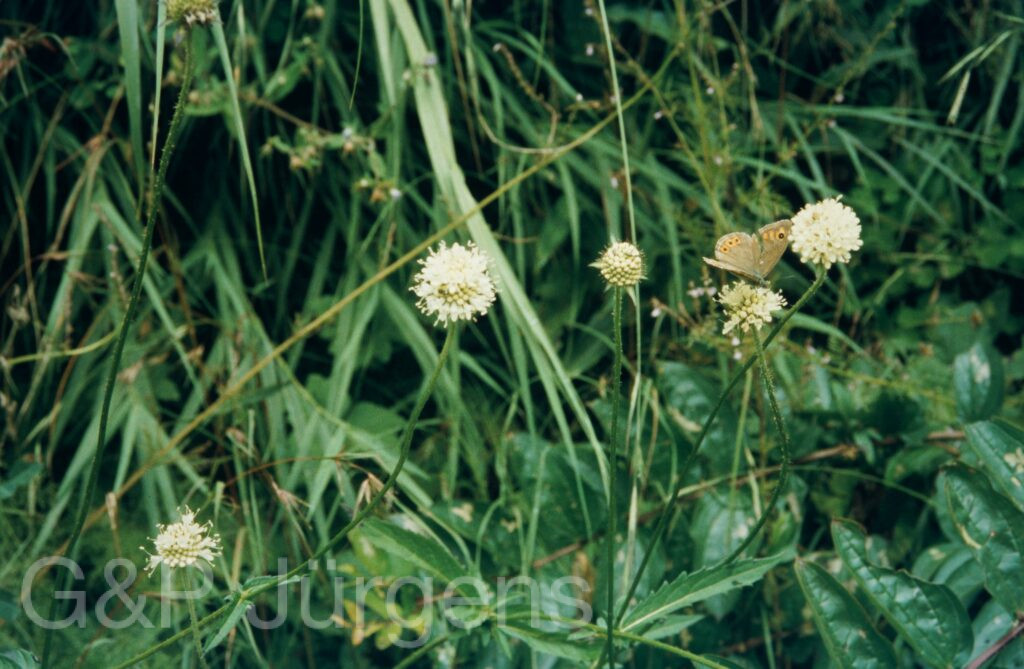
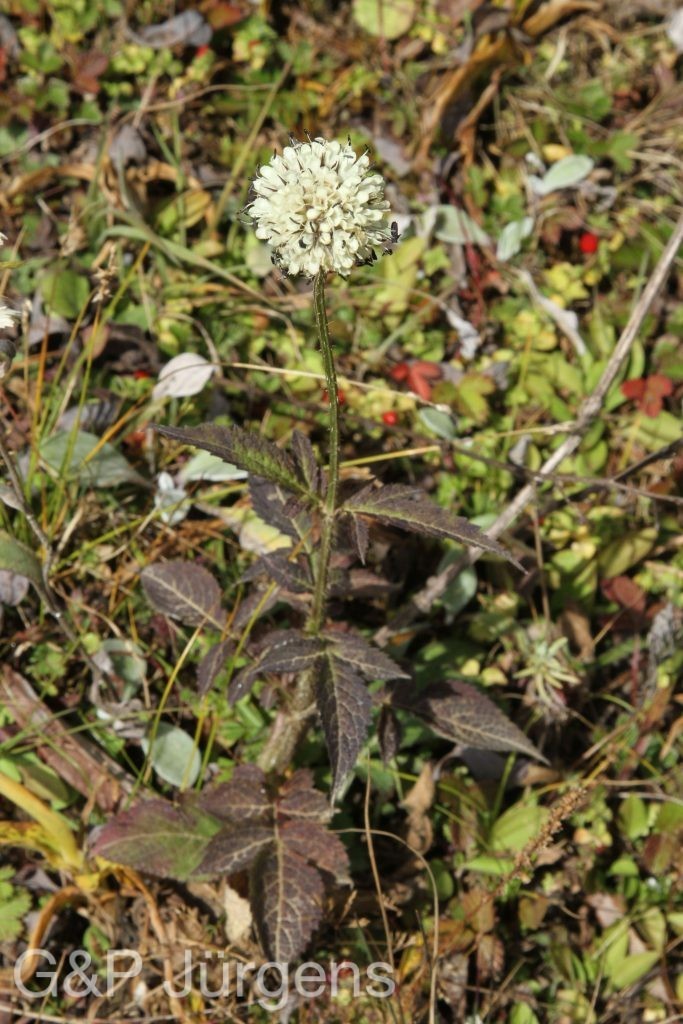
Dipsacus inermis is a tall biennial or short-lived perennial herb widely distributed through the temperate Himalaya and into China and Myanmar, with naturalised and casual occurrences recorded as far afield as Britain, Ireland, Portugal, Turkey and the United States among its 830-odd documented records. Within its native range it grows in forest clearings, along streamsides, in damp meadows and on disturbed slopes from about 1800 to 3500 m. The illustrated plants come from Pele-La in Bhutan at 3200 m in October and from Kunol in Garhwal, India, at 2450 m in September, the latter date capturing the fruiting season.

The species develops a furrowed, sparsely prickly to nearly unarmed stem (whence the epithet inermis), distinguishing it from the strongly spiny teasels. Leaves are opposite, the lower petiolate and often lyrate-pinnatifid, the cauline sessile and lanceolate, frequently connate at the base. The inflorescence is a dense ovoid to globose capitulum subtended by linear involucral bracts; the receptacular bracts are awned. Individual flowers are small, with a four-lobed whitish to pale purple corolla and an epicalyx surrounding each floret; the calyx is cup-shaped and the fruit an achene crowned by the persistent calyx.

Formerly placed in the family Dipsacaceae, the genus is now subsumed within an enlarged Caprifoliaceae following molecular reclassification. The plant is insect-pollinated and its seed-heads provide forage for granivorous birds. It is a vigorous coloniser of disturbed ground, accounting for its sporadic naturalisation outside Asia; it carries no conservation concern across its extensive native distribution.

Author: Wall. · Sources: POWO (Kew), GBIF, Flora of China, Flora of Bhutan, Flowers of the Himalaya, Caprifoliaceae monograph

D.Don

Nepal 2009 101 ergebnis
Nepal Helambu Samathang 2410, May

Description

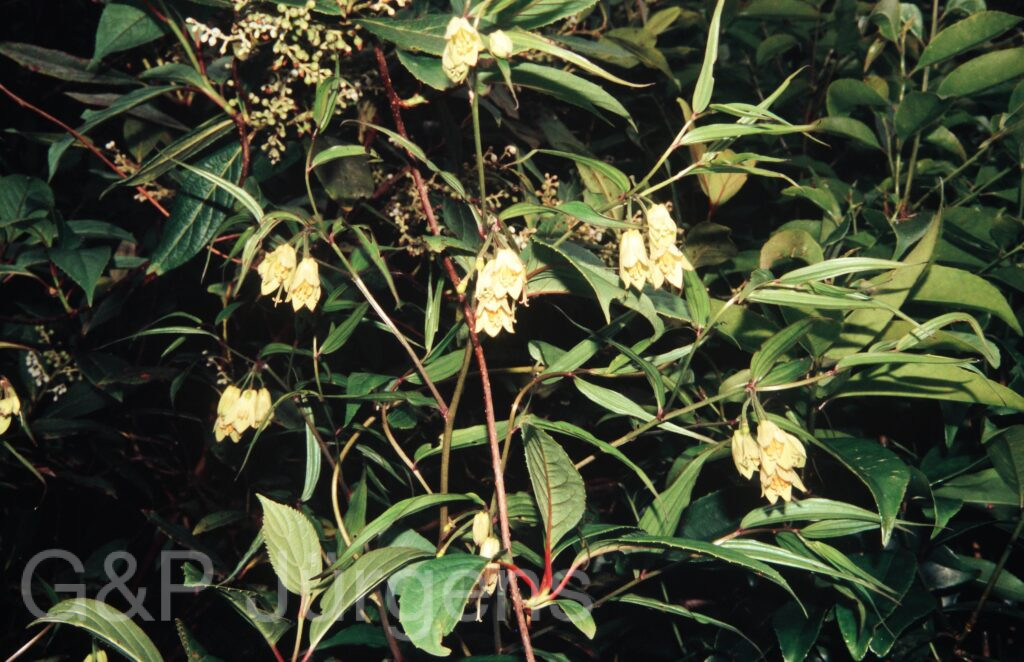
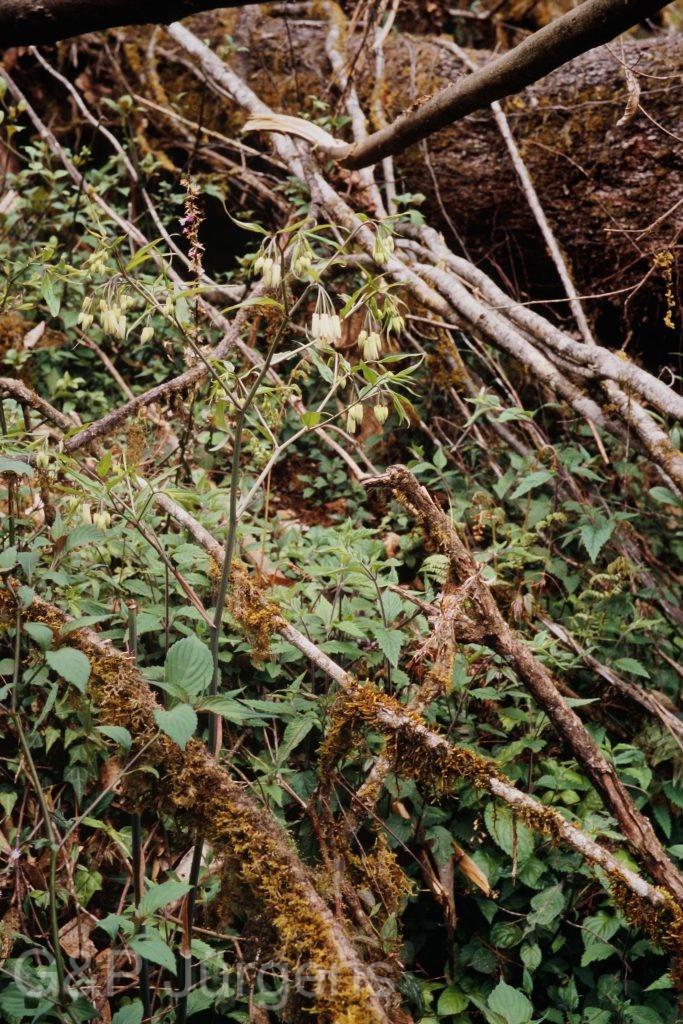
Disporum calcaratum is a rhizomatous woodland herb widespread from the Himalaya through southern China to mainland and insular Southeast Asia, with GBIF occurrences in China, Thailand, Myanmar, India, Nepal, Vietnam, Indonesia, Malaysia, Bhutan and Laos. It grows in the shaded understorey of moist broad-leaved and mixed forest, on humus-rich slopes and along stream banks, generally between 1,500 and 2,800 m. The photographed plant was recorded at Samathang in the Helambu region of Nepal at about 2,410 m in May, flowering during the moist pre-monsoon period typical of its mid-montane habitat.

The plant arises from a short, creeping rhizome and produces erect, branching stems bearing alternate, ovate to ovate-lanceolate leaves with prominent arcuate venation, rounded to cordate bases and acuminate tips. The flowers hang in terminal and axillary umbellate clusters; the six tepals are narrow, recurved and purple to violet, each outer tepal extended at the base into a short, conspicuous saccate spur that gives the species its epithet. There are six stamens with the typical Disporum arrangement, and a superior, three-locular ovary. The fruit is a globose, dark blue to black berry containing several seeds, dispersed by birds.

Disporum is now placed in the Colchicaceae rather than the older Liliaceae, and D. calcaratum is readily recognised among Asian congeners by its spurred, purple, pendent flowers. The species is widespread and ecologically a minor but characteristic element of the montane forest floor, important in shaded herb-layer communities. It is common across its broad range and is not regarded as threatened, though it depends on the persistence of intact, humid forest understorey.

Author: D.Don · Sources: POWO (Kew), GBIF, Flora of China Vol. 24 (Colchicaceae), Grierson & Long: Flora of Bhutan Vol. 3, Hara et al.: An Enumeration of the Flowering Plants of Nepal

(Lour.) Merr.

Bh2008 447 G698
Bhutan Samtengang 2040m, May
Sikkim2004 113 P194
India West-Bengal, Utaray 2100m April
Nepal 97 373 P733
Nepal Arun-Valley 1750m, May

Description

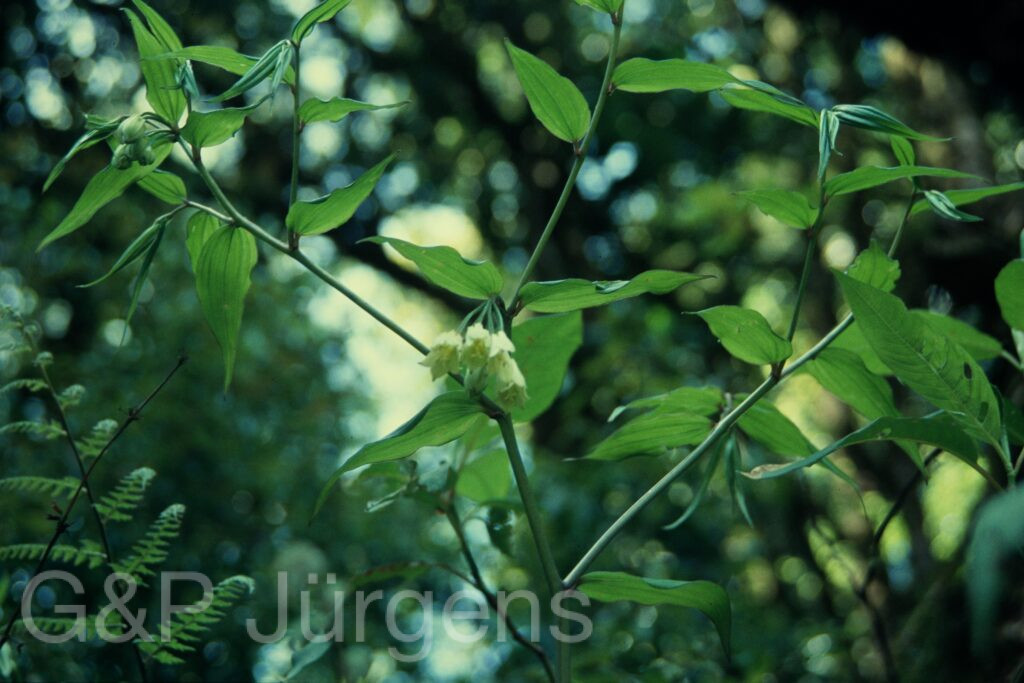
Disporum cantoniense (Lour.) Merr. is a rhizomatous perennial herb of the Colchicaceae with a wide distribution across the Himalaya, mainland and insular Southeast Asia and East Asia. GBIF (nearly 4,000 occurrences) documents it from China, India, Nepal, Bhutan, Thailand, Taiwan, Japan, Vietnam, Myanmar, Malaysia, Indonesia and Sri Lanka, where it grows in shaded broad-leaved and mixed forest, on forest margins, shaded banks and among scrub. It occupies a broad montane belt; the records from Samtengang in Bhutan (2,040 m), Utaray in West Bengal (2,100 m) and the Arun Valley in Nepal (1,750 m), flowering in April–May, illustrate its spring anthesis in mid-elevation Himalayan forest understorey.

The plant arises from a short, knotty rhizome bearing fleshy roots and produces erect, branched aerial stems up to a metre or more tall. The leaves are alternate, ovate-lanceolate to lanceolate, with conspicuous arcuate-parallel venation and somewhat clasping or shortly petiolate bases. The flowers hang in terminal, drooping few-flowered umbel-like clusters at the branch tips; each is narrowly campanulate with six free, spreading to recurved tepals, white, greenish or tinged purple, the tepals saccate or shortly spurred at the base. There are six stamens and a superior ovary; the fruit is a globose, dark blue-black to purplish berry containing few seeds.

Disporum, long placed in Liliaceae and later Convallariaceae, is now firmly assigned to the Colchicaceae on molecular and morphological grounds, distinct from the New World Prosartes. D. cantoniense is a polymorphic, widespread species with several recognised varieties, and the variation in flower colour and stature has generated considerable taxonomic literature. Ecologically it is a characteristic shade-tolerant geophyte of Asian temperate and subtropical forests, with berries dispersed by birds.

Author: (Lour.) Merr. · Sources: POWO (Kew), Flora of China Vol. 24, Flora of Bhutan Vol. 3, GBIF, Conran & Tamura: Colchicaceae in The Families and Genera of Vascular Plants