Tag:

Myanmar

Flowers of the Myanmar Himalaya — 604 species recorded from northern Myanmar (Burma) and the eastern Himalayan borderlands, a biodiversity hotspot linking the Himalaya to the mountains of Yunnan and Southeast Asia. The region’s forests and alpine slopes hold a rich flora of rhododendrons, orchids, balsams and gentians. Every page gives a botanical description, distribution, habitat and flowering time with the original photograph.

H.Hara

Bhutan2014 212
Bhutan Trashyangtse 2100m, May
Bhutan2014 215
Bhutan Trashyangtse 2100m, May

Description

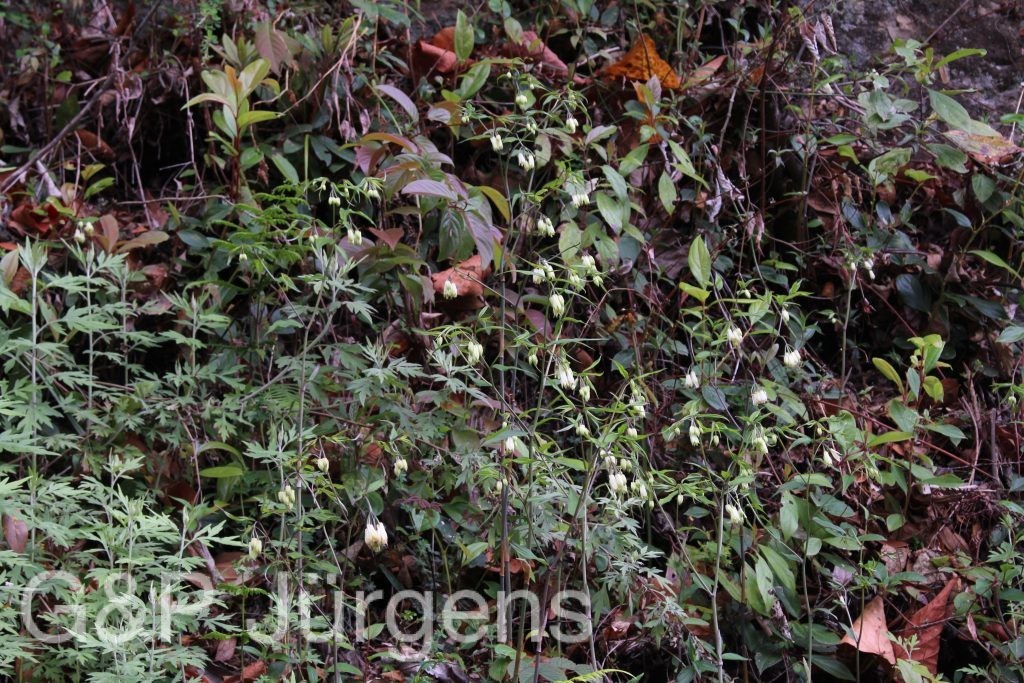
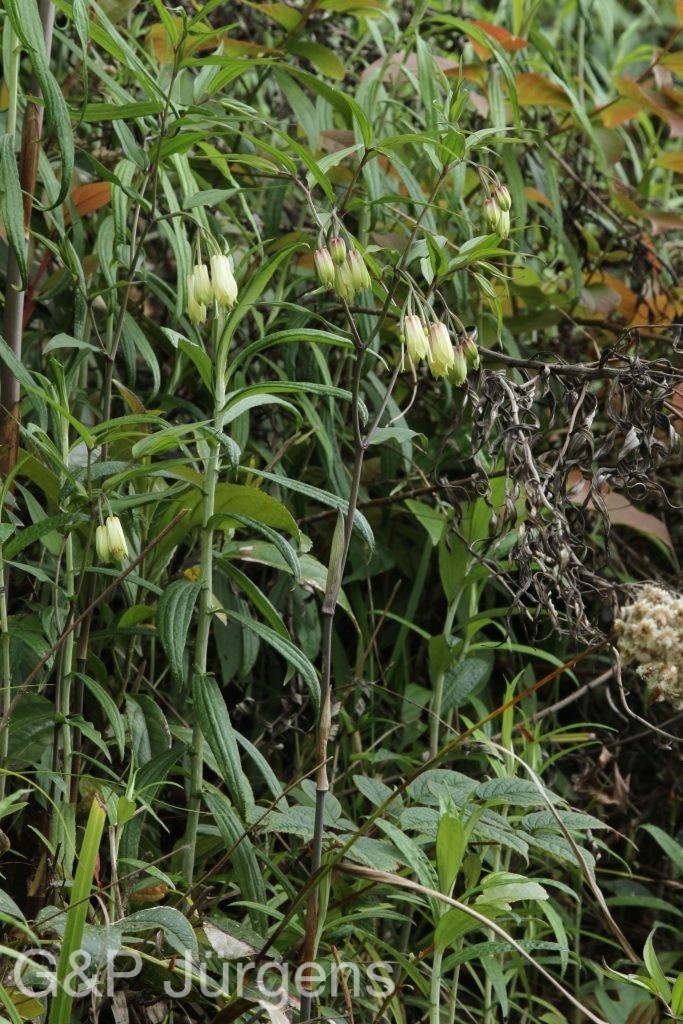
Disporum leucanthum is a woodland perennial of the eastern Himalaya and adjacent regions, recorded from China, India, Bhutan, Myanmar and Nepal, with only some 35 occurrences in GBIF, reflecting both a relatively restricted range and limited collecting. It is a plant of shaded, moist broad-leaved and mixed forest, forest understorey and shaded streamsides, typically in the warm to cool temperate belt. The individual photographed at Trashyangtse in eastern Bhutan at 2100 m in May, flowering in spring under forest cover, is characteristic of its preference for humid, sheltered montane woodland where deep humus and dappled shade prevail.

The species is an erect, sparingly branched perennial herb arising from a short, creeping rhizome with fibrous roots. The slender stems bear alternate, ovate to ovate-lanceolate leaves that are conspicuously parallel-veined, entire and shortly petiolate to subsessile, with a rounded to subcordate base and acuminate apex. The flowers are pendent and borne singly or in small clusters at the branch tips; they are narrowly campanulate to tubular, with six free, white tepals (as the epithet indicates) that are sometimes greenish-tinged, each tepal spurred or saccate at the base. There are six stamens, and the superior ovary develops into a small, fleshy, globose to ovoid berry that ripens dark, containing several seeds.

Disporum is an East Asian genus now placed in the family Colchicaceae following molecular reappraisal, having formerly been treated within Liliaceae or Convallariaceae; the North American fairy-bells once included here are now separated as Prosartes. D. leucanthum belongs to the Sino-Himalayan assemblage of the genus, distinguished among its relatives by floral and tepal characters. The berries are bird-dispersed. Owing to its comparatively narrow distribution and the small number of documented records its populations warrant monitoring, though it is not formally assessed as threatened.

Author: H.Hara · Sources: POWO (Kew), GBIF, Flora of China Vol. 24, Flora of Bhutan Vol. 3, Flora of Nepal, A Revision of the Genus Disporum (Colchicaceae)
Buch.-Ham. ex D.Don

Bhutan2015 87
Bhutan Galephug 700m, October
Bhutan2015 86
Bhutan Galephug 700m, October
Bhutan2015 286
Bhutan Zhemgang 910m, October

Description

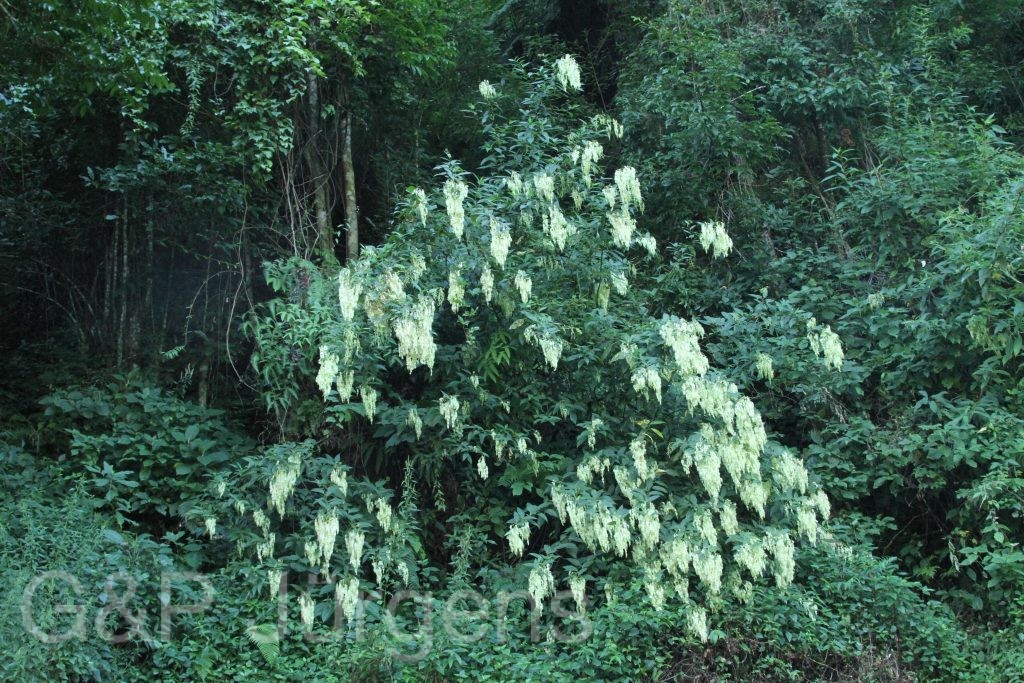
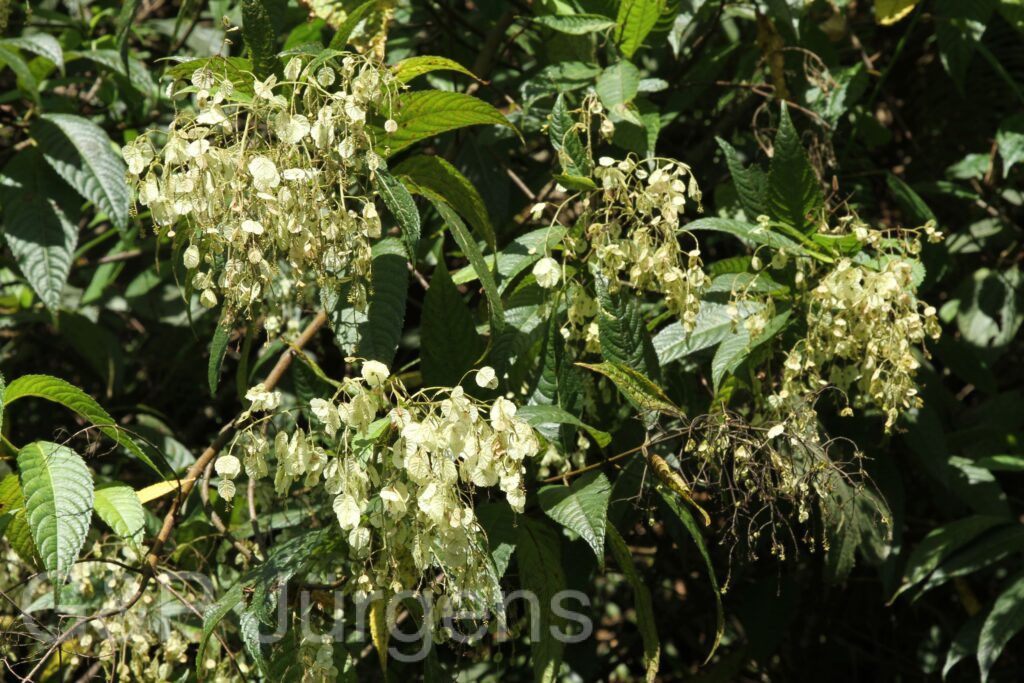
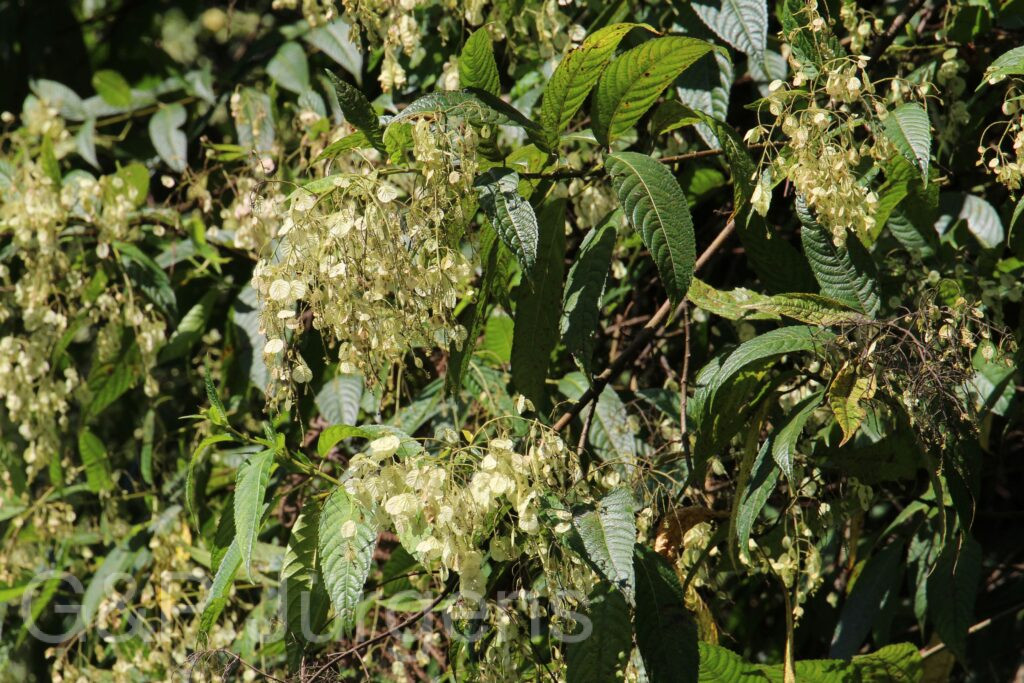
Dobinea vulgaris is a shrub or small subshrub of the eastern Himalaya and adjoining parts of southwestern China and northern Southeast Asia, recorded by GBIF from China, Nepal, India, Bhutan, Myanmar and Thailand across roughly 263 georeferenced occurrences. It is a plant of warm subtropical lower hill slopes, occupying open forest, scrub, rocky banks, ravines and disturbed roadside ground, generally at low to mid elevations. The Bhutanese records cited here, from Galephug at about 700 m and from Zhemgang at around 910 m, both in October, place it firmly in the low foothill zone of the southern Himalaya, where it flowers and fruits towards the close of the monsoon. It favours seasonally warm, humid conditions and is frequently found in secondary vegetation.

The plant has soft, somewhat herbaceous to weakly woody stems and opposite, simple leaves that are ovate to elliptic-lanceolate, acuminate, and conspicuously serrate or crenate-serrate along the margin, a foliage aspect unusual for the family. It is functionally dioecious: the small male flowers are borne in slender axillary or terminal panicles, while the female flowers are solitary or few and are remarkable for being adnate to an enlarged, persistent, leaf-like (foliaceous) bract that expands greatly in fruit and acts as a wing for wind dispersal. The fruit is a small compressed drupe-like structure carried on this accrescent membranous bract.

Dobinea is a small genus of only two species, and its placement within Anacardiaceae has historically been contentious; the herbaceous habit, opposite serrate leaves and unique bract-borne female flowers led some authors to segregate it (with Campylopetalum) into the family Podoaceae, although modern molecular phylogenetics confirms its position within an expanded Anacardiaceae, near the base of the family. This makes Dobinea vulgaris of particular interest to systematists studying the early diversification and morphological boundaries of the cashew family. The species is locally common within its range and is not regarded as of conservation concern.

Author: Buch.-Ham. ex D.Don · Sources: POWO (Kew), GBIF, Flora of China Vol. 11, Flora of Bhutan Vol. 2, Flora of Nepal, Flora of Pakistan, Pell et al.: systematics of the Anacardiaceae (including the Dobinea/Podoaceae problem)

(Roxb. ex DC.) Walp.

Nepal 97 52 P78
Nepal Mewa-Khola 1150m April
Nepal 97 53 P79
Nepal Mewa-Khola 1150m April
Nepal1992 77 P110 ergebnis
Nepal Sokathum1460m March 

Description

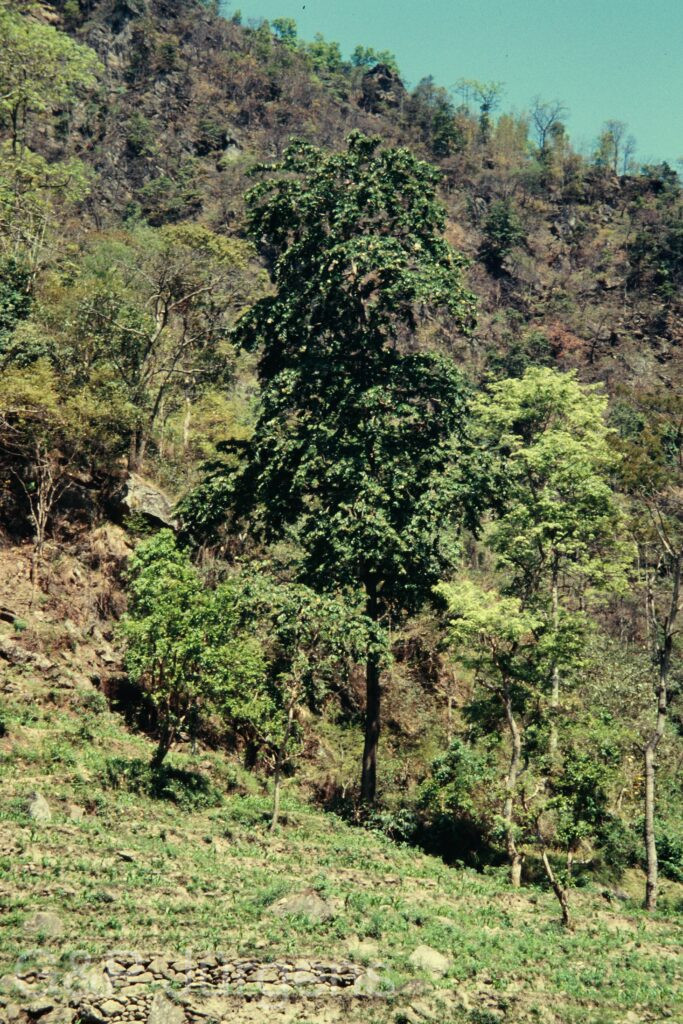
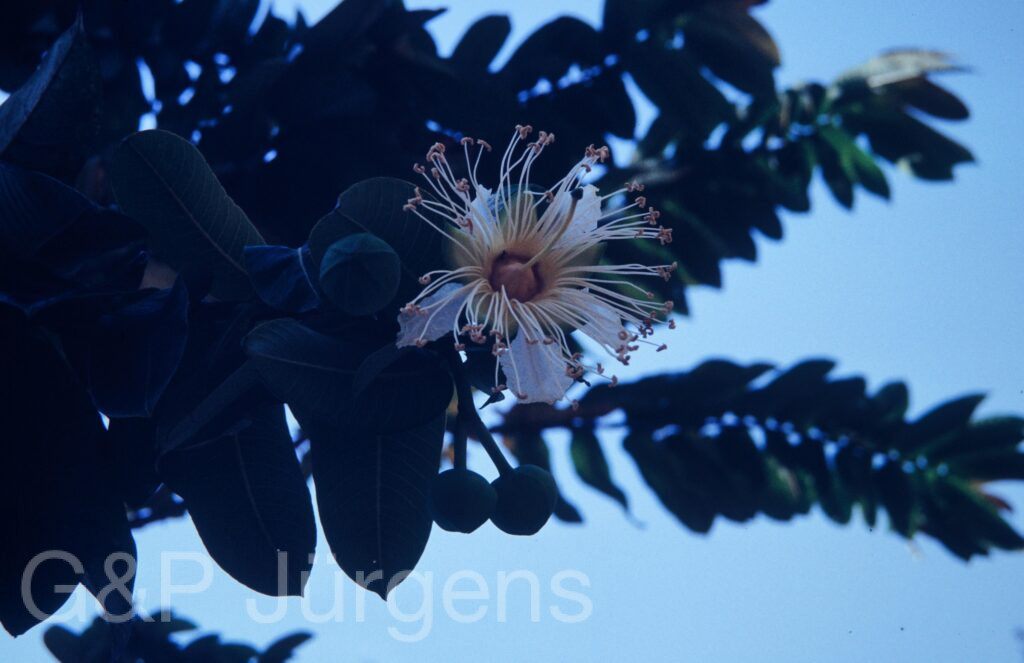
Duabanga grandiflora (Roxb. ex DC.) Walp. is a large, fast-growing evergreen tree of the Lythraceae distributed through the Indo-Himalayan and Southeast Asian tropics, native from India, Nepal, Bhutan and Bangladesh through Myanmar, Thailand, Laos, Vietnam, Malaysia and Indonesia into SW China, with around 712 georeferenced records and scattered introductions elsewhere. It is a characteristic tree of moist tropical and subtropical forest, particularly along rivers, in ravines and on alluvial flats, often a pioneer of streamside and secondary forest in regions of high rainfall. The photographed trees from Mewa-Khola at about 1,150 m in April and Sokathum at about 1,460 m in March in eastern Nepal lie at the upper, lower-montane end of its altitudinal range, which extends down into the lowland tropics.

It is a tall tree with a spreading crown and conspicuously horizontal, drooping branches. The leaves are opposite, large, oblong to oblong-lanceolate, leathery, with an obtuse to cordate base and entire margins, glabrous and prominently pinnately veined. The large, showy flowers are borne in few-flowered terminal cymes; each has a thick campanulate calyx of (four to) six fleshy lobes, white obovate petals, and very numerous stamens. The superior to half-inferior ovary develops into a hard, leathery, many-celled capsule that splits by valves to release abundant small seeds.

Duabanga is a small Indo-Malesian genus formerly segregated in its own family Duabangaceae but now placed within an enlarged Lythraceae. The night-opening flowers with their massed stamens are bat- and moth-pollinated, and the light, soft wood is locally used for boxes, matchwood and plywood. Widespread and often common as a riparian pioneer, the species is not considered threatened.

Author: (Roxb. ex DC.) Walp. · Sources: POWO (Kew), Flora of China Vol. 13, Flora of Bhutan Vol. 2, GBIF, Graham et al.: Phylogeny of Lythraceae (2005)

Dubyaea hispida

by GP Jürgens

DC.

Bhutan2012 56
Bhutan Shele-La, 4000m September

Description

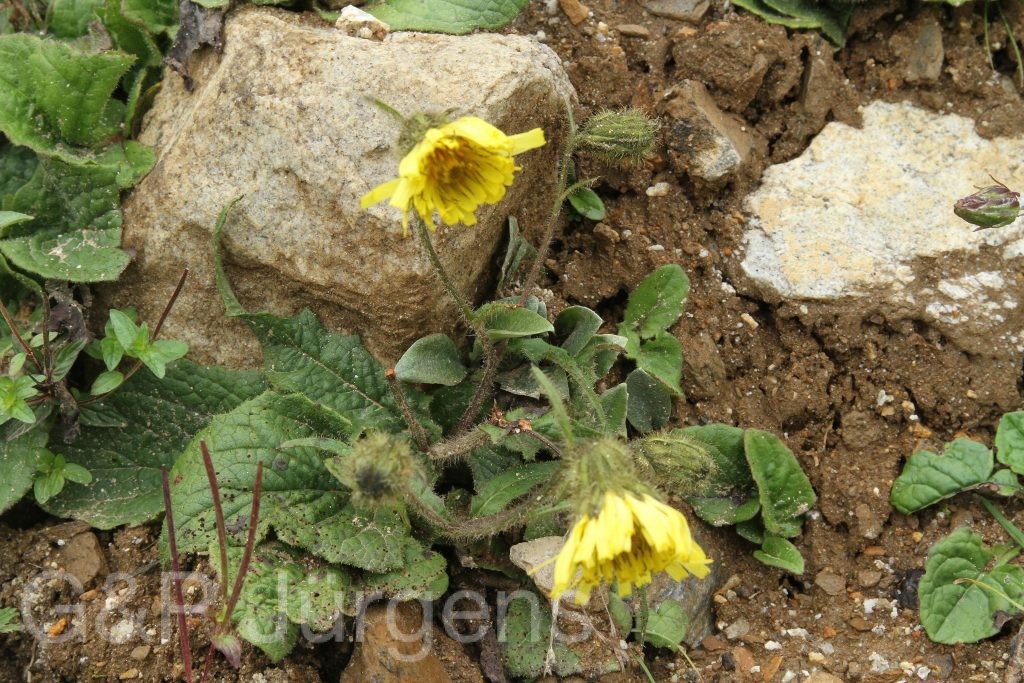
Dubyaea hispida is an alpine member of the lettuce tribe (Cichorieae) ranging across the eastern and central Himalaya into south-western China, with reliable records from Nepal, India, Bhutan, Myanmar, Pakistan and China (Xizang, Yunnan, Sichuan); extra-regional points in Austria and Great Britain among the 544 occurrences represent cultivated or misattributed material rather than native range. It grows in moist alpine meadows, scrub margins, rocky slopes and streamsides, typically between about 3000 and 4300 m. The plant figured from the Shele-La pass in Bhutan at roughly 4000 m in September reflects its characteristic late-season flowering in cool, humid high-mountain habitats.

The species is a perennial herb with a short rhizome and erect, hispid stems clothed, like the peduncles and involucres, in spreading blackish or purplish multicellular hairs. The leaves are thin, oblong to lyrate-pinnatifid, with a large terminal lobe and a winged, amplexicaul petiole base; the upper leaves are reduced. The capitula are several, nodding in a loose corymb, with an involucre of imbricate, hispid phyllaries. The florets are all ligulate and yellow, as in the milky-juiced Cichorieae. The cypselae are narrowly fusiform, ribbed and slightly narrowed above, bearing a pappus of soft, white, finely barbellate bristles.

Dubyaea is a small Sino-Himalayan genus of perhaps a dozen species centred on the eastern Himalaya and Hengduan Shan, segregated from the related Crepis and Soroseris by its nodding heads, dark-hispid indumentum and distinctive achene and pappus characters. The nodding capitula and abundant glandular-setose vestiture are adaptations to wet alpine conditions, sheltering florets from rain. As a widespread high-elevation species across multiple countries, D. hispida is not considered threatened, although it is naturally restricted to the narrow alpine belt.

Author: DC. · Sources: POWO (Kew), GBIF, Flora of China Vol. 20-21, Flora of Bhutan, Flora of Nepal, Stebbins Cichorieae of the Himalaya

(DC.) Anderb.

Bhutan2012 1356
Bhutan Sandrup 1500m, October

Description

Duhaldea eupatorioides is a subtropical to warm-temperate composite of the Himalaya and adjacent montane Asia, recorded from India, China, Nepal, Bhutan, Thailand, Myanmar, Bangladesh, Pakistan, Laos and Vietnam, with GBIF listing about 156 occurrences. It grows on open hillsides, forest margins, scrub, roadcuts and grassy slopes in the foothill and lower montane belt, broadly from 1000 to 2500 m. The photographed plant was found in Bhutan at Sandrup at 1500 m in October, when the species comes into bloom at the close of the monsoon, its leafy stems carrying numerous small heads above the autumn grassland.

It is an erect, somewhat woody-based perennial herb or subshrub with leafy, branching, often pubescent stems. The leaves are alternate, ovate-lanceolate to elliptic, acuminate, with serrate margins and a finely hairy surface, narrowing to a short petiole or sessile base, the foliage recalling Eupatorium, hence the epithet. The capitula are small, numerous, and aggregated into terminal corymbose panicles; each head is radiate, with an involucre of several rows of imbricate bracts, marginal yellow ray florets and yellow tubular disc florets. The fruit is a ribbed, hairy cypsela crowned by a pappus of barbellate bristles, dispersed by wind.

The species belongs to the tribe Inuleae and to genus Duhaldea, a segregate split from the broadly defined Inula on molecular and morphological grounds; older floras may list it under Inula eupatorioides. A tolerant species of open and disturbed montane habitats, it is widespread and not of conservation concern. Its Sino-Himalayan to Indochinese range typifies the warm-temperate element of the southern Asian mountain arc.

Author: (DC.) Anderb. · Sources: POWO (Kew), GBIF, Flora of China, Flora of Bhutan, Flora of Nepal, generic revision of Inuleae (Anderberg)

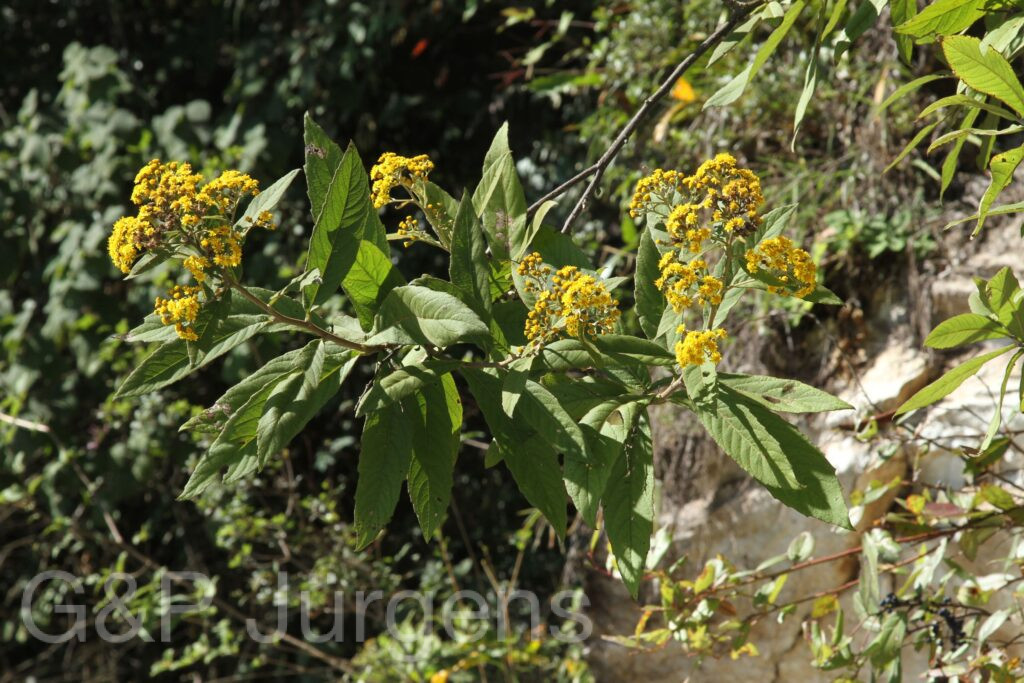
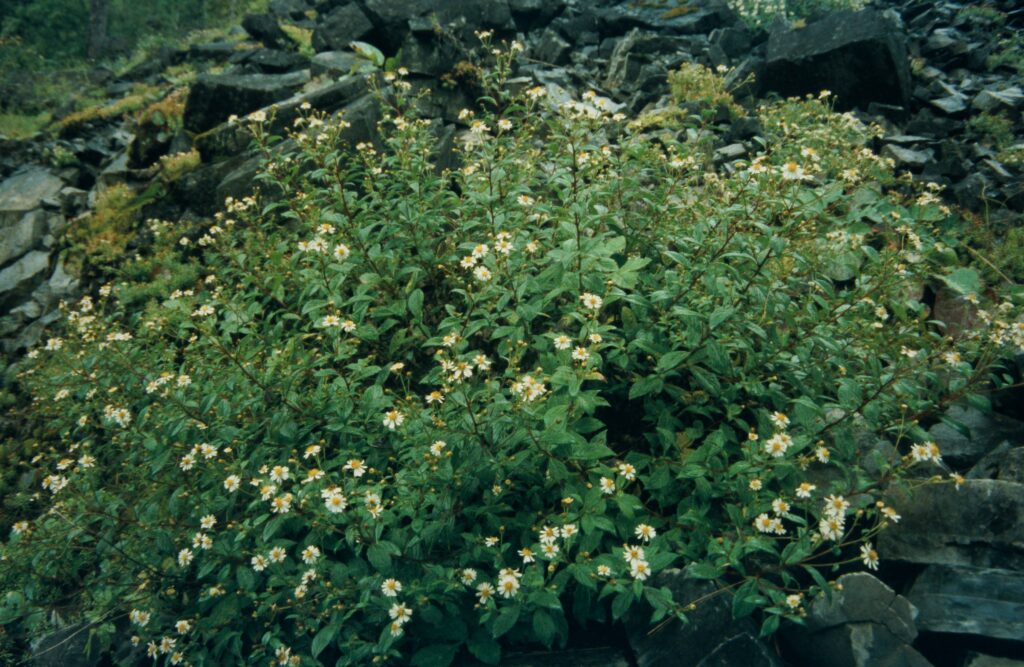
(Wall. ex DC.) Anderb.

Garw 2005 265 ergebnis
India Garhwal Kuno 2800m, September

Description

Duhaldea nervosa is a perennial composite of the Himalaya and montane south-east Asia, recorded from China, Nepal, Thailand, India, Bhutan, Myanmar, Cambodia and Vietnam. Its roughly 584 georeferenced collections span the temperate to subtropical hill belt from the western Himalaya eastward into Indochina. It grows on grassy slopes, open hillsides, forest margins, roadside banks and in scrub, favouring well-drained sunny to lightly shaded ground. The photographed plant from Garhwal at Kuno at 2800 m, flowering in September, is typical of its upper-temperate habitat and its late-monsoon to autumn flowering, when the capitula open above the surrounding herbage.

It is an erect, often hairy perennial herb with leafy stems arising from a woody rootstock. The alternate leaves are elliptic to lanceolate or oblong, with a finely toothed margin and conspicuous, raised lateral veins on the lower surface, the prominent venation giving the species its epithet nervosa. The capitula are radiate and borne in terminal corymbose clusters, each head with an involucre of several rows of imbricate, herbaceous to membranous bracts. The yellow ray florets are female and ligulate, surrounding numerous yellow, tubular, bisexual disc florets. The fruit is a ribbed, cylindrical cypsela crowned by a pappus of barbellate bristles that aids wind dispersal.

Duhaldea was segregated from the broadly defined Inula and now comprises a group of Asian species formerly placed in that genus; D. nervosa was transferred from Inula by Anderberg, as the parenthetical authorship records. Members of the tribe Inuleae, these plants are visited by a range of generalist insect pollinators. D. nervosa is widespread and locally common across its extensive range and is of no conservation concern, several allied species being used in regional folk medicine.

Author: (Wall. ex DC.) Anderb. · Sources: POWO (Kew), GBIF, Flora of China Vol. 20-21, Flora of Bhutan Vol. 2, Flora of Nepal, Anderberg's Phylogeny and Reclassification of the Tribe Inuleae

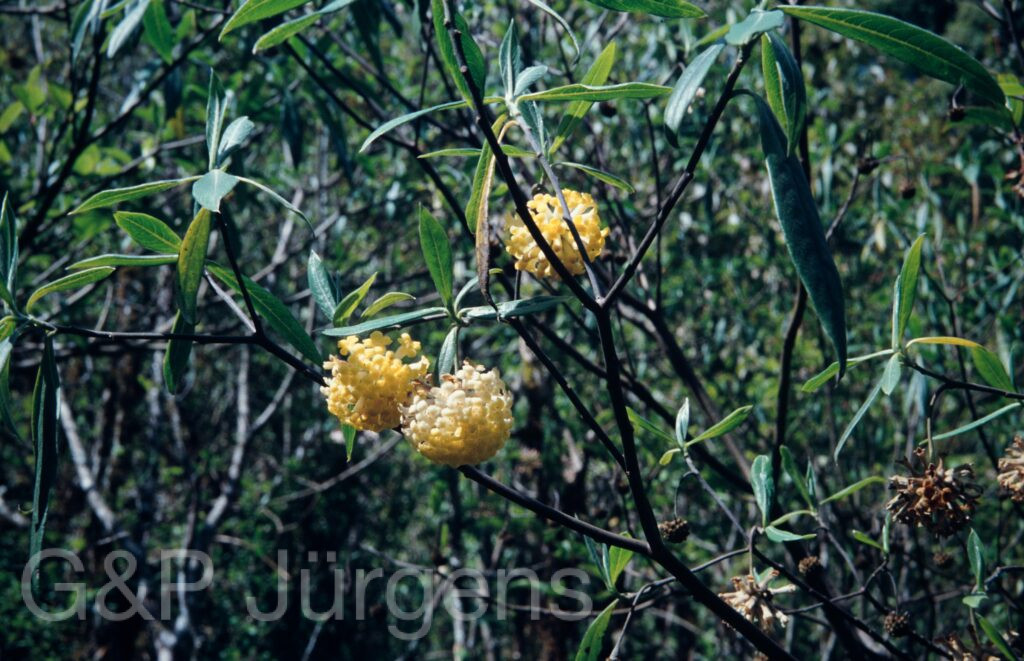
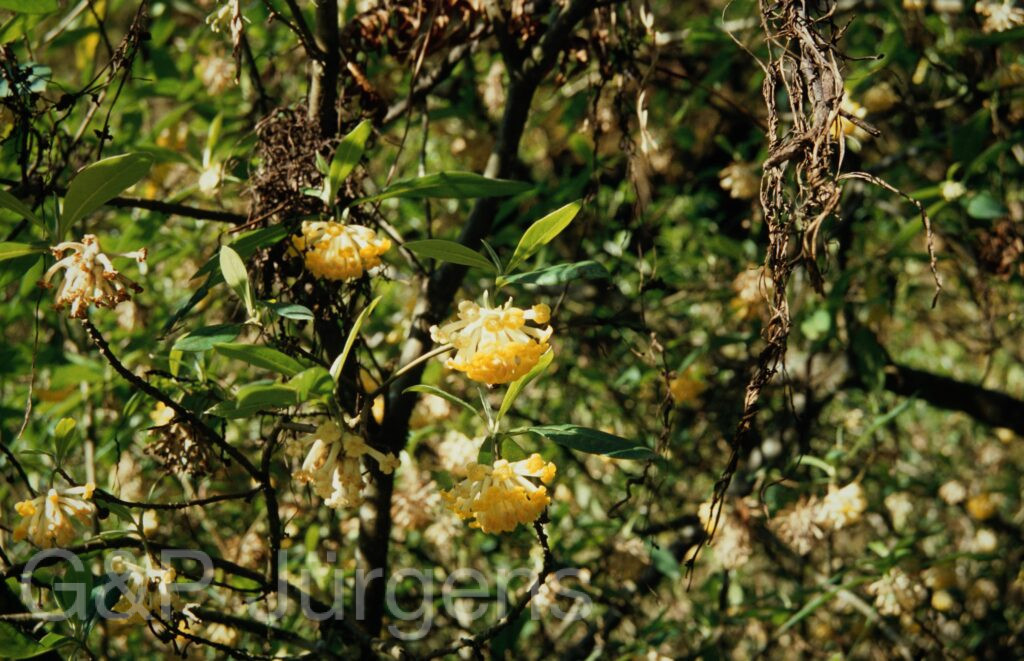
(Wall.) Meisn.

Nepal 1994 255 ergebnis
Ost-Nepal Mewa-Khola
2100m April
Nepal 1994 197 ergebnis
Ost-Nepal Mewa-Khola
2100m April
sub1hsn8
Nepal Amjilassa 2400m March

Description

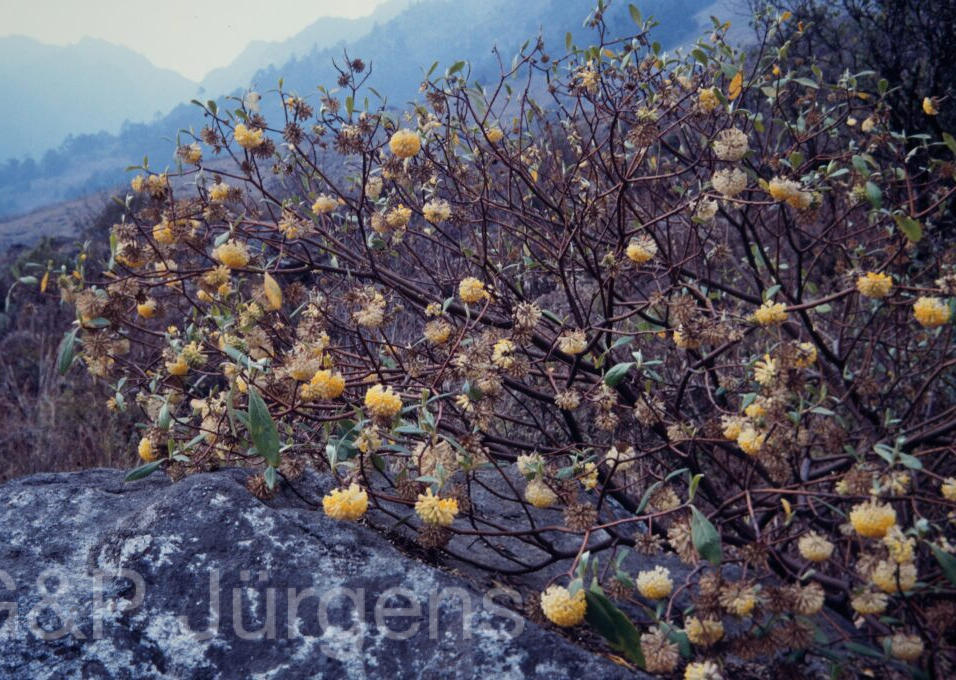
Edgeworthia gardneri is a deciduous to semi-evergreen shrub of the eastern Himalaya and adjacent mountains. GBIF records (some 484 occurrences) place it in China, Nepal, India, Bhutan, Myanmar, Bangladesh and Vietnam, with cultivated material in Japan, France, New Zealand and elsewhere. It grows in moist temperate broadleaved forest, forest margins, ravines and shrubby slopes, typically between about 1,500 and 2,800 m. The illustrated plants are from eastern Nepal at Mewa-Khola (2,100 m, April) and Amjilassa (2,400 m, March), flowering in late winter to early spring before or with leaf flush, characteristic of its phenology in the warm temperate zone.

The plant is a shrub 1–3 m tall with flexible, tough-barked branches that can be tied in a knot without breaking. The leaves are alternate, lanceolate to oblong-lanceolate, entire and somewhat silky beneath. The flowers are aggregated into dense, pendent, hemispherical heads on short peduncles; each flower lacks petals, the floral tube being silky-tomentose outside and yellow within, fragrant. The fruit is a small dry achene-like drupe enclosed in the persistent perianth base.

Like its relative Daphne, Edgeworthia yields strong bast fibre: the bark is an important source of traditional handmade paper (lokta-type) in Nepal and Bhutan, giving the genus economic significance. It is also valued as a winter-flowering ornamental. The species is widespread and not globally threatened, though bark harvesting represents a localised pressure on accessible wild stands.

Author: (Wall.) Meisn. · Sources: POWO (Kew), Flora of China Vol. 13, Flora of Bhutan Vol. 1, GBIF, Halda: The Genus Daphne (and allied Thymelaeaceae)

Rehder

Bhutan2015 463
  Bhutan Jakar 2100m, October
Bhutan2012 104
Bhutan Shele-La, 3600m September
Garw 2005 203 ergebnis ergebnis
India Garhwal Pana 2750m, September
Bhutan2015 607
Bhutan Gasa 1950m, October

Description

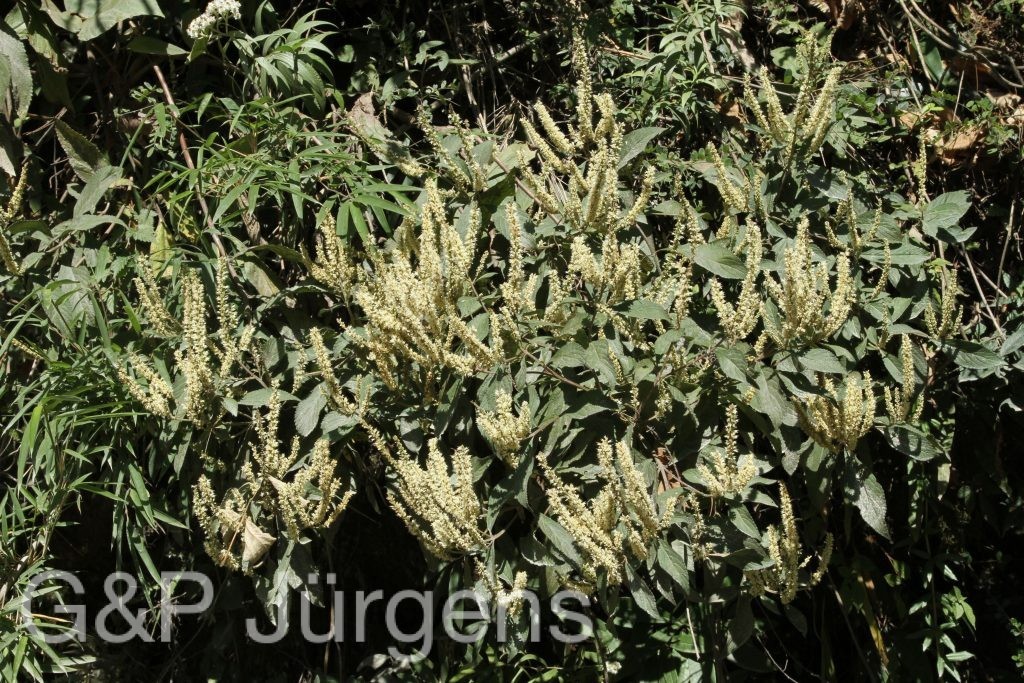
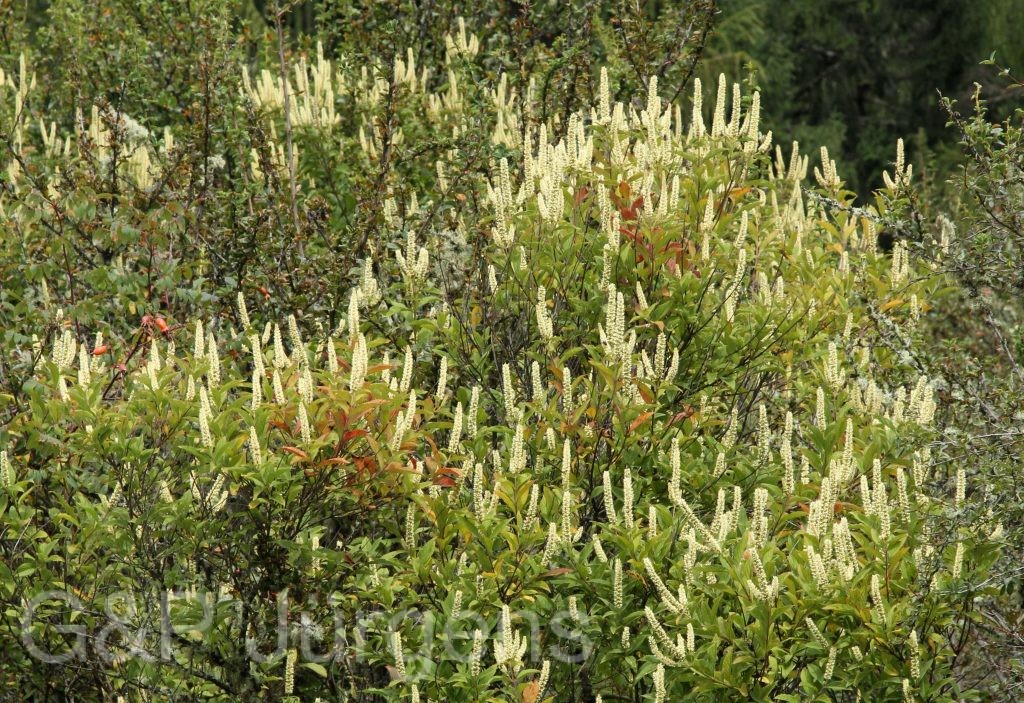
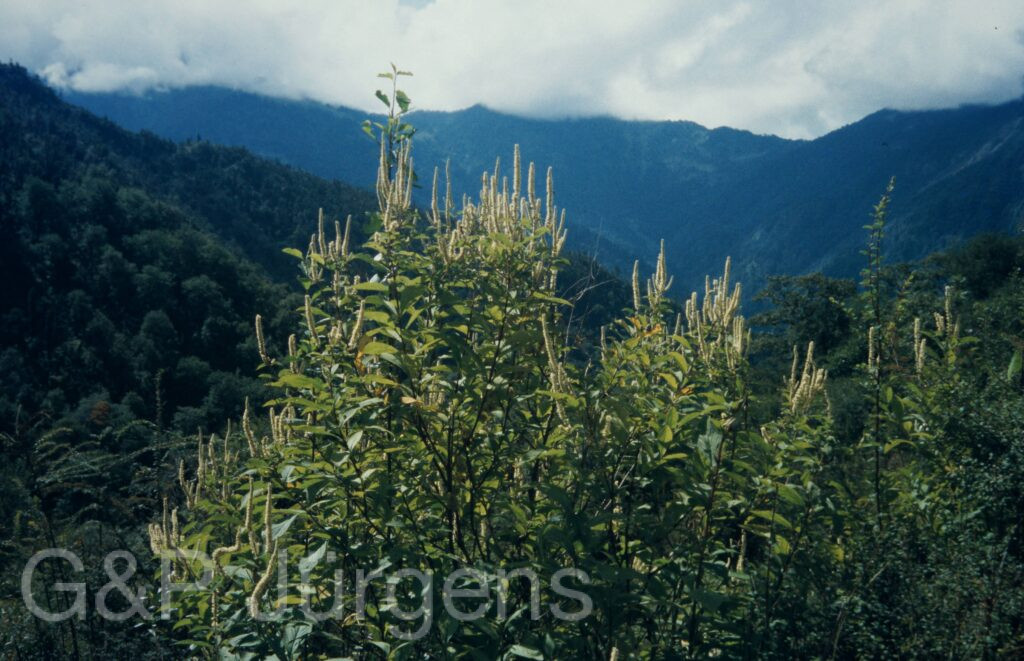
Elsholtzia fruticosa is a widespread shrubby mint of the Himalaya and south-western China, recorded by GBIF (1928 occurrences) from China, Nepal, India, Bhutan, Pakistan, Malaysia and Myanmar. It is a plant of open, disturbed and sunny situations, colonising forest margins, scrub, roadsides, terraced field edges, river banks and clearings, broadly between 1500 and 3600 m. The cited collections span a wide elevational and seasonal range, from Bhutan's Gasa (1950 m) and Jakar (2100 m), through Garhwal in India (Pana, 2750 m), up to the Shele-La pass at 3600 m, flowering from September into October, reflecting its autumn-blooming habit across the central and eastern Himalaya.

The species is an aromatic, much-branched shrub or subshrub reaching 1-3 m, with quadrangular, pubescent stems woody at the base. The opposite leaves are lanceolate to elliptic, serrate, pinnately veined, often greyish-tomentose beneath and dotted with aromatic glands. The small flowers are crowded into dense, cylindrical, spike-like terminal and axillary thyrses, frequently secund, with the whitish to pale-yellow flowers turned to one side of the axis. Each flower has a campanulate calyx and a bilabiate corolla; the four stamens are exserted, giving the inflorescence a feathery aspect. The fruit comprises four small, smooth nutlets (mericarps) enclosed within the persistent calyx.

Described under the combination by Rehder, the species belongs to genus Elsholtzia (subfamily Nepetoideae, tribe Elsholtzieae), a group of aromatic herbs and shrubs centred on temperate Asia. Its essential-oil-rich foliage is used in local traditional medicine and as a minor source of nectar for late-season pollinators. As a vigorous, pioneer-like colonist of disturbed ground with a very broad range, it is of least conservation concern and is locally abundant rather than rare.

Author: Rehder · Sources: POWO (Kew), GBIF, Flora of China, Flora of Bhutan, A Revision of the Genus Elsholtzia (Lamiaceae)

Benth.

Garw 2005 241 ergebnis ergebnis
India Garhwal Bora 2200m, September

Description

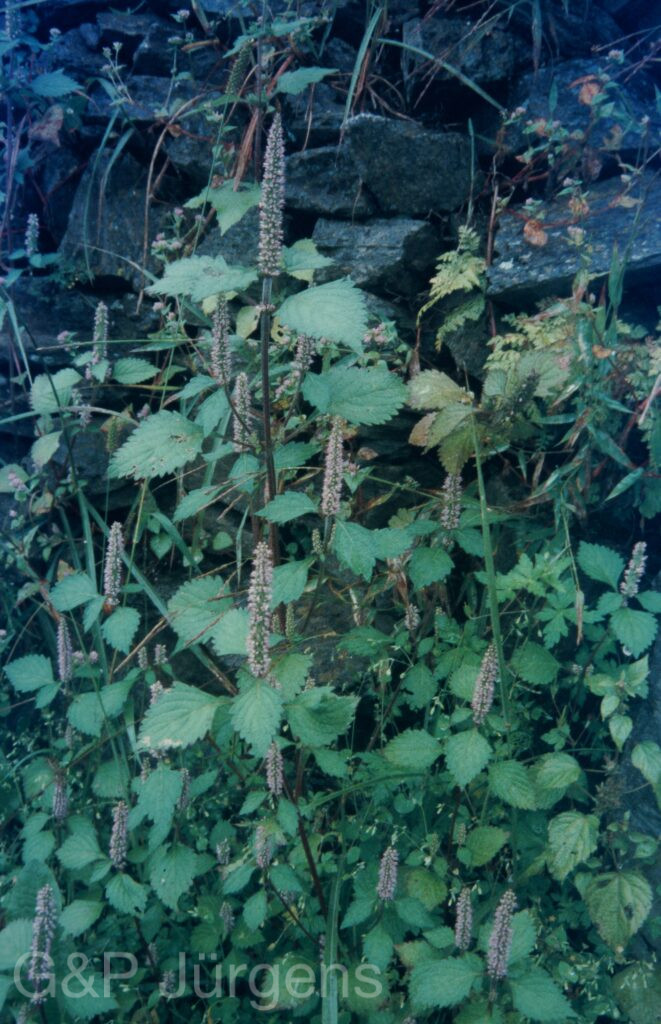
Elsholtzia pilosa is a wide-ranging Asian mint distributed from the Indian Himalaya, Nepal and Bhutan eastward through Bangladesh, Myanmar, Thailand and Vietnam to southern China, with nearly 400 GBIF occurrences indicating it is a frequent component of its region. It is a plant of open, disturbed and seasonally moist ground, growing along forest margins, on grassy banks, in fallow fields, by paths and on damp slopes, often as a weedy colonist of cultivated and waste land. The plant figured from Bora in Garhwal, India, at about 2200 m in September is typical of its montane range of roughly 1500-3000 m, the autumn flowering coinciding with the close of the monsoon.

It is an erect, aromatic annual herb with a quadrangular, usually pilose stem branching from the base. The leaves are opposite, ovate to lanceolate, with a serrate-crenate margin, an acuminate apex and a cuneate base tapering to a slender petiole, sparsely hairy and gland-dotted. The small flowers are crowded into dense, one-sided, spike-like terminal verticillasters, each subtended by a bract; the corolla is purplish to pinkish-white and bilabiate, with the four stamens exserted as in the genus. The calyx is tubular and ribbed, becoming enlarged in fruit and enclosing the four smooth, ovoid nutlets characteristic of the mint family.

The epithet pilosa refers to the soft, spreading hairiness of the herbage. Elsholtzia is a mainly eastern Asian genus of aromatic herbs and subshrubs, several species of which are used medicinally and as flavourings, the essential oils giving the foliage its pungent scent. As a pioneer of disturbed ground, E. pilosa is well adapted to anthropogenic habitats, which accounts for its broad and locally abundant distribution across the Himalaya and southern China.

Author: Benth. · Sources: POWO (Kew), GBIF, Flora of China, Flora of Bhutan, Hooker Flora of British India, Press Labiatae of the Himalaya

Benth.

Bhutan2012 306
Bhutan Shele-La 4100m, October
Bhutan2012 915
Bhutan Tumching-La 4000m, October

Description

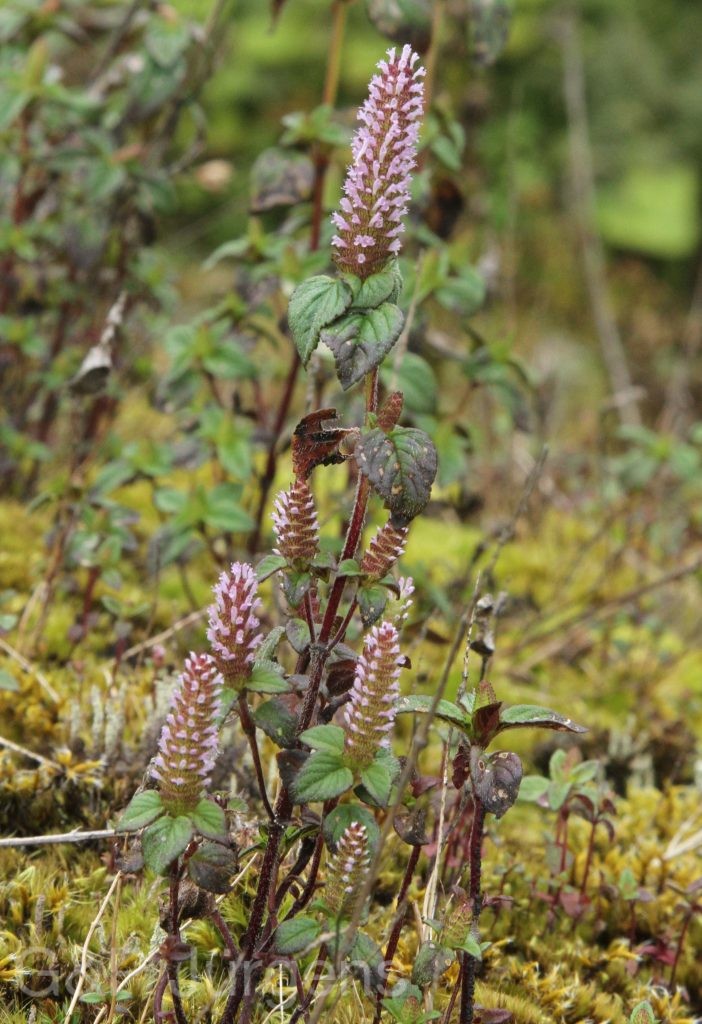
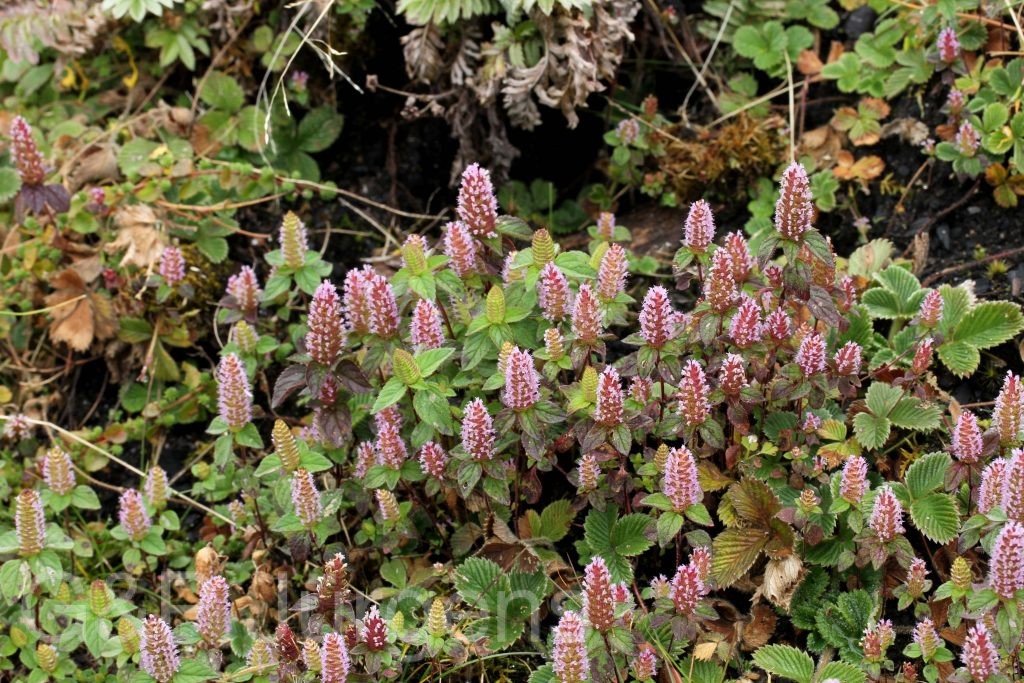
Elsholtzia strobilifera is a high-montane to alpine herb widely distributed across the Sino-Himalayan region, recorded from Nepal, India, Bhutan, Pakistan, Myanmar, China and Taiwan, with some 493 georeferenced occurrences documented in GBIF. It is a plant of open stony slopes, grazed alpine meadows, screes and forest margins, typically between 3000 and 4300 m. The collections illustrated here, from the Bhutanese passes Shele-La at 4100 m and Tumching-La at 4000 m in October, exemplify its characteristic late-season flowering at the upper limits of vegetation, where it often forms part of dwarf-herb communities on disturbed and well-drained substrates.

It is an annual or short-lived herb, usually 5-30 cm tall, with erect or ascending, often purplish, quadrangular stems that are puberulent and frequently branched from the base. The leaves are opposite, ovate to elliptic, shortly petiolate, with crenate-serrate margins and gland-dotted surfaces emitting an aromatic scent when bruised. The inflorescence is a dense, ovoid to shortly cylindrical terminal spike of crowded verticillasters, the conspicuous broad floral bracts giving the cone-like appearance reflected in the epithet. Each tubular, bilabiate corolla is pale violet to pinkish, two-lipped and exserted-stamened; the fruit comprises four smooth, ellipsoid nutlets enclosed in the persistent calyx.

The genus Elsholtzia (Lamiaceae, subfamily Nepetoideae) comprises aromatic herbs and subshrubs centred on eastern Asia, several yielding essential oils. E. strobilifera is among the most cold-tolerant members, ascending higher than most congeners. Its capacity to colonise grazed and physically disturbed alpine ground confers ecological resilience, and it is not regarded as threatened given its broad range and abundance, though high-altitude populations are sensitive to changing grazing regimes and warming treelines.

Author: Benth. · Sources: POWO (Kew), GBIF, Flora of China, Flora of Bhutan, A Revision of the Genus Elsholtzia (Lamiaceae)