
Benth.
Description
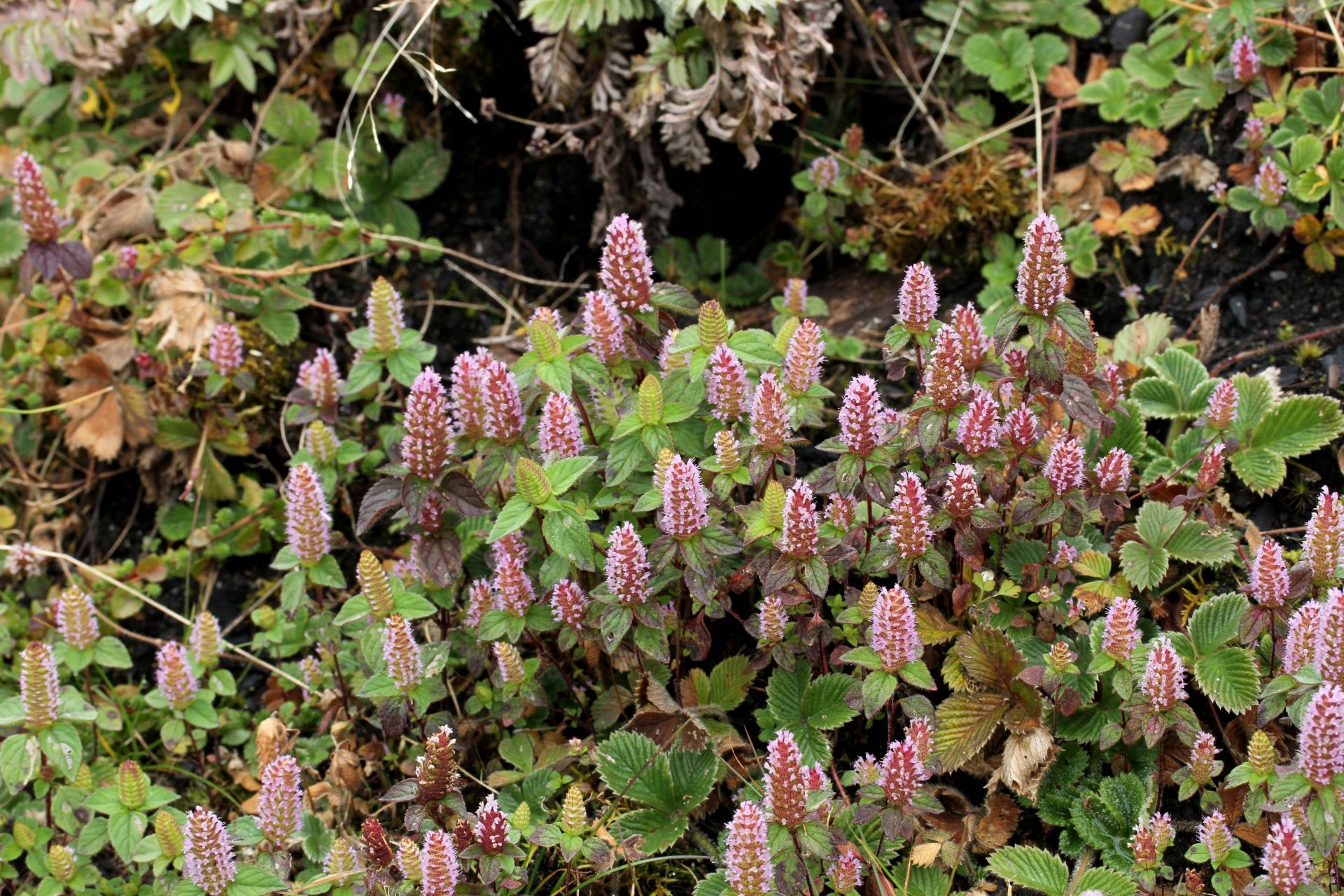
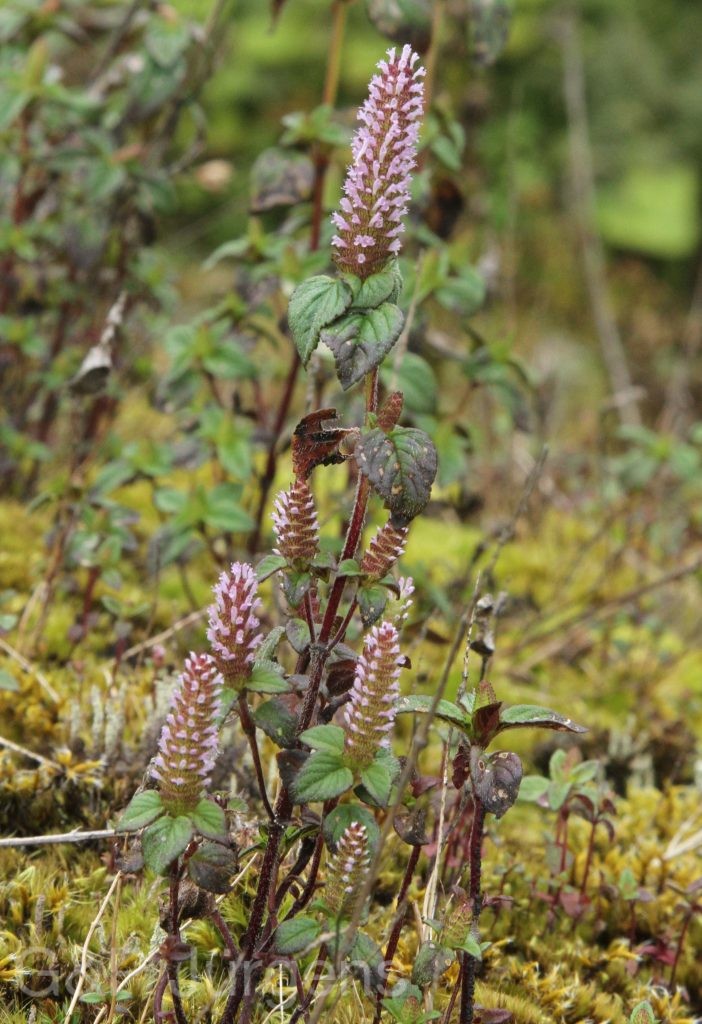
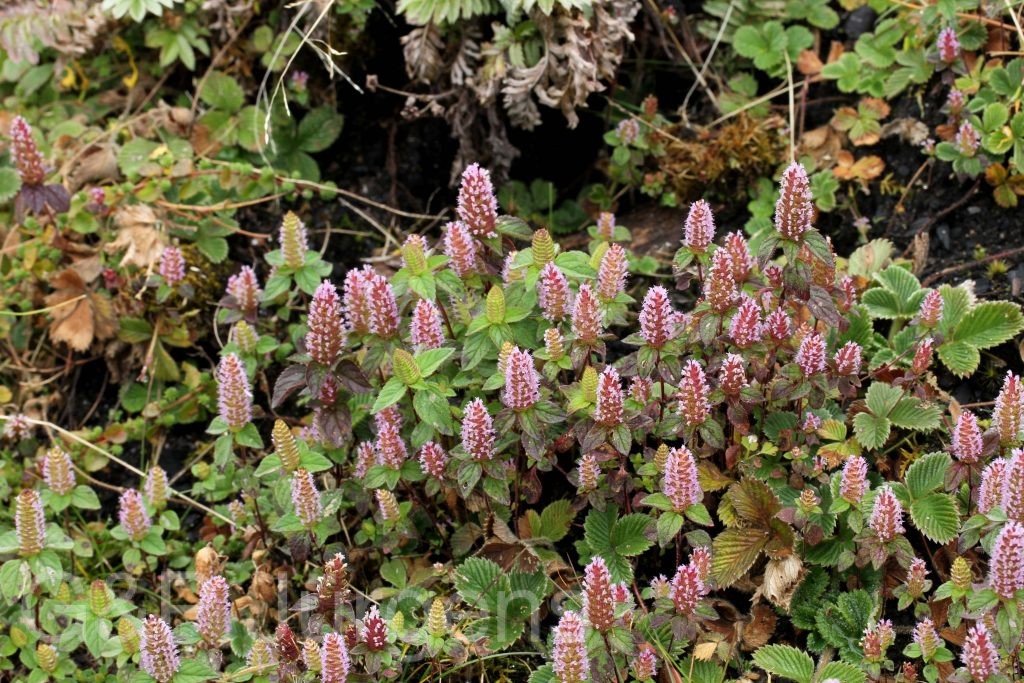
Elsholtzia strobilifera is a high-montane to alpine herb widely distributed across the Sino-Himalayan region, recorded from Nepal, India, Bhutan, Pakistan, Myanmar, China and Taiwan, with some 493 georeferenced occurrences documented in GBIF. It is a plant of open stony slopes, grazed alpine meadows, screes and forest margins, typically between 3000 and 4300 m. The collections illustrated here, from the Bhutanese passes Shele-La at 4100 m and Tumching-La at 4000 m in October, exemplify its characteristic late-season flowering at the upper limits of vegetation, where it often forms part of dwarf-herb communities on disturbed and well-drained substrates.
It is an annual or short-lived herb, usually 5-30 cm tall, with erect or ascending, often purplish, quadrangular stems that are puberulent and frequently branched from the base. The leaves are opposite, ovate to elliptic, shortly petiolate, with crenate-serrate margins and gland-dotted surfaces emitting an aromatic scent when bruised. The inflorescence is a dense, ovoid to shortly cylindrical terminal spike of crowded verticillasters, the conspicuous broad floral bracts giving the cone-like appearance reflected in the epithet. Each tubular, bilabiate corolla is pale violet to pinkish, two-lipped and exserted-stamened; the fruit comprises four smooth, ellipsoid nutlets enclosed in the persistent calyx.
The genus Elsholtzia (Lamiaceae, subfamily Nepetoideae) comprises aromatic herbs and subshrubs centred on eastern Asia, several yielding essential oils. E. strobilifera is among the most cold-tolerant members, ascending higher than most congeners. Its capacity to colonise grazed and physically disturbed alpine ground confers ecological resilience, and it is not regarded as threatened given its broad range and abundance, though high-altitude populations are sensitive to changing grazing regimes and warming treelines.
Author: Benth. · Sources: POWO (Kew), GBIF, Flora of China, Flora of Bhutan, A Revision of the Genus Elsholtzia (Lamiaceae)