Tag:

Sikkim

Flowers of Sikkim — 350 species from the Sikkim Himalaya in northeast India, a compact yet botanically extraordinary region that climbs from subtropical valleys to the alpine zone beneath Kangchenjunga. Sikkim is a classic centre of Himalayan plant diversity, celebrated for its rhododendrons, primulas, orchids and gentians. Each entry provides a botanical description, distribution, habitat and flowering season with the original field photograph.

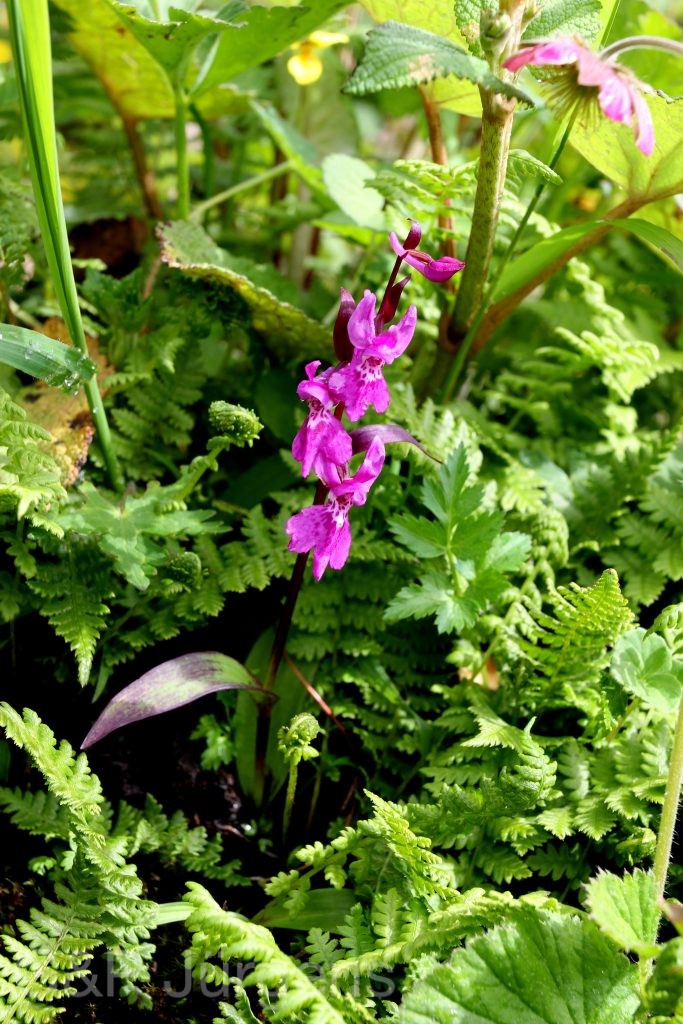
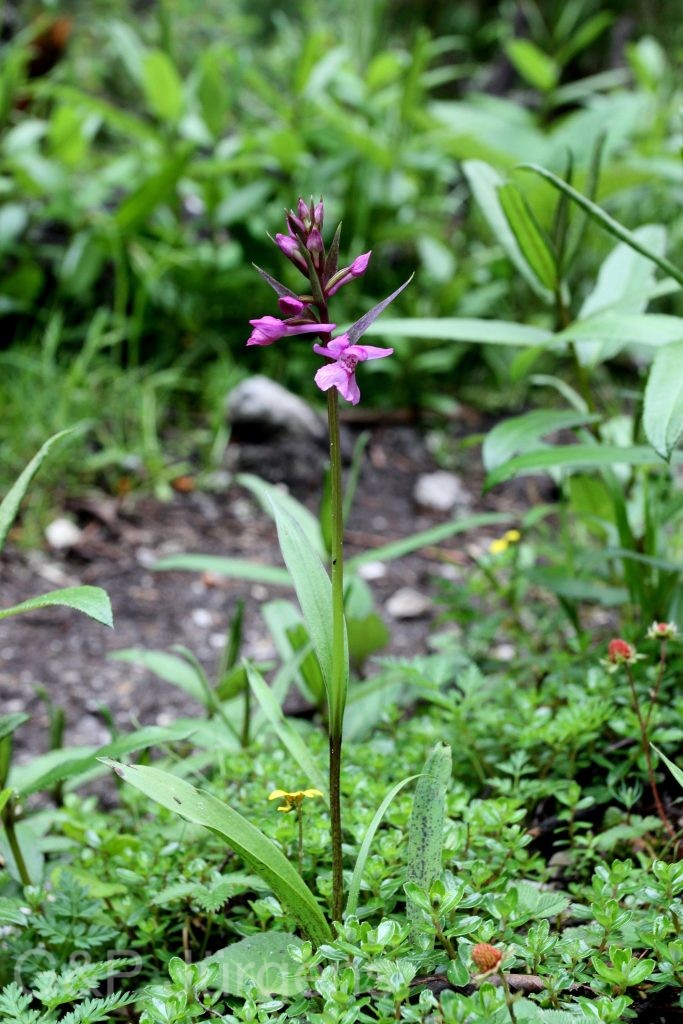
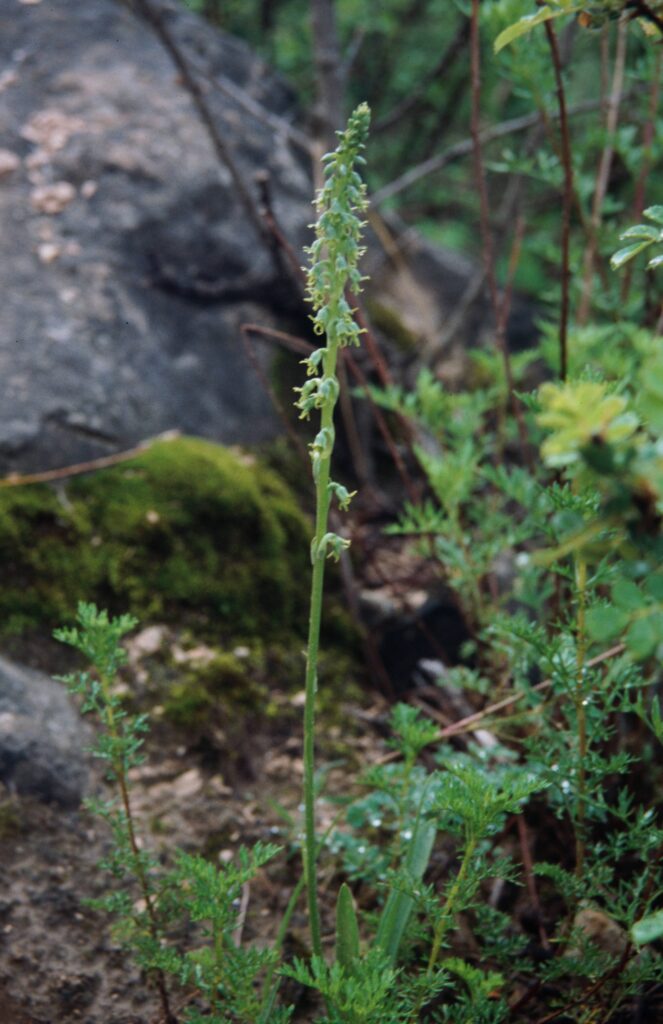
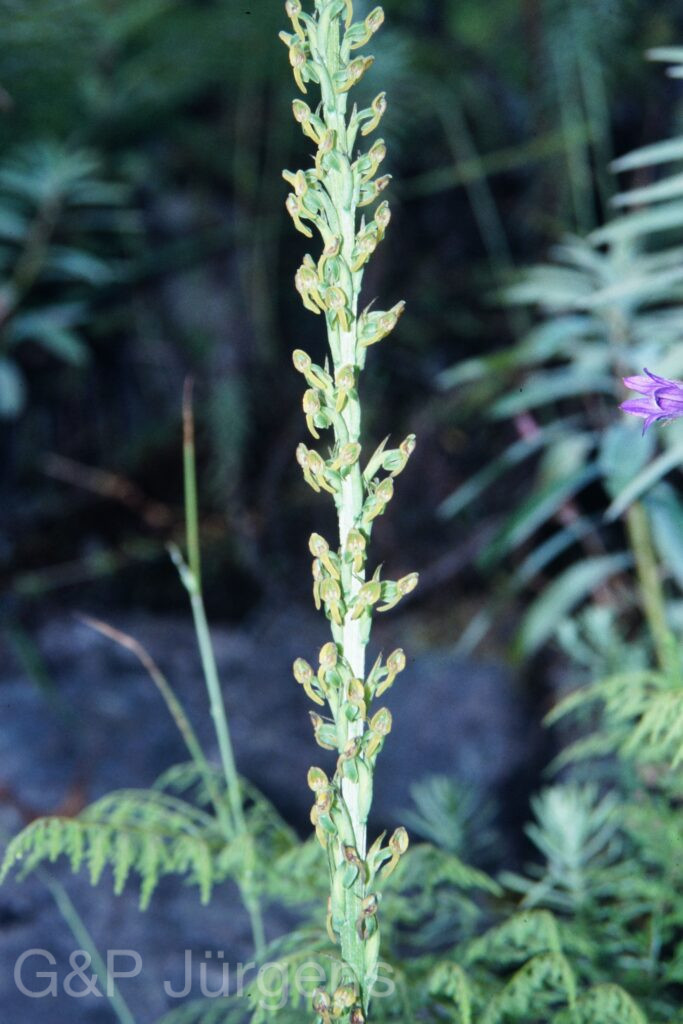
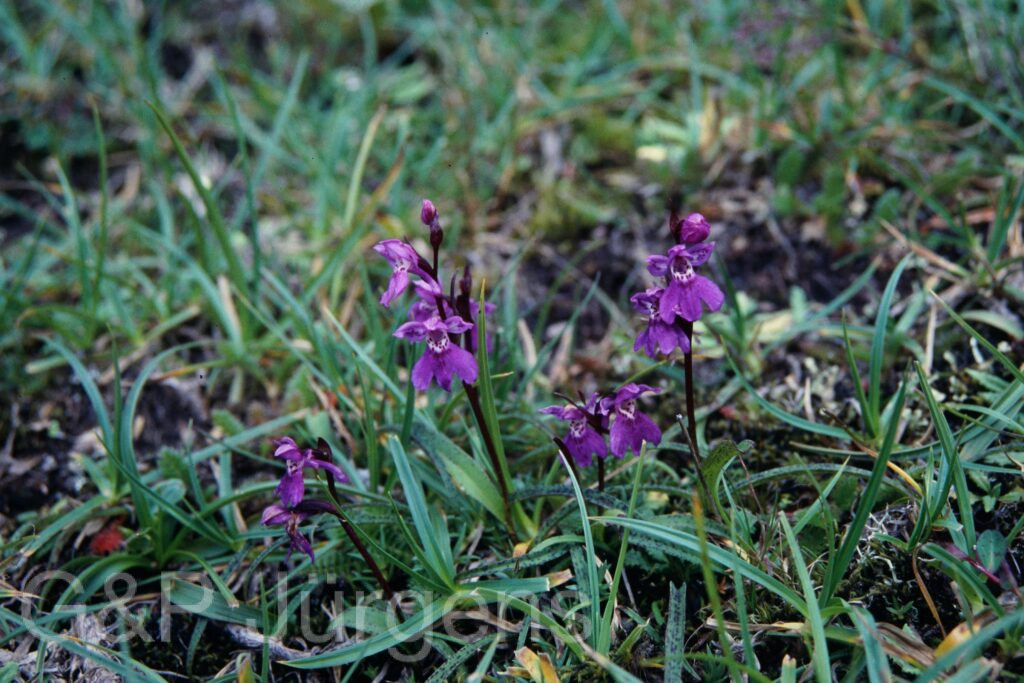
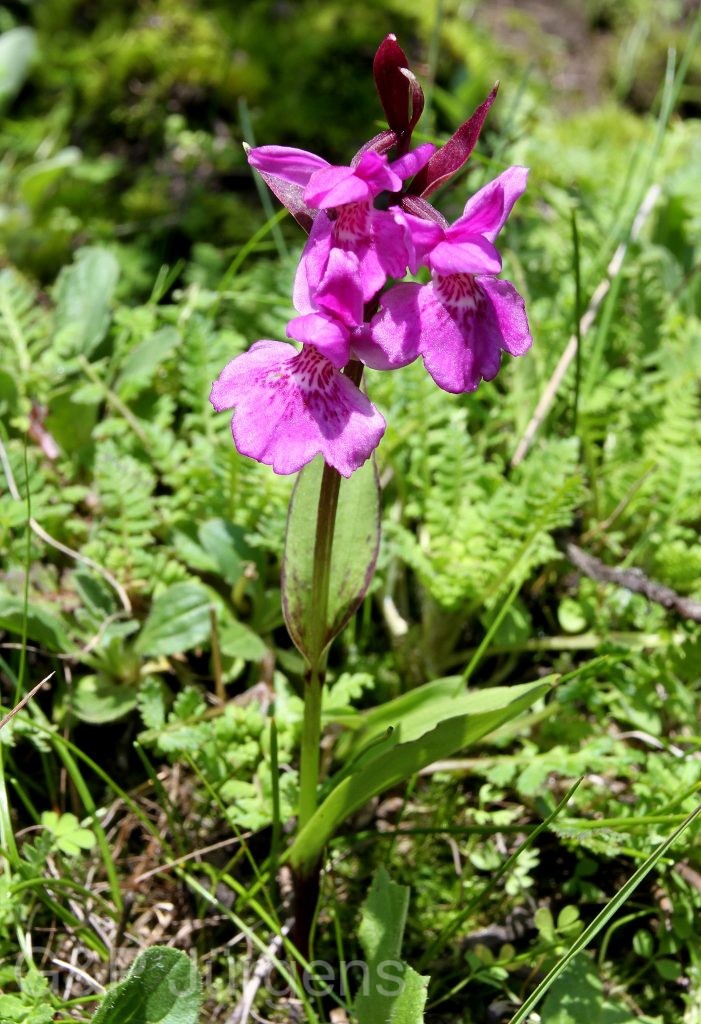
(W.W.Sm.) Y.Tang & H.Peng
Sikkim2003 458 P634
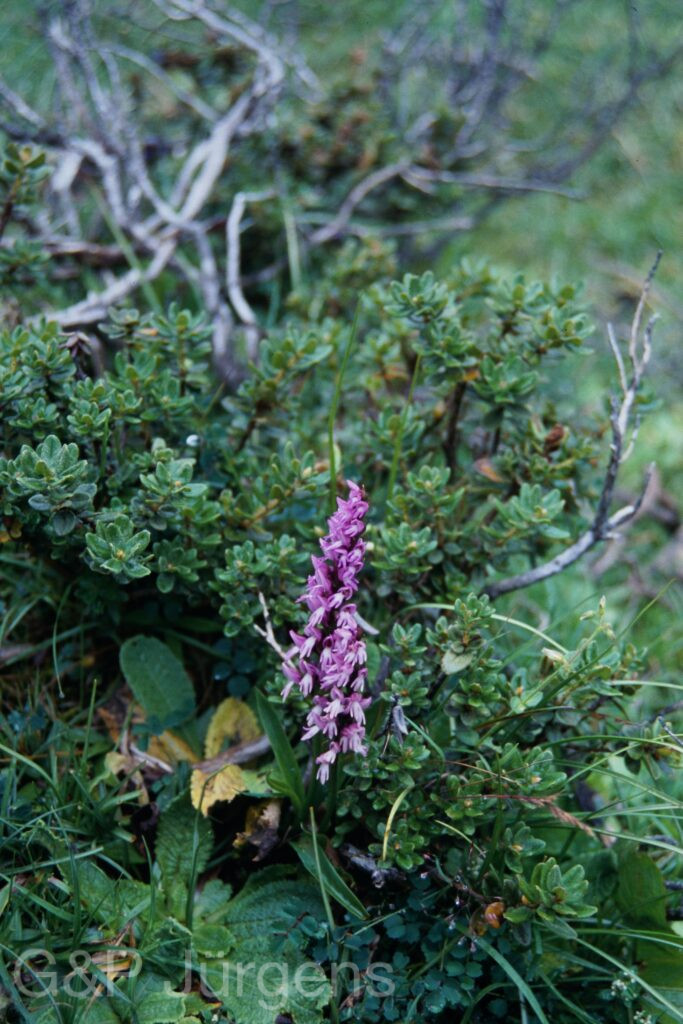
Sikkim Chopta Valley 4000m August
Sikkim2003 459 G636
Sikkim Chopta Valley 4000m August

Description

Hemipilia calcicola is a terrestrial orchid of the high Sino-Himalaya, recorded from southwestern China (notably Yunnan and Sichuan) and extending into Nepal, Sikkim and Bhutan, with GBIF logging 199 occurrences across CN, NP and BT. As both its epithet calcicola and its habitat preference indicate, it favours calcareous substrates, growing in alpine and subalpine meadows, on grassy limestone slopes and in open turf, typically between about 3000 and 4300 m. The photographed plant was found in the Chopta Valley of Sikkim at around 4000 m, flowering in August during the late-monsoon alpine flowering season.

The species is a slender terrestrial herb arising from an ovoid or globose underground tuberoid. It typically bears a single basal leaf, ovate to cordate and frequently marked above with purplish spots, clasping the base of the erect flowering stem. The inflorescence is a lax raceme of several resupinate flowers; each has spreading sepals and petals and a prominent, deflexed, often three-lobed labellum bearing a slender nectar-spur at its base. The column carries the pollinaria characteristic of the Orchidaceae, and the fruit is a dehiscent capsule releasing dust-like, abundant seeds requiring mycorrhizal association for germination.

The taxon was originally described as a variety under Habenaria/Neottianthe (reflected in the website slug neottianthe-cucullata-var-calcicola) and was transferred to Hemipilia by Tang and Peng on molecular grounds, consolidating Neottianthe within an expanded Hemipilia. It is one of numerous calciphilous Sino-Himalayan orchids whose specialised soil requirements and dependence on pollinators and mycorrhizae make populations vulnerable to grazing, collection and habitat disturbance.

Author: (W.W.Sm.) Y.Tang & H.Peng · Sources: POWO (Kew), GBIF, Flora of China (Orchidaceae), Genera Orchidacearum (Pridgeon et al.), Tang & Peng revision of Hemipilia
(D.Don) Y.Tang & H.Peng

Sikkim2003 150 P201
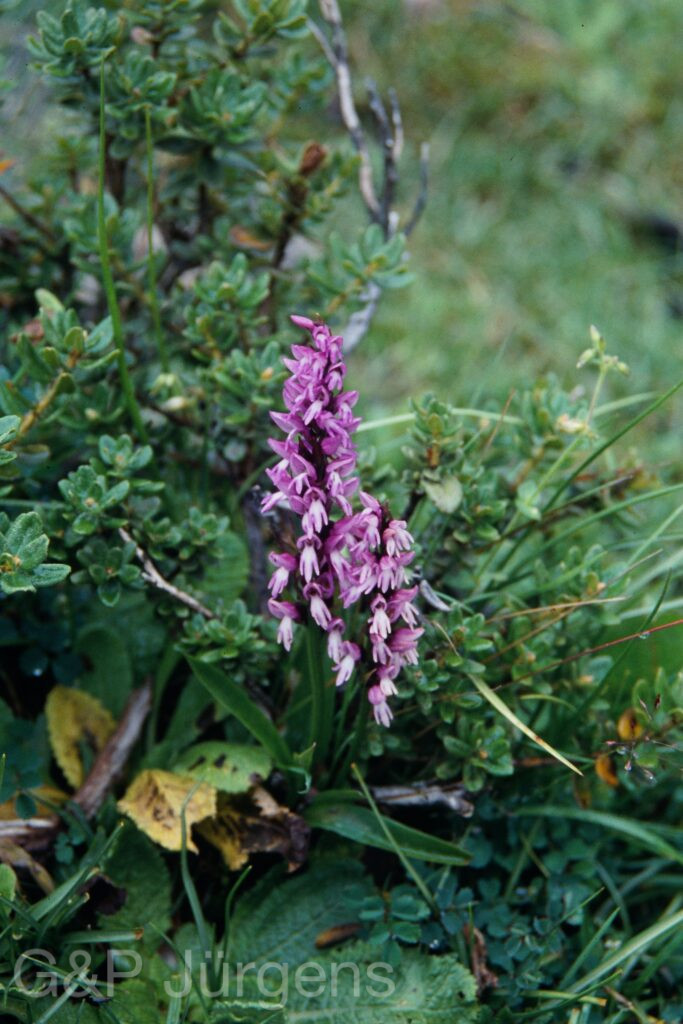
Sikkim Dzongri, 4100m August
BhutanPG2011 792
Bhutan Ludlow-Sherriff-Trail Kem-La, 4300m July

Description

Hemipilia chusua is a terrestrial orchid widely distributed across temperate and alpine Asia, recorded from China, Nepal, India, Bhutan, Myanmar, Russia, Japan and Korea, with over 1700 GBIF occurrences making it one of the best-documented orchids of the region. It grows in alpine and subalpine meadow, open turf, grassy slopes and the margins of dwarf-shrub heath, typically between about 2500 and 4500 m. The illustrated plants from Dzongri in Sikkim at 4100 m, flowering in August, and from Kem-La on the Ludlow-Sherriff Trail in Bhutan at 4300 m in July, exemplify its high-altitude grassland habitat.

It is a slender terrestrial herb arising from small ovoid to ellipsoid tubers, with an erect, glabrous stem bearing one or few leaves. The leaves are lanceolate to oblong-lanceolate, sheathing at the base and somewhat clasping the stem. The inflorescence is a lax, few-flowered terminal raceme of showy rosy-purple to magenta flowers; the lip (labellum) is broad, three-lobed and bears a slender, downward-pointing spur longer than the ovary, while the lateral sepals spread and the dorsal sepal and petals form a loose hood. The fruit is an erect, ribbed dehiscent capsule releasing dust-like seeds.

Long familiar as Orchis or Ponerorchis chusua, the species was transferred to Hemipilia by Tang and Peng following molecular reappraisal of the orchidine alliance. Though wide-ranging and locally abundant, like all wild orchids it is listed under CITES Appendix II, and its alpine populations are vulnerable to collection, grazing pressure and the upslope shift of montane vegetation under climate change.

Author: (D.Don) Y.Tang & H.Peng · Sources: POWO (Kew), GBIF, Flora of Bhutan, Flora of China, Pearce & Cribb The Orchids of Bhutan

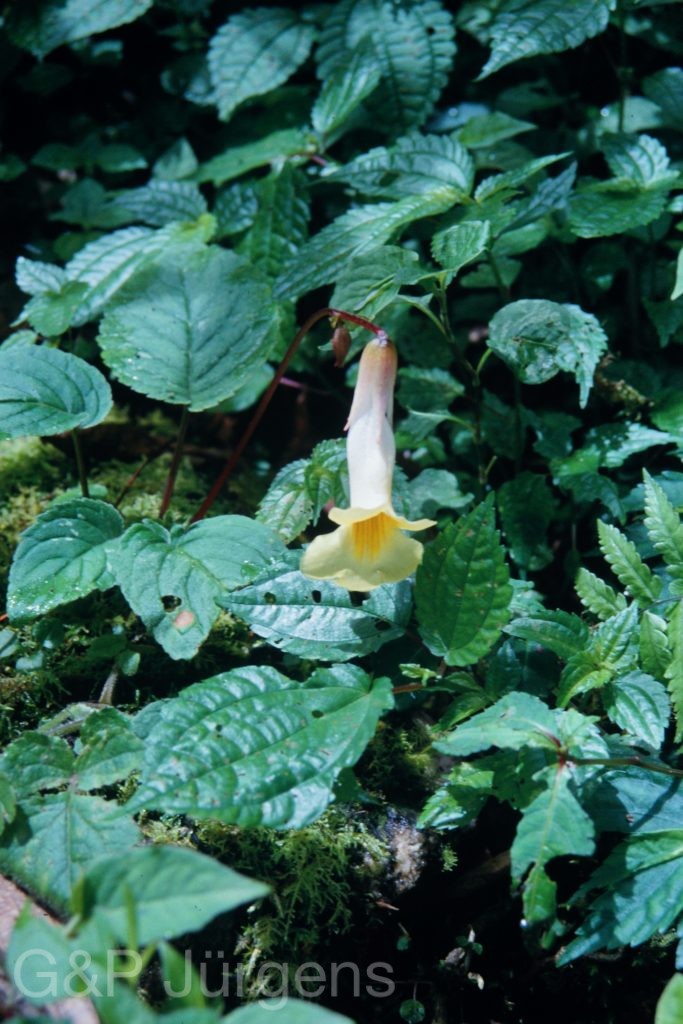
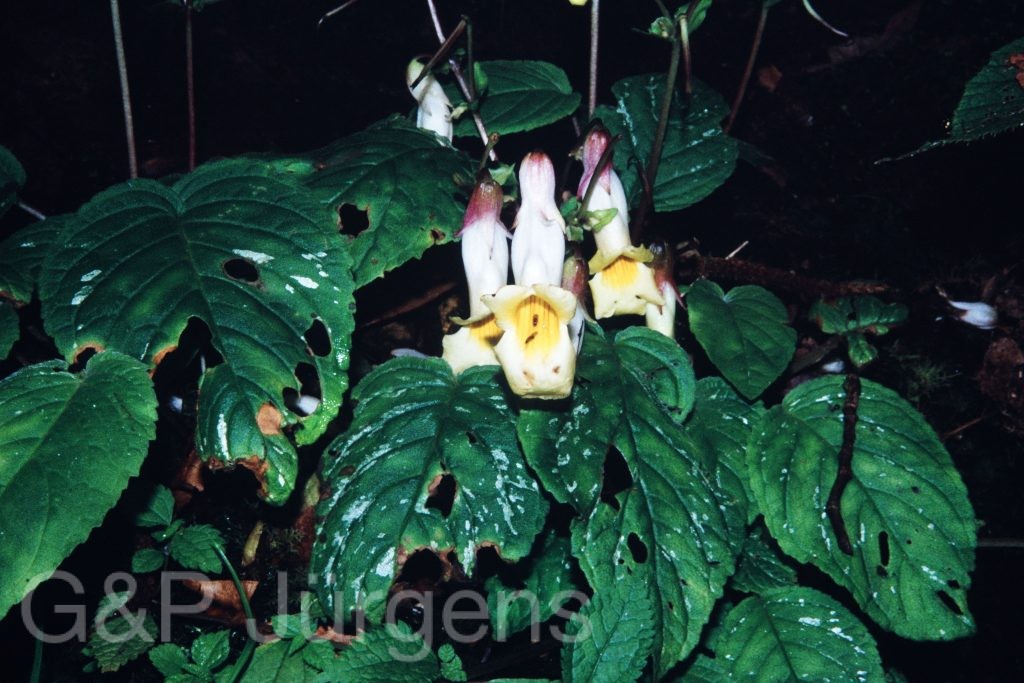
(C.B.Clarke) D.J. Middleton & Mich. Müller

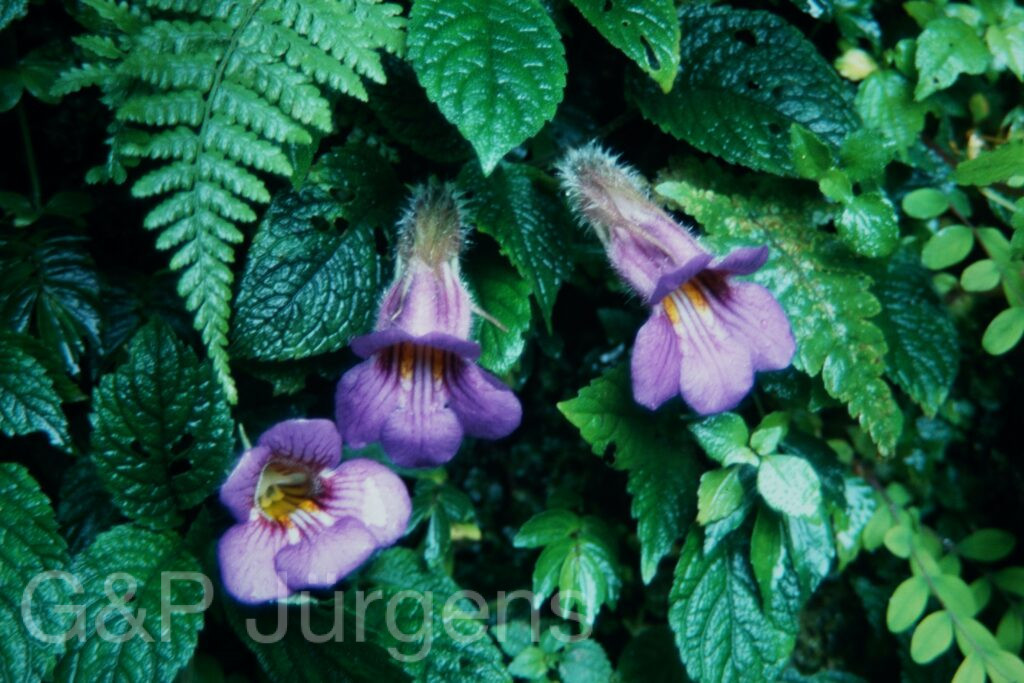
Sikkim2003 59 P79
Sikkim above Yoksam 2750m August
Sikkim2003 60 G80
Sikkim Yoksam 1800m, August

Description

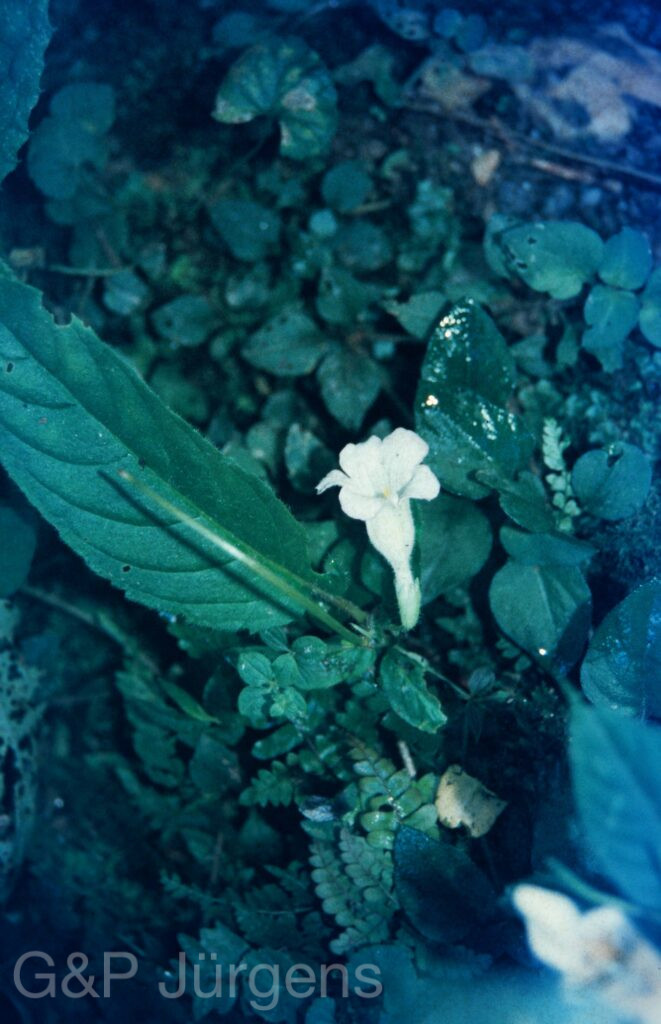
Henckelia calva (C.B.Clarke) D.J.Middleton & Mich.Müller is a perennial herb of the Gesneriaceae (the input subtribe name Didymocarpinae notwithstanding), distributed across the eastern Himalaya and adjacent ranges. GBIF (a sparse 12 occurrences) records it from northern India, Bhutan and Myanmar, where it grows on shaded, moss-covered rocks, damp banks and forest understorey in humid broad-leaved and evergreen forest. The two Sikkim records at Yoksam, at 1,800 m and 2,750 m, both in August during the monsoon, indicate a montane preference broadly between 1,500 and 3,000 m, where high atmospheric humidity supports its growth.

The plant is a soft, more or less rhizomatous herb. Leaves are opposite, ovate to elliptic, often somewhat fleshy, with a crenate to serrate margin and a relatively sparse indumentum (the epithet "calva", meaning bald or glabrescent, alludes to this comparatively smooth surface). The inflorescences are axillary cymes bearing showy zygomorphic flowers; the corolla is tubular and bilabiate, white to pale violet or bluish, the throat sometimes marked with yellow. There are two fertile stamens with cohering anthers, and the ovary is superior, maturing into the elongate, narrowly cylindrical, twisted capsule characteristic of Henckelia, which splits to release numerous minute seeds.

The species was transferred from Didymocarpus to a recircumscribed Henckelia following molecular phylogenetic studies of Old World Gesneriaceae by Middleton, Möller and collaborators, a reclassification that reshaped generic limits in the subtribe Didymocarpinae. As a narrow-range, hygrophilous understorey herb of the eastern Himalaya, it is intrinsically vulnerable to forest disturbance and habitat loss, and its few documented occurrences underline the need for continued field survey of the region's Gesneriaceae.

Author: (C.B.Clarke) D.J. Middleton & Mich. Müller · Sources: POWO (Kew), Flora of Bhutan Vol. 2, Flora of China Vol. 18, GBIF, Weber & Burtt: Remarks on the classification of Gesneriaceae

D.Don A.Dietr.

Sikkim2003 23 G27
Sikkim Rathong-Chu 1200m, August
Garw 2005 214 ergebnis ergebnis
India Garhwal Simkarok 2680m, September
Bhutan2015 89
Bhutan Galephug 600m, October

Description

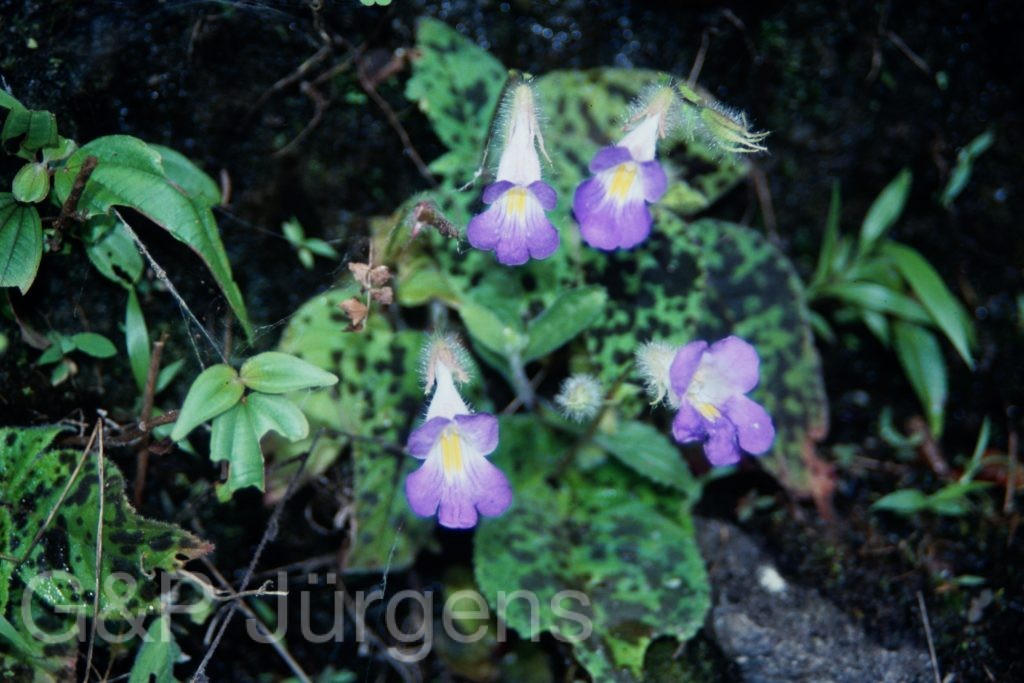
Henckelia pumila is a small gesneriad of the eastern and central Himalaya and adjacent Indo-Burma, recorded from China, India, Nepal, Myanmar, Bhutan, Thailand and Vietnam, with close to 600 occurrences in GBIF. It is a plant of shaded, humid habitats, growing on moist rock faces, mossy boulders, stream banks and shaded earth cuttings within evergreen broad-leaved and subtropical hill forest. Its wide altitudinal amplitude is reflected in the collection localities given for the illustrated material, ranging from the Rathong Chu in Sikkim at 1200 m in August and Galephug in Bhutan at only 600 m in October up to Simkarok in Indian Garhwal at 2680 m in September, indicating tolerance of both warm subtropical and cool temperate forest understorey.

The plant is a small perennial or facultatively annual herb with a short, often weak stem and crowded, opposite or subopposite leaves that are ovate to elliptic, crenate-serrate and softly hairy, frequently somewhat fleshy and unequal in a pair. The flowers are borne singly or in few-flowered cymes on slender peduncles from the leaf axils. The corolla is tubular and weakly two-lipped, white to pale lilac or bluish, often with a yellow throat or coloured markings, with the lower lip the more spreading. There are two fertile stamens with coherent anthers, and the ovary is superior, developing into the slender, elongate, twisted or straight loculicidal capsule typical of the genus.

The family is given as Didymocarpinae on the source page, the subtribal name within the Gesneriaceae to which Henckelia belongs; the species is correctly a member of the Gesneriaceae. The genus Henckelia has been substantially recircumscribed following molecular study, with numerous Asiatic didymocarpoid species transferred into and out of it, and H. pumila sits within this Sino-Himalayan radiation of rock-dwelling gesneriads. Its capacity to colonise moist shaded rock and its broad elevational range make it locally frequent, and it is not regarded as threatened.

Author: D.Don A.Dietr. · Sources: POWO (Kew), GBIF, Flora of China Vol. 18, Flora of Bhutan Vol. 2, Flora of Nepal, A Revision of the Genus Henckelia (Gesneriaceae)

(Buch.-Ham. ex D.Don) A.Dietr

Bhutan2012 646
Bhutan Tserang 1600m, September
Sikkim2003 348 W489
Sikkim above Yoksam 1880m August

Description

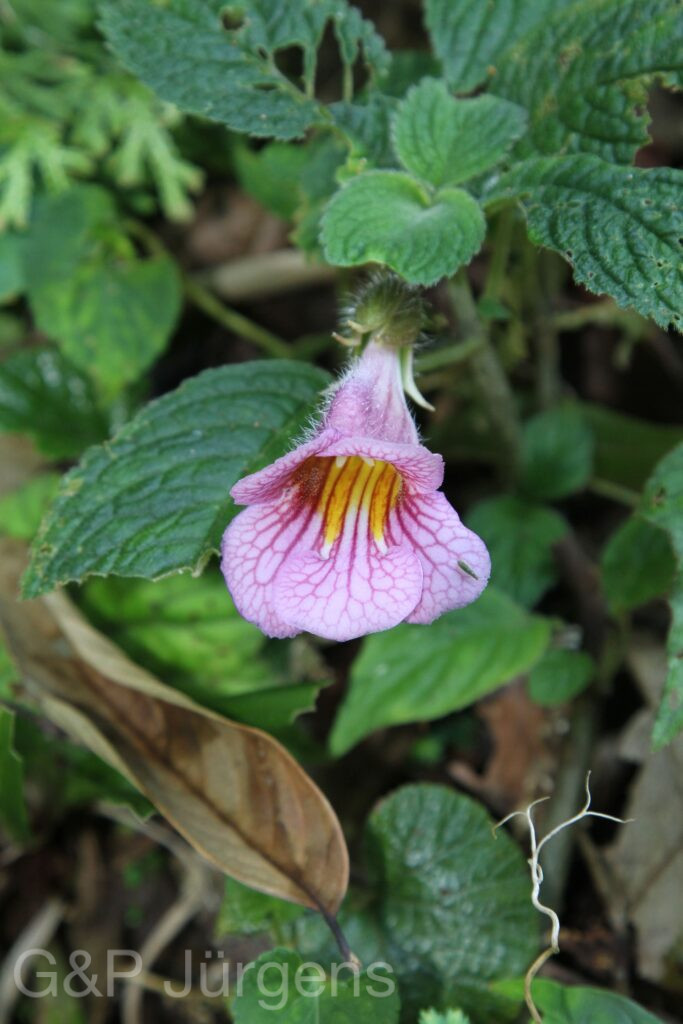
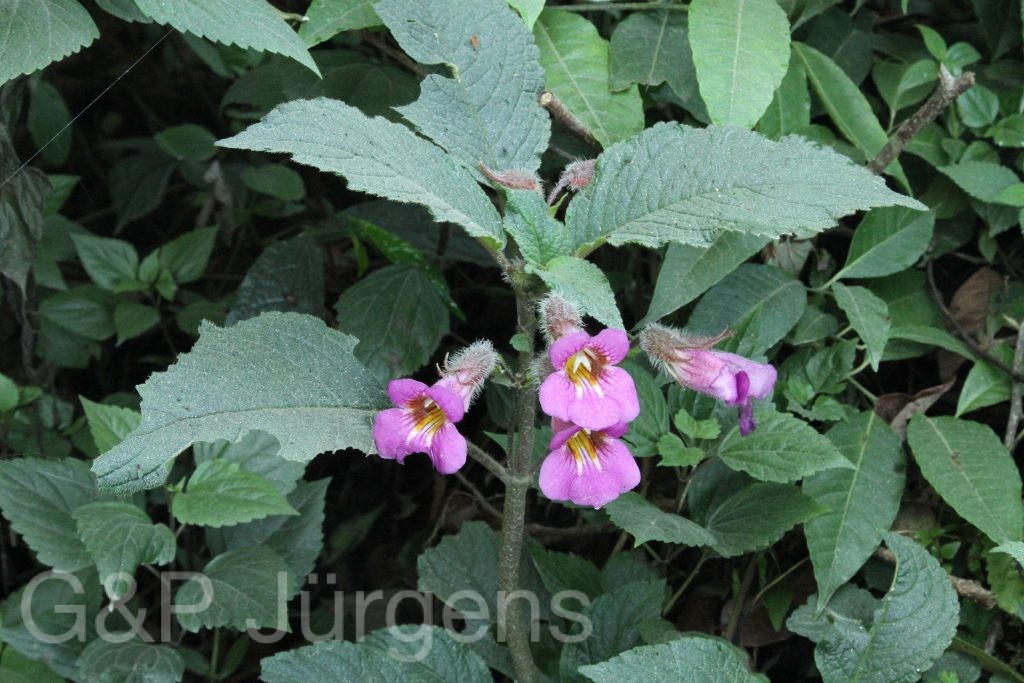
Henckelia urticifolia is a Himalayan gesneriad ranging through Nepal, China, India, Bhutan and Myanmar, the c. 212 georeferenced records concentrated along the humid southern Himalayan front. It is a plant of shaded, moist understorey habitats: it grows on damp banks, mossy rock faces, ravines and the margins of broadleaved and subtropical forest, generally between about 1200 and 2200 m. The illustrated material was gathered at Tserang in Bhutan at 1600 m in September and above Yoksam in Sikkim at 1880 m in August, locations typical of its preference for cool, dripping, sheltered sites that retain monsoon moisture.

It is a perennial herb with an erect to ascending, often softly hairy stem. As the epithet suggests, the leaves are nettle-like (urticifolia): opposite, ovate, coarsely toothed, thin-textured and pubescent, with prominent venation. The flowers are borne in axillary cymes; the calyx is five-parted and the corolla zygomorphic, tubular and bilabiate with a short two-lobed upper lip and a larger spreading three-lobed lower lip, pale violet to bluish-mauve, often with darker guidelines and a paler throat. There are two fertile stamens with cohering anthers, and the ovary is superior. The fruit is the characteristic elongate, narrowly cylindrical capsule of the genus.

Henckelia (Gesneriaceae) was recircumscribed in the molecular reclassification of the Old World didymocarpoid gesneriads, with many Asiatic species formerly placed in Didymocarpus and Chirita transferred to it; the supra-generic placement in subtribe Didymocarpinae reflects that scheme, so the family name given here, though listed as the subtribal name, properly resolves to Gesneriaceae. The genus is defined by its straight, undivided capsules and bilabiate corolla. Forest-dwelling and locally common, the species is not presently considered threatened, but it depends on intact humid forest cover.

Author: (Buch.-Ham. ex D.Don) A.Dietr · Sources: POWO (Kew), GBIF, Flora of China, Flora of Bhutan, Weber & Möller revision of Henckelia (Gesneriaceae)

(Griff.) G.M.Plunkett & Lowry

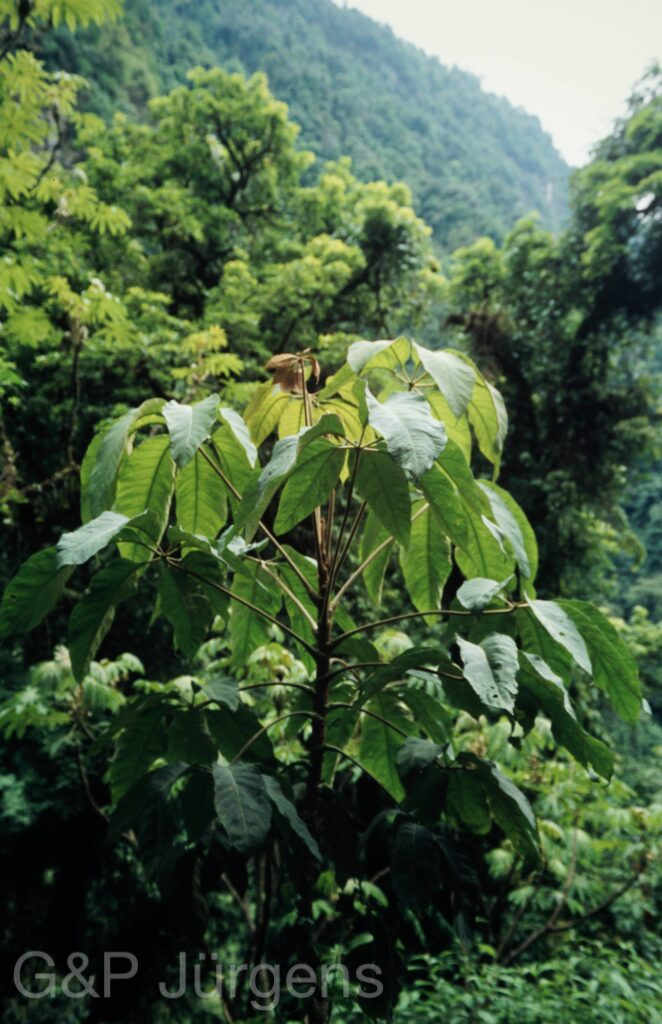
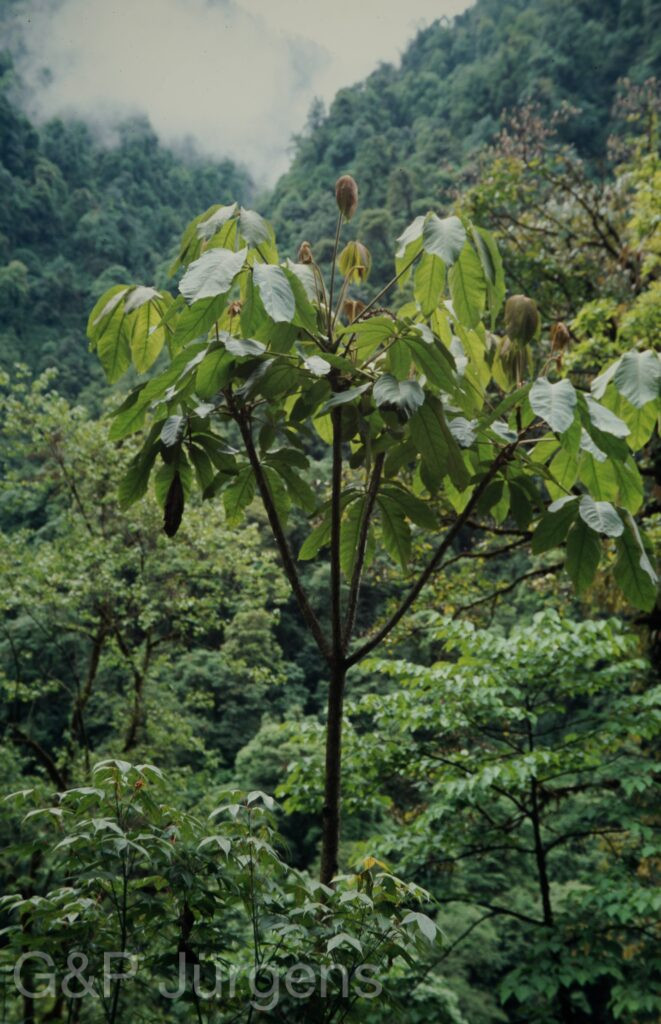
Sikkim 2006 482 ergebnis
India Sikkim, Ringi Chu 1900m, May
Sikkim 2006 310 ergebnis
India Sikkim, Ringi Chu 1900m, May

Description

Heptapleurum rhododendrifolium is an epiphytic to semi-epiphytic shrub distributed across the eastern Himalayas and into Southeast Asia, with records from Nepal, Sikkim, Bhutan, northeast India, Myanmar, southern China, and extending to Fiji, Papua New Guinea, and Indonesia. GBIF documents 136 occurrences across this broad range. The species inhabits subtropical and warm-temperate evergreen forests at elevations of 1,200–2,500 m, where it typically grows as an epiphyte on mossy tree trunks and branches, or occasionally as a terrestrial shrub on steep, humus-rich banks in areas of persistent cloud immersion and high rainfall.
Heptapleurum rhododendrifolium is an evergreen shrub, 1–4 m tall, with stout, sparsely branched stems. The leaves are digitately compound, clustered near the branch tips, with 5–9 coriaceous leaflets. Leaflets are oblong-elliptic to oblanceolate, 8–20 cm long, glossy dark green above and often pale or ferruginous-tomentose beneath, with entire margins and a prominent midrib — the overall appearance recalling Rhododendron foliage, hence the epithet. Petioles are stout, 10–20 cm long. The inflorescence is a terminal, compound umbel of numerous small, greenish-white flowers, each 3–4 mm across, with 5–7 petals and an equal number of stamens. The ovary is inferior, 5–7-locular. The fruit is a subglobose drupe, 4–6 mm in diameter, ripening to dark purple or black, with persistent style remnants.
This species was long placed in Schefflera sensu lato, but recent molecular phylogenetic studies by Plunkett and Lowry have led to its transfer to the reinstated genus Heptapleurum, which accommodates the Asian and Pacific clade formerly within Schefflera. The photographed specimen from Ringi Chu in Sikkim at 1,900 m represents a typical mid-elevation epiphytic occurrence in one of the wettest valleys of the eastern Himalayas. The species plays an ecological role as a provider of fruit resources for montane bird communities. Its broad distribution from the Himalayas to the Pacific islands reflects an ancient tropical Asian lineage with considerable dispersal capacity.

Author: (Griff.) G.M.Plunkett & Lowry · Sources: POWO (Kew), GBIF, Flora of China Vol. 13, Flora of Bhutan Vol. 2, Plunkett & Lowry (2018) — Phylogenetics of Araliaceae

King & Pantl.

Nepal 99 706 ergebnis
Nepal Pugmo 3210m, July

Description

Herminium jaffreyanum is a terrestrial orchid native to the central and eastern Himalayas, distributed across Nepal, northeast India (Sikkim, Darjeeling), Bhutan, and adjacent parts of southern China (Xizang). The species occurs in montane meadows, grassy slopes, and open scrubland at elevations of 2,800–4,200 m, favouring well-drained, humus-rich soils. It is a component of the subalpine herbaceous flora, as evidenced by collections from Pugmo in Nepal at 3,210 m, where it flowers during the monsoon season in July.
The plant arises from a small, ovoid tuber and produces slender, erect stems 10–25 cm tall. The basal leaves are typically two, oblong-elliptic to lanceolate, 3–8 cm long, sheathing the stem at the base. The inflorescence is a lax, elongate raceme bearing numerous small, greenish-yellow flowers approximately 3–4 mm across. Each flower has a trilobed lip with a short, saccate spur; the lateral lobes are linear and divergent, while the mid-lobe is tongue-shaped. The column is short with two widely separated pollinia. Fruits are small, erect capsules containing dust-like seeds.
Herminium jaffreyanum belongs to a taxonomically complex genus within the subtribe Orchidinae, and its delimitation from allied species such as H. mackinnonii requires careful examination of lip morphology and spur structure. The species is relatively poorly collected, with only about 25 occurrence records documented in GBIF, suggesting it may be genuinely scarce or under-surveyed across its range. Its dependence on intact subalpine grasslands makes it potentially vulnerable to overgrazing and habitat conversion. Like all orchids, it falls under CITES Appendix II, and further field surveys across the Nepal–Sikkim corridor are needed to clarify its conservation status.

Author: King & Pantl. · Sources: POWO (Kew), GBIF, Flora of Bhutan Vol. 3, Pearce & Cribb: The Orchids of Bhutan (2002), King & Pantling: The Orchids of the Sikkim-Himalaya (1898)

(Thunb. ex Sw.) Vuijk

Sikkim2003 380 G536
Sikkim Tista valley 3300m August

Description

A terrestrial orchid of remarkably wide distribution across temperate and montane Asia, from the Himalaya through China, Japan, Korea and Taiwan to South-East Asia and Australasia, with nearly 1950 GBIF occurrences spanning India, Nepal, China, Japan, the Philippines and beyond. It grows in grassy slopes, open meadows, forest clearings and herb-rich banks, generally between about 1000 and 3500 m. The illustrated plant was recorded in August in the Tista valley of Sikkim at around 3300 m, a moist, grassy subalpine setting typical of its summer flowering.

The species is a slender tuberous geophyte arising from one or two small, ovoid root-tubers. The erect stem bears a few narrowly lanceolate to linear, sheathing leaves clustered toward the base and grading into bracts above. The inflorescence is a long, slender, densely many-flowered cylindrical raceme of small green to yellowish-green flowers. Each flower has spreading sepals, narrow petals and a distinctive three-lobed labellum with elongate, often divergent lateral lobes and a short to spurless base; the column is short, bearing two pollinia attached to viscidia for insect removal. The inferior, twisted ovary ripens into a small erect, ribbed capsule releasing dust-like seeds.

Accepted by POWO and GBIF, H. lanceum is the most widespread member of the genus Herminium, the muskorchids, and shows considerable variation in stature and floral detail across its enormous range, with several segregate varieties recognised by some authors. Its small green flowers are adapted to inconspicuous insect pollination, and like all orchids it depends on mycorrhizal fungi for germination. Despite habitat loss in places, its vast range and abundance render it secure; it is listed under CITES Appendix II as a member of Orchidaceae.

Author: (Thunb. ex Sw.) Vuijk · Sources: POWO (Kew), GBIF, Flora of China, Flora of Bhutan, Pridgeon et al. Genera Orchidacearum

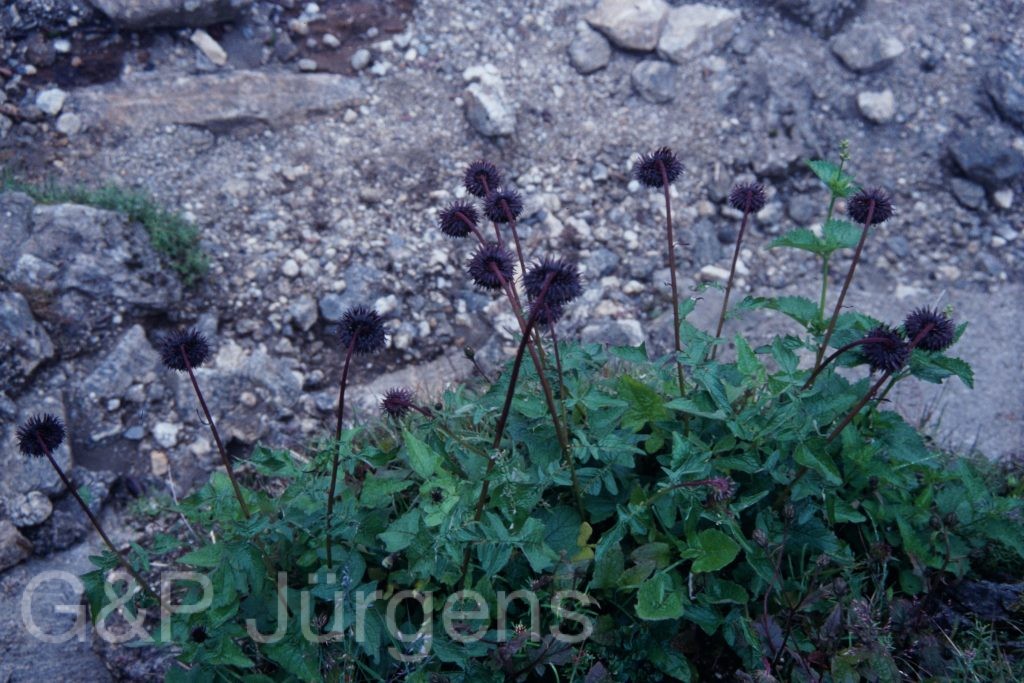
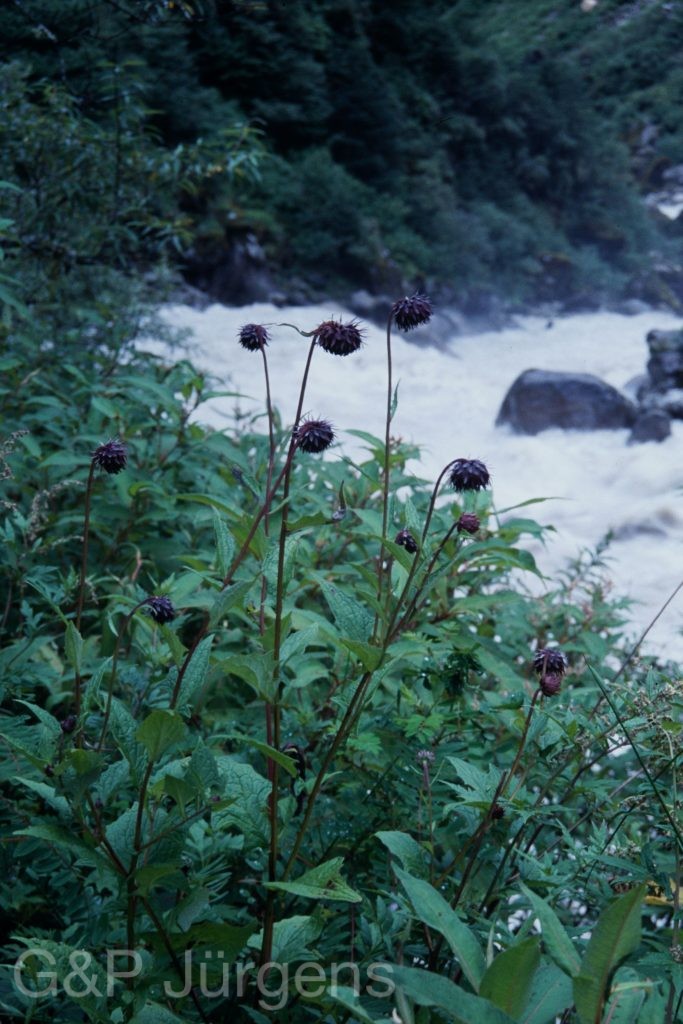
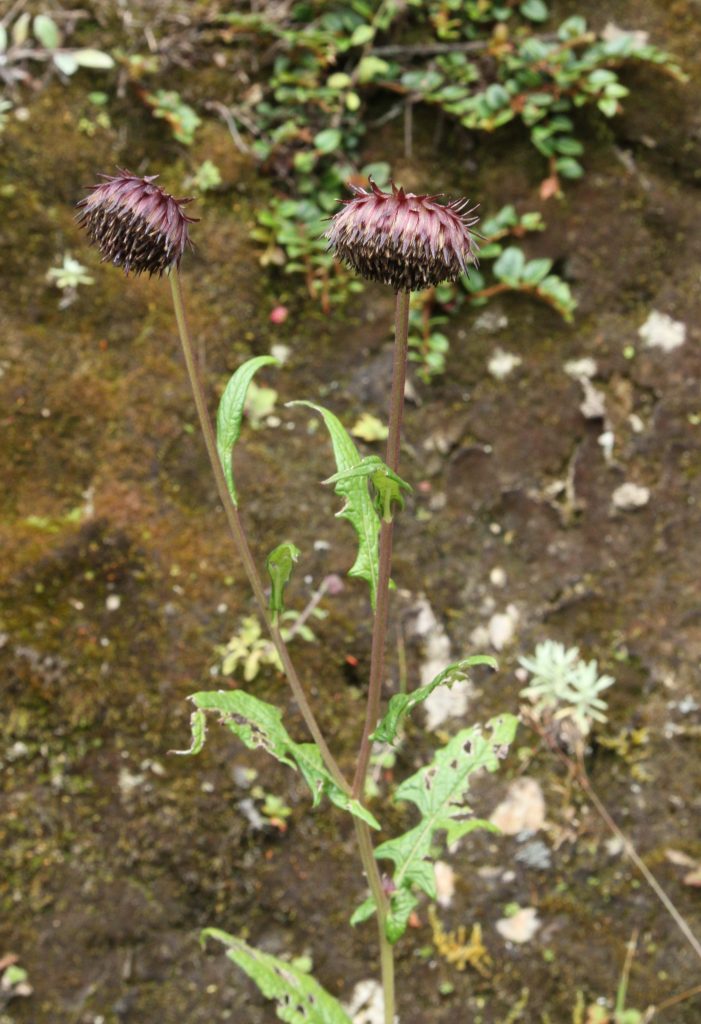
(DC.) Raab-Straube

Sikkim2003 103 P141
Sikkim below Dzongri 3900m 08.2003
Sikkim2003 408 P567
Sikkim below Dzongri 3900m 08.2003
Bhutan2012 493
Bhutan Pele-La 3000m, September

Description

Himalaiella auriculata is a perennial thistle-like composite of the temperate to subalpine zone of the eastern Himalaya, native to India, Nepal and China, with around 27 documented occurrences. It grows on open slopes, forest clearings, meadow margins and disturbed ground, broadly between about 3000 and 4000 m. The photographed plants were recorded below Dzongri in Sikkim at 3900 m in August and at the Pele-La in Bhutan at 3000 m in September, flowering in the late-monsoon and early-autumn period typical of the genus in the region. The name supplied, Himalaiella auriculata, is recorded by GBIF as a synonym, with the same epithet treated as the accepted name; the species was long placed in Saussurea as S. auriculata.

The species is an erect herb with a leafy, often winged stem arising from a perennial rootstock, the herbage thinly cobwebby-arachnoid. The leaves are elliptic to lanceolate, the basal narrowed to a petiole and the cauline sessile and conspicuously auriculate-clasping at the base, the auricles giving the epithet. The capitula are discoid, solitary or few in a loose terminal cluster, with an ovoid to campanulate involucre of imbricate, often purple-tipped phyllaries; the florets are all tubular and purple to mauve. The fruit is a glabrous cypsela bearing a double pappus, the inner bristles plumose, as is diagnostic of the alliance.

Himalaiella is a small Sino-Himalayan genus segregated from Saussurea (tribe Cardueae) on molecular and morphological grounds, characterised by the auriculate, decurrent leaves and feathery inner pappus. Restricted in range and represented by relatively few collections, it is a regional endemic of the eastern Himalaya whose populations warrant monitoring, though it has not been formally assessed.

Author: (DC.) Raab-Straube · Sources: POWO (Kew), GBIF, Flora of Bhutan, Flora of China, Saussurea monograph (Lipschitz)

Thunb.

Sikkim2004 369 P644
Sikkim/India Tista-Valley 1900m May
Nepal 2009 64 ergebnis
Nepal Helambu Doroli 1850, May

Description

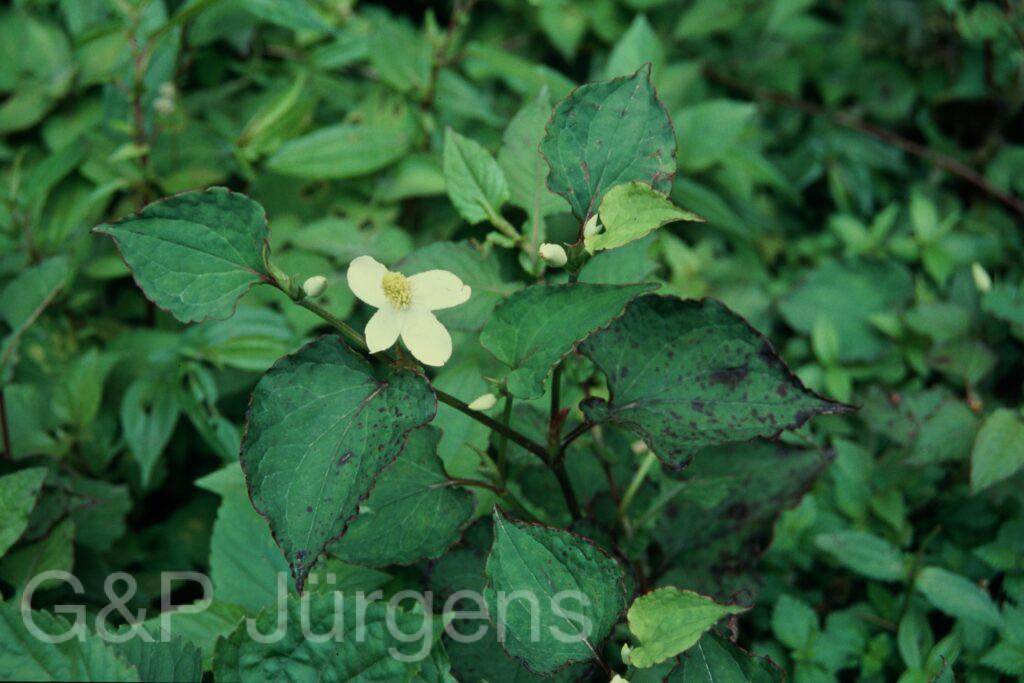
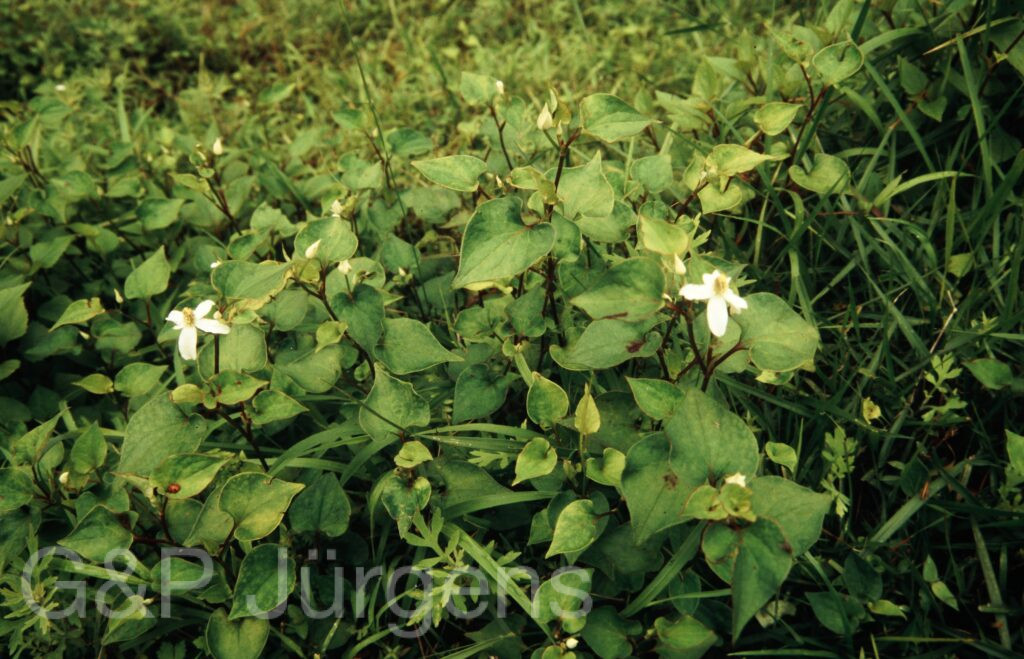
Houttuynia cordata is a widespread East Asian and Himalayan herb with a very large GBIF dataset of nearly 18000 records spanning Japan, China, Korea, Taiwan, India, Nepal, Bhutan, Vietnam and Thailand, together with numerous naturalised and cultivated occurrences in Europe and North America. It grows in moist and wet places, along streamsides, ditches, marsh margins, wet meadows and shaded forest floors, from the lowlands up to around 2500 m. The illustrated plants from the Tista valley in Sikkim/India at 1900 m and from Doroli in the Helambu region of Nepal at 1850 m, both flowering in May, are typical of its damp, shaded montane habitats in the Himalaya.

It is a rhizomatous perennial herb emitting a strong fish-like odour when bruised. The slender rhizomes creep underground, giving rise to erect, simple or sparingly branched stems. The leaves are alternate, broadly ovate-cordate with a deeply cordate base, an acuminate apex, an entire margin and palmate venation, often tinged red beneath, and the petiole base is sheathing with a membranous stipule. The minute, perianthless flowers are densely crowded on a short terminal spike that is subtended by four (occasionally more) showy, petaloid white involucral bracts, giving the whole structure the appearance of a single flower. Each tiny flower has three stamens and a one-locular ovary of fused carpels; the fruit is a small capsule with numerous seeds.

Houttuynia cordata is one of only a few genera in the small basal angiosperm family Saururaceae (order Piperales). It is widely used as a culinary herb and in traditional medicine across East Asia, and the variegated forms are popular ornamentals. It spreads vigorously by its creeping rhizomes, forming clonal colonies, and can become weedy where introduced. It is exceedingly common and of least conservation concern.

Author: Thunb. · Sources: POWO (Kew), GBIF, Flora of China Vol. 4, Flora of Bhutan Vol. 1, Flora of Nepal, Liang & Tucker Saururaceae systematic studies (monograph)