Tag:

Sikkim

Flowers of Sikkim — 350 species from the Sikkim Himalaya in northeast India, a compact yet botanically extraordinary region that climbs from subtropical valleys to the alpine zone beneath Kangchenjunga. Sikkim is a classic centre of Himalayan plant diversity, celebrated for its rhododendrons, primulas, orchids and gentians. Each entry provides a botanical description, distribution, habitat and flowering season with the original field photograph.

Hook.f.

Sikkim2004 93 G163
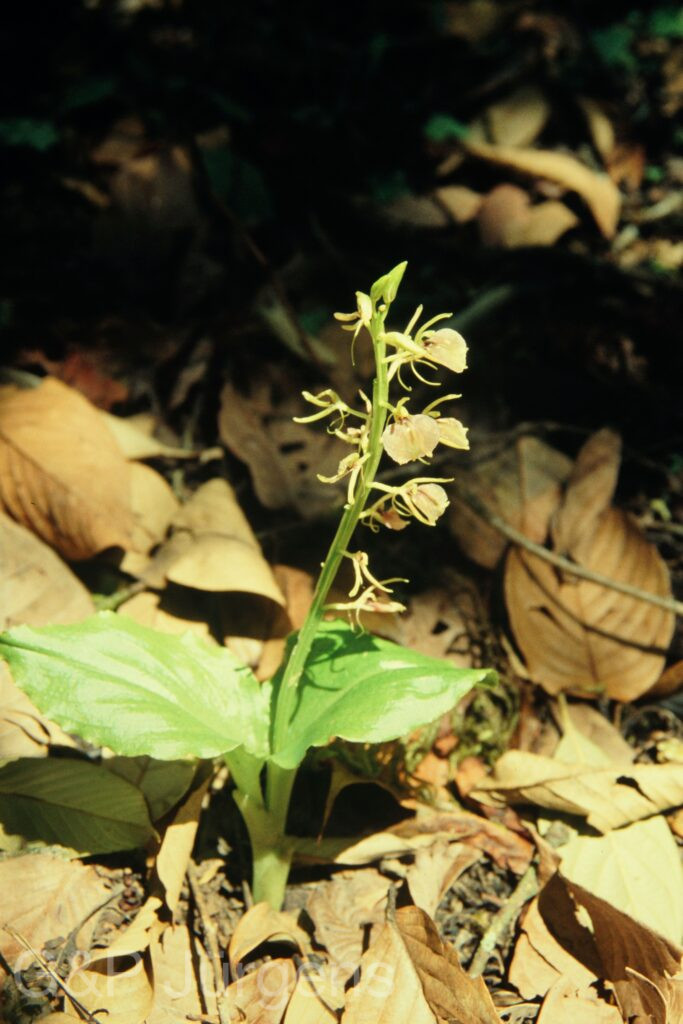
Sikkim West-Bengal, Bersay 2700m April
Sikkim2004 117 G201
Sikkim West-Bengal, Bersay 2700m April

Description

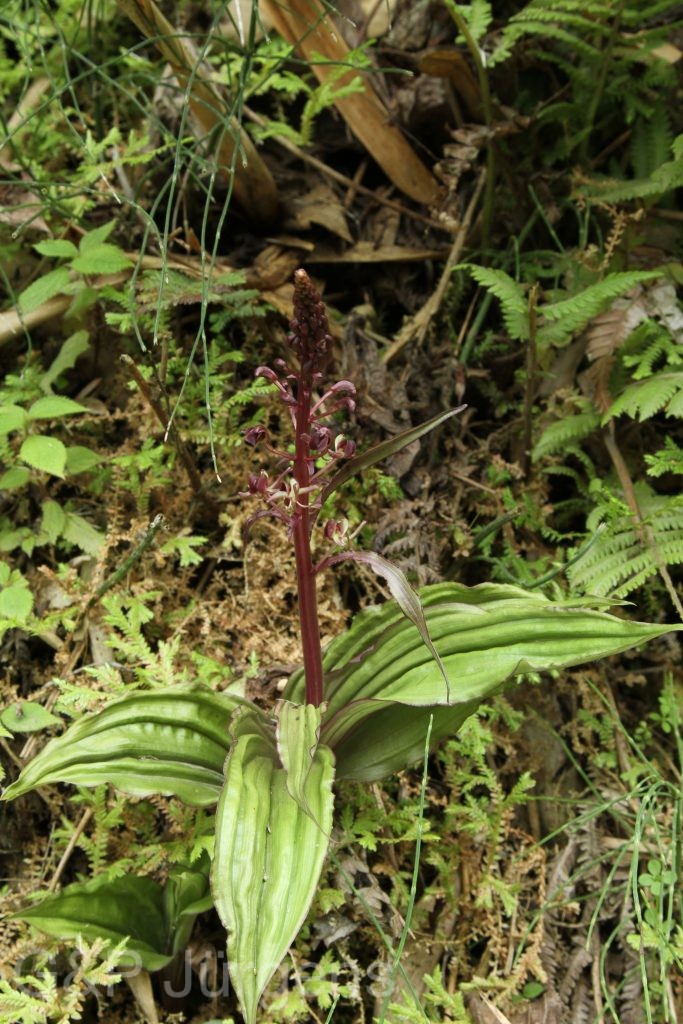
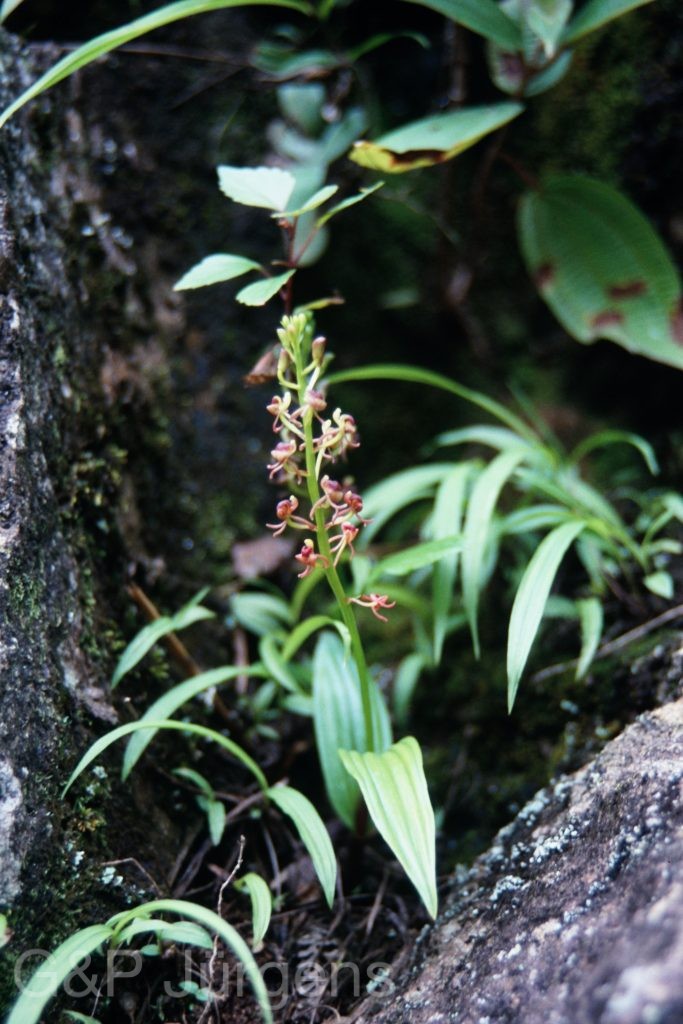
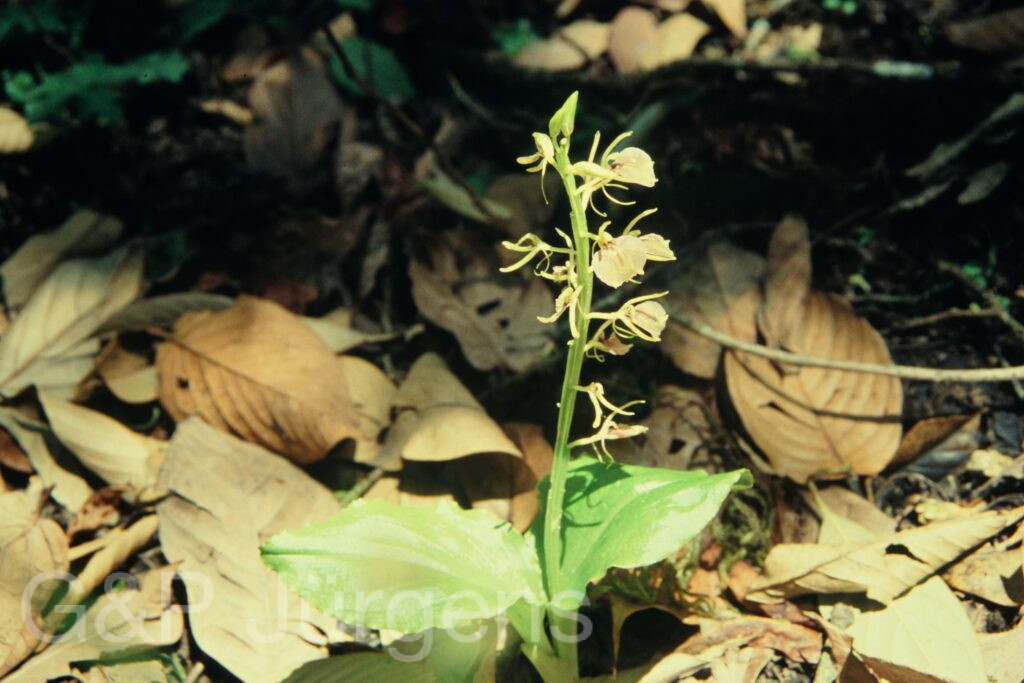
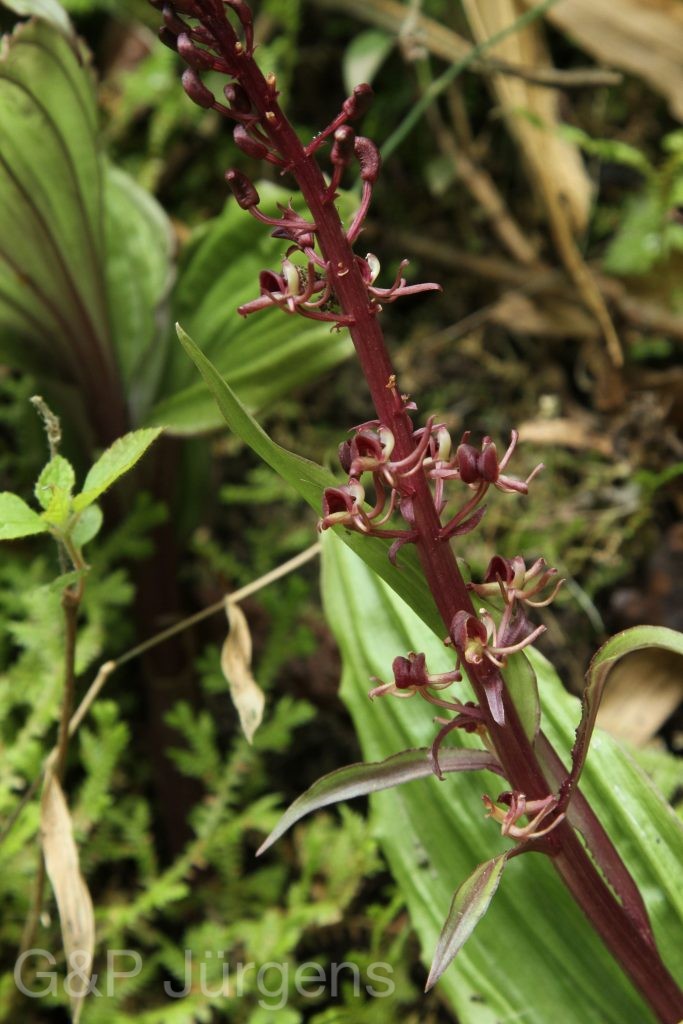
Liparis cathcartii is an East Himalayan terrestrial orchid known from a restricted range spanning northern India (Sikkim, West Bengal, Darjeeling), Nepal, Bhutan and south-eastern China; its modest tally of about 60 georeferenced occurrences (IN, CN, NP, BT) marks it as a regional endemic of the moist temperate forest belt. It grows in shaded, humus-rich leaf litter and on mossy banks within broad-leaved and mixed forest, generally between about 2000 and 3000 m. The plant photographed at Bersay on the Sikkim-West Bengal border at 2700 m in April, flowering early in the season, is typical of its cool, humid forest-floor habitat.

It is a small terrestrial herb arising from clustered, fleshy pseudobulbs partly sheathed by membranous scales. From each pseudobulb arise a few thin-textured, plicate, ovate to elliptic leaves with sheathing bases. The slender erect scape bears a lax raceme of several small flowers, greenish to purplish-brown in colour, with narrow spreading sepals and filiform petals; the lip (labellum) is the most distinctive organ, broad, recurved and often emarginate, contrasting with the slender column characteristic of the genus. The fruit is a small ellipsoid, ribbed capsule releasing abundant dust-like seeds dispersed by wind.

Liparis is a large, near-cosmopolitan genus of subtribe Malaxidinae, with Himalayan species notably diverse; L. cathcartii is allied to other temperate plicate-leaved members of the genus. Like most orchids it depends on mycorrhizal fungi for germination and is protected internationally under CITES Appendix II. Its narrow distribution and reliance on undisturbed forest make it sensitive to habitat loss, though it persists locally where forest cover remains intact.

Author: Hook.f. · Sources: POWO (Kew), GBIF, Flora of Bhutan, Flora of China, The Orchids of Sikkim Himalaya (King & Pantling), Genera Orchidacearum (Pridgeon et al.)
(Thunberg) Lindl.

Bhutan2014 786
Bhutan Wangdi Mo-Chu 1400m, May
BhutanPG2011 609 01
Bhutan Ludlow-Sherriff-Trail Ken-La, 4300m July
Also included: Cotoneaster microphyllus Lindb.
Bhutan2014 784
Bhutan Ludlow-Sherriff-Trail Ken-La, 4300m July
Sikkim2003 28 P39
Sikkim Rathong-Chu 1200m 08.2003

(Burkill) Harry Sm.

Bhutan2015 666
Bhutan Chele-La 4000m, October
Bhutan2015 682
Bhutan Chele-La 4000m, October
Bhutan2015 685
Bhutan Chele-La 4000m, October

Description

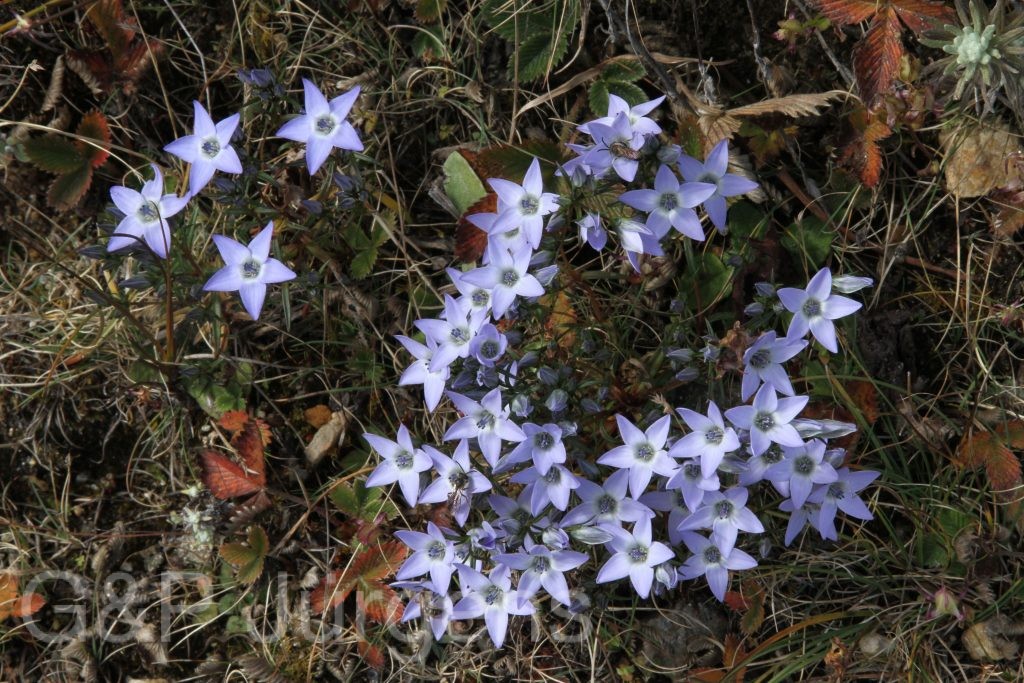
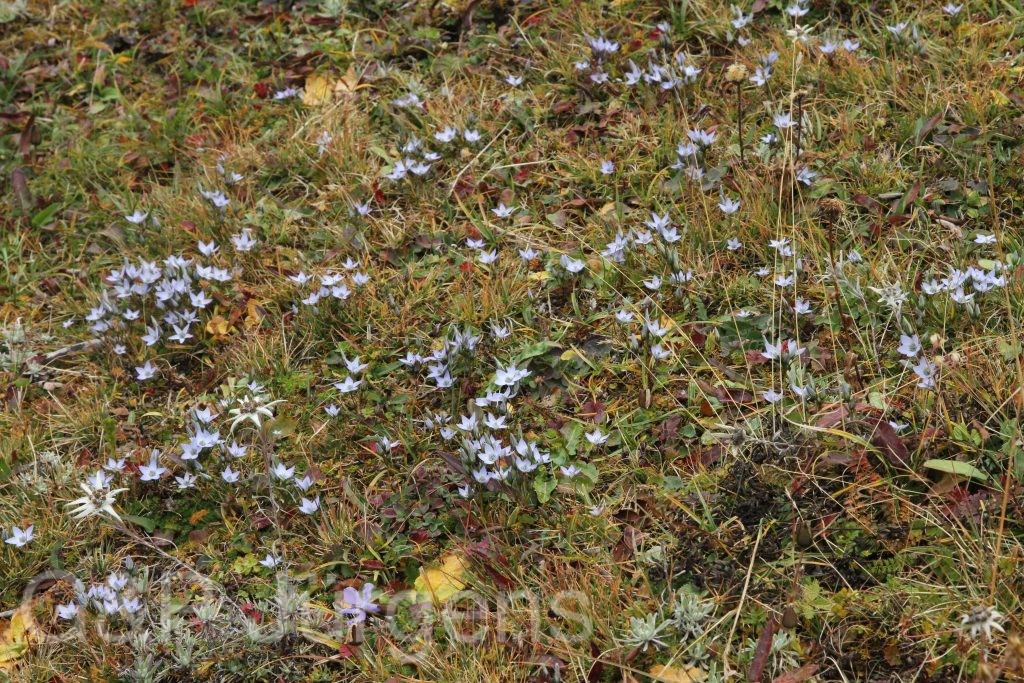
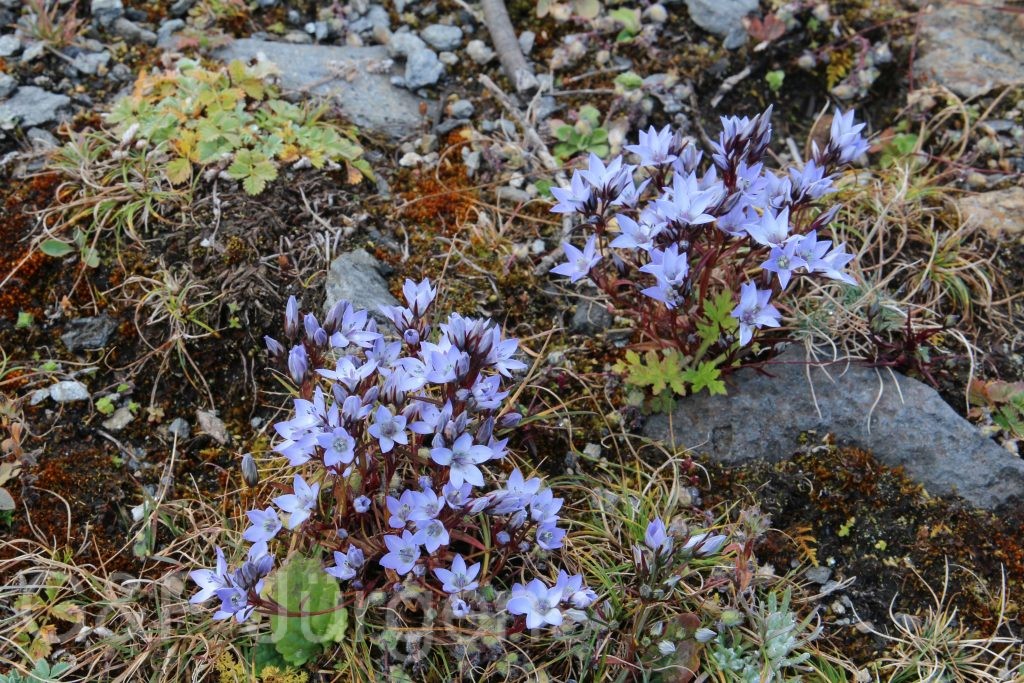
Lomatogonium sikkimense is a high-alpine gentian relative restricted to the eastern Himalaya and adjacent Tibet, recorded from Nepal, India, Bhutan and China, with about 74 occurrences in GBIF. It grows in the alpine zone on open turf, moist meadows, streamsides and gravelly slopes, characteristically between about 3500 and 4500 m, flowering late as the monsoon ends. The plants photographed at the Chele-La in Bhutan at around 4000 m in October exemplify this habitat, where the species blooms among short alpine vegetation just before the onset of winter.

It is a slender annual or short-lived herb with erect or ascending, often branched stems bearing opposite, sessile, narrowly lanceolate to linear leaves. The flowers, borne singly or in a few-flowered cyme, are rotate and deeply five-lobed, the blue to violet-blue corolla lobes acute and often delicately veined; characteristically for the genus, each lobe bears a pair of fringed nectary scales at its base, distinguishing Lomatogonium from the closely related Swertia and Gentianella. The five stamens alternate with the lobes, and the superior ovary develops into a many-seeded capsule.

Lomatogonium is a small Eurasian genus of high mountains and is centred on the Sino-Himalayan and Tibetan flora, with L. sikkimense among its narrowly distributed eastern Himalayan members, as its epithet referencing Sikkim records. The fringed paired nectaries and rotate corolla are key diagnostic features separating it from allied swertioid gentians. No formal conservation assessment exists; the species appears locally frequent within its restricted alpine range, though such narrowly zoned high-altitude annuals are potentially vulnerable to climate-driven shifts in alpine meadow vegetation.

Author: (Burkill) Harry Sm. · Sources: POWO (Kew), GBIF, Flora of Bhutan, Flora of China, Annotated Checklist of the Flowering Plants of Nepal, Ho & Liu Worldwide Monograph of Swertia and its Allies

Ghose

Nepal 95 346 P619 ergebnis
Nepal Tiblung 2810m, October

Description

Luculia grandifolia is a rare and poorly known shrub or small tree endemic to the eastern Himalayas, recorded from Bhutan, northeast India (Sikkim, Arunachal Pradesh), and central-eastern Nepal. Only 30 occurrences are documented on GBIF, making it one of the least collected species in the genus. It grows in moist, evergreen montane forests and along shaded ravines at elevations of 2,000–3,200 m, where it is associated with Rhododendron, Magnolia, and Lithocarpus in the upper warm-temperate to lower cloud-forest zone. The species favours humid, sheltered microsites on steep slopes with deep humus.
Luculia grandifolia is a semi-evergreen to evergreen shrub or small tree, 2–5 m tall, with stout, terete branches. The leaves are the largest in the genus, opposite, broadly elliptic to obovate, 15–30 cm long and 8–15 cm wide, coriaceous, with entire margins and prominent venation beneath; petioles are stout, 2–4 cm long. Stipules are interpetiolar, triangular, and caducous. The inflorescence is a terminal, dense, corymbose cyme bearing numerous fragrant flowers. Each flower has a salverform corolla, 2.5–3.5 cm long, with five spreading, rounded lobes; the colour ranges from white to pale pink. The calyx is five-lobed, with lobes often tinged reddish. The fruit is a septicidal capsule containing numerous small, winged seeds.
Luculia is a small genus of approximately five species restricted to the Sino-Himalayan region, all prized for their showy, sweetly fragrant flowers. Luculia grandifolia is distinguished from the more widely cultivated L. gratissima by its significantly larger leaves and more robust overall habit. The photographed specimen from Tiblung in Nepal at 2,810 m in October represents a late-season flowering event, consistent with the autumnal blooming period reported for the genus. Given its limited distribution, small population sizes, and dependence on undisturbed montane forest, L. grandifolia is of considerable conservation interest and would likely qualify as Vulnerable under IUCN criteria if formally assessed.

Author: Ghose · Sources: POWO (Kew), GBIF, Flora of Bhutan Vol. 2, Press et al.: Annotated Checklist of the Flowering Plants of Nepal (2000), Springate et al. (2015)

King ex Hook.f.

Sikkim 2006 409 ergebnis
Sikkim Ringi-Chu 3100m, May

Description

Machilus duthei is an evergreen laurel of the Himalaya, recorded from northern India, Nepal and Pakistan, with relatively few documented occurrences across this western to central Himalayan range. It is a tree of moist temperate broad-leaved evergreen forest, occurring on shaded slopes, in ravines and along forested watercourses. It grows at mid to upper montane elevations; the tree photographed near the Ringi-Chu in Sikkim at 3,100 m in May represents an upper-elevation occurrence in the cool, humid temperate forest belt, where laurels form a notable element of the canopy and subcanopy.

The plant is a medium-sized evergreen tree with smooth bark and glabrous to finely pubescent young shoots. The leaves are alternate, coriaceous, elliptic to oblong-lanceolate, entire, glabrous and glossy above, somewhat glaucous beneath, with pinnate venation and aromatic tissue typical of the family. The flowers are small, bisexual and trimerous, with six subequal perianth segments and stamens in whorls, the inner whorl glandular, borne in axillary or subterminal panicles. The fruit is a globose to ellipsoid berry seated on a persistent, slightly enlarged perianth cup at the apex of the pedicel.

The genus Machilus, closely allied to and sometimes merged with Persea, comprises evergreen Asian laurels of considerable importance in moist subtropical and temperate forest. Machilus duthei, described by King ex Hooker f. and commemorating the botanist J. F. Duthie, is a comparatively narrowly distributed Himalayan species. Given its limited documented range and dependence on undisturbed humid montane forest, it is vulnerable to habitat degradation and logging, and its sparse records indicate a need for further field survey to assess its true distribution and conservation status.

Author: King ex Hook.f. · Sources: POWO (Kew), Flora of China Vol. 7, Annotated Checklist of the Flowering Plants of Nepal, GBIF, Kostermans: Lauraceae studies

King ex Hook.f.

Sikkim2004 379 P656 ergebnis
Sikkim Lachung-valley 3200 m, May
Sikkim2004 380 P657 ergebnis
Sikkim Lachung-valley 3200 m, May

Description

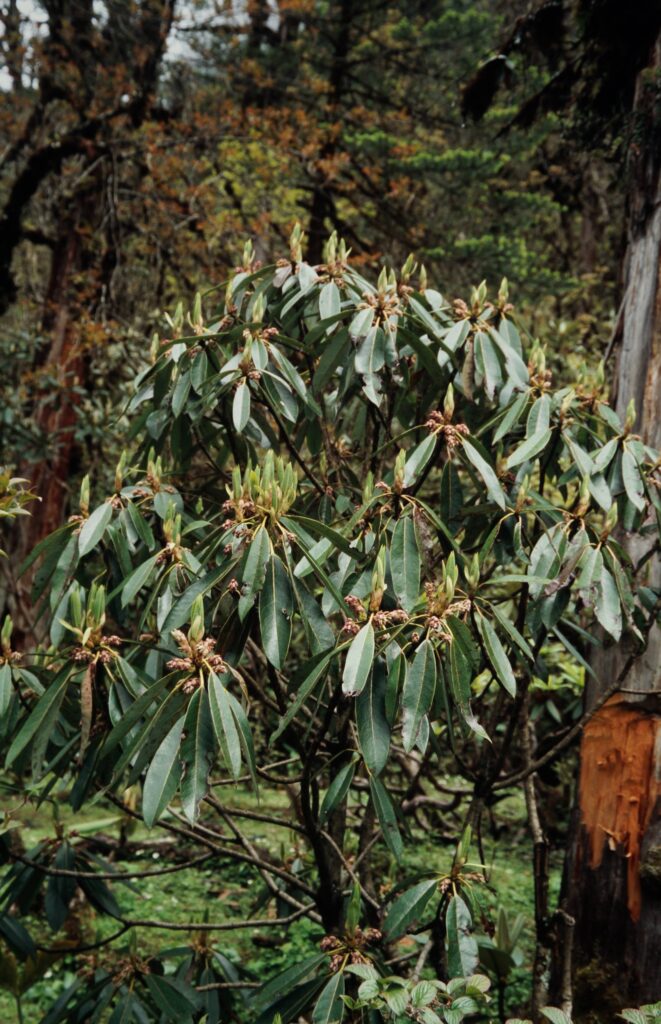
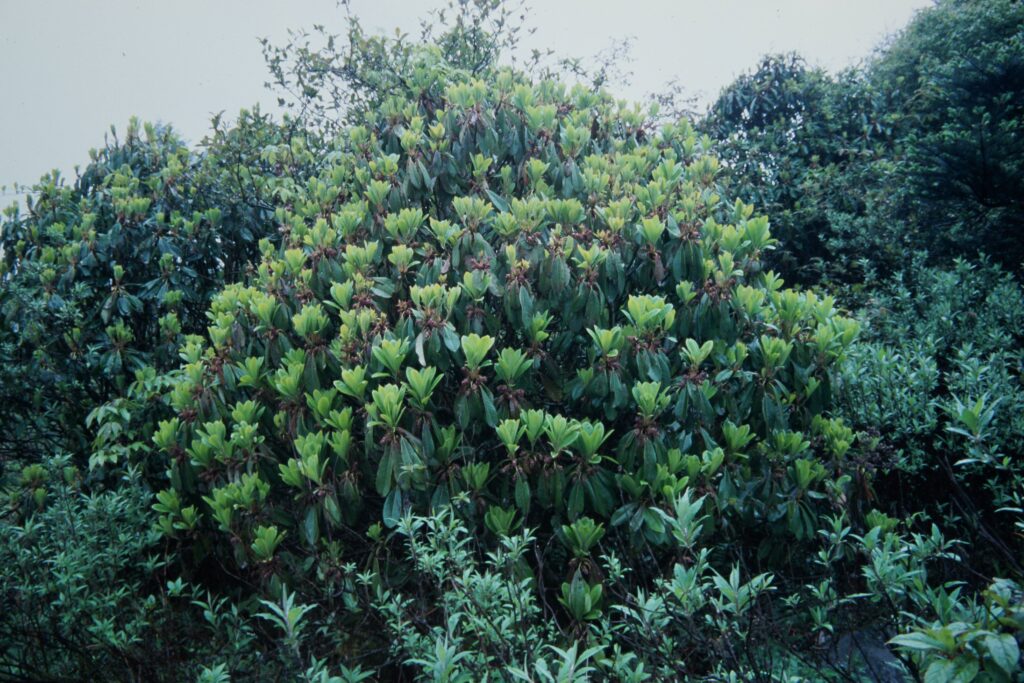
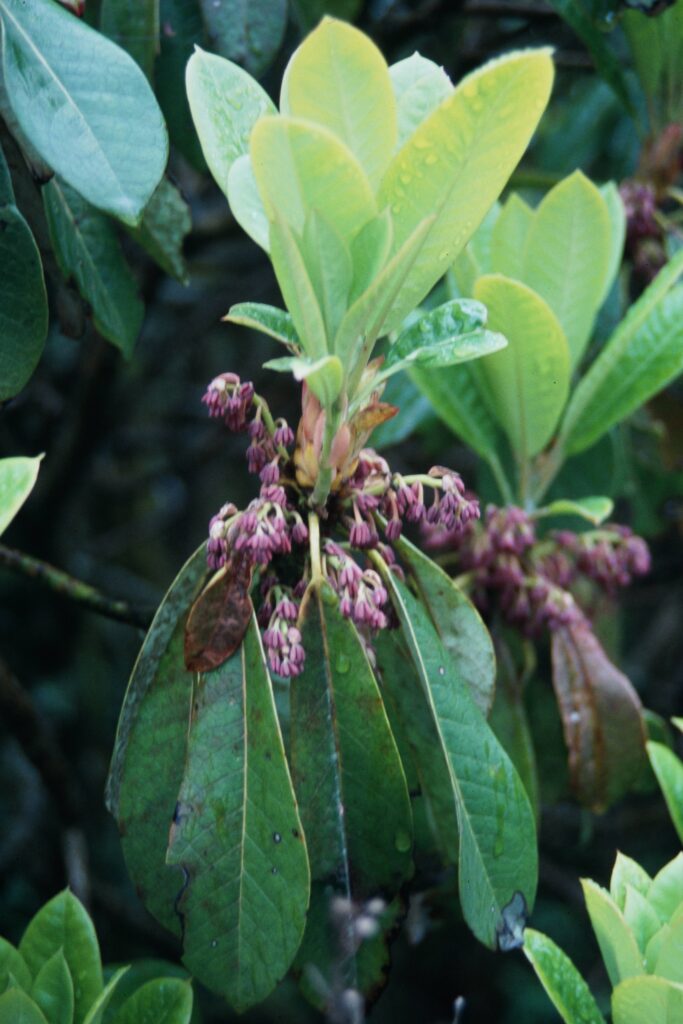
Machilus kurzii is an evergreen laurel of the eastern Himalaya and Southeast Asia, distributed from NE India and Bhutan through Myanmar, Thailand, Cambodia and Vietnam into SW China, as documented by its roughly 135 GBIF occurrences across IN, BT, CN, MM, TH, KH, VN and KR. The tree photographed grows in the Lachung valley of northern Sikkim at about 3,200 m in May. It is a species of humid temperate and subtropical evergreen broadleaf forest, occurring on moist slopes and in ravines often dominated by other Lauraceae, Fagaceae and rhododendrons, where high rainfall and persistent cloud sustain the laurophyllous canopy across a broad altitudinal range.

It is an evergreen tree with smooth bark and glabrous to thinly pubescent twigs. The leaves are alternate, coriaceous, elliptic to oblanceolate, entire, with a pinnate venation of fine, looping secondary veins and an obtuse to shortly acuminate apex, often glaucous beneath. The flowers are small and bisexual, borne in subterminal or axillary panicles; they show the trimerous laurel plan with six tepals in two whorls, fertile stamens in several whorls including a third whorl with paired basal glands, and inward-facing anthers dehiscing by valves. The fruit is a globose to ellipsoid berry seated on a persistent, somewhat enlarged perianth base or cupule, characteristic of the genus.

Machilus, often treated within or close to Persea, is an Asian genus of the tribe Laureae whose delimitation has long been debated; molecular and floral evidence continues to refine the boundary between Machilus and Persea. The species is an integral element of mid-montane evergreen forest, contributing to canopy structure and providing fleshy fruits for birds. It is not currently considered threatened, though it depends on the maintenance of undisturbed humid broadleaf forest.

Author: King ex Hook.f. · Sources: POWO (Kew), Flora of China Vol. 7, Flora of Bhutan Vol. 1, GBIF, Kostermans: Lauraceae studies

Hook.f. & Thomson

Nepal 97 118 P204
Nepal Mewa-Khola 2470m April
Nepal 97 119 G206 2
Nepal Mewa-Khola 2470m April
Nepal1992 149 P216 ergebnis
Nepal Simbua-Khola 2500m March 

Description

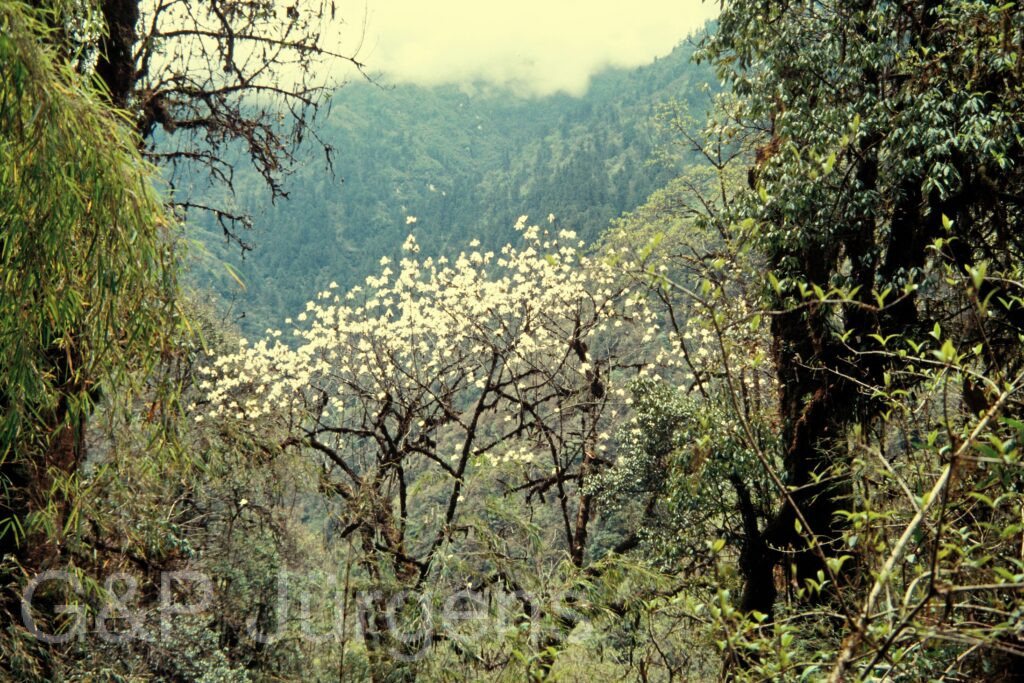
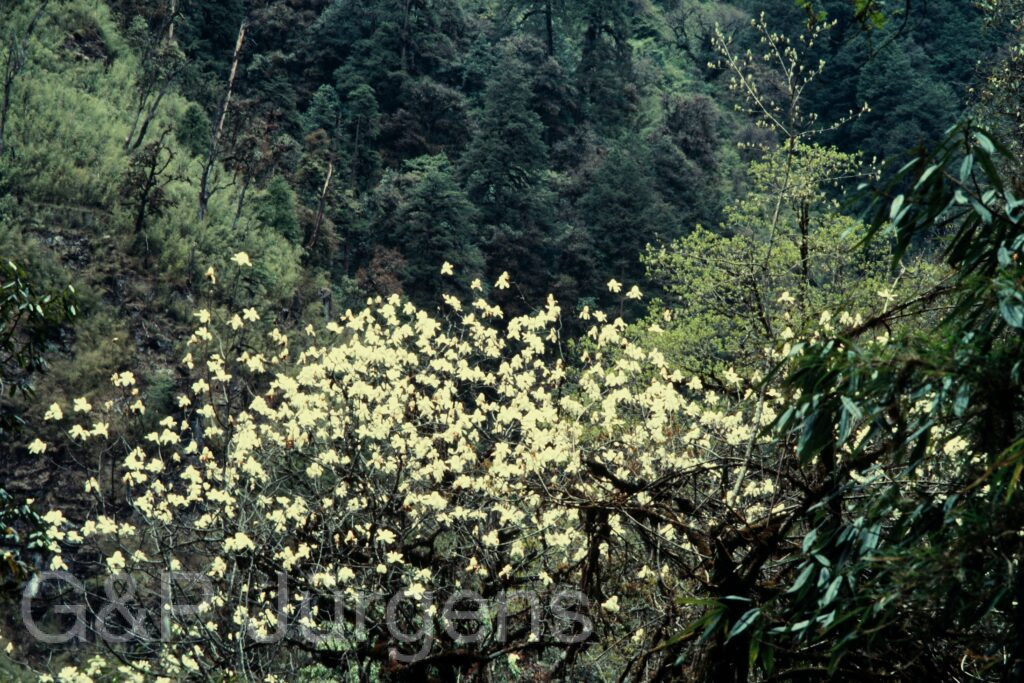
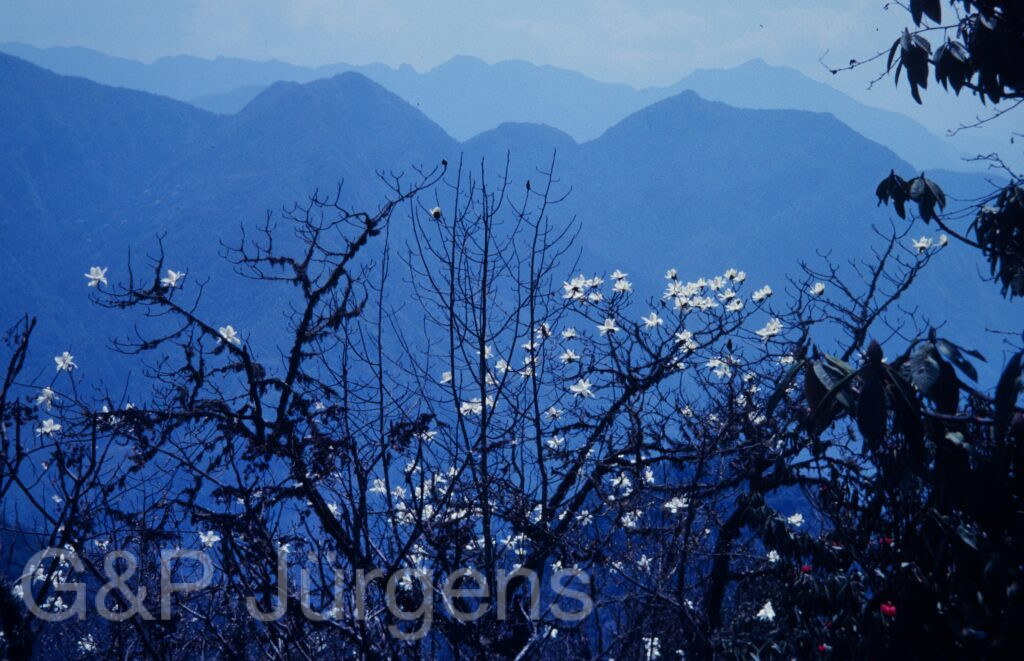
Magnolia campbellii, Campbell's magnolia, is a large deciduous tree of the eastern Himalaya, native from Nepal through Sikkim and Bhutan into NE India, Myanmar and SW China; the additional GBIF codes (GB, IE, US, NZ, JP, DE and others) among its roughly 807 occurrences reflect its renown as a cultivated ornamental. The plants photographed grow in eastern Nepal in the Mewa-Khola (c. 2,470 m, April) and Simbua-Khola (c. 2,500 m, March) valleys, flowering before leaf flush in early spring. In the wild it inhabits temperate broadleaf and mixed forest on humid, well-drained slopes, typically between 2,100 and 3,000 m, often as an emergent tree among oak, rhododendron and laurel.

It is a tree reaching 20–30 m with a stout trunk, grey bark and stout, often pubescent young twigs marked by ringed stipular scars. The leaves are alternate, elliptic to obovate, entire, glaucous and finely hairy beneath. The large, solitary, precocious flowers are among the most spectacular of the genus, cup-and-saucer in form, 15–25 cm across, with numerous tepals ranging from deep rose-pink to white; as in all Magnoliaceae the receptacle bears spirally arranged stamens below an elongate gynoecium of free carpels. The fruit is an aggregate of follicles forming a cylindrical, often twisted etaerio that splits to expose red, arillate seeds suspended on slender funicular threads.

Magnolia campbellii belongs to subgenus Yulania, the precocious-flowering Asian magnolias, and its early bloom on bare branches is a defining feature exploited in horticulture, where numerous selections and hybrids exist. Though widely grown, wild populations face pressure from logging and forest conversion, and the species is regarded as of conservation interest across parts of its native range, making intact mid-montane Himalayan forest important to its persistence.

Author: Hook.f. & Thomson · Sources: POWO (Kew), Flora of China Vol. 7, Flora of Bhutan Vol. 1, GBIF, Hunt (ed.): Magnolias and their Allies

Hook.f. & Thomson

Sikkim2011 191
Sikkim Lachung 2800m, June
Sikkim2011 193
Sikkim Lachung 2800m, June

Description

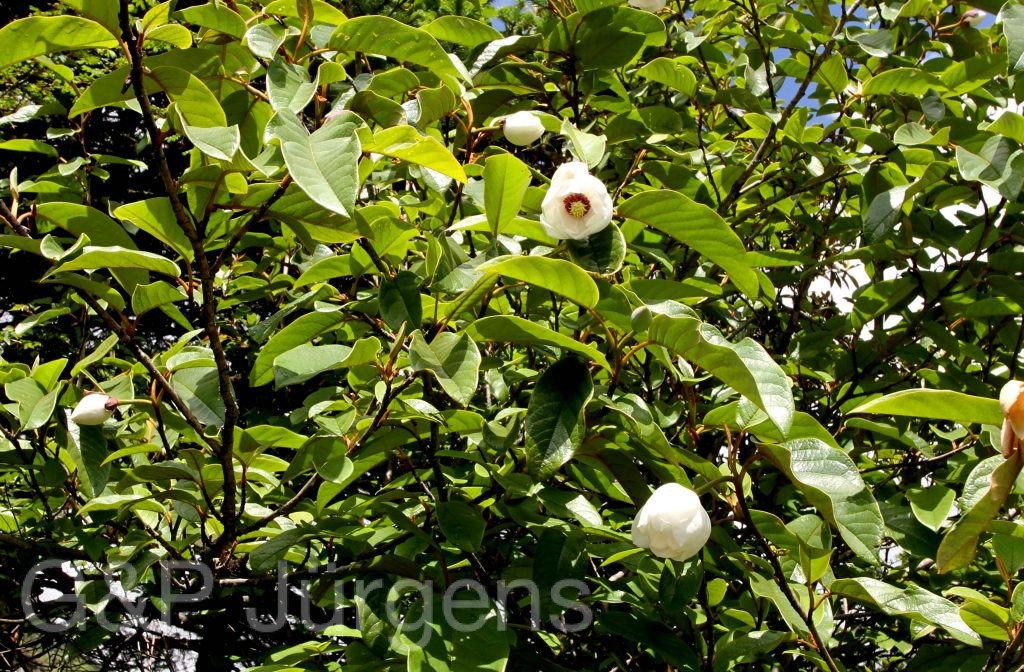
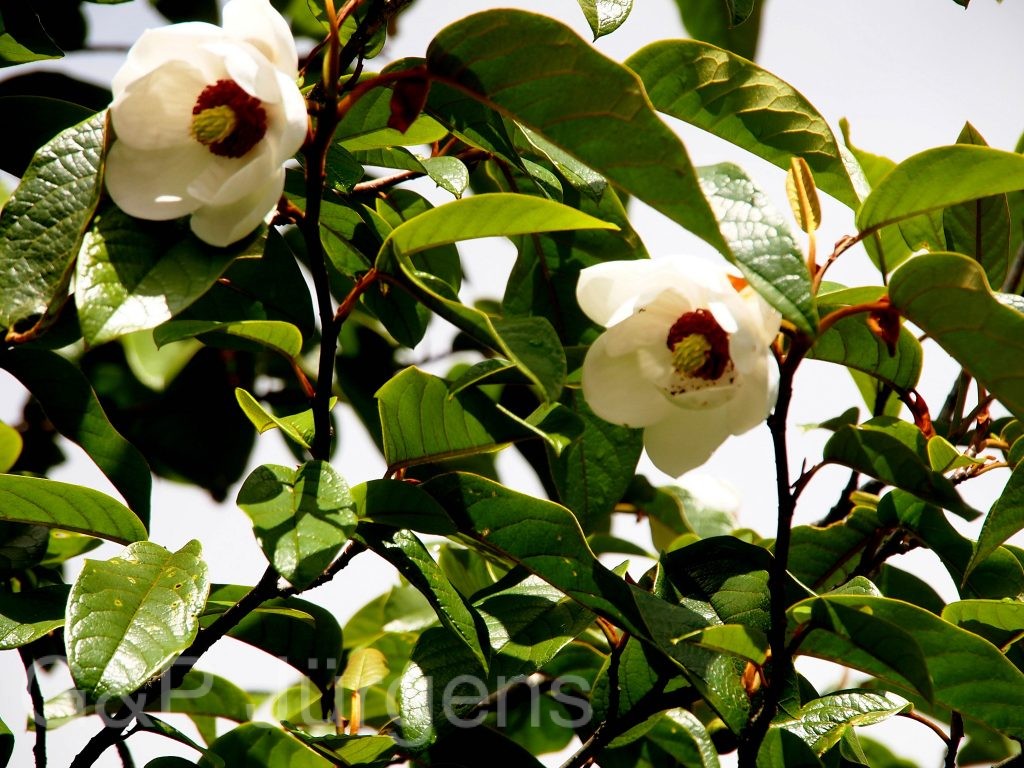
Magnolia globosa is a small deciduous tree or large shrub of the eastern Himalaya and adjacent China, documented by GBIF (236 occurrences) from China, India, Bhutan and Nepal, with additional records reflecting cultivation in Europe, Korea and elsewhere. It is a plant of cool, humid temperate forest, growing in mixed broadleaved and conifer woodland, along ravines and on shaded slopes, generally between about 2500 and 3500 m. The collection from Lachung in Sikkim at 2800 m in June represents its typical montane forest habitat, where it flowers in early summer in the moist, mist-laden middle-mountain belt.

The species is a spreading, often multi-stemmed tree whose young twigs, petioles and flower buds bear conspicuous rusty or pale tomentum. The leaves are alternate, broadly ovate to elliptic, rounded to cordate at the base and pubescent beneath. The flowers are nodding and characteristically cup-shaped to nearly globose, fragrant, with creamy-white to ivory tepals; the perianth is differentiated into a few outer and several inner tepals surrounding numerous spirally arranged stamens and an elongate gynoecium of free carpels. The fruit is an aggregate of follicles forming a cylindric to ovoid pink to crimson cone, releasing red-arillate seeds at maturity.

Magnolia globosa belongs to the morphologically ancient Magnoliaceae, a family noted for spirally arranged floral parts, apocarpous gynoecia and beetle pollination of the large protogynous flowers. Its nodding globose blooms and aggregate follicular cone are diagnostic. Though valued in horticulture, wild populations are scattered and the species, like many temperate Himalayan magnolias, is potentially vulnerable to forest loss and so warrants monitoring.

Author: Hook.f. & Thomson · Sources: POWO (Kew), GBIF, Flora of China Vol. 7, Flora of Bhutan Vol. 1, Flora of Nepal, Hunt Magnolias and their Allies

C.B.Clarke

Sikkim2004 215 G367
Sikkim/India Gometang 3900m May
Nepal 97 203 P415
Nepal Thudam 3850m April
Nepal 97 202 P414
Nepal Thudam 3850m April

Description

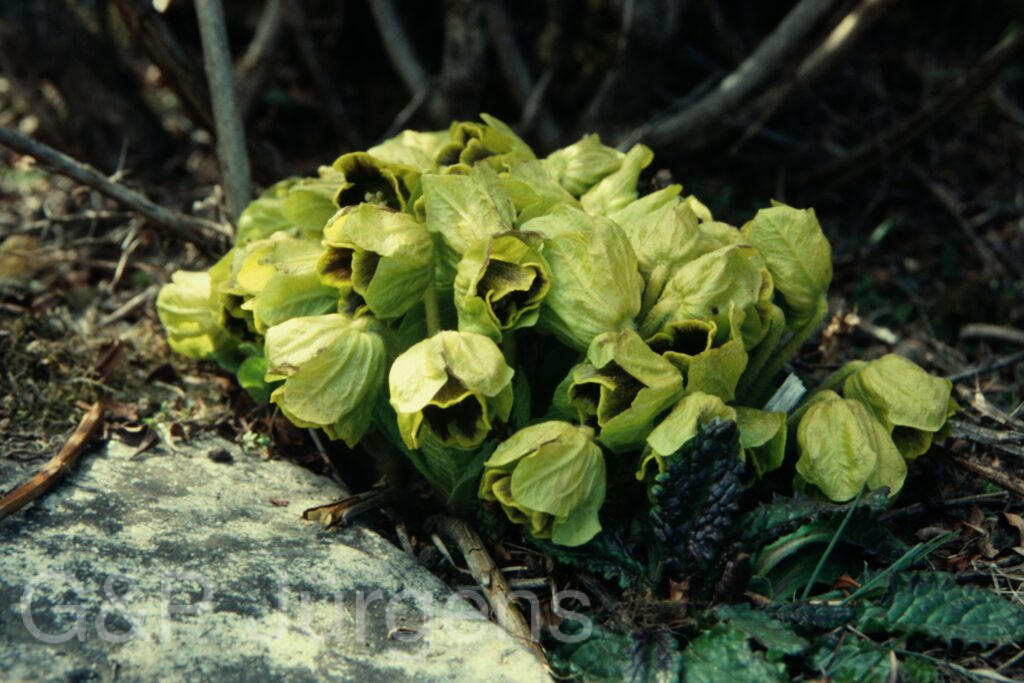
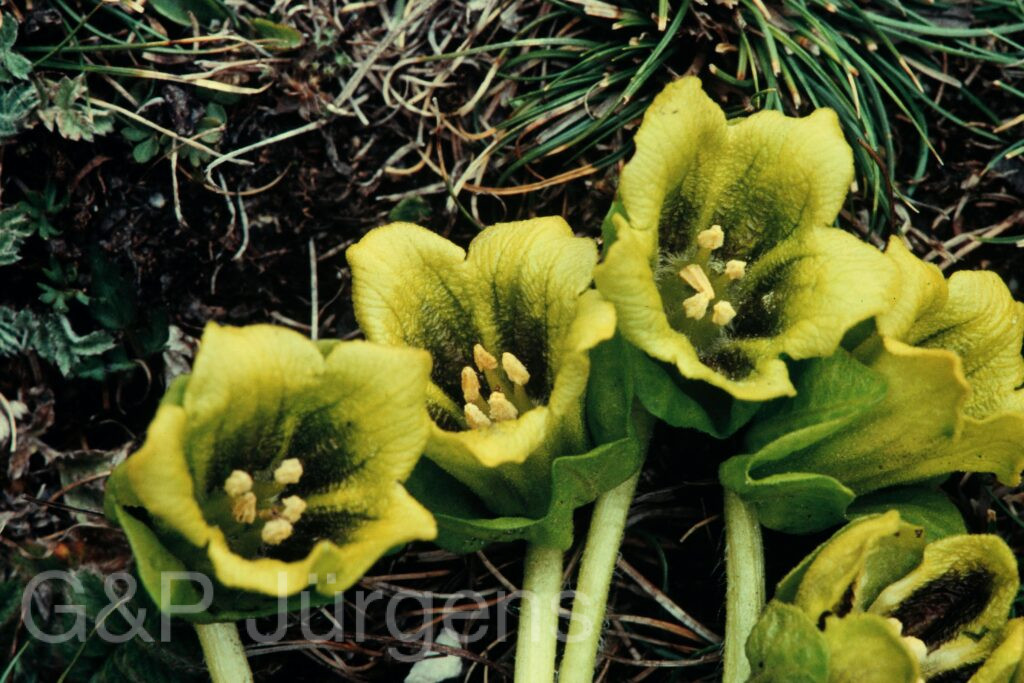
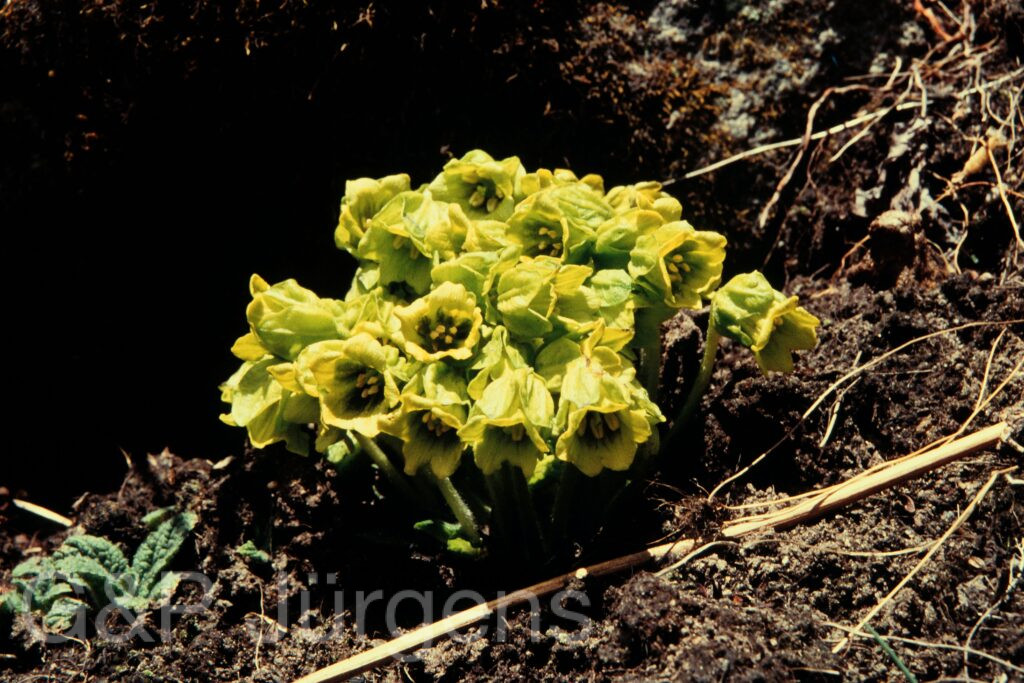
Mandragora caulescens is a stout alpine perennial of the high Himalaya and Tibetan borderlands, distributed across southwestern China (Xizang, Yunnan, Sichuan), northern India, Nepal, Bhutan and Myanmar; GBIF documents some 540 collections, indicating it is locally frequent within its high-elevation range. It occupies open alpine meadows, grassy slopes, scrub margins and stony pasture, generally between about 2500 and 4500 m, often in moist, well-drained turf. The photographed plants were recorded at Gometang on the Sikkim/India border at about 3900 m in May and at Thudam in eastern Nepal near 3850 m in April, typical of this snowmelt-associated meadow species.

Unlike the stemless Mediterranean mandrakes, this species is caulescent, developing a short, leafy aerial stem from a large, fleshy, often forked taproot. The leaves are clustered, oblong to oblanceolate, tapering to the base, entire or sinuate, and somewhat fleshy. The flowers are solitary on long, decurved or nodding peduncles among the leaves; the corolla is broadly campanulate, dull purple to brownish-violet or rarely greenish, five-lobed, subtended by a deeply lobed persistent calyx. The fruit is a globose, fleshy berry seated in the enlarged calyx.

The placement of Mandragora has long been debated; it is treated here in Solanaceae, in which it is conventionally classified, though some authors segregate it. M. caulescens is the principal Asian representative of the genus and, like its western relatives, contains tropane alkaloids and features in regional ethnomedicine. Widespread across the high Sino-Himalayan ranges, it is not regarded as globally threatened.

Author: C.B.Clarke · Sources: POWO (Kew), GBIF, Flora of China Vol. 17, Flora of Bhutan Vol. 2, Flora of Nepal, Flora of Pakistan, Ungricht et al. revision of the genus Mandragora

Mazus dentatus

by GP Jürgens

Wall. ex Benth.

Sikkim2004 11 P17
Sikkim West-Bengal, Sambon 1800m April
Nepal 97 97 P160
Nepal Dongen 2360m April
Nepal1992 174 P255 ergebnis
Nepal Mamanke 1800m March 

Description

Mazus dentatus is a small herbaceous plant of the eastern Himalaya, recorded from northern India (Sikkim, Darjeeling), Nepal and Bhutan; GBIF holds only about 48 records, consistent with a restricted, narrow distribution. It grows in moist, shaded or semi-open habitats such as damp banks, grassy slopes, terraced field margins, ditches and stream sides at lower to middle elevations, broadly between about 1500 and 2500 m. The photographed material came from Sambon in the Sikkim/West Bengal hills at around 1800 m in April, from Dongen in Nepal near 2360 m in April and from Mamanke at about 1800 m in March, the early-spring flowering typical of this moisture-loving herb.

The plant is a low, soft, more or less hairy annual or short-lived perennial with slender ascending or decumbent stems. The leaves are mostly in a basal rosette and opposite below, obovate to spathulate, narrowed to a winged petiole, with a coarsely toothed (dentate) margin that gives the species its epithet. The flowers are borne in lax terminal racemes; the corolla is strongly two-lipped, pale violet to bluish, the short upper lip two-lobed and the larger lower lip three-lobed and marked with yellow and darker spots on a raised palate. The fruit is a small capsule enclosed in the persistent calyx.

Mazus, long placed in Scrophulariaceae and later in its own family Mazaceae, is treated here in Phrymaceae following the broad circumscription adopted in several recent floras. The genus is distinguished by its palate-bearing, bilabiate corolla and rosulate habit. M. dentatus is a localised eastern Himalayan plant of disturbed, moist ground; though not formally assessed, its limited range warrants attention.

Author: Wall. ex Benth. · Sources: POWO (Kew), GBIF, Flora of China Vol. 18, Flora of Bhutan Vol. 2, Flora of Nepal, Flora of Pakistan, Bonati revision of Asian Mazus