Tag:

Subtropical (<1500 m)

Roxb.

Bhutan2012 749
Bhutan Zhemgang 850m, September
Bhutan2015 127
Bhutan Zhemgang 850m, September

Description

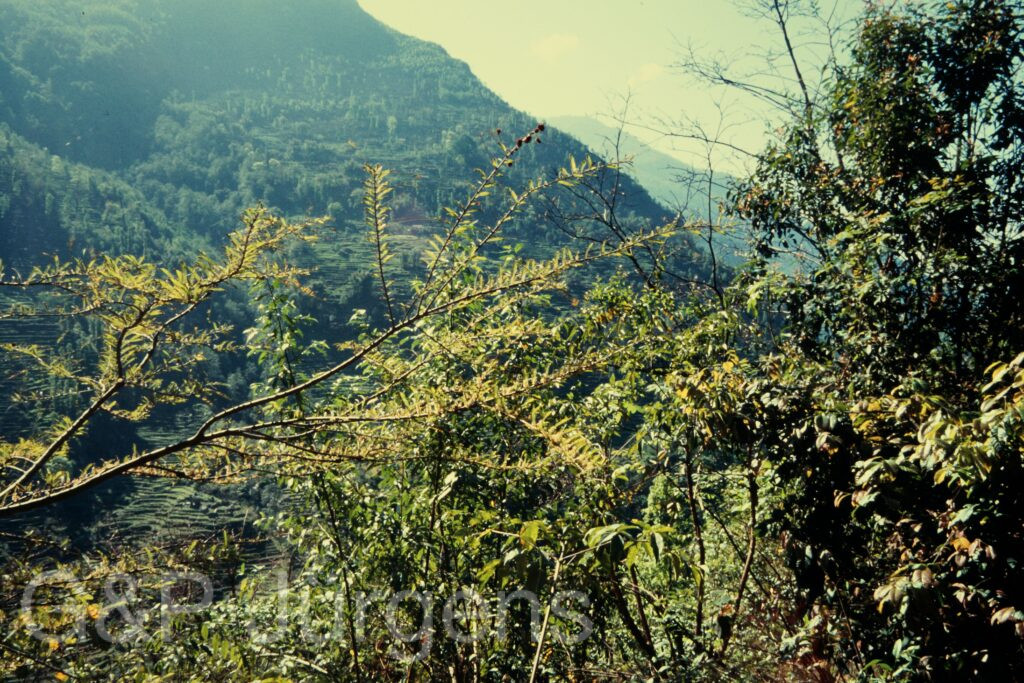
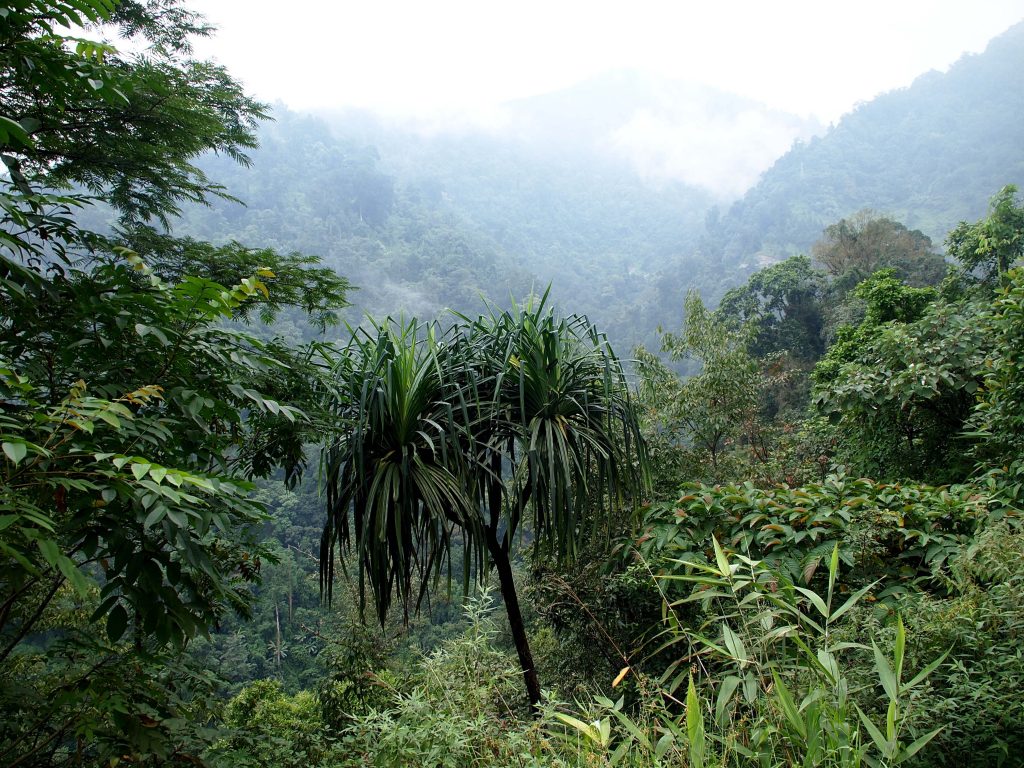
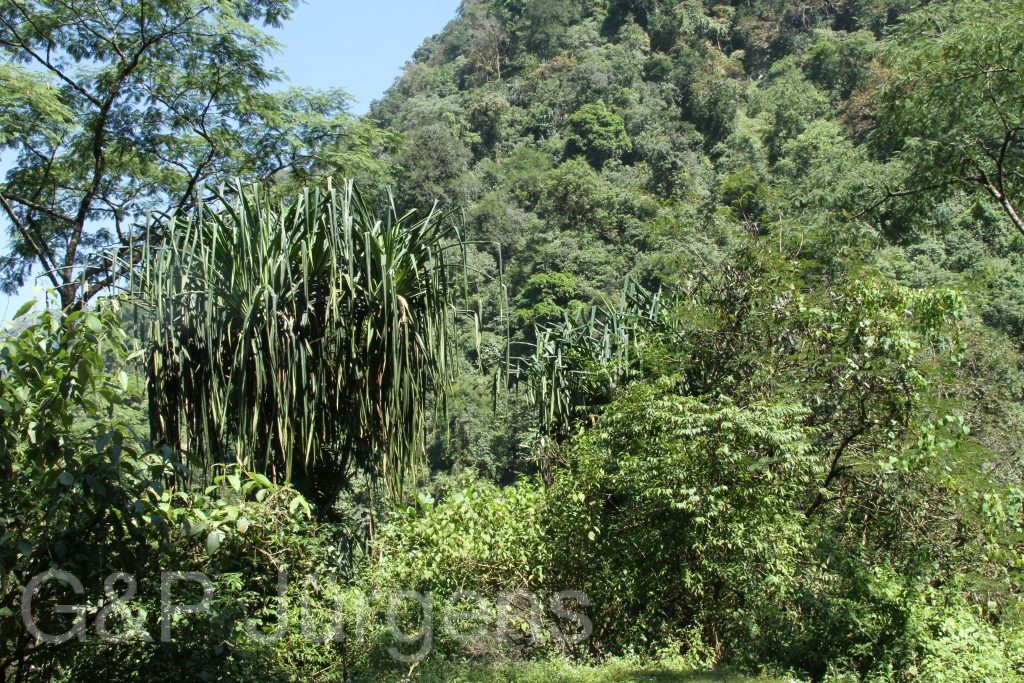
Pandanus furcatus, the Himalayan screw-pine, is a tree-like monocot of the eastern Himalaya and Southeast Asia, recorded by GBIF from Indonesia, Sri Lanka, India, Nepal, China, Malaysia, Thailand, Bhutan, Bangladesh and Myanmar (with cultivated records in Europe) across roughly 352 georeferenced occurrences. It is a plant of warm, humid, subtropical forest, favouring stream banks, moist ravines, gullies and shaded valley bottoms where the air remains saturated, generally at low elevations in the foothill zone. The photographed plant from Zhemgang in central Bhutan at about 850 m in September is characteristic of its occurrence along the moist inner-valley watercourses of the southern Himalaya, where it forms a conspicuous element of riparian vegetation.

The plant grows as a small tree with a slender trunk supported above the ground by a cone of stout, downwardly directed stilt (prop) roots, the stem typically branching and bearing terminal tufts of leaves. The leaves are very long, strap-shaped (ensiform) and spirally arranged in three ranks that twist around the stem, with sharp spiny teeth along the margins and the midrib beneath. Like all Pandanus it is dioecious. The male inflorescence is a much-branched, pendulous, fragrant spike subtended by white bracts, while the female inflorescence develops into a large, pendent, globose to ovoid syncarp (compound fruit) composed of numerous angular, wedge-shaped drupes that ripen yellow to orange-red.

Pandanus furcatus belongs to the Pandanaceae, an ancient pantropical family of arborescent monocots distinguished by their stilt roots, spiral tristichous leaves and dioecious habit. Among Himalayan species it is notable for ascending to relatively high elevations for the genus and for its role in stabilising stream banks and providing fruit and shelter for wildlife; the leaves are used locally for weaving and thatching. Although harvested locally, the species has a broad distribution and is locally common, and it is not regarded as globally threatened.

Author: Roxb. · Sources: POWO (Kew), GBIF, Flora of China Vol. 23, Flora of Bhutan Vol. 3, Flora of Nepal, Flora of Pakistan, Stone: revisional studies of Pandanus and the Pandanaceae
(Kurz.) Bremek.

Nepal 2001 488 ergebnis ergebnis
Nepal (Gorkha) Labubhesi 1100m, May

Description

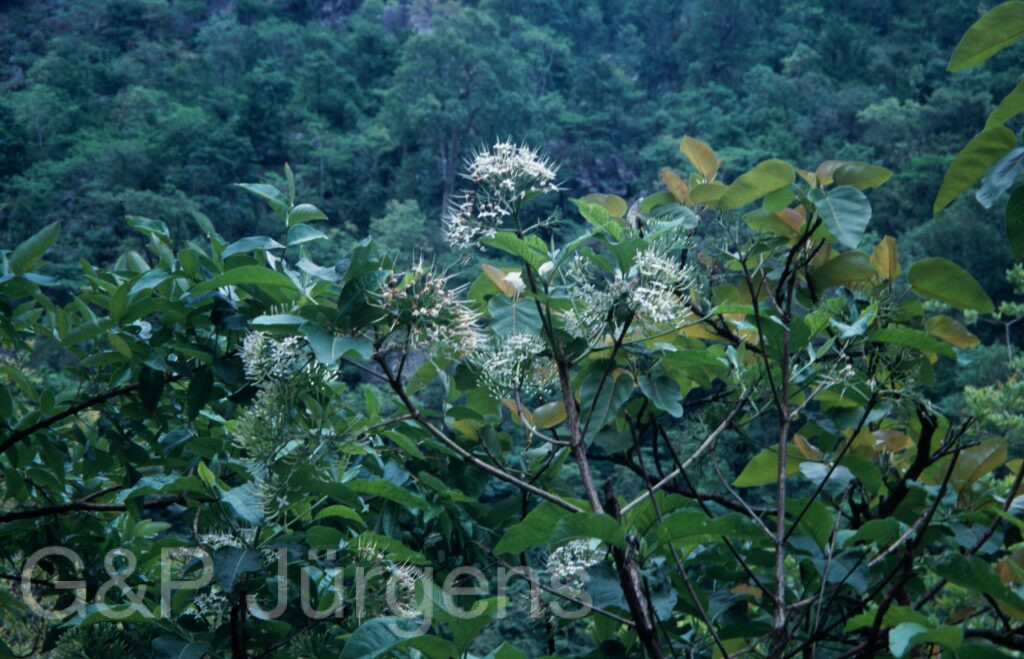
Pavetta tomentosa var. glabrescens is a shrub of the warm subtropical and tropical forests of southern and southeastern Asia. GBIF records the species across a broad range encompassing India, Thailand, China, Myanmar, Nepal, Laos, Vietnam, Cambodia, Malaysia, Indonesia, Sri Lanka, Bangladesh and Bhutan, with some 530 occurrences. It grows in deciduous and semi-evergreen forest, woodland margins and scrub at low to mid elevations. The photographed material derives from Nepal in the Gorkha district at Labubhesi, around 1100 m, in May, a humid montane-foothill setting near the lower Himalayan slopes that marks the northern edge of its distribution.

The plant is an erect, branching shrub with opposite, simple, elliptic to oblong leaves that are entire, shortly petiolate and, in the typical variety, softly tomentose; in var. glabrescens the indumentum is reduced and the foliage tends towards near-glabrous, the distinguishing feature of the variety. Interpetiolar stipules are present, as is characteristic of Rubiaceae. The white, fragrant flowers are borne in dense terminal corymbose cymes; each has a four-lobed salverform corolla with a slender tube and a long, far-exserted style, the hallmark of Pavetta. Bacterial leaf nodules, harbouring nitrogen-related endophytes, occur as dark dots in the lamina. The fruit is a small globose, two-seeded berry, ripening black.

GBIF accepts the species, the variety reflecting the glabrescent extreme of a tomentose-pubescent continuum. Bremekamp, who monographed the genus, recognised numerous such infraspecific entities. The genus is notable for its near-obligate bacterial leaf symbiosis. Widespread and ecologically tolerant, the species is of no conservation concern.

Author: (Kurz.) Bremek. · Sources: POWO (Kew), GBIF, Flora of Nepal, Flora of China, Bremekamp monograph of Pavetta

(G.Forst.) Hook. & Arn.

Bhutan2012 1010
Bhutan Trithangebe 1000m, October
Bhutan2012 1011
Bhutan Trithangebe 1000m, October
Sikkim 2006 472 ergebnis
India West-Bengal, Ruigi-Chu 2000m, May

Description

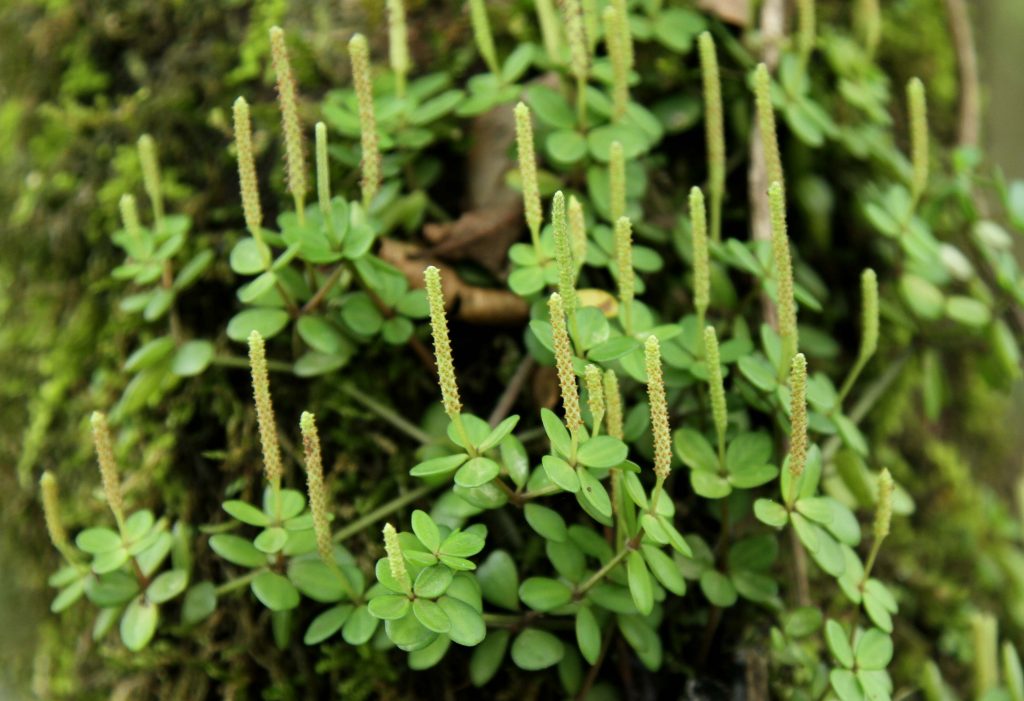
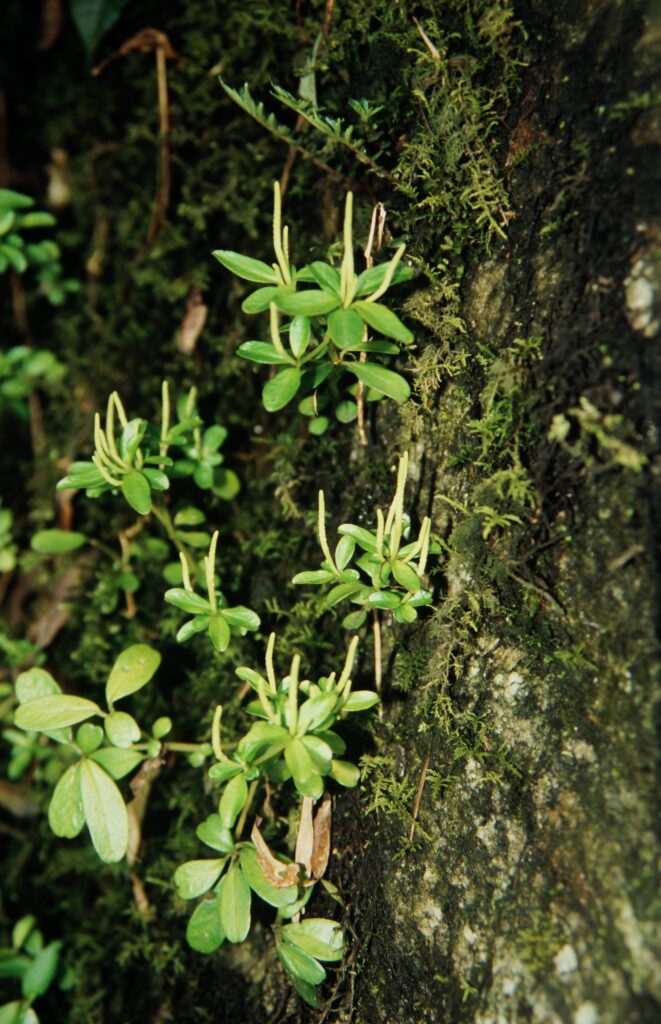
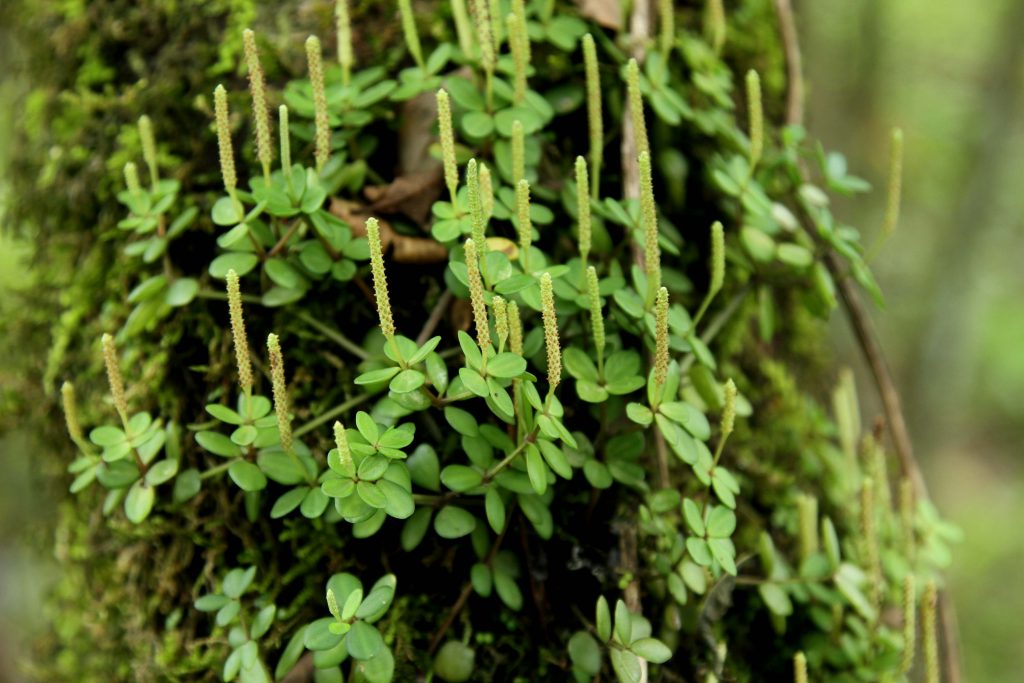
Peperomia tetraphylla is a small succulent herb of pantropical and warm-temperate distribution. GBIF (some 13,039 occurrences) documents it from the Americas (Brazil, Mexico, the United States, the Andes), Africa and the Indian Ocean islands, Asia (China, India, Indonesia, Taiwan) and Australasia, reflecting an extraordinarily wide range. It grows as an epiphyte on mossy trunks and as a lithophyte on shaded, humid rocks in forest. The illustrated plants are from Bhutan at Trithangbi (1,000 m, October) and West Bengal at Ruigi-Chu (2,000 m, May), spanning its Himalayan altitudinal range in moist broadleaved forest.

The plant is a fleshy, glabrous to finely pubescent herb with creeping then ascending stems rooting at the nodes. The leaves are succulent, characteristically borne in whorls of three to four (whence tetraphylla), small, elliptic to obovate and shortly petiolate. The inflorescence is a slender terminal or axillary spike of minute, naked, bisexual flowers lacking a perianth, each subtended by a peltate bract; the stamens are two and the stigma single. The fruit is a tiny ovoid drupelet, often borne sessile along the rachis.

Peperomia (Piperaceae) is a large pantropical genus, and P. tetraphylla is notable as one of its most widespread species, occurring on most continents. Its small succulent leaves and CAM-like physiology suit it to the seasonally dry, epiphytic microhabitats it occupies. Of no conservation concern given its vast range, it is locally used in folk medicine and is grown as a miniature ornamental, illustrating the cosmopolitan tropical element reaching into the lower Himalaya.

Author: (G.Forst.) Hook. & Arn. · Sources: POWO (Kew), Flora of China Vol. 4, Flora of Bhutan Vol. 1, GBIF, Wanke et al.: Phylogeny of Piperaceae

Lindl.

Sikkim2003 20 P24
Sikkim Rathong-Chu 1200m 08.2003
Sikkim2003 21 P25
Sikkim Rathong-Chu 1200m 08.2003

Description

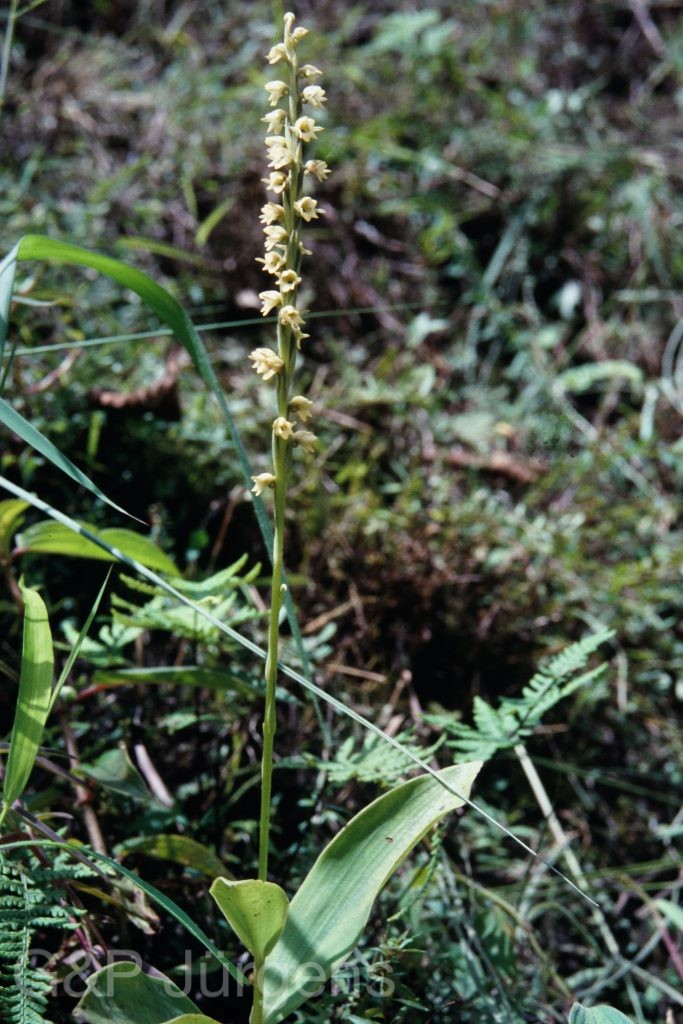
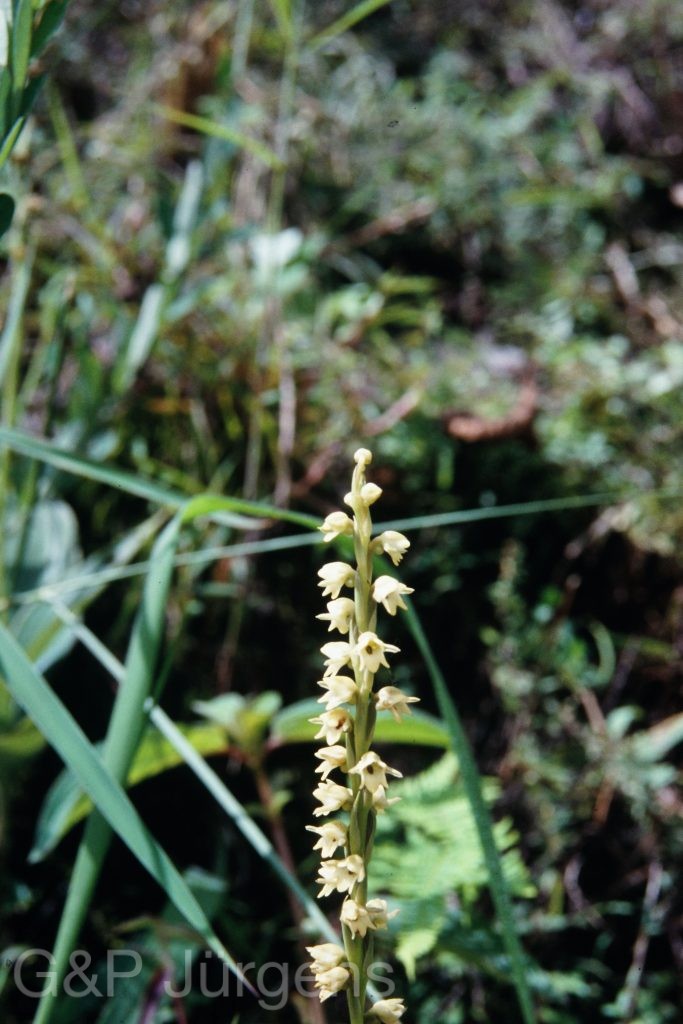
Peristylus goodyeroides is a terrestrial orchid with a broad tropical and subtropical Asian range, the 545 GBIF records spanning China, the Indian subcontinent, Nepal, Bhutan, much of Southeast Asia, Taiwan, Hong Kong, Japan, Timor-Leste and Papua New Guinea. It occupies grassy slopes, open forest, forest margins and scrub from the lowlands to around 2000 m. The photographed plant was found in the Rathong-Chu valley of Sikkim at 1200 m in August, during the monsoon flowering period typical of the species at lower Himalayan elevations.

It is a tuberous geophyte producing an erect leafy stem 20-60 cm tall from ellipsoid underground tubers. The few to several leaves are clustered toward the lower-middle stem, ovate to elliptic-lanceolate, acuminate and sheathing at the base. The inflorescence is a many-flowered cylindrical raceme of small, greenish-white to pale green flowers subtended by lanceolate bracts. Each flower has connivent sepals and petals forming a hood, a small three-lobed lip with a short saccate or conical spur, and the column structure characteristic of the genus, lacking the distinct rostellar arms of related Habenaria.

The genus Peristylus, long confused with Habenaria, is distinguished by its short blunt spur and small viscidia, and P. goodyeroides is the widespread type-like species of the group. Its inconspicuous greenish flowers are pollinated by small insects, and the tuberous habit allows it to survive the seasonal dry period. Given its wide distribution and tolerance of disturbed grassland, it is among the more common members of the genus and is not regarded as threatened, though, like all orchids, it is listed under CITES Appendix II.

Author: Lindl. · Sources: POWO (Kew), GBIF, Flora of China, Flora of Bhutan, Pridgeon et al.: Genera Orchidacearum

(L.) H. Gross

Bhutan2015 92
Bhutan Galephug, 600m, October

Description

Persicaria chinensis (L.) H. Gross is a widespread, often weedy perennial of warm-temperate to subtropical Asia, now naturalised well beyond its native range. GBIF records over 12,500 occurrences spanning China, Taiwan, Japan, India, Nepal, Thailand, Myanmar, the Malesian archipelago and the Philippines, with introduced populations in Australia, New Zealand, Réunion, the United States and Jamaica. It favours moist, disturbed ground, forest margins, roadside banks, streamsides and clearings from the lowlands to mid-montane elevations. The Bhutanese plant photographed at Galephug, at about 600 m in October, reflects its abundance in the humid foothill belt of the eastern Himalaya.

The plant is a sprawling to scrambling herb with branched, often reddish stems that are swollen at the nodes and sheathed by membranous ochreae characteristic of the family. The leaves are ovate to ovate-lanceolate, frequently with a dark chevron-shaped marking, and taper to an acute apex. The inflorescence comprises numerous small, capitate clusters of flowers; the perianth is white to pinkish and five-lobed, becoming fleshy and bluish-black in fruit. The fruit is a trigonous achene enclosed by the persistent, juicy perianth, which gives the fruiting heads a berry-like appearance.

Segregated by some authors as Polygonum chinense, the taxon is morphologically variable, and several varieties and forms have been recognised across its vast range. Its fleshy fruiting perianth promotes endozoochorous dispersal by birds, contributing to its colonising success and to its status as an invasive in several introduced territories. The species is of no conservation concern; rather, its broad ecological amplitude and ready establishment on disturbed soils make it one of the more conspicuous and adaptable knotweeds of monsoonal Asia.

Author: (L.) H. Gross · Sources: POWO (Kew), GBIF, Flora of China, Flora of Bhutan, Flora of Nepal, Hara & Williams Polygonaceae treatments

(Wight & Arn.) Benth.

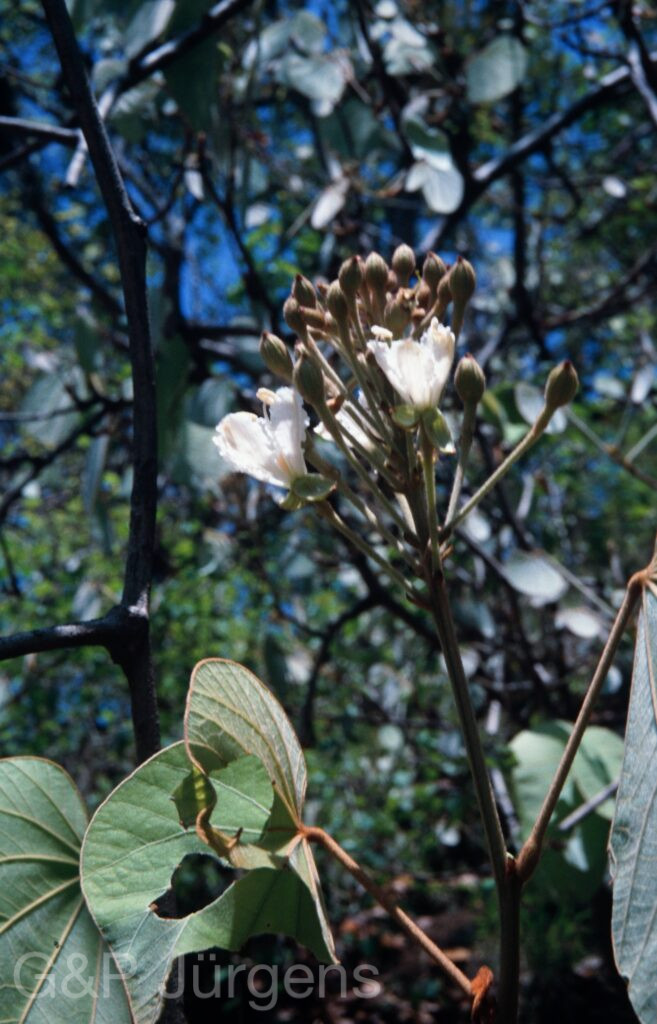
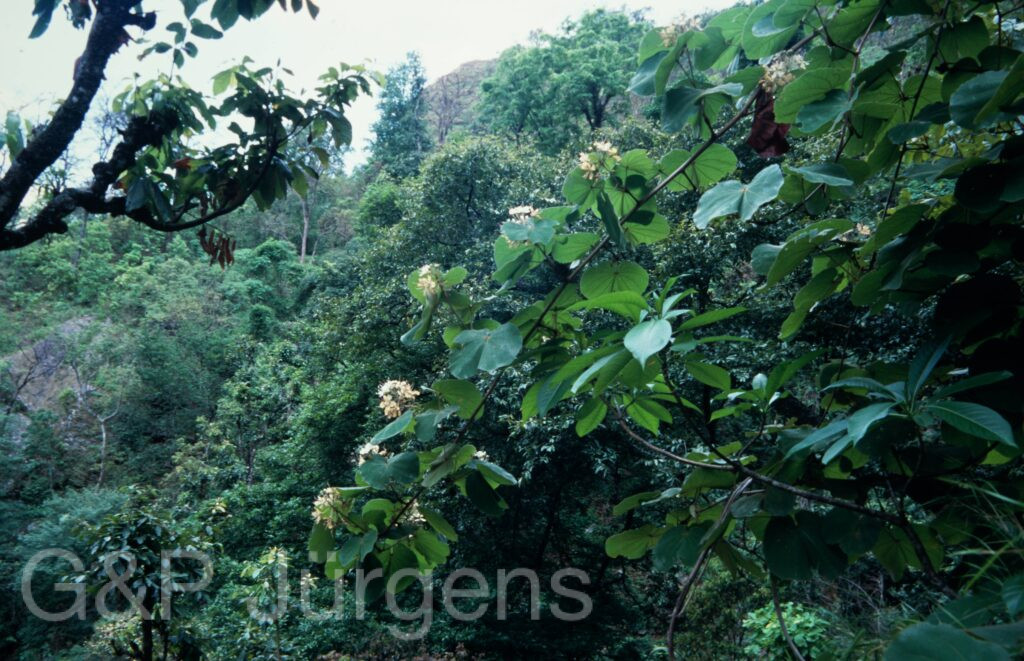
Nepal 2001 184 ergebnis ergebnis
East-Nepal Sabha-Khola 2000m, May
Nepal 2001 476 ergebnis ergebnis
Nepal (Gorkha) Labubhesi 1200m, May

Description

Phanera vahlii (formerly placed in Bauhinia) is a massive woody climber of the Indian subcontinent and Indo-Burmese region, native to India, Nepal, Bhutan, Bangladesh, Myanmar, Laos, Vietnam and China, with over 400 georeferenced records and many further occurrences reflecting cultivation and naturalisation elsewhere. It is a liana of subtropical forests, riverine thickets and forest edges. The Nepalese populations documented from the Sabha Khola in the east at about 2000 m and from Labubhesi in Gorkha at about 1200 m, both flowering in May, span its broad altitudinal tolerance from foothill valleys into temperate forest.

The plant is a gigantic, high-climbing leguminous vine ascending by paired, coiled tendrils, with stems and young parts clothed in dense ferruginous tomentum. The leaves are large, broadly orbicular and conspicuously bilobed at the apex, deeply notched between two rounded lobes in the manner characteristic of the Bauhinia alliance, the lower surface rusty-pubescent. The flowers are borne in large terminal panicles; each has a campanulate calyx and five cream to yellowish-white, clawed petals, with fertile stamens and reduced staminodes. The fruit is a large, woody, oblong pod densely covered with brown velvety hairs and containing several flattened seeds.

The segregation of Phanera from Bauhinia, based on tendrillate climbing habit, stamen number and pollen characters, is now widely followed though some authorities retain a broadly circumscribed Bauhinia. The species is economically important: its tough fibre yields cordage and its very large leaves are used as plates and for wrapping. Widespread and frequently exploited, it is not considered threatened.

Author: (Wight & Arn.) Benth. · Sources: POWO (Kew), GBIF, Flora of Nepal, Flora of British India, Flora of China, Wunderlin's revision of Bauhinia and Phanera

(Forssk.) Sweet

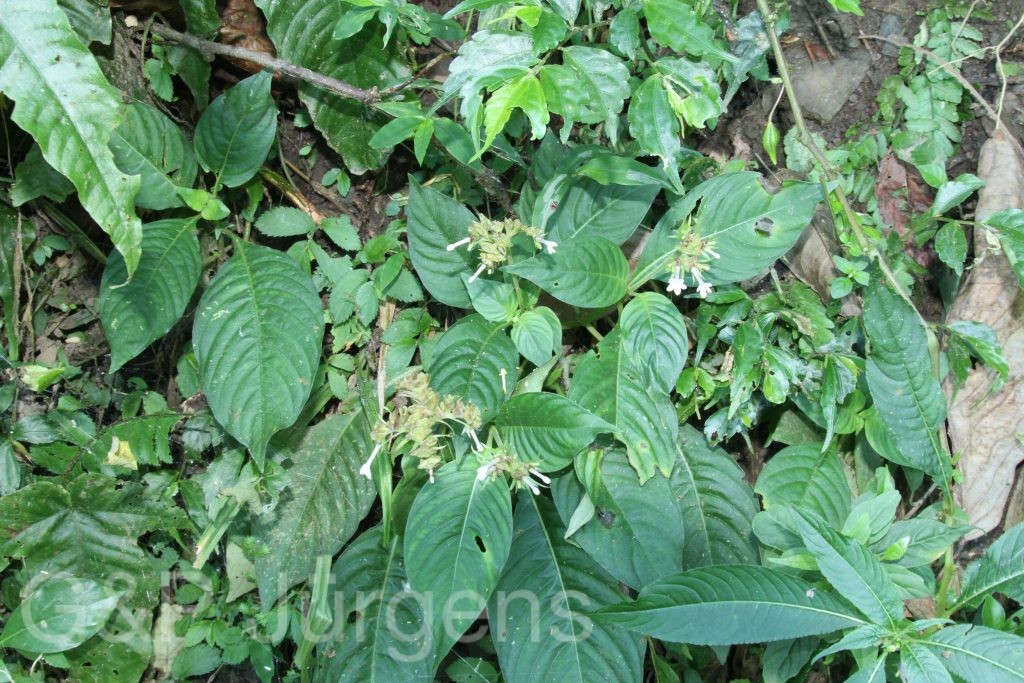
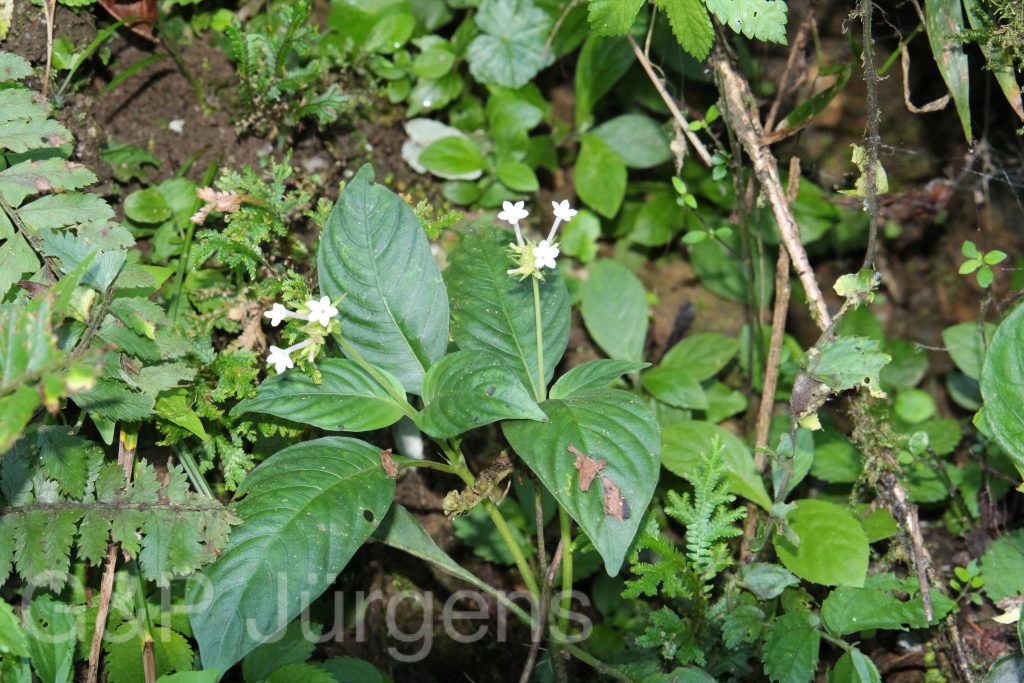
Bhutan2015 104
Bhutan Galephug 600m, October
Bhutan2015 107
Bhutan Galephug 600m, October

Description

Phaulopsis imbricata is a widespread tropical herb whose principal range lies across sub-Saharan Africa and Madagascar, GBIF recording over 2700 occurrences from countries including South Africa, Tanzania, Ethiopia, Kenya, Cameroon, Uganda, Zambia, Zimbabwe, Mozambique and Madagascar. The Himalayan material represented here, photographed in Bhutan at Galephug at 600 m in October, lies at the lowland subtropical margin of its distribution, where it occurs in the warm, humid foothill belt. Throughout its range it grows in shaded, moist forest understorey, along streambanks, forest margins and disturbed ground.

It is a soft, decumbent to ascending perennial or annual herb with quadrangular, often rooting stems. The leaves are opposite and frequently markedly anisophyllous (unequal in each pair), ovate to elliptic, with entire to undulate margins and pinnate venation. The flowers are borne in dense, secund, imbricate, spike-like cymes subtended by conspicuous, overlapping, often whitish or pale bracts, from which the epithet derives. Each flower has a small, white to pale bluish, two-lipped tubular corolla, two or four stamens, and a bilocular ovary. The fruit is the characteristic acanthaceous loculicidal capsule with a retinaculate (jaculator) seed-ejection mechanism.

The species belongs to the Acanthaceae (subfamily Acanthoideae) and is the type and most variable member of the small Old World genus Phaulopsis. Its enormous geographic and ecological amplitude has generated considerable infraspecific variation and a long synonymy. As a tolerant colonist of forest edges and disturbed sites it is not of conservation concern; its disjunct presence in the eastern Himalaya illustrates the Afro-Asian links of moist tropical floras.

Author: (Forssk.) Sweet · Sources: POWO (Kew), GBIF, Flora Zambesiaca, Flora of Tropical East Africa, Flora of Bhutan, monograph of Phaulopsis (Manktelow)

Lindl.

Bhutan2014 22
Bhutan Sandrup 850m, May
Bhutan2014 481
Bhutan Tongsa 2000m, May

Description

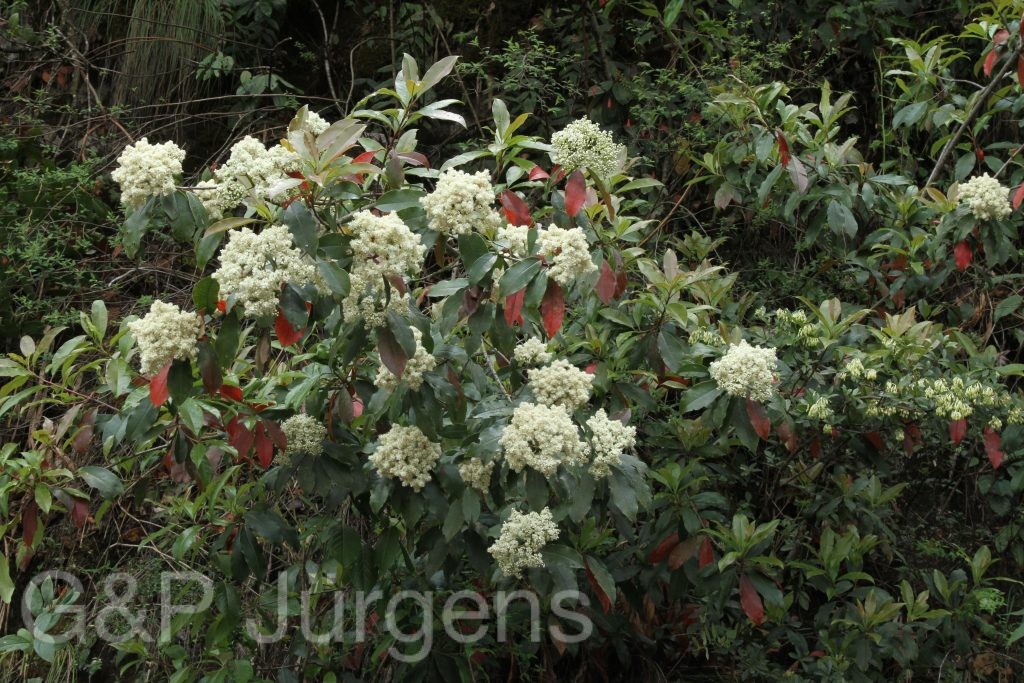
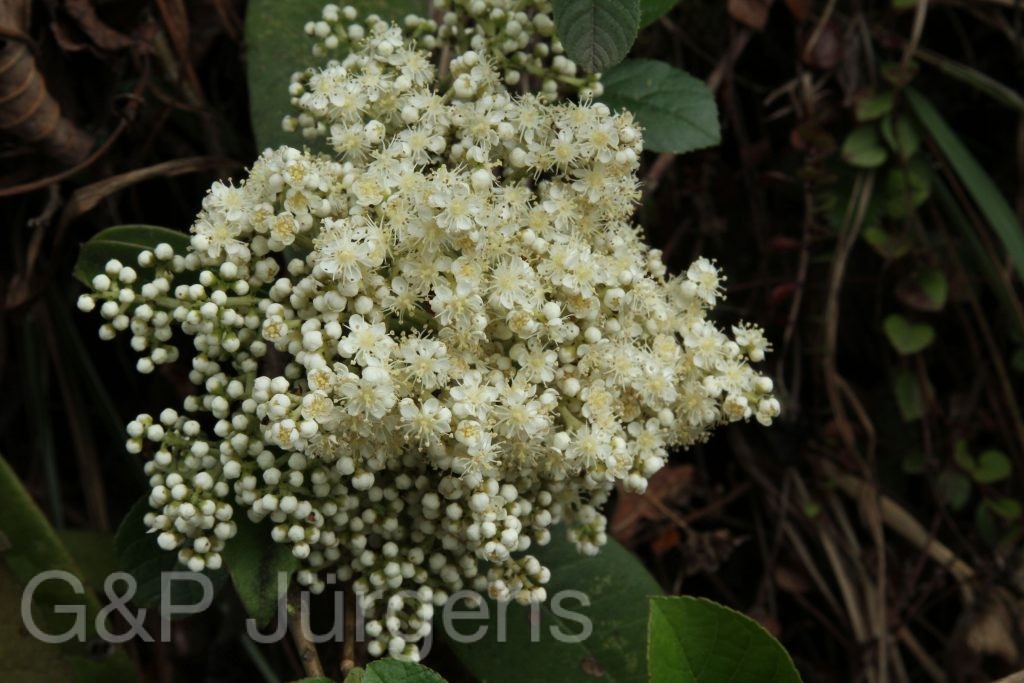
Photinia integrifolia is an evergreen tree or large shrub of broad Indo-Malesian distribution, with verified occurrences across China, Indonesia, India, Sri Lanka, Nepal, Myanmar, Thailand, Bhutan, Malaysia, Vietnam, Laos, the Philippines, Korea, Bangladesh and Timor-Leste, and well over a thousand GBIF records reflecting its wide range and abundance. It grows in subtropical to lower-temperate broadleaved and evergreen forest, on slopes and along ridges, generally from near 800 up to about 2500 m. The Bhutanese material cited, from Sandrup at around 850 m and Tongsa near 2000 m, both in May, spans the altitudinal breadth of its habitat from warm foothill forest into cooler mid-elevation woodland.

The tree has smooth grey bark and bears alternate, leathery, glabrous leaves that are oblong to elliptic-lanceolate with entire (rarely obscurely toothed) margins, the integri-folious character of the epithet, tapering to a short petiole. The small white flowers are massed in terminal corymbose panicles; each has five spreading petals, numerous stamens and an inferior to half-inferior ovary. The fruit is a small subglobose pome, red ripening to dark purple-black, containing one or few seeds and readily taken by birds.

Photinia, of subfamily Amygdaloideae (formerly Maloideae), is allied to Pyrus and Sorbus, and P. integrifolia, described by Lindley, is distinguished within the Asian group by its entire-margined evergreen leaves. Ecologically it is a useful timber and fuelwood tree whose bird-dispersed pomes contribute to forest regeneration. Given its very wide distribution and frequency across South and South-East Asia, it is of least conservation concern.

Author: Lindl. · Sources: POWO (Kew), GBIF, Flora of China, Flora of Bhutan, Flora of British India

L.

Bhutan2012 534
Bhutan Wangdi 2600m, September
Nepal 97 68 P104
Nepal Mewa-Khola 1250m April
Nepal 97 67 P103
Nepal Mewa-Khola 1250m April

Description

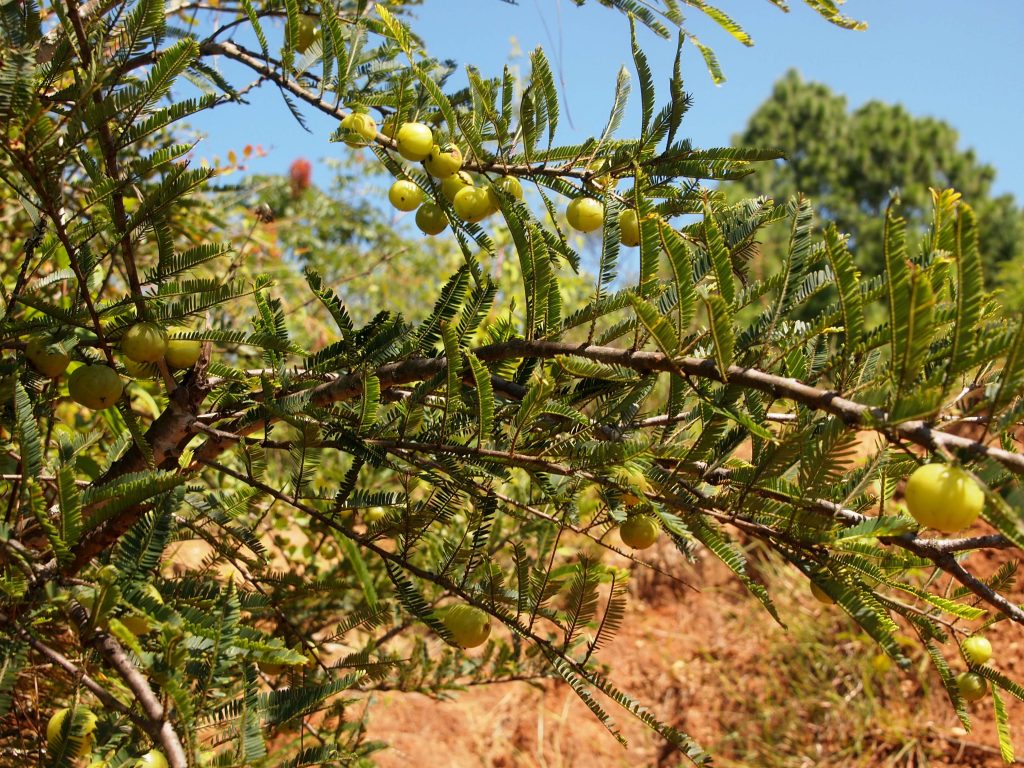
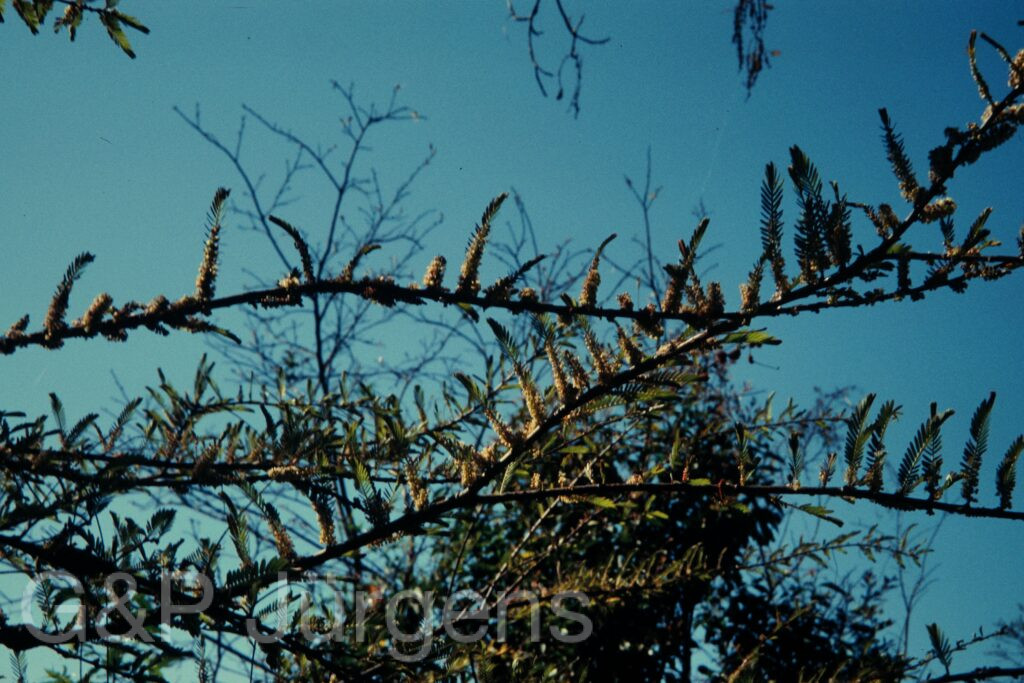
Phyllanthus emblica, the emblic myrobalan or Indian gooseberry (amla), is a small to medium tree of tropical and subtropical Asia with a very broad distribution embracing India, China, much of Southeast Asia, Sri Lanka, Nepal, Bhutan and many introduced ranges, recorded in GBIF by more than 19000 occurrences. It is a plant of deciduous and mixed dry forest, open hillsides, scrub and cultivated and disturbed ground, and is very widely planted, generally from the lowlands up into the hills. The cited material spans Mewa Khola in eastern Nepal at 1250 m, in leaf and flower in April, and Wangdi in Bhutan at 2600 m in September, the latter near the upper elevational limit and reflecting the species' wide ecological amplitude across the southern Himalayan belt.

The tree reaches up to about 8–18 m, with smooth, pale, often flaking bark and slender, feathery branchlets bearing numerous small, distichous, oblong-linear leaves that closely resemble the pinnae of a compound leaf, the whole leafy branchlet being deciduous as a unit. It is monoecious, the small, greenish-yellow, apetalous flowers borne in clusters in the leaf axils. The fruit is the most distinctive feature: a fleshy, globose, pale green to yellowish drupe-like capsule, 1.5–2.5 cm across, with six faint longitudinal furrows, a hard central stone, and a markedly sour, astringent flesh.

Phyllanthus is a vast pantropical genus now placed in the family Phyllanthaceae, segregated from a broadly defined Euphorbiaceae. P. emblica is among the most economically and culturally important of its members: the vitamin-C-rich fruit is a staple of Ayurvedic and traditional medicine and is widely eaten preserved or processed, while the tree yields tannins, dye and timber. It is extensively cultivated and naturalised well beyond its native range. Being abundant, hardy and widely grown, the species is of no conservation concern and is in many areas a familiar element of agroforestry and village landscapes.

Author: L. · Sources: POWO (Kew), GBIF, Flora of China Vol. 11, Flora of Bhutan Vol. 1, Flora of Nepal, A Monograph of the Genus Phyllanthus (Phyllanthaceae)

(L.) Desv.

Bhutan2015 553
Bhutan Moshu 1400m, October
Bhutan2015 554
Bhutan Moshu 1400m, October

Description

Phyllodium pulchellum (L.) Desv. is a widely distributed subtropical to tropical legume of South and Southeast Asia and Australasia, with an extensive GBIF range (including CN, TW, IN, ID, TH, PH, AU, PG, VN, MM, LA, LK, KH, NP, JP, MY and BD, among others) and around 2442 occurrences. It inhabits open forest, woodland margins, savanna, grassy slopes and disturbed roadside thickets at low to moderate elevations. The image record from Moshu in southern Bhutan at 1400 m, in October, places it in the warm subtropical foothill zone at the lower margin of the Himalayan flora, well below the alpine taxa with which it is here grouped.

It is a shrub or subshrub with erect, branched and often tomentose stems. The leaves are pinnately trifoliolate, the terminal leaflet markedly larger than the laterals and ovate to elliptic with an entire margin. The inflorescence is highly distinctive: an elongate terminal raceme in which the small flowers are borne in clusters concealed between pairs of large, rounded, conspicuously veined bracts arranged like the leaves of a fern frond, the feature for which the genus Phyllodium is named. The flowers are typical papilionate legumes, small and whitish to pale yellow. The fruit is a small flattened lomentum, breaking transversely into one-seeded segments.

Phyllodium belongs to the tribe Desmodieae of subfamily Faboniodeae (Papilionoideae), allied to Desmodium, and the paired foliaceous bracts are a hallmark of the genus. The lomentum segments, with their hooked or sticky surfaces, promote epizoochorous dispersal. As a nitrogen-fixing legume it is significant in early-successional and grassland communities, and is used in traditional medicine across its range; it is widespread and not of conservation concern.

Author: (L.) Desv. · Sources: POWO (Kew), GBIF, Flora of China (Fabaceae: Desmodieae), Flora of Bhutan, Ohashi monograph of the Desmodium group (Leguminosae)