Tag:

Subtropical (<1500 m)

C.B. Clarke

Bhutan2012 996
Bhutan Thritangebe 1000m, October

Description

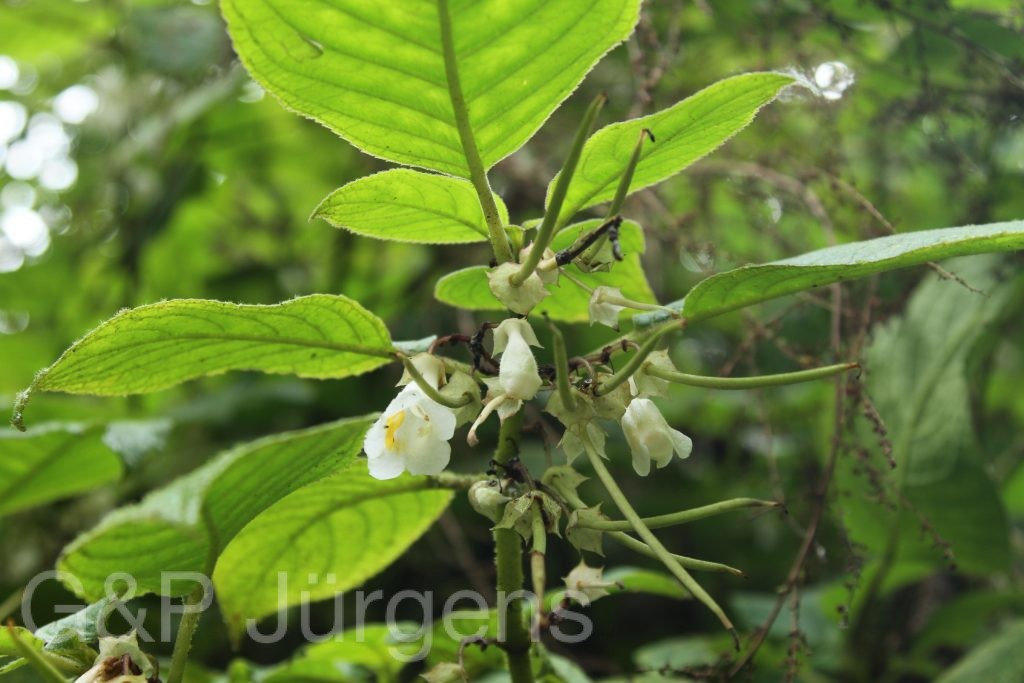
Lysionotus pubescens is an epiphytic or lithophytic gesneriad of the humid subtropical to lower montane forests of the eastern Himalaya and Indo-Burma, recorded from China, India, Bhutan, Myanmar, Vietnam and Sri Lanka. Its 75 georeferenced occurrences trace a belt of warm, moist evergreen forest where it grows perched on mossy tree trunks, branches and shaded rock faces. The plant photographed at Thritangebe in Bhutan at 1000 m in October reflects its preference for the warm, low-elevation forest zone, flowering in the post-monsoon period when humidity remains high beneath the canopy.

The plant is a small woody-based perennial with pendent or ascending stems bearing leaves in whorls of three or more, or sometimes opposite. The leaves are leathery, elliptic to oblong, with a toothed (serrate to crenate) margin, and as the epithet indicates the herbage is finely pubescent. The flowers are borne in short axillary cymes; the corolla is tubular and distinctly two-lipped (bilabiate), white to pale pink or pale violet, often with yellow or purple markings in the throat, with two fertile stamens. The diagnostic fruit is a long, slender, linear capsule that dehisces to release numerous minute seeds bearing fine appendages.

Lysionotus belongs to subtribe Didymocarpinae of the Gesneriaceae, the family group cited here, and is distinguished within it by its long siliqua-like capsule and frequently whorled leaves. The genus is centred on the Sino-Himalayan and Indo-Chinese region and is well represented in China. As an epiphyte dependent on intact humid forest, L. pubescens is locally common where suitable habitat persists but is sensitive to forest clearance.

Author: C.B. Clarke · Sources: POWO (Kew), GBIF, Flora of China, Flora of Bhutan, Gesneriaceae of the Old World monograph (Weber), Flowers of the Himalaya (Polunin & Stainton)
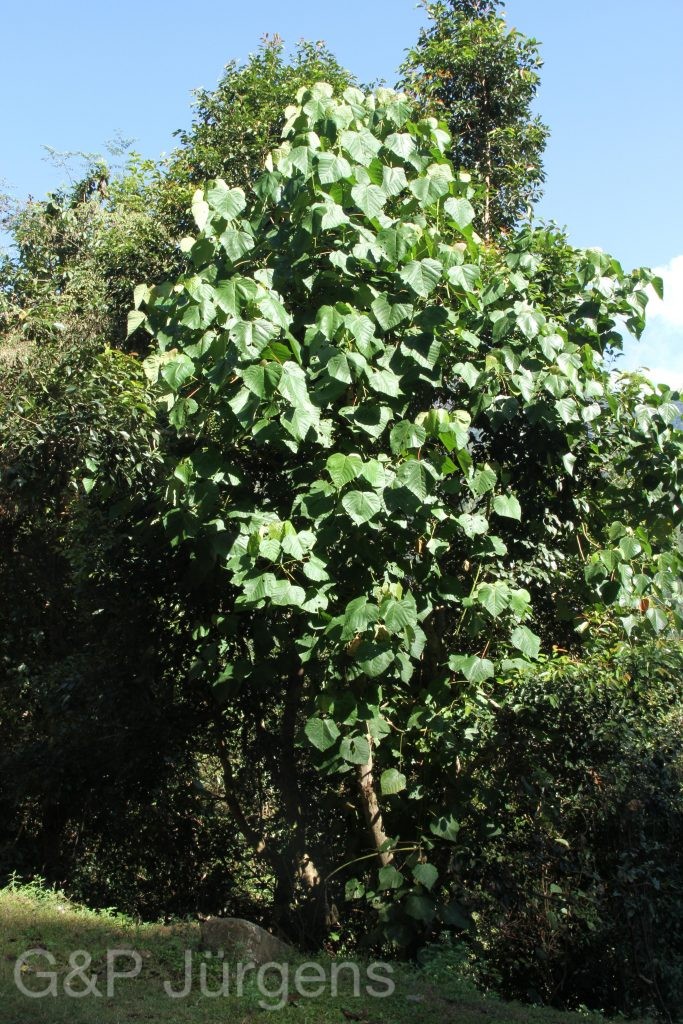
Müll.Arg.

Bhutan2015 199
Bhutan, Zhemgang 910m, October
Bhutan2015 557
Bhutan, Punaka 1240m, October
Bhutan2015 556
Bhutan, Punaka 1240m, October

Description

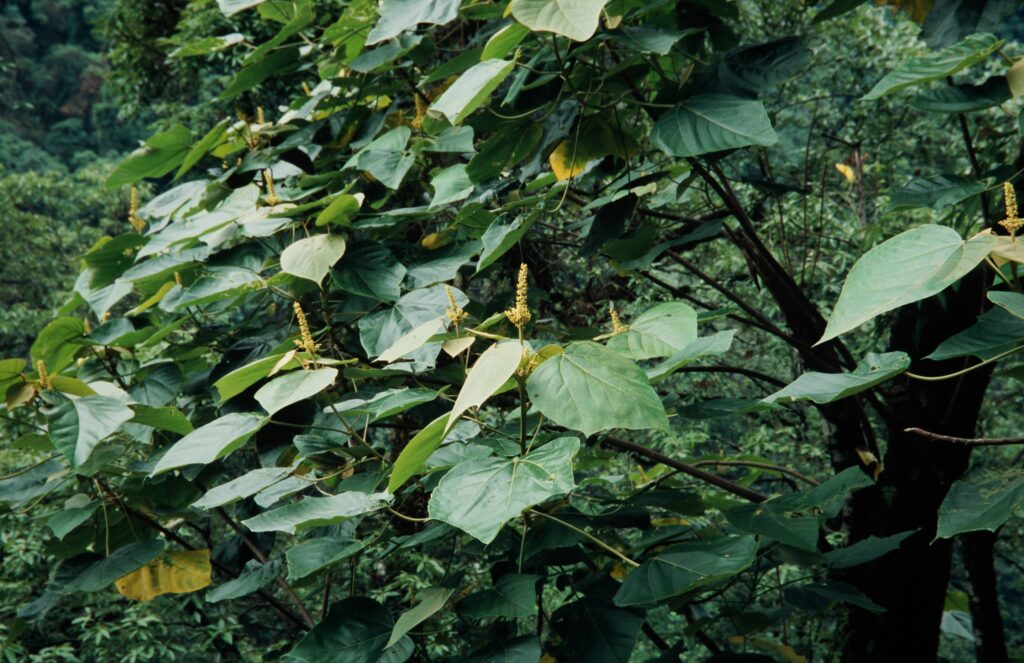
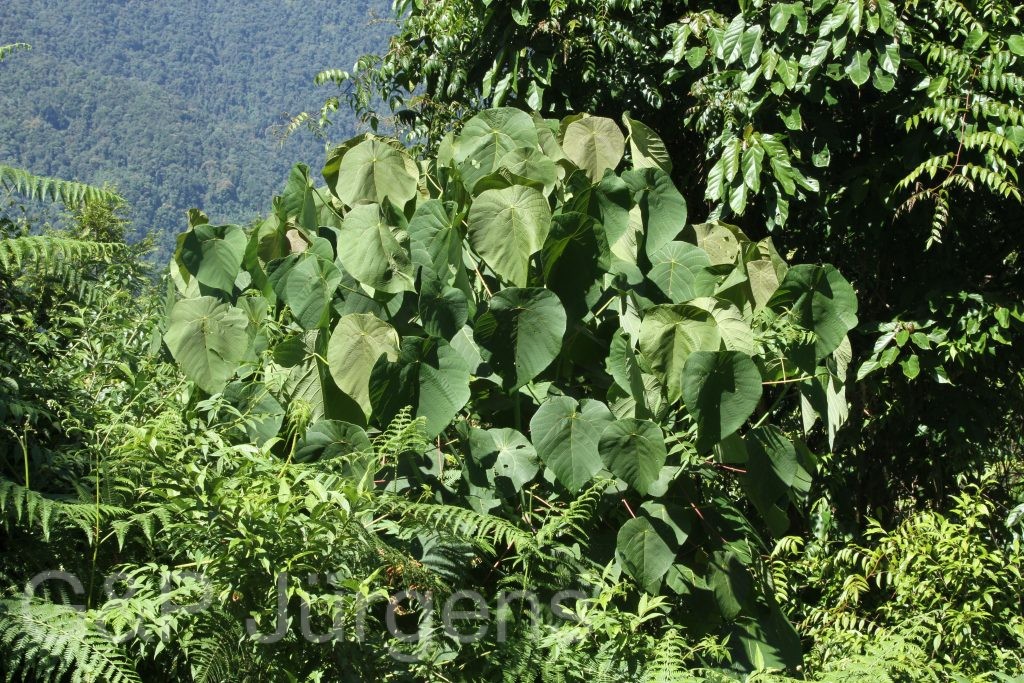
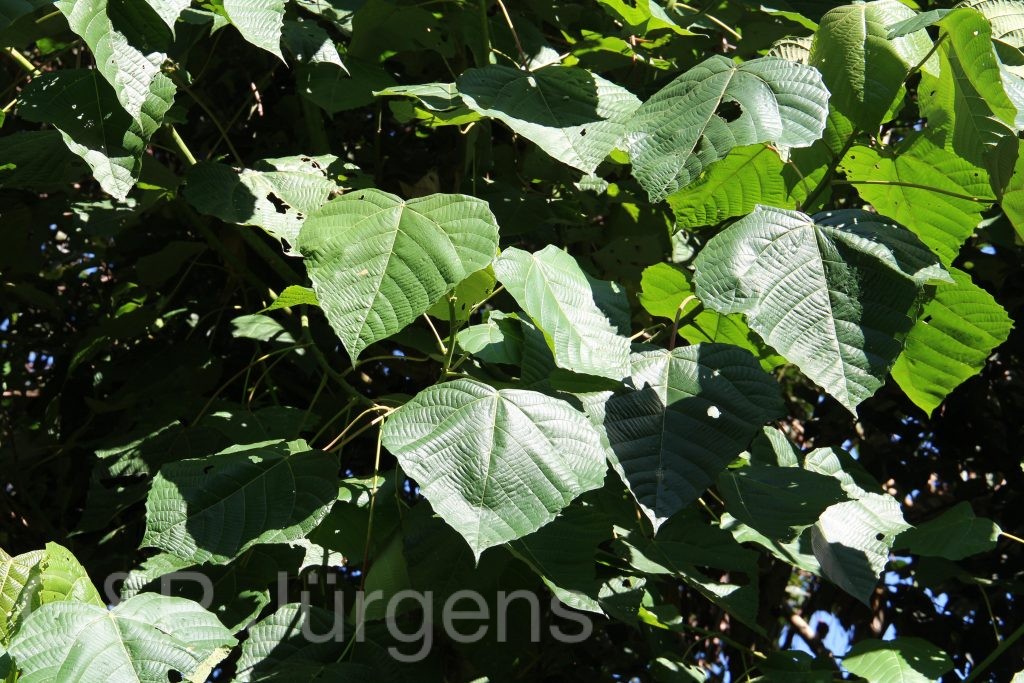
Macaranga denticulata is a fast-growing pioneer tree with a wide tropical and subtropical Asian distribution, its 1451 georeferenced occurrences spanning China, India, Nepal, Bhutan, Bangladesh, Myanmar, Thailand, Vietnam, Laos, Cambodia, Malaysia, Indonesia, the Philippines and beyond. It is a characteristic colonist of disturbed ground, forest gaps, road cuttings, secondary forest and abandoned swidden plots in warm, humid foothill country. The records from Zhemgang at 910 m and Punakha at 1240 m in Bhutan in October place it firmly in the low-elevation subtropical zone where it regenerates rapidly after disturbance and forms early-successional thickets and woodland.

The plant is a small to medium evergreen tree with smooth bark and somewhat whorled, spreading branches. The leaves are large, alternate, peltate or subpeltate, broadly ovate to triangular with a denticulate margin reflected in the epithet, palmately veined, and often bearing glands and pale tomentum beneath. As a member of the Euphorbiaceae it is dioecious, the small apetalous flowers borne in branched axillary inflorescences subtended by toothed or glandular bracts; male and female flowers occur on separate trees. The fruit is a small two-lobed capsule, the seeds often associated with a fleshy aril attractive to birds and ants.

Macaranga is a large palaeotropical genus famous for its myrmecophytic (ant-associated) species and its ecological role as a pioneer. M. denticulata is a non-myrmecophytic but ecologically important coloniser, valued for rapid biomass accumulation, soil stabilisation and as a nurse species in fallows. Its enormous range, abundance and affinity for disturbed habitats make it among the most secure and widespread trees in its family across tropical Asia.

Author: Müll.Arg. · Sources: POWO (Kew), GBIF, Flora of China, Flora of Bhutan, Revision of Macaranga (Euphorbiaceae) (Whitmore and successors), Trees of tropical Asia

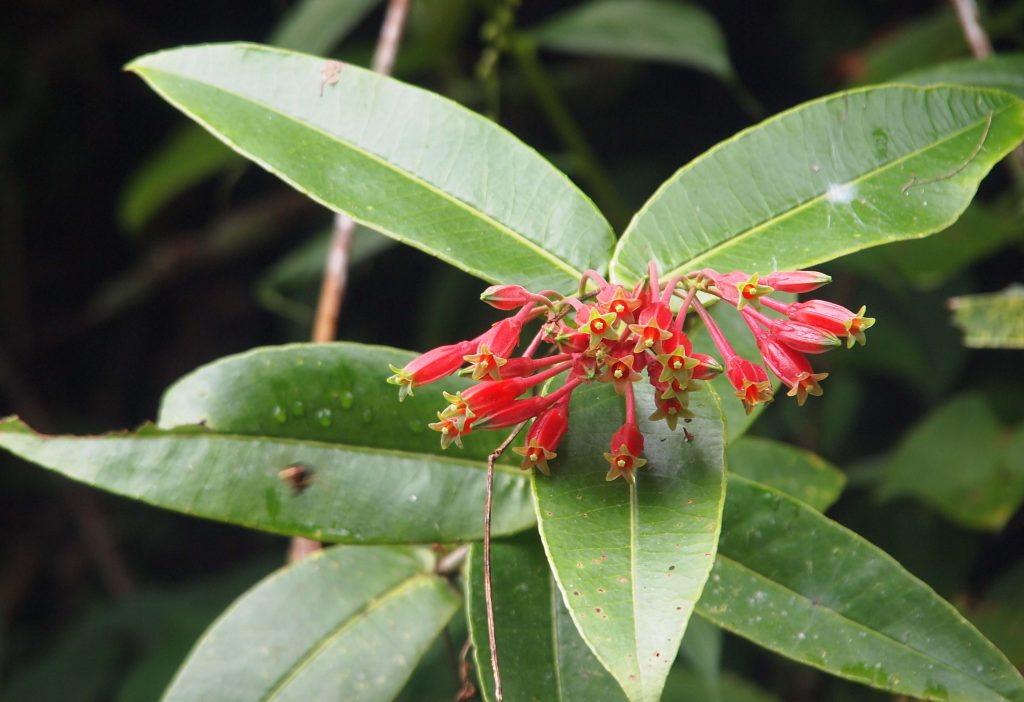
(Hook.f.) Danser

Bhutan2012 698
Bhutan Galephu 850m, September

Description

Macrosolen psilanthus is an eastern Himalayan hemiparasitic mistletoe distributed across India, Bhutan, Nepal and Bangladesh, with about 35 occurrences concentrated in the warm subtropical foothills and duars at the base of the Himalaya. It grows as a stem parasite on the branches of a range of broad-leaved trees and shrubs in subtropical broad-leaved forest, secondary woodland and along forest edges, predominantly at low elevations below about 1200 m. The photographed plant from Galephu in southern Bhutan at 850 m, flowering in September, is typical of its occurrence in the humid, low-altitude foothill forests of the eastern Himalayan front, where suitable host trees are abundant.

It is a glabrous, woody aerial hemiparasite attached to its host by a haustorial connection. The branches are terete to somewhat angled, and the leaves are opposite, coriaceous, ovate to elliptic-lanceolate, entire, with pinnate venation and a short petiole. The inflorescences are axillary spikes or racemes bearing opposite, decussate flowers, each subtended by a single bract. The flowers are bisexual with a calyculus crowning the inferior ovary and a tubular, six-merous corolla that is reddish, orange or greenish-yellow, the lobes reflexing at anthesis; the epithet psilanthus ("smooth-flowered") refers to the glabrous perianth. The six stamens are epipetalous. The fruit is a one-seeded berry whose seed is enveloped in viscin.

Macrosolen belongs to the Loranthaceae, the showy-flowered mistletoes, and like its relatives is an obligate hemiparasite drawing water and minerals from its host while photosynthesising in its own green leaves. The flowers are bird-pollinated (ornithophilous), and the viscin-coated seeds are dispersed by frugivorous birds such as flowerpeckers that deposit them on host branches. The species is locally frequent within its foothill range and is not considered threatened.

Author: (Hook.f.) Danser · Sources: POWO (Kew), GBIF, Flora of Bhutan Vol. 1, Flora of Nepal, Barlow Loranthaceae revisions for the Malesian and Asian region (monograph), Flora of British India

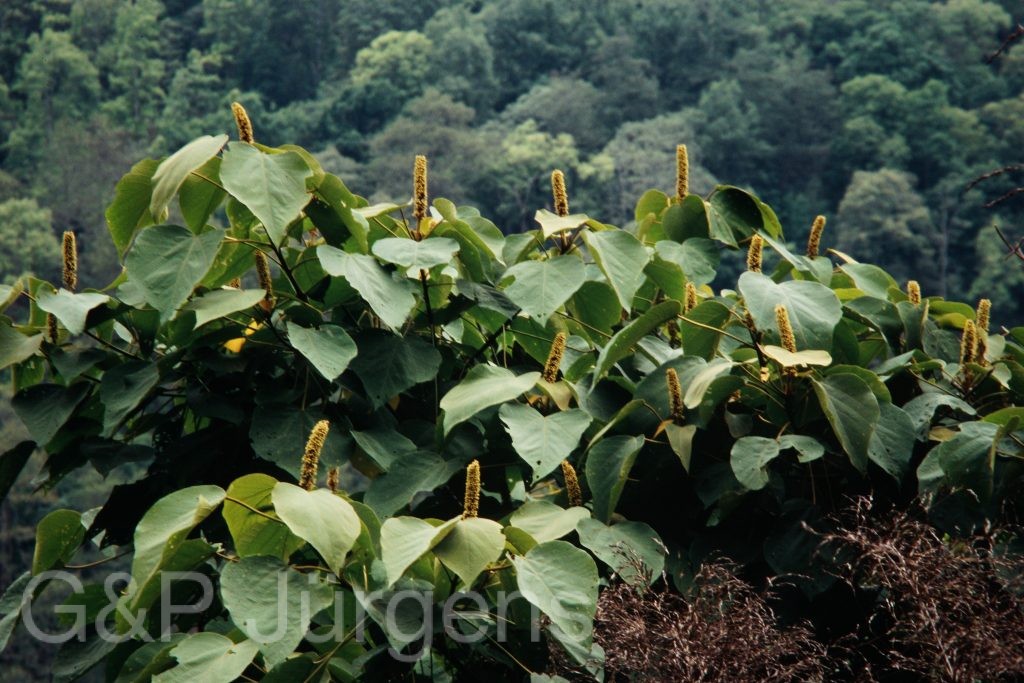
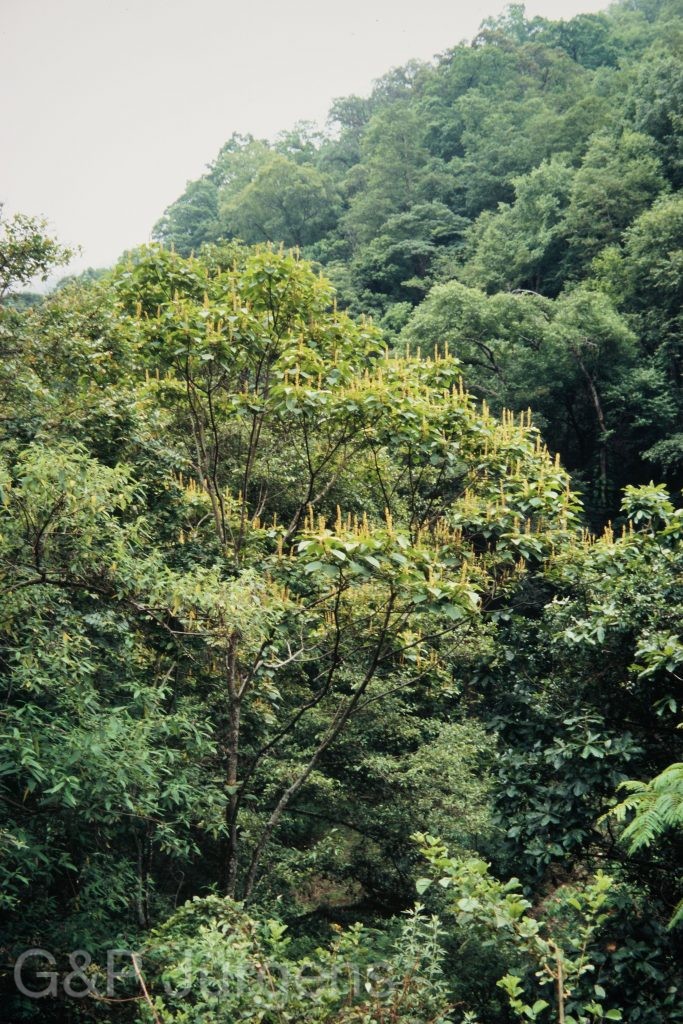
Müll.Arg.

Bh09 231 P387
Bhutan Wangdi, 1650m June
Bh09 380 G601
Bhutan Wangdi, 1650m June
Sikkim 2006 255 ergebnis
India West-Bengal, Lingza 1250m, May

Description

Mallotus nepalensis is a small tree or shrub of the subtropical to lower-temperate Himalaya and its eastern extensions, documented by GBIF (972 occurrences) across China, Nepal, India, Bhutan, Myanmar, Taiwan, Vietnam, Japan and Pakistan. It grows in secondary forest, scrub, forest edges and along streams and clearings, characteristically as a light-demanding component of disturbed and successional vegetation, mostly between about 800 and 2000 m. The collections from Wangdi in Bhutan at 1650 m in June and from Lingza in West Bengal at 1250 m in May illustrate its montane-subtropical distribution along the southern Himalayan front.

The plant is a deciduous shrub or small tree whose young branchlets, petioles and inflorescences are clothed in stellate hairs and reddish, granular peltate glands typical of the genus. The leaves are alternate, long-petiolate, broadly ovate to deltoid, often with two glands at the blade base and a pair of basal lateral nerves, the lower surface pale and gland-dotted. The plant is dioecious; minute apetalous flowers are borne in slender terminal and axillary racemes or panicles, the staminate with numerous stamens, the pistillate with a softly spiny ovary. The fruit is a globose, three-lobed capsule beset with soft processes and covered in red glandular powder.

Mallotus belongs to subfamily Acalyphoideae of the Euphorbiaceae and is characterised by its stellate indumentum and resinous peltate glands, the latter yielding the dye-like powder for which several species are known. Ecologically it behaves as a pioneer, regenerating freely in gaps and along disturbed margins, its capsular fruit and small seeds aiding rapid colonisation. The species is common and of no conservation concern.

Author: Müll.Arg. · Sources: POWO (Kew), GBIF, Flora of China Vol. 11, Flora of Bhutan Vol. 1, Flora of Nepal, Airy Shaw Euphorbiaceae of the Indian subcontinent

L.

Nepal 1994 11 ergebnis
Ost-Nepal Tumlingtar 400m April
Nepal 1994 304 ergebnis
Ost-Nepal Tumlingtar 400m April
Nepal 2001 22 ergebnis ergebnis
East-Nepal Sabha-Khola 1400m, April

Description

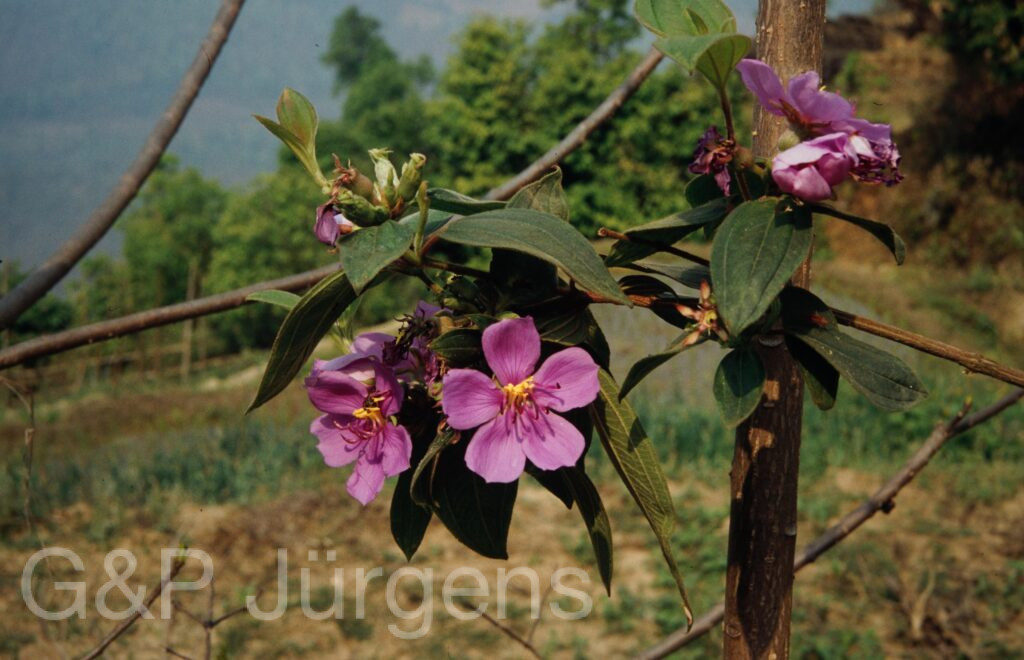
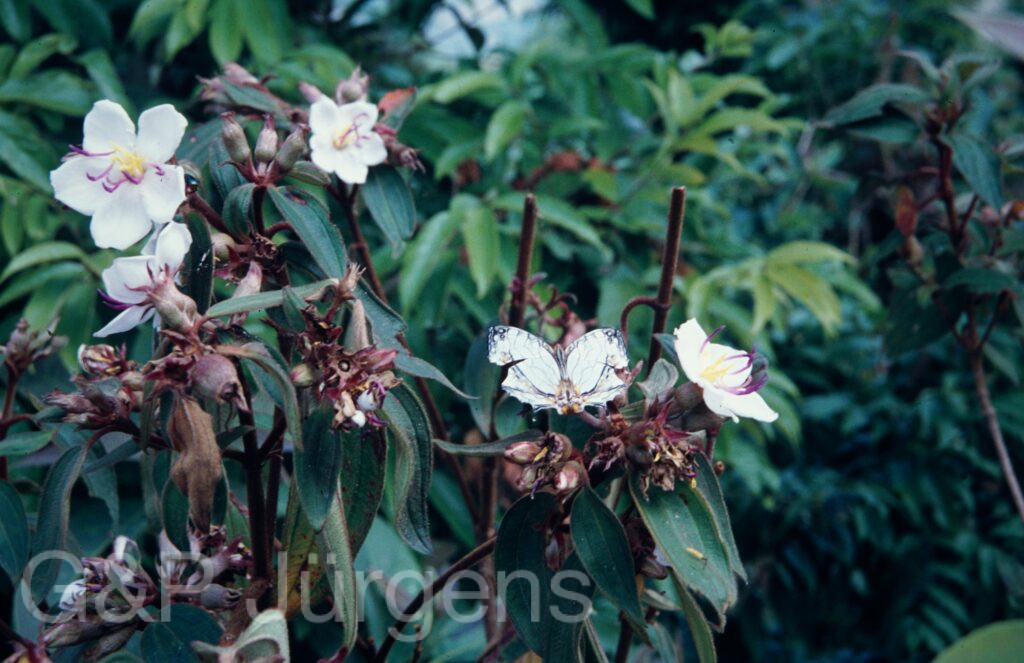
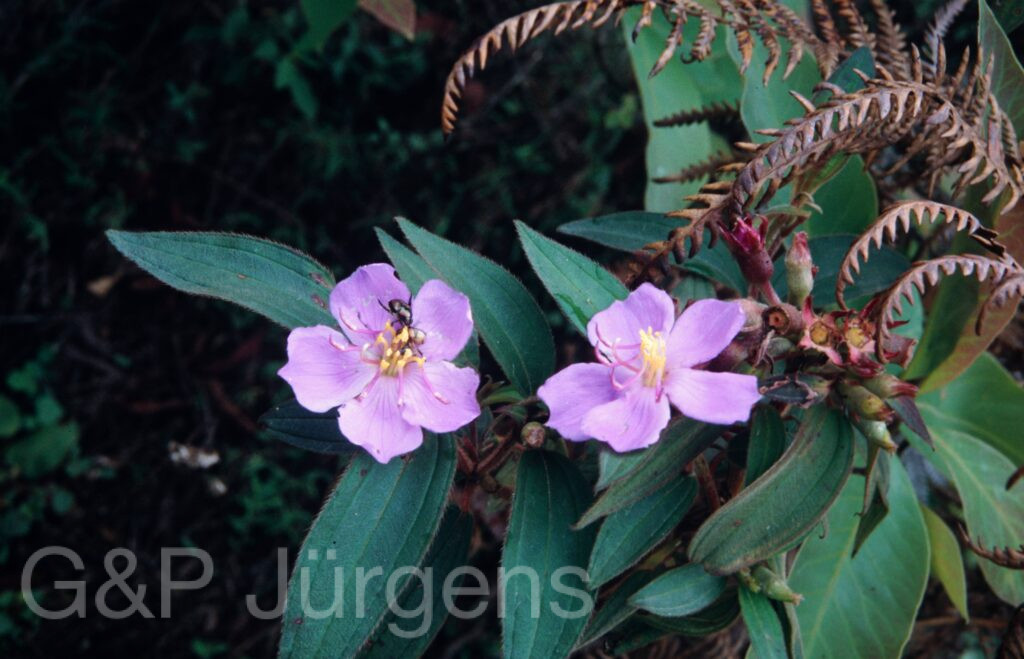
Melastoma malabathricum L. is an extremely widespread shrub of the Melastomataceae, ranging from the Indian subcontinent and the Himalayan foothills through Southeast Asia and Malesia to southern China, Taiwan, Japan, New Guinea and Australia, with naturalised populations in the Pacific and elsewhere; GBIF records are exceptionally numerous (c. 19,800 occurrences). It is a pioneer of open, disturbed and secondary habitats, roadsides, clearings, grasslands and forest margins, mostly in the tropical lowland to lower montane zone. The photographed plants from eastern Nepal at Tumlingtar (c. 400 m) and Sabha-Khola (c. 1,400 m), both flowering in April, lie at the northwestern margin of its vast range.

The plant is an erect, much-branched shrub 0.5–3 m tall, with stems and leaves clothed in appressed, stiff, scaly-bristly hairs. The leaves are opposite, ovate-lanceolate, and bear the three to five prominent, arcuate, longitudinal veins characteristic of the family. The flowers are large and showy, 4–6 cm across, with five rose-purple to mauve obovate petals. The androecium is dimorphic, with longer purple, geniculate stamens bearing curved appendaged connectives and shorter yellow stamens. The fruit is a fleshy, berry-like capsule that ruptures irregularly to expose abundant small seeds embedded in dark purple pulp, attractive to birds.

Melastoma malabathricum is a taxonomically variable aggregate that has accumulated numerous synonyms, and infraspecific forms are recognised across its range. It is an early-successional coloniser tolerant of acidic, aluminium-rich soils and is widely used in traditional medicine. Of least concern, it can behave as an invasive weed outside its native range.

Author: L. · Sources: POWO (Kew), Flora of China Vol. 13, Flora of Nepal, Flora of Bhutan Vol. 2, GBIF, Renner et al.: Melastomataceae studies

L.

Bhutan2015 547
Bhutan Mo-Shu 1450m, October
Bhutan2015 548
Bhutan Mo-Shu 1450m, October
Nepal 97 70 P109
Nepal above Mewa-Khola 1400m April

Description

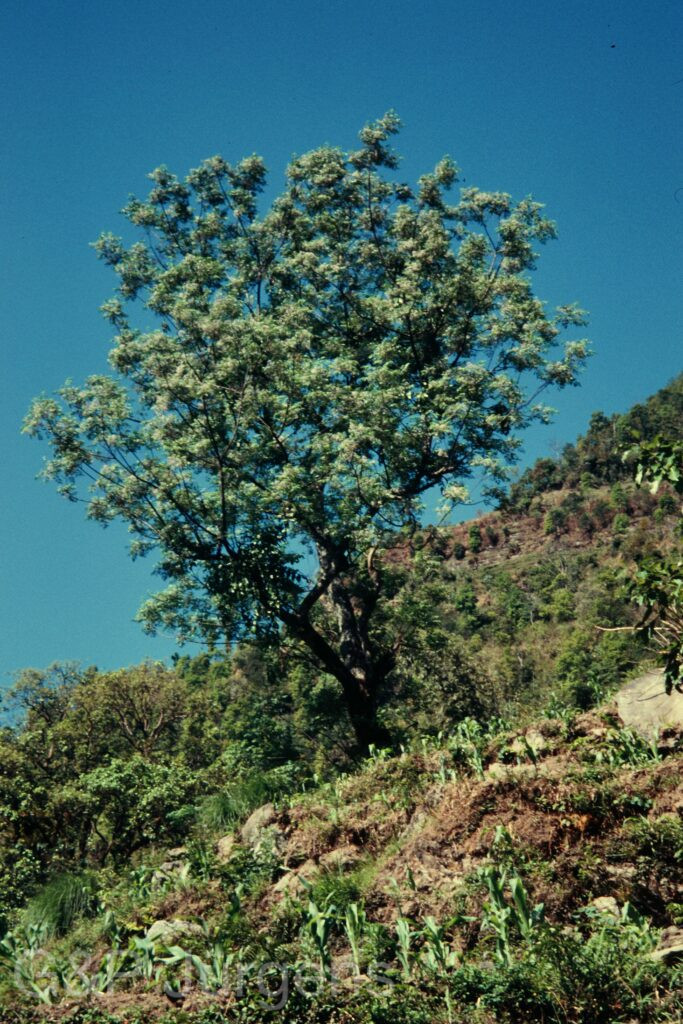
Melia azedarach, the chinaberry or Persian lilac, is a fast-growing deciduous tree of immense range, native across South and Southeast Asia and into Australia but now widely cultivated and naturalised throughout the warm temperate and tropical world, a ubiquity reflected in its GBIF total of over 66,000 occurrences spanning the United States, Australia, South Africa, Spain, France, China, Brazil, India, Japan, Korea, Argentina and far beyond. In the Himalayan region it is common in the lower hills, around villages, on field margins and along roadsides up to about 1800 m. The images from Mo-Shu in Bhutan at 1450 m, in October, and from above the Mewa-Khola in Nepal at 1400 m, in April, capture both its fruiting and flowering seasons in the warm subtropical hill belt where it thrives on a wide range of soils.

It is a tree to 10-20 m with a spreading, rounded crown and fissured, dark bark. The large leaves are alternate and bipinnate to tripinnate, with numerous ovate-lanceolate, serrate, acuminate leaflets giving a light, feathery canopy. The fragrant flowers are borne in lax axillary panicles, each with five spreading lilac to pale-purple petals and a characteristic dark purple staminal tube formed from the fused filaments, a hallmark of the genus. The fruit is a globose, yellowish drupe that persists on the bare branches well into winter, containing a hard, ridged, several-seeded stone dispersed by birds.

Melia is a small Old World genus of the mahogany family Meliaceae, of which M. azedarach is by far the most widespread and variable, with numerous forms and cultivated selections; it is valued for timber, shade and traditional medicine, though its fruits and foliage are toxic to humans and many animals owing to limonoid compounds. Outside its native range it is frequently an aggressive coloniser of disturbed ground and is classed as an invasive weed in parts of the Americas, Africa and Australia, even as it remains a familiar and useful tree across the Himalayan foothills.

Author: L. · Sources: POWO (Kew), GBIF, Flora of China Vol. 11, Flora of Nepal, Flora of Pakistan, Pennington and Styles' monograph of the Meliaceae

Benth.

Sikkim 2006 269 ergebnis
India West-Bengal, Lingza 1300m, May

Description

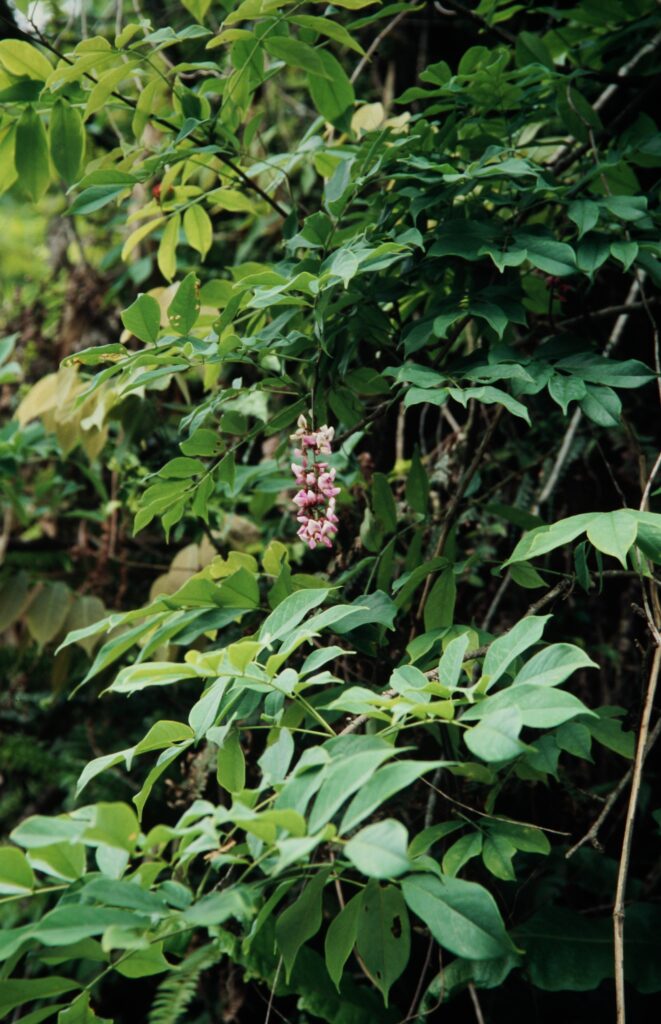
Millettia pachycarpa is a robust woody climber of the eastern Himalaya and South-East Asia, ranging from Nepal, Bhutan and north-east India through Bangladesh, Myanmar, Thailand, Laos and Vietnam to southern China and Taiwan. GBIF holds around 2140 occurrences across this subtropical to warm-temperate range. It grows in broad-leaved forest, forest margins, ravines and along streams, scrambling over trees at low to middle elevations. The plant from Lingza in the Darjeeling hills of West Bengal at 1300 m in May represents a typical eastern Himalayan population, flowering in spring before the monsoon.

It is a large, woody, deciduous liana with stout twining stems. Its leaves are alternate and imparipinnate, with numerous opposite, oblong to oblong-lanceolate leaflets that are dark green and somewhat leathery, glabrescent above and finely appressed-hairy beneath. The flowers are borne in long, dense, pendulous axillary racemes or panicles, the corolla papilionaceous and lilac to purplish-pink, the standard broad and often silky-hairy outside enclosing the wing and keel petals; the stamens are diadelphous and the ovary superior. The fruit is a large, thick, woody pod (the epithet pachycarpa meaning thick-fruited), pendulous and often tuberculate, indehiscent or tardily so, with one to several large hard seeds.

Millettia belongs to tribe Millettieae of the papilionoid Fabaceae, a group much revised in recent decades with several Asian species transferred to allied genera; M. pachycarpa is retained in Millettia in current treatments. The plant is notable for its high content of rotenoids and isoflavonoids: the seeds and roots have long been used as fish poison and insecticide across its range, and it is an important source of rotenone-type compounds. Widespread and frequent in eastern Himalayan forests, it is of no conservation concern.

Author: Benth. · Sources: POWO (Kew), GBIF, Flora of China Vol. 10, Flora of Bhutan Vol. 1, Annotated Checklist of the Flowering Plants of Nepal, Geesink revision of Millettieae

(Gamble) Ohashi

Bhutan2012 723
Bhutan Galephu 400m, October

Description

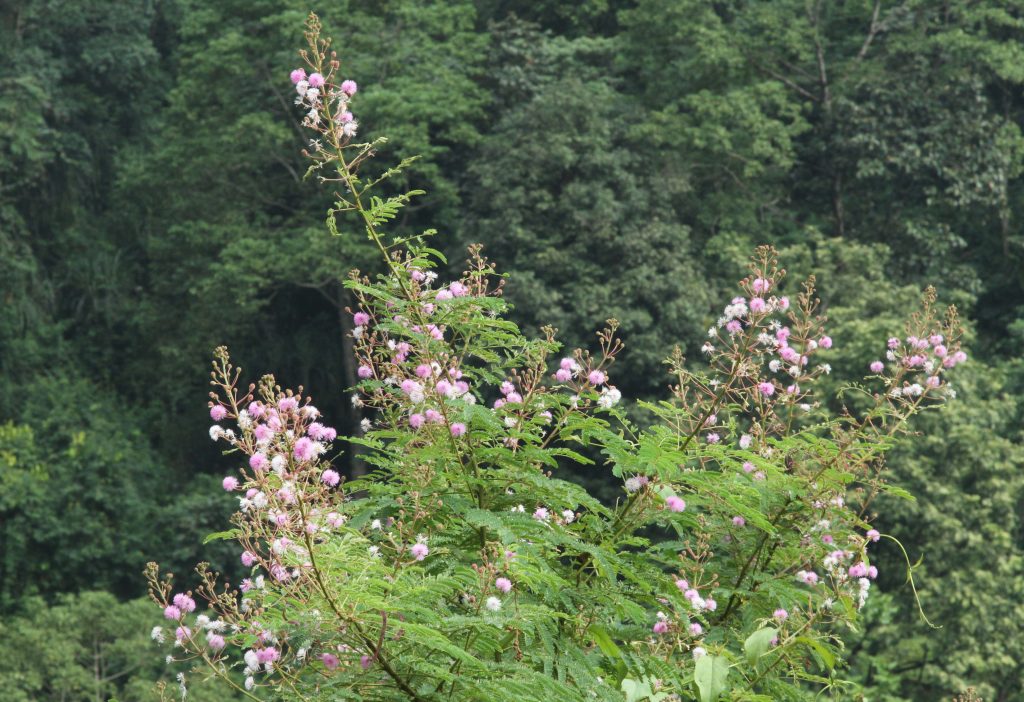
Mimosa rubicaulis subsp. himalayana is a scrambling, prickly shrub of the lower Himalayan foothills and adjacent plains, recorded from India, Pakistan, Nepal, Afghanistan and Bhutan, with additional scattered records (IN, PK, NP, AF, BT, MM, JP, MU) totalling around 219 occurrences. It favours warm, seasonally dry sites: open scrub, forest margins, hedgerows, ravines and disturbed roadside thickets in the subtropical zone, generally below about 1500 m. The plant photographed at Galephu in southern Bhutan at 400 m in October grew in the hot, humid duar foothills, where its straggling, armed branches form dense, often impenetrable tangles among other secondary vegetation following the monsoon.

It is a much-branched shrub or subscandent woody climber with terete, reddish stems bearing scattered, recurved prickles. The leaves are bipinnate, with several pairs of pinnae each carrying numerous small, oblong-linear, asymmetric leaflets, the rachis prickly and often glandular. The flowers are tiny and crowded into globose or shortly cylindrical heads, pink to pale purple, each flower with numerous long, exserted stamens giving the heads a fluffy appearance. The fruit is a flat, oblong, jointed pod (a craspedium) that breaks transversely into one-seeded segments at maturity, the persistent margins remaining as an empty frame.

Mimosa belongs to the mimosoid clade of the Fabaceae (subfamily Caesalpinioideae in current circumscription), characterised by actinomorphic flowers with valvate petals and free stamens. Subsp. himalayana, raised from M. rubicaulis, represents the montane-fringe Himalayan element of a widespread Asian species. The recurved prickles and rapid clonal spread make it an effective coloniser of degraded land, and locally it is used as a living hedge and for fuel. It is not of conservation concern, being common and weedy across its broad subtropical range.

Author: (Gamble) Ohashi · Sources: POWO (Kew), GBIF, Flora of Bhutan, Flora of Pakistan, Mimosoid legumes monograph (Barneby, Sensitivae Censitae)

(Stokes) Faden

Description

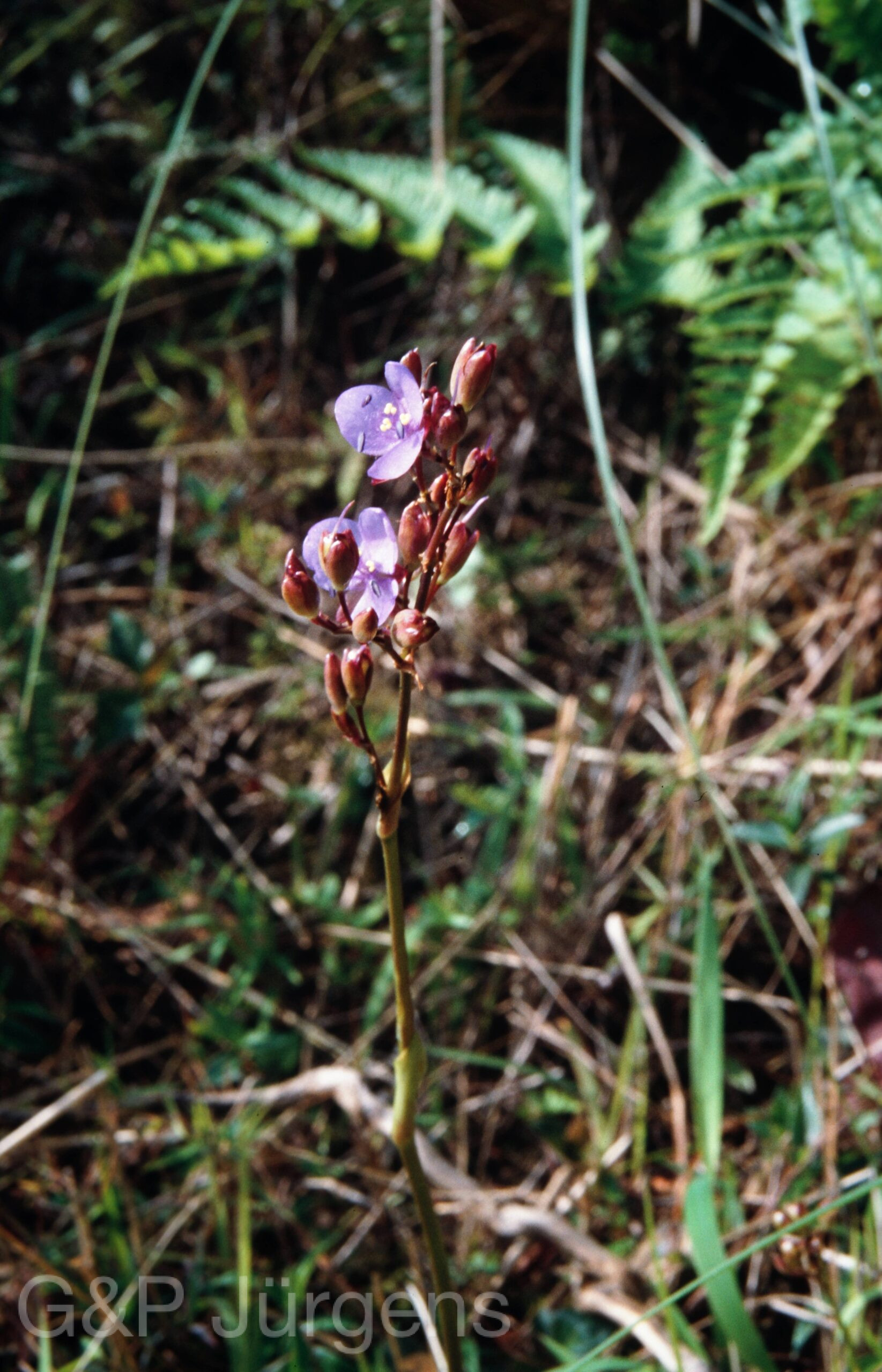
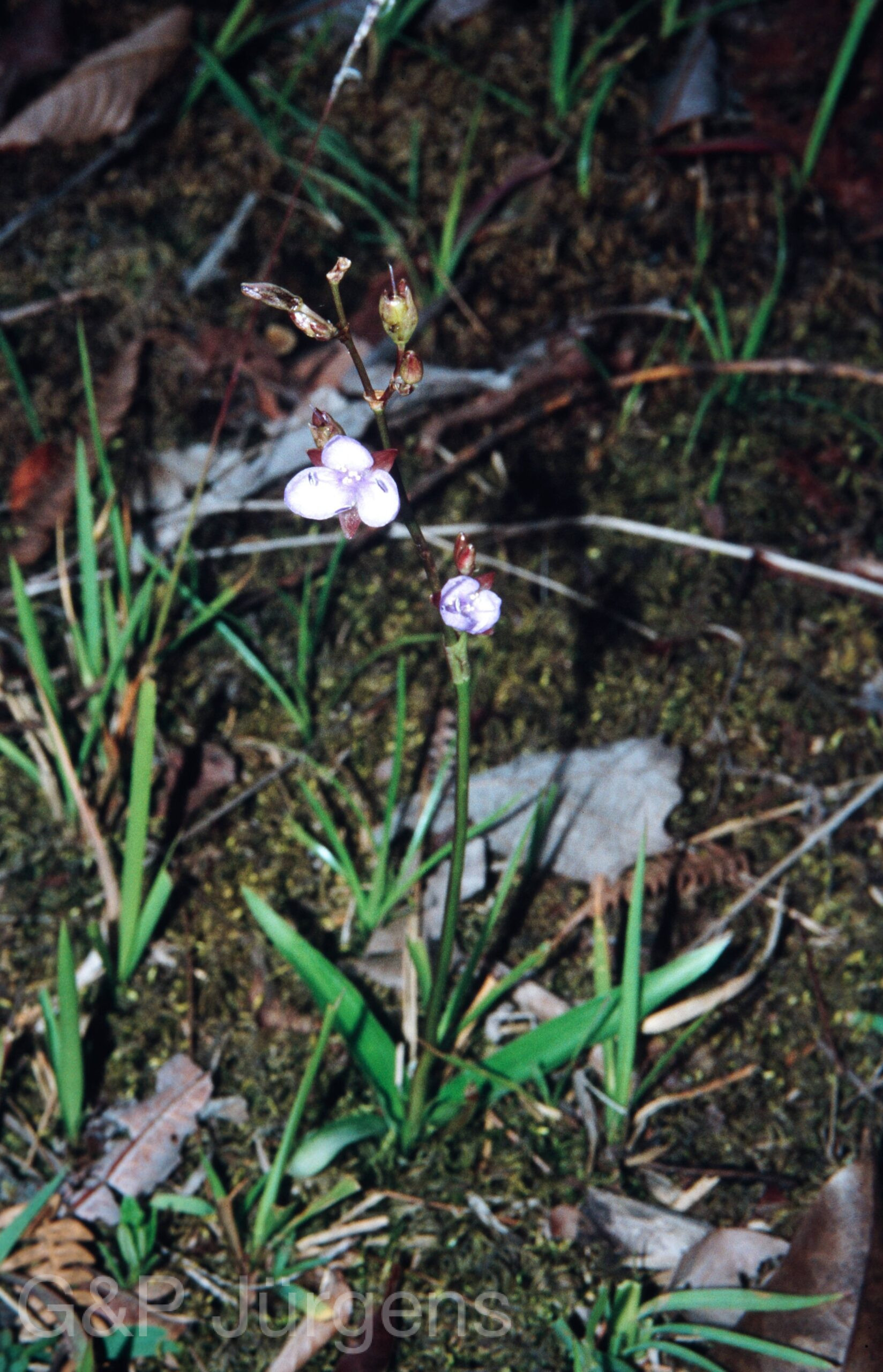
Murdannia edulis is a tuberous-rooted dayflower relative distributed across tropical and subtropical Asia, from the Himalaya (Nepal, Bhutan, northeast India) through southern China, Taiwan, Myanmar, Thailand and Indochina to Malesia, the Philippines and New Guinea. It grows in open grassland, scrub, forest margins and seasonally moist banks, often on disturbed or cultivated ground, principally at low to mid elevations. The plant recorded at Mulabari in the Gorkha district of Nepal at 1,340 m in May represents its presence in the warm subtropical foothill zone, where it emerges and flowers with the onset of the pre-monsoon rains.

The plant is a perennial herb arising from a cluster of fleshy, fusiform, fascicled tuberous roots that store water and nutrients. The leaves are mostly radical, linear to lanceolate, sheathing at the base and arranged in a basal tuft, with parallel venation typical of the family. The inflorescence is a scapose, terminal panicle of cincinni bearing ephemeral, actinomorphic flowers with three free, pink to pale blue or mauve petals and conspicuous bearded staminodes accompanying the fertile stamens. The fruit is a small, loculicidal, ellipsoid capsule containing few angular seeds.

The genus Murdannia, segregated from Aneilema and Commelina, is distinguished by its enantiostylous, regular flowers and characteristic stamen arrangement; M. edulis was transferred to the genus by Faden, its basionym attributed to Stokes. As the epithet indicates, the starchy tuberous roots are edible and have been used as a famine or supplementary food across its range. The species is widespread, weedy and adaptable, and is of no conservation concern.

Author: (Stokes) Faden · Sources: POWO (Kew), Flora of China Vol. 24, Flora of Nepal, GBIF, Faden: Commelinaceae systematics

Hook.f.

Bhutan2014 279
Bhutan Trithangebe near a farmhouse 700m, May
Bhutan2014 281
Bhutan Trithangebe near a farmhouse 700m, May
Bhutan2014 282
Bhutan Trithangebe near a farmhouse 700m, May

Description

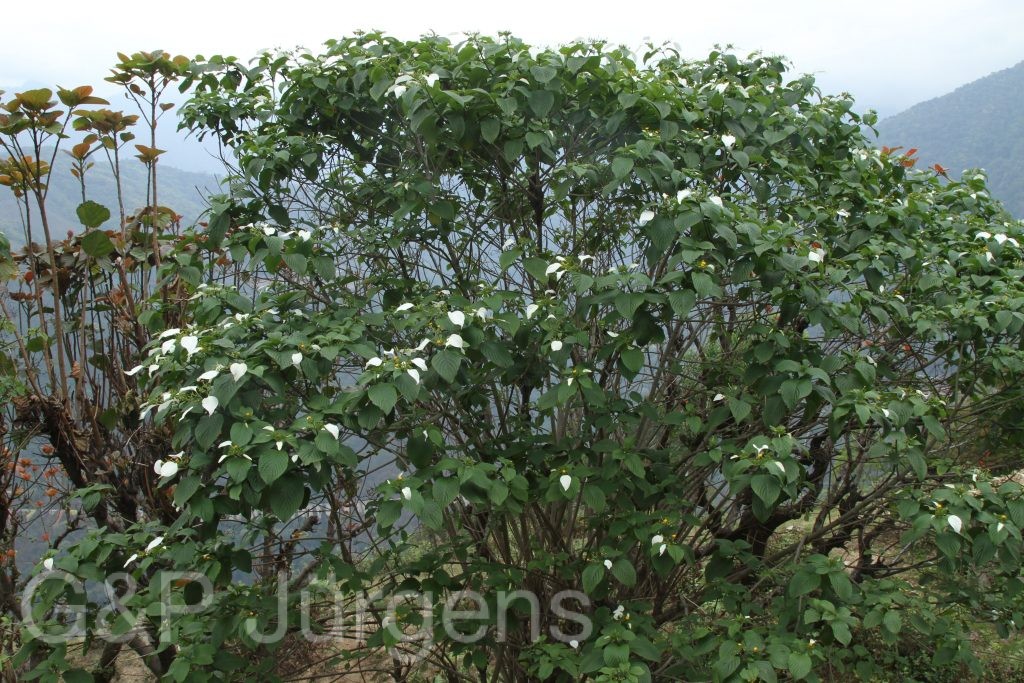
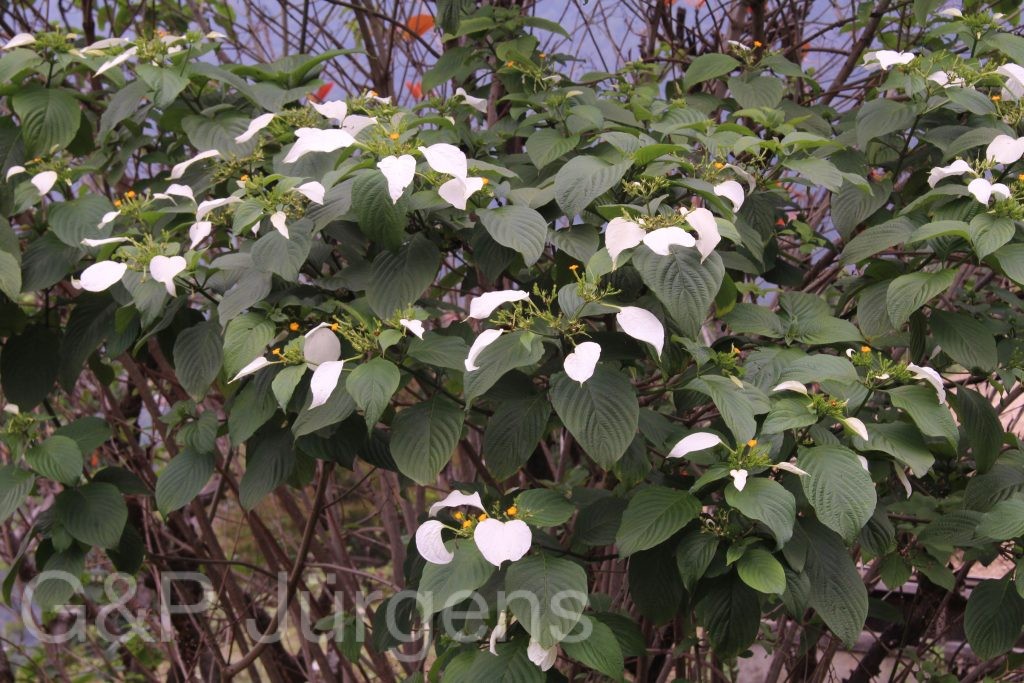
Mussaenda roxburghii is a shrub of the eastern Himalayan and Indo-Burmese lowlands and foothills, ranging across India, Nepal, Bhutan, Bangladesh and Myanmar; GBIF logs some 145 occurrences including a few cultivated records farther afield. It grows in warm subtropical hill forest, along forest margins, stream banks, roadside thickets and clearings, generally from near sea level to about 1500 m. The photographed individual grows in Bhutan at Trithangebe beside a farmhouse at around 700 m in May, a typical habitat for this species, which thrives in the humid pre-monsoon warmth of the lower hills near villages.

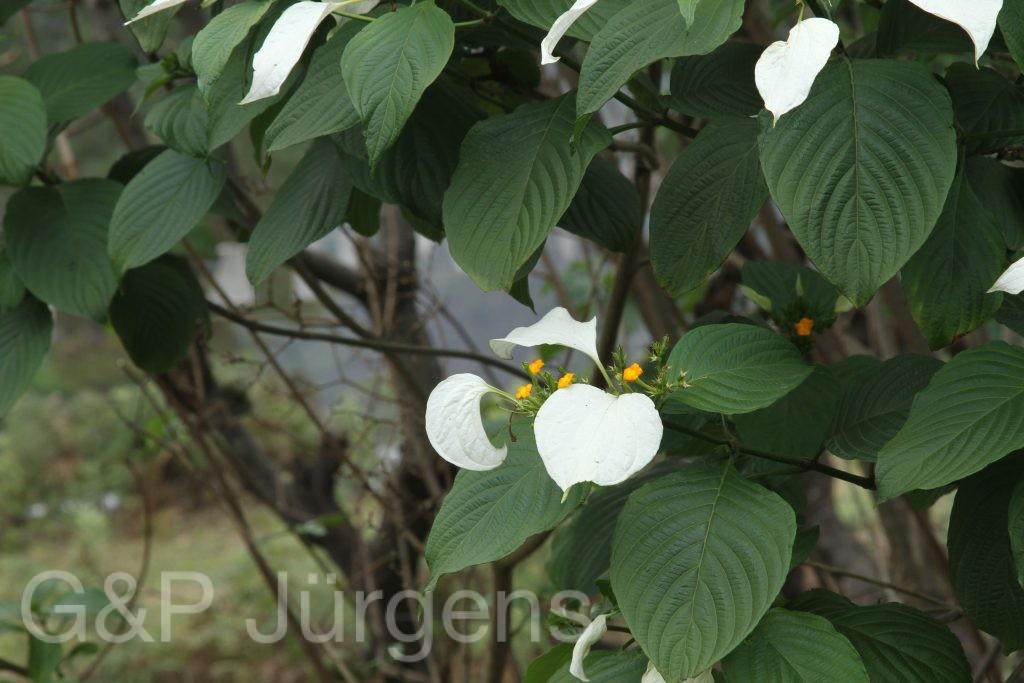
The species is an erect to scrambling shrub with terete, finely pubescent young branches. The leaves are opposite, ovate to elliptic, acuminate, entire and softly hairy beneath, with interpetiolar stipules. The inflorescence is a terminal corymbose cyme of numerous small flowers; its most striking feature is the enlargement of a single calyx lobe of certain flowers into a large, white, leaf-like petaloid bract advertising the inflorescence. The fertile flowers have a narrowly tubular orange to yellow corolla with five spreading lobes and a hairy throat. The fruit is a small fleshy berry crowned by the persistent calyx and containing minute seeds.

Mussaenda roxburghii Hook.f. exemplifies the genus's showy semaphylls, the expanded white calyx lobes that aid pollinator attraction and recur across tropical Rubiaceae. Widespread and locally common through the Indo-Himalayan foothills, it is not regarded as threatened and persists in secondary vegetation. Related Himalayan congeners such as M. treutleri are sometimes confused with it, and the group remains a focus of regional taxonomic study.

Author: Hook.f. · Sources: POWO (Kew), GBIF, Flora of Bhutan, Flora of British India, taxonomic revisions of Mussaenda (Rubiaceae)