Tag:

Subtropical (<1500 m)

(Clarke ex Hook.f.) Kitam.
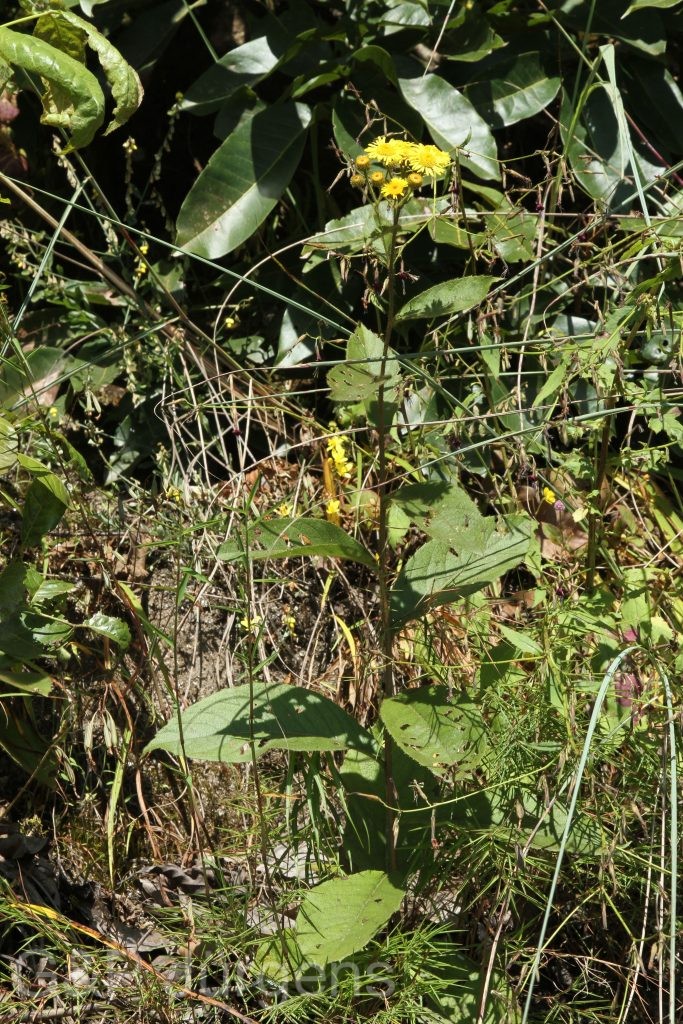
Bhutan2015 74
Bhutan Wangdi 1400m, October
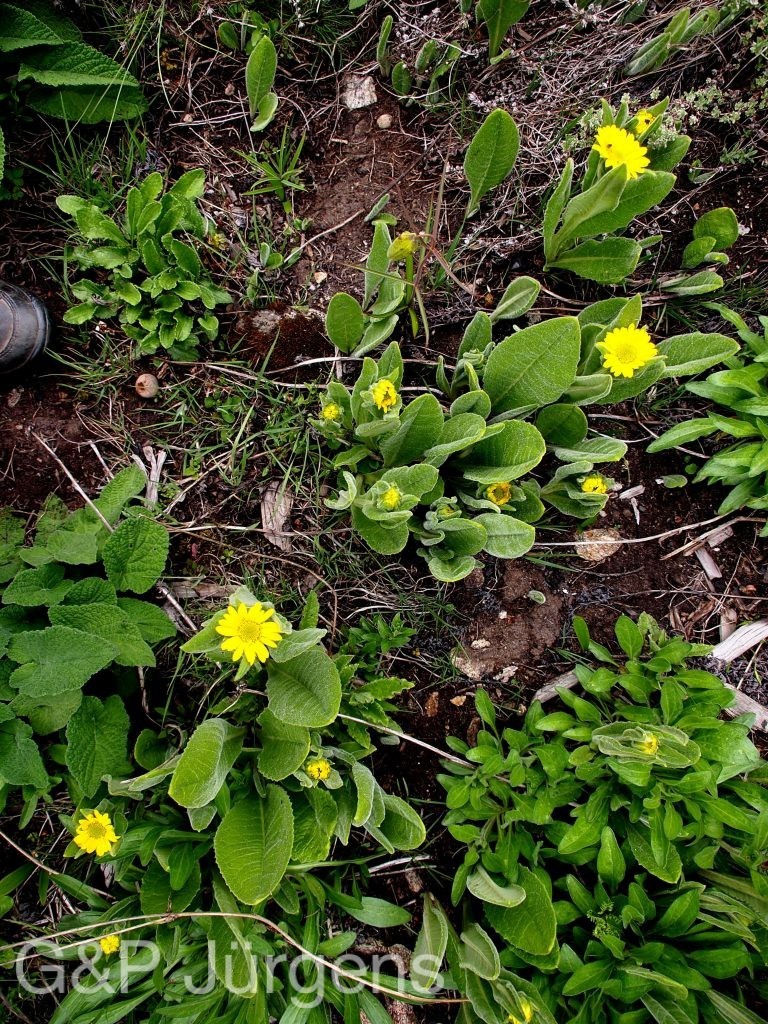
Sikkim2011 73
Sikkim Tanghu 4000m, June
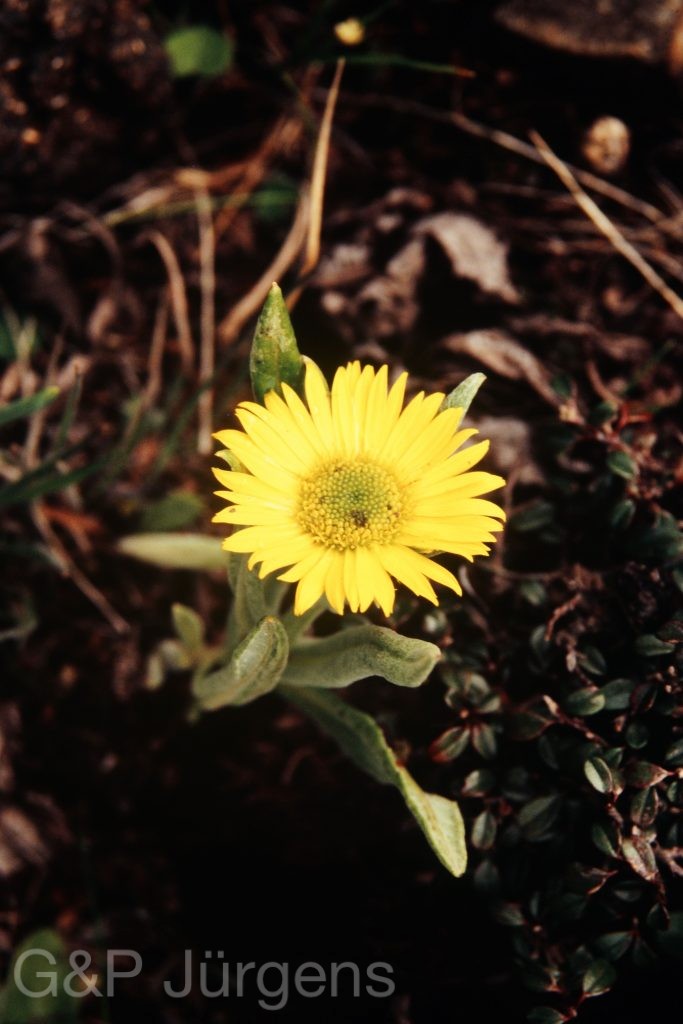
Bh09 25 G46
Bhutan Chele-La, 3500m June

Description

Nannoglottis hookeri is a Himalayan and Sino-Himalayan species recorded from Nepal, Pakistan, Bhutan, India and south-western China, GBIF logging about 145 occurrences across this arc. It inhabits a notably broad altitudinal span, from warm-temperate forest understorey and shrubby slopes to high subalpine and alpine meadows. The cited gatherings illustrate this amplitude: Wangdi in Bhutan at only 1400 m in October, Tanghu in Sikkim near 4000 m in June, and the Chele-La pass at around 3500 m in June. Such occurrence in moist, partly shaded ground, on humus-rich soils among rocks and along forest margins, characterises the species through the Eastern Himalayan ranges.

It is a perennial herb growing from a stout woody rhizome and producing erect, leafy, glandular-pubescent stems. The leaves are alternate, the lower ones petiolate with ovate to elliptic, coarsely toothed blades, becoming sessile and amplexicaul above; both surfaces bear scattered hairs. The capitula are radiate and arranged in a loose terminal corymb; the involucre is hemispheric with subequal, herbaceous phyllaries in few rows. Ray florets are yellow, ligulate and female, while the disc florets are tubular, yellow and bisexual. The cypselae are oblong and ribbed, surmounted by a pappus of slender barbellate bristles, an arrangement linking the genus to the Astereae.

Nannoglottis (Astereae) is a small Sino-Himalayan genus of fewer than a dozen species, distinguished by its radiate heads and montane forest ecology, and molecular work places it near the base of the tribe, making it of phylogenetic interest. Named for J. D. Hooker, N. hookeri is treated as an accepted species. Its dependence on cool, moist montane habitat and relatively narrow distribution warrant attention, though no formal threat status has been assigned; populations appear stable where forest cover persists.

Author: (Clarke ex Hook.f.) Kitam. · Sources: POWO (Kew), GBIF, Flora of Bhutan, Flora of China, Annotated Checklist of the Flowering Plants of Nepal, Gao's systematic study of Nannoglottis (Astereae)
King & Pantl.

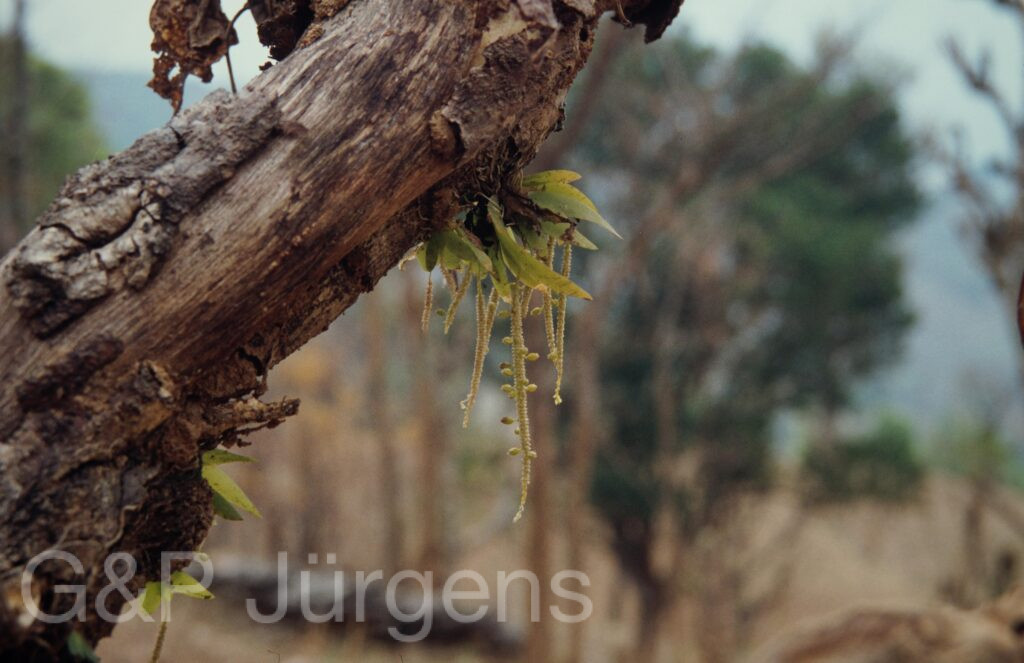
Nepal 1994 27 ergebnis
Ost-Nepal Kandbari 600m April

Description

Oberonia falcata is a small epiphytic orchid ranging through the lowland and submontane forests of the eastern Himalaya and Southeast Asia, recorded from India, Nepal, Bhutan, Myanmar (implied regionally), Thailand, Cambodia, Vietnam, Taiwan and Malaysia, with a modest 67 occurrences in GBIF. It grows on the trunks and branches of trees in warm, humid evergreen and semi-evergreen forest, generally at low to moderate elevations. The illustrated plant was collected in eastern Nepal near Kandbari (Khandbari) at about 600 m in April, a typically low, frost-free station consistent with the genus's preference for sheltered, shaded humid forest.

Like other Oberonia, the species is a tufted, stemless to short-stemmed epiphyte with a fan of distichous, laterally flattened (equitant), fleshy leaves that are falcate (sickle-shaped), as the epithet records. From the centre of the leaf-fan arises a slender erect to arching inflorescence densely covered with minute flowers arranged in whorls along the rachis. The individual flowers are tiny and inconspicuous, orange to brownish, with a deeply lobed lip characteristic of the genus; the column is very short. The fruit is a small ellipsoid capsule releasing dust-fine seeds.

Oberonia is a large pantropical Old World genus distinguished by its iris-like flattened leaf-fans and miniature whorled flowers, and species delimitation rests largely on lip morphology. As an epiphyte dependent on undisturbed humid forest canopy, O. falcata is vulnerable to deforestation and the harvesting of host trees across its range. Its minute, scentless flowers are thought to be pollinated by small insects, and like nearly all orchids it relies on mycorrhizal fungi for seed germination and establishment.

Author: King & Pantl. · Sources: POWO (Kew), GBIF, Flora of Bhutan, Orchids of Nepal, Genera Orchidacearum (Oberonia)

(L.) Kurz

Bhutan2012 969
Bhutan Trithangebe 900m, October
Bhutan2015 103
Bhutan Galephug 500m, October

Description

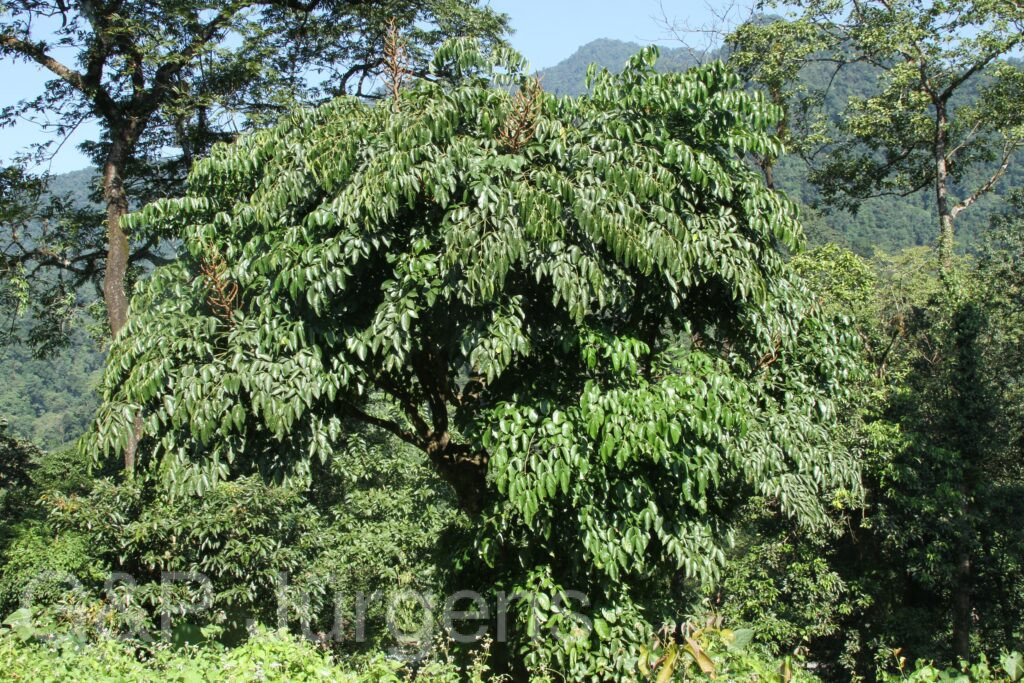
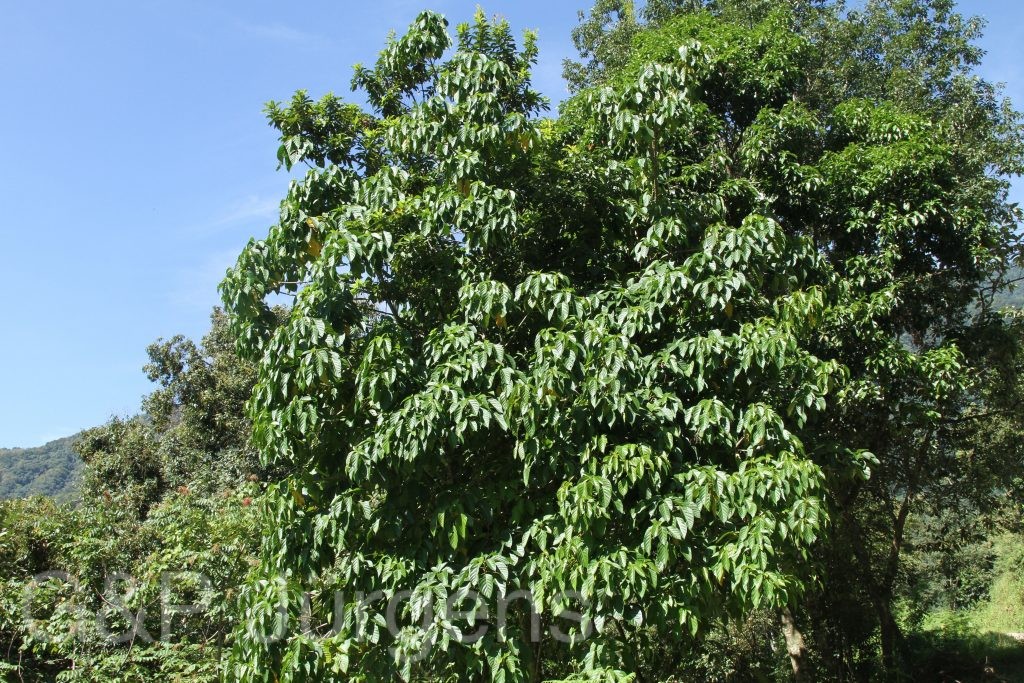
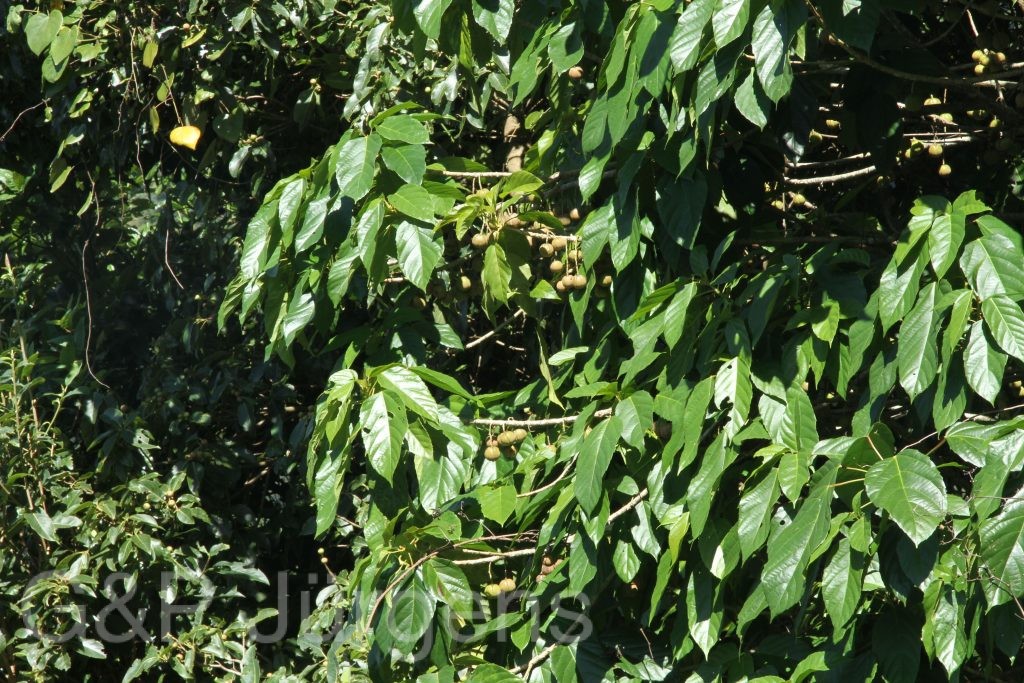
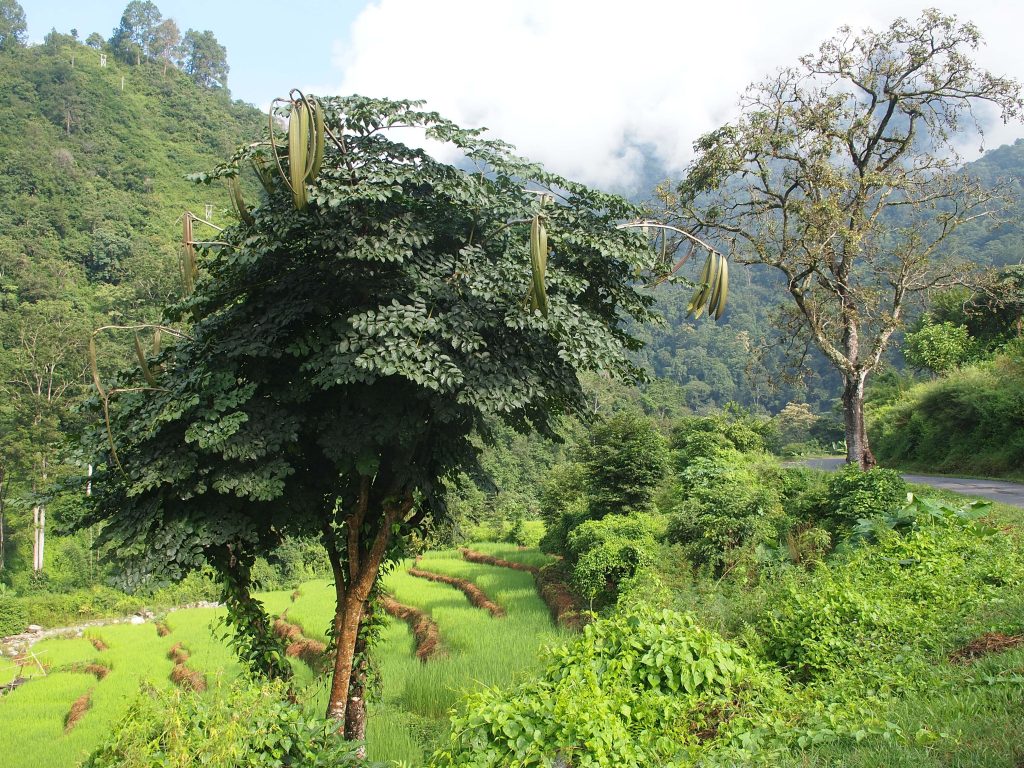
Oroxylum indicum, the Indian trumpet tree or midnight horror, is a small deciduous tree of subtropical and tropical Asia, ranging from India, Nepal and Bhutan through Bangladesh, Myanmar and southern China to Indochina, Thailand, Sri Lanka and across Malesia to the Philippines. GBIF aggregates around 1440 occurrences. It is a tree of forest margins, secondary growth, ravines and roadsides at low to moderate elevations, often in seasonally dry monsoon forest. The Bhutanese specimens at Trithangebe (900 m) and Galephug (500 m) in October occupy this warm foothill zone, fruiting at the close of the monsoon when the great pendulous pods become conspicuous.

The tree has a sparse crown and stout, soft-wooded branches marked with prominent leaf scars. Its leaves are very large, opposite and two- to three-pinnate, often a metre or more across, with ovate, acuminate leaflets, the falling rachides littering the ground beneath. The flowers open at night in a long erect terminal raceme, each large, fleshy and campanulate, lurid reddish-purple outside and paler within, malodorous and bat-pollinated. Most striking is the fruit: a flattened, sword-shaped, sabre-like capsule up to a metre long that splits into two woody valves to release numerous flat seeds broadly winged with a papery membrane for wind dispersal.

A member of Bignoniaceae, Oroxylum is a distinctive near-monotypic genus set apart by its enormous pinnate leaves, nocturnal chiropterophilous flowers and giant samaroid pods. The species is of considerable ethnobotanical importance: its bark, seeds and young fruit are widely used in Ayurvedic and traditional medicine, and the tender pods are eaten as a vegetable. Despite localised harvesting it remains common and widespread, and is not regarded as globally threatened.

Author: (L.) Kurz · Sources: POWO (Kew), GBIF, Flora of China Vol. 18, Flora of Bhutan Vol. 2, Annotated Checklist of the Flowering Plants of Nepal, Gentry monograph of Bignoniaceae

Hook.

Nepal 95 22 P31 ergebnis
Nepal Darondi-Khola 630m, Octobre

Description

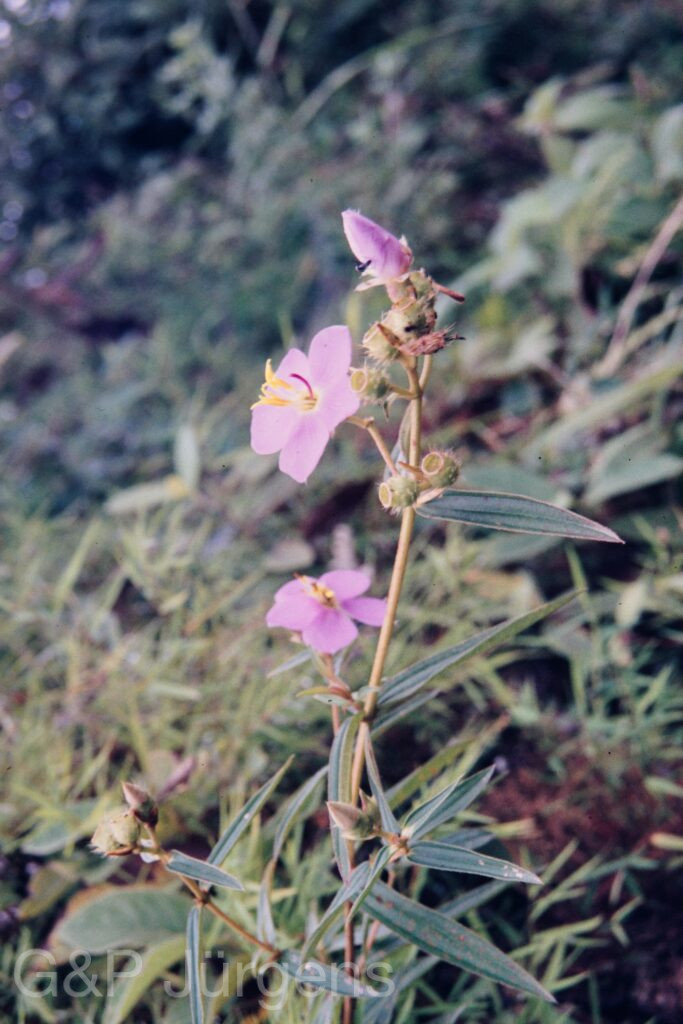
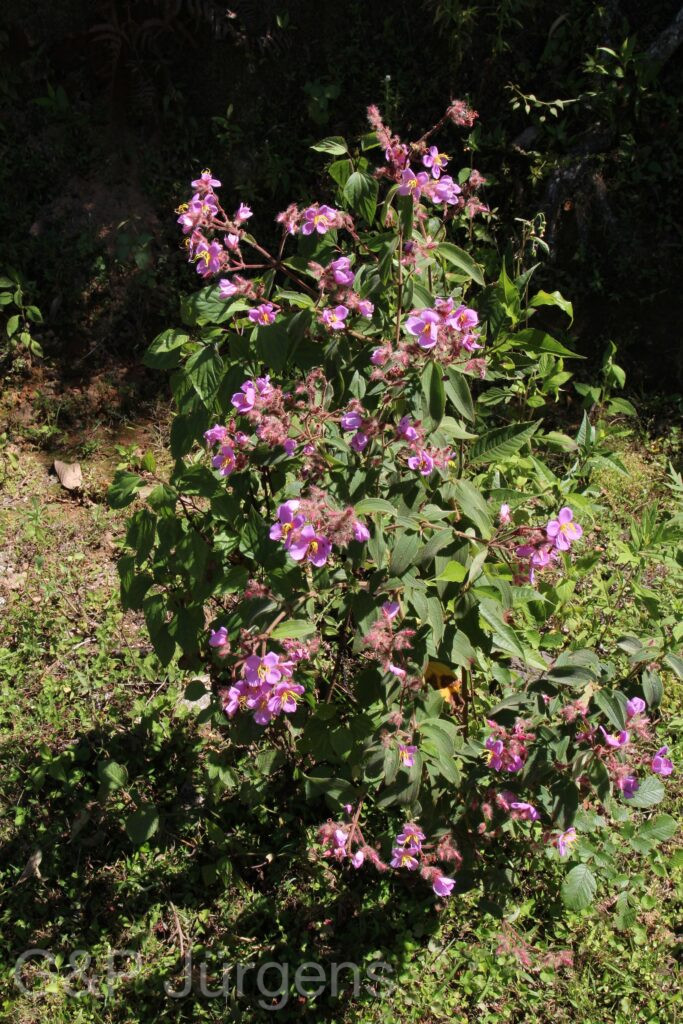
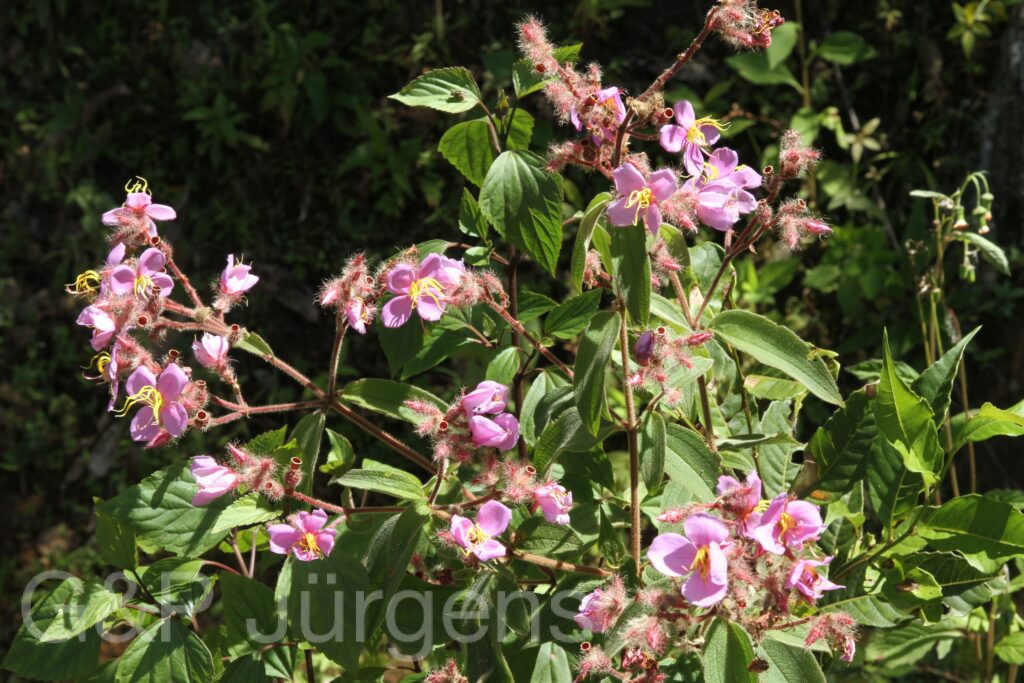
Osbeckia nepalensis is a subtropical to warm-temperate herb or subshrub of the eastern Himalaya and southeastern Asia, ranging through China, Nepal, India, Bhutan, Bangladesh, Myanmar, Thailand, Vietnam, Malaysia and Indonesia; its roughly 563 GBIF occurrences trace a broad Sino-Himalayan to Indochinese arc. In Nepal it descends to low elevations along river valleys, as recorded along the Darondi Khola at about 630 m in October, when the post-monsoon period brings peak flowering. It favours open, sunny situations on grassy hillsides, forest margins and roadside banks, behaving as an early-successional colonist of seasonally humid foothill habitats.

The plant is an erect, branched herb or soft subshrub with four-angled stems clothed, like the foliage, in stiff bristly hairs. The leaves are opposite, ovate-lanceolate, and bear the curved-parallel primary veins diagnostic of Melastomataceae. The handsome flowers are clustered in terminal heads, each with a bristly urn-shaped hypanthium and usually four broad, rounded petals of rich rose-purple to magenta; within are twice as many stamens with geniculate filaments and elongate, beaked, poricidal anthers adapted for buzz-pollination by bees. The fruit is a bristly capsule enclosed in the persistent hypanthium, releasing many minute seeds.

Osbeckia is closely allied to Melastoma, from which it is separated by its smaller, dry, poricidal capsules rather than fleshy berries. O. nepalensis is among the most ornamental species of the genus, valued horticulturally and used locally in herbal medicine. As a common, weedy coloniser of disturbed ground over a very large area, it carries no significant conservation concern.

Author: Hook. · Sources: POWO (Kew), GBIF, Flora of China Vol. 13, Flora of Bhutan Vol. 2, Flora of Nepal, A Revision of Osbeckia (Melastomataceae)

Buch.-Ham. ex D.Don

Bhutan2012 530
Bhutan Tserang 1300m, September
Bhutan2012 660
Bhutan Tserang 1600m, September
Bhutan2015 206
Bhutan Zhemgang 1000m, October
Bhutan2015 207
Bhutan Zhemgang 1000m, October

Description

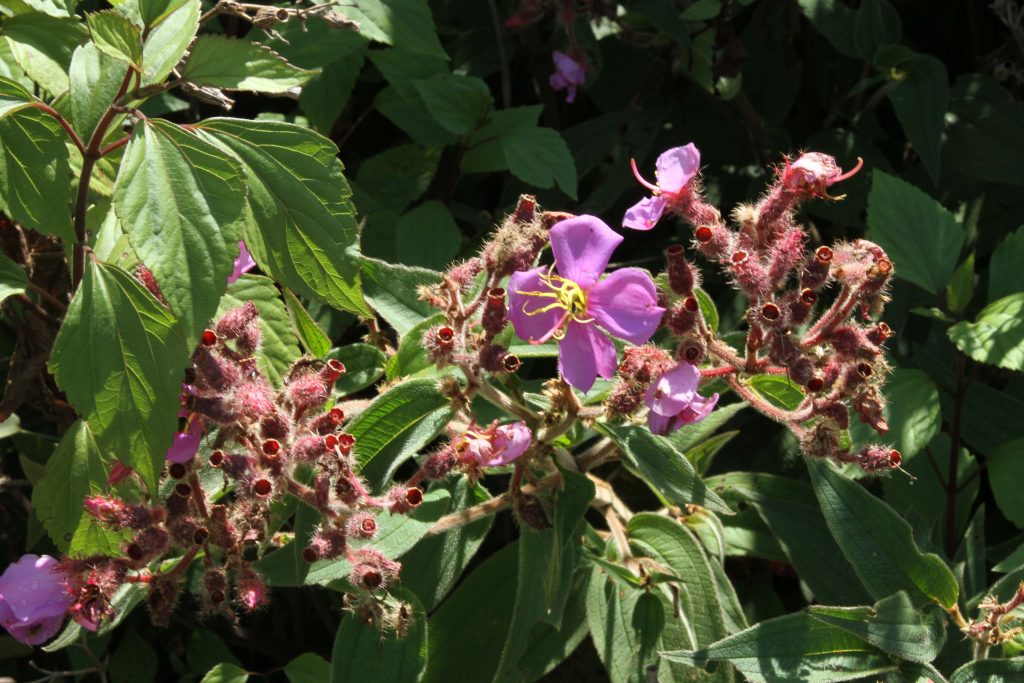
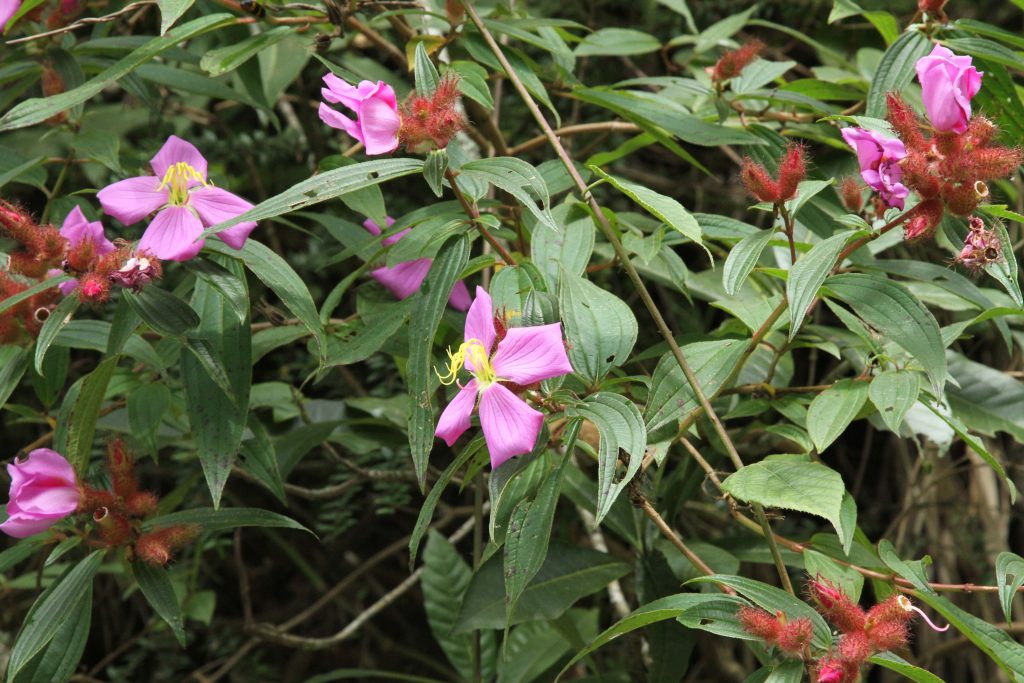
Osbeckia stellata Buch.-Ham. ex D.Don is a shrub of the melastome family ranging across the Himalaya and tropical Asia, recorded from China, India, Nepal, Bhutan, Myanmar, Thailand, Vietnam, Malaysia and Laos, with about 704 GBIF occurrences. It grows on open hillsides, forest margins, scrub, grassy banks and disturbed slopes in the subtropical and warm-temperate belt, generally between about 900 and 2000 m. It was recorded in Bhutan at Tserang at 1300 and 1600 m and at Zhemgang around 1000 m, flowering in September and October, when its conspicuous magenta blooms colour the autumn hill vegetation of the outer ranges.

It is an erect, branched shrub with quadrangular, often reddish stems bearing appressed, bristly stellate or strigose hairs. The leaves are opposite, ovate-lanceolate, entire, and conspicuously three- to five-nerved with the characteristic curved-convergent venation of Melastomataceae, both surfaces rough with stiff hairs. The flowers are large and showy, borne in terminal cymose clusters; the four broad obovate petals are rose-purple to magenta, surrounding eight stamens with distinctively geniculate, beaked anthers, set on an urceolate hypanthium clothed in branched, stellate-tipped bristles. The fruit is an urn-shaped capsule enclosed by the persistent bristly hypanthium, releasing numerous minute cochleate seeds.

Osbeckia is distinguished from the related Melastoma by its smaller seeds and capsular fruit, and O. stellata is among the most ornamental and widespread Himalayan species, sometimes grown for its vivid flowers. Its poricidal anthers are buzz-pollinated by bees, while the small seeds are dispersed from the dry capsules. Common in disturbed and secondary habitats, it readily colonises cleared ground and is of no conservation concern.

Author: Buch.-Ham. ex D.Don · Sources: POWO (Kew), GBIF, Flora of China, Flora of Bhutan, Flora of British India, Melastomataceae monograph (Hansen revision of Osbeckia)

Blume

Bhutan2015 194
Bhutan Zhemgang 1000m, October
Bhutan2015 195
Bhutan Zhemgang 1000m, October

Description

Ostodes paniculata is a tree or large shrub widely distributed through tropical and subtropical Asia, recorded by GBIF from China, Indonesia, Thailand, India, Myanmar, Vietnam, Nepal, Bhutan, Laos, Cambodia, Malaysia and Korea across more than 1100 occurrences. It is a component of evergreen and semi-evergreen broad-leaved forest in warm, humid lowland and lower montane settings, usually below about 1500 m, often on hillslopes and in valley forest. The photographed individual from Zhemgang in southern Bhutan at about 1000 m, in October, reflects this warm-temperate to subtropical foothill habitat where the species reaches the northern margin of its range along the Himalayan front.

The plant is a monoecious, evergreen tree with smooth bark and a milky or watery exudate. The leaves are alternate, simple, broadly elliptic to ovate, long-petiolate with a pair of glands at the petiole apex, the margin serrate to glandular-toothed and the base often with a few prominent basal nerves. The inflorescences are terminal panicles bearing numerous small white to creamy flowers, the staminate and pistillate flowers separate, with five petals and conspicuous disk glands; staminate flowers have numerous stamens. The fruit is a globose, three-locular capsule, somewhat woody, that splits septicidally to release the large smooth seeds.

Ostodes is a small genus of the Euphorbiaceae (subfamily Crotonoideae) centred on tropical Asia, and O. paniculata is its most widespread and well-known species, valued locally for its timber and seed oil. Its broad range and tolerance of secondary forest mean it is not of conservation concern, and it is frequent across much of Indo-Malaya. Phytogeographically it exemplifies the Indo-Malayan element that penetrates the Himalaya through the warm, wet foothill forests of Bhutan and northeast India.

Author: Blume · Sources: POWO (Kew), GBIF, Flora of China, Flora of Bhutan, Flora of Thailand, Radcliffe-Smith Euphorbiaceae treatments

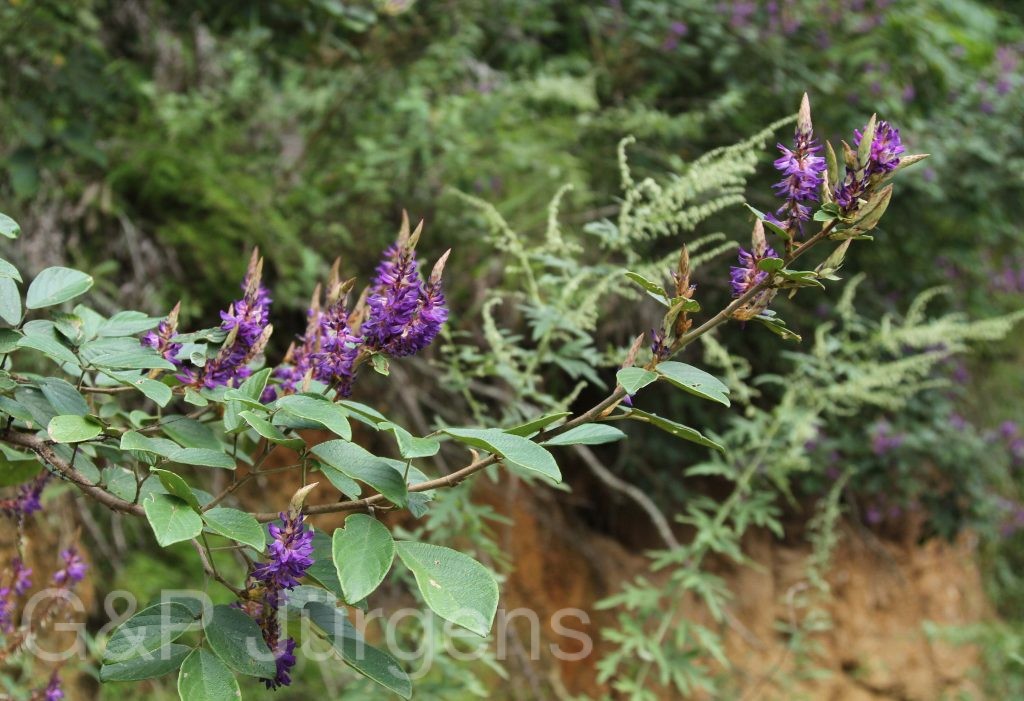
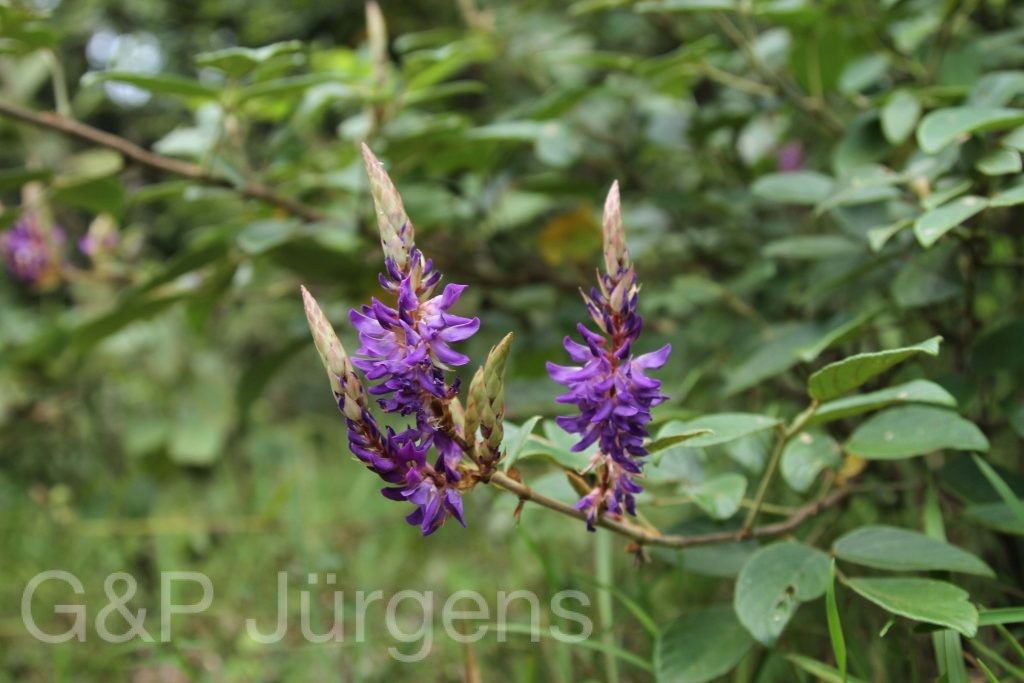
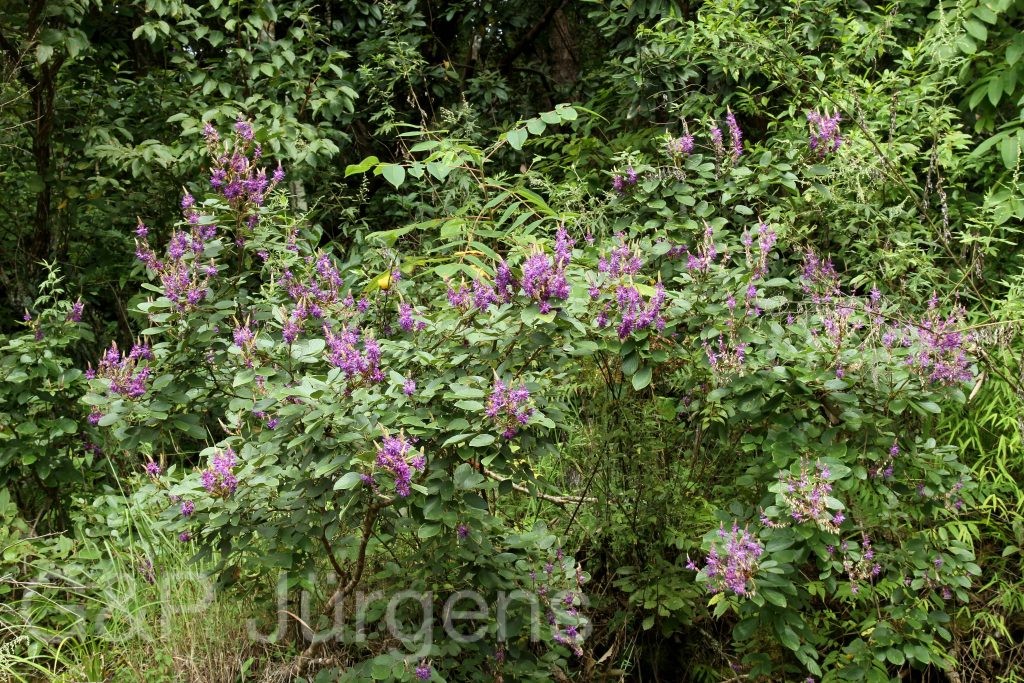
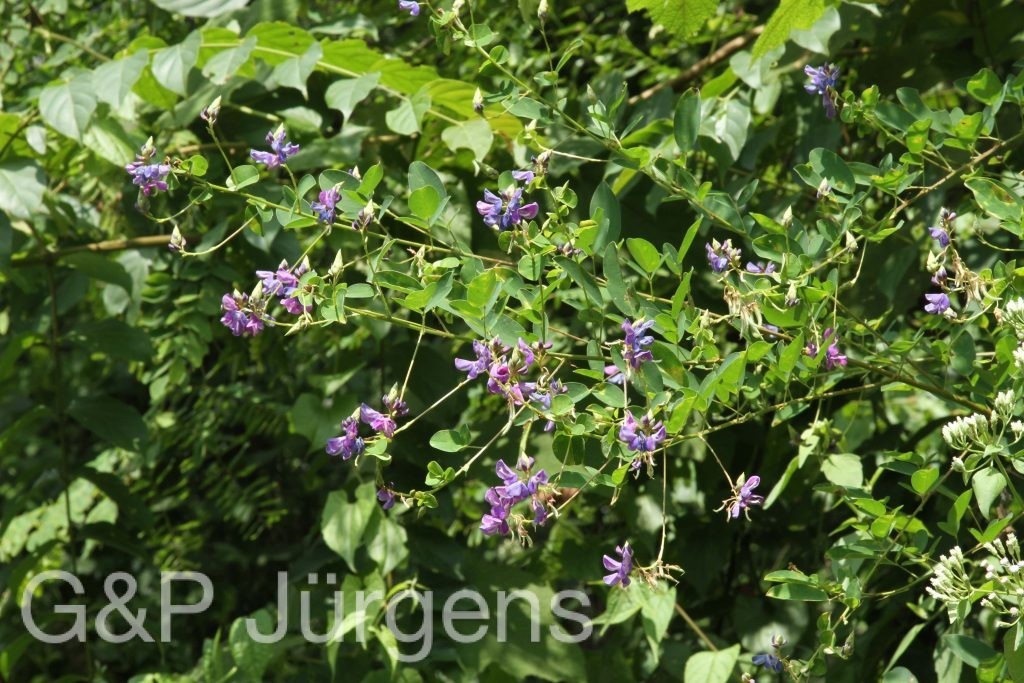
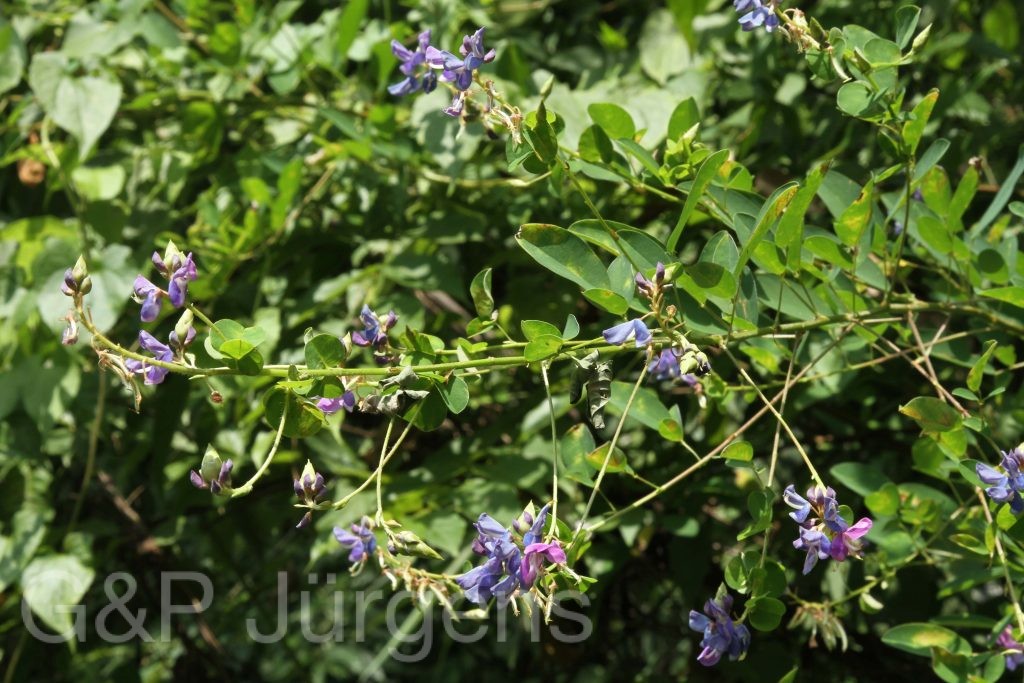
Ototropis conferta

by GP Jürgens

 (DC.) H.Ohashi & K.Ohashi.

Bhutan2012 958
Bhutan Trithangebe 1200m, October
Bhutan2012 959
Bhutan Trithangebe 1200m, October
Bhutan2012 1004
Bhutan Trithangebe 1400m, October

Description

Ototropis conferta is a Himalayan legume distributed through Nepal, India and Bhutan, with GBIF recording about 112 occurrences across the central and eastern ranges. It is a shrub of warm temperate and subtropical hill forest, growing on open slopes, forest edges, scrub and roadside banks typically between roughly 1000 and 2000 m. The accompanying records from Trithangebe in southern Bhutan at 1200 and 1400 m, flowering in October, capture its characteristic autumn flowering in the lower-montane belt, where it forms part of the shrubby understorey and edge vegetation alongside other broom-like legumes on well-drained, often disturbed ground.

It is a woody shrub with slender, sometimes arching branches that are finely pubescent when young. The leaves are pinnately trifoliolate, the leaflets elliptic to ovate with entire margins and an appressed indumentum, subtended by small stipules. The inflorescences are dense, many-flowered terminal and axillary racemes or panicles, the epithet referring to the crowded arrangement of the flowers. Each papilionaceous flower has a campanulate calyx and a corolla of standard, wings and keel, coloured pink to purple, fading as it ages. The diadelphous stamens are enclosed within the keel. The fruit is a flattened, several-jointed loment that breaks at maturity into one-seeded articles, their surfaces clad in hooked hairs that promote epizoochorous dispersal.

The species was long placed in the large genus Desmodium as D. confertum, and was transferred to Ototropis by H.Ohashi and K.Ohashi following molecular and morphological revision of the Desmodieae, which fragmented the traditional broad Desmodium into several segregate genera. As a nitrogen-fixing pioneer of forest edges and disturbed slopes it contributes to soil enrichment and early successional cover, and its adhesive loment articles make it an effective colonist of new ground. It is neither rare nor of particular conservation concern across its Himalayan range.

Author: (DC.) H.Ohashi & K.Ohashi. · Sources: POWO (Kew), GBIF, Flora of Bhutan, Annotated Checklist of the Flowering Plants of Nepal, Ohashi & Ohashi revision of the Desmodium group, Legumes of the World

(DC.) H.Ohashi & K.Ohashi

Bhutan2012 985
Bhutan Trithangebe 1050m, October
Bhutan2012 986
Bhutan Trithangebe 1050m, October

Description

Ototropis multiflora (DC.) H.Ohashi & K.Ohashi, long familiar as Desmodium multiflorum, is a shrubby legume widely distributed through tropical and subtropical Asia. GBIF records (over 1400 occurrences) extend from Pakistan, Nepal, northern India and Bhutan eastward through southern China, Taiwan, Myanmar, Thailand, Laos, Vietnam and Malaysia. It grows in open forest, scrub, forest margins, roadsides and grassy hill slopes at lower and middle elevations, broadly from near sea level to about 2400 m. The specimen photographed at Trithangebe in Bhutan at 1050 m in October, flowering late in the warm season, typifies its preference for warm, well-lit subtropical foothill habitats.

It is an erect, much-branched shrub up to about 1-2 m tall, with young stems and foliage softly pubescent. The leaves are pinnately trifoliolate; leaflets are ovate to elliptic, the terminal one largest, densely soft-hairy beneath, and subtended by persistent stipules. Flowers are borne in many-flowered terminal and axillary racemes or panicles, each papilionaceous corolla pink to purple, the keel enclosing the diadelphous stamens. The fruit is a flattened, several-jointed loment, the segments shallowly constricted and clothed in hooked uncinate hairs that adhere to fur and clothing, promoting epizoochorous dispersal.

The segregation of Ototropis from the broadly defined Desmodium follows molecular work by H. Ohashi and K. Ohashi that resolved tribe Desmodieae into several well-supported genera; Ototropis multiflora is therefore the currently accepted name. As a nitrogen-fixing legume it contributes to soil fertility on disturbed slopes and is used locally as fodder and in traditional medicine. Widespread, weedy and adaptable, it is of least conservation concern and readily colonises secondary habitats.

Author: (DC.) H.Ohashi & K.Ohashi · Sources: POWO (Kew), GBIF, Flora of China, Flora of Bhutan, Ohashi & Ohashi revision of tribe Desmodieae, Annotated Checklist of the Flowering Plants of Nepal

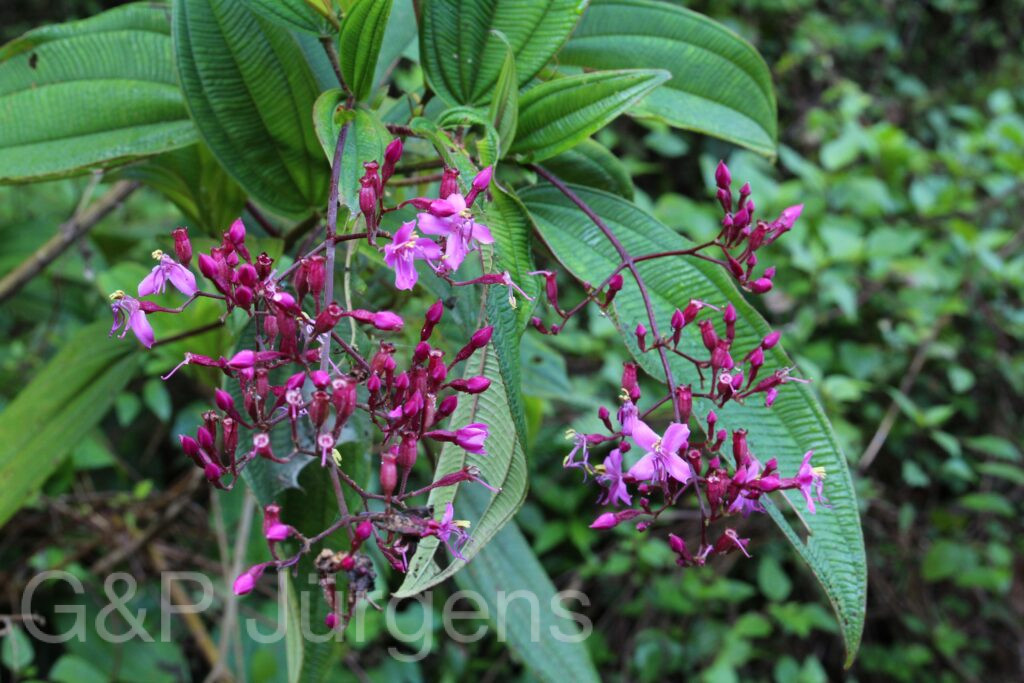
DC.

Bhutan2015 552
Bhutan Mo-Chu 1400m, October

Description

Oxyspora paniculata is a widespread species of the family Melastomataceae, distributed from the eastern Himalayas through mainland Southeast Asia to southern China and Vietnam. GBIF records over 1,090 occurrences across Nepal, India, Bhutan, Myanmar, China, Laos, Vietnam, and Japan. The species inhabits warm-temperate to subtropical broadleaved forests, forest margins, and streamsides at elevations of 500–2,200 m, favouring humid, semi-shaded habitats with well-drained acidic soils. Along the Mo-Chu valley in Bhutan at 1,400 m, it grows in the understorey of warm broadleaved forests dominated by Castanopsis and Schima.
Oxyspora paniculata is a shrub or subshrub, typically 1–3 m tall, with quadrangular, often narrowly winged stems. Leaves are opposite, ovate to ovate-lanceolate, 8–18 cm long, acuminate at the apex, with 3–5 prominent acrodromous veins and finely serrulate margins. The inflorescence is a terminal, lax panicle of cymes, 10–25 cm long, bearing numerous small flowers. Flowers are tetramerous, with pink to mauve petals 6–10 mm long and eight stamens of two lengths; the longer stamens bear sigmoid filaments and poricidal anthers with a short dorsal spur. The fruit is a urceolate capsule dehiscing by four apical valves, releasing numerous minute, cuneate seeds.
The genus Oxyspora comprises approximately 20 species centred in the Sino-Himalayan region and mainland Southeast Asia. Oxyspora paniculata is the most widespread member of the genus and has at times been confused with O. vagans, from which it differs in its distinctly winged stems and larger panicles. The species plays an important ecological role as a nectar source for pollinators in subtropical forest margins and is occasionally used in traditional medicine in parts of northeast India.

Author: DC. · Sources: POWO (Kew), GBIF, Flora of China Vol. 13, Flora of Bhutan Vol. 2, Renner et al.: Melastomataceae of the Old World (2021)

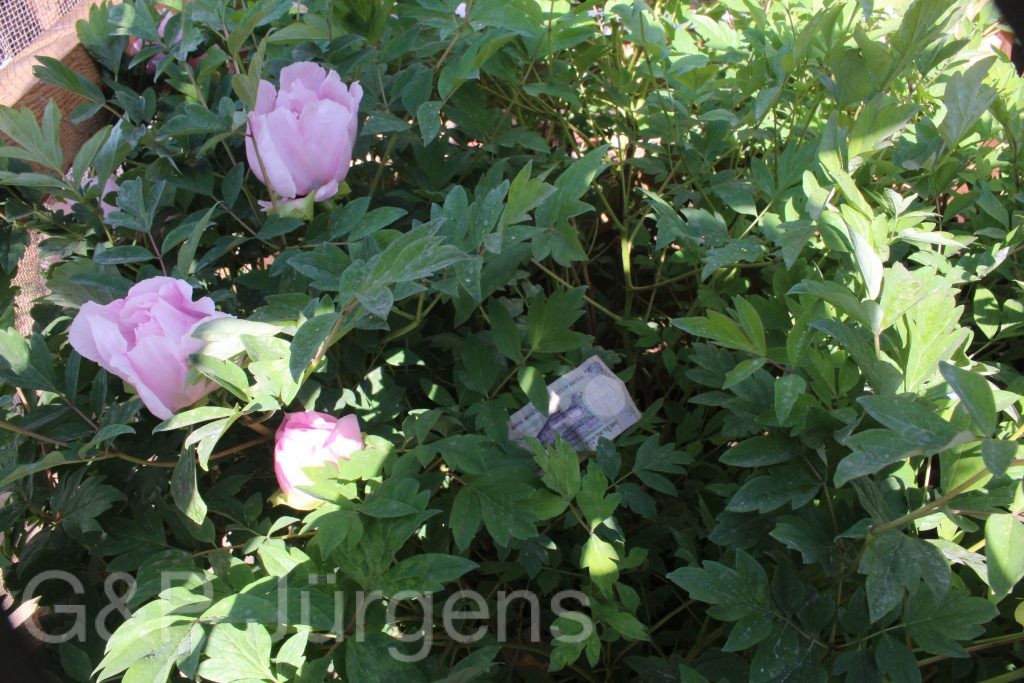
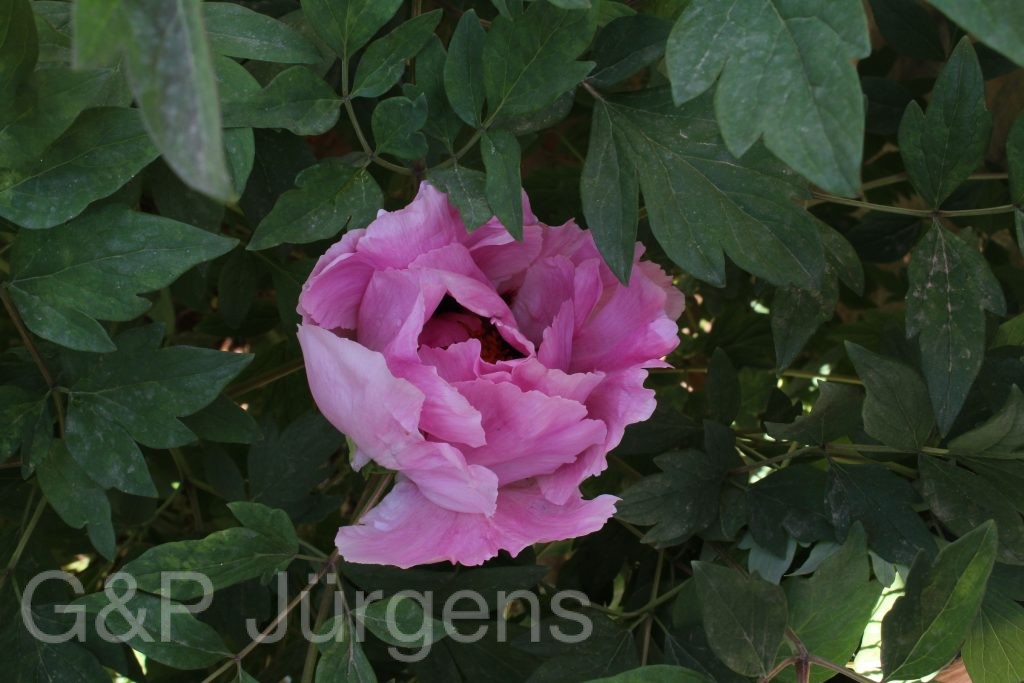
Andrews

Bhutan2014 950
Bhutan Haa-valley 640m, May
Bhutan2014 953
Bhutan Haa-valley 640m, May

Description

Paeonia suffruticosa, the tree peony, is a woody peony of Chinese origin that has been cultivated for well over a millennium and is now distributed worldwide through horticulture. Its GBIF dataset, with over 1,200 occurrences, reflects this mixed status, recording it from China, Korea, Japan and Taiwan as well as from a long list of countries where it occurs only in cultivation or as a garden escape, including the United States, Canada, Russia, Ukraine, and many European nations such as Germany, France, Spain, Italy, Sweden, Norway, Estonia, the Czech Republic, Belgium and Great Britain, alongside a record from Bhutan. The photographed plant from the Haa valley in Bhutan, at about 640 m and flowering in May, almost certainly represents cultivated or naturalised material grown around dwellings and monasteries, consistent with the species' long history as an ornamental rather than a wild Himalayan native.

It is a deciduous shrub up to about 2 m tall, with erect, branching woody stems, in contrast to the herbaceous, dying-back peonies. The leaves are alternate, large and biternately to bipinnately compound, the leaflets ovate, often lobed and glaucous beneath. The flowers are solitary and terminal and exceptionally large and showy, single to fully double in cultivated forms, with broad petals in white, pink, red, purple or yellow tones surrounding numerous stamens; a conspicuous fleshy, leathery disk forms a sheath partly enclosing the carpels. The fruit is a cluster of several densely tomentose follicles that split to release the large, rounded, dark seeds.

Paeonia, the only genus of Paeoniaceae, is divided into herbaceous and woody (section Moutan) groups, and P. suffruticosa in the strict sense is now understood to be a complex hybrid cultigen derived from several wild Chinese tree-peony species rather than a single wild taxon. As the celebrated "king of flowers" (mudan) of Chinese horticulture, it is enormously important culturally, medicinally (the root bark, mudanpi, is a traditional drug) and ornamentally, and exists in innumerable cultivars. As a cultigen it has no wild conservation status of its own, although the wild ancestral species of the Moutan group, several narrowly endemic in China, are of considerable conservation concern.

Author: Andrews · Sources: POWO (Kew), GBIF, Flora of China Vol. 6, Flora of Bhutan Vol. 1, Flora of Nepal, Flora of Pakistan, Hong's monograph Peonies of the World