Tag:

Summer

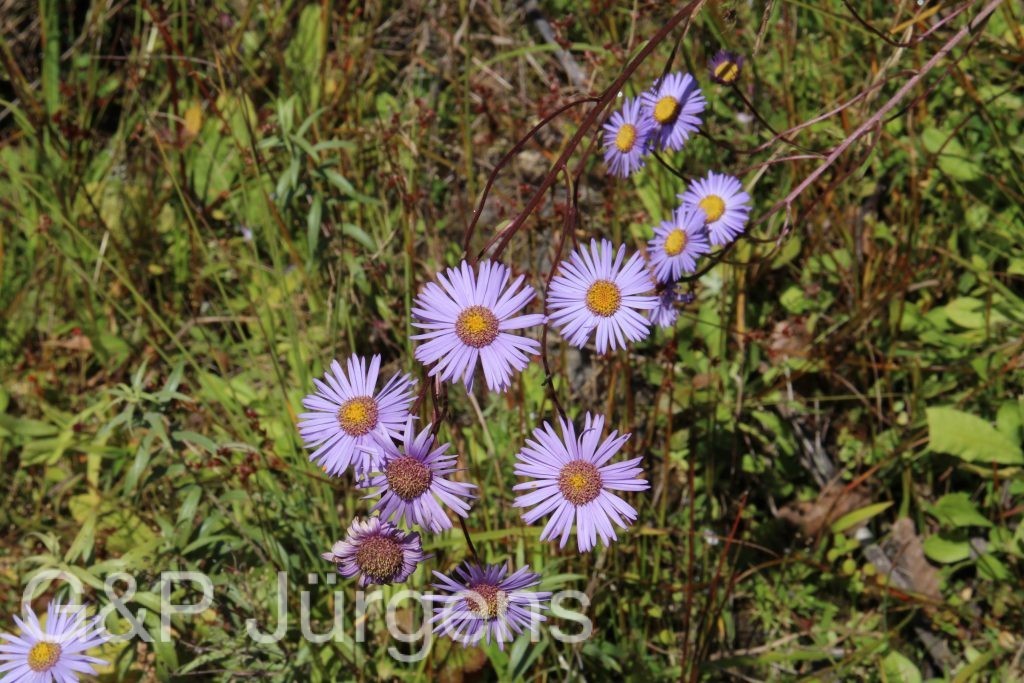
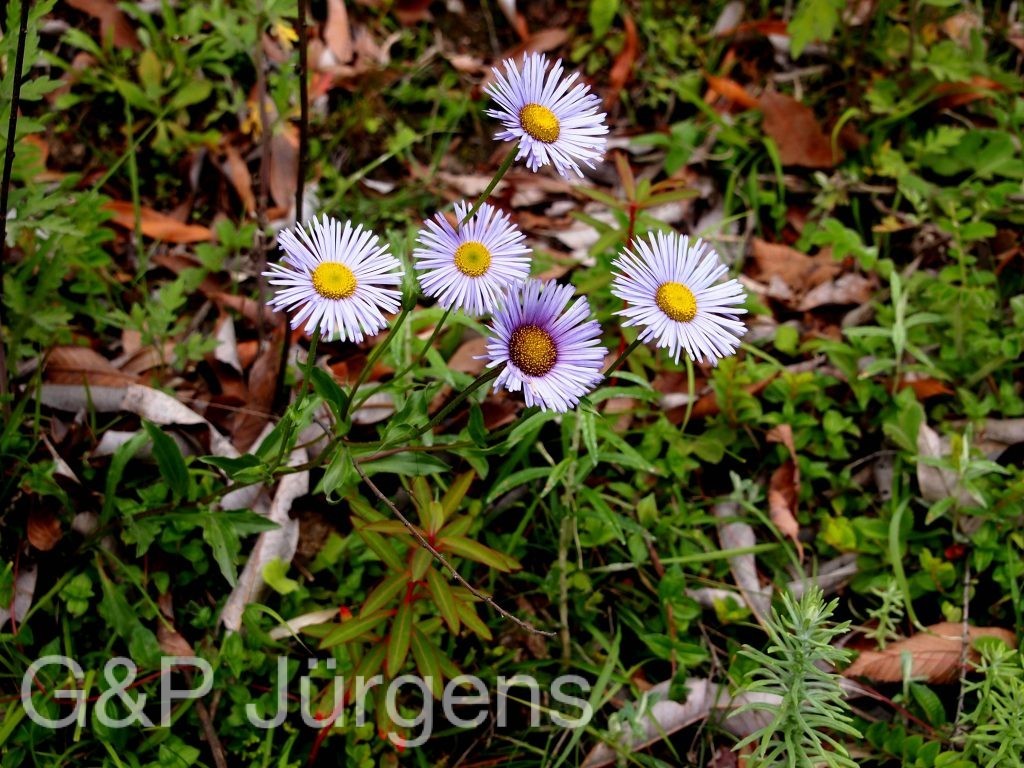
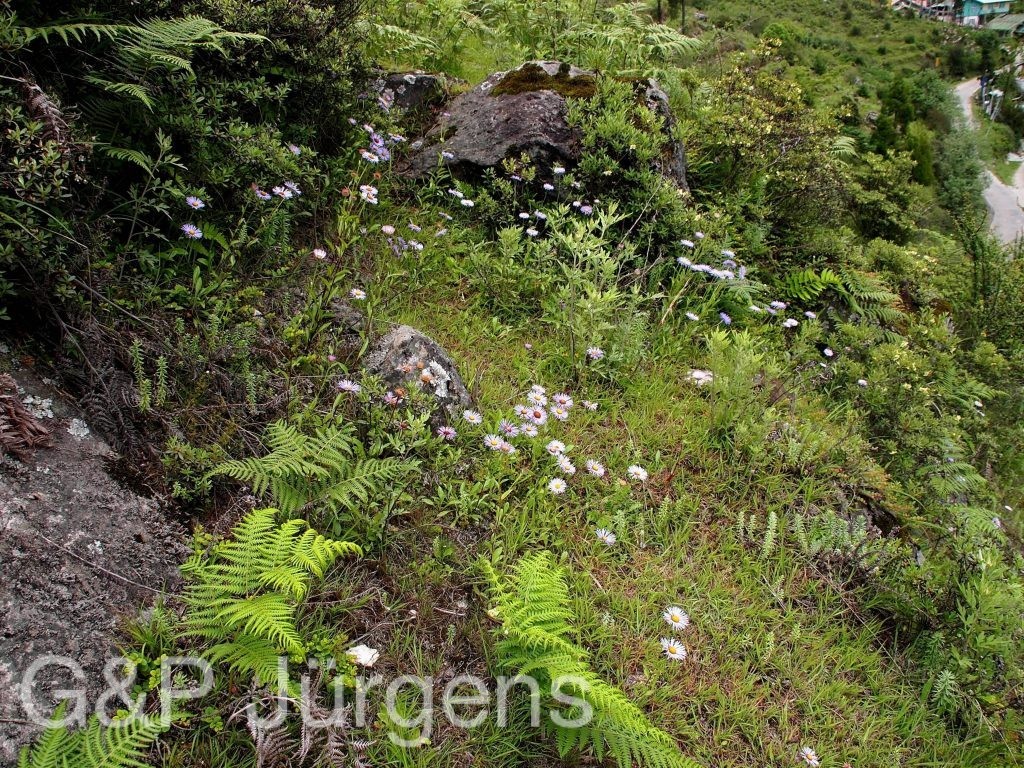
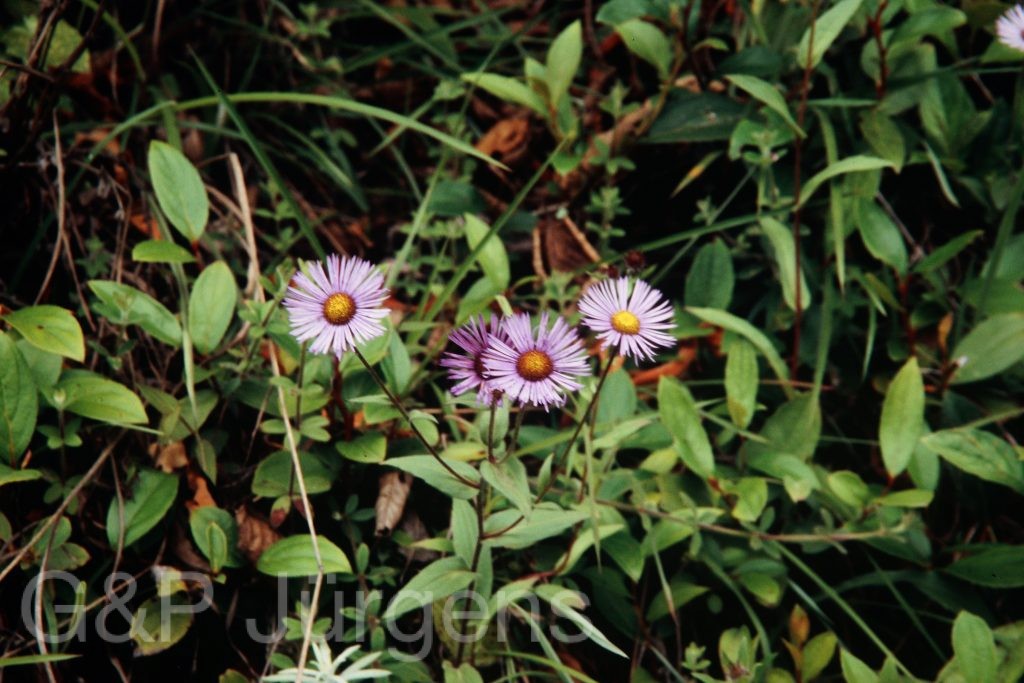
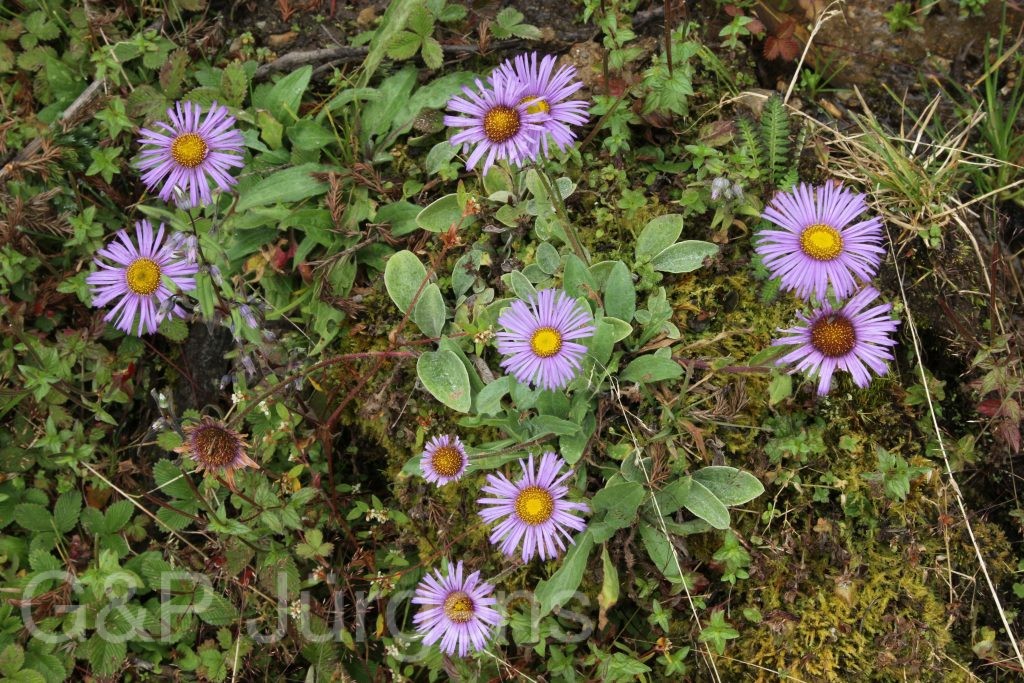
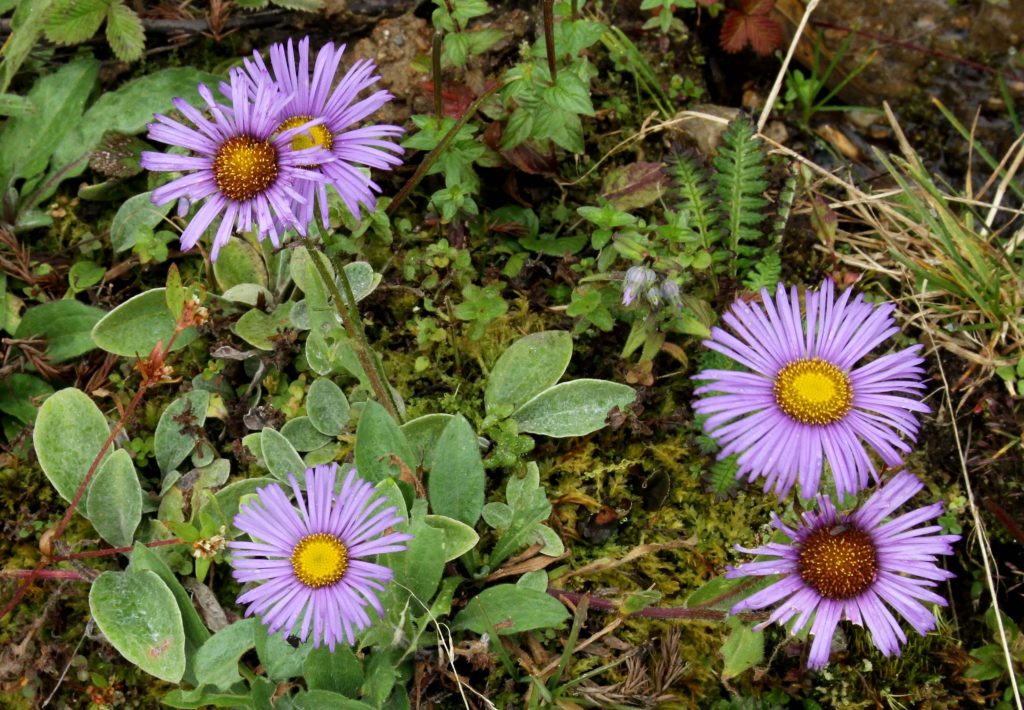
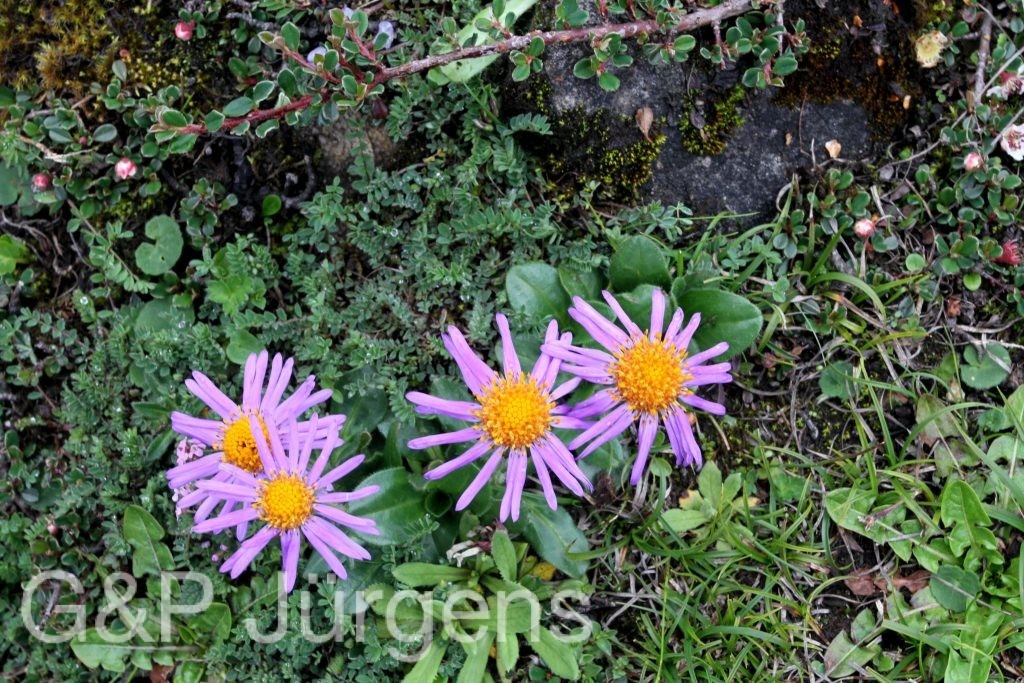
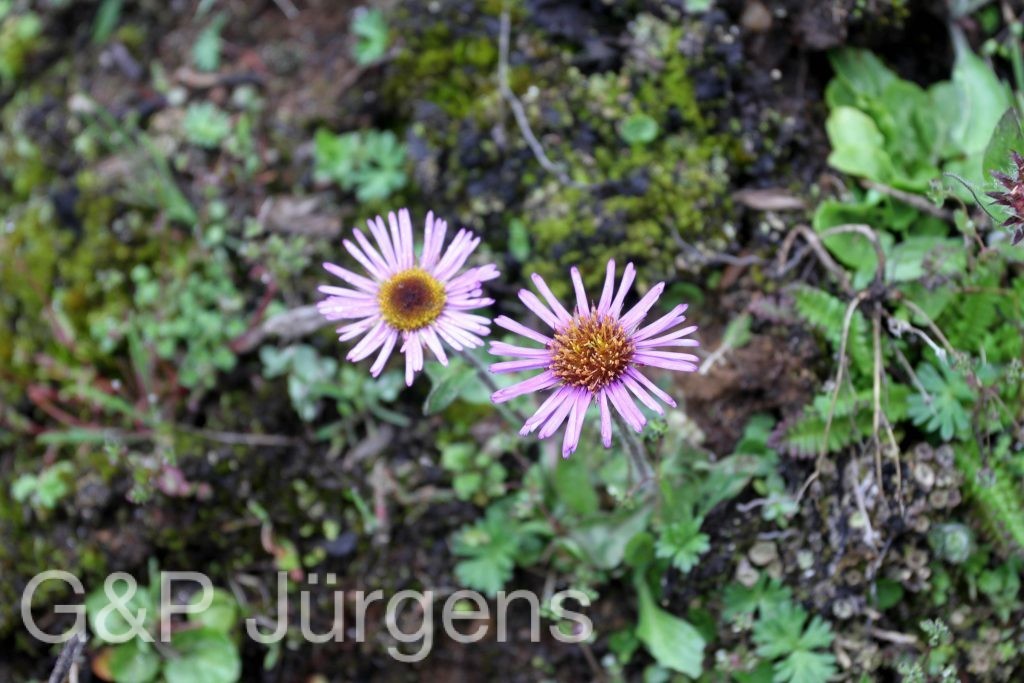
Aster himalaicus

by GP Jürgens

C.B.Clarke

Bhutan2012 53
Bhutan Shele-La, 4000m September
Bhutan2012 55
Bhutan Shele-La, 4000m September
Bhutan2012 292
Bhutan Shele-La, 4100m September
Sikkim2003 138 P186
Sikkim Dzongri 3950m, August

Description

Aster himalaicus is an alpine aster of the eastern and central Himalaya, distributed through Nepal, China, Bhutan, India, Myanmar and Pakistan (NP, CN, BT, IN, MM, PK), with around 277 GBIF occurrences indicating a genuinely high-mountain, comparatively restricted range. It grows in alpine meadows, on grassy and stony slopes, moist turf and the margins of dwarf-rhododendron scrub above the treeline. The photographed populations occur on the Shele-La in Bhutan at 4000–4100 m in September and at Dzongri in Sikkim at 3950 m in August, flowering through the late monsoon on open alpine grassland. Note that under GBIF this name carries SYNONYM status, though the accepted name is likewise given as Aster himalaicus.

It is a low perennial herb with a short, woody rhizome bearing solitary or few erect, simple stems usually 5–20 cm tall, more or less hispid with spreading hairs. The leaves are mostly basal and lower-cauline, obovate to oblanceolate or spathulate, tapering to a winged petiole, with entire ciliate margins and sparse hairs. The capitula are large and solitary, terminal and radiate, subtended by an involucre of several series of narrow, often purple-tinged, hairy phyllaries. The ray florets are conspicuous, ligulate and blue-violet to purple, encircling a disc of numerous yellow tubular florets. The fruit is a flattened, hairy cypsela crowned by a pappus of fine barbellate bristles in one or two series.

Aster sensu lato in the Himalaya has been much reorganised, several alpine taxa having been segregated into genera such as Aster s.str. of the tribe Astereae; the synonymy attached to this binomial reflects that ongoing taxonomic flux. The large solitary heads borne on dwarf stems are characteristic of cushion-forming alpine asters adapted to short, cool growing seasons. The species is not assessed as threatened, but its dependence on high alpine turf renders it locally vulnerable to grazing pressure and climatic shifts.

Author: C.B.Clarke · Sources: POWO (Kew), GBIF, Flora of China Vol. 20-21, Flora of Bhutan, Flora of Nepal, Asteraceae monograph (Grierson, revision of Himalayan Aster)
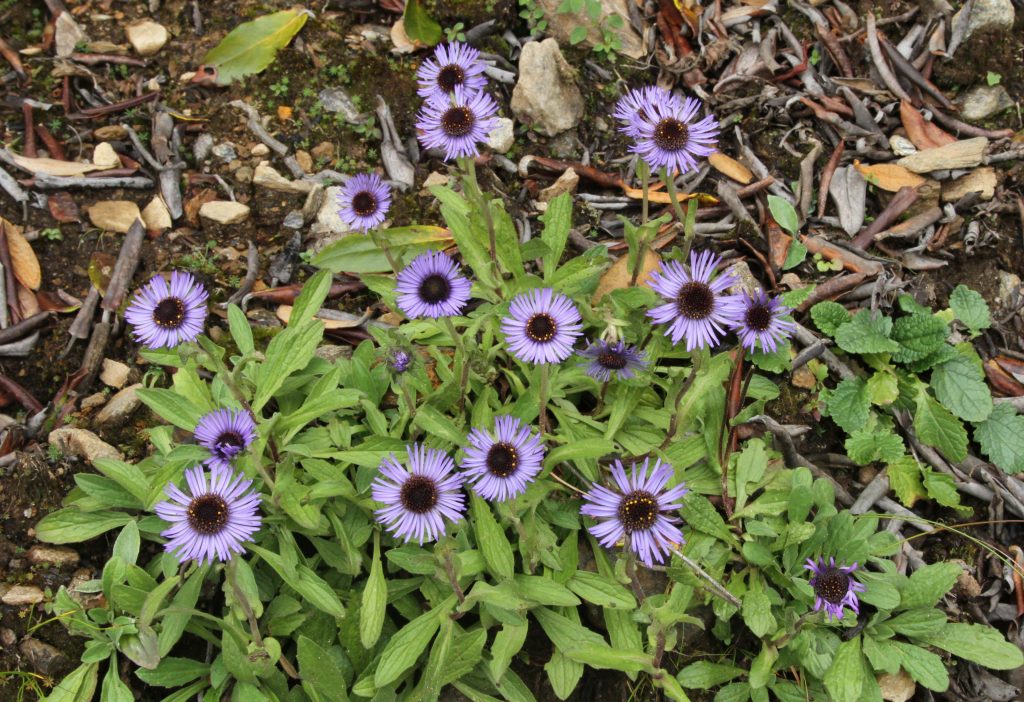
Aster souliei

by GP Jürgens

Franch.

BhutanPG2011 475
Bhutan Ludlow-Sherriff-Trail Warrtlang-La, 4450m June

Description

Aster souliei is an alpine aster centred on the Sino-Himalayan mountains, recorded principally from China, Bhutan, India and Myanmar (CN, BT, MM, IN), with around 549 GBIF occurrences reflecting a range concentrated in the high mountains of the eastern Himalaya and south-west China; scattered records elsewhere (US) represent cultivation. It grows in alpine meadows, on grassy and rocky slopes, screes and open turf above the treeline, where it forms low mats. The photographed plant occurred on the Ludlow-Sherriff Trail at the Warrtlang-La in Bhutan at 4450 m in June, flowering early in the season at considerable altitude on exposed alpine grassland.

It is a dwarf, mat- or tuft-forming perennial herb arising from a short, thick rhizome, with very short or almost stemless flowering scapes, the whole plant rarely exceeding 5–15 cm. The leaves are chiefly in a basal rosette, spathulate to obovate or oblanceolate, narrowed into a winged petiole, with entire, often ciliate margins and sparsely hairy surfaces. The capitula are large and solitary, terminal and radiate, subtended by an involucre of several series of narrow, frequently purple-flushed and hairy phyllaries. The ray florets are numerous, ligulate and deep blue-violet to purple, surrounding a central disc of yellow tubular florets. The fruit is a compressed, hairy cypsela bearing a pappus of fine, barbellate, reddish to whitish bristles.

Described by Franchet from the Sino-Himalayan borderlands, A. souliei belongs to the cushion- and rosette-forming alpine asters of the tribe Astereae that have undergone repeated taxonomic revision in the region. Its near-stemless habit and disproportionately large violet heads are adaptations to the short, cold growing season at high elevation, maximising display to scarce pollinators. Widespread within its montane belt, it is not considered threatened, though like other high-alpine specialists it may be sensitive to warming-driven habitat contraction.

Author: Franch. · Sources: POWO (Kew), GBIF, Flora of China Vol. 20-21, Flora of Bhutan, Flora of Nepal, Asteraceae monograph (Grierson, revision of Himalayan Aster)
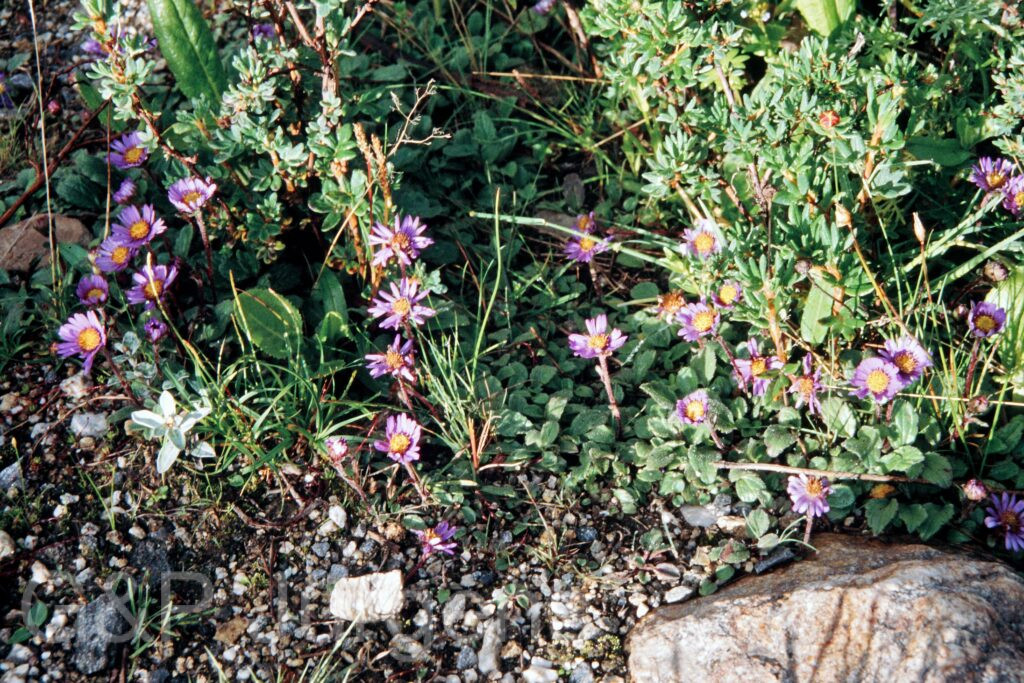
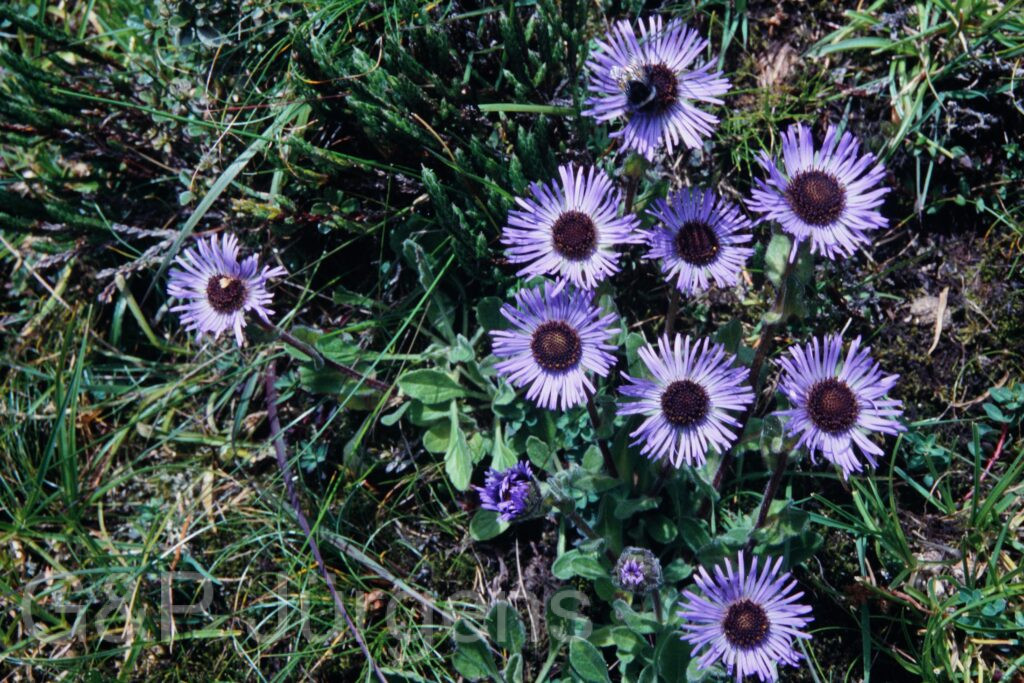
Aster stracheyi

by GP Jürgens

Hook.f.

BhutanPG2011 345
Bhutan Jule-Tso, 4400m June
Nepal 99 530 ergebnis
West-Nepal Churta-Khola 3750m, June

Description

Aster stracheyi is a dwarf, mat-forming alpine daisy of the high Himalaya, recorded from Nepal, India, Bhutan and China, with around 202 GBIF occurrences. In GBIF the name is returned with synonym status, the accepted name nonetheless being Aster stracheyi, under which it is here treated. It is a plant of high alpine turf, screes, gravelly flats and stony slopes well above the treeline, typically between about 3700 and 5000 m. The photographed plants are from Jule-Tso in Bhutan at 4400 m and from Churta-Khola in west Nepal at 3750 m, both flowering in June at the start of the high-alpine season.

The species is a low, cushion- to mat-forming perennial herb spreading by slender creeping rhizomes or stolons, the short flowering stems clothed in small, crowded leaves. The leaves are spathulate to oblanceolate, entire, somewhat fleshy and often ciliate, forming dense basal tufts. The capitula are solitary and almost sessile among the leaves, radiate, with a single series of narrow lilac to pale purple ray florets surrounding a compact disc of yellow tubular florets; the involucre is hemispherical with herbaceous, often purple-tinged phyllaries. The fruit is a flattened, hairy cypsela bearing a pappus of barbellate bristles.

Aster in the broad sense is a large and much-revised genus of the tribe Astereae, and A. stracheyi, named for Richard Strachey, exemplifies the cushion-forming high-elevation asters of the Sino-Himalaya, an adaptation to cold and exposure. Restricted to remote alpine ground, it is not regarded as threatened.

Author: Hook.f. · Sources: POWO (Kew), GBIF, Flora of Bhutan, Flora of China, Annotated Checklist of the Flowering Plants of Nepal, Revision of Himalayan Aster (Astereae)

C.B.Clarke

Bhutan2015 326
Bhutan Trongsa 2200m, October
Sikkim2011 182
Sikkim Lachung 2600m, June
Sikkim2011 188
Sikkim Lachung 2600m, June
Bh09 311 G477
Bhutan Yetong-La, 2900m June

Description

Aster tricephalus is a Himalayan species ranging through India, Nepal, Pakistan, China and Bhutan, GBIF recording some 87 occurrences along the temperate Himalayan chain. It grows on open grassy and shrubby slopes, in forest clearings, along banks and in subalpine meadows where it benefits from full sun and moist, well-drained soils. The cited gatherings span its altitudinal range: Trongsa in central Bhutan at 2200 m in October, Lachung in Sikkim at 2600 m in June, and the Yetong-La at 2900 m in June. This spread of localities, flowering from early summer through to autumn, reflects its presence across the temperate to lower subalpine belt of the Eastern Himalaya.

It is a perennial herb arising from a short rhizome, with erect, leafy, often pubescent stems. The leaves are alternate, the lower ones oblanceolate and narrowed to the base, the upper smaller, sessile and somewhat clasping, with entire or slightly toothed margins and scabrid or hairy surfaces. The capitula are radiate and few, sometimes clustered into a small terminal group as the epithet suggests; the involucre is campanulate with imbricate, herbaceous phyllaries in several rows. The ray florets are female and ligulate, mauve to purplish-blue, surrounding numerous yellow tubular disc florets. The cypselae are flattened and hairy, bearing a pappus of fine barbellate bristles.

Aster in the strict modern sense (tribe Astereae) is centred on Eurasia, and many Himalayan species formerly placed here have been variously reassigned among segregate genera, so the generic placement of montane taxa such as A. tricephalus remains under continuing taxonomic scrutiny. Attributed to C. B. Clarke, it is treated as an accepted species. Its violet-rayed heads attract a range of bees, hoverflies and butterflies. As a widespread plant of open montane habitats it is not regarded as threatened.

Author: C.B.Clarke · Sources: POWO (Kew), GBIF, Flora of Bhutan, Flora of China, Annotated Checklist of the Flowering Plants of Nepal, Grierson's revision of Himalayan Aster (Astereae)

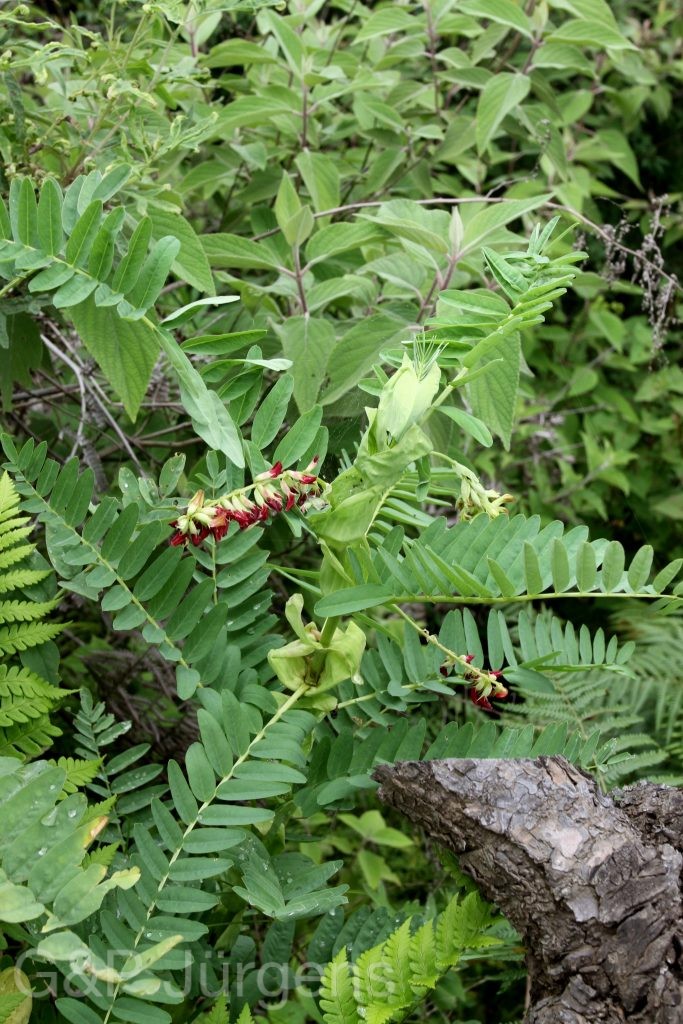
Lindl.

Bhutan2015 515
Bhutan Phobjika 2600m, October
Bh09 300 G494
Bhutan Kiki-La, 2100m June

Description

Astragalus chlorostachys is a perennial legume of the inner valleys and dry montane slopes of the Himalaya and Central Asia, ranging through India, Pakistan, Nepal, Bhutan, Afghanistan and China, with around 270 documented occurrences (records from Belgium and Switzerland representing herbarium and cultivated material). It favours open grassy slopes, forest margins, scrub and disturbed ground in the warm- to cool-temperate belt, broadly between about 2000 and 3000 m. The photographed plants were recorded in Bhutan at Phobjika at 2600 m in October and at the Kiki-La at 2100 m in June, indicating a long flowering and fruiting season through the growing months.

The species is an erect to ascending herb with several stems arising from a woody rootstock, the herbage finely appressed-pubescent. The leaves are imparipinnate with numerous opposite, oblong to elliptic leaflets. The flowers are crowded into dense, elongate, spike-like axillary racemes (the green-tinged inflorescence reflected in the epithet chlorostachys); the calyx is tubular and pubescent, and the papilionaceous corolla is small, yellowish to greenish-white or pale lilac. The fruit is a small, sessile or shortly stipitate pod, more or less inflated and pubescent, dehiscent at maturity.

Astragalus is among the largest genera of flowering plants, and its Himalayan members are taxonomically intricate; A. chlorostachys is placed among the densely spicate-flowered milkvetches of the region. Like many of its congeners it is a nitrogen-fixing pioneer of disturbed and grazed terrain, providing fodder and contributing to soil enrichment. It is common across a wide range and is not considered to be of conservation concern.

Author: Lindl. · Sources: POWO (Kew), GBIF, Flora of Bhutan, Flora of Pakistan, Astragalus monograph (Podlech & Zarre)

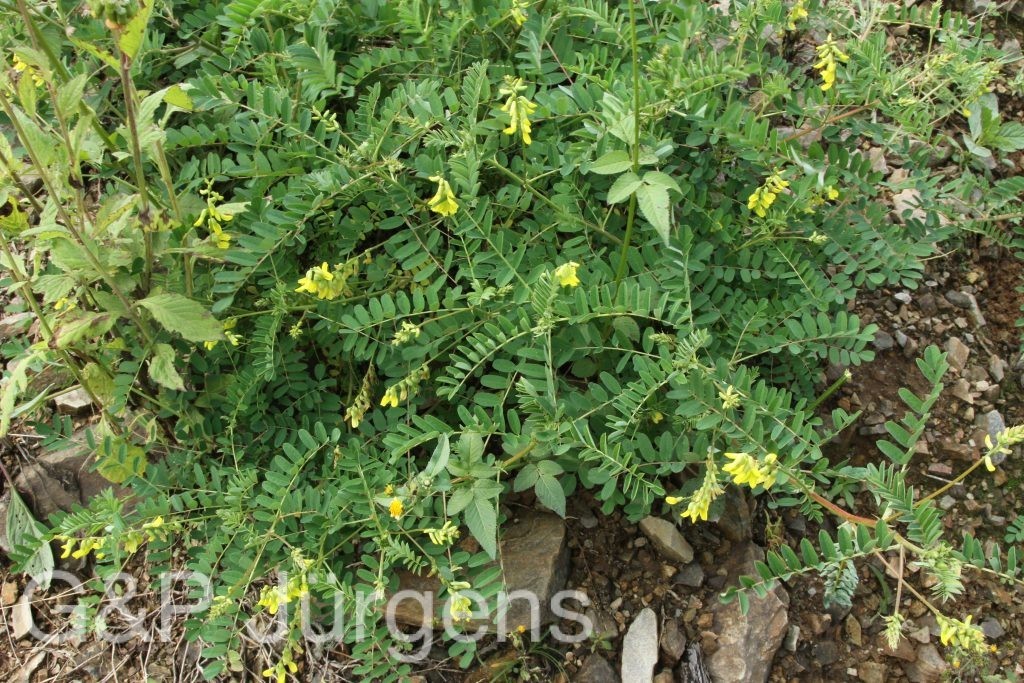
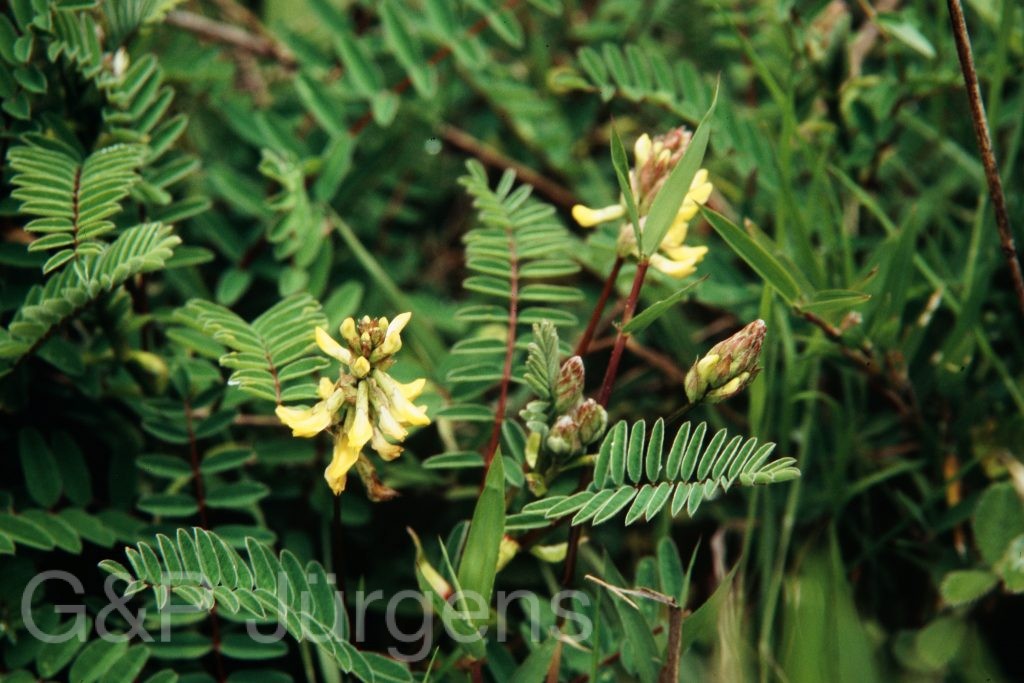
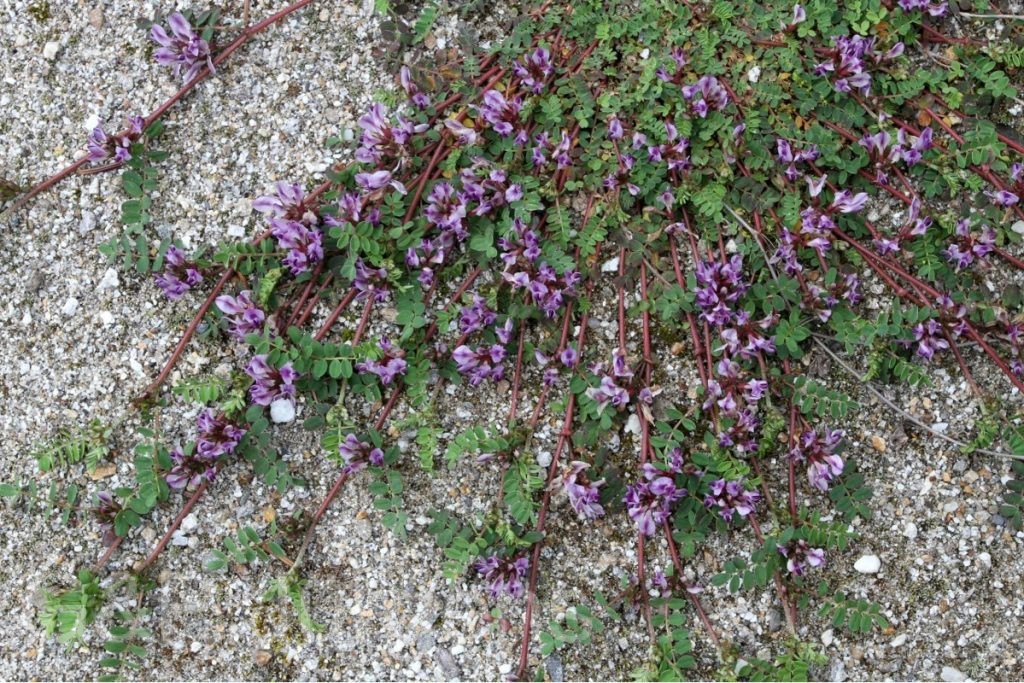
Benth. ex. Bunge

9F417E3DE29B4FE4ABBB6A304481347F
Bhutan Tsochenchen, 3550m June

Description

Astragalus sikkimensis is a Himalayan milkvetch recorded from India, Nepal, Bhutan and China, with about 68 GBIF occurrences distributed across the central and eastern range. It is a plant of open alpine and subalpine slopes, stony pastures and grassy meadows, typically growing between roughly 3000 and 4500 m. The photographed plant at Tsochenchen in Bhutan at 3550 m, flowering in June, reflects its early-summer anthesis at the onset of the growing season, when it occupies well-drained, often gravelly turf in the cool, exposed conditions of the high meadows above the forest line.

The species is a perennial herb arising from a woody rootstock, with stems that are decumbent to shortly ascending and an indumentum of fine appressed hairs. The leaves are imparipinnate, composed of several pairs of small elliptic to oblong leaflets, with persistent stipules at the base of the petioles. The flowers are borne in short axillary racemes or head-like clusters and are typically pink-purple to violet, with the standard, wing and keel petals of the papilionaceous corolla and a tubular, hairy calyx with triangular teeth. The fruit is a small legume (pod), often somewhat inflated and enclosed within or shortly exceeding the persistent calyx, splitting to release the seeds.

Astragalus is one of the largest of all plant genera, and its Himalayan alpine representatives such as A. sikkimensis form symbiotic root nodules with nitrogen-fixing rhizobia, an asset in nutrient-poor high-altitude soils. The papilionaceous flowers are bee-pollinated. The species is reasonably widespread within its montane band and is not regarded as threatened, though its alpine pastures are subject to grazing pressure across the inhabited Himalayan ranges.

Author: Benth. ex. Bunge · Sources: POWO (Kew), GBIF, Flora of Bhutan, Flora of China (Fabaceae), Podlech & Zarre Taxonomic Revision of Astragalus

D.Don ex. Sims

BhutanPG2011 849
Bhutan Paro-Chu, 2400m July

Description

Astragalus stipulatus is a Himalayan milk-vetch distributed across Nepal, India, China and Bhutan, with around 83 GBIF occurrences. It is a plant of open, sunny situations in the temperate to lower subalpine zone, occupying dry grassy slopes, rocky banks, riverside terraces and disturbed ground, generally between about 2000 and 3500 m. The plant illustrated from the Paro Chu valley in Bhutan at 2400 m, flowering in July, is typical of its occurrence along well-drained, gravelly valley sides during the monsoon season.

It is a perennial or sometimes biennial herb with ascending to spreading, often somewhat straggling stems arising from a branched rootstock. The leaves are imparipinnate with several pairs of small elliptic to oblong leaflets and conspicuous, often connate stipules that give the species its epithet. The pea-like flowers are borne in axillary racemes; the papilionaceous corolla is purplish to pale violet or whitish, with the standard exceeding the wings and keel, and the calyx is tubular-campanulate with subequal teeth. The fruit is an oblong, often somewhat curved and inflated legume that may be bilocular through intrusion of the lower suture.

Astragalus, the largest genus of flowering plants, is richly represented in the Himalaya and Central Asia. A. stipulatus (D. Don ex Sims) belongs to the diverse Himalayan assemblage of the genus; it is widespread and of no conservation concern, contributing to early-successional and grazing-disturbed communities and, as a legume, to soil nitrogen enrichment through root nodulation.

Author: D.Don ex. Sims · Sources: POWO (Kew), GBIF, Flora of Bhutan, Flora of China, Podlech & Zarre monograph of Old World Astragalus

(Wall.) Briq.

BhutanPG2011 840
Bhutan Paro-Chu, 2400m July

Description

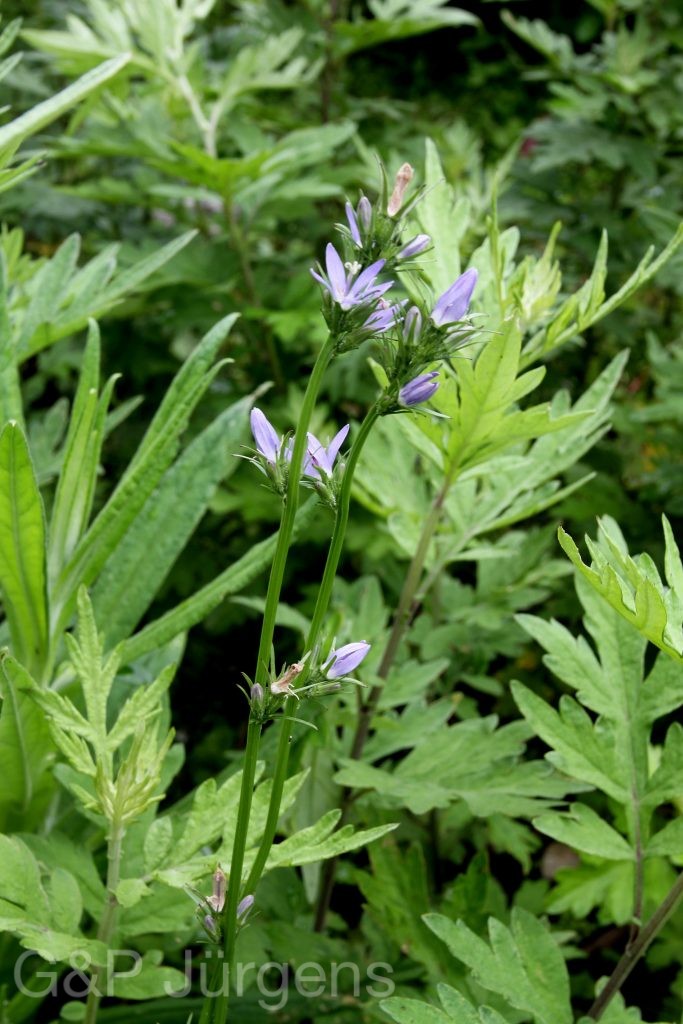
Asyneuma fulgens is a bellflower-family herb widely distributed across the Himalaya and adjacent Asia, well represented in GBIF with about 276 occurrences from China, India, Nepal, Bhutan, Myanmar and beyond. It is a plant of open, sunny situations, occurring on grassy and rocky slopes, banks, clearings, scrub and roadside verges in the warm-temperate to lower subalpine belt. The plant photographed along the Paro-Chu in Bhutan at about 2400 m in July was recorded in the monsoon flowering season, consistent with its preference for moist but well-drained montane slopes in the lower part of its altitudinal range.

It is an erect perennial herb, often slender and somewhat wiry, with simple or sparingly branched stems arising from a thickened rootstock and exuding latex when cut, as is typical of the family. The leaves are alternate, the lower ones petiolate and ovate to lanceolate, the upper sessile and narrower, with toothed margins. The flowers are borne in elongate, often interrupted spike-like or racemose inflorescences; each has a five-lobed calyx and a deeply five-parted, star-shaped corolla in shades of blue, violet or purple, the linear lobes spreading at anthesis. The style is exserted with a lobed stigma, and the fruit is a capsule dehiscing by lateral pores to shed many small seeds.

Asyneuma is segregated from Phyteuma and Campanula chiefly by its deeply divided, rotate corolla and the manner of capsule dehiscence. The genus is centred on Eurasia, with a notable Himalayan and Sino-Himalayan representation. As a widespread, ecologically tolerant species occupying disturbed as well as natural slopes, A. fulgens is not of conservation concern, and it provides a nectar and pollen resource for bees and other insect visitors in montane meadows.

Author: (Wall.) Briq. · Sources: POWO (Kew), GBIF, Flora of China, Flora of Bhutan, Hooker Flora of British India, Lammers World Checklist of Campanulaceae

Wall. ex Hook.f. & Thomson

Bh09 146 P260
Bhutan Labana 4000m, June

Description

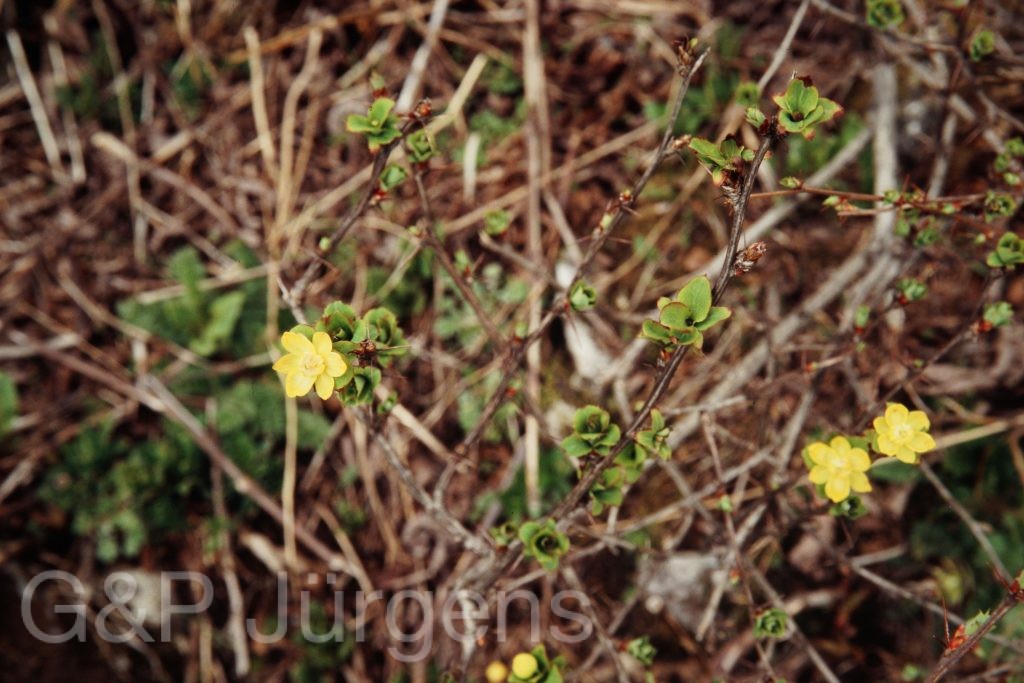
Berberis angulosa Wall. ex Hook.f. & Thomson is a deciduous, spiny shrub of the high Himalaya. GBIF (around 164 occurrences) confirms a core range across Nepal, southern China (Tibet), Bhutan and northern India, the remaining scattered records reflecting cultivated or herbarium material outside the native area. It is a plant of subalpine and alpine zones, growing on open slopes, among rocks, in shrubberies and at the upper forest margin, typically between 3,000 and 4,300 m. The specimen photographed at Labana in Bhutan at 4,000 m in June represents the species near the upper limit of its altitudinal range, flowering early in the short alpine season.

The shrub is low and densely branched, often less than a metre high, with terete to angled, reddish-brown young shoots and stout, usually three-parted spines derived from modified leaves. The foliage leaves are clustered in axillary fascicles, obovate to spathulate, entire or with a few spinulose-dentate margins, often glaucous beneath. The flowers are comparatively large for the genus, solitary or in few-flowered clusters, with the typical Berberis arrangement of sepals and petals in whorls of three and six stamens that respond to touch; they are yellow, sometimes flushed reddish outside. The fruit is an ellipsoid red berry, glaucous when young, containing few seeds.

Berberis angulosa is distinguished within the large and taxonomically difficult Sino-Himalayan Berberis assemblage by its relatively large, often solitary flowers and conspicuous berries. Like other species of the genus it is a host in the alternation of the wheat-rust fungus and is valued locally for its edible fruit and the yellow alkaloid berberine in its bark and wood. Its high-elevation, cold-adapted habit makes it a characteristic component of Himalayan alpine scrub communities.

Author: Wall. ex Hook.f. & Thomson · Sources: POWO (Kew), Flora of Bhutan Vol. 1, Flora of China Vol. 19, GBIF, Ahrendt: Berberis and Mahonia, a taxonomic revision (1961)

Hook.f.

Bh09 251 G419
Bhutan Wanghdi 1900m, June
Nepal 2009 12 ergebnis
Nepal Helambu Sheno-Okrini 2200m, May

Description

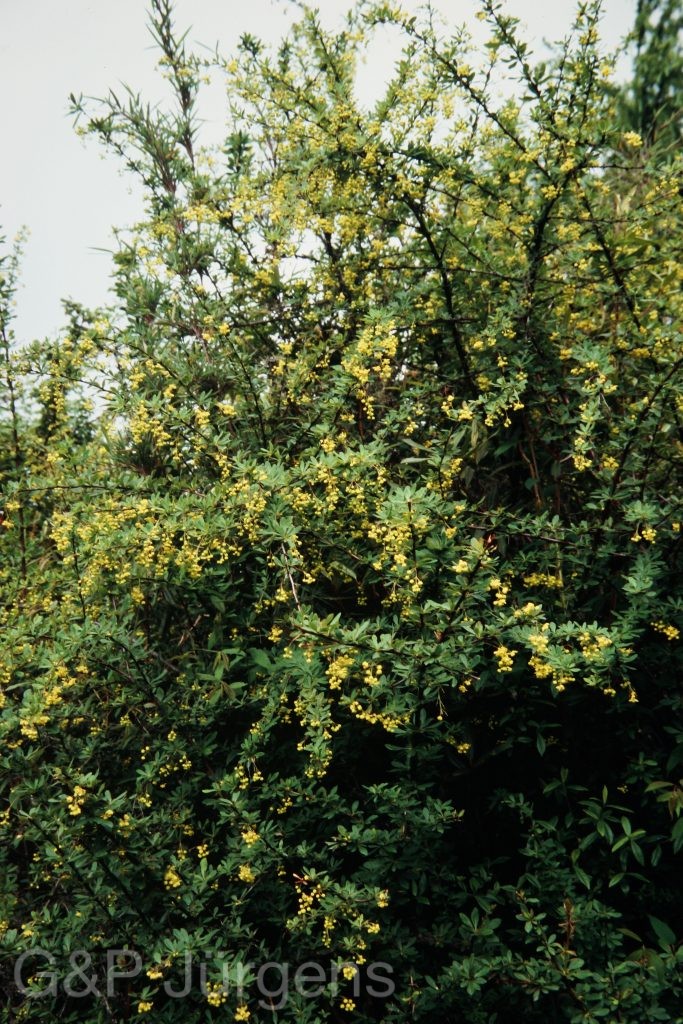
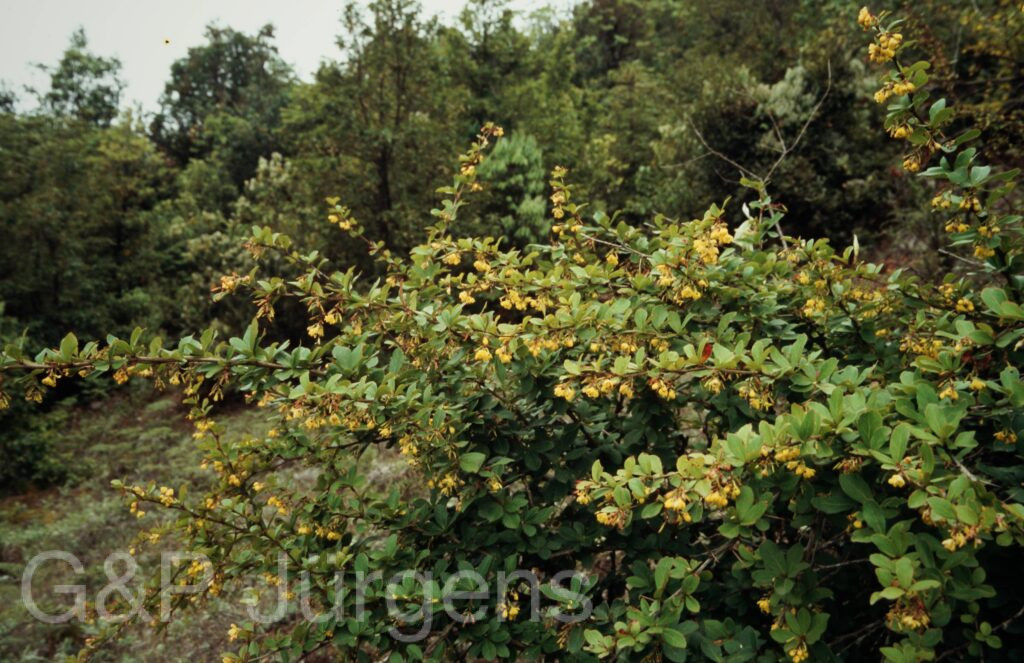
Berberis virescens is a deciduous Himalayan barberry distributed through Nepal, northern India, Bhutan and southern Tibet, the numerous additional GBIF country codes reflecting its long cultivation in botanic gardens of Europe, North America and East Asia. In the wild it occupies open slopes, forest edges, scrub and clearings in the temperate zone, generally between 2,500 and 3,500 m. The vouchered plants derive from Wangdue in Bhutan at about 1,900 m in June and from Sheno-Okrini in the Helambu of Nepal at around 2,200 m in May, within the lower part of its montane range where it flowers in late spring.

The species is a shrub up to about 2 m tall with reddish young shoots that become greenish, giving the epithet, and bearing simple, often three-parted spines at the nodes. The leaves are obovate to narrowly spathulate, thin-textured and clustered on short shoots, with entire or sparsely spinulose margins and a glaucous lower surface. The flowers are yellow, borne in few-flowered fascicles or short racemes, with the typical Berberis arrangement of six sepals, six petals and six stamens that snap inward on contact. The fruit is an ellipsoid to oblong berry, red ripening to blackish and often pruinose, containing a few seeds.

Berberis is a large, taxonomically intricate genus in which species are separated by spine, leaf, inflorescence and berry characters; B. virescens is recognised by its green twigs and red autumn fruit. Like its relatives it is an alternate host for rust fungi and a source of the alkaloid berberine. The species is widespread, hardy and frequently grown ornamentally, and is not considered to be of conservation concern.

Author: Hook.f. · Sources: POWO (Kew), GBIF, Flora of China Vol. 19 (Berberidaceae), Grierson & Long: Flora of Bhutan Vol. 1, Ahrendt: Berberis and Mahonia, A Taxonomic Revision