Tag:

Summer

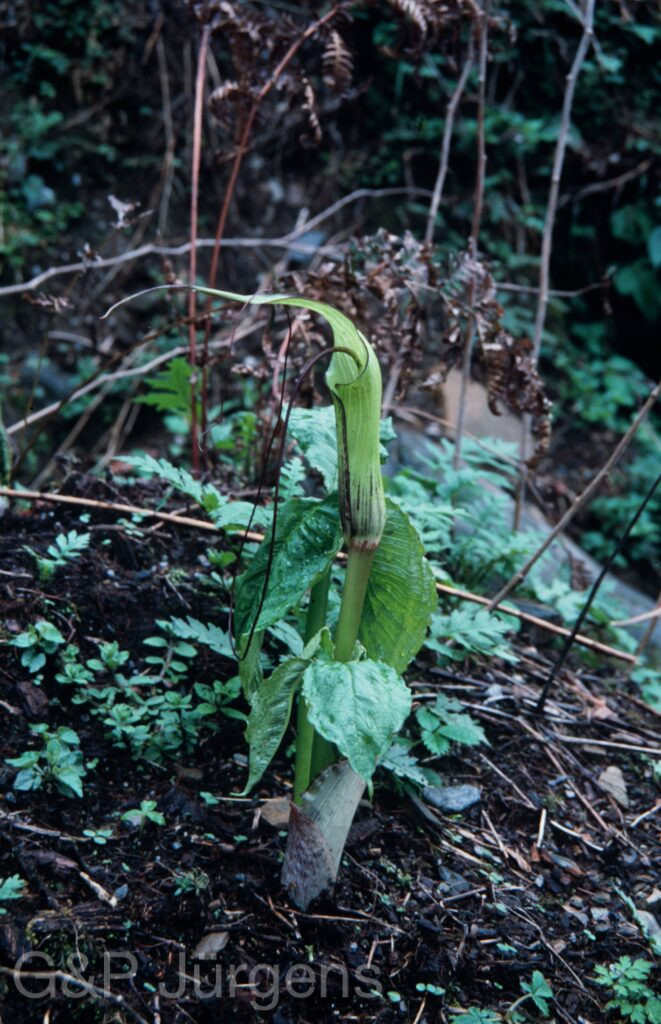
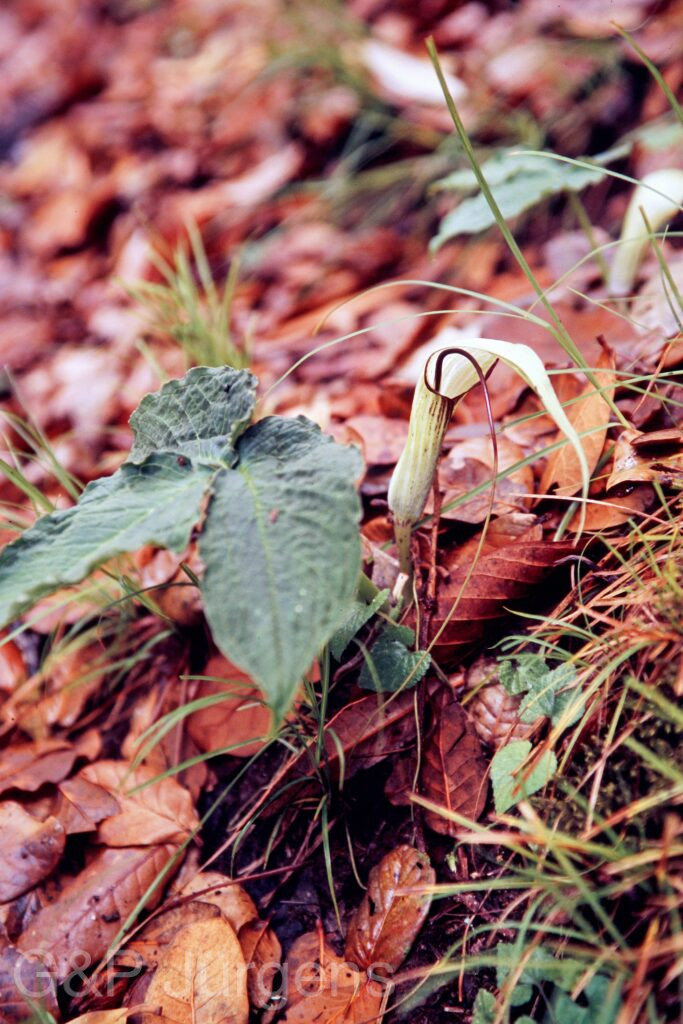
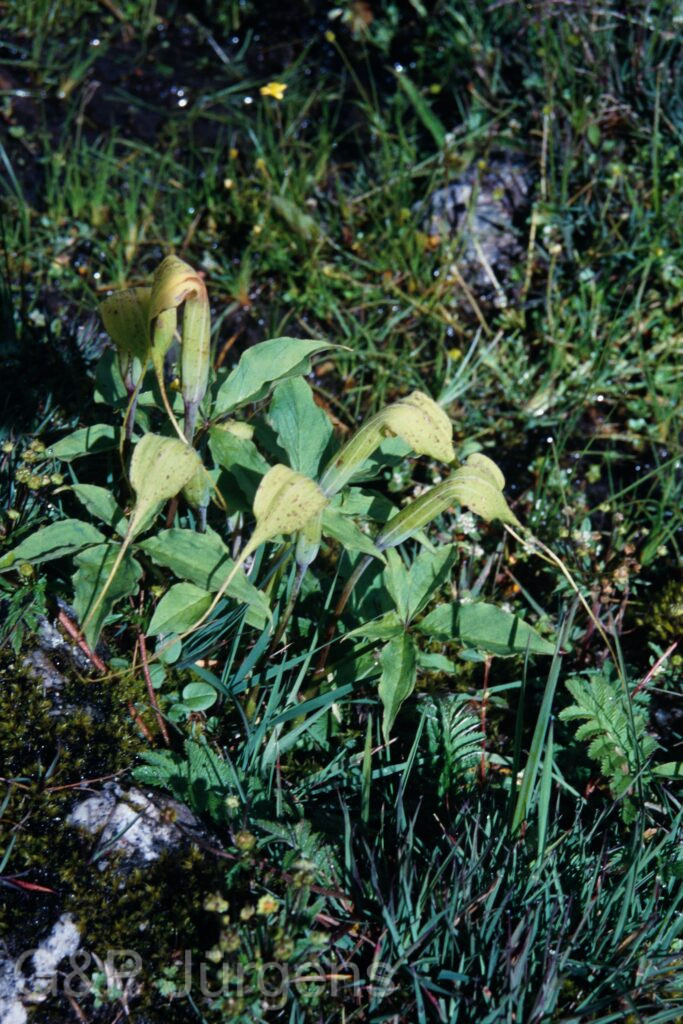
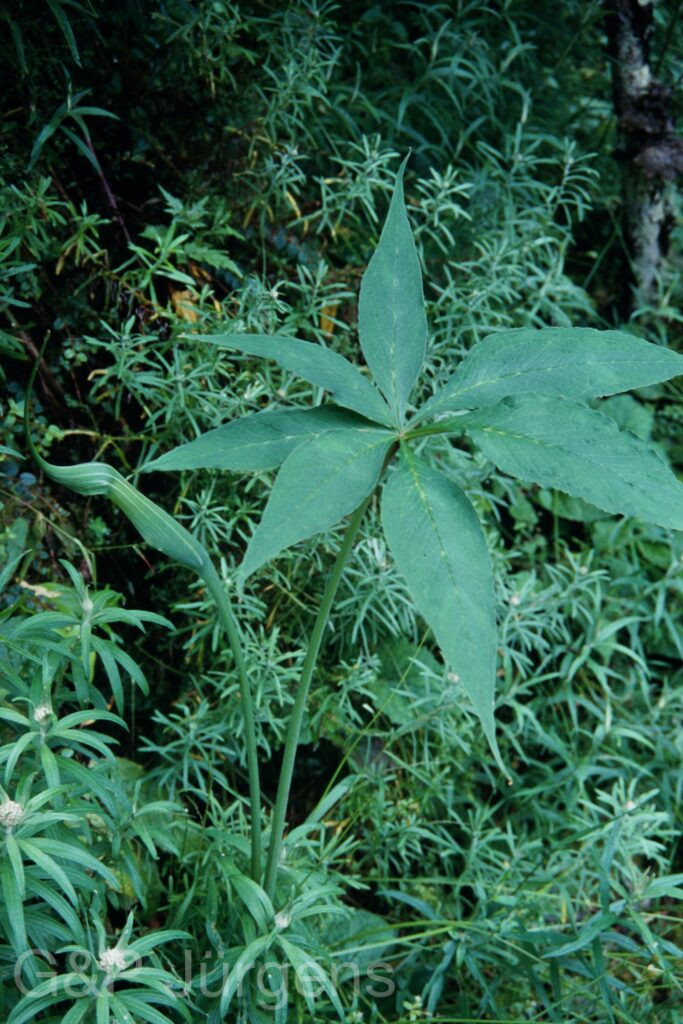
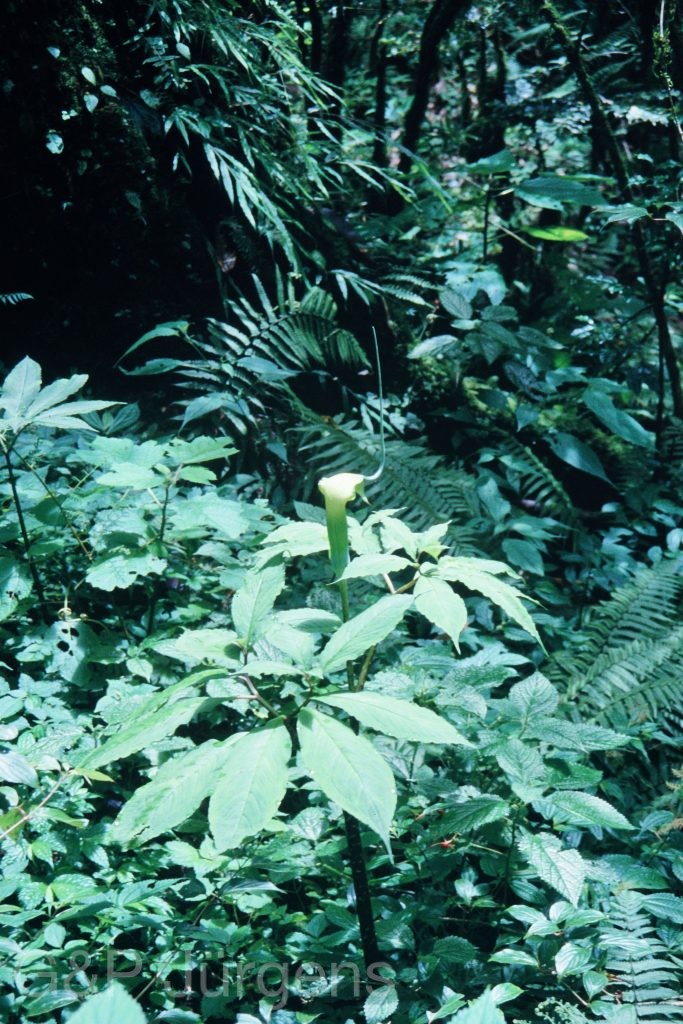
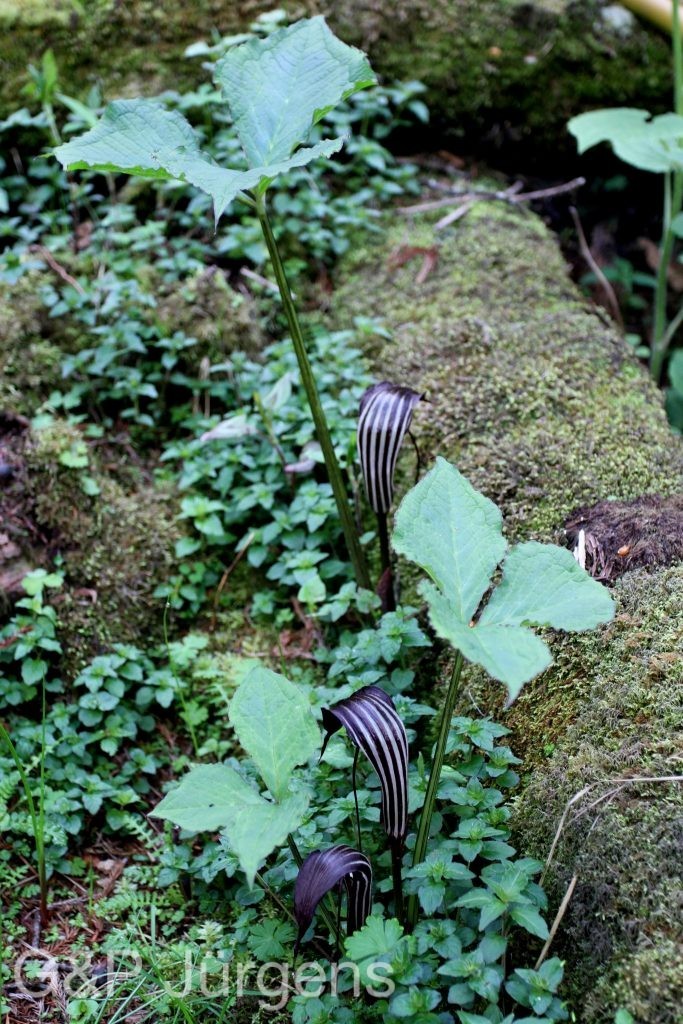
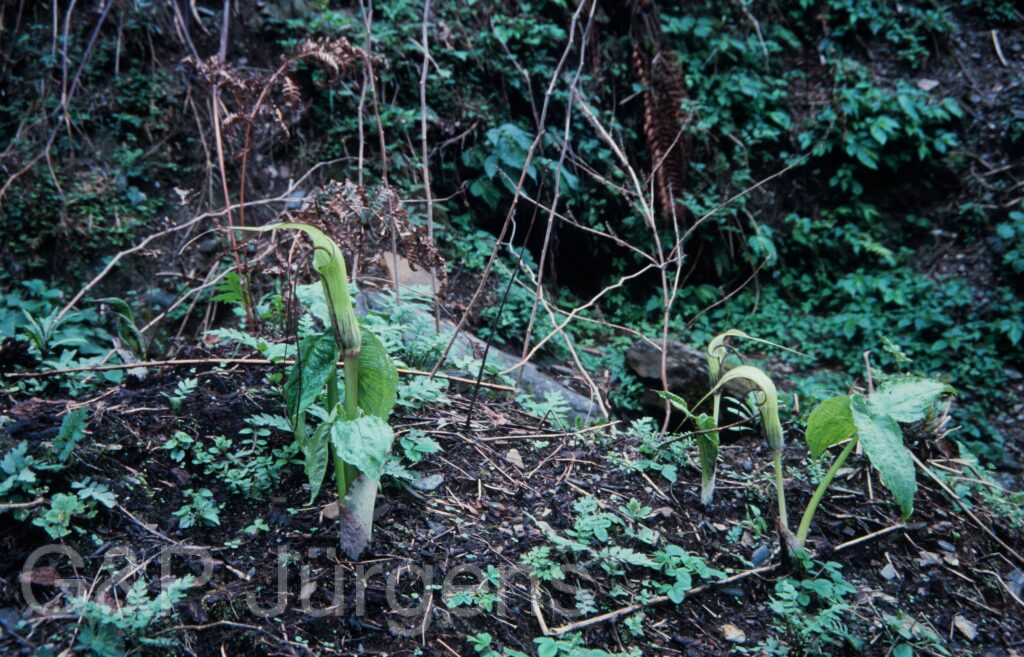
Arisaema echinatum

by GP Jürgens

(Wall.) Schott

Sikkim2004 326 P587
Sikkim/India Kokchurong 3400m May
Sikkim2004 327 P588
Sikkim/India Kokchurong 3400m May
Garh 07 86 ergebnis
India Garhwal Trijugi Narayan 2450m, June

Description

Arisaema echinatum is a tuberous aroid of the Himalaya, distributed through China, Nepal, India and Bhutan, with about 44 georeferenced records spread along the temperate to subalpine Himalayan belt. It grows in moist, shaded forest, among rhododendron and conifer scrub and on humus-rich banks, generally between 2400 and 3500 m. The cited collections from Kokchurong in Sikkim (3400 m, May) and from Trijugi Narayan in Garhwal (2450 m, June) bracket its altitudinal range and show its emergence and flowering through the late spring and early monsoon as the soil warms.

The plant arises from a depressed-globose tuber and usually bears one or two pedately compound leaves, each divided into several oblong-elliptic, acuminate leaflets borne on a long sheathing petiole. The inflorescence comprises a spathe with a cylindrical tube and an incurved, acuminate limb, enclosing the spadix; the diagnostic feature is the sterile appendix of the spadix, which is roughened or echinate with projecting papillae or processes, giving the species its name. As in most Arisaema the plants are sequentially hermaphrodite, shifting sex with size. The infructescence is a dense head of crowded scarlet berries.

Arisaema echinatum, transferred to the genus by Schott from Wallich's basionym, belongs to the taxonomically intricate Himalayan section of the genus, where appendix morphology is a key diagnostic. Pollination is by small flies and fungus gnats lured into and temporarily trapped by the spathe, and the bright berries are bird-dispersed. With a restricted montane range and few records, it is potentially sensitive to forest loss, though it has not been formally assessed for conservation.

Author: (Wall.) Schott · Sources: POWO (Kew), GBIF, Flora of China, Flora of Bhutan, Annotated Checklist of the Flowering Plants of Nepal, Gusman & Gusman The Genus Arisaema
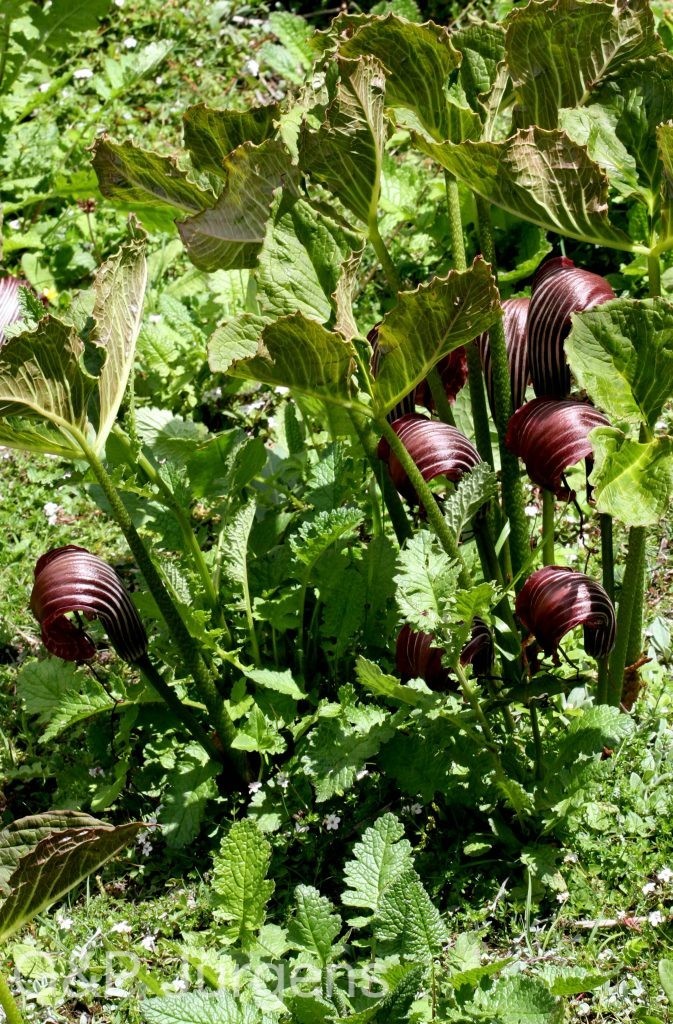
Buchet

BhutanPG2011 134
Bhutan Tsochenchen, 3550m June

Description

Arisaema elephas is a tuberous perennial aroid of the eastern Himalaya and the Sino-Himalayan mountains, recorded from China, India, Bhutan and Myanmar, with around 426 occurrences in GBIF. It grows in moist subalpine and alpine habitats, in open coniferous and Rhododendron forest, scrub, grassy slopes and meadow margins, generally between about 2700 and 4300 m. The photographed plant was collected in Bhutan at Tsochenchen at 3550 m in June, an elevation and cool, humid montane setting characteristic of the species, which emerges and flowers early in the growing season after snowmelt.

The plant arises from a depressed-globose tuber and typically produces a single leaf divided into three leaflets, the lateral leaflets often markedly asymmetric, with entire to undulate margins. The inflorescence is a spathe enclosing the spadix; the spathe tube is greenish and the limb dark purple to blackish, and the spadix is prolonged into a long, slender, downward-curving appendix that recalls an elephant's trunk, hence the epithet elephas. As in most Arisaema the plants are often functionally dioecious, sex expression shifting with tuber size and vigour. The fruit is a dense club-shaped infructescence of red berries.

Arisaema is a large genus centred on the Himalaya and East Asia, notable for its sequential hermaphroditism (size-dependent sex change) and for pollination by fungus gnats and other small flies attracted into the spathe chamber. Arisaema elephas is a distinctive and well-marked species of the A. elephas group, recognised by its long pendent spadix appendix. It is widespread within its montane range and not currently considered threatened, though alpine populations are sensitive to grazing and habitat disturbance.

Author: Buchet · Sources: POWO (Kew), GBIF, Flora of China, Flora of Bhutan, The Genus Arisaema (Gusman & Gusman)

Blume

Nepal 2001 241 ergebnis ergebnis
Nepal (Gorkha) Niuli Kharka 2600m, May
Nepal 2001 242 ergebnis ergebnis
Nepal (Gorkha) Niuli Kharka 2600m, May
Garh 07 264 ergebnis
India Garhwal Belag Khal 2800m, June

Description

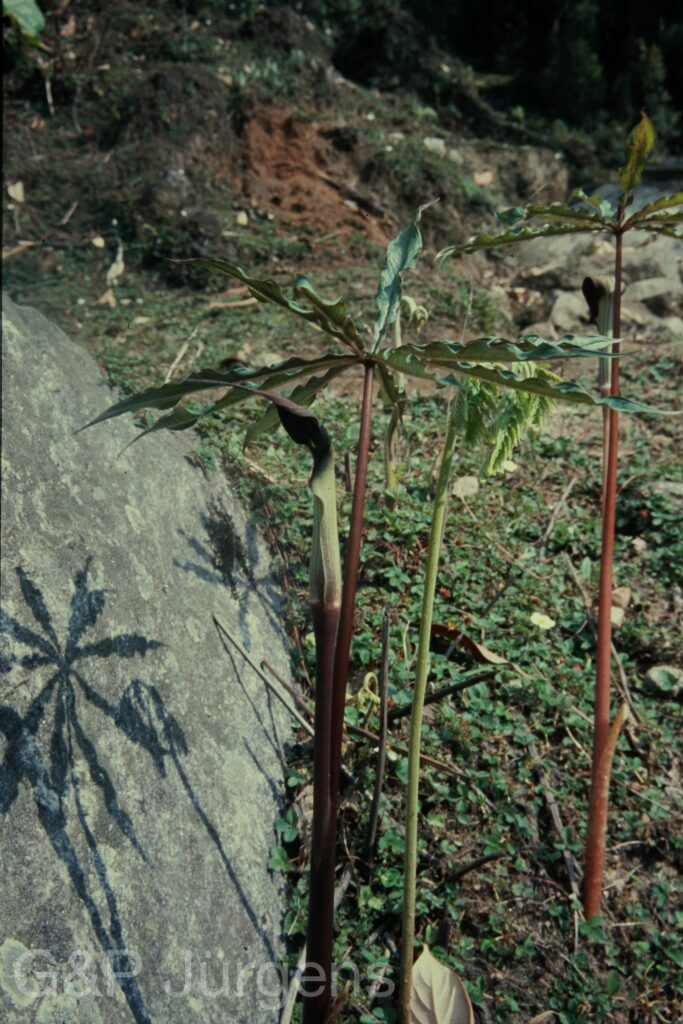
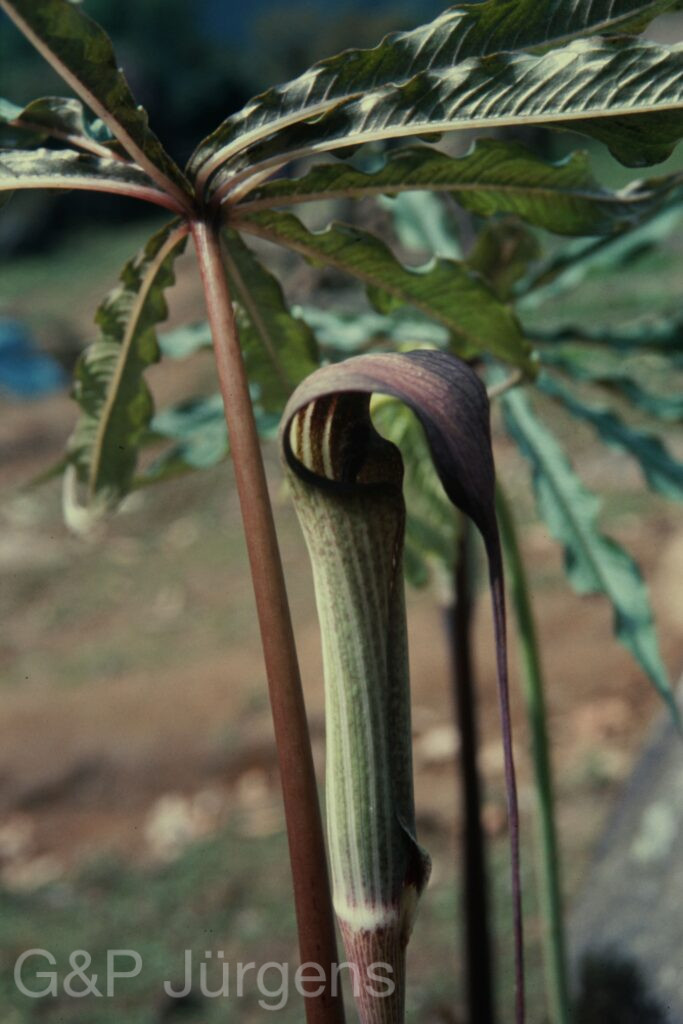
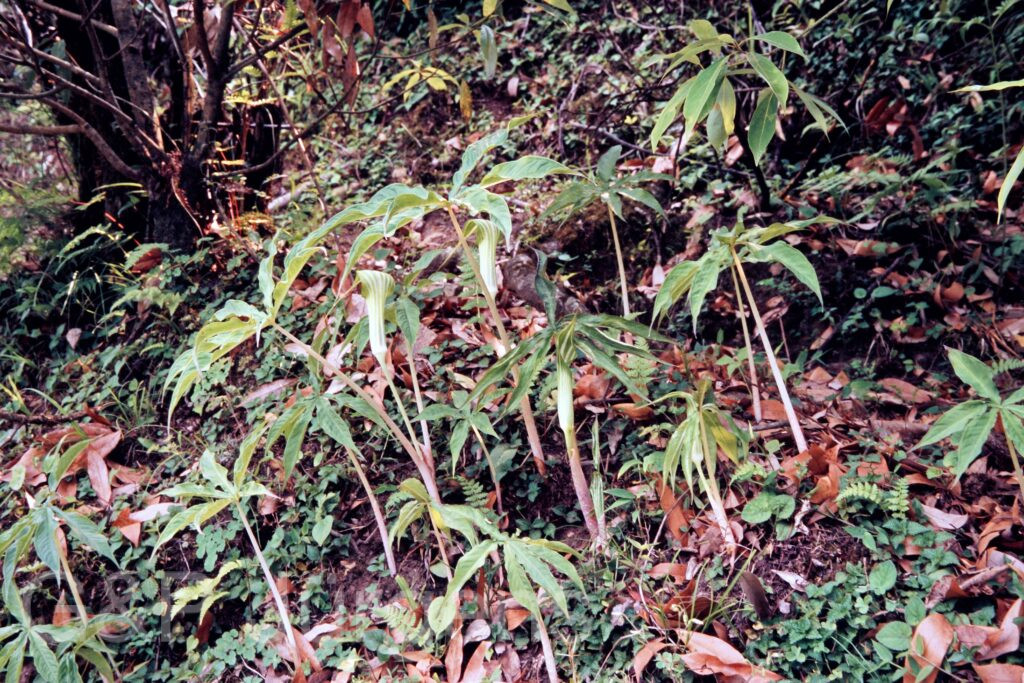
Arisaema intermedium is a Himalayan tuberous aroid distributed along the temperate forest belt of the central and eastern Himalaya, recorded by GBIF from India, Nepal, China, Bhutan and Pakistan across some 118 georeferenced collections. It is a plant of moist, humus-rich woodland floors, shady banks, forest clearings and the margins of rhododendron, oak and conifer forest, where it emerges with the onset of the pre-monsoon and monsoon seasons. Its typical elevational band lies between roughly 2,400 and 3,200 m, consistent with the documented occurrences from Niuli Kharka in the Nepalese district of Gorkha at about 2,600 m in May and from Belag Khal in Garhwal, India, at around 2,800 m in June. The flowering coincides with the early growing season before the leaf is fully expanded.

The species grows from a subglobose underground tuber and produces a solitary leaf divided into three leaflets, the central leaflet broadly ovate to rhombic and the laterals obliquely ovate, the blade often somewhat undulate and acuminate. The inflorescence is a typical aroid spathe-and-spadix structure, the pseudostem and peduncle arising together; the spathe tube is greenish and the limb arched, frequently striped purplish and white with a long-acuminate apex. The diagnostic feature of the genus is the spadix appendage, which in this species is elongate and gradually tapering, projecting forward beyond the spathe mouth. As in other Arisaema the plants are paradioecious, smaller individuals bearing male flowers and larger ones female; pollinated female spadices develop into a dense club of fleshy red berries at maturity.

Arisaema intermedium belongs to a notoriously variable complex within section Sinarisaema, and its delimitation against allied taxa such as A. propinquum has long occupied aroid systematists. The genus exemplifies size-dependent sex change (sequential hermaphroditism keyed to tuber reserves), a reproductive strategy of considerable interest to evolutionary ecologists, with pollination effected by fungus-gnats and small flies trapped within the spathe. Though not formally assessed as threatened and locally frequent within its range, the species shares the general vulnerability of forest-floor Himalayan herbs to habitat degradation and the harvesting pressures that affect tuberous aroids.

Author: Blume · Sources: POWO (Kew), GBIF, Flora of China Vol. 23, Flora of Bhutan Vol. 3, Flora of Nepal, Flora of Pakistan, Gusman & Gusman: The Genus Arisaema, A Monograph for Botanists and Nature Lovers

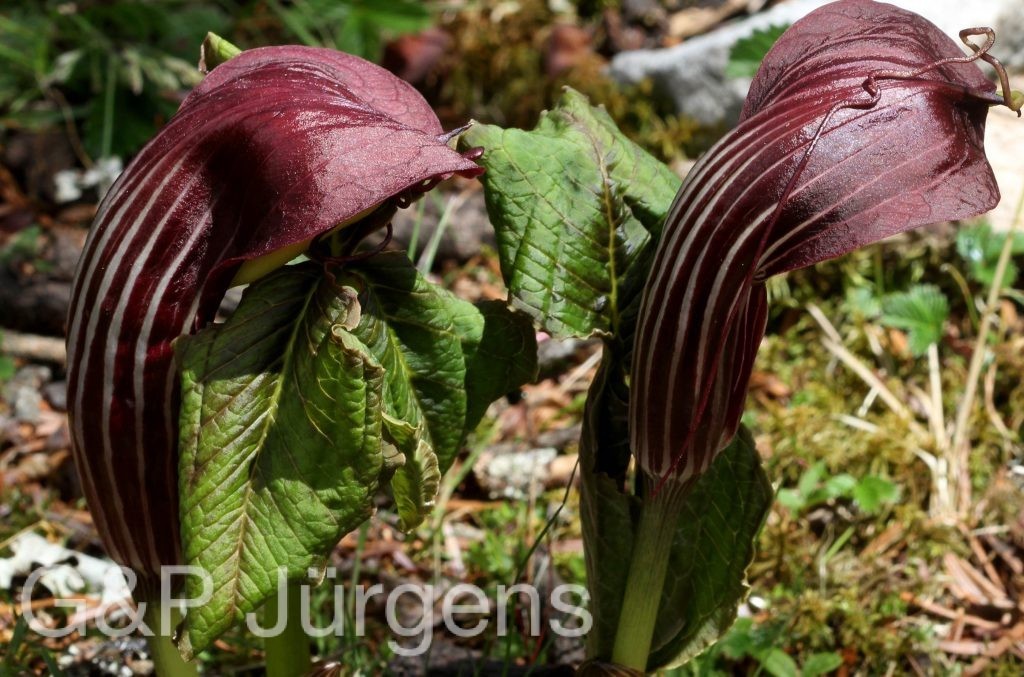
Blume

Sikkim2003 240 P330
Sikkim Dzongri 3920m, August
Sikkim2003 387 P547
Sikkim Dzongri 3920m, August

Description

Arisaema jacquemontii is a slender alpine cobra-lily widely distributed across the Himalaya, ranging from Afghanistan and Pakistan eastward through northern India, Nepal and Bhutan into south-western China. GBIF records some 568 occurrences, the core lying in India, Nepal, China, Pakistan and Bhutan, with additional cultivated or vouchered material reported from Britain, Belgium and Canada. The species inhabits subalpine and alpine meadows, open forest margins, shrubberies and moist grassy slopes, generally between about 2400 and 4500 m. The plant shown was photographed in Sikkim near Dzongri at 3920 m in August, a high pasture setting typical of its summer flowering on the eastern Himalayan ridges.

The plant grows from a depressed, subglobose tuber and produces usually a single pedately divided leaf with five to eleven elliptic-lanceolate, acuminate leaflets borne on a green, sometimes faintly mottled petiole sheathed at the base. The inflorescence is a spathe with a green tube and an erect to slightly arched, narrowly acuminate limb striped green and white. The spadix bears a slender, cylindrical, greenish appendix shorter than the spathe; the species is dioecious, with sterile or fertile zones of minute unisexual flowers concealed within the tube. The fruit is a dense club-shaped infructescence of orange-red berries each containing few seeds.

Arisaema, the largest genus of the Araceae in temperate Asia, exhibits remarkable sexual lability, individual tubers shifting between male and female expression with size and resource status. A. jacquemontii belongs to the section characterised by green, unmottled spathes and is among the most widespread and hardy Himalayan species, frequently grown by alpine gardeners. It is not considered threatened, though high-altitude collection and grazing locally affect populations.

Author: Blume · Sources: POWO (Kew), GBIF, Flora of China, Flora of Bhutan, The Genus Arisaema: A Monograph for Botanists and Nature Lovers, Aroids: Plants of the Arum Family

Arisaema tortuosum

by GP Jürgens

(Wall.) Schott

Sikkim2003 53 P72
Sikkim above Yoksam 2500m, August

Description

Arisaema tortuosum, the whipcord cobra lily, is a wide-ranging Himalayan and peninsular Indian aroid recorded from India, Nepal, China, Bhutan, Sri Lanka, Myanmar, Malaysia and Indonesia, with some 780 georeferenced occurrences and a number of records from cultivation in Europe and North America. It grows in moist forest, scrub, grassy clearings and shaded banks across a wide elevational span. The population photographed above Yoksam in western Sikkim at about 2500 m in August illustrates its montane forest habitat, in leaf and inflorescence during the monsoon on humus-rich soils.

The plant arises from a depressed, tuberous corm and produces one or two large, long-petiolate leaves divided into numerous radiating or pedately arranged leaflets. The inflorescence is a spathe enclosing a spadix, the latter prolonged into a remarkably long, erect or sinuous flagelliform appendage that gives the species its name and tortuosum epithet. Flowers are unisexual and borne at the spadix base, the species being protogynous and capable of size-dependent sex change between female, monoecious and male states. Pollinated fungus-gnats are trapped within the chamber. The fruit is a dense cluster of red berries borne on the swelling infructescence.

Arisaema is a large genus of considerable horticultural interest, and A. tortuosum is one of its most widespread and variable members, with several recognised varieties differing in leaflet number and spadix coloration. Its sequential hermaphroditism, in which individuals switch sex according to accumulated resources, is a celebrated example of size-dependent gender lability. Common across its extensive range, it is of least conservation concern.

Author: (Wall.) Schott · Sources: POWO (Kew), GBIF, Flora of Bhutan, Flora of Nepal, Flora of China, Gusman & Gusman's The Genus Arisaema

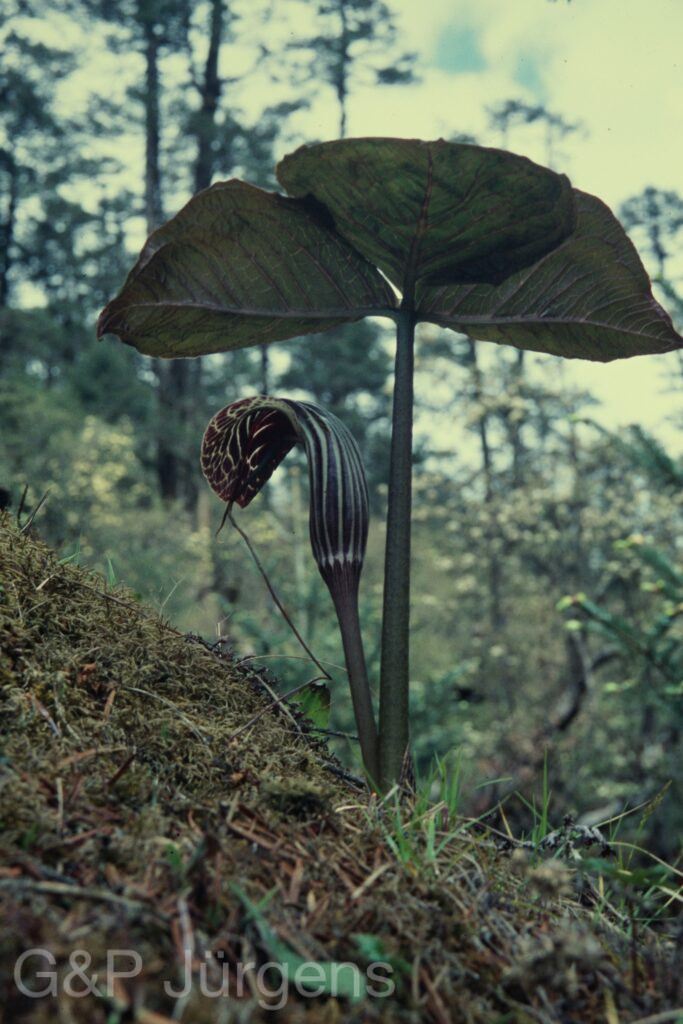
Arisaema utile

by GP Jürgens

Hook.f. ex Engl.

Sikkim2011 221
Sikkim, Yungthang 3350m, June
Sikkim2011 222
Sikkim, Yungthang 3350m, June
Sikkim2004 430 P746
Sikkim/India Lachung 3200m

Description

Arisaema utile is a tuberous geophyte of the Himalaya and adjacent ranges, recorded by GBIF in some 84 occurrences from China (Tibet), India, Pakistan, Nepal, Bhutan and Myanmar. It is a plant of the subalpine to lower alpine zone, occupying shrubberies, Rhododendron and conifer forest margins, moist meadows and stony slopes broadly between 3000 and 4300 m. The illustrated plants were found in Sikkim at Yungthang (3350 m, June) and Lachung (3200 m), where the species emerges and flowers shortly after snowmelt on cool, humus-rich ground at the upper limit of woody vegetation.

The plant arises from a depressed-globose tuber and typically bears a single trifoliolate leaf, the three leaflets broadly elliptic and often glaucous beneath, the whole sometimes purple-flushed. The inflorescence is a spadix subtended by a spathe whose tube is striped green and dark purple and whose limb is hooded and acuminate, frequently produced into a long filiform tip. The spadix appendix is slender and tail-like, exserted from the spathe mouth. As in the genus, the plant is paradioecious, individual tubers bearing male or female flowers according to size and vigour; pollinated female spadices ripen into a cylindrical infructescence of bright red berries.

Arisaema (Araceae, tribe Areae) is a large genus centred on the Sino-Himalayan region, and A. utile belongs to a Himalayan group characterised by a long-tailed spathe and trifoliolate leaf. GBIF treats the name as accepted. Sex expression shifts with resource status, an adaptation to harsh montane conditions; although collected for traditional use, the species remains locally frequent within its altitudinal band.

Author: Hook.f. ex Engl. · Sources: POWO (Kew), GBIF, Flora of China, Flora of Bhutan, Gusman monograph The Genus Arisaema

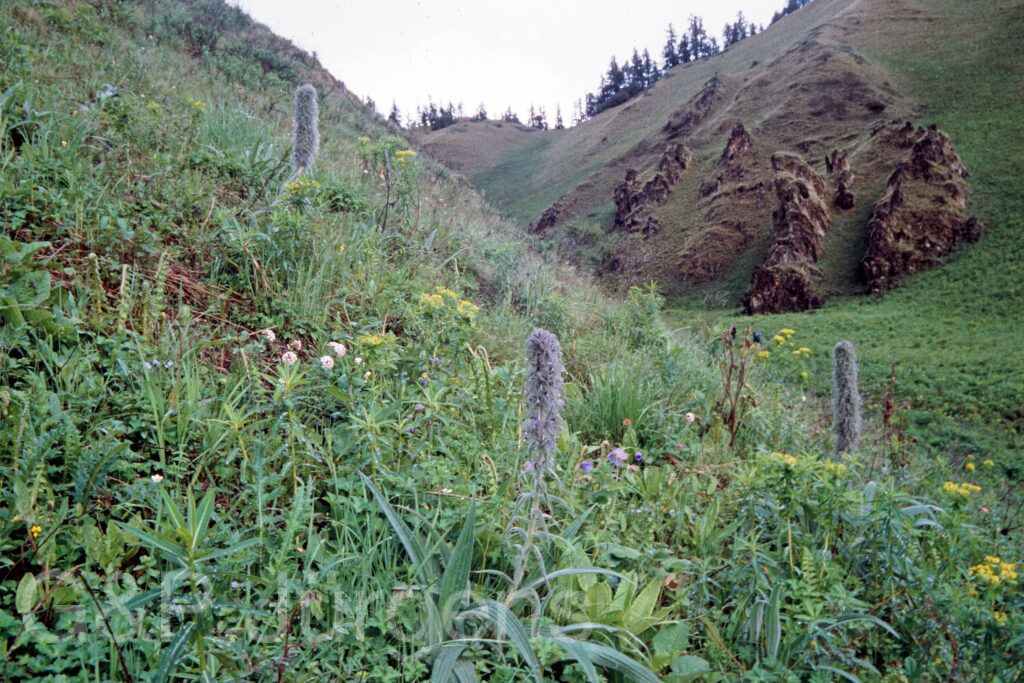
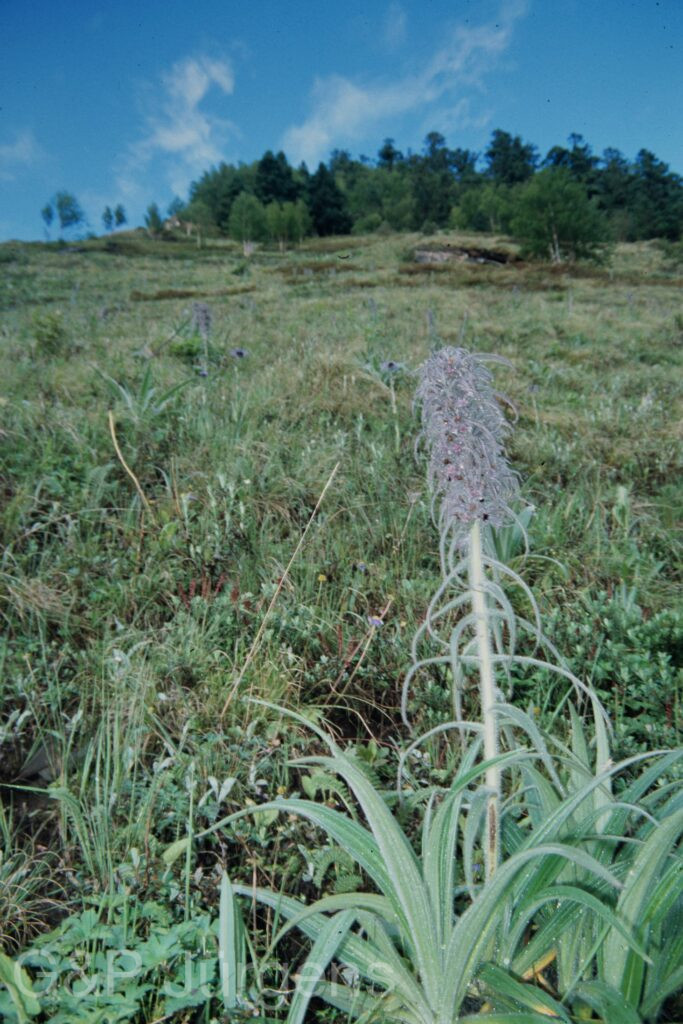
(Wall. ex G.Don) I.M.Johnst.

Nepal 99 91 ergebnis
West-Nepal Bhulbhule 3500m, June
Nepal 99 92 ergebnis
West-Nepal Bhulbhule 3500m, June

Description

Arnebia benthamii is a stout alpine herb of the western and central Himalaya, distributed through India, Pakistan and Nepal, with GBIF recording roughly 167 occurrences. It inhabits open alpine meadows, grassy and rocky slopes, and stabilised scree in the subalpine and alpine zones, typically from 3000 to 4200 m. The photographed plant grew in West Nepal near Bhulbhule at 3500 m in June, when the species comes into flower as the snow recedes, forming conspicuous erect spikes among the early-summer alpine sward.

The plant is a robust, densely hispid perennial arising from a thick woody rootstock that yields a purple dye. The stems are erect, unbranched and bristly, clothed with sessile, oblong to lanceolate, rough-hairy leaves. The inflorescence is a dense, elongate, cylindrical thyrse of crowded scorpioid cymes subtended by leafy bracts. The flowers are tubular-funnelform, the corolla bluish-purple to violet (drying darker), five-lobed with a hairy throat; the calyx is deeply five-parted and bristly. There are five included stamens and a deeply four-lobed ovary, the gynobasic style producing four hard nutlets at maturity.

The species is referable to genus Arnebia (subfamily Boraginoideae). It is of considerable ethnobotanical importance: the dye-yielding roots, known regionally as "Kahzaban" or "gaozaban," are widely used in Unani and folk medicine, driving substantial wild harvesting. This pressure, combined with grazing and a slow-maturing perennial habit, has caused local declines, and the species is regarded as conservation-sensitive in parts of the western Himalaya, prompting calls for sustainable collection and cultivation.

Author: (Wall. ex G.Don) I.M.Johnst. · Sources: POWO (Kew), GBIF, Flora of Pakistan, Flora of Nepal, Flowers of the Himalaya (Polunin & Stainton)

Aster albescens

by GP Jürgens

(DC.) Wall. ex Hand.-Mazz.

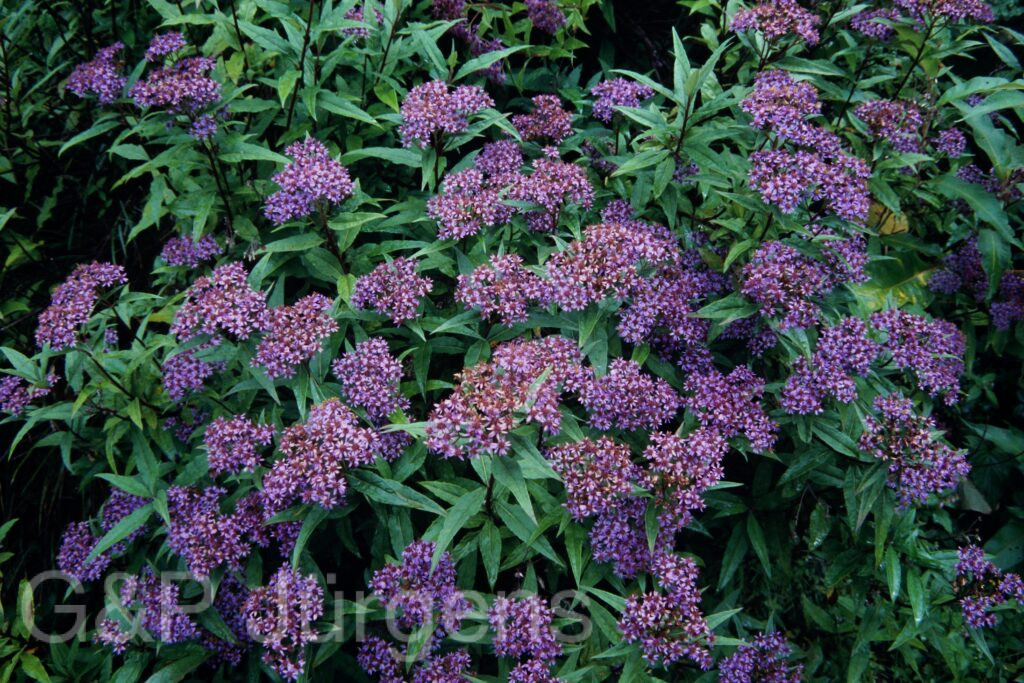
Sikkim2003 379 G532
Sikkim Tista valley 3600m August
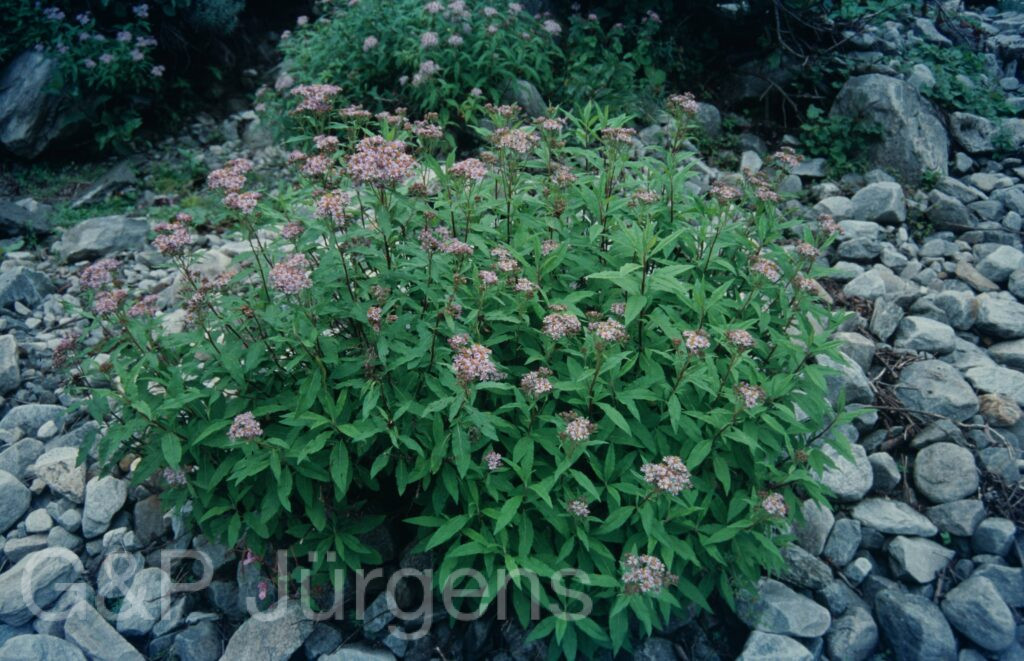
Garw 2005 38 ergebnis ergebnis
India Garhwal Valley of flowers 3200m, September

Description

Aster albescens is a variable shrubby aster widespread through the Himalaya and into China, Myanmar and East Asia, with 1,298 GBIF occurrences from China, Nepal, India, Bhutan, Japan, Korea and Myanmar. It grows on forest margins, open slopes, shrubberies and stream banks in the upper temperate to subalpine zone, broadly between about 2000 and 4000 m. The images derive from Sikkim's Tista valley at 3600 m in August and from the Valley of Flowers in Garhwal, India, at 3200 m in September, monsoon-watered slopes where this late-summer flowerer is a frequent component of the shrub layer.

Unusually for an aster, it is a woody shrub or subshrub up to about 1-2 m, with erect, branched, often whitish-tomentose stems. The leaves are alternate, ovate to lanceolate or elliptic, shortly petiolate, with serrate to entire margins and a characteristically pale, white-felted lower surface (whence albescens), the upper surface greener and thinly hairy. The capitula are numerous and small, arranged in dense terminal corymbose panicles; each head bears few short white, pinkish or pale purple ray florets around a disc of yellow florets. The cypselae are compressed and pubescent, with a pappus of reddish to brownish barbellate bristles.

Described as Diplopappus albescens by de Candolle and transferred to Aster by Wallich ex Handel-Mazzetti, the species is highly polymorphic and has spawned numerous infraspecific taxa across its range. Its shrubby habit places it among the woody Himalayan-Sino asters retained in Aster sensu lato. Common and ecologically resilient across a broad area, it is not considered threatened.

Author: (DC.) Wall. ex Hand.-Mazz. · Sources: POWO (Kew), GBIF, Flora of Bhutan, Flora of China, Flowers of the Himalaya (Polunin & Stainton), Asteraceae of the Himalaya

(C.B.Clarke) Hutch.

Nepal 99 93 ergebnis
West-Nepal Bhulbhule 3600m, June
Nepal 99 258 ergebnis
West-Nepal Loccu 3155m, June
Nepal 99 122 ergebnis
West-Nepal South of Rara-Lake 3500m, June

Description

Aster falconeri is a high-alpine herb of the north-western and western Himalaya, recorded from India, Pakistan and Nepal, with some 147 georeferenced collections documenting a relatively narrow but well-sampled range. It occupies open turf, moist alpine meadows, grazed grassland and the margins of seepages and snowmelt flushes, typically between about 3100 and 4000 m. The photographed populations from West Nepal—Bhulbhule at 3600 m, Loccu at 3155 m and the slopes south of Rara Lake at 3500 m, all flowering in June—are characteristic of its early-summer phenology, the plants emerging and blooming soon after the snowpack recedes.

It is a perennial forming low tufts from a short rootstock, the stems erect to ascending, simple, glandular-hairy and bearing reduced cauline leaves. Basal and lower leaves are oblanceolate to spathulate, narrowed to a winged petiole, entire or obscurely toothed and somewhat hairy. The solitary terminal capitula are radiate, subtended by an involucre of subequal, herbaceous, often purple-tinged phyllaries; the ray florets are ligulate and blue to violet, surrounding a disc of yellow tubular florets. The fruit is a compressed, hairy cypsela crowned by a pappus of barbellate bristles aiding wind dispersal.

First described as a member of Erigeron by C. B. Clarke and transferred by Hutchinson, the taxon is treated under the name Aster falconeri, regarded as the accepted name notwithstanding its synonym status in the source dataset. As with many Sino-Himalayan asters, generic limits between Aster and Erigeron have shifted repeatedly with morphological and molecular reappraisal. Though not formally assessed for conservation, its restriction to montane pastures exposes it to heavy grazing pressure across the western ranges.

Author: (C.B.Clarke) Hutch. · Sources: POWO (Kew), GBIF, Flora of Pakistan, Annotated Checklist of the Flowering Plants of Nepal, Grierson & Long Flora of Bhutan, Grierson's revision of Himalayan Aster (Asteraceae)

Bunge

Description

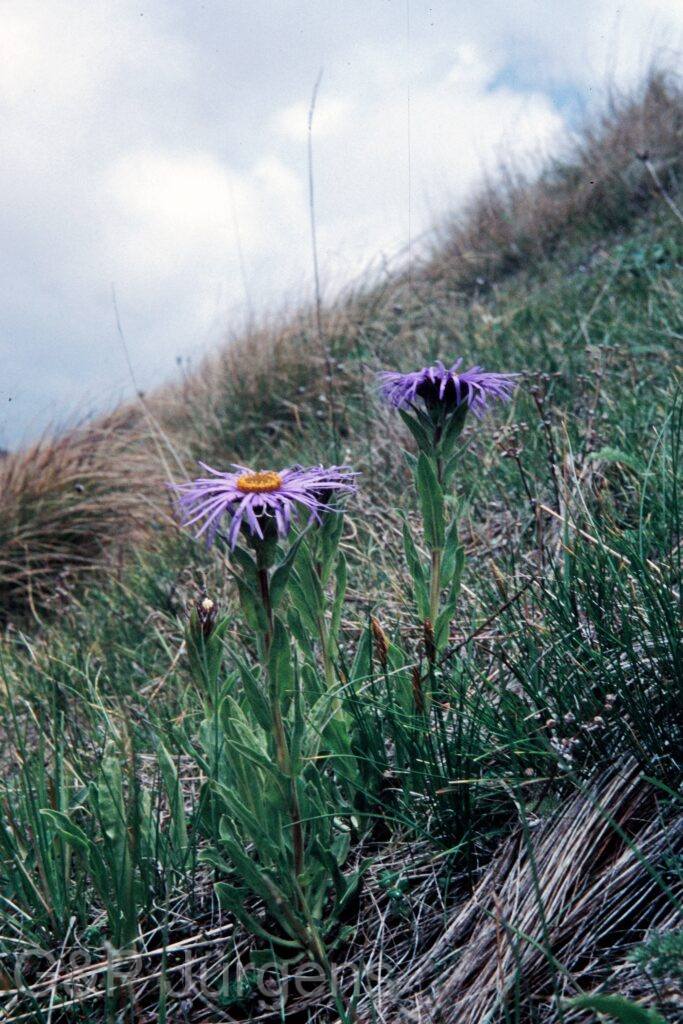
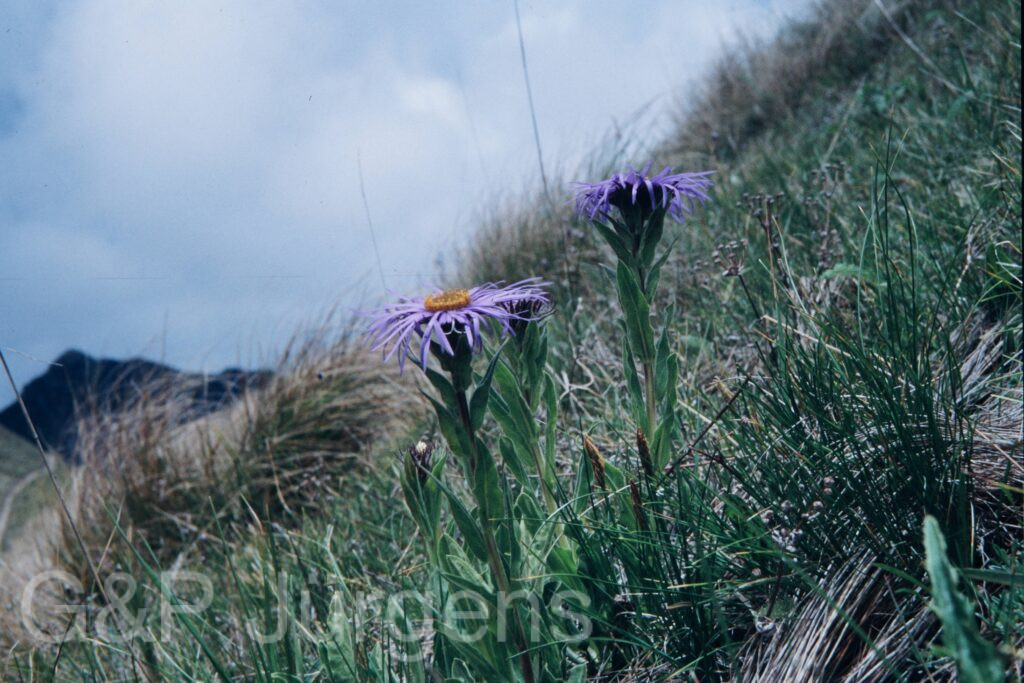
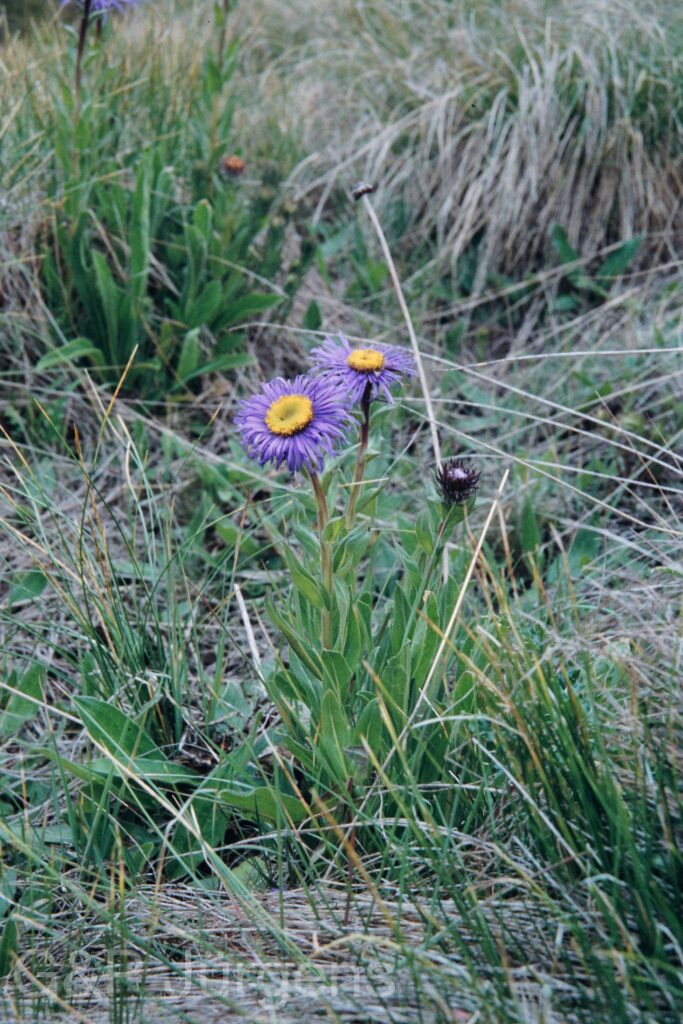
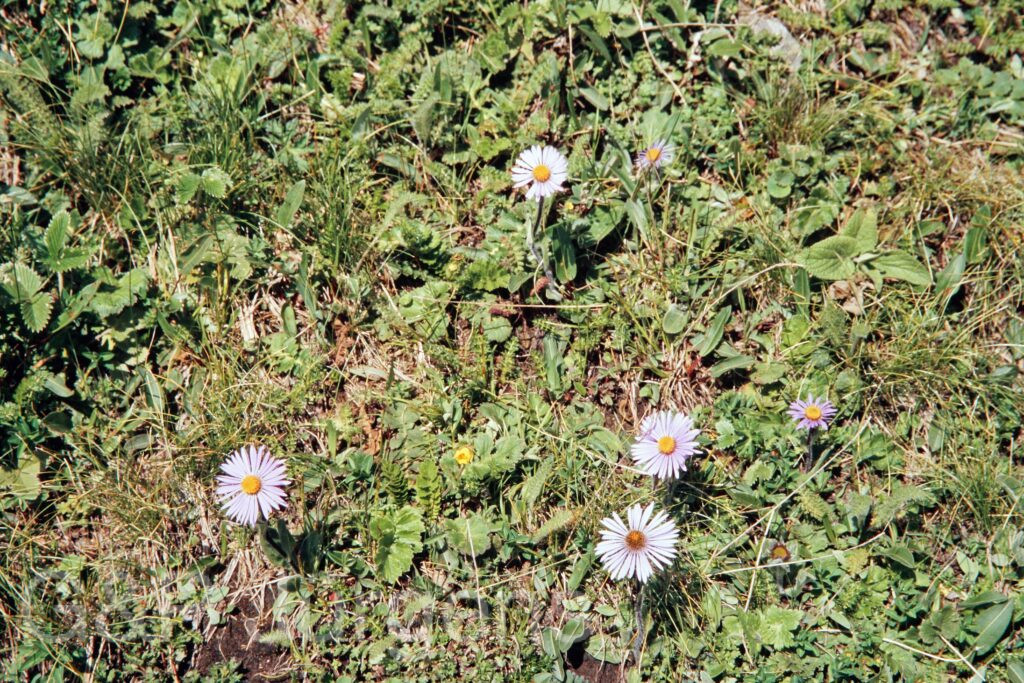
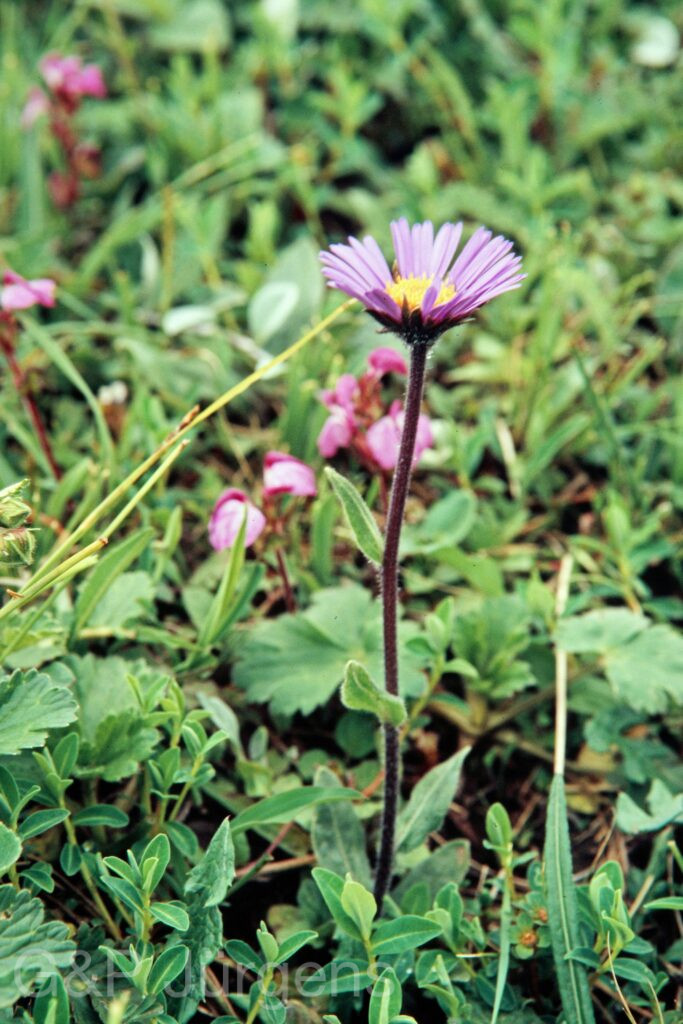
Aster flaccidus is a widespread alpine daisy of the high mountains of Asia, with extensive GBIF records (over 1600 occurrences) from China, India, Pakistan, Russia, Nepal, Afghanistan, Tajikistan, Mongolia, Bhutan, Uzbekistan, Kazakhstan, Myanmar, Kyrgyzstan and Turkey. It is a true alpine of stony meadows, scree, gravelly slopes, moraines and short turf, mostly above the treeline but descending where open ground occurs. The record from Belak Khal in Garhwal, India, at about 2900 m in June is a lower, early-season occurrence; across its range the species ascends well above 4000 m, flowering through the brief alpine summer. Here gbif_status is SYNONYM, with the name Aster flaccidus treated as the accepted taxon.

It is a low, tufted perennial herb arising from a short rhizome, the stems solitary or few, simple, erect and conspicuously clothed in long, soft, white or purplish, often glandular hairs. The basal leaves are spathulate to oblanceolate, entire and narrowed to a petiole, the cauline leaves few, sessile and reduced. Each stem terminates in a single large capitulum; the numerous ray florets are violet, blue-purple to lilac and spread around a central disc of yellow tubular florets. The involucre is hemispherical with herbaceous, hairy, purple-margined phyllaries in two or three subequal series. Achenes are flattened and pubescent, surmounted by a pappus of reddish barbellate bristles.

A member of Aster section Alpigenia, A. flaccidus is morphologically variable and has accumulated numerous synonyms and infraspecific names reflecting its vast range and the influence of altitude on stature and indumentum. It is a hardy, cushion-tolerant pioneer of cold, exposed habitats and an important component of alpine sward. Being abundant and broadly distributed it is of least concern, although high-altitude populations may serve as sensitive indicators of climate-driven vegetation change.

Author: Bunge · Sources: POWO (Kew), GBIF, Flora of China, Flora of Pakistan, Polunin & Stainton Flowers of the Himalaya, Onno revision of Aster Alpigenia